The New York Post used a Hokusai work to depict Donald Trump being swept away by Democrats’ midterm election win. Some in Japan were bothered by the imagery.
About a half-dozen Democratic doctors and nurses ran for Congress. Some made opposition to Health Secretary Robert F. Kennedy Jr. central to their campaigns.
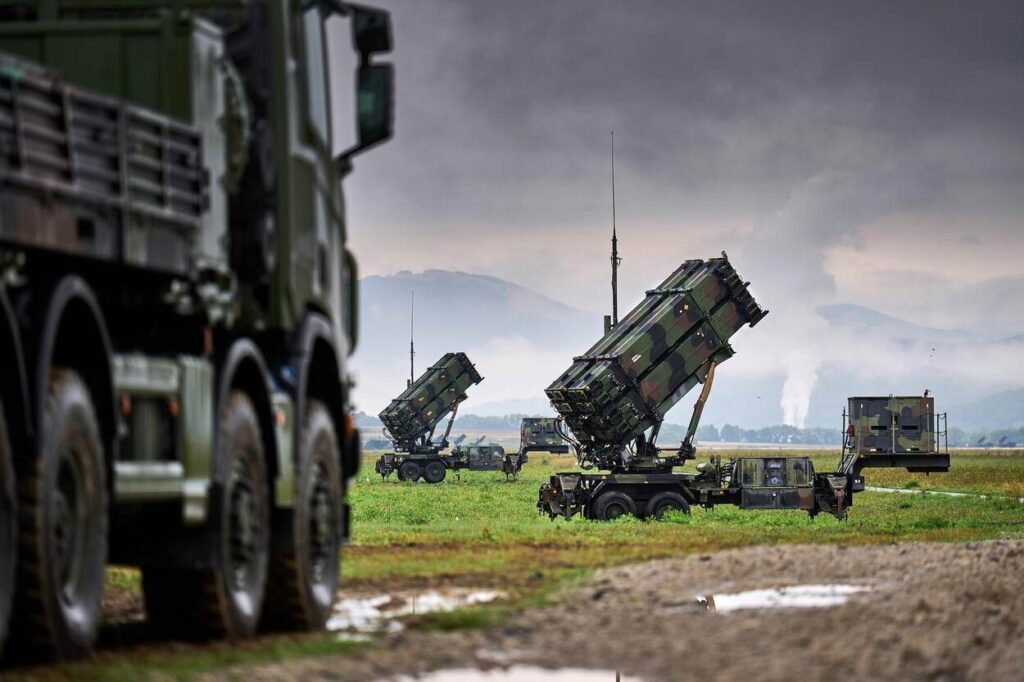
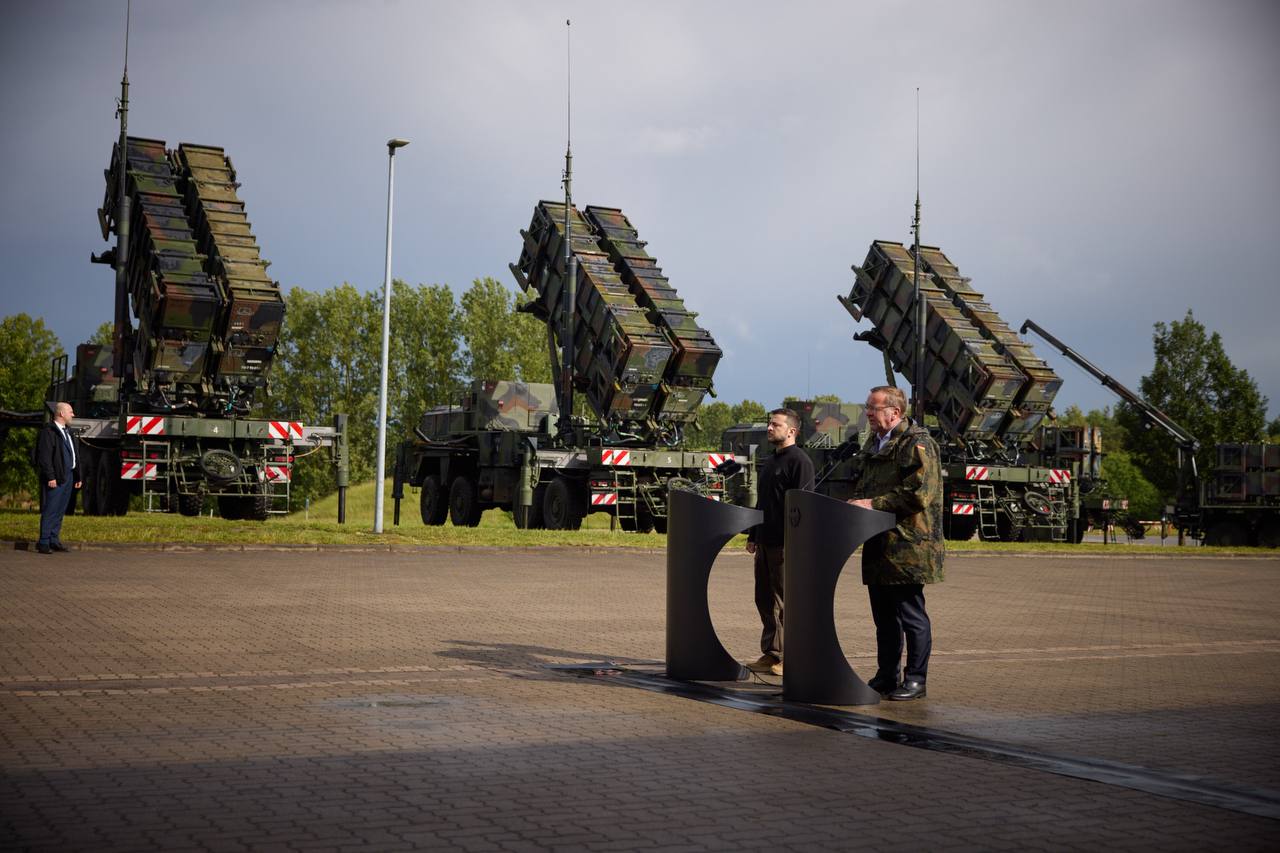
Kyiv says it cannot wait years for the 500 Patriot interceptors the US cleared for sale on 30 October. Deliveries may start only in a few years, President Volodymyr Zelenskyy wrote just after midnight, asking partners to send missiles from their own stocks this winter.
The timing is the problem. Since 14 October, Russia had launched more than 100 ballistic missiles at Kyiv and Kyiv Oblast, Zelenskyy said on 27 October. Meanwhile, the US is delaying PAC-3s, the Patriot missile built mainly to stop ballistic missiles, while older PAC-2s keep arriving, an anonymous NATO source told Radio Svoboda on 29 October.
What Washington approved
The State Department approved a possible sale of 500 PAC-3 MSE missiles with spare parts, worth an estimated $2.1 billion. It is not a signed contract, and no delivery date was given. Ukraine, the buyer, would pay with Canadian, German, and Norwegian contributions through the JUMPSTART program, plus funds from an EU loan.
Explore further
Ukraine wants partners’ Patriot interceptors now. Europe can hand them over only with US approval, Ukraine’s president says
Ukraine had asked Washington for a winter package of 100 interceptors a month, Zelenskyy wrote. He first put that figure to European allies in July. Five hundred PAC-3s could have been a very effective defense package this winter, he added. He proposed that partners send missiles from existing stocks in winter 2026–2027. They would refill their arsenals later from production that, in his words, Ukraine and its partners have contracted and paid for. He called this entirely realistic.
Radio Free Europe/Radio Liberty’s senior Washington correspondent Alex Raufoglu, citing his own sources, wrote that deliveries of the new missiles are not expected until after 2030.
Just over three months of cover
Five hundred missiles would not last long anyway, Ukrainian military outlet Defense Express estimated. Building one PAC-3 MSE takes about 24 months, it wrote. It put Ukraine’s need at about 150 anti-ballistic interceptors a month, noting estimates as high as 350. Used very sparingly, 500 would cover just over three months of ballistic attacks.
Explore further
“Above all, we do not have enough missiles for Patriots”—Zelenskyy after 100+ ballistic missiles
For this winter, the outlet pointed to Poland and Germany, which have sent PAC-3 MSEs before, though in tens rather than hundreds. It named Japan, which it called the only country to have set up its own production of them.
In April, Ukrainian Patriot crews were already rationing missiles mid-attack.
Russian forces have widened their foothold at Hraniv on the border north of Kharkiv, a Ukrainian military spokesman said. Viktor Trehubov of the Joint Forces Grouping said they spread sideways rather than deeper toward the nearby town of Kozacha Lopan.
Russia's main offensive grinds on in Donetsk Oblast, but it keeps pressing along the northern border too. Brigadier General Denys Prokopenko warned in September that Russia wants buffer zones in Sumy and Chernihiv oblasts, a push meant to keep Ukrainian reserves there instead of in the east. Such pushes gain little: in Sumy Oblast, the Russian advance reached about 3–4 km deep, more than 35 km short of the city.
The wedge grew at its flanks
Trehubov described the Hraniv gain as a separate wedge toward Kozacha Lopan, right by the border. "But they managed to widen it," he said on Suspilne Studio on 31 October. He said Russian troops did not deepen the wedge or move further into Kozacha Lopan, and called the widening "a certain problem."
The Ukrainian volunteer monitoring project DeepState marked a Russian advance near Hraniv on 30 October. On its map, the Russian-held area around the village grew from about 2 to 11 square kilometers, according to EP's calculation based on DeepState's data. The gray zone around it, where control is unclear, more than doubled to some 19 square kilometers. The new ground runs southeast of Hraniv along the border, in line with Trehubov's account of a wider, not deeper, wedge.
The wedge dates back to late June, when a spokesman for Ukraine's 14th Army Corps, Colonel Vitalii Sarantsev, said Russian troops had crossed the border near Hraniv and were trying to storm Kozacha Lopan. He said Russia was trying to open new wedges along the Sumy and Kharkiv borders to tie down Ukrainian forces and widen a so-called controlled zone. On 1 July, the 425th Skelia Assault Regiment said it had pushed Russian troops out of Kozacha Lopan, 2 km from the border, and cleared Hraniv. Ukraine's General Staff reported 13 Russian attacks northeast of Kharkiv over the past day, none of them listed near Hraniv.
The northern pushes have been on Ukraine's radar for months. Buffer zones in Kharkiv, Sumy, and Chernihiv oblasts remain on Russia's list, Pavlo Palisa, deputy head of the Presidential Office, said in April, though he saw no Russian forces to carry them out. Military analyst Yevhen Dykyi described the aim as a zone of constant tension along the border, like the one in parts of Chernihiv and Sumy oblasts, which forces Ukraine to spread its forces more thinly.
Other movements along the front
In Donetsk Oblast, DeepState mapped a Russian advance near Mykolaivka, just west of Chasiv Yar, on 31 October, turning a patch of its gray zone there red. Just after midnight on 29 October, it marked Russian gains near Maiske, northwest of Chasiv Yar.
Map of Russian-occupied territory in Ukraine and areas of Russian and Ukrainian advances, late October 2026. Map: EP/Datawrapper
Ukrainian forces advanced northeast of Borova in Kharkiv Oblast, the Institute for the Study of War (ISW) reported on 31 October, citing geolocated footage. DeepState has not mapped that change. Russian milbloggers claimed gains in and around Kupiansk, but ISW could not confirm them.
Explore further
Russia tries to drag a village north of Kupiansk into no-man’s-land after its losses in Ukraine’s underground operation
Near Kupiansk, Trehubov said Ukrainian troops cleared a gas pipeline under the Oskil River that Russian infiltration groups had used to reach the city.
Losses force a Russian rotation near Huliaipole
Near Huliaipole, Ukrainian forces killed and wounded about 900 Russian troops last week, the 7th Corps of Ukraine's Air Assault Forces said. That is almost 150 more than the week before and the highest count in two months, the corps added. It said that, according to available information, Russia's 5th Combined Arms Army is replacing its 57th Motorized Rifle Brigade with the 60th while the 57th refills its ranks.
The corps also said Russia sends recruited mercenaries from Africa and Asia into assaults there. Ukrainian troops captured a citizen of Indonesia fighting in Russia's 39th Motorized Rifle Brigade, it added.
Since 21 October, DeepState's updates have added about 40 square kilometers to the Russian-held area on its map, by EP's count. Besides Hraniv and Chasiv Yar, it mapped Russian advances near Dobropillia, east of Sloviansk, near Kostiantynivka, and near Huliaipole and Orikhiv in Zaporizhzhia Oblast. Still, Ukraine has liberated more land than Russia captured since the start of fall, President Volodymyr Zelenskyy said in October.
“Vivant,” a Japanese thriller that features Chinese spies, has drawn intense criticism from Beijing. Its creators defend the show, saying it is “completely fictional.”
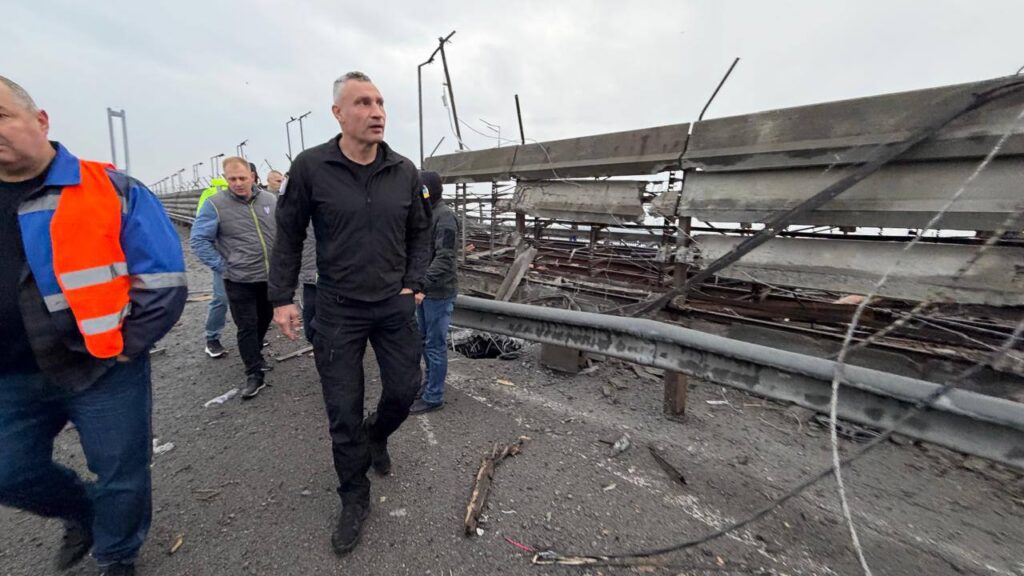
The Ukrainian government has instructed Kyiv to establish alternative routes after Russian attacks stopped traffic on one of the capital’s main bridges. The city authorities will bear the cost of the new crossings, with Kyiv Mayor Vitali Klitschko saying the city needs an additional $22 million.
This year, Russia has launched tactics to spread panic among civilians and trigger more people to leave the country. In the latest attack, several Russia's ballistic missiles struck the Southern Bridge, used for vehicle and metro traffic, breaking a huge hole and paralyzing all the pathes. The bridge was closed. Now, there is a fear that more bridges can be targeted this way, dividing Kyiv in two parts.
The situation is urgent, as Ukrainian Transport Minister Mykola Kalashnyk says about 600,000 vehicles cross the Dnipro in Kyiv every day.
What is Kyiv’s response to the winter terror?
According to Klitschko, Kyiv convened the capital’s Defense Council on 28 October to find an answer to this difficult question.
The agenda included implementing a project to build combined water crossings over the Dnipro River and access roads to them.
“The military command will determine the locations, with approval to be granted, among others, by the Kyiv City Military Administration,” Klitschko said.
Under the government’s recommendations, the Kyiv city authorities must find $22 million for the project.
Klitschko had previously faced heavy criticism after it emerged that the city lacked sufficient shelters and last winter exposed serious shortcomings in preparing infrastructure for Russian attacks. These included a lack of alternative energy supply routes, poorly distributed energy, burst heating pipes that flooded apartments, and the inability of people with disabilities to reach shelters without elevators.
The mayor himself said the problems stemmed from the central government withholding funding, which had stalled numerous energy resilience projects and delayed their implementation.
The latest announcement also indicates that Kyiv has once again taken on the financial burden itself.
Meanwhile, Ukraine has been working with Japan on backup crossings. Tokyo has already delivered 720 meters of prefabricated bridge structures to Ukraine. The two sides are currently exploring how this equipment could be used to establish alternative crossings.
Step two: strengthening existing infrastructure
Another option is to reinforce existing bridges. City specialists are developing additional technical solutions to protect bridges across the Dnipro River, Klitschko said in his statement on 27 October, adding that proposals from the military had also been heard.
The issue of installing mobile shelters was also raised on the same day, the mayor of Kyiv said in a separate statement on his Telegram channel on 27 October. Despite intensifying Russian attacks and about, as Radio Svoboda reported in its article on 30 September, $11 million set aside in 2025, Kyiv still has only a handful of mobile shelters: LB reported in December 2025 that district tenders failed. Donors paid for the first one at a bus stop, the Kyiv City State Administration said on 15 October.
Klitschko raised the issue of shelters again after a courton 12 October ruled that local authorities must urgently install mobile shelters in public areas, including near public transport stops, parks, and squares, according to Kyiv’s Prosecutor’s Office.
Russia hits the Southern Bridge again
On 2 October, Ukrainian President Volodymyr Zelenskyy said in an interview with the Financial Times that Russian ruler Vladimir Putin had ordered the lifting of previous restrictions on airstrikes. Among new targets, according to him, were bridges, data centers, internet, mobile networks, hospitals, kindergartens, schools, and universities.
The night of 26–27 October showed what that looks like. Russia launched ballistic missile attacks in a few waves, and the second of them hit the Southern Bridge and the metro infrastructure on it, Klitschko said. The structure carries six lanes of road traffic and two metro tracks.
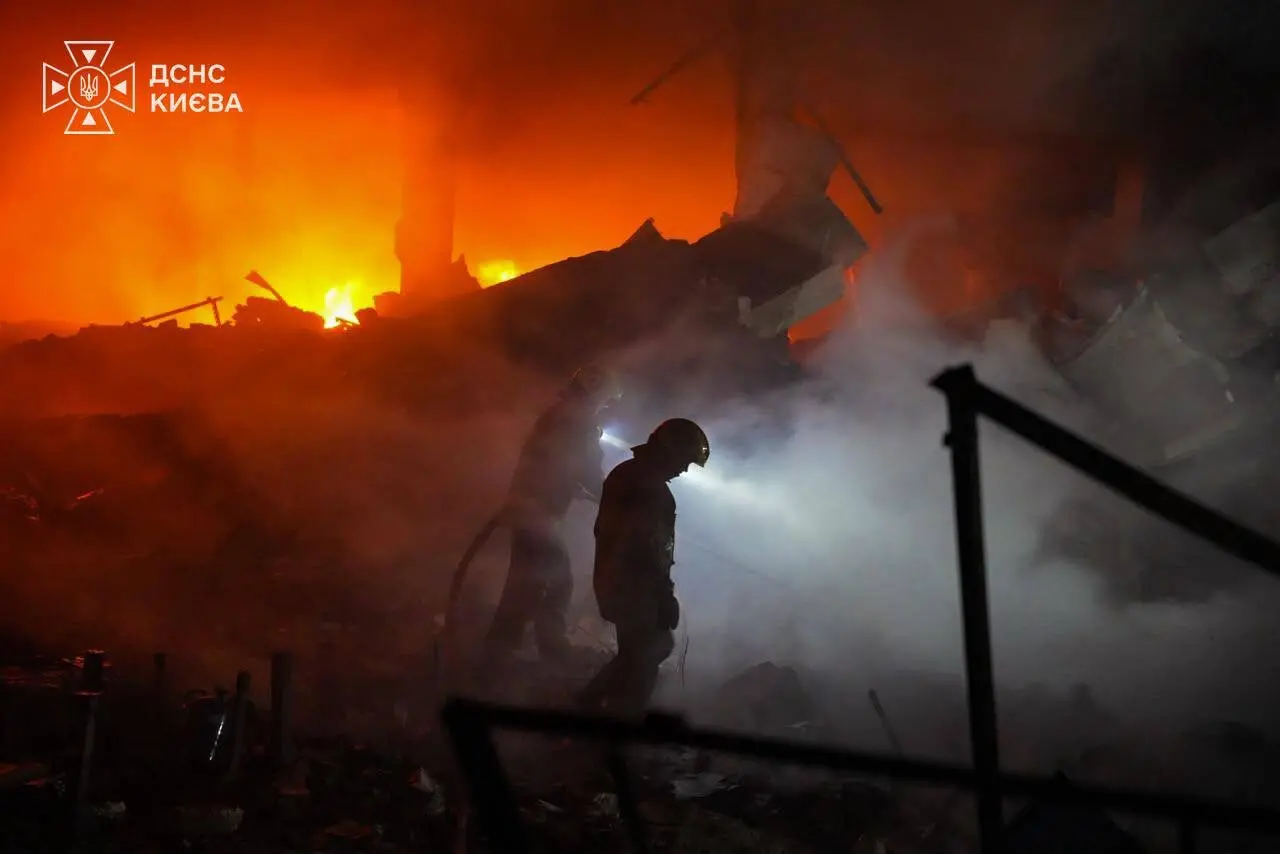
Rescuers work beside a fence pocked by shrapnel in Kyiv after the Russian attacks of 26–27 October 2026. Photo: DSNS Kyiv
Zelenskyy put the night’s total at 16 ballistic missiles and blamed delays in deliveries of Patriot and NASAMS interceptors: “Every such delay is a new Russian hit on one target or another.”
The website for the French government was temporarily unavailable on Wednesday amid hacking concerns stemming from major bugs in a piece of software used widely across the internet.
Prime Minister Rob Jetten of the Netherlands in Brussels last week. He said that his cabinet was closely monitoring the online vulnerability caused by a security flaw in PHP.
Ukrainian and Japanese officials discussed establishing backup bridge crossings in the event of Russian strikes, preparing municipal infrastructure for winter, and Japan's continued assistance with Ukraine's recovery, Ukraine's Minister for Restoration, Infrastructure and Transport, Mykola Kalashnyk, reported on 14 October.
Russia is targeting Kyiv's bridges to paralyze the city and break civilian morale, defense analyst Hamish de Bretton-Gordon wrote in The Telegraph. On 1 and 2 October, Russia attacked Kyiv's Southern Bridge, then struck the Northern Bridge on 3 and 4 October. Ukraine is now working with international partners to establish backup bridge crossings that could maintain connectivity even if major routes are damaged.
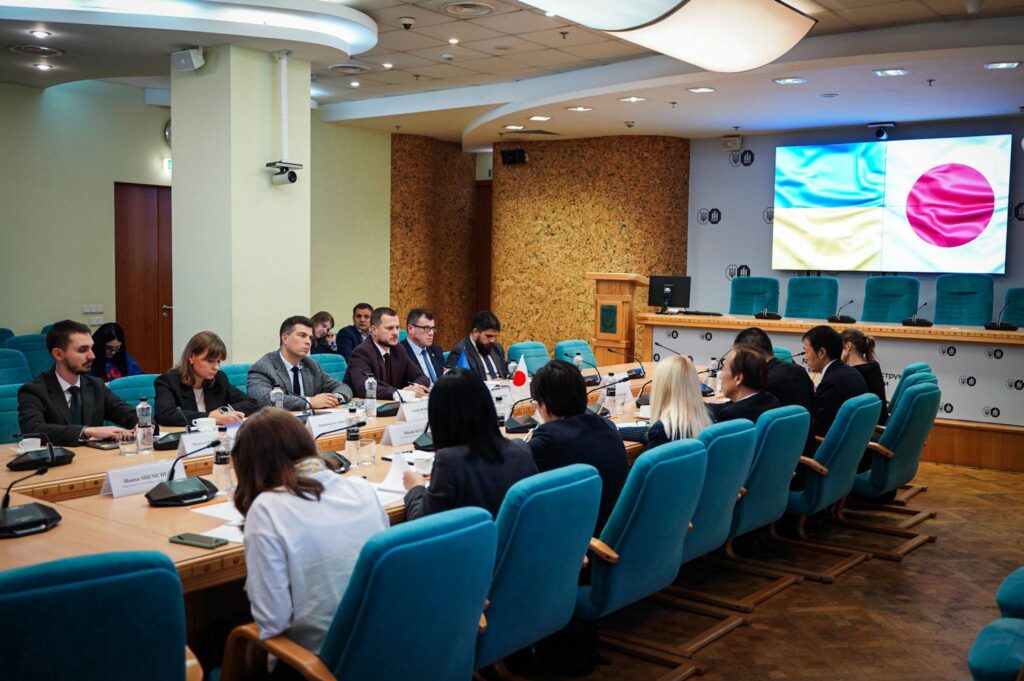
The discussions took place during a meeting between Minister Kalashnyk, Japan's Ambassador to Ukraine Yo Osumi, and Osamu Hattori, head of the Japan International Cooperation Agency (JICA) office in Ukraine, according to the statement.
Ukraine's Minister for Restoration, Infrastructure and Transport Mykola Kalashnyk during a meeting with Japan's Ambassador to Ukraine Yo Osumi and JICA Ukraine Office Chief Osamu Hattori, October 2026. Photo: Mykola Kalashnyk/Telegram
Backup crossings could prevent logistical disruptions if major bridges are damaged
Kyiv's Southern Bridge, for example, plays a critical role in logistics because freight traffic uses it, transport planning expert Dmytro Bespalov noted in an article for Ukrainska Pravda. At the same time, installing additional metal structures to reinforce bridges could be dangerous given their technical condition and existing load levels, he said.
One potential solution is to establish backup bridge crossings.
Ukraine and JICA have agreed to continue working together on engineering solutions for setting up these crossings. Japan has already delivered 720 meters of prefabricated bridge structures to Ukraine, which are expected to be used to create alternative routes if Russia's attacks damage major bridges, Kalashnyk said.
The initiative is intended to help maintain transportation links, ensure the delivery of critical supplies, and preserve evacuation routes for civilians.
The flags of Japan and Ukraine displayed on a screen during a meeting between Ukraine's Minister for Restoration, Infrastructure and Transport Mykola Kalashnyk, Japan's Ambassador to Ukraine Yo Osumi, and JICA Ukraine Office Chief Osamu Hattori, October 2026. Photo: Mykola Kalashnyk/Telegram
Ukraine prepares water utilities and boiler plants for winter amid the threat of Russian infrastructure strikes
During the meeting, Ukraine and JICA discussed equipping water utilities with backup power supplies, addressing the need for modular boiler plants, and obtaining equipment to ensure uninterrupted heating and water services. Ukraine has already submitted lists of the necessary equipment to JICA for consideration as part of a new emergency assistance project, Kalashnyk said.
An intercepted document outlining an alleged Russian plan for strikes against Ukraine this winter reportedly describes attacks on 60 critical infrastructure facilities using up to 1,000 missiles, drones, and aerial bombs. Potential targets include electrical substations, hydroelectric power plants, thermal power plants, boiler facilities, and infrastructure related to water supply and wastewater management.
Kyiv during a blackout caused by Russian strikes on energy infrastructure, 11 October 2026. Photo: Yan Dobronosov
The document also describes potential strikes on facilities in Kyiv, Kharkiv, Odesa, and several other cities. Such attacks could disrupt electricity, heating, water supply, and wastewater services.
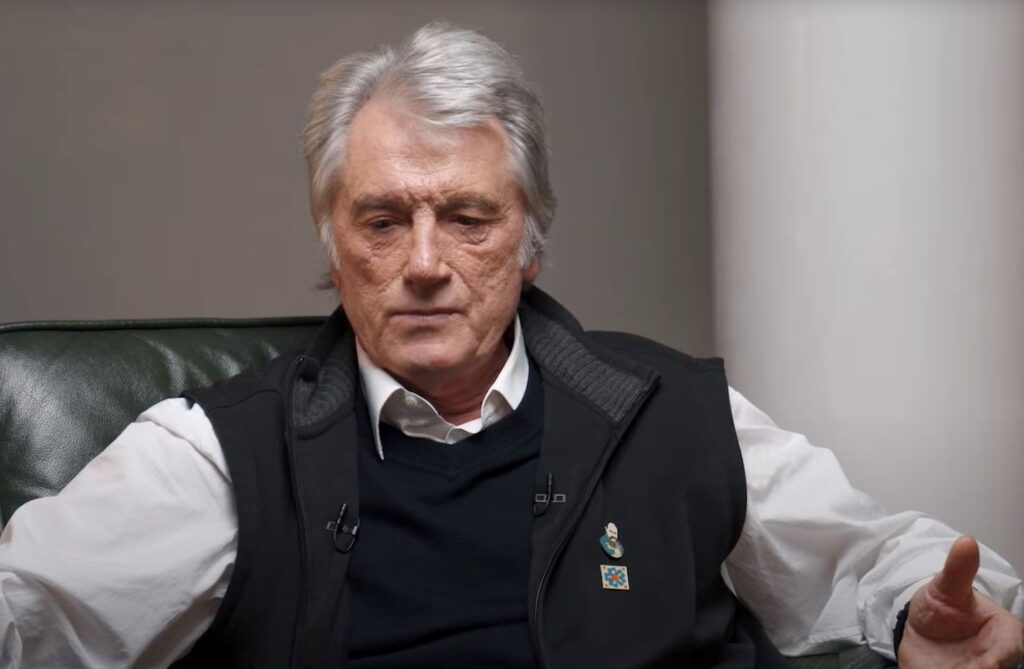
Viktor Yushchenko, Ukraine’s president from 2005 to 2010, has written an open letter to US President Donald Trump and posted it on Facebook on 14 October. Without naming it, the letter takes aim at the green light Washington gave Russian diesel trade five days earlier, after a call between Trump and Kremlin leader Vladimir Putin.
Russia banned its diesel exports in July amid a fuel crisis at home, after Ukrainian strikes on refineries had already cut those exports, and last week’s US waiver and the supply deal Trump announced with Moscow would put that fuel back on world markets while Russian strikes still kill Ukrainian civilians.
What Yushchenko says Russian fuel buys
Yushchenko wrote that Russian ballistic missiles, Iranian Shahed drones, and aerial bombs strike homes every day and night in Kyiv, Zaporizhzhia, Odesa, Dnipro, and Kharkiv. Whenever there is talk of “concessions” or deals with Putin, he wrote, the Kremlin answers with more missiles, more drones, and more bloodshed.
Explore further
Trump’s Russian diesel deal, which drew fury in Ukraine, is unlikely to lower prices, experts say
Yushchenko rejected calls for Ukraine to “restrain its strikes against the infrastructure that finances and sustains Russia’s war.”
“Money paid for Russian fuel is not an abstraction called ‘commerce.’ It finances an economy geared toward total war,” he wrote.
Nuclear arms, Pearl Harbor, and Iwo Jima
Yushchenko wrote that Ukraine inherited “one of the largest nuclear arsenals in the world” and agreed to give it up, trusting the words and signatures of great powers. In his view, by signing the 1994 Budapest Memorandum, America took on a moral responsibility toward Ukraine.
He compared trade in Russian energy to America’s trade with Imperial Japan, which included strategically important materials, before the US entered World War II. Washington hoped for years to avoid a wider war in the Pacific, he wrote, but economic pressure and diplomacy could not prevent catastrophe.
Explore further
Ukraine warns of “a new type of humanitarian crisis” as Russia aims at its biggest cities
Japan attacked Pearl Harbor on 7 December 1941. America knows how dangerous it is to believe that trade can tame an aggressor, Yushchenko wrote, adding: “History taught us that lesson at a terrible price.”
He also named two men he called Ukrainian. One was Sergeant Michael Strank, whose family, Yushchenko wrote, came from Lemkivshchyna. The son of immigrants from Czechoslovakia, Strank took part in the famous raising of the US flag on Iwo Jima, according to the Marine Corps. The other was Oleksandr Silvashko, “a Ukrainian boy from the Cherkasy region,” who, Yushchenko wrote, was the first to embrace US Lieutenant William Robertson when American and Soviet forces met at the Elbe in April 1945.
“One does not negotiate with tyrants—one stops them,” Yushchenko concluded.

 Connexion