❌

Vue lecture

Belarus holds military drills around the Suwalki Gap, NATO’s only land link to the Baltics
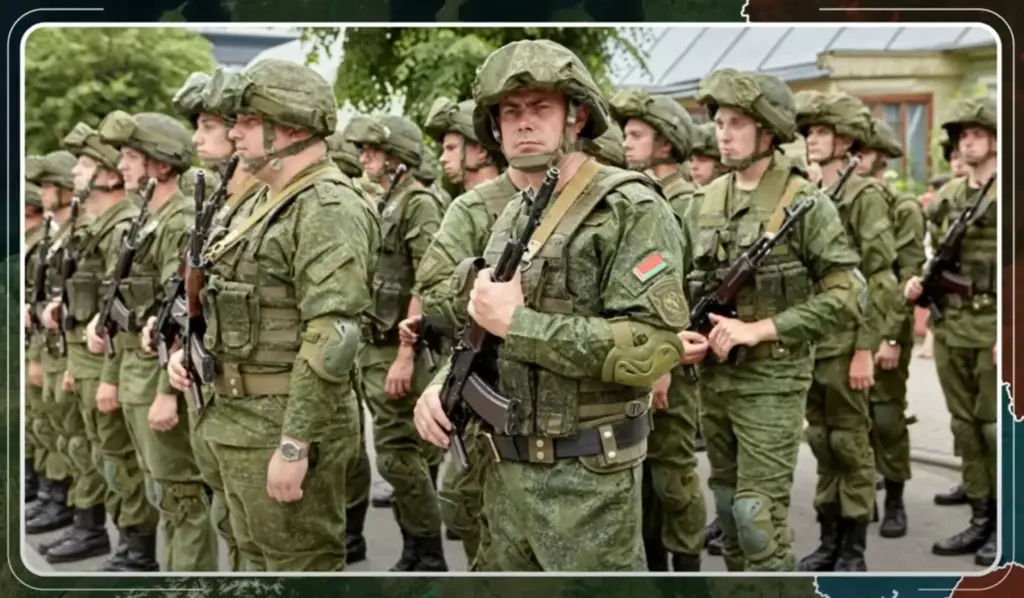
Belarusian soldiers in green uniforms and helmets stand in formation carrying rifles.

Belarus sent tank and mechanized battalions to training grounds near Poland and Lithuania for four-day drills that Minsk says focus on border security, counter-sabotage operations, and defense against drones and light aircraft, Militarnyi reported on 17 September, citing the Belarusian Defense Ministry.

The exercise includes tank and mechanized infantry battalions, units typically used in conventional ground warfare. Minsk says their tasks include guarding checkpoints and infrastructure and defending against drones. Some drills are taking place near the Suwałki Gap, the only land route connecting Lithuania, Latvia, and Estonia to the rest of NATO. The corridor lies between Belarus and Russia’s Kaliningrad region, which is separated from the rest of Russia. Belarus denies any offensive intent.

What Belarus says it is practicing

Belarus’s Western Operational Command is holding the exercises from 15 to 18 September under Chief of the General Staff Pavel Muraveyko, according to the ministry’s schedule outlined by Militarnyi.

The drills are taking place at the Gozha range near Lithuania and at the Brest and Ruzhany ranges near Poland. RBC-Ukraine wrote that mechanized and tank battalions are taking part and that the Brest and Ruzhany sites lie about 15 and 60 kilometers from the Polish border, respectively. Reservists have also been called up to local territorial-defense units, the ministry said.

Militarnyi cited the ministry as saying that one unit guarded a water intake, another directed traffic with police, and a mechanized brigade manned a checkpoint with border guards. The ministry also said truck-mounted fire teams were posted around the clock to defend against drones and practiced firing at targets imitating surveillance drones.

Muraveyko said the army was not considering offensive action and called allegations of preparations for an attack baseless, according to remarks quoted by Militarnyi. Belarus has not disclosed the total number of troops involved, and the exercise’s scale has not been independently verified.

The Moscow Times reported that the ministry also claimed the exercise remained below the notification thresholds set by the 2011 Vienna Document, an international agreement requiring advance notice of large military exercises.

How Russia could exploit the Suwałki Gap

In December 2025, security analyst Taras Zhovtenko warned that Russian propaganda had laid the groundwork to cite an alleged blockade of Kaliningrad to justify a limited incursion and the establishment of temporary checkpoints.

A German war game later modeled Russia staging border incidents before seizing key routes, although Baltic officials said the scenario severely underrated their armed forces.

Separately, French open-source analyst Clément Molin found that defenses along the Polish and Baltic borders with Russia and Belarus remained patchy and shallow, with Lithuania the most exposed. These assessments describe possible vulnerabilities, not evidence that an attack is planned.

  •  

US charges five as alleged Kremlin assassination network reaches American soil

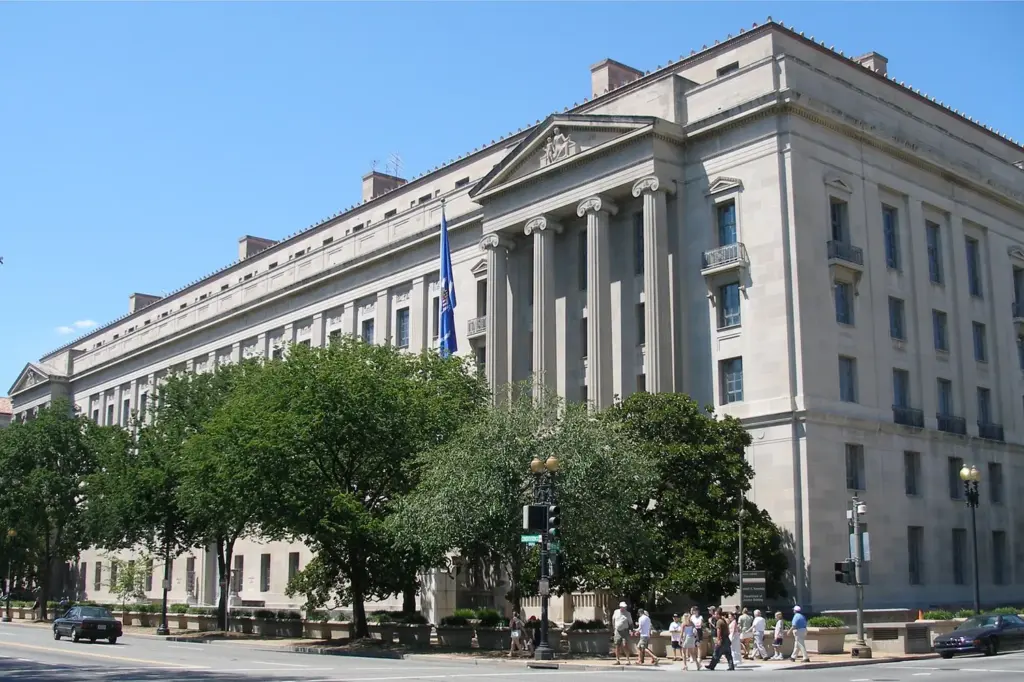
US Department of Justice headquarters in Washington, DC, viewed from across the street.

A US-based recruit was promised up to $1,500 to surveil a prominent Russian dissident before being offered $40,000 to “eliminate” or “disappear” the target, the US Justice Department (DOJ) said on 15 September.

The charges connect that alleged plot to what prosecutors describe as a wider Russian assassination network operating since at least 2024 against dissidents, defectors, and countries perceived as supporting Ukraine.

A federal grand jury in Manhattan indicted five alleged members of what prosecutors call the “RIS Network”:

  • Yuri Khrameev, 63: A Russian national and former colonel in the Russian intelligence services who allegedly recruited people to kill Russian dissidents.
  • Kirill Khrameev, 27: Yuri Khrameev’s son and an officer in the FSB, Russia’s principal security service and a successor to the Soviet KGB.
  • Oemis Romagoza Durruthy, 35: A Cuban national living in Russia who allegedly coordinated attacks and arranged travel for operatives.
  • Yaidel Delgado Suarez, 35: A Cuban national accused of recruiting people in the US for surveillance and murder.
  • Angel Eduardo Castro, 22: A Venezuelan national accused of helping Suarez recruit US residents to spy on and kill a Russian dissident.

Suarez sent the US resident two locations associated with the dissident, according to the indictment. After the resident delivered photographs and videos, prosecutors say, Suarez and Castro made the $40,000 offer. When the resident declined to carry out the killing, they allegedly asked whether he knew “someone [who] can do the work.”

In 2025, the indictment alleges, Kirill Khrameev recruited a US citizen to photograph a target in Lithuania for a promised $200. Yuri Khrameev then offered approximately $25,000 to kill the man. When the recruit refused, Khrameev allegedly proposed a “simpler job”: burning a warehouse or attacking an electrical substation. He said the purpose was to target countries helping Ukraine, according to prosecutors.

Prosecutors also allege that Durruthy coordinated travel and logistics for attacks in Prague, Czechia, in June 2024 and in Lithuania that September. The Justice Department did not specify what either attack involved.

All five defendants are charged with conspiracy to finance terrorism, carrying up to 20 years in prison. Yuri Khrameev, Suarez, and Castro also face a murder-for-hire conspiracy charge carrying up to 10 years.

All five remain at large. Kremlin spokesperson Dmitry Peskov said Moscow saw no need to comment without “credible evidence,” Reuters reported. An indictment is an allegation, and the defendants are presumed innocent.

From military espionage to alleged murder plots

Since Russia’s full-scale invasion, its covert campaign against Ukraine’s Western allies has combined intelligence gathering with escalating sabotage. CSIS found that suspected Russian attacks in Europe nearly tripled from 2023 to 2024, often using locally recruited agents against infrastructure and industries supporting Ukraine.

In August 2025, US prosecutors charged active-duty soldier Taylor Adam Lee with trying to transmit Abrams tank information and deliver hardware to someone he believed represented the Russian government, allegedly in exchange for Russian citizenship. That case involved an American insider allegedly offering military secrets, not a proven Russian recruitment operation.

  •  

Lithuania signs memorandum with Northrop Grumman, Nammo amid Russian threat to regional security

Lithuania signs memorandum with Northrop Grumman, Nammo amid Russian threat to regional security

Lithuania has signed a memorandum with American defense firm Northrop Grumman and Norwegian Nammo to secure the production of ammunition amid Russia's war against Ukraine, the Lithuanian Defense Ministry announced on June 24.

"By strengthening our national defense industry, we are investing in both technological capabilities and Lithuania’s resilience to crises. This Memorandum of Understanding will allow us to better equip our armed forces and help Lithuania become an important link in international supply chains," Lithuanian Vice Minister of National Defense Loreta Maskalioviene said.

"The investment and expertise of our allies... will significantly contribute to strengthening of the national defense industry and security not only in Lithuania, but also in the entire region, including Ukraine. The development of the defense industry and investment in production must come without delay," Lithuanian Finance Minister Rimantas Sadzius said.

Russia's full-scale war against Ukraine has sparked concern in Europe that Russia could attack NATO's eastern flank, including Poland, the Baltic countries, and Finland.

Ukrainian intelligence has evidence that Russia is preparing new military operations in Europe, President Volodymyr Zelensky said on June 22.

The partnership will be implemented at the state-owned Giraite Armament Factory, the announcement said, adding that the factory is set to be integrated into Northrop Grumman’s international supply chains.

Northrop Grumman will supply ammunition produced in the Lithuanian defense factory to the international market.

Nammo, as a subcontractor, will provide Northrop Grumman with the 35 mm ammunition production technology.

"It will enhance national strategic autonomy in defense and deepen partnerships with NATO allies, the United States, and Norway. The planned production of ammunition is of critical importance to the Lithuanian Armed Forces, our allies, and Ukraine," Lithuanian Defense Minister Dovile Sakaliene said.

The memorandum will initiate negotiations for the production of medium caliber ammunition, ranging in size from 20-50 mm.

The Giraite Armament Factory will be provided with 35 mm ammunition production technology from the two defense firms, the announcement said.

Sakaliene noted that the new partnership will ensure an uninterrupted supply of ammunition to Lithuania's Armed Forces.

NATO is holding a summit in The Hague from June 24-25 with world leaders, including Zelensky and U.S. President Donald Trump present.

The White House has confirmed that Trump and Zelensky will hold a meeting at the NATO summit.

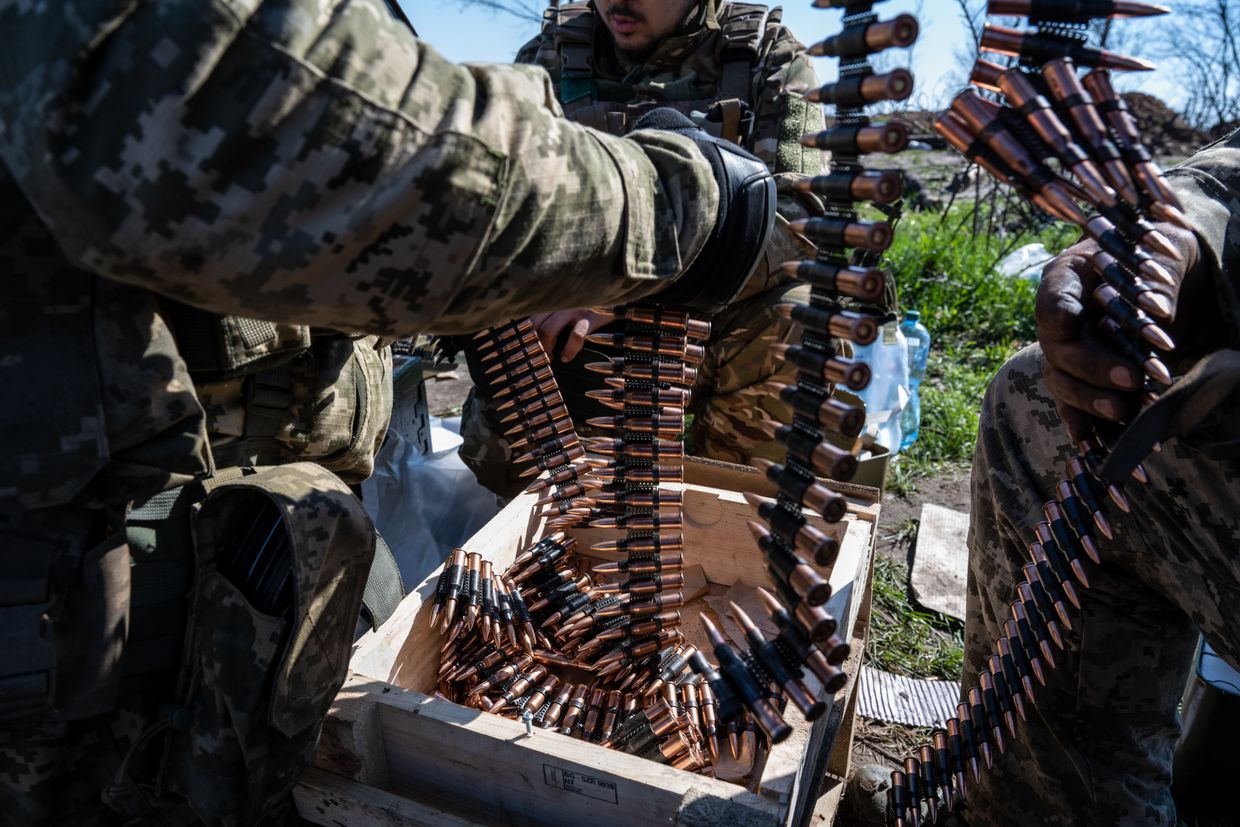
‘Like any technology, it’s a race’ — UK’s largest ammo maker rebooting chemistry to break NATO’s dependence on explosive imports
Russia’s war in Ukraine has drained Western ammunition stocks. Despite years of claimed weapons ramp-ups, NATO’s arms manufacturing is still not refilling those stocks apace, let alone making it to Ukraine in needed mass. The West has come to recognize that these shortages are due to the offshoring
Lithuania signs memorandum with Northrop Grumman, Nammo amid Russian threat to regional securityThe Kyiv IndependentKollen Post
Lithuania signs memorandum with Northrop Grumman, Nammo amid Russian threat to regional security
  •  

Ukraine won't receive NATO invitation at The Hague summit, Lithuanian FM says

Ukraine won't receive NATO invitation at The Hague summit, Lithuanian FM says

An invitation for Ukraine to become a member of NATO "is not on the agenda" of the upcoming summit in The Hague, Lithuanian Foreign Minister Kestutis Budrys said in an interview with the Baltic News Service published on June 18.

"This issue is certainly not on the NATO agenda and nobody has formulated an expectation that there will be an invitation in The Hague, nor have we heard that from the Ukrainians themselves," Budrys said in comments quoted by the LRT broadcaster.

"There is no such expectation that there will be breakthrough decisions, neither before the Washington summit nor now before the Hague summit – it is not on the agenda."

The comments, coming less than a week before the summit, hint at a shifting rhetoric within the alliance regarding Ukraine's potential membership after U.S. President Donald Trump took office.

The new Trump administration has spoken out against Kyiv's accession, and the U.S. president even echoed the false Russian narratives that its efforts to join NATO helped instigate Russia's full-scale invasion.

Unlike during the previous summits, the final communique may reportedly completely omit the topic of Ukraine's membership, as NATO members seek to avoid a conflict with Trump. The gathering was also preceded by rumors that Ukraine may not be invited due to U.S. opposition, but the invitation was extended in the end.

In spite of these tensions, Budrys said that the summit should keep its focus on Ukraine, stressing that the war-torn country is part of the Euro-Atlantic security space.

Ukraine applied for NATO membership in September 2022, months after the outbreak of the full-scale Russian invasion. The alliance has signaled support for Kyiv's accession efforts in previous years, even declaring at the Washington summit in 2024 that Ukraine's path to membership is "irreversible" — but stopping short of a formal invite.

Kyiv's swift entry seems increasingly unlikely amid opposition from the U.S. and several other members, even though NATO Secretary General Mark Rutte recently reaffirmed that a political commitment to Ukraine's membership stands. Ukraine would need support from all 32 members to join.

It remains uncertain whether The Hague summit will lead to any breakthroughs regarding Ukraine. Following signals that U.S. President Donald Trump may not attend the event, the Guardian reported that President Volodymyr Zelensky may skip the summit as well.

Tired of military aid delays, Ukraine has designed its own ballistic missile — and it’s already in mass-production
Ukraine announced on June 13 that its short-range Sapsan ballistic missile would go into mass production, a major development in Kyiv’s ongoing efforts to domestically produce the weapons it needs to fight Russia’s full-scale invasion. As Ukraine faces growing challenges in securing weapons from Western partners, and Russia continues launching
Ukraine won't receive NATO invitation at The Hague summit, Lithuanian FM saysThe Kyiv IndependentYuliia Taradiuk
Ukraine won't receive NATO invitation at The Hague summit, Lithuanian FM says
  •  

Russia exploits medical exemptions to bypass sanctions, Lithuania says

Russia exploits medical exemptions to bypass sanctions, Lithuania says

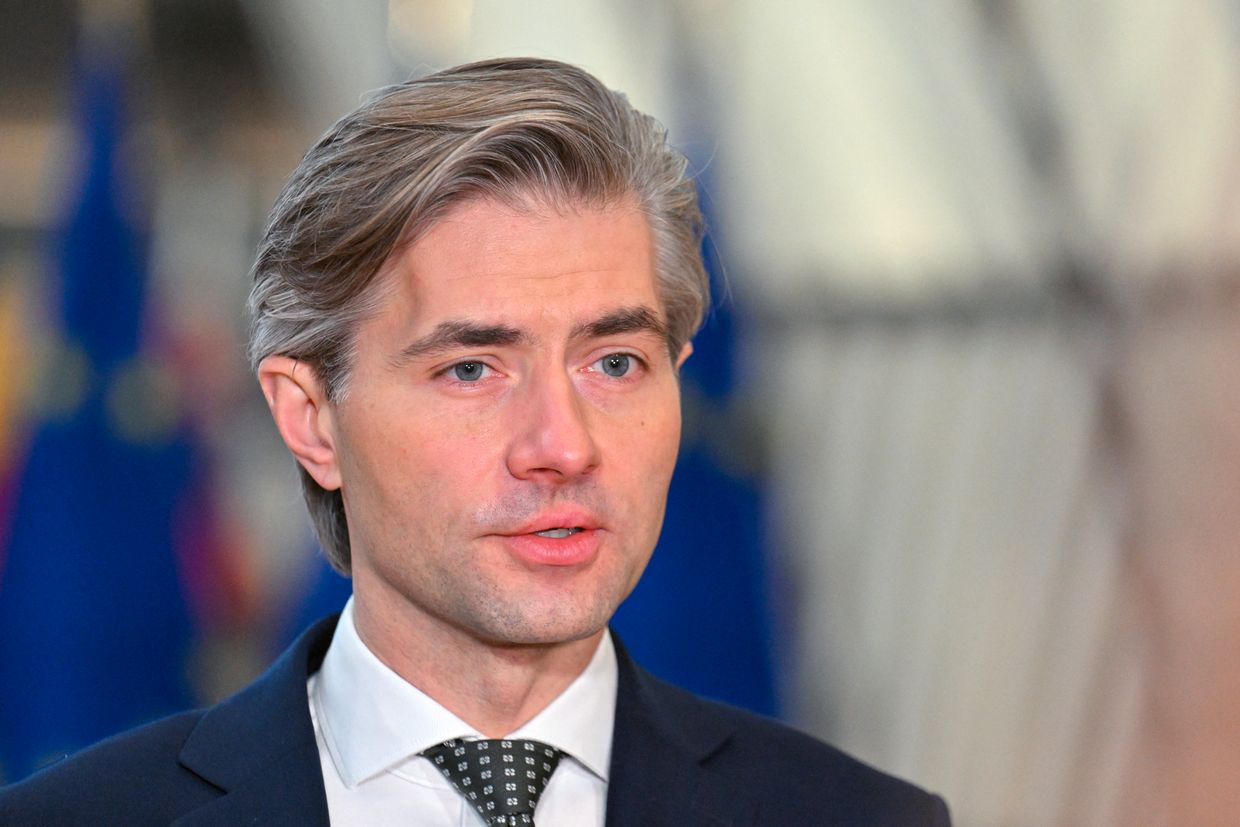
Russia is exploiting automatic medical exemptions in EU sanctions regulations to import dual-use goods for its military, Lithuania's Deputy Foreign Minister Gabija Grigaite-Daugirde told Bloomberg on June 12.

According to Grigaite-Daugirde, Lithuanian customs authorities blocked 28,854 goods in 2024 that were allegedly destined for Russia and Belarus "under the guise of medical exemption."

Many of the flagged shipments contained parts for motor vehicles, refrigerators, copiers, and microelectronics — all of which can have military applications.

"We have witnessed parts for motor vehicles, refrigerators, copying machines, and other types of microelectronics being exported directly to Russia, claiming that these are bound for medical use," she said.

Under current EU rules, medical exemptions are automatically granted, leaving customs authorities to investigate the shipments retroactively. Lithuania has called for reforms allowing exporters to apply for exemptions before shipments are approved.

"Leaving automatic exemptions from sanctions for medical goods is like closing a door but leaving a keyhole," Grigaite-Daugirde said. "Russia definitely finds a way to pass."

As Moscow shifts to a wartime economy and seeks Western-made technology for its arms production, its efforts to circumvent sanctions have grown "desperate," she added.

Lithuania, a key EU and NATO member bordering both Belarus and Russia's heavily militarized Kaliningrad exclave, has taken a hardline stance on enforcement and regularly pushes for tougher sanctions within the bloc.

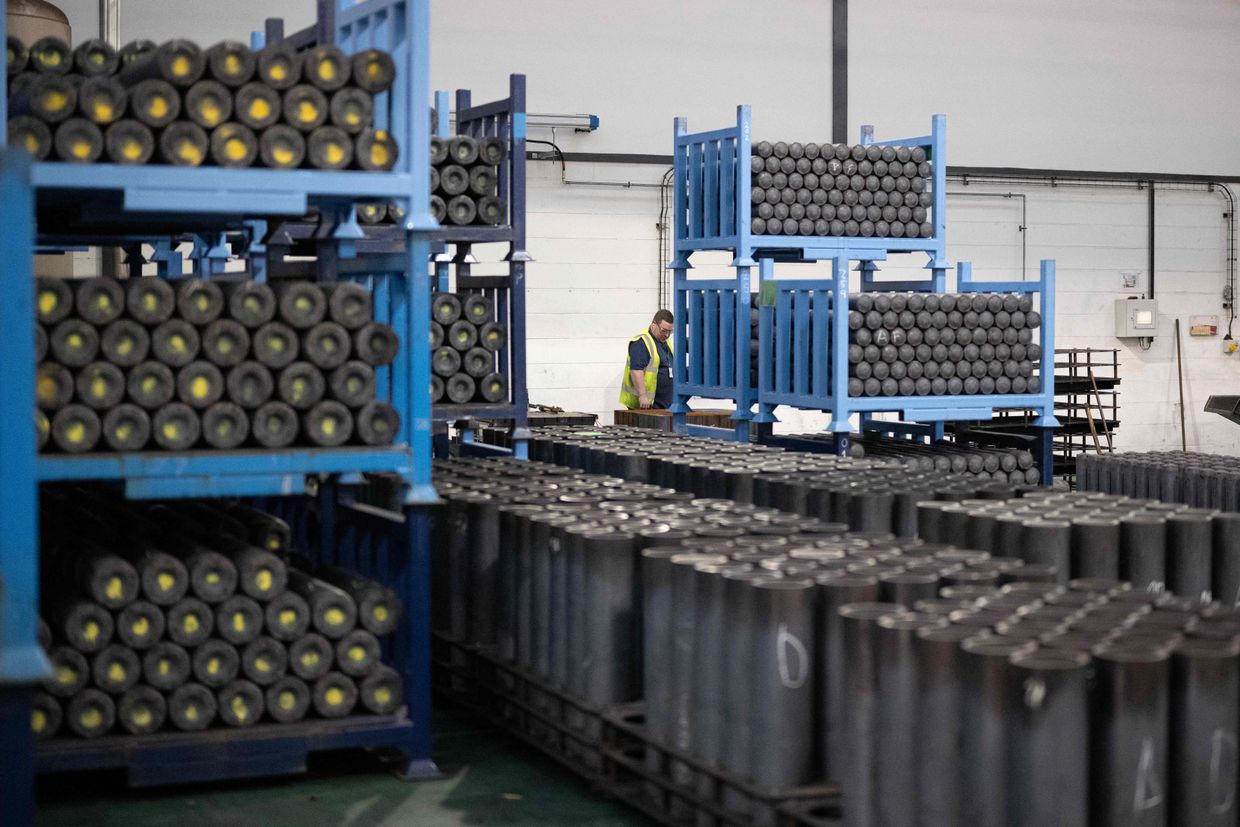
Why can’t the West match Russia’s ammunition production?
The West is failing to catch up to Russia’s production of the most basic unit of war for the past half-millennium — gunpowder. The modern propellants and explosives that power war have largely been offshored. While Western manufacturers are churning out shell casings, they are short on the materials to fill
Russia exploits medical exemptions to bypass sanctions, Lithuania saysThe Kyiv IndependentKollen Post
Russia exploits medical exemptions to bypass sanctions, Lithuania says
  •  
❌