Vue lecture

Russia’s tank shield shot down seven drones—Ukraine destroyed the tank anyway
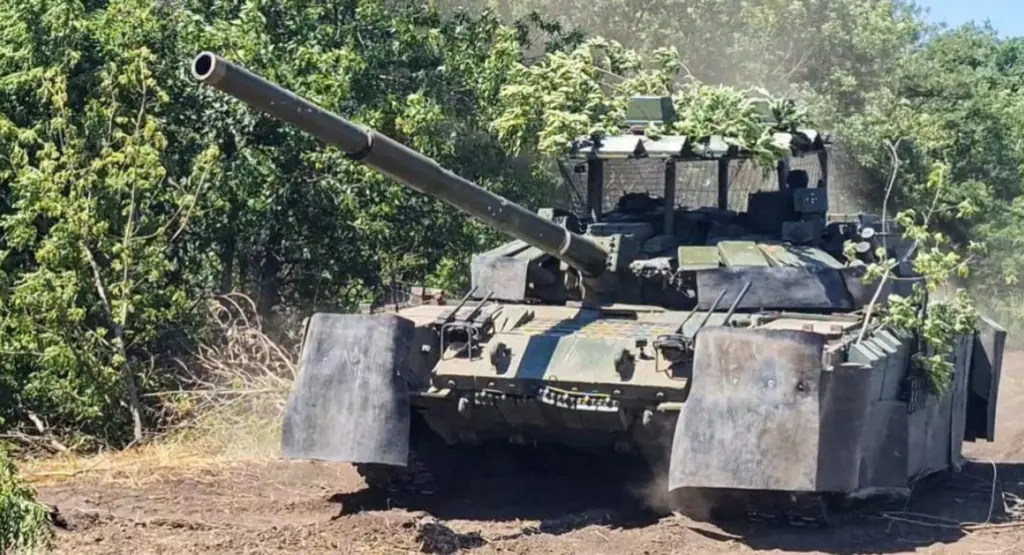
T-72B3A tank equipped with the Arena-M active protection system (APS). Photo: iz.ru/Dmitry Astrakhan

Russia wants its tanks moving again after two years of Ukrainian drones freezing its armored assaults, the Institute for the Study of War (ISW) reported. Its main bet is a tank-mounted system that fires interceptors at incoming drones. The system worked on at least one tank, but Russia lost it anyway.

Since 2022, cheap Ukrainian FPV drones have turned the open approach to any position into ground where armor rarely survives, forcing Russia into slow, infantry-led assaults and years of experiments to armor its tanks against drones.

The shield shot down some drones. Ukraine still killed the tank.

In early August, footage surfaced of Ukrainian drones destroying a Russian tank fitted with the Arena-M active protection system in the Dobropillia sector of Donetsk Oblast. Militarnyi identified the vehicle as a T-72B3A, side number 133, and Militarnyi reported that Ukraine's Security Service (SBU) released the clip. ISW geolocated the footage near occupied Volodymyrivka, east of Dobropillia.
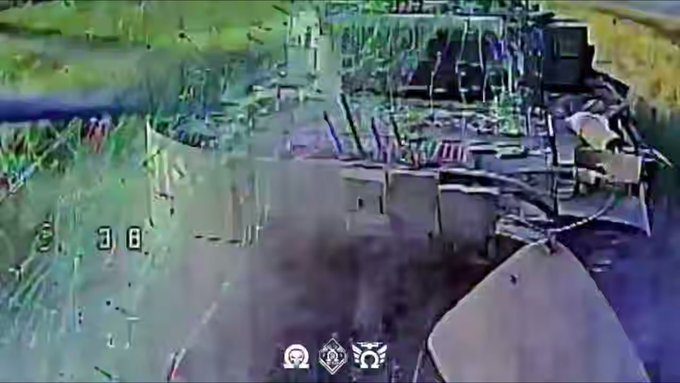
A T-72B3A the moment before a Ukrainian drone strikes.
Explore further

Russia took the cages off its newest tanks. The new Arena-M shield bought them a few minutes.

Dmytro Putiata, a Ukrainian combat drone specialist who posts as kriegsforscherD, spoke with the unit involved. On that tank, Arena-M shot down seven drones before its magazine ran dry, he said.

"Unfortunately, it works," Putiata wrote.

It still wasn't enough. Ukrainian crews finished the tank off with more drones. It took 15 to 20 first-person-view (FPV) drones to kill each vehicle, Putiata said. Footage shows the tank moving with its interceptor cells empty. It was the first time the Arena-M was credited with shooting drones down in combat.

Russia keeps sending tanks into that ground for a reason

Russian forces are experimenting with new technology to restore mechanized maneuver and break out of positional warfare—the static, trench-like fighting that has defined the front, ISW reported. They are fitting tanks with active protection systems to help armor survive in the "kill zone," the open ground where drones and other weapons destroy almost anything that moves.
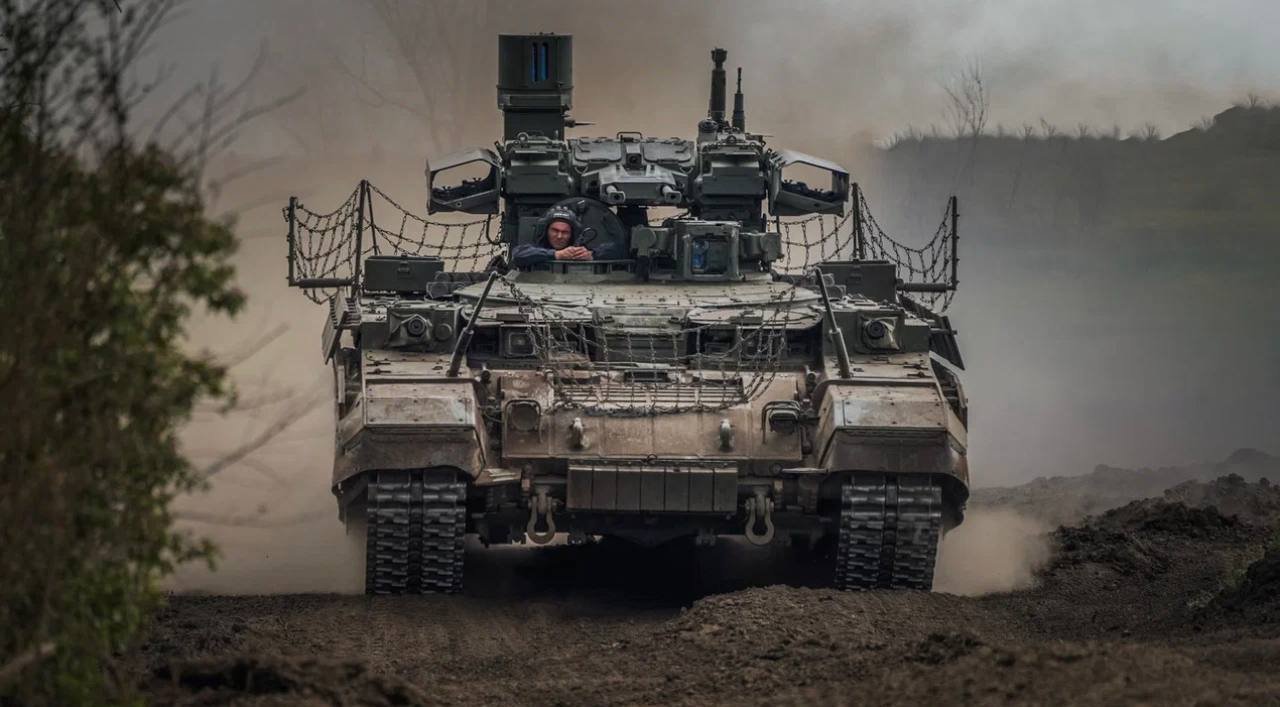
A BMP-T in 2026.
Explore further

Russia’s weirdest armored vehicle was built to fight infantry. The infantry stopped coming

ISW judged that Arena-M alone cannot shield Russian assaults from the drones, let alone the rest of Ukraine's weapons. Russian commanders have largely kept tanks off the roads because drones kill them faster than factories rebuild them. In these assaults, the tank's job is less to fight than to survive long enough to drop infantry closer to Ukrainian lines. Russia will likely keep trying to restore maneuver even after its late-July mechanized assault in the Dobropillia sector failed, ISW added.

Why Russia wants the shield: the cages don't let tanks fight

The bolt-on armor carries a cost. Cope cages and "turtle" shells weigh tanks down and often jam the turret so the main gun can't aim. That trade-off is part of why Russia wants Arena-M: protection without the bulk, so a tank can still move and shoot. Russia recently sent tanks stripped of the welded cages, carrying the shield instead.
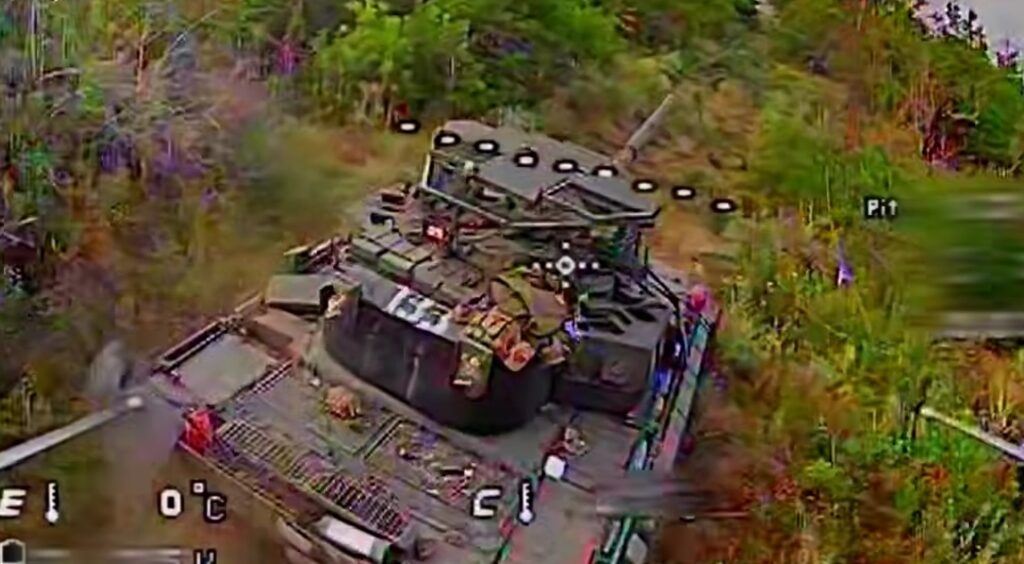
Moment of impact of the T-72B3M tank “133,” equipped with the Arena active protection system and empty countermeasure launcher cells.
Moment of impact of the T-72B3M tank “133,” equipped with the Arena active protection system and empty countermeasure launcher cells. Screenshot from an SBU video.

Arena-M is not new. Active protection systems like it were first built to stop anti-tank missiles, and Russia adapted this one to catch drones. The system's lineage dates back to the late Soviet era, and Russian industry has for years claimed mass deployment that never came. Designers worked on fitting it to T-72B3 and T-90M tanks since at least 2019, yet only single vehicles turned up by 2024—some used to shoot a propaganda film rather than fight.
  •  

Russia cannot launch 500 drones every day, Ukraine's intel chief says

Russia cannot launch 500 drones every day, Ukraine's intel chief says

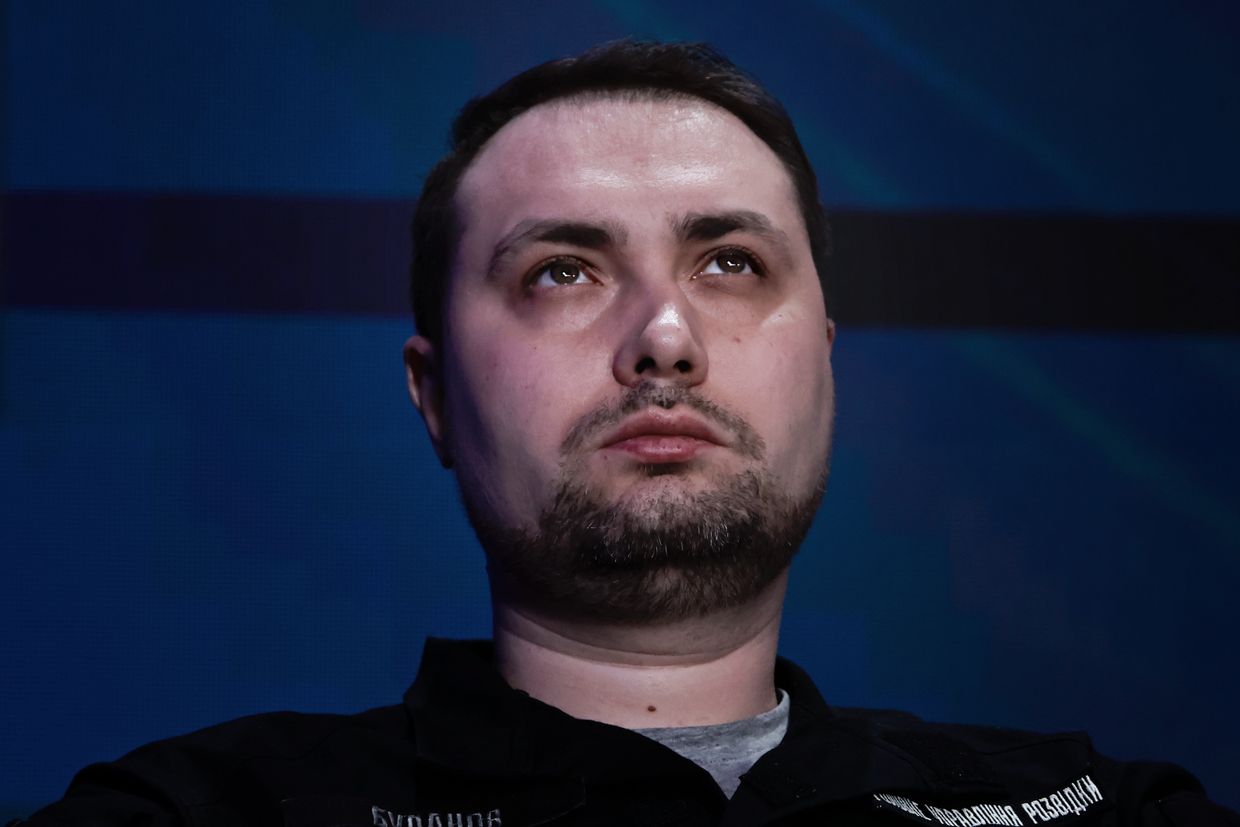
Russia has the capacity to launch as many as 500 Iranian-designed Shahed attack drones at Ukraine in a single attack, but doing so on a daily basis is not possible, Ukraine's military intelligence chief Kyrylo Budanov said on July 2, according to Suspilne.

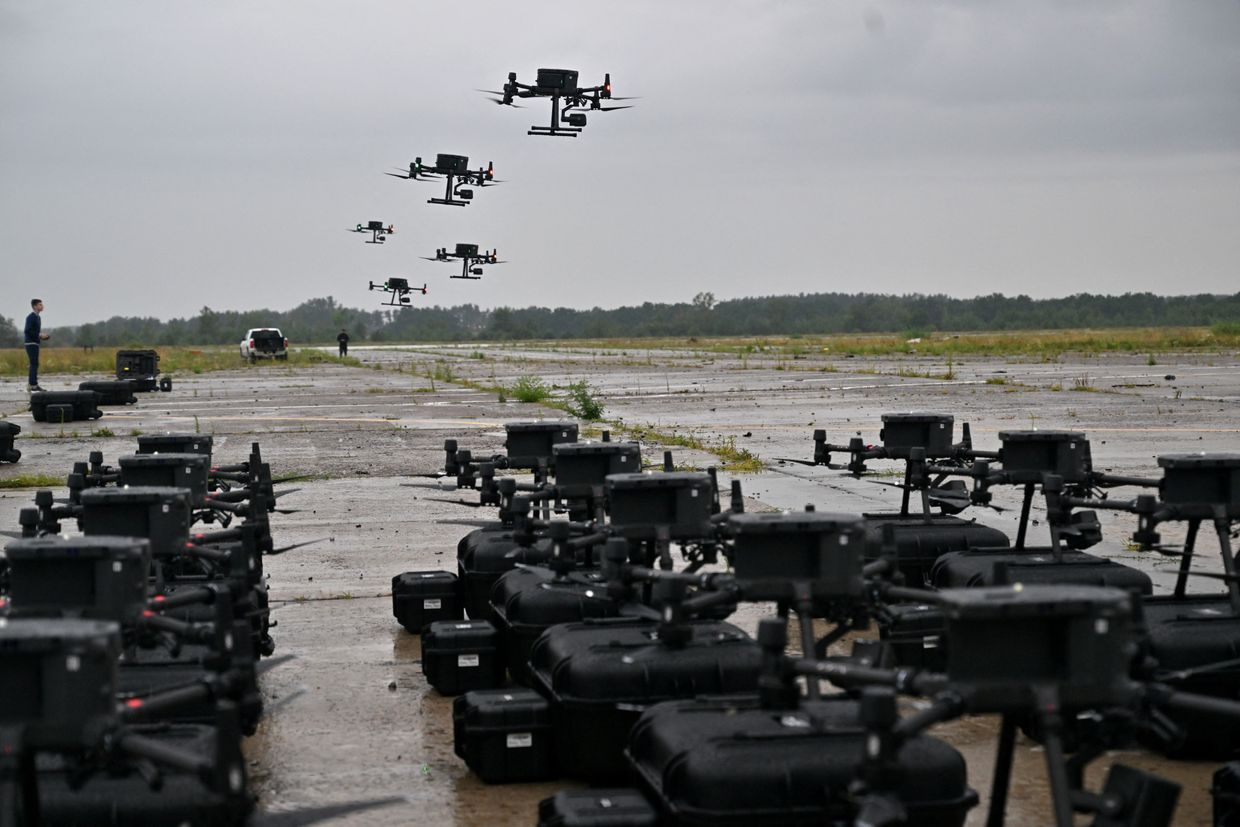
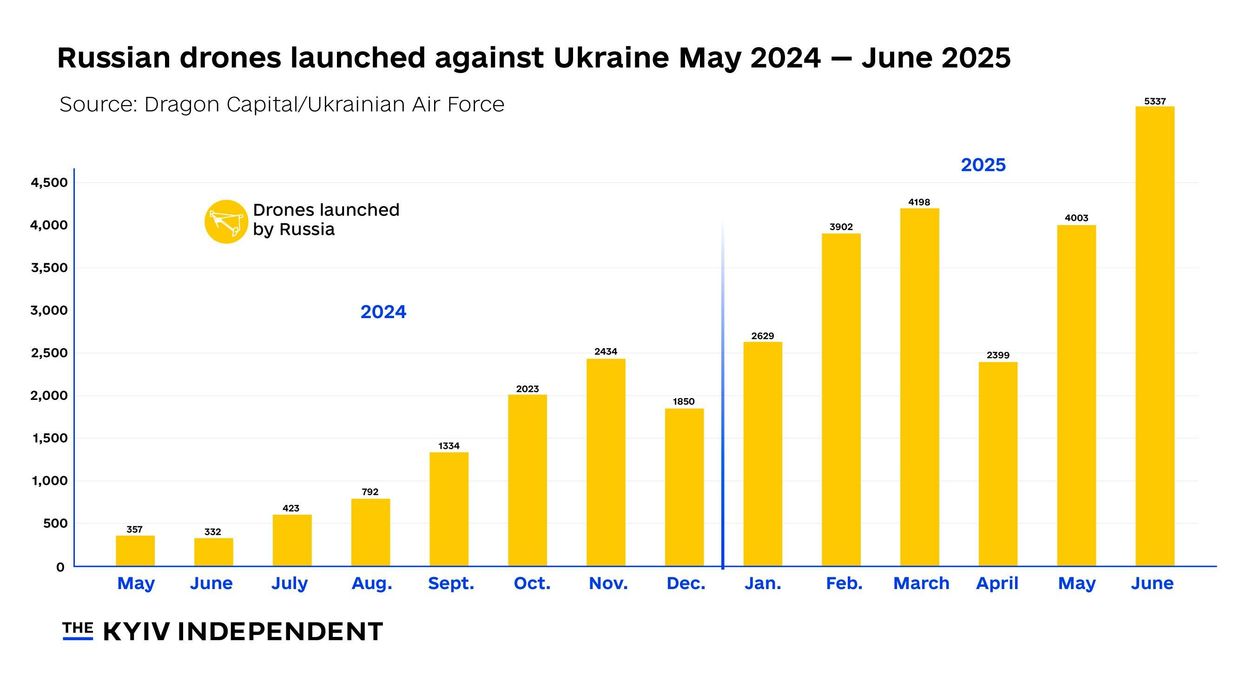
In recent weeks, Russia has intensified its drone assaults on Ukrainian cities, often launching hundreds in a single day. The largest aerial attack since the start of the full-scale invasion occurred overnight on June 29, when Moscow launched 477 drones and 60 missiles across Ukraine.

"Launching 450–500 Shaheds every day — it's just not realistic," said Budanov during a ceremony recognizing five Ukrainian intelligence achievements in the national record book, according to public broadcaster Suspilne.

"But unfortunately, they do have the ability to do it periodically. They can realistically launch up to 500 in one strike," Budanov added.

Budanov also said Russia is upgrading the capabilities of the Shahed-type drones by improving their CRPA (Controlled Reception Pattern Antenna) systems, which protect the drones from GPS jamming. He noted that Russian engineers are now producing 16-channel CRPA antennas, which are harder to counter electronically.

Russia cannot launch 500 drones every day, Ukraine's intel chief says
Russian drones launched against Ukraine by month (Nizar al-Rifai/The Kyiv Independent)

"These antennas are currently produced in Russia, but the engineer who developed this CRPA antenna was here in Ukraine," Budanov said.

"Back in the early 2000s, no one here needed it, so the engineer moved to Russia. One (of the two engineers involved in the development) has already died under unclear circumstances. The other is still alive, though probably not for long."

Russia has used thousands of Shahed-type drones throughout its full-scale invasion to strike Ukrainian cities and infrastructure, often in large overnight waves. Ukrainian air defenses have adapted over time but face growing challenges as Moscow improves drone resilience and electronic warfare capabilities.

President Volodymyr Zelensky said that Moscow has launched 28,743 Shahed-type drones at Ukraine since the start of Russia's full-scale invasion.

Budanov also said Russia has made unsuccessful attempts to develop its own naval drones. The last known effort came in early June, when experimental models detonated before reaching Ukrainian territorial waters, he said.

"They didn't achieve results. Based on our information, they were heading toward the city of Yuzhne, searching for targets," he said.

Ukraine has been using domestically developed Magura naval drones to target Russian military assets in the Black Sea, keeping much of Russia's fleet pinned in port.

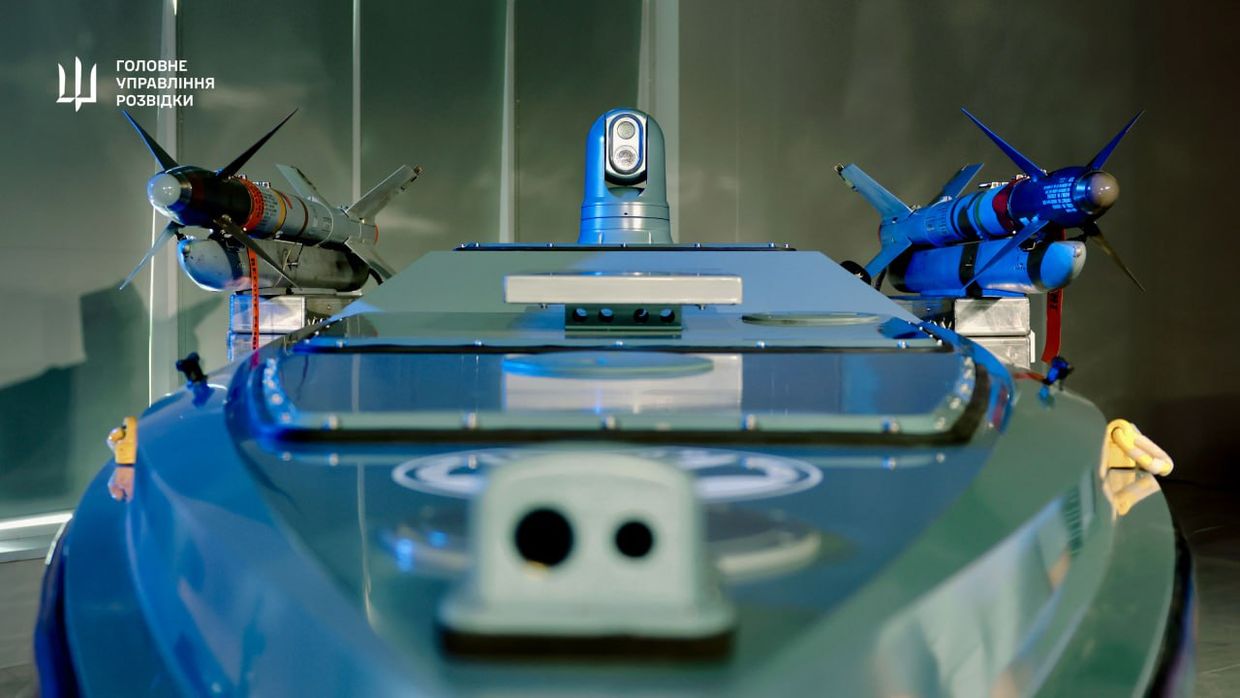
Despite their small size, the unmanned surface vessels have proven effective, including in a May 2 operation when Ukraine's military intelligence used Magura-7 drones armed with air-to-air missiles to shoot down two Russian Su-30 fighter jets near Novorossiysk. It was the first recorded instance of fighter jets being downed by naval drones.

Ukraine shows its latest ‘ship-killer’ Magura drone series to the public for the first time
The Magura drones, as well as the Sea Baby drones of the Security Service of Ukraine (SBU), were pivotal in turning the tide of the war in the Black Sea, destroying or damaging Russian ships and other assets.
Russia cannot launch 500 drones every day, Ukraine's intel chief saysThe Kyiv IndependentMartin Fornusek
Russia cannot launch 500 drones every day, Ukraine's intel chief says
  •  

Ukraine approves new 'Murakha' ground robot for combat use

Ukraine approves new 'Murakha' ground robot for combat use

The Defense Ministry has approved the Ukrainian-made ground-based robotics complex "Murakha" ("Ant") for combat operations, the ministry announced on June 28.

Since 2024, Ukraine has been scaling up robotics development in hopes that mass production of unmanned ground vehicles (UGVs) will "minimize human involvement on the battlefield."

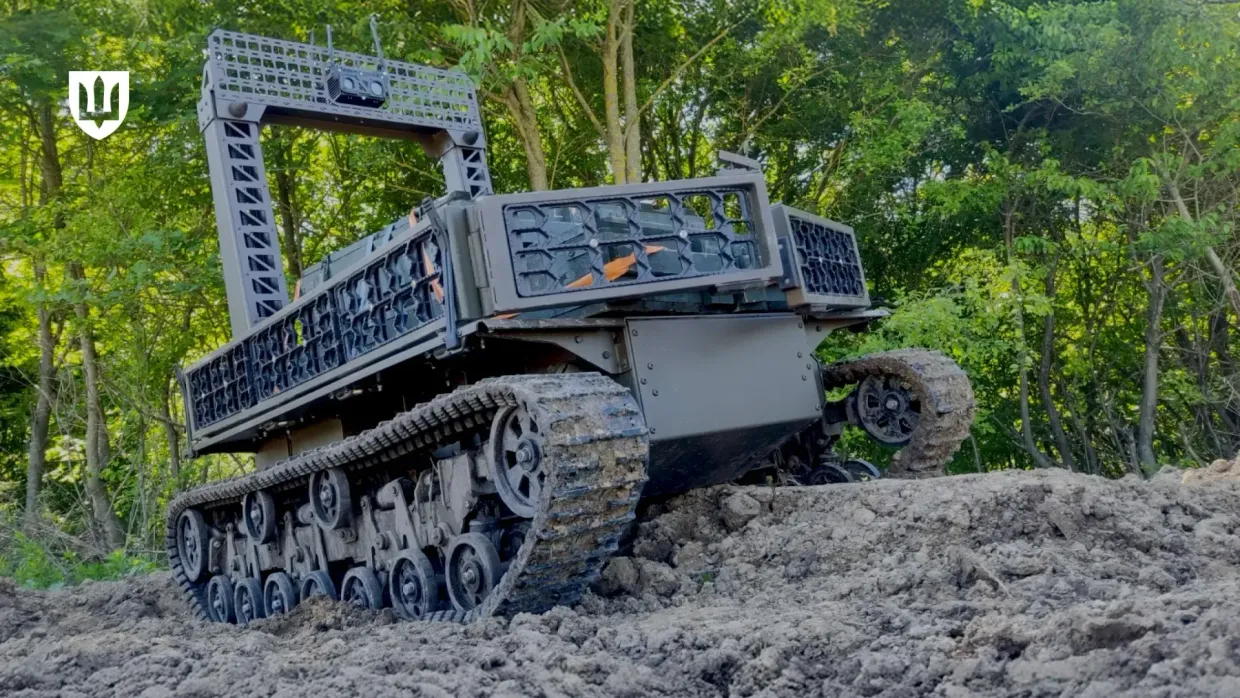
The Murakha is a tracked robotic platform designed to support front-line units working under challenging conditions, such as under enemy artillery and in heavily mined terrain, the Defense Ministry said.

Its larger size makes it one of Ukraine's leading UGVs in terms of load capacity. The Murakha can reportedly carry over half a ton of weight across dozens of kilometers. It can also cross difficult terrain and shallow water.

According to the Defense Ministry, the Murakha's multiple control channels allow it to function successfully even in areas of the battlefield where Russian electronic warfare (EW) systems are operating.

Mobile robots are capable of performing several tasks on the battlefield, including offensive and defensive activities, evacuation of the wounded, logistical support for units, and mining and demining.

In April, the Defense Ministry unveiled the D-21-12R UGV, a ground-based robot equipped with a machine gun.

Ukrainian drones strike missile, drone arsenal in Russia’s Bryansk Oblast
Ukraine’s military intelligence (HUR) struck on June 28 the 1060th Material-Technical Support Center in the city of Bryansk, Ukraine’s General Staff said. The facilities store a Russian missile and drone arsenal, Ukrainska Pravda reported, citing a source in HUR.
Ukraine approves new 'Murakha' ground robot for combat useThe Kyiv IndependentDmytro Basmat
Ukraine approves new 'Murakha' ground robot for combat use
  •  
❌