Vue normale

  • ✇Euromaidan Press
  • Russia’s tank shield shot down seven drones—Ukraine destroyed the tank anyway
    Russia wants its tanks moving again after two years of Ukrainian drones freezing its armored assaults, the Institute for the Study of War (ISW) reported. Its main bet is a tank-mounted system that fires interceptors at incoming drones. The system worked on at least one tank, but Russia lost it anyway. Since 2022, cheap Ukrainian FPV drones have turned the open approach to any position into ground where armor rarely survives, forcing Russia into slow, infantry-led as
     

Russia’s tank shield shot down seven drones—Ukraine destroyed the tank anyway

11 août 2026 à 12:52

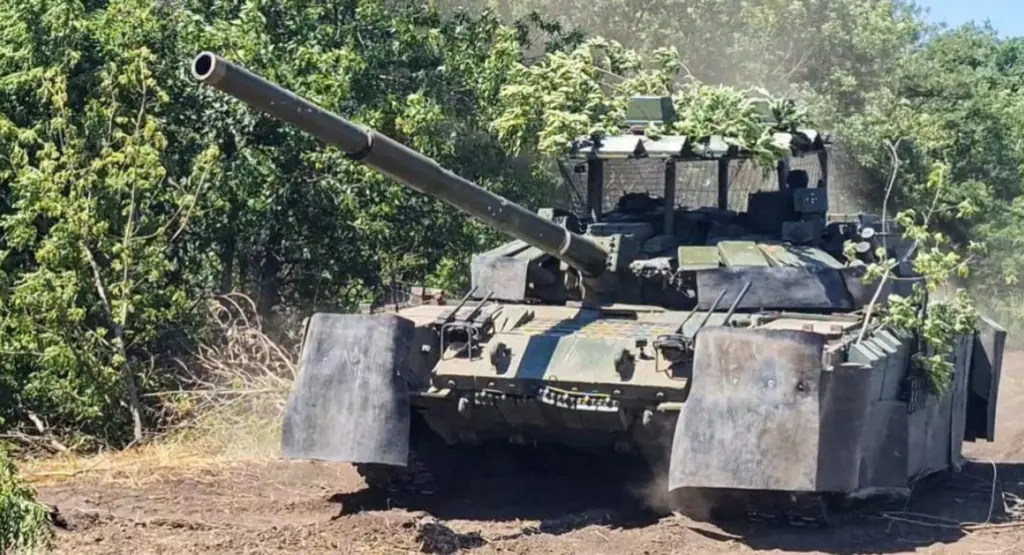
T-72B3A tank equipped with the Arena-M active protection system (APS). Photo: iz.ru/Dmitry Astrakhan

Russia wants its tanks moving again after two years of Ukrainian drones freezing its armored assaults, the Institute for the Study of War (ISW) reported. Its main bet is a tank-mounted system that fires interceptors at incoming drones. The system worked on at least one tank, but Russia lost it anyway.

Since 2022, cheap Ukrainian FPV drones have turned the open approach to any position into ground where armor rarely survives, forcing Russia into slow, infantry-led assaults and years of experiments to armor its tanks against drones.

The shield shot down some drones. Ukraine still killed the tank.

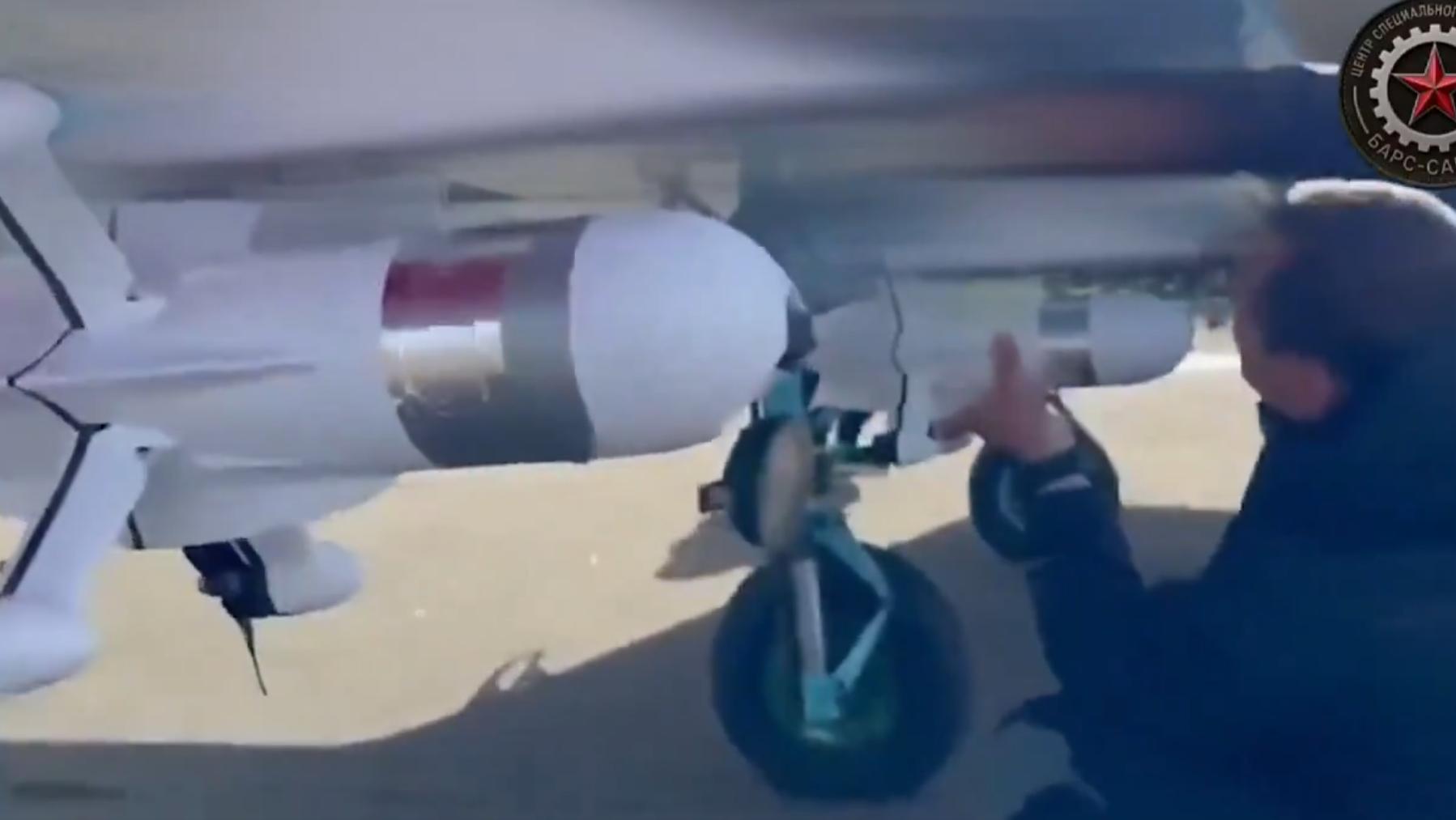
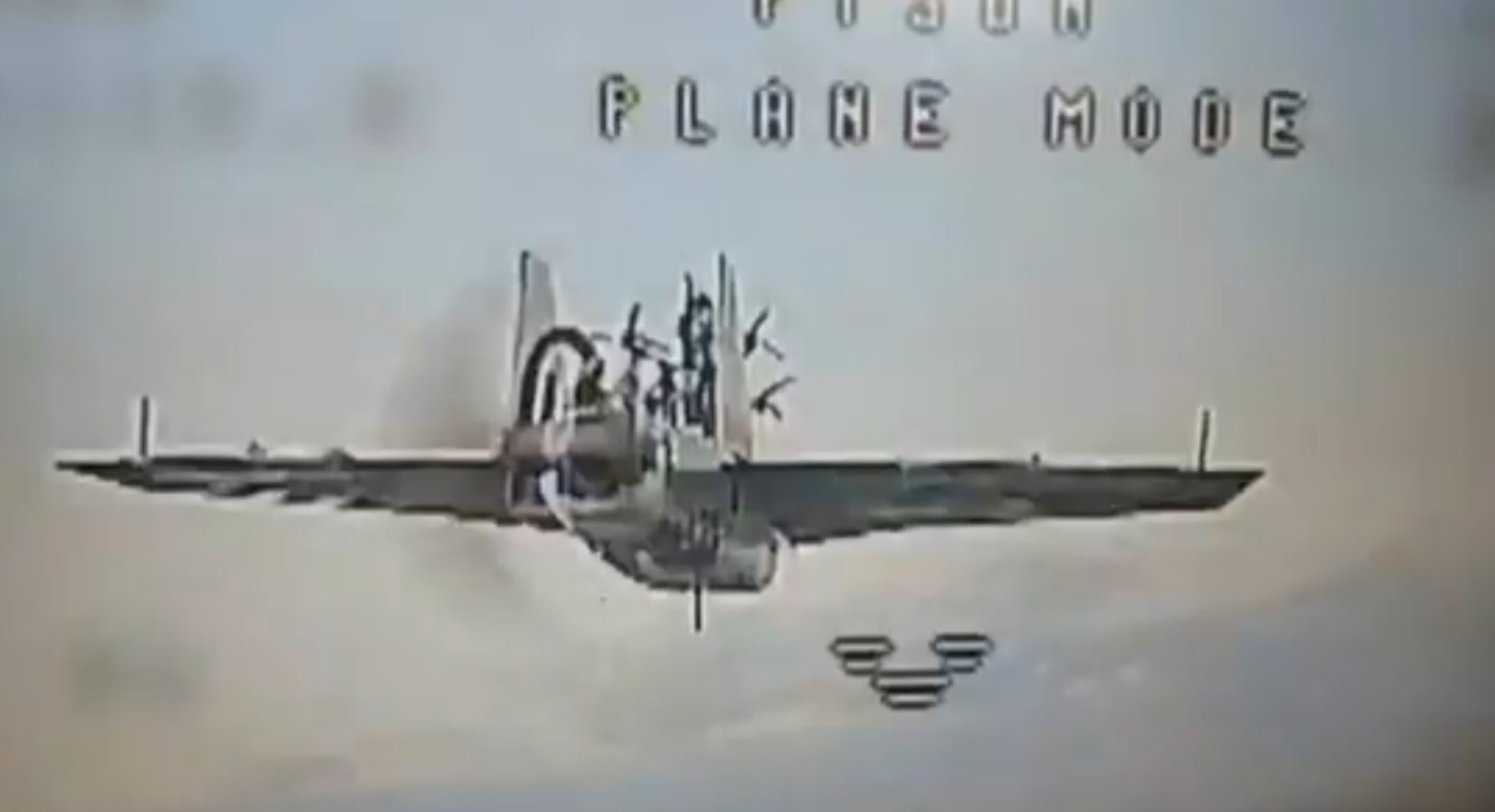
In early August, footage surfaced of Ukrainian drones destroying a Russian tank fitted with the Arena-M active protection system in the Dobropillia sector of Donetsk Oblast. Militarnyi identified the vehicle as a T-72B3A, side number 133, and Militarnyi reported that Ukraine's Security Service (SBU) released the clip. ISW geolocated the footage near occupied Volodymyrivka, east of Dobropillia.

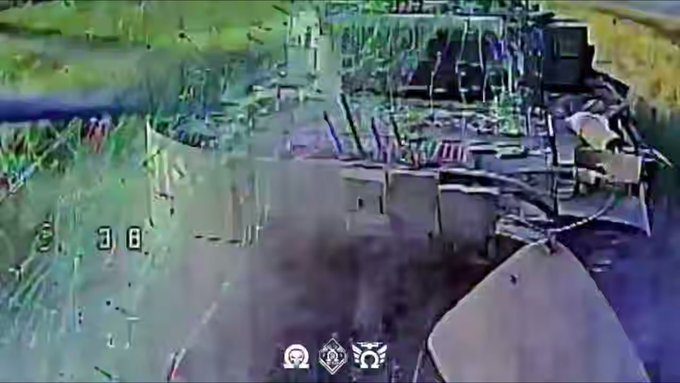
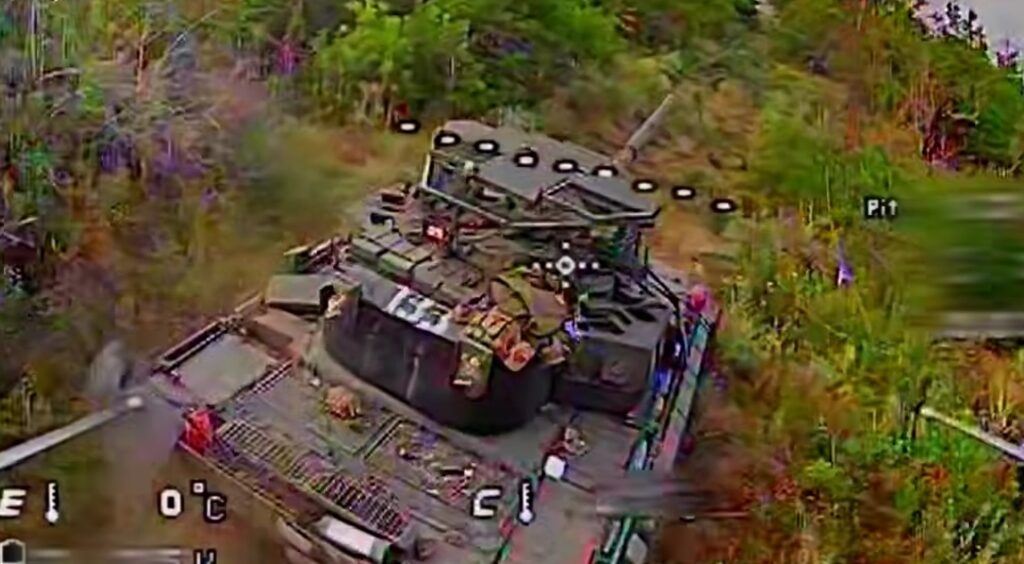
A T-72B3A the moment before a Ukrainian drone strikes.
Explore further

Russia took the cages off its newest tanks. The new Arena-M shield bought them a few minutes.

Dmytro Putiata, a Ukrainian combat drone specialist who posts as kriegsforscherD, spoke with the unit involved. On that tank, Arena-M shot down seven drones before its magazine ran dry, he said.

"Unfortunately, it works," Putiata wrote.

It still wasn't enough. Ukrainian crews finished the tank off with more drones. It took 15 to 20 first-person-view (FPV) drones to kill each vehicle, Putiata said. Footage shows the tank moving with its interceptor cells empty. It was the first time the Arena-M was credited with shooting drones down in combat.

Russia keeps sending tanks into that ground for a reason

Russian forces are experimenting with new technology to restore mechanized maneuver and break out of positional warfare—the static, trench-like fighting that has defined the front, ISW reported. They are fitting tanks with active protection systems to help armor survive in the "kill zone," the open ground where drones and other weapons destroy almost anything that moves.

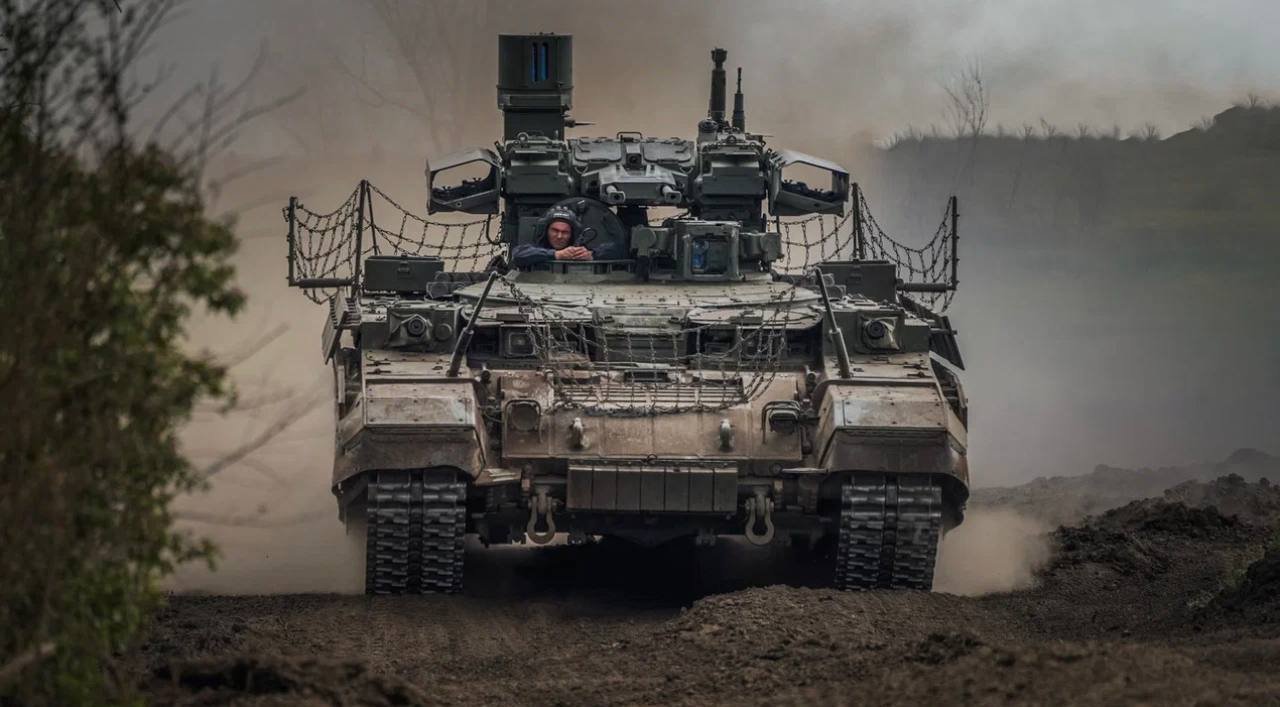
A BMP-T in 2026.
Explore further

Russia’s weirdest armored vehicle was built to fight infantry. The infantry stopped coming

ISW judged that Arena-M alone cannot shield Russian assaults from the drones, let alone the rest of Ukraine's weapons. Russian commanders have largely kept tanks off the roads because drones kill them faster than factories rebuild them. In these assaults, the tank's job is less to fight than to survive long enough to drop infantry closer to Ukrainian lines. Russia will likely keep trying to restore maneuver even after its late-July mechanized assault in the Dobropillia sector failed, ISW added.

Why Russia wants the shield: the cages don't let tanks fight

The bolt-on armor carries a cost. Cope cages and "turtle" shells weigh tanks down and often jam the turret so the main gun can't aim. That trade-off is part of why Russia wants Arena-M: protection without the bulk, so a tank can still move and shoot. Russia recently sent tanks stripped of the welded cages, carrying the shield instead.

Moment of impact of the T-72B3M tank “133,” equipped with the Arena active protection system and empty countermeasure launcher cells.
Moment of impact of the T-72B3M tank “133,” equipped with the Arena active protection system and empty countermeasure launcher cells. Screenshot from an SBU video.

Arena-M is not new. Active protection systems like it were first built to stop anti-tank missiles, and Russia adapted this one to catch drones. The system's lineage dates back to the late Soviet era, and Russian industry has for years claimed mass deployment that never came. Designers worked on fitting it to T-72B3 and T-90M tanks since at least 2019, yet only single vehicles turned up by 2024—some used to shoot a propaganda film rather than fight.

  • ✇404 Media
  • The Roboguard Revolution is Short-Circuiting
    404 Media is publishing this article in partnership with Proof News, a new nonprofit media outlet investigating the social impacts of AI. Join their mailing list here and read the version of this article on their site here.
     

The Roboguard Revolution is Short-Circuiting

10 août 2026 à 09:00
The Roboguard Revolution is Short-Circuiting

404 Media is publishing this article in partnership with Proof News, a new nonprofit media outlet investigating the social impacts of AI. Join their mailing list here and read the version of this article on their site here.

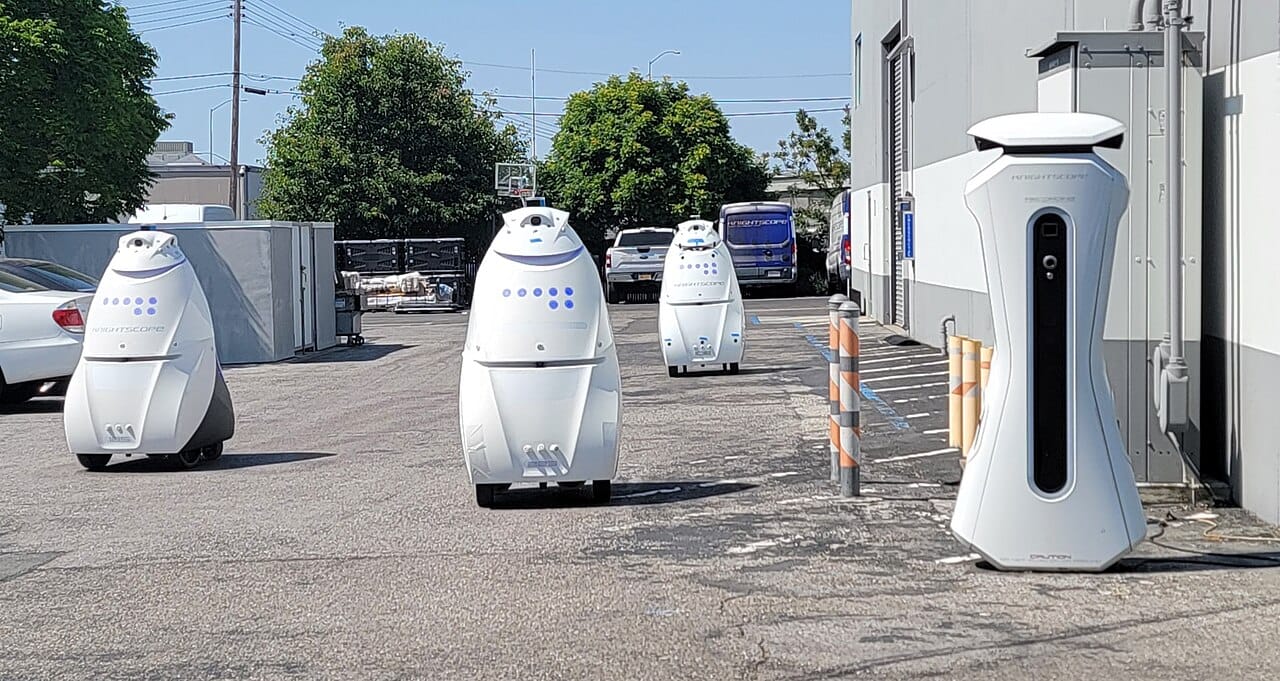
Robotics companies promise that video-camera-toting security robots can deter and detect crime. But many companies are rethinking the approach after a trail of canceled contracts and questions about whether the artificial intelligence-powered bots are meeting the needs of businesses and local governments.

Proof News found evidence of at least 21 security robot deployments since 2015. We contacted contract holders and combed news articles and determined that at least 13 of those programs have ended. Silicon Valley-based Knightscope secured the most security robot contracts, according to Proof’s analysis, and also suffered the bulk of cancellations.

For example, New York City’s then-Mayor Eric Adams installed a Knightscope robot on the overnight shift at the Times Square subway station, but the program was scrapped when the pilot expired in 2024. City leaders did not respond to Proof News’ questions about why the robot wasn’t renewed. By the end of its assignment, it was reportedly gathering dust in an empty storefront. 

Outside Columbus, Ohio, the city of Dublin pulled the plug on a Knightscope robot in May, ending its two-year pilot program after less than 10 months. The city enlisted the robot, dubbed DubBot, to patrol a downtown park, but city spokeswoman Robyn Gray said it “did not fully meet our operational needs,” and failed to identify any criminal incidents or lead to any tickets or arrests.

Sheila Sparks isn’t surprised. Her family has operated Sparks Protection Services near Columbus for more than a decade and said a human touch is essential to de-escalating sticky situations. 

“A robot can’t do that,” Sparks said. 

Seeking a new path forward in the security industry, Knightscope CEO William Santana Li said the company is forging a new model, combining its robots and AI-powered software with another key ingredient: human security guards. Knightscope announced it purchased Event Risk LLC, a national security guard firm, earlier this year.

Knightscope has incurred net losses since inception in 2013, according to its most recent quarterly filing with the U.S. Securities and Exchange Commission, and is $273 million in debt. Knightscope hopes its pivot to incorporate people will give it a greater share of the physical security market — which the company believes is worth an estimated $230 billion annually.

Li declined to answer questions about the disbanded programs, but said in an email, “Technology cannot do everything — and neither can people — but the combination can be very powerful.” 

ROBOTS VS WORLD

Knightscope and other American made robotics companies could get a boost from the recent U.S. Federal Communications Commission ban on foreign-made mobile robot imports. Officials cast the move as a national security imperative given the machines’ surveillance capabilities. 

But American roboticists are facing more than foreign competition. Robots have long struggled to navigate environments constantly in flux. AI can’t handle the ambiguous situations that security guards and police face daily, said Missy Cummings, a robotics professor at George Mason University. While AI decision systems perform well in narrow circumstances, she said, they can perform “miserably” as soon as algorithms are outside their training dataset.

“AI and robots for security have had a long problematic history,” Cummings said in an email, speaking generally. “I do not see this changing anytime soon.” 

In 2016, a Knightscope robot deployed at a shopping center in Silicon Valley rolled over a 16-month-old boy's foot. The company apologized for the “freakish accident” at the time, saying in a statement that the robot veered to avoid the child, who ran backwards and directly into the machine. The next year, one flopped into a Washington, D.C. fountain. The company responded with humor, tweeting: “BREAKING NEWS: “I heard humans can take a dip in the water in this heat, but robots cannot. I am sorry.” Li, meanwhile, told the New York Times that the incident was under investigation and a new robot would be delivered free.

When asked about whether contracts remained active, representatives from neither property  responded.

Then there was a trial at the San Antonio International Airport in 2024. Spokesperson Ana Flores said its Knightscope robot struggled with badge scanning, communication, and finding its way around. A door alarm would sound, she said, but the robot wouldn’t respond efficiently. Airport leadership opted to not move forward with a one-year, $21,000 Knightscope lease following a one-month test.

Meanwhile, private security is booming. Security officers have proliferated in recent years as cities embrace private guards, who earn an average of about $40,000 a year, according to the U.S. Bureau of Labor Statistics, about half that of police officers. 

Robotics companies pitch their autonomous robots — some of which can be equipped with cameras, facial recognition capabilities, and license-plate readers — as another set of eyes. They have no family to go home to and are happy to work nights and weekends.

Security robots promise “an alluring form of surveillance as a service,” Andrew Ferguson, a law professor at George Washington University, said in an email to Proof. In some cases their visible video cameras can “deter crime without having to pay a human being a salary,” he said, but it’s not clear that robots prevent or solve crimes better than people.

“They exist as a physical manifestation — a symbol, if you will — that someone is doing something to address potential crime,” Ferguson said. “Robots are a form of security theater, more optics than results.”

CRUMPLED CONTRACTS

Knightscope isn’t the only one seeing interest fizzle.

Officials in Salem, Oregon, powered off their Daxbots after a three-month pilot with the Oregon-based robotics company earlier this year. They had deployed three Daxbot robots to deter trespassing in a downtown parking garage. The robots recorded license plate numbers, captured photos of vehicles violating parking lot rules, and shared data with police.

Complaints about the parkade are “drastically down” since the pilot ended, according to Salem Police Sgt. Trevor Morrison, but it’s unclear if that’s due to traffic-calming devices or “residual results from the Daxbot patrols.” The pilot ended in April, with city spokesperson Nicole Miller citing no additional funding for robot security. 

Daxbots have also disappeared in Tempe, Arizona. A viral video of one blue-eyed bot being outwitted by an onlooker who it demanded “leave the premises” made its way to “America’s Funniest Home Videos.” When asked about the contract, the mixed-use campus, IDEA Tempe, did not respond. Daxbot didn’t respond to Proof’s questions about why the Salem and Tempe contracts ended. 

Adam Pioth, who posted the video, told Proof that he visited the robots frequently. A few months ago, he noticed the robots no longer shouted he was trespassing. Instead, he said, they would, “stop, look at me, and then just keep going really slow.” And then, he said, they were gone.

Goodbye my friend,” Pioth wrote on Instagram in March, “and thanks for all the fond memories.”

Daxbot is recalibrating its business, rolling into another industry: automated sidewalk assessments. Proof identified at least nine cities nationwide that have contracted with the company since last September to send robots cruising sidewalks to check for compliance with the Americans with Disabilities Act.

Boston Dynamics is best known for its robotic patrol dogs, which were recently deployed to two World Cup stadiums. After Hyundai bought the controlling stake in the robotics company in 2021, it began pushing to develop mass-produced humanoid robots to work in automotive manufacturing.

Atlas, its humanoid robot, delivered the match ball to the referee during a game in July. But the strategy has also spurred rolling strikes at Hyundai Motor’s Korean assembly plants. 

Critics claim police and security robots aren’t proven crime fighters, but are effective at one thing: surveillance.

In 2021, the New York Police Department ended its lease for a Boston Dynamics robotic dog and returned it, The New York Times reported, following public outcry. U.S. Representative Alexandria Ocasio-Cortez called the tool — which could climb stairs and was equipped with cameras, lights, and a two-way communication system — “surveillance ground drones” being “deployed for testing on low-income communities of color.”

Boston Dynamics did not respond to requests for comment. 

“What it’s really doing is building a mass surveillance system that is impossible to hide from,” said Brian Hofer, executive director of the privacy-advocacy nonprofit Secure Justice. “It is not a society I want to live in.”

Steve Rosta, retired highway patrol officer and co-owner of Direct Approach Security Services in Ohio, said robots’ cameras may act as a deterrent, and even catch videos of crimes, but he can’t see a future where the machines are more reliable than a human guard. 

“I’m old school,” Rosta said. “Boots on the ground is always better.”

  • ✇Euromaidan Press
  • Ukraine’s new drone is a cousin to America’s stealth bombers. It reaches Ufa in three hours.
    Ukraine has a new deep strike drone The Bravo has an unusual shape for a drone, with a blended wing and body The shape confers greater efficiency, and thus greater range and payload, at certain speeds Ukraine's latest deep strike drone is one of a kind. The Triada Robotics Bravo features a "blended wing body" design that's rarely seen on a drone. The special platform maximizes lift and minimizes drag, helping the drone fly farther for a given speed and payload
     

Ukraine’s new drone is a cousin to America’s stealth bombers. It reaches Ufa in three hours.

Par : David Axe
6 août 2026 à 14:48

Triada Robotics Bravo

  • Ukraine has a new deep strike drone
  • The Bravo has an unusual shape for a drone, with a blended wing and body
  • The shape confers greater efficiency, and thus greater range and payload, at certain speeds

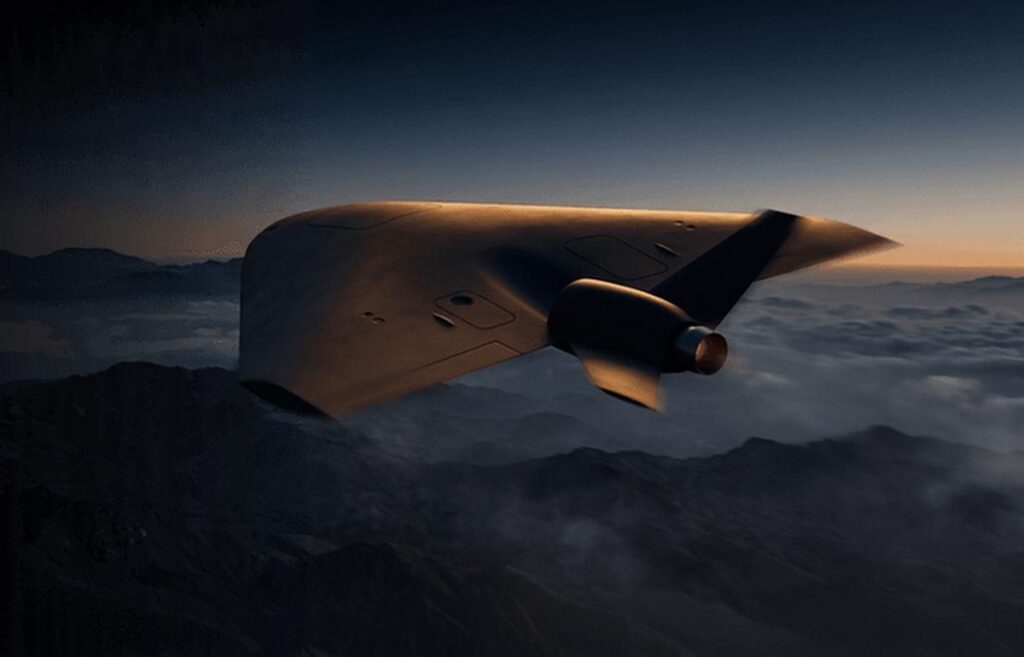
Ukraine's latest deep strike drone is one of a kind. The Triada Robotics Bravo features a "blended wing body" design that's rarely seen on a drone. The special platform maximizes lift and minimizes drag, helping the drone fly farther for a given speed and payload than a conventional "tube and wing" drone can do.

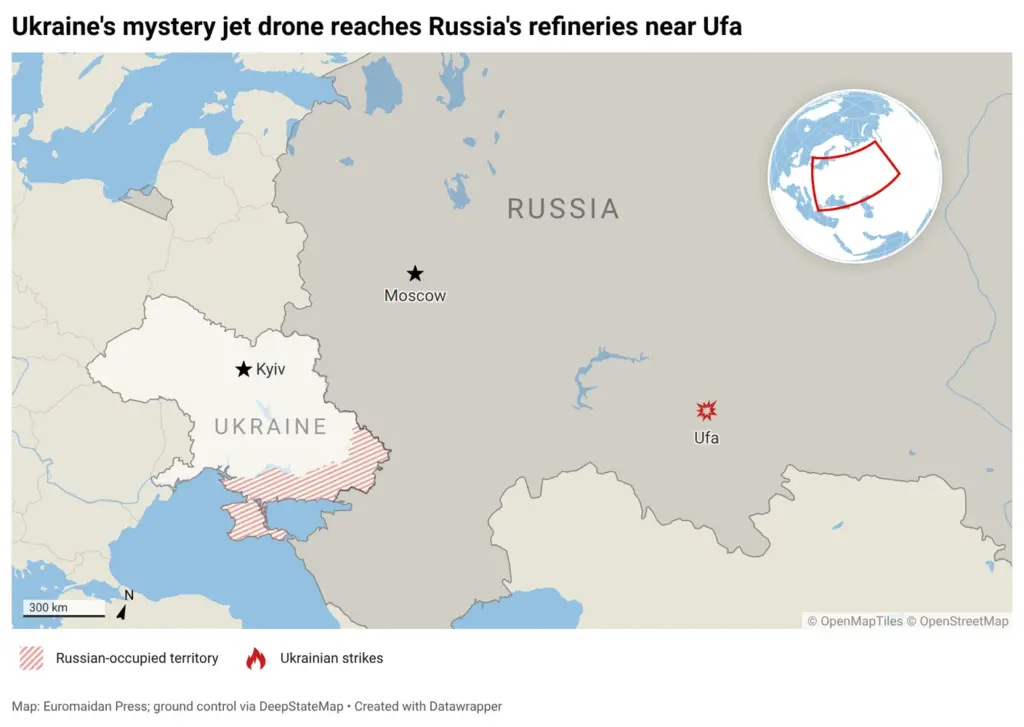
A stubby jet drone appeared fleetingly in a video shot from the ground during a strike on the Ufa refinery cluster in Bashkortostan on 2 August, more than 1,700 km from the Ukrainian border. Ukrainian forces hit the three Bashneft plants at Ufa on 1, 2, and 5 August.

Ukraine's drones hit Bashneft refineris in Ufa
Ukraine's drones hit Bashneft refineries in Ufa. Map: Euromaidan Press

No official body has identified the aircraft in the footage. Online observers compared the silhouette to the American F-117 Nighthawk; the outline is also consistent with the renders Triada publishes of the Bravo. The clip runs a few tenths of a second.

Everything that has reached that deep into Russia until now has been propeller-driven, plodding along at less than 200 km/hr. A jet Bravo cruising at 600 km/hr covers the same 1,700 km in under three hours instead of nine and a half. That is the difference between an air defense network with all morning to work out where a drone is going and one with a couple of hours.

Exactly what the drone in the video was aiming for, and whether it struck its target, is unclear. But that's not stopping Russian observers from panicking. "Shooting down a drone is practically impossible," one Russian blogger moaned.

It's untrue. Motoring along at 600 km/hr—Triada claims around 800 km/hr in the final phase of flight—the jet-propelled Bravo is neither the fastest Ukrainian deep strike munition nor the slowest. If Russian air defenses can take down 950 km/hr Fire Point FP-5 Flamingo cruise missiles, they can take down Bravos, too. Detecting one is a separate question: Triada says the Bravo's composite airframe reduces its radar cross-section.

Arming a Russian gunship with interceptor drones.
Explore further

Russia just copied Ukraine’s cleverest drone hunter

But invulnerability surely wasn't the main goal when Kyiv-based Triada Robotics designed the Bravo over the past couple of years. Efficiency was the objective. Which is probably why the firm chose the blended-wing-body arrangement for the one-way explosive drone, which it lists at around 174,000 euros—roughly $200,000.

The blended shape "provides many different aerodynamic benefits over conventional aircraft design," Oliver Johnson and Sam Dakka wrote in a 2019 article in International Journal of Aviation, Aeronautics and Aerospace.

Most drones, like most manned aircraft, have the same layout: a tube-shaped body and separate wings jutting from the body. These tube-and-wing aircraft are the easiest to conceptualize and the most straightforward to assemble, as the fuselage and wing can be built independently and attached during production.

The problem is drag, especially at the junctures between body and wing. A draggier airframe suffers a range and speed penalty compared to a less draggy airframe.

An unidentified Ukrainian jet-powered drone was filmed during yesterday's attack on Russian territory.

It is believed to be either the Bravo drone developed by Triada Robotics, which reportedly has a range of up to 2,000 km, a 100–200 kg warhead, and a top speed of 650–700 km/h,… pic.twitter.com/3ZtweKwR6t

— OSINTWarfare (@OSINTWarfare) August 3, 2026

Alternative shapes

There are alternatives to tubes and wings. Flying wing aircraft such as the US Air Force's B-2 and B-21 stealth bombers, both built by Northrop Grumman, are all wing—and have neither an identifiable fuselage nor horizontal or vertical stabilizers. They look like boomerangs.

At subsonic speed, that shape is less draggy than a tube and wing shape is, and thus more efficient for long-range flight. At the same time, a flying wing's lack of sharp angles reduces its radar reflectivity. In short, it can be very stealthy and hard to detect on radar.

The downside of a flying wing is that it's unstable and requires sophisticated flight controls to keep it in the air.

A blended wing body shape is a kind of compromise between a flying wing design and a tube and wing design. There's a fuselage and a wing and stabilizers, but the fuselage and wing blend into each other. A blended wing body isn't as stealthy as a flying wing is, but it's easier to control.

A Gerbara in mid-air.
Explore further

Ukraine’s AI drones hammer Russian supply lines. Russia’s $10,000 drone just got the same kit

And it's still less draggy than a tube-and-wing type. "The improvements increase the overall lift to drag ratio providing a higher performance aircraft saving 27% fuel burn per passenger mile that of the modern conventional configuration," Johnson and Dakka wrote.

That benefit is apparent in the Bravo's performance specifications. The drone reportedly ranges 2,000 km with a warhead of 100 to 200 kg and AI-assisted targeting, flying as high as 5,000 m. It's unclear how the Bravo navigates, but it's probably via some combination of satellite and inertial systems.

It's an impressive set of stats. A $50,000, propeller-driven Fire Point FP-1 ranges slightly farther—2,300 km—but the FP-1 cruises at just 180 km/hr and packs a 60-kg warhead. The Bravo is more than three times as fast and carries at least half again as much explosive, and possibly triple, while still flying far enough to reach deep inside Russia.

Yes, the Bravo costs four times as much as the FP-1 does, probably in part because of the jet propulsion, but that could change if Triada Robotics can scale up production. Co-founder Artem Veselov has said the company aims for a first pre-series batch of 100 by the end of the year. For now, the Bravo is a rarity. But it may become much more common in the sky over Russia in the coming months.

Can Robots Save Japan’s Aging Cherry Blossom Farmers?

6 août 2026 à 16:20
Monster Wolf and Pochi are among the robots deployed to scare away bears and transport cherry blossoms in a northern region where many farmers are in their 70s or older.

© Chang W. Lee/The New York Times

Political Turmoil Will Not Derail Killer Robot Program, Ousted Minister Says

31 juillet 2026 à 05:25
The Ukrainian former defense minister Mykhailo Fedorov, an advocate for drone and robot warfare, says the country’s tech-heavy strategy will persist.

© Jędrzej Nowicki for The New York Times

Ukraine’s former defense minister, Mykhailo Fedorov, in central Kyiv, on Thursday. His firing set off street protests in the capital and other cities.
❌