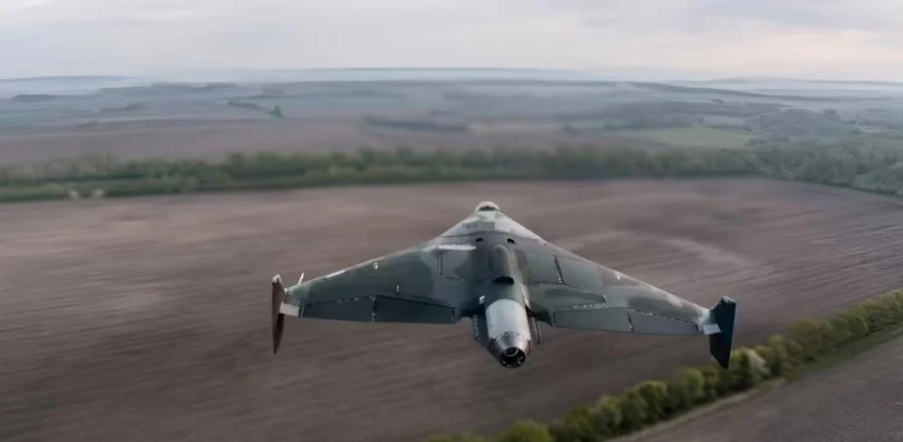
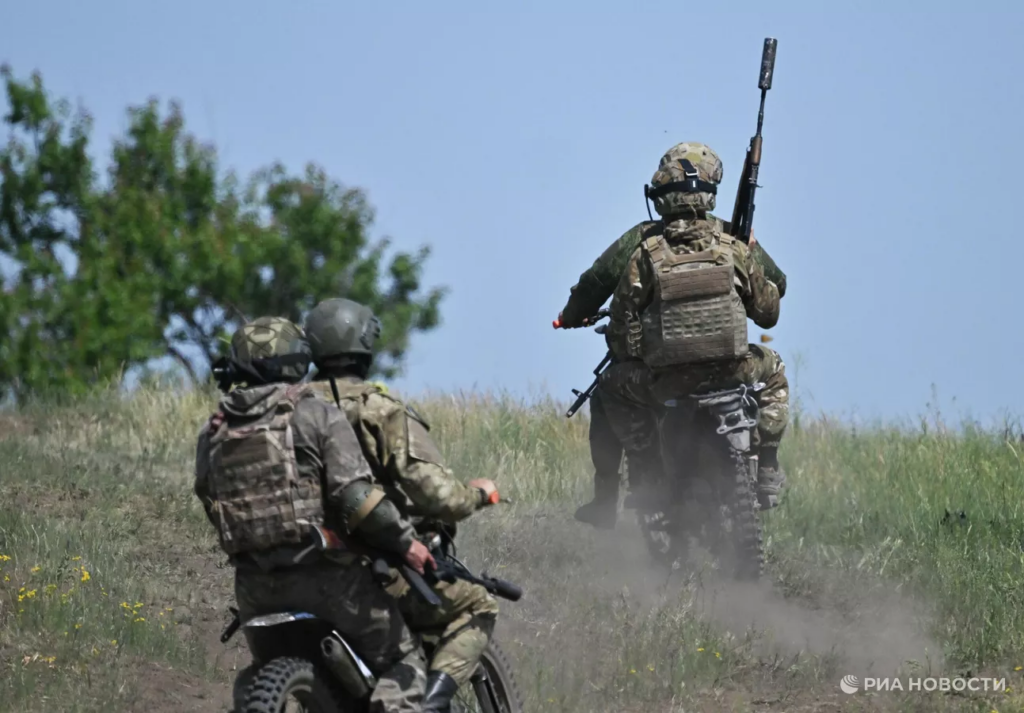
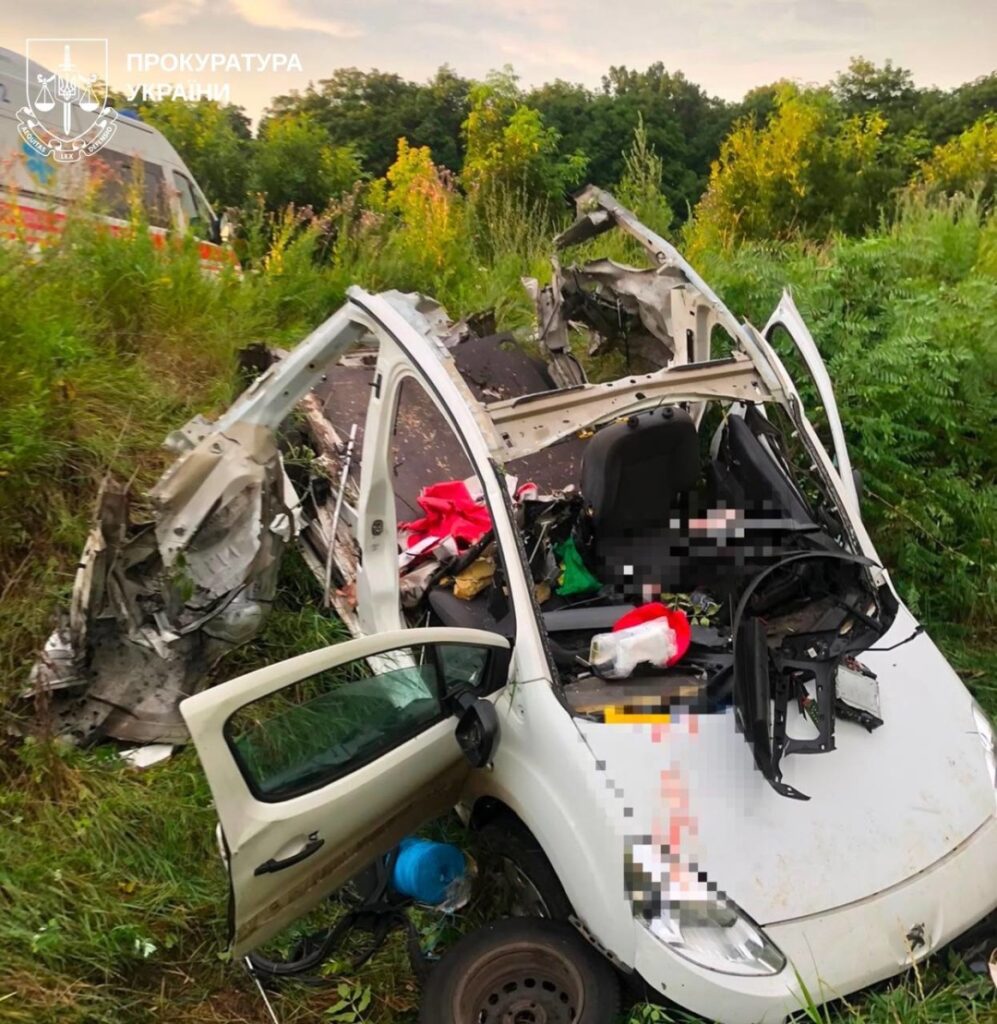
A Russian drone killed a man driving his car in Kharkiv Oblast. The strike hit a Peugeot on the Zolochiv-Maksymivka road near the village of Berezivka in Bohodukhiv raion on the evening of 14 July, killing the 61-year-old driver, the Kharkiv Oblast Prosecutor's Office said on Telegram. The drone was preliminarily identified as a Molniya.
The precise hit on the moving car suggests that the Molniya was piloted in real-time.
Prosecutors opened a pre-trial investigation into a war crime that caused a death, under Part 2 of Article 438 of Ukraine's Criminal Code. Russian drones hunting civilian cars on Kharkiv Oblast roads is a documented pattern.
In October 2025, a Russian Molniya drone hit a car in the Kupiansk district, wounding a 37-year-old volunteer, and an FPV drone killed two men in another car in the same raion two hours later. Both were classified as war crimes.
Molniya is cheap, common, and now flies itself
The Molniya is among the cheapest weapons in Russia's arsenal. It is a low-cost kamikaze drone built close to the front, reliable and ubiquitous. Russia launches up to ten a day on the Zaporizhzhia axis alone.
Ukraine shot down an AI-equipped Molniya over Zaporizhzhia for the first time on 9 July. The AI variant has no antenna, no operator link, and no emissions for a detector to catch, making electronic warfare useless against it. Ukraine's answer is kinetic interception. Defense Ministry adviser Serhii Beskrestnov has warned that a fiber-optic Molniya is already in testing, which would emit no radio signal at all.
Russia's terror documented
Ukraine's Prosecutor General's Office has documented over 11,000 Russian FPV attacks on civilians since 2024, with 2,010 recorded in the first four months of 2026 alone.
The road between Zolochiv and Maksymivka is a public road in a Ukrainian oblast. A man was driving home on it.
Earlier, a Russian FPV drone killed a 57-year-old hospital worker walking along a road in the same oblast — the last resident of the border village of Tokarivka Druha.
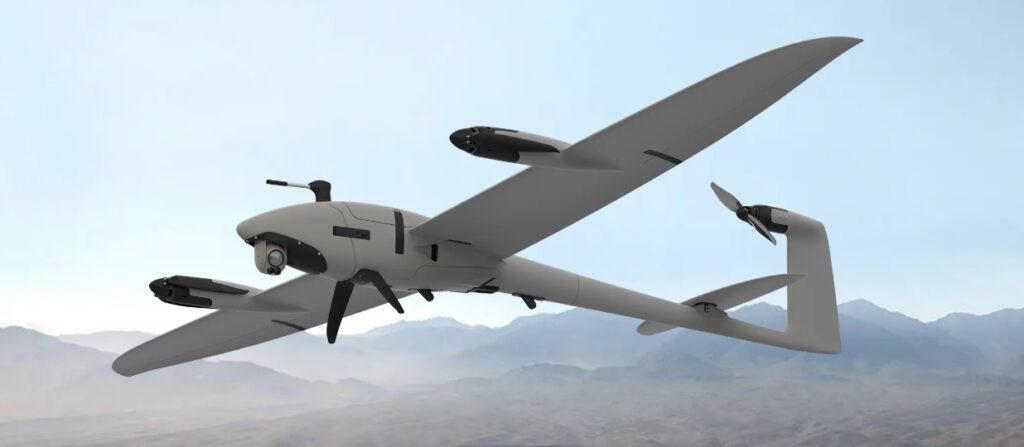
Australia is testing a reconnaissance drone that Ukraine has hardened for combat use. The Australian Army tested the Vector AI reconnaissance drone during Southern Jackaroo exercises at the Townsville training ground in Queensland, Defense-Blog reports.
The Vector AI is made by German company Quantum Systems, which has made Ukraine its second-largest international base with several hundred employees across production, research and development, and product modernization.
Quantum Systems produces roughly 80 Vector reconnaissance drones per month at its Ukrainian facility. Thousands of hours of combat flight in Ukraine helped adapt the platform to real battlefield threats such as electronic warfare and air defense. The version Australian troops tested at Townsville already reflects Ukrainian combat feedback rather than pure test-range design.
24/7 operator support for Ukrainian drone pilots from Australian office
Quantum Systems already provides 24/7 operator support for Ukrainian drone pilots from its Australian office. The Southern Jackaroo's appearance formalizes the direction of Ukraine-battle-tested drone technology into Australian military use.
Australian troops used the drone for deep reconnaissance, target detection, and data transmission for follow-up strikes by drones and artillery against simulated enemy positions.
Vector AI incorporates Ukraine's electronic-warfare lessons
The Vector platform has been operational in Ukraine since May 2022. Quantum Systems representative Oleksandr Bereshnyi said in October 2025 that Vector drones face constantly changing jamming conditions on the front.
"What worked last week might not work next week," Bereshnyi said.
Quantum Systems has been integrating advanced electronic-warfare countermeasures into the Vector platform: CRPA antennas resistant to interference, edge-computing AI systems for navigation and target recognition, and enhanced data transmission channels. All the developments came in response to Ukrainian battlefield conditions.
Vector AI is a convertiplane with 2.8-meter wingspan
The Vector AI has a 2.8-meter wingspan and uses a convertiplane design. It takes off and lands vertically without a runway, then transitions to horizontal flight to cover long distances like a fixed-wing aircraft.
The drone uses AI-based data processing to create real-time terrain maps and independently detect and track objects.
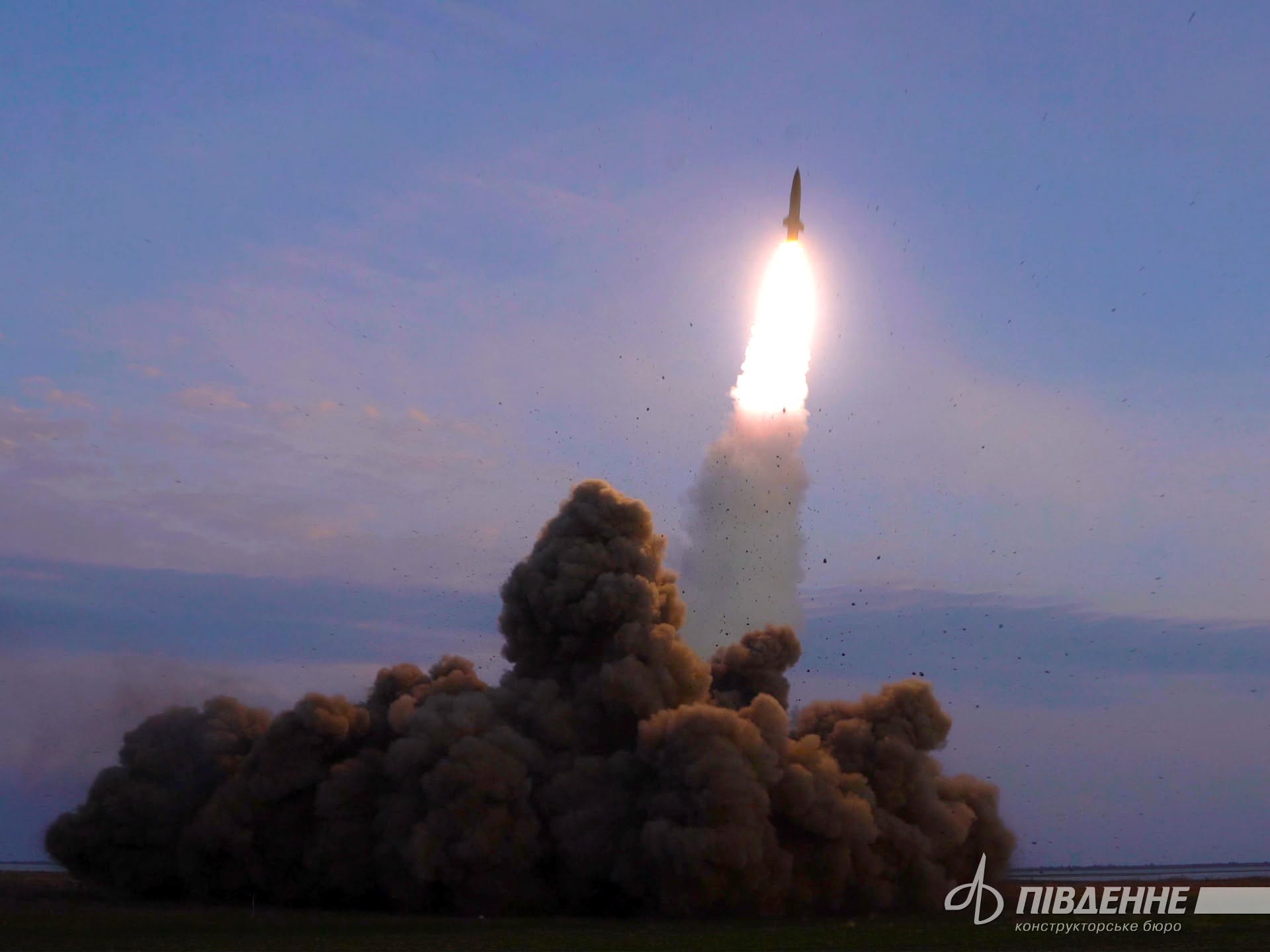
Modern war is won by whoever creates, tests, and refines new weapons faster — not by whoever spends years at the design stage, Fire Point co-founder and chief designer Denys Shtilerman said in an interview with Liga. The man behind Ukraine's most prolific deep-strike weapons contrasted his company's battlefield iteration with Russia's Soviet-era design school. He also revealed that the Iskander missile's navigation systems trace back to Ukrainian specialists.
Four and a half years of all-out war have turned Ukraine into the West's de facto weapons laboratory: its ground robots ran nearly 17,000 frontline missions in June alone, up to eight European countries want in on its $700,000-per-shot ballistic interceptor, and defense scholars already debate which of Kyiv's winning strike programs its factories should feed first.
"Whoever experiments faster wins"
Modern war rewards a different rhythm of weapons development, Shtilerman argued.
"Now whoever experiments faster wins. You made it, you watched — does it fly or not — and then you start testing it on the battlefield, improving it, improving it. It's an endless process," he said.
Many European countries adopt weapons once development formally ends, he added. Only combat shows whether a weapon actually meets the demands of modern war. Fire Point's own record follows that logic: the company spent a year of combat trials before its Flamingo cruise missile started landing on target, and its FP-1 drones went through months of fuel-versus-warhead refinement.
Explore further
Russia says it downed Ukraine’s first ballistic missile—a weapon Kyiv has never announced
Soviet habits in Russia's weapons school
Russia's engineering school has largely preserved the Soviet approach to weapons design, Shtilerman said. He pointed to the construction of the S-300 and S-400 air-defense systems, where he found no solutions that would simplify production.
"The fourth compartment, where the control fins are mounted — such a complex part. Why did they make it like that? Very many questions," the designer said.
Explore further
Ukraine reportedly strikes Russian defense plant ‘Progress’ in Cheboksary with Flamingo missiles
The company testing its answer on Russian soil
Fire Point supplies over half of Ukraine's deep-strike weapons, according to Ukraine's General Staff. Its FP-1 drones — including the extended-range variant that reached the Omsk refinery 2,500 kilometers away in Siberia — and FP-2 mid-range drones carry much of the nightly campaign against Russian refineries, depots, and occupied-territory infrastructure. The company says it produces 300 such drones daily.
The next stage is ballistic. Ukraine's ballistic missile will begin live testing on targets inside Russia in autumn 2026, Shtilerman said, naming Moscow among the first targets. The company is also developing an interceptor meant to bring the cost of stopping a ballistic missile below $1 million.
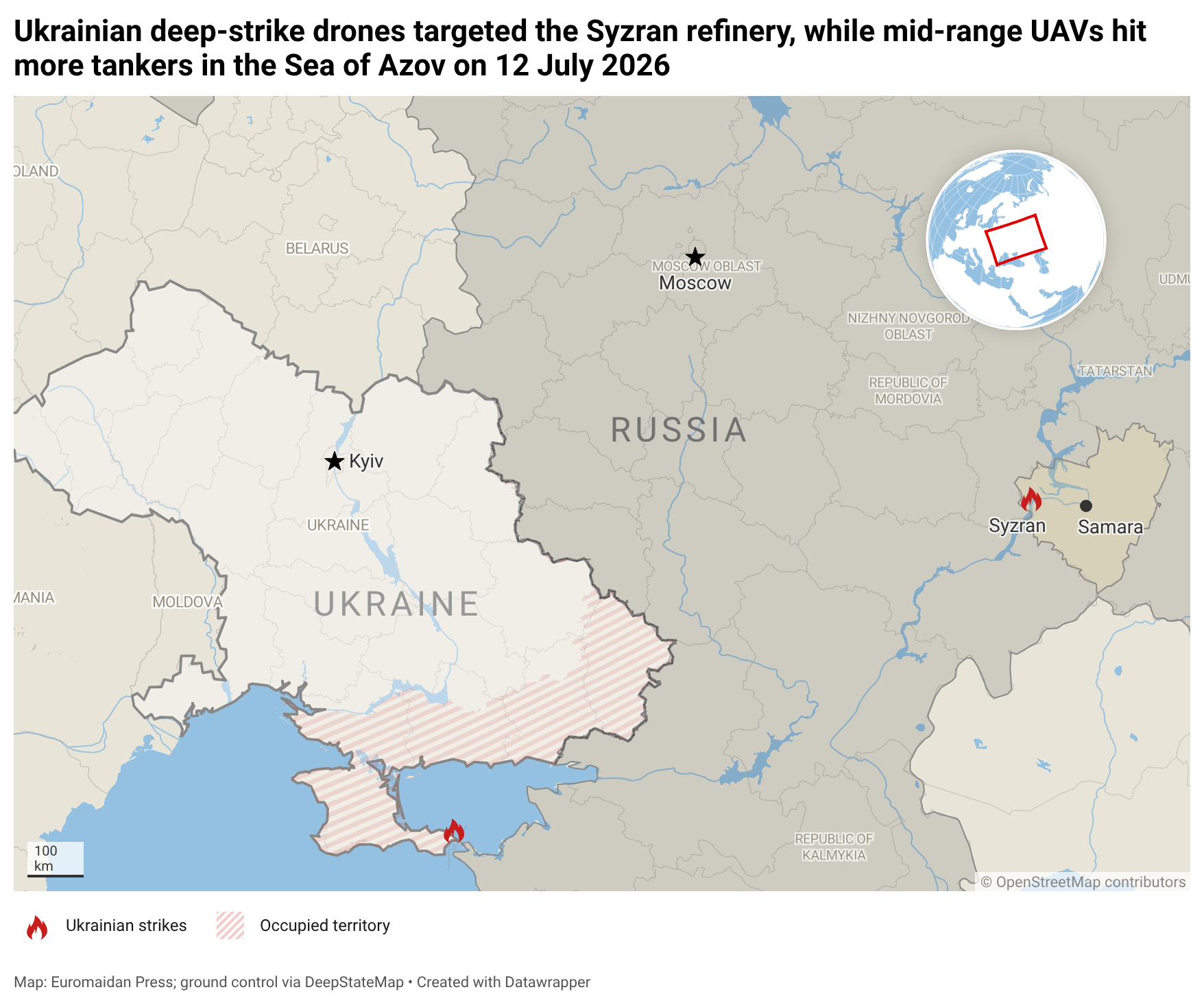
Ukrainian FP-1 strike drones set Russia's Syzran oil refinery burning on 12 July, and the damage to the facility may be the campaign's largest single result in months, Ukrainian OSINT analysts assessed. Analysis of footage shared by local residents points to hits on every primary crude processing unit at the Rosneft plant. The facility, some 800 km from the warzone, has burned many times before.
Russian oil exports pay for the army destroying Ukrainian cities in the fifth year of Russia's full-scale invasion — so Ukraine hits the industry itself, and its drones now outrange every safety buffer Russia thought it had, from the Baltic coast to beyond the Urals.
Fire before dawn
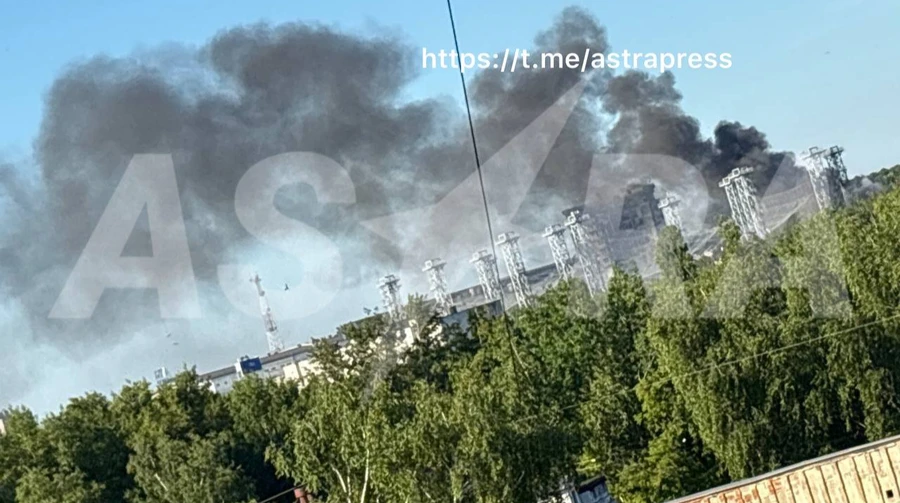
The attack came in the night and morning of 11–12 July, with footage of the strikes appearing from around 4:30 a.m., monitoring Telegram channels Supernova+ reported along with Exilenova+ and others. A large fire broke out on the refinery grounds and was still burning as of 7 a.m. Kyiv time, per local residents' photos and videos. OSINT channel Dnipro Osint assessed that the strike probably damaged the ELOU-AVT-5 installation, which provides up to 30% of the plant's primary processing. Russian news Telegram channel Astra confirmed through its own OSINT analysis that the fire burned on the Syzran refinery's territory.
Ukrainian drones set Russia's Syzran oil refinery ablaze 800 km from the warzone
The Rosneft plant in Samara Oblast — processing up to 8.5 million tons of oil a year into gasoline, diesel, and jet fuel — caught fire after the overnight strike on 12 July, footage from social… pic.twitter.com/Yi5XgQ18Di
The plant, part of Rosneft, is one of the largest refineries in Samara Oblast. It processes 8.5–8.9 million tons of oil a year — over 3% of Russia's total refining — turning out gasoline, Euro-5 diesel, aviation kerosene, fuel oil, and bitumen. It sits roughly 700 km from the occupied section of Ukraine's border.
"100% of primary processing capacity"
OSINT channel Cyberboroshno went further, mapping the damage to three key units, coordinates included. The FP-1 drones hit the AVT-5 primary processing unit (2.6 million tons a year, 30% of primary capacity) and the AVT-6 unit (6.3 million tons, the remaining 70%). A third hit landed on the LCh-35/11-600 catalytic reformer, which makes essential gasoline components.
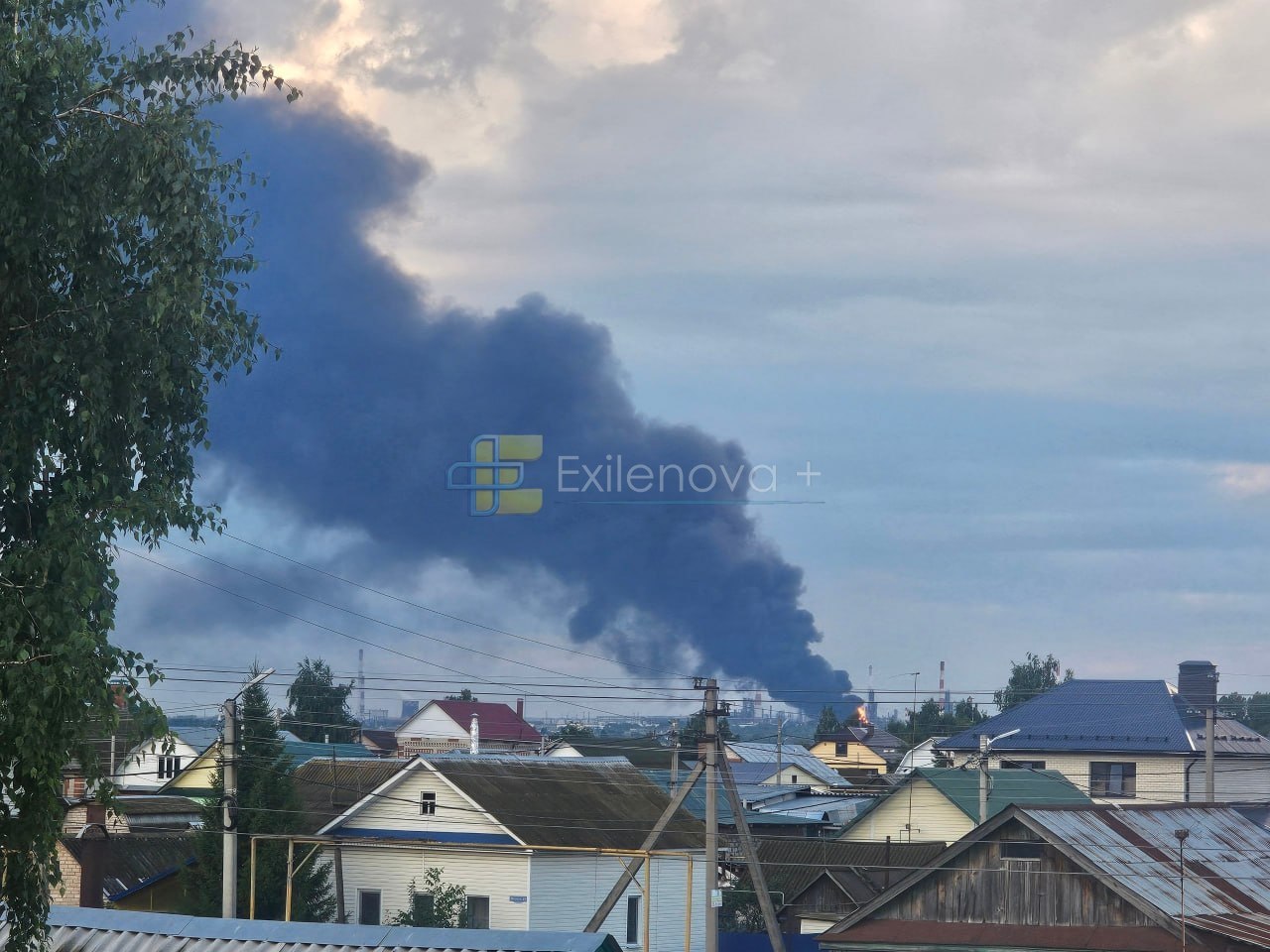
A column of black smoke rises over the Syzran oil refinery after the Ukrainian drone strike, Samara Oblast, Russia, 12 July 2026. Photo: Exilenova+/Telegram
The hit on the reformer, the channel noted, was accidental. The video shared by Exilenova+ shows the unit's stack suddenly appearing in a drone's flight path, triggering an airburst of the warhead directly above the installation. The shrapnel cloud shredded the unit, which later footage shows on fire — an accident that worked in Ukraine's favor.
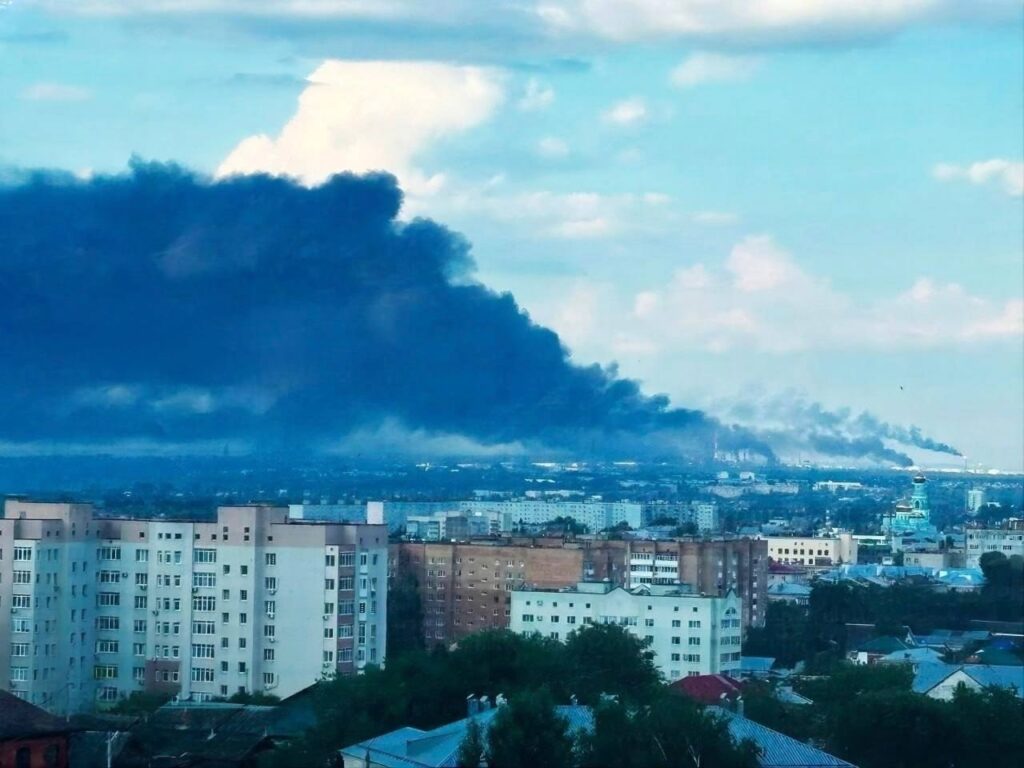
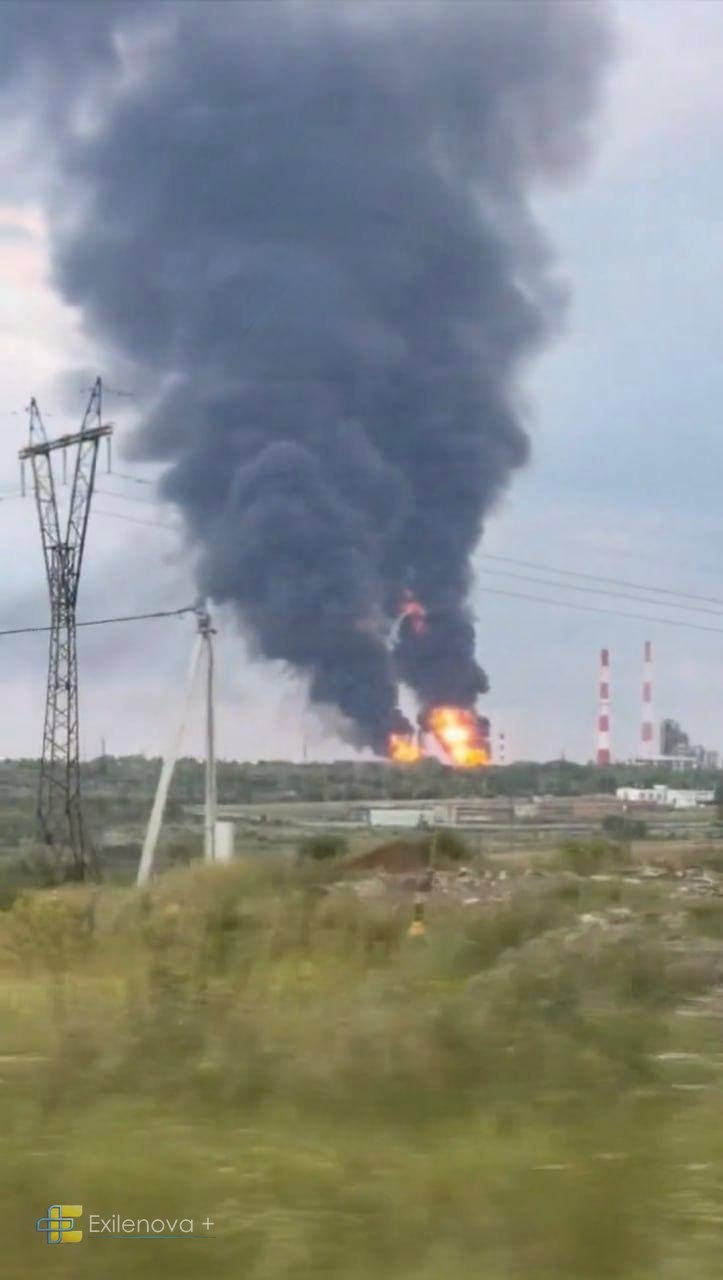
Smoke from the Syzran oil refinery fire stretches over the city of Syzran, Samara Oblast, Russia, 12 July 2026. Photo: Exilenova+/Telegram
The sum, per Cyberboroshno: 100% of the plant's primary processing capacity damaged, a combined 8.9 million tons a year. With no crude distillation running, the analysts noted, the refinery produces nothing at all. By the volume of capacity hit, the channel called it possibly the biggest single result of recent months — larger than the strike on the AVT-11 unit at the Omsk refinery, estimated at 8.4 million tons at the time of that attack.
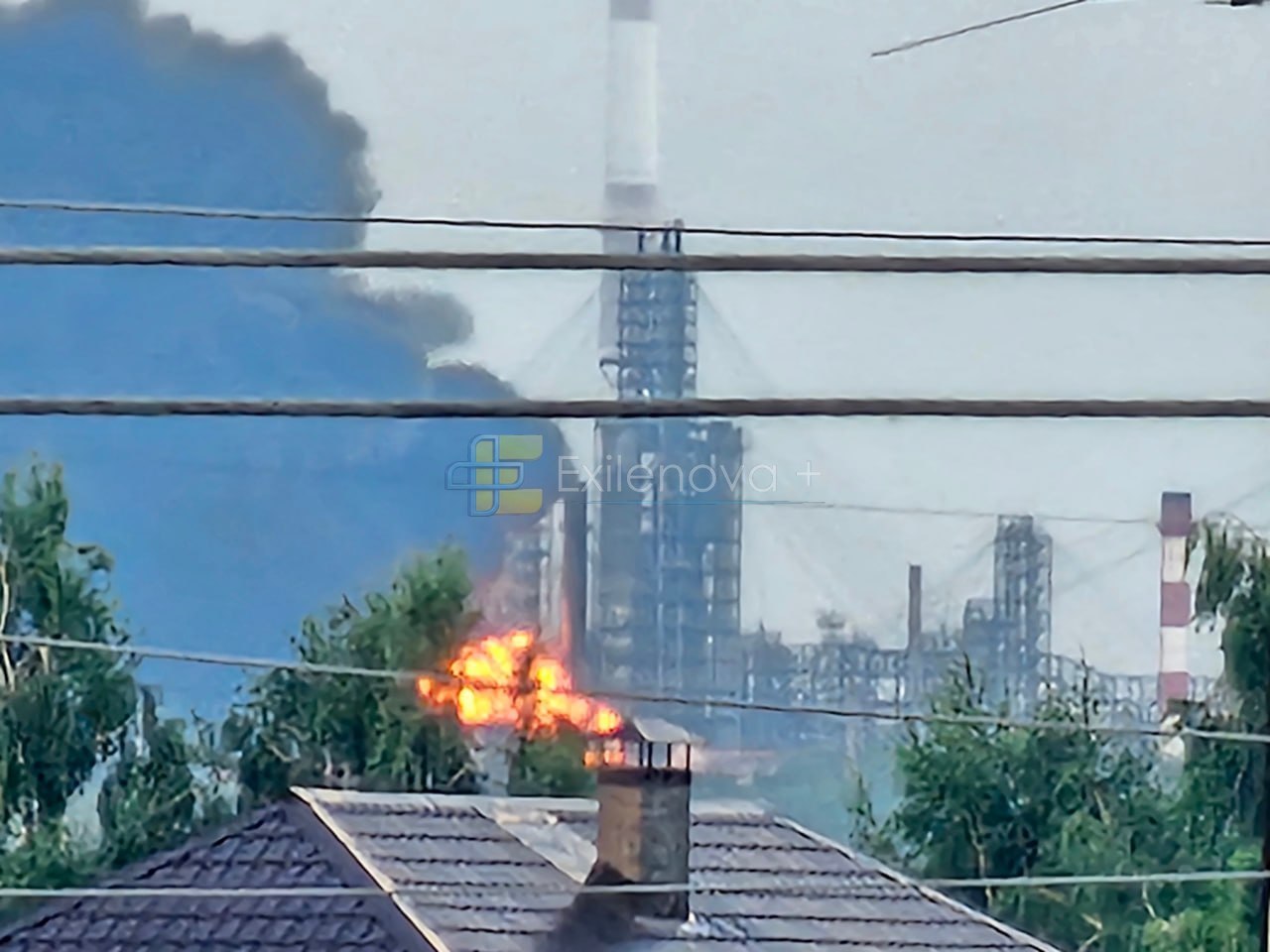
Fire burns among the processing units of the Syzran oil refinery after the Ukrainian drone strike, Samara Oblast, Russia, 12 July 2026. Photo: Exilenova+/Telegram
As the long-range drones targeted the refinery deep inside Russia, the medium-range UAVs hit more tankers in the Sea of Azov:
Explore further
One Russian ship every 112 minutes for a week: Ukraine hits 14 more vessels as total tally nears 100
A plant that keeps burning
The refinery is a veteran target. Drones struck it on 21 May 2026, seriously damaging the AVT-6 unit — then responsible for over 70% of the plant's capacity — and forcing a prolonged full stop. Reuters reported on 25 May, citing sources, that the plant had suspended operations. An earlier attack came on 18 April, and drones hit the plant three times in August 2025 alone. The 21 May attack was already the 11th strike on Syzran.
Ukrainian drones hit 14 more Russian vessels — 10 tankers and four ferries — overnight on 12 July in the Sea of Azov, Unmanned Systems Forces (SBS) commander Robert "Madyar" Brovdi reported. The strikes cap a week in which Ukraine hit 90 ships serving Russia's continued occupation of Crimea and the fuel trade in the Black Sea region. Moscow, a week into the losses, has shown no visible attempt to defend its commercial shadow fleet.
Russia's full-scale invasion of Ukraine is in its fifth year, and Kyiv is methodically burning down the Russian refineries, terminals, and fuel logistics that fund and feed the invasion — pressure designed to make the war too expensive for Moscow to sustain. Every drifting tanker chips at the two things Moscow cannot easily replace — export revenue and a fuel line to occupied Crimea — and the widening of the hunt, met by zero Russian resistance, leaves the garrison on the peninsula facing an ever-hungrier siege.
One vessel every 112 minutes
This morning, Brovdi wrote:
"14 vessels on the night of 12 July: 10 tankers and 4 ferries," the commander said, adding that this puts the week of 6–12 July at 90 units of Russia's shadow fleet hunted down by the "birds" of SBS.
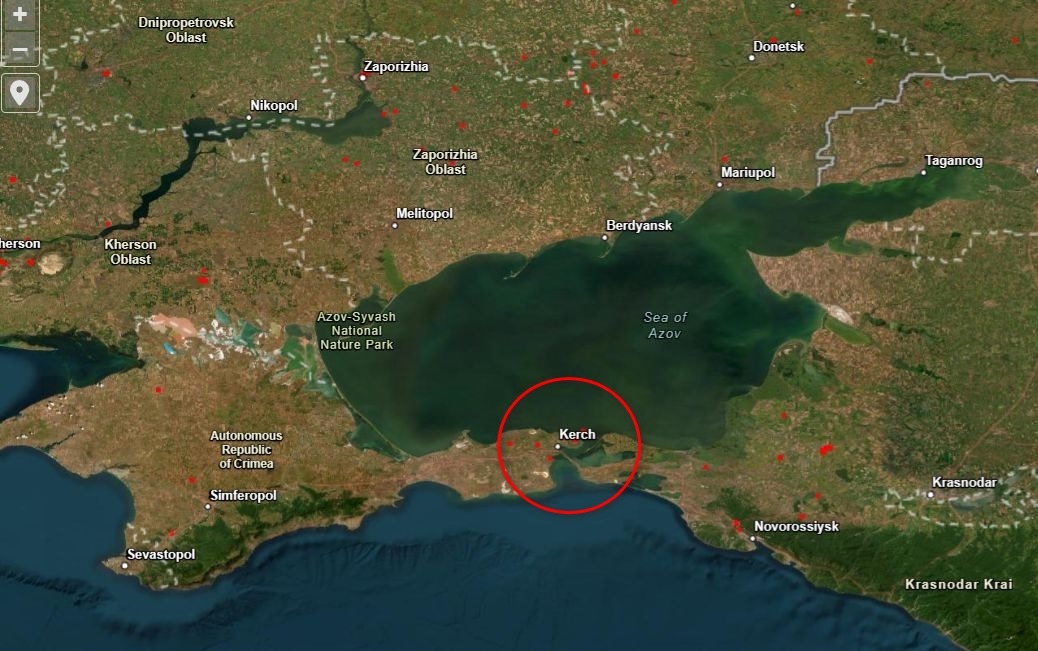
Fires in occupied south of Ukraine, including Crimea and the Sea of Azov on 12 July 2026. Map: NASA FIRMS
That works out to one Russian tanker, tug, dry cargo carrier, or special vessel struck every 112 minutes of the week.
"Moscow will fall," the commander added.
His post carries video of the strikes:
14 more Russian vessels hit overnight — July's tally reaches 91 ships
Ukraine's drone forces struck 10 tankers and four ferries in the Sea of Azov on the night of 12 July, commander Robert "Madyar" Brovdi reported with video, capping one hit every 112 minutes.
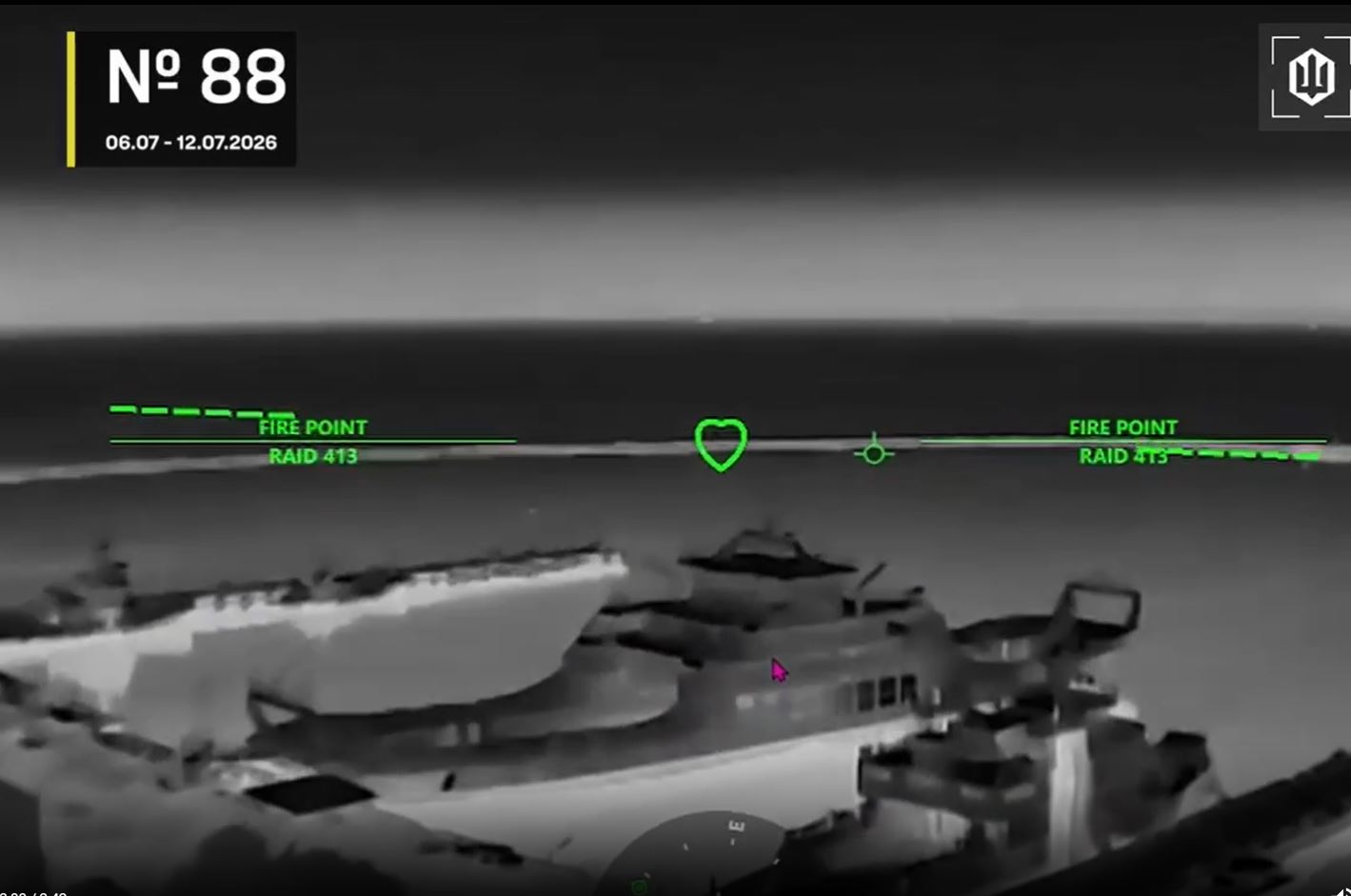
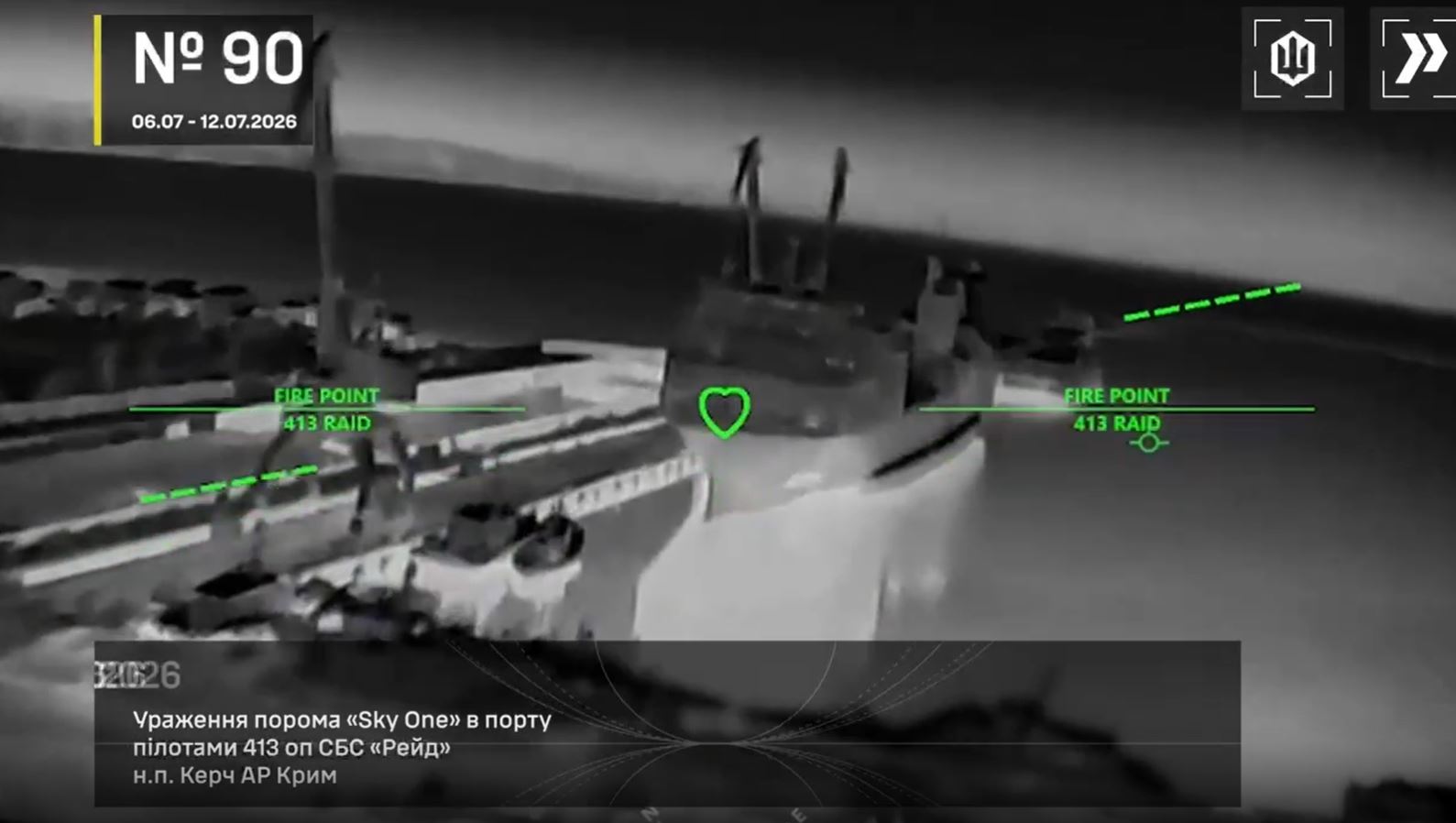
Among the identifiable targets are the ferries Mariya, Yeysk, and Sky One — the latter hit in the port of occupied Kerch by pilots of the 413th Raid Regiment — plus an unnamed ferry used for transport across the Kerch Strait.
A Ukrainian drone approaches the ferry Mariya in the port of occupied Kerch, Crimea, 6–12 July 2026. Screenshot: Robert "Madyar" Brovdi/Telegram
The SBS's live scoreboard currently shows 14 new strikes on Russian shipping. The tally can move in either direction during the day — up or down — as internal reports get verified. The total of Russian ships hit in July now stands at 91.
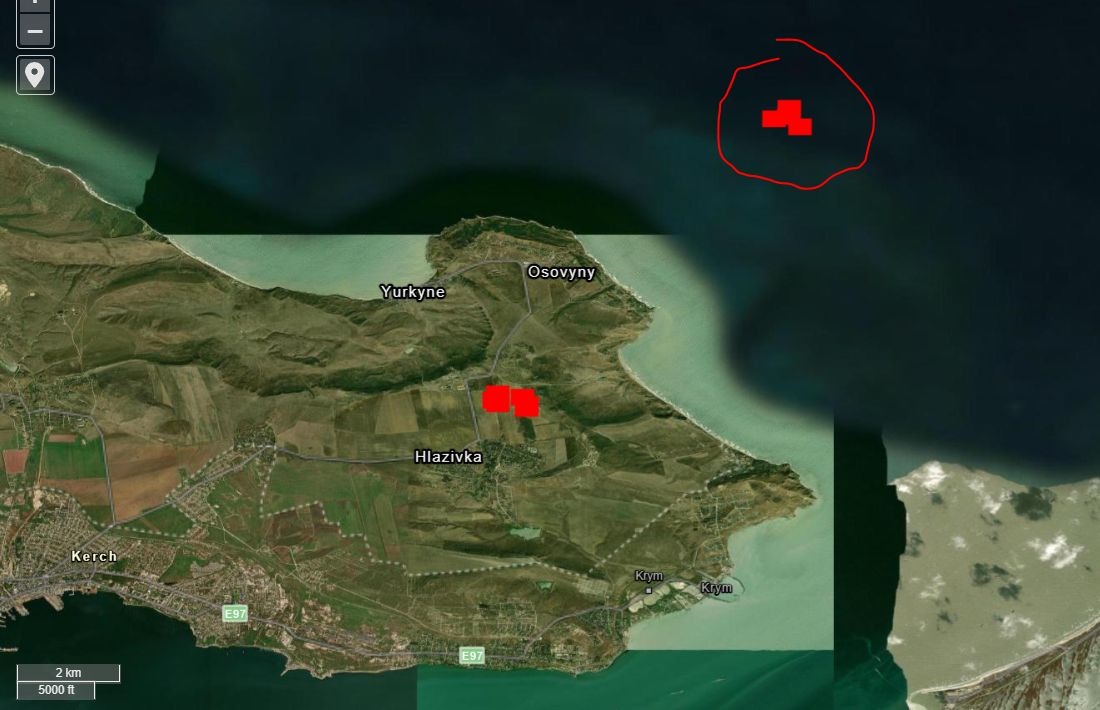
NASA FIRMS satellite data shows fires in the usual location — the anchorage north of occupied Kerch.
Fires in the Sea of Azov on 12 July 2026 north of occupeid Kerch. Map: NASA FIRMS
Small tankers, double duty
The shadow fleet tankers under attack are not blue-water, ocean-going ships. They are smaller—yet mostly also sanctioned—vessels built for Russia's internal waterways, sized to squeeze through the Volga-Don Canal. Russia has moved them en masse to the Azov and Black seas for two jobs: pumping export fuel at sea into ocean-going shadow-fleet tankers sailing with trackers switched off, and supplying occupied Crimea.
Damaging them en masse kills two birds with one stone. Each disabled tanker cuts the volume of Russian oil exports at the source and tightens the noose around the occupied peninsula. And beyond the material damage sits the sheer shame: shipping disabled in such quantities has not been seen since World War II.
Disable, don't sink
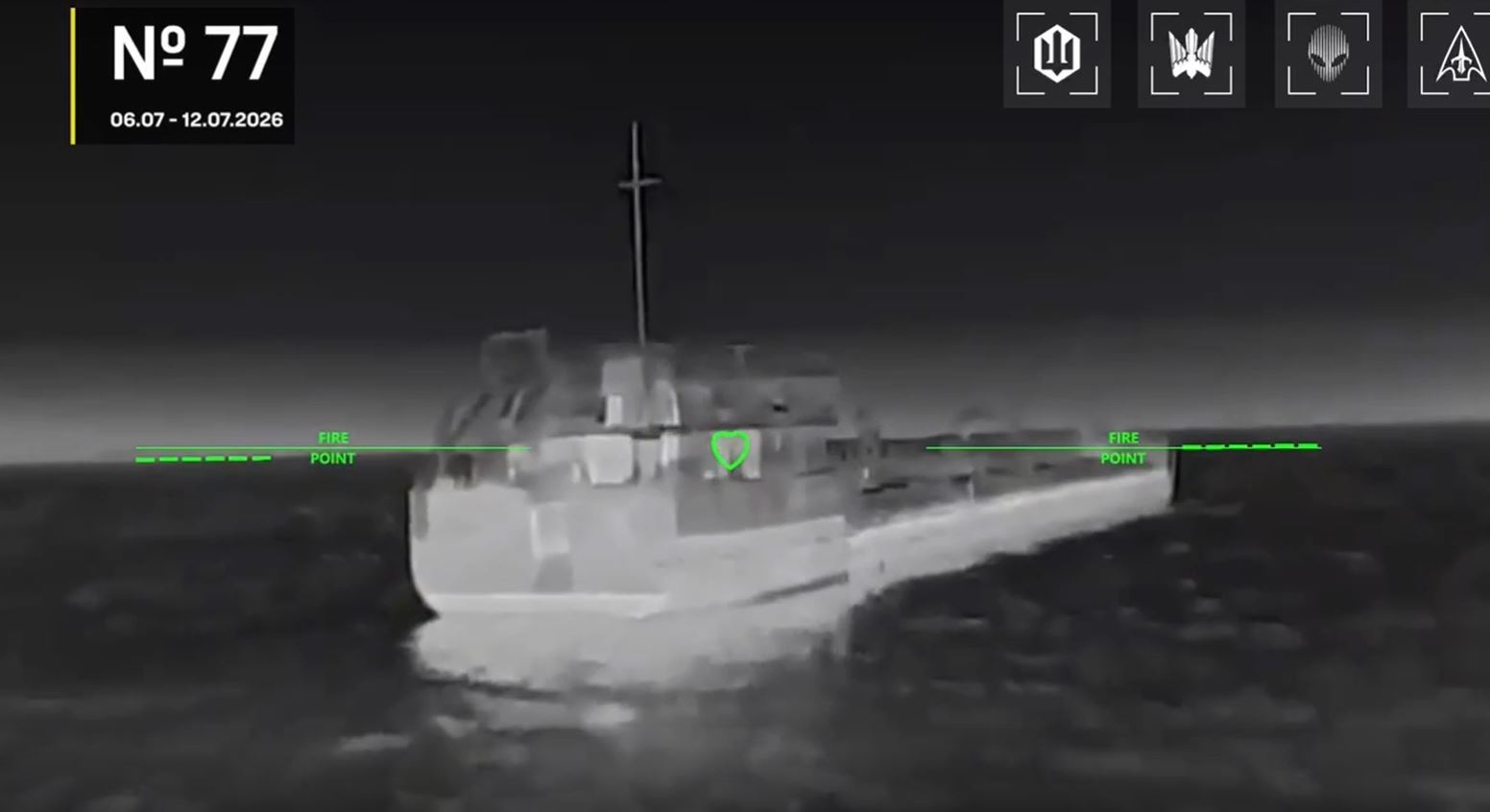
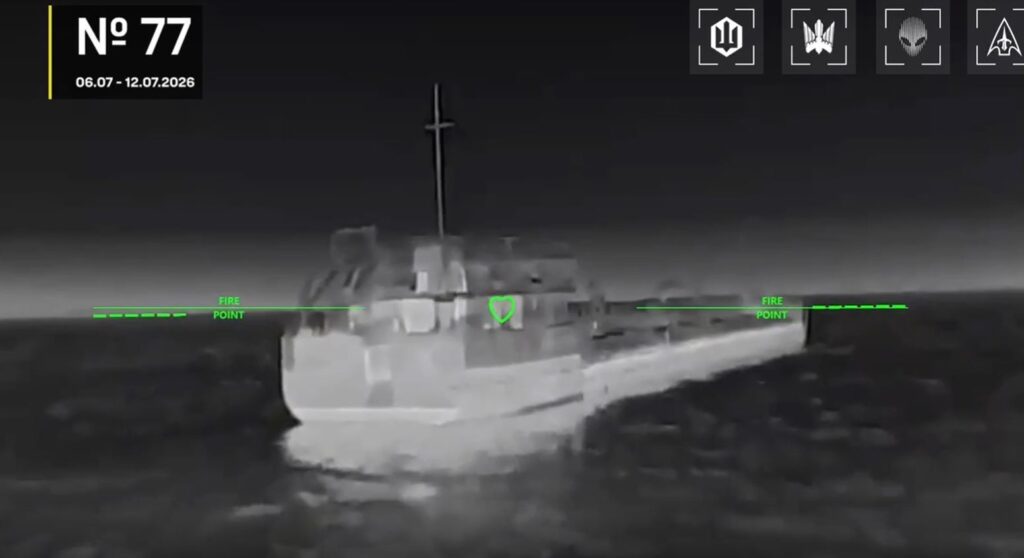
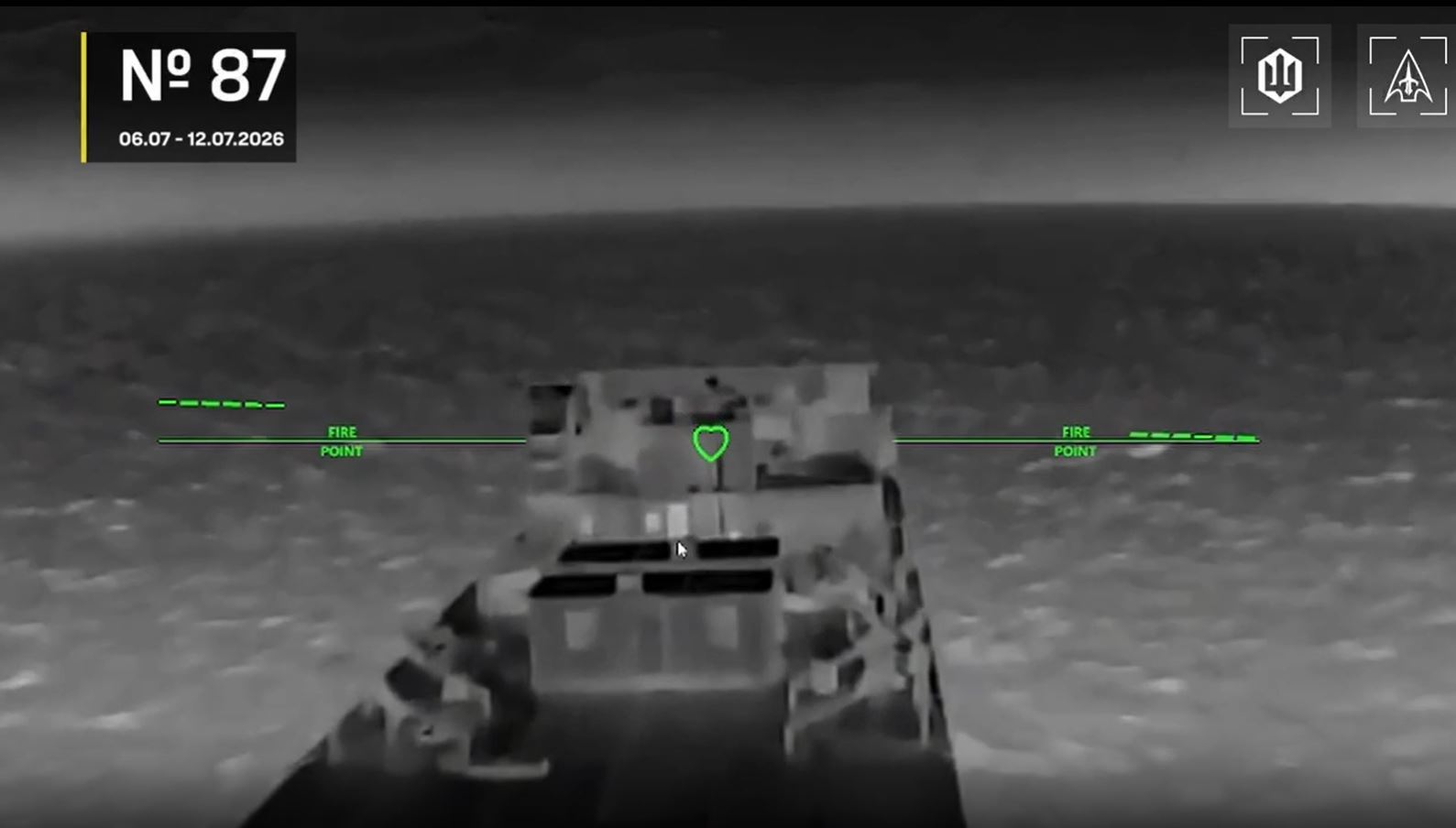
Madyar's videos show the method. Ukrainian drones consistently go for the ships' superstructure and bridge, or sometimes the propulsion section at the stern. The goal appears to be to render the vessels uncontrollable rather than send them under.
A Ukrainian drone aims at a Russian ship's bridge in the Sea of Azov — the typical targeting point used to disable vessels rather than sink them, 6–12 July 2026. Screenshot: Robert "Madyar" Brovdi/Telegram
Sinking would demand more drones per ship — and would cause an ecological disaster in the shallow Sea of Azov. Moreover, the tugs that come to evacuate the ships-turned-barges become the next targets.
Russia can't fight back
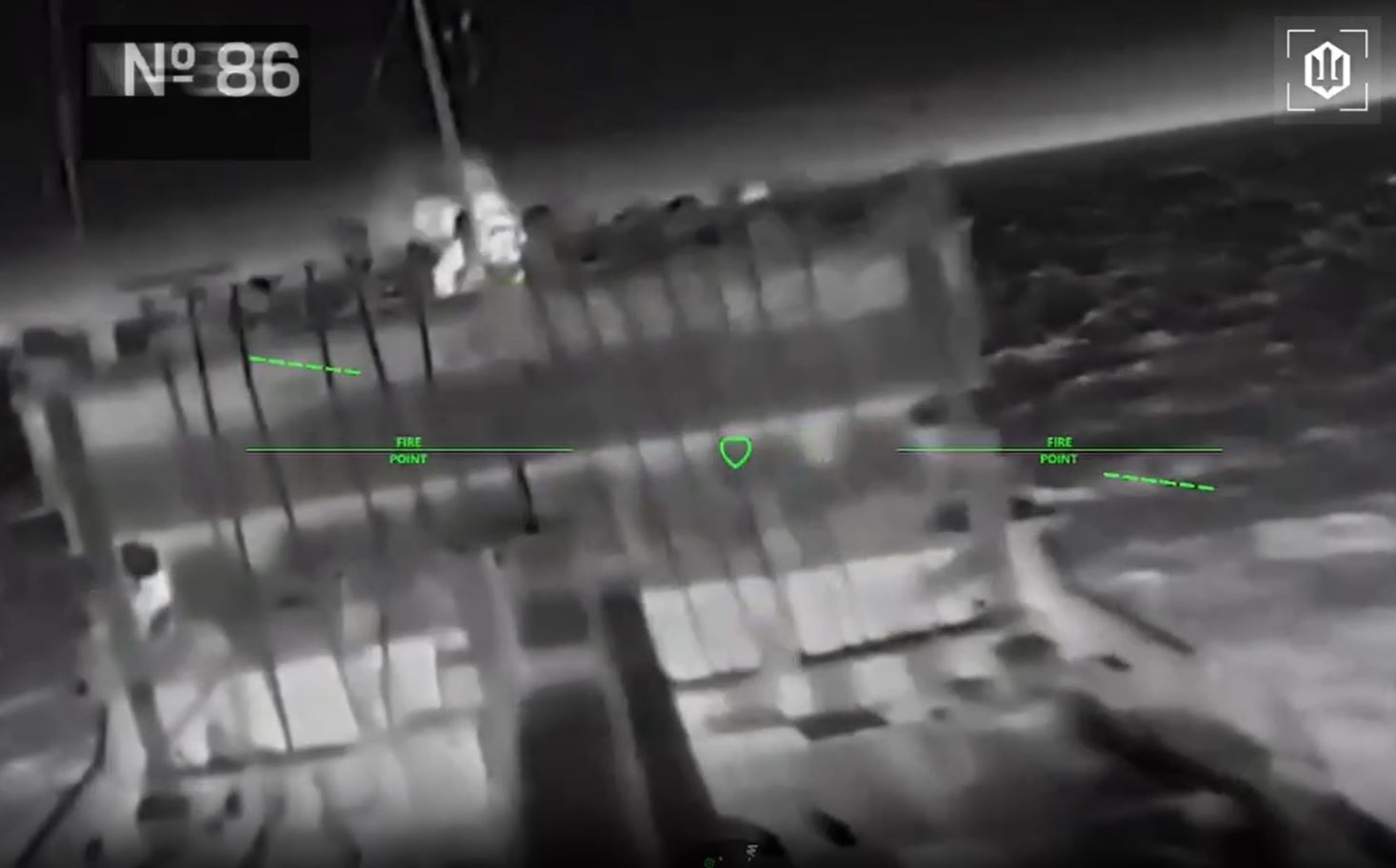
About a week into the campaign against its shipping, Russia has shown no sign of trying to protect the vessels — no warplanes or helicopters, no navy ships, not even onboard firearms. Some ships display metal bars rigged in front of the bridge, a passive, improvised anti-drone screen that is useless against the powerful FP-1 and FP-2 strike drones.
Improvised metal bars rigged to shield a Russian vessel's superstructure — passive protection useless against Ukraine's FP-1 strike drones, 6–12 July 2026. Screenshot: Robert "Madyar" Brovdi/Telegram
Moscow's only visible reaction has been retreat: it halted shipping through the Don-Azov canal and closed the Kerch Strait after the tanker strikes — pulling its disabled vessels off the water instead of defending them.
A Ukrainian drone closes on the ferry Sky One in the port of occupied Kerch, Crimea, in a strike by pilots of the 413th Raid Regiment of the Unmanned Systems Forces, 6–12 July 2026. Screenshot: Robert "Madyar" Brovdi/Telegram
The pace shows why. Just the night before, the tally was staggering: "28 vessels of Russia's shadow fleet hunted down on the night of 11 July in the Azov Sea by the Birds of SBS," Madyar wrote yesterday:
+28 more USF Operators Struck 28 More Enemy Vessels Overnight
Operators of the Unmanned Systems Forces continue destroying sanctioned vessels in the Sea of Azov. In total, 73 effective hits on enemy vessels were recorded overnight.
And the ships were only part of that night's work — the SBS also hit nine energy nodes in the occupied territories, the Saky thermal power plant, a training ground, a special communications node, and what the commander called an enemy lair in Horlivka, Donetsk Oblast.
Russia's new "Geran-4 Siker" Shahed variant uses machine-vision AI for targeting. The system enables the drone to autonomously recognize and track ground targets during the terminal phase of flight, thereby increasing targeting accuracy, according to UNIAN, citing Russian propaganda outlets.
The base Geran-4 runs on a Chinese-made Telefly turbojet engine rated at 160 kgf of thrust, reaches speeds up to 500 km/h, and carries either a 50-kilogram high-explosive or thermobaric warhead or an enlarged 90-kilogram thermobaric payload. Russia began combat use of the Geran-4 against Ukrainian targets in May 2026, Ukraine's Defense Intelligence (HUR) reveals.
The 300 km/h speed cited by Russian propaganda for the Siker variant is lower than HUR's 500 km/h max-speed assessment for the base Geran-4 and aligns more closely with cruise-speed estimates for the platform.
Even at 300 km/h, the Geran-4 Siker sits at the upper edge of Ukraine's cheap interceptor-drone speed envelope, and the machine-vision system adds a targeting capability that electronic-warfare countermeasures cannot easily defeat in the last seconds of flight.
Alabuga makes drones with 294 foreign components
The drone is produced in the Alabuga Special Economic Zone, the Republic of Tatarstan. This place is Russia's main Shahed factory.
The Alabuga Shahed contains 294 imported parts, including approximately 120 from China and Taiwan and 100 from the US, according to Ukrainian Presidential Envoy for Sanctions Policy Vladyslav Vlasiuk, cited by Euromaidan Press.
Jet-powered variants require additional foreign inputs, including turbojet engines and propellant systems, making them more expensive per unit and more sanctions-vulnerable to produce at scale.
Russia's transition from gasoline Shaheds to jet-Shaheds began in earnest in 2026. The Ukrainian interception rate on gasoline Shaheds reached 90 percent in June, per the Ministry of Defense. Russia has responded with jet-Shahed variants that outrun Ukraine's cheap interceptor fleet.
Ukraine's Bullet interceptor got chemical accelerator to catch jet-Shaheds
Ukrainian defense companies General Cherry and STRIX integrated a chemical accelerator into the Bullet counter-drone interceptor in June 2026, specifically to chase down jet-Shahed variants.
The chemical-energy booster addresses the speed gap that opened when Russia introduced jet-powered modifications of the Iranian-designed Shahed-136.
Ukraine has also fielded AI-driven autonomous interceptor drones. In June 2026, Ukrainian Defense Forces tested the combat use of an AI-driven autonomous drone interceptor against a Russian Shahed in Kharkiv Oblast, automating 95 percent of the engagement, from launch to destruction.
The AI-versus-AI dynamic on both sides of the drone war is now direct: Russia's Geran-4 Siker uses machine vision to find targets in the terminal phase. Ukraine's interceptor drones use AI to find and destroy the Geran-4 Siker.
Russia's FPV drone killed the last resident of Tokarivka Druha, a Kharkiv Oblast border village. The 57-year-old woman was walking along the road between the villages of Prudianka and Tsupivka when a Russian FPV drone struck her, Vyacheslav Zadorenko, head of the Derhachi City Military Administration, said. She had multiple shrapnel wounds and died in the hospital despite medics' efforts.
She worked at Derhachi Central Hospital.
Ukraine's Prosecutor General's Office has documented over 11,000 Russian FPV-drone attacks on civilians since 2024, with 2,010 recorded in just the first four months of 2026. The current pace will make 2026 exceed 2025's full-year total.
The UN Independent International Commission of Inquiry ruled in May 2025 that Russia's drone hunting of Ukrainian civilians constitutes a crime against humanity, and extended that finding in fall 2025 across more than 300 kilometers of Kherson, Dnipropetrovsk, and Mykolaiv oblasts. Investigators traced the command chain up to the Kremlin.
Kharkiv border zone has been depopulating for months
Kharkiv Oblast border zones are being systematically depopulated. Derhachi is a city in Kharkiv Oblast about 15 kilometers north of Kharkiv. Villages within the 10-kilometer strip along the Russian border have been targeted by artillery, guided bombs, and increasingly FPV drones. Tokarivka Druha now has zero residents.
FPV drones that cannot be defeated by conventional radio-electronic warfare. They can stay in the air for up to one hour and are operated in real time. This means that its operator saw people on his screen and deliberately targeted them with a deadly weapon.
Ukrainian prosecutors have classified the FPV-drone attacks on civilians as war crimes under international humanitarian law.
Zadorenko named her workplace and the empty village
"The deceased was a worker at Derhachi Central Hospital and the last and only remaining resident of the village of Tokarivka Druha, located in the 10-kilometer border zone. Sincere condolences to the family, loved ones, and colleagues of the deceased," Zadorenko wrote.
A Ukrainian defense technology company has unveiled an integrated counter-drone architecture featuring an automated "mini air defense" system designed to intercept FPV drones and an AI-enabled interceptor capable of autonomously targeting Russian reconnaissance UAVs, RBK-Ukraine reports.
Ukraine has rapidly expanded development of domestic drone and counter-drone technologies as both sides increasingly rely on unmanned systems across the battlefield, with FPV drones and reconnaissance UAVs becoming central to frontline operations.
The new systems were presented during a closed Demo Day field demonstration organized by Ukrainian company Contra Drone, where the company showcased more than 20 counter-UAV technologies intended to protect troops, vehicles, and critical infrastructure.
Automated "mini air defense" for FPV drones
According to RBK-Ukraine, the centerpiece of the presentation was the Mini Air Defense System (MADS), an automated platform designed to detect, track, and destroy small aerial targets, including FPV drones, quadcopters, and fixed-wing UAVs.
The company said the system can engage targets flying at speeds of up to 300 km/h at ranges and altitudes of up to one kilometer without operator intervention. Interceptor missiles can reportedly be fitted with fragmentation, thermobaric, or net warheads depending on the mission.
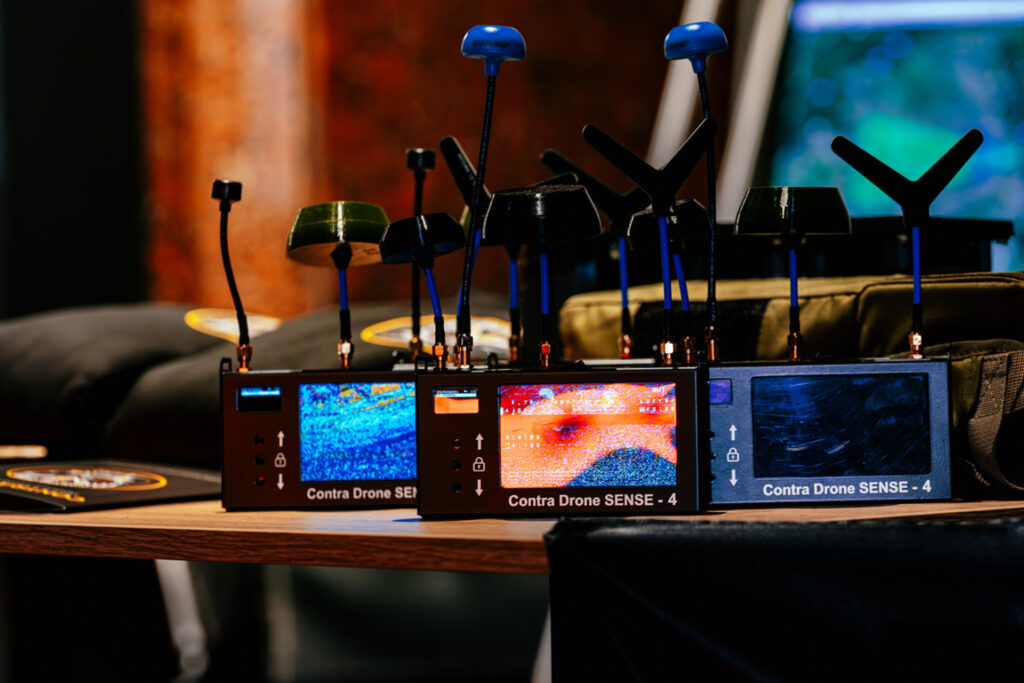
Contra Drone also demonstrated several supporting detection systems, including the SPECTRE electronic intelligence complex, SENSE-3 and SENSE-4 FPV drone detectors, and the CD-T15 radar, which the company says can simultaneously track more than 300 aerial objects at distances of up to 22 kilometers.
Electronic warfare for troops and vehicles
The demonstration also featured electronic warfare systems intended to protect soldiers operating near the front line.
Among them was D-JACK, which the company says automatically detects enemy FPV drone controllers using the ELRS communication protocol and applies targeted electronic jamming. Developers also presented the Anti-FPV Backpack 3, a wearable electronic warfare system designed to create a protective electronic "bubble" around moving personnel.
For vehicles and infrastructure, Contra Drone showcased both mobile and fixed electronic warfare systems, including the Contra-drone 8 Ultra, which reportedly suppresses a broad range of digital and analog drone communication channels while on the move.
AI-powered interceptor drone
The company also introduced Peace Duck, a high-speed autonomous interceptor drone equipped with artificial intelligence.
According to Contra Drone, the drone can independently complete the final phase of an interception without operator input, targeting Russian reconnaissance UAVs such as the Orlan and ZALA.
The demonstration also included Yell Duck FPV strike drones, Blackwing and Black Goose fixed-wing UAVs designed to operate in GPS-denied environments, and the Nyvexa unmanned ground platform for logistics and electronic warfare missions.

 Connexion


 USF Operators Struck 28 More Enemy Vessels Overnight
 Unmanned Systems Forces (@usf_army)