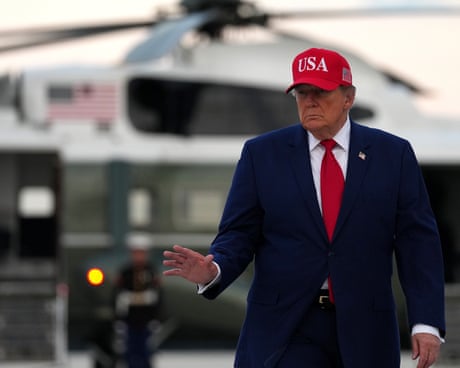
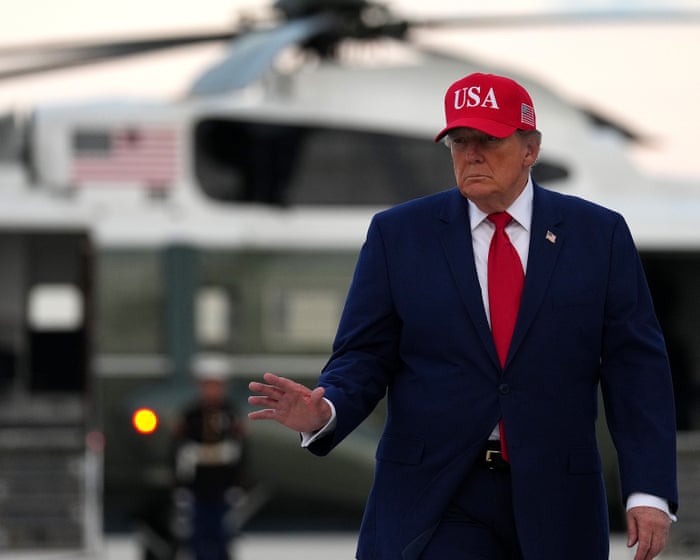
PM Mark Carney responds to US officials who blame Canada for trade war; Jamieson Greer says trade tension with Canada is ‘more their emergency than ours’
Democratic senator Chuck Schumer is introducing a bill that would reverse Donald Trump’s most recent tariffs, among them the new 50% duty on Canadian goods, MS Now reported.
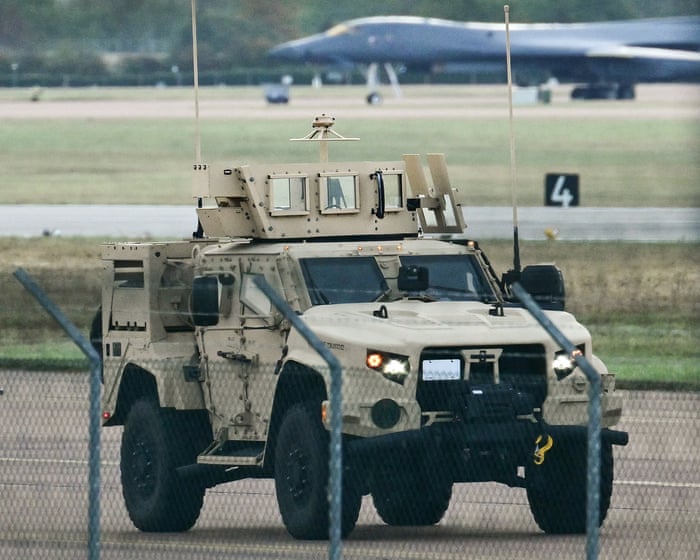
While the Senate minority leader’s proposed legislation has virtually no chance of becoming law, Schumer hopes that his proposal shows that Democrats are actively fighting the affordability crisis. Schumer first shared his proposed legislation with MS Now.
A year on from the purge, with thousands of jobs cut and billions in foreign aid lost, a former leader reflects on the sorry saga – and why it would never happen to Nasa
A year has passed since I and thousands of colleagues lost our jobs at USAID. Asking myself “Why us?” I have come to the conclusion that the American public had very little idea of what we were doing and why.
We’re watching today as Scott Bessent, the US treasury secretary, and Kevin Warsh, the chair of the Federal Reserve, deliver their opening remarks at the G20 meetings in Asheville, North Carolina.
Meanwhile, Trump posts video of himself kicking over a Lake Ontario sign and replacing it with Lake America sign
Donald Trump and Canada continued a verbal duel on Saturday over the US government’s administrative renaming of Lake Ontario, with the Ontario premier erecting a giant sign saying “Lake Ontario. Now and Always” – and the American president posting a video of him tearing down an avatar of that sign, erecting a replacement saying Lake America, and dancing to YMCA.
Rhetoric over the naming of Lake Ontario is the public face of an escalating trade dispute between the US and its northern neighbor involving a 50% US tariff on Canadian steel and retaliatory tariffs from Ottawa.
Inside the US state department, critics are still attacking a shuttered office established to counter foreign propaganda. Now, some of its work is also being resumed
A botched leak of purportedly explosive government files to a prominent conservative online personality was supposed to offer proof of what the Trump administration and its allies have long alleged: that a little-known office inside the US state department, created to fight foreign propaganda, had secretly become a tool for domestic censorship.
Two former high-ranking officials at the Global Engagement Center (GEC), a target of Republican ire that lost its funding in 2024 and was disbanded after Donald Trump’s return to office in 2025, say the documents show nothing of the kind.
Burnham has nothing to hide as he prepares to meet president he once called poisonous. It may actually win him more respect
It makes a pleasant change. Not so long ago, Keir Starmer was falling over himself in his efforts to keep things sweet with Donald Trump. Offering the US president a second state visit within minutes of meeting him. Everyone knows you should never put out on the first date: it only makes the other person think you’re a pushover. Sure enough, The Donald banked the marching bands and the Windsor silver service, made polite conversation for three days and then went back to trash-talking him.
Yet still, Starmer just sat there and took it. As if one word of criticism would be too much. Wittering on about the “special relationship” as if Trump gave a moment’s thought to the UK before he did anything. The rest of us wouldn’t have put money on the US president even being able to locate Britain on a map. It was only latterly, when The Donald chose to bomb Iran, that the penny finally dropped for Keir. And even then he looked pained by the apparent betrayal, as he resisted the calls of Kemi Badenoch and Nigel Farage to join in the war.
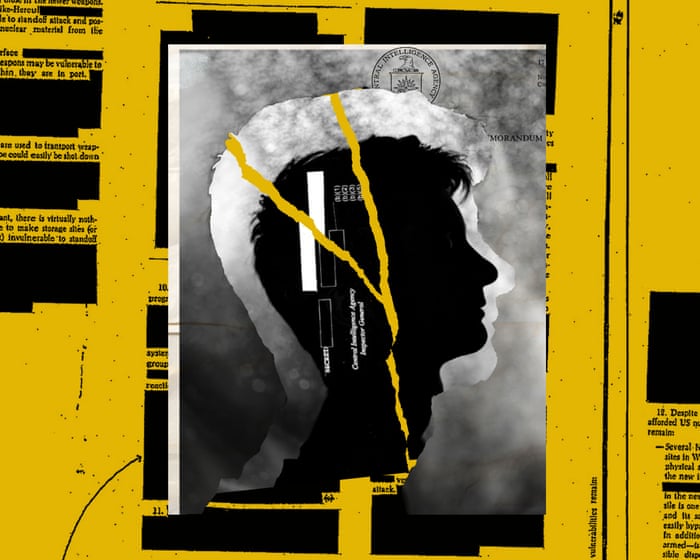
Donald Trump has downplayed a visit to Moscow by the CIA director, John Ratcliffe, as “semi-routine” after he turned up in the Russian capital unannounced, triggering a wave of speculation about the reasons for his trip.
Ratcliffe was reported to have flown to Moscow on a government transport plane on Tuesday in a rare visit after taking off from the Andrews air force base in Maryland.
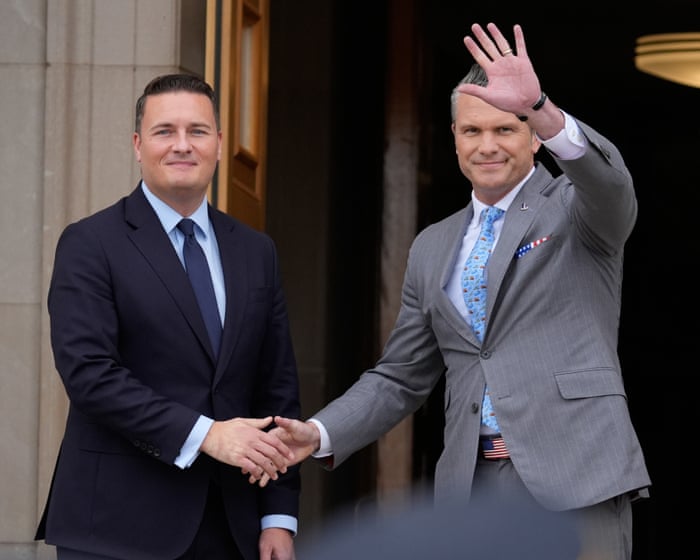
Debbie Wasserman Schultz and Wesley Bell to join as Jared Moskowitz becomes ranking member on sub-committee
Three pro-Israel Democrats have been given key roles on a powerful congressional body overseeing US foreign policy in a move rounding sharply counter to popular sentiment within the party and likely to anger leftwing activists.
The appointments to the US House of Representatives foreign affairs committee follow a succession of wins in party primaries for progressive candidates who put criticism of Israel and its actions in Gaza at the core of their campaign messages.
CIA Director John Ratcliffe visited Moscow on 25 August, becoming the first known serving CIA chief to travel to the Russian capital since November 2021, The Washington Post reported.
The CIA and White House did not publicly explain the mission.
The Kremlin said the unannounced trip involved “contacts between security services” but did not identify whom Ratcliffe met or what they discussed. Dmitry Peskov told Interfax that Ratcliffe did not meet with Russian President Vladimir Putin. The CIA and White House did not publicly explain the mission.
Expert raises possibility of a warning mission
Washington also asked Ukraine not to attack Moscow or St. Petersburg during the visit, Ukrainian sources told Suspilne. Kyiv was told that a senior US delegation was traveling to Russia, although officials were not initially told that Ratcliffe would be part of it.
“It is difficult to speculate because there is essentially no information,” Tartu researcher Vladimir Sazonov, an associate professor who studies Russian state ideology and information warfare, told Euromaidan Press.
Ratcliffe may have carried a warning, as William Burns did in 2021, Sazonov said. It could have concerned a possible new Russian mobilization after September’s State Duma elections or Moscow’s escalating hybrid operations against NATO.
Stalled Ukraine diplomacy and Russia’s relationship with Iran were other possible subjects. None has been confirmed.
Explore further
Russo-Ukrainian War. Day 175: Another explosion in Crimea
The last CIA visit came before Russia invaded
A US Air Force C-17 flew from Joint Base Andrews outside Washington to Riga, and then Moscow, according to flight data analyzed by The Washington Post. The aircraft remained at Vnukovo Airport for about eight and a half hours before returning to Latvia. The newspaper also verified footage of a diplomatic motorcade traveling through central Moscow.
The career diplomat and former ambassador to Russia, the CIA Director, William Burns/ Source: Getty Images
Ratcliffe’s visit was the first by a CIA director since Burns traveled to Moscow in November 2021 with evidence that Russia was preparing a major attack on Ukraine.
During that visit, Burns spoke with Putin by telephone from the Kremlin because the Russian president was in Sochi. Russia launched its full-scale invasion less than four months later.
Sazonov also raised the possibility that Ratcliffe discussed Americans detained in Russia. The CIA participated in previous negotiations that freed journalists Evan Gershkovich and Alsu Kurmasheva, and former US Marine Paul Whelan, RFE/RL documented CIA involvement.
“If we do not know the answers, all we can do is ask the relevant questions,” Sazonov added.
Everyone can see that the Iran war has been a strategic disaster for the US, while a failing president pretends he is winning
Now is the twilight of Donald Trump’s supremacy. The US is still the richest and most heavily armed nation on Earth. That status is secure. The current president, contemptuous of law and indulged in lawlessness by a supine Congress, enjoys even greater power than the constitution allows.
With those advantages it takes a special talent for incompetence to look as thwarted and impotent as Trump does with more than two years of his second term still to run.
Lawyer Baltasar Garzón, representing Chambers, said case against his client is ‘very strange’ as US requests extradition
FBI agents raided the Ibiza, Spain, vacation rental of 41-year-old James “Fergie” Chambers, a US citizen and wealthy donor to leftwing and humanitarian projects worldwide, in the days following his arrest last month, the Guardian has learned.
Baltasar Garzón, a human rights lawyer representing Chambers, revealed the details in an exclusive interview. Chambers is wanted for extradition by the Trump administration for alleged financial support of Hamas, as well as other charges.
Tariffs on Canada, threats against Iran’s partners and bond market intervention show a president weaponising US power while making Americans poorer at home
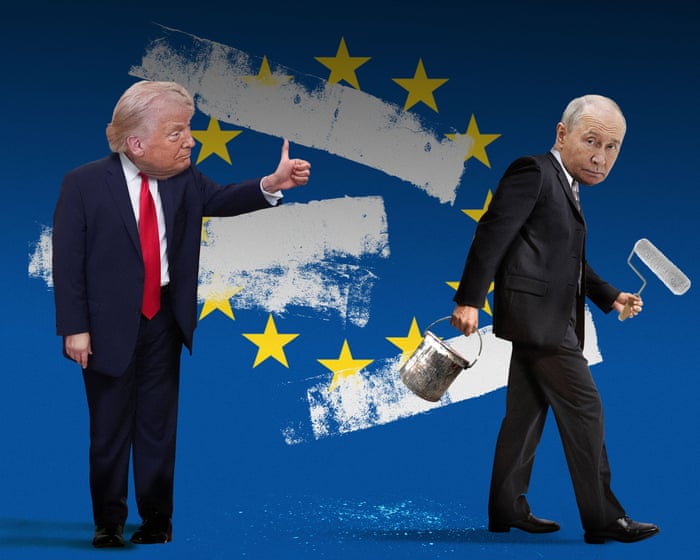
Three moves in the last week have exposed the limits of Donald Trump’s economic bullying. The US slapped 50% tariffs on another $20bn of Canadian goods – then threatened the same rate on the cars, trucks, parts and steel that America Inc depends on. On Monday, the Treasury secretary, Scott Bessent, menaced Iran’s trading partners with exclusion from the US financial network, hoping that coercion can deliver what months of war have not. And as the costs of war, tariffs and pro-billionaire tax cuts helped send US bond yields higher, the Treasury stepped in to tame long-term rates. These are not contradictory policies but a gamble: that US economic power can be repeatedly weaponised without reducing others’ willingness to depend on it.
The Trump administration’s “D-day” sanctions are potentially the most consequential because they expose the scaffolding of American financial power. While markets shrugged off the immediate threat, that calculation might change were the US to target a major Chinese refinery or bank. Such an escalation could spark a trade war with Beijing. The US has leverage. But China has pressure points – especially farmers in Republican states – that make using it costly. In the long run, there is a price to pay. Nations hold one another’s currencies partly because they trust the political relationship. Mr Trump is testing what happens when they don’t.
Unannounced trip reported by US media is said to be Ratcliffe’s first known visit to Russia as CIA chief
The CIA director, John Ratcliffe, has made an unannounced visit to Moscow, US media reported, after flight data showed an American military aircraft flew to the Russian capital, where a US diplomatic motorcade was later spotted.
CBS News quoted sources familiar with the situation as confirming Ratcliffe’s trip, saying it was his first known visit to Russia as CIA chief. Axios separately confirmed the visit, quoting a US official.
Move is latest deterioration in trade relations between neighbors with historically strong economic ties
Donald Trump announced a new 50% tariff on automobiles and crucial raw materials from Canada, the latest deterioration in trade relations between the two neighbors with historically strong economic ties.
The US president said that the increased tariffs would start on 1 January 2027 on all cars, trucks, automobile parts and steel. He also derided the nation’s tariffs on American farmers, writing on social media that Canada has been “ripping off” the US “for years”.
Abbas Araghchi says country is unbowed but president Masoud Pezeshkian admits its people face ‘many problems’
Iran’s foreign minister has dismissed the threat of a fresh round of US economic sanctions as a “desperate” ploy, even as its president acknowledged that the Iranian people are facing “many problems” amid Washington’s efforts to isolate and debilitate the country’s economy.
Last week, Donald Trump announced a new campaign to increase the pressure on the Iranian economy, calling it “the most crushing economic operation ever taken against any country”. The US Treasury secretary, Scott Bessent, is expected to announce further punitive economic measures on Iran – which he has described as “the toughest sanctions in history” – on Monday.
As the president tries to extract the US from his Iran war quagmire, leadership in Tehran is only too happy to crush his midterm dreams
In the aftermath of his devastating election defeat, the US president remained haunted by regrets over Iran.
Months before Jimmy Carter lost the 1980 presidential election to Ronald Reagan, eight US servicemen died in a botched high-risk rescue mission that failed to secure the freedom of dozens of US hostages seized in Tehran.
UN secretary general has said UN faces ‘imminent financial collapse’ due to unpaid contributions from member states
The Trump administration has started the process to transfer $725m to the United Nations, a congressional notification seen by Reuters showed – a move aid experts said was a welcome step towards paying billions in dues owed.
There was no immediate response from Washington DC to questions about the reasons for the payment from an administration that has slashed funding to many UN agencies and blasted the global body for not living up to its potential.
Audio recording of US vice-president apparently made at New York fundraiser and shared with Canadian Press
Leaked audio from a private event has reportedly captured the US vice-president, JD Vance, mocking Canada for apparently capitulating in a trade deal and taunting the prime minister, Mark Carney, for trying to “out-tough” Donald Trump.
The recording, which was reportedly made at a fundraiser and shared with the Canadian Press, comes in the last stretch of a difficult negotiation in which the US president has threatened to impose 50% tariffs on Canada.
Courier network carried millions of dollars in cash to Lebanon on commercial flights, treasury department says
The US treasury department announced sanctions on Thursday against 10 people it says formed a courier network that smuggled hundreds of millions of dollars to Hezbollah by carrying cash onboard commercial flights between Iran, Turkey, the United Arab Emirates and Lebanon.
The office of foreign assets control (OFAC) said the network allowed Hezbollah, the Iran-backed Lebanese militant group,to obtain foreign currency and dodge sanctions outside the formal banking system. The treasury department linked the operation to a scheme once associated with Behnam Shahriyari, a now-deceased finance official for Iran’s Islamic Revolutionary Guard Corps Quds Force.
The Trump administration’s ‘America first’ approach has contributed to the scale of the crisis now unfolding in one of the world’s poorest countries
For months health experts have warned that the scale of the Ebola outbreak in the Democratic Republic of the Congo (DRC) could surpass the one that swept west Africa in 2014-16. This week, the authorities in the DRC announced that a grim milestone has already been passed: at least 2,325 people have died from the virus, making it the deadliest of the country’s 17 outbreaks and the fastest-growing in history.
There is no effective vaccine against Bundibugyo – a rare strain of the virus that spread fatally undetected during the spring, often being misdiagnosed as malaria or typhoid. In contrast to neighbouring Uganda, which succeeded in eliminating an outbreak, multiple factors are combining to let the disease rip through the DRC. The worst-affected region is contested by armed groups, and a context of population displacement and chronic insecurity has made monitoring and surveillance more difficult. Ebola treatment centres have been attacked as a result of misinformation and community distrust.
Asked whether Taiwan and the South China Sea threaten US national security, Republican fill-in senator Darline Graham hesitated. “I’m just going to be honest here,” she told Tuesday night’s debate audience. “I’m – not that informed on national security, so – but I do support the military.”
Gasps, and boos, rolled through the opera house hosting the only debate before next week’s Republican runoff – a race to succeed her brother, Lindsey Graham, who was one of the Senate’s most committed rightwing foreign policy hawks before his sudden passing in July. She did not retreat.
Poll after poll shows the same thing. The American people know that the current economic system is rigged
The media pundits have written article after article desperately trying to understand why progressive candidates, despite being heavily outspent, keep defeating establishment Democrats in primaries around the country. Well, the answer is not complicated.
Whether it is a corrupt campaign finance system, unprecedented income and wealth inequality, a broken and wildly expensive healthcare system, the enormous threats posed by AI or an immoral and destructive foreign policy, progressives are talking about the real issues facing working families. And they are providing real solutions. Establishment Democrats are not.
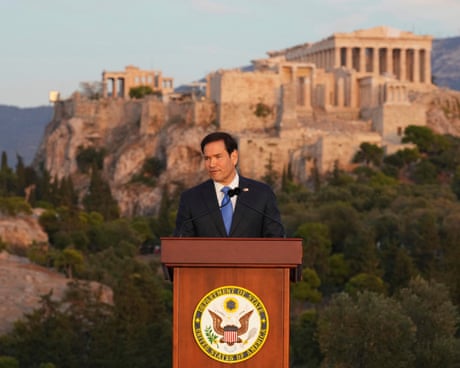
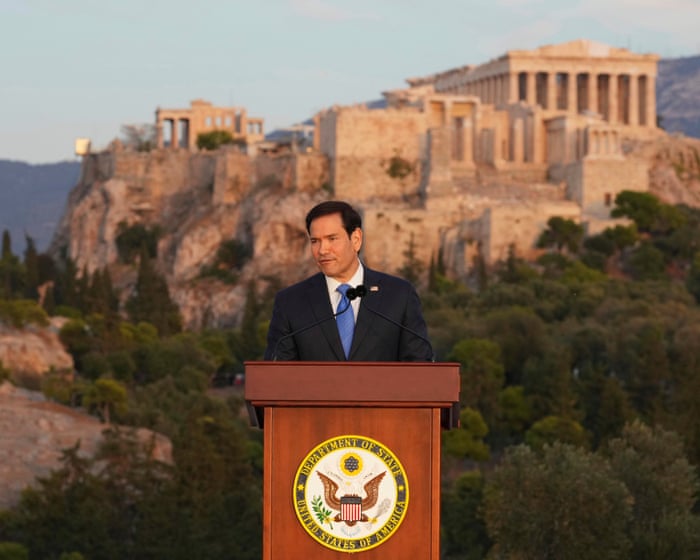
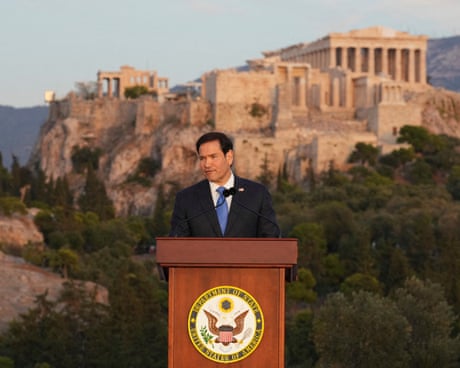
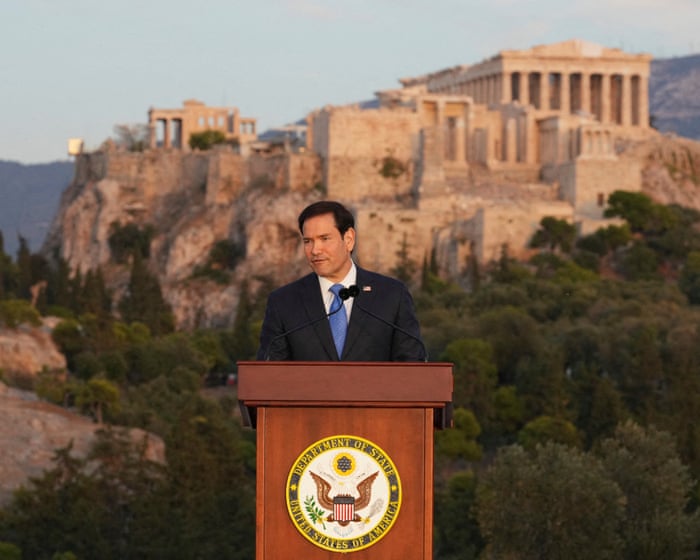
As chief US diplomat, Rubio could do great good. His pandering and neglect are a disgrace we shouldn’t ignore
Viewed from the state department in Washington DC, the world is on fire – but record heatwaves are not to blame. The unresolved Iran war has badly burned Donald Trump. His military campaign conclusively failed, energy and food prices are still rising, and a Republican rout in November’s midterm elections looms. Humiliatingly, Israel this week flatly rejected his latest Gaza peace proposals, days after Trump congratulated himself on a “historic breakthrough”. In Europe, Russia’s attacks on Nato allies grow increasingly brazen, threatening a wider escalation. The Ukraine war, which Trump vowed to end, is now well into its fifth year, with civilians on both sides caught in the killing fields. And these are just the bigger firestorms. There are plenty more.
Rarely has the need for effective, professional diplomacy been more pressing. So step forward Marco Rubio, US secretary of state and chief American diplomat. These are challenges that, if successfully tackled, could propel the 55-year-old son of Cuban immigrants and the former US senator for Florida into pole position in the 2028 Republican presidential nomination race. Here is a chance for Rubio to defy critics who dismiss him as a lickspittle and Trump dogsbody, and transform himself into respected global statesman. His boss mocked him as “little Marco” and a “loser” when they were election rivals in 2016. (Rubio called him a conman.) Now is Rubio’s opportunity to go big, be brave and prove he’s a winner.
During President Volodymyr Zelenskyy’s recent visit to Serbia, he was asked whether Belgrade could continue to count on Ukraine’s position on Kosova. Zelenskyy reaffirmed that position, saying that Ukraine respects Serbia’s territorial integrity and international law and that its stance on Kosova’s “unilateral declaration of independence” remains unchanged.
Explore further
Zelenskyy’s Kosovo comments in Belgrade prompt flag removal in Prishtina
For many Kosovars, who have stood firmly with Ukraine since Russia’s full-scale invasion, this is difficult to understand. There is particular pain in hearing President Zelenskyy appear to dismiss what Kosovars endured—when it is precisely that memory of war, displacement, and atrocities that made Kosova one of Ukraine’s most instinctive supporters.
Kosova emerged from an international process designed to resolve a conflict; Russia manufactured “independence” as an instrument of conquest.
The danger of “unilateral”
There is a big problem with the way Kosova is being discussed by President Zelenskyy. Describing its independence simply as a “unilateral declaration” removes everything that matters about how Kosova actually became independent.
It also plays directly into an argument Vladimir Putin has been making for years: if the West accepted Kosova, why should it reject what Russia has done in Crimea, Donetsk, or Luhansk?
Ukraine should be dismantling that argument, not inadvertently reinforcing it. Kosova’s declaration was unilateral in one narrow sense: Serbia did not consent. But Ukrainians should understand the problem with treating the aggressor’s consent as the decisive test.
Imagine telling a community in Ukraine devastated by Russian forces that Moscow must retain a permanent veto over the political settlement that determines its future.
Kosova’s path to independence
Kosova did not simply decide one day in 2008 to break away from Serbia. The declaration came at the end of a process that had lasted years. Kosova’s path to statehood came through the violent dissolution of Yugoslavia, a federation that ultimately fragmented into seven independent states, and after years of systematic repression of Kosova’s overwhelmingly Albanian population. The culmination was the 1998–99 Kosova war.
Serbian and Yugoslav forces conducted a campaign of violence and forced displacement against Kosovar Albanians. Nearly 800,000 people were expelled from Kosova in a matter of months because of a violent ethnic cleansing campaign of the Serbian army against Kosovars.
Hundreds of thousands more were internally displaced. Thousands of civilians were killed, cities and villages burned, homes destroyed, and women subjected to sexual violence.
Kosovar refugees fleeing their homeland. 01 March 1999, Blace area, the former Yugoslav Republic of Macedonia. Photograph: UN Photo
When the war ended in 1999, Kosova did not declare independence. Nor did Albania invade Kosova and annex it. Instead, Kosova was placed under UN Security Council Resolution 1244. For almost nine years, its institutions developed under international administration while its final status remained unresolved.
And then there were negotiations. UN Secretary-General Kofi Annan appointed former Finnish President Martti Ahtisaari to lead talks between Belgrade and Pristina over Kosova’s final status. After those negotiations failed to produce an agreement, Ahtisaari concluded that returning Kosova to Serbian rule was no longer a viable option and recommended internationally supervised independence.
This matters because Kosova’s declaration in February 2008 did not reject that international process. It embraced it. The declaration committed Kosova to implementing the Ahtisaari settlement and invited continued international involvement, including an EU rule-of-law mission and NATO’s security presence.
Call the final declaration unilateral if you wish. The process that produced it was anything but.
What the ICJ found
Even after independence, the issue was subjected to further international scrutiny. At Serbia’s initiative, the UN General Assembly asked the International Court of Justice to examine the declaration. In 2010, the court concluded that Kosova’s declaration “did not violate international law.” It also found that it did not violate UN Security Council Resolution 1244.
None of this means Kosova’s path to independence was simple or uncontested. Clearly, it was not. But reducing this history to the word “unilateral” creates precisely the opening Russia needs to manufacture a parallel with Ukraine.
Crimea breaks the comparison
Putin has used Kosova for years to claim that the West created a precedent Russia merely followed: Kosova separated from Serbia without Belgrade’s consent, so why should Crimea be different? Because that is clearly where the similarity ends.
Crimea, Donetsk, and Luhansk were annexed following a Russian invasion. Moscow occupied Ukrainian territory, installed or backed proxy authorities, staged referendums under military occupation, and ultimately claimed Ukrainian land as its own.
Kosova emerged from an international process designed to resolve a conflict; Russia manufactured “independence” as an instrument of conquest. Ukraine should insist on that distinction every time Moscow invokes Kosova.
People gather for a concert marking the eight anniversary of Russia's annexation of Crimea at the Luzhniki stadium in Moscow on 18 March 2022. - The banner bearing the letter "Z" in the colours of the ribbon of Saint George, which has become a symbol of support for Russian military action in Ukraine, reads "For Putin!" (Photo by Pavel BEDNYAKOV / various sources / AFP)
Ukraine understandably approaches Kosova cautiously. A country fighting for its territorial integrity is wary of anything that might appear to weaken that principle. But acknowledging the exceptional circumstances of Kosova does not weaken Ukraine’s argument. Treating Kosova and Crimea as comparable cases does.
Russia wants Kosova to be its precedent. Ukraine does not have to accept the premise. Ukraine, in fact, has a particular interest in explaining the difference, because Ukrainians know better than almost anyone what Russian-manufactured "self-determination” actually looks like. That is not Kosova’s story.
Kosova chose Ukraine first
There is also an irony here that is difficult for Kosovars to ignore. Kosova has stood with Ukraine since the beginning of Russia’s full-scale invasion. It imposed sanctions against Russia and Belarus, provided assistance to Ukraine, and offered refuge to Ukrainian journalists.
It did all of this without being recognized by Kyiv—Kosovars did not need recognition to know which side they were on.
Ukraine’s experience resonates deeply in Kosova. We know what it means to live through war and displacement. We also know what it means when a larger neighbor invokes history to argue that it has the right to determine your future.
That does not make the two cases identical—but it should make Ukrainians skeptical when Russia tries to turn Kosova into a justification for its own imperial project.
The Ukrainian flag is removed from a public display in Pristina after President Volodymyr Zelenskyy reaffirmed Ukraine’s support for Serbia’s territorial integrity. Video still: Përparim Rama/Facebook.
Kosovars did not expect President Zelenskyy to arrive in Belgrade and announce that Ukraine had suddenly changed its position on Kosova. But it is reasonable to expect Kyiv to revisit its approach to Kosova and to recognize the process by which Kosova came to be, a process that Ukraine’s closest allies today understood, supported, and ultimately recognized.
That requires abandoning a framing that reduces Kosova’s history to a “unilateral declaration” and inadvertently gives credibility to the parallel Russia has spent years trying to construct. For Kosovars, the hope is that a more honest understanding of that history will eventually lead Ukraine to reconsider recognition, too.
Not as a reward for Kosova’s support for Ukraine, but as the natural outcome of seeing Kosova on its own terms rather than through the precedent Moscow wants it to be.
Putin has spent years trying to make Kosova his precedent. Ukraine should take that argument away from him. Doing so would bring Kyiv closer to the position of the allies standing beside it today—and perhaps, in time, recognition would follow.
Nezir Sinani is executive director of the B4Ukraine Coalition, an alliance of more than 100 civil society organizations pressing companies and financial institutions to stop enabling Russia’s war against Ukraine. A longtime Kosovar activist, his work is rooted in Kosova’s own experience of war and displacement.
Editor's note. The opinions expressed in our Opinion section belong to their authors. Euromaidan Press' editorial team may or may not share them.