❌

Vue lecture

Ukraine’s skies need interceptors. Spain’s new €437 million came out of a Madrid meeting with no list attached

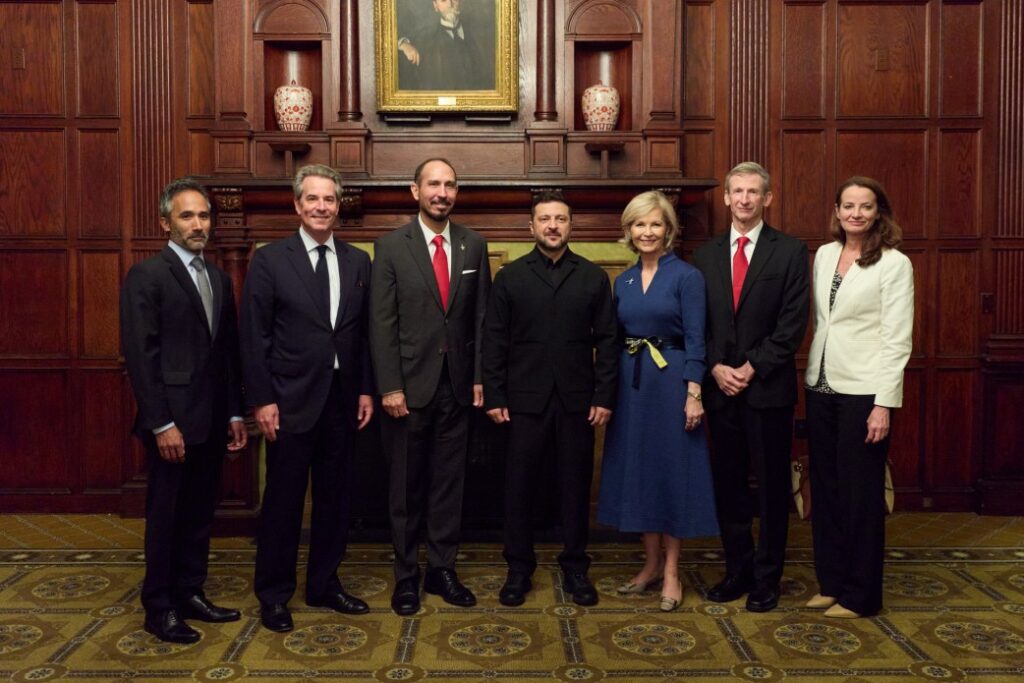
Ukrainian President Volodymyr Zelenskyy and Spanish Prime Minister Pedro Sánchez hold talks at the Moncloa Palace in Madrid, Spain, 5 November 2026

Spain will give Ukraine a new €437 million (about $490 million) military aid package, Spanish Prime Minister Pedro Sánchez told Ukrainian President Volodymyr Zelenskyy at their meeting in Madrid on 5 November, the Ukrainian president’s office reported. Neither government has said what the package contains. Whether it will help Ukraine’s thinning air defense is still an open question.

Russia is striking Ukraine’s cities, power plants, and railways daily as winter approaches. Ukraine’s main shield against ballistic missiles is nearly empty: in October, it stopped only about 7% of them. Foreign aid packages now arrive in a war where the scarcest item is the interceptor. The size of a pledge says little until its contents are known.

Zelenskyy says the package will help troops at the front

Zelenskyy thanked Spain after the talks. “Throughout all the years of this war, Spain has consistently helped and supported us,” he wrote. He said the two leaders discussed the package’s contents and Ukraine’s most urgent defense needs, without naming any weapons.

The next day, he said the package “will help our warriors at the front.” In the same post, he listed a German winter package for energy resilience and work to speed up deliveries of Patriot missiles, IRIS-T systems, and help for F-16 jets. He did not say whether Spain is part of that effort.

Madrid’s own account left the money out. The Spanish government’s readout said Sánchez reaffirmed support for Ukraine and its EU membership, condemned Russia’s recent attacks on Ukrainian cities, and noted €570 million Spain mobilized for Ukraine’s reconstruction in 2026. It did not mention a military package.

Ukraine asked Spain for help with air defense

Zelenskyy was in Madrid for the Ibero-American Summit, the first time Ukraine took part. He also met King Felipe VI and told him about Russia’s daily strikes. “We are now actively working with partners to strengthen our air defense and better protect people. We count on Spain’s support in this,” he posted after the audience.

Power-grid help is on the table too. On 6 November, Zelenskyy said Ukraine has agreements with Germany and Spain to supply generators, cables, and other equipment, which he discussed with leaders and companies during his visits.

Spain has sent Patriot missiles and F-16 rounds before

Spain is one of the few European countries that operate Patriot systems, and it has shared their missiles with Ukraine. In March, Madrid pledged five older PAC-2 interceptors, and in September its foreign minister confirmed a new batch was being prepared. Spain, like Greece, has refused to part with its Patriot systems themselves, calling them essential for national defense. Spain also began handing over cannon rounds that Ukrainian F-16s use against Russia’s jet-powered drones.

zelenskyy and sánchez
Explore further

Spain pledged €1 billion to Ukraine—then helped block NATO’s plan to count it

In March, Sánchez pledged €1 billion in military aid for 2026, part of it through the EU’s SAFE defense loans. Neither government has said whether the new package comes out of that pledge or on top of it. During Zelenskyy’s previous Madrid visit in November 2025, the two countries launched a joint project to supply long-range detection radars.

Other aid stalls as Russia’s winter strikes build

Other deliveries have hit snags. German Chancellor Friedrich Merz admitted occasional resupply difficulties after meeting Zelenskyy on 3 November. He said he will try to resolve them at a Berlin summit of Ukraine’s backers on 19 November.

The US is delaying the PAC-3 Patriot missiles built to stop ballistic strikes, while older PAC-2s keep arriving, a NATO source told Radio Svoboda in late October. Zelenskyy also said 16 billion in US aid agreed under earlier decisions was stopped and never provided. “At the very least, Ukraine must fight for this money,” he said.

  •  

Germany’s chancellor admits occasional resupply snags in Ukraine aid—he’ll try to clear them at the 19 November summit

German Chancellor Friedrich Merz speaks online with Ukrainian President Volodymyr Zelenskyy, 12 October 2026. Photo: Volodymyr Zelenskyy/X

German Chancellor Friedrich Merz conceded on 3 November, after meeting Ukrainian President Volodymyr Zelenskyy, that military deliveries to Ukraine have run into occasional resupply difficulties, according to a transcript the German government published. He will try to resolve them at a Coalition of the Willing summit in Berlin on 19 November, where leaders will agree on the scope of further, mostly military, aid for 2027, he said.

Those snags land on a country already short of air defense. Russia launched another massive cruise and ballistic missile attack that day, Zelenskyy said. In April, Ukraine’s Air Force confirmed that Patriot crews were rationing missiles mid-attack. From late November to mid-December 2025, Ukraine’s F-16 fleet had only a handful of US-made AIM-9 Sidewinder air-to-air missiles, three sources told Reuters.

Merz: deliveries help, despite occasional resupply difficulties

Merz said Germany wants to provide more winter aid and energy support this year. He said he gathered from his talks with Zelenskyy that many shipments are helping Ukraine’s army a lot right now, despite all the weaknesses in its air defense. He named ammunition for F-16 fighter jets in particular, but also air defense and other munitions.

Germany co-hosts the summit with France and the UK, which lead the coalition of over 30 countries coordinating aid to Ukraine, Radio Svoboda noted. Merz also urged all partners to meet NATO allies’ €70 billion (about $80 billion) military aid commitment for 2026.

Ukrainian President Volodymyr Zelenskyy during a meeting of the Coalition of the Willing, which brought together representatives of 30 countries both online and in person, on 24 August 2026. Photo: Official Website of the President of Ukraine
Explore further

Europe’s future force for Ukraine from 11 countries will hold its first rehearsal in Poland—for a peace that doesn’t exist yet

Zelenskyy: a big shortage in air defense

Zelenskyy said the leaders discussed Ukraine’s big air-defense shortage and supplies of PAC-2 and PAC-3 interceptors for US-made Patriots and German IRIS-T missiles. They also discussed a new support package for Ukraine’s F-16s, which Ukraine needs, among other things, against Russia’s Shahed attack drones, he said.

The next day, Zelenskyy met German Defense Minister Boris Pistorius. Ukraine has a two-year contract for German-made PAC-2 missiles, and “we are working to accelerate deliveries,” he wrote on X. The two agreed their teams would explore this and other issues, including IRIS-T and F-16 munitions.

None of that closes the Patriot gap quickly. Only a handful of countries can build ballistic-missile interceptors, and all of them are short, defense scholar Marc DeVore told Euromaidan Press in June. Zelenskyy said work is under way on Freya, an anti-ballistic program, but DeVore said he would not bet on it being produced by this winter.

  •  

Dozens of Russian drones fell to gun turrets over Kyiv in a month, Ukraine’s Defense Ministry says

A Ukrainian air defense crew with a heavy machine gun in Cherkasy Oblast

Automated gun turrets now serve in Ukraine’s Air Force and are destroying Russia’s jet-powered weapons, the Defense Ministry reported on 29 October. It gave no count for those jet kills, and it did not say what type of drones the turrets downed over Kyiv.

Jet drones are where Ukraine struggles most. From 1 to 26 September, Ukraine downed 55% of jet-powered drones against 90% of slower ones, partly because its interceptor drones fly at about 300 km/h, too slow to catch them. Yurii Cherevashenko, Deputy Commander of the Air Force, told a parliamentary inquiry commission on 6 October that jet-drone interceptors would arrive in the needed numbers no earlier than late November. Guns have limits too. On 5 October, Air Force spokesman Yurii Ihnat said turrets had already downed Geran-5s, but that their range is short because their main weapon is a machine gun.

Air Force turrets against jet weapons

According to the ministry, Brave1, a defense innovation cluster, began developing automated turrets in 2024. The systems have since “moved beyond the experimental stage and become an integral part of air defense,” it said. In Air Force service, the turrets are destroying jet-powered Banderol munitions and Geran-5 drones.

Ukraine's mobile gun team. Photo: Ukraine's Air Force via Facebook
Explore further

To scale up air defense without straining the front, Ukraine enlists business. In under year nearly 100 companies have joined, their crews downing 60-plus targets

Russia first used the Geran-5, a 6-meter jet-powered strike drone, in early 2026. The Banderol, a jet-powered cruise missile, flies at 520–560 km/h and can reach 650 km/h.

Private teams, a familiar number

Separately, the ministry said turrets have destroyed more than 60 targets within the private air defense project. The project lets companies form anti-drone teams that work under Air Force command.

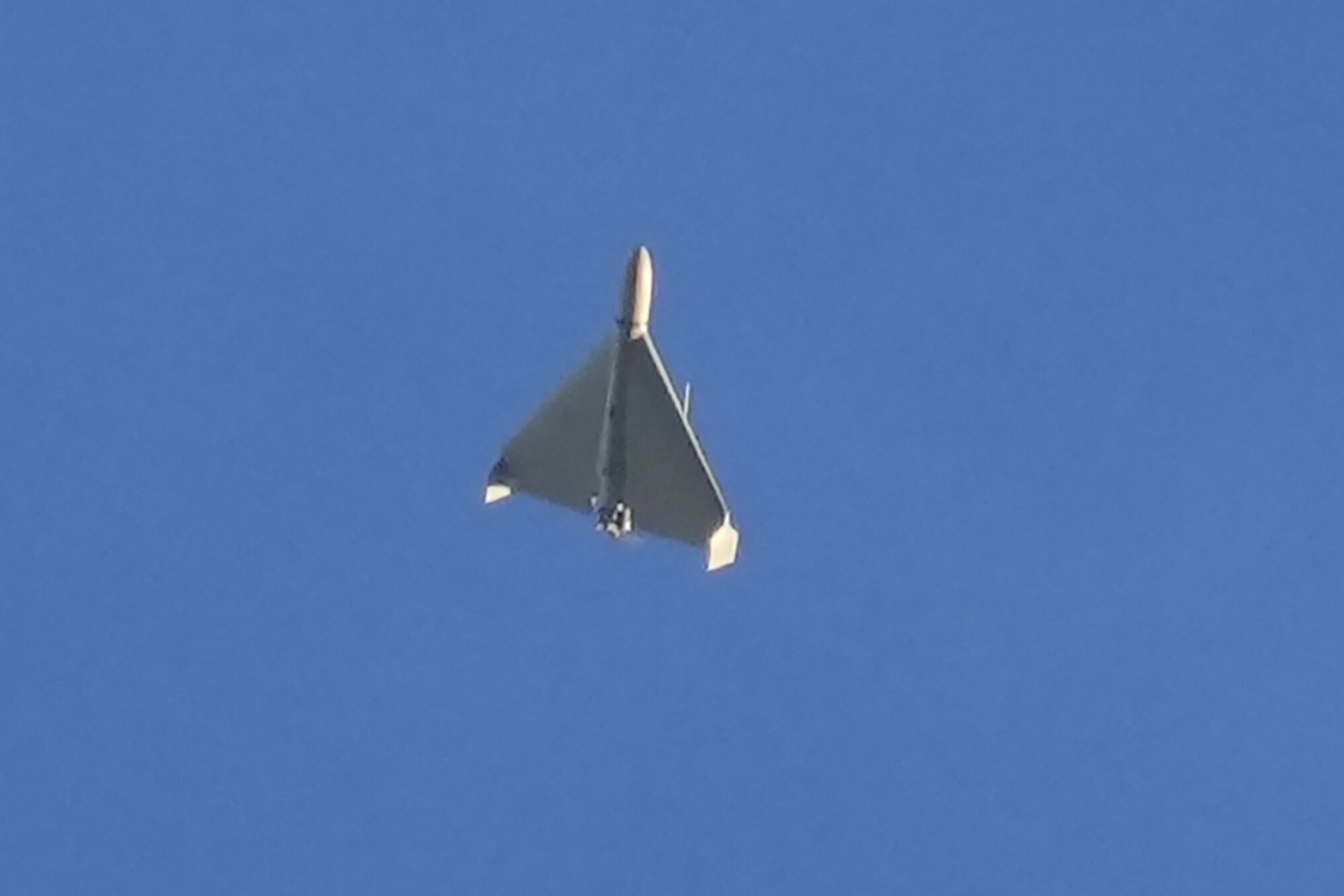
shahed-136 Geran-2 iranian airborne A drone is seen in the sky seconds before it attacked buildings in Kyiv, Ukraine, on Oct. 17, 2022. The Russian military has been using the Iranian Shahed exploding drones to strike Ukraine's vital infrastructure for more than a year. (AP Photo/Efrem Lukatsky/EastNews
Explore further

Postal service Nova Post says it has already shot down Russian Shahed drones, as Ukrainian businesses take air defense into their own hands

Yet on 14 October, the ministry gave the same 60-plus total for all private teams. At the time, it named interceptor drones and heavy machine-gun turrets as their main weapons. Groups from six companies were on combat duty, about 50 groups had been formed in total, and some were still training. Nearly 100 companies had joined by then, up from 81 in mid-September.

The ministry says the project expands air defense “without placing an additional burden” on the military’s own air defense. It and Brave1 say they will keep integrating automated turrets into the air defense system.

  •  

More ballistic missile interceptors and F-16 repairs inside Ukraine: Kyiv’s two asks to Lockheed Martin

Ukrainian President Volodymyr Zelenskyy during a meeting with American defense company Lockheed Martin representatives on 28 July 2026, in Washington D.C. Source: President's Office

Ukraine is counting on buying part of Lockheed Martin’s growing output of ballistic missile interceptors, President Volodymyr Zelenskyy said. He met the US company’s team in Kyiv on 19 October and also raised servicing and repairing F-16 fighter jets inside Ukraine.

Russia keeps striking Ukraine’s power grid with ballistic missiles, and interceptor supplies fall short of that threat. Kyiv is working every route to more Patriot missiles, from US deliveries to allies’ stocks, and some have stalled. Greece, for one, has not confirmed it will hand any over, citing its own defense needs. A purchase from the missiles’ maker would add one more route.

Growing output, F-16 repairs in Ukraine

Lockheed Martin builds the PAC-3 MSE interceptors fired by Patriot air defense systems, as well as the F-16. Zelenskyy said both matter against Russian ballistic missiles and jet-powered Shahed drones. Neither area is easy right now, he added.

“We count on the opportunity to purchase some of them to protect more lives,” he wrote.

On 28 July, Zelenskyy met the company in Washington to discuss joint production. That came weeks after US President Donald Trump pledged Ukraine a license to manufacture Patriots.

A batch reportedly stuck in Washington

Meanwhile, US Defense Secretary Pete Hegseth has not signed off on a “significant” batch of Patriot missiles, Ukrainian officials told the Kyiv Independent. One official said allies had already paid for them. A US government official called the claims untrue, and the Pentagon did not respond. A NATO official said allied-funded deliveries, including air defense, continue. A second NATO official said some shipments could be delayed, but likely not for political reasons.

Zelenskyy told Bloomberg on 18 October that the US delivers only 12 Patriot interceptors a month. On 20 October, interceptors topped his list in a call with US Secretary of State Marco Rubio.

No purchase was announced, so new interceptors from this route remain a prospect. Meanwhile, partners’ early warnings of Russian ballistic launches have gone missing three times recently, Zelenskyy wrote. Those warnings give air defenses extra minutes to prepare.

  •  
❌