Vue lecture

“We flew at wave height” — Ukrainian pilots recount mission to retake Snake Island
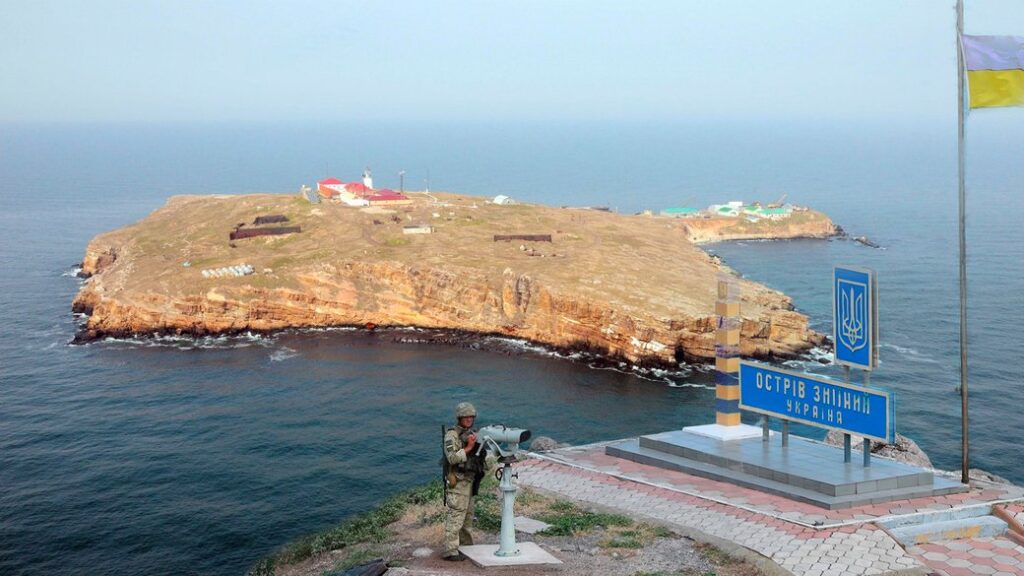
Ukrainian border guard with Snake Island in the Black Sea in the background

Ukrainian helicopter pilots have, for the first time, described new details of the high-risk mission that helped pave the way for retaking Zmiinyi (Snake) Island in May 2022. The accounts came from pilots of the 11th Separate Army Aviation Brigade "Kherson", according to Radio Free Europe/Radio Liberty.

This operation marked a turning point in Ukraine's campaign to challenge Russian control of the Black Sea. Zmiinyi (Snake) Island had become a symbol of Ukrainian resistance after Russia's full-scale war, while its liberation helped restore access to key shipping routes and significantly constrained Russia's ability to project military power along Ukraine's southern coast.

Three attempts, one mission

The first landing attempt came in late April 2022. Helicopter crews split into two groups, one to strike the island's defenses, the other to land troops under their cover, but Ukrainian fighter aircraft providing top cover spotted Russian jets approaching, and the operation was called off mid-approach.

"We had certain protocols, certain agreements, for when the operation ends," said Oleksandr, a Mi-24 pilot who flew top cover that day. 

The second attempt followed in early May. Strike aircraft hit the island first, but Russian forces opened fire on the helicopters as they moved to land, and the troops never touched down.

"Landing special forces is one of our usual tasks, but doing it under these conditions was an audacious operation. I'd call it close to impossible," said Oleksii, a Mi-8 pilot who flew on all three attempts.

The Ukrainian military was counting on the element of surprise. But after they had tried once, the Russians knew they were out there, waiting for them. 

The third attempt, on 7 May, succeeded. As the soldiers approached the island, it became visible from about 15 kilometers away. 

"Since it sits on a rise — somewhere around 42 meters above sea level, they could see us better than we could see them. What worked in our favor was sheer nerve," recalled Leonid, another Mi-8 pilot involved in the operation.

40 kilometers of open water

To reach the island, the helicopters had to cross open sea with no coastline in sight, a setting that disoriented even experienced crews, especially at the near-zero altitudes they flew to avoid detection.

Artem, an Mi-8 pilot who ferried troops to the island, explained that flying over water is considered particularly challenging because the lack of coastal reference points makes navigation difficult, while a calm sea further increases the risk of spatial disorientation.

He recalled that the shortest distance from the mainland to Zmiinyi (Snake) Island was about 40 kilometers and joked with the senior navigator that it seemed a long way, only to be told there was no way to bring the island any closer.

Dark humor helped ease the tension among the crews before the mission. Oleksandr recalled that one of the pilots from Poltava, Maksym, was known for his dark sense of humor, which helped lighten the mood as the crews prepared for the high-risk operation. 

"So, Sanya, ready to go for a swim in the Black Sea?" asked Maksym. 

The water below them was no warmer than four degrees Celsius at the time of the operation. While some crews had previously trained for low-altitude flights over land during combat operations, flying at such low altitude over open water was an entirely new experience.

Leonid recalled that one of the lead pilots said he could feel a rhythmic tapping, which turned out to be the helicopter's front landing gear striking the sea surface. The helicopters were flying so low that the operation was both physically uncomfortable and highly demanding, requiring high speed and constant maneuvering.

What greeted them on island

By the time helicopters carrying special forces approached on 7 May, Ukrainian Bayraktar TB2 drones and tactical aircraft had already struck the island's defenses.

"Everything was already wrecked," Leonid said.

As the helicopters approached the island, they encountered smoke, ongoing small-arms fire, and heavy resistance. Leonid recalled that the crews were unable to land on their first approach because they came under Russian fire.

Guided by Mi-24 attack helicopters providing cover, they made a second attempt and successfully landed the special forces despite continued Russian fire and nearby explosions. He said the landing took only moments and noted that the crew was fortunate a fragmentation grenade did not detonate above the helicopter's rotor blades.

The landing zones had been mined in advance.

Artem explained that the crews first fired rockets at the designated landing areas in an attempt to detonate or disable the mines before the helicopters touched down.

One crew, however, was forced to land on a site that had not been cleared after another helicopter occupied the planned landing zone. He described it as remarkable that none of the mines exploded, adding that combat engineers later confirmed the entire area had indeed been mined.

Human cost

The lead crew during the 7 May assault, pilot Andrii Horetskyi and navigator Yevhen Halytskyi, was the first to join the group of helicopters that struck the island and provided cover for the landing operation. Both men were later killed while defending Ukraine.

Artem, who had known Horetskyi for more than two decades, recalled that they had trained together and eventually served in the same unit. He described Horetskyi as an intelligent and highly professional officer who was deeply committed to improving both his unit and Ukraine's Army Aviation.

Crewmates remembered Halytskyi as the person who helped maintain morale during preparations, reassuring others that everything would be fine and encouraging them despite the risks they faced.

A separate rescue crew, flying an Mi-14 on standby near the coast in case of an emergency, was shot down by a Russian fighter while in a holding pattern during the operation.

The crew included Mykhailo Zaremba, a pilot who had refused to defect during Russia's 2014 occupation of Crimea and continued serving Ukraine afterward. Only one rescuer aboard survived; Ukrainian border guards found him near the crash site, and comrades from the 11th Brigade evacuated him.

What island's liberation opened

Russian forces abandoned Zmiinyi (Snake) Island on 30 June 2022 after sustained Ukrainian missile and artillery strikes, ending a 126-day occupation. The withdrawal reopened the Bystre channel shipping route linking the Black Sea to the Danube, unblocking Ukrainian river ports and restoring maritime trade, including agricultural exports.

It also curtailed Russian naval dominance in the northwestern Black Sea and reduced the threat of an amphibious landing against Odesa and Mykolaiv oblasts.
  •  

Rebuilding Ukraine while it burns — calling it progress: what Ukraine Recovery Conference 2026 actually delivered

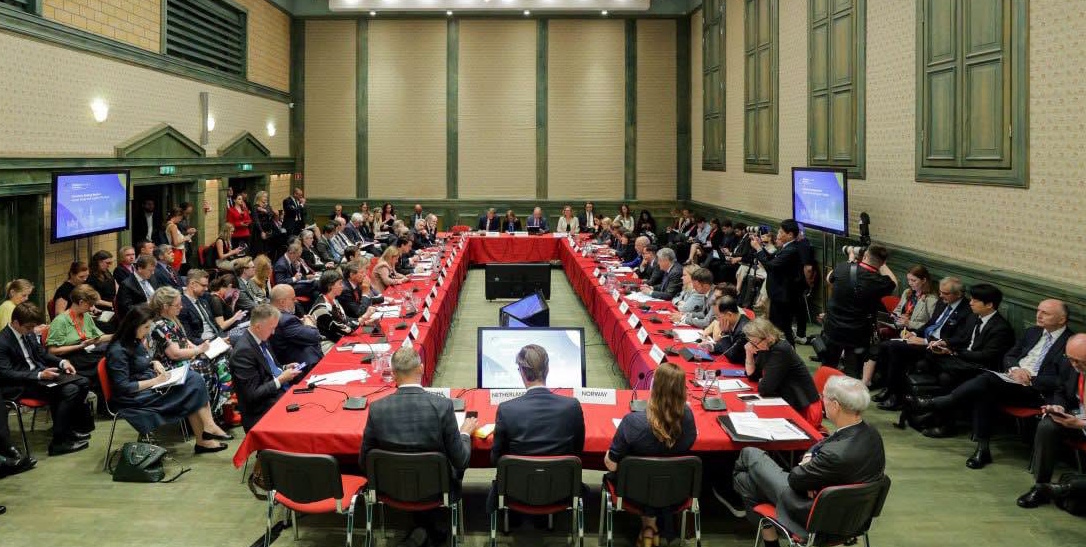
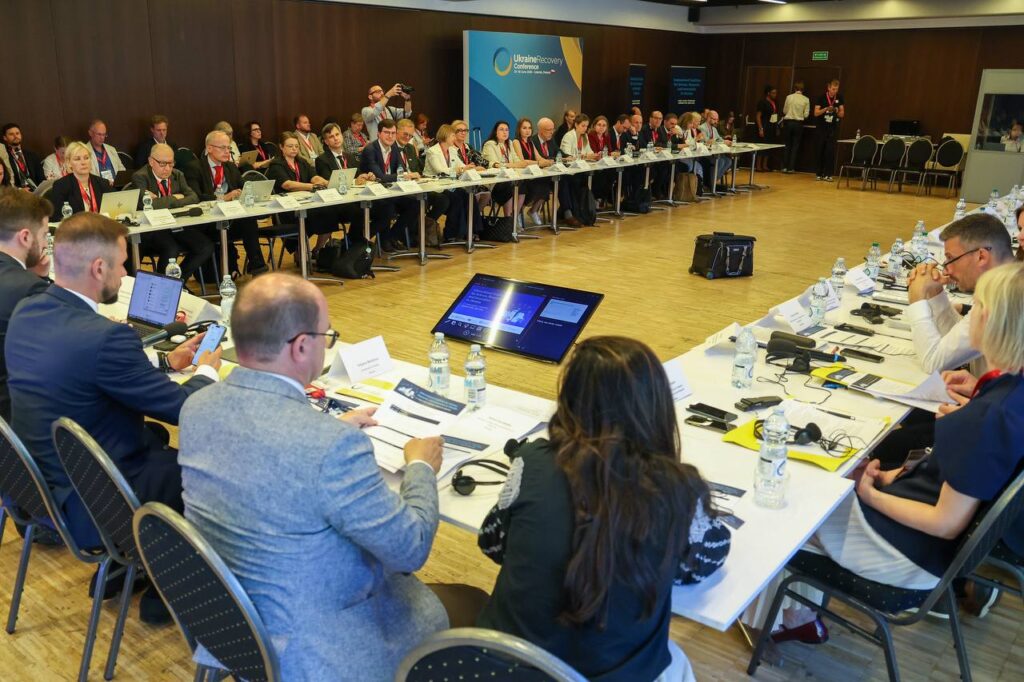
Panel discussion at the Ukraine Recovery Conference 2026 in Gdańsk, with speakers on stage and attendees in the audience

The numbers are impressive. But two days in Gdańsk—25 and 26 June—revealed developments that matter more than any single agreement. The conference showed how European thinking about Ukraine is changing from postwar reconstruction to wartime resilience, from humanitarian support to strategic investment. 

It also exposed the distance that still separates political declarations from the scale of action Ukraine needs.

With Russia showing no sign of halting its invasion, the speed at which Ukraine rebuilds its economy, energy grid, and arms industry has become inseparable from its ability to keep fighting.

Recovery during war

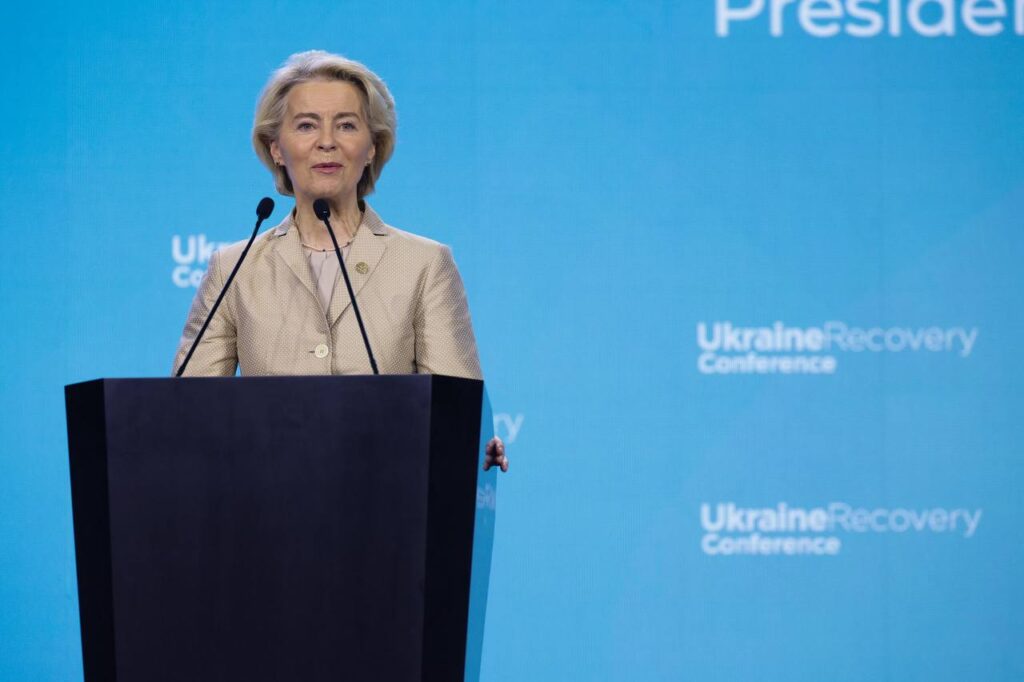
The most important shift from previous Ukraine Recovery Conferences is not in the numbers but in the logic. Partners have stopped talking about recovery as something that begins after. Alongside the first €3.2 billion tranche, the President of the EU Commission, Ursula von der Leyen, announced a separate €6 billion tranche specifically for drone production.

That is no longer humanitarian support, or even "reconstruction" in the classical sense — it is wartime capability funding, operating under the banner of a recovery conference.

At the closing press conference, Ukraine's Economy Minister Oleksii Soboliev called the conference "the most practical in history." Not the most generous — the most practical. That is effectively an acknowledgment that since Lugano 2022, the format has traveled from a declarative forum to a transactional platform.

But "practical" has its limits. One topic quietly circulating in the margins was a certain fatigue around forums about Ukraine's future reconstruction. Investors show up. Agreements get signed.

Actual projects on the ground move considerably slower than signing ceremonies.

One example of success: a factory in the Bila Tserkva Industrial Park, built by an Italian investor within a year of the Rome conference. One factory in a year is not the scale Ukraine needs.

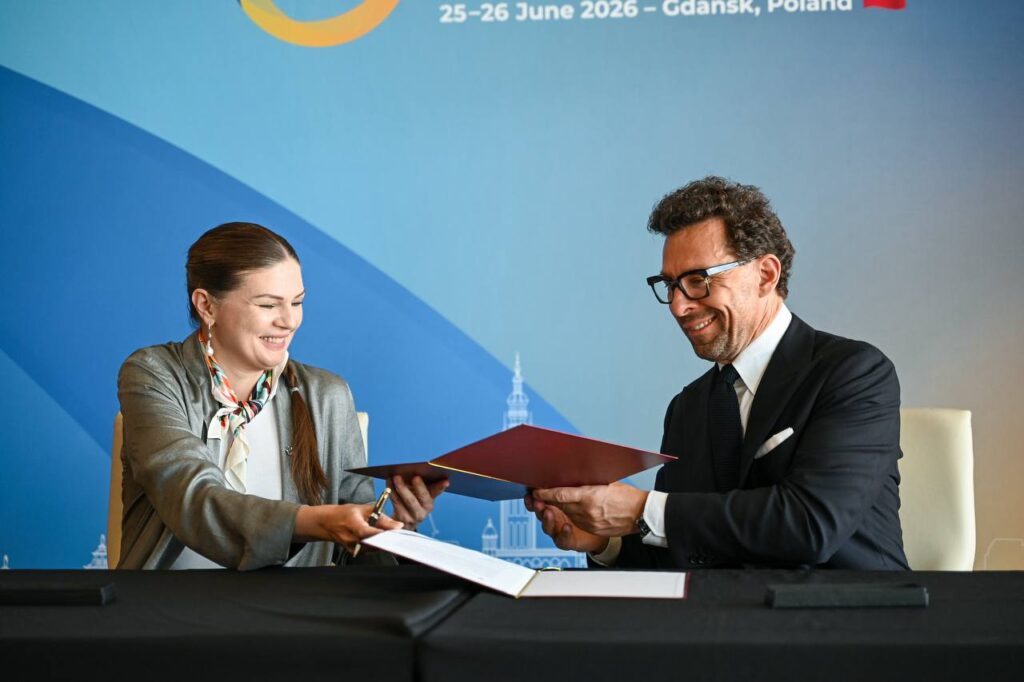
Signing of a Ukrainian-Polish agreement in the Ukraine Recovery Conference in Gdańsk, Poland. June 2026
The signing of a Ukrainian-Polish agreement during the Ukraine Recovery Conference in Gdańsk, Poland. June 2026. Photo: Ukraine Recovery Conference

Defense joins the agenda

Von der Leyen announced in Gdańsk the expansion of defense cooperation between the EU and Ukraine in the field of drones. Defense technology has formally entered the reconstruction discourse. Defense Day, running in parallel, focused on concrete mechanisms — joint ventures, investment pipelines, and legal frameworks for integrating Ukrainian defense tech into allied supply chains.

But a gap remains between what was discussed at Defense Day and what filled the main panels. The defense sector was more prominently represented this year, yet prominence is not the same as priority. Of the roughly €10 billion in signed agreements, the bulk falls on energy, infrastructure, and financial instruments. The defense industry got its own side event, but not its own line in the final communiqué.

According to the Council on Foreign Relations, Ukraine produced around 4 million drones in 2025 and is on track for 5 to 6 million in 2026 — Kyiv's own Defense Ministry targets 7 million. The obstacle to scaling is not engineers or ideas; it is capital, certification, and the absence of integration into EU and NATO procurement ecosystems. Gdańsk mapped those obstacles. It did not remove them.

On 25 June 2026, Gdańsk held the fourth meeting of the G7+ Ukraine Energy Coordination Group, also known as the “Energy Ramstein". Source: Denys Shmyhal
Explore further

Russia has hit Ukraine’s energy system 6,000 times. Allies pledge €375 million at Gdansk conference, but fund is still short

Europe opens the door — slightly

On 15 June, ten days before the conference opened, the EU and Ukraine opened negotiations on the first "Fundamentals" cluster, covering the rule of law, fundamental rights, and democratic institutions.

Ursula von der Leyen  during the Ukraine Recovery Conference in Gdańsk, Poland. June 2026
the President of EU Commission Ursula von der Leyen during the Ukraine Recovery Conference in Gdańsk, Poland. June 2026. Photo: Ukraine Recovery Conference

Polish Foreign Minister Radosław Sikorski said that the process is only the first step on a long journey: to join, Ukraine must meet a string of criteria on the rule of law, anti-corruption, and the alignment of its legislation with European standards.

He noted the process grows more complex every year as the EU's legislative framework expands, and cited Poland — which spent about seven years in technical accession talks before becoming a full member. That was unlikely to surprise anyone. But it matters that it was said out loud, and not only in the corridors.

That slots in directly under the "Europe opens the door — slightly" subhead, ahead of the Polish-Ukrainian agreements paragraph. Nothing else in the report changes.

Ukraine Recovery Conference-2026. Photo: URC
Explore further

Recovery conference for Ukraine opens in Poland as Warsaw-Kyiv ties hit bottom

The diplomatic crisis between Poland and Ukraine had no significant effect on concrete outcomes: 15 of the 160 agreements were Ukrainian-Polish government-to-government deals, including cooperation between state-owned companies and credit agencies. Business separated itself from the presidential scandal. That is good news.

But Prime Minister Yulia Svyrydenko was not invited to the EU-member Eastern Flank summit, which took place in parallel with the conference. It is hard to imagine such a pointed exclusion had President Zelenskyy come to Gdańsk in person. The list of confirmed bilateral meetings she held over two days was limited to counterparts from the Czech Republic, Finland, Estonia, and the host, Donald Tusk. The president of Romania and the prime minister of Sweden flew into Gdańsk the same day — for the Eastern Flank summit, not for URC.

Diplomacy matters

Partners showed respect, but made clear that the level of representation affects the depth of discussions. That is not a footnote. At a conference where the weight of a voice is measured by who stands behind it, Ukraine arrived with its second-in-command.

Yulia Svyrydenko described the conference as a success that produced tangible results for Ukraine. But Zelenskyy framed Nawrocki's decision as domestic electoral maneuvering and said the Polish president had sought to derail the conference. If so, Nawrocki partly succeeded.

He did not cancel Gdańsk — but he changed its weight.

Without Zelenskyy, the conference remained a prime ministers' forum at a moment when Ukraine needed its head of state present not for protocol, but to sit at the tables where decisions on security guarantees and the pace of EU integration are actually made.

Two things are beyond dispute. First, European support for Ukraine is holding and, despite everything, growing. The conversation has shifted from humanitarian aid to strategic investment in a country at war. That shift is real.

Participants of Ukraine Recovery Conference in Gdańsk, Poland. June 2026.
Participants of the Ukraine Recovery Conference in Gdańsk, Poland. June 2026. Photo: Ukraine Recovery Conference

Second, the distance between what was declared and what is sufficient remains large. Ukraine's external financing needs for 2026 stand at around $52 billion. Gdańsk closed part of that gap, not all of it. The defense industry received recognition, but not systematic integration into allied supply chains. EU accession moved, but the first cluster is not membership. And the largest continental donor's call to "freeze the front" sits uneasily at a conference dedicated to rebuilding a country where roughly 200 combat engagements occur every day.

  •  

“We remember everyone who is in captivity” – Ukraine brings home 160 defenders held since 2022

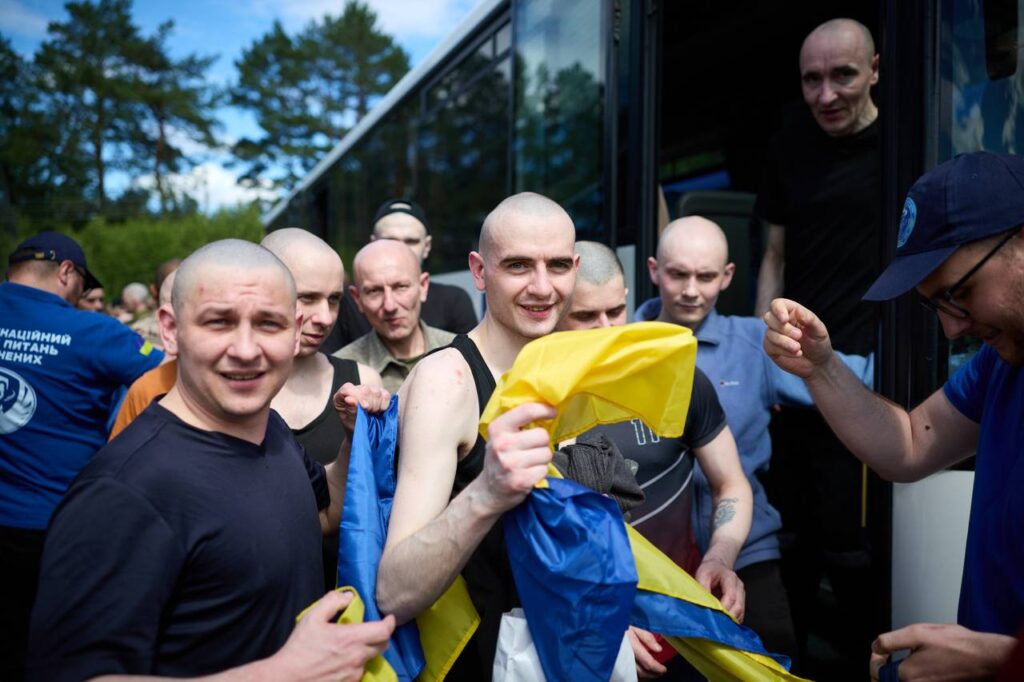
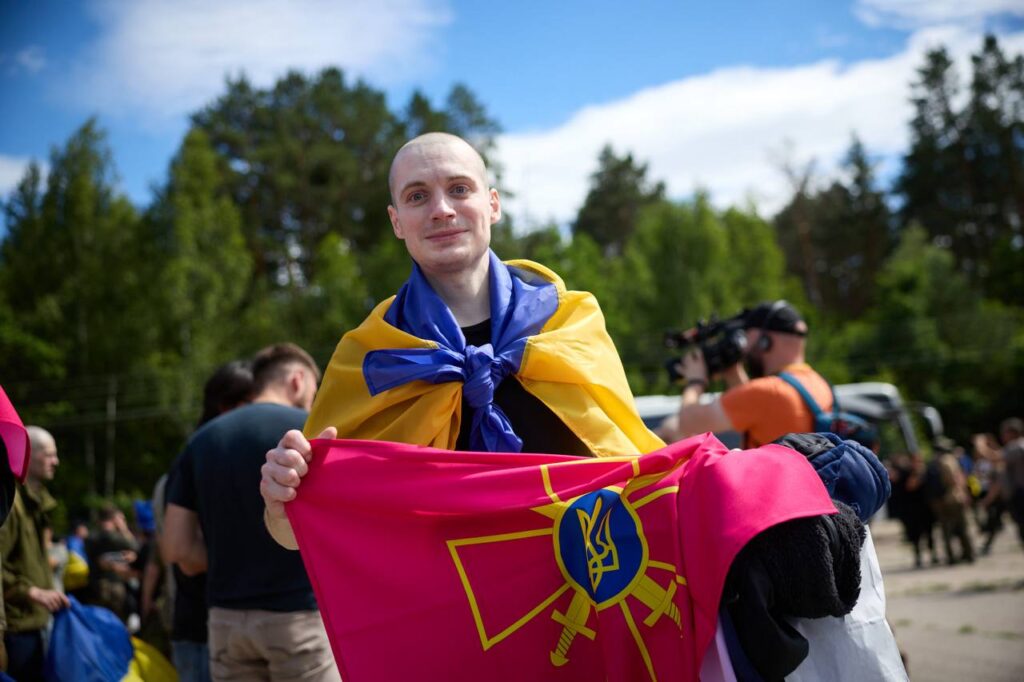
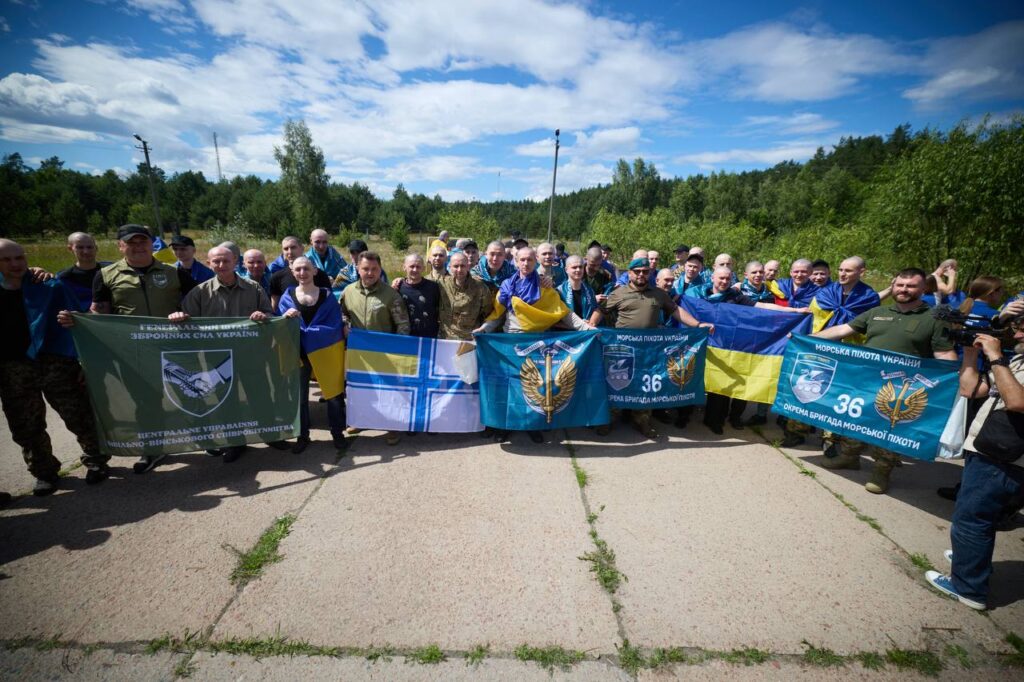
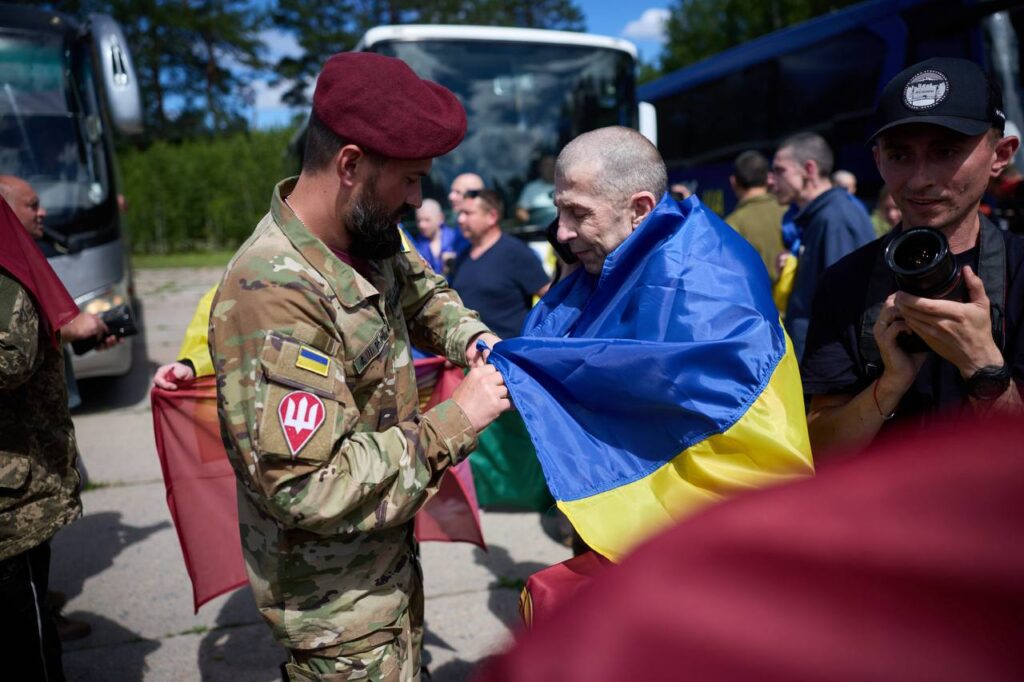
Ukrainian service members arrive home after release from Russian captivity in the 76th prisoner exchange, 26 June 2026. Photo: Zelenskyy

Ukraine has brought home 160 military personnel from Russian captivity in a new prisoner exchange coordinated by the Coordination Headquarters for the Treatment of Prisoners of War.

The swap, carried out on orders from the President of Ukraine, is the 76th exchange since the start of the full-scale invasion. All those released had been held in Russian captivity since 2022.

“We remember everyone who is in captivity. We check every name. We must bring everyone back – both military and civilians.” Ukrainian President Volodymyr Zelenskyy said, stressing that Ukraine continues systematic efforts to secure the release of all detainees.

Ukrainian service members arrive home after release from Russian captivity in the 76th prisoner exchange, 26 June 2026. Photo: Zelenskyy

Released service members from across Ukraine’s armed formations

Officials said the freed Ukrainians include members of the Armed Forces of Ukraine, the National Guard, the State Border Guard Service, the State Special Transport Service, and other formations. They fought across key frontlines, including Donetsk, Luhansk, Kharkiv, Chernihiv, Zaporizhzhia, Sumy, and Kyiv regions.

Among those released are 115 defenders of Mariupol, including personnel who took part in the defense of the city and Azovstal. The group includes both soldiers and sergeants, as well as 58 officers.

The youngest freed serviceman is 26 years old, while the oldest is 66. All released personnel will undergo medical examinations, receive treatment, financial and documentary support, and rehabilitation after prolonged captivity.

Ukrainian service members arrive home after release from Russian captivity in the 76th prisoner exchange, 26 June 2026. Photo: Zelenskyy

Ongoing exchange efforts with international mediation

Ukrainian officials said a total of 9,606 Ukrainian military personnel and civilians have now been returned through prisoner exchanges since the start of the coordination effort.

The Coordination Headquarters thanked the United States and the United Arab Emirates for their mediation role, as well as all Ukrainian institutions involved in securing the exchange.

Work continues to secure the release of all Ukrainians still held in Russian captivity.

  •  

Kyiv gave Belarus ruler week to pull Russia’s drone relays. They went silent in three days, Zelenskyy says

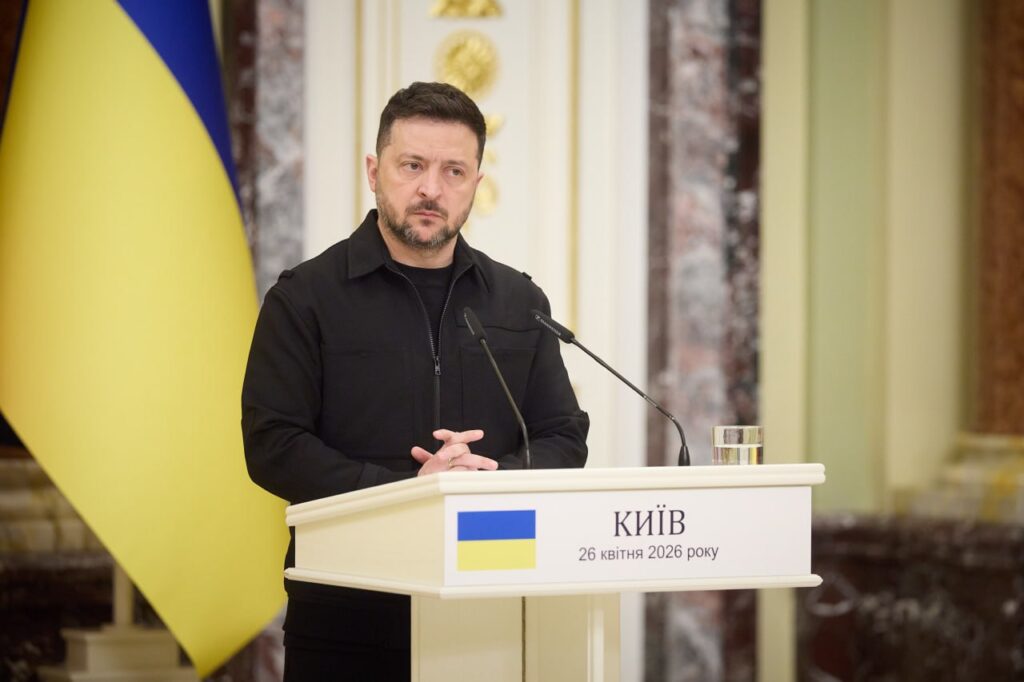
Ukrainian President Volodymyr Zelenskyy, 26 April 2026. Photo: Zelenskyy on Telegram

Signal relays in Belarus that helped Russia steer Shahed drones into Ukraine have stopped working. The equipment went dark on 22 June, days after Kyiv gave Belarusian ruler Aliaksandr Lukashenka a week to remove it, though it is unclear whether it was dismantled or simply switched off, President Volodymyr Zelenskyy told journalists, per UNIAN. 

The relays extend Russia's reach. Repeaters placed on Belarusian towers and rooftops boosted the control signal for Shaheds flying the northern route, letting them hit targets across Kyiv, Rivne, and Volyn oblasts that Russia struggles to reach from its own soil.

Some strikes on Ukrainian energy and railway sites would not have been possible without that help, Zelenskyy has said. Ukraine exposed and dismantled one such network in February, yet Russia kept adapting.

Relays went dark on 22 June

Zelenskyy said the equipment fell silent this week.

"Whether they dismantled them or not, I honestly do not know yet. But we are working on it, I am watching closely, and getting daily reports. The fact is the relays are not working today," he said.

He stopped short of claiming credit or naming a cause.

Kyiv set deadline first

The silence followed an ultimatum. On 19 June, Zelenskyy gave Lukashenka one week to strip the Russian repeaters from Belarusian border towers and warned that Ukraine would act if Belarus did not.

The relays went quiet on 22 June, before the week was up. Lukashenka had apologized to Zelenskyy earlier in June and pledged Belarus would stay out of the war, though Kyiv treats the country-level threat as unresolved.

Russia keeps shifting tactics

Even without the towers, Russia has other ways to guide its drones along the border. It has drifted signal-relay balloons from Belarus into Ukrainian airspace and fitted Shaheds with SIM cards that latch onto Belarusian, Polish, and Romanian networks when Ukraine blocks its own.

  •  

Russia attacks this one Ukrainian village every single day. It never works, the border service says

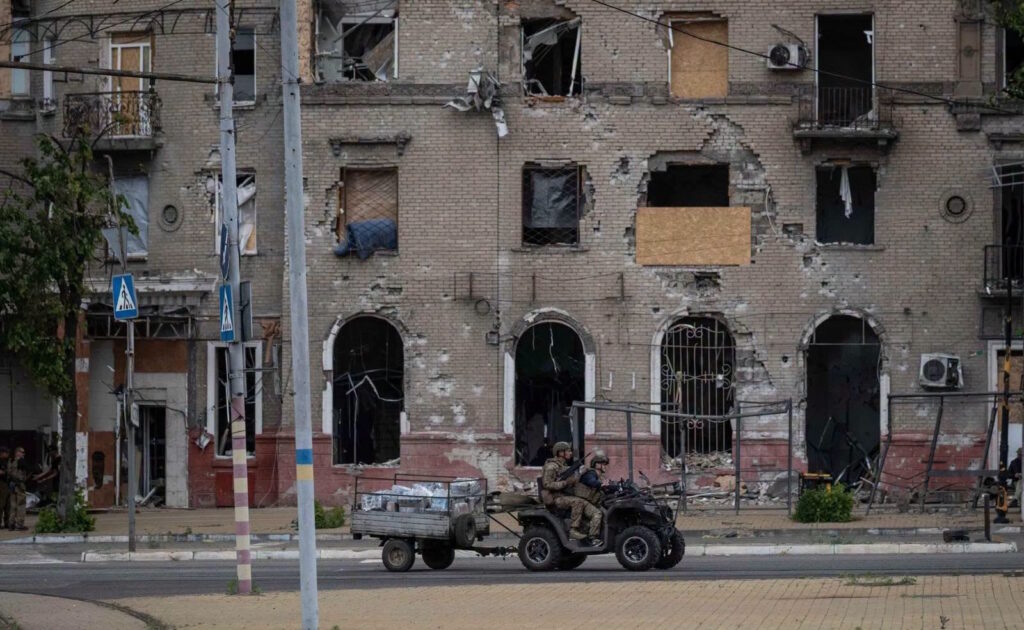
russia attacks one ukrainian village every single day never works border service says · post vovchanski khutiry 2 ukraine news reports

Russian forces are storming Ukrainian border-guard positions in the northeast almost every day, and Ukraine's border guards keep throwing them back, according to Ukraine's State Border Guard Service. The push centers on the Kharkiv frontier, where Russia leans on drones, artillery, and warplanes but cannot move the line. Its infantry is taking heavy losses for nothing.

As the heaviest fighting grinds on in Ukraine’s east and south, Russia is keeping up lower-intensity attacks along the northeastern border, forcing Ukraine to spread its reserves. With armor increasingly vulnerable to drones, Moscow has shifted toward infantry assaults across the front, which means its manpower losses keep climbing even where it takes no ground—a trade Moscow can sustain only as long as it keeps finding fresh troops.

Russia attacks one Kharkiv village almost daily

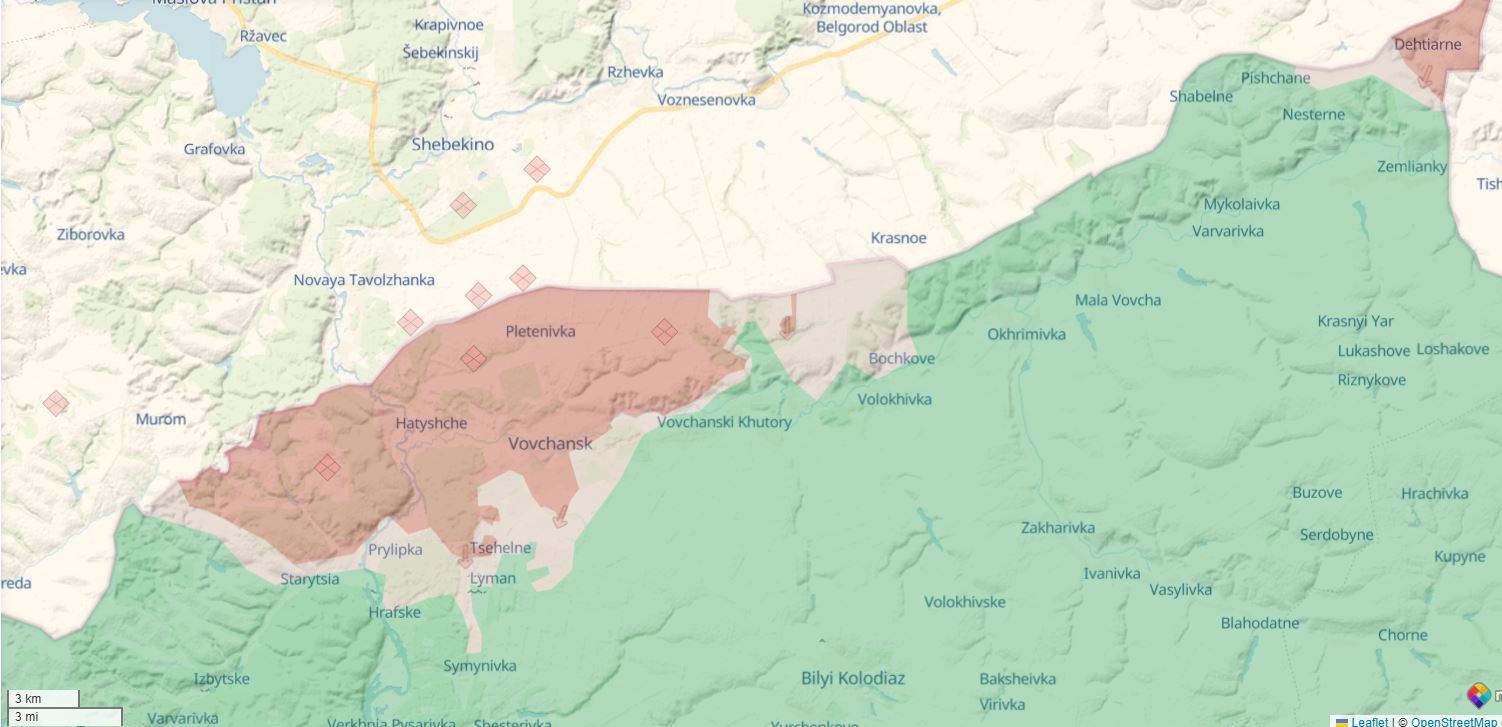
The near-daily assaults run toward Vovchanski Khutory, a settlement in northeastern Ukraine near the Russian border. Russian infantry tries to seize the positions there nearly every day, said Andrii Demchenko, spokesman for the State Border Guard Service. The border units hold, and the attackers gain nothing. Demchenko laid it out in a national TV broadcast, Ukrinform reported.

"If we talk about attempts to advance with infantry groups, then recently I can point to the Kharkiv Oblast direction, in particular toward the settlement of Vovchanski Khutory. Practically every day in recent days the enemy keeps trying to storm the positions held by border units, but, fortunately, the enemy cannot succeed and instead suffers heavy losses, including occupiers taken prisoner," Demchenko said.

Ukrainian defenders have repelled these waves before. Russia switched to small infantry groups around Vovchansk after drones turned its armor into easy targets.

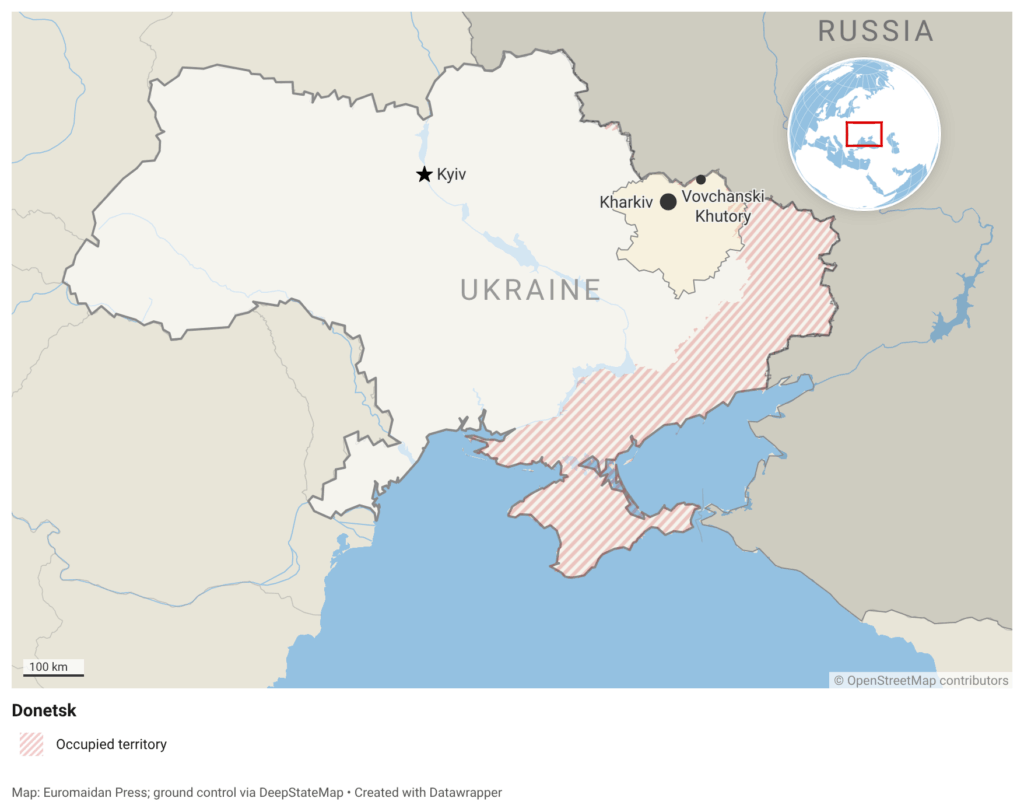
Vovchanski Khutory on the map. Map: Deep State

The shelling of Ukraine's border areas in Chernihiv, Sumy, and Kharkiv oblasts does not stop, Demchenko said. Russia relies mostly on drones, and also uses artillery and aviation. 

ukraine built ground drone playbook russia copied now destroying copies near vovchansk · post two kuryer ugvs —russian drones fokus anybix-7c6be53970cb8161c16e9af05d6d03c2 news ukrainian reports
Explore further

Ukraine built the ground drone playbook. Russia copied it. Now Ukraine is destroying the copies near Vovchansk

The push spreads to Kupiansk and Pokrovsk

Russia has also stepped up its infantry assaults on the Kupiansk direction, Demchenko said. Russian assault groups keep hitting Ukrainian defensive lines on the Pokrovsk direction as well.

Earlier, Russia scaled back the activity of its sabotage-and-reconnaissance groups along the Chernihiv, Sumy, and Kharkiv border, the same service reported.

  •  

Russia demands Donbas at table. DeepState says taking it would cost two years of fighting and colossal losses

Ukrainian soldiers from the 93rd Brigade. Source: The General Staff/the 93rd Brigade

DeepState assesses that Russia would need about two years to seize the entire Donetsk Oblast. OSINT project's co-founder Roman Pohorilyi estimates that Russian forces would suffer "a colossal number of losses" to achieve it at the current pace of advance, in a comment to LIGA.net. 

The assessment quantifies the gap between Russia's diplomatic demands and its military capacity. Moscow has used US-mediated talks to push for territorial concessions it cannot win on the battlefield, while Pohorilyi's two-year estimate roughly aligns with NATO's February 2026 view that Ukraine's Donbas front would not collapse for at least 18 months.

"At the current pace, we estimate that capturing the Kramatorsk-Sloviansk agglomeration and the rest of Donetsk Oblast would take Russia approximately two years, with a colossal number of losses," Pohorilyi believes. 

Russia demands what it cannot militarily take

Russia regularly demands that Ukraine cede Donbas as part of negotiations to end the Russo-Ukrainian war. The DeepState assessment puts the actual military cost of fulfilling that demand at roughly two more years of attritional warfare.

The figure is itself "an answer to the question of whether we should give up our territory just like that," Pohorilyi said. 

The Institute for the Study of War concluded in May 2026 that Russia's "exaggerated territorial ambitions and aggressive territorial demands run completely counter to battlefield reality," and that the experts could no longer forecast when Russia might seize the rest of Donetsk Oblast, or whether it can at all.

Russian forces first infiltrated Kostiantynivka, the southernmost city of Ukraine's Fortress Belt, in October 2025 and produced no meaningful battlefield progress in the six months that followed.

NATO and DeepState assessments converge

A NATO official told LIGA.net in February 2026 that the alliance does not expect a collapse of the Ukrainian Donbas front for at least the following 18 months. 

Pohorilyi told LIGA.net he agrees that "Russians won't have it so easily," adding that the timeline may take perhaps a bit more time than NATO said. 

ISW assessed on 10 June 2026 that Russian forces remain unlikely to seize Ukraine's Fortress Belt, the 50-kilometer chain of fortified cities from Sloviansk through Kramatorsk to Druzhkivka and Kostiantynivka, reinforced since 2014 — in 2026, though they will likely make tactical gains at high cost. 

  •  

World draughts readmits Belarus. Its president sees Russia next as soon as the war ends

janek mäggi and adjé silas metch

Sport keeps quietly letting Russia and Belarus back in, and the officials who take those decisions seldom explain why out loud. Janek Mäggi is an exception. The president of the World Draughts Federation (FMJD)—whose board has just cleared Belarusian players to return from 1 July—lays out the case plainly: the sport has lost half of its elite, the standard has dropped sharply, and a federation this small cannot run a foreign policy of its own.

Tennis never removed them at all.

His federation is one of many. Four years into Russia’s full-scale war, international bodies are easing Russian and Belarusian athletes back through a now-familiar route.

It is not a public reversal of sanctions but a “neutral athlete” pathway—competing without flag or anthem—that widens by degrees until the exclusion has all but ended. Tennis never removed them at all. Judo, aquatics, gymnastics, equestrian sport, several winter sports, and ice hockey have settled into versions of the same arrangement.

The argument has narrowed as it has spread. In 2022, the question was whether Russian athletes belonged in world sport while their state invaded a neighbor. By 2026, many governing bodies have swapped it for a smaller one: on what terms should they be allowed back?

This interview is the other chair at the table.

Euromaidan Press has reported the athletes’ side of that argument—Ukrainian players who refuse the handshake, who read out overnight casualty counts before walking on court, who say that playing as though nothing is happening is itself a political act. This interview is the other chair at the table.

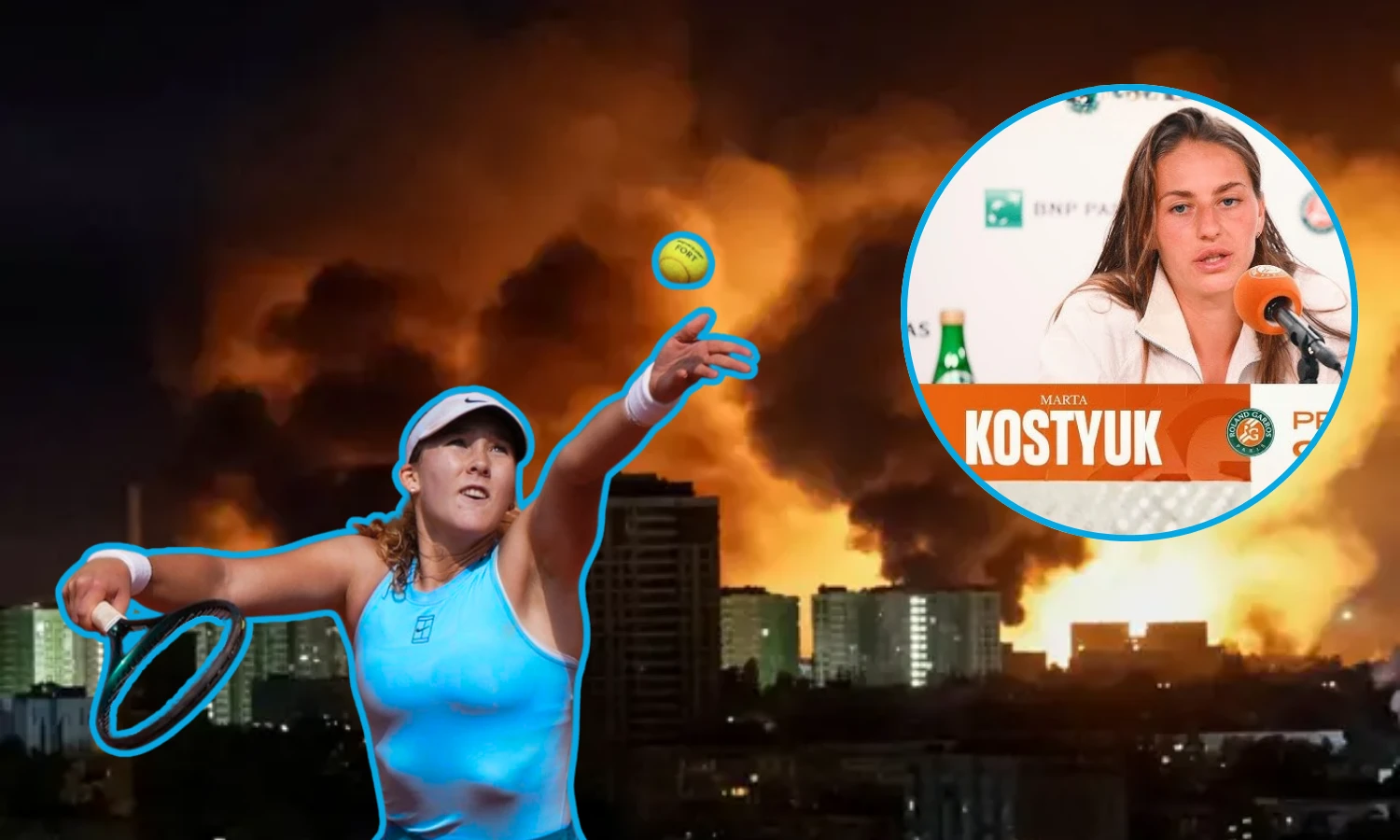
Ukrainian tennis player Marta Kostyuk slams her opponent Russia's Mirra Andreeva for her silence on the war
Explore further

Ukraine plays Russia today for a French Open final. The Russian stays mum on war; the Ukrainian doesn’t

Euromaidan Press spoke with Mäggi on 8 June 2026—days before the FMJD board voted unanimously to readmit Belarusian players, both youth and adults, from 1 July under neutral status, without flag or anthem. That was the cautious route Mäggi forecasts below: short of the full return the IOC recommended on 7 May, and with no decision on Russia.

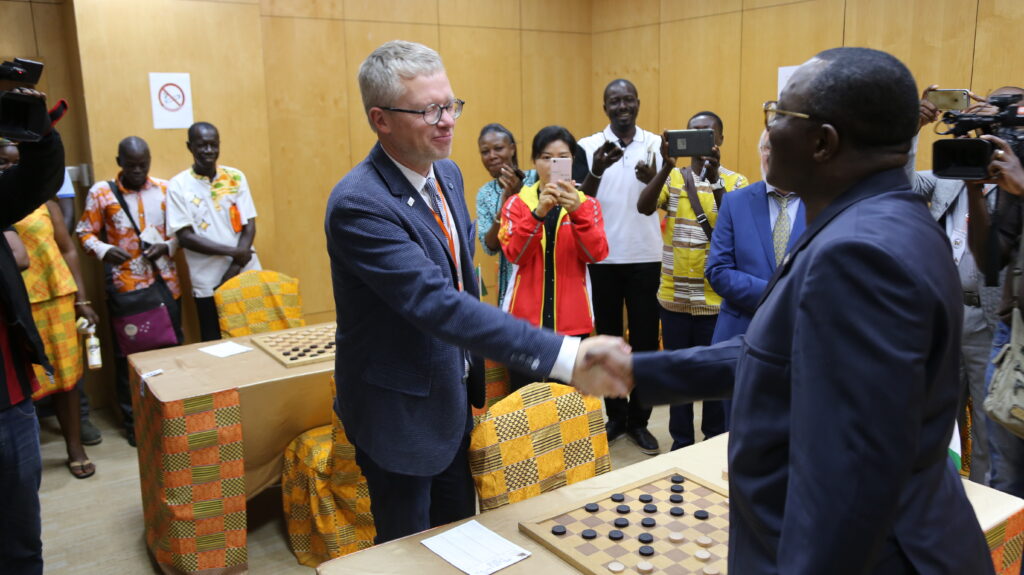
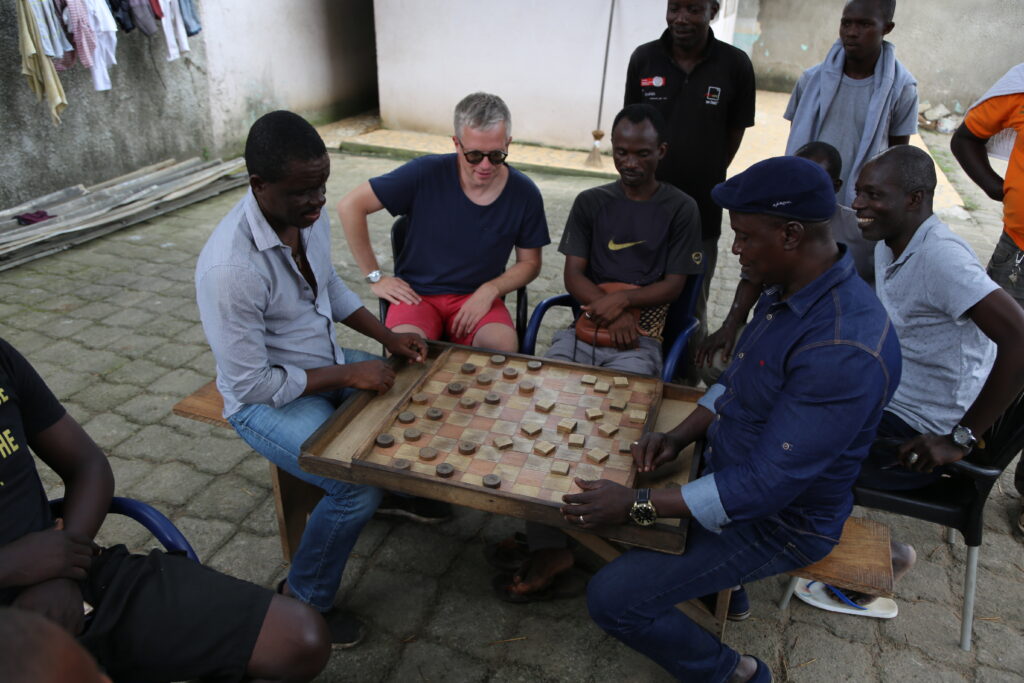
janek mäggi playing draughts in abidjan, ivory coast
Janek Mäggi plays members of a draughts club in Abidjan, Ivory Coast. Photo: Janek Mäggi’s private collection.

Peeter Helme: Various world sports federations have started letting Russia, and Belarus too, back into their ranks to compete under their own flag. Can you describe what the reasons are—and, if it isn’t a secret, whether you in the Draughts Federation are discussing this, and what the arguments are?

Janek Mäggi: It is actually very simple. The overwhelming share of top athletes are Russian and Belarusian—and not only in draughts, which has some 200 million players worldwide, or chess, with around 600 million. Both rank among the world’s ten largest sports by participation, and the same pattern is taken for granted almost everywhere.

There are 125 sports federations recognized by the International Olympic Committee, and in many of them, the very best players have come from these two countries.

The sport has two, really three, core disciplines: checkers, played by about 100 million people.

In draughts this is completely the case—essentially half the world has been removed. The sport has two, really three, core disciplines: checkers, played by about 100 million people; international draughts, about 40 million; and Russian draughts, around 50 million. Add Brazilian draughts and a few smaller variants, perhaps 10 million more.

Take last year’s World Championship in Yaoundé, Cameroon. Nine of the 12 finalists were Dutch, three-quarters of the final. That is completely abnormal; it looked like a Dutch national championship.

With the Russians and Belarusians gone, a great many strong players were simply not there, and chance had more room. So, point one: over these four years, the level of tournaments has dropped sharply. That is a very big problem.

The Russians, of course, immediately poured their energy into their own international body and many countries are in it.

The second thing that has happened is alarming: the standard among young players has fallen. The Russians, of course, immediately poured their energy into their own international body—the International Draughts Federation (IDF)—and many countries are in it. The Western draughts world we imagine as the whole universe is, in fact, very small.

Compare it with Africa: the European Union fits into the continent more than seven times over, the population is far larger, and the standard of play is high there too. Their young players keep developing in their own environment, undisturbed.

China alone has 542,000 draughts players competing in title events.

And the Russian grandmasters? They all work in China now—every one of them, because the Chinese pay enormous salaries. China alone has 542,000 draughts players competing in title events, and those are only the ones in title tournaments.

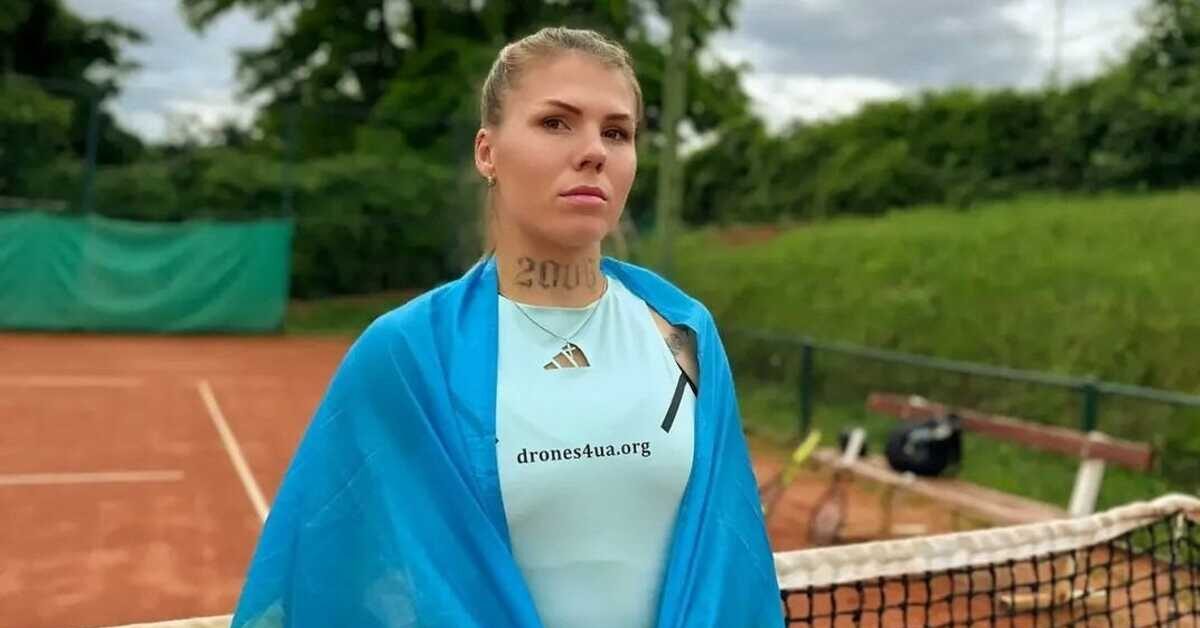
Ukrainian tennis player Oleksandra Oliynykova protests Russia's return
Explore further

Sport is letting Russia back in. This Ukrainian tennis player says no.

Helme: The Ukrainian athletes make a different argument—that this is not about the standard of play, but about competing alongside people representing a state that is waging war on Ukraine. What do you say to that?

Mäggi: On the players themselves: they are certainly not warmongers—at least in draughts; I do not know other sports as closely. In chess, it is the same story, and I sit on the International Mind Sports Association too. They really are not.

Most of them are close friends of mine—friends of 30 years. They are exactly like you: they sit down, we play, we talk. Some views differ, and there is the odd madman, but a great many genuinely good players have now been shut out.

Belarus has met all of the IOC’s requirements, and Russia has not.

On 7 May, the International Olympic Committee decided that Belarus, for one, should be readmitted. The underlying reason is the one I described, but the important part was the wording: Belarus has met all of the IOC’s requirements, and Russia has not. So between the two, there is, by now, quite a large difference.

There is also a contradiction that the sports world cannot resolve. Some countries argue that the United States should be barred from every competition for attacking Iran, and that any tournament with Israeli participants should be banned outright—and that, measured against them, Belarus is a very peaceful country.

Helme: You see a clear difference between Russia and Belarus. But why does that judgment fall to the IOC—why shouldn’t, for example, the draughts federation set its own line?

Mäggi: What guides a world federation? Firm principles. We want to be part of the international sports community, and that is the key point: we do not run an independent foreign policy. We cannot.

Setting our own geopolitics is simply out of the question.

We are about 10 middle-aged people—some Black, some women, everyone represented—who decide what line to take. Setting our own geopolitics is simply out of the question; we follow the directions that come from the IOC.

Unfortunately, the IOC’s core policy is decided by the big powers. So I cannot say that everything they agree on is black-and-white good. I cannot say that at all.

Helme: So, where does that leave draughts right now?

Mäggi: In draughts, the position now is this: we have Belarus’s application to return—fully and immediately, as the IOC put it—and the Russians’ application for their juniors to play at once. We discuss it next Friday [12 June, when the board voted to readmit Belarus—EP]. I can guess the outcome, but I will not speculate before it is decided.

And there is a further problem—whether federations should weigh states’ decisions at all.

I will say this much: some easing toward Belarus will certainly come, though I am not sure it will be as fast as the IOC recommends. And there is a further problem—whether federations should weigh states’ decisions at all.

Take the European Championships in Tallinn in August. We may clear young Belarusians to play, but whether Estonia gives them visas and they actually turn up is a separate question.

But I think the end of the war is near, and if it comes, the Russians will also have a fast, wide-open path to return to most sports.

We cannot factor in national politics—that is their problem to solve, not ours, because there are about 200 countries in the world. As for the Russians, while the war continues, I do not see all 125 federations cheerfully letting them back. But I think the end of the war is near, and if it comes, the Russians will also have a fast, wide-open path to return to most sports, for the reasons I have given.

This interview is part of Euromaidan Press’s series on how international sport is negotiating sanctions and Russia’s war on Ukraine.

  •  

A French factory that makes drones for Ukraine was firebombed with Molotov cocktails

french factory makes drones ukraine firebombed molotov cocktails · post delair dt46 group's best-selling drone during nato exercise romania 9 2026 dt a builds became target sabotage attempt suspected spying

A French factory that builds drones for Ukraine became the target of a sabotage attempt and a suspected spying operation in early June, according to Le Parisien. French investigators treat foreign interference, possibly Russian, as their leading explanation. The case lengthens a list of European states where plants arming Kyiv have come under attack.

Russia has opened a second front inside Europe, where quiet sabotage and reconnaissance try to slow the arms being reaching Kyiv without a shot being fired. Each attempt probes how far the Kremlin can push before allies push back.

Since Russia's all-out invasion in 2022, France has supplied Ukraine with SCALP cruise missiles, Caesar howitzers, AMX-10has RC armored vehicles, and AASM guided bombs. In 2024, Defense Minister Sébastien Lecornu announced new kamikaze drones for Kyiv. In 2025, Franceinfo reported that carmaker Renault would open drone production inside Ukraine, planned tens to hundreds of kilometers from the front.

A firebombing that fizzled

Le Parisien reported that in early June, attackers hurled Molotov cocktails at the Delair plant in Labège, near Toulouse in southwestern France. The incendiary mixture never caught fire, so the site escaped almost any damage. Surveillance cameras still captured several people taking part. Prosecutors in Toulouse opened a criminal case for destroying property by means dangerous to people.

A Belarusian arrested filming a prototype

Three days later, police detained a Belarusian national near the same plant. He was filming a drone prototype, prosecutors said, and officers found "advanced equipment" on him. He had been spotted near the site several times before. He allegedly sent the footage to a contact in Russia, and France arrested him on suspicion of espionage. Whether the firebombing and the arrest are connected stays unclear. The arrested man is 48 and has been living in Spain.

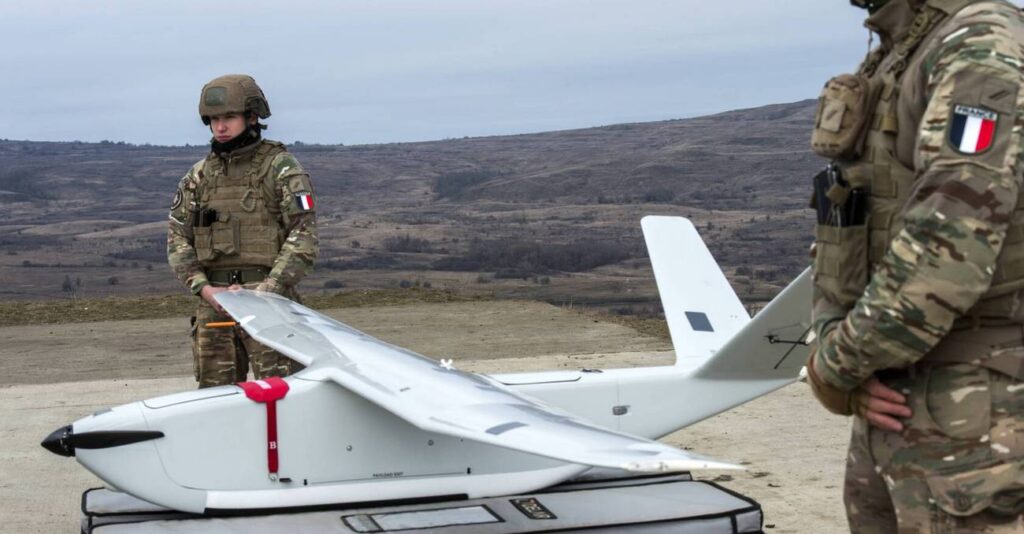
ukraine deploys new french mv-25 oskar drone battlefield use military fixed-wing loitering munition knds mv_25_oskar_1_8121c647fc ukraine’s armed forces now operating developed france news ukrainian reports
Explore further

Ukraine deploys new French MV-25 Oskar drone in battlefield use

French security services see an outside operation, possibly Russian, as the leading theory. Only Moscow gains from choking off the weapons reaching Ukraine. Le Parisien has tracked how Russian interference, from jammed satellite signals to disrupted aircraft, keeps straining Europe.

Delair, headquartered in Toulouse, is one of France's foremost drone companies, with a lineup spanning civilian work and military use. Its orders surged after Russia's full-scale invasion of Ukraine, turning it into an important supplier for Kyiv. The company says it controls its entire production chain and built the world's first commercially certified beyond-visual-line-of-sight drone.

A pattern across Europe

Espionage and sabotage are rising across EU countries that support Ukraine. Among the latest cases were these:

  • In March 2026, arsonists struck a Czech plant in Pardubice that made drones and thermal sights for Ukraine, and Czech intelligence asked whether Russia hid behind a pro-Palestinian front-linked attackers.
  • In January, Lithuania charged six people over a GRU-directed attempted arson on a factory supplying Ukraine's forces.
  • Last autumn, Latvia caught a Russian-linked group filming sensitive sites and sending the images to Russia.
  •  

Russian services collecting Moldovans’ data for fraud operations, security agency warns

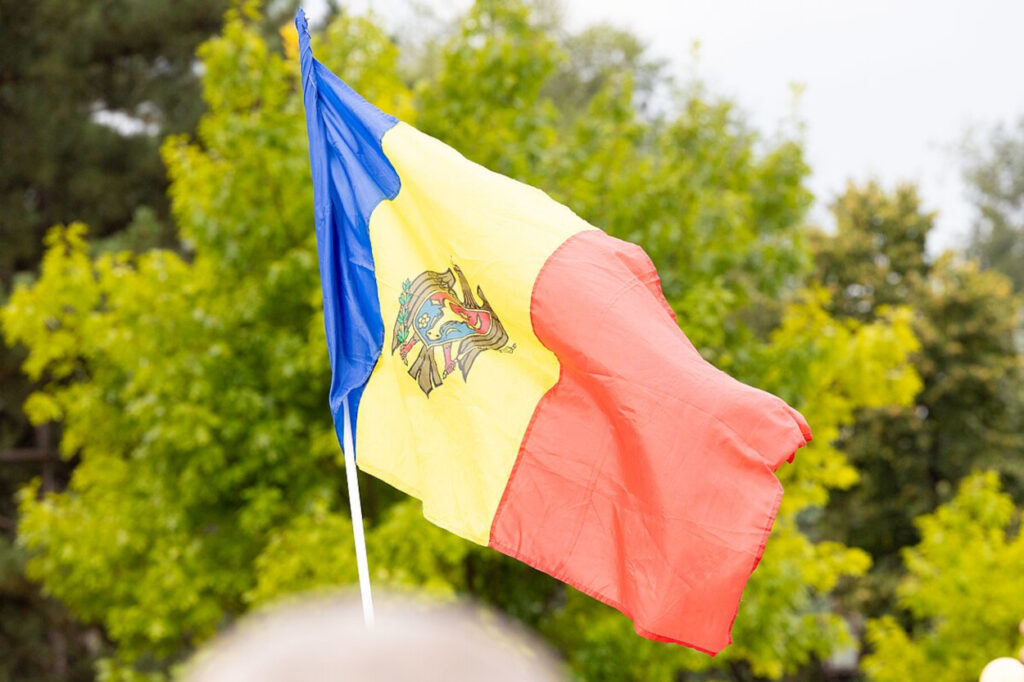
Flag of Moldova

Moldova’s Information and Security Service (SIS) says Russian special services are mass-collecting personal data of Moldovan citizens for use in cross-border fraud operations, according to a statement cited by Noi.md.

The agency warned the activity is coordinated and part of broader hybrid pressure tactics that Moldova has repeatedly linked to Russian influence operations in recent years, particularly since the start of Russia’s full-scale invasion of Ukraine in 2022.

Moldova has regularly reported exposure to hybrid threats including disinformation campaigns, cyber activity, and attempts to destabilise domestic politics. Authorities have previously accused Moscow-linked networks of exploiting political divisions and using criminal channels to exert influence inside the country.

Large-scale personal data pools used in fraud networks

SIS said the data collection involves multiple sources, including illegally traded databases on the dark web and unauthorized access to private servers. It also referenced data linked to the “Șor” criminal network, which allegedly contains information on around 145,000 citizens.

According to the agency, the datasets include names, phone numbers, email addresses, home addresses, and copies of identity documents.

SIS said this information is later passed to transnational organized crime groups, which use it in financial fraud schemes, including bank card theft and other online scams.

Officials described the system as a structured pipeline from data collection to exploitation rather than isolated incidents.

Hybrid pressure and long-running fraud risks

The agency said the activity should be viewed in the context of sustained hybrid pressure on Moldova, where cybersecurity incidents, political influence operations, and financial scams often overlap.

Moldova’s security institutions have previously warned that criminal fraud networks and influence operations can intersect, using the same datasets, communication channels, and recruitment pools.

SIS said the goal of these coordinated actions is to undermine public trust and create a sense of insecurity in society.

Rising fraud cases and public warnings

Authorities urged citizens not to share personal data with unknown callers or unverified companies offering fast investment returns, and not to disclose passwords or security codes over the phone.

Moldovan police continue to report daily cases of phone and online fraud, with victims losing significant sums of money. On 15 June alone, authorities registered 22 cases, with total losses exceeding one million lei ($57,000 USD), according to figures cited by Noi.md.

One of the most serious recent cases involved a 63-year-old woman in Ribnita who reportedly lost more than 500,000 lei ($28,600 USD) in a scam.

Officials say investigations and public warnings are ongoing as fraud networks continue to evolve.

  •  

Russia’s assembly line for Azov sentences gives two Ukrainian POWs 17 and 20 years in jail for defending Mariupol

Ukrainian soldiers from the 12th Special Forces Brigade "Azov". Source: Azov


A Russian military court in Rostov-on-Don has sentenced two Ukrainian prisoners of war from the Azov Regiment to 17 and 20 years in strict-regime penal colonies. Among the charges are participation in a terrorist organization and undergoing training in terrorist activities, per Mediazona. 

The charges stem from the POWs' service in Azov, which Russia's Supreme Court designated a terrorist organization on 2 August 2022, three months after Mukhin's May 2022 capture during the Mariupol defense.

Russia's prosecution of Ukrainian POWs for participation in hostilities violates Article 99 of the Third Geneva Convention, which prohibits prosecuting POWs for acts that were not prohibited under domestic or international law at the time of commission.

The sentences got 29-year-old Dmytro Lebedev and 45-year-old Vasyl Mukhin, who joined Azov in 2015 and were captured during the May 2022 Mariupol defense.

Southern District Military Court continues batch prosecutions of captured Azov fighters

The court in Rostov-on-Don has become Russia's primary venue for Azov POW prosecutions. Throughout 2025 and 2026, the court has sentenced dozens of Azov POWs to 13-23 years in strict-regime colonies in batch trials throughout 2025 and 2026.

The court has continued issuing sentences in smaller batches throughout 2025 and 2026, including three POWs sentenced to 5.5, 18, and 19 years in March 2026 and two POWs sentenced to 18 years each in April 2026, per Ukrainska Pravda.

Defendants in the March 2025 batch case told the court the charges required no evidence beyond the four letters of the Azov regiment's name. One Azov POW, Oleksandr Ishchenko, died at the Rostov pre-trial detention center from what Russian authorities described as a closed blunt chest injury.

Azov Regiment defended Mariupol before becoming National Guard special forces brigade

The Azov Regiment was founded in May 2014 as a volunteer battalion to defend Ukraine against Russian-backed forces in Donbas, becoming part of Ukraine's National Guard in November 2014.

The unit played a central role in defending Mariupol against Russian forces from February to May 2022, with most surviving Azov fighters captured following the surrender of the Azovstal steel plant on 16-20 May 2022.

Russia has invested heavily in framing Azov as a "neo-Nazi" organization to justify its 2022 full-scale war, with the Russian Supreme Court's terrorism designation forming part of that framing. The US Department of State cleared Ukraine's 12th Special Forces Brigade Azov of all training and weapons restrictions in 2024 following Leahy Law vetting, per The Washington Post.

Azov now operates as the 12th Special Purpose Brigade Azov under Ukraine's National Guard under Colonel Denys "Redis" Prokopenko.

  •  
❌