Gold, Flights, Cryptocurrency: U.S. Vows to Go After More Than Iran’s Oil

© Vahid Salemi/Associated Press


© Vahid Salemi/Associated Press


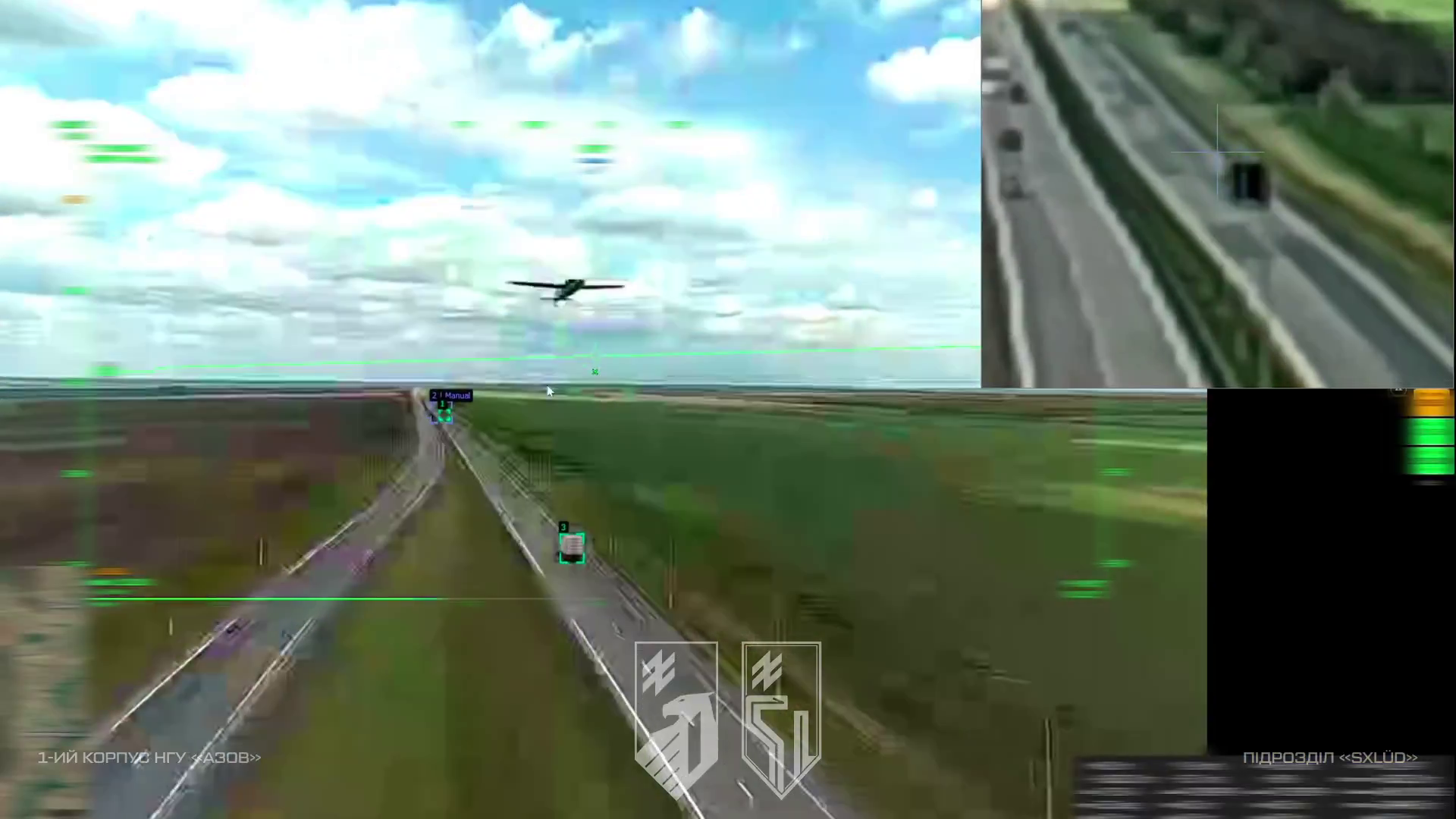
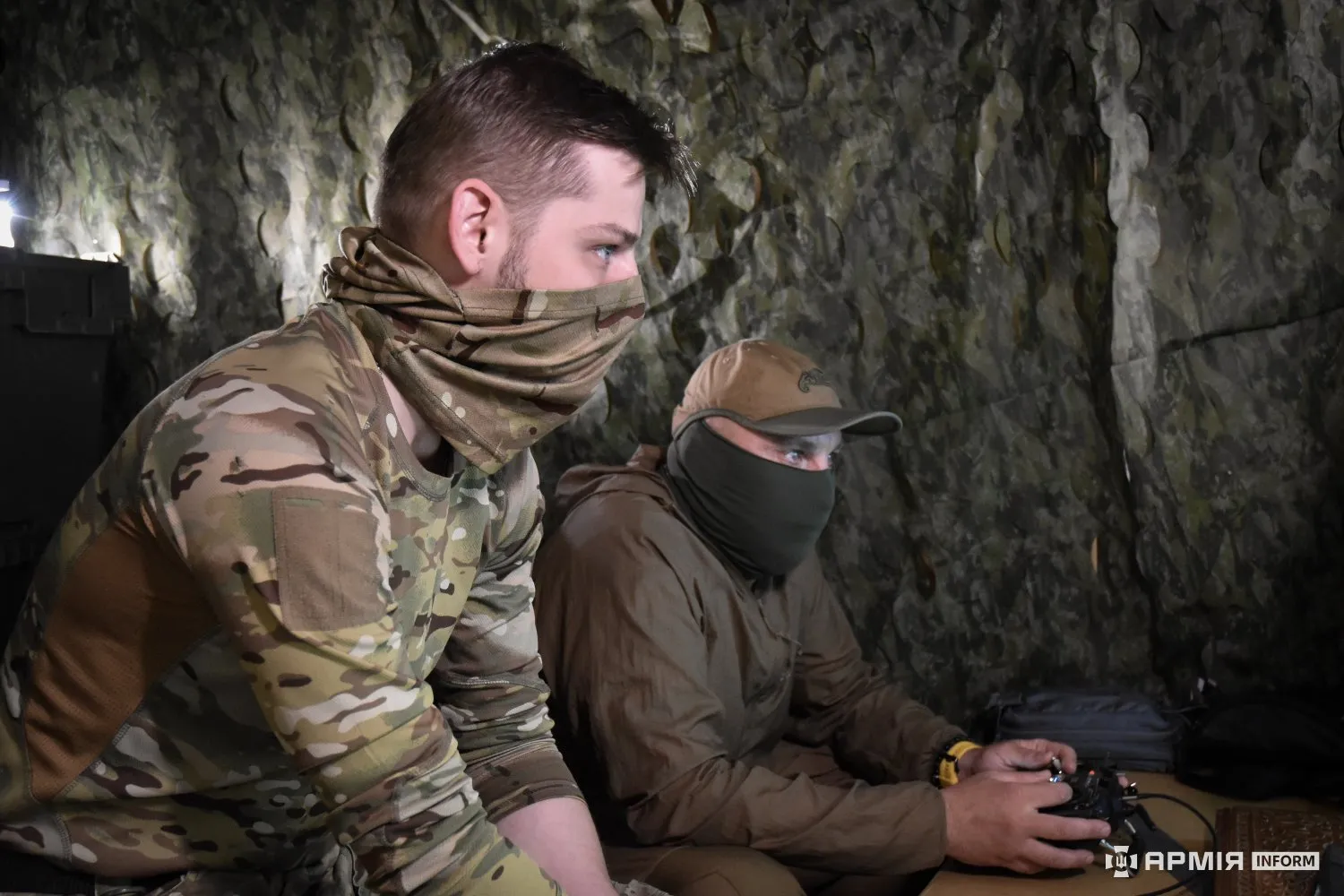
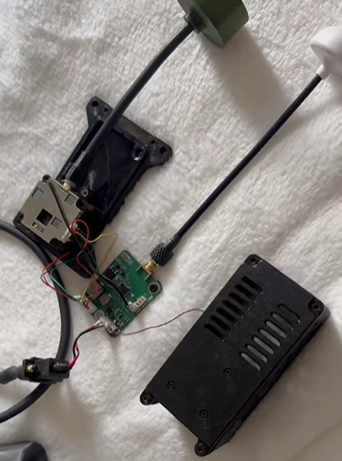
Ukraine's cheap interceptor drones have been knocking Russia's nightly attackers out of the sky, so Russia has now bolted a jammer onto some of its own drones to blind them, according to Serhii "Flash" Beskrestnov, an adviser to Ukraine's President on defense technology. He examined the system, found in drone wreckage, and mapped how it strikes back at the interceptor sent to hunt it.
Russia batters Ukrainian cities with long-range drones most nights, and Ukraine has leaned on a cheap shield—drones costing a few thousand dollars—instead of burning through far pricier missiles. Anything that dulls that shield pushes the cost of defending the sky back up.
The unit rides on a Geran, Russia's version of the Iranian Shahed one-way drone. It listens for the video signal an approaching Ukrainian interceptor beams back to its pilot. Its receiver reads the interceptor's working frequency, then orders a transmitter to bury that same channel in noise, Beskrestnov found.
By his first estimate, the jammer's signal runs about five times stronger than the interceptor's video link—enough to wipe the picture and any chance of steering the drone onto its target.
In Beskrestnov's account, the system detected a test transmitter and switched on jamming after about three seconds, and the feed cut out. The device stays nearly idle until a hunter comes close, then jumps to full power to smother the signal. It targets the ordinary analog video band around 5.8 gigahertz that many cheap interceptors still use.
Possible answers, include interceptors with terminal-guidance homing for the final stretch of flight, digital communication links, or transmitters set to non-standard frequencies.
Russia has tried again and again to keep its one-way drones alive against Ukraine's defenses, including wiring jammers into some Shaheds earlier this year. Spending weight and power to protect a drone from a far cheaper interceptor shows how well those cheap drones work.


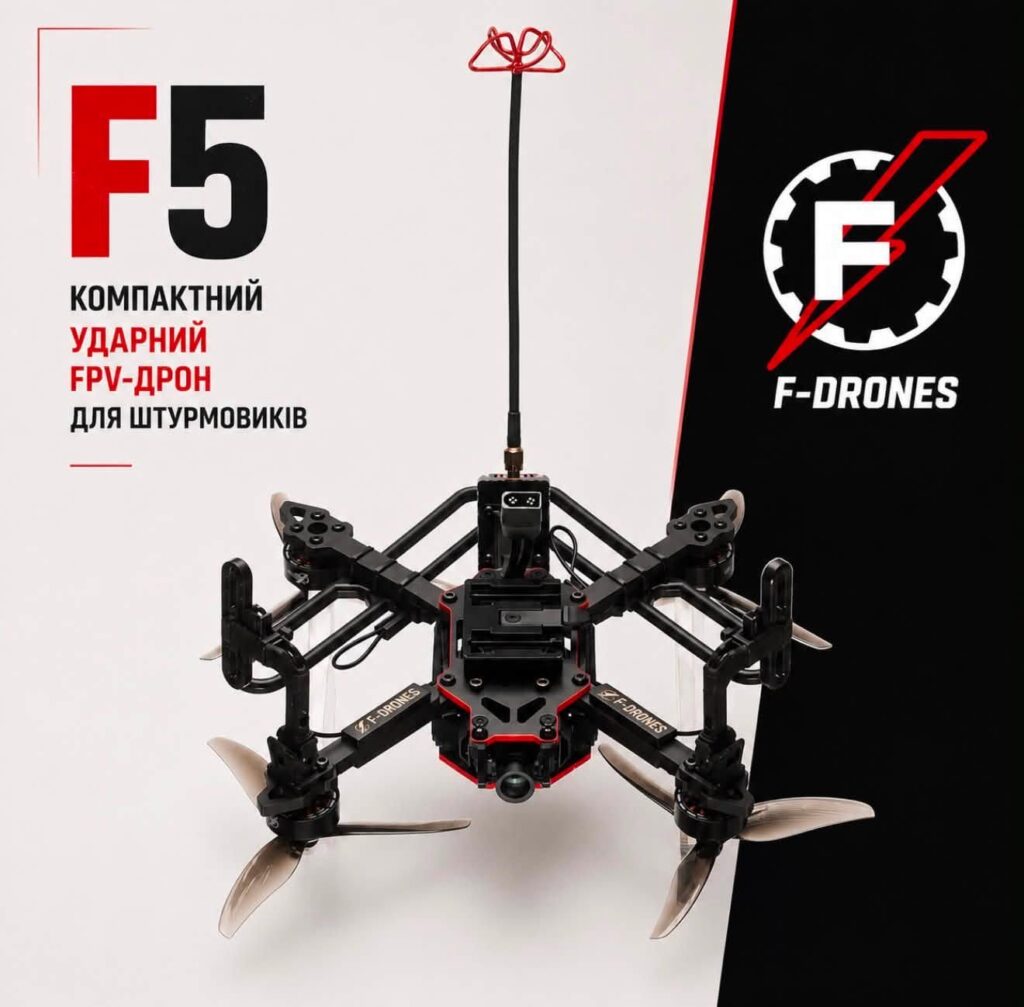
A Ukrainian drone maker is pitching a weapon that works like a mortar, not a drone. F-Drones has unveiled the F5, a compact five-inch strike FPV built for assault units working treelines, built-up areas, and position support at short range, according to the company's announcement.
Fiber-optic drones are now a bulk consumable. Ukraine's military received 374,000 under state contracts in 2025 and nearly as many again in the first four months of 2026, the Defense Ministry reported in April.
The F5 arrives three days after Ukraine's Defense Procurement Agency launched its first purchase of fiber-optic FPV drones, in line with ministry-set specifications rather than individual manufacturers.
F-Drones describes a lightweight five-inch carbon frame that carries up to one kilogram and is supplied in two control configurations.
The fiber-optic version flies about six kilometers. The radio version reaches roughly twice that, up to 13 kilometers. Several drones fit in one backpack, and a ground robot can deliver nine to a position at once, compared with the six FPVs per carrier on the Black Widow ground system.
F-Drones calls the fiber version fully invulnerable to electronic warfare. Fiber-optic control does defeat jamming because the drone emits no radio signal, but the cable restricts range and maneuverability and can snap or tangle mid-flight, cutting control. Ukrainian crews have also tracked Russian operators by following reflective fibers in sunlight back to the launch point.
The pitch is about availability, not reach.
"In its role, the F5 is closer to an 82mm mortar than to a classic long-range FPV: always nearby and ready to close out the task here and now," the company said.
The F5 ships with a codified Opera electronic initiation board, and F-Drones says the aircraft has been tested and codified by Ukraine's Defense Ministry.

Mathematicians are raising concerns that the technology could kill their profession. But they still have abilities AI doesn’t
Earlier this month, about 40 top mathematicians gathered at OpenAI’s offices to discuss the future of their profession. The meeting was off-the-record, but if recent articles by mathematicians are any guide, it was mostly pretty glum. People fear for their jobs, their careers and the work they love.
We think the contrary view is more likely, at least in the short-term. AI models are nowhere near as capable as experienced academic mathematicians.
Continue reading...
© Photograph: Mlenny/Getty Images

© Photograph: Mlenny/Getty Images

© Photograph: Mlenny/Getty Images

Bitcoin rises above $80,000 for the first time since May amid uncertainty over US fiscal plans
Gold prices hit their highest level in more than three months on Tuesday as continued conflict in the Middle East and ongoing political uncertainty fuelled the latest rally in the precious metal.
Gold is viewed as a safe haven by investors and its price tends to rise at times of uncertainty.
Continue reading...
© Photograph: Denis Balibouse/Reuters

© Photograph: Denis Balibouse/Reuters

© Photograph: Denis Balibouse/Reuters