Vue normale

  • ✇US news | The Guardian
  • OnlyFans and AI training: why gen Z doesn’t care where our money comes from | Alice Lassman
    With traditional goals such as stability and home ownership feeling out of reach, young people are focused on the presentBy now, we all know the shape of financial nihilism: the throw-your-money-at-anything reaction to the dissolution of the slow, linear path to wealth; the prediction markets, meme stocks, cryptocurrencies and microluxuries growing in its place. We’re left in an economic no man’s land. But financial nihilism only describes where we put our money. What about how we earn it in the
     

OnlyFans and AI training: why gen Z doesn’t care where our money comes from | Alice Lassman

31 août 2026 à 05:00

With traditional goals such as stability and home ownership feeling out of reach, young people are focused on the present

By now, we all know the shape of financial nihilism: the throw-your-money-at-anything reaction to the dissolution of the slow, linear path to wealth; the prediction markets, meme stocks, cryptocurrencies and microluxuries growing in its place. We’re left in an economic no man’s land. But financial nihilism only describes where we put our money. What about how we earn it in the first place?

The modern economy has long relied on our need for stable employment – to pay the mortgage, to keep our kids fed, or, for some, to chase prestige and power – to generate the work ethic that keeps the wheel of production turning. None of this is going well for young people. Our jobs are insecure, we can’t afford houses, we’re deferring having kids (if we have them at all), and only 6% of us say a leadership position is our primary career goal. Hope is one of the economy’s most productive inputs, powering our willingness to endure long hours. When the production function of income – the mechanism that turns hard work into a stable salary, then a mortgage, then a pension – breaks down, so does our relationship with the input. I call this production nihilism: my generation’s growing indifference to the kinds of work we’re willing to participate in, and where we’re willing to earn.

Continue reading...

© Photograph: Michael Simons/Alamy

© Photograph: Michael Simons/Alamy

© Photograph: Michael Simons/Alamy

  • ✇US news | The Guardian
  • No, AI doesn’t mean the end of mathematics – at least not yet | Bruce Schneier and Kasra Rafi
    Mathematicians are raising concerns that the technology could kill their profession. But they still have abilities AI doesn’tEarlier this month, about 40 top mathematicians gathered at OpenAI’s offices to discuss the future of their profession. The meeting was off-the-record, but if recent articles by mathematicians are any guide, it was mostly pretty glum. People fear for their jobs, their careers and the work they love.We think the contrary view is more likely, at least in the short-term. AI m
     

No, AI doesn’t mean the end of mathematics – at least not yet | Bruce Schneier and Kasra Rafi

25 août 2026 à 08:00

Mathematicians are raising concerns that the technology could kill their profession. But they still have abilities AI doesn’t

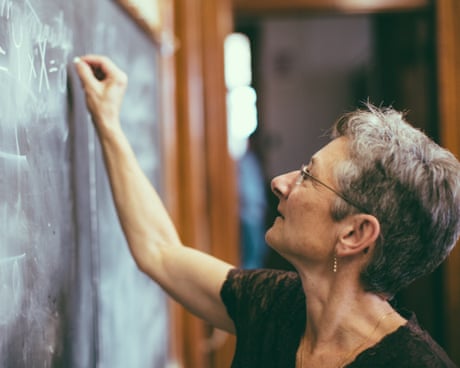
Earlier this month, about 40 top mathematicians gathered at OpenAI’s offices to discuss the future of their profession. The meeting was off-the-record, but if recent articles by mathematicians are any guide, it was mostly pretty glum. People fear for their jobs, their careers and the work they love.

We think the contrary view is more likely, at least in the short-term. AI models are nowhere near as capable as experienced academic mathematicians.

Continue reading...

© Photograph: Mlenny/Getty Images

© Photograph: Mlenny/Getty Images

© Photograph: Mlenny/Getty Images

❌