President Volodymyr Zelensky is expected to attend the summer plenary session of the Parliamentary Assembly of the Council of Europe (PACE), scheduled for June 23-27 in Strasbourg, France.According to the draft agenda, Zelensky is slated to address the assembly on June 26, though his attendance has not yet been confirmed.While the content of Zelenky's speech has not been disclosed, the PACE summer session is expected to focus on women's rights in Europe as well as the war in Gaza.Legal and human
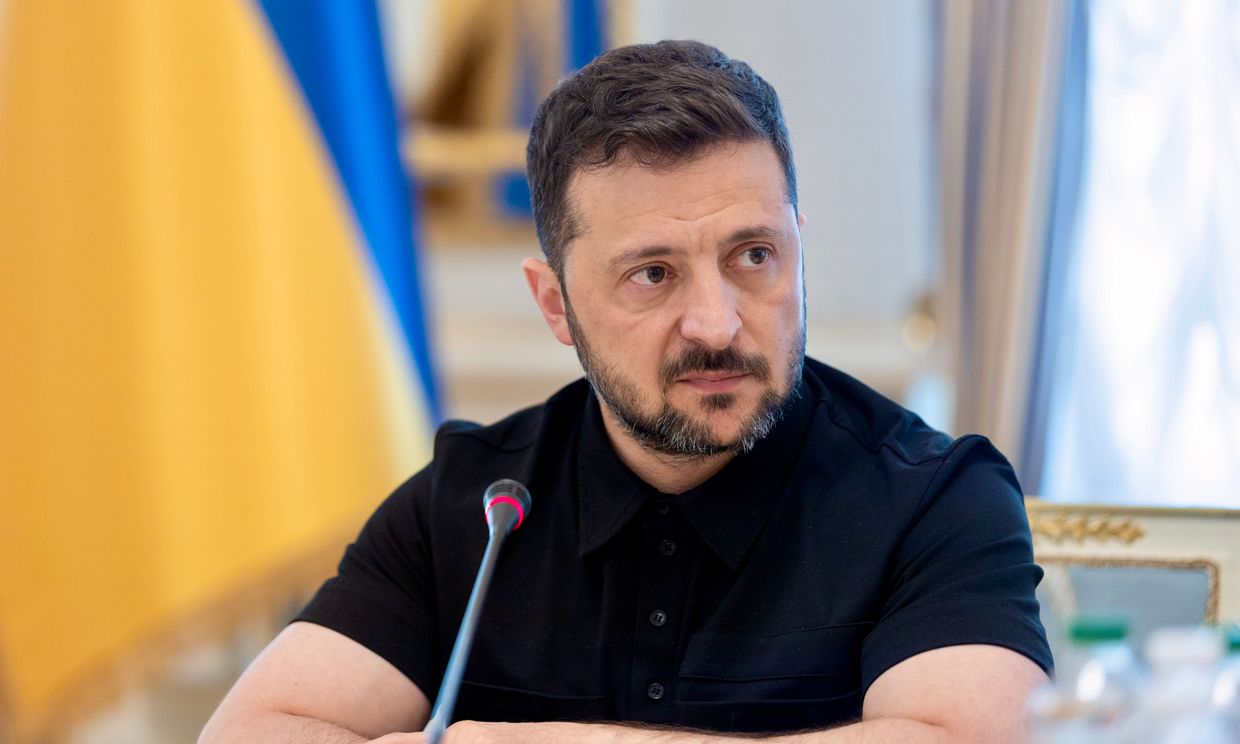
President Volodymyr Zelensky is expected to attend the summer plenary session of the Parliamentary Assembly of the Council of Europe (PACE), scheduled for June 23-27 in Strasbourg, France.
According to the draft agenda, Zelensky is slated to address the assembly on June 26, though his attendance has not yet been confirmed.
While the content of Zelenky's speech has not been disclosed, the PACE summer session is expected to focus on women's rights in Europe as well as the war in Gaza.
Legal and human rights issues related to Russia’s ongoing war against Ukraine, and a corresponding resolution, are also listed on the agenda.
The spring session, which took place in April 2025, focused predominantly on Georgia, Turkey, and Ukraine.
Ahead of the PACE session, Zelensky is also set to attend next week's NATO summit in The Hague on June 24. He is expected to meet with European Commission President Ursula von der Leyen and NATO Secretary-General Mark Rutte.
PACE is the parliamentary arm of the Council of Europe, an international organization of 46 countries, including Ukraine, that promotes democratic values and human rights. Russia was expelled from the body in early 2022 in response to its invasion of Ukraine.
Since the start of the full-scale invasion in 2022, the assembly has issued a number of resolutions regarding Russia, calling for the establishment of an international special tribunal to hold Russia accountable for war crimes and recognizing Putin as an illegitimate dictator.
Most recently, PACE adopted a resolution addressing the ongoing Russian war of aggression against Ukraine, stressing the urgent need to ensure accountability and avoid impunity for the serious breaches of international law committed.
Editor's note: This is a developing story and is being updated as new details emerge.Russia launched a mass missile and drone attack on Kyiv overnight on June 23, killing at least nine people and injuring 33 others, including four children, local officials reported.Kyiv Independent journalists heard explosions and kamikaze drones flying overhead from around 1 a.m. Louder explosions from ballistic missiles were heard an hour later, with the attack lasting around 3.5 hours in total.The heaviest da
Editor's note: This is a developing story and is being updated as new details emerge.
Russia launched a mass missile and drone attack on Kyiv overnight on June 23, killing at least nine people and injuring 33 others, including four children, local officials reported.
Kyiv Independent journalists heard explosions and kamikaze drones flying overhead from around 1 a.m. Louder explosions from ballistic missiles were heard an hour later, with the attack lasting around 3.5 hours in total.
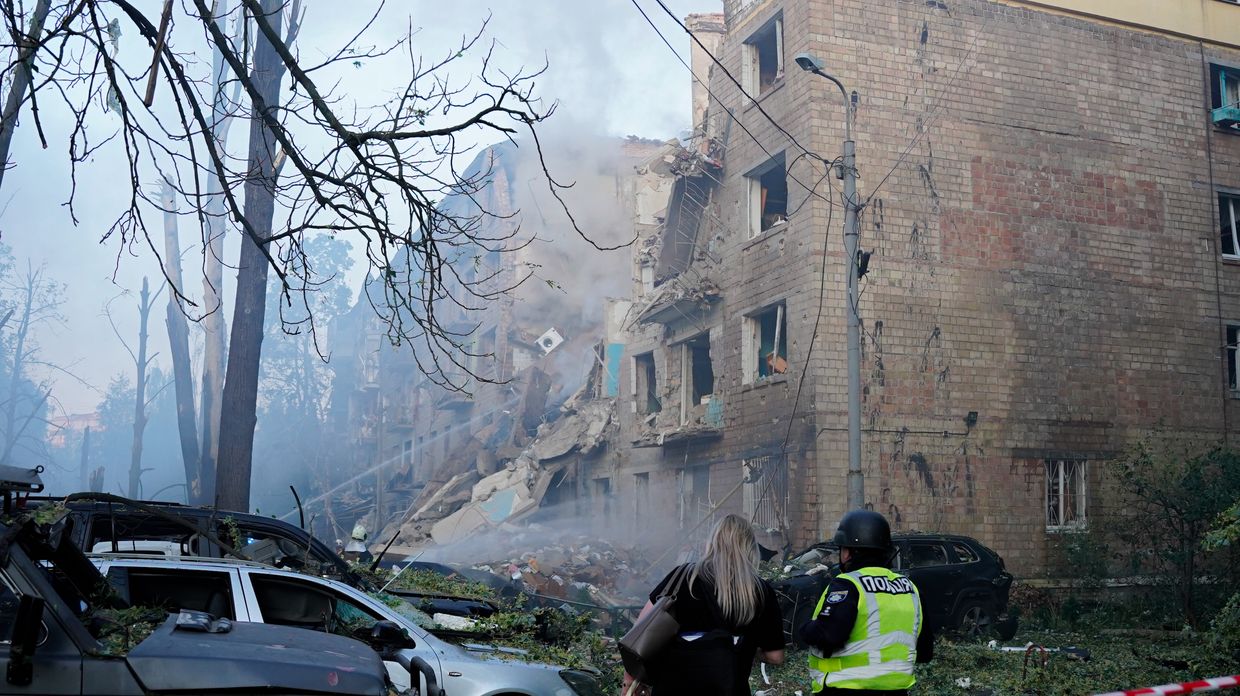
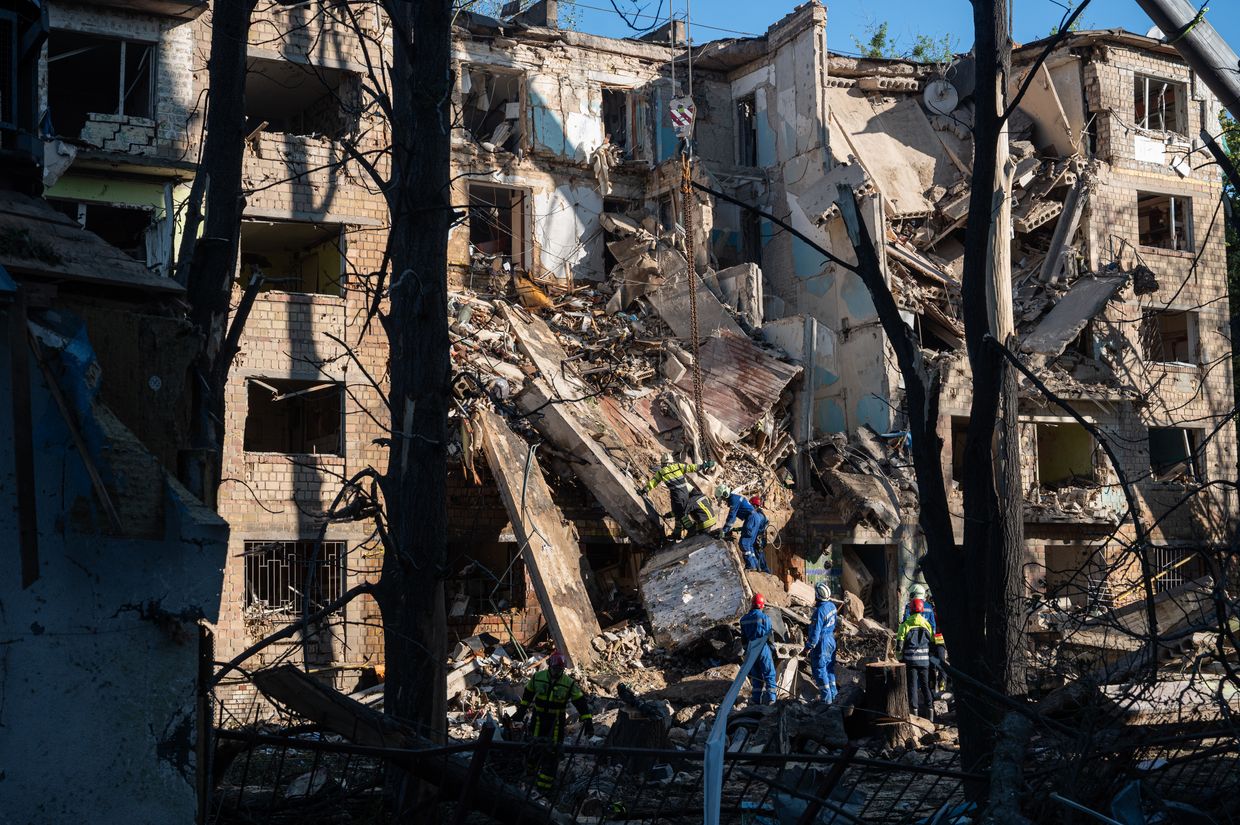
The heaviest damage occurred in the Shevchenkivskyi district of the city, when a five-story building partially collapsed after being hit by a ballistic missile, Ukraine's military reported. At least nine people died as a result, and more may be trapped under the rubble.
An 11-year-old girl was confirmed as the ninth victim of the strike, Tymur Tkachenko, head of the Kyiv City Military Administration, said. Her mother's body was recovered earlier from the rubble.
0:00
/
The scene of the damaged building in Shevchenkivskyi district (Vitalii Klitschko/Telegram)
Student Veronika Sherinova, who lives in a nearby building, said she didn't sleep all night — first because she was hiding from the attack, then because the missile strike shattered the windows in her home and neighboring apartments.
"Most of my former classmates lived in this building (that was hit), most of my friends and acquaintances, too," she told the Kyiv Independent at the site of the strike. "We got dressed right away and went over."
"When my mom and I arrived, I saw them coming out in just their underwear, covered in blood, wounded. It was impossible to look at. It was pure shock. We were all in a state of shock."
At first, she just wanted to help clear the shattered glass and debris. But after seeing the extent of the destruction, Sherinova realized that some of the people she knew might not have survived the attack.
"The strike hit exactly the floors where our friends lived," she said. "Unfortunately, they didn’t survive. My other friends did — they were on the first floor," she added, her eyes filling with tears.
"It was a miracle they came out without a single scratch. But the upper floors were just blown away, there wasn’t even a chance for anyone up there to survive."
A woman and policeman stand in front of the partially collapsed residential building after a Russian attack on June 23, 2025 in Kyiv, Ukraine (Ihor Kuznietsov/Novyny LIVE/Global Images Ukraine via Getty Images)
According to Sherinova, the Russian strike killed a family living on the upper floor — a father, mother, and grandfather — but their teenage son survived.
"We suspected it right away, but we didn’t want to believe it until the very end. But then we found out that they were the first ones they carried out," she said. "The boy is in shock right now; he doesn’t realize what’s happened. He’s just not reacting at all."
She said her two other friends who lived in the building left for abroad immediately after the strike.
"They went abroad — they took a bus and left right away."
State Emergency Service spokesperson Svitlana Vodolaha told journalists at the site that when rescuers arrived, they had been told only a few people would be affected there.
"As it turned out, the information we had was not reliable — there were more people here than we had been told. At this moment, we still don’t have complete information on how many people might be trapped under the rubble," Vodolaha said.
"That’s why we’ll keep working until the very end, until we’re completely sure no one is left under the debris."
Shortly after their arrival, rescuers pulled 10 people from under the rubble, including two children and a pregnant woman, Vodolaha said.
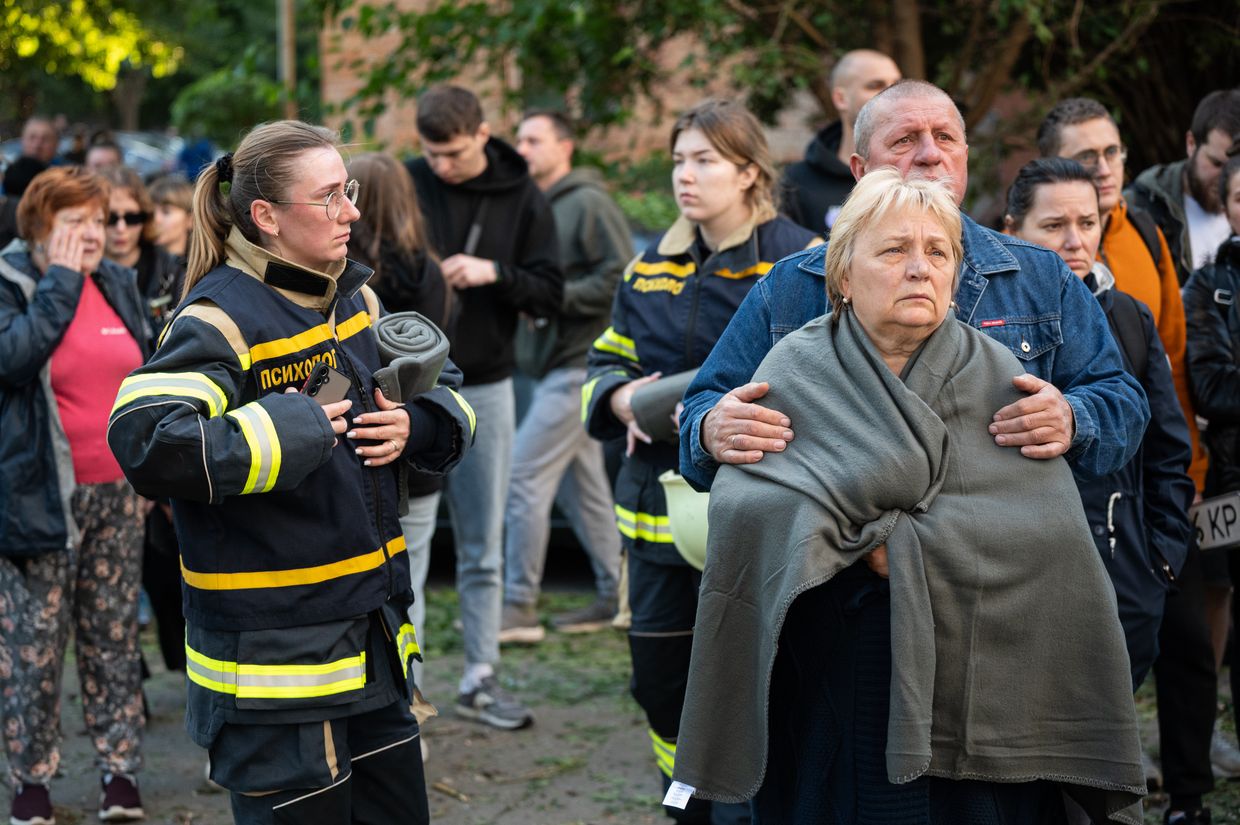
A wounded woman with smartphone stands near the partially destroyed building on June 23, 2025 in Kyiv, Ukraine (Ihor Kuznietsov/Novyny LIVE/Global Images Ukraine via Getty Images)
Vodolaha did not rule out the use of cluster munitions in this attack. After arriving at the site, Kyiv Independent journalists observed holes in the building across from the one that was hit, resembling those from the previous strike on the capital on June 17.
Cluster munitions are banned under international law by more than 100 countries due to their indiscriminate nature and the long-term threat they pose to civilians, especially when unexploded submunitions remain hidden in residential areas.
"It’s possible as such incidents have happened not only during today’s attack but at other times as well," Vodolaha said.
"I think everyone has noticed how our attacks have become longer and more intense, even across the capital," she added. "That’s why this morning we were working simultaneously at 15 locations."
Fifteen-year-old Roman Turko arrived at the site in the morning after the attack with his friend. His uncle lived in the destroyed building but, luckily, wasn’t home when the strike happened.
"He’s currently serving (in the military), he’s a border guard. He was on duty, so luckily he wasn’t home," Turko told the Kyiv Independent. "His apartment doesn’t really exist anymore: The balcony is gone, the walls are gone."
"If he had been there, it probably would have been the end for him."
After surviving such a heavy attack, Sherinova is now considering leaving Kyiv, at least for a while. But she says it feels like there’s nowhere left to hide from the Russian war.
"There’s a kindergarten nearby where my mom works. It has a shelter, and that’s where we usually go when we see reports of (Russian) jets taking off or a possible strike."
"But today it happened so suddenly, we wouldn’t have had time to run anywhere. We just stepped into the hallway, crouched down, and covered our eyes and ears," she said.
"It’s hitting everywhere, strikes are happening everywhere. I still can’t believe it happened to me, to my neighborhood, where I was born and have lived my whole life."
"I just can’t believe it. I’m still in such a state of shock, looking at all of this and not believing it really happened."
In the wider Kyiv Oblast, a woman was killed and eight others injured in Bila Tserkva, the Kyiv Oblast Military Administration reported.
Casualties were also reported in other areas around the capital in Kyiv Oblast, including Bucha, a town just northwest of Kyiv.
According to the Ukrainian Air Force, Russia deployed 368 aerial weapons, including 352 attack drones, 11 Iskander-M/KN-23 ballistic missiles, and 5 Iskander-K cruise missiles, striking primarily Kyiv. Ukraine's air defenses destroyed 354 of them.
The residential building damaged by a Russian attack as teams continue search and rescue effort in Kyiv, Ukraine on June 23, 2025 (Danylo Antoniuk/Anadolu via Getty Images)
Russian forces reportedly struck six locations directly, with debris falling in 25 sites across Kyiv and its surrounding region.
Earlier, it was reported that a high-rise apartment building was damaged as a result of the attack in the area, as well as an exit at the Sviatoshyn metro station and a nearby bus shelter.
Reports indicate that the Darnytskyi, Podilskyi, Solomianskyi, Shevchenkivskyi, and Sviatoshynskyi districts had been affected by the attack.
Fires also broke out in the Podilskyi district, where debris struck a residential building and a vehicle.
A large fire was also reported at a four-story office building in the Solomianskyi district. The fire reportedly covered an area of 800 square meters, the State Emergency Service said, with firefighting efforts ongoing.
Drone strike debris also landed in an open area of a stadium in Sviatoshynskyi without causing injuries or fire.
President Volodymyr Zelensky condemned the attack, noting that while Moscow had previously criticized strikes on Iran's nuclear program, it remained silent following its own "cynical" bombardment of Kyiv with Shahed drones and missiles.
"Only in Kyiv, five apartment buildings were damaged. These are ordinary residential buildings," he said, adding that one person was also killed in Bila Tserkva after a Shahed drone hit a hospital.
Zelensky said the attack damaged sites in four Ukrainian regions and involved 352 drones—including 159 Shaheds—and 16 missiles, possibly including North Korean ballistic missiles.
"Every country near Russia, Iran, and North Korea should be thinking about whether they can protect life if this coalition of killers continues spreading terror," Zelensky said.
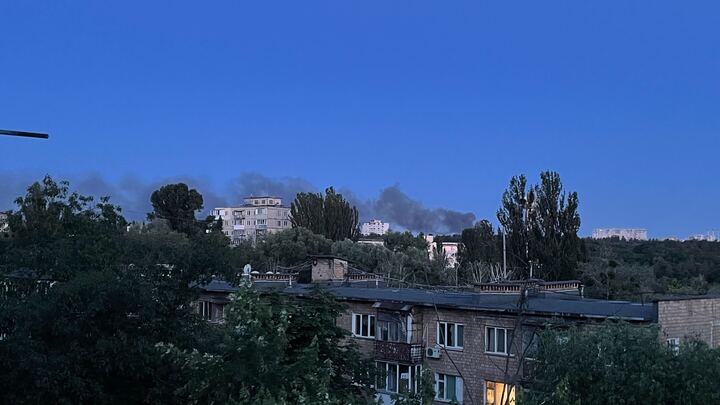
The view in Kyiv seen outside of a window as Russia launches another large-scale attack on Kyiv on June 23, 2025. At least five people have been injured in the attack, local officials reported. (Olena Zashko/The Kyiv Independent)
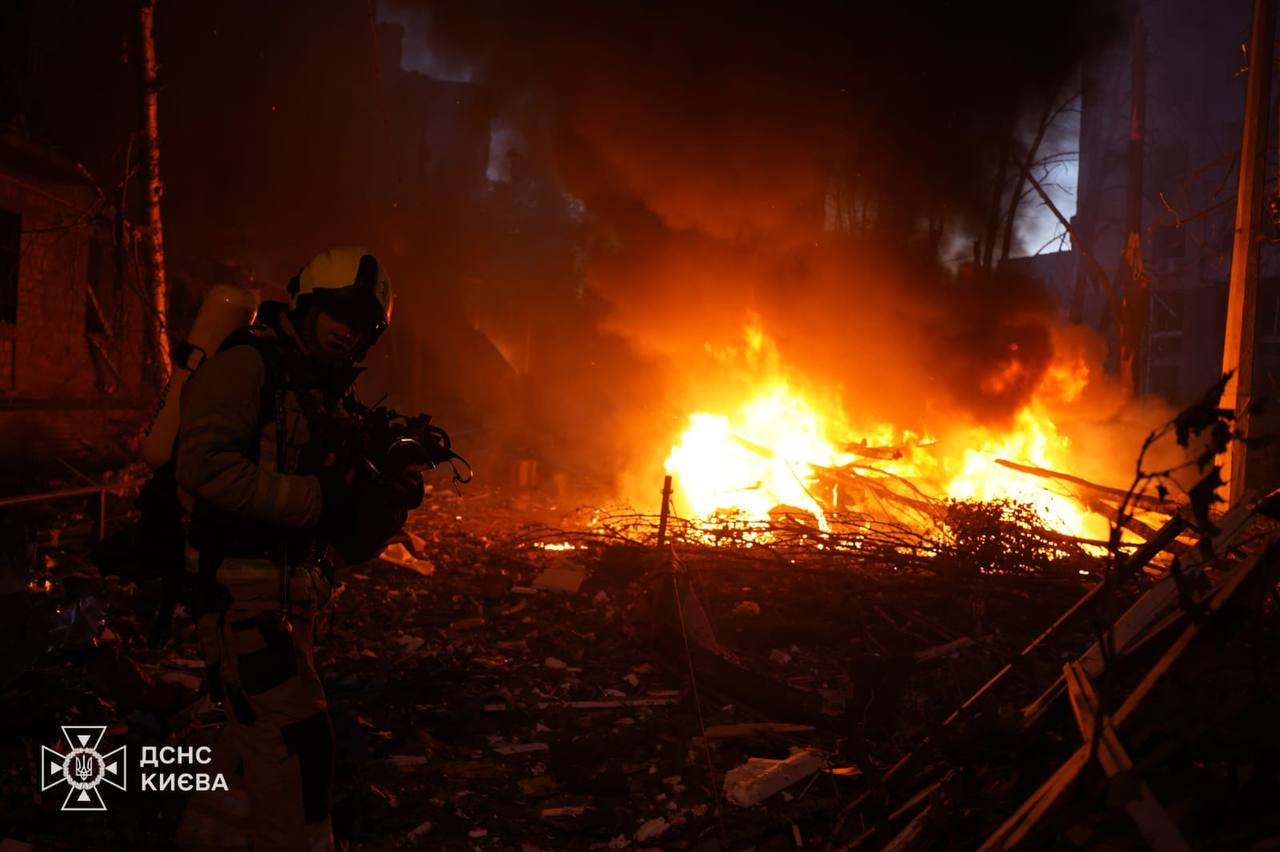
A fire burns in the aftermath of a Russian attack on Kyiv on June 23, 2025. (Ukraine's State Emergency Service/Telegram)
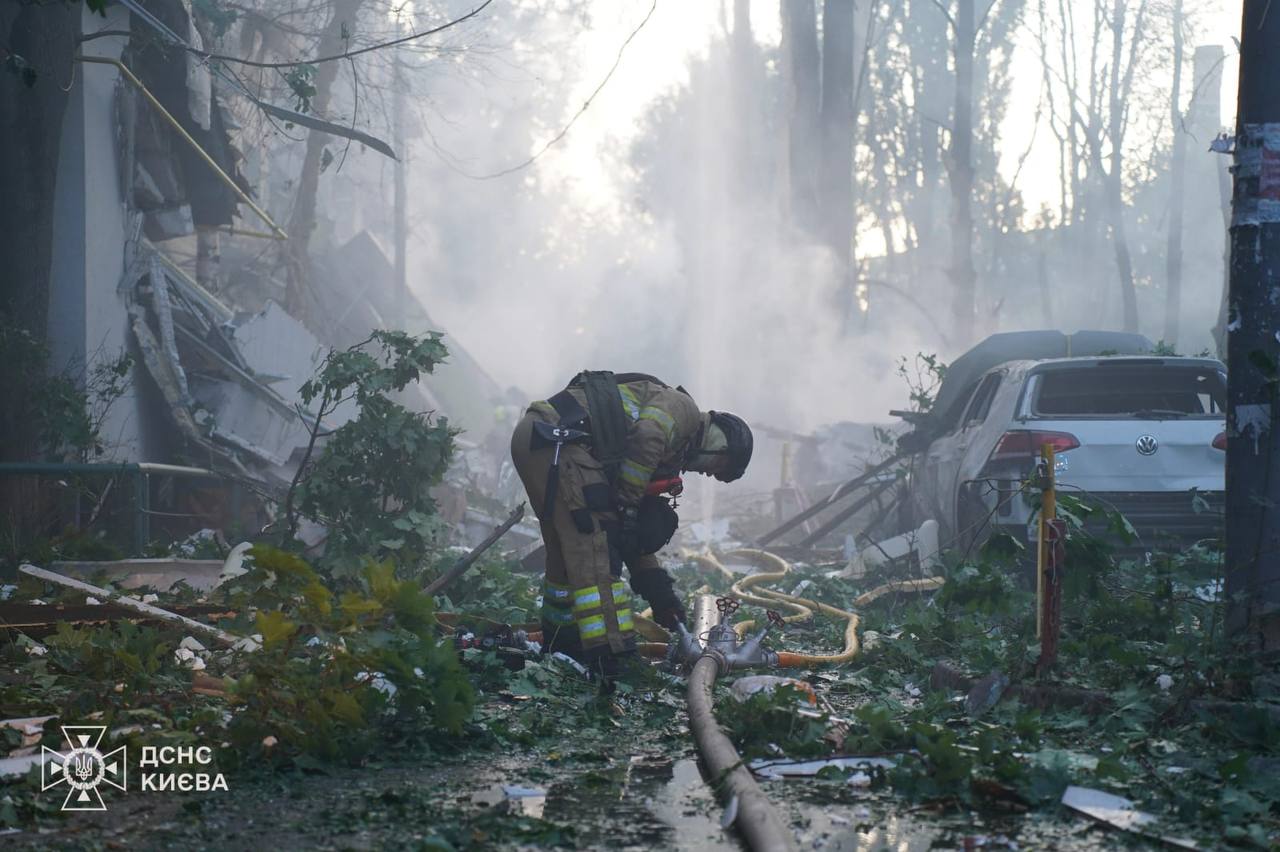
A firefighter extinguishes burning debris in the aftermath of a Russian attack on Kyiv on June 23, 2025. (Ukraine's State Emergency Service/Telegram)
The attack on the capital comes just days after Russia launched one of its largest attacks on Kyiv, killing 28 people and injuring 134 others.
Russia's latest round of large-scale attacks comes as Commander-in-Chief Oleksandr Syrskyi warned on June 21 that Russian forces are attempting to advance along almost the entire front in eastern Ukraine while trying to establish a buffer zone in northeastern Sumy Oblast.
Norway will invest $400 million in Ukraine's defense industry to support drone and air defense missile production, President Volodymyr Zelensky said in his nightly address on June 22.The announcement followed a visit to Ukraine by Norwegian Defense Minister Tore Onshuus Sandvik."Today, Norway’s Minister of Defense visited Ukraine. A decision has been reached to invest $400 million in our production – new funding, primarily for drones," Zelensky said.Zelensky added that the two countries are also
Norway will invest $400 million in Ukraine's defense industry to support drone and air defense missile production, President Volodymyr Zelensky said in his nightly address on June 22.
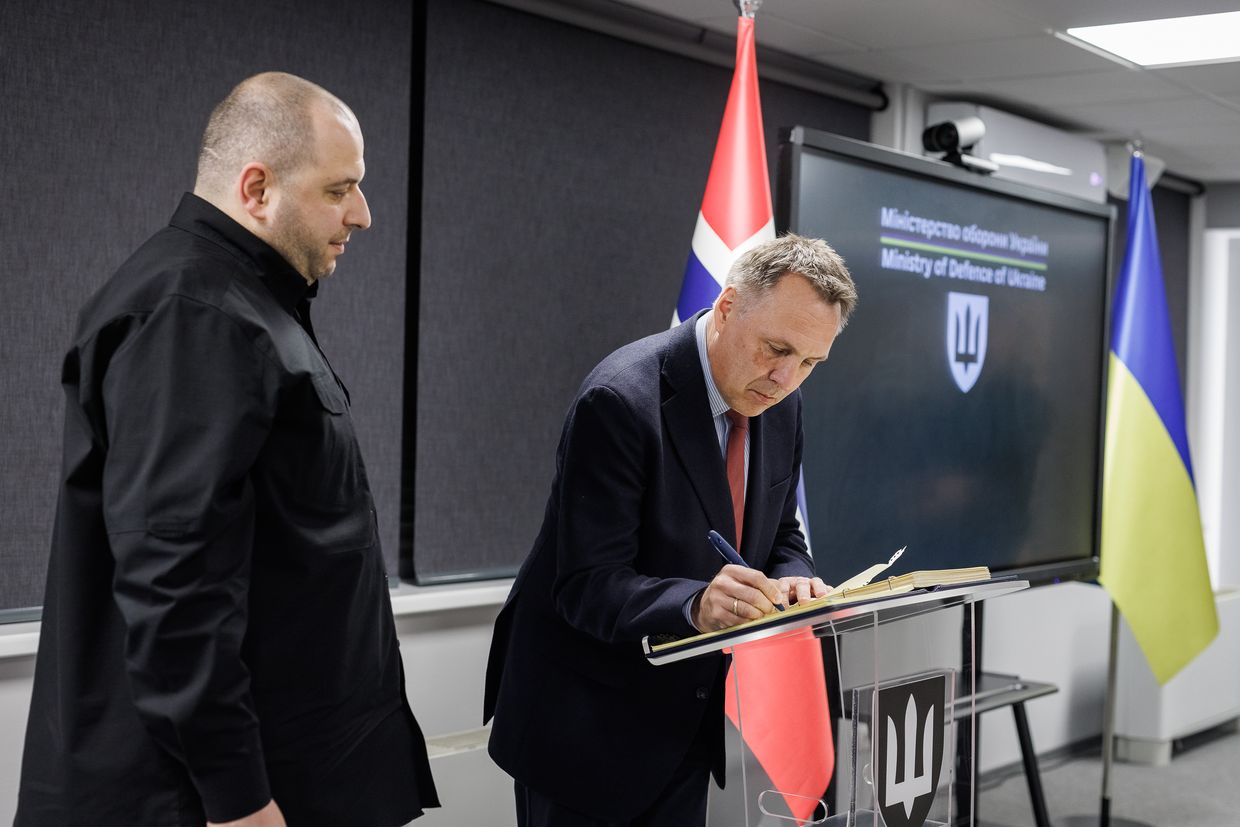
The announcement followed a visit to Ukraine by Norwegian Defense Minister Tore Onshuus Sandvik.
"Today, Norway’s Minister of Defense visited Ukraine. A decision has been reached to invest $400 million in our production – new funding, primarily for drones," Zelensky said.
Zelensky added that the two countries are also working together to establish joint air defense production inside Ukraine.
"We are working together to create all the necessary conditions to produce air defense systems in Ukraine — jointly with partners, jointly with Norway," Zelensky said.
He added that Norway's largest defense company – Kongsberg Defence & Aerospace – has already opened an office in Ukraine as part of the cooperation.
"We are expediting all processes to the maximum extent," Zelensky said.
On X, Norway's defense ministry confirmed that Kongsberg has signed agreement with a major Ukrainian company to jointly develop and produce missiles for air defense systems in Ukraine.
The collaboration will focus on producing missiles for the National Advanced Surface-to-Air Missile System, or NASAMS.
"The Norwegian NASAMS system saves lives in Ukraine every day, and is crucial in protecting critical infrastructure. That is why it is important for the Norwegian Government to finance this development of cheaper missiles for the NASAMS system in Ukraine," said Minister Sandvik.
The announcement marks deepening ties between Kyiv and Oslo as Ukraine seeks to expand its domestic defense industry amid Russia’s ongoing full-scale invasion and reduced military aid from the United States.
Editor's note: This is a developing story.Russia launched a missile attack on June 22 on the training ground of a Ukrainian mechanized brigade, where military personnel were being trained, the Ground Forces reported."Unfortunately, there are dead and wounded," the statement read. The Ground Forces said that greater personnel losses were avoided thanks to the timely security measures taken when the air raid alert was issued.Around 5:30 p.m., the Ground Forces initially said that three people were
Russia launched a missile attack on June 22 on the training ground of a Ukrainian mechanized brigade, where military personnel were being trained, the Ground Forces reported.
"Unfortunately, there are dead and wounded," the statement read. The Ground Forces said that greater personnel losses were avoided thanks to the timely security measures taken when the air raid alert was issued.
Around 5:30 p.m., the Ground Forces initially said that three people were killed in the attack and 11 were wounded.
The number of injured was later updated, at around 7:30 p.m., to 14 people.
A special commission has been set up at the Ground Forces Command to investigate the incident, according to the statement. Law enforcement agencies are also working at the scene.
It is the second officially confirmed Russian attack in June that led to military casualties in the training facilities, adding to a chain of such attacks in the past few months.
Former Ground Forces Commander Mykhailo Drapatyi had promised to ensure new safety standards on the training grounds and hold accountable those responsible for the deaths after a Russian strike on March 1 on the training ground in Dnipropetrovsk during exercises.
Yet on May 20, another Russian missile strike against a shooting range in Sumy Oblast killed six service members and injured over 10, according to Ukraine's National Guard.
After another Russian attack on June 1 on a Ukrainian military training ground killed 12 and injured 60, Drapatyi submitted his resignation as the Ground Forces Commander. He was appointed Commander of the Joint Forces on June 3.
Ukraine's swift release of the statement and casualty number in the latest Russian attack stands out, as both Ukraine and Russia rarely acknowledge successful enemy attacks against their military facilities.
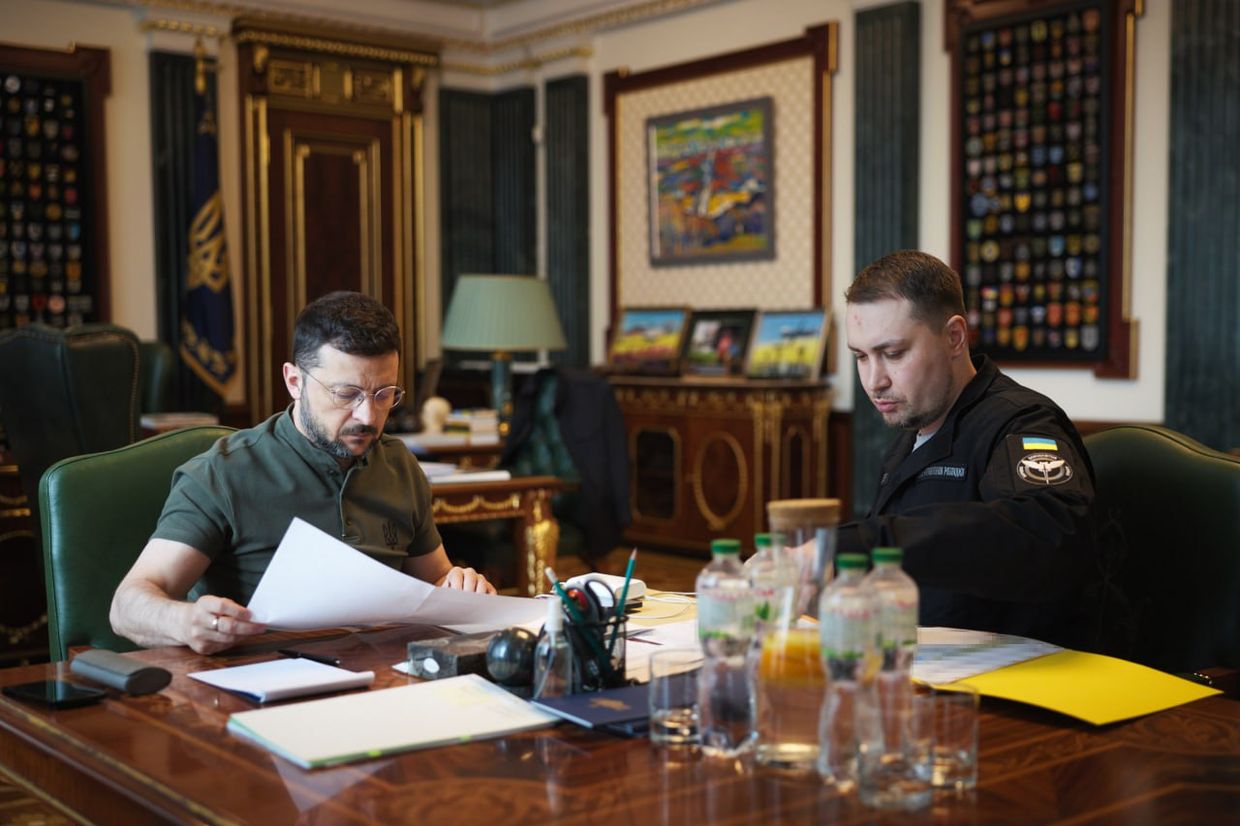
Ukrainian intelligence has proof that Russia is preparing new military operations in Europe, said President Volodymyr Zelensky on June 22 after a report from military intelligence (HUR) chief Kyrylo Budanov."We are observing a continued intellectual decline within the Russian leadership and have evidence that they are preparing new military operations on European territory," Zelensky said on X.Zelensky added that Ukraine will inform foreign partners regarding the information obtained by intellig
Ukrainian intelligence has proof that Russia is preparing new military operations in Europe, said President Volodymyr Zelensky on June 22 after a report from military intelligence (HUR) chief Kyrylo Budanov.
"We are observing a continued intellectual decline within the Russian leadership and have evidence that they are preparing new military operations on European territory," Zelensky said on X.
Zelensky added that Ukraine will inform foreign partners regarding the information obtained by intelligence. The statement follows earlier warnings by Kyiv that Russia may be preparing aggression beyond Ukraine's borders.
The president did not provide further details on the planned Russian operations, their dates, or countries that might be targeted.
"We are preparing joint decisions for defense, in particular with the United Kingdom and the European Union," Zelensky wrote.
Zelensky confirmed that Ukraine will continue its efforts to weaken Russia's army.
"We’re aware of... (Russia's) key vulnerabilities and will strike accordingly to defend our state and people, as well as to significantly reduce Russia’s capacity for aggression," the president said.
Since its full-scale invasion of Ukraine in 2022, Russia has ramped up sabotage operations across Europe, aiming to destabilize the security situation in countries supporting Kyiv against Russian aggression.
Ukrainian foreign intelligence warned in May that Russia would be able to restore its combat capabilities and launch aggression against Europe between two and four years after hostilities in Ukraine ended.
Foreign officials and EU diplomats have increasingly called for the preparation for a potential full-scale conflict between NATO and Russia. On June 2, the United Kingdom announced its largest defense spending increase since the Cold War in the face of "the war in Europe," according to U.K. Prime Minister Keir Starmer.
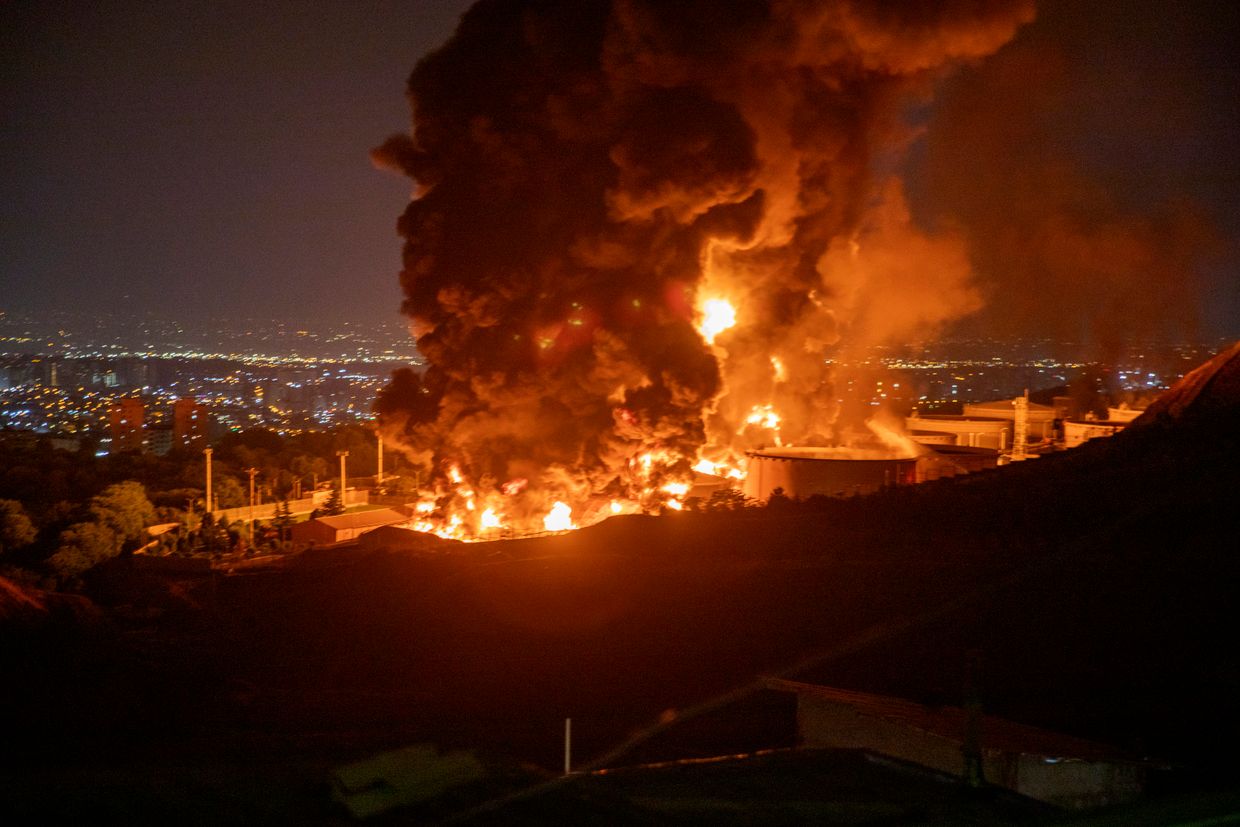
Iran's Foreign Minister Abbas Araghchi confirmed that he plans to travel to Russia on June 22 to meet with Russian President Vladimir Putin following the recent U.S. strikes on Iranian nuclear facilities.The statement was made during Araghchi's press conference in Istanbul on June 22, according to Associated Press."We enjoy a strategic partnership and we always consult with each other and coordinate our positions," Araghchi said with reference to Russia.Araghchi also said that there is "no red l
Iran's Foreign Minister Abbas Araghchi confirmed that he plans to travel to Russia on June 22 to meet with Russian President Vladimir Putin following the recent U.S. strikes on Iranian nuclear facilities.
The statement was made during Araghchi's press conference in Istanbul on June 22, according to Associated Press.
"We enjoy a strategic partnership and we always consult with each other and coordinate our positions," Araghchi said with reference to Russia.
Araghchi also said that there is "no red line" that the U.S. has not crossed in its recent actions against Iran.
Earlier that day, Russia condemned the U.S. strikes against Iranian nuclear facilities, calling them a violation of international law and Iran's sovereignty, a statement in stark contrast to Russia's full-scale war against Ukraine.
The Russian Foreign Ministry urged a response from the U.N. Security Council, saying that "the confrontational actions of the U.S. and Israel must be collectively rejected."
Tehran provides Moscow with ballistic missiles and thousands of Shahed attack drones for its war against Ukraine as part of Russia and Iran's close strategic partnership.
Russia and Iran have cooperated to develop their own nuclear programs as both countries face Western sanctions. Russia supplied Iran with the Middle East's first nuclear power plant despite objections from the West.
The Ukrainian military leadership aims to overhaul the draft office system amid numerous reports of abuses since the start of Russia's invasion in 2022, Commander-in-Chief Oleksandr Syrskyi told journalists on June 21.To "clean up the system", 136 officers and 325 other service members from the draft offices involved in misconduct were transferred to other positions in the army, Syrskyi said at a briefing attended by the Kyiv Independent.Mobilization of men through the draft offices remains the
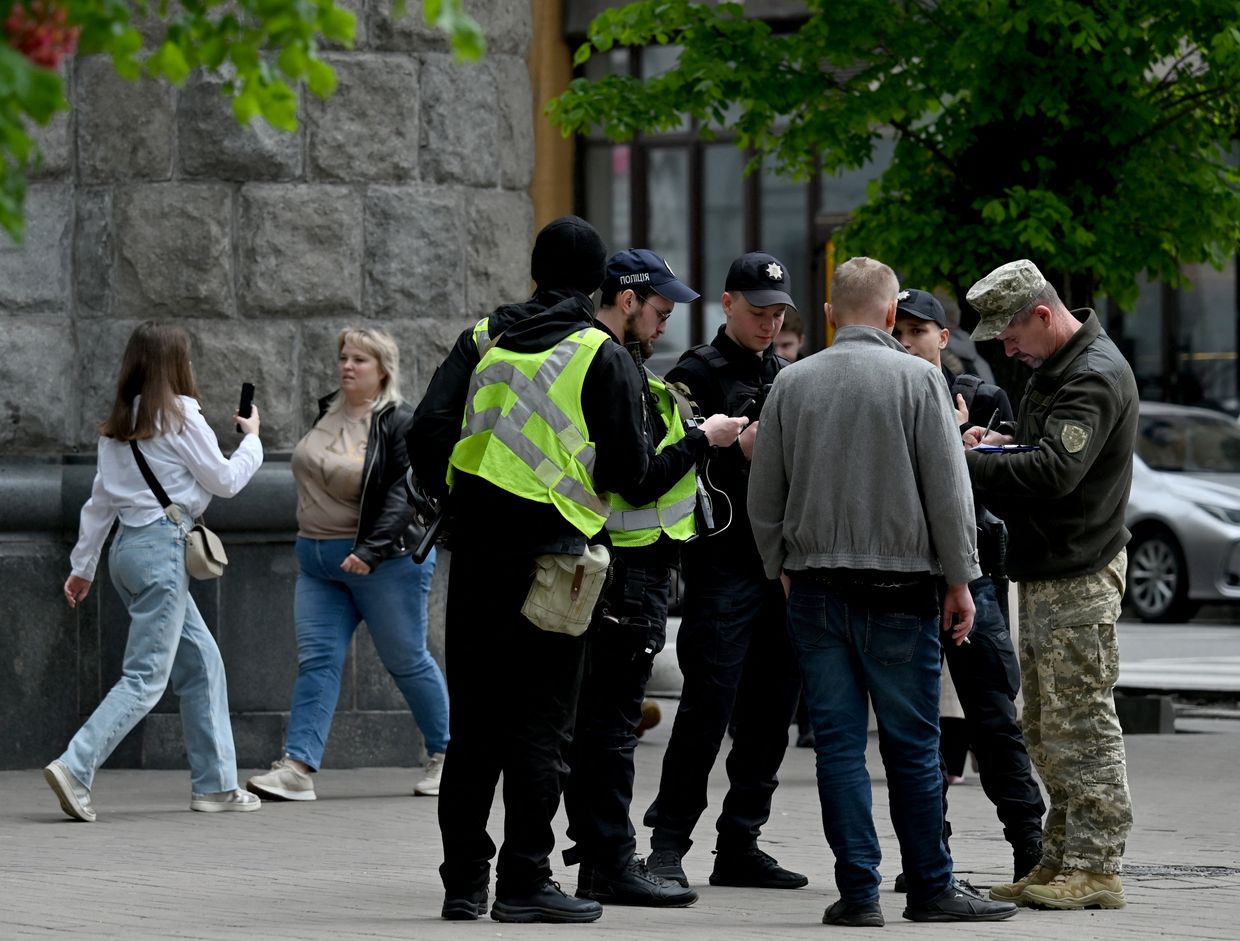
The Ukrainian military leadership aims to overhaul the draft office system amid numerous reports of abuses since the start of Russia's invasion in 2022, Commander-in-Chief Oleksandr Syrskyi told journalists on June 21.
To "clean up the system", 136 officers and 325 other service members from the draft offices involved in misconduct were transferred to other positions in the army, Syrskyi said at a briefing attended by the Kyiv Independent.
Mobilization of men through the draft offices remains the main source of manpower for the Ukrainian army which defends against Russia's much more numerous forces in a war of attrition, Syrskyi added.
Draft offices are often accused, at times justly, of forced conscription without compliance with fundamental civil rights and ill-treatment of conscripts in recruitment centers. These reports are used by Russian propaganda to help escalate social tensions in Ukraine and further damage Ukraine's recruitment efforts.
"Cases of forced detention of citizens (by the draft officers) are absolutely unacceptable," Syrskyi said during the briefing.
Ukrainian leadership expects the newly appointed commander of Ukraine's Ground Forces, Brigadier General Hennadii Shapovalov, to "overcome problematic issues," Syrskyi added.
Shapovalov's appointment on June 17 followed the resignation of Mykhailo Drapatyi earlier this month after a Russian missile strike killed at least 12 Ukrainian soldiers at a training ground in Dnipropetrovsk Oblast.
Inspections are underway in the draft centers to send draft officers without battlefield experience to the front, replacing them with soldiers wounded in battles, Syrskyi said.
Draft offices should fulfill their duties and "disallow these shameful cases that sometimes occur," according to Syrskyi.
"Corrupt officials and violators of the law in the mobilization process must be exposed. All necessary measures should be taken against such violators," Syrskyi added.
Ukraine is downing approximately 82% of Russian Shahed-type drones during Russian massive aerial attacks on Ukrainian cities despite a serious shortage of surface-to-air missiles, Commander-in-Chief Oleksandr Syrskyi told journalists on June 21.Ukraine needs to have many times more surface-to-air missiles and anti-aircraft missile systems to ensure reliable defense of cities and critical infrastructure facilities, Syrskyi said at a briefing attended by the Kyiv Independent.Russian attacks agains
Ukraine is downing approximately 82% of Russian Shahed-type drones during Russian massive aerial attacks on Ukrainian cities despite a serious shortage of surface-to-air missiles, Commander-in-Chief Oleksandr Syrskyi told journalists on June 21.
Ukraine needs to have many times more surface-to-air missiles and anti-aircraft missile systems to ensure reliable defense of cities and critical infrastructure facilities, Syrskyi said at a briefing attended by the Kyiv Independent.
Russian attacks against Ukraine have surged in May and June as Moscow has launched several record-breaking mass strikes against Kyiv and other cities. The latest attack on June 17, primarily targeting the capital, killed 30 people and injured over 170.
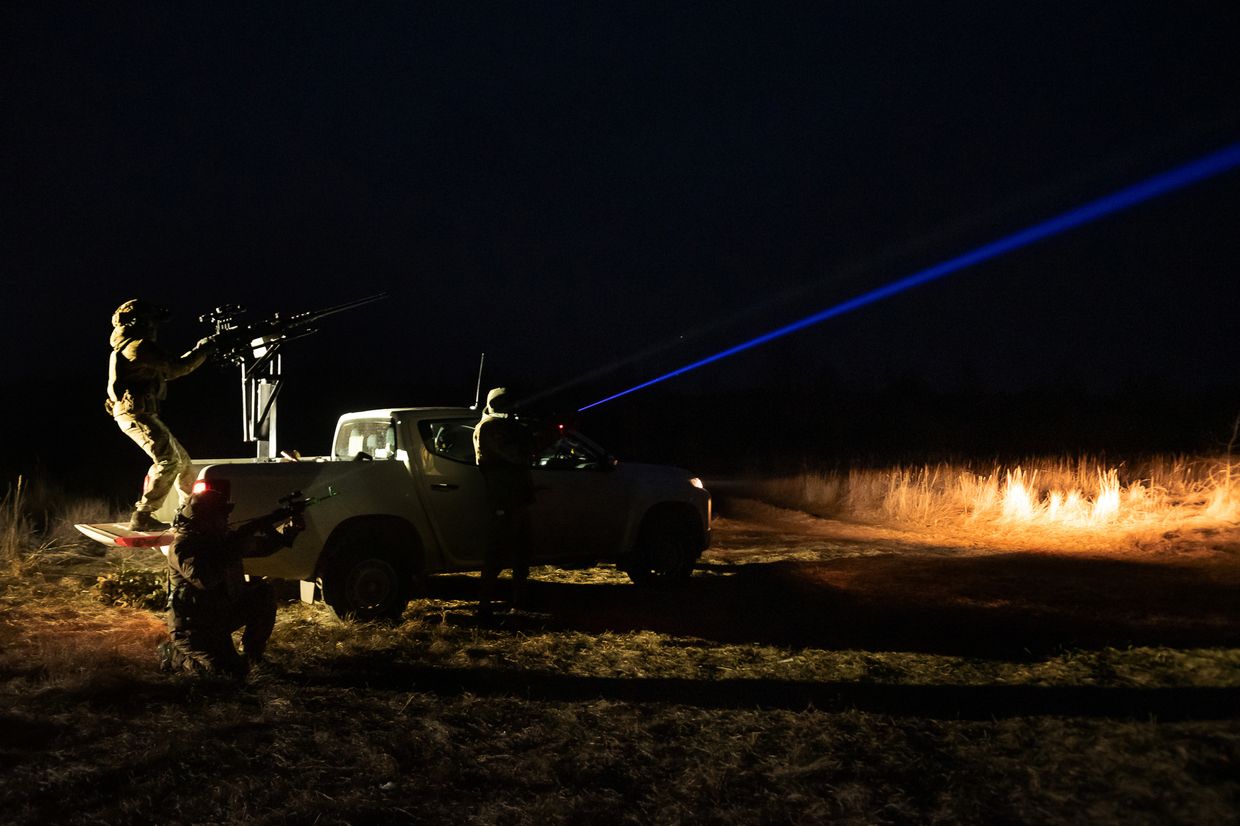
"Since we have to save anti-aircraft guided missiles, mobile fire groups are the priority for defending from the Shaheds," Syrskyi said.
Despite Russia's changing tactics of massive air attacks, mobile fire groups account for the largest share of destroyed drones. The fire groups' effectiveness is up to 40%, according to Syrskyi.
Aviation is used almost every night to repel Russian air attacks, featuring the Defense Forces' helicopter crews and fighter aircraft of the Air Force, which includes U.S.-made F-16 and French Mirage-2000 aircraft.
"One promising area in countering Shaheds is the use of light aircraft," Syrskyi said, adding that "there are new projects thanks to financial and material assistance from our foreign partners."
"We are receiving modern light aircraft, which have modern weapons and navigation, which will increase the effectiveness in countering Russian strike drones."
Syrskyi stressed that "cooperation with partners, primarily Canadian ones, enables us to obtain modern surveillance and targeting systems that enhance the combat capabilities of our helicopters."
Regular Air Force reports show that the majority of Russian drones are intercepted during overnight attacks, some by air defenses and others by electronic warfare systems. However, these reports do not always clarify how many of the intercepted drones were actual attack drones and which were only decoys launched to overwhelm air defenses.
Ukraine works to develop other means of protection against Russian air raids in the non-front-line oblasts as it scales up the use of interceptor drones.
Syrskyi said that over five types of interceptor drones have been cleared for use in the army, and new units are being formed and taught to operate them. Some of these Air Force units have already downed dozens of Russian Shaheds, according to Syrskyi.
The effective use of interceptor drones is hindered by the lack of tactical radar systems in Ukraine, such as Israel-made radars by RADA Electronic Industries and their analogues.
Syrskyi said the Ukrainian army needs hundreds of tactical radar systems instead of the few currently in service for radar reconnaissance, which is key to the use of interceptor drones.
Serhii Dobrovolskyi, a Ukrainian soldier who had been in Russian captivity since 2023, has died just a month after his release at the end of May as part of a 1000-for-1000 prisoner swap, an official from the soldier's home region announced on June 21.The case is the latest in a chain of Ukrainian soldiers' unexpected deaths after their return from Russian captivity, highlighting the effects of "widespread and systematic" torture of prisoners of war (POWs) in Russian prisons, reported by the U.N.
Serhii Dobrovolskyi, a Ukrainian soldier who had been in Russian captivity since 2023, has died just a month after his release at the end of May as part of a 1000-for-1000 prisoner swap, an official from the soldier's home region announced on June 21.
The case is the latest in a chain of Ukrainian soldiers' unexpected deaths after their return from Russian captivity, highlighting the effects of "widespread and systematic" torture of prisoners of war (POWs) in Russian prisons, reported by the U.N.
"Serhii Dobrovolskyi was released from captivity at the end of May this year. A few days ago, he was met by his fellow townspeople in his hometown," wrote the head of the soldier's native Zdolbuniv district in Rivne Oblast, Vladyslav Sukhliak, on Facebook. The exact cause of death was not immediately announced.
A video posted by the Zdolbuniv city council on June 17 shows Dobrovolskyi being greeted in Zdolbuniv by a crowd chanting the Ukrainian anthem as the soldier is hugging his mother. He was also presented with a korovai, a round bread loaf, as part of the symbolic Ukrainian tradition of welcome with bread and salt.
"Finally, after almost two years, the mother hugged her son," the Zdolbuniv city council commented on the video.
Sukhliak added that Dobrovolskyi was 43 years old at the time of death. "The war with the damned (Russian) occupiers takes lives and health of the defenders," he wrote.
Earlier in June, another Ukrainian soldier returned from Russian captivity had died unexpectedly.
Dmytro Shapovalov, a 32-year-old defender of Ukraine who was exchanged in 2023 after over a year in Russian prisons, had died on June 9, according to the Ukrainian public broadcaster Suspilne.
His sister Anastasiia said that Shapovalov endured torture, hunger, and psychological pressure in captivity. After his release, Shapovalov returned to military service. He died in his sleep, presumably from heart failure, Suspilne reports.
After his death, a representative of the Coordination Headquarters managing the prisoner swaps, Yuliia Pavliuk, published a video showing Shapovalov eating an apple on the day of his release.
"I had just been dreaming about an apple for a year," Shapovalov says in the video.
In 2023, a high-ranking officer from the "Azov" brigade, Oleh Mudrak, died at 35 years old, months after his release from Russian captivity. As a POW, he survived the Olenivka camp explosion and endured a dramatic weight loss in just 100 days, as seen in the photos published by Stanislav Aseyev, a Ukrainian writer and activist.
Treatment of "Azov" fighters in Russian prisons is notoriously brutal due to their nationalistic values and Russian propaganda that worked for years to smear the unit's reputation both in Russia and internationally.
Some Azov fighters died from torture in Russian captivity or were sentenced to decades in prison for alleged war crimes. Many of them were among the 54 Ukrainian prisoners killed in an explosion in Olenivka penal colony in the Russian-occupied part of Donetsk Oblast on July 28, 2022.
Ukraine accused Russia of orchestrating the explosion, while Russia has been systematically preventing international organizations from conducting an independent investigation on the site of the attack.
The U.N. reported widespread torture of Ukrainian POWs in Russia and brutal conditions of their detention over the past years.
Russian forces are attempting to advance along almost the entire front in eastern Ukraine while trying to establish a buffer zone in northeastern Sumy Oblast, Commander-in-Chief Oleksandr Syrskyi told journalists on June 21.The comments come as Moscow launched a new summer offensive against Ukraine, disregarding calls by Kyiv and its Western partners for an unconditional ceasefire.The offensive's goal is to reach the administrative borders of Donetsk and Luhansk oblasts in the east, and create a
Russian forces are attempting to advance along almost the entire front in eastern Ukraine while trying to establish a buffer zone in northeastern Sumy Oblast, Commander-in-Chief Oleksandr Syrskyi told journalists on June 21.
The comments come as Moscow launched a new summer offensive against Ukraine, disregarding calls by Kyiv and its Western partners for an unconditional ceasefire.
The offensive's goal is to reach the administrative borders of Donetsk and Luhansk oblasts in the east, and create a buffer zone in the border areas of the Sumy and Kharkiv oblasts, Syrskyi said at a meeting attended by the Kyiv Independent.
As of mid-June, Ukrainian defenders are fighting close to 695,000 Russian troops in Ukraine across a 1,200-kilometer (750-mile) front, the commander said, adding that Moscow recruited about 440,000 contract soldiers this year.
According to the open-source intelligence group DeepState, Russian forces occupied approximately 449 square kilometers (173 square miles) in May, the highest monthly figure this year.
Ukraine has managed to stop the Russian advance in Sumy Oblast at the moment, Syrskyi noted. "The situation there has been stabilized... we have recaptured Andriivka, and advanced between 200 and 700 meters in Yunakivka in a week," he said.
Russian forces are also attempting to fully oust Ukrainian troops from Russia's home territory in the Kursk and Belgorod oblasts.
"We control about 90 square kilometers (35 square miles) in the Glushkovsky district of Russia's Kursk Oblast," Syrskyi said.
Ukraine launched the cross-border offensive into Kursk Oblast — bordering Ukraine's Sumy Oblast — last August, initially seizing 1,300 square kilometers (500 square miles) but losing the vast majority of this territory in a Russian counteroffensive earlier this year.
Moscow initially declared to have fully liberated the region on April 26, but this claim was rejected by Ukraine and later disputed by Russian officials themselves.
Kyiv has said the incursion was meant to preempt a Russian offensive into Sumy Oblast and force Russia to redirect troops fighting in Donetsk Oblast.
Syrskyi stressed that at one point, the Kursk operation drew in almost 63,000 Russian soldiers, which, in addition to North Korean soldiers, amounted to about 70,000 troops deployed in the region.
"In April 2025, Russian units – and this, I remind you once again, is about 60 thousand people... were tasked with moving to new sectors and reinforcing Russian assault groups in the Pokrovsk, Toretsk, Lyman, Zaporizhzhia, and Kherson directions," Syrskyi said.
"But our actions in the Glushkovsky district of Russia's Kursk Oblast thwarted these plans." At the moment, about 10,000 Russian soldiers are fighting in the Glushkovsky district, the commander added.
Syrskyi also said Russian assault units approached the administrative border of Dnipropetrovsk Oblast but were thrown back.
"As for our plans and intentions. Of course, we will not simply remain in a blind defense... Therefore, we combine defensive actions with active defense and active offensive operations," Syrskyi said.
For this purpose, the Ukrainian military is scaling up its assault units, which were created at the beginning of the Kursk operation and are currently deployed in all areas of the front, he added.
Ukrainian strikes deep inside Russian territory between January and May have cost Russia over $10 billion, including $1.3 billion in direct damage to industrial facilities and infrastructure, Commander-in-Chief Oleksandr Syrskyi told journalists on June 21. The indirect damage caused by the disruption of Russian industrial activities is estimated at $9.5 billion, putting the cost-to-result ratio of Ukrainian deep strikes at 1:15, Syrskyi said at a briefing attended by the Kyiv Independent.Kyiv h
Ukrainian strikes deep inside Russian territory between January and May have cost Russia over $10 billion, including $1.3 billion in direct damage to industrial facilities and infrastructure, Commander-in-Chief Oleksandr Syrskyi told journalists on June 21.
The indirect damage caused by the disruption of Russian industrial activities is estimated at $9.5 billion, putting the cost-to-result ratio of Ukrainian deep strikes at 1:15, Syrskyi said at a briefing attended by the Kyiv Independent.
Kyiv has ramped up drone attacks against Russian military and industrial sites far behind the border as part of its DeepStrike strategy, seeking to undermine Moscow's ability to wage war.
The attacks targeted Russia's oil refining sector, the fuel and lubricants facilities, energy and transport support, and strategic lines of communication.
"Remember that during negotiations, the Russian side listed a halt to strikes against the oil refining industry as one of the conditions. This shows that our strikes are truly effective," Syrskyi said.
Oil and gas exports are among Russia's key revenue sources and play a crucial role in sustaining its war effort.
"Of course, we will continue (attacking deep inside Russian territory). We will increase the scale and the depth," the commander added, stressing that the attacks target solely military facilities.
Ukraine has increased the production of long-range drones with the support of Western partners and developed new tactics in striking Russia behind the lines.
In one of the most audacious attacks, the Security Service of Ukraine (SBU) on June 1 struck dozens of Russian bombers and other aircraft across four different air bases in an operation dubbed Spiderweb. SBU drones were smuggled to Russia in trucks and then deployed to attack airfields thousands of kilometers from the Russia-Ukraine border.
Editor's note: The article was updated after three bodies were found in Kramatorsk following a Russian attack.Russian strikes across Ukrainian regions killed at least seven civilians and injured at least 23 over the past day, regional authorities reported on June 22.Russia launched two Iskander-M or North Korean KN-23 ballistic missiles, an S-300 anti-aircraft missile, and 47 Shahed-type attack drones and decoy drones against Ukraine overnight, primarily targeting Chernihiv Oblast, Ukraine's Air
Editor's note: The article was updated after three bodies were found in Kramatorsk following a Russian attack.
Russian strikes across Ukrainian regions killed at least seven civilians and injured at least 23 over the past day, regional authorities reported on June 22.
Russia launched two Iskander-M or North Korean KN-23 ballistic missiles, an S-300 anti-aircraft missile, and 47 Shahed-type attack drones and decoy drones against Ukraine overnight, primarily targeting Chernihiv Oblast, Ukraine's Air Force said.
Ukrainian air defenses reportedly shot down 18 drones, while 10 disappeared from radars or were intercepted by electronic warfare. Seven hits by Russian aerial weapons were recorded overnight in Chernihiv, Sumy, and Odesa oblasts.
In Chernihiv Oblast, a civilian was killed in a Russian drone attack against the Nizhyn district, Governor Viacheslav Chaus reported.
In Dnipropetrovsk Oblast, Russian drone and artillery attacks against the Nikopol district injured seven people and damaged multiple houses and civilian infrastructure, Governor Serhii Lysak reported. A 63-year-old man has been hospitalized and is in moderate condition.
Russian attacks across Donetsk Oblast killed three people and injured 13, according to Governor Vadym Filashkin and the media. This included a civilian killed and three injured in Sloviansk, and another killed and two injured in Kostiantynivka.
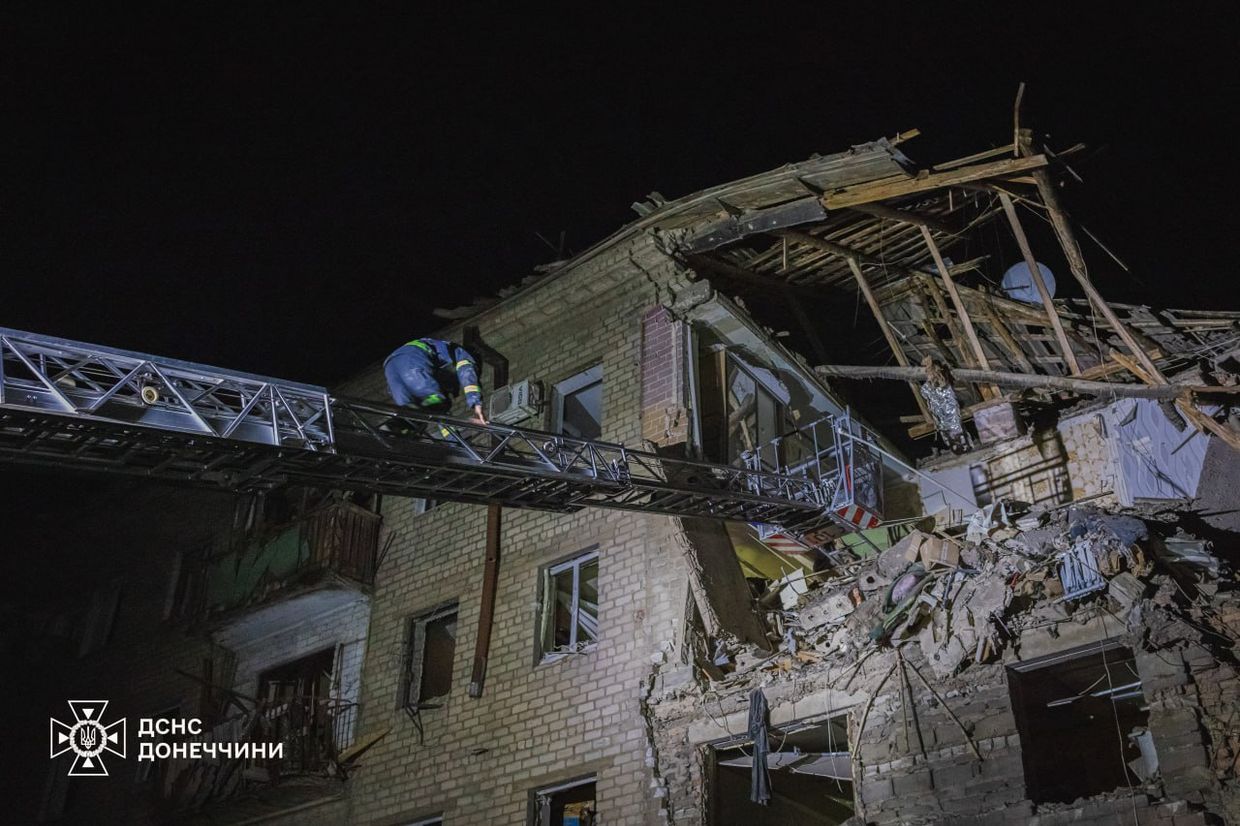
Later on June 22, emergency workers found four bodies of people killed when a Russian missile hit a four-story residential building in Kramatorsk. Four people were injured, and one other resident may be trapped under the rubble, the State Emergency Service said.
In Kharkiv Oblast, a Russian attack killed a 77-year-old man in the village of Staryi Saltiv, Governor Oleh Syniehubov said.
Russian attacks against Kherson Oblast wounded three civilians, said the regional governor, Oleksandr Prokudin. Five multi-story apartment buildings and 11 houses were damaged.
Russia has lost 1,011,490 troops in Ukraine since the beginning of its full-scale invasion on Feb. 24, 2022, the General Staff of Ukraine's Armed Forces reported on June 22.The number includes 1,100 casualties that Russian forces suffered just over the past day.According to the report, Russia has also lost 10,964 tanks, 22,867 armored fighting vehicles, 52,734 vehicles and fuel tanks, 29,432 artillery systems, 1,421 multiple launch rocket systems, 1,188 air defense systems, 416 airplanes, 337 he
Russia has lost 1,011,490 troops in Ukraine since the beginning of its full-scale invasion on Feb. 24, 2022, the General Staff of Ukraine's Armed Forces reported on June 22.
The number includes 1,100 casualties that Russian forces suffered just over the past day.
According to the report, Russia has also lost 10,964 tanks, 22,867 armored fighting vehicles, 52,734 vehicles and fuel tanks, 29,432 artillery systems, 1,421 multiple launch rocket systems, 1,188 air defense systems, 416 airplanes, 337 helicopters, 41,579 drones, 3,376 cruise missiles, 28 ships and boats, and one submarine.

 Connexion

 The Kyiv IndependentLinda Hourani