Is Italy the Model for Europe’s Future?

© Gianni Cipriano for The New York Times


© Gianni Cipriano for The New York Times


© Benoit Tessier/Reuters


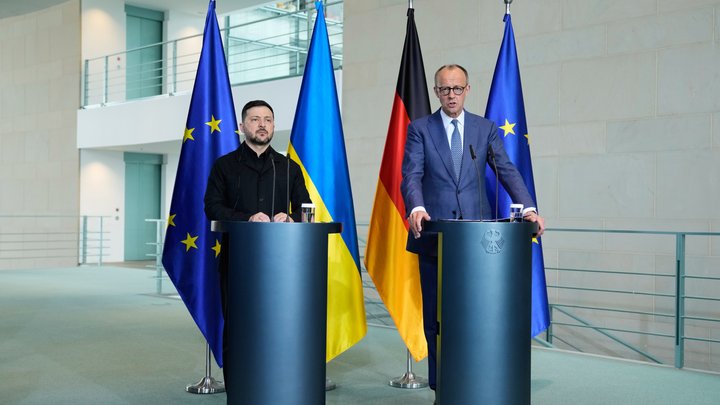
Germany is threatening to block the EU’s next long-term budget unless every member state helps pay for Ukraine. In a letter to European Council President António Costa, Chancellor Friedrich Merz made his support for the 2028-2034 budget conditional on all 27 countries committing to cover Ukraine’s financing, which faces a €70 billion gap next year, the Financial Times reported.
This way, Germany, the EU’s biggest net contributor, leverages pressure over a handful of governments that have refused to pay for Ukraine’s defense, despite previous warnings from multiple intelligence agencies and NATO that Russia might have planned to expand its aggression on European countries.
The report came days before EU leaders meet in Dublin on 12-13 November, where closing Kyiv’s shortfall is already on the agenda, and as elections across Europe threaten to make unanimous support harder to hold.
Last December, EU leaders agreed a €90 billion loan for Ukraine, but Kyiv says it needs €70 billion more next year to keep fighting, a figure its allies accept.
The bloc has pledged to cover about two-thirds, roughly €45 billion, and the European Commission is weighing options including fresh joint borrowing, hoping for a deal by year’s end.
Closing the gap is “an essential prerequisite for resolving this issue and for discussing any further matters, particularly those with financial implications,” Merz wrote in the letter, tying it directly to the budget.
Four countries, Hungary, Slovakia, Bulgaria, and the Czech Republic, have signaled they will not contribute to further aid for Kyiv. Three of them already won an opt-out last year from the interest payments on the €90 billion loan. All four are net beneficiaries of the EU budget, while Germany is its largest net contributor, the leverage Merz is now pressing.
Berlin also wants future funding for Ukraine to require only a qualified majority rather than unanimity, to head off vetoes.
Merz insists the EU “must then find a solution supported by all Member States that ensures a sound and multiannual financing perspective for Ukraine from 2028 onwards.” The politics are tightening: Marine Le Pen, leading the polls before France’s April presidential election, has said that if she wins, she would end support for Kyiv beyond some operational help and training. Votes in Italy and Poland could further erode consensus.


© Wojtek Radwanski/Agence France-Presse — Getty Images


© Jeff Pachoud/Agence France-Presse — Getty Images


© Sebastien Salom-Gomis/Agence France-Presse — Getty Images


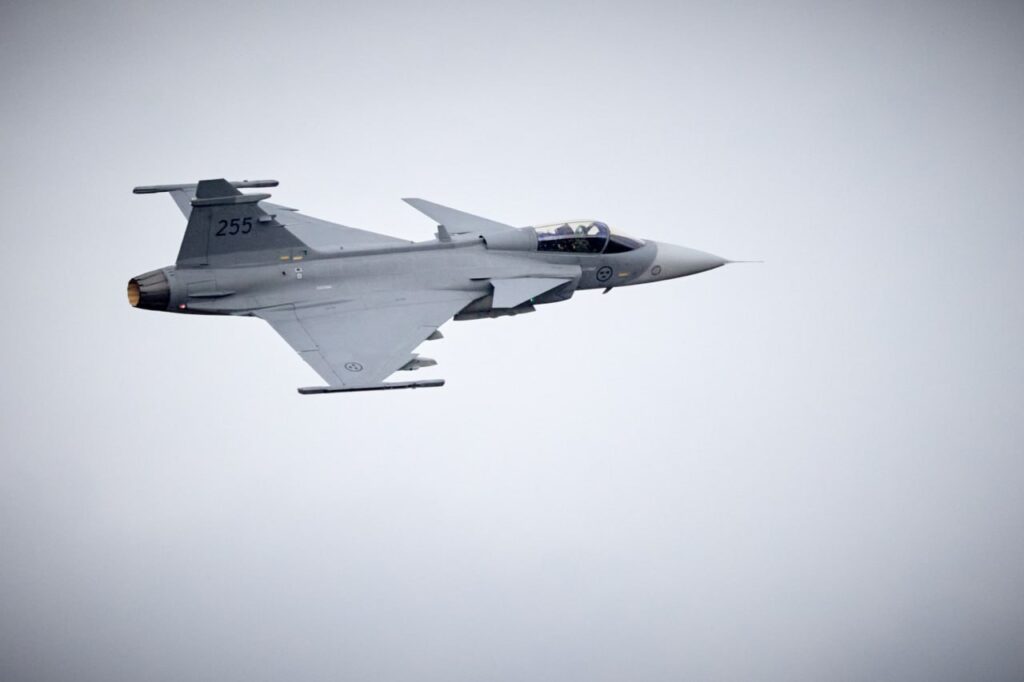
Ukraine is remaking its air force on NATO’s model, down to the way its squadrons are organized and the aircraft they fly. The reforms are planned to be completed by 2035 and include modernizing its F-16s while pursuing the Swedish Gripen jets, Air Force Spokesperson Yurii Ihnat says, per Tse Baza.
Ukraine’s fighters are working hard against Russia’s air war, and in the previous month alone the Air Force faced around 3,500 jet-powered targets, with F-16s heavily used to intercept Russian drones. The new reform is meant to build an air force that can be sustained over the long term and can contest Russian jets and glide bombs, not only survive the next wave.
The central change, Ihnat said, is a move to the “wing” units that NATO air forces use. The first steps have already been taken: Ukraine has set up the 107th F-16 wing, which now has its own Facebook page and may publish material about its work.
Ukraine also plans to build universal air bases on the operational airfields it has used through the full-scale war. In the future, Ihnat says, those bases should be able to receive and service different models of combat aircraft, as NATO does.
Currently, the F-16s Ukraine flies are older Block 15 jets, used by other countries before they arrived, and intensive combat has left them in need of repairs, service life restoration, and upgrades.
Ukrainian officials discussed modernization with the American manufacturer Lockheed Martin, while Kyiv would prefer the newer Block 70/72 version, which Ihnat says would let its pilots stand up more confidently to Russia’s Su-35 fighters.
Keeping the current fleet flying has been hard: fewer than half of Ukraine’s F-16s may be operational, held back by slow maintenance abroad.
At the same time, Lockheed Martin and Kyiv are discussing a special F-16 variant for Ukraine, with a modern AESA radar, longer range, and a wider choice of weapons, though no firm deal exists yet.
Ukraine is also counting on Swedish Gripen fighters. Ihnat says Ukrainian pilots are drawn to them for their lower operating costs and simpler maintenance, with the country likely to receive older C/D models first, before the newer Gripen E that Saab is developing.
Ukrainian pilots have already begun their training on the Gripen, a jet seen as a counter to the Russian aircraft dropping guided glide bombs on the front, though delivery timing depends on further agreements.