❌

Vue normale

Russian strike collapses a Kharkiv apartment stairwell and kills three, days after the US waived sanctions on Russia’s diesel

13 octobre 2026 à 03:53

russian strike collapses kharkiv apartment stairwell killing three · post rescuers clear rubble excavator building hit kharkiv’s kholodnohirskyi district ukraine 13 2026 oda news ukrainian reports

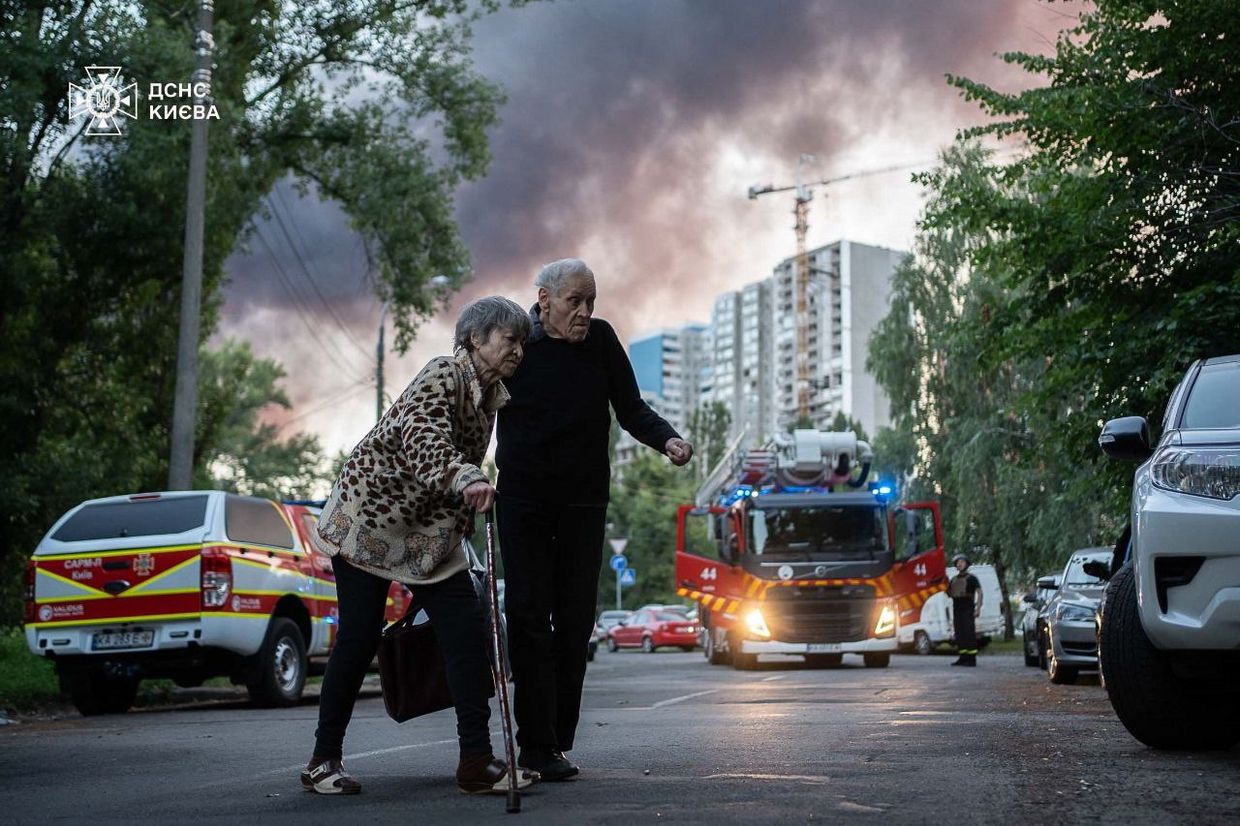
Russian munitions brought down a stairwell of an apartment building in Kharkiv on the evening of 12 October, and rescuers recovered three bodies from the rubble overnight, local authorities reported. Survivors described fire, falling glass, and pets left behind. The strike came days after Washington waived sanctions on Russian diesel, as it expects Kyiv to stop hitting Russian refineries.

Russia hits Ukraine’s cities every day as it readies a winter campaign against Ukrainian infrastructure, and its oil exports keep bringing in the money that pays for the drones and missiles. A halt to Ukraine’s refinery strikes with no matching halt to Russia’s strikes would leave Moscow’s fuel income intact while Kharkiv digs through rubble. Estonia’s prime minister has already urged Europe to help Ukraine destroy those refineries instead.

A stairwell gone in Kholodnohirskyi district

Russian munitions hit Kharkiv’s Kholodnohirskyi district repeatedly from around 21:17, and Mayor Ihor Terekhov preliminarily identified them as Banderols. At 22:21, he said one strike had hit a residential building, possibly trapping people. He then added in a follow-up post: “Very serious destruction—an entire stairwell has collapsed.”

The strike destroyed an entrance of the four-story building, the State Emergency Service (DSNS) said. It counted 11 injured across the city’s evening strikes, and a rescuer was hospitalized, while Terekhov put the number at 10. By 06:56 on 13 October, rescuers had found a third body. Oblast head Oleh Syniehubov confirmed three dead and said the search continued. Experts will check whether the building is still fit to live in, he added.

A rescuer at the collapsed stairwell of an apartment building hit by a Russian strike in Kharkiv, Ukraine
A rescuer at the collapsed stairwell of an apartment building hit by a Russian strike in Kharkiv’s Kholodnohirskyi district, Ukraine, 12 October 2026. Photo: Oleksandr Manchenko/Suspilne Kharkiv

Over 24 hours, Russian attacks killed three people in Kharkiv and injured 37, including two children treated for acute stress, Syniehubov reported.

“I realize I’m on fire”: two residents recall the strike

Larysa Maksimenko had just put her bedridden husband to sleep when the strike hit, she told Suspilne Kharkiv. She suffered a head wound and burns.

“I went to the kitchen to switch on the kettle for myself, to have some coffee. I realize I’m on fire. Then glass fell on me. I came to, and I’m buried under everything. All covered in blood,” she said.

Larysa Maksimenko, a resident injured in the Russian strike on her apartment building in Kharkiv, Ukraine
Larysa Maksimenko, a resident injured in the Russian strike on her apartment building in Kharkiv’s Kholodnohirskyi district, Ukraine, 13 October 2026. Photo: Valeriia Yemets/Suspilne Kharkiv

The window bars were broken, and medics carried her husband out through the window. Rescuers later found a woman under the rubble in her apartment, likely a neighbor, Maksimenko said. All she wants now, she said, is to get to her husband in hospital.

Viacheslav Chibitko with one of his dogs outside his damaged apartment building in Kharkiv, Ukraine
Viacheslav Chibitko, a resident of the apartment building hit by a Russian strike in Kharkiv’s Kholodnohirskyi district, Ukraine, with one of his dogs, 12 October 2026. Photo: Valeriia Yemets/Suspilne Kharkiv

Viacheslav Chibitko, who lives on the second floor next to the collapsed entrance, saw a flash, and then everything blew out. He got his three dogs out, but five cats are still inside. During the clearing, a concrete slab fell on a rescuer, Suspilne’s correspondent reported. Crews pulled him out and handed him to medics.

Cars burning outside a 25-story apartment building in Kyiv after a Russian drone strike
Cars burning outside a 25-story apartment building in Kyiv’s Darnytskyi district after a Russian drone strike, Kyiv, Ukraine, 12 October 2026. Photo: Office of the Prosecutor General of Ukraine

Kyiv’s toll rises, and strikes hit other cities overnight

The evening drone strike on a 25-story building in Kyiv’s Darnytskyi district killed two people, Kyiv prosecutors reported. The second victim was found dead in a car near the building. Prosecutors counted at least seven injured, including a 17-year-old girl, while Mayor Vitali Klitschko counted 11 in the capital.
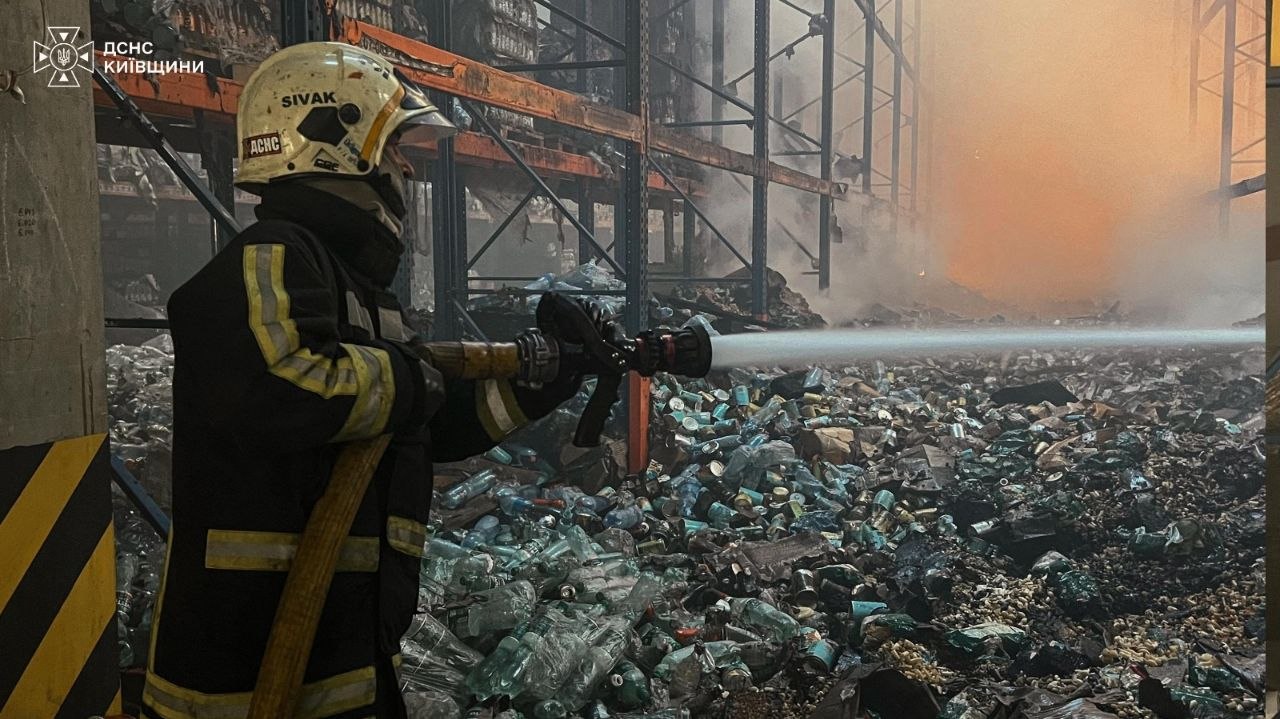
just power plants russia’s drones also went after warehouses groceries hardware chain · post firefighter puts out fire warehouse burned food drink stock hit russian attack bucha district kyiv oblast
Explore further

Russian ballistic missiles hit Kyiv before sirens, gap that lands hard amid fears that Washington could cut data that warns of launches

From 18:00 on 12 October, Russia launched five ballistic missiles, nine loitering munitions, and 108 attack drones, Ukraine’s Air Force reported. Air defenses downed or suppressed 88 drones. A Russian drone attack injured four patients at a medical facility in Khmelnytskyi Oblast, oblast head Serhii Tiurin said. In Dnipro, a Russian attack injured a 64-year-old man, oblast head Oleksandr Hanzha reported. A downed Russian drone set two houses on fire in Murovane near Lviv, oblast head Maksym Kozytskyi said.

On 12 October, a Russian Smerch rocket with a cluster warhead hit a house in Cherkaske, Donetsk Oblast, killing three people, including a 13-year-old girl, oblast head Vadym Filashkin reported.

Russian attacks killed more than 150 people in the week to 11 October, Ukrainian President Volodymyr Zelenskyy said. Russian bombs killed at least 20 people in Zaporizhzhia on 10 October, by the oblast’s count. On 9 October, the US waived its sanctions on Russian diesel until April 2027. The White House expects Kyiv to halt refinery strikes under its proposed energy ceasefire.

Bipartisan US senators say Trump’s Russian diesel deal conflicts with 2022 ban, as he presses Kyiv to spare Russian refineries

12 octobre 2026 à 11:22

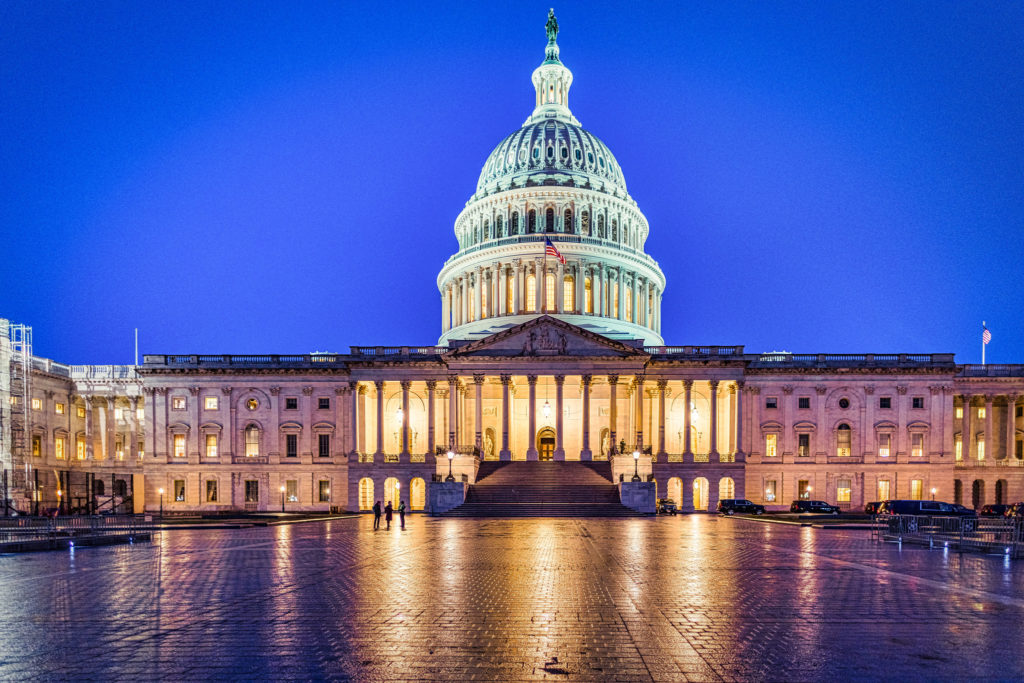
united states capitol building home bicameral us congress consisting lower body house representatives upper senate

Seven US senators from both parties said the Trump administration's decision to authorize Russian diesel imports conflicts with a 2022 law banning Russian energy imports and accused it of failing to consult Congress, in a statement on 11 October.

The dispute comes as the war with Iran drives up US fuel prices, which US President Donald Trump has blamed on Ukraine's strikes on Russian refineries. Trump says Russian supplies will help bring prices down, while lawmakers warn that purchases could provide Moscow with revenue to continue its war against Ukraine.

The senators—Republicans Susan Collins, Lisa Murkowski, Thom Tillis, and John Curtis, and Democrats Jeanne Shaheen, Richard Blumenthal, and Ron Wyden—called on the administration to reverse course, saying the US should not provide Russian President Vladimir Putin with “a financial lifeline.”

What the 2022 law requires before the ban can end

The law, signed on 8 April 2022, allows the president to end the import ban only after submitting a certification to Congress. The certification must find that Russia has agreed to pull out its forces and stop the fighting on terms Ukraine's free and independent government accepts, no longer poses an immediate threat of attack to any NATO member, and recognizes Ukrainians' right to pick their own government.

The law also requires consultation with four congressional committees and a report at least 45 days before certification. The termination takes effect 90 days after certification unless a joint resolution of disapproval is enacted into law during that period. The senators allege the administration failed to meet the consultation and reporting requirements. Their statement does not establish whether a certification has been submitted.

Treasury’s license cites sanctions rules, not the 2022 law

The Treasury Department's Office of Foreign Assets Control issued General License No. 135 on 9 October, authorizing certain transactions involving Russian-origin diesel that would otherwise be restricted under US sanctions regulations. It runs until 7 April 2027 and cites sanctions regulations, not the 2022 import-ban law.

trade banks energy crypto—the eu keeps its full russia economic sanctions wall standing 2027 · post flags member states headquarters council european union brussels belgium 17 2025 getty images/thierry monasse
Explore further

EU blacklists 1,569 Russian arms suppliers and their bosses in its biggest sanctions round ever, as Trump eases up on Moscow

Treasury Secretary Scott Bessent defended the deal on Fox News on 11 October, saying the administration would proceed under existing legal authority. He said lawmakers who argued that either the earlier law or the current Lindsey Graham sanctions law prohibited the deal were wrong, and argued the agreement would lower prices, Reuters reported.

How much diesel Trump says Russia will supply

Trump said on Truth Social that Russia would immediately supply more than 300,000 tons of diesel to US and global markets, followed by 500,000 tons in November and 1 million tons after that. He said Russia would deliver another 3 million tons “within a short period of time,” depending on the condition of its diesel refineries. The promised volumes have not been independently verified.

Russia partially lifted its diesel export ban on 10 October, allowing 500,000 tons onto the global market at this stage, the Russian government said, according to state news agency TASS.

A House bill to block Russian oil purchases

Pennsylvania Republican Rep. Brian Fitzpatrick plans to introduce the Ronald Reagan Peace Through Strength Act to block Russian oil purchases and use a discharge petition to force a House vote, Axios reported. The procedure can force consideration of a bill if 218 House members sign. Republican Rep. Don Bacon said he would support the bill and called Trump's decision a serious mistake, according to Ukrainska Pravda.

Barrasso defends the deal. Zelenskyy calls it an investment in war

On CBS's Face the Nation on 11 October, Senate Majority Whip John Barrasso, a Republican from Wyoming, called the deal “another point of leverage” for Trump to use against Putin. Asked whether the decision violated US law, Barrasso said the president was balancing competing priorities and had to make tough decisions.

Ukrainian President Volodymyr Zelenskyy wrote on Telegram on 9 October:

“Allowing Russia to sell petroleum products is an investment in a war that must be ended, not prolonged.”

Trump also expects Ukraine to stop striking Russian refineries under his proposed energy ceasefire, a White House official told Axios. Zelenskyy said Kyiv would halt such strikes if Moscow did the same.

Deals with dictators lead to hell: Estonia’s PM urges Europe to help Ukraine destroy Russia’s refineries after Washington eased sanctions on diesel

10 octobre 2026 à 18:06

estonian capital allocates € 200000 ukrainian cities development view tallinn estonia tallinnee city introduces program supporting municipalities aid expertise sharing eu integration initiatives estonia's launched new cooperation support 2025 city's

Estonia’s answer to the US-Russia diesel agreement: deals with dictators lead to hell. Prime Minister Kristen Michal wants the European Council to discuss giving Ukraine more aid so it can destroy Russia’s oil refineries, after sharply criticizing the US decision to strike a diesel deal with Russia, ERR reports.

Washington has eased sanctions on Russian diesel, a move Ukraine says funds a war that has killed more than 80 Ukrainian civilians in two days. Estonia’s answer is to go the opposite way and help Ukraine hit the source of that fuel, the refineries, harder.

"It is worth discussing in Estonia and at the European Council next week whether we can quickly contribute more to Ukraine so they can blast Russia's oil refineries to smithereens," Michal says.

He casts the US deal as a historic error. Innocent people are being killed for gas and fuel money, Michal warns, saying that the promised fuel may never arrive. For years, the US urged allies to drop Russian fuel, and Estonia did, so cutting Moscow’s revenue must continue, not reverse, he adds.

Mihkelson: Russia's strategic goals remain unchanged

Meanwhile, Marko Mihkelson, chair of the Riigikogu Foreign Affairs Committee, says that Russia's strategic objectives remain the same as they were before: to rebuild its empire, beginning with the subjugation of Ukraine, and to dismantle the Euro-Atlantic system of collective defense.

"That is why European allies still have only one way to prevent this war of aggression from spreading: to do everything possible to ensure that Russia’s strategic objectives fail and that the imperial wars launched by the Kremlin end in defeat," he says.

This clear strategic objective should also serve US interests, he continues, adding that "Russia’s long-standing ambition, pursued in concert with China and Iran, to undermine America’s global leadership is entering a decisive phase."

  • ✇Euromaidan Press
  • Trump’s Russian diesel deal, which drew fury in Ukraine, is unlikely to lower prices, experts say
    US President Donald Trump said on 9 October that he had agreed with Russian leader Vladimir Putin to bring Russian diesel to world markets to lower energy prices. However, energy analysts say the deal, which drew fury in Ukraine, is unlikely to lower diesel prices meaningfully, CNN reports. Trump wrote on social media that Putin would “immediately supply” more than 300,000 tons of diesel, with another 500,000 tons in November. Together, those volumes would cover about a day and a half o
     

Trump’s Russian diesel deal, which drew fury in Ukraine, is unlikely to lower prices, experts say

10 octobre 2026 à 13:16

The White House in Washington DC, USA. Illustrative image: Wikimedia Commons.

US President Donald Trump said on 9 October that he had agreed with Russian leader Vladimir Putin to bring Russian diesel to world markets to lower energy prices. However, energy analysts say the deal, which drew fury in Ukraine, is unlikely to lower diesel prices meaningfully, CNN reports.

Trump wrote on social media that Putin would “immediately supply” more than 300,000 tons of diesel, with another 500,000 tons in November. Together, those volumes would cover about a day and a half of US demand, according to the US Energy Information Administration.

Meanwhile, former head of the Center for Countering Disinformation Andrii Kovalenko says that US diesel consumption alone is about 16 million tons per month, and global consumption is roughly 120 million tons.

The US experts read the move as politics more than a market shift. Trump spoke in tons rather than barrels because the figure looks bigger to an ordinary observer, said Dan Pickering, founder of Pickering Energy Partners, calling it “more politics than a game changer.”

Doubts Russia can even deliver

Former US officials question whether Putin holds the diesel Trump described, as Ukrainian strikes strain Russia’s refineries. A former senior State Department official says it hardly matters whether the fuel arrives, because Putin “has already achieved the result he wants,” with Trump believing he has a pre-election card that could move markets.

Even if the fuel flows, it would be a temporary measure. Gregory Brew of Eurasia Group says that he suspects Putin expects Ukraine to halt its strikes on Russian refineries in return, and that he cannot imagine Zelenskyy agreeing.

A win for Putin without conditions

For Putin, the gain is plain, Kovalenko says: he pushes for sanctions relief and for no new US sanctions, all without any demand to end the war in Ukraine.

"Trump’s bet was more on the news itself, driving prices down somewhat, because, in reality, figures like these shouldn’t bring prices down," Kovalеnkо believes.

He adds that Trump will "make a big fuss about diesel ahead of the elections, nothing more," and that the average American is unlikely to feel any lasting effect.”

Earlier, Ukrainian President Volodymyr Zelenskyy warned that allowing Russia to sell petroleum products abroad without securing a lasting de-escalation agreement would help finance Moscow's war against Ukraine.

He criticized the decision, calling it "a birthday gift for Putin," per Axios.

The next day after the announcement, Russia launched six bombs on Zaporizhzhia, killing 17 people.

Five Russian bombs kill 17 in Ukraine’s Zaporizhzhia next day after Trump lets Russia ship first 300,000 tonnes of its diesel

10 octobre 2026 à 10:42

The aftermath of a Russian strike on Zaporizhzhia on 10 October 2026. Source: Ukraine's National Police

A Russian air strike with guided bombs on the southeastern city of Zaporizhzhia has killed at least 17 people, including three children, according to Ukraine’s State Emergency Service. Ukrainian President Volodymyr Zelenskyy has tied the attack to a US decision to let Russian diesel reach world markets without demanding Moscow halt its strikes on Ukraine first.

On 9 October, President Donald Trump said that Russia would immediately supply more than 300,000 tonnes of diesel fuel to the US and global markets, a further 500,000 tonnes during November, and 1 million tonnes immediately thereafter. The move has already drawn criticism from US lawmakers in both parties.

“Today, Russia expressed its gratitude for the lifting of sanctions on diesel exports by dropping five guided aerial bombs on residential buildings in Zaporizhzhia,” Zelenskyy wrote on Telegram.

Zelenskyy vows to keep hitting refineries

These figures were accurate at the time the post was written. Later, the State Emergency Service reported that the death toll had risen by two. Meanwhile, Zelenskyy stated that Ukraine would not stop striking oil refineries that bring additional revenues for the Kremlin, which spends them on the war.

“There will be responses to Russian attacks. Thank you to everyone who is helping,” Zelenskyy concluded.

According to Zelenskyy, two of the injured are in critical condition, and doctors are fighting to save their lives. Information is also being verified regarding another 12 people who may have been at the strike site.

“Thirteen of our regions came under attack overnight. Residential buildings, infrastructure, and railway facilities have been damaged,” the Ukrainian leader said.

More pressure on Kremlin

Zelenskyy stressed that the latest Russian strikes further demonstrate the need to increase pressure on Russia. In his view, easing restrictions is interpreted by the aggressor as a signal that it can continue the war and attack Ukrainian cities.

“This night provided yet another confirmation that Russia interprets any easing of pressure as a signal that it can supposedly continue fighting and that it can supposedly drop bombs on cities,” he emphasized.

He also noted that Ukraine’s long-range strike capabilities are inflicting such losses on Russia and stressed that Ukraine would respond to Russian attacks.

  • ✇The Kyiv Independent
  • Putin throws 'a lot of bullsh*t', Trump says as he 'looks strongly' at Russia sanctions bill
    U.S. President Donald Trump said on July 8 he was "not happy" with Russian President Vladimir Putin. "We get a lot of bullsh*t thrown at us by Putin," he said at a cabinet meeting. "He's very nice all the time, but it turns out to be meaningless."Trump has vacillated for months between criticizing Putin and praising the Kremlin. So far, he has failed to increase military aid to Ukraine or sanction Russia despite Moscow's refusal to accept a ceasefire.During his election campaign, Trump repeated
     

Putin throws 'a lot of bullsh*t', Trump says as he 'looks strongly' at Russia sanctions bill

8 juillet 2025 à 14:04
Putin throws 'a lot of bullsh*t', Trump says as he 'looks strongly' at Russia sanctions bill

U.S. President Donald Trump said on July 8 he was "not happy" with Russian President Vladimir Putin.

"We get a lot of bullsh*t thrown at us by Putin," he said at a cabinet meeting. "He's very nice all the time, but it turns out to be meaningless."

Trump has vacillated for months between criticizing Putin and praising the Kremlin. So far, he has failed to increase military aid to Ukraine or sanction Russia despite Moscow's refusal to accept a ceasefire.

During his election campaign, Trump repeatedly pledged to end the war in Ukraine within "24 hours." However, his efforts to broker a peace deal between Ukraine and Russia have seen no progress.

Trump also addressed U.S. legislation on sanctions, saying the Senate's Russia sanctions bill was "totally optional" for him to implement or terminate.

"I'm looking at it very strongly," Trump said.

The bill would impose 500% tariffs on imports from countries purchasing Russian oil, gas, uranium, and other products. It was introduced in April but has seen no progress since then.

Earlier, Trump signaled growing openness to tougher measures against Moscow, ABC News reported on June 29.

According to Senator Lindsey Graham, Trump privately told him it was "time to move" the Russia sanctions bill.

"I’m confident the president is ready for us to act," Graham said.

The Senate is expected to vote on the bill after Congress returns from a break in July.

"(Putin is) killing a lot of people — his soldiers and their soldiers mostly. And it's now up to 7,000 a week," Trump said on July 8, referring to Russia's battlefield losses.

In recent weeks, Trump has been critical of the Russian president. Following a phone call with Putin on July 3, Trump said he was "very disappointed," signaling growing frustration with the Kremlin.

When asked by a journalist on July 8 whether he would take action, Trump responded: "Wouldn't be telling you... We want to have a little surprise."

Trump also commented on the the current pause in weapons deliveries to Ukraine. He pointed to the previous transfer of advanced systems, including Javelin anti-tank missiles and Patriot air defense systems, calling them "the best equipment in the world."

His remarks come after the United States halted military aid shipments to Ukraine on July 2 amid an internal Pentagon review of stockpile capacity. The freeze coincided with a surge in Russian aerial attacks, leaving Ukraine increasingly vulnerable amid a shortage of U.S.-supplied air defense systems.

The U.S. halted weapons shipments to Ukraine amid a capability review, the White House and Pentagon previously confirmed, with Trump later denying the pause.

On July 7, the Pentagon said it would renew shipments, saying the additional defensive weapons were intended to help Ukraine protect itself while the U.S. works toward "a lasting peace."

Dnipropetrovsk village likely contested despite Russia’s claim of its capture
The village of Dachne in the southern part of Dnipropetrovsk Oblast appears to be contested, according to the Finnish Black Bird Group open-source intelligence collective. The Russian Defense Ministry on July 7 claimed to have seized Dachne, which would mark the first village to be under Russian control in the industrial Dnipropetrovsk Oblast, located just west of the war-torn Donetsk Oblast. The Ukrainian military denied the claimed capture, calling it “disinformation.” Viktor Tregubov, spok
Putin throws 'a lot of bullsh*t', Trump says as he 'looks strongly' at Russia sanctions billThe Kyiv IndependentAsami Terajima
Putin throws 'a lot of bullsh*t', Trump says as he 'looks strongly' at Russia sanctions bill
  • ✇The Kyiv Independent
  • Trump envoy Steve Witkoff pushing to lift energy sanctions on Russia, Politico reports
    U.S. President Donald Trump's Special Envoy Steve Witkoff is pushing to lift U.S. energy sanctions on Russia, Politico reported on July 4, citing two people familiar with the matter. The move is part of a broader debate within Trump's administration over how to engage with Moscow amid the ongoing war in Ukraine.While Witkoff is reportedly advocating for the easing of energy sanctions, others in the administration disagree. Interior Secretary Doug Burgum favors reducing U.S. reliance on Russian i
     

Trump envoy Steve Witkoff pushing to lift energy sanctions on Russia, Politico reports

4 juillet 2025 à 06:07
Trump envoy Steve Witkoff pushing to lift energy sanctions on Russia, Politico reports

U.S. President Donald Trump's Special Envoy Steve Witkoff is pushing to lift U.S. energy sanctions on Russia, Politico reported on July 4, citing two people familiar with the matter.

The move is part of a broader debate within Trump's administration over how to engage with Moscow amid the ongoing war in Ukraine.

While Witkoff is reportedly advocating for the easing of energy sanctions, others in the administration disagree. Interior Secretary Doug Burgum favors reducing U.S. reliance on Russian imports rather than expanding trade, according to Politico.

Despite pledging during his campaign to end the war in Ukraine in "24 hours," Trump has made little progress on securing a ceasefire. After nearly seven months of his presidency, and several peace talks between Russia, Ukraine, and the United States, no ceasefire agreement has been reached.

Moscow continues intensifying its attacks against Ukrainian cities. Russia launched one of the largest aerial attacks on Ukraine on July 4, hours after Russian President Vladimir Putin had a phone conversation with Trump.

When journalists asked if he had made any progress with Putin on the call, Trump responded: "No, I didn't make any progress with him today at all."

Europe's energy sector is a central issue in the debate. According to Politico, Moscow is in early talks with Washington about potentially restarting the Nord Stream pipeline project, with backing from U.S. investors. The development has sparked concern in Brussels.

One senior EU official reportedly warned that Trump and Putin appear to be aiming to "divide the European energy market and create (separate) spheres of influence."

Witkoff, a real estate developer-turned-envoy, has raised eyebrows in Washington and abroad over his handling of high-level talks with Russia. As reported by NBC News in May, he has relied on Kremlin-provided translators during multiple meetings with Putin, including a visit to Moscow on April 26, just a day after a Russian missile attack killed 12 people in Kyiv.

Trump's administration has so far refrained from imposing new sanctions against Russia, even as Putin continues to reject calls for a ceasefire.

‘Nothing but terror and murder’ — Russia pounds Kyiv with ballistic missiles in massive overnight attack
Fires broke out across the city as Russia attacked the capital overnight on July 4. At least 23 people have been injured, with 14 of the victims hospitalized.
Trump envoy Steve Witkoff pushing to lift energy sanctions on Russia, Politico reportsThe Kyiv IndependentThe Kyiv Independent news desk
Trump envoy Steve Witkoff pushing to lift energy sanctions on Russia, Politico reports

'It's time to move your bill' — Senator says Congress will soon vote on new Russian sanctions after talks with Trump

29 juin 2025 à 11:57
'It's time to move your bill' — Senator says Congress will soon vote on new Russian sanctions after talks with Trump

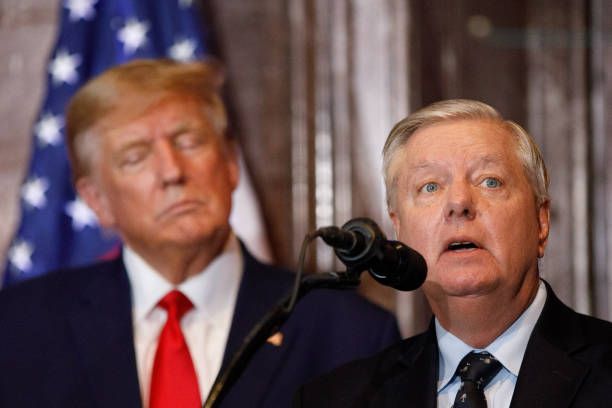
After holding a discussion with U.S. President Donald Trump, Senator Lindsey Graham said on June 29 that the U.S. president was ready for the Senate to vote on a bill to impose new sanctions on Russia.

Voting on the bill is expected to begin following the end of the July congressional break, Graham said.

"For the first time yesterday the president told me... he says, 'it's time to move your bill'," Graham said in an interview with ABC News, stressing that it would be Trump's purview as to whether the bill would ultimately be signed into law.

When asked if Graham expected Trump to sign the bill, the senator responded: "Yes, I think we're in good shape... But he has a waiver. It's up to him how to impose it."

Graham said he held the talk with Trump during a round of golf on June 28. No specific timeline was provided as to when the bill can be expected to be moved, although Congress is set to reconvene on July 9.

Signed by 84 co-sponsors, Senators Lindsey Graham (R-S.C.) and Richard Blumenthal (D-Conn.) have been working on a revised version of their bill that would impose secondary sanctions on Russian trading partners, while shielding Ukraine’s allies from penalties and making technical adjustments.

"So what does this bill do? If you're buying products from Russia and you're not helping Ukraine, then there's a 500 percent tariff on your products coming into the United States. India and China buy 70 percent of Putin's oil. They keep his war machine going," Graham explained.

Despite pressure, Trump has thus far refused to impose additional sanction against on his own accord. Amid discussion around the Senate bill, Trump has reportedly asked Graham to to soften his proposed sanctions, having previously postponed a vote on the bipartisan measure.

Amid the slow process of moving the proposed bill, Graham described the move as a "big breakthrough."

Ukraine has repeatedly urged the United States to impose additional sanctions on Russia as Moscow continues increase the frequency and magnitude of its attacks on Ukrainian cities.

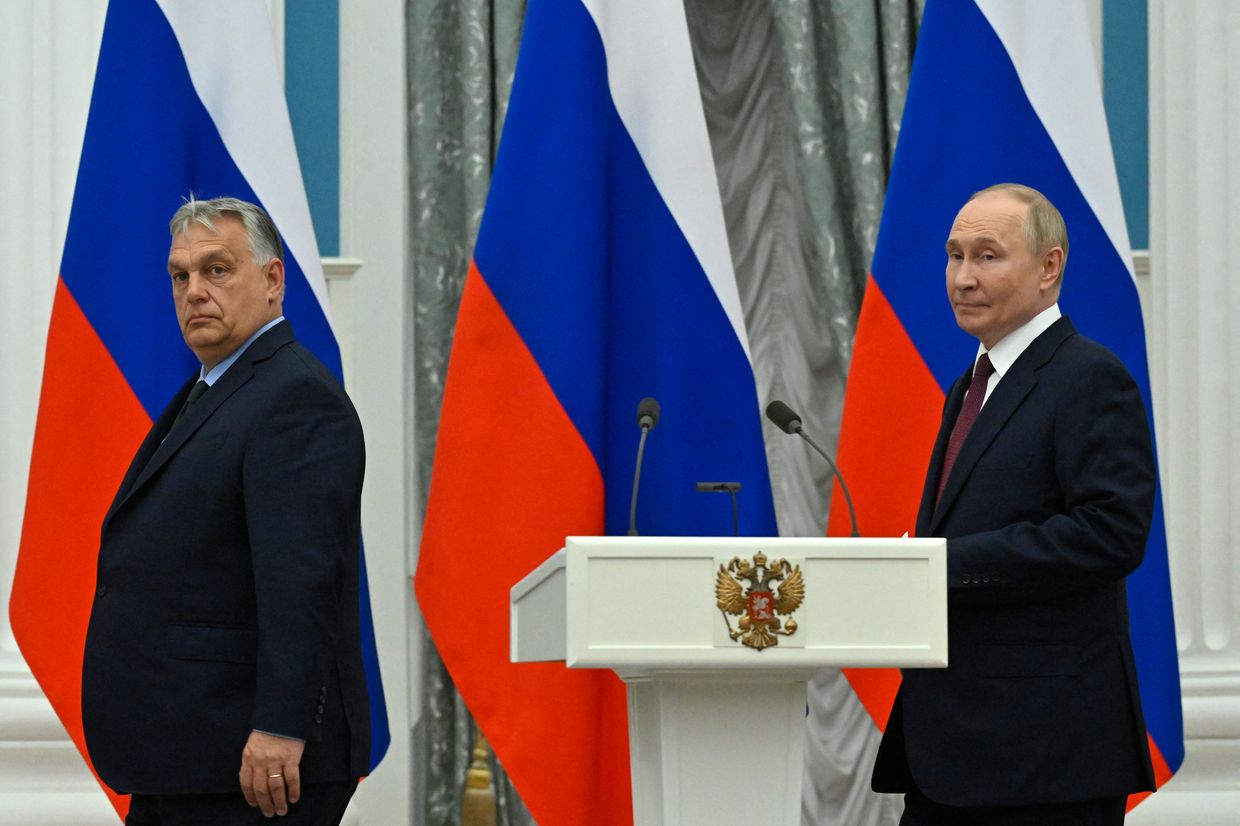
Graham's comments come just hours after Hungarian Foreign Minister Peter Szijjarto claimed that Washington lifted sanctions that hindered the expansion of the Paks Nuclear Power Plant, where Russia's state-owned energy company Rosatom is to build two new reactors.

Hungarian FM says US lifted Russian sanctions that hindered expansion of Paks Nuclear Power Plant
“Construction of the major pieces of equipment for the Paks nuclear plant is proceeding in Russia and France,” Foreign Minister Peter Szijjarto said, as cited by Bloomberg.
'It's time to move your bill' — Senator says Congress will soon vote on new Russian sanctions after talks with TrumpThe Kyiv IndependentThe Kyiv Independent news desk
'It's time to move your bill' — Senator says Congress will soon vote on new Russian sanctions after talks with Trump
  • ✇The Kyiv Independent
  • Hungarian FM says US lifted Russian sanctions that hindered expansion of Paks Nuclear Power Plant
    Hungarian Foreign Minister Peter Szijjarto said on June 29 that Washington has lifted sanctions that hindered the expansion of the Paks Nuclear Power Plant, where Russia's state-owned energy company Rosatom is to build two new reactors."Construction of the major pieces of equipment for the Paks nuclear plant is proceeding in Russia and France," Szijjarto said, as cited by Bloomberg."On-site in Paks, construction can now proceed at a faster pace."The expansion project, which has endured significa
     

Hungarian FM says US lifted Russian sanctions that hindered expansion of Paks Nuclear Power Plant

29 juin 2025 à 08:11
Hungarian FM says US lifted Russian sanctions that hindered expansion of Paks Nuclear Power Plant

Hungarian Foreign Minister Peter Szijjarto said on June 29 that Washington has lifted sanctions that hindered the expansion of the Paks Nuclear Power Plant, where Russia's state-owned energy company Rosatom is to build two new reactors.

"Construction of the major pieces of equipment for the Paks nuclear plant is proceeding in Russia and France," Szijjarto said, as cited by Bloomberg.

"On-site in Paks, construction can now proceed at a faster pace."

The expansion project, which has endured significant delays, is led by Rosatom and will add to the four active reactors.

The anti-Russian sanctions were imposed by former U.S. President Joe Biden's administration. The U.S. has not reacted to Szijjarto's comments so far.

Since returning to the Oval Office in 2025, U.S. President Donald Trump has tried to push Russia and Ukraine into peace talks to end the war at all costs and has not yet imposed additional sanctions on Russia for its ongoing war against Ukraine.

Meanwhile, Russia has found loopholes to circumvent sanctions, such as using its shadow fleet or relying on other financial mechanisms.

Hungary's Energy Minister Csaba Lantos said in 2023 that he expects the Paks II to be finished in 2032.

Vladyslav Vlasiuk, the Ukrainian president's commissioner for sanctions, said the situation with the expansion of the nuclear plant is "much more complicated." He accused the Hungarian foreign minister of "manipulation."

Vlasiuk explained in a Facebook post that Paks faces a sanctions exemption from the EU. The U.S. has not lifted the sanctions, though there is a new licence that offers the possibility of conducting transactions related to civilian nuclear energy that began prior to November 2024.

EU fails to adopt new Russia sanctions due to Hungarian, Slovak opposition, source says
Unlike Ukraine-skeptic Hungarian Prime Minister Viktor Orban, Slovakia has not previously attempted to block EU sanctions.
Hungarian FM says US lifted Russian sanctions that hindered expansion of Paks Nuclear Power PlantThe Kyiv IndependentKateryna Hodunova
Hungarian FM says US lifted Russian sanctions that hindered expansion of Paks Nuclear Power Plant
  • ✇The Kyiv Independent
  • NATO allies surprised by Rubio's inconsistency on Russia sanctions, Politico reports
    United States Secretary of State Marco Rubio surprised NATO allies this week with conflicting messages on Russia sanctions, delivering a tougher stance in private than in his public remarks, Politico reported on June 25.Rubio met with NATO foreign ministers on June 25 during a private dinner at the alliance's annual summit. According to sources who spoke with Politico, Rubio acknowledged that Russia was the main obstacle preventing peace talks to end the war in Ukraine.He reportedly said the U.S
     

NATO allies surprised by Rubio's inconsistency on Russia sanctions, Politico reports

25 juin 2025 à 18:37
NATO allies surprised by Rubio's inconsistency on Russia sanctions, Politico reports

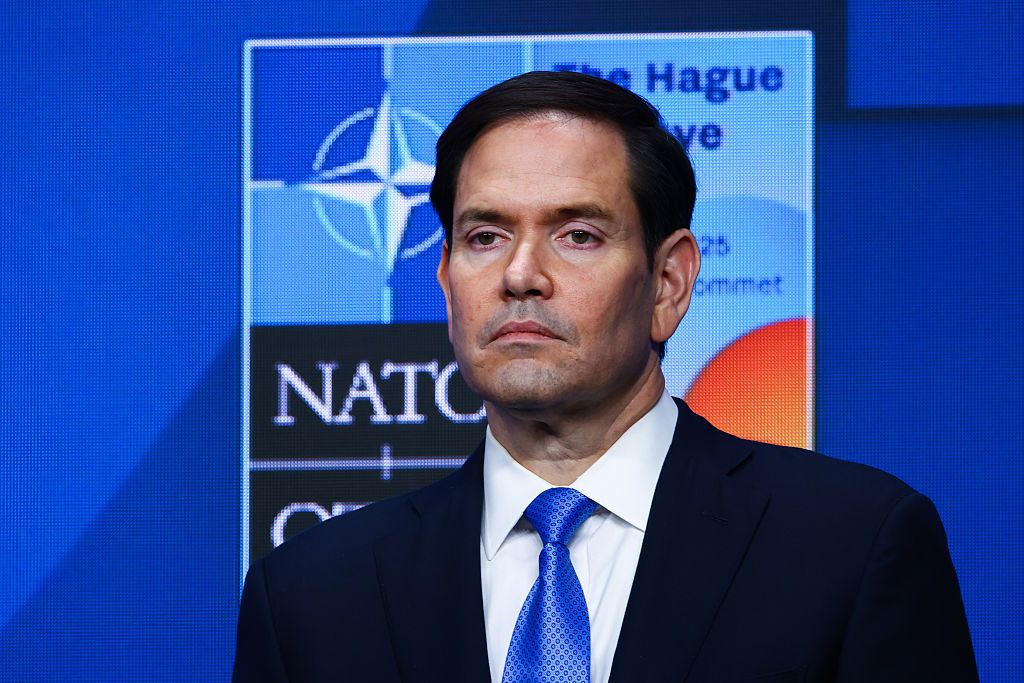
United States Secretary of State Marco Rubio surprised NATO allies this week with conflicting messages on Russia sanctions, delivering a tougher stance in private than in his public remarks, Politico reported on June 25.

Rubio met with NATO foreign ministers on June 25 during a private dinner at the alliance's annual summit. According to sources who spoke with Politico, Rubio acknowledged that Russia was the main obstacle preventing peace talks to end the war in Ukraine.

He reportedly said the U.S. Senate would likely consider new sanctions legislation after completing work on President Donald Trump's spending bill.

However, just hours later, Rubio softened his position on Russia during an exclusive interview with Politico, calling for a more cautious approach.

"If we did what everybody here wants us to do, and that is come in and crush them with more sanctions, we probably lose our ability to talk to them about the ceasefire and then who's talking to them?" Rubio said.

Putin insists the Russian economy is fine, but Kremlin officials say otherwise
In a rare public sign that all is not well in Russia, two high-ranking Moscow officials last week issued separate warnings about the state of the country’s economy. Russian Central Bank Governor Elvira Nabiullina and Economy Minister Maxim Reshetnikov both highlighted that amid the Kremlin’s full-scale war against Ukraine, the tools Moscow once relied on to maintain wartime growth are nearly exhausted. Almost immediately, Russian President Vladimir Putin on June 20 dismissed the concerns, clai
NATO allies surprised by Rubio's inconsistency on Russia sanctions, Politico reportsThe Kyiv IndependentTim Zadorozhnyy
NATO allies surprised by Rubio's inconsistency on Russia sanctions, Politico reports

He also added that Trump would know the "time and place" to change course.

When asked about the apparent shift in tone, a senior U.S. official insisted Rubio's messaging has remained consistent in conversations with allies.

"The secretary has been very consistent in meeting and calls with his counterparts on three key point," the official said.

"One is that the president believes strongly that the only way this war ends is through negotiations; second, as soon as the U.S. imposes new sanctions on Russia the opportunity for the U.S. to be involved in those negotiations closes; and third, that the Senate, in America anyway, is an independent body that at some point is going to move on those sanctions,."

At the NATO dinner, Rubio reportedly faced criticism from Polish Foreign Minister Radoslaw Sikorski, who claimed that Russian President Vladimir Putin was disrespecting Trump by violating the ceasefire.

It has been more than 100 days since Ukraine agreed to a U.S.-backed complete ceasefire, while Russia continues to reject it.

Sikorski also reportedly denounced Moscow's repeated attacks on Kyiv and other Ukrainian cities, which have intensified in recent weeks, saying such strikes "should not come for free" — implying that the U.S. and Europe should do more to support Ukraine.

Meanwhile, Rubio has delivered different messages in public and behind closed doors. Despite the shifting rhetoric, Baltic and Nordic countries reportedly view him as a pragmatic ally within the Trump administration — one who has a realistic understanding of the threats posed by Russia and China, according to a second European official cited by POLITICO.

Ukraine war latest: US signals more Patriot missiles for Kyiv after Zelensky-Trump talks at NATO summit
Key developments on June 25: * Zelensky, Trump hold talks on NATO summit sidelines * ‘Something unknown’ hits key Russian drone facility in Taganrog, Ukrainian official says * Russia has launched over 28,000 Shahed drones at Ukraine since 2022, with nearly 10% fired in June alone, Zelensky says * Donetsk Oblast city “on
NATO allies surprised by Rubio's inconsistency on Russia sanctions, Politico reportsThe Kyiv IndependentThe Kyiv Independent news desk
NATO allies surprised by Rubio's inconsistency on Russia sanctions, Politico reports
❌