❌

Vue normale

Hours after Trump declared an energy ceasefire, Russia hit Kharkiv power plant, one of 200-plus strikes on Ukraine’s grid this week, Zelenskyy says
11 octobre 2026 à 13:21

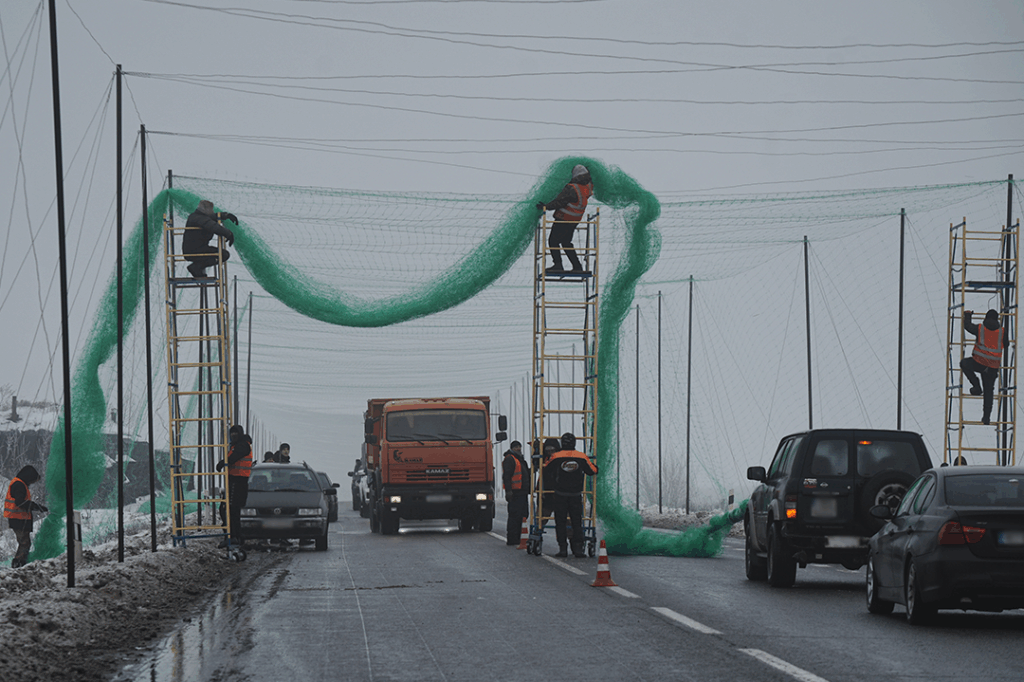
fishing nets used mediterranean millennia — now italy wants turn drone shields over ukrainian cities · post workers install anti-drone ring road northern outskirts kharkiv 2026 6ea9c925f4eb5b85 italy's senate has

Russia hit the CHP-5 thermal plant in Kharkiv on the evening of 11 October. It came hours after US President Donald Trump announced an energy ceasefire between Ukraine and Russia, President Volodymyr Zelenskyy said in his nightly address.

Trump had announced the energy truce earlier that day, though Kyiv reported no part in any such deal, as well as Moscow. Yet in this one week, Russia carried out more than 200 strikes on Ukraine’s power generation and transmission and 17 on its gas and oil sites, killing more than 150 people and wounding more than 700, according to Zelenskyy.

“All day today, there were Russian Shaheds in the sky. There are Shaheds in the sky now, too. There were strikes by aerial bombs. There were strikes on our energy. Just now there was a strike on CHP-5 in Kharkiv,” Zelenskyy states.

Ukraine welcomes the agreement Trump announced and is ready to stop striking Russian energy if Russia does the same. For that to mean anything, he stresses, it has to become part of reality.

A one-word answer from Moscow

Ukraine has offered many de-escalation steps, Zelenskyy notes, but Russian ruler Vladimir Putin met them all with the same refusal. He voices hope that the Russian leader would finally tell the US, Ukraine, and the world something other than killing and deception, something that leads to a real and dignified peace.

Ukraine wants peace, and the question is whether Russia does. The Armed Forces have received all the relevant orders to defend the country, he confirms.

Allies line up fresh support

Zelenskyy says he also spoke with members of the US Congress and, the day before with the UK prime minister, French President Emmanuel Macron, and Norway’s prime minister, all of whom offered help.

Ukraine is also working with the EU on financing for its defense and budget stability, and preparing new steps on European integration.

Ukraine’s war leadership sets new electronic warfare tasks as Russia’s jet-powered drones slip past nearly half of its air defenses

6 octobre 2026 à 16:19

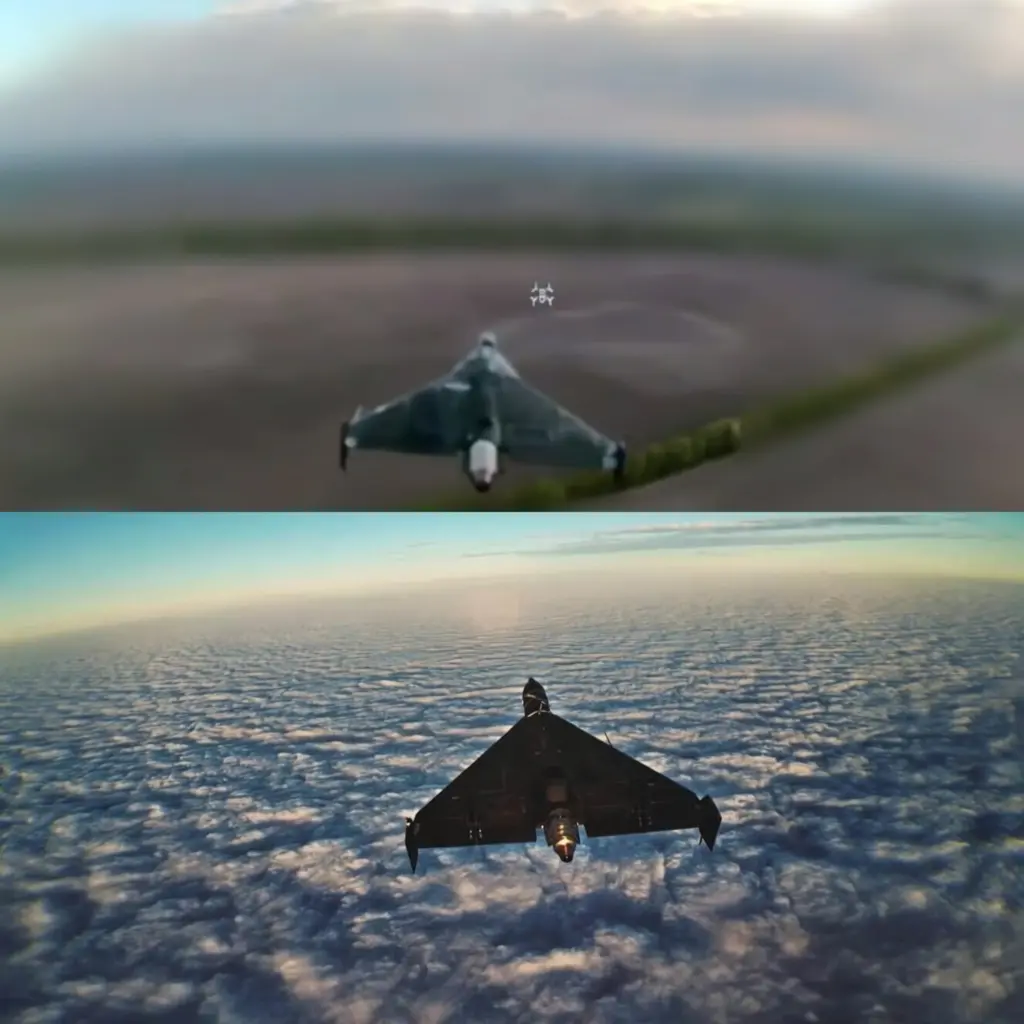
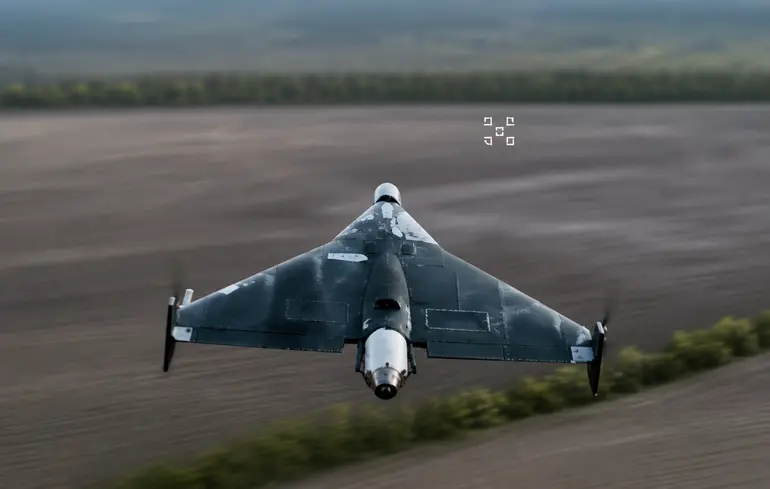
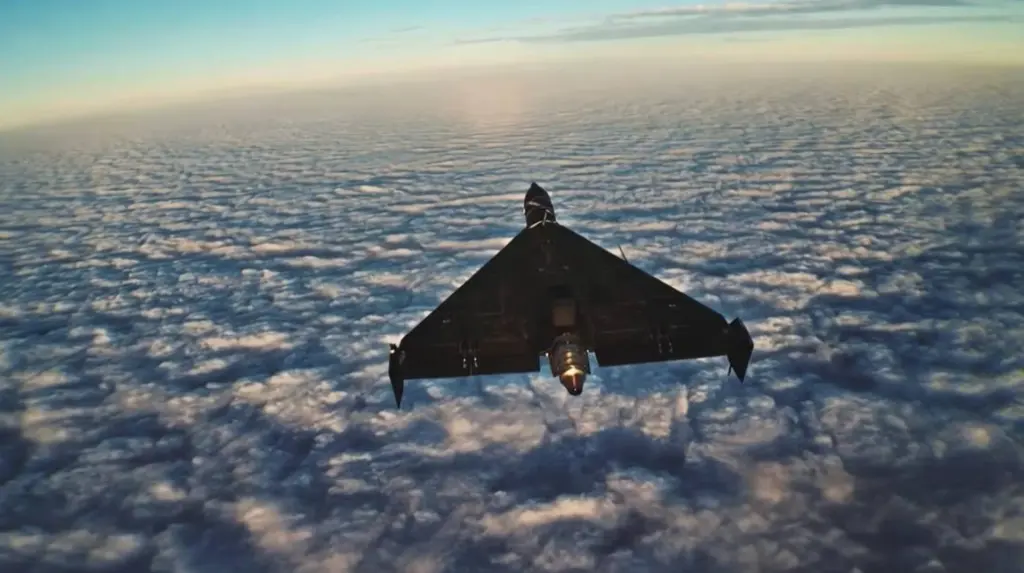
Geran-4" is an evolution of the earlier "Geran-3" model

Russia keeps upgrading its jet-powered drones, and Ukraine's electronic warfare is racing to keep up. Kyiv has set extra tasks for its military and manufacturers to scale up the most effective electronic warfare approaches, President Volodymyr Zelenskyy said after a meeting of the Supreme Commander-in-Chief's Staff on electronic warfare and infrastructure protection.

Russia keeps modifying its jet-powered Shaheds to beat each new Ukrainian defense, and Ukraine's answers have to keep pace. The race is tight: from 1 to 26 September, air defenses downed only 55 percent of the 2,730 new jet-powered drones, against 90% of the slower ones.

Hidden relays blunt Kyiv's jammers

Jamming has to improve because Russia keeps finding new ways around it. On 3 October, presidential adviser Serhii "Flash" Beskrestnov said someone had installed Russian MESH radio repeaters in Kyiv, a short control channel that guides Shahed drones onto their targets. As long as they are there, he said, closing the city with electronic warfare will not be effective.

"As long as online control of drones exists, not only the bridges but the air defense assets will be under threat," Flash stressed.

Sanctions aim at the supply chain

Beyond the jamming task, the Staff turned to where Russia gets the parts for those drones. Defense Intelligence reported on Russia's technological priorities for this year and next, and on supplies of critical components and equipment for its weapons production, Zelenskyy said.

New sanctions packages will follow, with Defense Intelligence due to send proposals to the Ukrainian government and the National Security and Defense Council, and Ukraine is working to align its sanctions with partners' jurisdictions.

The Staff also set the main tasks for supplying Ukrainian forces with long-range drones next year.

"The main criterion is that we must be able to respond in kind to Russian strikes," Zelenskyy emphasized.

Those parts, and the drones built from them, keep changing

In August, Intelligence Deputy Chief Vadym Skibitskyi said Russia remained fully dependent on Chinese turbojets for the Geran-4 and Geran-5, each costing about $35,000 to $40,000.

However, two months later, Ukraine reported the Geran-4 had received a locally built engine and a new optical navigation system. Kyiv has to stay attuned to changes to keep pace with the technology race, and so far, it is still trying to catch up rather than get ahead.

At ruined Donetsk’s airport, three Russians snap selfies and ready jet-powered Geran-4. Ukrainian drone slips in unseen and rams their launcher

6 octobre 2026 à 11:04

russia steers its long-range drones ground towers—kyiv says hit one occupied crimea · post russia’s new “geran-4 seeker” shahed variant uses machine-vision ai targeting geran 4 ukraine news ukrainian reports

Russian troops were taking selfies beside a jet-powered Shahed launcher when a Ukrainian drone hit them. A Ukrainian drone attacked a pickup truck converted to launch Russian Shahed drones in the Donetsk airport area while its crew prepared to fire a jet-powered Geran-4, according to video from the Cursed Empire drone unit of the 100th Separate Mechanized Brigade that volunteer Serhii Sternenko published on 6 October.

Three Russian soldiers struck a pose by their drone launcher near Donetsk airport

It was their last selfie. Ukrainian drones hit the crew moments later as they prepared to fire a jet-powered Geran-4
🎥 Serhii Sternenko pic.twitter.com/ri9bNztW5y

— Euromaidan Press (@EuromaidanPress) October 6, 2026

Russia launches Shahed drones, including jet-powered ones, from pickup trucks and fixed launchers, and the ruined Donetsk airport, about 50 kilometers from the front line, is one of its drone bases. In September, Oboronka outlet counted that in general, Russia has at least 63 launchers at its drone bases, which are built to survive strikes.

The video shows three carefree Russian soldiers next to a pickup fitted with a launch frame.

"That was their last photo shoot," Sternenko noted, commenting on the hit on the soldiers.

The primary target

Earlier, an officer of the 1st Separate Center of the Unmanned Systems Forces, call sign “Falco,” explained that the primary goal of strikes on drone bases is to disrupt Russia's ability to launch drones.

This is done by destroying launchers and storage facilities, as well as creating an aerial threat over the drone base. Such attacks can delay drone launches indefinitely, while the destruction of infrastructure can reduce the overall number of drones launched.

But the "jewel" of anti-drone port operations is the military staff

Although these facilities are important targets, the Unmanned Systems Forces have another priority: drone operators.

“The most difficult and, at the same time, the most valuable target is the operator. They don’t stay near the launchers for long,” Falco said.

By taking out drone operators, Ukraine inflicts losses on a scarce resource. There are already relatively few of them, and Russia will have to spend additional money and time training new crews.

From making interceptors to guarding sky: Ukrainian drone maker gets its own private air defense unit and will pay for it from weapon sales

5 octobre 2026 à 15:28

ukraine spent three years learning catch russian drones—so russia made fly faster · post geran-3 jet-powered attack drone wild hornets c1c840787fca380485636007cf683d71 news ukrainian reports

A Ukrainian drone maker just got its own air defense unit, and says it has already downed Russian jet-powered drones. Ukraine's Defense Ministry has issued an order granting the Night Hornets, the anti-Shahed unit of interceptor maker Wild Hornets, the status of a private air defense, and the company announced it is starting to build its own network of remotely launched interceptor drones.

Russia has sharply increased its use of jet-powered Shahed drones, which cuts the reaction time of Ukraine's mobile fire groups from about a minute to as little as six seconds. Now, a private company joins the air defense line, while Ukrainian military intelligence says Russia is producing up to 500 Geran-4 and Geran-5 jet drones a month.

The planned network will combine remote-control centers, a grid of remote interceptor launches built on the company's Hornet Vision Ctrl technology, and field positions. Wild Hornets will not sell protection for individual sites and will pay for the unit from drone sales profit.

"The unit has more than 50 downed Shaheds to its name, including jet-powered ones. We create technologies that work. We use them ourselves to protect our country," the company says.

Air Force commanders will direct the crews

The crews already go on daily combat duty alongside the military and will take orders from the Air Force command. The unit draws on Wild Hornets instructors and test pilots, including veterans of the war and pilots who rose from beginners to instructors. The company wants to fold private air defense into the country's overall system, including over Kyiv.

Air alerts now swallow nearly a third of mall hours

Due to Russia's jet-powered drones, air-raid alerts covered 30.8 percent of shopping-center operating hours across Ukraine in September, a record, up from 22 percent in August and 14.1 percent a year earlier, the Ukrainian Council of Shopping Centers reports. The average mall has now lost 176.5 working days since the full-scale invasion, including 9.6 in September alone.

Kyiv shows the sharpest jump. The share of alert time during mall hours in the capital rose from 11.6 percent in August to 32.7 percent in September, the council said.

The damage reaches well beyond the malls. Ukraine's Economy Ministry expects losses from Russian strikes to reach up to $10 billion this year, Economy Minister Oleksandr Kravchenko said on 12 September.

  • ✇Euromaidan Press
  • Russia’s secret drone math: one Tatarstan plant could yield 28,000 more drone bodies a year
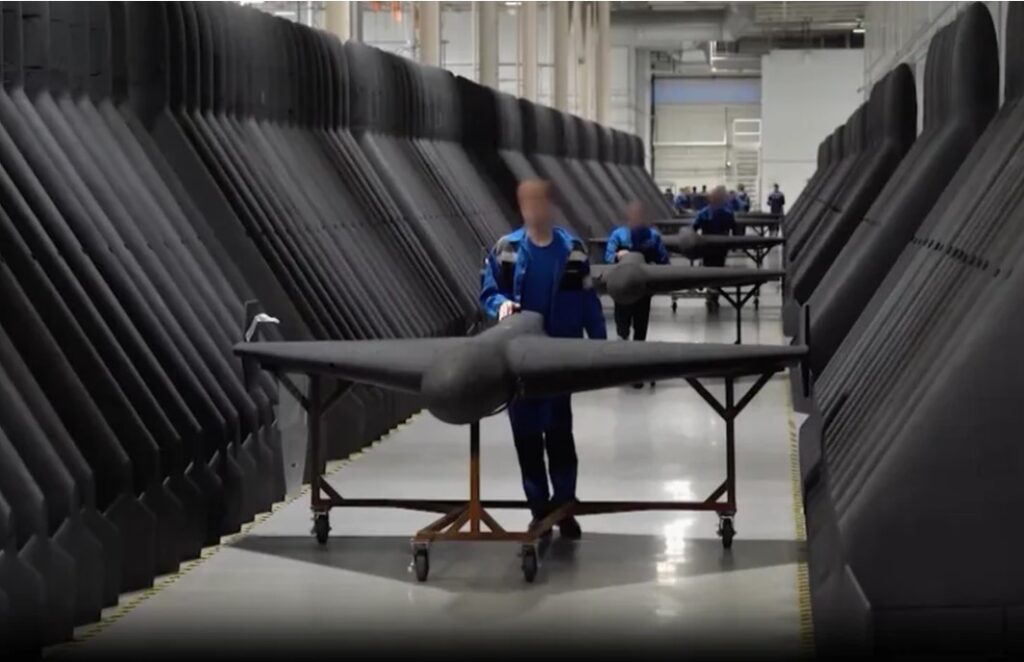
    Russia is quietly moving to expand the capacity of the plant behind its long-range attack drones, a step that could sharply raise how many it launches at Ukraine, according to Politico. The plan turns on a single carbon fiber factory in Russia's Tatarstan region and runs to the end of the decade. These files add something narrower than Russia's known intent to fight on: they identify carbon fiber as a critical material capping how many drones it can build. To break that cap, the Kremli
     

Russia’s secret drone math: one Tatarstan plant could yield 28,000 more drone bodies a year

21 septembre 2026 à 09:31

axios cuba has acquired over 300 russian iranian military drones · post russia's drone factory tatarstan shahed_plant alabuga video ukraine news ukrainian reports

Russia is quietly moving to expand the capacity of the plant behind its long-range attack drones, a step that could sharply raise how many it launches at Ukraine, according to Politico. The plan turns on a single carbon fiber factory in Russia's Tatarstan region and runs to the end of the decade.

These files add something narrower than Russia's known intent to fight on: they identify carbon fiber as a critical material capping how many drones it can build. To break that cap, the Kremlin is funding production lines that will not run until the decade's end—a bet on winning by out-building Ukraine, even as the strikes grind on.

The bottleneck Russia wants to break

Politico obtained internal documents from Russian state nuclear corporation Rosatom showing its Alabuga-Volokno plant would add 500 tons of military-grade aerospace carbon fiber a year by 2029. Rosatom declined to comment. Weapons expert David Albright, who heads the Institute for Science and International Security, estimated that volume could yield airframes for about 28,000 more attack drones a year—a 78% jump.

Ukraine already estimates Russia can build more than 36,000 Shahed/Geran kamikaze drones a year. Carbon fiber is the choke point: it keeps the airframes light and strong, and Russia has no cheap substitute.

"Without the carbon fiber, they can't make the drone. Can't substitute for the carbon fiber in the drone and keep its weight down," Albright said.

Moscow is investing in the raw material, not just more assembly halls—the fiber, not floor space, is what caps output.

Ground already cleared in Tatarstan

Documents gathered by the Ukrainian Security and Cooperation Center describe a new factory on the site designed to produce UMT42S-3K aerospace-grade fiber. Satellite images from May to July show land cleared for construction. Albright's own August imagery shows foundations going in. He said the stated 2027 completion date "requires rapid construction." Russia has spent the past year adding new assembly halls at the same site.

The plant and its parent, Rosatom's Umatex Group, already sit under US, UK, and other Western sanctions. The US House Select Committee on China and the Ukrainian government both verified the documents, officials told Politico.

The push comes as Russia leans harder on jet-powered Shaheds, which Ukraine's Air Force says are hard to down with conventional defenses. Kyiv has fielded its first jet interceptor and tested a new one in September—but the plant is a bid to out-build those defenses faster than Ukraine can scale them.

❌