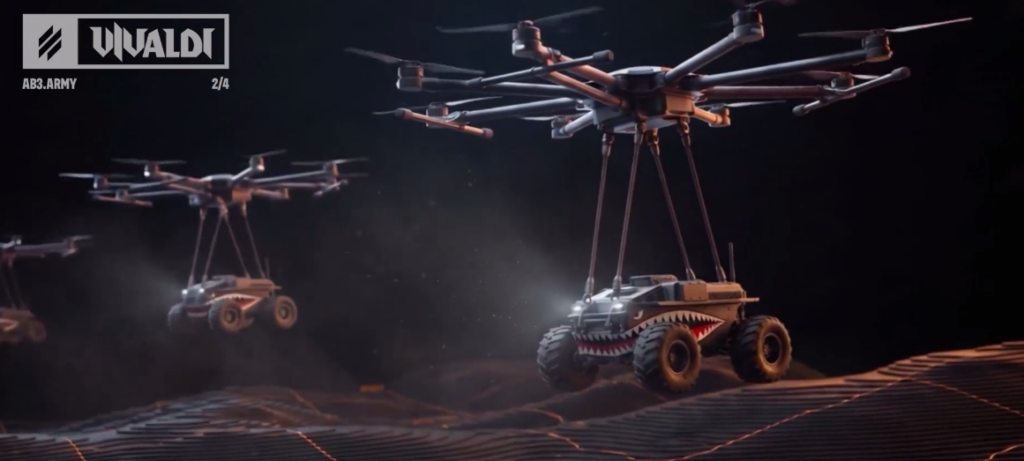
❌

Vue normale

Armored assaults aren’t dead. Robots got the credit, but it was Ukrainian infantry in armored trucks that reversed a year of Russian gains near Lyman

Par : David Axe
8 octobre 2026 à 18:11

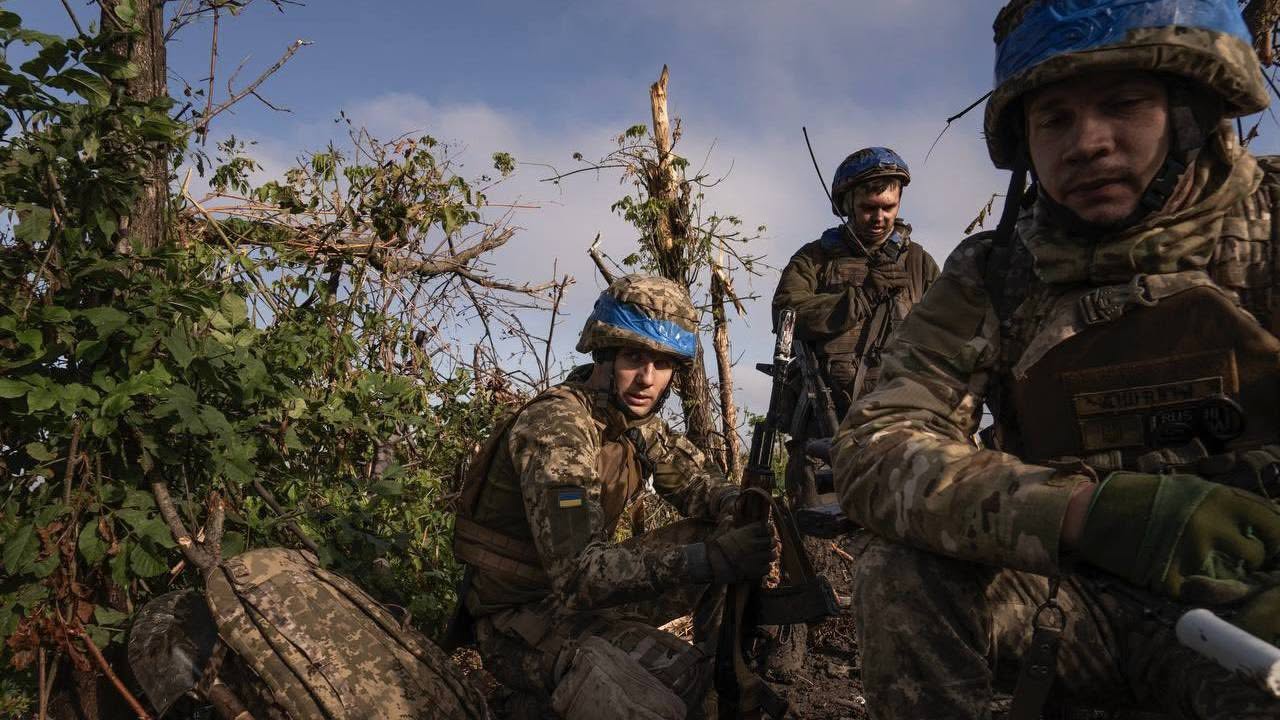
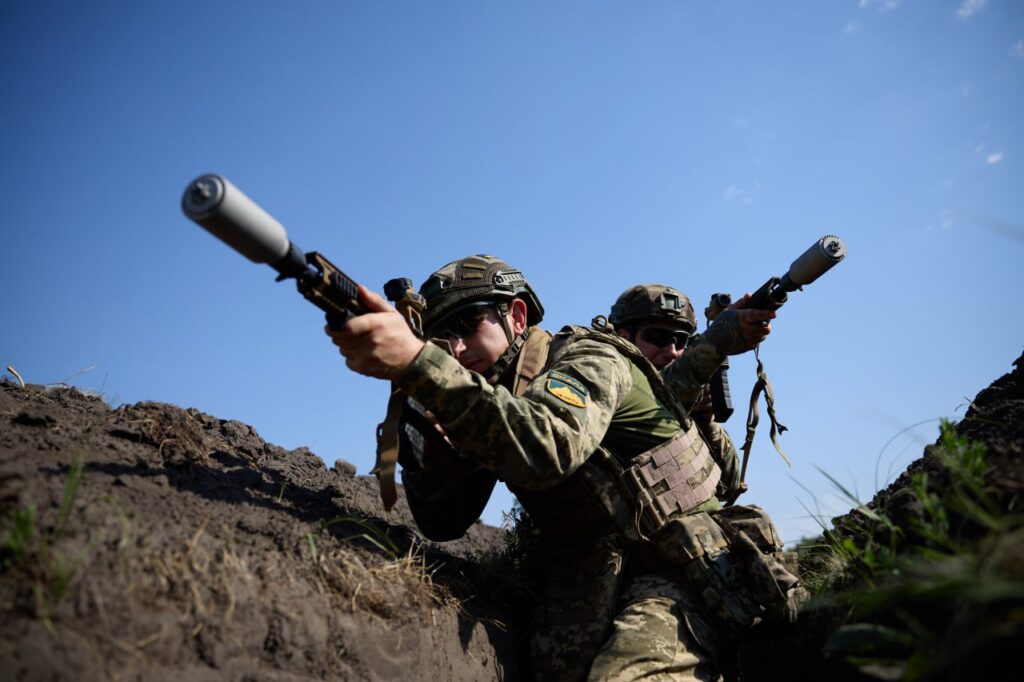
3rd Army Corps troops disembark from an armored vehicle.

  • Defying the trend toward footborne infantry assaults, the Ukrainian 3rd Army Corps deployed armored vehicles for Operation Vivaldi
  • The operation was a reminder that vehicles are still useful despite the ever-present danger from drones
  • But vehicles need a lot of support to give them a fighting chance

Armored vehicles aren't dead in Ukraine—they just need a lot of help. That's one of the biggest lessons from the Ukrainian 3rd Army Corps' Operation Vivaldi, its recent successful counteroffensive just north of the town of Lyman in eastern Ukraine's Donetsk Oblast.

Russia spent 18 months building its salient toward Sloviansk; Ukraine took much of it back in three. By 30 September, three of four planned phases in, the operation had returned 176 sq km to Ukrainian control, taken 250 Russian prisoners, and cost Russia more than 5,000 killed and wounded, Ukraine's presidential office said. It also foiled a Russian plan to break into the rear of the Sloviansk-Kramatorsk urban area, the office said.

Defying critics who insisted vehicles couldn't possibly survive in the drone-patrolled gray zone, the 3rd Army Corps repeatedly deployed mechanized forces as it counterattacked across a roughly 100 sq km salient the Russian 20th and 25th Combined Arms Armies had extended toward Sloviansk, one of the last two big free cities in Donetsk Oblast.

Maneuvering for months under a veil of secrecy, the 3rd Army Corps found and exploited gaps along the flanks of the 20th and 25th CAAs, ultimately breaking into the Russian armies' rears and forcing them to pull back across the Zherebets River in order to avoid encirclement.

Armored vehicles were key to the Ukrainian effort. They sped assault troops into battle, dropped them off under fire, and then supported them as they clashed with the Russians. "Maneuver warfare isn't going anywhere," stated Ryan O'Leary, a US Army veteran who once commanded volunteers in Ukraine.
475th Assault Regiment tanks under drone escort.
Explore further

Ukraine is now sending its tanks into battle with drone escorts: they can drive into a Russian kill zone and come back alive

3rd Army Corps commanders knew they were taking a risk deploying armored vehicles in a Russian-controlled salient patrolled by first-person-view drones from Russia's elite Rubicon Center drone unit. But they clearly believed that, with adequate support, the vehicles could accomplish their missions—and survive.

They were right. A dramatic video shot by 3rd Army Corps troopers depicts the troopers disembarking from their armored trucks and rushing into the fight while small arms fire clatters all around them.

Given the intensity of the Russian fire, a mechanized assault "was the only real way to push positions in an effective manner to keep losses low as well as gain and hold momentum and aggression," O'Leary wrote. Walking into battle under the cover of trees might help the infantry avoid the attention of overhead drones, but it takes too long to sustain an aggressive assault, and it can be difficult to mass enough footborne infantry to overcome stiff enemy defenses.

"This is something that hasn't changed even with the advent of drone warfare coming of age," O'Leary added. "Suppression tactics and such have changed and now there is more than just indirect fires and counterassaults that you must be able to suppress and plan for."

But the concept of the infantry-carrying armored vehicle "isn't going anywhere," O'Leary stressed. "Especially when it takes a drone tens of minutes to get to target area, acquire target and hit the target. Right now, the front is extremely susceptible to maneuvering forces on assaults if it is planned right and executed properly."

The 3rd Army Corps' Operation Vivaldi is an excellent example of an operation that was planned right and executed properly—in ways that helped the corps' mechanized forces fight and survive.

New footage shows Ukrainian forces storming and clearing Russian positions during the "Vivaldi" counteroffensive in the Lyman direction. The assault was captured firsthand by Ukrainian soldiers using GoPro cameras. pic.twitter.com/qxyNHl0n3A

— Vijesti (@Vijesti11111) October 6, 2026

Careful preparation

The corps explained that it deployed footborne scouts to find the best paths for follow-on vehicular assaults—and subsequent medical evacuations. Scouts "conducted recon of the front lines, ensured the breakthrough of equipment and led adjacent units along secret paths while evacuating the wounded," the 3rd Army Corps stated.

Ukraine liberates area above Lyman in Operation Vivaldi. Map: Euromaidan Press

Before the armored vehicles rolled into action along the pre-scouted paths, the 3rd Army Corps deployed robotic engineering vehicles to clear Russian mines. After that, the corps sent in old BTR-60 wheeled armored vehicles modified for remote control and packed with anti-tank mines. These "robotic kamikaze complexes ... were used to demolish the enemy's strongest fortifications," the corps said.

Only after the assault routes were scouted and cleared of mines and Russian strongpoints did the manned vehicles and their precious infantry cargo roll out. We don't know how many losses the 3rd Army Corps' mechanized infantry suffered on the attack, but we do know they ultimately prevailed—when the battered Russian 20th and 25th CAAs retreated.
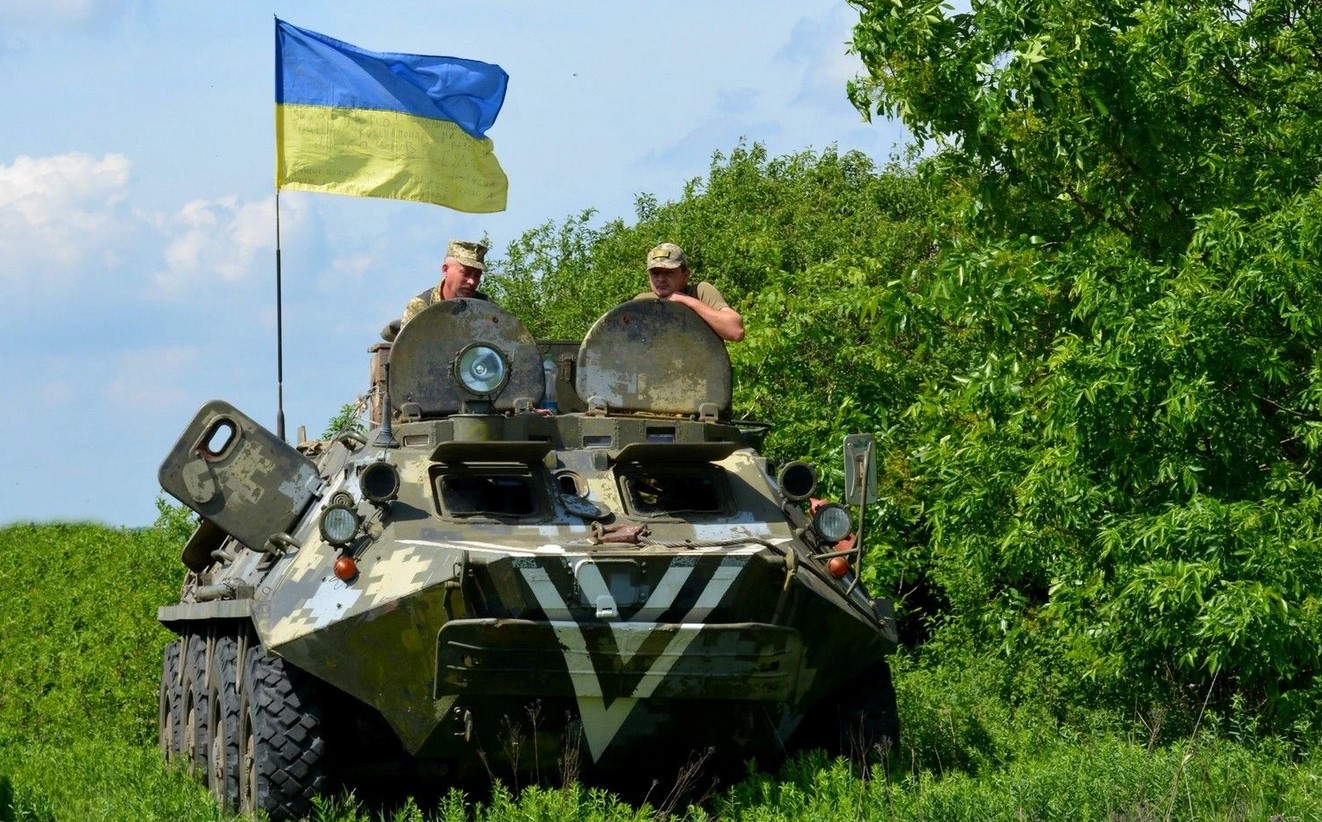
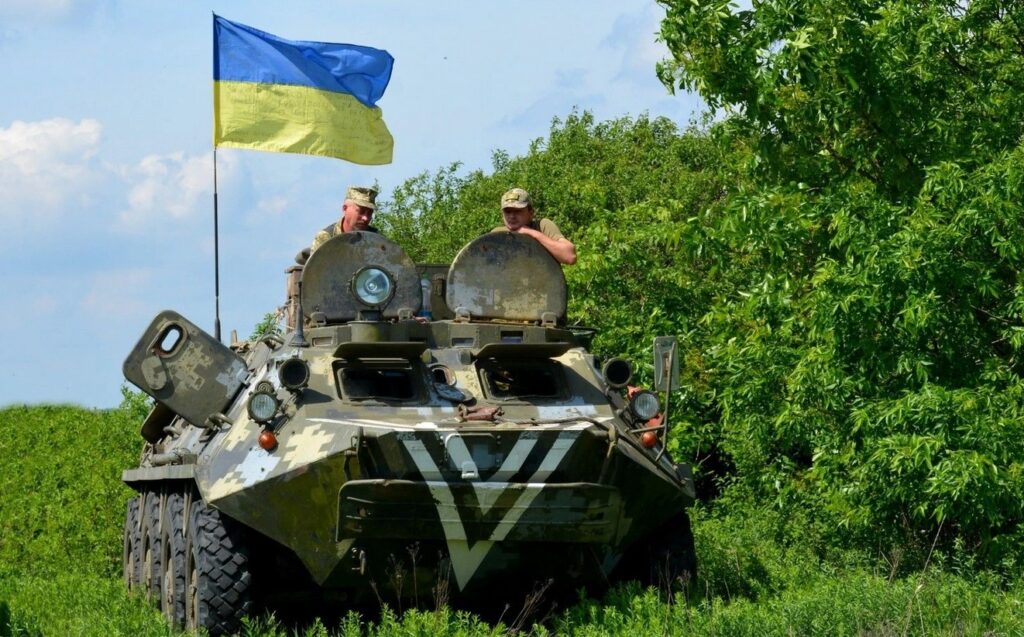
A BTR-60B. Source: Ukraine's Ministry of Defense.
Explore further

In Ukraine’s Vivaldi offensive, nobody rides in the BTR-60s. Bulgaria’s old troop carriers go into Russian bunkers packed with mines

"Recent Ukrainian operations demonstrate that maneuver is not dead," stressed Mick Ryan, a retired Australian army general. "Despite the difficulty in ground operations maneuver observed in eastern Ukraine over the past few years, offensive operations are still possible in modern war. But they need the intellectual effort to develop new techniques to make them viable and repeatable at scale."

In addition to the reconnaissance and robots-first engineering and suppression tactics the 3rd Army Corps employed, Ryan recommended commanders deploy more drone-grounding electronic warfare and use AI tools to help plan attacks.

But ages-old human elements are still essential, Ryan wrote. "Developing viable methods for offensive tactical and operational maneuver in the 21st century also demands the inclusion of older ideas about the employment of mass, logistic support and casualty evacuation [and the] maintenance of morale and leader's provision of purpose to their people."

Even when the assault route is clear, it's understandably terrifying to ride in an armored vehicle across drone-patrolled terrain. But a good leader can motivate their troops to try.
In Ukraine’s Vivaldi offensive, nobody rides in the BTR-60s. Bulgaria’s old troop carriers go into Russian bunkers packed with mines

Par : David Axe
29 septembre 2026 à 12:11

A BTR-60B. Source: Ukraine's Ministry of Defense.

  • Bulgaria donated 110 BTR-60 armored personnel carriers, too thinly armored to carry infantry into a drone war
  • Ukraine's 3rd Army Corps fills them with anti-tank mines, drives them by remote control, and detonates them inside Russian bunkers
  • A jet with a glide bomb does the same job. It costs a hundred times more

Bulgaria gave Ukraine 110 BTR-60 armored personnel carriers. They are 1960s vehicles, too thinly armored to carry infantry anywhere near a front line patrolled by explosive drones. So Ukraine's 3rd Army Corps found another use for them during Operation Vivaldi, its counteroffensive north of Lyman. Fill one with anti-tank mines, rig it for remote control, drive it at a Russian bunker, and set it off.

Packing potentially dozens of TM-62 anti-tank mines, the speedy BTR-60s become what's called vehicle-borne improvised explosive devices, or VBIEDs. Once a favorite weapon of insurgents battling US forces in Iraq and Afghanistan, VBIEDs have found a new niche in Russia's wider war on Ukraine as unmanned demolition systems.

"To break through the enemy's defenses, the 3rd Army Corps employed its own invention, Soviet BTR-60s converted into robotic kamikaze complexes," the corps stated. "They were used to demolish the enemy's strongest fortifications." If an enemy strongpoint is too heavily protected to bomb from the air but exposed to attack from the ground, send in a VBIED.

Білецький: «Противник був введений в оману і проспав справжній удар»

Третій армійський корпус звільнив Нове, Рідкодуб і Катеринівку та відновив контроль над Карпівкою і Новомихайлівкою. Втрати противника — 2000 живою силою, понад 250 росіян захоплені в полон. Так закінчився… pic.twitter.com/GSV4LFG3gj

— Третій армійський корпус (@ab3army) September 28, 2026

The Russians were the first to deploy vehicular IEDs in the current war, but the Ukrainians may have mastered the tactic. It's one thing to rig an explosives-filled MT-LB tractor or T-55 tank to roll straight forward without direct human control, as the Russians once did. It's another to rig an explosive BTR-60 to maneuver before going off, as the 3rd Army Corps' VBIEDs clearly did.

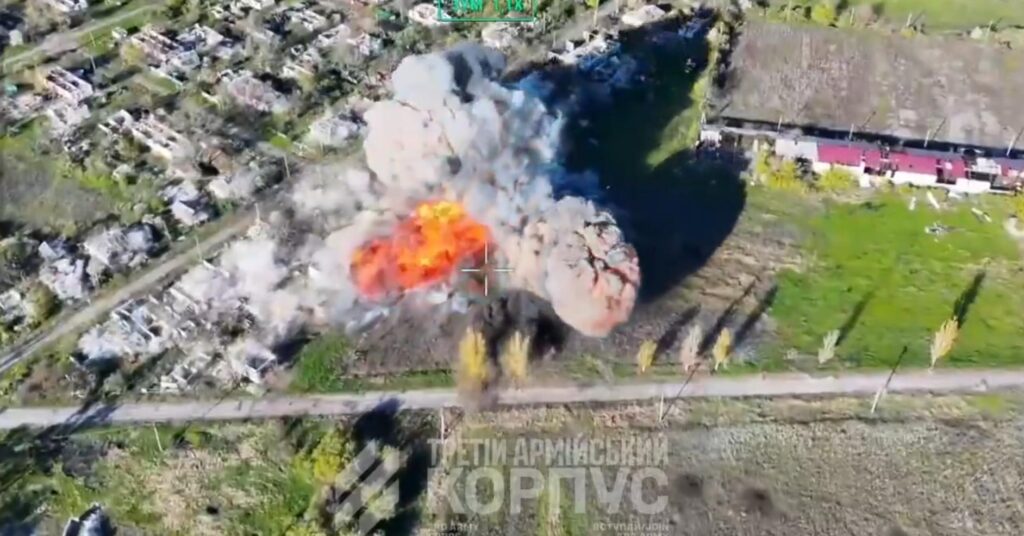
On 28 September, announcing the close of Vivaldi's third phase, the 3rd Army Corps released drone footage depicting one of the explosive BTRs blasting a Russian strongpoint north of the town of Lyman. The sheer scale of the explosion is testimony to the VBIED's destructive potential. And the trail the BTR leaves in the grass in the heavily edited video indicates the Ukrainians can steer their VBIEDs around obstacles and guide them to precision strikes.

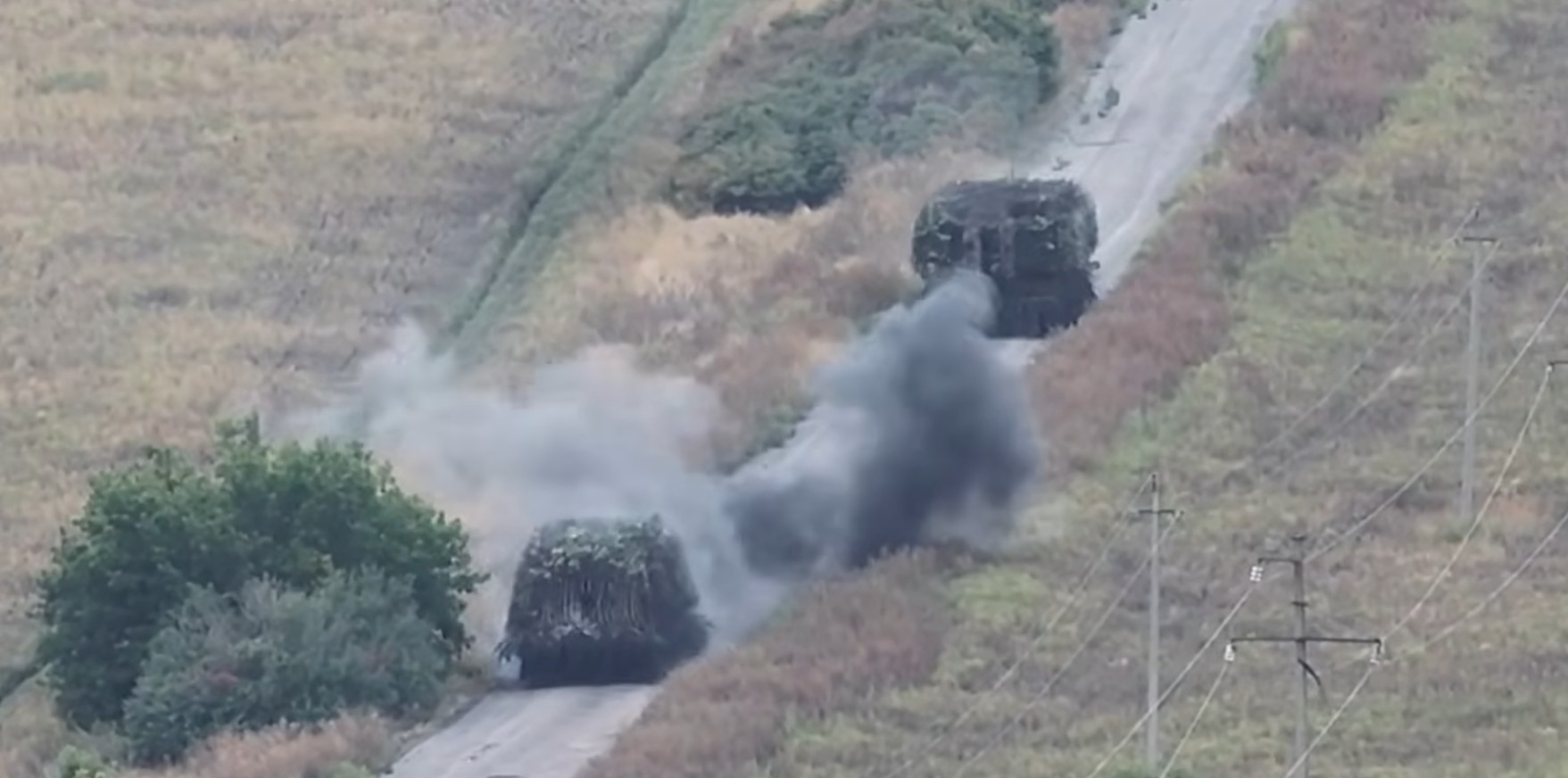
A BTR-60 converted into a vehicle-borne improvised explosive device detonating against a Russian position north of Lyman
A BTR-60 VBIED explodes. 3rd Army Corps capture.

Why it gets there

A slow wheeled vehicle crossing open ground toward a fortified position should not survive the trip. In most sectors it would not. What makes the tactic work north of Lyman is a condition the 3rd Army Corps built into Vivaldi before its assault groups moved: Ukrainian air defense and electronic warfare threw a protective dome over the battle area, blinding Russian drones so they could not read the operation's design or strike what was moving through it.

Ukraine liberates area above Lyman in Operation Vivaldi. Map: Euromaidan Press

Robots have played critical roles in each phase of Vivaldi. Surveillance drones have watched from overhead. One-way attack drones have pummeled Russian positions and supply lines. Heavy bomber drones have not only dropped bombs, they've also airlifted explosive unmanned ground vehicles into position so the UGVs can roll right through the front doors of Russian bunkers.

The self-exploding BTR-60s are too big to airlift, but that's the point. A small UGV might carry a few tens of kilograms of explosives. A remote-controlled BTR-60 can easily haul hundreds of kilograms.

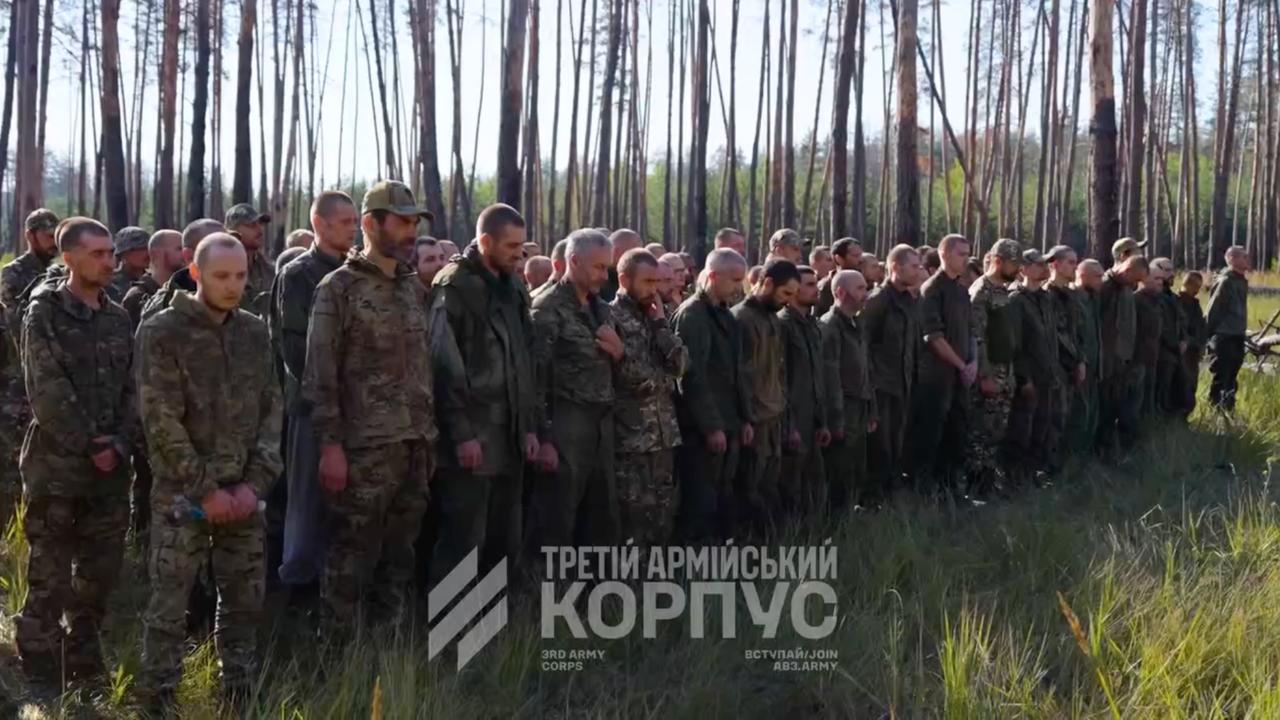
The image shows Russian prisoners of war on the Lyman direction. Source: The 3rd Army Corps
Explore further

Ukraine outfoxes Russia near Donetsk’s fortress belt with Soviet BTR-60s rebuilt as kamikaze robots, storms a key hub and takes 250 Russian prisoners

The arithmetic

It's not impossible to take out a VBIED before it strikes, of course. Mines, anti-tank missiles, and even concentrated gunfire can stop a vehicular bomb in its tracks. But losing one of the aged BTR-60s costs Ukraine very little. The vehicles are too thinly armored for use as front-line infantry transports anyway. You might as well convert them into bombs.

That is the whole case for the tactic. A manned fighter jet lobbing a precision glide bomb is the preferred approach to bunker-busting. But it costs tens of thousands of dollars an hour to keep a jet in the air, and a single glide bomb can cost tens of thousands or even hundreds of thousands of dollars. It's unclear how much it costs to convert a BTR into a VBIED. It could be just a few thousand.

And it reduces Russian fortifications without risking any Ukrainian lives. That's the philosophy underpinning all of the 3rd Army Corps' robot-first tactics. "This is exactly the direction of the corps' development set by Brig. Gen. Andrii Biletskyi," the corps stated, "to reduce the number of fighters in the most dangerous areas and replace them with robots."

Vivaldi began in mid-April under an information blackout that held for five months. The corps says it has regained control of 176 sq km across three of a planned four phases, around half of that de-occupied outright, and taken more than 250 Russian prisoners. Those figures are the corps' own and have not been independently verified.

Sometimes the robots doing that work are 60-year-old APCs modified for an explosive one-way mission.

3rd Army Corps troops.
Explore further

Ukraine retook 240 square km north of Lyman and nobody reported it for three months

  • ✇Euromaidan Press
  • Vivaldi counteroffensive advanced after Ukraine took Russia’s drones out of the fight, ISW assesses
    Ukraine likely neutralized Russia's drone defenses north of Lyman before sending armor into the third phase of its Vivaldi counteroffensive, the Institute for the Study of War (ISW) assessed. An intermediate-range strike campaign against Russian logistics and electronic warfare paved the way, the think tank said. Drones have made this front so deadly that armor now mostly fights from kilometers back. That is what makes Ukraine's armored push onto fortified positions near Lyman stand out
     

Vivaldi counteroffensive advanced after Ukraine took Russia’s drones out of the fight, ISW assesses

29 septembre 2026 à 06:50

vivaldi counteroffensive worked because ukraine took russia's drones out fight isw assesses · post settlements ukraine's 3rd army corps says liberated during operation north lyman donetsk oblast 28 2026 settlements-liberated-during-operation-vivaldi-phase-3-as-of-september-28-2026-scaled

Ukraine likely neutralized Russia's drone defenses north of Lyman before sending armor into the third phase of its Vivaldi counteroffensive, the Institute for the Study of War (ISW) assessed. An intermediate-range strike campaign against Russian logistics and electronic warfare paved the way, the think tank said.

Drones have made this front so deadly that armor now mostly fights from kilometers back. That is what makes Ukraine's armored push onto fortified positions near Lyman stand out. Russia has already shifted its effort south toward Sloviansk after losing the Lyman pincer.

Armor reached Russian bunkers without drawing drone strikes

To break the strongest Russian fortifications, Ukraine used old Soviet BTR-60 armored personnel carriers rebuilt as remote-controlled explosive vehicles, the 3rd Army Corps says.

Ukrainian forces drove them up to heavy Russian fortifications without coming under Russian drone strikes, ISW noted. The think tank said this indicates Ukraine neutralized or otherwise negated Russia's drone defenses in the area.

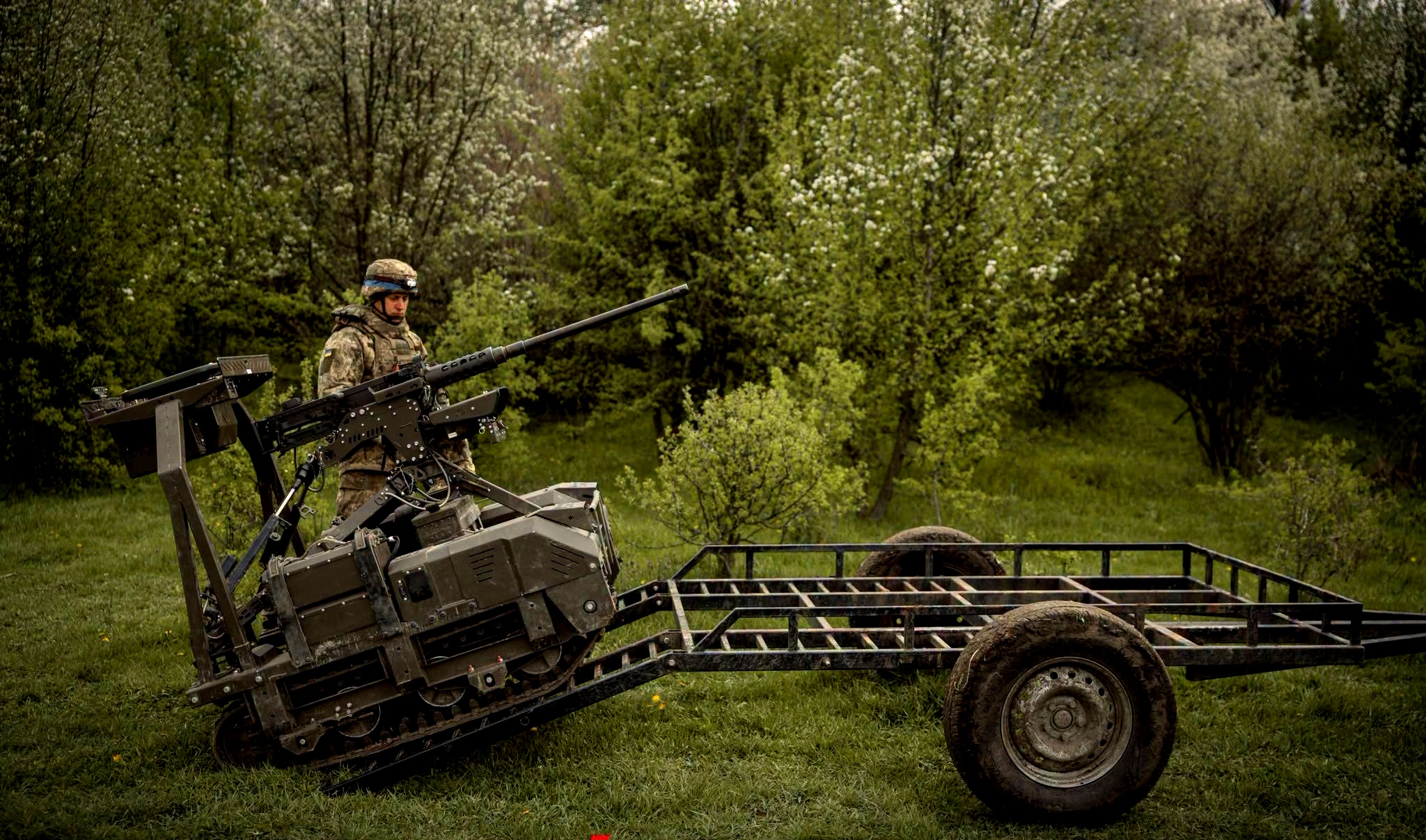
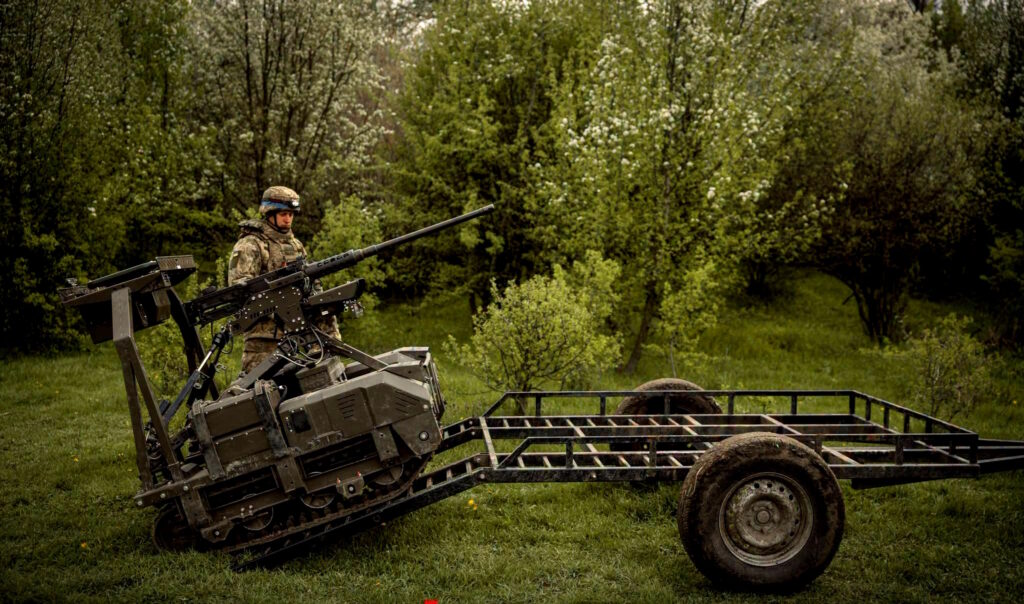
The image shows a Ukrainian soldier standing next to an unmanned ground robotic vehicle. Source: The General Staff
Explore further

New Vivaldi tactic: Ukraine’s ground robots, each carrying two Bullspike grenade launchers, attack Russian positions and then detonate inside their shelters

Strikes on fuel starved Russia's jammers

Ukraine achieved tactical drone overmatch through extensive shaping operations and an intermediate-range strike campaign, ISW said. Those strikes targeted the Russian drones and electronic warfare (EW) systems that would otherwise have hunted the advancing vehicles.

The 3rd Army Corps reported on 17 September that strikes on Russian logistics in occupied Luhansk Oblast had degraded Russian fuel supplies to the front, ISW wrote that day. The corps said that strained Russia's ability to use drones and EW against Ukrainian drones. EW systems consume a lot of power, and Russian troops run them on diesel generators, ISW explained.

Deputy corps commander Maksym Zhorin credited strict information silence and a "Protective Drone" system of EW assets, according to the same assessment. He said it helped neutralize around 20,000 Russian drones. The corps had earlier described mapping Russian command posts and striking them to sow panic.

ATESH partisan Footage of a fire on a relay cabinet at the Bataysk railway junction, near Rostov-On-Don, Russia, 21 December 2025. Screenshot from video: ATESH
Explore further

Ukraine’s Vivaldi counteroffensive near Lyman just got help from behind Russian lines: partisans say they cut rail supply to three Russian regiments, no explosion needed

Five settlements and 2,000 Russian losses

The corps liberated Nove, Ridkodub, and Katerynivka and restored control over Karpivka and Novomykhailivka, it said on 28 September. The phase added 51 km², bringing the total since the offensive began to 176 km².

Russian losses reached 2,000 personnel, and more than 250 Russians were taken prisoner, according to the corps. Corps commander Andrii Biletskyi said a feint from Shandryholove toward Zelena Dolyna drew Russian reserves away from the real target, Nove.

The first two phases had reportedly cleared more than 125 km² north of Lyman.

Ukraine outfoxes Russia near Donetsk’s fortress belt with Soviet BTR-60s rebuilt as kamikaze robots, storms a key hub and takes 250 Russian prisoners

28 septembre 2026 à 06:40

The image shows Russian prisoners of war on the Lyman direction. Source: The 3rd Army Corps

Ukraine's 3rd Army Corps has defeated Russia at the key settlement of Nove in Donetsk Oblast by pointing it the wrong way. Russia has poured its reserves into counterattacks on a feint axis and "slept through" the real strike, which took the important hub in the village and closed the decisive third season of the Vivaldi offensive, commander Andrii Biletskyi said.

Vivaldi is Ukraine's counteroffensive aimed at disrupting Russian forces' plans to encircle the fortress-belt cities in Donetsk Oblast from the north and south. Among them are Sloviansk, Kramatorsk, Druzhkivka, and Kostiantynivka. These cities have helped hold back Russian forces since 2014.

Over its first two "seasons," the 3rd Army Corps and attached units have retaken more than 125 square kilometers, half of it de-occupied outright, and inflicted more than 3,000 casualties on Russian forces.

The operation in Nove was its "third season," Biletskyi said, the turning point of the whole operation. The corps liberated Nove, Ridkodub, and Katerynivka and restored control of Karpivka and Novomykhailivka, adding 51 square kilometers, bringing the total liberated since the offensive began to 176. Ukrainian forces have taken 250 Russians captive.

The feint drew Russia's reserves

The victory, by Biletskyi's account, was won by deception.

"The enemy was convinced the main direction of the strike was Shandryholove–Zelena Dolyna," he revealed, and it burned its reserves counterattacking there.

He added that the Russians slept through the real strike, which was concentrated on taking Nove. The village was the prize, a key Russian hub on the bridgehead, ringed by heights that command the surrounding ground.

"Who controls the heights holds the initiative," Biletskyi said.

By spending its reserves on the wrong axis, he suggested, Russia had little left to hold Nove when the real assault arrived.

Old APCs crack the defense

To break the strongest fortifications, the corps said, it used a homemade weapon: Soviet BTR-60 armored carriers converted into remote-controlled kamikaze robots, driven into Russia's toughest positions and detonated.

In 2024, the Ukrainian forces received another local upgrade of the post-Soviet BTR-60 wheeled armored personnel carrier. This time it was fitted with the BM-7 "Parus" turret, known from the BTR-4 "Bucephalus" The main armament consisted of a 30 mm ZTM-1 automatic cannon paired with a 7.62 mm KT-7.62 universal machine gun.

Additional armament might include a set of four anti-tank guided missile launchers mounted on the sides, or two launchers and a 30 mm KBA-117 automatic grenade launcher. As a result, this upgraded BTR-60 saw a significant improvement in firepower, although the vehicle still has very weak armor and less-than-optimal access to the troop compartment.

It was the latest of the corps' robotic improvisations in Vivaldi, which have included air-dropped ground drones and Bullspike grenade-launcher-armed UGVs. They are Bulgarian hand-held, rocket-propelled anti-tank grenade launchers based on the Soviet RPG-22, which the Bulgarian defense industry previously produced under license.

The corps has leaned on such machines throughout the operation to keep its infantry out of the deadliest fights.

Whole units surrender

As the defense broke down, Russians gave up in groups, including officers, pilots, and artillery soldiers, the corps said. The 3rd Assault Brigade carried much of the fighting, while the 3rd Border Guard Detachment, named for the fallen Colonel Yevhen Pikus, retook Ridkodub and dug in on the new line, with the 10th Mobile Border Guard Detachment "DOZOR" taking an active part in the assault.

New Vivaldi tactic: Ukraine’s ground robots, each carrying two Bullspike grenade launchers, attack Russian positions and then detonate inside their shelters

27 septembre 2026 à 10:43

The image shows a Ukrainian soldier standing next to an unmanned ground robotic vehicle. Source: The General Staff

Ukraine has employed a new tactic during its major Operation Vivaldi in Donetsk Oblast. During the 3rd Army Corps' offensive, fighters from the world's first experimental unit of unmanned ground-strike vehicles, "NC13", have upgraded their kamikaze ground drones with grenade launchers.

Vivaldi is the counteroffensive the corps is running near Lyman in northern Donetsk Oblast. Over its first two "seasons," the 3rd Army Corps and attached units have retaken more than 125 square kilometers, half of it de-occupied outright, and inflicted more than 3,000 casualties on Russian forces.

Through this offensive operation, the 3rd Army Corps, commanded by Brigadier General Andrii Biletsky, disrupted Russian forces' plans to encircle the fortress-belt cities in Donetsk Oblast from the north and south. Among them are Sloviansk, Kramatorsk, Druzhkivka, and Kostiantynivka. These cities have helped hold back Russian forces since 2014.

From intensive training to the world-first operations

The NC13 unit has been through Bakhmut, Avdiivka, and other of the toughest sections of the front.

Among its achievements: the world's first robotic assault carried out without infantry involvement, resulting in the capture of two Russian soldiers, a sabotage operation in the enemy's rear — blowing up a crossing and disrupting an offensive — using UGVs alone, and Ukraine's first fully robotic defense of a position for 45 days without involving infantry.

"No one in the history of warfare has used this kind of tactic before," the soldiers commented on the offensive.

The defenders say that a lack of combat experience is no barrier to joining the unit. Every recruit goes through an intensive training course led by experienced instructors.

Grenade launchers were developed based on the Soviet RPG-22

During the operation, UGVs equipped with two Bullspike grenade launchers attacked Russian positions, then detonated directly inside their shelters. The occupiers believed they were being attacked by an entire assault group. In reality, they were being torn apart by robots from the 3rd Assault Corps.

Ukrainian troops armed ground robots with grenade launchers and sent them to storm Russian positions during Operation Vivaldi near Lyman

The robots fired into Russian shelters at close range, then detonated inside them
🎥 3rd Army Corps, NC13 Unit pic.twitter.com/rjekIYxPbA

— Euromaidan Press (@EuromaidanPress) September 27, 2026

"Yes, the UGVs carry out three tasks at once: they strike, they exert psychological pressure, and they clear the position. And most importantly, this happens without risk to our infantry," the force says.

The Bullspike grenade launchers were developed based on the Soviet RPG-22 anti-tank grenade launcher, which was previously manufactured under license by a Bulgarian defense company.

According to data from the manufacturer's website, the Bullspike RPG has a maximum aimed firing range of 350 meters, a direct-fire range of 150 meters, and armor penetration of 400 mm, Militarnyi reports.

The total weight of the launch unit, together with the 72.5 mm PG-22 grenade, is 3.4 kg. The length of the launcher is 780 mm.

The manufacturer states that the Bullspike-AT round is designed to destroy tanks, self-propelled artillery, and other armored vehicles, as well as to target enemy personnel located in bunkers, field fortifications, and urban-type brick fortifications.

The robots were controlled by operators from a safe shelter dozens of kilometers from the line of contact.

Earlier, for the first time in the world's history, the 3rd Army Corps dropped ground robots behind Russian lines from the air. The soldiers behind the mission say their heavy drones delivered kamikaze unmanned ground vehicles more than 10 kilometers into the Russian rear during the "second season" of Operation Vivaldi, letting Ukrainian troops flank them and clear another 40 square kilometers.

Ukraine is saving Donetsk Oblast with world’s first-of-its-kind operation: Vivaldi counteroffensive drops robots directly from heavy bombers 10 kilometers behind Russian lines

21 septembre 2026 à 10:11

For the first time, Ukraine has dropped ground robots behind Russian lines from the air amid the Operation Vivaldi, protecting Ukraine's fortress cities in Donetsk Oblast. Source: The scheme by the 3rd Army Corps

For the first time, Ukraine has dropped ground robots behind Russian lines from the air. The 3rd Army Corps, behind the mission, says its heavy drones delivered kamikaze unmanned ground vehicles more than 10 kilometers into the Russian rear during the "second season" of Operation Vivaldi, letting Ukrainian troops flank them and clear another 40 square kilometers.

Vivaldi is the counteroffensive the corps is running near Lyman in northern Donetsk. Over its first two "seasons," the 3rd Army Corps and attached units have retaken more than 125 square kilometers, half of it de-occupied outright, and inflicted more than 3,000 casualties on Russian forces.

The operation, run under an information blackout for months, has also disrupted Russia's push and, the Institute for the Study of War found, its plan to encircle the fortified belt of Donetsk cities.

Brigadier General Andrii Biletskyi, corps commander, has said the operation, which he named after Vivaldi's Four Seasons, will run through four phases, and only two have been completed. The air-dropped robot is the newest report on how the corps fights.

Machines go first, infantry follows

The corps casts the tactic as a means of expending robots rather than people.

"In assault operations, drones and ground robots always go ahead of the infantry," Biletskyi says.

The 3rd Army Corps was the first in the world to begin air-dropping ground robotic systems. Our heavy bombers deliver kamikaze robots more than 10 kilometers into the Russian rear.

Wars are won by infantry, one of the corps' soldiers added, "but we protect ours, so the robots go to the enemy first."

A dome hides the assault

As the assault groups advanced amid the operation, Ukrainian air defense and electronic warfare threw a protective dome over the battle area, blinding Russian drones so they could not read the operation's design.

Meanwhile, artillery and strike drones hit command posts, communications nodes, logistics, crossings, and reserves, letting Ukrainian units dig in on the ground they had taken.

On the Lyman axis, the corps says it freed the villages of Shandryholove and Derylove and took control of Drobysheve, and that Vivaldi has kept Russia from shifting significant forces to the Kupiansk front.

Ukraine’s Vivaldi operation cleared 85 square kilometers near Lyman. A soldier who fought it says one thing was hardest of all

19 septembre 2026 à 11:22

The image shows a Ukrainian soldier standing next to an unmanned ground robotic vehicle. Source: The General Staff

A soldier of Artan, a special unit of Ukraine's Defense Intelligence, known by the callsign Derun, described the fighting during important Ukraine's Operation Vivaldi, according to Novyny.Live. He says the hardest part of Ukraine's counteroffensive in the northern part of Donetsk Oblast is prying Russian troops out of positions they have fortified so well that they see every approach coming.

Vivaldi is bigger than any one assault. It is the counteroffensive that the Third Army Corps is running near Lyman. The Institute for the Study of War says it has disrupted Russia's plan to encircle the fortified "Fortress Belt" of Donetsk cities, as the corps says its first phase cleared 75 square kilometers of Russian infiltrators and de-occupied another 10.

Dug-in Russians see every approach

The problem is Russia's preparation, when "the enemy has made his positions very well fortified," Derun said.

"The hardest is to knock him out of there, because when a position is competently prepared, they see everything," he explained.

A well-sited position lets the defenders watch the open ground an assault group has to cross, spot the attackers early, and fight them at a distance, which is the worst way for the attacker to come.

A lapse opens the way in

When Russian troops stop watching the approaches to their position, the assault group can close the gap unseen, Derun said.

"When Russian troops are distracted, it can play into our hands: we can approach under cover, when he does not see us, and work him from close range," he added.

Once the attackers are in close, he added, the defenders can start to panic and make mistakes.

Vivaldi runs to four seasons

Artan fought as part of a larger force. Alongside the Third Army Corps' own brigades, the operation drew in Ukraine's Special Operations Forces, the border guard, and the military-intelligence unit, all under a single tactical command, and it ran for months under an information blackout before the corps disclosed it.

The corps commander, Andrii Biletskyi, said the phase revealed so far is only the first of four, naming the operation for Vivaldi's Four Seasons.

"This is only the first," he said, promising more.

  • ✇Euromaidan Press
  • Russia was sure the terrain made this village impossible to take—Ukraine walked in anyway
    Ukrainian troops pushed into a front-line village Russian forces were sure they could never reach, an officer from the assault force told Army TV. He described a methodical, house-by-house clearing—then a Russian response that, once the village fell, called the footage an AI fake. Through 2026 Russia has pressed on this stretch of the eastern front, creeping toward the fortress belt, the chain of fortified cities anchoring Donetsk Oblast. Retaking Serednie is one move in a quiet Ukraini
     

Russia was sure the terrain made this village impossible to take—Ukraine walked in anyway

18 septembre 2026 à 08:40

Soldiers of Ukraine’s 425th Separate Assault Regiment Skelia. Photo: Skelia

Ukrainian troops pushed into a front-line village Russian forces were sure they could never reach, an officer from the assault force told Army TV. He described a methodical, house-by-house clearing—then a Russian response that, once the village fell, called the footage an AI fake.

Through 2026 Russia has pressed on this stretch of the eastern front, creeping toward the fortress belt, the chain of fortified cities anchoring Donetsk Oblast. Retaking Serednie is one move in a quiet Ukrainian counteroffensive that has clawed back ground on this axis—which is why this village changing hands lands harder than the map suggests.

The terrain Russia trusted

Serednie sits on the Lyman direction in eastern Ukraine, an axis where Russian forces have been pressing toward Ukrainian-held Sloviansk and Kramatorsk. Troops from Ukraine's 66th Separate Mechanized Brigade entered the village during Operation Vivaldi, said the deputy commander of its first mechanized battalion, Kassta, callsign Timokha.

Ukraine's Third Army Corps commander Brigadier General Andrii Biletskyi announcing "Operation Vivaldi," 15 September 2026. Screenshot from video: Ukraine's Third Army Corps
Explore further

Ukraine’s Vivaldi counteroffensive disrupts Russia’s plan to encircle Donetsk Fortress Belt – ISW

Sitting on their own gains there, the Russians assumed no counterattack could follow and were certain the terrain itself ruled out any move into the village.

"The enemy, having success in this direction, did not expect that any counterattack or offensive could come in response," Timokha said.

Preparing for the operation took more than a day or two, he added, because the village was full of basements and buildings that each had to be checked. Reconnaissance came first, then fire from drones, heavy bomber drones, and artillery to grind down a garrison he put at at least a platoon, before assault groups moved in with friendly units alongside.

Operation Vivaldi as a whole, run under an information blackout, has cleared 75 km² of enemy infiltration pockets and de-occupied another 10.

Then the Russians called it AI

Small Russian attempts to retake the village broke apart on the approaches, Timokha said. The louder reaction came online: Russians claimed the Ukrainian liberation videos were made with artificial intelligence.

He likened it to Sviatohirsk, where Vladimir Putin announced the town's capture before the commander of Ukraine's Third Army Corps, Brigadier General Andrii Biletskyi, publicly denied it, Timokha said.

❌