Connexion
Europe and Ukraine already have the force to stop Russia. What’s missing is the alliance.

For decades, Europe operated on a series of assumptions: that borders were essentially settled; that economic interdependence would constrain major-power conflict; that international law would increasingly regulate state behavior; that military force was becoming less relevant; and that, ultimately, the United States would guarantee European security.
Russia's invasion of Ukraine has shattered those norms, as Moscow attempts to change borders by force and reshape the European security order. NATO now describes Russia as the most significant and direct threat to Allied security, while also identifying sabotage, cyberattacks, disinformation, economic coercion, and other hybrid actions as part of the threat.
The foreign policy of the Trump administration is further undermining past postulations. It threatens to annex Canada, speaks of occupying Greenland by force, and ignores Spain's sovereignty. It disrespects European military contributions, then demands European support for operations of its own choosing, legal justification optional. It negotiates European security over Europe's head while resetting relations with the power that threatens the continent, calls European countries "decaying" and their leaders "weak," and has launched a trade war against its former allies while pursuing business with its former strategic opponent.
Discussing solutions without first agreeing on the problem is meaningless. Yet that is what Europe has done since the war started in 2014.
Eight realities
Analyzing the security environment, before recommending solutions, I have identified eight fixed points that I regard as constants.
1. It was never a Russia/Ukraine war
Russia has offered the West four tales, all unpleasant, one designed to look like an "easy way out." The first calls on Ukraine to give up Crimea, Luhansk, Donetsk, Zaporizhzhia and Kherson, the lie Trump's plan is built on. But Putin's demands transcend Donbas, as his 2024 speech and Russia's operations show. The second, "Novorossiya," adds Kharkiv, Dnipropetrovsk, Mykolaiv and Odesa to the first lie.
The third, "one people, one nation," claims all of Ukraine. In the words of former US National Security Advisor Zbigniew Brzezinski: "Without Ukraine, Russia ceases to be an empire, but with Ukraine suborned and then subordinated, Russia automatically becomes an empire." The fourth, "the Russian World," is the only one formalized in Russian strategic documents, encompassing the "former territories of Kyivan Rus, the Kingdom of Muscovy, the Russian Empire, the Soviet Union, and the contemporary Russian Federation."
Ukraine's defeat is crucial to Russia's broader strategy. Integrated with Belarus, a subjugated Ukraine would give Russia the population, economy and technology to be seen as a near peer to the US and China, project power across the post-Soviet space, and ease its own demographic decline, while handing Moscow the country's defense industry, farmland and mineral, gas and oil deposits, and moving Russian military power nearly 900 km closer to London, Berlin and Paris.
It would create an aggressive, imperialist power on Europe's border, emboldened to force NATO's withdrawal to its 1997 borders and to deny the US the ability to deploy forces and nuclear weapons to Europe. The West, not Ukraine, has been defined as Russia's enemy.
2. A war is ongoing in Europe
Russia has been conducting an ever-escalating hybrid war against NATO's European member states since 2014. The EU Parliament acknowledged as much in September 2021. Its aggressions include sabotage against critical infrastructure, cyberattacks, disinformation, GPS jamming affecting civilian aviation, repeated airspace violations by strike drones, and attacks on Europe's defense-industrial base.
Russia's acts of violence against Western targets are becoming increasingly brazen. In August, Western intelligence sources reported a new wave of attacks on weapons factories in Europe under cover of "plausible deniability," The Telegraph reported. A CIA report shared with European governments warns Russia may attack Spain, France or Italy with Gerbera drones launched from ships, El Mundo reported, citing Lithuanian sources.
It is the same hybrid war Ukraine faced until 24 February 2022, one expected to turn open by 2029. Article 5 could, and probably should, have been triggered years ago. Having failed to respond, NATO has lost credibility, raising the risk of war.

3. The tsunami of ripple effects is changing the political landscape in the West
In May 2022, I began using the term tsunami of ripple effects to describe the cost of not intervening in a war that threatens the security of the Alliance. It is the reverberations that raise the cost of living, undermine food and energy security, and spread famine, recession and inflation, raising the risk of unrest, extremism, and, ultimately, the fall of governments. Europe is living through the biggest refugee crisis since the Second World War.
The international security architecture is being dismantled, our institutions discredited, and NATO no longer deters Russia. Building on public frustration, the tsunami of ripple effects gave us Trump and the rise of right-wing parties across Europe.
4. NATO no longer deters Russia
If Russia were deterred, it would not have launched a full-scale invasion of Ukraine. NATO's strategic concept commits it to ending, by political and military means, conflicts that threaten Alliance security, including in Ukraine. Nor would Russia be conducting an ever-escalating hybrid war against NATO's European states, or preparing for a military conflict with the Alliance, as US and European intelligence services warn. Lack of deterrence raises the risk of Russian strategic miscalculation and war, especially since NATO was the only military power able to deny Russia its Great Power aspiration and its demand for a sphere of influence over the post-Soviet space.
NATO used to display readiness and capabilities. Today it has become a religion. Europe begs it is still almighty while Russia is a disbeliever.
5. The transatlantic rupture undermines NATO and European security
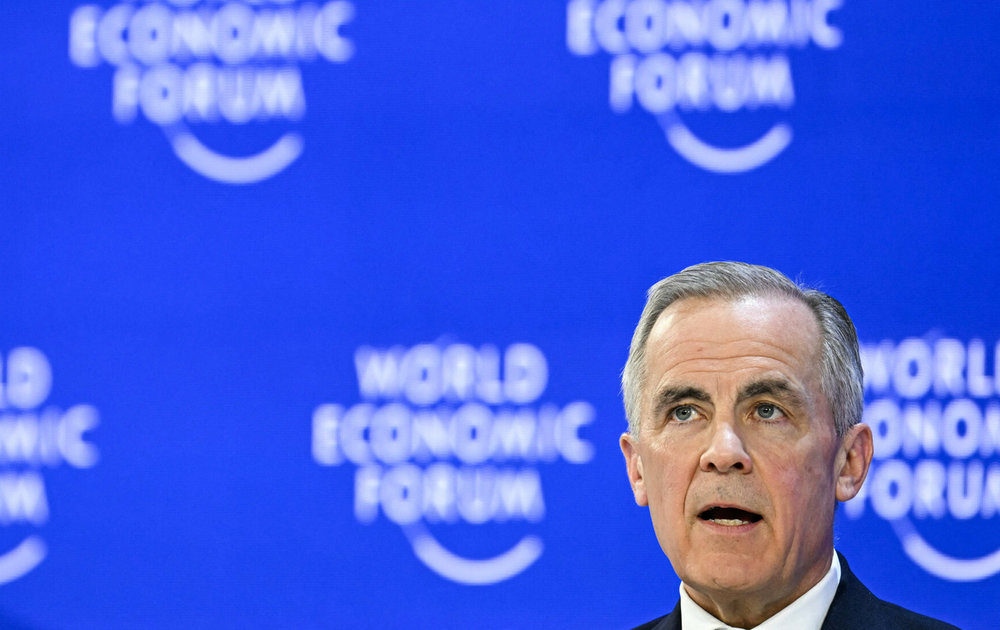
Canadian Prime Minister Mark Carney put it plainly at Davos on 20 January 2026: "We are in the midst of a rupture, not a transition." We "cannot live within the lie of mutual benefit through integration when integration becomes the source of your subordination," he said, calling for countries to organize in the face of great-power rivalry through different coalitions for different issues, based on common values and interests. As he told the World Economic Forum: "We actively take on the world as it is, not wait around for a world we wish to be."
6. The war is existential to both Ukraine and Russia
Ukraine is fighting for its right to exist. Russia is fighting for its Great Power status, strategic parity with the USA and China. If it is defeated in Ukraine, it will forever remain a pariah state, potentially imploding. For a negotiation to succeed, it must solve the cause of the war: Russia's Great Power ambitions, which cannot be negotiated away, only denied through military power.
7. Russia will never accept being defeated by Ukraine
Even with the tools to evict the Russian Armed Forces, Ukraine cannot expect Russia to accept defeat by a nation that, in its distorted narrative, "does not exist." Russia would only accept withdrawal from Ukraine if the alternative were to fight a far superior military power and thereby risk losing the means that secure the survival of the regime and the state.
8. Europe has very limited time to stop the war from escalating
Several European intelligence services warn of war by 2029;
- French intelligence is preparing for large-scale Russian attacks by 2030, and autumn 2027 is now being discussed, France Télévisions reported;
- US intelligence expects Russia may test NATO's resolve with a limited strike against a member state between this autumn and 2029, the Wall Street Journal reported in August;
- Baltic intelligence chiefs told The Guardian on 20 September that an attack could come within "months, not years."
- Worse still, Europe won't be ready until 2035, six to nine years too late, SACEUR warns.
Rules do not enforce themselves
International law, sovereignty, and territorial integrity remain fundamental principles. But without the capability and political will to defend them, principles become aspirations, not constraints on states prepared to use force. Acknowledging the world as it is means acknowledging that power still matters. It means accepting that deterrence requires more than statements of concern: ammunition, air and missile defense, long-range strike and counter-drone systems, secure communications, logistics, cyber resilience, and the industrial capacity to sustain a prolonged conflict.
Values mean nothing unless one is prepared to defend them.
This is where Carney's second formulation matters: countries must rely not only on "the strength of our values, but also the value of our strength." Values mean nothing unless one is prepared to defend them, as Canada is doing, raising defense spending and strengthening domestic industry. Europe needs to draw the same conclusion: strategic autonomy, not abandoning NATO, but ensuring Europe can defend itself and its interests even when an ally's priorities change.
The European Council already calls Russia's war an existential challenge and demands defense readiness be strengthened by 2030. But acknowledging reality means going further than setting targets.
It means recognizing that Ukraine is not merely the recipient of European security assistance. Ukraine is an integral part of Europe's security architecture. Its battlefield experience, defense industry, intelligence, and ability to absorb and defeat Russian attacks are crucial to European security.
Because individual member states refuse Ukraine as a member, NATO has made itself a liability, and some of the same countries are erecting hindrances to its EU membership too, letting national interest block common security.
The solution
The choice is not between idealism and realism. It is between pretending that the old assumptions still hold and building the capabilities required by the reality that has replaced them.
Acknowledging the world as it is means seeing the threats clearly; defending the world as it should be means acting on that knowledge, and the bridge between the two is strength.
Strength is not found in numbers, but in unity: agreeing on the enemy and a real will and capability to fight.
Accept those eight fixed points, and Europe's room for maneuver is gone, along with its present strategy. Europe cannot afford another 12 years of futile diplomacy while Russia exploits our naivety to prepare for war in the next two to three years, diplomacy that has undermined Europe's need to rearm and establish credible deterrence.
European governments have long acknowledged that their armed forces no longer provide credible defense, yet their security policy still assumes NATO guarantees collective security.
Acknowledge reality, and the illusion shatters.
Europe urgently needs a new strategy, one that looks beyond NATO and the EU's inherent weaknesses toward a military alliance credible enough to reshape the strategic environment. This is why I have long argued for a Coalition of Like-Minded European countries (CALM). It offers a path from recognition to action, from acknowledging NATO's failure to building something that works.
Strength is not found in numbers, but in unity: agreeing on the enemy, his aims and strategy, and committing to countermeasures that demonstrate real will and capability to fight.

Unlike NATO or the EU, CALM does not have to wait for Europe's rearmament to reach 2035. It builds on existing NATO interoperability.
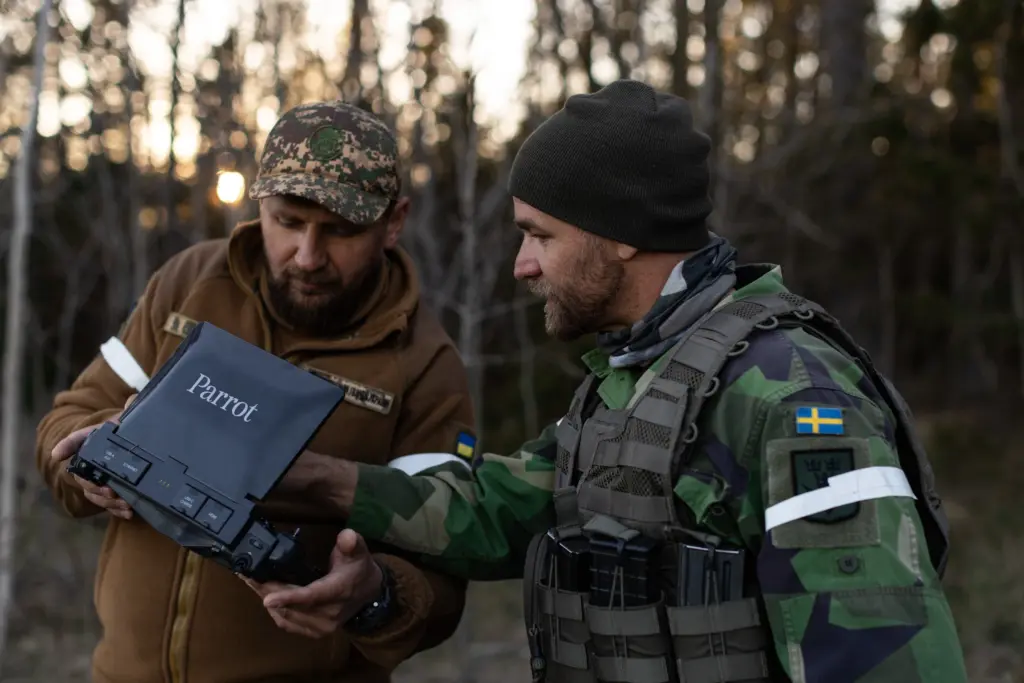
The force already exists: Ukraine's battle-hardened army, National Guard, Special Operations Forces, air defense, and Unmanned System Forces, combined with European fifth-generation aircraft and state-of-the-art navies, are credible, combat-proven, and in place.
Russia already struggles to fight Ukraine alone; it would face a different reality entirely if Ukraine formally joined a coalition of European military powers. That is why the declaration matters now, not after the capability is fully built: with the interoperability already proven, it changes Russia's strategic assessment immediately, not in 2035.
This is not only about physical capabilities. It is about changing Russia's perception of its strategic environment. It starts with a declaration; preparing for military intervention comes next. But it begins with the declaration.
Hans Petter Midttun

Editor's note. The opinions expressed in our Opinion section belong to their authors. Euromaidan Press' editorial team may or may not share them.
Submit an opinion to Euromaidan Press