❌

Vue normale

  • ✇Euromaidan Press
  • Zelenskyy says Ukraine has agreed on a new Patriot interceptor package—won’t say with whom
    Ukrainian President Volodymyr Zelenskyy announced that Ukraine has agreed on a new package of Patriot interceptor missiles with an unnamed partner, Suspilne reported. He made the announcement on 24 September during a meeting with the Ukrainian community in the United States. Zelenskyy did not reveal the partner's identity, the quantity, or the delivery timeline. Russia's aerial campaign against Ukrainian cities is heading into its most dangerous winter yet, with ballistic strikes on hos
     

Zelenskyy says Ukraine has agreed on a new Patriot interceptor package—won’t say with whom

25 septembre 2026 à 04:45

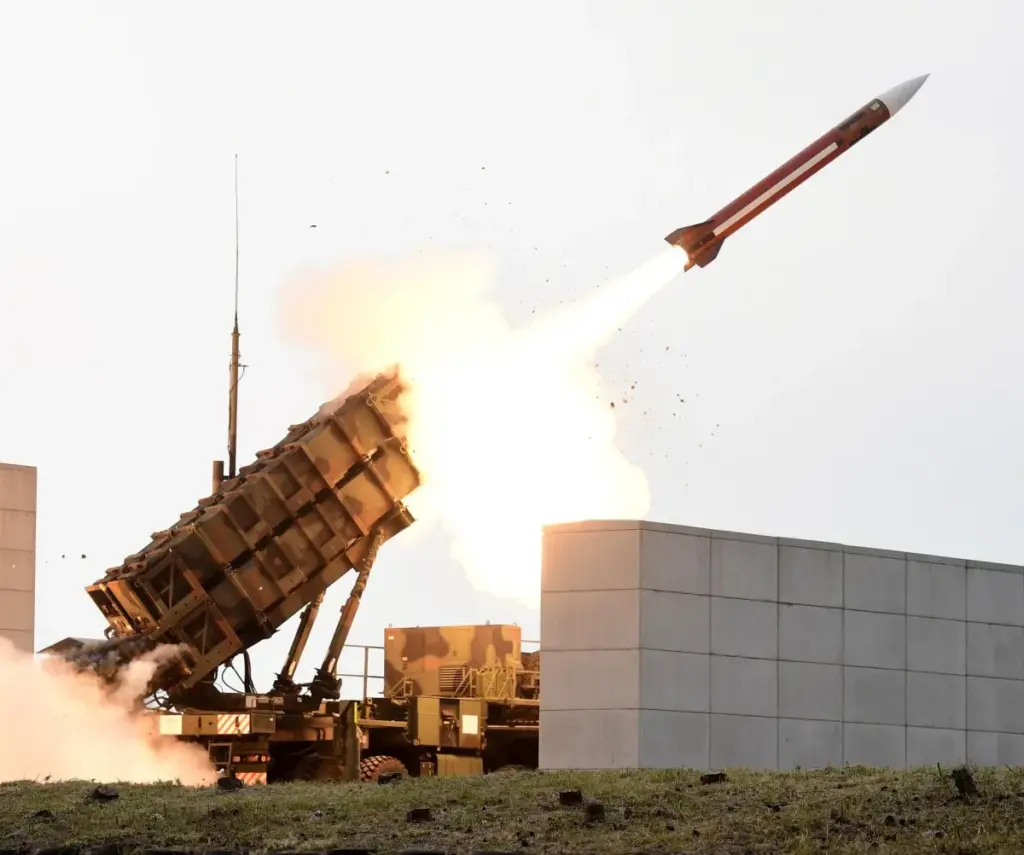
brussels cleared ukraine spend eu loan money american patriot missiles get through upcoming winter russian attacks · post pac-2 missile launch yonhap пуск ракети illlustrative militarnyi news ukrainian reports

Ukrainian President Volodymyr Zelenskyy announced that Ukraine has agreed on a new package of Patriot interceptor missiles with an unnamed partner, Suspilne reported. He made the announcement on 24 September during a meeting with the Ukrainian community in the United States. Zelenskyy did not reveal the partner's identity, the quantity, or the delivery timeline.

Russia's aerial campaign against Ukrainian cities is heading into its most dangerous winter yet, with ballistic strikes on hospitals, power stations, and residential buildings pushing monthly civilian casualties to their highest level since the war's opening weeks. The gap between the interceptors Ukraine needs and what allies have so far committed has become a central factor in both the defense of Ukrainian cities and the diplomatic standoff.

What Zelenskyy said

Zelenskyy made the announcement during a broader address to the diaspora about diplomacy, the peace effort, and cooperation with US President Donald Trump's team.

"We agreed today—I won't say with whom—on a package of [interceptor] missiles for Patriot systems. This is an important decision," Ukrainian President Volodymyr Zelenskyy told the Ukrainian diaspora in New York.

He gave no further details. Zelenskyy said ending the war was the most important question facing Ukraine and awarded decorations to community members who had contributed to the country's defense.

Before the New York trip, the interceptor question had been raised with several partners. After meeting Trump on 22 September, Zelenskyy said he had asked Washington for a winter package of Patriot interceptors. That same week, he pitched Japan's Prime Minister Sanae Takaichi on air-defense cooperation, noting that Mitsubishi Heavy Industries runs the only plant outside the US licensed to assemble PAC-3 missiles. Suspilne noted the issue had also been discussed with other partners Zelenskyy did not name.

Intercepting more, but not enough

On 24 September, air defenses intercepted 60% of the ballistic missiles Russia fired at Kyiv—a figure the president called significant.

"It was 60%—not 10% and not zero. And this year we had moments when it was zero. Not because someone lacks experience, but because someone lacks missiles," Zelenskyy told journalists in New York.

Since 12 August, Ukraine's Air Force has stopped publishing detailed figures on how many missiles Russia launches, reporting only what it downs—which makes Zelenskyy's percentage a rare public benchmark. By that count, Russia has fired at least 794 ballistic missiles at Ukraine since January, about 43% of all missiles used this year, with July's 174 the monthly high.

The overnight attack

Hours after Zelenskyy spoke in New York, Russia launched 295 drones at Ukraine overnight on 24–25 September. In Odesa, Russian drones killed two people—a 40-year-old woman and a 51-year-old man—and injured two others. In Kyiv, Shaheds struck high-rises in Solomianskyi district, and strikes across the broader region killed a 14-year-old boy.

1000 patriot missiles arrive too late winter so ukraine asked ramstein arms coalition open its warehouses · post ukraine's defense minister yevhenii khmara right commander-in-chief major general mykhailo drapatyi meeting
Explore further

1,000 Patriot missiles arrive too late for this winter, so Ukraine asked the Ramstein arms coalition to open its warehouses

Romania scrambled jets as drones drifted toward its airspace. A woman was injured in Dnipropetrovsk Oblast, and the morning brought further Russian strikes on Zaporizhzhia and Poltava, injuring two more people.

The interceptor crisis

Zelenskyy's announcement lands in the middle of a worsening shortage. In August, he told CNN that Ukraine held roughly 1% of American Patriot stocks and that 5% would get Kyiv through the winter. ISW assessed the same month that the interceptor shortage was one reason Russia saw no incentive to negotiate.

The EU has moved to fill the gap. Brussels cleared Ukraine to spend loan money on Patriot missiles and later released €6.1 billion ($7.1 billion) for interceptors and drones. But Ukraine's air force commander warned that newly ordered missiles would arrive too late for this winter and asked the Ramstein coalition to open existing stockpiles.

At least one partner has now moved from discussion to commitment. The quantity and delivery date remain unknown, and Russia produces ballistic missiles faster than Ukraine's allies have so far been willing to part with the interceptors that stop them.

"We agreed today—I won't say with whom—on a package of [interceptor] missiles for Patriot systems. This is an important decision," Ukrainian President Volodymyr Zelenskyy told the Ukrainian diaspora in New York.
"It was 60%—not 10% and not zero. And this year we had moments when it was zero. Not because someone lacks experience, but because someone lacks missiles," Zelenskyy told journalists in New York.
  • ✇Euromaidan Press
  • Europe gave Russia years to perfect its aerial killing. Ukraine is paying the price. Europe may be next.
    For years, Ukraine’s air defenses blunted Russia’s attempts to terrorize its cities from the sky. Now, after four years of adaptation, Moscow is fielding faster drones, massing ballistic missiles, and finding new ways to overwhelm a Ukrainian air-defense network running short of the interceptors needed to stop them. Russia’s aerial campaign is becoming harder to contain just as its attacks are killing more Ukrainian civilians. July recorded at least 437 civilian deaths, the highest mont
     

Europe gave Russia years to perfect its aerial killing. Ukraine is paying the price. Europe may be next.

20 septembre 2026 à 12:27

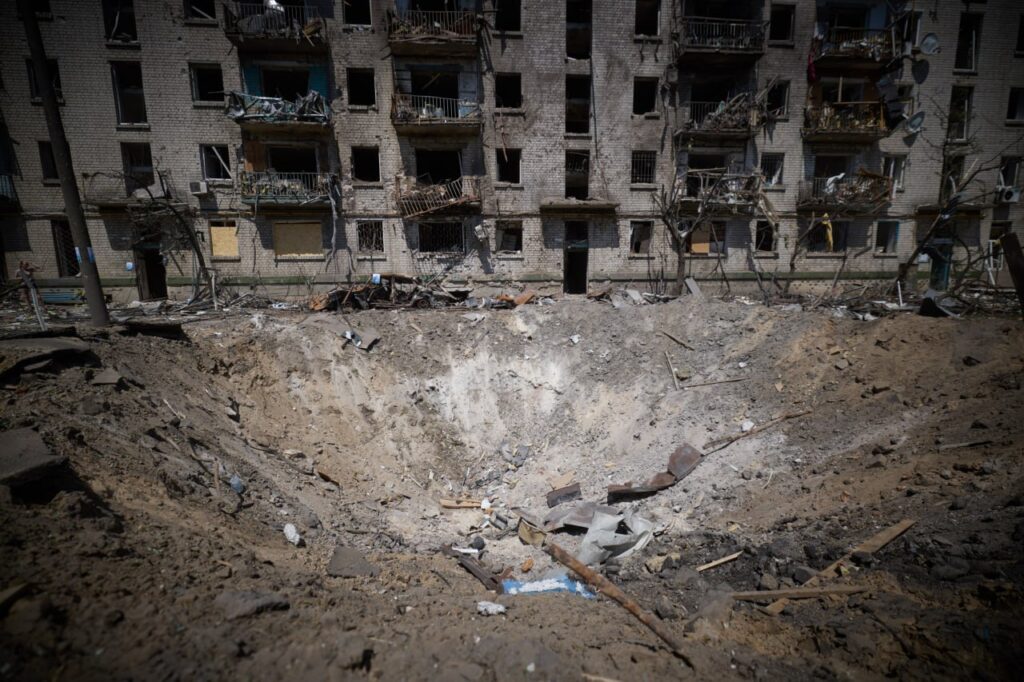
The image shows a giant crater formed by a Russian missile in Kyiv on 3 June 2026. Source: Ukraine's State Emergency Service

For years, Ukraine’s air defenses blunted Russia’s attempts to terrorize its cities from the sky. Now, after four years of adaptation, Moscow is fielding faster drones, massing ballistic missiles, and finding new ways to overwhelm a Ukrainian air-defense network running short of the interceptors needed to stop them.

Russia’s aerial campaign is becoming harder to contain just as its attacks are killing more Ukrainian civilians. July recorded at least 437 civilian deaths, the highest monthly toll since the early months of the full-scale invasion, with UN monitors pointing to Russian missile and drone attacks as a key factor.

That shift is visible most clearly in Russia’s rapidly expanding use of jet-powered Geran drones. These drones can exceed 400 km/h, making them significantly harder to intercept than the slower, propeller-driven Shaheds Ukraine has spent years learning to counter. Russia reportedly launched as many as 2,850 jet-powered drones in August alone.

Ukrainian President Volodymyr Zelenskyy has warned that Russia’s escalation with the new drones is becoming “increasingly terrorist” and called for urgent efforts to develop defenses against them.

While Ukraine’s Western partners have taken steps to strengthen its air defenses, Russia has spent the same period adapting and expanding its ability to attack from the air. The gap is becoming increasingly visible in the skies over Ukrainian cities.

Ukrainian civilians are already paying the price

Russia has increasingly turned its ability to strike deep inside Ukraine into a weapon against civilian life itself: hitting residential areas, fuel stations, railways, energy infrastructure and other sites across cities far from the front.

Since late August, Kyiv has faced near-continuous Russian drone attacks, with Russia increasingly sending waves of drones against the capital throughout the day and night. The shift has made air-raid alerts, explosions and disruptions to daily life a near-constant reality.

For Ukrainians, Russia’s evolving aerial campaign is measured in destroyed homes, injuries, deaths, and lives permanently changed. 

In Kyiv, it has also changed everyday life: explosions interrupt sleep and work, people run for shelter as strikes unfold overhead, and the threat of another attack is never far away.

And the pressure is no longer confined to Kyiv. Kharkiv, Odesa, Sumy and Zaporizhzhia are all facing increasingly sophisticated combinations of drones and missiles.

The danger is not simply that Russia is launching more weapons. It is that Moscow has spent years learning which weapons can penetrate Ukraine’s defenses, how to combine them, and how to force Ukraine to spend its most valuable interceptors.

Zelenskyy’s warning captures the urgency: “You cannot simply wait for Russia to perfect its repertoire of killings.”

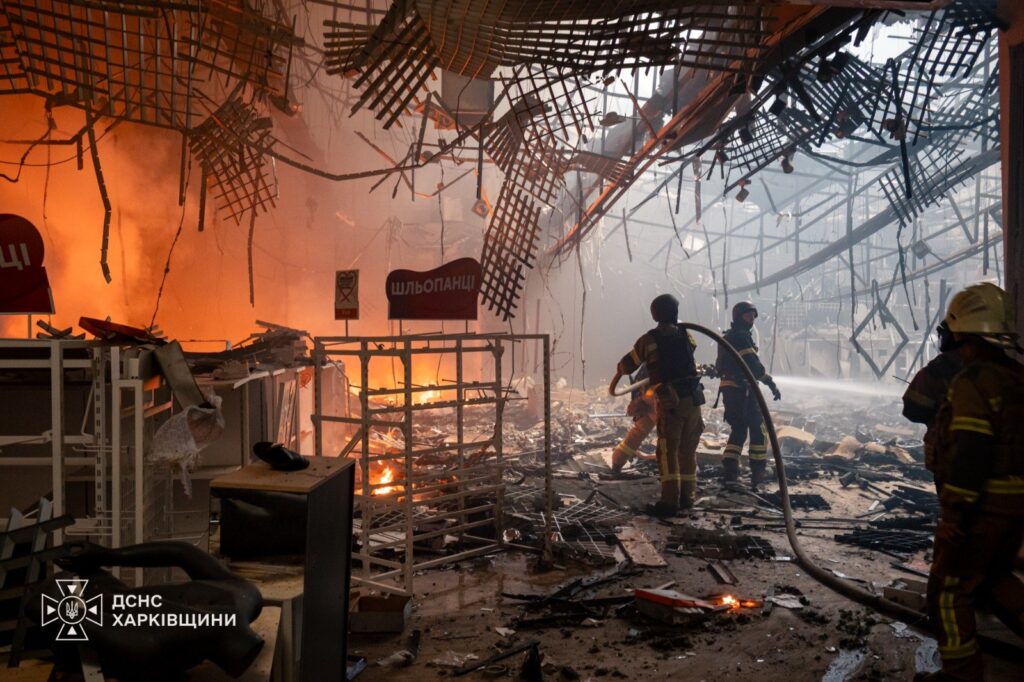
Emergency workers respond to a Russian strike on a shopping center in Kharkiv, Ukraine, on 28 August 2026. Photo: Ukraine’s State Emergency Service

Russia is adapting faster than Ukraine can rebuild its shield

The jet-powered Geran is only one part of the problem.

Russia has also dramatically increased its use of ballistic missiles. Reuters reported that 228 ballistic and hypersonic missiles were launched in July and the first eight days of August, with more than half being inaccurate RM48U training missiles repurposed for combat. 

Ukraine has virtually exhausted its US-made Patriot interceptors, the only systems in its arsenal capable of reliably intercepting Russia’s ballistic missiles, while Moscow continues launching them at a high tempo.

The result is a more complex aerial threat: fast drones that are difficult to intercept, ballistic missiles that are extremely difficult to stop, and large waves of cheaper weapons that can force Ukraine to expend scarce defensive ammunition.

Ukraine is developing new ways to counter them, including interceptor drones specifically designed to hunt down the jet-powered Gerans. But Ukraine is developing these systems as Russia is already deploying its new weapons at scale.

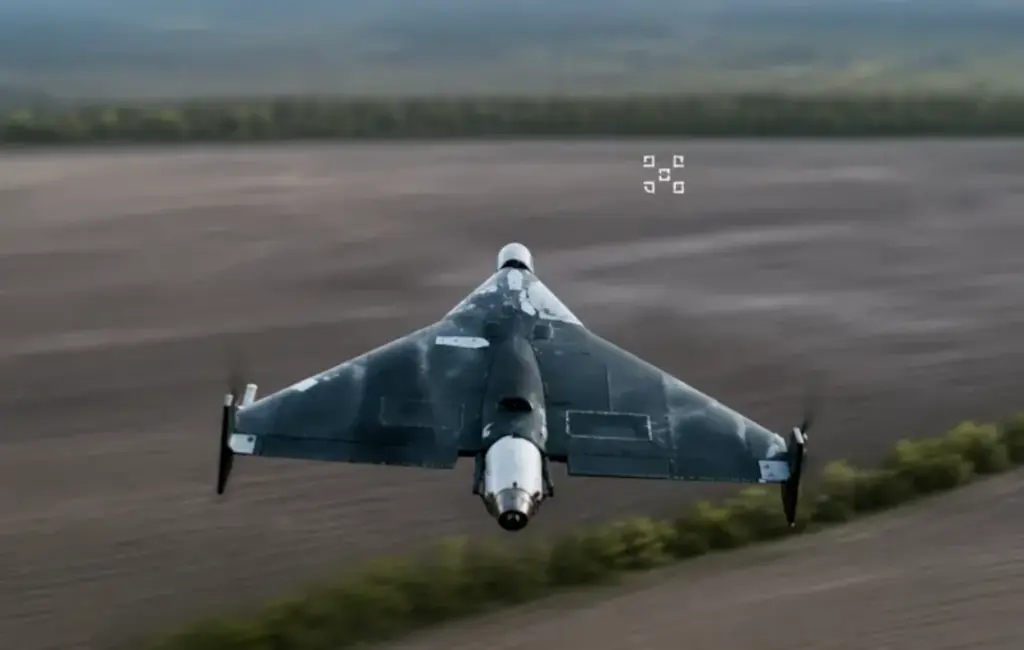
money engineering what stands between ukraine russia's fastest drones zelenskyy says · post russia’s new “geran-4 seeker” shahed variant geran-4 news ukrainian reports
Russia’s new “Geran-4 Seeker” jet-powered Shahed drone variant. Source: Wild Hornets

Western countries have continued providing air-defense assistance. Canada, for example, announced a C$350 million package for interceptors earlier this month. But Ukrainian officials continue to say that deliveries remain far below what is needed to protect the country from Russia’s expanding aerial campaign.

Russia has spent years expanding the weapons it can use against Ukraine, while Ukraine and its partners are still racing to develop and supply the systems needed to stop them.

The threat Europe helped Russia develop

Some of Ukraine’s Western partners are now confronting a threat Russia has spent years developing over Ukraine: an increasingly sophisticated aerial arsenal that could eventually be turned against them.

European officials and defense analysts are increasingly warning that NATO countries themselves lack enough air and missile defenses to deal with a large Russian attack. 

Latvia’s President Edgars Rinkēvičs recently said Europe is not sufficiently prepared for the kind of drone and aerial warfare Russia has developed in Ukraine, including because of delays in supplying Ukraine with critical air-defense systems.

Those concerns are no longer hypothetical. On 14 September, an Italian NATO fighter jet shot down a Russian-made Geran-2 drone over Lithuania after it entered the country from Belarus. Poland and Romania have also faced Russian drone incursions since 2025.

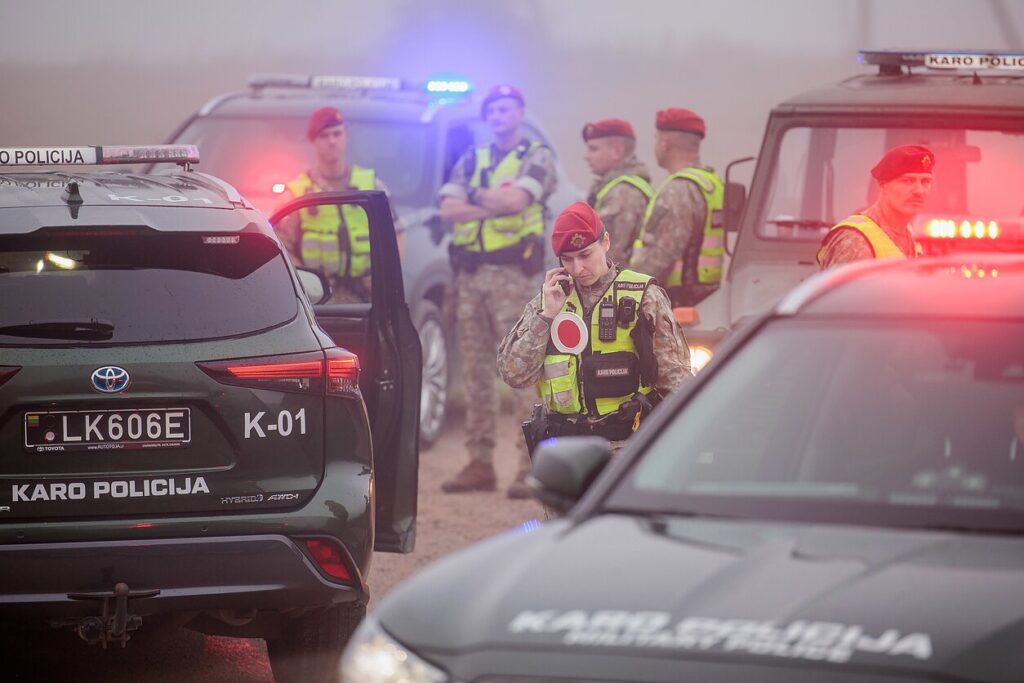
italian jets destroyed drone over lithuania first shootdown country · post lithuanian military police site near pratkūnai where nato fighters shot down kaišiadorys district 15 2026 d umbrasas / lrt
Lithuanian military police at the site near Pratkūnai where NATO fighters shot down a drone, Kaišiadorys district, Lithuania, 15 September 2026. Photo: D. Umbrasas / LRT

This creates a problem that is partly of Europe’s own making. Russia has had more than four years to refine its drones, missiles, production lines and tactics while Ukraine’s partners have often been too slow to provide enough weapons to counter those systems as they were developed and deployed at scale.

In that same period, many European countries continued trading with Russia, particularly in fossil fuels, allowing Moscow to keep generating revenue from European markets even as those same governments were providing military aid to Ukraine.

The result is a Russian aerial arsenal that is more capable than the one Ukraine faced in 2022 – while some of the countries now worried about a future Russian threat lack the air defenses needed to protect themselves.

Western governments helped Ukraine fight Russia’s air war, but not at a scale or speed sufficient to prevent Russia from adapting. 

Ukrainian civilians are paying the price for the time Russia was given to expand and refine its aerial warfare. Now, Europe is having to prepare for the possibility that those capabilities could one day be used against it. 

North Korea has fired around 150 ballistic missiles at Ukraine, learning from each one. Same missiles threaten Japan, and Kyiv just shows its speaker what is inside them

19 septembre 2026 à 12:54

Ukraine's Defense Intelligence has given Eisuke Mori, speaker of Japan's House of Representatives, a close look at a North Korean weapon: the components of a ballistic missile Russia fired at Ukraine. Source: Ukraine's Defense Intelligence

Ukraine's Defense Intelligence, also known as HUR, has given Japan's parliament speaker a rare, close look at a North Korean weapon: the components of a ballistic missile Russia fired at Ukraine. Ukrainian officers have shown the parts to Eisuke Mori, speaker of Japan's House of Representatives, during his delegation's visit to Kyiv, HUR says on social media.

Ukraine has become the place where North Korea's missiles are tested in combat and taken apart. Pyongyang has supplied Russia with roughly 150 KN-23 and KN-24 ballistic missiles since late 2023, along with thousands of troops, and Russia has fired scores of them at Ukrainian cities.

Each strike gives Pyongyang combat data that has sharpened its weapons. Showing Japan the components turns that access into a prospect of future deterrence: the same missiles threaten the Asia-Pacific.

Ukraine hands Japan the evidence

Examining missile parts allows analysts to read the missile's technical characteristics, design, and the state of North Korea's arms industry, HUR says. Ukraine has found that the North Korean missiles falling on its cities are built partly from foreign parts, with components traced to companies in Britain, Japan, Switzerland, China, and the US, Radio Free Asia reports, evidence of how Pyongyang skirts sanctions to build them.

The threat reaches the Pacific

HUR frames the demonstration as a shared-security case. North Korean weapons endanger not only Ukraine but Japan and the wider Asia-Pacific, it says, while the Moscow-Pyongyang partnership lets Russia keep waging its war and lets Pyongyang build up its arsenal and refine its weapons.

"Countering this cooperation requires coordinated action by international partners. Sharing intelligence helps better assess common threats and find ways to overcome them," HUR states.

Pyongyang learns from the strikes

North Korea has sent Russia millions of artillery shells, rocket systems, and thousands of troops, and is paid in cash and technology, with one analyst estimating Pyongyang may have earned about $20 billion from the war. In return, the missiles' accuracy has improved as Pyongyang studies how they perform under fire, turning the war into a live proving ground for weapons built to threaten its neighbors.

Russia is using inaccurate missiles that can miss by hundreds of meters to attack Ukrainian cities – and plans to scale them up

18 septembre 2026 à 15:26

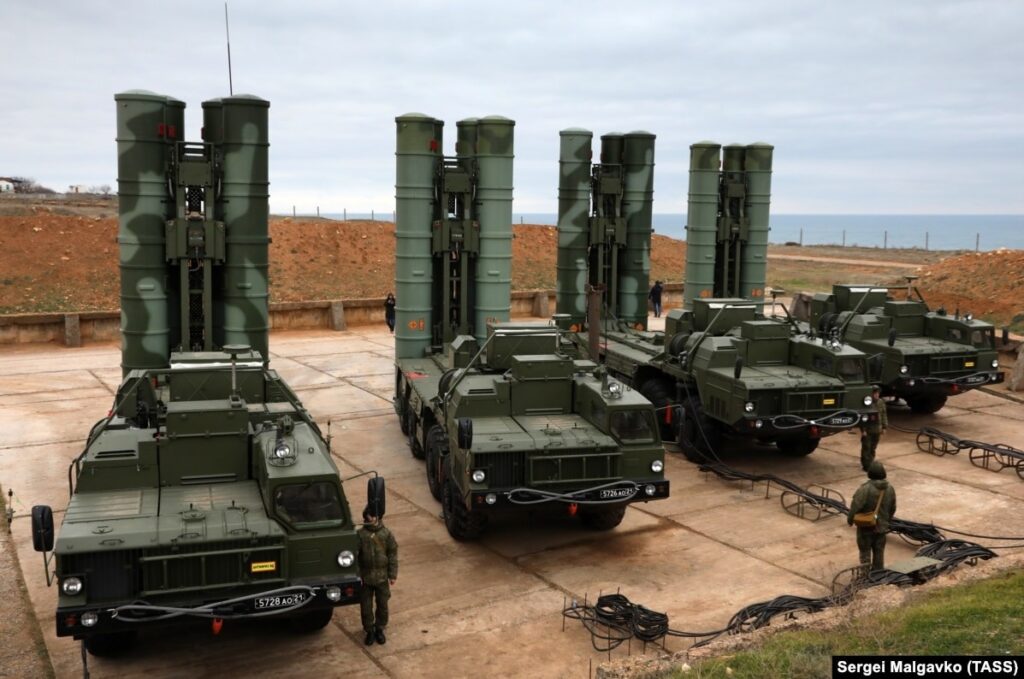
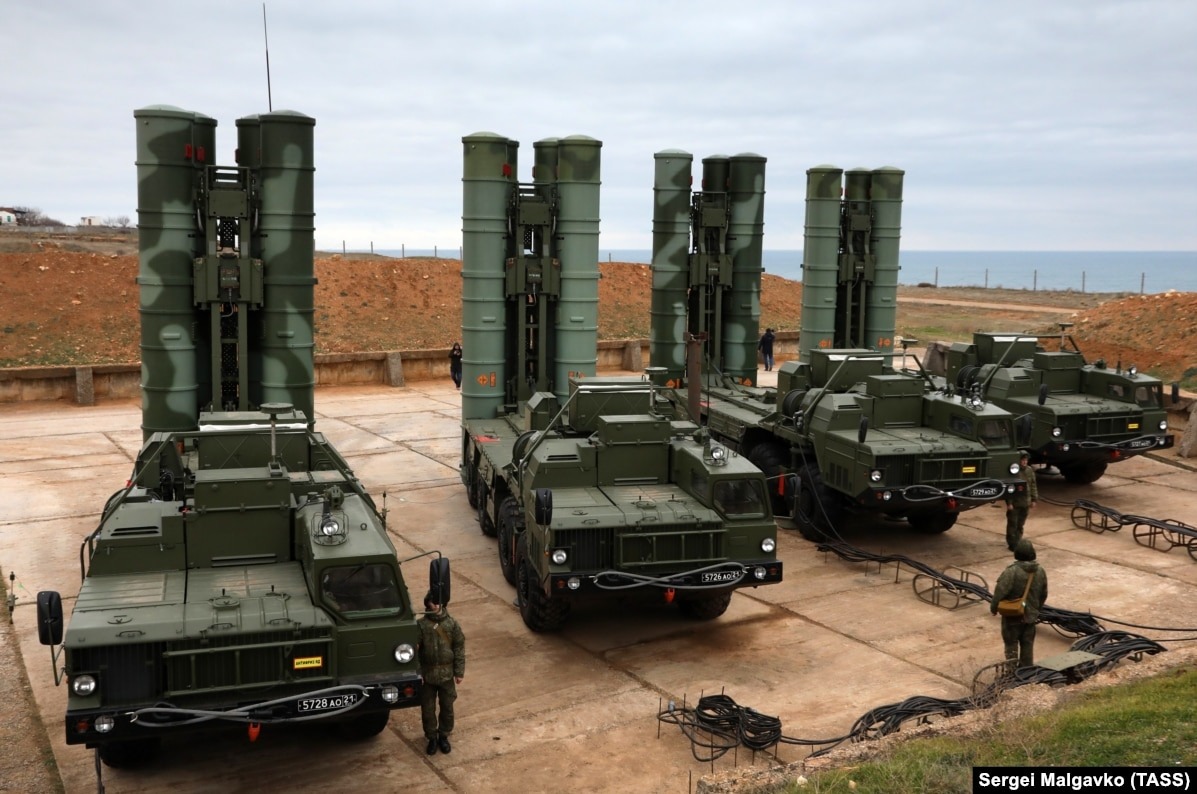
russia's arctic bases sit near-naked air defenses vanish guard moscow refineries burning inland · post s-400 defense missile launcher vehicles 2018 file sergei malgavko/tass rferl ukraine news ukrainian reports

Russia has begun using large numbers of a missile originally designed as a training target for air-defense crews, despite the weapon being significantly less accurate than the ballistic missiles Russia normally uses for precision strikes. The RM48U is now being launched against targets in Ukraine from S-400 air-defense systems.

The development comes as Russia has sharply increased its use of ballistic missiles against Ukrainian cities in recent months, while Ukraine faces a critical shortage of the interceptors needed to defend against them. Russian forces had more than tripled their monthly ballistic missile launches between April and July, according to Ukrainian military intelligence, as Ukraine's stocks of Patriot interceptors have dwindled.

More than half of the 228 ballistic and hypersonic missiles Russia launched in July and the first eight days of August were RM48Us, according to Ukrainian data reviewed by Reuters in an investigation published on 18 September.

A training missile turned into an inaccurate weapon

The RM48U was originally developed as a training target to help Russian air-defense crews practice intercepting incoming threats. It was not designed as a precision ground-attack missile.

Ukrainian investigators told Reuters that the missile is less powerful and less accurate than the Iskander, Russia's main short-range ballistic missile. They estimate that RM48Us deviate from their intended targets by around 300 meters on average.

The missiles nevertheless follow a high-speed ballistic trajectory when used in combat, making them difficult for Ukrainian air defenses to intercept.

Russia launches the RM48U from S-400 systems, repurposing part of its air-defense arsenal for offensive strikes.

russia's arctic bases sit near-naked air defenses vanish guard moscow refineries burning inland · post s-400 defense missile launcher vehicles 2018 file sergei malgavko/tass rferl ukraine news ukrainian reports
Explore further

Ukraine strikes two Russian S-400 launchers in Bryansk. The same systems were used to attack Kyiv overnight.

Russia is using inaccurate missiles at scale

The number of RM48U launches increased sharply during the summer.

Russia launched 158 ballistic and hypersonic missiles against Ukraine in July, according to Ukrainian data reviewed by Reuters. Of those, 87 were RM48Us.

Russia then launched another 36 RM48Us among 70 ballistic and hypersonic missiles fired during the first eight days of August.

July was the highest month for Russian ballistic and hypersonic missile launches since the start of the full-scale invasion, according to the Ukrainian data.

The surge in RM48U use also coincided with a major decline in Russia's use of Iskanders. Russia launched more than 100 Iskanders in June but only 38 in July.

The shift indicates that Russia is using the less capable RM48U to sustain its ballistic missile campaign to continue causing indiscriminate destruction in Ukrainian cities while conserving more capable weapons.

RUSI analyst Sidharth Kaushal told Reuters that this allows Russia to preserve missiles such as Iskanders, as well as other more advanced weapons, for future attacks.

Less accurate does not mean less dangerous

The RM48U's poor accuracy has already had deadly consequences.

Ukrainian investigators concluded that an RM48U struck a railway platform in the Brovary district of Kyiv Oblast on 5 August, killing eight people. 

According to Ukrainian prosecutors cited by Reuters, the missile's warhead also scatters metal fragments over a wide area.

The attack illustrates the danger of Russia using a weapon that was never designed for precision strikes in populated areas. Even when the missile misses its intended target, its large deviation can leave civilians and civilian infrastructure within the affected area.

Russia denies deliberately targeting civilians and says it strikes military and other strategic targets.

Russia plans to produce more

Ukraine's military intelligence told Reuters that Russia plans to produce 480 RM48U missiles in 2026, more than twice the 200 produced last year.

That would give Russia a growing supply of a relatively simple ballistic weapon that can be used alongside its more sophisticated missiles.

The large-scale deployment of the RM48U represents a new development in Russia's ballistic campaign: a missile built to serve as a training target for air-defense crews is now being used as an offensive weapon against Ukraine.

At a time when Ukraine is struggling to replenish the scarce interceptors needed to stop Russia’s ballistic missiles, Moscow is expanding the range of weapons it can use to strike Ukrainian cities, killing more civilians and destroying more civilian infrastructure with each escalation.

  • ✇Euromaidan Press
  • No missiles intercepted again: Russia strikes Kyiv water infrastructure amid warnings of harsher winter attacks
    Russia launched a large-scale missile and drone attack on Ukraine overnight on 17 September, striking Kyiv, Zaporizhzhia, and Odesa Oblast, among other regions. The attack damaged civilian infrastructure in Kyiv, including apartment buildings and educational facilities, while water infrastructure was also affected. Kyiv mayor Vitali Klitschko reported 20 people injured, including at least two children. Water infrastructure hit as winter concerns grow The overnight strikes affected
     

No missiles intercepted again: Russia strikes Kyiv water infrastructure amid warnings of harsher winter attacks

17 septembre 2026 à 11:44

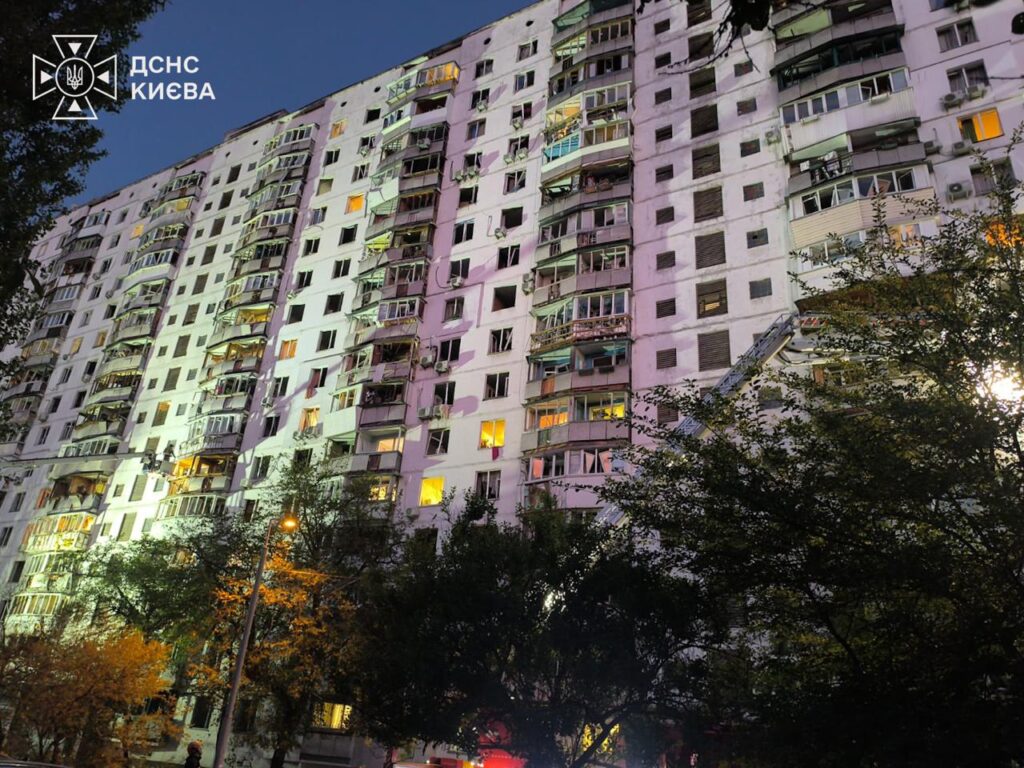
Apartment buildings in Kyiv damaged from an overnight Russian attack on 17 September 2026. Photo: Ukraine's State Emergency Service

Russia launched a large-scale missile and drone attack on Ukraine overnight on 17 September, striking Kyiv, Zaporizhzhia, and Odesa Oblast, among other regions.

The attack damaged civilian infrastructure in Kyiv, including apartment buildings and educational facilities, while water infrastructure was also affected. Kyiv mayor Vitali Klitschko reported 20 people injured, including at least two children.

Water infrastructure hit as winter concerns grow

The overnight strikes affected Kyiv’s water infrastructure, temporarily disrupting water supply on the left bank and reducing pressure in some areas on the right bank.

Kyivvodokanal said its specialists restored operations and that water supply is now fully functioning across the capital.

The damage comes as Ukrainian authorities have warned that Russia could target critical water infrastructure as winter approaches, potentially adding another major threat to civilians alongside attacks on Ukraine’s electricity and heating systems.

Russia has repeatedly used winter strikes to target Ukraine’s critical infrastructure, particularly electricity and heating, leaving civilians without power, heat, and basic services during freezing weather. 

This winter is expected to bring a heavier campaign: Russia has intensified its attacks since the summer, increasingly targeting food-related infrastructure and supplies in addition to energy facilities.

No missiles intercepted, once again

Russia launched ballistic and cruise missiles alongside 157 Shahed-type attack drones and decoy drones, according to Ukraine’s Air Force.

The ballistic missiles included Iskander-M, S-400 and North Korean KN-23 missiles launched from Russia’s Bryansk and Voronezh oblasts. Russia also launched four Kalibr cruise missiles and Oniks missiles.

Ukraine’s air defenses reported destroying or suppressing 131 aerial targets, but none of the ballistic weapons were among those intercepted. The 131 targets consisted of seven Bandеrol/Dan-T missiles and 124 Shahed, Gerbera, and other drones.

Once again, Ukraine intercepted none of the Russian ballistic missiles, underscoring the country’s shortage of high-end air-defense interceptors needed to defend against Russia’s increasing ballistic missile attacks.

However, Ukraine’s General Staff reported strikes on two of the S-400 systems that Russia uses to launch ballistic missiles from Bryansk Oblast. 

russia's arctic bases sit near-naked air defenses vanish guard moscow refineries burning inland · post s-400 defense missile launcher vehicles 2018 file sergei malgavko/tass rferl ukraine news ukrainian reports
Explore further

Ukraine strikes two Russian S-400 launchers in Bryansk. The same systems were used to attack Kyiv overnight.

Kyiv hit across several districts

Kyiv police reported damage in the Darnytskyi, Dniprovskyi, and Solomianskyi districts.

Apartment buildings, educational facilities, a municipal building, vehicles, and railway tracks were damaged. Most of the 16 injured people were residents of a damaged 16-story apartment building in Dniprovskyi district.

The victims included a 10-year-old girl and a 12-year-old boy.

Kyiv’s military administration also reported a strike on a warehouse building in Podilskyi district.

Russian attacks on Kyiv have injured 20 people today, with five hospitalized.

A blast wave damaged apartment buildings in the Dniprovskyi district, while a car caught fire at another location.

Scenes like these are becoming a daily occurrence in the capital.

📷Ukraine’s State… pic.twitter.com/bez0pOPghN

— Euromaidan Press (@EuromaidanPress) September 17, 2026

The Air Force said Russian missiles and attack drones hit 36 locations across Ukraine, while debris from intercepted targets fell at five locations.

Russia damaged the Berestyn station building and a Kyiv commuter stop in an overnight strike on the railways

A Russian drone hit the station at Berestyn in Kharkiv Oblast before dawn on 17 September, and passengers and staff sat out the attack in shelters, Ukraine's national… pic.twitter.com/OaeAaO58eX

— Euromaidan Press (@EuromaidanPress) September 17, 2026

Russia also hits Odesa and Zaporizhzhia

Russia’s overnight attack on Odesa Oblast continued for much of the night, injuring seven people, including children aged four and 13, Odesa Oblast Governor Oleh Kiper reported.

One Russian drone struck a high-rise apartment building in Odesa, destroying 10 apartments on the 14th–16th floors and damaging 11 cars. Three people were injured there, including the four-year-old child. 

Other strikes damaged at least five residential buildings, a kindergarten, a dormitory, a restaurant’s outdoor area, warehouses, garages, and cars. An elderly woman and the 13-year-old child were among four other people injured.

A Russian overnight attack on Odesa Oblast injured 7 people, including 2 children, after a strike hit a 19-story apartment building.

A private home in the region was also destroyed, while a kindergarten, cars, garages, and warehouses were damaged.

Once again, Russian strikes… pic.twitter.com/pHZQlDOcKM

— Euromaidan Press (@EuromaidanPress) September 17, 2026

Zaporizhzhia was also hit by Russian missiles, with three people injured – a woman and two men. The missiles struck industrial facilities, partially damaging buildings and causing a fire at one site.

Later in the day, Russia attacked the village of Storchove in Zaporizhzhia Oblast with guided aerial bombs. One bomb hit a private house and outbuildings, killing a 51-year-old woman and injuring a 70-year-old man. The strike destroyed property the family had accumulated over decades, according to the Zaporizhzhia Regional Military Administration.

Russia also struck a passenger bus in Zaporizhzhia with an FPV drone near a public transport stop. Five people were injured. A regional official said Russia had “once again chosen not a military target, but people who were simply traveling about their business.”

A Russian FPV drone struck a passenger bus carrying people in Zaporizhzhia, right near a public transport stop. Three people were reportedly injured.

“Russians once again chose not a military target, but people who were simply going about their daily lives,” a Zaporizhzhia… pic.twitter.com/VRZcch4PRH

— Euromaidan Press (@EuromaidanPress) September 17, 2026
  • ✇Euromaidan Press
  • Ukraine strikes two Russian S-400 launchers in Bryansk. The same systems were used to attack Kyiv overnight.
    Ukrainian forces struck two Russian S-400 launchers in Russia’s Bryansk Oblast on 16–17 September, Ukraine’s General Staff reported. These same systems were used to launch missiles at Kyiv last night. Ukraine faces severe shortages of high-end air-defense interceptors capable of countering Russia’s ballistic missiles, making strikes on the launchers themselves increasingly important. Russia has used S-400 systems to launch missiles at Ukrainian cities, including Kyiv, so destroying thes
     

Ukraine strikes two Russian S-400 launchers in Bryansk. The same systems were used to attack Kyiv overnight.

17 septembre 2026 à 10:09

russia's arctic bases sit near-naked air defenses vanish guard moscow refineries burning inland · post s-400 defense missile launcher vehicles 2018 file sergei malgavko/tass rferl ukraine news ukrainian reports

Ukrainian forces struck two Russian S-400 launchers in Russia’s Bryansk Oblast on 16–17 September, Ukraine’s General Staff reported. These same systems were used to launch missiles at Kyiv last night.

Ukraine faces severe shortages of high-end air-defense interceptors capable of countering Russia’s ballistic missiles, making strikes on the launchers themselves increasingly important. Russia has used S-400 systems to launch missiles at Ukrainian cities, including Kyiv, so destroying these systems can reduce Russia’s ability to carry out future attacks.

S-400 missile systems hit

The General Staff said Ukrainian Defense Forces struck two S-400 launchers near Vygonichi in Bryansk Oblast as part of a series of attacks on Russian military targets.

The strikes took place as Russia launched another major overnight attack against Ukraine. According to Ukraine’s Air Force, Russian forces used S-400, Iskander-M and KN-23 ballistic missiles launched from Bryansk and Voronezh oblasts, among other weapons.

The S-400 is a Russian long-range surface-to-air missile system designed to detect and engage aircraft and missiles. It was originally designed for air defense, but Russia has also used S-400 systems to launch ballistic missiles for strikes against Ukrainian cities, including Kyiv.

Kyiv Oblast was among the main targets of last night’s Russian attack.

Smoke rises from a Russian Bastion missile system position in occupied Crimea after a Ukrainian strike on 16 August 2026. Screenshot from video: Ukrainian Navy
Explore further

One alternative to air defense: Ukraine strikes Russian Bastion system used to attack Ukrainian cities from Crimea

Ukraine targets Russian military infrastructure

The S-400 launchers were among several Russian military targets struck by Ukrainian forces on 16–17 September, the General Staff reported.

Near occupied Donetsk, Ukrainian forces hit a Russian site used to store, prepare, and launch attack drones. They also struck Russian logistics warehouses in Kurakhivka, Nova Mariivka, and Luhansk.

Ukrainian forces additionally hit Russian personnel concentration areas near Strilkove in occupied Kherson Oblast and Druzhne in occupied Luhansk Oblast.

The General Staff said operations against key Russian military targets are continuing.

❌