Mike Mazzei, a former state senator who lent more than $11 million of his own money to his campaign, narrowly defeated the state’s attorney general, Gentner Drummond.
Mike Mazzei, a former state senator who lent more than $11 million of his own money to his campaign, narrowly defeated the state’s attorney general, Gentner Drummond.
President Trump went all in for Senator Darline Graham in a primary runoff on Tuesday. It worked, preserving his undefeated streak in Republican Senate primaries this year.
President Trump went all in for Senator Darline Graham in a primary runoff on Tuesday. It worked, preserving his undefeated streak in Republican Senate primaries this year.
Senator Darline Graham’s victory on Tuesday showed President Trump’s continued ability to move Republican primary voters, especially when he goes all in on a race.
The prospect that the kingdom could enrich uranium has drawn opposition from Democrats and revived concerns about nuclear proliferation in the Middle East.
The prospect that the kingdom could enrich uranium has drawn opposition from Democrats and revived concerns about nuclear proliferation in the Middle East.
Energy Secretary Chris Wright and Prince Abdulaziz bin Salman, the Saudi energy minister, in Saudi Arabia last year. The two signed an agreement last month as part of a broader package of cooperation on civilian nuclear power.
Ms. Graham, who is temporarily filling the seat long held by her late brother, Senator Lindsey Graham, prevailed in a runoff and will be heavily favored in November.
Ms. Graham, who is temporarily filling the seat long held by her late brother, Senator Lindsey Graham, prevailed in a runoff and will be heavily favored in November.
Mr. Drummond, the state attorney general, faces an opponent backed by President Trump and Gov. Kevin Stitt. The campaign has highlighted his independent streak.
Mr. Drummond, the state attorney general, faces an opponent backed by President Trump and Gov. Kevin Stitt. The campaign has highlighted his independent streak.
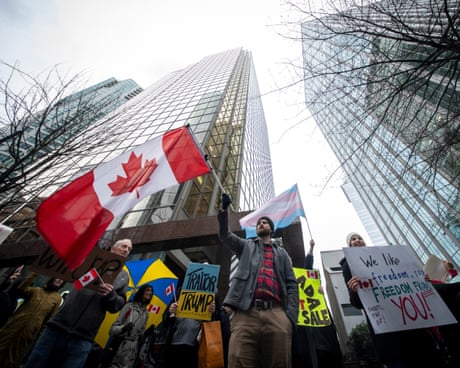
Le gouvernement fédéral a présenté des mesures en représailles aux droits de douane américains entrés en vigueur samedi dernier.
À compter du 8 septembre, le Canada imposera des taxes à l’importation de 15%, 25% ou 50% sur environ 700 produits américains.
Secteurs les plus touchés
acier
produits laitiers
électroménagers
matériel agricole
pâtes et papiers
électronique
Ces contres-tarifs ne visent que des produits frappés par des tarifs américains.
Ils s’ap
Le gouvernement fédéral a présenté des mesures en représailles aux droits de douane américains entrés en vigueur samedi dernier.
À compter du 8 septembre, le Canada imposera des taxes à l’importation de 15%, 25% ou 50% sur environ 700 produits américains.
Secteurs les plus touchés
acier
produits laitiers
électroménagers
matériel agricole
pâtes et papiers
électronique
Ces contres-tarifs ne visent que des produits frappés par des tarifs américains.
Ils s’appliqueront à presque 28 milliards $ d’exportations annuelles des États-Unis vers le Canada.
C’est un montant équivalent à celui des exportations canadiennes vers les États-Unis visées par les nouveaux tarifs américains.
Réponse américaine à la riposte canadienne
Donald Trump avait dès lundi, avant qu’on connaisse le détail des contre-tarifs, menacé de porter à 50% en janvier prochain les tarifs américains sur les voitures, les camions, les pièces automobiles et l’acier canadiens.
A preliminary Supreme Court ruling could leave voters confused about casting ballots by mail, even as President Trump’s executive order is being litigated in the lower courts, experts said.
A preliminary Supreme Court ruling could leave voters confused about casting ballots by mail, even as President Trump’s executive order is being litigated in the lower courts, experts said.
The United States threatened sanctions for any country or entity that engages with Iran’s gold, digital assets, aviation, shipping and tech industries. Here’s why that matters.
The United States threatened sanctions for any country or entity that engages with Iran’s gold, digital assets, aviation, shipping and tech industries. Here’s why that matters.
While the president remains the most dominant figure in the world, other leaders and institutions are pushing back more vigorously than at the beginning of his second term.
While the president remains the most dominant figure in the world, other leaders and institutions are pushing back more vigorously than at the beginning of his second term.
A Log Cabin Republicans table at the 2025 Conservative Political Action Conference in Oxon Hill, Md. The organization had embraced trans rights issues in 2015 before its reversal.
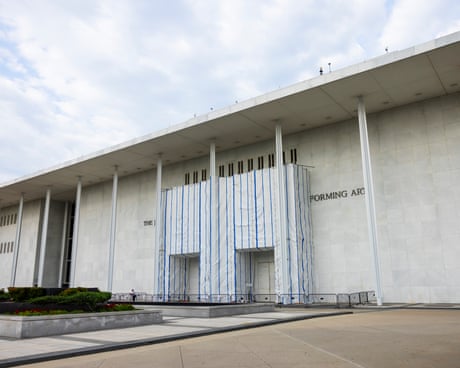
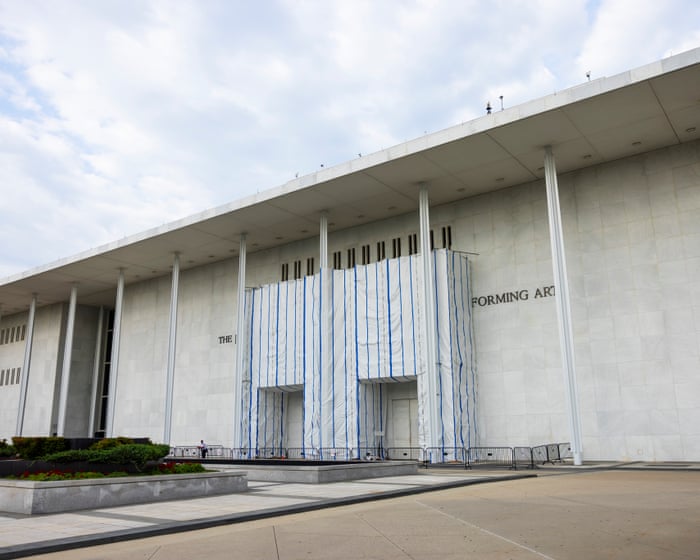
US president’s lawyers in court filing say Washington arts complex must undergo repairs or risk demolitionThe John F Kennedy Center for the Performing Arts could be demolished if repairs are not carried out, the Trump administration warned in a court filing on Monday.Lawyers for the US president said the national arts complex in Washington DC must undergo a $250m renovation or risk facing the wrecking ball. Continue reading...
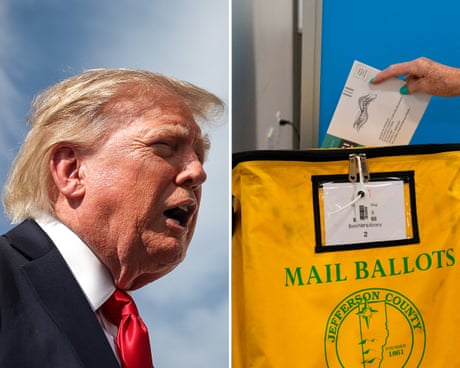
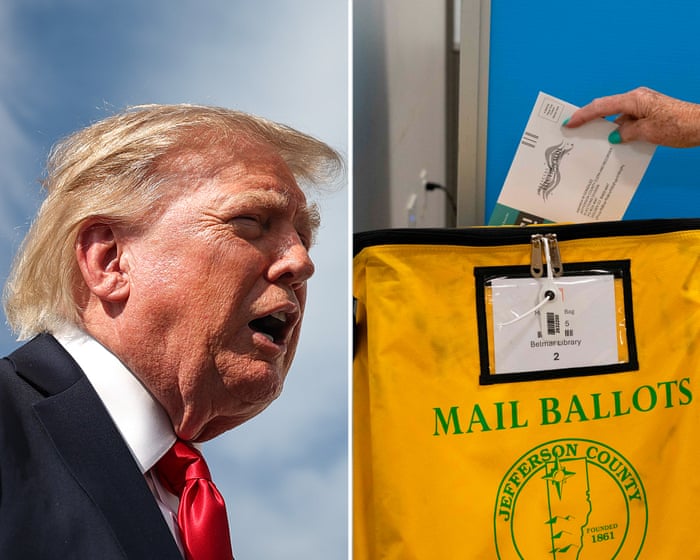
The Supreme Court on Monday allowed the Trump administration to continue with plans to curtail mail-in voting, but the fast-moving, high-stakes legal fight continues.
The Supreme Court on Monday allowed the Trump administration to continue with plans to curtail mail-in voting, but the fast-moving, high-stakes legal fight continues.
President Trump has long made unfounded claims that mail voting is fraudulent and corrupt, even as he has cast his own ballots by mail in multiple elections.
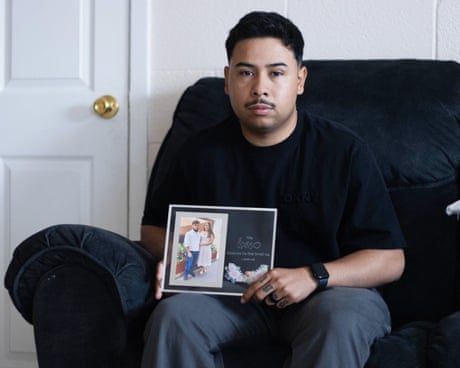
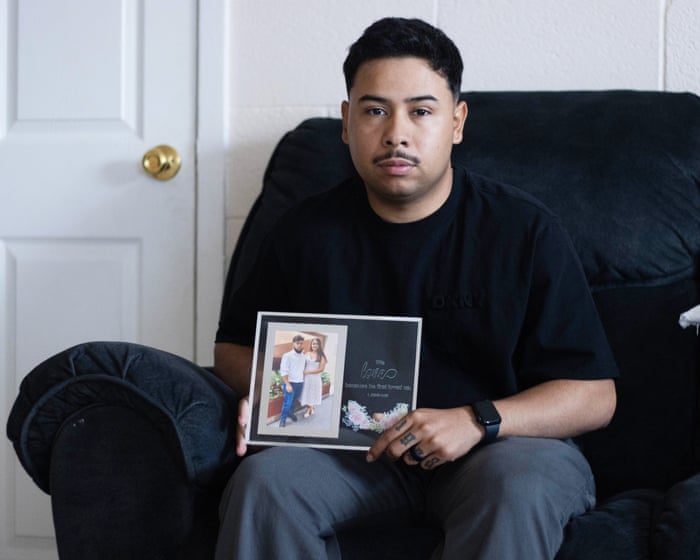
Cristy Maryori Villafranca-Trejo, deported to Honduras, is latest military spouse to face removal amid Trump 2.0The wife of an active-duty US soldier was deported on Monday to her native Honduras, according to her family and the federal Department of Homeland Security (DHS).Cristy Maryori Villafranca-Trejo is at least the seventh spouse or parent of an active-duty US soldier to be deported under the immigration crackdown during Donald Trump’s second presidency. Continue reading...
Cristy Maryori Villafranca-Trejo, deported to Honduras, is latest military spouse to face removal amid Trump 2.0
The wife of an active-duty US soldier was deported on Monday to her native Honduras, according to her family and the federal Department of Homeland Security (DHS).
Cristy Maryori Villafranca-Trejo is at least the seventh spouse or parent of an active-duty US soldier to be deported under the immigration crackdown during Donald Trump’s second presidency.
President Trump’s “Economic D-Day” is intended to break the stalemate with Iran. But decades of sanctions have done little to change the country’s behavior.
President Trump’s “Economic D-Day” is intended to break the stalemate with Iran. But decades of sanctions have done little to change the country’s behavior.
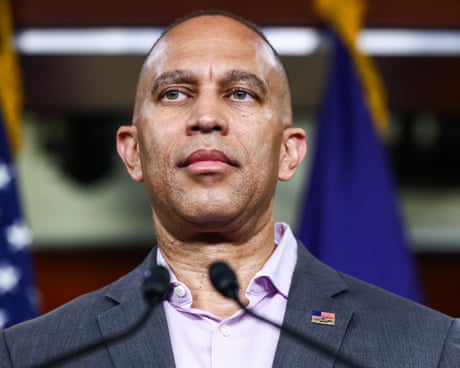
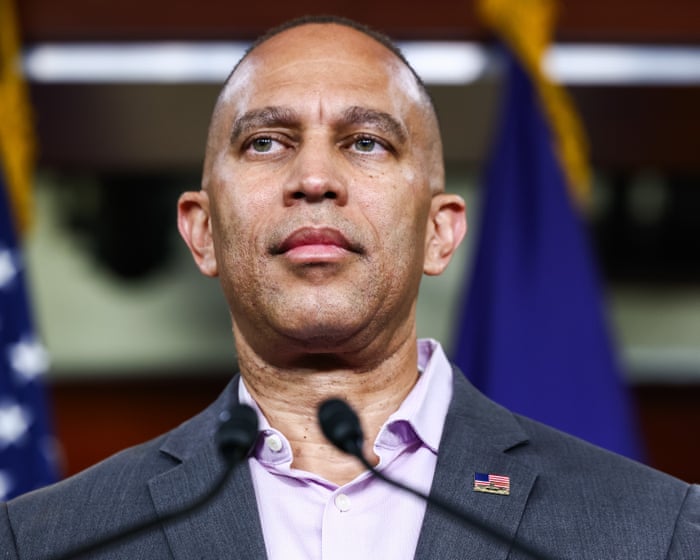
House minority leader is under attack from his own party for ‘affordability crisis’ meeting with president’s son-in-lawDemocrats incredulous over Hakeem Jeffries and Jared Kushner meetingUS politics live – latest updatesHakeem Jeffries, the Democratic minority leader in the US House of Representatives, has defended his meeting with Jared Kushner and claimed it was arranged at the request of Donald Trump’s son-in-law.Jeffries, who has come under attack from Democrats since the New York Times repo
Hakeem Jeffries, the Democratic minority leader in the US House of Representatives, has defended his meeting with Jared Kushner and claimed it was arranged at the request of Donald Trump’s son-in-law.
Jeffries, who has come under attack from Democrats since the New York Times reported on Sunday that the two met privately to discuss common ground on issues like housing, immigration and the high cost of living, said he agreed to the meeting “to discuss the affordability crisis” in the US.
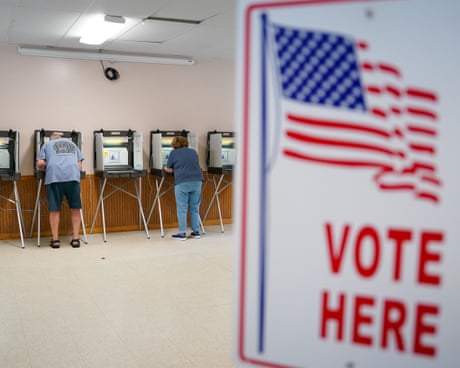
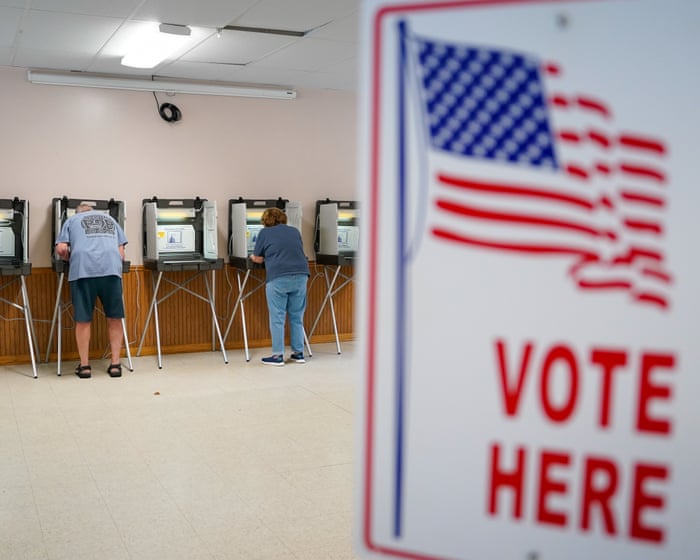
Runoffs in the state are typically sleepy, but the Republican Senate contest between Darline Graham and Ralph Norman seemed to be drawing relatively high turnout.
Runoffs in the state are typically sleepy, but the Republican Senate contest between Darline Graham and Ralph Norman seemed to be drawing relatively high turnout.
Tariffs on Canada, threats against Iran’s partners and bond market intervention show a president weaponising US power while making Americans poorer at homeThree moves in the last week have exposed the limits of Donald Trump’s economic bullying. The US slapped 50% tariffs on another $20bn of Canadian goods – then threatened the same rate on the cars, trucks, parts and steel that America Inc depends on. On Monday, the Treasury secretary, Scott Bessent, menaced Iran’s trading partners with exclusio
Tariffs on Canada, threats against Iran’s partners and bond market intervention show a president weaponising US power while making Americans poorer at home
Three moves in the last week have exposed the limits of Donald Trump’s economic bullying. The US slapped 50% tariffs on another $20bn of Canadian goods – then threatened the same rate on the cars, trucks, parts and steel that America Inc depends on. On Monday, the Treasury secretary, Scott Bessent, menaced Iran’s trading partners with exclusion from the US financial network, hoping that coercion can deliver what months of war have not. And as the costs of war, tariffs and pro-billionaire tax cuts helped send US bond yields higher, the Treasury stepped in to tame long-term rates. These are not contradictory policies but a gamble: that US economic power can be repeatedly weaponised without reducing others’ willingness to depend on it.
The Trump administration’s “D-day” sanctions are potentially the most consequential because they expose the scaffolding of American financial power. While markets shrugged off the immediate threat, that calculation might change were the US to target a major Chinese refinery or bank. Such an escalation could spark a trade war with Beijing. The US has leverage. But China has pressure points – especially farmers in Republican states – that make using it costly. In the long run, there is a price to pay. Nations hold one another’s currencies partly because they trust the political relationship. Mr Trump is testing what happens when they don’t.
The justices are still struggling with whether and when to explain themselves to the public when the court issues temporary, but consequential, orders.
The justices are still struggling with whether and when to explain themselves to the public when the court issues temporary, but consequential, orders.
In 19 months, the president has already asked the justices to intervene far more times than George W. Bush and Barack Obama did during their 16 years in office combined.
Republicans who have mostly refrained from criticizing the president’s actions have been vocal in opposition to the move, which they say will harm their constituents.
Republicans who have mostly refrained from criticizing the president’s actions have been vocal in opposition to the move, which they say will harm their constituents.
Cattle grazing on a ranch in Gillette, Wyo. “Americans want U.S. beef on the table — not foreign imports,” said Senator John Barrasso of Wyoming, the No. 2 Republican.
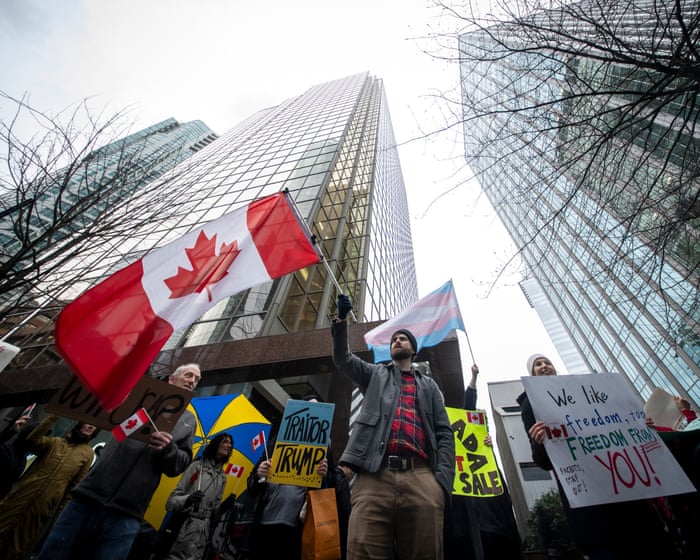
Canada said the higher levies, on items from aluminum foil to dishwashers to fish, would help protect workers, producers and manufacturers harmed by new Trump tariffs.
Canada said the higher levies, on items from aluminum foil to dishwashers to fish, would help protect workers, producers and manufacturers harmed by new Trump tariffs.
The U.S. Steel Clairton Coke Plant in Clairton, Pa. Canada has announced it will impose retaliatory tariffs of up to 50 percent on hundreds of American products including steel.
This live blog is now closed.South Carolina chooses Darline Graham as Republican nominee for US SenateSign up for the US Breaking News emailOn Truth Social, however, the president shot down assertions that the US talks with Canada collapsed in part due a proposed trade deal that would have weakened French language protections.“I would never interfere with Canadians speaking French!” he wrote. “In fact, I have never even thought of doing such a stupid thing. This lie was made up by a weak and ine
On Truth Social, however, the president shot down assertions that the US talks with Canada collapsed in part due a proposed trade deal that would have weakened French language protections.
“I would never interfere with Canadians speaking French!” he wrote. “In fact, I have never even thought of doing such a stupid thing. This lie was made up by a weak and ineffective Prime Minister in an attempt to gain political support, which he has totally lost, from the people of Quebec.”
A recent memo claiming executive privilege over communications with private advisers invites corruptionA recent office of legal counsel memo on executive privilege maintains that private advisers to a president can avoid responding to a subpoena by asserting the president’s executive privilege. The ability of presidents to shield communications from public view through claims of executive privilege, whether their own or those of a senior adviser, was already a powerful tool for presidents to avo
A recent memo claiming executive privilege over communications with private advisers invites corruption
A recent office of legal counsel memo on executive privilege maintains that private advisers to a president can avoid responding to a subpoena by asserting the president’s executive privilege. The ability of presidents to shield communications from public view through claims of executive privilege, whether their own or those of a senior adviser, was already a powerful tool for presidents to avoid accountability. But if courts accept the OLC’s new interpretation of presidential privilege, it will be substantially harder to call witnesses to testify before Congress or in court proceedings regarding possible wrongdoing by the presidents.
Equipping presidents with extensive power to block witnesses in legal proceedings is a dangerous practice that invites corruption by presidents and their advisers. Consider the former White House counsel Don McGahn’s 2019 refusal to testify in response to a subpoena by the House judiciary committee in connection with the special counsel Robert Mueller’s investigation into Donald Trump. McGahn didn’t come up with that idea on his own. It was the Trump White House that sought to bar McGahn from testifying through an assertion of a type of executive privilege known as “testimonial immunity.” Ironically, Mueller was investigating whether Trump obstructed justice, among other things, by demanding that McGahn fire Mueller himself. Trump’s insistence that McGahn not testify, backed up by a 2019 OLC opinion, effectively made the first Trump administration complicit in the very obstruction under investigation.
The State Department, in a move that could affect as many as 200,000 visa holders and asylum applicants, has begun its review. Cancellations could occur in waves.
The State Department, in a move that could affect as many as 200,000 visa holders and asylum applicants, has begun its review. Cancellations could occur in waves.
“Obtaining a visa in order to seek asylum is fraud — which is grounds for visa revocation,” Tommy Pigott, a State Department spokesman, said in a statement.
A fundamental rupture in the values that have united North America is not a problem that can be wished away: this is a warning to the western allianceThe Canadians are exceedingly angry. I realise this can sometimes be difficult for foreigners to deduce, given our national struggle to express the full range of human emotion outside ice hockey riots. However, let me assure you that the prime minister Canadians saw take the stage on Saturday morning in the wake of the collapse in trade negotiation
A fundamental rupture in the values that have united North America is not a problem that can be wished away: this is a warning to the western alliance
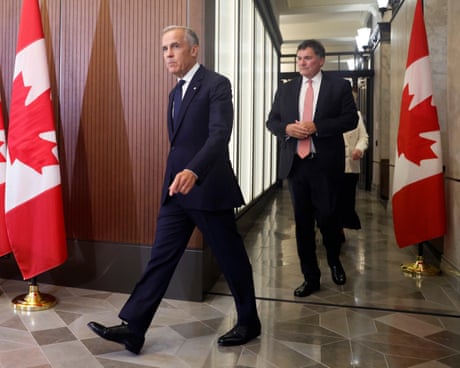
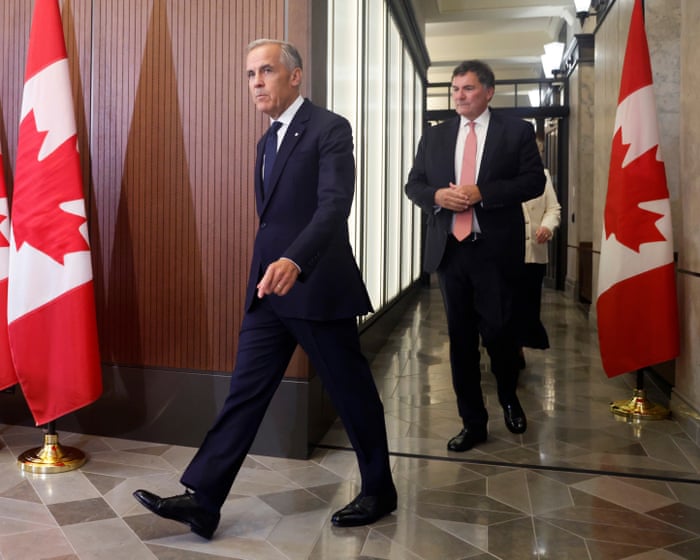
The Canadians are exceedingly angry. I realise this can sometimes be difficult for foreigners to deduce, given our national struggle to express the full range of human emotion outside ice hockey riots. However, let me assure you that the prime minister Canadians saw take the stage on Saturday morning in the wake of the collapse in trade negotiations with the US was a Mark Carney practically vibrating with fury.
“You’re at war when you get attacked. We got attacked,” he said, in a rare press conference that was as candid and clear as he ever tends to be. “That’s fine … We’ve got the reserves, we’ve got the resilience, we’ve got the plan, we’ve got the focus. We’re gonna respond, we’re going to focus on what we can control and what we’re going to build.”
Jen Gerson is a Canadian commentator and co-founder of The Line. She lives in Calgary, Alberta
Detailed accounts of the final hours of the negotiations show that, while the United States offered Canada what it said was the best deal of any country, what Canada had to give up in exchange was seen as unthinkable.
Detailed accounts of the final hours of the negotiations show that, while the United States offered Canada what it said was the best deal of any country, what Canada had to give up in exchange was seen as unthinkable.
The State Department, in a move that could affect as many as 200,000 visa holders and asylum applicants, has begun its review. Cancellations could occur in waves.
The State Department, in a move that could affect as many as 200,000 visa holders and asylum applicants, has begun its review. Cancellations could occur in waves.
“Obtaining a visa in order to seek asylum is fraud — which is grounds for visa revocation,” Tommy Pigott, a State Department spokesman, said in a statement.
The Brooklyn Democrat, who is in line to be speaker should his party win the House, has drawn ire from some progressives for huddling with the president’s son-in-law.
The Brooklyn Democrat, who is in line to be speaker should his party win the House, has drawn ire from some progressives for huddling with the president’s son-in-law.
The state department will revoke B1 and B2 visas issued between 2016 and 2026, whose holders have sought or are now seeking asylumDonald Trump’s administration said on Monday it planned to revoke the non-immigrant visas of foreigners who have applied for or are currently seeking asylum status in the US, marking its latest step in a sweeping immigration crackdown.A state department spokesperson said it was coordinating with the Department of Homeland Security (DHS) “to identify and revoke the non
The state department will revoke B1 and B2 visas issued between 2016 and 2026, whose holders have sought or are now seeking asylum
Donald Trump’s administration said on Monday it planned to revoke the non-immigrant visas of foreigners who have applied for or are currently seeking asylum status in the US, marking its latest step in a sweeping immigration crackdown.
A state department spokesperson said it was coordinating with the Department of Homeland Security (DHS) “to identify and revoke the non-immigrant visas of foreigners who have come to the United States claiming to be short-term visitors, but then file for asylum to stay here permanently”.
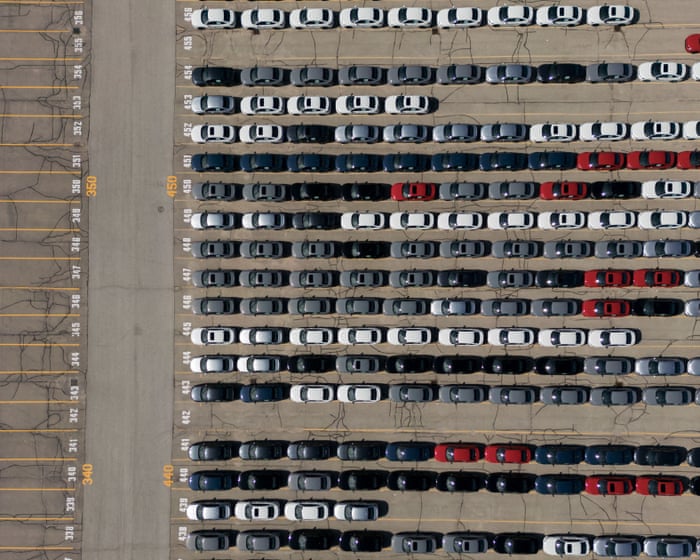
The 50 percent tariffs President Trump imposed on Canadian exports to the United States will make it impossible for many Canadian companies to continue to sell to the U.S. market, economists say.
The 50 percent tariffs President Trump imposed on Canadian exports to the United States will make it impossible for many Canadian companies to continue to sell to the U.S. market, economists say.
The Trump administration has called for an overhaul of the H-1B visa program, saying it has unfairly allowed companies to sideline Americans and hire foreign workers at lower pay.
The U.S. has spent 20 years promising ‘crippling sanctions’ on Iran. But the latest effort comes with a reverse twist, after military action failed to accomplish President Trump’s goals.
The U.S. has spent 20 years promising ‘crippling sanctions’ on Iran. But the latest effort comes with a reverse twist, after military action failed to accomplish President Trump’s goals.
In announcing Operation Economic Outcast, the Trump administration said on Monday that it would involve choking off every last transaction that funnels money to Tehran.
That effort got new attention on Monday, when the Supreme Court allowed preparations for mail voting curbs to proceed. The justices said it is not a final determination on the order’s legality.
That effort got new attention on Monday, when the Supreme Court allowed preparations for mail voting curbs to proceed. The justices said it is not a final determination on the order’s legality.
The Supreme Court’s emergency docket has shrunk in recent months, and the way justices issue opinions on these cases has also changed. Our reporter Ann Marimow looks at what these shifts tell us about the justices, and what it could mean for the court.
The Supreme Court’s emergency docket has shrunk in recent months, and the way justices issue opinions on these cases has also changed. Our reporter Ann Marimow looks at what these shifts tell us about the justices, and what it could mean for the court.
The administration asked the court to clear the way for President Trump’s order that creates “state citizenship lists” and directs the Postal Service to decide who gets a mail-in ballot.
The administration asked the court to clear the way for President Trump’s order that creates “state citizenship lists” and directs the Postal Service to decide who gets a mail-in ballot.
Justices’ ruling comes after lower courts had blocked president’s election order ahead of November midtermsThe US supreme court sided with Donald Trump on Monday in his effort to crack down on mail-in voting, though it remains unclear if his administration can take action ahead of the midterm elections in November.Justices on the court voted 6-3 along ideological lines to lift an injunction from June that a judge in Massachusetts placed on an executive order issued by the president. But a second
Justices’ ruling comes after lower courts had blocked president’s election order ahead of November midterms
The US supreme court sided with Donald Trump on Mondayin his effort to crack down on mail-in voting, though it remains unclear if his administration can take action ahead of the midterm elections in November.
Justices on the court voted 6-3 along ideological lines to lift an injunction from June that a judge in Massachusetts placed on an executive order issued by the president. But a second injunction remains in placeand the ruling leaves room for legal challenges.
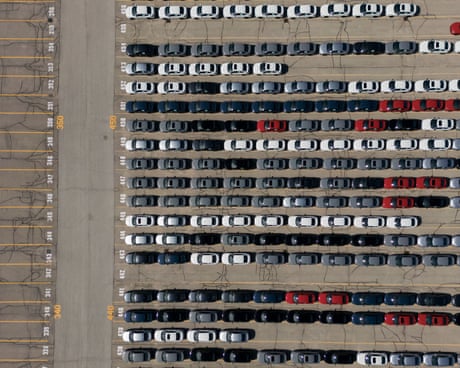
Move is latest deterioration in trade relations between neighbors with historically strong economic tiesDonald Trump announced a new 50% tariff on automobiles and crucial raw materials from Canada, the latest deterioration in trade relations between the two neighbors with historically strong economic ties.The US president said that the increased tariffs would start on 1 January 2027 on all cars, trucks, automobile parts and steel. He also derided the nation’s tariffs on American farmers, writing
Move is latest deterioration in trade relations between neighbors with historically strong economic ties
Donald Trump announced a new 50% tariff on automobiles and crucial raw materials from Canada, the latest deterioration in trade relations between the two neighbors with historically strong economic ties.
The US president said that the increased tariffs would start on 1 January 2027 on all cars, trucks, automobile parts and steel. He also derided the nation’s tariffs on American farmers, writing on social media that Canada has been “ripping off” the US “for years”.
Prime minister praised for rejecting US trade proposal as Trump shows little interest in retreating from disputeAre you a Canadian boycotting US products? We’d like to hear from youMark Carney said on Monday that while American negotiators saw the French language in Canada as an “irritant … in Quebec, these are rights,” days after receiving widespread praise from political leaders for rejecting a US trade proposal that many perceived as weakening the country’s Francophone culture.The prime minis
Mark Carney said on Monday that while American negotiators saw the French language in Canada as an “irritant … in Quebec, these are rights,” days after receiving widespread praise from political leaders for rejecting a US trade proposal that many perceived as weakening the country’s Francophone culture.
The prime minister’s remarks came hours after the US president, Donald Trump, showed little interest in retreating from the spat, posting on social media that Canada had been “ripping off the United States of America for years” and threatening a swath of new, economically devastating tariffs on cars and trucks.
Exclusive: internal correspondence reveals USCIS anti-fraud officers shifted on to two ‘high-priority’ initiativesAll US immigration officers working for a key anti-fraud unit have been reassigned by the Trump administration to focus on screening South African refugees and alleged “unlawful” voters.Fraud Detection and National Security Directorate (FDNS) immigration officers have been shifted full-time on to two “high-priority” initiatives, according to internal correspondence seen by the Guardi
Exclusive: internal correspondence reveals USCIS anti-fraud officers shifted on to two ‘high-priority’ initiatives
All US immigration officers working for a key anti-fraud unit have been reassigned by the Trump administration to focus on screening South African refugees and alleged “unlawful” voters.
Fraud Detection and National Security Directorate (FDNS) immigration officers have been shifted full-time on to two “high-priority” initiatives, according to internal correspondence seen by the Guardian, leaving US Citizenship and Immigration Services (USCIS) unable to provide officers to train asylum officers in “the near future”.
The president rallied for the sister of Lindsey Graham in her South Carolina Senate run and pressured allies to endorse her. A super PAC run by his advisers has spent nearly $800,000 on her campaign. Will it be enough?
The president rallied for the sister of Lindsey Graham in her South Carolina Senate run and pressured allies to endorse her. A super PAC run by his advisers has spent nearly $800,000 on her campaign. Will it be enough?
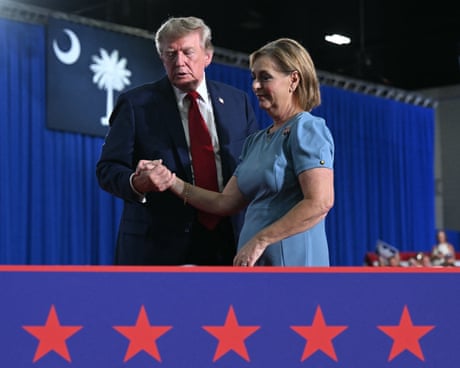
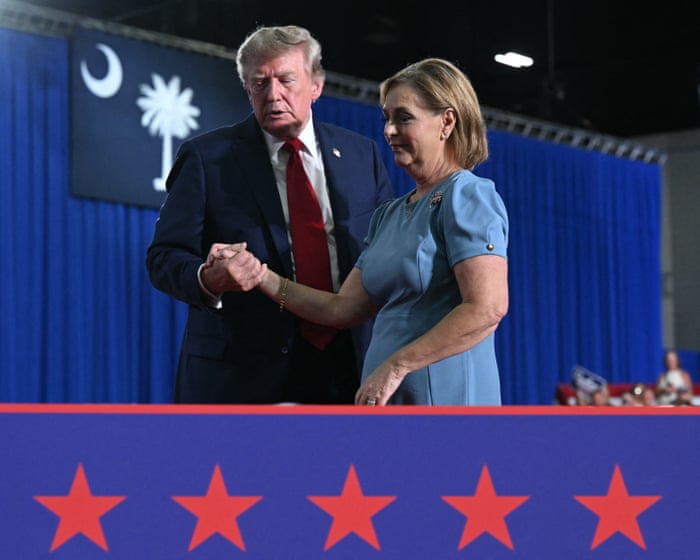
President Trump rallied for Senator Darline Graham of South Carolina in Myrtle Beach, S.C., on Friday, part of a full-court press to secure her victory in a special runoff primary Tuesday to replace her late brother.
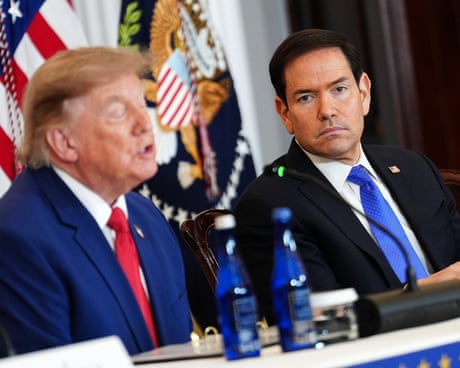
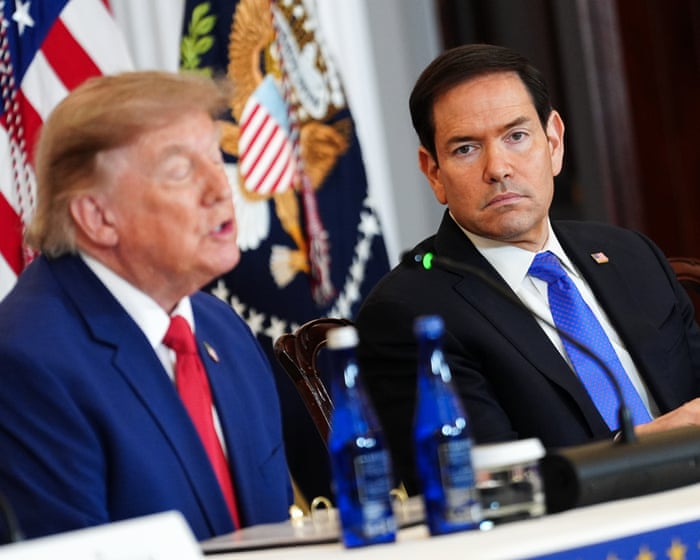
Treasury Secretary Scott Bessent said the United States would “tighten the noose” around Iran by imposing sanctions on every source or facilitator of its revenue.

 Connexion