Ukraine has knocked out seven of the 10 largest logistics hubs run by Russia's biggest online retailer, the US-based Institute for the Study of War assessed. The strikes are part of a campaign to wear down Russia's defense industry and the dual-use supply lines that feed its war. The newest raids hit two warehouses near Moscow overnight.
Ukraine has pushed its long-range drone war deep into Russia, hunting the oil, freight, and factory sites that keep Moscow's invasion
Ukraine has knocked out seven of the 10 largest logistics hubs run by Russia's biggest online retailer, the US-based Institute for the Study of War assessed. The strikes are part of a campaign to wear down Russia's defense industry and the dual-use supply lines that feed its war. The newest raids hit two warehouses near Moscow overnight.
Ukraine has pushed its long-range drone war deep into Russia, hunting the oil, freight, and factory sites that keep Moscow's invasion supplied. Each strike that lands far from the front tests how much of its own territory Russia can actually defend. ISW assessed that the campaign is squeezing both Russia's economy and its overstretched air defenses, with no sign the retailer's biggest depots are getting any safer.
Two hubs near Moscow burned overnight
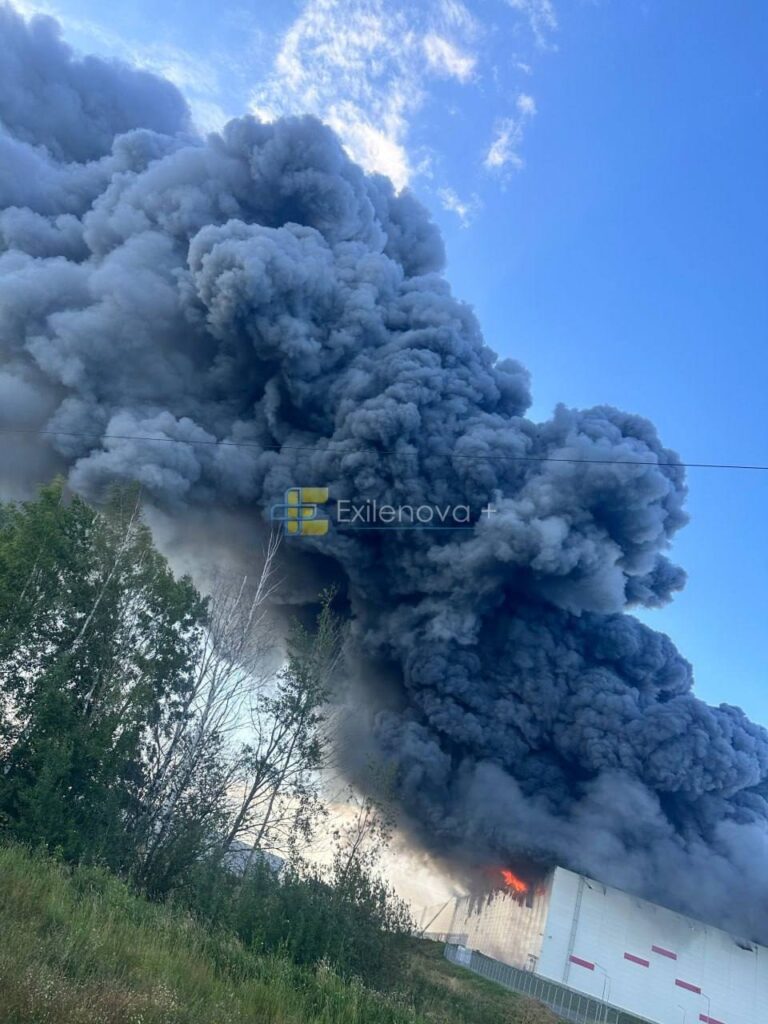
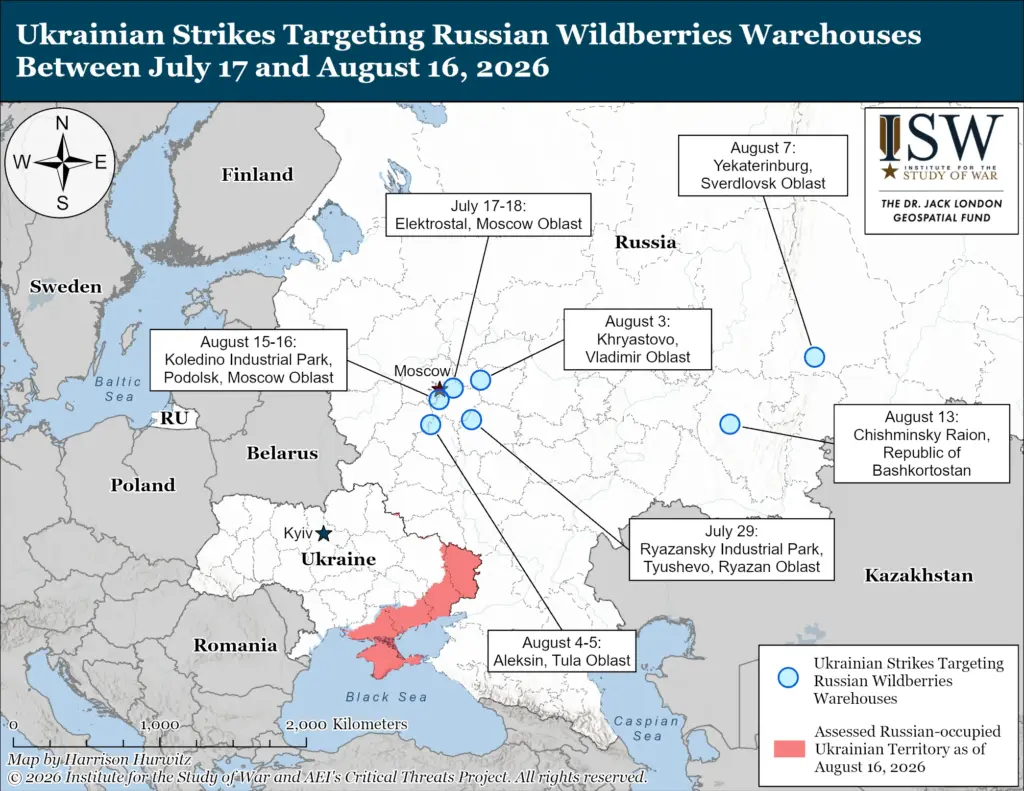
On 15-16 August, Ukrainian drones struck Wildberries' single largest hub, a 250,000-square-meter depot in the Koledino Industrial Park in Podolsk, Moscow Oblast. Ukraine's Defense Ministry reported the hit, about 420 kilometers from the border.
Explore further
“One of the most massive” Ukrainian drone attacks hits Moscow Oblast: two major warehouses ablaze
Wildberries confirmed the fire and said it had to reorganize its supply chains. Moscow Oblast Governor Andrei Vorobyov acknowledged the strike, and geolocated footage showed the depot ablaze.
Drones also hit a second warehouse the same night, in Domodedovo, roughly 430 kilometers from the border. Footage showed a fire at the Severnoye Domodedovo complex.
Why the warehouses are targets
Ukrainian officials say Wildberries helps supply the Russian military, moving drone components and navigation gear. Kyiv folded the retailer into a deep-strike campaign that began in mid-July.
The company is Russia's answer to Amazon, its largest online marketplace. Its sprawling depots make broad, hard-to-defend targets.
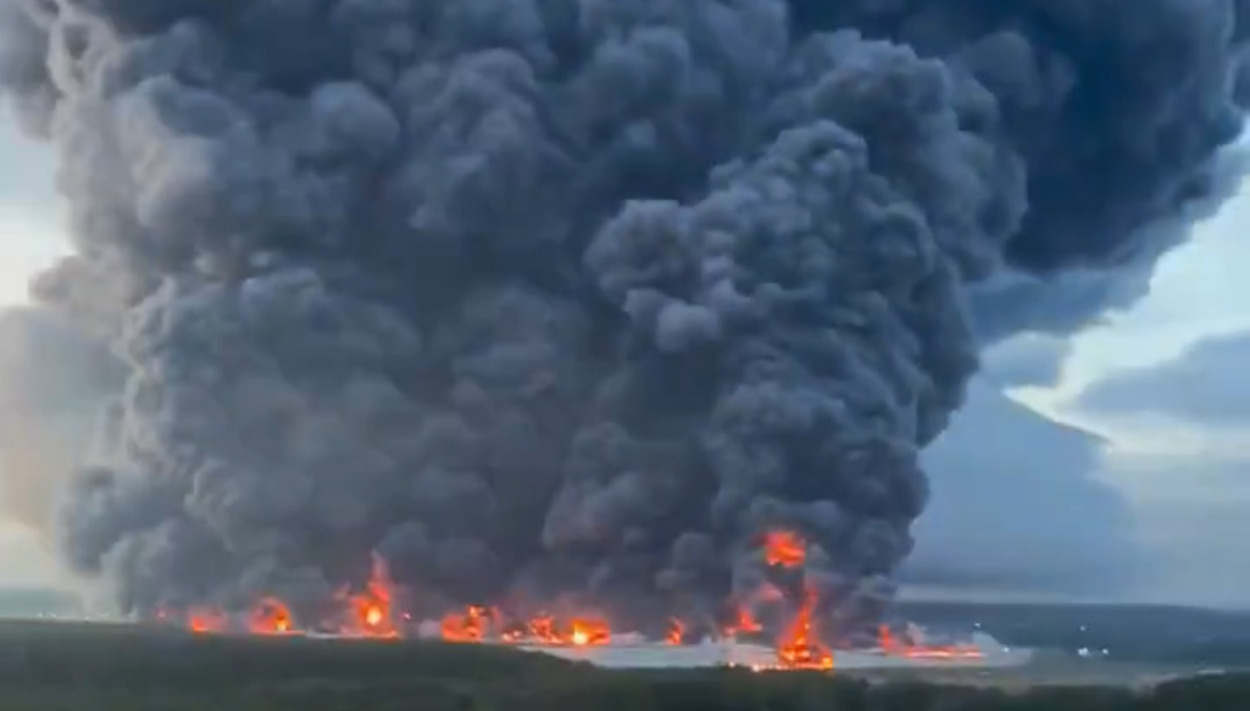
Wildberries warehouse burning in Russia's Koledino following a Ukrainian drone strike, 16 August 2026. Screenshot from video: bayraktar_1love
The damage keeps growing
By early August, the strikes had destroyed at least 1.18 million square meters of Wildberries storage, about a fifth of its capacity, ISW noted. The toll has climbed since.
The losses ripple outward to independent sellers who rent space in the hubs. Many have watched their stock burn with no compensation.
A drone hit a major Wildberries warehouse at Koledino near Moscow overnight on 16 August 2026 and set it ablaze, Moscow Oblast Governor Andrey Vorobyov said. Vorobyov described the overnight swarm as “one of the most massive drone attacks in recent times.”
It comes amid an expanding Ukrainian campaign against Wildberries, Russia's largest online retailer with a vast network of warehouses and logistics centers, that has reached warehouses from Moscow Oblast to the Urals.
A drone hit a major Wildberries warehouse at Koledino near Moscow overnight on 16 August 2026 and set it ablaze, Moscow Oblast Governor Andrey Vorobyov said. Vorobyov described the overnight swarm as “one of the most massive drone attacks in recent times.”
It comes amid an expanding Ukrainian campaign against Wildberries, Russia's largest online retailer with a vast network of warehouses and logistics centers, that has reached warehouses from Moscow Oblast to the Urals. Ukrainian authorities say Wildberries facilities are used to supply components for Russian drone production and navigation equipment, making them part of Russia’s wartime logistics network.
The Koledino fire puts a major part of Wildberries’ storage and sorting capacity at risk. At about 250,000 square meters, the complex is one of the retailer’s largest logistics hubs. Ukrainian sources say the marketplace has moved drone parts and other military-linked goods. Wildberries denies supporting Russia’s military.
Wildberries’ parent company, RWB, confirmed the fire, saying workers had been evacuated and deliveries rerouted.
Unlike the 28 July fire at Koledino industrial park, the latest blaze was confirmed at Wildberries’ own Koledino warehouse. Initial reports in July had also pointed to Wildberries, but open-source investigators later identified the burning building as a neighboring warehouse run by a third-party logistics company.
The entire Wildberries logistics hub in Koledino, Moscow Oblast, is engulfed in flames following today’s attack.
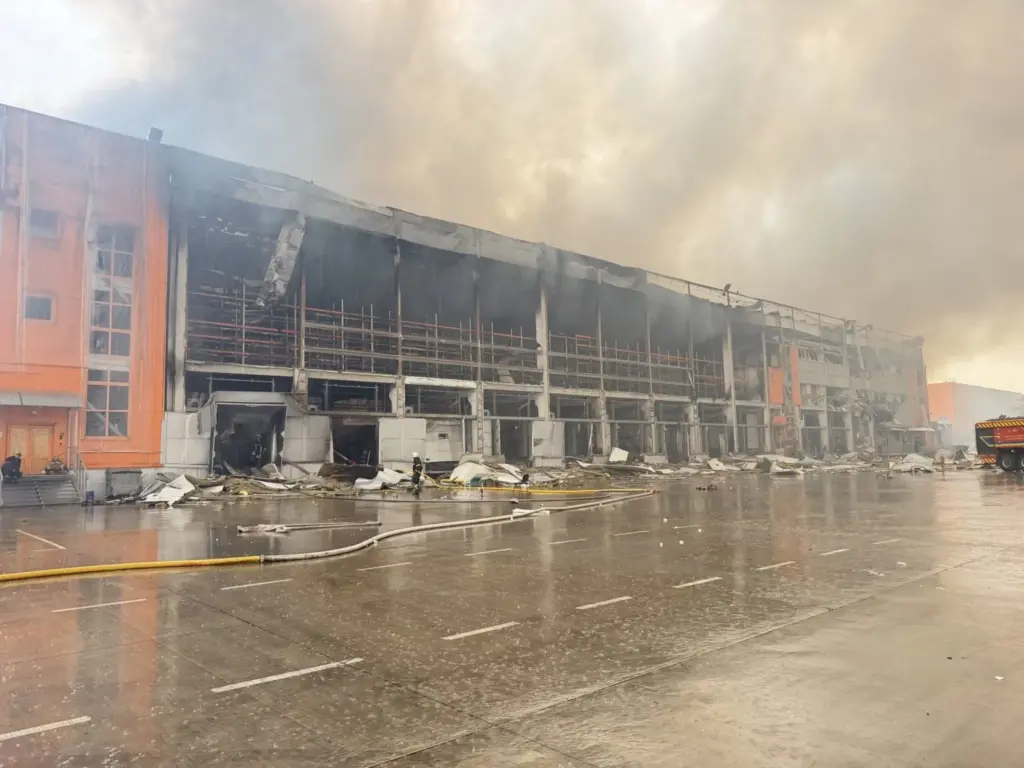
A second fire broke out at Warehouse No. 15 in MLP Severnoye Domodedovo, a multimodal logistics complex near one of Moscow’s main airports. Vorobyov said the warehouse stores medications.
Vorobyov claimed an 83-year-old man was killed after a drone fell on a private home in the Ramenskoye district, while at least six other people were injured across the region.
Moscow Mayor Sergei Sobyanin claimed that Russian air defenses destroyed 201 drones approaching the region.
Ukraine confirms Wildberries warehouse was targeted
Ukraine’s Defense Ministry confirmed that the Wildberries logistics hub in the Koledino industrial park was put out of operation during the overnight drone attack.
The ministry said the facility, which covered 250,000 square meters, was Wildberries’ largest warehouse by area. It also said Ukraine has now disabled seven of the company’s 10 largest logistics centers.
Ukraine’s campaign against Wildberries keeps growing
Ukraine’s campaign against Wildberries began on 18 July 2026, when drones struck warehouses in Elektrostal and Kotovsk. Reported attacks have since reached the retailer’s sites across Russia, including a newly opened hub near Voronezh and a warehouse in Tver targeted three times in two weeks.
By 14 August, Agentstvo had counted fires at more than 20 Wildberries sites. The sustained attacks had already prompted Wildberries to prohibit warehouse workers from bringing smartphones to work, citing concerns that photos and videos taken during drone alerts could pose a security risk.
The effects on Russia’s economy
The number and geographic spread of Ukraine’s strikes have put sustained pressure on the retailer’s nationwide warehouse network and Russia’s economy at large.
Earlier fires destroyed goods belonging to independent sellers, The Moscow Times reported. Wildberries said it was considering compensation, although its contracts do not require the company to cover losses caused by drone attacks.
In response to Ukraine’s strikes, the company has also reportedly sought additional storage in Kazakhstan, giving local warehouse operators greater leverage as it tries to replace capacity lost in Russia.
The physical disruption was followed on 15 August by a Ukrainian cyberattack targeting Wildberries’ payment and customer service systems. The hackers said customers could not make payments or reach the company through its main online support channel.
Ukraine has hit Russia's biggest marketplace in cyberspace as well as with drones. Cyber specialists disrupted Wildberries' operations across Russia, Ukraine's Defense Ministry's Main Intelligence Directorate (HUR) reports.
Ukraine says that Wildberries is not ordinary commerce but a piece of Russia's war logistics. According to the military command, the network moves military-related goods, and President Zelenskyy has said Russia uses the platform to bring in sanction
Ukraine has hit Russia's biggest marketplace in cyberspace as well as with drones. Cyber specialists disrupted Wildberries' operations across Russia, Ukraine's Defense Ministry's Main Intelligence Directorate (HUR) reports.
Ukraine says that Wildberries is not ordinary commerce but a piece of Russia's war logistics. According to the military command, the network moves military-related goods, and President Zelenskyy has said Russia uses the platform to bring in sanctioned drone components, which is why Ukraine has spent weeks burning its warehouses and now strikes its servers.
HUR reports that on 10 and 11 August, specialists from the Cyber Corps community attacked Wildberries' digital infrastructure, causing failures in its payment and customer service systems.
The attack hit payments and support
The disruption struck where customers feel it. Because of the problems with the payment infrastructure, users complained they could not complete certain transactions.
For a platform whose whole value is the frictionless movement of goods and money, a payment system that will not process transactions is a direct hit to the business.
The strain spread to customer service. At the same time, the load on the support service rose, causing failures in the contact centers, so the attack degraded both the ability to pay and the ability to get help across Russia.
It pairs with the warehouse strikes
In July, Ukrainian drones destroyed eight Wildberries warehouses, about 15.4% of the marketplace's storage.
Pairing strikes on physical infrastructure with Ukrainian cyber operations strengthens the pressure on the company, HUR assessed.
The logic is to squeeze the same target from two directions at once: burn the warehouses that store the goods, then disable the systems that move them to customers, so damage in one domain amplifies damage in the other.
Earlier, Ukraine hit the Progress Rocket Space Center in Samara, which builds Soyuz-2 rockets used to launch Rassvet, Russia’s planned alternative to Starlink.
Drones have pushed armored vehicles off the roads to Ukraine's front line, a Ukrainian brigade commander told RBC-Ukraine. Denys Perch, who commands the 107th Territorial Defense Brigade, says the drone-saturated belt has grown so deep that pickups no longer reach forward positions. The one enemy weapon his jammers can't touch is the fiber-optic drone.
The war has become a contest over who can pull people off the battlefield fastest, as cheap drones make any human movem
Drones have pushed armored vehicles off the roads to Ukraine's front line, a Ukrainian brigade commander told RBC-Ukraine. Denys Perch, who commands the 107th Territorial Defense Brigade, says the drone-saturated belt has grown so deep that pickups no longer reach forward positions. The one enemy weapon his jammers can't touch is the fiber-optic drone.
The war has become a contest over who can pull people off the battlefield fastest, as cheap drones make any human movement near the front a target. Ukraine keeps out-inventing Russia at the front, but Russia copies each advance and floods the line with it at state scale.
When armor becomes the target
Until recently, armored vehicles still drove supplies to logistics hubs near the front. That is now almost impossible. Perch says that when a large, armored machine appears, Russian forces treat it as a prize target and swarm it with dozens of drones and munitions. Perch would sooner park his armor than seat soldiers inside it.
Explore further
This Ukrainian UGV, beloved by Ukrainian intel, is now winning over NATO countries and global defense giants
A kill zone that keeps widening
On the busiest sectors, Perch says, the kill zone—the drone-ruled strip around the contact line—now runs 15 to 20 kilometers deep. Some positions take three days to reach on foot. Where troops once drove most of the way and walked the last stretch, they now walk it all.
Robots take the drive
Under Perch, the brigade climbed, by his account, from around 22nd to third among Ukraine's Territorial Defense forces on the military's strike-results leaderboard, the home-guard units now fighting on the front. Ground robots—unmanned ground vehicles (UGVs)—do the work that armor cannot. They haul supplies and evacuate the wounded, though the robot often can't be brought back. His brigade runs over 1,500 logistics missions a month by heavy bomber drones alone, and still more by first-person-view (FPV) drones and robots. Russia hunts those bombers, he says, with interceptors that scramble the moment they hear one take off, so his crews mix high and low flight to slip past. Perch expects robots to move from supply runs into combat, hitting Russian troops in their rear.
Explore further
Ukraine wants robots doing 100% of frontline logistics. In June, they ran nearly 17,000 supply and evacuation runs
The drone his jammers can't touch
Both armies now field fiber-optic drones—machines guided by a hair-thin glass thread instead of radio. No signal means nothing to jam. Ukraine learned to block radio and digital drones, cutting their controls and video, Perch said. The glass-fiber ones his electronic warfare cannot reach, because there is no radio link to attack. His brigade still has no counter to them, Perch said, and he wants a technical fix that stops them.
Ukrainian partisans say they crippled a locomotive moving Russian military supplies to the front. Agents of the ATESH movement carried out a sabotage operation near Voronezh, destroying the cab of an electric locomotive used to support military transport, ATESH reported.
Disabling a single locomotive cripples the entire supply line. The locomotive was supposed to continue its journey toward the Kupiansk direction, and after the cab was damaged, operating the machine at
Ukrainian partisans say they crippled a locomotive moving Russian military supplies to the front. Agents of the ATESH movement carried out a sabotage operation near Voronezh, destroying the cab of an electric locomotive used to support military transport, ATESH reported.
Disabling a single locomotive cripples the entire supply line. The locomotive was supposed to continue its journey toward the Kupiansk direction, and after the cab was damaged, operating the machine at its former pace became impossible, disrupting the schedule for forming and dispatching the next trains.
The target was a rail supply line to the front
ATESH said the sabotage hit a link in Russia's military logistics chain. The locomotive was part of the rail transport that moves Russian military cargo, and it was bound for the Kupiansk direction, one of the active sectors of the front in Kharkiv Oblast.
Russia depends heavily on railways to supply its forces. Its army moves ammunition, fuel, weapons, and heavy equipment to the front largely by rail, so the locomotives and the lines they run on are critical arteries of its war effort. A partisan network can reach them behind the front lines at a vulnerable point.
One damaged locomotive slows the whole chain
ATESH framed the value of the strike in terms of the cascade it sets off. The loss of even one link in the mainline causes delays in the delivery of ammunition, fuel, weapons, and heavy equipment.
Those delays compound at the front. When rear supply operations are interrupted, units lose combat effectiveness and suffer significant personnel losses, ATESH said, casting a single sabotaged locomotive as a blow that reaches the soldiers, depending on what it was carrying.
The strike fits ATESH's partisan campaign
Euromaidan Press cannot independently verify the Voronezh sabotage, which is ATESH's own account. But rail sabotage is a documented feature of the war behind Russian lines, and the movement's focus on the logistics that feed the front reflects a real vulnerability in an army that runs on rail.
Russia destroyed a Bosch warehouse in Ukraine overnight into 5 August, the German manufacturer said. The strike wiped out its stock of household goods and industrial technology. No Bosch employee or worker for its logistics partner was injured.
The strike was part of Russia's intensified attacks on the warehouses and distribution centers that supply Ukraine. Destroying these facilities eliminates stored goods and disrupts the delivery of food, parcels, equipment, and ot
Russia destroyed a Bosch warehouse in Ukraine overnight into 5 August, the German manufacturer said. The strike wiped out its stock of household goods and industrial technology. No Bosch employee or worker for its logistics partner was injured.
The strike was part of Russia's intensified attacks on the warehouses and distribution centers that supply Ukraine. Destroying these facilities eliminates stored goods and disrupts the delivery of food, parcels, equipment, and other essential products. Recent attacks have hit both Ukrainian companies and international brands operating in the country.
Bosch said the warehouse premises belonged to its logistics partner. The company's preliminary assessment found that all Bosch products stored there had been destroyed. It did not disclose the location.
Bosch and its logistics partner are now assessing the damage. They are also seeking ways to maintain operations and meet commitments to customers and business partners.
Russia launches anti-ship missiles on stocks
The Bosch loss came during the same overnight barrage that devastated warehouses and production sites across Kyiv and the surrounding region. Russian strikes destroyed facilities used by Rozetka, Nova Poshta, and Epicentr. The three companies distribute parcels, household goods, and construction supplies across Ukraine.
That attack killed 17 people and wounded 44. Ukraine intercepted none of the 24 ballistic missiles or four anti-ship missiles Russia launched, according to Ukrainian officials.
Ukraine is looking for ways to protect its businesses
The same night, a strike burned down the central Ukraine warehouse of German automotive-products maker Liqui Moly. All employees escaped injury, and the company said it would continue operating.
Russia's overnight barrage burned down the Ukrainian warehouse of a German household brand, Liqui Moly. Source: Liqui Moly
Two nights earlier, a Russian drone attack outside Dnipro set food warehouses ablaze. On 1 August, another Russian drone hit a Rozetka warehouse where 270 people were working, killing one employee.
The campaign comes as Russia launches more missiles than Ukraine can reliably stop. Moscow fired 376 missiles in July, including 126 ballistic weapons, Euromaidan Press previously reported.
Ukrainian presidential adviser Serhii Beskrestnov said Russia had intensified attacks on warehouses and production sites. He warned businesses to disperse their stocks. Russia can sustain about 100 ballistic-missile launches a month and locate commercial targets using cheap local informants, he said.
Editor's note: This is a developing story and is being updated.Ukrainian forces reportedly struck a Russian logistics hub and an oil depot in Russian-occupied Luhansk and a military base in occupied Donetsk on June 30 and July 1, with fires breaking out in the two cities."Russian logistics in temporarily occupied Luhansk are burning," head of Ukraine's Center for Countering Disinformation Andrii Kovalenko said.The drone attack was reported by the local media, publishing what appear to be videos
Editor's note: This is a developing story and is being updated.
Ukrainian forces reportedly struck a Russian logistics hub and an oil depot in Russian-occupied Luhansk and a military base in occupied Donetsk on June 30 and July 1, with fires breaking out in the two cities.
"Russian logistics in temporarily occupied Luhansk are burning," head of Ukraine's Center for Countering Disinformation Andrii Kovalenko said.
The drone attack was reported by the local media, publishing what appear to be videos of the burning logistics hub and the sound of drones.
Leonid Pasechnik, head of the Russian occupation authorities in Luhansk Oblast, reported that air defenses shot down 35 of the 40 drones over Luhansk Oblast. Drone wreckage fell on the premises of an oil depot, and a woman was injured, Pasechnik claimed.
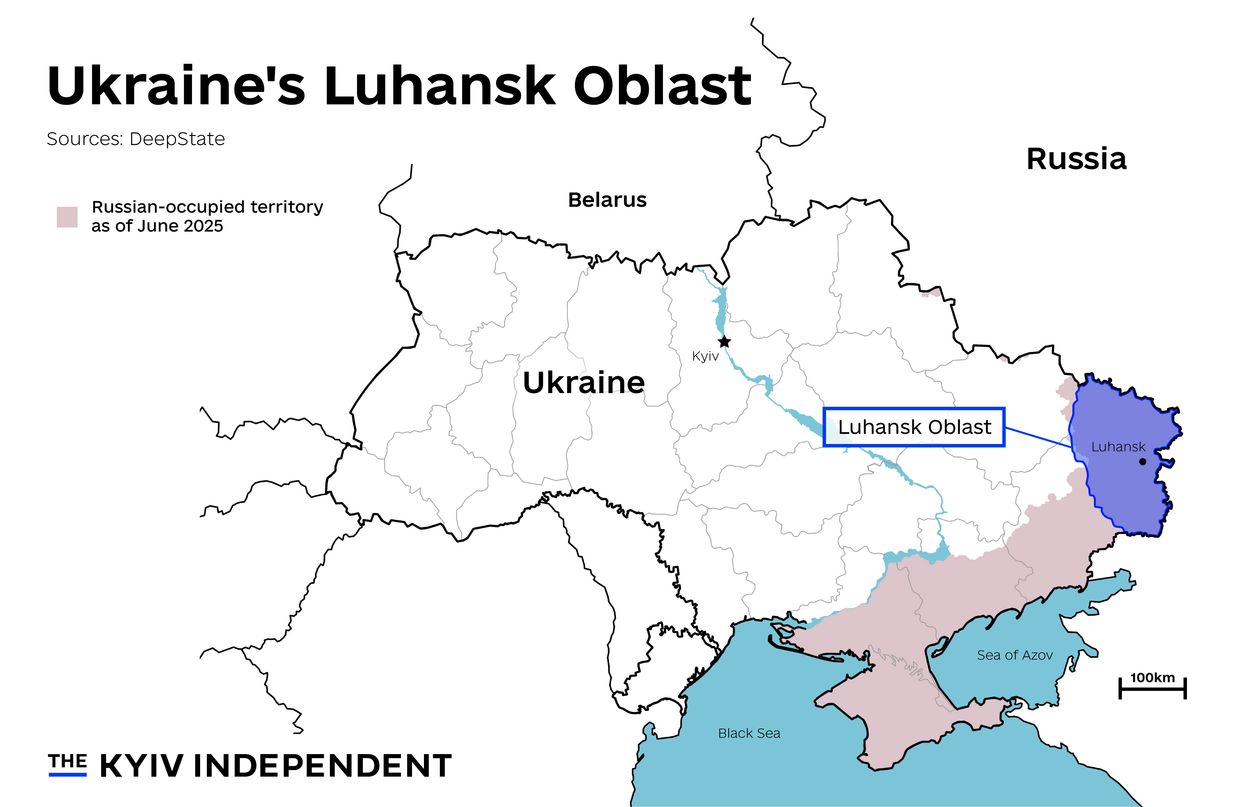
Ukraine's Luhansk Oblast (Nizar al-Rifai/The Kyiv Independent)
Overnight Ukrainian attacks were also reported in occupied Donetsk, with Telegram news channels sharing apparent footage of damaged buildings and fires in the city.
Denis Pushilin, the head of the Russian occupation authorities in Donetsk Oblast, claimed that one person was killed and three were injured in the attack. Ukrainian news channel Supernova+ reported that the attack targeted the headquarters of Russia’s 8th Combined Arms Army.
The Ukrainian military has not commented on the claims, which could not be independently verified.
Videos from occupied Donetsk after Ukrainian strike on the evening of June 30. Ukrainian analysts and media report a military facility was hit, while the “DPR” head says a woman was killed and three civilians injured
Ukraine's military regularly strikes military targets in Russian-occupied territories and deep within Russia in an attempt to diminish Moscow's fighting power as it continues its war against Ukraine.
Ukraine's military intelligence (HUR) destroyed three Russian air defense systems using drones in the occupied Zaporizhzhia Oblast on June 14.
"Strike drone masters of the Department of Active Operations of the HUR of the Ukrainian defense ministry discovered and destroyed expensive air defense systems of the Russian invaders in the temporarily occupied territory of the Zaporizhzhia region," HUR reported in a post to Telegram.
A Russian Buk-M3, a Pantsyr S1, and a 9S19 Imbir radar from the S-300V air defense system were destroyed in the Ukrainian drone attack.

 Connexion



 (@bayraktar_1love)