Vue normale

  • ✇Euromaidan Press
  • Poland and the Baltics risk Russian sabotage for backing Ukraine, Bloomberg says
    Russia may expand hybrid attacks against Poland and the Baltic states, including infrastructure sabotage or false-flag attacks, Bloomberg reported on 12 August, citing an unnamed European intelligence official.  The warnings come amid concern that Moscow wants to intimidate Ukraine’s supporters. The CIA warning follows Russian threats, incursions, alleged sabotage plots, and disinformation against Poland and the Baltic states. Most Western military aid reaches Ukraine t
     

Poland and the Baltics risk Russian sabotage for backing Ukraine, Bloomberg says

13 août 2026 à 09:29

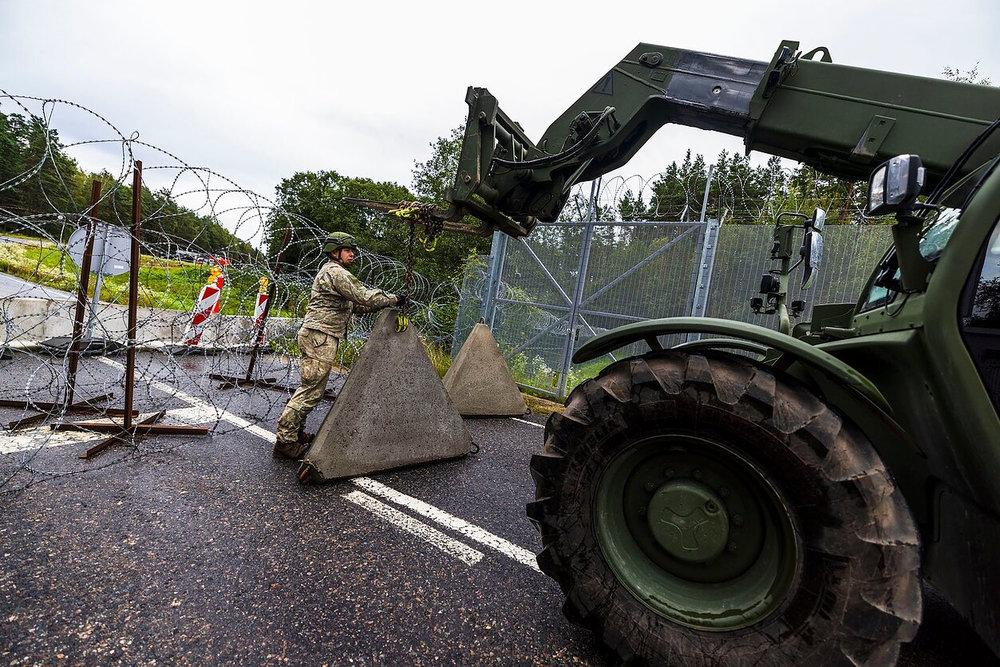
Lithuanian soldier installs concrete barriers and razor wire across a road during a civil defense exercise.

Russia may expand hybrid attacks against Poland and the Baltic states, including infrastructure sabotage or false-flag attacks, Bloomberg reported on 12 August, citing an unnamed European intelligence official. 

The warnings come amid concern that Moscow wants to intimidate Ukraine’s supporters. The CIA warning follows Russian threats, incursions, alleged sabotage plots, and disinformation against Poland and the Baltic states. Most Western military aid reaches Ukraine through Poland, while the Baltic states rank among Kyiv’s strongest supporters. Sabotage of transport, energy, or communications can slow aid delivery and test NATO while hiding Russia’s role.

Separately, a European government official told Bloomberg that the CIA had warned countries in the region of a possible future Russian attack. The CIA declined to comment.

The same official said Russia might instead be creating the impression of an impending attack to sow fear as part of an information operation. The official saw no signs that Moscow was preparing a conventional attack or invasion.

Moscow tests NATO’s eastern flank

Poland and Lithuania had already raised similar concerns. In July, Poland said it had credible intelligence that Russia was planning new provocations. Lithuania later warned that Moscow might rebuild captured Ukrainian drones for false-flag strikes on critical infrastructure.

In September 2025, between 19 and 23 Russian drones entered Polish airspace, shutting down airports and damaging buildings. Poland closed four airports as NATO aircraft responded.

Meanwhile, five people are on trial in Lithuania over attacks allegedly organized for Russian military intelligence in 2024, Bloomberg reported. Lithuania has reinforced infrastructure sites and deployed troops since June.

These warnings and incidents place the CIA alert within a wider pattern of pressure on NATO’s eastern flank and Ukraine’s supporters. 

How Russia strikes without starting a war

Bloomberg cited several recent unexplained drone incidents in Germany alongside the CIA warning. Citing Die Zeit, Euromaidan Press reported that an explosive-laden drone struck the wing of a parked Ukrainian An-124 at Leipzig-Halle airport and failed to detonate. A US Defense Department official in Europe told CNN that Washington assessed the drone belonged to Russian intelligence. 

Bloomberg also reported that a cargo plane hit an unidentified object and that drones appeared over a military base the following day. It did not connect either incident to Russia.

More broadly, Russian hybrid operations have grown sharply since the full-scale invasion. CSIS found that attacks in Europe tripled from 2023 to 2024, after quadrupling the previous year. Separately, the US Helsinki Commission mapped nearly 150 operations in NATO territory attributed to or suspected of Russia between February 2022 and November 2024.

Retired Lt. Gen. Ben Hodges told Euromaidan Press in February that attacks on ports, railways, and cables can probe routes needed for NATO reinforcements. Their deniability raises the political cost of responding.

By hiding its role, Moscow can disrupt support for Ukraine and test NATO without openly starting a war. 

Poland would rather the next Russian missile be downed over Ukraine than over its soil. It may send Kyiv more Patriots

13 août 2026 à 06:18

poland patriot

Poland will decide within days whether to send Ukraine another batch of Patriot interceptor missiles, Deputy Defense Minister Magdalena Sobkowiak-Czarnecka said in a radio interview RMF24. Any transfer, she said, has to be judged first against Poland's own security.

A Russian strike on NATO soil is now moving Warsaw where months of Ukrainian appeals had not. Sobkowiak-Czarnecka said Defense Minister Władysław Kosiniak-Kamysz leans toward sending more interceptors after a Russian missile crashed inside Poland on 30 July, and that he would rather one be shot down over Ukraine than reach Polish soil.

Tusk had signaled at the end of July that Warsaw would soon weigh sending more Patriots. Sobkowiak-Czarnecka's remarks are the first to put a timeline on that decision.

Warsaw had been split for weeks over whether giving up the missiles was the right call. She set that argument aside, saying only that a decision is a matter of the coming days.

A second handover from a thin stock

This would not be the first transfer. In the spring, Poland quietly gave Ukraine five PAC-3 MSE interceptors — the missiles a Patriot battery uses to stop ballistic threats — a move confirmed only in July, when the defense ministry declassified its aid records and Prime Minister Donald Tusk put the number at five.

The disclosure drew sharp criticism at home. Opposition figures noted that the PAC-3 is the only interceptor Poland holds capable of downing Russia's Iskander ballistic missiles — the same class of weapon now crossing into Polish airspace.

Why the interceptors are so scarce

PAC-3 interceptors are among the hardest munitions in NATO to spare. The United States builds them at a rate that does not cover its own needs, and only a handful of alliance members operate them at all.

Ukraine has been pressing for them for months. In early July, after one of the largest air attacks of the war, Kyiv appealed to nearly 40 countries to release Patriot missiles from existing stocks, warning that its air defenses cannot stop Russia's ballistic missiles without them.

Poland holds roughly 200 of the interceptors, by Ukrainian estimates — its own shield against the missiles now reaching its border. Kosiniak-Kamysz's reasoning turns that overlap into the case for giving some away: better the interceptor meets the missile over Ukraine than over Poland.

The transfer would come with Polish-Ukrainian relations at their lowest point in years. In May, Volodymyr Zelenskyy granted a special forces unit the honorary title "Heroes of the UPA" — the wartime insurgent army Poland blames for the Volhynia massacres of the 1940s, which Warsaw recognizes as genocide. Polish President Karol Nawrocki responded in June by stripping Zelenskyy of the Order of the White Eagle, the country's highest honor; three former Ukrainian presidents returned their own in solidarity, and Nawrocki has since tied Ukraine's path into the EU to the unresolved history. Yet the friction runs mostly at the presidential level. The aid decisions sit with the Tusk government, and it has kept the weapons — and now, in all likelihood, the interceptors — moving to Kyiv regardless.

  • ✇Euromaidan Press
  • Poles protest in 22 cities as attacks on Ukrainians escalate
    Demonstrators gathered in 22 Polish cities on Sunday, 9 August, to protest a rise in violence against Ukrainians, with most rallies beginning after 17:00, RMF24 reported. The Sunday rallies followed a demonstration two days earlier, on Friday, 7 August, under the slogan "My Poland doesn't hit, insult, or incite," when organizers submitted a petition signed by more than 11,000 people to the prime minister's office and the Ministry of Interior and Administration, demandin
     

Poles protest in 22 cities as attacks on Ukrainians escalate

9 août 2026 à 13:25

poland

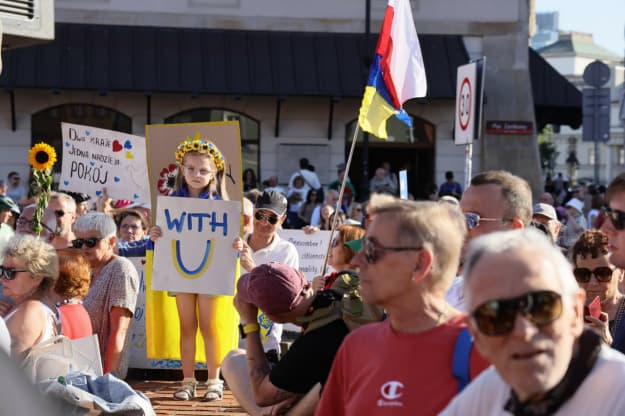
Demonstrators gathered in 22 Polish cities on Sunday, 9 August, to protest a rise in violence against Ukrainians, with most rallies beginning after 17:00, RMF24 reported.

The Sunday rallies followed a demonstration two days earlier, on Friday, 7 August, under the slogan "My Poland doesn't hit, insult, or incite," when organizers submitted a petition signed by more than 11,000 people to the prime minister's office and the Ministry of Interior and Administration, demanding decisive measures against violent attacks on Ukrainian citizens.

Nationwide campaign led by pro-democracy group

The Committee for the Defense of Democracy organized the nationwide campaign. Organizers said the demonstrations respond to increasingly frequent verbal and physical attacks on people targeted because of their origin, language, or appearance. The rallies were also meant to show solidarity with those experiencing violence and discrimination.

A slogan from Auschwitz

The phrase that became the demonstrations' slogan, "Don't be indifferent," was spoken by Marian Turski on 27 January 2020, during commemorations of the 75th anniversary of the liberation of the Auschwitz-Birkenau concentration camp. Turski, a former prisoner of the camp, used the speech to urge people not to accept cruel treatment of minorities, violations of human rights, and historical falsehoods.

Recent incidents

The number of attacks on Ukrainians in Poland has sharply increased in recent weeks. In Kraków, a 39-year-old man who had verbally insulted two people of Ukrainian nationality turned himself in at a police station on 8 August and was detained, according to reporting cited a day before the Sunday protests.

Separately, Tobiasz Bocheński, a member of the European Parliament and former candidate for mayor of Warsaw, said that if the Law and Justice party came to power, it would ensure the deportation of Ukrainian men of conscription age who are not legally employed in Poland. Poland's Ministry of Interior and Administration said such statements amount to populism.

  • ✇The Kyiv Independent
  • Poland establishes July 11 as National Day of Remembrance for Volyn massacre victims
    Polish President Andrzej Duda has signed legislation designating July 11 as the National Day of Remembrance for Poles who were victims of Volyn massacres, the Polish outlet RMF24 reported on July 2.The law passed both houses of Poland's parliament with reportedly near-unanimous support. Lawmakers said victims of the massacres deserve a permanent place in the nation's collective memory.The law states that from 1939 to 1946, members of the Organization of Ukrainian Nationalists (OUN), the Ukrainia
     

Poland establishes July 11 as National Day of Remembrance for Volyn massacre victims

3 juillet 2025 à 03:05
Poland establishes July 11 as National Day of Remembrance for Volyn massacre victims

Polish President Andrzej Duda has signed legislation designating July 11 as the National Day of Remembrance for Poles who were victims of Volyn massacres, the Polish outlet RMF24 reported on July 2.

The law passed both houses of Poland's parliament with reportedly near-unanimous support. Lawmakers said victims of the massacres deserve a permanent place in the nation's collective memory.

The law states that from 1939 to 1946, members of the Organization of Ukrainian Nationalists (OUN), the Ukrainian Insurgent Army (UPA), and other nationalist groups carried out mass killings of Polish civilians in the Volyn region, now part of modern-day Ukraine.

The Volyn massacres remain a deeply sensitive and divisive issue in Polish-Ukrainian relations. In April, a team of Polish and Ukrainian researchers resumed the first exhumation in western Ukraine since 2017 — a symbolic breakthrough following years of tension. The moratorium had been imposed by Ukraine after a wave of vandalism targeting Ukrainian memorials in Poland.

The excavation began at the destroyed village of Puzhnyky in Ternopil Oblast, where UPA fighters are believed to have killed between 50 and 120 Poles in February 1945.

In recent months, the Polish and Ukrainian governments have made efforts to resolve the issue of the Volyn exhumations, with Poland's Prime Minister Donald Tusk announcing a "breakthrough" in January.

Last year Polish officials, including Deputy Prime Minister Wladyslaw Kosiniak-Kamysz and former Deputy Foreign Minister Pawel Jablonski, warned that Ukraine's progress toward EU accession could be blocked unless Kyiv fully addresses the legacy of the Volyn massacre and allows further exhumations of Polish victims.

Poland's Institute of National Remembrance estimates that approximately 100,000 Poles were killed during the Volyn massacres. Ukrainian historians argue that thousands of Ukrainians were also killed in retaliatory actions and insist that the conflict be viewed as mutual ethnic violence rather than genocide.

In 2016, the Polish Parliament officially recognized the events as genocide. Ukrainian and many Western scholars, however, classify them as ethnic cleansing, and debate continues over both the terminology and historical responsibility.

Despite close cooperation in defense and diplomacy since Russia's full-scale invasion of Ukraine, the legacy of Volyn remains a potential stumbling block in Ukraine's integration with Europe.

July 11 will now be commemorated annually in Poland.

Ukraine’s Constitutional Court appointments: A test of EU commitment
As Ukraine continues its path toward European integration while defending itself against Russian aggression, the strength of its democratic institutions remains paramount. Among these institutions, the Constitutional Court plays a unique role in protecting citizens’ rights and maintaining the rule of law. Yet today, this crucial judicial body still lacks
Poland establishes July 11 as National Day of Remembrance for Volyn massacre victimsThe Kyiv IndependentTetiana Shevchuk
Poland establishes July 11 as National Day of Remembrance for Volyn massacre victims
  • ✇The Kyiv Independent
  • Norway to deploy F-35 fighter jets to Poland to protect Ukrainian aid hub
    Norway will send F-35 fighter jets to Poland in the fall to protect the Rzeszow-Yasenka airport, one of the key transportation hubs for NATO military aid to Ukraine, Norwegian Defense Ministry announced on June 30.The news came as Russia has escalated attacks against Ukrainian cities over the past weeks, launching record 400-500 unmanned aerial vehicles (UAVs) per night.Norway is thus strengthening its contribution to NATO's air and missile defense, while the main goal of the mission is to suppo
     

Norway to deploy F-35 fighter jets to Poland to protect Ukrainian aid hub

30 juin 2025 à 15:23
Norway to deploy F-35 fighter jets to Poland to protect Ukrainian aid hub

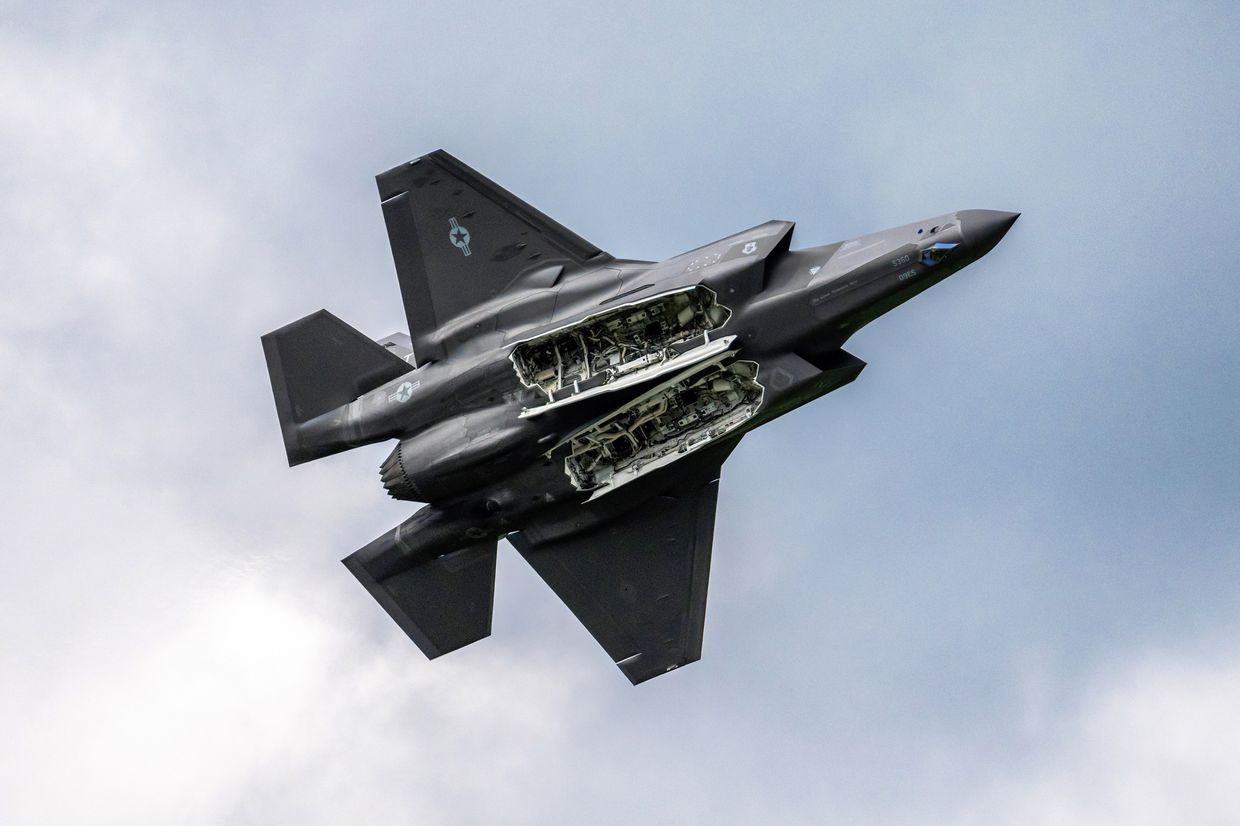
Norway will send F-35 fighter jets to Poland in the fall to protect the Rzeszow-Yasenka airport, one of the key transportation hubs for NATO military aid to Ukraine, Norwegian Defense Ministry announced on June 30.

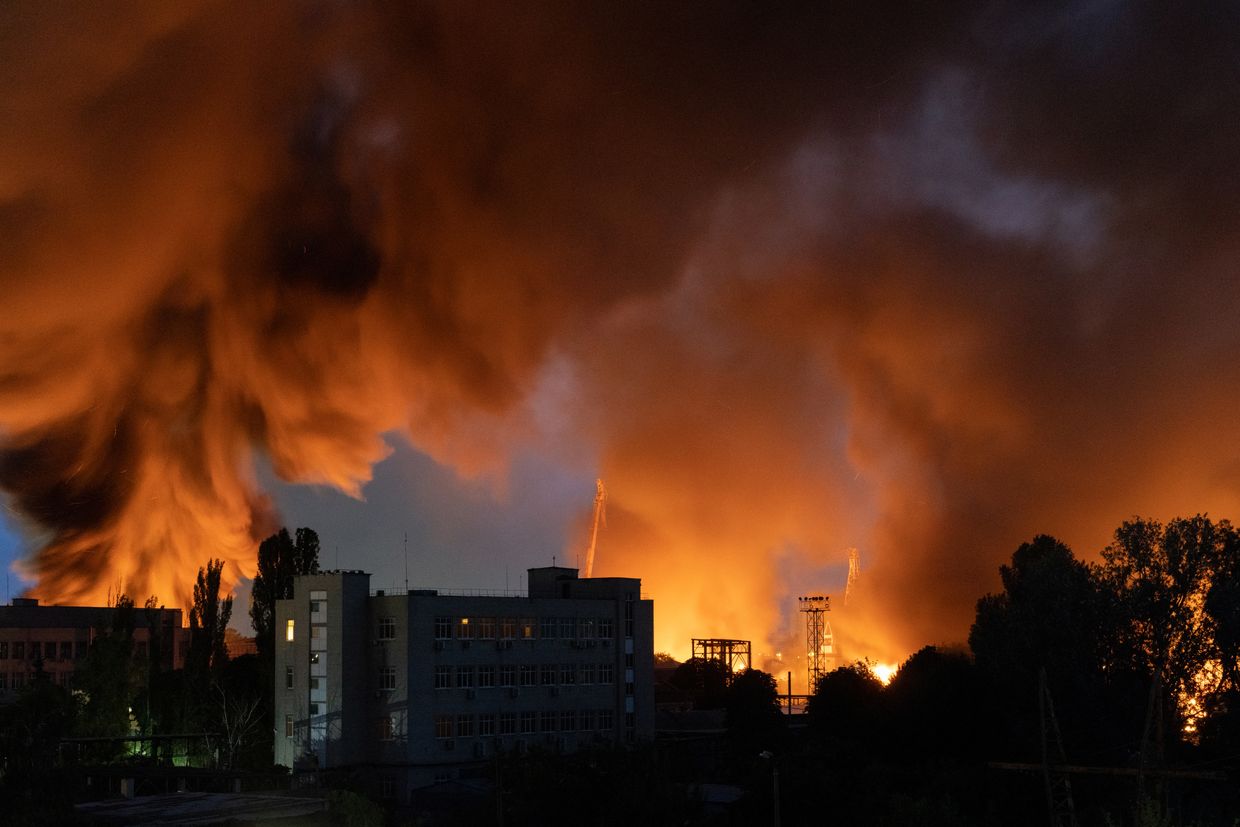
The news came as Russia has escalated attacks against Ukrainian cities over the past weeks, launching record 400-500 unmanned aerial vehicles (UAVs) per night.

Norway is thus strengthening its contribution to NATO's air and missile defense, while the main goal of the mission is to support the protection of Polish airspace and a key logistics center for assistance to Ukraine, the statement read.

"This is a vital contribution. We are helping ensure that support to Ukraine reaches its destination, and that Ukraine can continue its fight for freedom," Norwegian Defense Minister Tore Sandvik said.

The Rzeszow-Jasionka airport is located less than 100 kilometers (62 miles) from the Ukrainian border and transports a significant percentage of Western materiel bound for the front lines in Ukraine. Polish Prime Minister Donald Tusk said that 90% of aid for Ukraine was going through the airport in Rzeszow as of Novermber 2024.

It is also a main stopover point for foreign leadership traveling to Kyiv on official visits.

In January, German Defense Minister Boris Pistorius announced that Berlin will deploy the promised Patriot air defenses around the Polish airport to protect it.

Smashing previous monthly record, Russia launches 5,337 kamikaze drones against Ukraine during June
Russia launched a record 5,337 Shahed-type drones against Ukraine in June, according to data from the Ukrainian Air Force and Dragon Capital, smashing the previous record of 4,198 set in March. Russia’s bombardments, a fact of life after three years of full-scale war, have intensified dramatically in May
Norway to deploy F-35 fighter jets to Poland to protect Ukrainian aid hubThe Kyiv IndependentYuliia Taradiuk
Norway to deploy F-35 fighter jets to Poland to protect Ukrainian aid hub
  • ✇The Kyiv Independent
  • Poland's Duda arrives in Kyiv to meet with Zelensky
    Outgoing Polish President Andrzej Duda arrived in Kyiv to meet with President Volodymyr Zelensky as part of a farewell gesture ahead of his departure from office in August, Duda announced on social media."President Duda has stood by Ukraine's side during the most difficult times of Russia's full-scale aggression," Foreign Minister Andrii Sybiha said on X on June 28, which is also Ukraine's Constitution Day.  "We are grateful to him and all Poles who have shown true solidarity with Ukraine."Upon
     

Poland's Duda arrives in Kyiv to meet with Zelensky

28 juin 2025 à 04:06
Poland's Duda arrives in Kyiv to meet with Zelensky

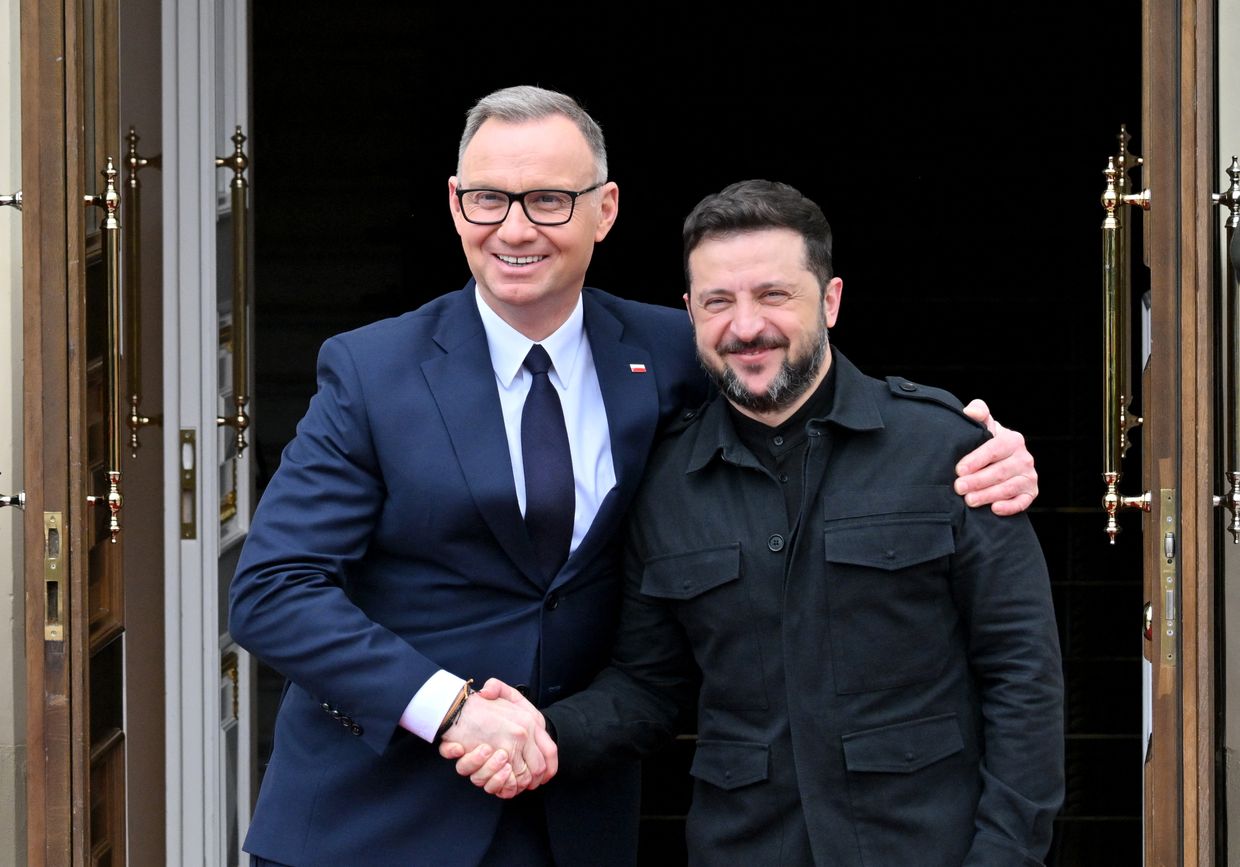
Outgoing Polish President Andrzej Duda arrived in Kyiv to meet with President Volodymyr Zelensky as part of a farewell gesture ahead of his departure from office in August, Duda announced on social media.

"President Duda has stood by Ukraine's side during the most difficult times of Russia's full-scale aggression," Foreign Minister Andrii Sybiha said on X on June 28, which is also Ukraine's Constitution Day.  

"We are grateful to him and all Poles who have shown true solidarity with Ukraine."

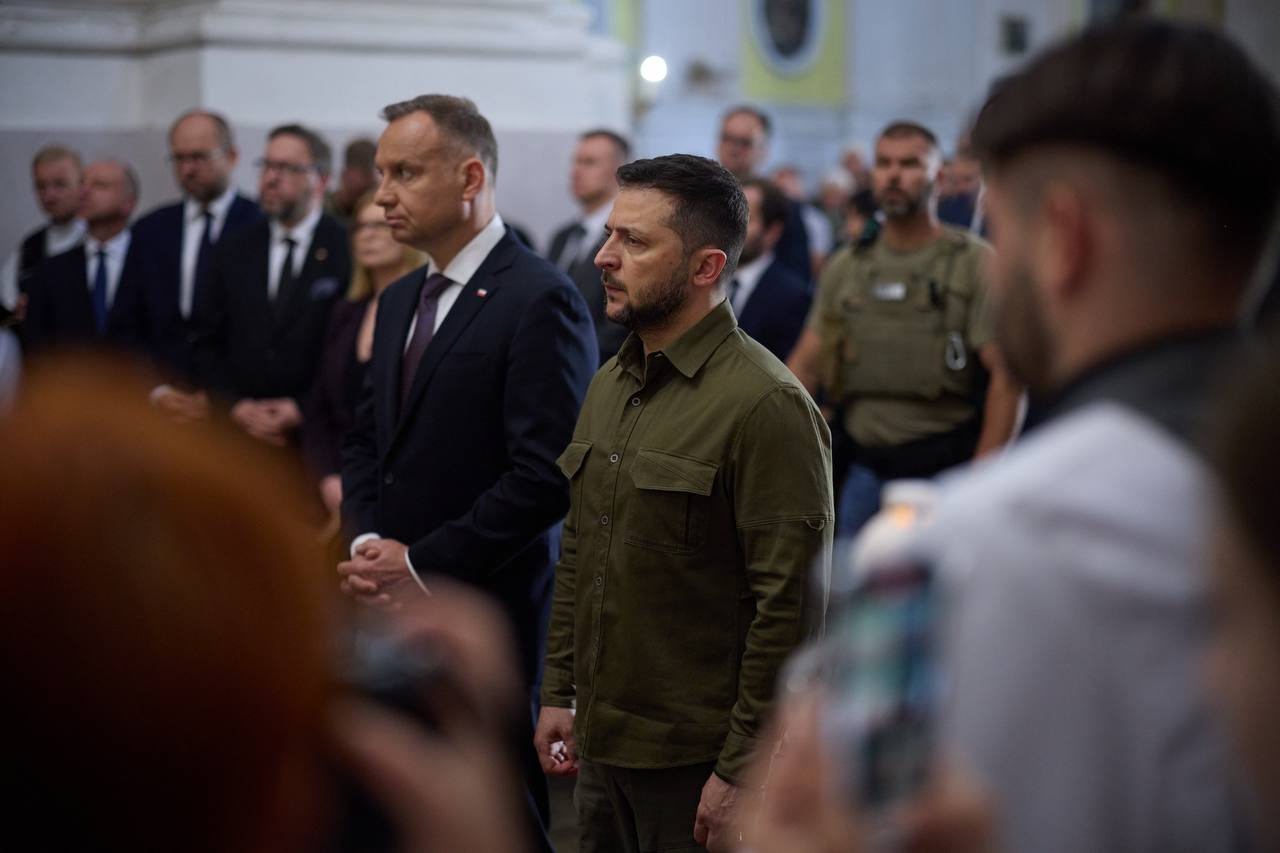
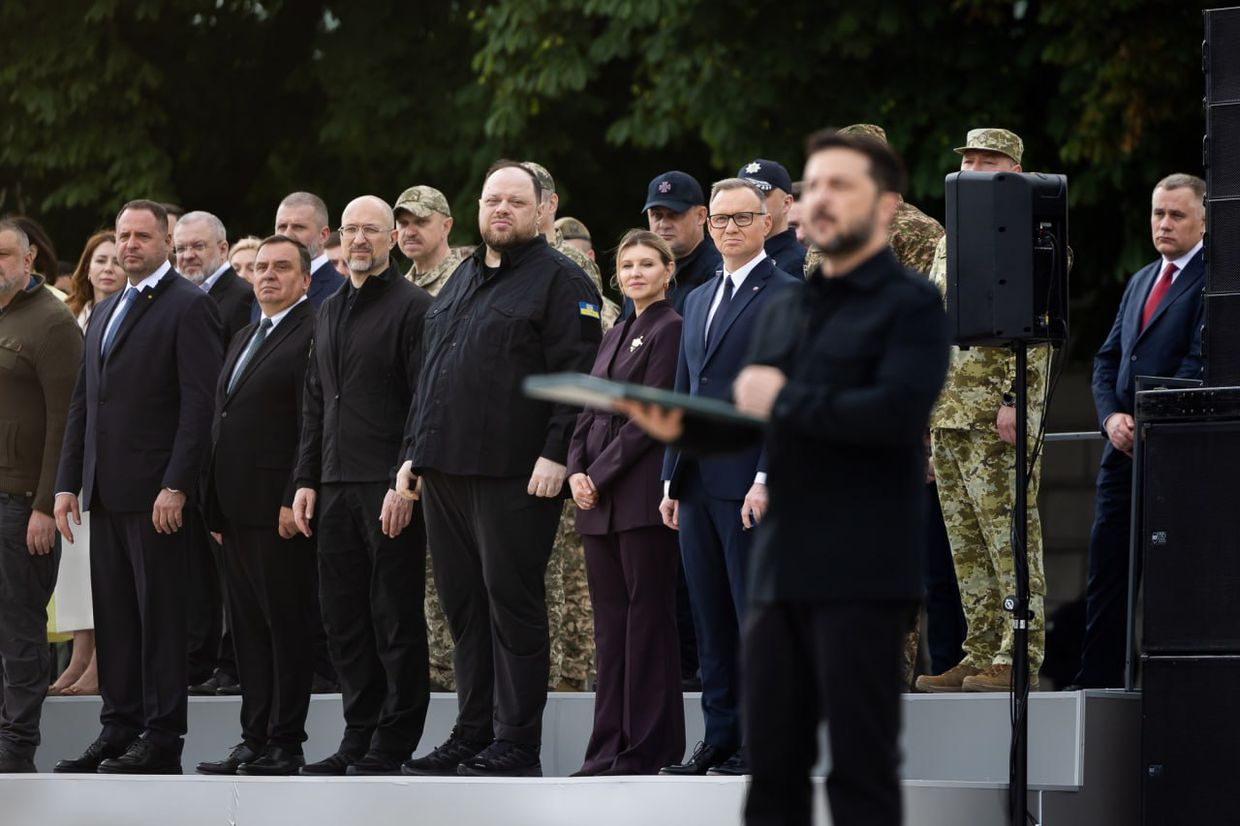
Upon his arrival, Duda joined Zelensky in a wreath-laying ceremony honoring fallen soldiers at an event marking Ukraine’s Constitution Day.

The two leaders discussed the further development of relations between Kyiv and Warsaw at the EU level and in coordination with NATO partners.

Poland's Duda arrives in Kyiv to meet with Zelensky
President Volodymyr Zelensky, Polish President Andrzej Duda, First Lady Olena Zelenska, and Ukrainian officials are seen during an official event marking Ukraine’s Constitution Day at Sofiyska Square in Kyiv on June 28, 2025. (Volodymyr Zelensky/Telegram)

"In recent months, we have been implementing some fairly substantial Ukrainian-Polish agreements on defense cooperation," the Ukrainian president said.

Zelensky also awarded Duda the Order of Freedom, one of Ukraine’s highest honors.

"Andrzej has been with Ukraine since the first days of the war, always side by side, a reliable ally and a true friend. This is undoubtedly the level of relations we want to preserve and strengthen with Poland," Zelensky said.

Since Russia launched its full-scale invasion in 2022, Poland has emerged as one of Ukraine’s most committed allies, providing weapons, sheltering millions of refugees, and rallying international support.

Over time, the relations between the two countries has faced strains due to political disagreements, economic fatigue, and disputes over grain imports and historical grievances.

In early June, conservative historian Karol Nawrocki won the second round of the Polish presidential election with 50.89% of the vote.

He has previously voiced opposition to Ukraine's membership in the EU and NATO, despite supporting Ukraine's sovereignty.

From unity to uncertainty: Central Europe reconsiders its Ukraine stance
In the fourth year of Russia’s full-scale war against Ukraine, the decisive support Kyiv found among its neighbors to the west is beginning to show cracks. Once resolute Poland is seeing rising skepticism toward Ukraine, underscored by President-elect Karol Nawrocki’s election victory. Slovakia’s pro-Ukrainian government was ousted by Russian-friendly populists
Poland's Duda arrives in Kyiv to meet with ZelenskyThe Kyiv IndependentMartin Fornusek
Poland's Duda arrives in Kyiv to meet with Zelensky

  • ✇The Kyiv Independent
  • Baltics, Nordics, Poland propose Schengen ban for Russians who fought in Ukraine
    Editor's note: This story has been updated to include the joint statement issued by the ministers of the Baltic states, Nordic countries, and Poland.A coalition of European Union countries is pushing to bar Russian citizens who participated in the war against Ukraine from entering the Schengen Area, citing serious security concerns,  Estonian broadcaster ERR reported on June 19.The call comes as Russia increased its hybrid operations targeting the European Union. EU security agencies have repeat
     

Baltics, Nordics, Poland propose Schengen ban for Russians who fought in Ukraine

20 juin 2025 à 04:23
Baltics, Nordics, Poland propose Schengen ban for Russians who fought in Ukraine

Editor's note: This story has been updated to include the joint statement issued by the ministers of the Baltic states, Nordic countries, and Poland.

A coalition of European Union countries is pushing to bar Russian citizens who participated in the war against Ukraine from entering the Schengen Area, citing serious security concerns,  Estonian broadcaster ERR reported on June 19.

The call comes as Russia increased its hybrid operations targeting the European Union. EU security agencies have repeatedly warned of Russian-linked sabotage operations, including arson attacks, orchestrated by Moscow as part of hybrid warfare strategies.

Interior ministers from the Baltic states, Nordic countries, and Poland met in Tallinn on June 19, where they issued a joint statement confirming their intent to prevent entry into the visa-free Schengen zone for Russians who took part in the war against Ukraine, ERR reported.

"There are hundreds of thousands of Russian citizens who have fought against Ukraine," Estonian Interior Minister Igor Taro said following the meeting. "We must take a clear stance; these individuals cannot freely travel across Schengen."

"We will not issue them residence permits or visas," he added. "This group, which has been killing and destroying, poses a very significant security threat to all of us."

The ministers emphasized that this restriction should remain in place even after active hostilities cease in Ukraine.

"Member States should take all necessary measures to ensure that individuals who are or have been contracted by the Russian armed forces or other armed groups acting on behalf of the regime are not allowed to undermine our security or move freely within the Schengen Area," the joint statement read.

The high-level meeting also included European Commissioner for Home Affairs and Migration Magnus Brunner, as well as representatives from the EU border agency Frontex.

The Schengen Area allows for visa-free travel across 29 European countries for up to 90 days in any 180-day period. While several EU member states have imposed national restrictions on Russian travelers, others continue processing applications, keeping access routes open.

Latvia has been among the most vocal proponents of stricter visa policies for Russian nationals. Latvian Foreign Minister Baiba Braze urged on May 25 all EU countries to suspend visa issuance to Russians, citing escalating security threats from Moscow.

"Latvia calls on the EU countries to halt visa issuance for Russian citizens, citing security concerns," Braze wrote on X. She noted that Schengen visa approvals for Russian nationals had surged by 25% in 2024 compared to 2023.

Latvia imposed entry restrictions in September 2022 as part of a coordinated effort with Lithuania, Estonia, and Poland. Czechia followed suit in October 2022.

Concerns over the abuse of Schengen visas and diplomatic privileges have intensified amid a wave of suspected Russian sabotage and espionage on EU soil. Polish and Czech authorities have recently led an effort to limit the movement of Russian diplomats within the bloc, targeting individuals allegedly working under diplomatic cover for Russian intelligence services.

Latvia prohibits Russian, Belarusian citizens from purchasing real estate
The bill — which carves out exceptions for EU and Latvian permanent residence holders, Belarusian refugees, and repatriates — establishes the new restrictions under the pretenses of protecting the country’s national security.
Baltics, Nordics, Poland propose Schengen ban for Russians who fought in UkraineThe Kyiv IndependentDmytro Basmat
Baltics, Nordics, Poland propose Schengen ban for Russians who fought in Ukraine
  • ✇The Kyiv Independent
  • British jets intercept Russian spy plane over Baltic Sea, Poland calls it NATO readiness test
    British fighter jets intercepted a Russian Il-20 reconnaissance aircraft that violated airspace over the Baltic Sea on the morning of June 13, Poland's military command reported. "This is another case of provocative testing of the readiness of NATO countries' systems," the statement said, adding that NATO command structures are now analyzing the incident.The Russian Il-20, based on the Il-18 transport aircraft, is used for electronic surveillance and reconnaissance missions. It is equipped with
     

British jets intercept Russian spy plane over Baltic Sea, Poland calls it NATO readiness test

13 juin 2025 à 13:37
British jets intercept Russian spy plane over Baltic Sea, Poland calls it NATO readiness test

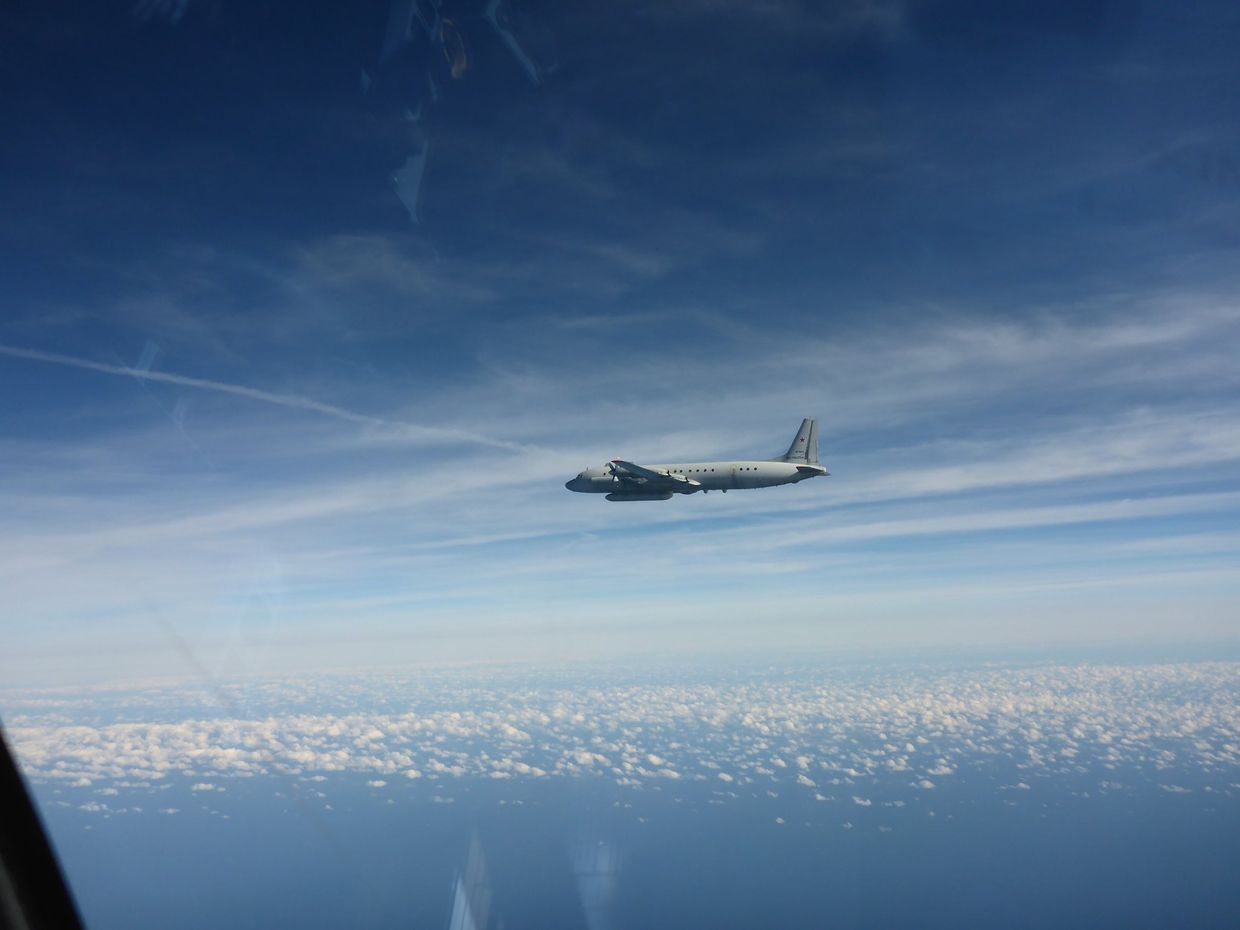
British fighter jets intercepted a Russian Il-20 reconnaissance aircraft that violated airspace over the Baltic Sea on the morning of June 13, Poland's military command reported.

"This is another case of provocative testing of the readiness of NATO countries' systems," the statement said, adding that NATO command structures are now analyzing the incident.

The Russian Il-20, based on the Il-18 transport aircraft, is used for electronic surveillance and reconnaissance missions. It is equipped with radar and signal intelligence gear designed to collect information on military infrastructure and communication networks.

According to the military command, the aircraft entered Baltic Sea airspace at approximately 10:50 a.m. and was promptly intercepted by two British fighter jets operating out of Poland.

No further details were disclosed about the exact location of the encounter or how long the Russian aircraft remained in restricted airspace.

The incident adds to a series of aerial provocations reported by NATO allies since the start of Russia's full-scale invasion of Ukraine in 2022. Poland has repeatedly scrambled jets in response to Russian missile and drone attacks near its border.

On Feb. 11, a Russian Su-24MR reconnaissance aircraft flew into Polish airspace over the Bay of Gdansk for more than a minute. Moscow attributed the incursion to a navigational error, but Polish officials dismissed the claim as implausible.

Poland shares a long border with Ukraine and a northern coastline along the Baltic Sea, where Russia's militarized Kaliningrad exclave is located.

Warsaw has repeatedly warned that Russia's ongoing aerial provocations could lead to a dangerous escalation if not firmly countered.

How an Israel-Iran war could help Russia’s economy — and deprive Ukraine of weapons
Israel’s “preemptive” strikes against Iran targeting the country’s nuclear program and killing top military officials could have far-reaching implications for Ukraine and could boost Russia’s ability to continue its full-scale invasion, experts have told the Kyiv Independent. Iran has been one of Russia’s staunchest allies throughout the war, providing thousands
British jets intercept Russian spy plane over Baltic Sea, Poland calls it NATO readiness testThe Kyiv IndependentChris York
British jets intercept Russian spy plane over Baltic Sea, Poland calls it NATO readiness test
❌