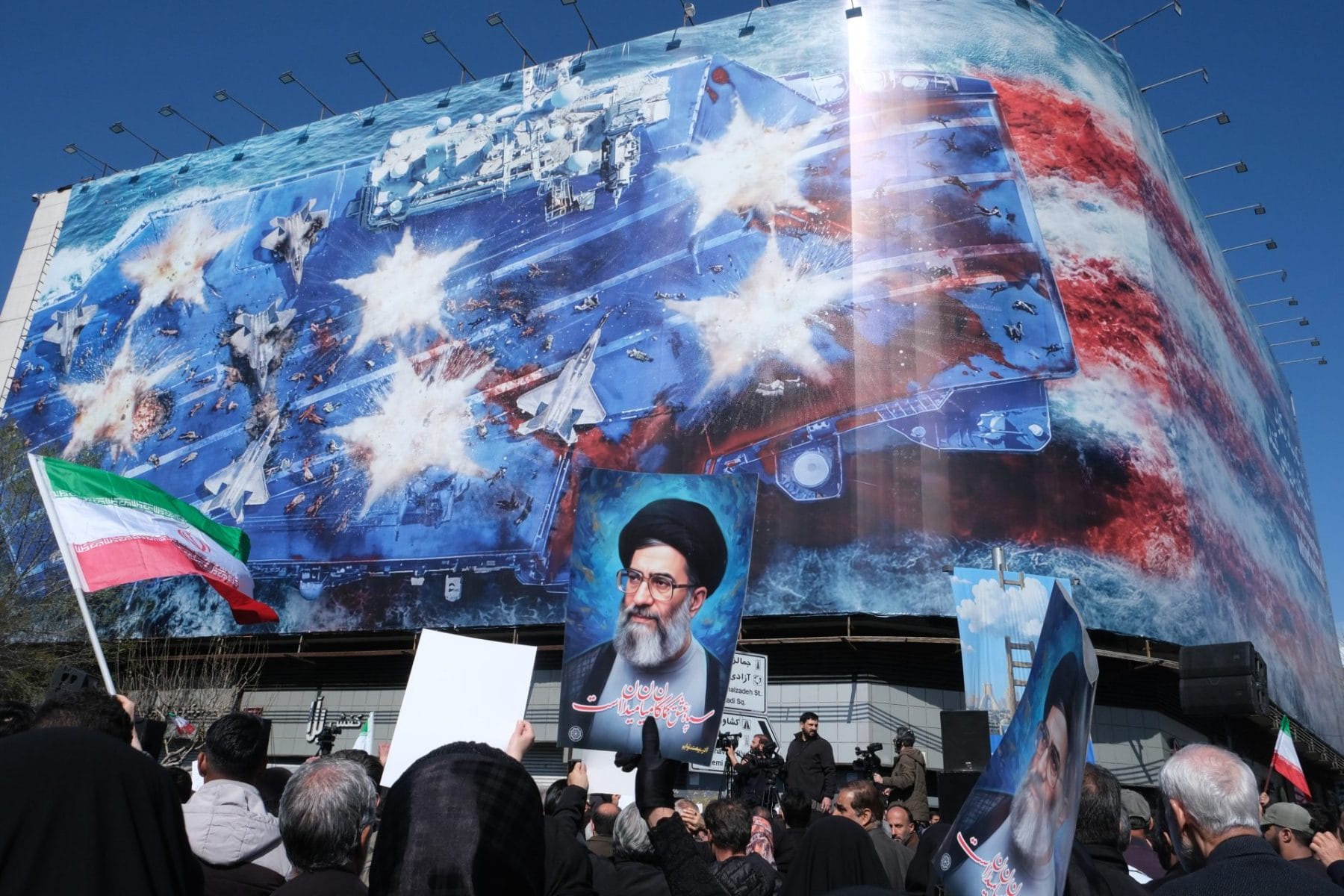
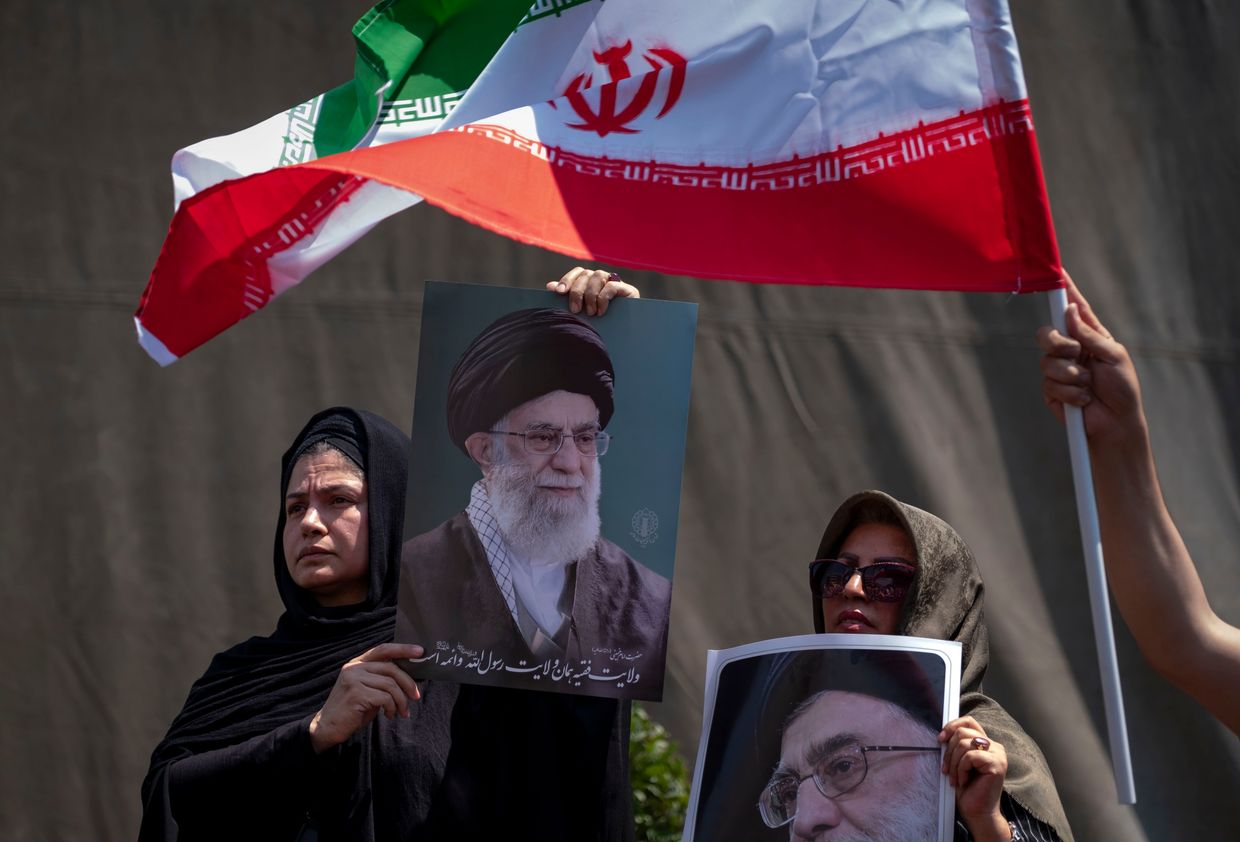
As days of public mourning ceremonies began, Iranians viewed the casket of Ayatollah Ali Khamenei, who was killed at the start of the U.S.-Israeli attacks.
As days of public mourning ceremonies began, Iranians viewed the casket of Ayatollah Ali Khamenei, who was killed at the start of the U.S.-Israeli attacks.
A funeral ceremony on Friday for Ayatollah Ali Khamenei at the Mosalla complex in Tehran. His son and successor, Ayatollah Mojtaba Khamenei, is in hiding.
Ayatollah Mojtaba Khamenei’s absence has raised questions inside Iranian political circles about who is really running the country and allowed open divisions to fester.
Ayatollah Mojtaba Khamenei’s absence has raised questions inside Iranian political circles about who is really running the country and allowed open divisions to fester.
Any Israeli attempt to kill Abbas Araghchi, the foreign minister, or Mohammad Ghalibaf, the Parliament speaker, would have derailed peace talks, American officials feared.
Any Israeli attempt to kill Abbas Araghchi, the foreign minister, or Mohammad Ghalibaf, the Parliament speaker, would have derailed peace talks, American officials feared.
Mohammad Bagher Ghalibaf, left, with Abbas Araghchi, center, traveled to Switzerland in June for a second in-person meeting with Vice President JD Vance and the American delegation.
Any Israeli attempt to kill Abbas Araghchi, the foreign minister, or Mohammad Ghalibaf, the Parliament speaker, would have derailed peace talks, American officials feared.
Any Israeli attempt to kill Abbas Araghchi, the foreign minister, or Mohammad Ghalibaf, the Parliament speaker, would have derailed peace talks, American officials feared.
Mohammad Bagher Ghalibaf, left, with Abbas Araghchi, center, traveled to Switzerland in June for a second in-person meeting with Vice President JD Vance and the American delegation.
Senior U.S. officials have said Iran would be richly rewarded for changing its stance on the United States. Iran’s leaders have rejected such a bargain in the past.
Senior U.S. officials have said Iran would be richly rewarded for changing its stance on the United States. Iran’s leaders have rejected such a bargain in the past.
Crown Prince Mohammed bin Salman pressed President Trump earlier to cripple Iran. But as Iran asserted its power, the prince urged a cease-fire, and is now pursuing his security priorities.
Crown Prince Mohammed bin Salman pressed President Trump earlier to cripple Iran. But as Iran asserted its power, the prince urged a cease-fire, and is now pursuing his security priorities.
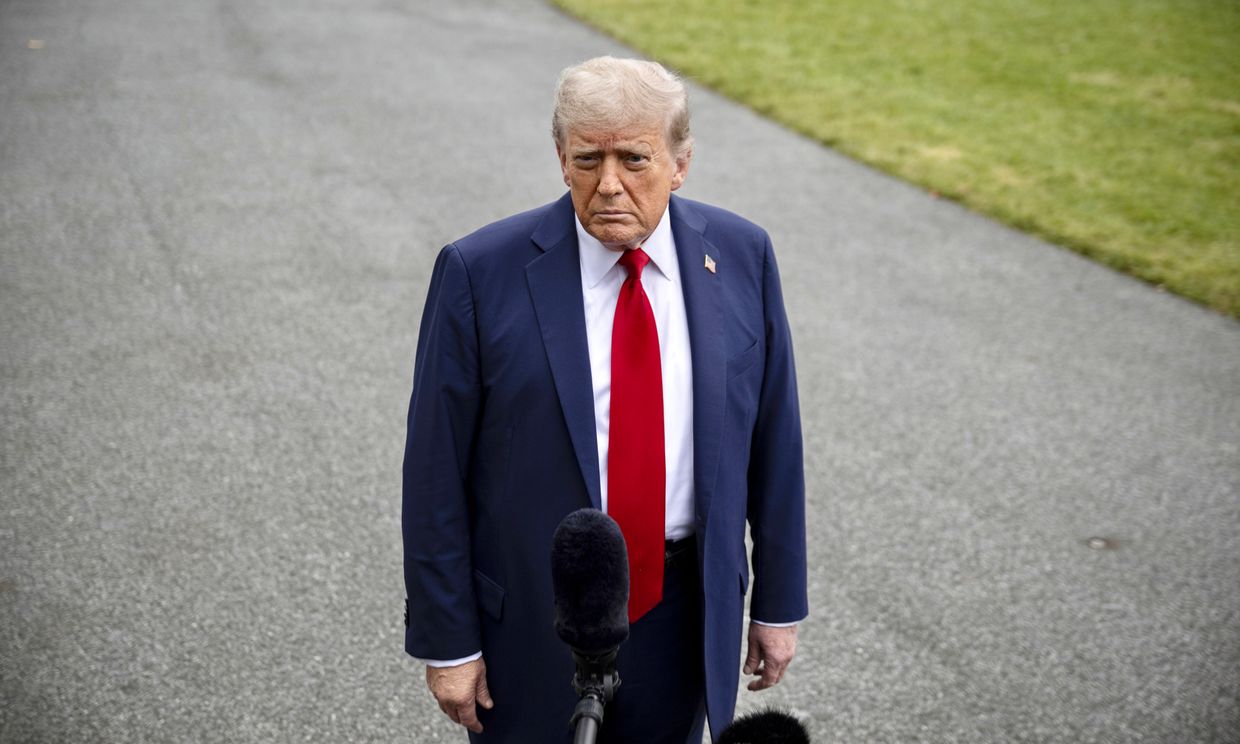
President Trump with Crown Prince Mohammed bin Salman of Saudi Arabia in Washington last year. The two countries have become increasingly at odds over the U.S. war with Iran.
During peace talks, President Trump repeatedly floated the idea that Syria could help subdue Hezbollah in Lebanon. The proposal revived bitter memories.
During peace talks, President Trump repeatedly floated the idea that Syria could help subdue Hezbollah in Lebanon. The proposal revived bitter memories.
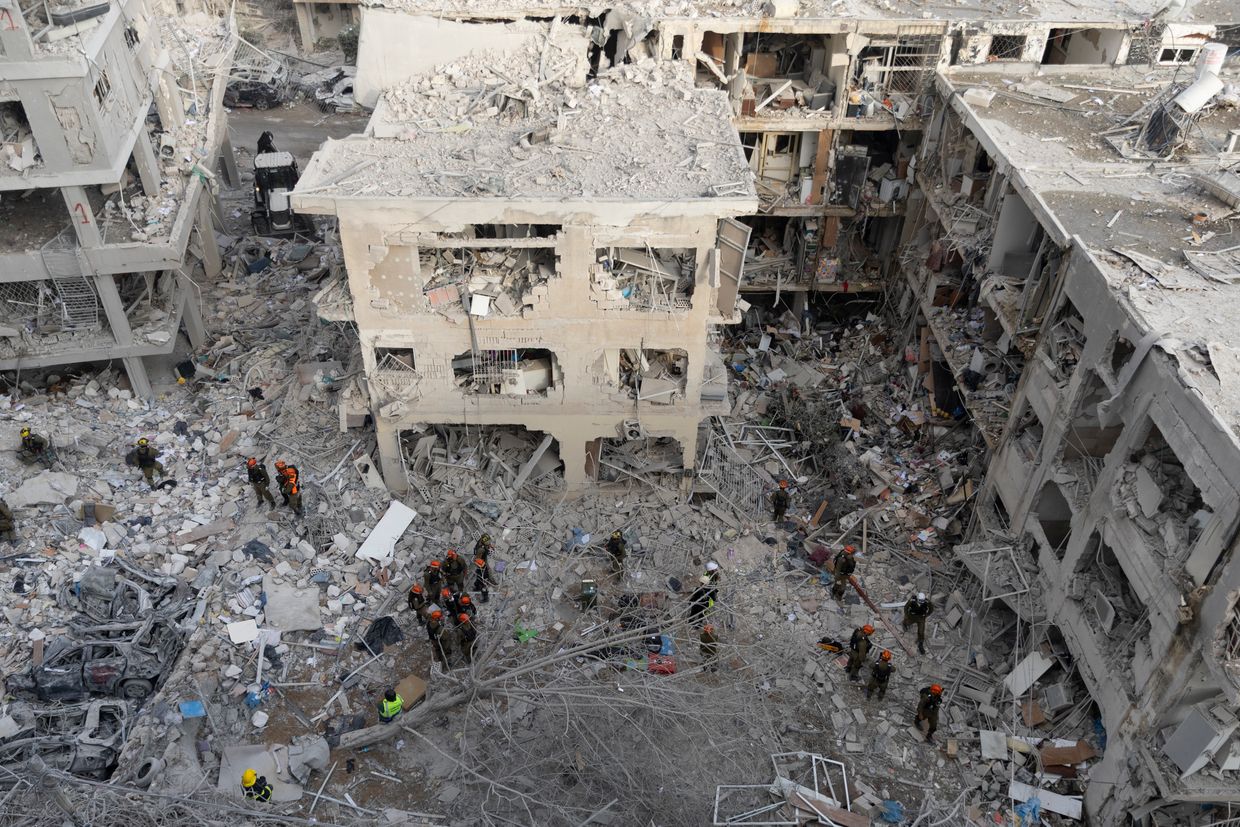
A man in the village of Nabatieh al Fawka, Lebanon. He returned earlier this week after fleeing heavy fighting between Israeli forces and Hezbollah in the area.
In New York’s primaries last week, two incumbent House Democrats lost to primary challengers who had cast them as insufficiently critical of Israel. Pictured are winners Claire Valdez, far left, and Darializa Avila Chevalier, far right, at a pre-primary rally with Mayor Zohran Mamdani.
Iran sees its control over the Strait of Hormuz as critical leverage in peace talks with the United States. It seems willing to risk the cease-fire to maintain that power.
Iran sees its control over the Strait of Hormuz as critical leverage in peace talks with the United States. It seems willing to risk the cease-fire to maintain that power.
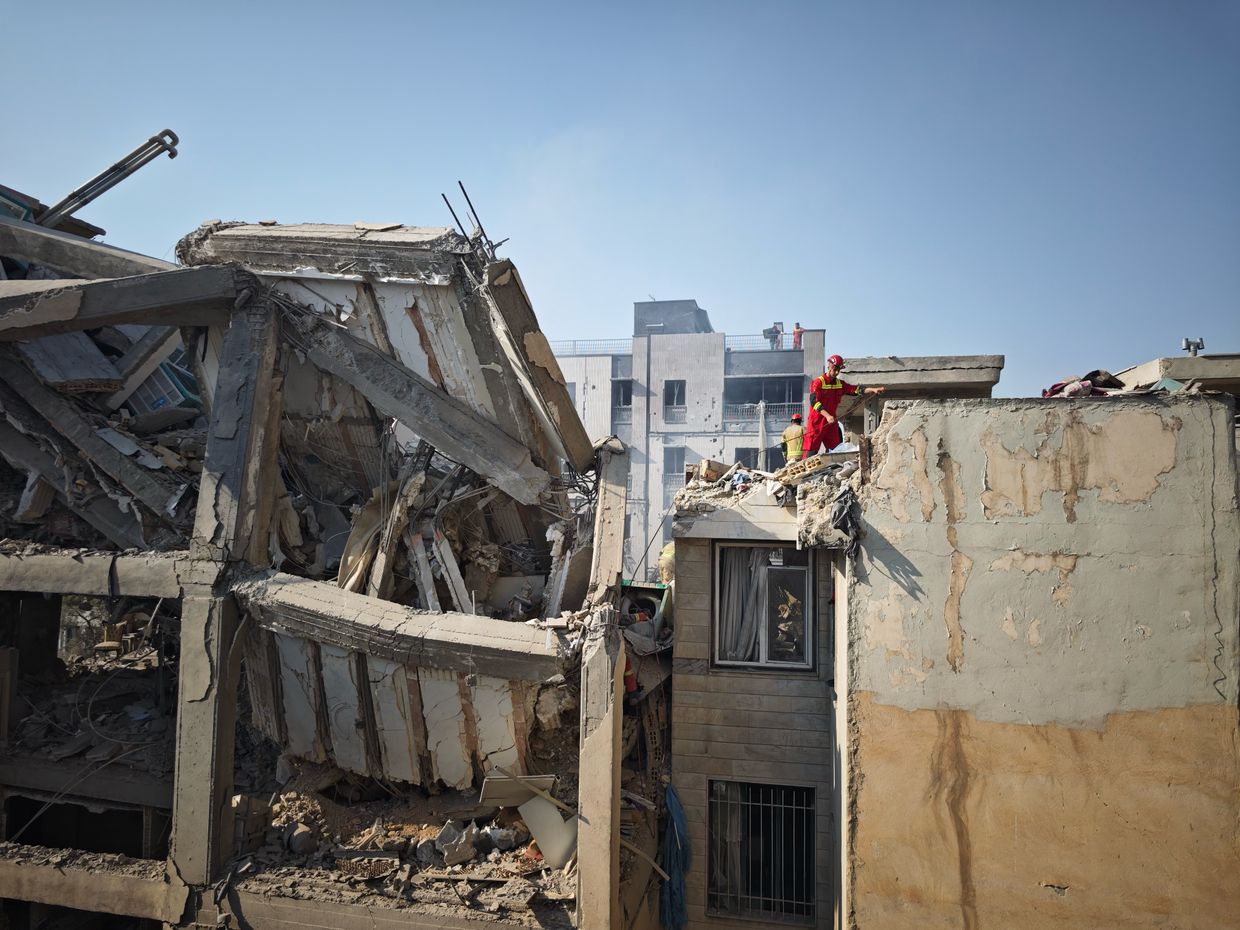
Dahiya, a sprawling area and Hezbollah stronghold, is stirring back to life amid a tense truce with Israel. “This war has brought so much loss,” one resident said.
Dahiya, a sprawling area and Hezbollah stronghold, is stirring back to life amid a tense truce with Israel. “This war has brought so much loss,” one resident said.
A main street in Dahiya, a collection of neighborhoods south of Beirut, the Lebanese capital, in June. On any given day, Dahiya hums with bustling city rhythms.
Supporters welcomed the agreement as a step toward curtailing Iran’s influence within Lebanon, but others took to the streets, calling it a capitulation.
Supporters welcomed the agreement as a step toward curtailing Iran’s influence within Lebanon, but others took to the streets, calling it a capitulation.
L’accord annoncé dimanche est entré en vigueur, deux jours plus tôt que prévu.
Il a été signé:
d’abord virtuellement, par les présidents iranien et américain;
puis, sur un exemplaire imprimé, par Donald Trump alors qu’il soupait au château de Versailles avec Emmanuel Macron, le président français.
Ce protocole d’entente, assez court (14 paragraphes), prévoit:
une cessation immédiate des hostilités, autant en Iran qu’au Liban;
une réouverture du détroit d’Ormuz;
une pério
L’accord annoncé dimanche est entré en vigueur, deux jours plus tôt que prévu.
Il a été signé:
d’abord virtuellement, par les présidents iranien et américain;
puis, sur un exemplaire imprimé, par Donald Trump alors qu’il soupait au château de Versailles avec Emmanuel Macron, le président français.
Ce protocole d’entente, assez court (14 paragraphes), prévoit:
une cessation immédiate des hostilités, autant en Iran qu’au Liban;
une réouverture du détroit d’Ormuz;
une période de 60 jours pour négocier une entente finale sur le programme nucléaire iranien et un important financement pour reconstruire l’Iran et favoriser son développement.
Voiciles points saillants du protocole d’entente.
Fin du conflit et réouverture du détroit
Les États-Unis, l’Iran «et leurs alliés dans la guerre» cessent leurs opérations militaires sur «tous les fronts», y compris au Liban, de façon «immédiate et permanente».
Ils s’abstiendront par la suite de toute autre attaque, et même de menacer de recourir à la force.
Les États-Unis et l’Iran respecteront mutuellement leur souveraineté et l’intégrité de leur territoire, et ne s’ingèreront pas dans les affaires intérieures de l’autre.
Ils se donnent une période de 60 jours, qui pourrait être prolongée, pour négocier une entente «finale».
Cette entente devra être approuvée par le Conseil de sécurité de l’ONU.
Les États-Unis vont progressivement, sur une période de 30 jours, lever leur blocus naval de l’Iran.
Ils retireront ensuite toutes leurs troupes «à proximité de l’Iran» dans les 30 jours suivant une entente finale.
L’Iran va faire ses «meilleurs efforts» pour permettre une navigation sécuritaire dans le détroit d’Ormuz, sans imposer de péage.
Programme nucléaire iranien et sanctions
L’Iran ne construira ni n’achètera de bombe nucléaire.
Une négociation doit déterminer ce qui se passera avec l’uranium enrichi détenu par l’Iran.
En attendant, il y a un gel (statu quo) de la situation actuelle.
Les États-Unis lèveront toutes les sanctions contre l’Iran, y compris celles décidées par le conseil de sécurité de l’ONU.
Cette levée sera liée au respect par l’Iran de ses engagements concernant le nucléaire.
Argent
Les États-Unis vont libérer tous les fonds iraniens qu’ils ont gelés ou bloqués.
Les États-Unis et leurs partenaires de la région vont mettre en place, après une entente finale, un «plan» d’au moins 300 milliards $US pour la reconstruction et le développement de l’Iran.
That Iran's Supreme Leader, Ayatollah Ali Khamenei, should disappear, or be disappeared, from the scene was not a novel notion.
Throughout my nearly five years in Tehran at the turn of this century, speculation about his health and longevity was a near-constant background hum. He was reported, or rumoured, to be mortally stricken by prostate cancer, his constitution already weakened by an assassination attempt in 1981 that left his right arm largely useless. Who would succeed him was far f
That Iran's Supreme Leader, Ayatollah Ali Khamenei, should disappear, or be disappeared, from the scene was not a novel notion.
Throughout my nearly five years in Tehran at the turn of this century, speculation about his health and longevity was a near-constant background hum. He was reported, or rumoured, to be mortally stricken by prostate cancer, his constitution already weakened by an assassination attempt in 1981 that left his right arm largely useless. Who would succeed him was far from clear, and the object of further speculation.
As he lived on into more recent times, reaching the same age of 86 attained by his predecessor – the Islamic Republic's founding father Ayatollah Ruhollah Khomeini – the prospect of his demise became a more immediate issue, though the question of succession remained equally shrouded in uncertainty. As Supreme Leader, Ayatollah Khamenei was the commanding voice behind the ruthless crackdown that took the lives of tens of thousands of citizens early this year in the latest and greatest of many escalating protests, at which the slogan "Marg Bar Diktator!" — Death to the Dictator! — became an increasingly prominent slogan.
Their wish was confirmed to be true at 5 a.m. local time on Sunday morning by Iranian broadcasters. The previous morning, Khamenei’s compound in Tehran was demolished as the Israeli-American onslaught got under way while the Ayatollah was heading a meeting of the Defence Council. That ensured that top military figures were also killed, including the commander of the Revolutionary Guards, Mohammad Pakpour, the Army Chief of Staff Abdolrahim Musavi, and Khamenei's top military adviser, Ali Shamkhani, who had been wounded but survived the attack in June last year.
The Iranian leadership appears to have been caught by surprise, as it was last year when the opening Israeli strike, which culled many top military leaders as well as nuclear scientists, was launched between two rounds of indirect negotiations between Iran and the U.S. Oman, which was mediating the talks, was furious then, denouncing Israel as the real destabilising factor in the region.
Perhaps the Iranian leaders — and the Omani mediators — thought that such a dirty trick could only be pulled once. But it has happened again, with no evidence that the talks in Geneva had broken down. The chief Omani negotiator, Badr Albusaidi, was livid. Only hours before the strike, he was in Washington for meetings “to explain that a peace agreement between the U.S. and Iran is now within reach. No nuclear weapons. Not ever. Zero stockpiling. Comprehensive verification. Peacefully and permanently. Let’s support the negotiators in closing the deal.”
After learning of the attack, he expressed his outrage in another tweet: “I am dismayed. Active and serious negotiations have yet again been undermined. Neither the interests of the United States nor the cause of global peace are well served by this. And I pray for the innocents who will suffer. I urge the United States not to get sucked in further. This is not your war.”
But Donald Trump and the U.S. were already thoroughly sucked in, and it was indeed their war, or at least his. According to the Israelis, the date had been decided jointly weeks before, after months of planning. Which meant that the Geneva negotiations, focused on the nuclear issue, were simply deceptive camouflage designed to give time for the U.S. to complete the marshalling of its biggest naval and air buildup in the region since the 2003 invasion of Iraq.
Trump and the Israeli prime minister Benjamin Netanyahu soon made it clear that the campaign now had little to do with the niceties of Iran's nuclear programme: the agenda was regime change in Tehran, and a surprise attack to decapitate the regime was an essential element.
With Iran's air defences largely taken out in last year's 12 days of war, it was like shooting fish in a barrel. Hundreds of air, missile and drone strikes were carried out on missile launchers, military bases and other targets around the country, with inevitable "collateral damage", including a girl's primary school in the southern town of Minab where scores of children were reported killed.
People gathered in Tehran's Revolution Square to mourn the assassination of Iran's Supreme Leader Ayatollah Ali Khamenei on March 1, 2026.
The Iranians did their best to live up to their dire warnings of deadly reprisals against Israel, and against American bases and allies on the Arab side of the Gulf and elsewhere. Missiles hailed down on airports and other installations in Kuwait, Bahrain, the UAE, Saudi Arabia and even Oman, despite its active mediation. While some U.S. bases may have been hit, so too were many civilian sites such as Dubai's iconic Burj al Arab hotel. Explosions too are being heard in Beirut, after Hezbollah fired rockets and drones at northern Israel to "avenge" Khamenei's death and the Israel Defense Forces struck back.
Air traffic was halted throughout a region rich in international hubs, sowing chaos worldwide. Iran's declaration that the strategic Strait of Hormuz was closed to shipping forced cargo shippers to suspend the voyages that transport some 20% of the world's oil and a lot of liquid gas, causing tremors through international markets. Once again, a decision taken by a tiny circle of men in Washington, Jerusalem and Tehran instantly rewired daily life, reminding us who actually gets to pull the global emergency brake.
What all this would do to Iran's relations with the Arab side of the Gulf was one of many open questions. While Oman was actively mediating, the other Arab oil states had been pressing the Americans not to allow a campaign that would predictably destabilise the region, and declaring their airspace not available for any hostilities. But any sympathy for Tehran quickly evaporated when the missiles started flying in: the Gulf Arab states closed ranks.
Trump and the Israelis made it clear that this was not one quick spectacular strike, but an ongoing campaign that would last days, perhaps even weeks. Presumably at the end, Iran would find its missile capabilities "obliterated," in Trump's favourite term, along with any nuclear activities.
Once the bombs stop falling, Trump and Netanyahu urged, the Iranians should come out of their basements and take over a government that would be theirs for the taking. A historic opportunity that would likely not recur for generations, Iranians were told.
But it is hard to imagine such regime change being wrought remotely from the skies. The regime lost little time in filling the leadership vacuum, setting up a three-man ruling council in line with the constitution, composed of the President, Masood Pezeshkian, the head of the Judiciary, Gholamhossein Mohseni-Ejei, and Ayatollah Alireza Arafi from the Council of Guardians. All regime loyalists, and the latter two noted hard-liners. So business as usual as far as they are concerned. But the fact is that the assassination of the Supreme Leader and the attendant bludgeoning of the regime's capabilities will inevitably usher in a new and unpredictable phase in Iran's turbulent history.
On the streets, reactions were fractured: jubilation in areas that had long chanted “Death to the dictator”, state-promote mourning in others, but also fear and a grim resignation, an understanding that power vacuums are often filled with fresh repression or civil war.
A smooth transition to a peaceful democracy is about the least likely scenario among the many possibilities. So too is an imminent return of the monarchy, with a comeback by Israeli-backed Reza Pahlavi, son of the Shah ousted by the 1979 revolution. So far there has been no sign visible to the outside world of a split in the ranks of the defenses built up by the Islamic Republic, which still has regular military forces numbering around 400,000, Revolutionary Guards of up to 190,000, and its auxiliary militia enforcers, the Basij, who may be able to mobilise around a million at street level.
There must be much anger among regime loyalists, which may fall on the heads of any opposition protestors who imagine they can move in and take over the reins of government from the bombed-out wreckage of the Islamic Republic. The U.S. military is not likely to be able to remain engaged in the detail of defanging the regime once the main thrust of the campaign is done. But Israel likely will. Its equivalent of the CIA, the Mossad, has spent years building up formidable intelligence at street level, and will be doing its utmost to continue hamstringing the regime from within and fomenting opposition.Among the many unanswerable questions is whether all this will lead simply to chaos and fragmentation, which is probably Israel's preferred outcome, or to a more compliant regime willing to compromise with the U.S. in order to get crippling economic sanctions lifted. As Trump concedes the war might last weeks, who knows what Iran will eventually emerge from the smoke and the rubble?
Will he or won't he? The Middle East is on tenterhooks as the U.S. continues to build up a massive and menacing military posture around Iran, threatening an attack that could trigger a conflagration whose tremors would be felt throughout the region.
If anybody hoped that the man on whose word it all hangs, President Donald Trump, might clarify his intentions in his State of the Union address on Tuesday night, they were disappointed.
Speaking 36 hours before a third round of indirect an
Will he or won't he? The Middle East is on tenterhooks as the U.S. continues to build up a massive and menacing military posture around Iran, threatening an attack that could trigger a conflagration whose tremors would be felt throughout the region.
If anybody hoped that the man on whose word it all hangs, President Donald Trump, might clarify his intentions in his State of the Union address on Tuesday night, they were disappointed.
Speaking 36 hours before a third round of indirect and ultimately inconclusive talks with the Iranians in Geneva on Thursday, he said, "My preference is to stop this problem through diplomacy but one thing is for certain, I will never allow the world's number one sponsor of terror, which they are by far, to have a nuclear weapon...they want to make a deal, but we haven't heard those secret (sic) words, 'We will never have a nuclear weapon.’”
In the run-up to the Geneva talks, led on the U.S. side by real estate moguls Steve Witkoff and Trump son-in-law Jared Kushner, Iranian officials voiced optimism that a deal could be struck and insisted they would be flexible on the nuclear issue. Various formulas were being bandied around, such as Iran sending abroad half of its estimated 300kg of highly enriched uranium and diluting the rest under supervision, participating in a regional consortium for peaceful enrichment and so on.
In theory, for Iran to say "We will never have a nuclear weapon" should not be an issue — it has said all along that it is not pursuing that goal, which is banned by a fatwa. Iranian foreign minister Abbas Araghchi posted on X this week that Tehran “will under no circumstances ever develop a nuclear weapon.” Which begs the question as to why it has enriched uranium to 60% — short of weapons grade but well beyond the levels needed for peaceful civilian purposes.
Witkoff and Kushner will be vigilant for signs of Iranian duplicity and foot-dragging. But with another set of talks ending with no deal apart from promises of more talks, both sides might simply be playing for time, Iran to delay the feared blow, and the U.S. to finish assembling the assault force, its biggest mobilization of naval and air power in the region since the 2003 invasion of Iraq.
There is strong apprehension in the region that the huge and costly U.S. buildup must mean business. American bombs and missiles would hit Iran. The Iranians would make good on their threat to make it a regional war, not a symbolic retaliation as happened in the 12-day war in June last year after American bunker-buster bombs hit Iran's nuclear facilities in Isfahan, Natanz and Fordow. This time Iranian missiles would target U.S. military assets, bases on the Arab side of the Gulf and elsewhere, and perhaps oil installations. And Israel. The Israelis would hit back hard. Hezbollah in Lebanon would do its best to join in, prompting a further massive Israeli response.
There were ominous straws in the wind. The U.S. withdrew non-essential personnel from bases in the Gulf, and from its embassy in Beirut. The Israelis reportedly warned Lebanon that if Hezbollah joined in, they would hit back at government targets, including Beirut airport, which were unscathed throughout the earlier hostilities. They stepped up their daily attacks on suspected Hezbollah targets, including a big missile attack on February 20 on the eastern Beqaa valley which left 12 dead, including eight Hezbollahis. Since the November 2024 ceasefire, Hezbollah has not fired so much as a peashooter at Israel while well over 400 of their people have been killed in Israeli attacks on Lebanon.
Does all this mean the doomsday scenario is inexorable? Are the Americans set on a clear game plan, with identified objectives and the means to attain them?
Apparently not. Trump is reportedly receiving divided counsel from his advisers, military and political, some more hawkish and others more cautious than others. Above all, he has an eye on the looming mid-term elections in November. He was elected on a platform of ending the "forever" wars in the Middle East, yet could be on the brink of starting another one, which would not go down well with part of his MAGA base or the public in general.
The signs are that he was hoping the swashbuckling display of power would intimidate the Iranians into buckling. Witkoff admitted Trump was puzzled that Iran had not capitulated. “Why, under this pressure, with the amount of sea power and naval power over there, why haven’t they come to us and said, ‘We profess we don’t want a weapon, so here’s what we’re prepared to do?’ And, yet, it’s sort of hard to get them to that place,” he told Fox News. Iran's Foreign Minister Abbas Araqchi explained: "It's because we're Iranian."
Trump's adrenalin was clearly set pumping by the adventure in Venezuela, where a similar military buildup culminated in the operation to abduct President Nicolas Maduro. But Iran is not Venezuela. It is a highly militarized regime which has spent 47 years preparing its internal and external defences, and which has different power bases that make it hard simply to decapitate. There is no magic bullet that might not set the region on fire.
Taking out the Supreme Leader, Ayatollah Ali Khamene'i (who is also a religious leader, and this is Ramadan) would not be likely to bring about a change in regime behavior as in Venezuela. Bringing the regime down altogether would require a prolonged and detailed campaign that the U.S. military machine might not be able to sustain.
That's where Israel comes in. Some White House advisers reportedly believe it would play better politically for Israel to strike first rather than the U.S., and thus force Iran to retaliate. Like Trump, Israel’s Prime Minister Benjamin Netanyahu is a man with an eye on impending elections (October at the latest) is Prime Minister Benjamin Netanyahu, who makes no secret of his ambition to see the Iranian regime brought down. Netanyahu — backed by almost the entire Israeli political spectrum — is clearly champing at the bit, but aware of the danger of being seen to drag the U.S. into a potentially messy embroilment. One reason perhaps for the unusually discreet nature of Netanyahu's sixth visit to the White House on February 11 — in through the back door, no lovefest press appearances.
Which may also actually have been a sign that the two allies might not be on the same strategic page. Plunging Iran into fragmentation and chaos would absolutely fit Israel's playbook, but not necessarily America's. The two are working at cross-purposes in Syria, where the Israelis are pushing against a strong central government which the U.S. is supporting, even against its erstwhile Kurdish allies in the north-east.
If there are two constants in the current equation, they are that the Iranian people’s disillusionment and rage against the regime will not go away, and neither will Israel's desire to overthrow it. But if Trump does not share that goal, he will have to find a face-saving way to wriggle off the hook he has created with his ostentatious military buildup.
A version of this story was published in this week’s Coda Currents newsletter.Sign up here.
The Iranian Foreign Ministry has summoned the Ukrainian charge d'affaires to protest "inappropriate remarks" by Kyiv regarding recent Israeli and U.S. strikes on Iran, the ministry said on July 1.Tehran threatened Ukraine with unspecified "consequences" should such statements be repeated.The diplomatic spat follows a wave of Israeli and U.S. air strikes targeting Iran's nuclear program, with Iranian forces attacking Israel and a U.S. base in Qatar in response.Highlighting Iran's military support
The Iranian Foreign Ministry has summoned the Ukrainian charge d'affaires to protest "inappropriate remarks" by Kyiv regarding recent Israeli and U.S. strikes on Iran, the ministry said on July 1.
Tehran threatened Ukraine with unspecified "consequences" should such statements be repeated.
The diplomatic spat follows a wave of Israeli and U.S. air strikes targeting Iran's nuclear program, with Iranian forces attacking Israel and a U.S. base in Qatar in response.
Highlighting Iran's military support for Russian aggression against Ukraine, Kyiv responded by calling for the dismantling of the Iranian nuclear program to prevent it from threatening the Middle East or the wider world.
In response, Shahram Farsaei, head of the Iranian Foreign Ministry's Eurasian affairs department, relayed a protest note to Ukraine via the Ukrainian envoy in Iran, Kyrylo Pozdniakov. The ministry did not specify what exact comments prompted the reaction from the Iranian side.
Tehran also said that Ukrainian officials have "disregarded Ukraine's international legal obligations concerning respect for the principles and purposes of the U.N. Charter as well as the four Geneva Conventions."
Iran has provided ballistic missiles and thousands of Shahed drones to Russia, directly backing its armed aggression in Ukraine, itself launched in violation of international law and the U.N. Charter.
Moscow has backed Iran diplomatically after U.S. and Israeli attacks, urging a response from the U.N. Security Council and calling the attacks an "unprovoked aggression."
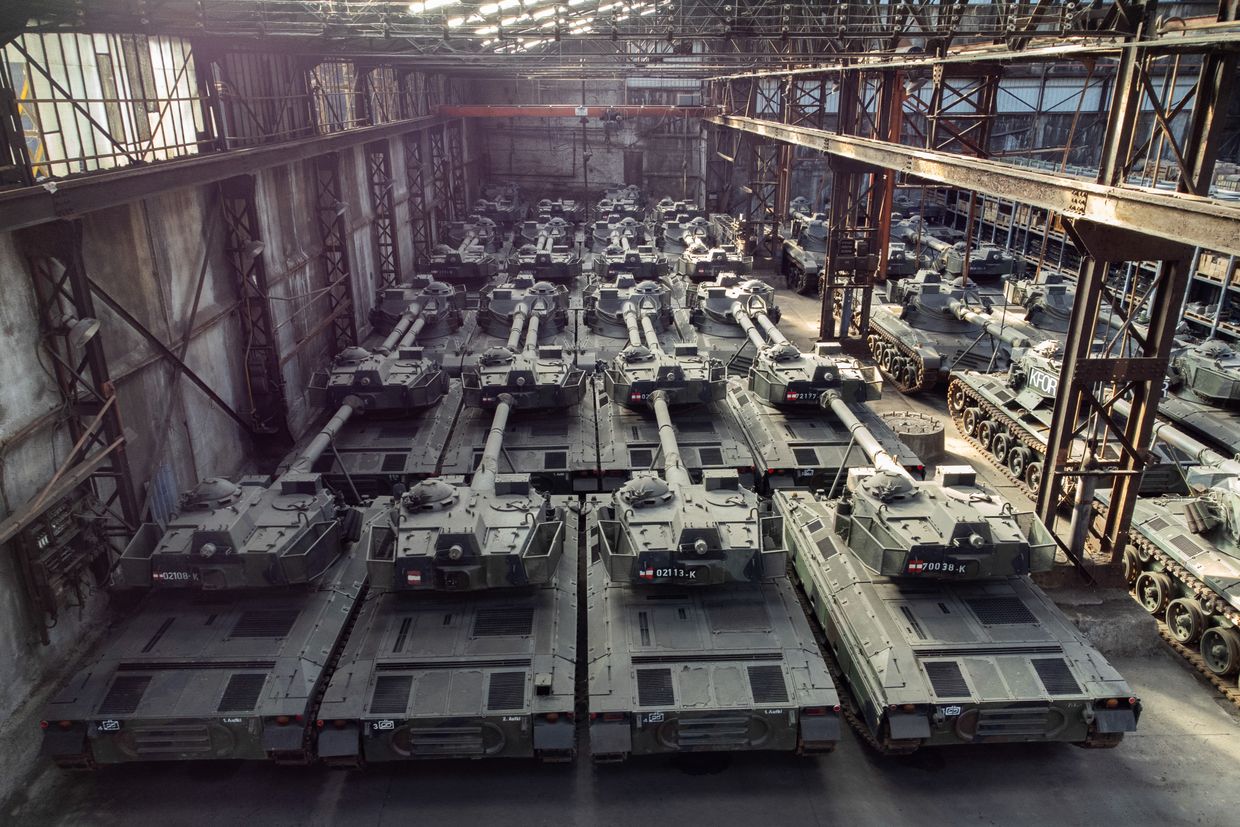
Around 150 pro-Palestinian activists have broken into a storage facility and damaged military equipment intended for Ukraine, the Belgian news outlet 7sur7 reported on June 26.The facility belongs to OIP Land Systems, a company that produces military equipment for Ukraine. The activists reportedly thought the equipment would be supplied to Israel.The activists, who were wearing white overalls and masks, took part in the Stop Arming Israel campaign. The protests seek to pressure Belgian authoriti
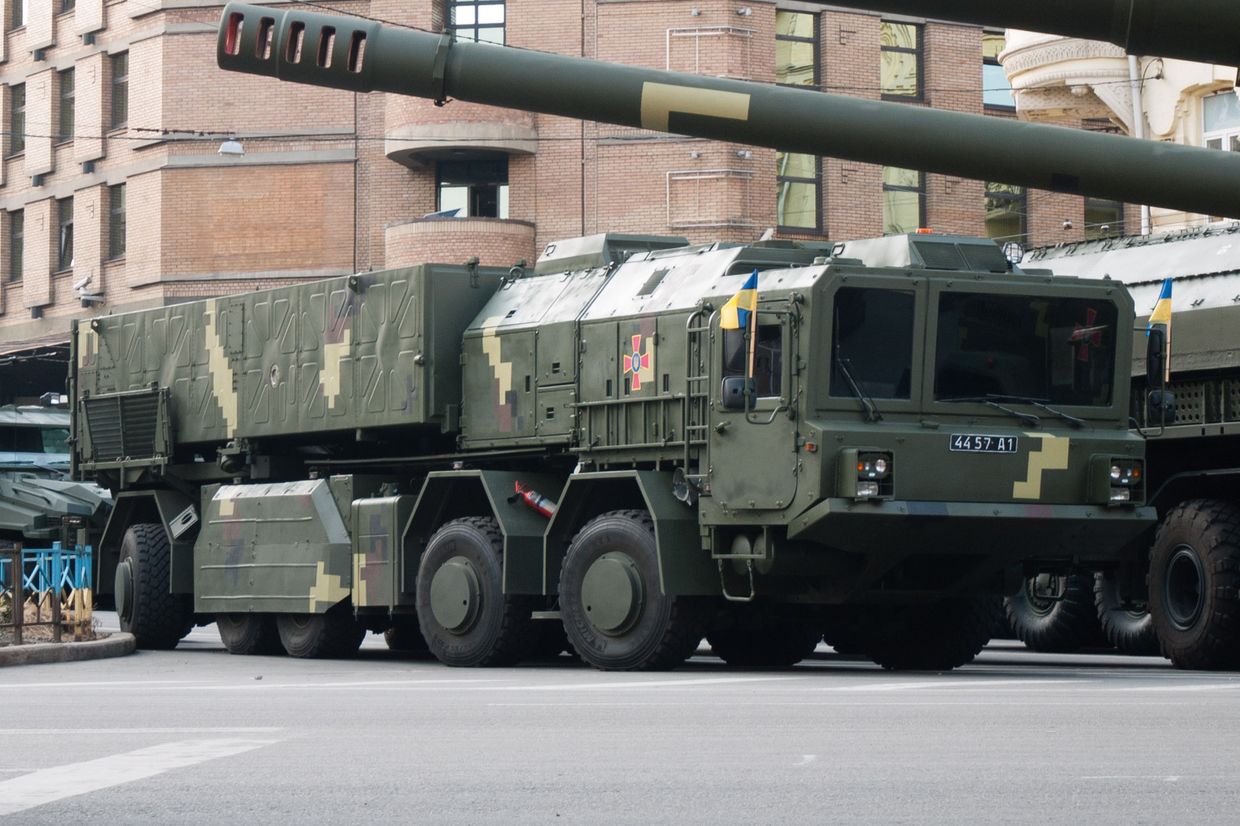
Around 150 pro-Palestinian activists have broken into a storage facility and damaged military equipment intended for Ukraine, the Belgian news outlet 7sur7 reported on June 26.
The facility belongs to OIP Land Systems, a company that produces military equipment for Ukraine. The activists reportedly thought the equipment would be supplied to Israel.
The activists, who were wearing white overalls and masks, took part in the Stop Arming Israel campaign. The protests seek to pressure Belgian authorities to maintain the military embargo against Israel and impose sanctions on it.
The protesters, armed with hammers and grinders, first entered the company's offices, where they smashed computers, and then broke into the hangars, where they severely damaged some vehicles, Freddy Versluys, CEO of OIP Land Systems, said.
Since the beginning of the Russian invasion, the company has supplied the Ukrainian army with about 260 armored vehicles. The damage caused by the activists' actions is estimated at $1.1 million, according to 7sur7.
"A further delivery has now been delayed by at least a month. That's all these Hamas sympathizers will have achieved with their action," Versluys said.
The company was reportedly targeted by pro-Palestinian protesters because Elbit Systems, an Israeli defense company, owns it.
Protesters believe that Elbit supplies 85% of the drones and most of the ground military equipment used by the Israel Defense Forces, 7sur7 reported.
Yet, the OIP Land Systems CEO claimed that his company has not produced defense systems for Israel for over 20 years.
OIP Land Systems has provided defense products to Ukraine on several occasions, including Leopard 1 tanks, which are manufactured at the Tournai plant.
U.S. Special Envoy to the Middle East Steve Witkoff condemned on June 24 the leak of an intelligence assessment that undercuts U.S. President Donald Trump's claims of having "obliterated" Iran's nuclear program.His remarks follow a leaked U.S. Defense Intelligence Agency (DIA) assessment, reported by CNN, which found that strikes on three major Iranian nuclear sites, Fordow, Natanz, and Isfahan, did not destroy the core of Tehran's nuclear program. Instead, the intelligence suggests the attacks
U.S. Special Envoy to the Middle East Steve Witkoff condemned on June 24 the leak of an intelligence assessment that undercuts U.S. President Donald Trump's claims of having "obliterated" Iran's nuclear program.
His remarks follow a leaked U.S. Defense Intelligence Agency (DIA) assessment, reported by CNN, which found that strikes on three major Iranian nuclear sites, Fordow, Natanz, and Isfahan, did not destroy the core of Tehran's nuclear program. Instead, the intelligence suggests the attacks likely delayed Iran's progress by "a few months."
"It goes without saying that leaking that type of information, whatever the information, whatever side it comes out on, is outrageous. It's treasonous," Witkoff said during an appearance on Fox News. "It ought to be investigated, and whoever is responsible should be held accountable."
Witkoff, who served as Assistant to the U.S. president and led peace mission efforts during the recent conflict between Israel and Iran, defended Trump's portrayal of the U.S.-led strikes as a decisive success.
"The objective was to eliminate enrichment in Iran… and he achieved that objective," Witkoff said, adding that he personally reviewed damage assessments and saw "no doubt" that key nuclear infrastructure was destroyed.
The report leaked in media contradicts public statements from Trump and Defense Secretary Pete Hegseth, who had described the operation as delivering "total obliteration." Trump, for his part, stood by the claim on June 24. "Those targets were obliterated," he said. "That place is demolished."
According to the DIA assessment, though the strikes damaged above-ground infrastructure, most of the centrifuges and the enriched uranium stockpile reportedly remain intact. The assessment also noted that underground sections of the sites, where Iran's most sensitive work is done, were largely unaffected. Two officials told CNN that Iran likely retains operational nuclear facilities that were not targeted.
Witkoff dismissed the report as "preposterous," insisting that the Isfahan conversion facility, critical to Iran's ability to weaponize enriched uranium, was "completely destroyed" by a 30,000-pound bunker buster bomb.
"Without conversion, you can't begin or end enrichment," he said. "They cannot weaponize, even if they've enriched to 90%."
Witkoff also claimed successful targeting of Fordow and Natanz, saying the U.S. dropped more than a dozen bunker busters on the sites that made the facilities inoperable.
The White House acknowledged the assessment’s existence but strongly dismissed it. "This alleged assessment is flat-out wrong and was classified as ‘top secret’ but was still leaked to CNN by an anonymous, low-level loser in the intelligence community," press secretary Karoline Leavitt said.
"The leaking of this alleged assessment is a clear attempt to demean President Trump, and discredit the brave fighter pilots who conducted a perfectly executed mission to obliterate Iran’s nuclear program. Everyone knows what happens when you drop fourteen 30,000 pound bombs perfectly on their targets: total obliteration."
Trump, for his part, stood by his assessment of the mission's success. "I think it’s been completely demolished," he said on June 24. "Those pilots hit their targets. Those targets were obliterated, and the pilots should be given credit.” Asked if Iran could rebuild, Trump responded: "That place is under rock. That place is demolished."
While both Trump and Hegseth praised the strikes as decisive, others expressed caution. Chairman of the Joint Chiefs of Staff Dan Caine said it was "way too early" to determine whether Iran retained nuclear capabilities.
Ukraine's military intelligence agency (HUR) and the Foreign Ministry have evacuated 31 Ukrainian citizens from Iran on the instructions of President Volodymyr Zelensky, the agency said on June 24.The news follows a war between Iran and Israel that began on June 13. The countries reached a ceasefire deal on June 24. Israel and Iran attacked each other hours after the ceasefire was announced. Despite the initial violations, the agreement appears to be holding now. Ukraine evacuated 14 children, 1
Ukraine's military intelligence agency (HUR) and the Foreign Ministry have evacuated 31 Ukrainian citizens from Iran on the instructions of President Volodymyr Zelensky, the agency said on June 24.
The news follows a war between Iran and Israel that began on June 13. The countries reached a ceasefire deal on June 24.
Israel and Iran attacked each other hours after the ceasefire was announced. Despite the initial violations, the agreement appears to be holding now.
Ukraine evacuated 14 children, 12 women, and five men, according to HUR.
The evacuation was carried out through Azerbaijan and Moldova to Kyiv, the statement read.
"We felt completely unprotected all the time in Tehran because there were no air raid alerts. In addition, the Internet was down, and we had no idea what was happening," Varvara from Kyiv Oblast, who was evacuated from Iran, told HUR's press service.
Earlier, Ukraine evacuated 176 people from Israel, including 133 Ukrainian citizens. The evacuation from Iran is the final stage of a joint operation by HUR and the Foreign Ministry to rescue Ukrainian citizens from high-risk areas, according to the agency's statement.
Tensions between Iran and Israel had already been rising after Iran launched missile strikes on Tel Aviv and other Israeli cities on June 13, killing multiple civilians, including five Ukrainian nationals. The attack came in retaliation for Israeli military action.
On June 24, Trump announced that a ceasefire between Iran and Israel had come into effect, following the U.S. strikes on Iranian nuclear facilities and a retaliatory Iranian attack on a U.S. military base in Qatar.
U.S. President Donald Trump said on June 24 that his Russian counterpart Vladimir Putin had called him and offered to help resolve the conflict between Iran and Israel, Fox News reported."As you know, Vladimir called me up. He said, can I help you with Iran? I said, 'no, I don't need help with Iran. I need help with you.' And I hope we're going to be getting a deal done with Russia, which is a shame. Six thousand soldiers died last week," Trump told journalists while heading to a NATO summit.Tru
U.S. President Donald Trump said on June 24 that his Russian counterpart Vladimir Putin had called him and offered to help resolve the conflict between Iran and Israel, Fox News reported.
"As you know, Vladimir called me up. He said, can I help you with Iran? I said, 'no, I don't need help with Iran. I need help with you.' And I hope we're going to be getting a deal done with Russia, which is a shame. Six thousand soldiers died last week," Trump told journalists while heading to a NATO summit.
Trump's remarks come as The Hague hosts the NATO summit on June 24-25, at which the American leader is expected to meet Ukraine's President Volodymyr Zelensky.
Trump added he would like "to see a deal with Russia," which recently launched a new summer offensive against Ukraine, disregarding calls by Kyiv and its Western partners for an unconditional ceasefire.
The U.S. president did not provide further details on a potential deal with Russia.
Russia has deepened military and political ties with Tehran during the full-scale invasion of Ukraine.
Iran has supplied Moscow with thousands of Shahed attack drones used in routine strikes on Ukrainian cities.
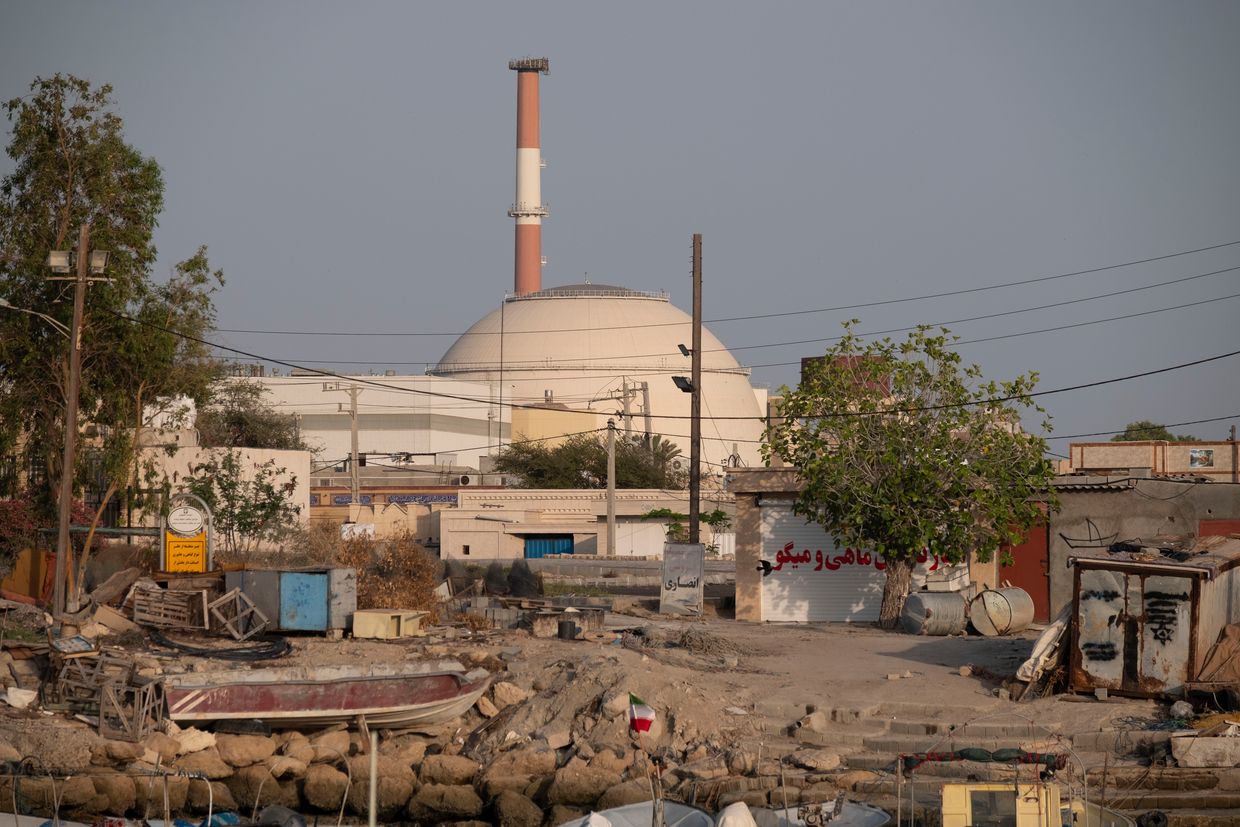
Russia and Iran have cooperated to develop their own nuclear programs as both countries face Western sanctions. Russia supplied Iran with the Middle East's first nuclear power plant despite objections from the West.
Tensions between Iran and Israel had already been rising after Iran launched missile strikes on Tel Aviv and other Israeli cities on June 13, killing multiple civilians, including five Ukrainian nationals. The attack came in retaliation for Israeli military action.
Following several days of escalating conflict, Trump announced a ceasefire between Israel and Iran, but it was violated within hours of the American president's statement.
Editor's note: This is a developing story and is being updated.Israel launched airstrikes on Iranian territory on June 24, defying U.S. President Donald Trump's call for calm just few hours after he announced a ceasefire between the two countries, according to the Times of Israel.The attack comes less than an hour after Trump told reporters that "Israel needs to calm down" as he criticized both countries for undermining the ceasefire he says he brokered. "We basically have two countries that hav
Editor's note: This is a developing story and is being updated.
Israel launched airstrikes on Iranian territory on June 24, defying U.S. President Donald Trump's call for calm just few hours after he announced a ceasefire between the two countries, according to the Times of Israel.
The attack comes less than an hour after Trump told reporters that "Israel needs to calm down" as he criticized both countries for undermining the ceasefire he says he brokered.
"We basically have two countries that have been fighting so long and so hard that they don't know what the f*ck they're doing," Trump said on June 24.
Hours after Trump said the ceasefire came into effect, Israel accused Tehran of launching missiles toward its territory — an allegation Iran denied.
Following Iran's alleged missile strike, Trump and Israeli Prime Minister Benjamin Netanyahu reportedly spoke on the phone and agreed that Israel would carry out a limited response. The air force strike targeted a single "symbolic" radar installation.
Ahead of Israel's strike, Trump wrote on Truth Social that all of the Israeli planes "turn around and head home, while doing a friendly 'Plane Wave" to Iran."
According to the Times of Israel, Israeli officials said Trump was still sending messages promising that Israel would not attack Iran "after he knew we would attack," a senior official told the Kan public broadcaster.
Editor's note: This story was updated to include comments made by U.S. President Donald Trump.Iran launched missiles toward Israel on June 24, just hours after U.S. President Donald Trump announced a ceasefire between the two countries had come into effect, the Israeli military said. Iran denied the accusation."A short while ago, sirens sounded in northern Israel following the identification of missiles launched from Iran toward the State of Israel," the Israel Defense Forces (IDF) said in a sta
Editor's note: This story was updated to include comments made by U.S. President Donald Trump.
Iran launched missiles toward Israel on June 24, just hours after U.S. President Donald Trump announced a ceasefire between the two countries had come into effect, the Israeli military said. Iran denied the accusation.
"A short while ago, sirens sounded in northern Israel following the identification of missiles launched from Iran toward the State of Israel," the Israel Defense Forces (IDF) said in a statement.
"At this time, the IAF (Israeli Air Force) is operating to intercept and strike where necessary to eliminate the threat," the statement read.
Israeli Defense Minister Israel Katz instructed the army to respond forcefully to Iran's ceasefire violation, Reuters reported. Katz said that Israel will continue to strike Iran after the "utter violation" of the ceasefire.
Shortly after Israel's statement, Iranian state media reported that Tehran denied firing missiles at Israel after the ceasefire began.
A senior security official in Iran told CNN that “no missiles have been fired at the enemy" after the ceasefire.
The reports come after days of escalating hostilities in the Middle East. Early on June 24, Trump declared in a Truth Social post that a ceasefire had begun, writing, "The ceasefire is now in effect. Please do not violate it!"
Israeli Prime Minister Benjamin Netanyahu said on June 24 Israel had agreed to Trump's ceasefire proposal, claiming that Israel had "achieved its goal of removing the Iranian nuclear and ballistic missile threat," according to Reuters.
Trump said later on June 24 that Israel needs to "calm down" after what he described as violations of the ceasefire by both sides.
"I gotta get Israel to calm down now," Trump said as he left the White House. "Israel, as soon as we made the deal, they came out and they dropped a load of bombs, the likes of which I've never seen before, the biggest load that we've seen."
He added: "We basically have two countries that have been fighting so long and so hard that they don't know what the f*ck they're doing."
Trump also wrote on Truth Social that "Israel is not going to attack Iran."
"Nobody is going to be hurt. The Ceasefire in in the effect," U.S. president wrote,
Previously, the U.S. launched airstrikes on Iran's nuclear facilities in Fordow, Natanz, and Esfahan on June 21. In response, Iran fired missiles at U.S. military bases in the region, including at least 10 targeting Al Udeid Air Base in Qatar and one aimed at a base in Iraq.
The Pentagon confirmed that Iran launched several short- and medium-range missiles at Al Udeid but reported no U.S. casualties. Trump dismissed the attacks as "limited and largely ineffective."
Iran is a key arms supplier to Russia, providing Shahed drones used in attacks on Ukrainian cities and pledging to send ballistic missiles. Israel, while home to a significant Russian-speaking population, has not joined Western sanctions against Moscow.
U.S. President Donald Trump announced on June 24 that a ceasefire between Iran and Israel had come into effect, following the U.S. strikes on Iranian nuclear facilities and retaliatory attack on U.S. military base in Qatar."The ceasefire is now in effect. Please do not violate it!" Trump said in a post on Truth Social on June 24.The announcement follows days of intensifying conflict after the U.S. conducted airstrikes on Iranian nuclear facilities on June 21, targeting sites in Fordow, Natanz, a
U.S. President Donald Trump announced on June 24 that a ceasefire between Iran and Israel had come into effect, following the U.S. strikes on Iranian nuclear facilities and retaliatory attack on U.S. military base in Qatar.
"The ceasefire is now in effect. Please do not violate it!" Trump said in a post on Truth Social on June 24.
The announcement follows days of intensifying conflict after the U.S. conducted airstrikes on Iranian nuclear facilities on June 21, targeting sites in Fordow, Natanz, and Esfahan.
In response, Iran launched multiple missiles at U.S. military bases in the region, including at least 10 toward the Al Udeid Air Base in Qatar and at least one toward a base in Iraq, Axios reported, citing an Israeli source.
The Pentagon confirmed that Iran fired several short- and medium-range missiles at Al Udeid, but said no American personnel were harmed. Trump downplayed the attack, calling it "limited and largely ineffective."
Israeli Prime Minister Benjamin Netanyahu said on June 24 that Israel has agreed to a U.S.-brokered ceasefire with Iran, thanking Trump for his support in defending Israel and "removing the Iranian nuclear threat," according to Reuters.
"Israel has achieved its goal of removing the Iranian nuclear and ballistic missile threat," Netanyahu said in a statement. "Israel thanks President Trump for his support and participation in removing the Iranian nuclear threat."
Iran is a key arms supplier to Russia, providing Shahed drones used in attacks on Ukrainian cities and pledging to send ballistic missiles. Israel, while home to a significant Russian-speaking population, has not joined Western sanctions against Moscow.
Tensions between Iran and Israel had already been rising after Iran launched missile strikes on Tel Aviv and other Israeli cities on June 13, killing multiple civilians, including five Ukrainian nationals. The attack came in retaliation for Israeli military action.
Trump, who has long styled himself as a dealmaker and peacemaker, has come under criticism for his failure to deliver on promises to reach a ceasefire between Russia and Ukraine. During his electoral campaign, he pledged to end the war between Russia and Ukraine within 24 hours of taking office. More than 100 days after Ukraine accepted a U.S.-backed proposal for a ceasefire, no progress has been made.
"It has been exactly 100 days since Ukraine unconditionally accepted the U.S. peace proposal to completely cease fire, put an end to the killing, and move forward with a genuine peace process," Ukrainian Foreign Minister Andrii Sybiha said on June 19. "Russia continues to choose war."
Ukraine backed the proposal during talks in Jeddah on March 11, agreeing to a 30-day unconditional ceasefire. Russia has rejected the offer, continuing its assault on Ukrainian cities and pushing for maximalist demands.
"It is time to act now and force Russia to peace," Sybiha said. "Peace through strength, increased sanctions, and enhanced capabilities for Ukraine."
Ukraine’s Foreign Ministry said on June 22 that Iran’s nuclear program must be dismantled to prevent it from threatening the Middle East or the wider world, following U.S. air strikes on Iranian nuclear facilities.“The Iranian regime’s aggressive actions and long-standing destructive policy aimed at undermining global peace and security – particularly its hostility toward Israel and others – have led to the current situation,” the ministry said in an official statement.These comments come after
Ukraine’s Foreign Ministry said on June 22 that Iran’s nuclear program must be dismantled to prevent it from threatening the Middle East or the wider world, following U.S. air strikes on Iranian nuclear facilities.
“The Iranian regime’s aggressive actions and long-standing destructive policy aimed at undermining global peace and security – particularly its hostility toward Israel and others – have led to the current situation,” the ministry said in an official statement.
These comments come after U.S. President Donald Trump announced on June 21 that the U.S. air strikes targeted three nuclear sites in Iran, Fordow, Natanz, and Esfahan, joining Israel's campaign against Iran's nuclear program amid the escalating conflict in the Middle East.
The ministry added that Iran continues to destabilize the region through its support of proxy groups and is complicit in Russia’s war against Ukraine.
“Iran is complicit in the crime of aggression against Ukraine. The Iranian regime is providing military assistance to Russia, including the supply of UAVs and technologies that Russia consistently uses to kill people and destroy critical infrastructure,” the statement read.
The ministry noted that although the U.S. and other nations have made peaceful diplomatic efforts to curb Iran’s nuclear ambitions, these efforts have ultimately failed to produce meaningful results.
“As early as this spring, the United States warned Iran of the consequences in the absence of constructive steps.”
Ukraine also asserted its unique moral position on nuclear issues, having given up the world’s third-largest nuclear arsenal in the 1990s, and argued that the elimination of Iran’s nuclear ambitions would enhance global safety.
Meanwhile, Moscow has diplomatically backed Iran after Israel launched the initial air strikes against Iranian military and nuclear targets on June 13, an operation that sparked further waves of aerial attacks from both sides.
In its statement, the Russian Foreign Ministry urged a response from the U.N. Security Council, saying that "the confrontational actions of the U.S. and Israel must be collectively rejected."
Ukraine's diplomatic corps and military intelligence (HUR) evacuated 176 Ukrainian and foreign citizens from Israel to Egypt ahead of U.S. attacks on Iran, President Volodymyr Zelensky announced on June 22."Evacuation efforts are also ongoing from Iran to Azerbaijan," Zelensky said on X after the U.S. launched air strikes against three Iranian nuclear facilities, joining Israel's campaign against Iran's nuclear program.The foreign nationals evacuated by Ukraine included citizens of the U.S., Mol
Ukraine's diplomatic corps and military intelligence (HUR) evacuated 176 Ukrainian and foreign citizens from Israel to Egypt ahead of U.S. attacks on Iran, President Volodymyr Zelensky announced on June 22.
"Evacuation efforts are also ongoing from Iran to Azerbaijan," Zelensky said on X after the U.S. launched air strikes against three Iranian nuclear facilities, joining Israel's campaign against Iran's nuclear program.
The foreign nationals evacuated by Ukraine included citizens of the U.S., Moldova, Latvia, Azerbaijan, and Estonia.
"We are responding to every request and will continue evacuation efforts," Zelensky added.
The latest chapter of hostilities between Iran and Israel began with Israeli air strikes against the Iranian nuclear program and military leaders on June 13. Israel has accused Iran of developing a nuclear weapon, a claim that Tehran denied.
U.S. President Donald Trump reportedly hopes that the U.S. attacks will push the Iranian leadership to the negotiating table, as the conflict was preceded by Trump's efforts to find a diplomatic solution to Tehran's nuclear aspirations.
Ukraine's Foreign Ministry announced already on June 18 that evacuations of Ukrainian citizens from Iran and Israel are being prepared.
According to the Iranian Health Ministry, over 400 Iranians have been killed and over 3,000 wounded in Israeli attacks. In turn, at least 29 Israeli citizens have been killed and 900 injured in Iranian attacks.
The United States conducted air strikes on nuclear sites in Iran, U.S. President Donald Trump said on June 21, calling the attacks a "spectacular success.""We have completed our very successful attack on the three nuclear sites in Iran, including Fordow, Natanz, and Esfahan. All planes are now outside of Iran air airspace," Trump said.Iran's Foreign Minister Abbas Araghchi condemned the U.S. attacks and warned they will have "everlasting consequences," with Tehran requesting an emergency U.N. Se
The United States conducted air strikes on nuclear sites in Iran, U.S. President Donald Trump said on June 21, calling the attacks a "spectacular success."
"We have completed our very successful attack on the three nuclear sites in Iran, including Fordow, Natanz, and Esfahan. All planes are now outside of Iran air airspace," Trump said.
Iran's Foreign Minister Abbas Araghchi condemned the U.S. attacks and warned they will have "everlasting consequences," with Tehran requesting an emergency U.N. Security Council meeting.
Israel and Iran have exchanged strikes in recent days as Israel voices concern over Tehran's continued development of nuclear weapons.
The White House has backed Israel, remaining cautious in escalating its role in the conflict. The strikes mark U.S. military involvement in the conflict.
"A full payload of bombs was dropped on the primary site, Fordow. All planes are safely on their way home. Congratulations to our great American Warriors," Trump said.
The U.S. president shared a separate post with a screenshot that said, "Fordow is gone."
The International Atomic Energy Agency (IAEA) said it had detected no increase in radiation at the targeted sites, while the Iranian state media and officials sought to downplay the damage.
"Iran must now agree to end this war," Trump then said in another post on social media.
Trump later held a live address where he reiterated calls for Iran to join negotiations as the U.S. and Israel demand that Iran abandon its nuclear program.
"This cannot continue. There will be either peace or there will be tragedy for Iran, far greater than we have witnessed over the last eight days. Remember, there are many targets left," Trump said.
Trump has called for Tehran to negotiate an end to the conflict as Israel and Iran exchange strikes.
The U.S. president hopes that the strikes will push Iran to the negotiating table, sources familiar with the matter told CNN, adding that the U.S. is not planning additional military actions in Iran.
Democratic Senate Minority Leader Chuck Schumer has condemned Trump's decision to conduct air strikes without congressional approval.
"President Trump must provide the American people and Congress clear answers on the actions taken tonight and their implications for the safety of Americans," Schumer said.
Israel asked the U.S. to join military operations targeting Iran’s nuclear program, including a strike on the fortified Fordow uranium enrichment site, Axios reported on June 14, citing two Israeli officials.
Trump suggested in a conversation with Israeli Prime Minister Benjamin Netanyahu that he would consider joining the operation if needed, an Israeli official told Axios.
A White House official denied that claim on June 13. Another U.S. official confirmed that Israel had urged the U.S. to take part, but said Washington is not currently considering involvement.
Israeli Ambassador to the U.S. Yechiel Leiter told Fox News on June 13 that "the entire operation… really has to be completed with the elimination of Fordow."
Russia and Iran have cooperated to develop their own nuclear programs as both countries face Western sanctions.
Russia supplied Iran with the Middle East's first nuclear power plant despite objections from the West.
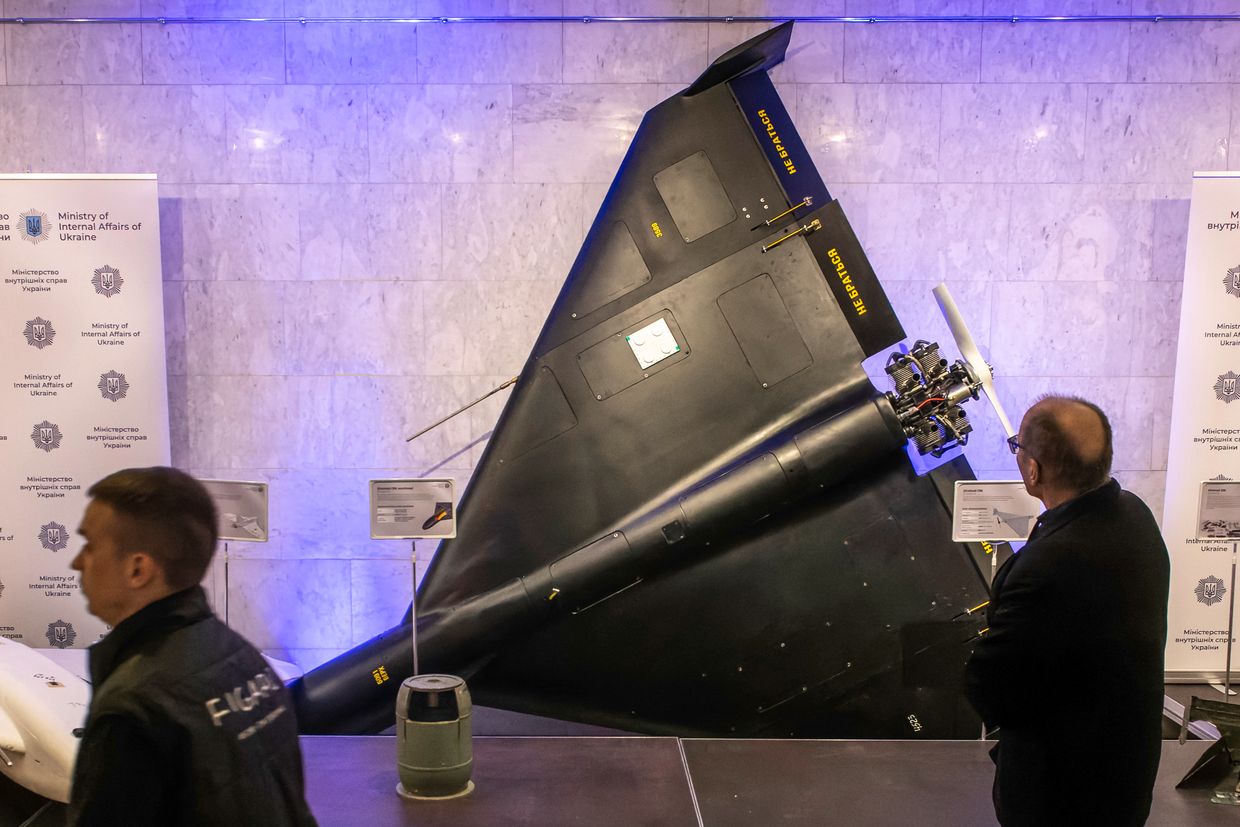
Iran has assisted Russia in its war against Ukraine, providing drones and missiles. Tehran has helped Moscow develop weapons of its own. Russia's Geran drone is modelled after the Iranian Shahed drone.
Russian drone attacks against Ukraine might decrease due to Iranian Shahed production capabilities being targeted in Israeli strikes, Estonian military intelligence commander Ants Kiviselg said on June 20, according to the ERR broadcaster.The comments come as Russian drone strikes across Ukraine have been breaking records in recent weeks, with nearly 500 drones and missiles launched overnight on June 9."While it can be assessed that Russia has been able to largely localize and transfer the produ
Russian drone attacks against Ukraine might decrease due to Iranian Shahed production capabilities being targeted in Israeli strikes, Estonian military intelligence commander Ants Kiviselg said on June 20, according to the ERR broadcaster.
The comments come as Russian drone strikes across Ukraine have been breaking records in recent weeks, with nearly 500 drones and missiles launched overnight on June 9.
"While it can be assessed that Russia has been able to largely localize and transfer the production of Shahed and Geran-type drones to Russia, it can be assumed that some critical nodes for drone production continue to come from Iran," Kiviselg said.
Israel initiated a series of air strikes against Iranian military and nuclear facilities on June 13, with Tehran responding with waves of drone and missile attacks, further escalating tensions in the Middle East.
Iran has been a key ally to Moscow and provided the country with ballistic missiles and thousands of Shahed "kamikaze" drones for its war against Ukraine. Russia has also launched production of its own Shahed equivalents called Geran.
While Israeli strikes targeted and destroyed a Geran-type drone factory in Isfahan, Ukrainian forces have been attacking the Russian plant in Alabuga in Tatarstan, the Estonian intelligence chief noted.
"So there is a possibility that in the near future we may see a certain decline in the use of drones," Kiviselg said. Estonian intelligence is nevertheless convinced that Moscow is planning steps to not only maintain, but also "increase" its drone production.
Russia has been regularly deploying Shahed-type drones for nighttime attacks on Ukrainian cities and infrastructure, overwhelming Ukrainian air defenses with massive swarms.
Ukraine's intelligence has warned that the Russian defense industry seeks to ramp up the production of the strike drones, aiming to deliver 500 unmanned aircraft per month for Russia's war effort.
In turn, the Ukrainian side has also increasingly invested in its drone capabilities, and more than doubled its production of long-range drones in 2024 compared to the previous year.
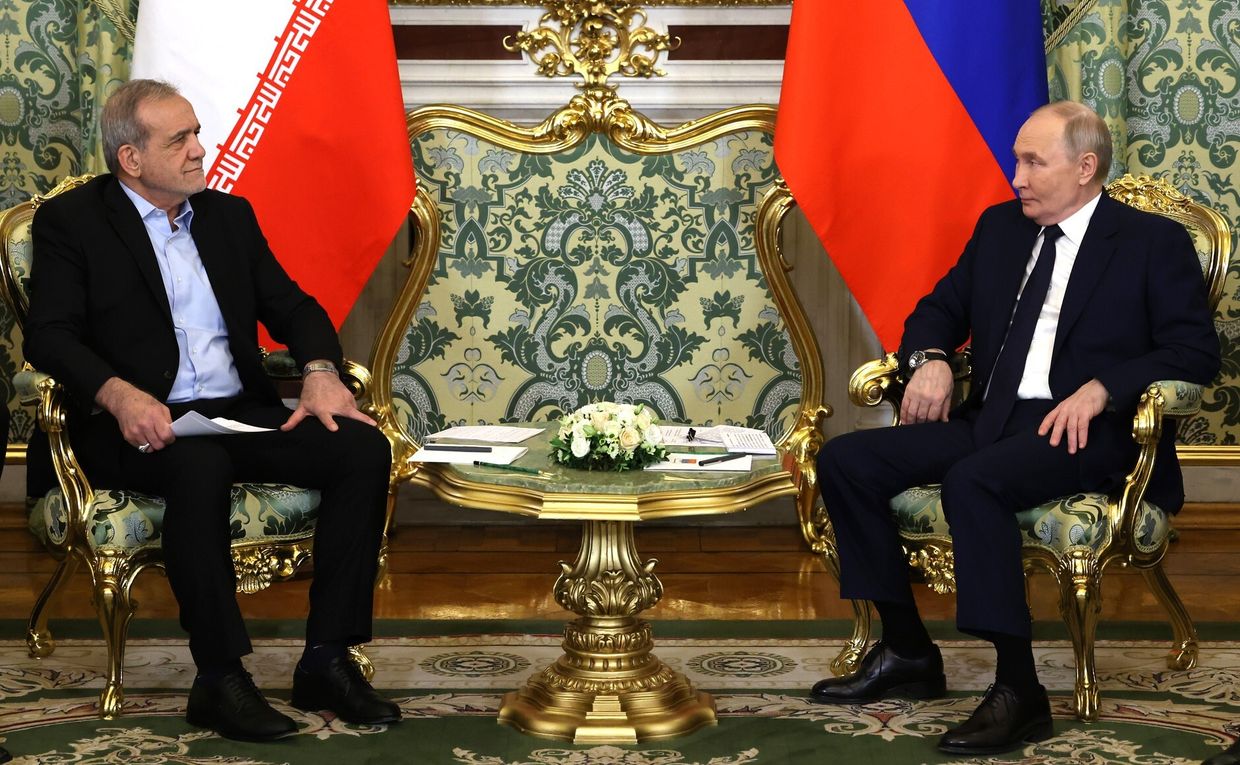
Regime change in Iran is "unacceptable" and the assassination of Supreme Leader Ayatollah Ali Khamenei would "open Pandora's box," Kremlin spokesperson Dmitry Peskov told Sky News in an interview published June 20.Russia, which signed a strategic partnership with Iran in January, has reportedly grown increasingly alarmed as the United States weighs deeper involvement in Israel's military campaign against Tehran. Earlier, U.S. President Donald Trump suggested the option of assassinating Iran's Su
Regime change in Iran is "unacceptable" and the assassination of Supreme Leader Ayatollah Ali Khamenei would "open Pandora's box," Kremlin spokesperson Dmitry Peskov told Sky News in an interview published June 20.
Russia, which signed a strategic partnership with Iran in January, has reportedly grown increasingly alarmed as the United States weighs deeper involvement in Israel's military campaign against Tehran.
Earlier, U.S. President Donald Trump suggested the option of assassinating Iran's Supreme Leader Khamenei remains on the table, though he said the U.S. does not plan to act on it "for now."
The comment followed reporting that Israel had earlier proposed a plan to kill Khamenei — a proposal Trump initially rejected, according to a U.S. official cited by AP.
Peskov warned that any attempt at regime change in Tehran or threats to its leadership would "open Pandora's box," deepening instability across the Middle East and beyond.
"(Regime change in Iran) is unimaginable," Peskov said. "It should be unacceptable, even talking about that should be unacceptable for everyone." He added that the killing of Khamenei would promote extremist sentiment inside Iran and provoke unpredictable consequences.
"The situation is extremely tense and is dangerous not only for the region but globally," Peskov said. "An enlargement of the composition of the participants of the conflict is potentially even more dangerous. It will lead only to another circle of confrontation and escalation of tension in the region."
Russia has been a close regional ally of Iran, while Tehran supplied drones and ballistic missiles for Moscow's war against Ukraine. Meanwhile, Israel has maintained a delicate balance, refraining from joining Western sanctions against Moscow while condemning Iran's role in supporting Russia's war effort.
Asked on whether Moscow would respond to a possible strike against Khamenei, Peskov declined to specify, saying any reaction would come from "inside Iran."
Peskov also commented on Trump's dismissive response to Russian President Vladimir Putin's offer to mediate between Israel and Iran. The U.S. president reportedly told Putin to "mediate your own conflict" in reference to the Russia-Ukraine war. Peskov shrugged off the remark, calling Trump's language "unique" and urging mutual tolerance.
Tensions have risen between the U.S. and Iran following a wave of Israeli air strikes on Iranian territory, beginning June 13. The attacks targeted nuclear infrastructure and senior Iranian commanders, prompting Iranian missile strikes on Tel Aviv and other Israeli cities.
Tehran claimed that at least 224 Iranian civilians were killed on June 16, though the figures remain unverified.
Russia has offered to mediate the crisis, with Putin reportedly reaching out to both Iranian President Masoud Pezeshkian and Israeli Prime Minister Benjamin Netanyahu. Tel Aviv, according to the Kremlin, is reluctant to accept the proposal, while the EU leaders rejected it, citing Russia's aggression in Ukraine and its close military ties to Iran.
Editor's note: This item has been updated to include Kremlin spokesperson Dmitry Peskov's statement. U.S. President Donald Trump said on June 18 that he had turned down Russian President Vladimir Putin's offer to mediate the escalating conflict between Israel and Iran."I spoke to him yesterday, and, you know, he actually offered to help mediate. I said, do me a favor. Mediate your own," Trump told reporters. "Let's mediate Russia first, okay? I said, Vladimir, let's mediate Russia first. You can
Editor's note: This item has been updated to include Kremlin spokesperson Dmitry Peskov's statement.
U.S. President Donald Trump said on June 18 that he had turned down Russian President Vladimir Putin's offer to mediate the escalating conflict between Israel and Iran.
"I spoke to him yesterday, and, you know, he actually offered to help mediate. I said, do me a favor. Mediate your own," Trump told reporters. "Let's mediate Russia first, okay? I said, Vladimir, let's mediate Russia first. You can worry about this later."
Shortly after Trump's statement, Kremlin spokesperson Dmitry Peskov said the U.S. president was speaking "figuratively" when referring to a conversation with Putin, according to the Russian state news agency TASS.
"Life is so eventful these days that a retrospective covering several days is like looking back at yesterday," Peskov added, implying there had been no such conversation on June 17.
Trump's comments come just days after he had said he was "open" to the idea of Putin serving as a mediator between Israel and Iran, sparking criticism from U.S. allies. On June 15, Trump claimed Putin was "ready" and had discussed the possibility at length in a recent phone call.
Putin, whose country has been deepening military cooperation with Tehran, spoke separately with Israeli Prime Minister Benjamin Netanyahu and Iranian President Masoud Pezeshkian on June 13. He condemned Israel's air strikes on Iran and offered Russian mediation.
Those strikes, described by Israel as "preemptive," involved 200 warplanes and 330 munitions targeting Iranian nuclear and military sites. Iran responded with missile attacks on Israeli cities, including Tel Aviv, that killed at least five Ukrainian citizens on June 14.
Putin's offer of mediation has been dismissed by several Western leaders.
Trump says Putin offered to mediate in the war between Israel and Iran.
Trump: "Do me a favor. Mediate your own. Let's mediate Russia first. I said, Vladimir, let's mediate Russia first. You can worry about this later.”
French President Emmanuel Macron said Russia "cannot be a mediator," given its war against Ukraine. EU foreign policy chief Kaja Kallas echoed that sentiment, saying on June 17 that Putin "cannot be trusted to mediate peace" while continuing to wage war on Ukrainian civilians.
Kremlin spokesperson Dmitry Peskov said on June 17 that Israel appeared unwilling to accept Moscow's mediation. Israel has not publicly commented on the offer.
Ukraine, which has been targeted by thousands of Iranian-made Shahed drones and missiles supplied to Russia, warned that Tehran is a "source of problems" both regionally and globally.
Despite Trump's latest rebuke of Putin's mediation ambitions, the U.S. president has continued to avoid placing additional sanctions on Moscow, even as the Kremlin refuses to agree to a ceasefire in its war against Ukraine.
Ukraine is preparing to evacuate its citizens from Israel and Iran as hostilities between the two countries intensify, the Foreign Ministry told Ukrainian media outlet NV on June 18.The move comes as Israel on June 13 launched widespread air strikes against Iran, targeting nuclear facilities and the country's military leadership. Iran responded with missile strikes on Tel Aviv and other cities, killing multiple civilians, including five Ukrainian citizens on June 14.As of the morning of June 18,
Ukraine is preparing to evacuate its citizens from Israel and Iran as hostilities between the two countries intensify, the Foreign Ministry told Ukrainian media outlet NV on June 18.
The move comes as Israel on June 13 launched widespread air strikes against Iran, targeting nuclear facilities and the country's military leadership. Iran responded with missile strikes on Tel Aviv and other cities, killing multiple civilians, including five Ukrainian citizens on June 14.
As of the morning of June 18, 293 Ukrainians in Israel and 85 in Iran have requested evacuation, the ministry said. Ten additional foreign nationals with permanent residency in Ukraine have also asked for assistance to evacuate from Iran.
Ukraine's embassy in Israel has received over 400 calls on its hotline as citizens seek updates on possible evacuation routes. The ministry told NV it is developing evacuation plans, including potential flights organized in cooperation with international partners.
On June 13, Kyiv expressed concern over the security situation in the Middle East, describing Tehran as a "source of problems" in the region and beyond.
Iran is a key supplier of weapons to Russia, including Shahed-type drones and ballistic missiles used in attacks on Ukrainian cities. Israel, which hosts a significant Russian-speaking population, has not joined Western sanctions against Moscow.
Tensions in the region grow as U.S. President Donald Trump is also considering launching U.S. strikes on Iranian nuclear targets, Axios reported on June 17.
On Truth Social, Trump demanded Iran's "unconditional surrender" and threatened Supreme Leader Ali Khamenei, while boasting about American control of Iranian airspace.
Trump has also floated Russian President Vladimir Putin as a possible mediator in the conflict.
Putin held separate calls with Iranian President Masoud Pezeshkian and Israeli Prime Minister Benjamin Netanyahu on June 13, condemning Israeli strikes and offering to mediate.
Israel has not publicly responded to Russia's proposal, but Kremlin spokesperson Dmitry Peskov said on June 17 that Tel Aviv appeared unwilling to accept Russian mediation.
Iran's Health Ministry claimed on June 18 that 585 people had been killed by Israeli strikes, with Tehran alleging that 90% of the casualties are civilians.
Russia on June 18 warned the world is "millimetres away from catastrophe" due to Israeli strikes on Iran's nuclear infrastructure, just four months after one of its own drones struck the Chornobyl nuclear site in Ukraine.Russian Foreign Ministry spokesperson Maria Zakharova accused Israel of escalating the risk of a nuclear incident in the Middle East, despite Russia's own record of repeatedly placing nuclear facilities at risk during its full-scale invasion, and threatening the use of nuclear w
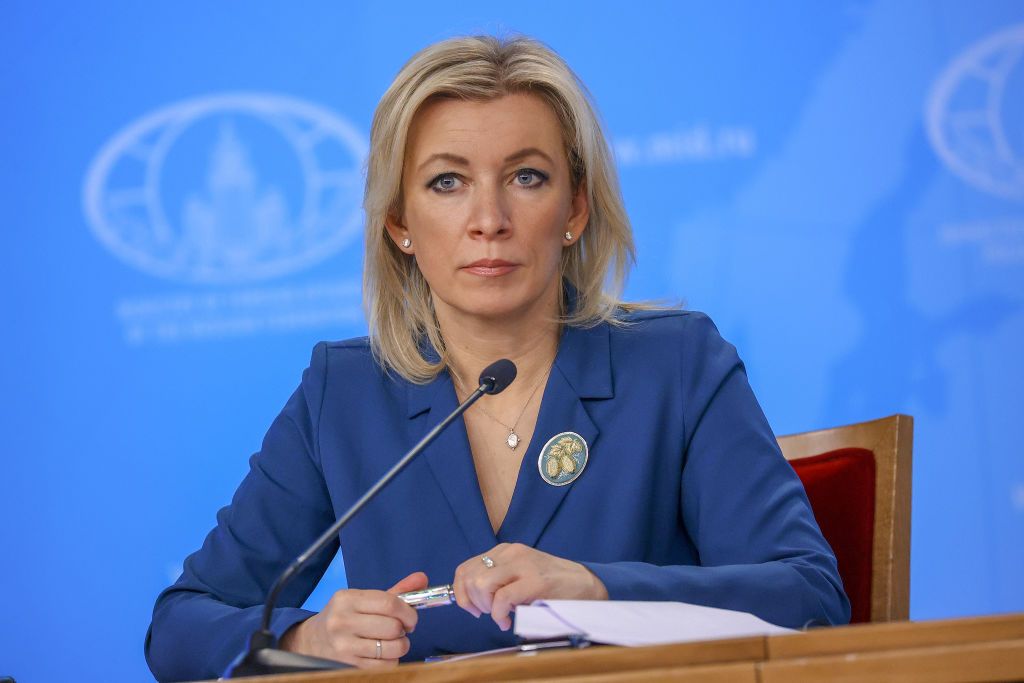
Russia on June 18 warned the world is "millimetres away from catastrophe" due to Israeli strikes on Iran's nuclear infrastructure, just four months after one of its own drones struck the Chornobyl nuclear site in Ukraine.
Russian Foreign Ministry spokesperson Maria Zakharova accused Israel of escalating the risk of a nuclear incident in the Middle East, despite Russia's own record of repeatedly placing nuclear facilities at risk during its full-scale invasion, and threatening the use of nuclear weapons.
On Feb. 14, Russian forces struck the Chornobyl nuclear facility with a Shahed drone, hitting the protective sarcophagus that encases Reactor No. 4, site of the 1986 nuclear disaster.
Damage was limited, and no radiation leakage occurred, but the act was widely condemned as a deliberate provocation timed to coincide with the Munich Security Conference.
President Volodymyr Zelensky called the attack on the Chornobyl plant "a terrorist threat to the whole world." Ukrainian officials and nuclear security experts said the strike was unlikely to cause significant radioactive contamination but served as a warning of Russia's willingness to weaponize fear of nuclear disaster.
Russia has also intensified strikes near other nuclear facilities in Ukraine, including infrastructure connected to the occupied Zaporizhzhia Nuclear Power Plant, which Moscow's forces have used as a military base since early in the war.
Analysts view the attacks as part of a broader campaign of intimidation aimed at pressuring Kyiv and its allies into a settlement.
Zakharova's comments follow growing international concern over the rising tensions between Israel and Iran. Russia has positioned itself as a potential mediator in the conflict, though European leaders have dismissed the Kremlin's neutrality due to its deepening military ties with Tehran and ongoing aggression in Ukraine.
Russian President Vladimir Putin "cannot be trusted" to mediate peace in the Middle East while launching mass strikes on Ukrainian cities, EU foreign policy chief Kaja Kallas said on June 17. Her remarks came after a Russian missile attack killed at least 28 civilians in Kyiv and injured over 130.
Kremlin spokesperson Dmitry Peskov said Israel has so far rejected Moscow's mediation offer. U.S. President Donald Trump said over the weekend that Putin had expressed willingness to help mediate.
Russia continues to receive military support from Iran, including drones and missiles used in attacks across Ukraine.
U.S. President Donald Trump is weighing direct military action against Iran, including potential strikes on its nuclear facilities, Axios reported on June 17, citing unnamed U.S. officials. Trump demanded Iran's "unconditional surrender" on Truth Social on June 17 and threatened Supreme Leader Ayatollah Ali Khamenei, boasting about U.S. air superiority.The U.S. president is expected to meet with his national security team later in the day to determine the scope of involvement in the escalating c
U.S. President Donald Trump is weighing direct military action against Iran, including potential strikes on its nuclear facilities, Axios reported on June 17, citing unnamed U.S. officials.
Trump demanded Iran's "unconditional surrender" on Truth Social on June 17 and threatened Supreme Leader Ayatollah Ali Khamenei, boasting about U.S. air superiority.
The U.S. president is expected to meet with his national security team later in the day to determine the scope of involvement in the escalating conflict between Israel and Iran, according to Axios.
The meeting comes after his early departure from the G7 Leaders' Summit on June 16, where he had been scheduled to meet with President Volodymyr Zelensky the following day.
"We now have complete and total control of the skies over Iran," Trump wrote on Truth Social.
He added that "we know exactly where the so-called 'Supreme Leader' is hiding."
"He is an easy target, but is safe there - We are not going to take him out (kill!), at least not for now," Trump continued. "But we don't want missiles shot at civilians, or American soldiers. Our patience is wearing thin."
The U.S. president is increasingly leaning toward using military force to target Iran's nuclear facilities, moving away from a diplomatic resolution, CNN reported, citing two unnamed U.S. officials.
Although Trump continues to be receptive to negotiations, CNN sources indicated that any agreement would require significant concessions from Tehran.
German Chancellor Friedrich Merz said on June 17 that U.S. involvement in Israel's military campaign is under serious consideration, and a decision could be "made in the near future," Politico reported.
Merz said the decision depends on whether the Iranian regime "is prepared to return" to the negotiating table.
Israel launched a series of massive air strikes on Iran starting June 13, targeting nuclear facilities and senior military figures. The Israeli government claimed Tehran was nearing nuclear weapons capability.
Iran responded with missile strikes on Tel Aviv and other Israeli cities, which resulted in civilian casualties, including five Ukrainian citizens on June 14.
Iranian officials claimed 224 people have been killed in Israeli attacks so far, most of them civilians. The figures have not been independently verified.
As tensions grow, Trump has floated the idea of Russian President Vladimir Putin serving as a mediator between Israel and Iran. Putin spoke with both Iranian President Masoud Pezeshkian and Israeli Prime Minister Benjamin Netanyahu on June 13, offering mediation and condemning Israeli strikes.
Israel has not publicly responded to Russia's proposal, but Kremlin spokesperson Dmitry Peskov said on June 17 that Tel Aviv appeared unwilling to accept Russian mediation.
French President Emmanuel Macron dismissed the suggestion entirely, saying on June 15 that Moscow, given its war in Ukraine and disregard for the UN Charter, "cannot be a mediator."
Tehran has become one of Russia's closest military partners during its war against Ukraine, supplying thousands of Shahed drones and ballistic missiles used in daily strikes on Ukrainian cities.
Israel, which has historically maintained careful relations with Russia and is home to a substantial Russian-speaking population, has not joined in Western sanctions against Moscow.
On June 13, Kyiv expressed its support for Israel, describing Iran as a "source of instability in the region and beyond," citing Tehran's extensive military cooperation with Russia.
Israel is reluctant to accept Russia's mediation in its war with Iran, Kremlin spokesperson Dmitry Peskov said on June 17, according to the Russian state news agency TASS. "At the moment, we see reluctance — at least on Israel’s part — to resort to mediation or pursue a peaceful resolution," Peskov claimed. Since June 13, Israel has repeatedly carried out massive air strikes against Iran, particularly the country's military leadership and nuclear facilities. The Israeli government justified the
Israel is reluctant to accept Russia's mediation in its war with Iran, Kremlin spokesperson Dmitry Peskov said on June 17, according to the Russian state news agency TASS.
"At the moment, we see reluctance — at least on Israel’s part — to resort to mediation or pursue a peaceful resolution," Peskov claimed.
Since June 13, Israel has repeatedly carried out massive air strikes against Iran, particularly the country's military leadership and nuclear facilities. The Israeli government justified the attacks by saying that Tehran was on the verge of creating a nuclear bomb.
Iran responded by attacking Israeli cities, including Tel Aviv, which resulted in civilian casualties, including five Ukrainian citizens on June 14.
U.S. President Donald Trump on June 15 said he was open to the idea of Russian President Vladimir Putin mediating between Iran and Israel.
"He is ready. He called me about it. We had a long talk about it. We talked about this more than his situation (war against Ukraine)," Trump said, according to ABC reporter Rachel Scott.
The Russian president held separate calls with Iranian President Masoud Pezeshkian and Israeli Prime Minister Benjamin Netanyahu on June 13.
During the call with Iran, Putin offered condolences for what the Kremlin labeled "numerous civilian casualties" and condemned Israel's actions as violations of the UN Charter. He later proposed that Russia could serve as a neutral mediator.
Israel has not commented publicly on the Kremlin's offer, but Peskov's statement implies Tel Aviv's rejection. France has also dismissed the idea, with President Emmanuel Macron saying on June 15 that Moscow "cannot be a mediator."
Russia's ties with Iran have deepened since the start of its full-scale invasion of Ukraine in 2022. Tehran has supplied Moscow with thousands of Shahed attack drones and ballistic missiles used in daily strikes against Ukrainian cities and infrastructure.
Israel, which has historically maintained cautious relations with Russia and is home to a significant Russian-speaking population, has not joined Western sanctions against Moscow.
As of June 16, Iran's Health Ministry claimed 224 people had been killed by Israeli strikes, with Tehran alleging that 90% of the casualties are civilians.
The figures have not been independently verified. Israel has not confirmed casualty numbers but maintains that the strikes were aimed at preventing an existential threat.
On June 13, Kyiv expressed support for Israel, describing Iran as a "source of instability in the region and beyond," citing Tehran's extensive military cooperation with Russia.
Ukraine's Foreign Ministry has urged its citizens to leave Israel and Iran "as soon as possible" due to a serious deterioration in regional security, the ministry said in a statement on June 17."In connection with a significant worsening of the security situation in the Middle East, the Ministry of Foreign Affairs strongly recommends that Ukrainian citizens leave the territory of the State of Israel and the Islamic Republic of Iran as soon as possible, until the situation stabilizes," the statem
Ukraine's Foreign Ministry has urged its citizens to leave Israel and Iran "as soon as possible" due to a serious deterioration in regional security, the ministry said in a statement on June 17.
"In connection with a significant worsening of the security situation in the Middle East, the Ministry of Foreign Affairs strongly recommends that Ukrainian citizens leave the territory of the State of Israel and the Islamic Republic of Iran as soon as possible, until the situation stabilizes," the statement read.
Ukrainians who remain in either country are advised to remain vigilant, monitor updates from local authorities, follow air raid alerts, adhere to safety protocols, and always carry valid identification documents.
The Ukrainian embassies in Israel and Iran are compiling evacuation lists and preparing potential evacuation plans. Information about available evacuation routes is being published on the official Facebook pages of the Ukrainian embassies in Israel and Iran.
The Israeli military launched a large-scale attack on Iran's nuclear and military infrastructure on June 13, which were followed by retaliatory ballistic missile strikes from Tehran. Israel has since struck key defense targets in Tehran, including the headquarters of Iran's Defense Ministry.
Iran's Islamic Revolutionary Guard Corps (IRGC) said it used a new method to breach Israel's air defenses during a missile attack early on June 16, that killed at least eight people, Reuters reports.According to the IRGC, Iranian missiles were guided in a way that caused Israeli interceptor missiles to target each other, confusing Israel's integrated defense system, which includes Iron Dome, David's Sling, and Arrow platforms. It did not provide any further details. Ballistic missiles are rocket
Iran's Islamic Revolutionary Guard Corps (IRGC) said it used a new method to breach Israel's air defenses during a missile attack early on June 16, that killed at least eight people, Reuters reports.
According to the IRGC, Iranian missiles were guided in a way that caused Israeli interceptor missiles to target each other, confusing Israel's integrated defense system, which includes Iron Dome, David's Sling, and Arrow platforms.
It did not provide any further details.
Ballistic missiles are rocket-powered and are launched high into the atmosphere before arcing back down onto their target.
They're only guided during the initial stages of launch, so they can be less accurate than cruise missiles, but have the advantage of reaching incredibly high speeds – sometimes more than 3,200 kilometers per hour – as they approach their targets.
Israel's Defense Forces (IDF) reported for the first time that its systems had an 80-90% success rate intercepting Iran's ballistic missiles, while roughly 5-10% penetrated the shield and struck populated areas, according to the Jerusalem Post.
The strike came three days after Israel launched a sweeping aerial campaign against Iranian nuclear and military facilities, killing several high-ranking officials, including IRGC aerospace commander Amir Ali Hajizadeh.
Kyiv has expressed support for Israel, describing Iran as a "source of instability in the region and beyond," citing Tehran's extensive military cooperation with Russia.
Since 2022, Iran has supplied Moscow with thousands of Shahed kamikaze drones and short-range ballistic missiles for use against Ukraine. Russia, for its part, has condemned the Israeli air strikes on Iran as "unprovoked aggression" and backed calls for restraint.
Israel is home to one of the largest Russian-speaking populations outside the former Soviet Union, with approximately 1 million people — or 15% of the total population — identifying as Russian-speaking. Israel has historically maintained relatively friendly ties with Russia.
U.S. President Donald Trump said on June 15 that he is considering Russian President Vladimir Putin as a possible mediator between Israel and Iran.
As of June 16, Iran's Health Ministry claims 224 people have been killed since the Israeli air campaign began on June 13 — 90% of them civilians, according to Tehran. Israel has not confirmed the civilian casualty figure, and independent verification remains difficult.
Iran has partially suspended production at the South Pars gas field — the world’s largest — after an Israeli airstrike triggered a fire at the site, the semi-official Tasnim news agency reported on June 14, according to Reuters. If confirmed, it would mark the first Israeli strike targeting Iran’s vital oil and gas infrastructure.The South Pars field, located offshore in southern Bushehr province, is responsible for the bulk of Iran’s gas output. Tehran shares the field with Qatar, which refers
Iran has partially suspended production at the South Pars gas field — the world’s largest — after an Israeli airstrike triggered a fire at the site, the semi-official Tasnim news agency reported on June 14, according to Reuters. If confirmed, it would mark the first Israeli strike targeting Iran’s vital oil and gas infrastructure.
The South Pars field, located offshore in southern Bushehr province, is responsible for the bulk of Iran’s gas output. Tehran shares the field with Qatar, which refers to its portion as the North Field. A strike on South Pars represents a significant escalation, coming after oil prices surged 9% on June 13 following Israel’s initial wave of attacks, which had not targeted energy infrastructure, Reuters reports.
Israel launched its air offensive against Iran on June 13, killing commanders and scientists and bombing nuclear sites, in what it described as an effort to prevent Tehran from developing nuclear weapons.
The Iranian oil ministry said the fire caused by the strike has been extinguished. According to Tasnim, the fire broke out in one of four units of Phase 14 at South Pars, halting the production of 12 million cubic meters of gas.
Iran, the world’s third-largest gas producer after the United States and Russia, produces around 275 billion cubic meters of gas per year, about 6.5% of global output.
Due to international sanctions, the country consumes most of this domestically. Qatar, which operates the majority of the shared field with support from global firms such as Exxon and Shell, produces 77 million tonnes of liquefied natural gas annually, supplying both European and Asian markets.
Israeli officials have asked the Trump administration to join military operations targeting Iran’s nuclear program, including a strike on the fortified Fordow uranium enrichment site, Axios reported on June 14, citing two Israeli officials.The request comes as Israel continues its assault on Iranian targets and warns that it lacks the capability to destroy Fordow alone. The underground facility, located deep within a mountain, is beyond the reach of Israel’s conventional weapons. U.S. forces in
Israeli officials have asked the Trump administration to join military operations targeting Iran’s nuclear program, including a strike on the fortified Fordow uranium enrichment site, Axios reported on June 14, citing two Israeli officials.
The request comes as Israel continues its assault on Iranian targets and warns that it lacks the capability to destroy Fordow alone. The underground facility, located deep within a mountain, is beyond the reach of Israel’s conventional weapons. U.S. forces in the region, however, have the necessary bunker-busting bombs and bomber aircraft to hit the site.
According to an Israeli official who spoke to Axios, Trump suggested in a recent conversation with Israeli Prime Minister Benjamin Netanyahu that he would consider joining the operation if needed. But a White House official denied that claim on June 13.
A second U.S. official confirmed that Israel had urged the U.S. to take part, but said the administration is not currently considering involvement. Israeli Ambassador to the U.S. Yechiel Leiter told Fox News on June 13 that "the entire operation… really has to be completed with the elimination of Fordow."
An Israeli source told Axios that the U.S. is considering the request, and that Israel hopes Trump will agree to it.
A senior White House official told Axios on June 14 that "whatever happens today cannot be prevented," referring to the Israeli attacks. "But we have the ability to negotiate a successful peaceful resolution to this conflict if Iran is willing. The fastest way for Iran to accomplish peace is to give up its nuclear weapons program," the official added.
U.S. officials have so far maintained that Iranian retaliation must not target American forces, arguing that the current Israeli operation does not justify attacks on U.S. interests.
Editor's note: This is a developing story and is being updated.U.S. President Donald Trump and Russian President Vladimir Putin held a phone call on June 14 in which the two leaders discussed Ukraine and the conflict between Israel and Iran."Another telephone conversation between Russian President Vladimir... Putin and U.S. President Donald Trump," Russian state media reported, citing Putin's foreign policy aide Yuri Ushakov.The phone call took place on Trump's birthday, as the U.S. president ma
Editor's note: This is a developing story and is being updated.
U.S. President Donald Trump and Russian President Vladimir Putin held a phone call on June 14 in which the two leaders discussed Ukraine and the conflict between Israel and Iran.
"Another telephone conversation between Russian President Vladimir... Putin and U.S. President Donald Trump," Russian state media reported, citing Putin's foreign policy aide Yuri Ushakov.
The phone call took place on Trump's birthday, as the U.S. president marks the occasion with a military parade in Washington.
The two leaders discussed Russia's ongoing war against Ukraine and the situation in the Middle East as Israel and Iran continue to exchange aerial attacks.
"The exchange of opinions naturally focused on the dangerous escalation of the situation in the Middle East," Ushakov said.
The phone call between Trump and Putin lasted 50 minutes, he said.
"Russia expressed its readiness to continue negotiations with the Ukrainians, as agreed, after June 22. Donald Trump took note of this information and once again noted his interest in a speedy end to the Russian-Ukrainian conflict," Ushakov said, according to Russian state media.
Trump later confirmed he held a phone call with Putin, saying that the main topic the two leaders covered was Iran.
"President Putin called this morning to very nicely wish me a Happy Birthday, but to more importantly, talk about Iran, a country he knows very well," Trump said in a post to Truth social.
Trump noted that the phone call between the two leaders lasted about one hour, with Putin congratulating Trump on his birthday.
"Much less time was spent talking about Russia/Ukraine, but that will be for next week. He is doing the planned prisoner swaps — large numbers of prisoners are being exchanged, immediately, from both sides," Trump said.
The latest round of prisoner swaps occurred on June 14. Ukraine mainly returned severely wounded and seriously ill soldiers, many of whom were captured during the defense of Mariupol in 2022.
Russia has intensified drone and missile attacks on Ukraine following two rounds of largely inconclusive peace talks between Moscow and Kyiv in Turkey on May 16 and June 2.
Israel and Iran continued to exchange attacks on June 14, more than 24 hours after Israel launched its first strikes on Iran's nuclear sites and military leadership.
Trump has said that the U.S. military is on high alert and watching for any kind of retaliation, adding that the U.S. will respond to defend itself or Israel if Iran strikes back.
Editor's note: This is a breaking story and is being updated.Iran and Israel continued to exchange attacks on June 14, more than 24 hours after Israel launched its first strikes on Iran's nuclear sites and military leadership.According to recent reports, there are civilian casualties in both countries. In Israel, two people have been killed and more than 40 injured since Iran launched its initial wave of retaliatory strikes. In Iran, more than 70 people have been killed and 329 injured, accordin
Editor's note: This is a breaking story and is being updated.
Iran and Israel continued to exchange attacks on June 14, more than 24 hours after Israel launched its first strikes on Iran's nuclear sites and military leadership.
According to recent reports, there are civilian casualties in both countries. In Israel, two people have been killed and more than 40 injured since Iran launched its initial wave of retaliatory strikes.
In Iran, more than 70 people have been killed and 329 injured, according to the country's United Nations ambassador, Amir Saeid Iravani.
Responding to Israel's preemptive strikes on Iran overnight on June 13, Tehran responded with multiple waves of ballistic missiles, as well as an earlier barrage of drones.
The drone attack followed heavy air strikes launched by Israel against Iran, targeting the country's nuclear program and reportedly killing Hossein Salami, the commander-in-chief of the Islamic Revolutionary Guard Corps (IRGC), and other top officials.
Amid the escalation, Prime Minister Benjamin Netanyahu vowed to respond to the most recent attack.
"More is on the way. The (Iranian) regime does not know what hit them, or what will hit them. It has never been weaker," Netanyahu said in an address.
Clear, dramatic footage captures active missile intercepts over Tel Aviv, including impacts that struck locations downtown. pic.twitter.com/ISxbIQ6CU0
U.S. President Donald Trump said earlier in the day that the U.S. military is on high alert and watching for any kind of retaliation, adding that the U.S. will respond to defend itself or Israel if Iran strikes back.
Before the attacks, Trump emphasized that despite tensions, he is committed to avoiding conflict and prefers a diplomatic solution to Iran's nuclear aspirations. "I want to have an agreement with Iran," Trump said, referring to ongoing Iran-U.S. nuclear talks in Oman.
Iran insists its nuclear program is for peaceful purposes and has expressed willingness to accept limited restrictions in exchange for the lifting of sanctions.
Beyond the Middle East, Iran has emerged as a key ally of Russia in its war against Ukraine, supplying Moscow with drones used in attacks on Ukrainian cities. Iran's Islamic Revolutionary Guard Corps (IRGC) confirmed on June 13 that its aerospace commander, Amir Ali Hajizadeh, who led Iran's Shahed drone supply to Russia, was killed in the strike on June 13.
Just hours after Russia launched its own missile and drone assault on Ukraine, Russian President Vladimir Putin decried the "numerous civilian casualties" in Iran and condemned Israel's actions as violations of the UN Charter and international law.
Following the initial strikes by Israel, Kyiv expressed concern over the security situation in the Middle East after Israeli air strikes against Iran, but stressed that Tehran remains a "source of problems" in the region "and beyond."
Russian President Vladimir Putin spoke separately with Iranian President Masoud Pezeshkian and Israeli Prime Minister Benjamin Netanyahu on June 13, amid a sweeping Israeli air assault on Iran that killed top military officials and targeted the country's nuclear infrastructure.The Israeli strike, described by Tel Aviv as "preemptive," involved 200 aircraft and the release of 330 munitions on over 100 sites. Iran's Islamic Revolutionary Guard Corps confirmed that several senior commanders were ki
Russian President Vladimir Putin spoke separately with Iranian President Masoud Pezeshkian and Israeli Prime Minister Benjamin Netanyahu on June 13, amid a sweeping Israeli air assault on Iran that killed top military officials and targeted the country's nuclear infrastructure.
The Israeli strike, described by Tel Aviv as "preemptive," involved 200 aircraft and the release of 330 munitions on over 100 sites. Iran's Islamic Revolutionary Guard Corps confirmed that several senior commanders were killed, including aerospace chief Amir Ali Hajizadeh.
During his call with Pezeshkian, Putin expressed condolences for what the Kremlin described as "numerous civilian casualties" and condemned Israel's actions as violations of the UN Charter and international law.
The conversations took place just hours after Russia launched its own missile and drone assault on Ukraine. At least four civilians were killed and 24 injured in Russian attacks across multiple regions on June 13, according to Ukrainian officials.
Moscow has killed tens of thousands of Ukrainian civilians, and the true extent of the death toll is simply not known. Russia's full-scale invasion of Ukraine was a clear and direct violation of both international law and the UN Charter.
During the conversation with Netanyahu, Putin emphasized "the importance of returning to the negotiation process," and offered to mediate in the conflict.
The Russian leader, who has himself been indicted by the International Criminal Court for war crimes in Ukraine, also pledged Moscow's support in "de-escalating the conflict."
Russia has deepened military and political ties with Tehran since the start of its full-scale war against Ukraine. Iran has supplied Moscow with thousands of Shahed-type attack drones and short-range ballistic missiles used in routine strikes on Ukrainian cities.
Ukraine's Foreign Ministry responded to the Middle East escalation by expressing concern about broader regional instability but reiterated that "the Iranian regime supports Russia in its illegal war of aggression" and provides it with "weapons to kill Ukrainians."
Kyiv warned that the fallout could destabilize international security and trigger economic shocks. Global oil prices soared over 10% after the Israeli operation — a development that could enhance revenues for Russia, whose war budget is largely financed by energy exports.
Editor's note: This story has been updated with additional details.Iran's Islamic Revolutionary Guard Corps (IRGC) confirmed on June 13 that its aerospace commander, Amir Ali Hajizadeh, was killed in an Israeli air strike on a command facility, according to the Times of Israel. Hajizadeh was sanctioned by the European Union in 2022 for overseeing Tehran's supply of Shahed-type drones to Russia for use in its war against Ukraine, which have become a key component of Moscow's war against Ukraine.H
Editor's note: This story has been updated with additional details.
Iran's Islamic Revolutionary Guard Corps (IRGC) confirmed on June 13 that its aerospace commander, Amir Ali Hajizadeh, was killed in an Israeli air strike on a command facility, according to the Times of Israel.
Hajizadeh was sanctioned by the European Union in 2022 for overseeing Tehran's supply of Shahed-type drones to Russia for use in its war against Ukraine, which have become a key component of Moscow's war against Ukraine.
He played a central role in advancing Iran's drone and missile capabilities, meeting with then-Russian Defense Minister Sergei Shoigu in 2023 to showcase Iranian weapons.
The Israeli operation, described as "preemptive," involved 200 aircraft and the dropping of 330 munitions, targeting the country's nuclear program and killing top military officials.
Hajizadeh is also known for his role in the January 2020 downing of a Ukrainian civilian aircraft, which Iran later admitted was mistakenly shot down amid tensions with the U.S. All 176 people on board were killed.
Ukraine's Foreign Ministry issued a statement on June 13 expressing concern over the fallout from the Israeli operation but underscored that "the Iranian regime supports Russia in its illegal war of aggression" and supplies Moscow with "weapons to kill Ukrainians."
Along with North Korea, Iran has been a key ally to Russia during its full-scale war against Ukraine, providing thousands of Shahed strike drones and short-range ballistic missiles.
The drones, cheap and packed with explosives, have become a central weapon in Russia's aerial assaults on Ukraine since their introduction in late 2022.
Known for flying long distances before slamming into targets, they are now mass-produced by Russia and launched in near-nightly waves to overwhelm Ukrainian air defenses.
The Israeli strike took place amid escalating tensions in the Middle East, as well as U.S. negotiations with Tehran regarding its nuclear program. The Trump administration has acknowledged it knew about the operation in advance but denied any involvement.
Kyiv warned of the potential global repercussions of the strike, noting that regional instability could severely impact international security and financial markets, particularly oil.
Crude prices surged more than 10% following the attack, boosting revenues for Moscow, whose economy is heavily reliant on energy exports.
Russia has condemned Israel's attacks as "unprovoked aggression" and a violation of the U.N. Charter.
Kyiv on June 13 expressed concern over the security situation in the Middle East after Israeli air strikes against Iran, but stressed that Tehran remains a "source of problems" in the region "and beyond."The statement follows what Israel called a "preemptive" strike against Iran overnight on June 13, targeting the country's nuclear program and reportedly killing top military officials."We would like to remind you that the Iranian regime supports Russia in its illegal war of aggression against Uk
Kyiv on June 13 expressed concern over the security situation in the Middle East after Israeli air strikes against Iran, but stressed that Tehran remains a "source of problems" in the region "and beyond."
The statement follows what Israel called a "preemptive" strike against Iran overnight on June 13, targeting the country's nuclear program and reportedly killing top military officials.
"We would like to remind you that the Iranian regime supports Russia in its illegal war of aggression against Ukraine and provides Moscow with weapons to kill Ukrainians," the Ukrainian Foreign Ministry said in a statement.
Along with North Korea, Iran has been a key ally to Russia during its full-scale war against Ukraine, providing thousands of Shahed strike drones and short-range ballistic missiles.
Ukraine has called upon the international community "to take joint and decisive action" and deter a "group of aggressive regimes — Russia, Iran, and North Korea."
Kyiv nevertheless also warned that further hostilities could destabilize the region with "negative consequences for international security and global financial stability, especially in oil markets."
Israeli strikes were quickly followed by a surge in oil prices, Russia's key export commodity, with Brent and Nymex crude prices jumping by more than 10%.
"We are convinced that restoring peace and stability in the Middle East will serve the interests not only of the region but also of the entire international community," the Ukrainian Foreign Ministry said.
Iran has pledged a response to Israeli air strikes and accused the United States of "also being responsible for the dangerous consequences of this reckless escalation." The Trump administration has acknowledged it knew about the operation in advance but denied any involvement.
According to the Israel Defense Forces (IDF), Tehran has already launched over 100 drones against Israel in response.
The attacks took place amid escalating tensions in the Middle East and U.S. President Donald Trump's push to find a diplomatic solution to Iran's nuclear aspirations. A round of indirect U.S.-Iranian negotiations in Oman was scheduled for June 15.
Russia has condemned Israel's attacks as "unprovoked aggression" and a violation of the U.N. Charter.
Editor's note: This story was updated to include a comment from Ukrainian Foreign Ministry spokesperson Heorhii Tykhyi.Russia's Foreign Ministry expressed "extreme concern" on June 13 over Israel's recent strike on Iran, calling it a dangerous escalation that violated the United Nations Charter and international law.Moscow, which currently wages war against Ukraine, the largest conflict on the European continent since World War II, condemned Israel's attack as an "unprovoked aggression."Earlier
Editor's note: This story was updated to include a comment from Ukrainian Foreign Ministry spokesperson Heorhii Tykhyi.
Russia's Foreign Ministry expressed "extreme concern" on June 13 over Israel's recent strike on Iran, calling it a dangerous escalation that violated the United Nations Charter and international law.
Moscow, which currently wages war against Ukraine, the largest conflict on the European continent since World War II, condemned Israel's attack as an "unprovoked aggression."
Earlier on June 13, Israeli Prime Minister Benjamin Netanyahu said that Israeli forces had launched "Operation Rising Lion," a preemptive strike targeting Iran's nuclear program. In a televised address, Netanyahu claimed Israeli forces struck Iran's main nuclear enrichment site in Natanz and targeted key nuclear scientists.
In a statement, the Russian Foreign Ministry denounced Israel's overnight attacks as "unprovoked military strikes" targeting a sovereign U.N. member's nuclear facilities. The ministry said the international community "cannot remain indifferent" to such actions that undermine global and regional stability.
The statement called it "cynical" that the strikes occurred during a session of the International Atomic Energy Agency and just before another round of indirect Iran–U.S. talks in Oman, scheduled for June 15.
Moscow said this timing undermined diplomatic efforts aimed at reducing confrontations over Tehran's nuclear program.
The ministry accused Western countries of fueling "anti-Iranian hysteria" in international forums and warned that military solutions cannot resolve the Iranian nuclear issue. It urged all parties to show restraint to avoid a full-scale regional war.
Ukrainian Foreign Ministry spokesperson Heorhii Tykhyi responded to Russia's statement, saying it was "one of those awkward moments when the Russian Foreign Ministry comments on the Middle East but forgets to look at the mirror."
Russian condemnation comes as Moscow and Tehran continue to strengthen their ties. Iran's parliament ratified on May 21 a 20‑year strategic partnership agreement with Russia, deepening military and economic cooperation.
While the pact does not include mutual defense, it outlines joint military exercises, energy cooperation, and interbank links designed to circumvent Western sanctions.
Iran has also supplied Russia with thousands of Shahed drones and ballistic missiles used against Ukraine throughout Moscow's war.
Previously, Moscow claimed its willingness to remove excess nuclear material from Iran, converting it into reactor fuel in support of U.S.–Iran nuclear talks. Kremlin spokesperson Dmitry Peskov said Russia is prepared to assist if both Iran and the U.S. find its help valuable.
Global oil prices soared on June 13 after Israel launched a strike on Iran, triggering fears of a broader conflict in the energy-rich Middle East that could disrupt global supplies, the BBC reported. The spike threatens to undermine Western efforts to choke off a vital revenue stream for Russia, which relies heavily on oil profits to sustain its war in Ukraine.According to the BBC, Brent and Nymex crude prices jumped by more than 10% following the Israeli attack, reaching their highest levels s
Global oil prices soared on June 13 after Israel launched a strike on Iran, triggering fears of a broader conflict in the energy-rich Middle East that could disrupt global supplies, the BBC reported.
The spike threatens to undermine Western efforts to choke off a vital revenue stream for Russia, which relies heavily on oil profits to sustain its war in Ukraine.
According to the BBC, Brent and Nymex crude prices jumped by more than 10% following the Israeli attack, reaching their highest levels since January. Prices later stabilized but remained about 7.5% higher, with Brent at $74.50 a barrel and Nymex at $73.20.
The price surge comes at a crucial time for Ukraine and its Western allies, who are intensifying efforts to minimize the Kremlin's oil revenues — the backbone of Russia's wartime economy.
President Volodymyr Zelensky urged the European Union on June 11 to impose tougher sanctions on Russia, including a more aggressive price cap on oil exports.
"A ceiling of $45 per barrel of oil is better than $60, that's clear," Zelensky said at the Ukraine-Southeast Europe Summit in Odesa. "But real peace will come with a ceiling of $30. That's the level that will really change the mindset in Moscow."
The EU's current $60 per barrel cap, introduced in December 2022, prohibits Western companies from shipping, insuring, or servicing Russian oil sold above the threshold. While this measure has curtailed some of Russia's profits, the Kremlin continues to earn significant revenue, especially when market prices rise.
European Commission President Ursula von der Leyen said on June 10 that the EU is considering lowering the cap to $45, a move that will be discussed at the G7 summit in Canada between June 15 and 17. According to Reuters, most G7 countries, excluding the U.S. and Japan, are prepared to proceed with the reduction regardless of Washington’s stance.
Israeli Prime Minister Benjamin Netanyahu said early on June 13 that Israeli forces had launched "Operation Rising Lion," a preemptive strike targeting Iran's nuclear program. In a televised address, Netanyahu claimed Israeli forces struck Iran's main nuclear enrichment site in Natanz and targeted key nuclear scientists.
Editor's note: The article was updated with Trump's statement on Truth Social.U.S. President Donald Trump said on June 13 that he was aware of Israel's plans to conduct strikes on Iran in advance and that Washington is watching for any signs of retaliation by Tehran, Fox News reported."Iran cannot have a nuclear bomb and we are hoping to get back to the negotiating table. We will see. There are several people in leadership that will not be coming back," Trump told Fox News' anchor Bret Baier.The
Editor's note: The article was updated with Trump's statement on Truth Social.
U.S. President Donald Trump said on June 13 that he was aware of Israel's plans to conduct strikes on Iran in advance and that Washington is watching for any signs of retaliation by Tehran, Fox News reported.
"Iran cannot have a nuclear bomb and we are hoping to get back to the negotiating table. We will see. There are several people in leadership that will not be coming back," Trump told Fox News' anchor Bret Baier.
The comments come after Israel launched heavy air strikes against 100 sites in Iran, targeting the country's nuclear program and reportedly killing Hossein Salami, the commander-in-chief of the Islamic Revolutionary Guard Corps (IRGC), and other top officials.
In a statement released by the State Department, U.S. Secretary of State Marco Rubio said that the United States was not involved in the strikes on Iran, calling it a "unilateral action."
The U.S. has reached out to at least one Middle Eastern ally to say that the strike is going to happen, but that Washington was not involved, Fox News reported.
Trump said the U.S. military is on high alert and watching for any kind of retaliation, adding that the U.S. will respond to defend itself or Israel if Iran strikes back.
The Israel Defense Forces (IDF) said that Tehran had already launched over 100 drones against Israel, which are expected to reach their targets within the next few hours.
On the Truth Social media platform, Trump said he gave Iran a "chance after chance to make a deal" and had warned Tehran that "it would be much worse than anything they know" if there is no agreement.
"Certain Iranian hardliners spoke bravely, but they didn't know what was about to happen. They are all dead now, and it will only get worse!" Trump wrote.
The U.S. president added that there is still time to stop the slaughter, calling upon Iran to make a deal "before there is nothing left."
Before the attacks, Trump emphasized that despite tensions, he is committed to avoiding conflict and prefers a diplomatic solution to Iran's nuclear aspirations. "I want to have an agreement with Iran," Trump said, referring to ongoing Iran-U.S. nuclear talks in Oman.
Iran insists its nuclear program is for peaceful purposes and has expressed willingness to accept limited restrictions in exchange for the lifting of sanctions.
In turn, the International Atomic Energy Agency released a report highlighting Iran’s failure to comply with its obligations to fully disclose activities at its nuclear facilities.
Beyond the Middle East, Iran has emerged as a key ally of Russia in its war against Ukraine, supplying Moscow with drones used in attacks on Ukrainian cities.
Iran launched over 100 drones against Israel, all of which were intercepted outside of Israeli airspace, Ynet News reported on June 13, citing Israeli military spokesperson Effie Defrin.The drone attack follows heavy air strikes launched by Israel against Iran, targeting the country's nuclear program and reportedly killing Hossein Salami, the commander-in-chief of the Islamic Revolutionary Guard Corps (IRGC), and other top officials.Israel said it had deployed some 200 aircraft in its "preemptiv
Iran launched over 100 drones against Israel, all of which were intercepted outside of Israeli airspace, Ynet News reported on June 13, citing Israeli military spokesperson Effie Defrin.
The drone attack follows heavy air strikes launched by Israel against Iran, targeting the country's nuclear program and reportedly killing Hossein Salami, the commander-in-chief of the Islamic Revolutionary Guard Corps (IRGC), and other top officials.
Israel said it had deployed some 200 aircraft in its "preemptive" attack overnight on June 13, dropping 330 munitions over 100 sites.
The full extent of the consequences was not immediately clear. Multiple explosions were reported in Tehran as videos posted on social media purportedly show fire burning in multiple locations of the Iranian capital.
Open-source intelligence researchers have shared alleged footage of Shahed kamikaze drones flying in the direction of Israel. Tehran has provided thousands of these drones to Russia for use against Ukrainian cities.
Iranian Shahed-136 attack drone headed westbound over Iraq, towards Israel.
Iran reportedly launched more than 100 attack drones this morning, as part of its opening wave of strikes on Israel. pic.twitter.com/0SU3aLR9ZX
Iran's Supreme Leader Ali Khamenei vowed to enact "severe punishment" in response to the attack, accusing the United States for "also (being) responsible for the dangerous consequences of this reckless escalation."
In a statement released by the State Department, U.S. Secretary of State Marco Rubio said that the United States was not involved in the strikes on Iran, calling it a "unilateral action."
The U.S. Embassy in Israel instructed its employees and family members to take shelter until further notice.
Jordan has announced it had closed its airspace "as a precaution against any risks resulting from the regional escalation."
The attacks are taking place amid escalating tensions in the Middle East. In April 2024, Iran launched 170 drones and 150 missiles against Israel, with an overwhelming majority being shot down outside of Israel with the assistance of Western partners.
The attack was a response to Israel’s strike on an Iranian consulate in Syria on April 1 as part of the broader Israel-Hamas war.
Editor's note: This is a breaking story and is being updated.Israeli forces launched "preemptive strikes" on Iran overnight on June 13, targeting Iran's nuclear program, Prime Minister Benjamin Netanyahu said in an overnight address.Netanyahu said in an overnight address that Israel launched "Operation Rising Lion," which would last for "many days," marking a drastic escalation in conflict in the Middle East."We struck at the heart of Iran's nuclear enrichment program... We targeted Iran's main
Editor's note: This is a breaking story and is being updated.
Israeli forces launched "preemptive strikes" on Iran overnight on June 13, targeting Iran's nuclear program, Prime Minister Benjamin Netanyahu said in an overnight address.
Netanyahu said in an overnight address that Israel launched "Operation Rising Lion," which would last for "many days," marking a drastic escalation in conflict in the Middle East.
"We struck at the heart of Iran's nuclear enrichment program... We targeted Iran's main enrichment facility in Natanz. We targeted Iran's leading nuclear scientists working on the Iranian bomb," Netanyahu said.
The strikes killed Hossein Salami, the Commander-in-Chief of Iran’s Islamic Revolutionary Guard Corps (IRGC), multiple Iranian state media outlets reported. Iran’s Supreme Leader Ayatollah Ali Khamenei confirmed that several nuclear scientists and officials had been killed in the attack.
The full extent of the attack was not immediately clear. Multiple explosions were reported in Tehran as videos posted on social media purportedly show fire burning in multiple locations of Tehran.
"Following the State of Israel’s preemptive strike against Iran, a missile and drone attack against the State of Israel and its civilian population is expected in the immediate future" Israeli Defense Minister Israel Katz warned in a statement.
A view of a damaged building in the Iranian capital, Tehran, following an attack by Israel on June 13, 2025. (Ahmet Dursun/Anadolu via Getty Images)
Iran's Supreme Leader vowed to enact "severe punishment" in response to the attack, accusing the United States for "also (being) responsible for the dangerous consequences of this reckless escalation."
In a statement released by the State Department, U.S. Secretary of State Marco Rubio said that the United States was not involved in the strikes on Iran.
U.S. President Donald Trump, who plans to convene a cabinet meeting in response to the strikes, expressed concerns about escalating tensions between Israel and Iran earlier in the day, warning that a "massive conflict" could erupt in the Middle East.
"Tonight, Israel took unilateral action against Iran. We are not involved in strikes against Iran and our top priority is protecting American forces in the region," Rubio said.
Speaking to reporters at the White House on June 12 ahead of the strikes, Trump warned that an Israeli strike on Iran "could happen" if a nuclear deal is not reached with Iran. Talks between Washington and Tehran were set to resume this weekend on Iran's nuclear program.
Earlier in the day, Trump emphasized that despite tensions, he is committed to avoiding conflict and prefers a diplomatic solution to Iran's nuclear aspirations. "I want to have an agreement with Iran," Trump said, referring to ongoing Iran-US nuclear talks in Oman.
Writing on Truth Social later in the day, Trump reaffirmed his commitment to a "diplomatic resolution to the Iran nuclear issue," and insisted that his "entire administration has been directed to negotiate with Iran."
Iran insists its nuclear program is for peaceful purposes and has expressed willingness to accept limited restrictions in exchange for the lifting of sanctions.
Coinciding with Trump’s remarks, the International Atomic Energy Agency released a report highlighting Iran’s failure to comply with its obligations to fully disclose activities at its nuclear facilities.
Beyond the Middle East, Iran has emerged as a key ally of Russia in its war against Ukraine, supplying Moscow with drones used in attacks on Ukrainian cities.
In April 2025, Russian President Vladimir Putinratified a strategic partnership with Iran, vowing to strengthen bilateral ties and pledging not to support any third party engaged in conflict with the other.

 Connexion