Vue normale

  • ✇The Kyiv Independent
  • Europe must prepare for US scaling down support for Ukraine, Pistorius says
    German Defense Minister Boris Pistorius said Europe must begin preparing for a gradual reduction in U.S. military support for both the continent and Ukraine, Tagesschau reported on June 13."Yes, that's right. That would be so, and we have to deal with that," Pistorius told journalists in response to a question about the U.S. potentially scaling down its support. He noted that the discussions focus on a reduction in U.S. backing rather than a full halt.The comments come after U.S. Defense Secreta
     

Europe must prepare for US scaling down support for Ukraine, Pistorius says

13 juin 2025 à 08:41
Europe must prepare for US scaling down support for Ukraine, Pistorius says

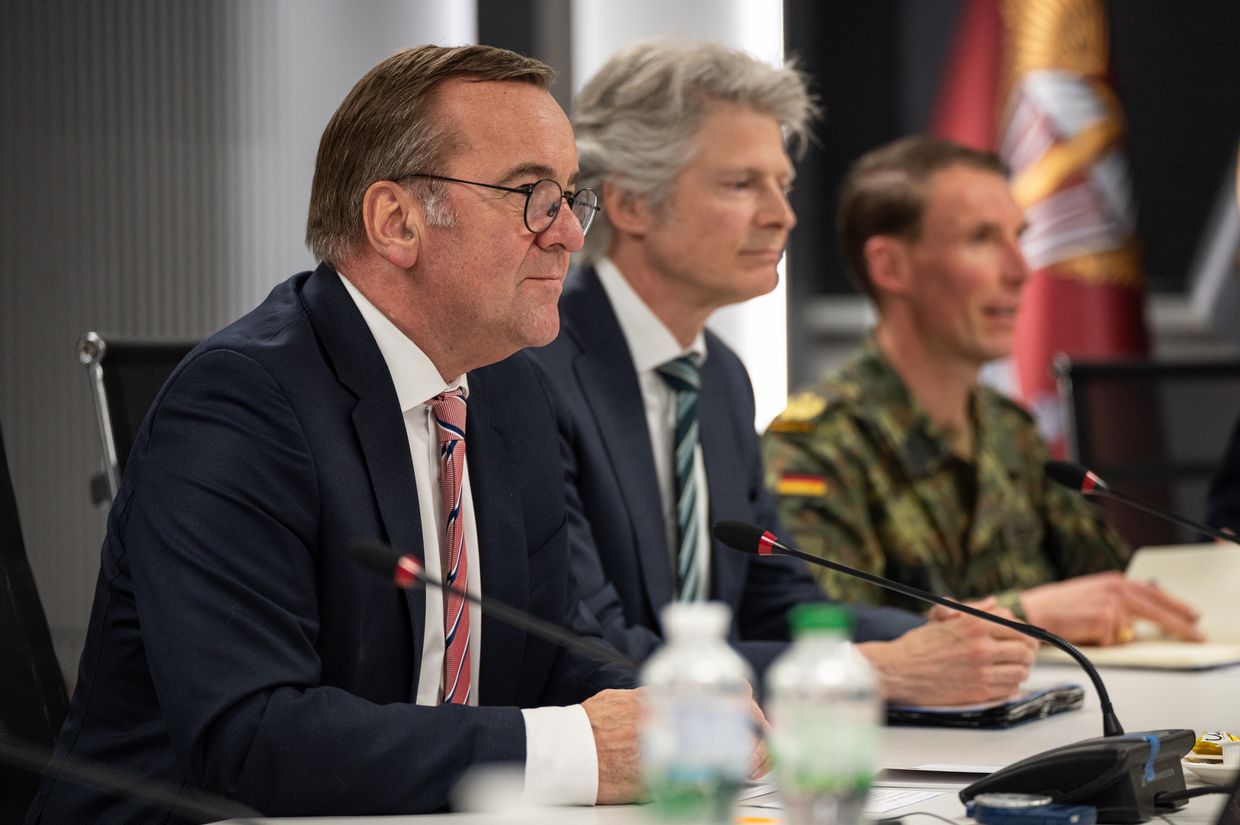
German Defense Minister Boris Pistorius said Europe must begin preparing for a gradual reduction in U.S. military support for both the continent and Ukraine, Tagesschau reported on June 13.

"Yes, that's right. That would be so, and we have to deal with that," Pistorius told journalists in response to a question about the U.S. potentially scaling down its support. He noted that the discussions focus on a reduction in U.S. backing rather than a full halt.

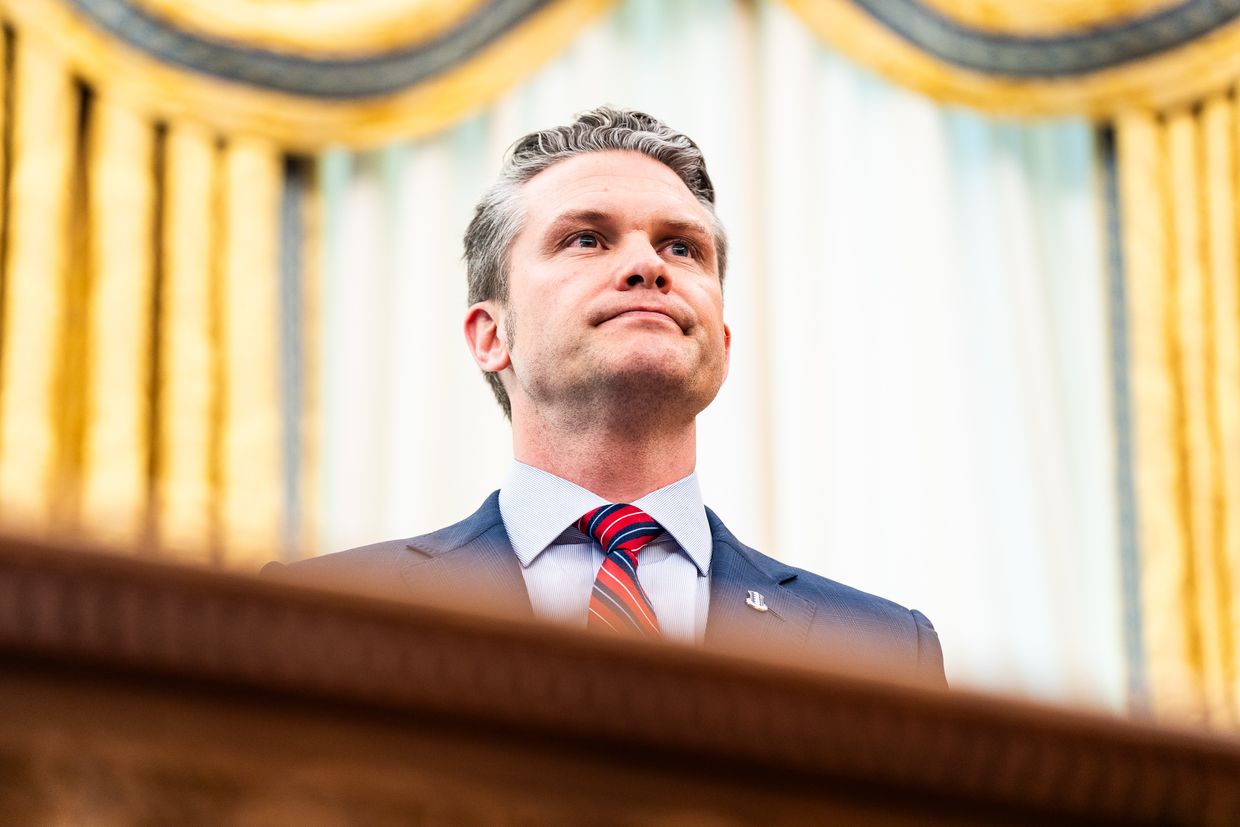
The comments come after U.S. Defense Secretary Pete Hegseth announced that Washington would reduce the assistance allocated to Ukraine in the next year's federal budget.

"We now have to look at how much support drops and whether Europeans can compensate for it," Pistorius added.

While the U.S. has been Ukraine's leading military backer under former President Joe Biden, the Trump administration has yet to approve any aid packages and has become increasingly disengaged from peace talks.

Pistorius's comments come amid increasing uncertainty in transatlantic relations. U.S. Ambassador to NATO Matthew Whitaker confirmed on May 16 that the United States plans to begin discussions with European allies later this year about reducing its military presence on the continent.

Speaking at a security conference in Estonia, Whitaker said the talks would begin after the NATO summit in The Hague in June.

"Nothing has been determined," Whitaker said, according to Reuters. "But as soon as we do, we are going to have these conversations in the structure of NATO."

Whitaker emphasized that any drawdown would be closely coordinated to avoid creating security gaps. Still, he reiterated U.S. President Donald Trump's position that long-standing U.S. efforts to reduce its European military footprint must now be implemented.

"This is going to be orderly, but we are not going to have any more patience for foot-dragging in this situation," he said.

In February, Hegseth reportedly told NATO allies that "stark strategic realities" prevent the United States from being primarily focused on Europe's security. Leaks reported by the Atlantic in March revealed that both Hegseth and Vice President JD Vance privately criticized European defense spending, with Hegseth allegedly expressing his "loathing of European free-loading."

Trump called on NATO member states to increase defense spending up to 5% of GDP. Ahead of the upcoming NATO summit in The Hague on June 24–25, U.S. Secretary of State Marco Rubio said that member states will have agreed to a new goal of increasing defense spending.

"We are headed for a summit in six weeks in which virtually every member of NATO will be at or above 2%, but more importantly, many of them will be over 4%, and all will have agreed on a goal of reaching 5% over the next decade," Rubio told Fox News on May 15.

Such a move would mark a historic shift, with NATO partners collectively accounting for more than half of the alliance's military capacity, according to Rubio.

Since the beginning of Russia's full-scale war against Ukraine in 2022, NATO members have significantly increased their defense spending, with countries like Poland and the Baltic nations aiming to reach the 5% target in the coming years.

Ukraine bracing for ‘painful’ reduction in US military aid after Hegseth announces cuts
Editor’s note: For security reasons, the real names of the soldiers mentioned in this story have not been used. A reduction in U.S. military aid to Ukraine would be “painful” and could have potentially “dire consequences” for the global order, Ukrainian lawmakers and soldiers have told the Kyiv Independent.
Europe must prepare for US scaling down support for Ukraine, Pistorius saysThe Kyiv IndependentKateryna Hodunova
Europe must prepare for US scaling down support for Ukraine, Pistorius says
  • ✇The Kyiv Independent
  • Germany to supply new Iris-T air defense systems to Ukraine, rules out Taurus missiles
    Editor's note: This story has been updated to include Germany's announcement to supply Ukraine with $2.2 billion in additional military aid.Germany will deliver new IRIS-T air defense systems to Ukraine under a three-year supply plan, President Volodymyr Zelensky said during a joint press conference with German Defense Minister Boris Pistorius, who added Berlin has no plans to provide Taurus long-range missiles.The announcement comes amid escalating Russian aerial assaults, including a June 10 m
     

Germany to supply new Iris-T air defense systems to Ukraine, rules out Taurus missiles

12 juin 2025 à 11:50
Germany to supply new Iris-T air defense systems to Ukraine, rules out Taurus missiles

Editor's note: This story has been updated to include Germany's announcement to supply Ukraine with $2.2 billion in additional military aid.

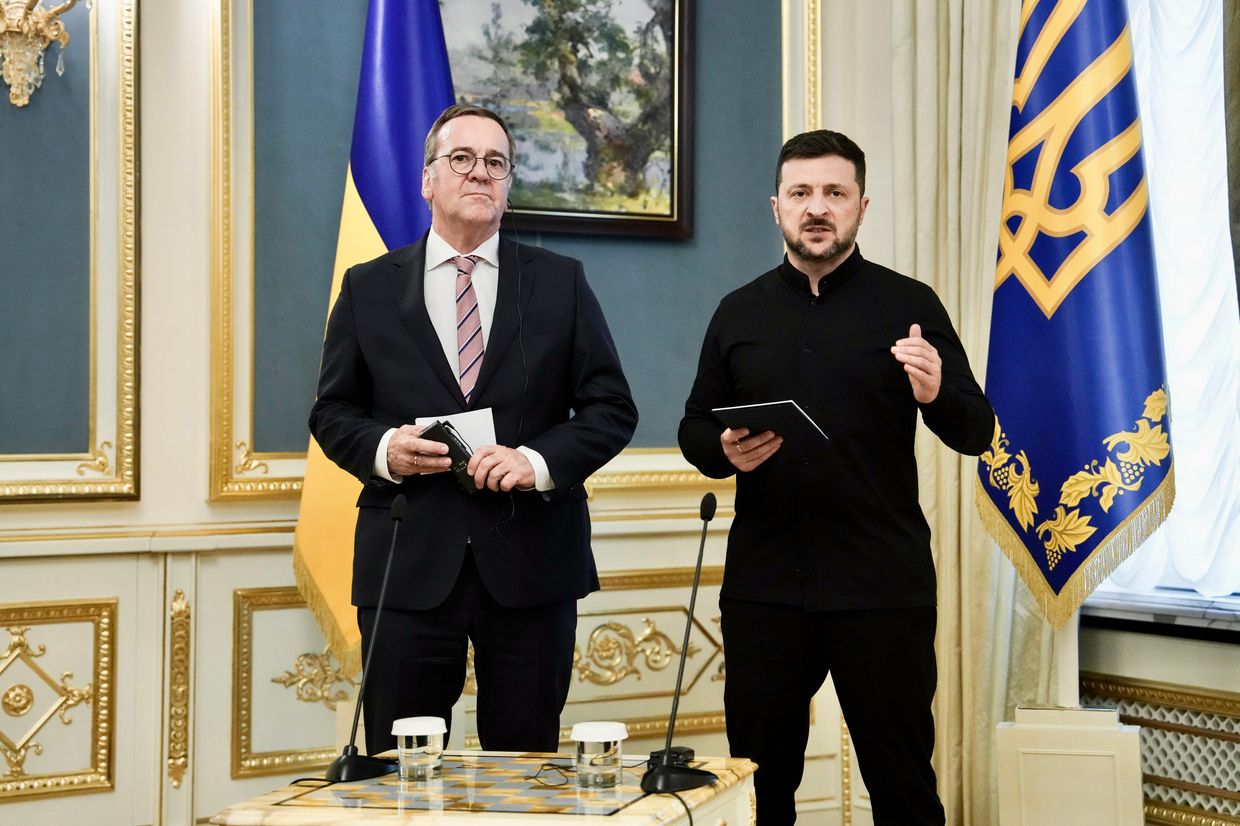
Germany will deliver new IRIS-T air defense systems to Ukraine under a three-year supply plan, President Volodymyr Zelensky said during a joint press conference with German Defense Minister Boris Pistorius, who added Berlin has no plans to provide Taurus long-range missiles.

The announcement comes amid escalating Russian aerial assaults, including a June 10 missile and drone strike on Kyiv, one of the largest since the start of the full-scale invasion.

"We are grateful for the supply of IRIS-T air defense systems," Zelensky said on June 12. "We understand that deliveries are currently being planned... for the next three years. This is very important assistance."

The IRIS-T is a German-made medium-range surface-to-air missile system capable of intercepting drones, aircraft, and cruise missiles.

Pistorius confirmed the delivery timeline but firmly ruled out the possibility of sending Taurus missiles — weapons Kyiv has repeatedly requested to strike deep into Russian territory.

"You asked me whether we are considering this, and my answer is no," Pistorius said.

Before taking office, German Chancellor Friedrich Merz signaled openness to lifting former Chancellor Olaf Scholz's ban on the missiles. That stance has not yet resulted in a policy shift.

Ukraine has already received long-range missiles — including ATACMS from the U.S. and Storm Shadow and SCALP from the U.K. and France. Initially restricted to use within Ukrainian territory, Western allies only began easing those limitations in late 2024.

Germany is Ukraine's largest military donor in Europe. Pistorius said that Berlin will provide 9 billion euros ($10.4 billion) in aid this year, with investments in defense production being considered. The total includes an additional commitment in military aid worth 1.9 billion euros ($2.2 billion).

"Today, we discussed that this aid will continue," he said. "We agreed on additional investments in production... both in Ukraine and in Germany."

Zelensky visited Berlin on May 28 for talks with Merz, part of an ongoing effort to bolster Ukraine's defense industry amid uncertainty over U.S. support under President Donald Trump.

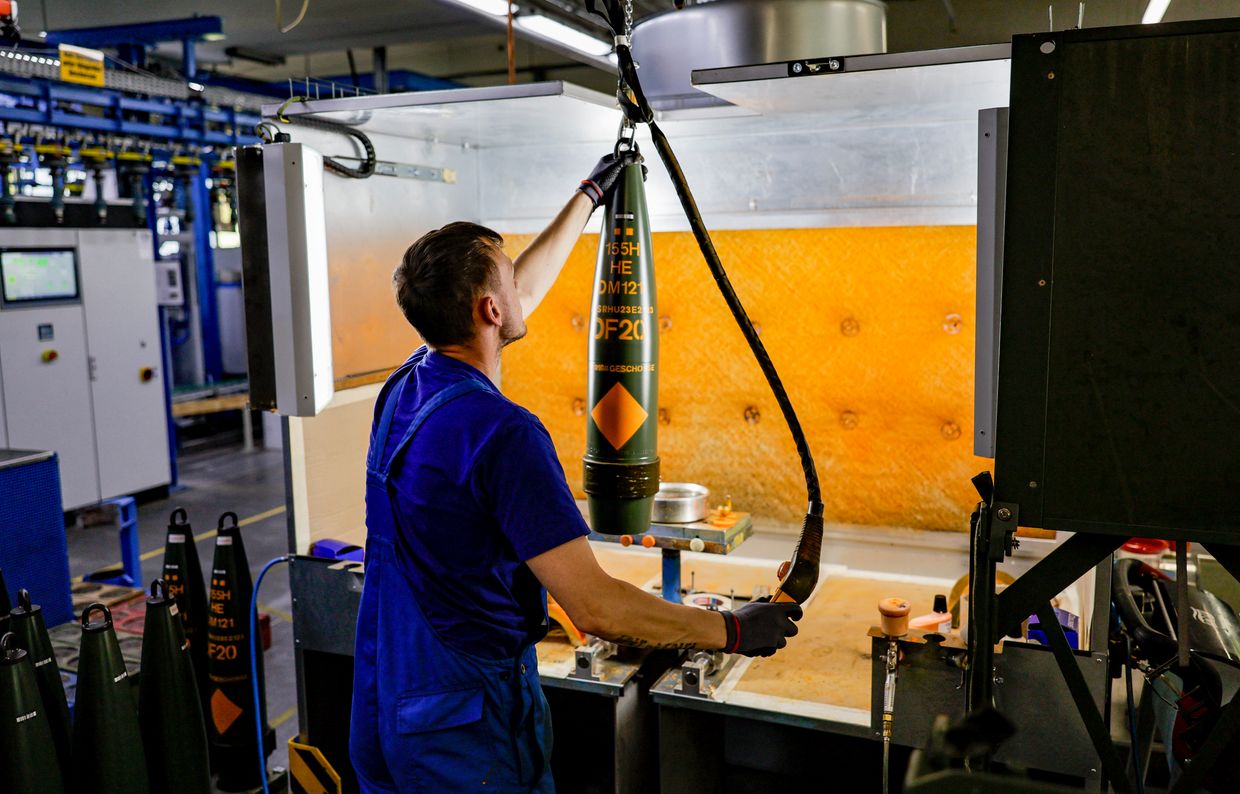
Why can’t the West match Russia’s ammunition production?
The West is failing to catch up to Russia’s production of the most basic unit of war for the past half-millennium — gunpowder. The modern propellants and explosives that power war have largely been offshored. While Western manufacturers are churning out shell casings, they are short on the materials to fill
Germany to supply new Iris-T air defense systems to Ukraine, rules out Taurus missilesThe Kyiv IndependentKollen Post
Germany to supply new Iris-T air defense systems to Ukraine, rules out Taurus missiles
  • ✇The Kyiv Independent
  • EU approves new tariffs on Russian, Belarusian agricultural goods
    The Council of the EU on June 12 approved fresh tariffs on fertilizers and remaining agricultural goods from Russia and Belarus, aiming to reduce Russian export revenues.The measures target those goods that have not yet been subject to additional customs duties and will enter into force on July 1. The tariffs on fertilizers will increase gradually over the next three years.The step comes as the EU readies additional sanctions against Russia as it continues to wage its all-out war against Ukraine
     

EU approves new tariffs on Russian, Belarusian agricultural goods

12 juin 2025 à 08:42
EU approves new tariffs on Russian, Belarusian agricultural goods

The Council of the EU on June 12 approved fresh tariffs on fertilizers and remaining agricultural goods from Russia and Belarus, aiming to reduce Russian export revenues.

The measures target those goods that have not yet been subject to additional customs duties and will enter into force on July 1. The tariffs on fertilizers will increase gradually over the next three years.

The step comes as the EU readies additional sanctions against Russia as it continues to wage its all-out war against Ukraine.

"Polish Presidency motto is 'Security, Europe!' and these measures increase our economic security by reducing dependencies from Russia," said Michal Baranowski, the trade undersecretary at the Polish Economy Ministry.

"We are further reducing Russia’s export revenues and therefore its ability to finance its brutal war. This is united Europe at its best," he said in a statement.

The new tariffs will apply to goods that made up around 15% of all agricultural imports from Russia in 2023. Fertilizer tariffs will focus on certain nitrogen-based products, the Council said in a statement.

Russian fertilizers accounted for more than a quarter of all of the EU's imports in this sector in 2023, worth almost $1.5 billion.

Apart from stifling Russia's trade revenue, the step also aims to reduce the EU's dependence on Russian and Belarusian goods, protect European farmers, and diversify the supply.

The EU adopted higher tariffs on cereals, oilseeds, and some other products from Russia and Belarus in May 2024. Earlier this year, the European Commission proposed imposing similar measures on all remaining agricultural products from the two countries.

Putin’s suspected daughter found working in anti-war galleries in Paris
Nastya Rodionova, a Russian writer and artist who has been based in Paris since 2022, had only met gallery manager Luiza Rozova in passing at events before she learned who the 22-year-old’s parents were. Described by a number of people as a “very nice and well-mannered girl,” Rozova is
EU approves new tariffs on Russian, Belarusian agricultural goodsThe Kyiv IndependentKate Tsurkan
EU approves new tariffs on Russian, Belarusian agricultural goods
  • ✇Les carnets d'Anna Colin Lebedev
  • Regarder vraiment le Bélarus
    Il n’a jamais été simple de parler du Bélarus en France sans tomber dans le cliché. La formulation « dernière dictature d’Europe » a encore été reprise par les médias aujourd’hui pour évoquer le scrutin présidentiel qui s’est tenu dimanche, et j’en veux un peu aux journalistes pour cette paresse intellectuelle.« Dernière dictature d’Europe » était une formule confortable pour se rassurer sur le processus de démocratisation qui aurait été en voie de généralisation sur le continent européen; certe
     

Regarder vraiment le Bélarus

27 janvier 2025 à 03:15

Il n’a jamais été simple de parler du Bélarus en France sans tomber dans le cliché. La formulation « dernière dictature d’Europe » a encore été reprise par les médias aujourd’hui pour évoquer le scrutin présidentiel qui s’est tenu dimanche, et j’en veux un peu aux journalistes pour cette paresse intellectuelle.
« Dernière dictature d’Europe » était une formule confortable pour se rassurer sur le processus de démocratisation qui aurait été en voie de généralisation sur le continent européen; certes, à des vitesses variables, mais quand-même quasiment certain. Le Bélarus faisait alors office d’épouvantail et de dernier bastion d’un monde en cours de disparition. Cela empêchait de voir les dynamiques réelles sur place (et de s’interroger par exemple sur la manière dont la stabilité, les politiques sociales et le progrès économique pouvaient atrophier la sensibilité politique). Cela faisait aussi du bien à l’égo européen.
Nous n’en sommes plus là aujourd’hui, bien évidemment, et dans un contexte de montée d’attractivité des autoritarismes, le Belarus est plutôt un cas d’école qui devrait attirer notre attention. Dire que l’élection présidentielle qui vient de s’écouler était un simulacre, c’est à la fois vrai et stérile, parce que c’est une manière de dire « point, à la ligne, on passe à autre chose » qui neutralise toute volonté de compréhension.
Malheureusement, la guerre conduite par la Russie contre l’Ukraine m’a empêché d’être suffisamment vigilante sur le Bélarus pour livrer une analyse approfondie. Ce que je dis est à prendre avec des pincettes; ce sont des pistes à creuser.
Un régime politique autoritaire fonctionne grâce à un certain dosage de coercition et d’adhésion; il doit non seulement mettre en place une répression suffisamment forte pour bloquer les oppositions, mais aussi distribuer suffisamment de bénéfices pour susciter l’adhésion. Plus le ratio est en faveur des bénéfices, plus le pouvoir est stable; plus il penche du côté répressif, plus le régime est fragile. Pendant longtemps, le régime politique du Belarus s’est attaché à distribuer beaucoup de bénéfices à la population, notamment à travers des politiques sociales, des politiques de développement et une promesse de stabilité et de prévisibilité. Les Bélarusses vivaient – économiquement – plutôt mieux que beaucoup de leurs voisins, et en avaient conscience. Le prix politique à payer apparaissait donc comme acceptable.
Evidemment, le soutien de la Russie était et reste l’exosquelette du régime bélarusse, aussi bien d’un point de vue politique qu’économique.
Les protestations massives de 2020 étaient intervenues dans le contexte d’une certaine fragilisation du modèle, et notamment d’une perception du régime comme moins protecteur, mais aussi en décalage avec les demandes de la société. Les répressions violentes qui ont suivi et qui se sont maintenues tout au long des années suivantes ont fait basculer le ratio répression/bénéfices en faveur de la répression. Cette période violente va compter dans l’histoire politique bélarusse: on ne le perçoit pas encore, mais elle a donné naissance à une expérience différente, moins marginale de l’opposition politique, de la répression et de la prison. Elle a aussi permis de structurer une opposition à l’étranger et de lui donner des canaux de prise de parole. Derrière les apparences de « il ne se passe rien », le Belarus est en réalité bien plus prêt qu’en 2020 à entamer une transition politique, avec une nouvelle génération de citoyens jetés avec violence dans la politique.
Cependant, et paradoxalement, c’est la guerre en Ukraine qui a redonné de la stabilité au régime bélarusse. En effet, dans un contexte où la Russie essaie de toutes ses forces de faire du Bélarus un cobelligérant, il y a des choses que Loukachenko a réussi à protéger. Certes, des unités armées russes et des complexes d’armement sont désormais basés au Belarus, qui sert de base aux attaques contre l’Ukraine. Cependant, aucune unité armée bélarusse ne combat aux côtés de la Russie contre l’Ukraine. Pensez au paradoxe: des soldats nord-coréens, mais pas de soldats bélarusses, alors que le pays se déclare être le plus proche allié de la Russie. Le territoire du Bélarus reste un territoire en paix. Cela, les citoyens savent qu’ils le doivent en partie à Loukachenko… mais aussi en partie aux Ukrainiens qui ne désespèrent pas de retourner les Bélarusses contre Moscou, et qui ne les perçoivent pas de la même manière que les Russes.
La politique menée par Loukachenko vis-à-vis de la Russie a été caractérisée par un de mes anciens collègues bélarusses par la formule suivante: « on dit oui à tout, puis on bureaucratise au maximum le processus pour finalement ne rien faire ». C’est aussi une stratégie que les Bélarusses appliquent au quotidien vis-à-vis de leur Etat. Il y a une certaine résilience stratégique de la société bélarusse qu’on ferait bien de souligner. Ne nous laissons pas tromper par cette apparence de calme plat: le Bélarus n’est pas la Russie et suivra une dynamique qui lui sera propre.

❌