❌

Vue normale

About nine million abroad, millions under occupation, soldiers at the front: why Kyiv says the wartime vote Trump wants would be unfair
6 novembre 2026 à 11:53

Zelenskyy trump

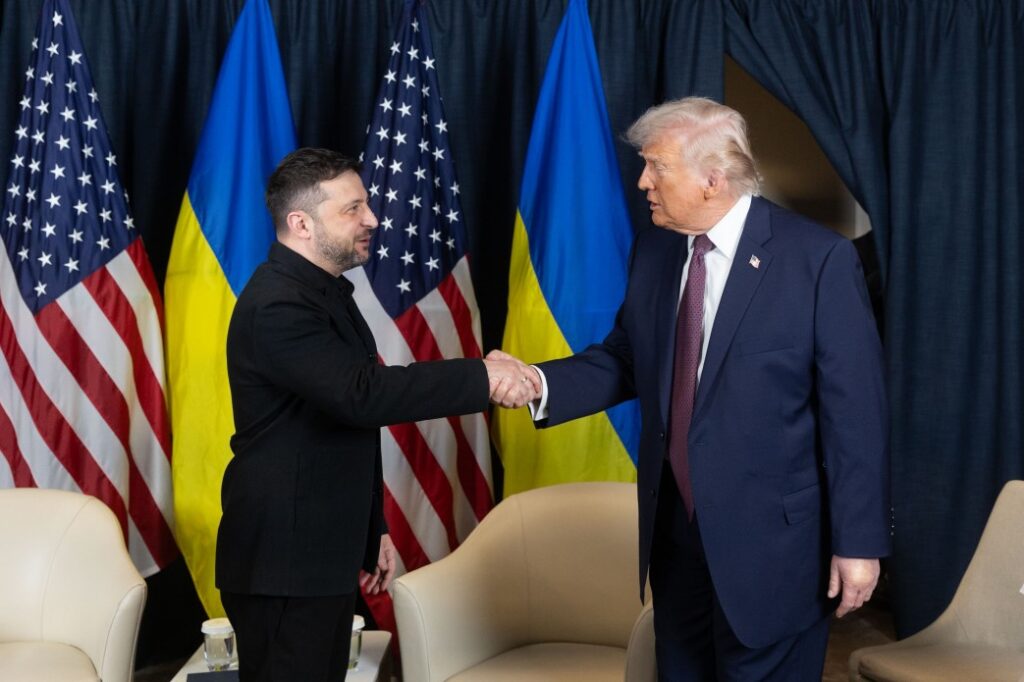
Ukrainian President Volodymyr Zelenskyy has called wartime elections unfair to soldiers who cannot vote and floated online voting as a possible way out, he told German broadcaster ZDF. He also said he had asked Washington to secure a winter ceasefire from Moscow, which would protect power and water and open a window for a vote. At home, critics warn that remote voting carries heavy risks, and Ukrainian law makes no room for it.

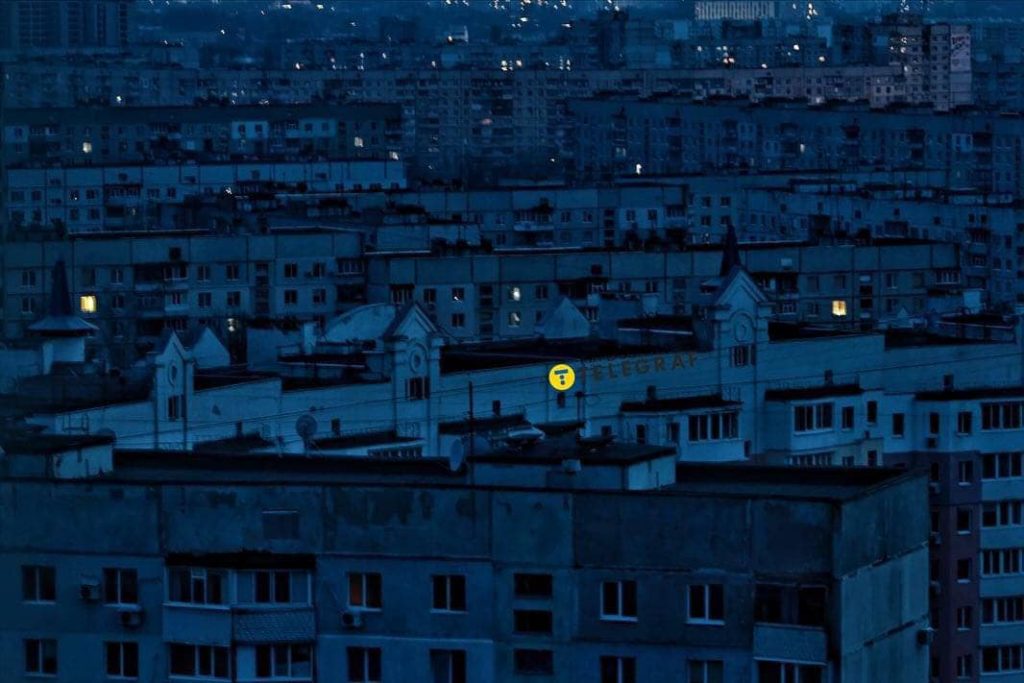
Russia is heading into another winter of strikes on Ukraine's power plants, substations, and pumping stations. This week, one of its largest barrages on the grid left Kyiv without running water. Washington keeps pressing Kyiv for a vote and a deal, while Moscow's stated price for peace is still more Ukrainian land. Any Ukrainian election therefore depends on a pause that only the Kremlin can grant, and Putin has already rejected a ceasefire on Ukraine's grid.

Why Kyiv calls a wartime vote unfair

Zelenskyy spoke to German satirist Jan Böhmermann on ZDF Magazin Royale, aired on 4 November. A vote under martial law, he argued, would shut out soldiers at the front, about nine million Ukrainians abroad, and millions living under Russian occupation. Under martial law, imposed on 24 February 2022, elections are banned. The troops themselves oppose a vote they could not take part in, he said.

“Allowing elections but not giving soldiers a chance to vote is unfair. It is 100% unfair. We can think about online elections. That may be realistic, but then parliament has to look for and find a solution,” Zelenskyy said, Radio Svoboda reported.

He added that elections split society, and that this is a particular challenge for a country at war.

musk tells ukraine’s president go zelenskyy says won’t resign never accept ukrainian land russian · post volodymyr during interview piers morgan recorded visit britain 14 2026 video uncensored / ukraine
Explore further

After Trump, Musk tells Ukraine’s president to go. Zelenskyy says he won’t resign and will never accept Ukrainian land as Russian

A winter truce as the window for a vote

Zelenskyy said he had urged Washington to work out a winter truce with Moscow, Kyiv Post reported. He hinted that some in Washington would like him gone, yet said a vote only counts if Ukrainians can actually take part.

“I told the Americans: You can reach an agreement with the Russians for a ceasefire during winter. Then people will have electricity and water, and during that time we can also hold elections,” he said.

Asked why Ukraine would not give up land for peace, Zelenskyy pointed at Moscow. “Putin does not want to end the war. Putin does not accept a ceasefire,” Zelenskyy said, noting that Kyiv had backed ceasefire proposals that Moscow turned down. In excerpts from the interview he posted on Telegram, he said Ukraine would do everything to end the war, “but end it with dignity for us.”

united states capitol building home bicameral us congress consisting lower body house representatives upper senate
Explore further

US Congress turns blue, Trump keeps the veto—and Ukraine’s balance sheet in Washington gets both wins and losses

The request answers mounting US pressure. On 10 October, US President Donald Trump said it was time for Ukraine to get a new president. Zelenskyy offered elections if Russia agreed to a full 60-day ceasefire. The Kremlin countered with a halt to strikes on voting day alone. US envoys have also pitched Russian gas transit as a reward for an energy truce before winter, and Moscow rebuffed it. Trump has since met Kremlin envoy Kirill Dmitriev and predicted a “big agreement” ahead of US-Russia-Ukraine talks in Abu Dhabi next week.

No legal path to voting from a trench

Ukraine's Electoral Code requires every voter to vote in person, with ballots handed out by election commission members. In February 2025, Central Election Commission head Oleh Didenko said the commission had long dropped electronic voting and called postal voting wide open to interference. Online, it may be hard or impossible to check that a voter casts a ballot in person and without coercion, Radio Svoboda noted. Estonia, which has voted online since 2005, deals with coercion by letting each new vote cancel the last, so citizens can recast their ballot until polls close.

Ballot boxes at a polling station in Ukraine at the start of voting in the presidential election, 31 March 2019
Ballot boxes at a polling station in Ukraine at the start of voting in the presidential election, 31 March 2019. Photo: Tohaomg/Wikimedia Commons

Political scientist Oleksii Koshel went further on Radio NV, saying the president had been “set up.” He warned that online elections would have catastrophic consequences and noted that the Central Election Commission does not support electronic voting. Because Zelenskyy gives so many interviews, Koshel said, it is hard to tell where he meant to send a signal to the West and where he simply said too much. He urged the president's team to cut back his media appearances.

Russian milblogger urges hitting Ukraine’s nuclear plants. ISW: without stronger defenses, last winter will likely repeat

5 novembre 2026 à 07:33

zaporizhzhia attack

This winter’s Russian strikes will likely do what last winter’s did, unless Ukraine can fend off the big waves of drones and missiles Russia sends every day, the Institute for the Study of War (ISW) assessed on 4 November. The same day, the Kremlin-affiliated Telegram channel Rybar wrote that Russia should think about putting Ukraine’s nuclear plants out of action by striking their unit transformers or generators.

Russia has kept up its strikes on Ukraine’s power system this autumn, under a plan for the winter that Ukraine says lists 60 critical infrastructure sites as targets. It now hits not only power plants but also substations, and its drones even cut down the towers that carry high-voltage lines. The damage has now reached nuclear generation, which can recover only as the networks are repaired. Last winter was the worst yet, and ISW says Russia’s campaign then reportedly damaged or destroyed 80% of Ukraine’s power generation.

A pro-Kremlin channel wants Odesa and the northeast cut off

Rybar urged Moscow to avoid the “mistakes of 2022 and 2023,” when loud claims outran results. Strikes now hit “system-forming substations” and smaller facilities that directly affect power flows, the channel wrote. Precise hits on key nodes could isolate Odesa and leave northeastern Ukraine without normal supply, it argued.

The channel named the 24/750 kV and 24/330 kV unit transformers, as well as generators, as targets that would bring “far greater effect,” along with substations and battery storage at large solar farms. In an earlier post that day, it claimed Russia had shifted to “more systematic and rational” attacks.

Nuclear plants already producing less

Meanwhile, “large-scale and systemic” Russian attacks have forced Ukraine’s nuclear plants to reduce generation, First Deputy Energy Minister Artem Nekrasov said on 4 November. Output will recover gradually as crews repair the damaged networks. The situation is hardest in Kyiv and Kyiv Oblast, where distributors have imposed grid restrictions.

On 3 November, Russia sent three drones at a substation the Khmelnytskyi nuclear plant depends on. Nuclear plants produce roughly half of Ukraine’s electricity.

Nuclear power plants in Ukraine. Map: Euromaidan Press.

Defenses and repairs decide the winter

President Volodymyr Zelenskyy called strikes on networks and distribution Russia’s “new tactic” this year. The speed of repairs “now matters as much as having missiles for air defense,” he said.

First Deputy Prime Minister and Energy Minister Denys Shmyhal says protection is working: 235 second-level shelters now cover key energy elements, and only one protected facility has been hit by a ballistic missile in six months.

Ballistic missiles remain the hardest threat for Ukraine’s air defense, and Ukraine’s Defense Ministry says it needs better means against them.

“The provision of Patriot interceptor missiles and other air defense systems and support for Ukraine’s energy infrastructure reconstruction is essential to ensure that Ukraine can withstand Russia’s increasingly destructive strike campaign,” ISW wrote.

One of largest Russian attacks yet on Ukraine’s energy system forces emergency blackouts across regions and leaves Kyiv without water

3 novembre 2026 à 17:25

outages

One of the heaviest Russian assaults yet on Ukraine’s power grid is underway. Moscow has struck energy facilities more than 20 times in the past day, using what the national grid operator Ukrenergo called an unprecedented number of weapons, and the strikes have forced emergency blackouts across several regions, including Kyiv.

The barrage is among the largest in Russia’s winter campaign against the grid, now in its fourth year and heavier each time. The damage is already cascading beyond electricity: in Kyiv, the strikes knocked out the pumping stations that supply the capital’s water, shutting off taps as well as light.

“The situation has become further complicated”

"One of the largest enemy attacks on the country’s energy infrastructure has been ongoing since overnight. As a result of today’s strikes, the situation in the energy system has become even more complicated," Ukrenergo said.

Thousands of energy workers have been working since the early hours of the night to mitigate the consequences of the attacks and restore electricity supplies. Critical infrastructure facilities will be prioritized for reconnection.

“All services are working in constant coordination to stabilize the situation as quickly as possible. Energy workers are doing everything they can to restore power,” the energy company emphasized.

Water cut off in the capital

In Kyiv, strikes on the power network de-energized the main facilities of Kyivvodokanal, the city’s water utility, which temporarily halted water supply across the capital. Even after power returns, water will reach apartments only with a delay.

“After power is restored, it will take some time to start up the equipment, fill the water networks, and stabilize pressure,” the utility said.

No country in modern history has faced this scale of aerial terror

Russia continues to attack Ukraine’s energy infrastructure, seeking to deprive Ukrainians of electricity and heating and once again use winter as a tool of pressure against the civilian population, Ihor Klymenko, Secretary of the National Security and Defense Council of Ukraine, said.

"Unfortunately, however, the resources currently available are insufficient to fully neutralize Russian attacks," he stated.

In just one night, Russia launched 289 attack drones and 76 missiles of various types. Ukraine’s Defense Forces shot down or suppressed 309 aerial targets.

"No country in modern history has faced this scale of aerial terror. That is why we need continued support from our partners: additional air defense systems, interceptor missiles, and energy assistance," he added.

❌