Ukraine's State Bureau of Investigations (SBI) raided drone manufacturer Vyriy Industries on 7 July after its CEO, Oleksii Babenko, whose media outlet, Babel, published an investigation into the Skelia unit. The investigative article has exposed numerous non-combat deaths in it two weeks before the raids.
The scandal has grown so large that it even prompted investigations by the Ukrainian ombudsman, while Commander-in-Chief of the Armed Forces Oleksandr Syrskyi described th
Ukraine's State Bureau of Investigations (SBI) raided drone manufacturer Vyriy Industries on 7 July after its CEO, Oleksii Babenko, whose media outlet, Babel, published an investigation into the Skelia unit. The investigative article has exposed numerous non-combat deaths in it two weeks before the raids.
The scandal has grown so large that it even prompted investigations by the Ukrainian ombudsman, while Commander-in-Chief of the Armed Forces Oleksandr Syrskyi described the situation as "a disgrace," per Hromadske.
Babel editor-in-chief Kateryna Kobernyk said the timing "leads us to very bad conclusions." She added that "the accusations against Babenko will change nothing in our work in general, and with this topic in particular."
The SBI said it is investigating possible artificial inflation of drone prices in $157 million worth of 2025 state contracts. Babenko, at a press conference held more than 12 hours after searches began, called the allegation "absurd", as his drones sell for roughly 26% below market price on platforms where military units choose their own suppliers.
From Babel's investigation to raids
EP covered both prior episodes in this sequence. On 23 June, Babel published an investigation documenting 25 non-combat deaths among Skelia recruits, triggering an SBI criminal case, the commander's suspension, and a General Staff commission.
On 25 June, a serving Skelia soldier publicly called an author a "media killer" and accused Babel of working for Russia. A coalition of Ukrainian media organizations demanded criminal proceedings under Article 345-1—threats against a journalist—on 1 July. On 7 July, the SBI raided Babenko's home, his family members' homes, and the company.
According to Kobernyk, Babenko had been named in anonymous Telegram channels as the alleged financial backer of the Skelia investigation, accused of "encroaching on state security" and being "at war with the General Staff." A fake report claiming $5 million had been found at his home circulated days before the actual raids. The SBI has not named a suspect. Babenko is currently a witness.
This is not the only recent case of pressure on Ukrainian outlets reporting on state institutions.
What Vyriy is and what's at stake
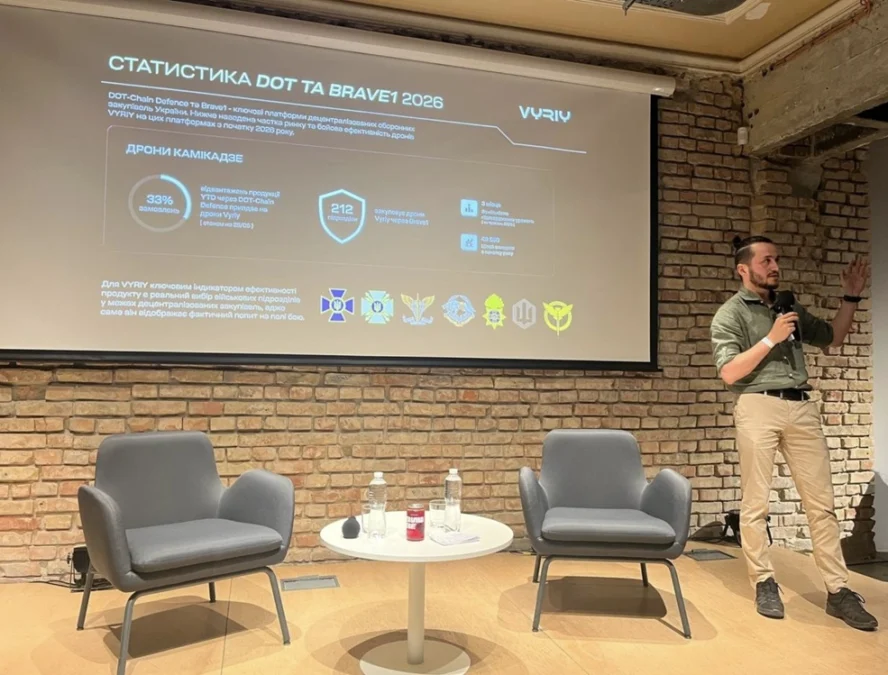
Around a quarter of the Ukrainian army's first-person-view (FPV) drones are manufactured by Vyriy Industries, Babenko said. The company works with 212 military units. On the Brave1 Market and DOT-Chain defense procurement platforms, where units choose their own suppliers, Vyriy holds 33% of orders through DOT-Chain. The company says it has delivered 70,000 drones funded by European partner countries and has passed the strict compliance and ownership verification checks required by those international contracts.
The SBI stated its basis for the investigation: prices may have been inflated through the unjustified inclusion of production and administrative costs. Ukraine's State Financial Monitoring Service also flagged more than $4.4 million in suspicious financial transactions at Vyriy. The company said the 150 individual entrepreneurs flagged by investigators are legitimate component manufacturers—small, specialized producers standard across Ukraine's defense industry.
The searches caused Vyriy's daily drone deliveries to dip, though Babenko said the company would continue delivering tens of thousands of drones a day. The company said it would revise its security policy to protect production data, given that investigative materials could become public.
Broader warning
"I very much hope this case is genuinely a misunderstanding and not the beginning of a broader campaign against Ukraine's miltech companies," Maria Berlinska, a Ukrainian veteran and co-founder of the Victory Drones initiative, said.
Vyriy's statement said the company "does not rule out" that the simultaneous information campaign and investigative actions "may be part of attempts to discredit Vyriy Industries"—actions that "could benefit both the enemy and unscrupulous market participants."
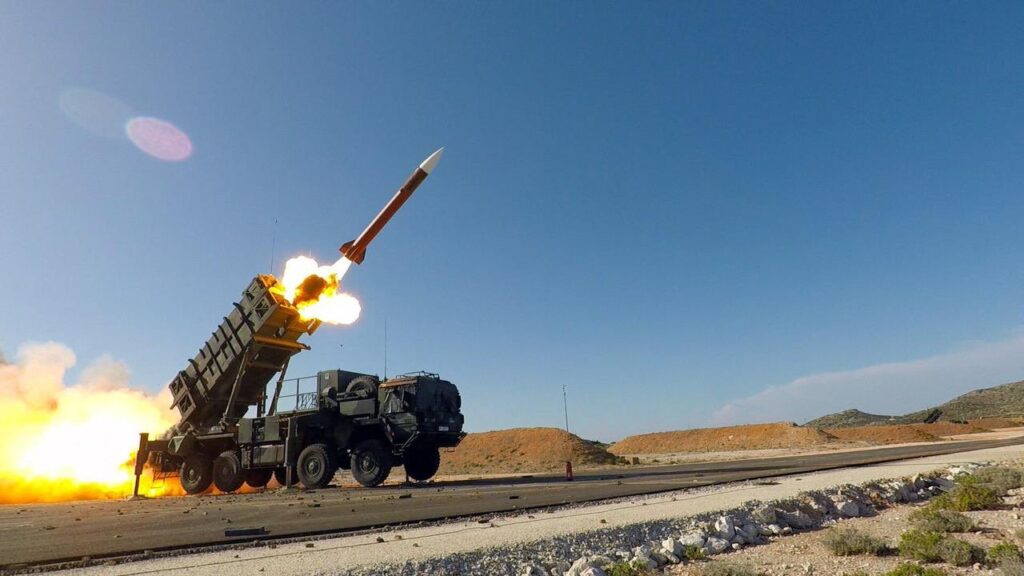
At the 8 July NATO summit in Ankara, US President Donald Trump told his Ukrainian counterpart, Volodymyr Zelenskyy, that the US will license Ukraine to build its own Patriot interceptors—the only tool Ukraine has to counter Russian ballistic missiles. The US President added that this would end complaints that Washington was not supplying enough of them. The announcement comes at a dire moment: Ukraine has gone several nights without shooting down Russian ballistic missiles,
At the 8 July NATO summit in Ankara, US President Donald Trump told his Ukrainian counterpart, Volodymyr Zelenskyy, that the US will license Ukraine to build its own Patriot interceptors—the only tool Ukraine has to counter Russian ballistic missiles. The US President added that this would end complaints that Washington was not supplying enough of them. The announcement comes at a dire moment: Ukraine has gone several nights without shooting down Russian ballistic missiles, targeting Ukrainian cities.
It is a real shift in tone—and, for now, little more. Lockheed Martin and RTX, the two companies that build the system, had not been informed of the decision. There is no timeline, no named manufacturer, and no confirmation that the missiles would be built in Ukraine at all. It was Trump's third positive signal on the license in three weeks, none of them binding. A Patriot made under that license is, at best, many months away.
The shortage is structural
The interceptor crunch is bigger than Ukraine. During its 39-day war with Iran this spring, the US may have burned through over half ofits Patriot missile stockpile, by CSIS's estimate—and rebuilding the depleted munitions to pre-war levels will take one to four years.
The US now has to replenish its own magazines, defend against a possible war in the Western Pacific, and supply Ukraine and 18 other Patriot-using countries from the same slow production line.
Ukraine's Defense Ministry has written to nearly 40 partner countries asking for interceptors from existing stocks, warning that faster decisions are critical after one of the largest Russian air attacks of the war.
The ballistic gap is where people die
May 2026 saw the highest civilian killed-and-injured total since April 2022: at least 274 killed and 1,763 injured, a 93% increase over May 2025, the UN human rights mission found, driven primarily by long-range missiles and drones striking cities far from the front. Ukraine shot down roughly 91% of Russian drones in May, but a far lower share of ballistic missiles—Russia's most dangerous strike weapon, which Ukraine's depleted Patriot stocks have been unable to stop consistently. The ballistic ones are the killers, and the Patriot is the only thing Ukraine has that can stop them.
Russia has launched 521 ballistic missiles at Ukraine this year—more than twice as many as in the same period of 2025—of which Ukraine has downed 164, according to a New York Times data set.
What Ukraine has done—and why it isn't enough
Under that pressure, Ukrainian operators rewrote the Western manual for using the Patriot, the New York Times reported from interviews with air-defense commanders.
They learned to fire a single interceptor at a ballistic missile instead of the standard two or more.
They switched systems to manual mode to avoid wasting interceptors on cheap drones, which are better handled by machine guns and interceptor drones.
They developed "shoot and scoot" tactics, moving batteries the moment they fire, and fielded decoys costing around $30,000 each to draw Russian targeting away from billion-dollar systems, the NYT says.
That ingenuity now travels. Ukrainian soldiers have deployed to the Gulf to train local forces in cheaper drone-interception tactics, and several countries have asked to buy Ukraine's interceptor drones, according to the NYT. Ukraine's Lima electronic warfare system—which spoofs incoming missiles' navigation systems for a fraction of the cost of a single PAC-3 interceptor—has jammed more than 20,500 Shahed drones over 18 months.
But every one of these innovations stretches a scarce resource further. None of them makes more interceptors. They buy time, they do not fill the gap.
The slow paths out
Zelenskyy has framed the production license as a mutual benefit: Ukraine builds interceptors, and allied partners gain supply when they need it. The US currently shares Patriot production rights only with Germany and Japan, and the most advanced radar seekers are still made only in the United States. So even a licensed Ukrainian line would depend on American components.
Kyiv is assembling a European coalition to build an anti-ballistic shield independent of scarce US interceptors, with Sweden the first confirmed partner, and signed an agreement with Germany to jointly develop Freya, its own ballistic-missile interceptor—though that system is unlikely to be operational before late 2027 at the earliest. Ukraine is also exploring the domestic development of ballistic defenses.
Since February 2022, Russia has carried out more than 167,000 attacks on civilian targets in Ukraine—more than 100 a day, every day, for over four years. Civilian casualties in December 2025–May 2026 rose 40% compared to the same period the previous year, the UN Human Rights Monitoring Mission reported in late June. On 1 July, Ukraine put those numbers on the record of the UN General Assembly— and made a specific argument about what they mean.
"Russia systematically uses t
Since February 2022, Russia has carried out more than 167,000 attacks on civilian targets in Ukraine—more than 100 a day, every day, for over four years. Civilian casualties in December 2025–May 2026 rose 40% compared to the same period the previous year, the UN Human Rights Monitoring Mission reported in late June. On 1 July, Ukraine put those numbers on the record of the UN General Assembly— and made a specific argument about what they mean.
"Russia systematically uses terrorist methods as an instrument of state policy." Said Artem Bondarenko, chief of staff of the SBU Anti-Terrorist Center, on the 95th plenary meeting of the 80th General Assembly
The forum mattered: the 95th plenary was the ninth review of the UN Global Counterterrorism Strategy, a framework adopted by all 193 member states that is explicitly about state policy, not individual commanders. Ukraine was not filing a war crimes complaint. It was arguing that Russia's conduct fits a category the entire international community has already agreed to condemn.
Bondarenko described energy strikes designed to deprive millions of people of heat and water in extreme cold, the recruitment of Ukrainian minors for sabotage through online platforms, and the occupation of the Zaporizhzhia Nuclear Power Plant combined with Russia's deployment of nuclear weapons in Belarus," an unprecedented environment of nuclear pressure and intimidation affecting the entire European continent," he told the Assembly.
At the same session, Russia took the floor—in the explanation-of-vote phase, before Ukraine's speech in the general debate. Its delegate said Moscow was "prepared to have mutually respectful cooperation with all states who really are interested in an effective, uncompromising fight against terrorism," and named as a priority the need "to protect civilian objects, in particular energy facilities." Russia was not acknowledging a contradiction. It was claiming the same language, inside the same framework, as a co-author of international counterterrorism norms.
Earlier that morning, the United States had voted against the resolution that Ukraine welcomed. The US delegation called it "not fit for purpose"—"bloated, outdated, and lacking focus." The resolution passed 140–3. It is non-binding.
The General Assembly cannot enforce. The Security Council can—but Russia holds a veto. What Ukraine is building is a legal and political record: testimony, ICC arrest warrants already issued against two Russian commanders for energy strikes, UN human rights findings that those strikes "appear to have violated fundamental principles of international humanitarian law." The record feeds proceedings that may take years. On 1 July, the room where that record was made included the country that filled it.
Ukraine has shot down an autonomous version of Russia's Molniya strike drone. It is the first confirmed intercept of the AI-equipped variant, which cannot be jammed by electronic warfare, Ivan Fedorov, head of the Zaporizhzhia Oblast Military Administration, announced.
Russia's pivot toward autonomous and fiber-optic drone variants is part of a broader effort to neutralize the electronic warfare advantage that has been one of Ukraine's key equalizers in the drone war—forci
Ukraine has shot down an autonomous version of Russia's Molniya strike drone. It is the first confirmed intercept of the AI-equipped variant, which cannot be jammed by electronic warfare, Ivan Fedorov, head of the Zaporizhzhia Oblast Military Administration, announced.
Russia's pivot toward autonomous and fiber-optic drone variants is part of a broader effort to neutralize the electronic warfare advantage that has been one of Ukraine's key equalizers in the drone war—forcing Ukraine to develop kinetic intercept at scale as the primary answer to threats that jamming cannot touch.
What makes it different
The standard Molniya—a plywood-and-simple-parts aircraft-type kamikaze drone with a declared range of up to 40 km—normally requires an operator and a radio control link, both of which Ukraine's jammers and drone detectors can target. The AI variant removes both. It carries only a camera and an onboard computer; navigation, target search, and the final attack run are all handled autonomously. With no control antenna, there is no operator link to sever and no radio emissions for Ukraine's electronic warfare systems to lock onto.
Serhii "Flash" Beskrestnov, adviser to Ukraine's defense minister on electronic warfare, noted that the intercepted drone also carries a separate detonation circuit—triggered when the top cover is opened—designed to destroy the drone before it can be examined. He noted that the AI Molniya flies with a low radar cross-section and a reduced infrared signature on top of its near-silent electronics, which can delay detection until the drone is nearly on top of its target.
How Ukraine brought it down
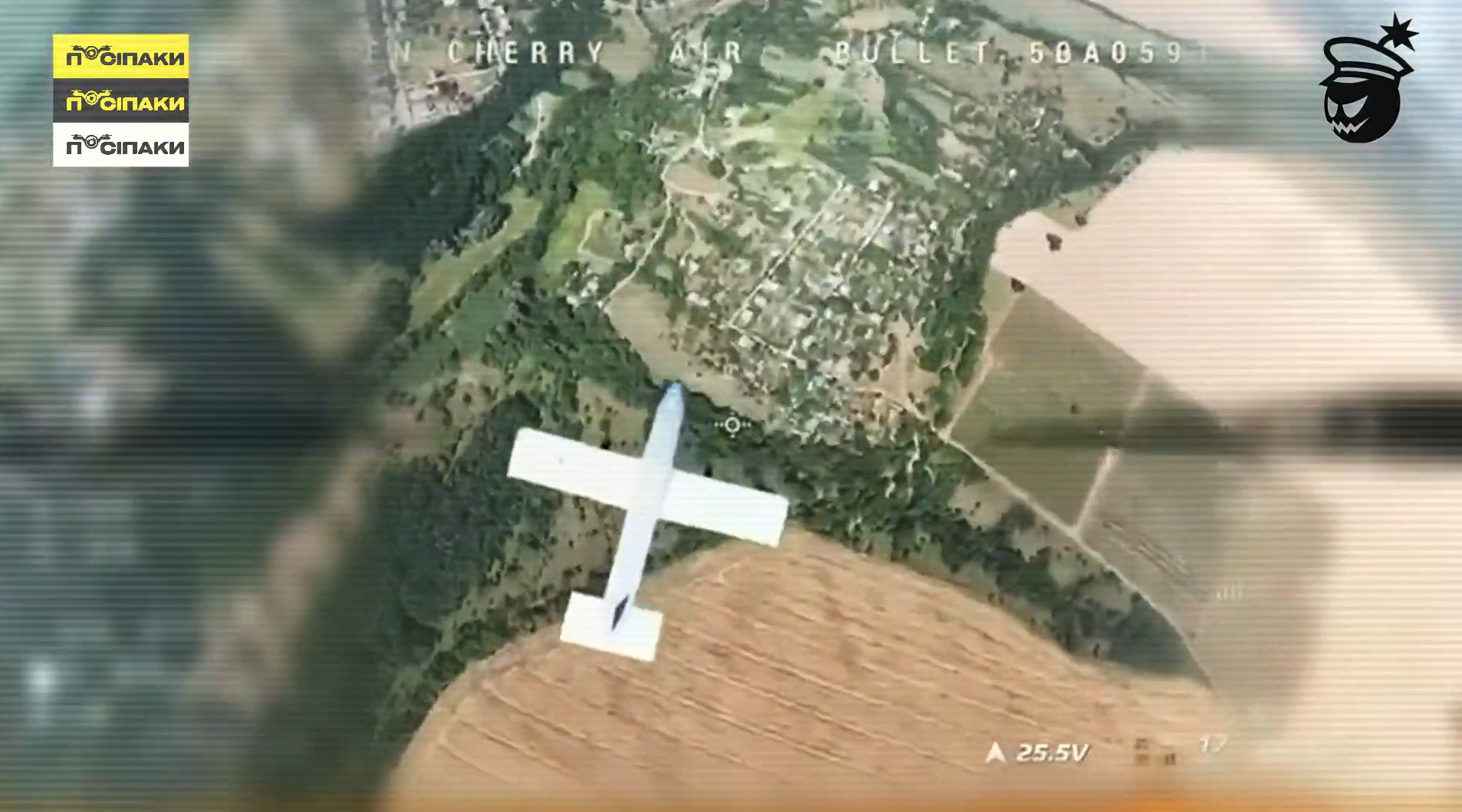
Over Zaporizhzhia, a joint effort by Zaporizhzhia police, National Guard, and interceptor crews brought down the AI Molniya for the first time. The drones were destroyed with domestically produced General Cherry AIR and Bullet interceptors—the same kinetic systems that accounted for 43% of all Molniyas Ukraine brought down in March 2026.
A Molniya drone equipped with artificial intelligence was shot down over Zaporizhzhia. Screenshot from a General Cherry video
The drone and its operators
The Molniya is among the cheapest weapons in Russia's arsenal—a low-cost kamikaze built close to the front, reliable and ubiquitous. Russia launches up to 10 a day in the Zaporizhzhia direction alone, sometimes fitting one with an anti-tank mine or flying it as a mothership for FPV drones. In June, Russia's Rostec presented the drone for export under the name Lightning 13 at the National Security. Belarus-2026 exhibition.
Preliminary Ukrainian assessments point to Russia's 50th Varyag Unmanned Systems Brigade as the main operator of the AI variant, operating alongside the Rubicon unit—two of the formations Russia uses to trial its newest drone technologies on the Zaporizhzhia axis.
What comes next
Beskrestnov has already warned that this may not be the end of the trend. The next step, he says, is a fiber-optic version of the Molniya that is already being tested. Tethered to its operator by a glass fiber rather than relying on radio communications, it would emit no radio signal at all, making it invisible to Ukraine's electronic reconnaissance and immune to jamming.
Fiber-optic FPV drones have already reached the battlefield around Kharkiv. A fiber-optic Molniya-class aircraft would extend the same challenge over much greater distances, further eroding the effectiveness of electronic warfare.
Inexpensive electronic warfare has been one of the defining equalizers of the war, allowing defenders to disable expendable drones without firing far more expensive interceptors. As drones become autonomous or fiber-optic controlled, that advantage begins to disappear. Autonomous target-selection systems are already undergoing combat testing by both Russia and Ukraine.
Ukraine's response is increasingly shifting toward kinetic interception—and that solution is already attracting Western interest. General Cherry, whose interceptors brought down this Molniya, has reached the final stage of the Pentagon's Drone Dominance Program, a Hegseth-era initiative to field low-cost drones capable of operating in contested electronic warfare environments.
The company has also signed a joint venture to manufacture its Bullet interceptors in New Hampshire. Ukraine is becoming the proving ground not only for the drones that future wars may rely on, but also for the systems designed to defeat them.
Russia has struck or damaged Ukrainian fuel stations at a rapidly accelerating pace since April 2026. According to Radio Liberty, the campaign combines attacks on civilian infrastructure with a propaganda effort aimed at Russian domestic audiences. A fuel market expert warns that Ukrainian licensing law embeds the exact address, ownership, and throughput of every registered station in each license—data that, even from a nominally closed registry, Russia can obtain through l
Russia has struck or damaged Ukrainian fuel stations at a rapidly accelerating pace since April 2026. According to Radio Liberty, the campaign combines attacks on civilian infrastructure with a propaganda effort aimed at Russian domestic audiences. A fuel market expert warns that Ukrainian licensing law embeds the exact address, ownership, and throughput of every registered station in each license—data that, even from a nominally closed registry, Russia can obtain through leaks.
Russia's campaign against Ukrainian civilian infrastructure has evolved across the full-scale war from power grids and heating systems toward any combustible civilian object that produces visible footage—a pattern where the propaganda value of the strike, not its military effect, increasingly drives the targeting logic.
The targeting campaign
Fuel-industry outlet Naftorynok recorded three to four Russian strikes on Ukrainian fuel stations per week through April 2026. The rate climbed to 13 per week by mid-June, then reached 20 per week by early July. Since April, Russia hit or damaged 186 fuel stations—concentrated in frontline oblasts including Kharkiv, Sumy, Donetsk, Dnipropetrovsk, Zaporizhzhia, and Mykolaiv.
The corridor between Dnipro and Kharkiv now has no intact station, Leonid Kosianchuk, former president of the Association of Petroleum Market Operators, told Radio Liberty.
The targeting intelligence problem
Ukraine's licensing law requires each license to state the exact address, ownership, and throughput of the registered facility. The licensee database is nominally closed to public access, but Kosianchuk said he cannot guarantee against data leaks—and called for the register to be sealed for the duration of the war.
"Russians don't even need to strain their intelligence services. "They can clearly understand at which kilometer of which highway a given station is located, who owns it, what volumes it sells" Kosianchuk said.
He is calling for the licensing law to be amended to remove the address requirement from licenses—not just restricting access to the database, but eliminating the data from the license itself.
Why Russia is doing it
The campaign serves two functions, Serhii Bratchuk, spokesman for the Ukrainian Volunteer Army, said. The first is domestic propaganda—producing footage of burning Ukrainian fuel infrastructure to mirror Ukrainian coverage of Russian refinery strikes.
"The pictures of our burning fuel stations are actively being used by the enemy to create the illusion of a fuel collapse in Ukraine," Bratchuk said.
Russia simultaneously circulates fake and outdated footage of queues at Ukrainian stations to trigger panic buying. Mykolaiv Oblast Military Administration Head Vitalii Kim described the targeting logic as producing smoke for television. Ukraine's military, he noted, does not refuel at commercial stations.
The second function is operational. Russia is concentrating strikes in frontline oblasts to complicate fuel access for civilian transport, medical workers, volunteers, and light military vehicles.
"Russia wants to paralyze civilian transport, our medics, volunteers, and complicate refueling of light military vehicles—pickups, buggies, quad bikes that operate along the front line," Bratchuk said.
Consequences and adaptation
Destroying one modern fuel station causes damage of over $1 million, specialists estimate—large national networks can absorb such losses, but regional operators face serious financial risk, Bratchuk noted. On 5 July, Sumy Oblast Military Administration Head Oleh Hryhorov warned residents to avoid fuel stations entirely after Russia signaled further strikes.
The Trostyanets city council in Sumy Oblast launched mobile fuel distribution points on 2 July, announcing vehicles would move locations "to prevent targeting by the aggressor." Zaporizhzhia Oblast has been covering stations with anti-drone nets since June. Mobile fuel distribution currently operates outside Ukrainian law, Kosianchuk noted, and he is calling for two legislative changes: amendments allowing mobile fuel retail, and repeal of the retail fuel tax.
Economy Minister Oleksii Soboliev told parliament on 3 July that there is no fuel deficit for the civilian sector—the market is supplied, and import contracts are being signed on time. The legal framework for distribution, however, has not caught up with the operational reality on the ground.
I want to tell you about a city that used to make glass.
Not weapons, not steel — glass. Windows, bottles, mirrors. Kostiantynivka, in Donetsk Oblast, sits on the Kryvyi Torets River, and about 67,000 people lived there before Russia's full-scale invasion. By the spring of 2026, only2,500 remained — mostly elderly people who had decided that dying in their own homes was preferable to leaving them.
On the evening of 3 July, Vladimir Putin appeared in military uniform at a co
I want to tell you about a city that used to make glass.
Not weapons, not steel — glass. Windows, bottles, mirrors. Kostiantynivka, in Donetsk Oblast, sits on the Kryvyi Torets River, and about 67,000 people lived there before Russia's full-scale invasion. By the spring of 2026, only2,500 remained — mostly elderly people who had decided that dying in their own homes was preferable to leaving them.
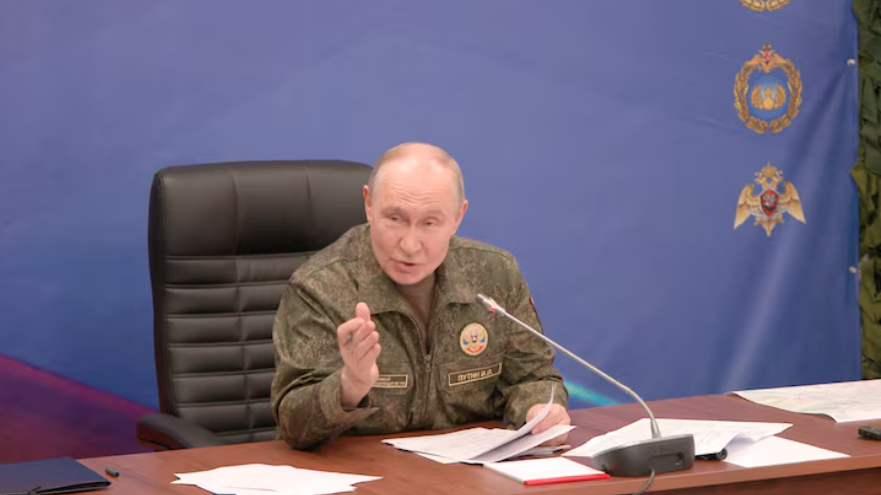
On the evening of 3 July, Vladimir Putin appeared in military uniform at a command post and announced that Russian forces had "completely captured" Kostiantynivka. Flag photos circulated on Russian Telegram channels and the Kremlin called it an important strategic achievement. But there was just one problem — the city had not fallen.
Russian President Vladimir Putin chairs a meeting at a military command post Screenshot from video
Ukraine's General Staff called the announcement a fabrication, stating that units of the Eastern Grouping were continuing defensive operations inside Kostiantynivka.
“Of course, that is not true. It is just another Russian lie, an attempt to generate some kind of a news story. If Kostiantynivka were under Russian control, then perhaps Putin would have no problem meeting me there to find a diplomatic way to finally end this war.” President Volodymyr Zelenskyy dismissed it on social media.
I spoke with German Chancellor Merz @bundeskanzler. I’m grateful for the support and assistance to our people and our country. Germany is one of the world's leaders in protecting lives, and we deeply value that.
The key priority now is missiles for the Patriot systems – to…
— Volodymyr Zelenskyy / Володимир Зеленський (@ZelenskyyUa) July 4, 2026
DeepState, the Ukrainian OSINT monitoring project, continued to show Russian forces present in parts of the city but not in control of it.
The Institute for the Study of War went further. Itassessed that Putin had likely staged the late-night meeting to shape Western coverage ahead of the US July 4 holiday — a choreographed announcement in a documented series of inflated battlefield claims ISW describes as cognitive warfare. The institute had already flagged several of the Russian flag-raising videos from Kostiantynivka as likely AI-altered.
The last link in the chain
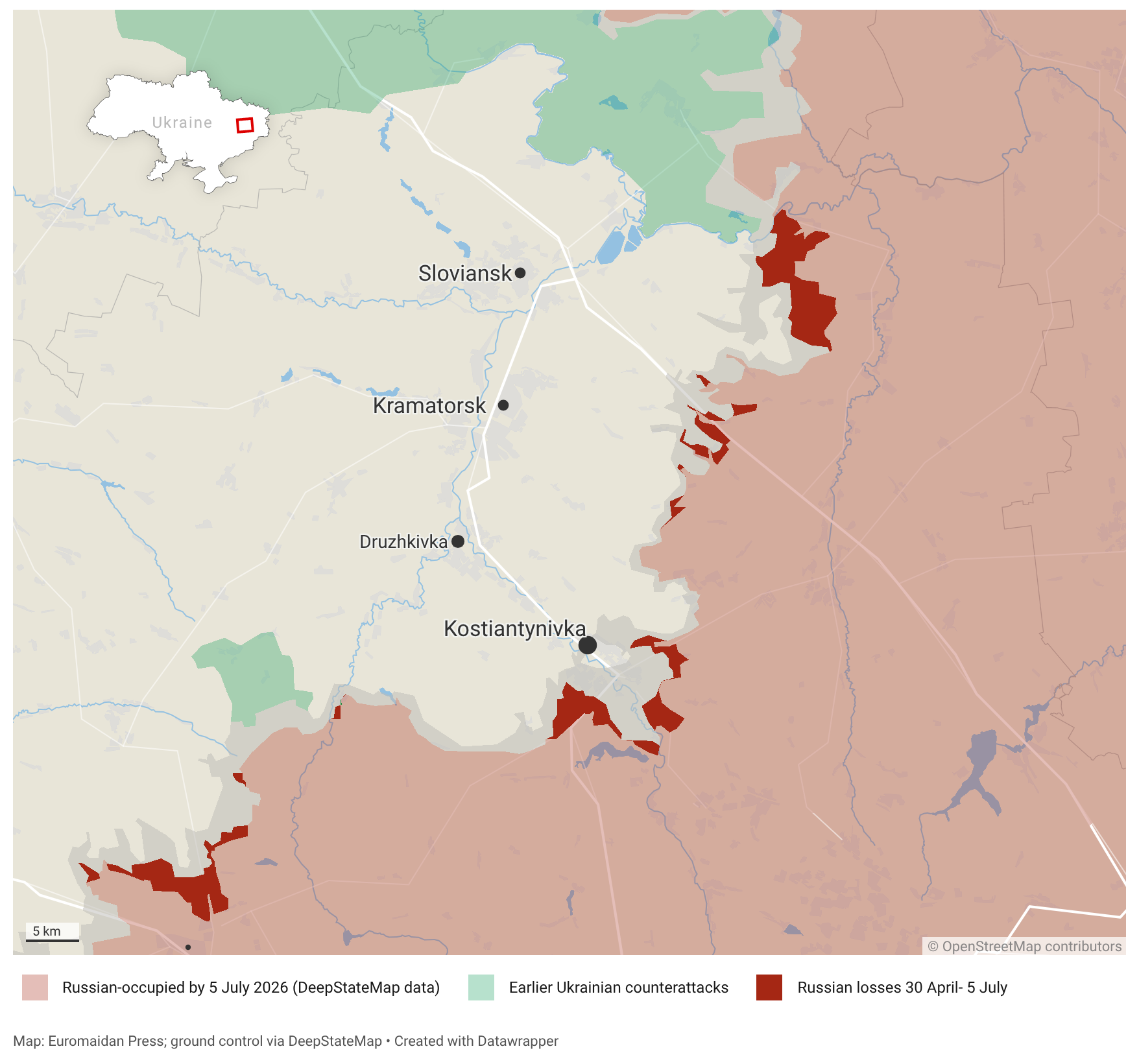
Picture four cities strung along a single road running north through a valley in eastern Donetsk Oblast: Kostiantynivka, then Druzhkivka, then Kramatorsk, then Sloviansk. Analysts call this chain the Fortress Belt — the last fortified line between Russia and control of the whole oblast.
Fortress Belt of Donbas. Map: Euromaidan Press
Kostiantynivka is the southernmost link, the gate. Kramatorsk, at the far end, is the nerve center of everything Ukraine still holds in Donetsk: the headquarters, the logistics, the main hospital. Everything flows through that one road.
Putin has stated openly that full control of Donetsk is a central war aim and a precondition for any ceasefire. As of April, his own spokesman put roughly 18% of the oblast still outside Russian hands.
A false announcement of Kostiantynivka's capture serves that narrative directly — it moves the claim of precondition from aspiration toward apparent fact, in Western news cycles, before the ground truth catches up.
“Inside” is not the same as “captured”
Russian forces first entered Kostiantynivka in October 2025. Through the winter and spring they ground forward block by block, and by June they were pushing in from several directions at once. Ukrainian military sources reported 100–250 Russian troops operating inside the city — not on the outskirts, inside. As of 23 June, Ukrainian soldiers still outnumbered Russian ones within the city limits.
But inside is not the same as captured.
ISW's June assessments put Russian forces in control of or infiltrated into roughly 37% of Kostiantynivka — and that single city accounted for 77% of all Russia's June gains across the entire front. What Russia has achieved, at enormous cost, is to turn the city into a continuous gray zone where neither side holds clean ground.
What Russia has achieved, at enormous cost, is to turn the city into a continuous gray zone where neither side holds clean ground. The advances are real — and not liberation.
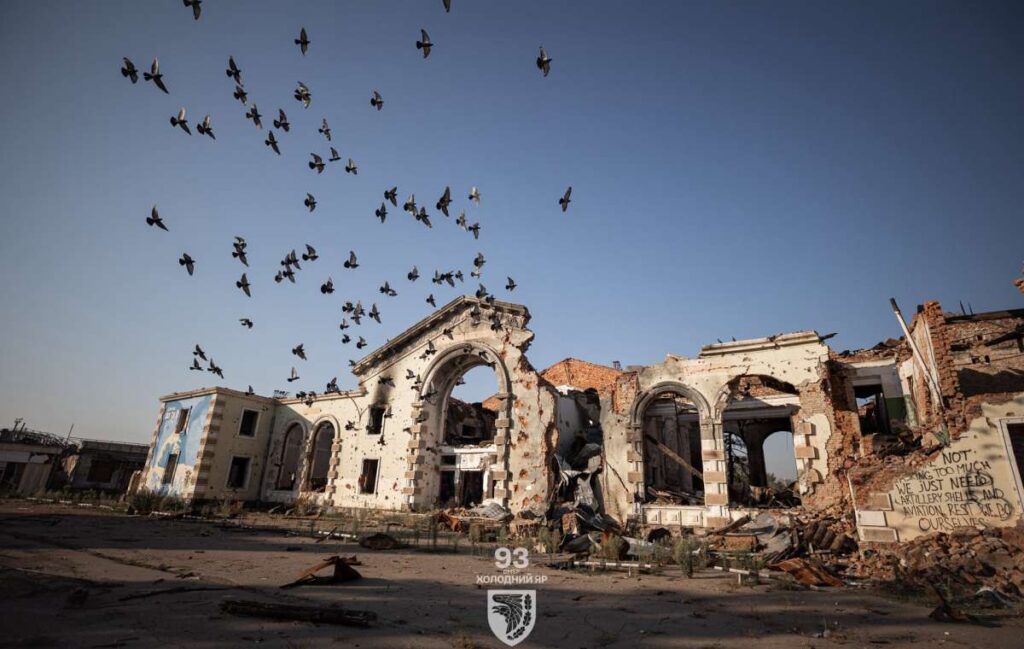
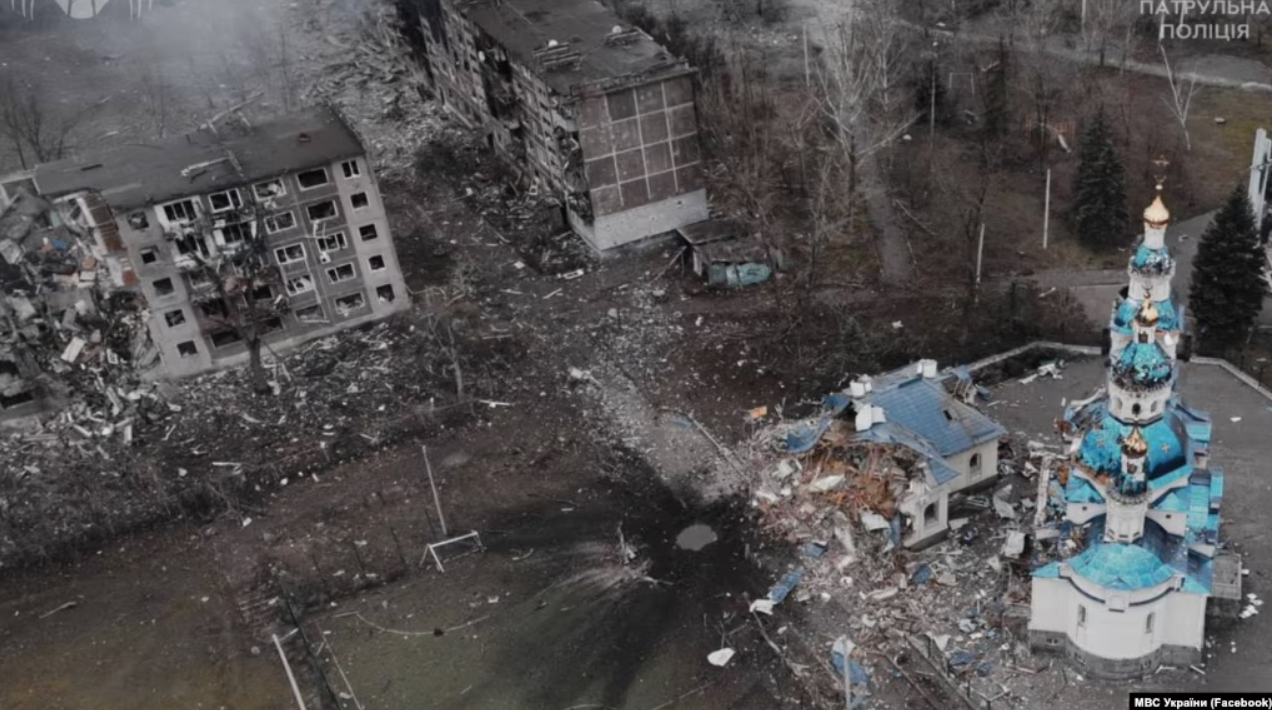
Destroyed Kostiantynivka. Photo: the Ministry of Internal Affairs of Ukraine
The city sits inside what reportersdescribed as a kill zone ruled by drones. The road north is so exposed that the wounded and the dead are carried out on foot — evacuation vehicles cannot use it.
According to ISW, Russian forces seized or infiltrated just over 30 square kilometers across the entire front in June 2026 — compared to roughly 481 square kilometers in June 2025. Russia's rate of advance has fallen to one-sixteenth of last year's pace, at nineteen times the casualties per kilometer.
Once Ukrainian counterattacks are subtracted, Russia ended June with a net territorial loss.
Why drones are not enough
In 2026, Ukraine's long-range drones have hit oil refineries on the outskirts of Moscow andchoked Crimea's supply lines with mounting intensity. Those are real achievements, and they have bought Ukraine military, political, and symbolic momentum.
But Kostiantynivka is where that advantage runs out. Russia's method here is to funnel very small infantry groups — the ones who survive the approach — into the city, moving under summer foliage and through basements and rubble.
This tactic could be very useful because in an open field, a drone sees everything, but in a ruined city, the equation is older and grimmer: infantry, cellars, building by building.
The drone that dominates the steppe is far less decisive in a stairwell.
Pokrovsk was the rehearsal
The world has seen this method before, in Pokrovsk, the city to the west of Kostiantynivka that Russia spent months taking in early 2026 — no lightning assault, just small groups seeping in, logistics strangled, and eventually a choice between mounting losses and withdrawal.
But Pokrovsk alsoshowed the ceiling. After Russia took it, it could not convert the capture into a breakthrough. Russian forces sit in the ruins eyeing tens of kilometers of mined, fortified, drone-patrolled terrain stretching between them and the next major objective.
The people who stayed
For months,reporting from inside the city documented how it dies without surrendering: the elderly carried down darkened stairwells, water hauled up by hand because the utilities are gone, evacuees who know they will not come back.
Vladyslav Samusenko, who runs a small evacuation group, walked eight kilometers into the city to carry out an elderly couple — a woman and a paralyzed man. "There are many bodies there, in the backyards and on the streets," he toldDW. "You can smell them when you walk past a house."
Those who remain live, in the words of a 28th Brigade spokesman, "in basements, burn wood, and scavenge garbage, like in the Middle Ages."
Destroyed Kostiantynivka. Photo: 24th Separate Mechanized Brigade
The negotiating table, not the battlefield
Watch what Russia did in the 72 hours after it declared Kostiantynivka taken. It proposed a six-hour ceasefire on 6 July, framed as humanitarian — an offer to hand over the bodies of fallen Ukrainian soldiers. The assaultcontinued throughout: Russia's own pattern of using ceasefires as operational cover, documented across 26 violations between 2014 and 2020.
When Zelenskyy challenged Putin to meet him in Kostiantynivka if it was truly under Russian control, Kremlin spokesman Dmitry Peskov replied that Kostiantynivka was "already a part of Russia" and that Moscow's standing invitation for Zelenskyy to come to the Russian capital remained open.
If Kostiantynivka were under Russian control, Putin would have no problem meeting me there.
Volodymyr Zelenskyy
Zelenskyy's answer was not only a denial. In one sentence, he turned the lie into a verification test — and Moscow, which insists any summit be held in the Russian capital, failed.
Every day the city holds, the precondition Putin needs goes unmet — which is why, when Kostiantynivka would not fall, he announced that it had.
The fight for it now runs on two fronts: the streets where a few thousand people are still trying to survive alongside Ukrainian soldiers trying to hold on, and the coverage in Western capitals where pressure to end this war is being measured out.
Russian ruler Vladimir Putin claimed in late June that his forces are "just over 10 kilometers" from the city of Sumy in Ukraine. The figure corresponds to nothing on the map, ArmyInform reports.
Ukraine's Defense Forces have held Russian troops more than 20 kilometers from the regional center for over a year, and according to DeepState, Russian advances over that year measured in hundreds of meters, not kilometers. Near one village of Kindrativka, Ukrainian forces even pus
Russian ruler Vladimir Putin claimed in late June that his forces are "just over 10 kilometers" from the city of Sumy in Ukraine. The figure corresponds to nothing on the map, ArmyInform reports.
Ukraine's Defense Forces have held Russian troops more than 20 kilometers from the regional center for over a year, and according to DeepState, Russian advances over that year measured in hundreds of meters, not kilometers. Near one village of Kindrativka, Ukrainian forces even pushed the occupiers back toward the border.
The claim is significant because it illustrates how the Kremlin uses exaggerated battlefield narratives to shape perceptions of the war.
Sumy city sits about 24 kilometers from the Russian border. The deepest Russian penetration into the oblast — near villages of Hrabovske and Myropilske — reaches roughly three to four kilometers inside it, according to a Ukrainian military personnel representative.
How line got there, and stayed there
Russia's push into Sumy Oblast began in the spring of 2025, after the collapse of Ukraine's Kursk salient freed Russian units to attack across the border. By late June 2025, Ukrainian forces had halted the advance and dug in along the four village line along the border.
The front runs near those same settlements today. Russia has not attempted a broad offensive push since.
What it has done instead is claim ground it does not hold. On 24 June, after Russian channels announced the capture of the village of Ivolzhanske, Ukraine's Group of Forces "Kursk" refuted the report, calling it the work of Russian staff officers who pick Ukrainian unit names at random and draw offensive arrows across maps. The only territory Russia reliably controls, the statement noted, is"their own news feed."
Putin's Sumy claim fits a pattern the Institute for the Study of War has documented all year: inflated battlefield announcements timed to convince Western audiences the front is collapsing when it is not.
He attempted to use it as useful leverage as talks over how the war ends grind on, and Moscow refuses to freeze the current line.
What Russia is actually doing
Through 2026, Russia has traded broad assault for attrition and infiltration. Small groups of infantry probe routes rather than storm them. Artillery is used less, while FPV and reconnaissance drones are used more. The tactic is expensive. Ukrainian drone crews engage the groups within minutes of their emergence.
"They come out and die in about 10 to 15 minutes," the drone commander said in April.
DeepState and ISW both assess that the activity, while real, amounts to no operational breakthrough.
The wider arithmetic matches. ISW assessed on 1 July that Russian forces seized just 30 square kilometers across all of Ukraine in June 2026, which is sixteen times less than in June 2025, at nineteen times the casualties per kilometer. The spring–summer offensive has produced no operationally significant gains anywhere on the front.
Sumy city remains under regular Russian air attack, with guided bombs and drones striking the regional center and communities across the oblast. But the ground threat Putin described does not exist at the distance he named. In a year, the map moved by meters, and in one place, it moved the other way.
If Russia attacked Poland today, only two of the country's six army divisions could enter combat within seven days, Rzeczpospolita reported, citing Polish military sources. The other four range from partially staffed to still forming. And Poland would go to war, the paper noted, without most of the modern equipment it has ordered but not yet received.
Poland's rearmament is the most serious in Eastern Europe, and it is real — Abrams and K2 tanks, Patriot batteries, HIMARS,
If Russia attacked Poland today, only two of the country's six army divisions could enter combat within seven days, Rzeczpospolita reported, citing Polish military sources. The other four range from partially staffed to still forming. And Poland would go to war, the paper noted, without most of the modern equipment it has ordered but not yet received.
Poland's rearmament is the most serious in Eastern Europe, and it is real — Abrams and K2 tanks, Patriot batteries, HIMARS, six divisions on paper. But procurement and readiness are not the same thing. Under the classification set by the chief of the General Staff, General Wiesław Kukuła, who warned in November 2025 that the enemy has begun preparing for war, the 16th and 18th Mechanized on the eastern border are Tier 1, able to deploy within seven days.
Two new eastern divisions, the 1st and 8th, are still forming. The two western divisions, the 11th and 12th, based near the German border, far from the Russian threat axis, sit in between: cadre-staffed, needing up to 30 days to fill their ranks and fight, and last in line for modern kit.
One caveat the reporting is careful about: only the 18th's Tier 1 status, and the 1st and 8th as Tier 3 appear in open documents; the 16th's first-echelon ranking rests on Kukuła's public remarks, and placing the 11th and 12th in Tier 2 is Rzeczpospolita's own analysis, not a public defense-ministry classification.
Division
Tier
Readiness
Primary armor
16th Mechanized (east)
1
Within 7 days
K2 (incoming)
18th Mechanized (east)
1
Within 7 days
Abrams
11th Armored (west)
2 (assessed)
Up to 30 days
Leopard 2
12th Mechanized (west)
2 (assessed)
Up to 30 days
PT-91 / T-72
1st Infantry (new, east)
3
Still forming
PT-91 (interim)
8th Infantry (new, east)
3
Still forming
TBD
The 12th Division: Poland's most neglected formation
The 12th Mechanized Division in Szczecin is, by Rzeczpospolita's analysis, the most neglected formation in Poland's land forces. Its single tank battalion, in Czarne, fields a mix of PT-91 Twardy and T-72s dating back to Soviet-era designs — an authorized strength of 58 tanks, the lowest count of any Polish formed division. Its five mechanized battalions still ride BWP-1 infantry fighting vehicles; its rocket artillery runs WR-40 Langusta and BM-21 launchers while even the neighboring 11th Division's artillery regiment already takes delivery of Korean Homar-K.
Neither the K2 tanks going to the 16th Division nor the Abrams going to the 18th include the 12th, and the PT-91 is slated to end its Polish service mainly as opposition-force equipment — simulating enemy armor in exercises — which says little good about the future of the 12th's one tank battalion.
One sign of modernization did arrive. In December 2025 the division's 5th Artillery Regiment in Sulechów received its first Gladius reconnaissance-strike drones. Drone integration at the artillery level is the one area where the west is catching the east. The gap in armor and rocket artillery is not.
The 11th Division: recovering, not transformed
The 11th Armored Cavalry Division in Lubuskie is in better shape but still not Tier 1. Its 34th Armored Cavalry Brigade is only now recovering Leopard 2A5 and 2PL tanks that were handed to Warsaw's armored brigade in 2016, under then-Defense Minister Antoni Macierewicz, and are being returned as Warsaw re-equips with Abrams. Poland holds about 233 Leopard 2s across three versions — 46 Leopard 2A4 awaiting modernization, 82 upgraded to 2PL, and 105 2A5 — so the 11th's rearmament is in progress, not complete.
What this means for NATO
Poland's readiness gap is not a secret, and it is not only Poland's. Euromaidan Press' April 2026 analysis of NATO preparedness found that European rearmament will not close critical capability gaps until 2035 — five to seven years after the threat window the alliance's own generals have named. Poland is NATO's largest military spender relative to its economy, and its readiness picture still shows two combat-ready divisions out of six.
The Suwalki Corridor — the narrow land bridge between Poland and the Baltic states that analysts have modeled as a target for a rapid Russian thrust — sits in the operational zone of the 16th and 18th. Those are Tier 1. But a prolonged war requiring depth, reserves, and a resilient western flank would draw on the 11th and 12th, and on current trajectories, those divisions will not be ready inside the threat window.
Poland's eastern divisions are genuinely ready. The doctrine gap identified in Exercise Hedgehog 2025 — NATO formations still not trained or equipped for the war Russia is actually waging — is just as genuine. Poland's readiness numbers are the production side of that same problem: the tanks are bought, the divisions are drawn on the map, and two of six could fight next week.
Sweden will replace Russian-derived spellings of Ukrainian place names with Ukrainian forms in official Swedish-language communications and rename its embassy in Kyjiv, the Swedish Foreign Ministry announced on 2 July. Foreign Minister Maria Malmer Stenergard said the move is intended to demonstrate Sweden's support for Ukraine and reject Russia's attempts to erase Ukrainian culture.
The decision reflects a broader international shift away from Russian transliterations inhe
Sweden will replace Russian-derived spellings of Ukrainian place names with Ukrainian forms in official Swedish-language communications and rename its embassy in Kyjiv, the Swedish Foreign Ministry announced on 2 July. Foreign Minister Maria Malmer Stenergard said the move is intended to demonstrate Sweden's support for Ukraine and reject Russia's attempts to erase Ukrainian culture.
The decision reflects a broader international shift away from Russian transliterations inherited from the Soviet era. As governments increasingly recognize that place names are tied to national identity and sovereignty rather than linguistic convention, adopting Ukrainian spellings has become both a diplomatic statement and a rejection of Russia's imperial narratives.
The switch also renames Sweden's embassy in Kyjiv and its honorary consulate in Odesa. "Changing the name form is a way to show our support for Ukraine," Swedish Foreign Minister Maria Malmer Stenergard said. "We counter Russian attempts to erase Ukrainian culture."
Spelling of a city is not a stylistic preference. Under the Russian empire and the Soviet Union, Russification served as a tool to extinguish the national identity, culture, and language of subject peoples— a practice Ukraine's Foreign Ministry has called especially painful and unacceptable.
Sweden joins a growing list of governments that have made the switch since 2022: Austria adopted Ukrainian spellings in April 2022, and Germany's Federal Foreign Office changed Kiew to Kyjiw in February 2024. Governments increasingly treat Ukrainian place names as a matter of identity and sovereignty, not typography.
Why the names were Russified in the first place
Under Soviet rule, Russian dominated official life across the 15 republics, and the West came to know Ukrainian cities by their Russian transliterations: Kiev for Kyiv, Kharkov for Kharkiv, Lvov for Lviv, Odesa for Odesa. The persistence of those forms after 1991 was more than a spelling habit. It reinforced the stereotype that "everyone in Ukraine speaks Russian" and the false framing that "Ukraine is a former part of Russia."
Ukraine has been pushing back since independence. Kyiv became the official English-language spelling in the mid-1990s, codified under Ukraine's national transliteration standard. Ukraine submitted its transliteration table for international approval, and in 2012 the UN Group of Experts on Geographical Names approved the Ukrainian national romanization system.
When that produced little movement, Ukraine's Foreign Ministry launched the #KyivNotKiev campaign in October 2018, targeting international media including the BBC, New York Times, and Reuters.
By early 2019, the Guardian had updated its style guide, the EU's diplomatic service switched its email addresses from Kiev to Kyiv, and airports including London Luton had adopted the Ukrainian form. The US Board on Geographic Names dropped Kiev as an acceptable alternative that year.
Russia's full-scale invasion in 2022 accelerated the rest: most major Western media had switched by the end of that year.
What Sweden specifically changed, and what it means in Swedish
Sweden's decision is not a straightforward adoption of the English "Kyiv." Swedish phonology renders the capital as Kyjiv — the form Sweden will now use — with Kyiv accepted as a variant reflecting English usage. Odesa and Donbas follow the Ukrainian forms directly, replacing the Russian-derived Odesa and Donbas. The change binds government agencies and the diplomatic service; Swedish media have not uniformly followed.
Ukraine's Foreign Minister Andrii Sybiha said the step was entirely logical: Ukrainian cities should carry Ukrainian names, not derivatives from the Russian language imposed by centuries of imperial rule.
The wider pattern: derussification at home and abroad
Inside Ukraine, the same logic drives a sweeping legal process. In April 2023, President Zelenskyy signed a law condemning and banning propaganda of Russian imperial policy and mandating the derussification of place names. In September 2024, Parliament renamed 327 settlements and four raions in a single vote, stripping names tied to Soviet figures, Russian imperial generals, and communist ideology. The process is ongoing; several hundred more settlements await new names.
Abroad, Ukraine's Foreign Ministry has spent years asking governments to drop the Russian forms through its #CorrectUA campaign. Sweden is the latest government to make the change.
The zone of mutual attrition along Ukraine's eastern front now extends 20–25 kilometers on both sides of the contact line — an area where neither side can move freely without drone exposure and the commander of the 7th Airborne Assault Corps expects it to reach 30 kilometers by the end of 2026, Brigadier General Yevhen Lasiichuk told RBC-Ukraine. His corps holds the northern approaches to the Pokrovsk-Myrnohrad agglomeration in Donetsk Oblast against Russia's Center Group o
The zone of mutual attrition along Ukraine's eastern front now extends 20–25 kilometers on both sides of the contact line — an area where neither side can move freely without drone exposure and the commander of the 7th Airborne Assault Corps expects it to reach 30 kilometers by the end of 2026, Brigadier General Yevhen Lasiichuk told RBC-Ukraine. His corps holds the northern approaches to the Pokrovsk-Myrnohrad agglomeration in Donetsk Oblast against Russia's Center Group of Forces, operating with its 41st and 51st armies.
Ukraine's drone campaign has reshaped the geometry of the eastern front, turning a defined contact line into an expansive zone where neither side can move without aerial exposure. The 7th Corps has described the character of the war in its sector as a slow war of drones, FPV systems, and reconnaissance.
What the corps commander said
Drones now account for 70-80% of the damage on both sides in the sector; artillery, under 30% — a ratio Lasiichuk says has inverted since 2022.
About 20,000 Russian troops have been destroyed in the 7th Corps sector. Across the entire front, Lasiichuk said. Russian losses now exceed 30,000 per month, more than Russia mobilizes, in his assessment — though Russian pressure continues on multiple axes.
Russian forces abandoned vehicle-borne assaults because the vehicles became easy targets.
"On an infantry fighting vehicle, 20–30 enemy troops could move as close as possible to our positions," Lasiichuk said.
Now that's unrealistic — it's a fairly easy target for the unit. The result is infiltration in groups of two or three, moving through terrain features and exploiting weather that suppresses Ukrainian drones.
Euromaidan Press has tracked this shift since January: a May analysis found 60–70% of Russian infiltrators die before reaching Ukrainian lines. Even so, Lasiichuk said, Russia has not stopped pressing — it has simply made the pressing more expensive for itself.
Ukraine's middle-strike campaign now reaches 100 kilometers from the contact line, hitting Russian logistics nodes, command posts, and approach routes toward Pokrovsk and Myrnohrad.
The Pokrovsk axis
Russia's Center Group of Forces has concentrated its largest eastern grouping on the Pokrovsk-Myrnohrad axis. The 7th Corps also faces the Rubiсon drone unit — Russia's dedicated drone assault formation that has used the Pokrovsk sector as a testing ground for new systems.
About five months after capturing the ruins of Pokrovsk, Russian forces are attempting to break out toward Dobropillia a gateway to Kramatorsk and Sloviansk, 50 km to the north.The natural geography of the area favors Russian infiltration: riverbeds, road networks, and green zones provide covered approach routes.
Russia is recruiting civilians to commit arson, sabotage, and terrorist acts across Ukraine and Europe—and in Ukraine, its operatives have refined the playbook: they now forge official Security Service of Ukraine (SBU) summonses, complete with the signatures of senior SBU officials, to coerce targets who believe they are complying with their own government. The SBU and National Police warned on 3 July that dozens of such attempts have been uncovered in 2026 alone.
This isn'
Russia is recruiting civilians to commit arson, sabotage, and terrorist acts across Ukraine and Europe—and in Ukraine, its operatives have refined the playbook: they now forge official Security Service of Ukraine (SBU) summonses, complete with the signatures of senior SBU officials, to coerce targets who believe they are complying with their own government. The SBU and National Police warned on 3 July that dozens of such attempts have been uncovered in 2026 alone.
This isn't a new tactic—similar cases have been documented over the past few years. The warning arrives as Russia's civilian-recruitment campaign has spread across NATO territory on an industrial scale.
The Center for Strategic and International Studies counted34 sabotage attacks in Europe in 2024, nearly triple the 2023 figure. A senior NATO official has described "a steady and growing pattern of hybrid attacks" against member states.
The targets are ordinary people—financially vulnerable, legally exposed, or simply contactable through commercial data obtained from online shops—manipulated into carrying out operations whose Russian origin they may never discover. Poland's Internal Security Agency (ABW) has described Russia as deploying "low-cost agents"—individuals recruited online quickly and cheaply, some unaware they are acting in Russia's interests.
Ukraine's SBU is now documenting a distinct variant of that model—one that manufactures state authority rather than merely offering money.
How the scheme works
Russian operatives contact targets by phone or messaging app, presenting themselves as SBU investigators, National Police officers, or other law enforcement. The entry point is a fake official summons sent by messenger—printed with forged signatures of senior SBU officials, directing the target to appear over a fabricated criminal case. A common invented charge: alleged purchase of pharmaceutical products on Russian websites.
Handlers then offer to close the invented proceedings in exchange for tasks. The escalation is structured:
surveillance of a named individual;
carrying packages between addresses or purchasing chemical components;
building an improvised explosive device;
burning a Defense Forces vehicle or administrative building;
preparing a terrorist act or sabotage of critical infrastructure.
Russian handlers sometimes also demand payment—transfers to Russian-controlled accounts or cash handed to a courier under the guise of "authenticity verification"—as an alternative to, or alongside, task assignments.
To find targets, Russian services use customer databases from online shops—turning leaked commercial data into a recruitment pipeline, the SBU notes.
What Ukraine's cases document
Elsewhere in Europe, the campaign usually runs on money and leverage—recruitment through Telegram, or pressure on people already compromised. In several Baltic cases, Estonian smugglers were blackmailed into spying after being caught at the border.
What Ukraine's cases document is a different lever: the forged summons manufactures state authority itself. The targets do not believe they are being recruited by Russia. They believe they are being contacted by their own government.
The SBU stated that it operates exclusively under Ukrainian law, does not issue tasks of the kind described, and does not send official documents via messaging applications. Citizens who receive suspicious contacts can report them via the SBU chatbot at t.me/spaly_fsb_bot or by calling the hotline at 1516.
Two of Russia's most senior economic figures publicly linked the country's mounting economic pressures to the war in Ukraine last week — an unusual departure from the official silence that has surrounded Kremlin war costs since 2022. German Gref, chief executive of Sberbank, and central bank governor Elvira Nabiullina both spoke in separate settings as Ukraine's drone strike campaign against Russian oil infrastructure compounds the fiscal strain from record military spendin
Two of Russia's most senior economic figures publicly linked the country's mounting economic pressures to the war in Ukraine last week — an unusual departure from the official silence that has surrounded Kremlin war costs since 2022. German Gref, chief executive of Sberbank, and central bank governor Elvira Nabiullina both spoke in separate settings as Ukraine's drone strike campaign against Russian oil infrastructure compounds the fiscal strain from record military spending.
Russia's military and classified spending reached 46% of all budget expenditure in the first quarter of 2026 — a surge of roughly 30% over the same period in 2025 — while the National Wealth Fund buffer has fallen from about 7% of GDP before the war to 1.7% as of April 2026, Russia's Finance Ministry confirmed.
What each of them said
Gref told Sberbank's annual shareholders meeting that investments had already fallen over 14% and could drop a further 3% this year. He then addressed the war directly.
"I don't believe there is anyone in this country whose primary concern is anything other than an end to military hostilities as soon as possible," Gref said.
For the chief executive of Russia's largest state-controlled bank to frame the war as the country's overriding problem — not "the special military operation," not a security challenge to be managed — marks a notable break from the language Kremlin officials have enforced since February 2022.
Nabiullina's public position is more constrained, but the Bank of Russia's own press release on her June rate decision said fiscal policy had become more accommodative than previously expected and that pro-inflationary risks had worsened — the same dynamic that Kluge's analysis traces directly to the gap between military outlays and tax revenues.
The fiscal picture behind the exchange
The 46% military spending figure comes from analyst Janis Kluge of the German Institute for International and Security Affairs, drawn from Finance Ministry data and cited by ISW. Russia is now covering an increasing share of the deficit through borrowing, with liquid National Wealth Fund assets depleted to a fraction of their pre-war level and no longer functioning as a meaningful cushion.
Ukraine's strike campaign is compressing the revenue side simultaneously. Bloomberg counted 38 Ukrainian strikes on Russian refineries from January through May 2026, with 16 in May alone — the highest monthly figure of the war. Two strikes on 16 and 18 June disabled both primary processing units at the Kapotnya refinery in Moscow — the capital's main fuel source — leaving it unable to process crude until at least early 2027.
Russia has responded by banning gasoline and jet fuel exports, drawing down strategic reserves, allowing lower-grade fuel blends, and importing gasoline from India and Belarus, while negotiations with Kazakhstan are complicated by the fact that a Ukrainian strike disrupted the feedstock supply to one potential Kazakh supplier.
Russian President Valdimir Putin publicly admitted queues at filling stations while summoning top officials to manage the crisis. Parliament passed legislation subsidizing gasoline imports from abroad.
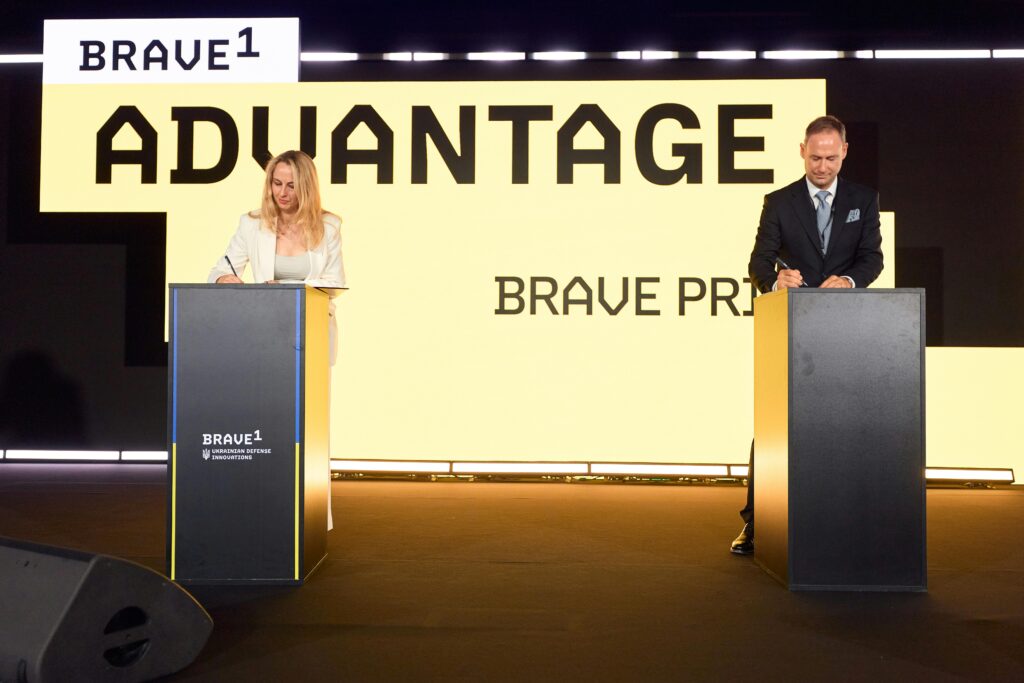
Airbus Defence and Space and Ukraine's Brave1 defence technology cluster signed a memorandum of understanding on 1 July, marking Brave1's first industrial strategic partnership with a Western company since the cluster launched in April 2023, and putting a major European aerospace corporation directly inside Ukraine's live-fire R&D loop.
The partnership, announced by Airbus, spans the full development arc — from initial research through to modernising equipment already i
Airbus Defence and Space and Ukraine's Brave1 defence technology cluster signed a memorandum of understanding on 1 July, marking Brave1's first industrial strategic partnership with a Western company since the cluster launched in April 2023, and putting a major European aerospace corporation directly inside Ukraine's live-fire R&D loop.
The partnership, announced by Airbus, spans the full development arc — from initial research through to modernising equipment already in active use. Airbus's technologies will integrate into Brave1's "Test in Ukraine" framework, which gives foreign manufacturers structured access to frontline performance data and feeds it directly back into design cycles. The cluster has processed over $235 million in procurement orders and, as of June 2026, counted more than 3,600 registered developments, 300 NATO-codified items, $50 million in defence innovation grants disbursed, and more than $65 million in additional investment attracted to Ukraine's defence sector.
"In Ukraine, research and development cycles are measured not in months or years, but in days," said Iryna Zabolotna, Brave1's chief operating officer.
She added that partnering with a global leader like Airbus allows us to combine their decades of deep aerospace expertise with our agile, combat-tested R&D approach.
Jo Mueller, a member of the executive committee of Airbus Defence and Space, framed the deal: "Collaborating with Ukraine on defence means effectively working on Europe's collective security."
What "Test in Ukraine" means in practice
The framework Airbus is joining gives foreign manufacturers a structured pathway: send equipment to Ukraine, conduct remote training, and receive performance feedback from armed forces units with direct frontline experience. Companies can test on-site with real-time adjustments, or commission Brave1 specialists to run the tests and deliver a results report. Real-time dashboards give manufacturers verified data on impacts, strike distances, and failure modes, giving companies performance intelligence they cannot generate in peacetime testing.
Brave1's priority areas span air defence, drone interceptors, AI-guided targeting, countermeasures against Russian glide bombs, naval unmanned systems, ground-based electronic warfare, and AI-assisted fire control for howitzers. The Airbus agreement establishes joint task forces spanning the full development arc from research to active-equipment modernisation.
Airbus will also serve as a key partner at the Defence Tech Valley summit in Lviv. Euromaidan Press previously described the 2025 edition as the world's biggest defence tech summit, drawing over 5,000 participants from more than 50 countries.
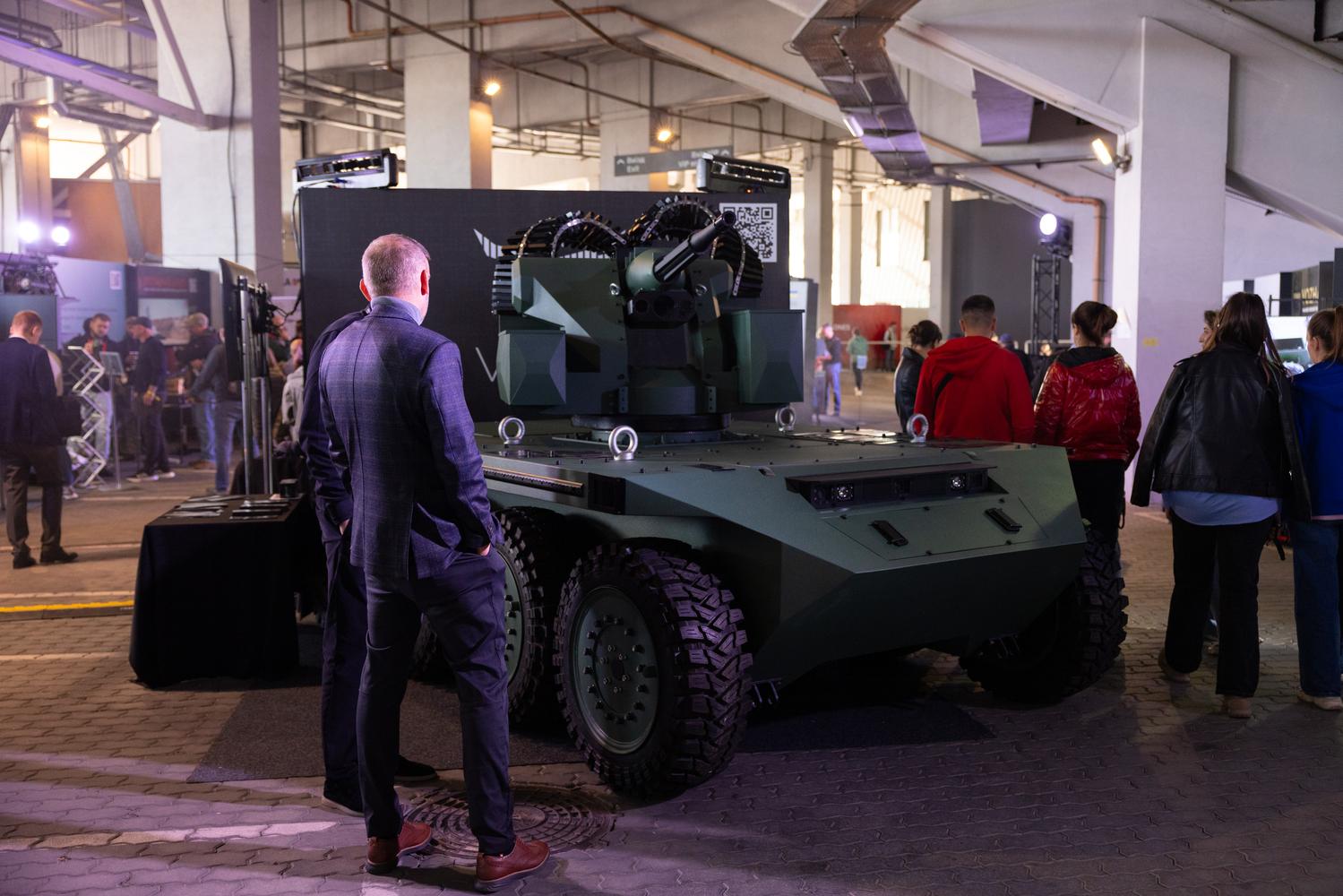
A Ukrainian unmanned ground vehicle (UGV) with a turret is on display at the Lviv Defense Tech Valley on 16-17 September 2025. Photo: Brave1
Brave1's expansion toward global industrial alliances
Brave1's chief operating officer Iryna Zabolotna said the Airbus deal falls under a new "Brave Prime" initiative — Brave1's expansion from launching defence startups toward forging global industrial alliances. The combat data loop at the cluster's core — where operational performance feeds directly back into development cycles — is what Brave1 says compresses R&D from months into days, giving partners access to battlefield insight unavailable in peacetime testing regimes.
On 27 June, the Ukrainian government introduced a unified framework called Brave International for working with international partners on defence innovation, establishing joint grant funds on a matched-contribution basis with parity oversight boards and expert panels. The Airbus MoU arrived four days later.
Canada is building institutional capacity to counter Russian hybrid warfare and disinformation, but its own intelligence agencies say the threat is outpacing the response, outgoing Canadian Ambassador to Ukraine Natalka Cmoc said in an interview with Ukrinform on 1 July 2026, on the eve of Canada Day — her last before ending her three-year posting in Kyiv.
Russia's covert disinformation apparatus has been expanding globally, with networks operating independently of state me
Canada is building institutional capacity to counter Russian hybrid warfare and disinformation, but its own intelligence agencies say the threat is outpacing the response, outgoing Canadian Ambassador to Ukraine Natalka Cmocsaid in an interview with Ukrinform on 1 July 2026, on the eve of Canada Day — her last before ending her three-year posting in Kyiv.
Russia's covert disinformation apparatus has been expanding globally, with networks operating independently of state media to spread false narratives across Western societies, targeting support for Ukraine and undermining democratic institutions.
What the ambassador said
Cmoc cited two programs Canada initiated together with partners:
The first is an academy that supports analysts and enables information-sharing with partner countries to build stronger counter-tools.
The second is a fund for those who fall victim to hybrid attacks — organizations, individuals, or NGOs that may lack the capacity to resist them on their own.
Canada's Senate committee on national defence and securityreleased a report on 30 April 2026 calling Russian disinformation an urgent threat to Canada's national security, democratic institutions, and social cohesion. Russia's disinformation has been growing and evolving at a rapid pace, the committee found, adding that Canada's capacity to respond does not match the scale of the threat.
The Canadian Security Intelligence Service (CSIS) backed up the report's findings in a concurrent annual release, confirming that Russian state actors have carried out information and influence operations in Canada, exploiting contentious social topics to discredit the government's position on Ukraine by polarizing segments of both the political and public spectrums.
CSIS noted it "continues to identify, investigate, and reduce Russia's adaptive and sophisticated disinformation methods."
The ground-level effects are visible
Canada's National Security Advisor Nathalie Drouin warned Parliament in February 2026 that more Canadians were beginning to accept the Kremlin's narrative that Kyiv — not Moscow — provoked the 2022 full-scale invasion. Russian narratives targeting Canada cluster around three patterns:
fiscal resentment toward aid for Ukraine,
false-pacifism framing designed to undercut Canada's image as a peaceful nation,
personal attacks on Ukrainian-Canadian public figures
Most visibly the coordinated campaign against former Deputy Prime Minister Chrystia Freeland's Ukrainian grandparents and their wartime history.
Canada's moves reflect a broader pattern among G7 nations of building shared infrastructure to track and counter Russian information operations, a shift from reactive debunking toward proactive institutional capacity meant to outlast any single election or news cycle. Russia allocates over $1 billion annually to disinformation and propaganda, suggesting the gap between attacker and defender remains wide.
Ukraine's domestically produced guided aerial bombs (KABs) have entered combat use, Defense Minister Mykhailo Fedorov announced at the Brave1 Advantage event, Militarnyi reported. Products from two of eight Ukrainian developers involved in the program have reached frontline units; the others remain at various stages of development and testing.
Russia has deployed glide bombs at a rate of thousands per month throughout the war, giving its air force a standoff strike capabili
Ukraine's domestically produced guided aerial bombs (KABs) have entered combat use, Defense Minister Mykhailo Fedorov announced at the Brave1 Advantage event, Militarnyi reported. Products from two of eight Ukrainian developers involved in the program have reached frontline units; the others remain at various stages of development and testing.
Russia has deployed glide bombs at a rate of thousands per month throughout the war, giving its air force a standoff strike capability that Ukraine has struggled to match with the limited Western-supplied equivalents it received. Ukraine has been scaling domestic precision-weapons production across multiple developers to reduce that dependence.
What Fedorov said
Fedorov described the path to maximum effectiveness under real combat conditions as long and complex, but said accuracy statistics and effectiveness during testing are "pleasantly impressive." Development follows a modular approach, with multiple teams building munitions across different weight categories, technical characteristics, and guidance principles. He did not specify which two developers have cleared the threshold for frontline delivery, nor did he provide figures on how many munitions have been used in combat.
A guaranteed budget slice
Fedorov tied the bombs' combat debut to a structural shift in how Ukraine allocates defense funding under its Brave1 innovation strategy. Under an "80/20" formula he described, 20% of the relevant budget goes specifically to innovative weapons systems, all of which pass through accelerated testing at specialized ranges before transfer to combat units.
The Brave1 platform, Ukraine's government-backed defense tech cluster, has registered more than 3,500 defense developments and channeled grants to developers, including for the guided bomb program.
What is already known about Ukraine's guided bombs
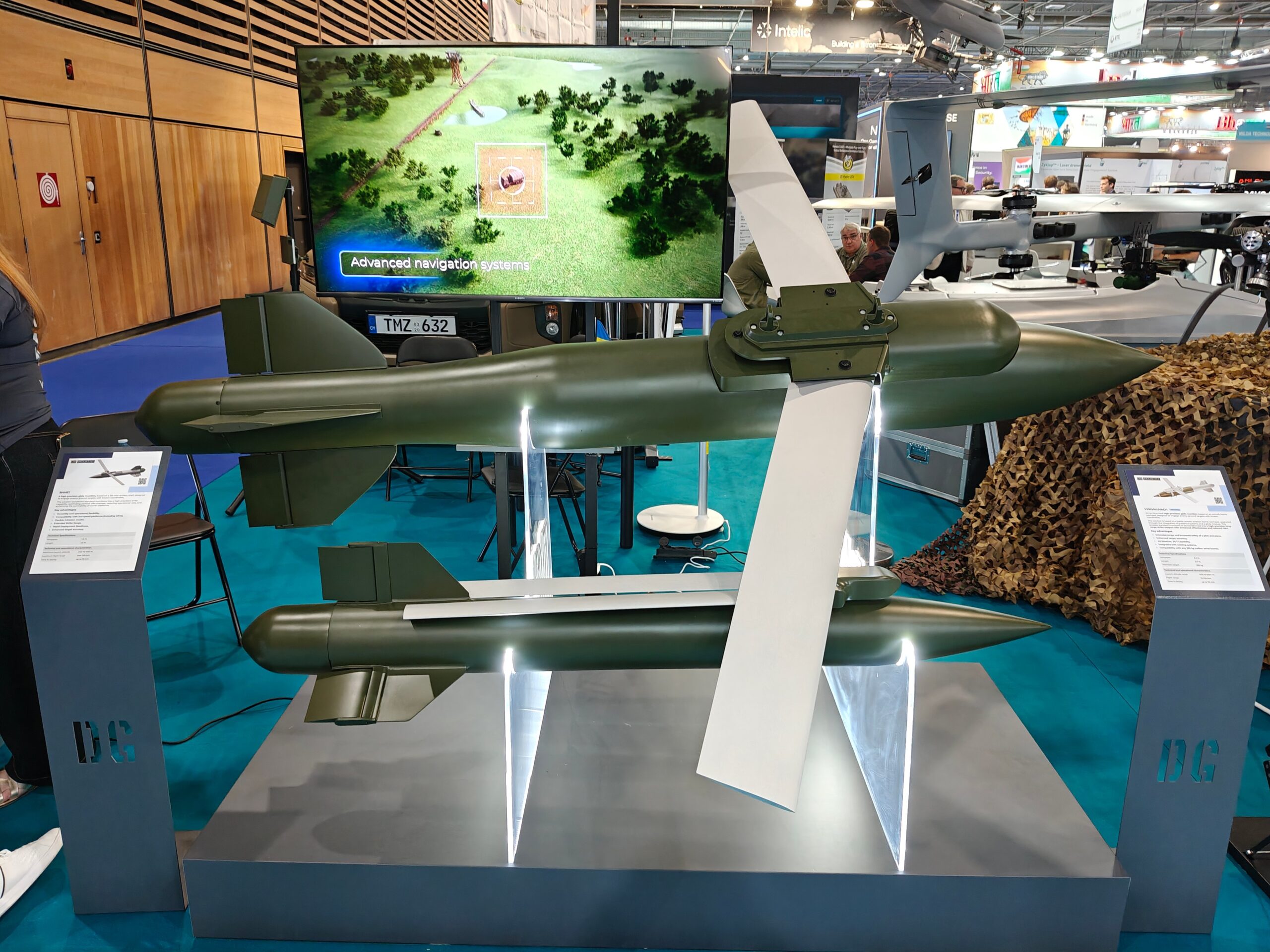
Ukraine's first domestically built guided aerial bomb, the Vyrivniuvach ("Equalizer"), was declared combat-ready on 18 May 2026 by DG Industry after 17 months of development through Brave1.
Ukraine's first domestic guided glide bomb, Vyrivniuvach, made its public debut at the Eurosatory-2026 defense exhibition in Paris. Source: X/Jeff21461
It carries a 250 kg warhead and targets fortifications, command posts, and other military objects. The weapon is purpose-built from the airframe up. Ukraine's Defense Ministry purchased an initial experimental batch, and the bomb made its international debut at the Eurosatory-2026 defense exhibition in Paris in June.
A second Ukrainian company, BlueBird Tech, announced a partnership with a Ukrainian scientific and design bureau to develop and serially produce its own guided aerial bombs. Domestically produced KABs carry no donor-use restrictions, meaning Ukraine can strike targets without seeking approval from supplying countries, unlike Western-supplied munitions. The Vyrivniuvach costs roughly a third of the American JDAM-ER kit Ukraine has relied on since 2023.
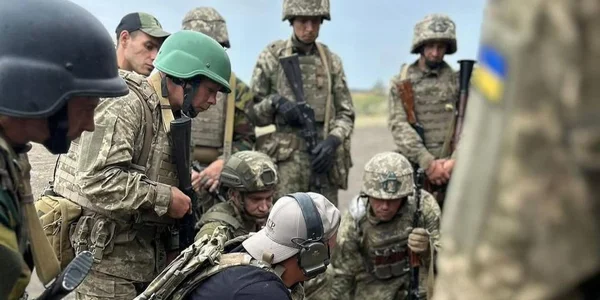
Twenty-five recruits of Ukraine's 425th Separate Assault Regiment Skelia died during training, before reaching the front, according to a two-month Babel investigation published 23 June 2026. Ukraine's State Bureau of Investigations (SBI) opened a criminal case the next day. The regiment's commander was suspended. A General Staff commission arrived at the unit.
Ukraine opened proceedings into abuse of power by a military official the day after Babel’s 23 June publication. Th
Twenty-five recruits of Ukraine's 425th Separate Assault Regiment Skelia died during training, before reaching the front, according to a two-month Babel investigation published 23 June 2026. Ukraine's State Bureau of Investigations (SBI) opened a criminal case the next day. The regiment's commander was suspended. A General Staff commission arrived at the unit.
Ukraine opened proceedings into abuse of power by a military official the day after Babel’s 23 June publication. The regiment’s commander was suspended pending investigation. Meanwhile, Ukrainian Ombudsman Dmytro Lubinets and a General Staff commission launched separate reviews inside the unit. At the same time, journalists involved in the reporting have reportedly received threats
What Babel found
Babel correspondent Kateryna Lykhohliad spent nearly two months investigating non-combat deaths at Skelia's training centers. Between late autumn 2025 and spring 2026, she documented 25 deaths. Most of the dead had been in the regiment less than a month. The official cause of death in the majority of cases was pneumonia. The investigation rests on testimony from more than 30 witnesses, primarily relatives of the dead and about 10 Skelia soldiers who had either fled the unit or were still serving.
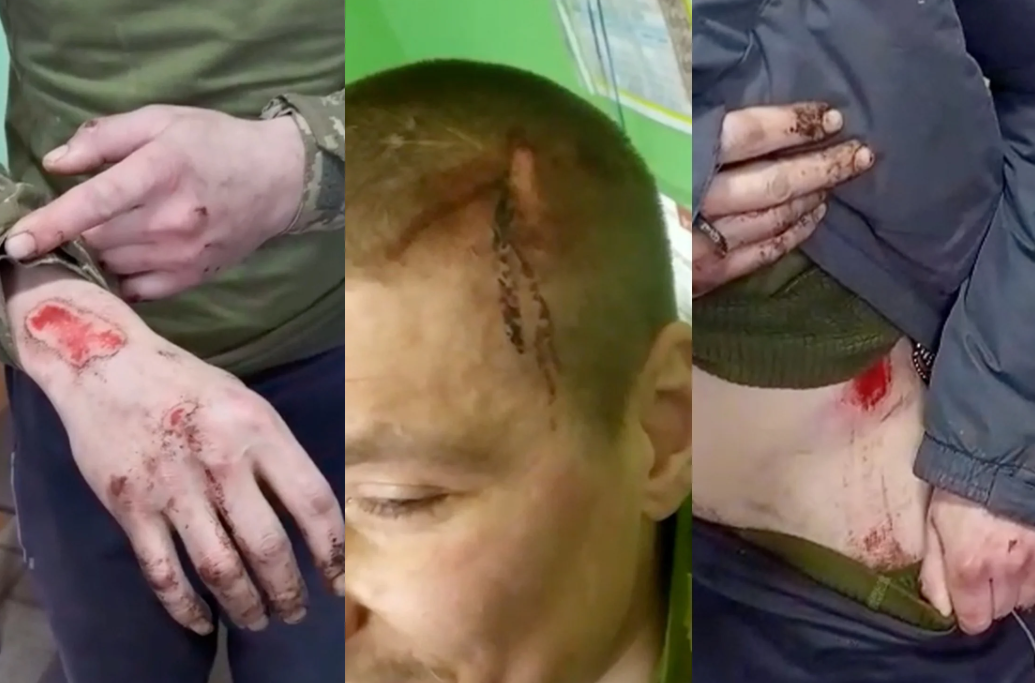
The most explicit testimony came from Oleksandr Semenov, who arrived at a hospital in Kropyvnytskyi on 23 January 2026 with head wounds, abraded palms and lower back, bruised and broken fingers, and handcuff marks on his wrists. A hospital doctor filmed him. On camera, Semenov said he had witnessed at least nine suicides in four days at a Skelia training center, naming one victim. He described being tied to a quad bike and dragged across the ground. He died shortly after in the hospital. Official cause: pneumonia.
Injuries sustained by Oleksandr Semenov. Photo from personal archives / Babel
Who died and how
Of the 25 deaths Babel documented, the investigation distinguishes two categories: deaths from illness, predominantly pneumonia and cardiac events, and deaths bearing markers of violence.
In at least three named cases, post-mortem examinations found multiple fractured ribs, blunt chest trauma, and minor bodily injuries inconsistent with natural causes.
Volodymyr Tsukanov, 32, mobilized 15 January 2026, died 11 February. A forensic examination found multiple fractured ribs and blunt chest trauma. Investigators suspect Skelia junior sergeant Anatolii Kucher, who initially acknowledged striking Tsukanov three times in the chest with his left foot, saying he had miscalculated his force before changing his account entirely.
Vitalii Karat, 38, mobilized 25 February, died 14 March. The regiment claimed he fell from a pine tree while attempting to go absent without leave. A forensic finding of multiple fractured ribs and blunt chest trauma similar to Tsukanov's contradicts that account. His sister told Babel he had said before his death that he had been beaten continuously.
Dmytro Koval, 50, mobilized 6 March, died 21 March in a Skelia vehicle. His wife did not immediately recognize him in the morgue; she identified him by a birthmark. The body showed bruising on the face, neck, arms, legs, groin, and back. Three witnesses described watching him being beaten daily for refusing to eat. A preliminary forensic conclusion listed unspecified cardiomyopathy and described the bruising as minor bodily injuries. His family obtained a court order for a second examination.
Witnesses across multiple training center locations described overlapping conditions: recruits escorted to bathrooms in armed groups, isolation in cells alongside people in drug withdrawal, recruits restrained with tape, mined perimeters around training grounds with warning signs, and guards firing live rounds into the ground or air to enforce compliance. When Babel asked the regiment's civil-military cooperation chief Andrii Suray about the mined perimeters, he said:
"If somewhere it says 'mines,' you don't need to check it with your foot."
What the regiment says
Skelia disputes the systemic framing. Its spokesperson, former journalist Oleksii Bratushchak, told Babel:
"We are genuinely outraged when we are trying to build a functional unit, and then, because of certain incidents, we have this terrible reputation."
Suray acknowledged that violence does occur within the regiment but insisted it is neither systemic nor part of official policy. He said that some servicemembers resort to unauthorized methods to enforce compliance from recruits, adding that such problems exist across the military and that the regiment works to combat them. According to Suray, no one had ever been ordered to beat recruits.
The regiment confirmed 25 non-combat deaths but disputed several specific accounts, including Semenov's testimony about nine suicides in four days, which it said reflected events gathered across the entire regiment over six months.
The institutional response
The SBI opened proceedings under Part 5 of Article 426-1 of Ukraine's Criminal Code — abuse of power by a military official causing grave consequences — the day after Babel's 23 June publication. The regiment's commander, Hero of Ukraine Yurii Harkavyi, was suspended pending investigation. The Verkhovna Rada's human rights commissioner launched a review. A General Staff commission is operating inside the unit.
The Office of the Military Ombudsman had been monitoring Skelia for over a year before Babel published. Its first deputy head, Ruslan Tsyhankov, told Babel the office had established that medical care in at least the Saltan case was inadequate. He noted that Skelia leads all units in complaint volume, 5.1% of the ombudsman office's total complaints, and that even this figure undercounts real conditions, since recruits at Skelia have significantly less phone access than those at other units. The commander-in-chief stripped eight military units of the right to conduct their own basic training in June 2026. Skelia was not among them.
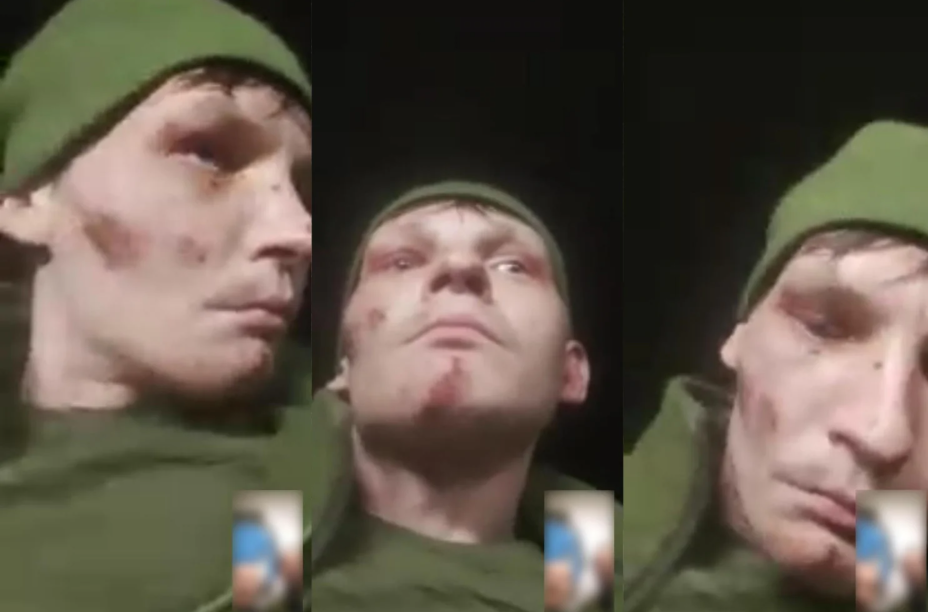
Visible injuries on the face of one of the soldiers. Photo from personal archives / Babel
The threat and the media coalition's response
On 25 June, two days after Babel's publication, Mykola Kharkhan, a serving Skelia soldier, shared a video in which he called Lykhohliad a "media killer," accused the outlet of acting in the aggressor country's interest, and said those responsible would have to regurgitate the money. Babel said it considers the remarks threats and intends to file a complaint with the police.
A statement signed by Mediarukh and a coalition of Ukrainian media organizations, publishedon 1 July by Detector Media, demands that the Prosecutor General, Interior Minister, and SBI open proceedings under Article 345-1 (threats or violence against a journalist) and Article 171 (obstruction of journalistic activity). It asks the National Police to provide security for Lykhohliad and Babel editor-in-chief Kateryna Kobernyk. The coalition also called for the threats to be investigated jointly with a March 2025 incident in which a Sky News camera crew's vehicle was fired on, which the statement suggests may indicate a pattern of pressure on journalists covering Skelia.
"A journalistic piece can be analyzed, fact-checked, publicly debated, and refuted with facts. But it cannot become grounds for threats, harassment, or the discrediting of its authors," the statement reads.
Ombudsman head Olha Reshetylova, who has been intervening in Skelia cases for over a year, said that she believes the command leadership was at least aware of what was happening. She added that if the leadership was not aware, it would indicate poor command responsibility and ineffective leadershi
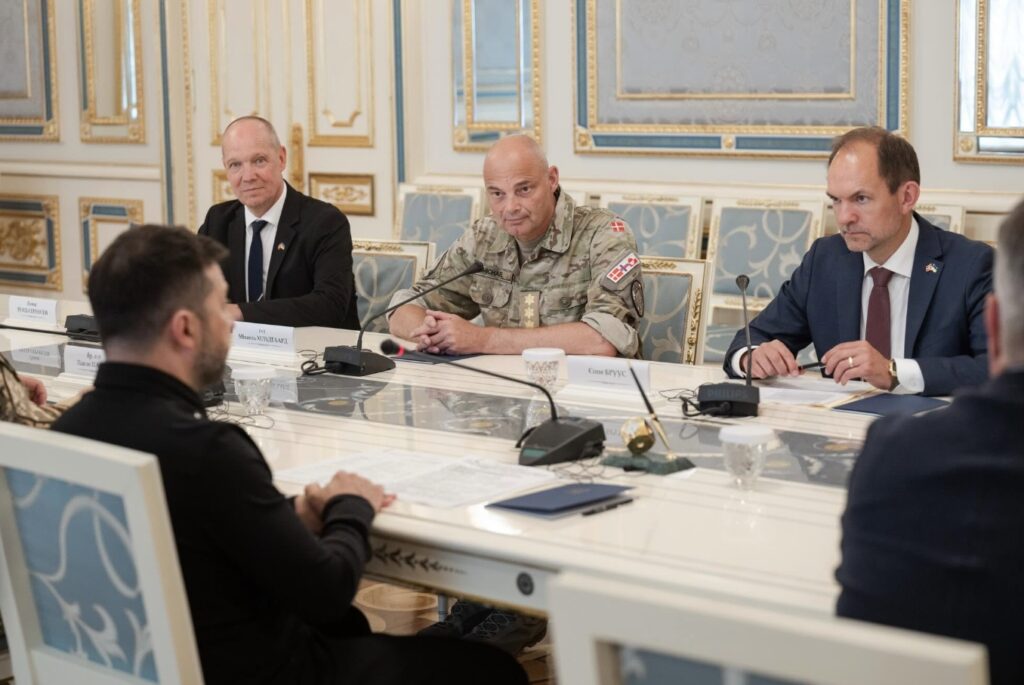
Denmark's Defense Ministry announced a $670 million military aid package for Ukraine on 30 June. It is the 30th such commitment since Russia's full-scale war began, Militarnyi reports.
About $200 million is directed through the "Danish model", the procurement mechanism that channels donor money directly into Ukrainian defense factories rather than drawing from allied stockpiles.
It has drawn growing interest from European allies as a faster, cheaper alternative to traditio
Denmark's Defense Ministry announced a $670 million military aid package for Ukraine on 30 June. It is the 30th such commitment since Russia's full-scale war began, Militarnyi reports.
About $200 million is directed through the "Danish model", the procurement mechanism that channels donor money directly into Ukrainian defense factories rather than drawing from allied stockpiles.
It has drawn growing interest from European allies as a faster, cheaper alternative to traditional weapons donations, with countries channeling money into Ukrainian factories that can deliver systems in months rather than years.
What does Danish model do?
The mechanism, pioneered by Denmark, directs Western military funding to Ukrainian manufacturers rather than pulling equipment from allied inventories. Denmark's Defense Ministry said that the approach has already allowed Ukraine toprocure a large number of drones, artillery systems, and ammunition with short delivery times.
Additional funds from the new package went toward long-range artillery ammunition. Denmark agreed within days when Ukraine asked to shift planned aid from short-range shells to 15,000 long-range artillery rounds, reflecting how the war's geometry has changed as the drone kill-zone widens along the front.
Danish Defense Minister Jeppe Bruus said that Denmark stands firmly behind Ukraine, stressing that Ukraine’s fight for freedom is also a fight for Europe, and that Europe cannot afford to abandon Ukraine at this critical moment. He added that Denmark must also learn from Ukraine in strengthening its own defense capabilities, noting that this was a key focus of his visit to Kyiv.
Denmark has committed about $11.7 billion in military aid to Ukraine from 2022 through 2028, the Defense Ministry said.
Drone Deal scaling and anti-ballistic gap
The 30 June ministerial meeting placed the Drone Deal, Denmark's framework for jointly procuring Ukrainian-made drones, at the center of the agenda. Ukrainian Minister of Defense Mykhailo Fedorov said Ukraine is prepared to share combat experience, data, and military technology with partners in exchange.
"This is a mutually beneficial partnership. We get more resources for the front, and partners get access to Ukrainian defense innovations," he said.
The two sides also agreed to develop joint programs supporting defense startups and security technologies. The ministers discussed a European anti-ballistic missile project, with Ukraine seeking Danish support to develop its own capability to counter ballistic threats, an area where Ukrainian forces currently have limited defensive depth.
Rasmussen's framing
Danish Foreign Minister Lars Løkke Rasmussen put the package in terms of the battlefield situation and diplomacy together.
"There are new dynamics on the battlefield regarding Ukraine," he said.
Also, he noted that the situation on the battlefield did not mean Ukraine’s partners could simply stand back, per Suspilne. He stressed that they must continue to support Ukraine and increase pressure on Russia to strengthen Ukraine’s negotiating position.
Ukrainian helicopter pilots have, for the first time, described new details of the high-risk mission that helped pave the way for retaking Zmiinyi (Snake) Island in May 2022. The accounts came from pilots of the 11th Separate Army Aviation Brigade "Kherson", according to Radio Free Europe/Radio Liberty.
This operation marked a turning point in Ukraine's campaign to challenge Russian control of the Black Sea. Zmiinyi (Snake) Island had become a symbol of Ukrainian resistance
Ukrainian helicopter pilots have, for the first time, described new details of the high-risk mission that helped pave the way for retaking Zmiinyi (Snake) Island in May 2022. The accounts came from pilots of the 11th Separate Army Aviation Brigade "Kherson", according to Radio Free Europe/Radio Liberty.
This operation marked a turning point in Ukraine's campaign to challenge Russian control of the Black Sea. Zmiinyi (Snake) Island had become a symbol of Ukrainian resistance after Russia's full-scale war, while its liberation helped restore access to key shipping routes and significantly constrained Russia's ability to project military power along Ukraine's southern coast.
Three attempts, one mission
Thefirst landing attempt came in late April 2022. Helicopter crews split into two groups, one to strike the island's defenses, the other to land troops under their cover, but Ukrainian fighter aircraft providing top cover spotted Russian jets approaching, and the operation was called off mid-approach.
"We had certain protocols, certain agreements, for when the operation ends," said Oleksandr, a Mi-24 pilot who flew top cover that day.
The second attempt followed in early May. Strike aircraft hit the island first, but Russian forces opened fire on the helicopters as they moved to land, and the troops never touched down.
"Landing special forces is one of our usual tasks, but doing it under these conditions was an audacious operation. I'd call it close to impossible," said Oleksii, a Mi-8 pilot who flew on all three attempts.
The Ukrainian military was counting on the element of surprise. But after they had tried once, the Russians knew they were out there, waiting for them.
The third attempt, on 7 May, succeeded. As the soldiers approached the island, it became visible from about 15 kilometers away.
"Since it sits on a rise — somewhere around 42 meters above sea level, they could see us better than we could see them. What worked in our favor was sheer nerve," recalled Leonid, another Mi-8 pilot involved in the operation.
40 kilometers of open water
To reach the island, the helicopters had to cross open sea with no coastline in sight, a setting that disoriented even experienced crews, especially at the near-zero altitudes they flew to avoid detection.
Artem, an Mi-8 pilot who ferried troops to the island, explained that flying over water is considered particularly challenging because the lack of coastal reference points makes navigation difficult, while a calm sea further increases the risk of spatial disorientation.
He recalled that the shortest distance from the mainland to Zmiinyi (Snake) Island was about 40 kilometers and joked with the senior navigator that it seemed a long way, only to be told there was no way to bring the island any closer.
Dark humor helped ease the tension among the crews before the mission. Oleksandr recalled that one of the pilots from Poltava, Maksym, was known for his dark sense of humor, which helped lighten the mood as the crews prepared for the high-risk operation.
"So, Sanya, ready to go for a swim in the Black Sea?" asked Maksym.
The water below them was no warmer than four degrees Celsius at the time of the operation. While some crews had previously trained for low-altitude flights over land during combat operations, flying at such low altitude over open water was an entirely new experience.
Leonid recalled that one of the lead pilots said he could feel a rhythmic tapping, which turned out to be the helicopter's front landing gear striking the sea surface. The helicopters were flying so low that the operation was both physically uncomfortable and highly demanding, requiring high speed and constant maneuvering.
What greeted them on island
By the time helicopters carrying special forces approached on 7 May, Ukrainian Bayraktar TB2 drones and tactical aircraft had already struck the island's defenses.
"Everything was already wrecked," Leonid said.
As the helicopters approached the island, they encountered smoke, ongoing small-arms fire, and heavy resistance. Leonid recalled that the crews were unable to land on their first approach because they came under Russian fire.
Guided by Mi-24 attack helicopters providing cover, they made a second attempt and successfully landed the special forces despite continued Russian fire and nearby explosions. He said the landing took only moments and noted that the crew was fortunate a fragmentation grenade did not detonate above the helicopter's rotor blades.
The landing zones had been mined in advance.
Artem explained that the crews first fired rockets at the designated landing areas in an attempt to detonate or disable the mines before the helicopters touched down.
One crew, however, was forced to land on a site that had not been cleared after another helicopter occupied the planned landing zone. He described it as remarkable that none of the mines exploded, adding that combat engineers later confirmed the entire area had indeed been mined.
Human cost
The lead crew during the 7 May assault, pilot Andrii Horetskyi and navigator Yevhen Halytskyi, was the first to join the group of helicopters that struck the island and provided cover for the landing operation. Both men were later killed while defending Ukraine.
Artem, who had known Horetskyi for more than two decades, recalled that they had trained together and eventually served in the same unit. He described Horetskyi as an intelligent and highly professional officer who was deeply committed to improving both his unit and Ukraine's Army Aviation.
Crewmates remembered Halytskyi as the person who helped maintain morale during preparations, reassuring others that everything would be fine and encouraging them despite the risks they faced.
A separate rescue crew, flying an Mi-14 on standby near the coast in case of an emergency, was shot down by a Russian fighter while in a holding pattern during the operation.
The crew included Mykhailo Zaremba, a pilot who had refused to defect during Russia's 2014 occupation of Crimea and continued serving Ukraine afterward. Only one rescuer aboard survived; Ukrainian border guards found him near the crash site, and comrades from the 11th Brigade evacuated him.
What island's liberation opened
Russian forces abandoned Zmiinyi (Snake) Island on 30 June 2022 after sustained Ukrainian missile and artillery strikes, ending a 126-day occupation. The withdrawal reopened the Bystre channel shipping route linking the Black Sea to the Danube, unblocking Ukrainian river ports and restoring maritime trade, including agricultural exports.
It also curtailed Russian naval dominance in the northwestern Black Sea and reduced the threat of an amphibious landing against Odesa and Mykolaiv oblasts.
A senior Russian Orthodox Church lawyer has proposed mandatory coursework in "Christian foundations of traditional spiritual and moral values" for students. Father Vasily Losev argues that they need a religious framework to understand abortion the way the church does, The Moscow Times reports.
The Russian Orthodox Church has been documented since 2022 functioning as "a driving force behind the Kremlin's war machine," blessing the Ukraine war, aiding the abduction of Ukr
A senior Russian Orthodox Church lawyer has proposed mandatory coursework in "Christian foundations of traditional spiritual and moral values" for students. Father Vasily Losev argues that they need a religious framework to understand abortion the way the church does, The Moscow Times reports.
The Russian Orthodox Church has been documented since 2022 functioning as "a driving force behind the Kremlin's war machine," blessing the Ukraine war, aiding the abduction of Ukrainian children from occupied territories, and using priests in occupied Ukraine for surveillance.
The initiative by the Russian Orthodox Church came amid an ongoing campaign to restrict abortions and encourage higher birth rates in response to Russia's demographic decline.
Losev calls for Christian reinterpretation of abortion law
Losev argued that Russia's existing abortion framework is itself unconstitutional, because an abortion does not save, but destroys an emerging life. That is why, according to him, it cannot count as medical care under the constitutional right to life.
For an Orthodox believer, Losev said, it is easy to reason that life begins at conception. For secular people, that is not obvious, so future doctors and lawyers should study the concepts of life, death, and abortion through the prism of the Christian worldview.
"At that point, the scientific findings take on a different meaning..." he said.
Losev also said Russian legal tradition, rooted in Christian values, historically treated abortion as killing an unborn child, and that the absence of that grounding in students today produces dangerous legal interpretations.
Losev frames Russian society as split into two camps: those who consider abortion murder and those who consider it a woman's right, and says this is a systemic contradiction the Constitution must resolve.
Russia intensifies anti-abortion campaign amid demographic decline
Meanwhile, Russia's birth rate has fallen to levels last seen before 1999, and 2025 figures show roughly 1.6 deaths for every birth nationwide, with the ratio reaching three to one in some regions.
State Duma Family Protection Committee chair Nina Ostanina has called for a "special demographic operation," language echoing the Kremlin's own term for the war, according to Radio Free Europe/Radio Liberty.
An anti-abortion film produced by a church-linked media channel began screening in Russian cinemas, schools, and government offices in November 2024.
Health Ministry data cited in Losev's own remarks show the campaign already shows results: pregnancy terminations fell 5% in 2025 to 321,000, with abortions performed at a woman's request down 9.9% to 120,600.
At least 30 Russian regions have adopted laws banning coercion to abortion, with 24 of those regions imposing fines reaching roughly $6,335 for institutions.
A Ukrainian military unit commander was found with a gunshot wound, Zaporizhzhia Oblast Police reports. The statement did not name the officer, but Operational Command South had identified him earlier as Colonel Volodymyr Kononnikov.
Kononnikov led one of Ukraine's most prominent front-line brigades on the Pokrovsk and Kharkiv axis. Now, the brigade holds positions at the eastern front.
The command noted that preliminary information at the time showed no signs of viole
A Ukrainian military unit commander was found with a gunshot wound, Zaporizhzhia Oblast Police reports.The statement did not name the officer, but Operational Command South had identified him earlier as Colonel Volodymyr Kononnikov.
Kononnikov led one of Ukraine's most prominent front-line brigades on the Pokrovsk and Kharkiv axis. Now, the brigade holds positions at the eastern front.
The command noted that preliminary information at the time showed no signs of violence. Investigators are working to establish the circumstances of his death under the procedural supervision of the Prosecutor’s Office, the Specialized Defense Prosecutor’s Office for Ukraine’s Eastern Region.
Operational Command South said in its initial report that Colonel Kononnikov had been found without signs of life on 27 June, and that law enforcement had launched investigative actions while an internal service inquiry had also been ordered.
Who was Colonel Kononnikov?
Before taking command of the 154th Separate Mechanized Brigade, Kononnikov served in Ukraine's Air Assault Forces and held a number of command positions. During his career, he was awarded the Order of Bohdan Khmelnytsky, 2nd class, having previously received the 3rd class of the same order.
Following news of his death, Operational Command South described Kononnikov as a dedicated officer, deeply committed to Ukraine, military service, and the soldiers under his command. The command noted that he was a responsible leader who genuinely cared for his personnel and expressed condolences to his family, friends, and fellow servicemembers.
"Colonel Volodymyr Kononnikov was an officer deeply devoted to Ukraine and to the military profession. He was a responsible commander who cared for his personnel and the needs of his military unit," the Ukrainian military said.
The 154th Separate Mechanized Brigade also paid tribute to its commander, describing him as a fair and respected leader who had earned every promotion through years of service and combat experience.
According to the brigade's press service, Kononnikov devoted his life to military service, accepted responsibility for those under his command, and remained faithful to his duty and to Ukraine until the very end.
The numbers are impressive. But two days in Gdańsk—25 and 26 June—revealed developments that matter more than any single agreement. The conference showed how European thinking about Ukraine is changing from postwar reconstruction to wartime resilience, from humanitarian support to strategic investment.
It also exposed the distance that still separates political declarations from the scale of action Ukraine needs.
With Russia showing no sign of halting its invasion,
The numbers are impressive. But two days in Gdańsk—25 and 26 June—revealed developments that matter more than any single agreement. The conference showed how European thinking about Ukraine is changing from postwar reconstruction to wartime resilience, from humanitarian support to strategic investment.
It also exposed the distance that still separates political declarations from the scale of action Ukraine needs.
With Russia showing no sign of halting its invasion, the speed at which Ukraine rebuilds its economy, energy grid, and arms industry has become inseparable from its ability to keep fighting.
Recovery during war
The most important shift from previous Ukraine Recovery Conferences is not in the numbers but in the logic. Partners have stopped talking about recovery as something that begins after. Alongside the first €3.2 billion tranche, the President of the EU Commission, Ursula von der Leyen, announced a separate €6 billion tranche specifically for drone production.
That is no longer humanitarian support, or even "reconstruction" in the classical sense — it is wartime capability funding, operating under the banner of a recovery conference.
At the closing press conference, Ukraine's Economy Minister Oleksii Soboliev called the conference "the most practical in history." Not the most generous — the most practical. That is effectively an acknowledgment that since Lugano 2022, the format has traveled from a declarative forum to a transactional platform.
But "practical" has its limits. One topic quietly circulating in the margins was a certain fatigue around forums about Ukraine's future reconstruction. Investors show up. Agreements get signed.
Actual projects on the ground move considerably slower than signing ceremonies.
One example of success: a factory in the Bila Tserkva Industrial Park, built by an Italian investor within a year of the Rome conference. One factory in a year is not the scale Ukraine needs.
The signing of a Ukrainian-Polish agreement during the Ukraine Recovery Conference in Gdańsk, Poland. June 2026. Photo: Ukraine Recovery Conference
Defense joins the agenda
Von der Leyen announced in Gdańsk the expansion of defense cooperation between the EU and Ukraine in the field of drones. Defense technology has formally entered the reconstruction discourse. Defense Day, running in parallel, focused on concrete mechanisms — joint ventures, investment pipelines, and legal frameworks for integrating Ukrainian defense tech into allied supply chains.
But a gap remains between what was discussed at Defense Day and what filled the main panels. The defense sector was more prominently represented this year, yet prominence is not the same as priority. Of the roughly €10 billion in signed agreements, the bulk falls on energy, infrastructure, and financial instruments. The defense industry got its own side event, but not its own line in the final communiqué.
According to the Council on Foreign Relations, Ukraine produced around 4 million drones in 2025 and is on track for 5 to 6 million in 2026 — Kyiv's own Defense Ministry targets 7 million. The obstacle to scaling is not engineers or ideas; it is capital, certification, and the absence of integration into EU and NATO procurement ecosystems. Gdańsk mapped those obstacles. It did not remove them.
Explore further
Russia has hit Ukraine’s energy system 6,000 times. Allies pledge €375 million at Gdansk conference, but fund is still short
Europe opens the door — slightly
On 15 June, ten days before the conference opened, the EU and Ukraine opened negotiations on the first "Fundamentals" cluster, covering the rule of law, fundamental rights, and democratic institutions.
the President of EU Commission Ursula von der Leyen during the Ukraine Recovery Conference in Gdańsk, Poland. June 2026. Photo: Ukraine Recovery Conference
Polish Foreign Minister Radosław Sikorski said that the process is only the first step on a long journey: to join, Ukraine must meet a string of criteria on the rule of law, anti-corruption, and the alignment of its legislation with European standards.
He noted the process grows more complex every year as the EU's legislative framework expands, and cited Poland — which spent about seven years in technical accession talks before becoming a full member. That was unlikely to surprise anyone. But it matters that it was said out loud, and not only in the corridors.
That slots in directly under the "Europe opens the door — slightly" subhead, ahead of the Polish-Ukrainian agreements paragraph. Nothing else in the report changes.
Explore further
Recovery conference for Ukraine opens in Poland as Warsaw-Kyiv ties hit bottom
The diplomatic crisis between Poland and Ukraine had no significant effect on concrete outcomes: 15 of the 160 agreements were Ukrainian-Polish government-to-government deals, including cooperation between state-owned companies and credit agencies. Business separated itself from the presidential scandal. That is good news.
But Prime Minister Yulia Svyrydenko was not invited to the EU-member Eastern Flank summit, which took place in parallel with the conference. It is hard to imagine such a pointed exclusion had President Zelenskyy come to Gdańsk in person. The list of confirmed bilateral meetings she held over two days was limited to counterparts from the Czech Republic, Finland, Estonia, and the host, Donald Tusk. The president of Romania and the prime minister of Sweden flew into Gdańsk the same day — for the Eastern Flank summit, not for URC.
Diplomacy matters
Partners showed respect, but made clear that the level of representation affects the depth of discussions. That is not a footnote. At a conference where the weight of a voice is measured by who stands behind it, Ukraine arrived with its second-in-command.
Yulia Svyrydenko described the conference as a success that produced tangible results for Ukraine. But Zelenskyy framed Nawrocki's decision as domestic electoral maneuvering and said the Polish president had sought to derail the conference. If so, Nawrocki partly succeeded.
He did not cancel Gdańsk — but he changed its weight.
Without Zelenskyy, the conference remained a prime ministers' forum at a moment when Ukraine needed its head of state present not for protocol, but to sit at the tables where decisions on security guarantees and the pace of EU integration are actually made.
Two things are beyond dispute. First, European support for Ukraine is holding and, despite everything, growing. The conversation has shifted from humanitarian aid to strategic investment in a country at war. That shift is real.
Participants of the Ukraine Recovery Conference in Gdańsk, Poland. June 2026. Photo: Ukraine Recovery Conference
Second, the distance between what was declared and what is sufficient remains large. Ukraine's external financing needs for 2026 stand at around $52 billion. Gdańsk closed part of that gap, not all of it. The defense industry received recognition, but not systematic integration into allied supply chains. EU accession moved, but the first cluster is not membership. And the largest continental donor's call to "freeze the front" sits uneasily at a conference dedicated to rebuilding a country where roughly 200 combat engagements occur every day.
Gdansk — More than 5,000 politicians, diplomats, investors, and representatives of international organizations gathered in the Polish city of Gdańsk on 25 June for the opening of Ukraine Recovery Conference 2026 (URC), the flagship international event dedicated to Ukraine’s reconstruction.
Yet from the first hours of the conference, it became clear that this year’s discussions would focus on more than rebuilding Ukraine.
The event is taking place at a moment when Pol
Gdansk — More than 5,000 politicians, diplomats, investors, and representatives of international organizations gathered in the Polish city of Gdańsk on 25 June for the opening of Ukraine Recovery Conference 2026 (URC), the flagship international event dedicated to Ukraine’s reconstruction.
Yet from the first hours of the conference, it became clear that this year’s discussions would focus on more than rebuilding Ukraine.
The event is taking place at a moment when Polish-Ukrainian relations are experiencing one of their most serious crises since the start of Russia’s full-scale invasion. The most visible symbol of the tensions was the absence of both presidents.
The past weeks have been one long and sad line of tit-for-tat measures between Warsaw and Kyiv, with awarded medals and ordens being publicly and demonstratively returned to sender, Polish nationalists making much political hay on Ukrainian president Zelensky’s decision to approve the naming a Ukrainian military unit after the Ukrainian Insurgent Army (UPA). This Spring has also seen an increase of anti-Ukrainian incidents in Polish society.
President Volodymyr Zelenskyy decided several days ago not to attend the conference in person. Polish President Karol Nawrocki, meanwhile, was not invited by either Prime Minister Donald Tusk or the Ukrainian side. As a result, neither the president nor representatives of his office came to Gdańsk.
Officially, speakers focused on investment, reconstruction, European integration, and long-term support for Ukraine. Polish Prime Minister Donald Tusk, European Commission President Ursula von der Leyen, and Ukrainian First Deputy Prime Minister Yuliia Svyrydenko all emphasized solidarity and the need to work together on Ukraine’s future.
Prime Minister of Ukraine Yuliia Svyrydenko during a speech at the Ukraine Recovery Conference 2026 in Gdańsk. Photo by Ukraine Recovery Conference
Many participants acknowledged that holding the conference in Poland against the backdrop of the current diplomatic dispute felt unusual.
“Of course, people are talking about the tensions,” one representative told Euromaidan Press. “But everyone who came here came to work on Ukraine’s recovery.”
“For Polish business, this is not the ideal moment,” said a participant in the conference’s business forum. “But nobody wants this situation to become a long-term problem.”
Another attendee involved in reconstruction projects said that most participants viewed the crisis as temporary. “Poland and Ukraine have invested too much in this partnership. People here hope both sides will return to close cooperation as soon as possible,” he said.
Participants of Ukraine Recovery Conference. Photo by Ukraine Recovery Conference
Despite the political tensions, most discussions throughout the day remained focused on Ukraine’s long-term future. In that context, Swedish former Foreign Minister Carl Bildt drew a comparison between Ukraine’s prospects and Poland’s economic transformation.
“If you look at the long-term potential of Ukraine, it can clearly become a new Poland in terms of economic development,” Bildt said on the sidelines of the conference.
The conference began at a fast pace, with dozens of panel discussions, business meetings, and negotiations between government officials and investors throughout the day. The Ukrainian side expects new agreements and multi-billion-euro support programs to be announced during the event.
At the same time, deteriorating relations between Kyiv and Warsaw are already affecting calculations on both sides. Polish companies had hoped that URC would strengthen their position in Ukraine’s future reconstruction efforts. Now, many observers acknowledge that political tensions have complicated that picture.
Former Polish Ambassador to Ukraine Bartosz Cichocki warned that if Poland loses influence due to the current crisis, it could be excluded from future discussions on Ukraine’s reconstruction. Several days before the conference, Tusk also argued that Poland should be involved in any future negotiations concerning Ukraine and said Warsaw would not simply accept arrangements made without its participation.
Meanwhile, the European Union announced the transfer of a first €3.2 billion tranche from its broader €90 billion support package for Ukraine. Additional funding for Ukraine’s drone production sector is expected to follow in the coming days.
President of Lithuania, Prime Minister of Ukraine, Prime Minister of Poland, and the President of the European Commission attended the opening of the Ukraine Recovery Conference 2026. Photo by Ukraine Recovery Conference
The first day of the conference highlighted a striking paradox. Inside the halls of AmberExpo, discussions focused on investment, reconstruction, and Ukraine’s future in Europe. Yet one of the most frequent topics inside conversations remained the future of relations between Kyiv and Warsaw.
For many participants, the key question is no longer only how Ukraine will rebuild after the war, but whether two countries that became some of each other’s closest partners after 2022 can quickly move beyond their current political dispute.
-Taisiia Vivdych, EP special correspondent at the URC

 Connexion