Vue normale

  • ✇Euromaidan Press
  • Russia’s blockade could halve Ukraine’s grain exports. Kyiv is asking the EU for €220 million
    Ukraine's Ministry of Agrarian Policy and Food has asked the European Commission for €220 million ($253 million) in grants to keep its small and medium farmers afloat, after Russian strikes on the Greater Odesa ports severed the sea route that carries most of the country's agricultural exports. The money would cover interest on loans issued under the state "Affordable Loans 5-7-9%" program, the ministry's press service said. The request marks the point where Russia's Bl
     

Russia’s blockade could halve Ukraine’s grain exports. Kyiv is asking the EU for €220 million

7 août 2026 à 11:38

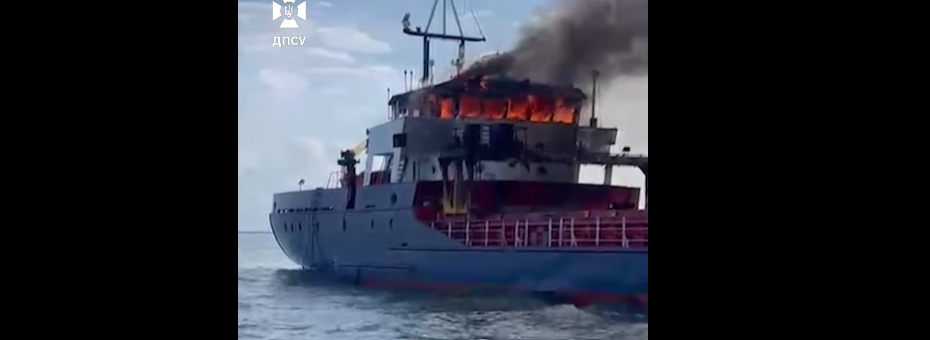
A Russian Shahed drone struck a Palau-flagged vessel carrying corn twice as it left a port in Odesa Oblast, setting it on fire. Source: Ukraine's State Border Guard Service

Ukraine's Ministry of Agrarian Policy and Food has asked the European Commission for €220 million ($253 million) in grants to keep its small and medium farmers afloat, after Russian strikes on the Greater Odesa ports severed the sea route that carries most of the country's agricultural exports. The money would cover interest on loans issued under the state "Affordable Loans 5-7-9%" program, the ministry's press service said.

The request marks the point where Russia's Black Sea campaign stopped being a shipping story and became a farm-finance one. With the corridor all but stalled, the ministry projects exports for the 2026/2027 season could fall by almost half, from 64.4 million to about 29.6 million tonnes. Grain the farmers have already harvested is piling up in silos the ministry expects to be full by October, and without cash from those sales, producers cannot finance the autumn sowing that plants next year's crop.

How €220 million turns into €4 billion in loans

The grant is small next to the hole it is meant to plug. Ukraine estimates its farm sector will take in roughly €6.4 billion this season against €11.2 billion in operating costs, and will need about €4 billion in working capital just to keep running. The €220 million would not cover that gap directly. Instead, by subsidizing interest, it is designed to unlock a credit portfolio of up to €4 billion ($4.6 billion) at a rate to farmers of no more than 10%, open to small and medium producers that meet the program's environmental and social criteria. Wheat exports alone could otherwise drop from 17.6 million to 8.3 million tonnes.

The blockade behind the request

Through July, Russia intensified strikes on civilian cargo ships in the Black Sea corridor, killing crew members and, on 22 July, halting traffic entirely — not a single vessel passed that day, at the height of the harvest. Ukraine's government called it "deliberate economic and humanitarian terror." Around 90% of Ukraine's farm exports normally move through three Odesa Oblast ports, and Agriculture Minister Taras Vysotskyi has said the rail, road, and Danube routes that remain can carry only about half the lost volume.

The squeeze is already reaching the fields. Oilseed and grain prices have fallen about 30% as unsold stock backs up inside the country, and the ministry puts direct losses to the sector this year at between $1.5 billion and $3 billion. The government has lowered minimum export prices on some products to keep trade moving, and Prime Minister Serhii Koretskyi has said it is expanding a separate program of grain-backed loans so farmers can borrow against stored crops rather than sell them cheap.

Whether Brussels funds the €220 million request, and how fast, will help decide how much of this year's harvest gets planted — and how much stays stranded in silos while the ports stay shut.

  • ✇Euromaidan Press
  • North Korea made $22 billion arming Russia – nearly four times its haul before the war
    North Korea has pulled in as much as $22 billion in foreign earnings since Russia's full-scale invasion of Ukraine in 2022—nearly four times what it earned in the previous four years, and the most cash Kim Jong Un has commanded in his 15 years in power, Bloomberg Economics estimates. That money is the bill for Russia's war, paid to the other side of the world. In exchange for the shells and soldiers keeping Moscow's offensive alive, Pyongyang has been handed the cash, f
     

North Korea made $22 billion arming Russia – nearly four times its haul before the war

7 août 2026 à 11:23

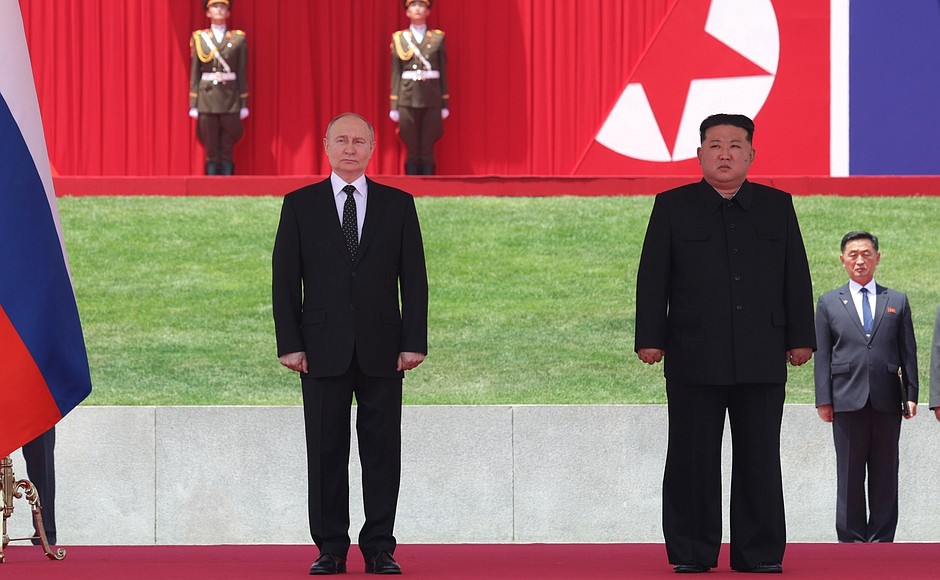
Putin North Korea

North Korea has pulled in as much as $22 billion in foreign earnings since Russia's full-scale invasion of Ukraine in 2022—nearly four times what it earned in the previous four years, and the most cash Kim Jong Un has commanded in his 15 years in power, Bloomberg Economics estimates.

That money is the bill for Russia's war, paid to the other side of the world. In exchange for the shells and soldiers keeping Moscow's offensive alive, Pyongyang has been handed the cash, food, and military technology to turn itself from an isolated pariah into a nuclear power that no longer needs to negotiate with anyone. The war draining Russia has quietly built a second, stronger adversary.

Half of Russia's shells, and thousands of soldiers

By the end of 2025, North Korea was covering up to half of Russia's need for 122mm and 152mm artillery ammunition, Ukrainian intelligence estimates—a share Euromaidan Press has tracked since the shipments began in 2023. Pyongyang backed the shells with men: some 16,000 soldiers, for whom Russia paid roughly $2,000 a month each, plus extra for the dead, by Bloomberg's accounting.

The turning point came in 2022. Kim had spent the previous years humiliated—a failed summit with Donald Trump, a harvest failure that triggered hunger, a self-imposed Covid border closure that severed trade with China. In a 2020 national address, he wept while apologizing for the economy. Then Putin's stockpiles ran low, and North Korea's warehouses became a resource Kim could turn into hard currency.

Cash, food, and the technology to build better weapons

The dangerous part is what came back the other way. Russia handed over advanced military technology alongside the payments, and US Forces Korea has said the transfers let Pyongyang compress its weapons-development timelines. Moscow supplied air defenses including at least one Pantsir-class system—a transfer Euromaidan Press reported last year—and a Pantsir-M worth about $20 million now sits on one of North Korea's two new 5,000-tonne destroyers, the largest warships it has ever built. The two countries have also begun jointly producing attack drones.

Kim poured the windfall into a nuclear buildup that, Bloomberg reports, puts North Korea on a path to rival France's arsenal. The country's economy grew 3.5% in 2025, its third straight year of expansion, according to the Bank of Korea.

A windfall that outlasts the war

The boom does not depend on the war continuing. Over the past decade Kim assembled the world's most prolific army of crypto thieves: hacking groups tied to Pyongyang now account for more than 70% of global cryptocurrency thefts, up from about 30% in 2017, according to blockchain intelligence firm TRM Labs. The stolen funds are laundered mostly through Chinese organized-crime networks that take a cut in exchange for clean offshore accounts. "It's absurd to think North Korea now has access to that much money," said Nick Carlsen, a senior TRM investigator.

Kim is spreading his bets diplomatically, too, hosting officials from Singapore, Indonesia, Belarus, and Vietnam over the past year to loosen his reliance on Moscow.

The Kim once written off as an erratic recluse is emerging as the durable leader of a growing nuclear power—one with little reason left to bargain. "Pyongyang has proven its ability to adapt to persistent sanctions," said Jenny Town of the Stimson Center. "And as international law and norms are eroding, it has found camaraderie in its resistance."

  • ✇Euromaidan Press
  • Nawrocki: where “Muscovites are beaten,” Poland helps. Russian Foreign ministry hits back
    Polish President Karol Nawrocki used a speech marking his first year in office to restate that Poland will keep backing Ukraine's war against Russia—and to frame that backing as cold strategic interest rather than solidarity, warning in the same speech that continued help does not extend to tolerating Ukrainian nationalist symbols" on Polish soil. He spoke on 6 August at a ceremony in the courtyard of the Presidential Palace in Warsaw, reported by RMF FM. The remarks la
     

Nawrocki: where “Muscovites are beaten,” Poland helps. Russian Foreign ministry hits back

7 août 2026 à 10:39

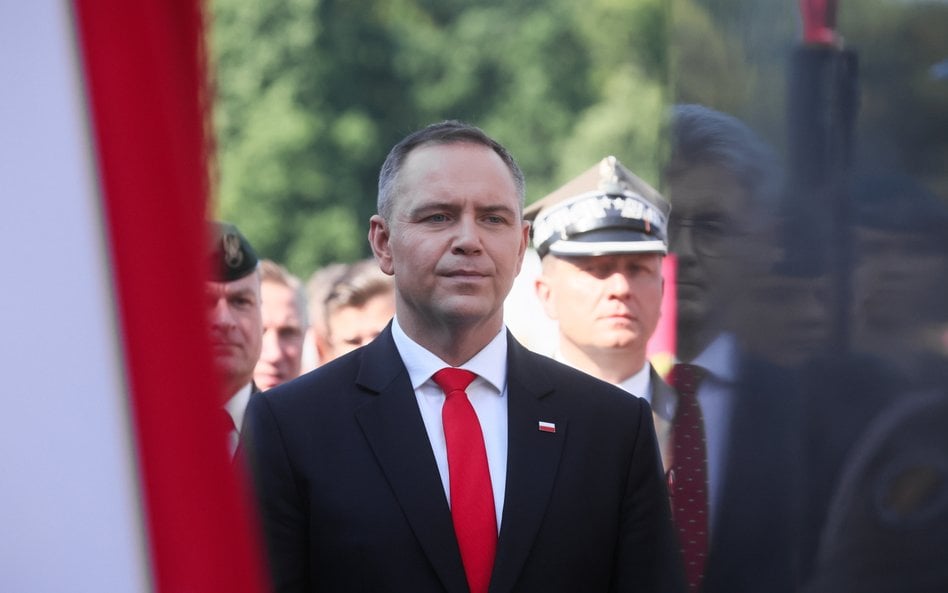
rzeczpospolita fourth year russia-ukraine war poland’s leader sides aggressor polish president karol nawrocki pap/leszek szymański 1699304a7cc0b825fd6ed95fba7ddad5 (1) editorial published 27 stated russia’s all-out against ukraine has taken position aligns commentary

Polish President Karol Nawrocki used a speech marking his first year in office to restate that Poland will keep backing Ukraine's war against Russia—and to frame that backing as cold strategic interest rather than solidarity, warning in the same speech that continued help does not extend to tolerating Ukrainian nationalist symbols" on Polish soil. He spoke on 6 August at a ceremony in the courtyard of the Presidential Palace in Warsaw, reported by RMF FM.

The remarks land at the hottest point yet in a Polish-Ukrainian memory row that has stripped Kyiv of much goodwill from its most important frontline ally. Poland's interest, Nawrocki said, is that Ukrainians fight "as long as possible and as effectively as possible" against Russia, keeping it far from Poland—help offered not out of shared cause but because a Ukraine that bleeds Russia serves Warsaw. Coming from the country most vital to Ukraine's supply lines, it is a statement of support recast as conditional self-interest.

Support as strategy, not solidarity

"Poland's interest is that Ukraine and Ukrainian soldiers cope as well as possible with the post-Soviet Russian Federation and keep it as far from Poland as possible. That is obvious; that is the Polish state's strategy," Nawrocki said. "Let them kill the Soviets who attacked them—it does not hurt us Poles at all. In this they can always count on our help, because where a Muscovite is beaten, Poland helps, even if it does not take part directly in this war."

The register was deliberate. Nawrocki, a historian who ran the Institute of National Remembrance before winning the presidency, used the pejoratives "Soviets" and "Muscovites" for Russians throughout, casting Polish aid as a matter of keeping the fight on the far side of the border.

The red line: no Bandera flags

The support came fenced. "It is also Poland's strategic interest that Bandera flags do not fly in Warsaw or anywhere in Poland," Nawrocki said, promising to help "but always saying: Poland first, Poles first"—not, he added, "thoughtlessly sending fleet after fleet without analysis, on phone calls and smiles."

The condition points straight at the dispute that has consumed the relationship since May, when Zelenskyy signed a decree granting a special-forces unit the honorary title "Heroes of the UPA," the insurgent army Poland's parliament holds responsible for the Volhynia killings of tens of thousands of Poles and has declared a genocide. Nawrocki stripped Zelenskyy of the Order of the White Eagle in response; in July he pressed parliament to ban the UPA's red-and-black flag by law.

Moscow moves to widen the gap

Russia moved to pry the crack open within hours. Foreign ministry spokeswoman Maria Zakharova derided Nawrocki as a former Gdansk war-museum director whose "clinical Russophobia," she claimed, was affecting his judgment, and reminded him that Russia and Poland share a border "with no Ukraine and no Ukrainians between us"—the erasure of Ukraine stated plainly, from Moscow's own podium.

That is the move Warsaw itself has warned about. Polish officials have cautioned that Russia would seek to exploit the Ukraine tensions, and Polish services recently detained a group accused of recruiting Ukrainians for paid anti-Ukrainian rallies on Russian instructions. The memory feud, as one Polish advocate for Ukraine told Euromaidan Press in June, is theater that serves only one audience—the one in the Kremlin.

  • ✇Euromaidan Press
  • Luxembourg adds €8 million to Ukraine’s energy fund, bringing total to €30 million
    Luxembourg contributed an additional €8 million ($8.7 million) to the Ukraine Energy Support Fund, raising its total donations to €30 million ($32.7 million), Ukraine's Ministry of Energy reported. The contribution arrives as the fund—which crossed €2 billion ($2.18 billion) in total lifetime contributions in July—races to close a €650 million ($709 million) gap in unfunded needs ahead of the 2026/2027 winter season. Russia has destroyed more than 9 gigawatts of generat
     

Luxembourg adds €8 million to Ukraine’s energy fund, bringing total to €30 million

7 août 2026 à 10:24

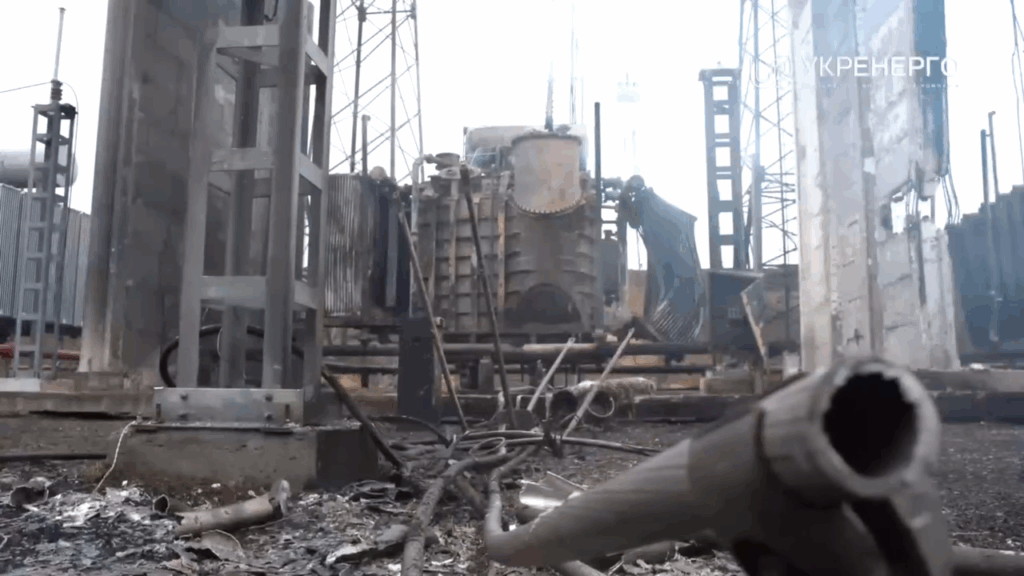
Ukrainian energy infrastructure damaged after a Russian attack. Screenshot from video: Ukrainian Ministry of Energy

Luxembourg contributed an additional €8 million ($8.7 million) to the Ukraine Energy Support Fund, raising its total donations to €30 million ($32.7 million), Ukraine's Ministry of Energy reported.

The contribution arrives as the fund—which crossed €2 billion ($2.18 billion) in total lifetime contributions in July—races to close a €650 million ($709 million) gap in unfunded needs ahead of the 2026/2027 winter season. Russia has destroyed more than 9 gigawatts of generation capacity since the start of the most recent heating season alone, and all previously available fund resources have been fully contracted.

Luxembourg's steady commitment

This marks Luxembourg's fourth donation to the fund since 2024. The country initially transferred €2 million in 2024, followed by €10 million in June 2025 and another €10 million in December 2025. The latest €8 million brings the total to €30 million—a notable sum from a country with a population of roughly 660,000.

Energy Minister Denys Shmyhal thanked Luxembourg and its Agency for Development Cooperation for what he called systematic support for Ukrainian energy, adding that the contribution would help provide energy companies with essential equipment and strengthen the resilience of Ukraine's power grid, European Pravda reported.

A fund preparing for its fifth wartime winter

The Energy Support Fund was established in April 2022 and is managed by the Energy Community Secretariat. It has become the primary international mechanism for channeling emergency energy assistance to Ukraine, with contributions from 37 donors across 26 countries and three international organizations.

In a June 2026 joint statement, the G7+ Energy Ramstein Group identified €650 million in priority needs for winter preparation and called for swift mobilization of additional funding.

Luxembourg's contribution is part of a broader wave of European support. Ireland announced €25 million ($29 million) for energy and critical infrastructure protection during its prime minister's visit to Kyiv on 23 July. Sweden's €123 million contribution on 8 July pushed the fund past the €2 billion milestone. Denmark has also recently added over €10 million.

❌