Connexion
“Food must never be used as a weapon”: EU calls for Black Sea attack moratorium

EU foreign-policy chief Kaja Kallas called for a moratorium on attacks in the Black Sea to restore safe navigation and allow Ukraine's grain exports to reach global markets. She made the call at a UN General Assembly side event co-chaired with the foreign ministers of France, Romania, and Ukraine on 22 September in New York.
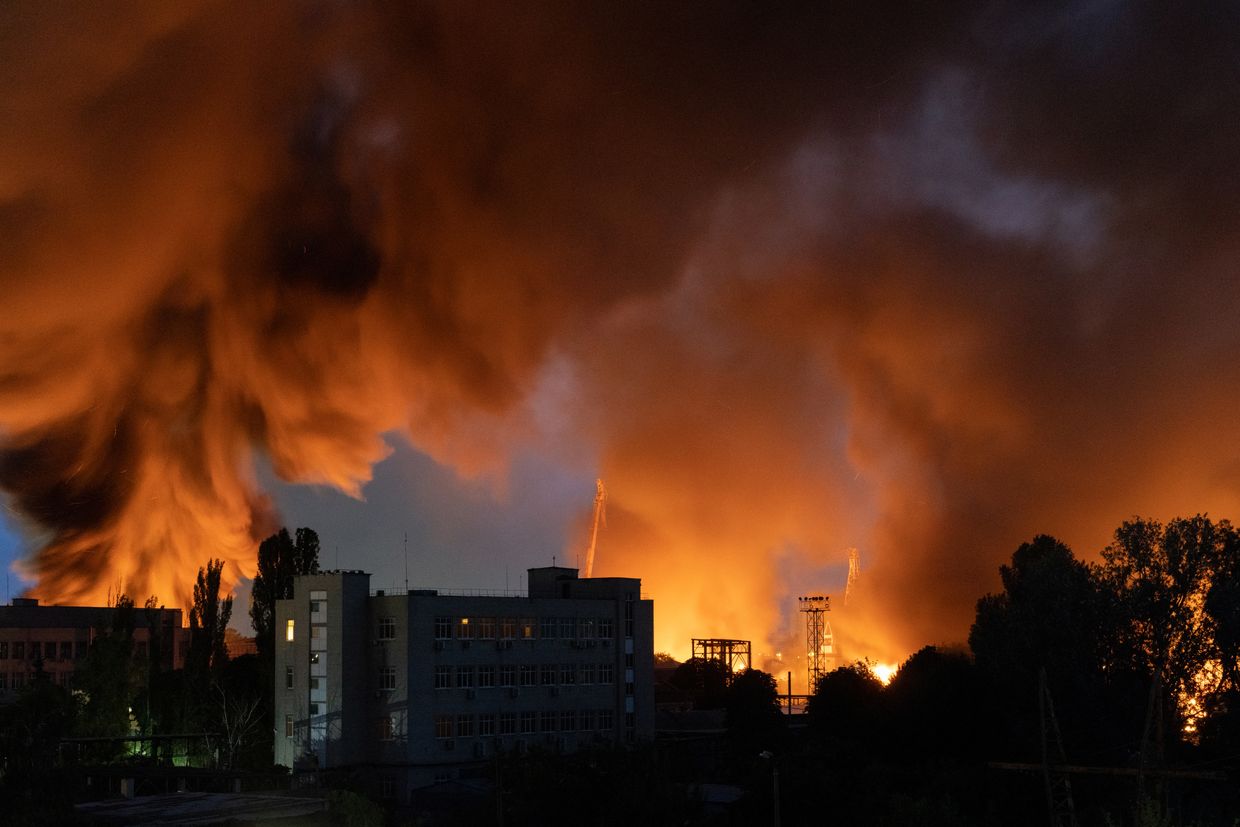
Since June, Russia has systematically struck Ukrainian ports, grain terminals, and commercial cargo ships in the Black Sea, killing crew members and crippling the export corridor that carries the bulk of Ukraine's agricultural output. The campaign—part of Russia's broader war, now in its fifth year—has disrupted global food supply chains and pushed the Black Sea toward a crisis the EU warned could surpass the 2022 grain-price shock.
Kallas said Black Sea exports have effectively ground to a halt since August because Russian attacks made commercial shipping unviable. The Gulf conflict and climate change are adding further pressure, she said. Ukraine supplies 15% of global corn exports, 10% of wheat, 15–20% of barley, and about 50% of sunflower oil, with around 90% moving through the Black Sea corridor, Kallas said. Egypt, the world's largest wheat importer, has shifted some purchases away from Russia and Ukraine as costs have risen.
"Food must never be used as a weapon in the Black Sea or anywhere else," Kallas said. "Wars make affordable food disappear from dinner tables of millions of people around the globe."
Kallas called the proposal a new "Black Sea grain arrangement," separate from the Black Sea Grain Initiative, a 2022 deal brokered by Türkiye and the United Nations that Russia left in July 2023. She said the 2022 grain-price surge showed the strategic importance of the Black Sea for global security, international trade, energy, and food security.
She called on the international community to ensure safe passage of civilian vessels, protect critical infrastructure, and restore the trade route. If Russia simply stopped its attacks in the Black Sea, farmers, traders, and international food markets would have the predictability they need at this critical moment, she said. In 2025 alone, the EU mobilized €2.1 billion to strengthen global food security, Kallas added, and the EU Solidarity Lanes have facilitated about €304 billion in trade since May 2022.
At a press stakeout on 23 September, Kallas said the EU was "particularly concerned by the attacks in the Black Sea" and that "Russia is trying to choke off Ukrainian grain exports, thus jeopardizing global food security."
Russia has not publicly responded to Kallas's call. In August, Moscow dismissed a similar proposal relayed by Türkiye, with Foreign Ministry spokeswoman Maria Zakharova stating it saw no grounds for measures that would give Kyiv a "temporary reprieve."
A summer of strikes
Russia intensified strikes on Ukrainian ports and commercial shipping in June and July. Those strikes cut Ukrainian deepwater terminal capacity from roughly 7 million to 4–5 million metric tons per month, according to Barva Invest analyst Bohdan Kostetskyi. Ukrainian forces, in turn, struck Russia's grain terminals at Novorossiysk and Taman. Those strikes and the suspension of navigation in the Sea of Azov since July took more than 90% of Russia's Azov–Black Sea grain export capacity offline by mid-August.
The cost of sailing
The Lloyd's of London Joint War Committee has extended its high-risk designation to the entire Black Sea, pushing war-risk insurance premiums to hundreds of thousands of dollars per voyage. Alternative routes through the Danube have partly compensated, but shipping from Ukraine to Egypt has taken 26–33 days, more than twice as long as before.
For Ukraine, restoring safer navigation would reopen its largest agricultural export route, reduce reliance on slower and more expensive alternatives, and help exporters move the harvest and earn foreign currency.
The attacks have not stopped. Overnight on 23 September, Russia struck a cargo ship under an Antigua and Barbuda flag in the Black Sea, killing its captain, a Ukrainian citizen, Ukraine's sea ports administration said. The Navy evacuated the crew and put out the fire.