❌

Vue lecture

Europe wants drones that actually work in war, so Ukrainian maker is moving in to build them in Belgium and Luxembourg
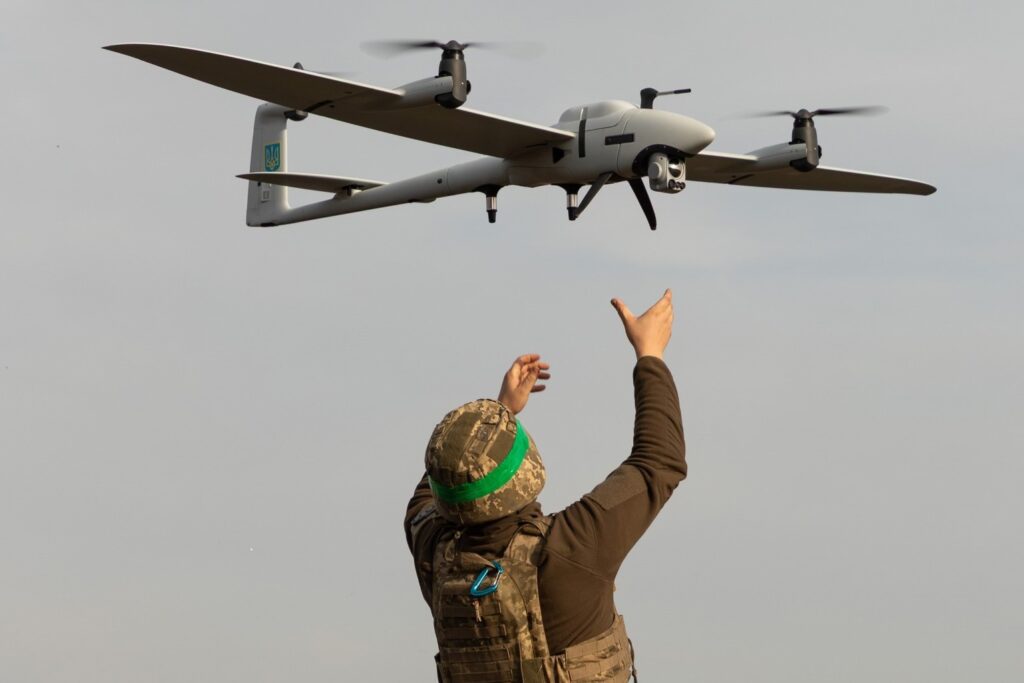
A Ukrainian soldier with a drone. Source: SBS

A Ukrainian drone maker is preparing to build unmanned systems in the heart of western Europe. TAF Industries and Luxembourg's LUXUAV have signed a memorandum to jointly develop, industrialize, and field weapons in Belgium and Luxembourg, under the Build with Ukraine initiative, TAF said.

The deal is part of Build with Ukraine, an initiative that enables Ukrainian arms manufacturers to take their operations to a new level by scaling up production beyond the country’s borders. This involves exporting Ukrainian military technologies to partner countries that support Ukraine financially and politically. In return, joint production lines will be established on their territory, according to Ukraine's Arms Council.

The deal targets the Benelux

The memorandum is a first step, TAF said, with joint work on autonomous systems in the two countries to follow. The aim is to move from signed intent to shared production lines and fielded drones.

TAF Industries, a Ukrainian unmanned-systems maker, and LUXUAV, a Luxembourg defense-tech firm, plan to develop, industrialize, and deploy drone solutions across Luxembourg and Belgium, pooling Ukraine's battlefield experience with European manufacturing muscle.

Build with Ukraine spreads west

TAF's chief executive, Volodymyr Zinovskyi, framed the memorandum as a way of "combining Ukrainian innovations, proven by war, with European industrial and technological capabilities," arguing that European security now depends on industry, states, and research working across borders.

Belgium has already contracted a Ukrainian producer to build drones and counter-drone systems on Belgian soil.

Europe wants the know-how

The timing fits Europe's new urgency. Russian drones have strayed into Polish, Romanian, and Moldovan skies in recent weeks, and member states scrambling to build defenses increasingly look to Ukraine, the one country fighting a mass drone war, for the technology and the lessons.

Earlier, Polish Prime Minister Donald Tusk warned of very difficult weeks and months ahead, “linked to Russia’s extremely aggressive stance toward Ukraine," according to TVP Info. As he emphasized, Polish security services were on heightened alert due to the situation along the country’s eastern border.

  •  

Russia’s 2026 deficit nearly doubles to a record $88 billion, and its new budget plans three more years in the red

russia's 2026 deficit nearly doubles record $88 billion its new budget plans three more years red · post russian president vladimir putin brics summit kazan 23 2024 holding commemorative banknote

The Russian government has submitted a draft federal budget for 2027–2029 to the State Duma, Meduza reported on 30 September, citing TASS. In all three years, Russia's expenditures will exceed its revenues, the outlet noted.

Russia's finances have been eroding since it launched its full-scale invasion of Ukraine. To keep paying for the war, the Kremlin has drained its reserves, borrowed more, and pushed tax burdens onto residents and businesses, while the wider economy stalls.

The government listed social obligations, including aid to those who fought in its war against Ukraine and their families, along with defense needs among the budget's priorities, while its press release left out the planned cuts to social spending and the rise in military spending, Meduza noted, citing The Bell.

Spending will exceed revenue by about 2% of GDP a year

Russia's federal budget for 2027 sets spending at 48.8 trillion rubles ($585 billion) and revenue at 43.3 trillion ($519 billion), the Russian government stated, leaving a deficit of 5.5 trillion rubles ($66 billion). It claimed the draft is "balanced" and that healthcare spending will rise compared with 2026.

Deficits of 5.1 trillion rubles ($61 billion) in 2028 and 5.3 trillion ($64 billion) in 2029 are also planned, about 2% of GDP a year, Meduza noted.

This year's deficit is now set to reach a record 7.345 trillion rubles ($88 billion), nearly double the previous forecast of 3.785 trillion ($45 billion), The Moscow Times reported on 1 October. To help close the gap, Moscow plans an array of tax hikes for 2027–2029 to fund military spending. Already by May, its four-month deficit had run 50% above what it had planned for the whole year.

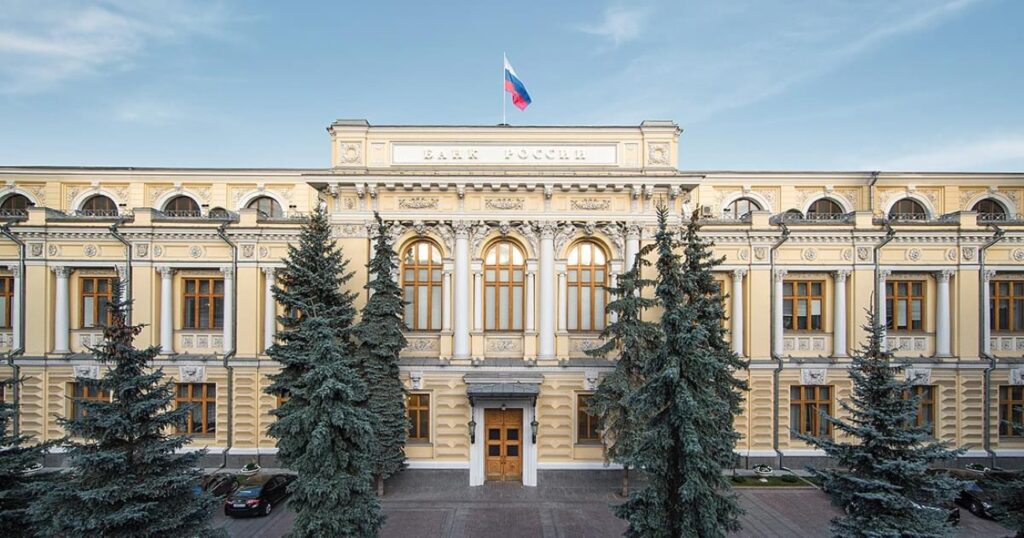
Head office of the Central Bank of the Russian Federation in Moscow.
Head office of the Central Bank of the Russian Federation in Moscow. Photo: Central Bank of Russia

Even as the deficit widens, Russia plans its highest defense spending since the full-scale invasion began: 17.1 trillion rubles ($202.58 billion) in 2027, 27% more than the 13.5 trillion originally planned.

Only 2.3 trillion rubles ($28 billion) of that sum is itemized in public documents, and 34.9% of all 2027 spending will be classified, the highest share in at least 12 years, exiled outlet Vyorstka reported. The Duma is expected to hold the first of three readings on 29 October, the date proposed by Budget Committee chairman Andrei Makarov, Interfax reported.

  •  

Ukraine’s steel output fell 57% and may hit zero next month. Expert says saving it comes down to four steps, and they’re Brussels’ to make

Ukraine's steel industry, one of the pillars of its wartime economy, may produce almost no steel at all next month. Output fell 57.3% in August under Russian strikes and could approach zero in October, and the recovery of giants like Zaporizhstal and ArcelorMittal Kryvyi Rih depends less on Kyiv than on Brussels, says Stanislav Zinchenko, director of the GMK Center, the center for industrial, mining, and metals sector expertise, in an analysis for ThePage.

Steel is Ukraine's second-largest foreign-currency earner and a prop for the hryvnia, employing more than 70,000 people directly and another 250,000 in related industries, and paying close to $1 billion a year in taxes.

Russian missile strikes on the big plants, compounded by an energy crisis, closed ports, and EU competition, have cut production to a fraction and threaten to halt it, Zinchenko says.

He calls it the worst crisis the industry has faced since independence, "a perfect storm" that has struck all at once. The sector supplies 6% of Ukraine's GDP and 13% of its foreign-currency earnings.

Output could hit zero

The fall has been precipitous. In August, steel output dropped 57.3 percent year on year to 277,000 tonnes and pig iron 65.6%, Zinchenko says. Across eight months, the decline is 12.5%, and he warns that October could bring output to zero. Exports have cratered too: iron ore down 27% over eight months, long rolled steel down 45.8%, semi-finished products down 76% in a single month, and pig-iron exports halted entirely.

September may yield just 100,000 to 150,000 tonnes of steel, he says. Four producers bore the brunt: Zaporizhstal, Kametstal, ArcelorMittal Kryvyi Rih, and Interpipe.

Rebuilding breaks new ground

"No one in the world has learned how to rebuild metallurgical giants after missile strikes," Zinchenko says.

In reality, it means technical audits, clearing rubble, and ordering unique new equipment, at a cost the plants cannot meet after four and a half years of war spent at a loss or at zero margin, their reserves gone.

Three steps for Kyiv

Zinchenko sets out three moves the state could make at once to stabilize the industry:

  • Frontline rail. Give steelmakers priority access to locomotives from the state railway Ukrzaliznytsia within 150 kilometers of the front, so the product can still be moved out.
  • Energy parity. Scrap or soften the rule forcing industry to import 80% of its electricity, which leaves plants paying European prices they cannot match.
  • Market protection. Tax scrap-metal exports to keep raw material for decarbonization at home, and curb Turkish imports that undercut Ukrainian steel.

However, the recovery depends not on Kyiv, but on Brussels

Recovery is impossible without international funds and guarantees. No one will provide loans to enterprises on foreign capital markets during the war. No one will invest in recovery "into a void," the expert says.

He names four steps that would support the industry:

  • A recovery fund. A dedicated fund for the steel industry, modeled on those partners built for Ukraine's energy sector, to pool grants and cheap loans.
  • A safe sea corridor. Reopen the deepwater ports, as Ukraine managed in 2023 and 2024; without them, rail costs make exports unprofitable.
  • No EU quotas. Remove the European Union's restrictive quotas and tariffs on Ukrainian metal.
  • A CBAM exemption. Free Ukrainian steel, for the duration of the war and reconstruction, from the EU's carbon border levy, which Zinchenko says would otherwise finish off its competitiveness.

Meet those, he says, and bringing the plants back to baseline could take three to six months, with a full rebuild one to two years.

  •  

Russia to Sharply Increase War Spending and Cut Social Programs

Both sides are finding it increasingly difficult to finance the conflict in Ukraine. Russia’s 2027 budget envisions more debt, higher taxes and lower social benefits.

© Nanna Heitmann for The New York Times

A Russian military recruitment poster in Moscow says “Who, if not you.” Russia intends to spend more than $200 billion on its military in 2027, a sharp increase.
  •  

Belgium will send three F-16 fighter jets, but maintenance delays may keep Ukraine from using them

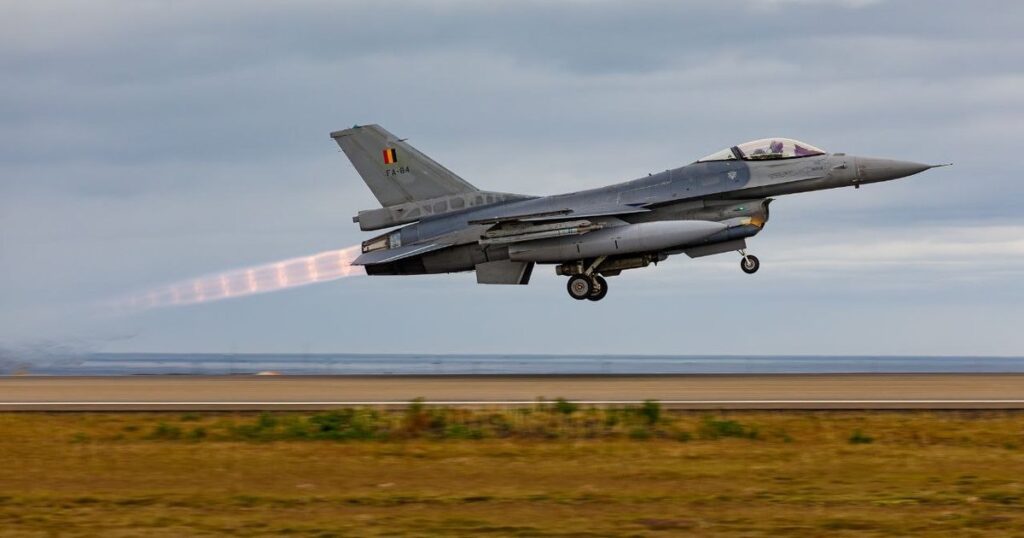
belgium send three f-16 fighter jets maintenance delays keep ukraine using · post belgian jet belgium-f-16-takes-off news ukrainian reports

Less than 50% of the F-16 fighter jets delivered to Ukraine may be operational, Defense Express reports, citing a Wall Street Journal (WSJ) editorial published on 29 September. On the same day, Ukrainian President Volodymyr Zelenskyy said that Belgium would deliver three F-16 fighter jets this year.

F-16s are used extensively to intercept Russian cruise missiles and drones. As the number of Russian attacks has increased, these aircraft have become particularly important for Ukraine. However, the jets Ukraine receives are old, and keeping them flying takes regular maintenance, extra work, and hard-to-find parts.

Routine inspections are taking as long as 40 weeks in Belgium, retired US Navy Rear Admiral Mark Montgomery told the WSJ.

The maintenance process for these aircraft for Ukraine is lengthy

A likely reason for the problem is the lengthy maintenance process handled by Belgian company Sabena Aerospace Engineering, according to the WSJ, whose questions the company declined to answer. This process, according to Defense Express's estimates, takes 6–20 times longer than maintenance in the United States, which usually takes between 2 and 6 weeks. Ukraine uses the services of the Belgian company, meaning its F-16s are not being serviced quickly enough.

Ukrainian F-16 armed with SDB bombs and AIM-120 and AIM-9 missiles.
Ukrainian F-16 armed with SDB bombs and AIM-120 and AIM-9 missiles. Photo via Militarnyi

Delivering three additional fighter jets will not significantly help the Ukrainian military until the issue with aircraft maintenance times is resolved, Defense Express notes. The lengthy turnaround may be caused by a large maintenance backlog at the company, limited capacity, or logistical constraints, and older jets may need extra work and scarcer parts.

The delivery is part of an earlier commitment. Belgium plans to provide seven fighter jets this year: three for operational use and four for spare parts, Belgian Defense Minister Theo Francken said in June.

"I'll propose to the government to send all our F-16s to Ukraine in the coming years. It depends on having the F-35s in place because, of course, we have DCA [dual-capable aircraft] capacity. We have our role in the nuclear doctrine of NATO," Francken said.

Belgium has pledged its entire F-16 fleet of 53 aircraft as F-35s replace them, according to Defense Express.

F-16s in Ukraine have already shot down several thousand Russian aerial targets

F-16s operated by Ukrainian pilots have shot down more than 3,150 aerial targets. These include 666 cruise missiles and around 2,500 drones of various types. The aircraft have also carried out more than 650 strikes against Russian ground targets, Lieutenant General Anatolii Kryvonozhko, Commander of the Ukrainian Air Force, said during a meeting between a Ukrainian Air Force delegation and representatives of Lockheed Martin on 29 September.

At the meeting, Conor McGuire, Lockheed Martin's head of F-16 capability development, highly praised the combat use and operation of F-16s by Ukrainian pilots and the entire ground aviation personnel. He also expressed his intention to help Ukrainians enhance the capabilities of the existing platform, the statement said.

  •  

The US has until 18 October to choose its Russia sanctions targets—if any. Kyiv’s wish list leads with the firms feeding Russia’s Starlink clone

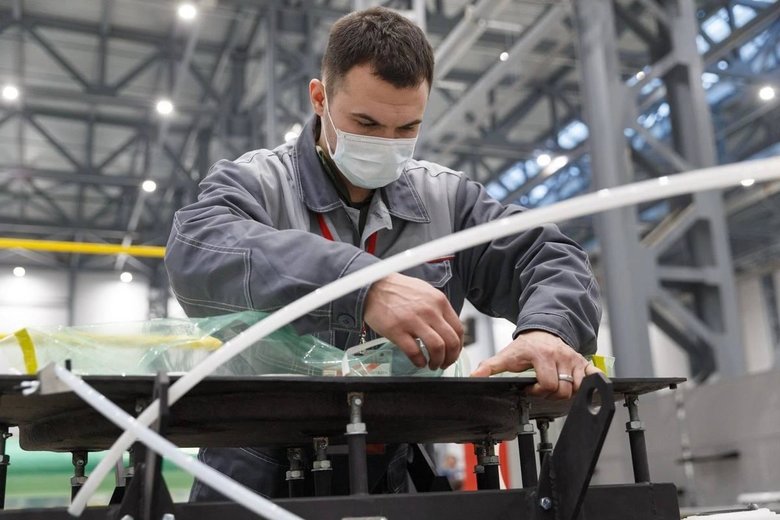
A worker at the Kronstadt UAV production plant in Dubna.

Ukraine is about to tell Washington exactly which Russian targets it wants punished under America's new sanctions law, the Associated Press reported. A senior Ukrainian diplomat said Kyiv will hand the Trump administration and Congress a wish list of companies, ships, and people this week—and at the top are the firms supplying parts for Russia's answer to Starlink.

The law requires Washington to act but lets the president waive the sanctions if he certifies that doing so serves US national interests, and the first choice falls due in weeks. For Ukraine, a measure that names no targets changes nothing on the ground—which is why the fight now is over whose names make the list before the clock runs out.

A list topped by Russia's Starlink clone

Denys Sienik, chargé d'affaires at Ukraine's embassy in Washington, said the priority is a group of Russian firms making components for Rassvet, Moscow's homegrown satellite network, which Russia hopes to complete by the end of the year—though its own officials have put the start of service in 2027. Bureau 1440, the firm building Rassvet, is not itself on US sanctions lists, but its parent company, ICS Holding, is under US blocking sanctions, according to Militarnyi. The suppliers feeding the network parts are not sanctioned, and those are the ones Kyiv wants added to the list.

Russia sped up the project after Ukraine and SpaceX cut off the Starlink terminals its troops had used without authorization at the front. If Russia completes the constellation, Sienik said, it could strike Ukraine at will with real-time information—a danger he warned would bite hardest this winter. "If these entities are not sanctioned, it will actually make this program possible for Russia and that will be a game-changer," he told reporters, Reuters reported. Kyiv wants access to Starlink inside Russia, too, so it can strike targets there.

Euromaidan Press has reported how such a network would change the battlefield: the satellites transmit in high-frequency bands that are hard to jam, and a relay overhead would feed drones and missiles fresh coordinates mid-flight, letting them fly low under air defenses that struggle to see them.

Oil tankers and attacks on US firms

Ukraine is pushing for tougher action against Russia's shadow fleet, too—the aging tankers that sell its oil around Western restrictions—and is asking the administration and American industry to publicly condemn Russian attacks on US companies' operations inside Ukraine, Sienik said.

The deadline Washington is now facing

The requests arrive as the administration faces an 18 October deadline to decide which Russian entities, if any, to sanction under the Lindsey O. Graham Sanctioning Russia and Iran Act, which US President Donald Trump signed into law on 18 September. The law directs the White House to impose tariffs on Russia's biggest oil buyers and to block its banks, officials, and tankers—but lets the president waive those measures, which is why Kyiv is lobbying for the toughest list it can get.

  •  
❌