❌

Vue lecture

Mavic vs Slavic: Ukrainian developers adapt reconnaissance drones to the modern battlefield
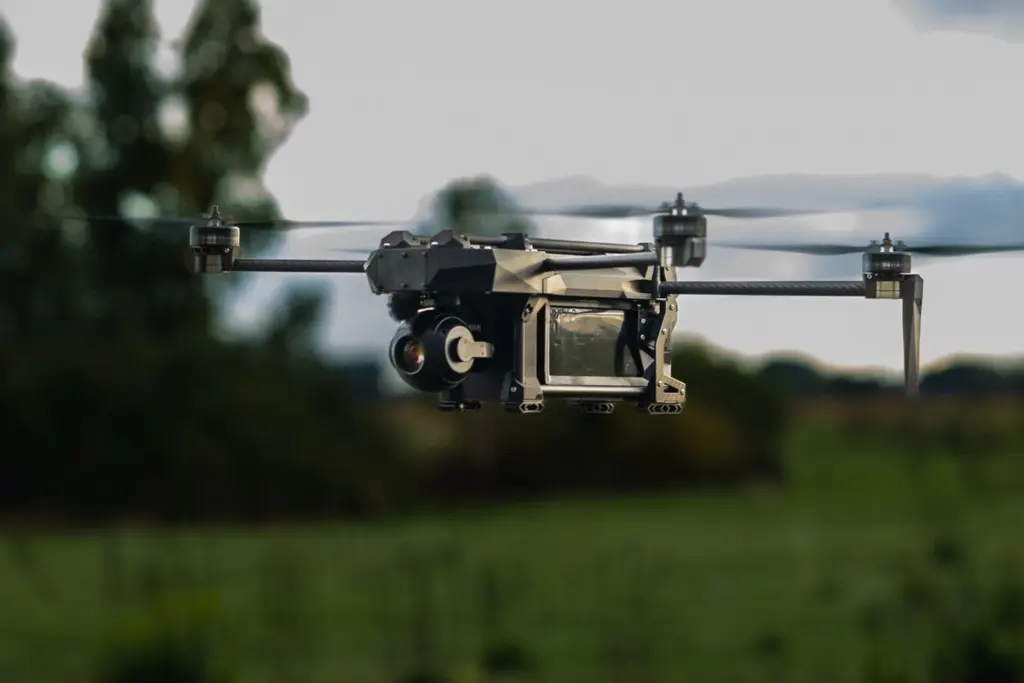
Slavic drone by Vyriy Industries. Photo: Vyriy Industries

Ukrainian company Vyriy Industries is bringing a new tactical reconnaissance drone, Slavic, to the market, Oboronka reports, citing information from the manufacturer. The control system of the new drone will be familiar to DJI Mavic operators, the company also said.

Mavic has long been one of the main reconnaissance tools used by Ukrainian forces, with Ukraine relying heavily on supplies of these drones from abroad. After Ukrainian President Volodymyr Zelenskyy said China had stopped selling drones to Ukraine, the country began seeking alternatives. Slavic is one of these domestic alternatives, designed not only to replace Mavic but also to adapt its capabilities to current battlefield conditions, allowing reconnaissance crews to operate farther from the line of contact and reducing risks to personnel.

Slavic has a tactical range of up to 30 kilometers without GPS

Slavic can remain airborne for up to 1.5 hours because it is equipped with a 40,000 mAh solid-state battery, the media outlet notes. The drone has a tactical range of up to 30 kilometers, the report says.

Illustration showing the positions of the Slavic pilot (left) and Mavic pilot (farther to the right), as well as the drones’ flight ranges relative to enemy positions (shown in red). Illustration: Vyriy Industries

The aircraft can operate without GPS, as Slavic uses optical positioning for navigation. The pilot can also select a less congested channel and operate more effectively in difficult terrain because the communications system operates across a wide range of channels.

The manufacturer notes that for surveillance, Slavic is equipped with a daytime 2K digital camera mounted on a three-axis stabilized gimbal, with 10x optical and 30x hybrid zoom.

Part of the drone with the camera. Photo: Vyriy Industries

The system is supplied as a ready-to-use package “out of the box,” with all the equipment needed for operation without additional field modifications.

The drone is designed to keep crews farther from the front line

The company said its new drone has successfully completed initial combat trials with seven units of the Ukrainian Defense Forces and is preparing for scale-up, the media outlet notes.

“The war has changed, and so have the working conditions for crews. The kill zone has expanded, while available commercial drones have a limited tactical range. The main task now is to provide the military with a specialized platform that can fly longer and farther, so crews can operate farther from the line of contact. This is exactly why we began developing Slavic,” said Oleksii Babenko, founder and CEO of Vyriy Industries.

At the same time, the team is working on new Slavic configurations, including testing thermal imaging modules for nighttime reconnaissance. The manufacturer is also preparing the platform for scaled-up production and deliveries to the Ukrainian Defense Forces, the company told the media.

“Frankensteins” and Ukrainian-made drones are among the options for replacing scarce Mavics

The Ukrainian military had widely used Chinese DJI Mavic 3 drones, including to adjust artillery fire, monitor infantry positions and conduct surveillance, prompting Ukraine to seek ways to replace the shortage. More than five alternatives to the Chinese drone had already been developed in Ukraine, the Ministry of Strategic Industries of Ukraine confirmed to RBC-Ukraine in July 2025.

DJI Mavic 3 in use by a Ukrainian servicemember. Photo: Ministry of Defense of Ukraine

There are also other options for replacing them. The main work in military units is being done with “Frankensteins,” drones assembled from two or three damaged aircraft, Mavic UAV pilot instructor “Dobryi” said in an interview with Militarnyi in July this year. At the same time, such drones are less reliable than new ones, he added.
  •  

A Ukrainian firm now rents out drone jammers by the day—but the deposit is the device’s full price

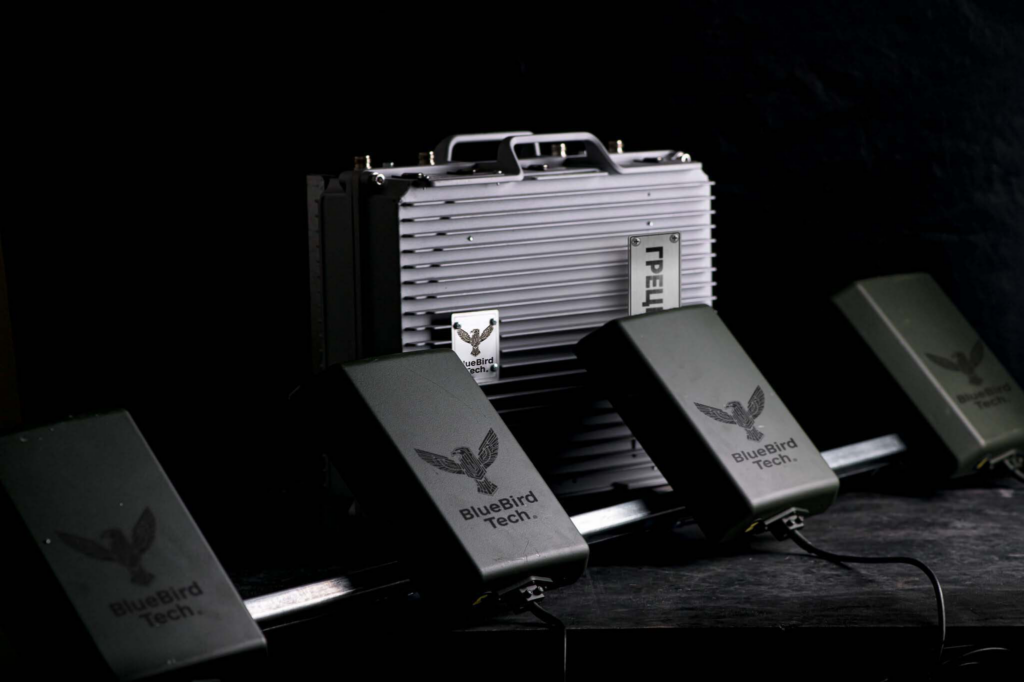
Hrets electronic-warfare jammers.

Ukrainian defense-tech firm BlueBird Tech has begun renting out its Hrets electronic-warfare jammers by the day, in what it calls Ukraine's first such service, the company said on 29 September 2026. Electronic-warfare gear—the devices that scramble the radio links attack drones rely on—is normally bought outright, renting lets a user take a system for a single mission or test it before committing.

The pull is a war where cheap first-person-view (FPV) drones have made portable jamming a routine need, one many users face only for a stint.

How renting works

After paperwork and a deposit equal to the device's full price, the system is handed over, and that handover counts as day one. Each day's rent is then drawn from the deposit, return the system working and undamaged and the renter gets back what is left. Keep it long enough that the fees add up to the full price, and the jammer passes to the renter automatically. Renting is open to individuals, companies, charities, and volunteer groups.

Three models, and what each one jams

The Hrets XL is a modular FPV jammer built from two to 10 working modules, priced case by case. The vehicle-mounted Hrets 4MC is an anti-drop system that jams DJI Mavic-type quadcopters—the drones Russian forces use to drop munitions—for about $56 a day. The lightweight Hrets 4M jams FPV drones at a stated 70 to 400 meters for about $67 a day. One Ukrainian firm has even packed detection, decoding, and jamming of an FPV signal into a single device.

  •  

Russian jet-powered drone hits near Yahodyn, just 1.5 km from Poland, as Warsaw changes air defense rules

A map showing the 1.5-kilometer distance between the site of the Russian strike on 18 September and the Yahodyn Auto border crossing. Map: Institute for the Study of War

A Russian drone struck near the Yahodyn border crossing on the Ukrainian-Polish border, the Ukrainian Border Service and the Polish Armed Forces Operational Command reported on 28 September. Geolocated footage of the attack shows the jet-powered Geran-5 striking near the facility. Following the incident, Poland is reviewing its air security measures.

Russia systematically strikes Ukraine’s border crossings to complicate logistics. Russian strikes near the Ukrainian-Polish border have increased over the past month. Yahodyn is one of the largest border crossings with Poland, on a route leading, among other destinations, to Warsaw, and has repeatedly been used by senior foreign officials visiting Ukraine.

The blast wave damaged the checkpoint building at the terminal entrance, Ivan Romaniuk, head of the Volyn Regional Military Administration, reported on 28 September. It was a jet-powered drone, but there was “preliminarily no direct hit” on the border crossing, BBC Ukraine reported, citing its own sources in the State Border Guard Service of Ukraine.

Russian drone strikes near Yahodyn

On the afternoon of 28 September, Poland reported the involvement of Polish military aviation because of Russian drone attacks against Ukraine. That day, it was also reported that the airports in Rzeszów and Lublin suspended operations.

Jacek Horyszewski, a spokesperson for the Polish Armed Forces Operational Command, said on TVN24 that a Russian drone had struck near the Yahodyn border crossing in Volyn Oblast on the border with Poland.

Romaniuk confirmed the attack in the village of Starovoitove, Kovel district, Volyn Oblast, where the Yahodyn international border crossing is located.

“There have been no reports of injuries or fatalities,” he said.

Videos that appeared online show the drone falling in a forest near people and border infrastructure.

❗ Момент удару «Герані-5» поблизу КПП «Ягодин», – місцеві канали.
BBC з посиланням на ДПСУ пише, що реактивний дрон вдарив неподалік кордону з Польщею: «Влучання у пункт пропуску «Ягодин» попередньо, не було». pic.twitter.com/VNq7QMy2Ly

— Breaking News (@breakingUAnews) September 28, 2026

The Russians carry out such attacks on Ukraine’s western regions using repeaters on Belarusian territory that amplify signals for Shahed- and Gerbera-type drones, BBC Ukraine reported, citing State Border Guard Service data.

Detonation of a Russian Geran-5 drone at the YAGODIN BORDER CORSSING, Ukraine. The explosion occurred ~1km from Polish territory.

POV: 51.193867, 23.821266@FaytuksNetwork @GeoConfirmed

geolocated by @Grimm_Intel pic.twitter.com/IeVClA06WF

— acceladealer (@acceladealer) September 28, 2026

Poland is already considering changes to its air security rules after the incident

The same day, Polish Deputy Defense Minister Cezary Tomczyk said Poland will change its engagement rules "in the coming days." Currently, helicopter and fighter jet pilots can use weapons only after visually identifying a target: the aircraft must approach the object and determine what it is. After the rules are changed, however, a pilot or operational commander will be able to make a decision to engage based solely on radar data.

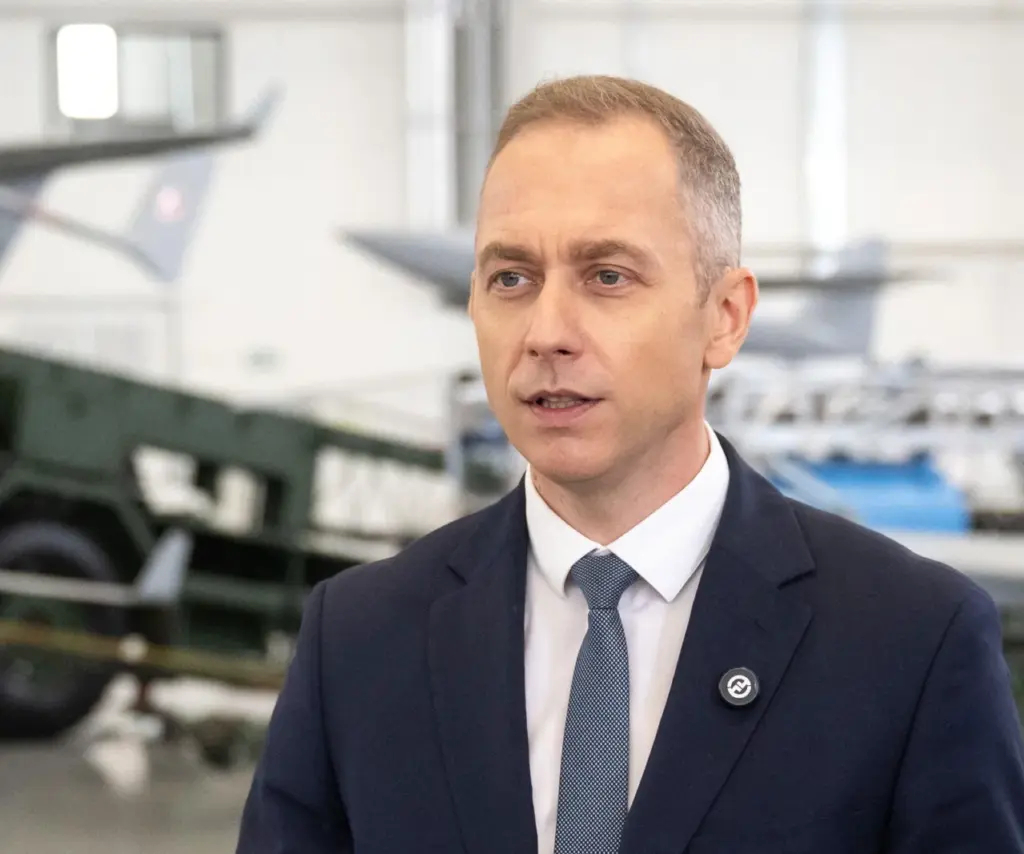
Cezary Tomczyk. Photo: Paweł Skraba / Super Express

“It is notable that Polish authorities have taken this step as NATO states attempt to find an adequate response to Russian drones nearing or entering their airspace from Ukraine, often leaving NATO air defense insufficient time to identify and target such threats before they have entered allied airspace,” the Institute for the Study of War noted in its 28 September report.

Recent strikes near the Polish border

On 10 September, Polish Prime Minister Donald Tusk said that Poland had prevented a threat to one of its border crossings with Ukraine overnight and expected its border crossings to be attacked as Moscow targets trade routes in an attempt to economically weaken Kyiv. He made the statement after drones struck a border crossing between Ukraine and Moldova on the previous day, killing two people.

On 13 September, Russian forces struck the locomotive of a passenger train two kilometers from the Polish border and hit a gas station near the Yahodyn international border crossing on the Ukrainian-Polish border.

❗На Волині внаслідок атаки РФ пошкоджено АЗС біля ПП «Ягодин» на кордоні з Польщею - речниця Волинської митниці Валентина Черниш.

Також на кордоні із Польщею рашисти атакували залізничну інфраструктуру - відео. pic.twitter.com/3XLc3B4FFw

— @UA_Peacemaker (@UaPeacemaker) September 13, 2026

The drone attack forced passengers on a train from Ukraine to leave the carriages for safety. Those evacuated included Boris Johnson, security advisers to European governments, German Bundestag lawmakers, diplomats, and academics.

After the Russian attacks, Poland deployed military units on the border with Ukraine and strengthened infrastructure near the border crossings, Polish Defense Minister Władysław Kosiniak-Kamysz said on 15 September.

On 17 September, Russian forces struck near the Yahodyn border crossing with a jet-powered drone.

  •  

Ukraine just caught a Geran-5 at 425 km/h—the jet drone that has often outrun Ukrainian interceptor drones since January

A Ukrainian interceptor drone chases a Russian Geran-5 jet-powered drone. September 2026.

Ukraine's air defenders now have purpose-built interceptors for Russia's jet-powered attack drones—weapons whose speed and altitude make them difficult for conventional defenses to catch, Militarnyi reported. A crew from the 1020th Anti-Aircraft Missile and Artillery Regiment downed a Geran-5 over Chernihiv Oblast with a newly delivered interceptor, according to the Serhiy Prytula Foundation.

Russia's long-range drone and missile attacks have become central to its effort to wear down Ukraine's air defenses and grid before winter, and the war in the sky now turns on which side scales its answer faster.

The Chernihiv intercept

The crew, callsign Yastrub (Hawk), made its first successful engagement with the new interceptor, hitting the jet drone at 425 km/h and above 3 km, the foundation said, releasing footage of the strike. The Prytula Foundation supplied the interceptors and said it has contracted several manufacturers to counter the jet threat.

"Our task is to scale this up and strengthen units," it said.

Why it kept slipping through

Russia first used the Geran-5 in January 2026. HUR's own specifications put its warhead at 90 kg, cruise speed at 450–600 km/h, and range at 950 km, with a ceiling of 6 km. That mix of jet speed and high altitude kept it clear of machine guns, shoulder-fired missiles, and the cheap interceptors built to swat slower piston-engine Shaheds.

Ukraine's military intelligence estimates Russian plants now turn out around 3,000 jet-powered Geran-4 and Geran-5 drones a month, according to HUR. A monitoring Telegram channel, Polkovnyk HSh, reports a newer variant that steers by ground imagery instead of satellites, which would blunt jamming—though HUR has not confirmed it and lists no such system among the drone's components. Separately, Russia moved the jet engine inside the fuselage, a change aimed at more speed and range.

russia hits kharkiv high-rise overnight injuring 43 people strikes central kyiv dnipro broad daylight · post firefighter tackles blaze two-story house after russian drone attack ukraine 28 2026 zelenskyy news
Explore further

After Russia hits Kyiv’s Academy of Sciences with jet-powered drone, the Kremlin says Ukraine must “pay a price”

Where the fight stands

Ukraine intercepts about 55% of Russia's jet drones, against more than 90% of the older models, President Volodymyr Zelenskyy said on 26 September. Since the start of September, Russia had launched more than 2,730 jet drones, and Ukraine had downed or suppressed more than 1,500, he added. Zelenskyy also said Russia plans to spend $12 billion in 2027 on jet drones and loitering munitions alone. Ukraine already has several interceptor prototypes in combat use, and the 1020th crew's kill is one of several jet Geran intercepts Ukrainian units and drone makers have logged this month.

  •  

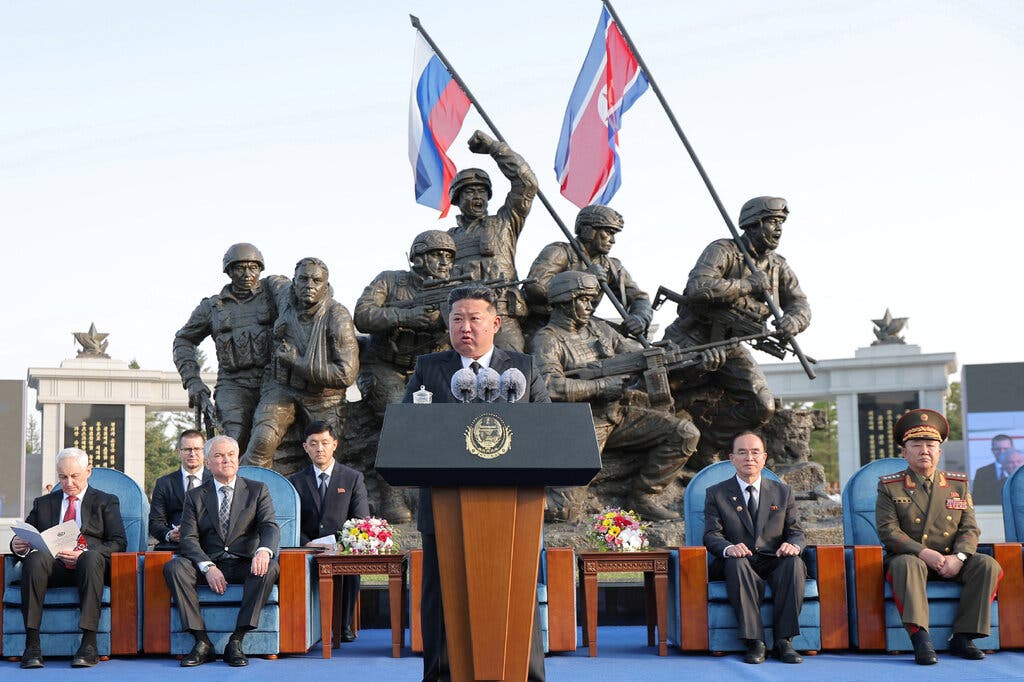
The Kremlin calls mobilization talk “nonsense”—Zelenskyy says it has already begun, with North Korean reinforcements

kremlin calls mobilization talk nonsense—zelenskyy says has already begun north korean reinforcements · post leader kim jong-un speaks opening memorial pyongyang russia's defense minister andrei belousov state duma speaker vyacheslav

Russia has quietly started a new round of mobilization and plans to bring in more North Korean troops, Ukrainian President Volodymyr Zelenskyy said. He cited a new report from Ukraine's military intelligence. The same day, the Kremlin published a decree enlarging Russia's army for the fourth time this year.

Russia widens recruitment at home and abroad

Zelenskyy spoke in his evening address on 28 September, after a briefing from Ukraine's military intelligence (HUR).

"In effect, the Russians have already begun additional mobilization—they are increasing the number of people they recruit through various means," he said.

Moscow also plans to recruit more foreigners, Zelenskyy said. He urged the governments of countries whose citizens Russia recruits to counter it, and said Kyiv would inform each of them.

Ukraine says Russia has been losing soldiers faster than contract recruitment replaces them. If so, an unannounced call-up lets the Kremlin refill its ranks without a formal draft. ISW says Putin may hold off on such a draft until he sees whether his strikes work. Ukrainian intelligence had expected Russia to announce a mass mobilization after this month's State Duma elections.

More than 8,000 North Koreans in Russia, 10,000 more in preparation

More than 8,000 North Korean troops are currently on Russian territory, Zelenskyy said. Pyongyang is selecting another 10,000 for training and deployment to Russia, he added.

Russia is paying, among other things, with technology, according to Zelenskyy. North Korea has launched production of Shahed-type attack drones with Russian technical support, he said.

That is a step beyond what Kyiv reported in June 2025. Moscow and Pyongyang had then only agreed to start preparing such production. In August, Zelenskyy warned that Russia could receive up to 50,000 North Korean troops.

kremlin calls mobilization talk nonsense—zelenskyy says has already begun north korean reinforcements · post leader kim jong-un speaks opening memorial pyongyang russia's defense minister andrei belousov state duma speaker vyacheslav
Explore further

North Korean missile unit deploys to Russia for ballistic strikes on Ukraine, Kyiv says

Kremlin raises the army's size again

Putin's decree sets the authorized strength of Russia's armed forces at 2,441,630, including 1,550,500 military personnel, Vedomosti reported. The decree gives no reason.

The order adds 15,500 troops and is the fourth such increase this year, Euronews said. Since March, the combined increase has reached 47,860 soldiers. Putin's 2022 "partial mobilization" decree also remains in force, the outlet noted.

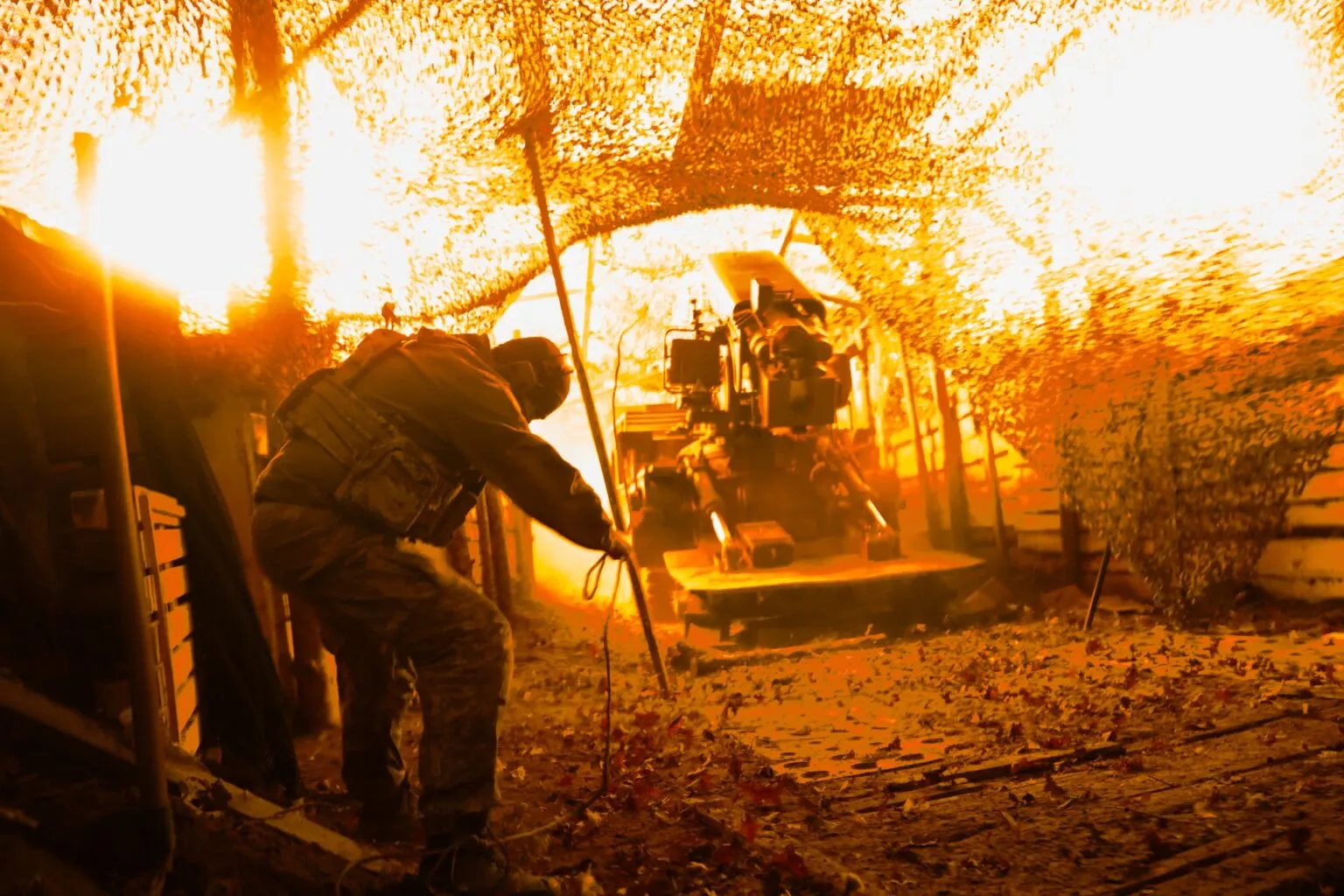
A soldier from Ukraine’s 100th Mechanized Brigade operates an artillery gun firing beneath camouflage netting.
Explore further

Russia could open northern front by February if it orders new mobilization, Ukraine intel says

Moscow keeps denying a call-up

In early September, Putin claimed that reports of a coming mobilization were "complete nonsense" and "an information attack on Russia." Russian officials gave similar assurances days before the 2022 call-up.

Ukraine's military and foreign intelligence had earlier said that Russia's General Staff prepared a scenario to mobilize 600,000 people over 2026 and 2027, 300,000 each year.

  •  
❌