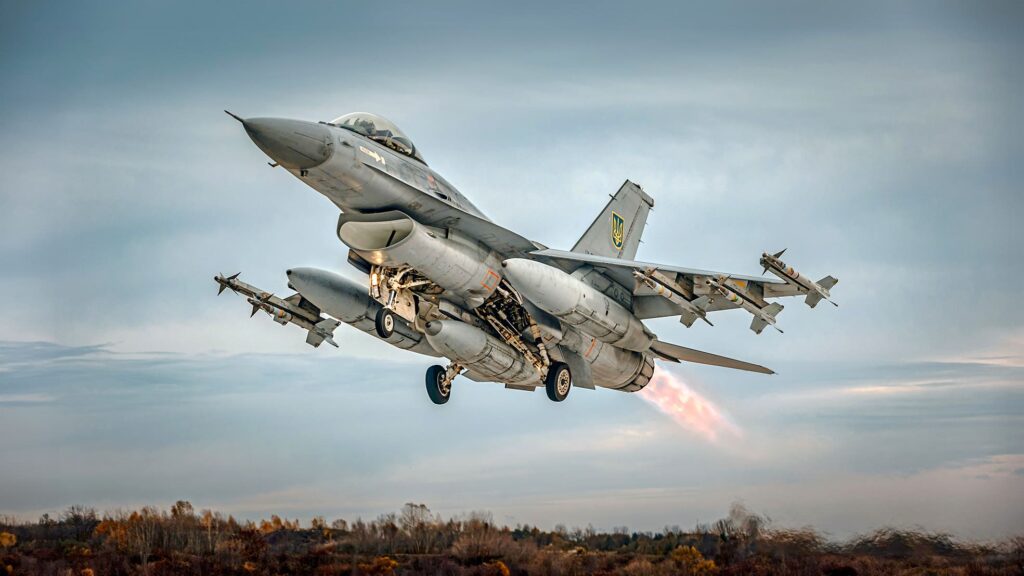
Ukraine is set to receive three more F-16 fighter jets from Belgium by the end of 2026, Ukrainian President Volodymyr Zelenskyy said, as Russia intensifies its missile and drone attacks on Ukrainian cities.
The aircraft are particularly valuable as Russia increases its use of Shahed/Geran drones, including faster jet-powered variants that are harder for Ukraine’s cheaper interceptor drones to stop. Russia’s growing aerial campaign is already placing additional pressure on Ukraine’s limited air-defense resources.
Zelenskyy said the aircraft will be delivered through an accelerated process. Ukraine has already received urgent F-16 ammunition from Belgium and other partners, including Spain.
“As Russia escalates its attacks every day, we need to increase our capabilities to shoot down aerial targets and protect people,” Zelenskyy said.
F-16s help counter Russia’s air campaign
Ukraine received its first F-16s in 2024 after an 18-month international effort to secure the aircraft and train Ukrainian pilots. The jets have since become an important part of Ukraine’s air defense.
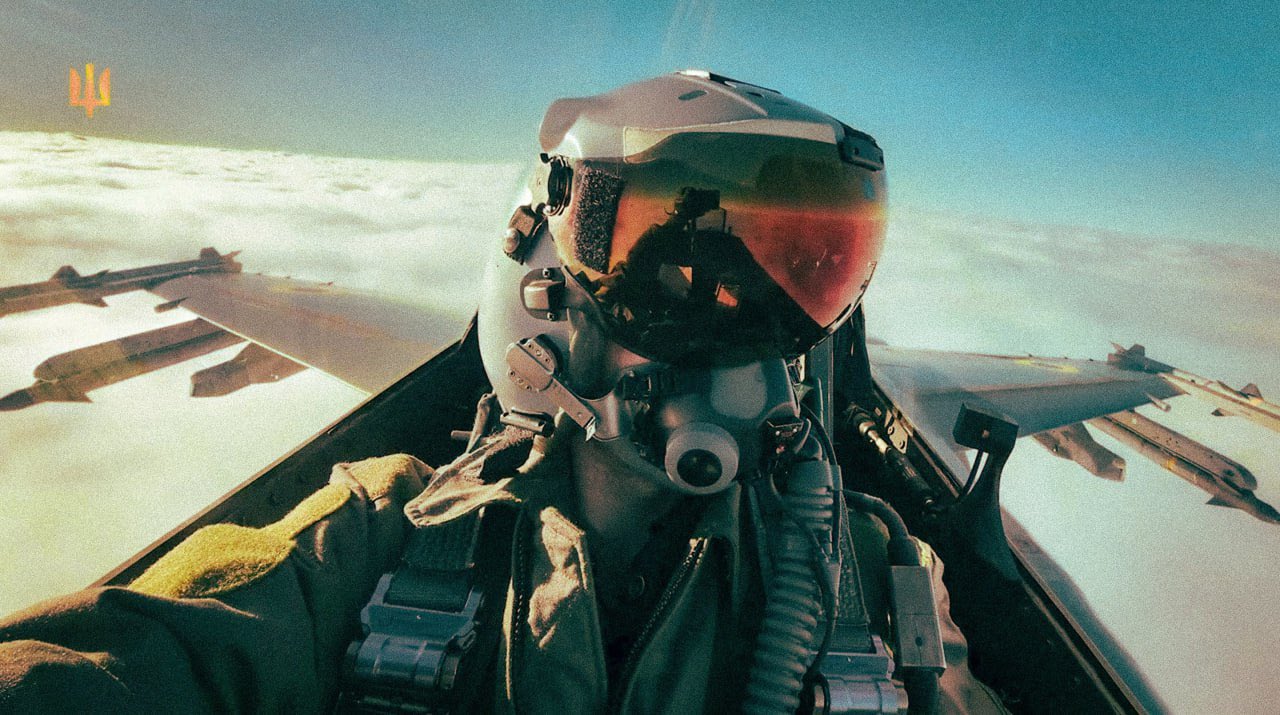
Ukrainian F-16s are used primarily to intercept Russian cruise missiles and attack drones, while also carrying out electronic warfare and other missions. In one January 2025 mission, a Ukrainian F-16 pilot shot down six Russian cruise missiles.
Explore further
Allies supplied the F-16s — Ukrainian pilots figured out the tactics
F-16s can also carry precision-guided bombs and air-to-air missiles, allowing them to support strikes against Russian forces and other targets near the frontline. Ukrainian pilots have developed tactics for using the aircraft despite Russia’s dense air-defense network.
For Ukraine, the additional jets therefore provide both another layer against Russia’s expanding aerial attacks and additional capacity for combat operations on the frontline.
The information of potentially tens of thousands of former and current F.B.I. employees may have been compromised in a breach by the criminal hacking group known as ShinyHunters.
A Russian drone struck near the Yahodyn border crossing on the Ukrainian-Polish border, the Ukrainian Border Service and the Polish Armed Forces Operational Command reported on 28 September. Geolocated footage of the attack shows the jet-powered Geran-5 striking near the facility. Following the incident, Poland is reviewing its air security measures.
Russia systematically strikes Ukraine’s border crossings to complicate logistics. Russian strikes near the Ukrainian-Polish border have increased over the past month. Yahodyn is one of the largest border crossings with Poland, on a route leading, among other destinations, to Warsaw, and has repeatedly been used by senior foreign officials visiting Ukraine.
The blast wave damaged the checkpoint building at the terminal entrance, Ivan Romaniuk, head of the Volyn Regional Military Administration, reported on 28 September. It was a jet-powered drone, but there was “preliminarily no direct hit” on the border crossing, BBC Ukraine reported, citing its own sources in the State Border Guard Service of Ukraine.
Russian drone strikes near Yahodyn
On the afternoon of 28 September, Poland reported the involvement of Polish military aviation because of Russian drone attacks against Ukraine. That day, it was also reported that the airports in Rzeszów and Lublin suspended operations.
Jacek Horyszewski, a spokesperson for the Polish Armed Forces Operational Command, said on TVN24 that a Russian drone had struck near the Yahodyn border crossing in Volyn Oblast on the border with Poland.
Romaniuk confirmed the attack in the village of Starovoitove, Kovel district, Volyn Oblast, where the Yahodyn international border crossing is located.
“There have been no reports of injuries or fatalities,” he said.
Videos that appeared online show the drone falling in a forest near people and border infrastructure.
Момент удару «Герані-5» поблизу КПП «Ягодин», – місцеві канали.
BBC з посиланням на ДПСУ пише, що реактивний дрон вдарив неподалік кордону з Польщею: «Влучання у пункт пропуску «Ягодин» попередньо, не було». pic.twitter.com/VNq7QMy2Ly
The Russians carry out such attacks on Ukraine’s western regions using repeaters on Belarusian territory that amplify signals for Shahed- and Gerbera-type drones, BBC Ukraine reported, citing State Border Guard Service data.
Detonation of a Russian Geran-5 drone at the YAGODIN BORDER CORSSING, Ukraine. The explosion occurred ~1km from Polish territory.
Poland is already considering changes to its air security rules after the incident
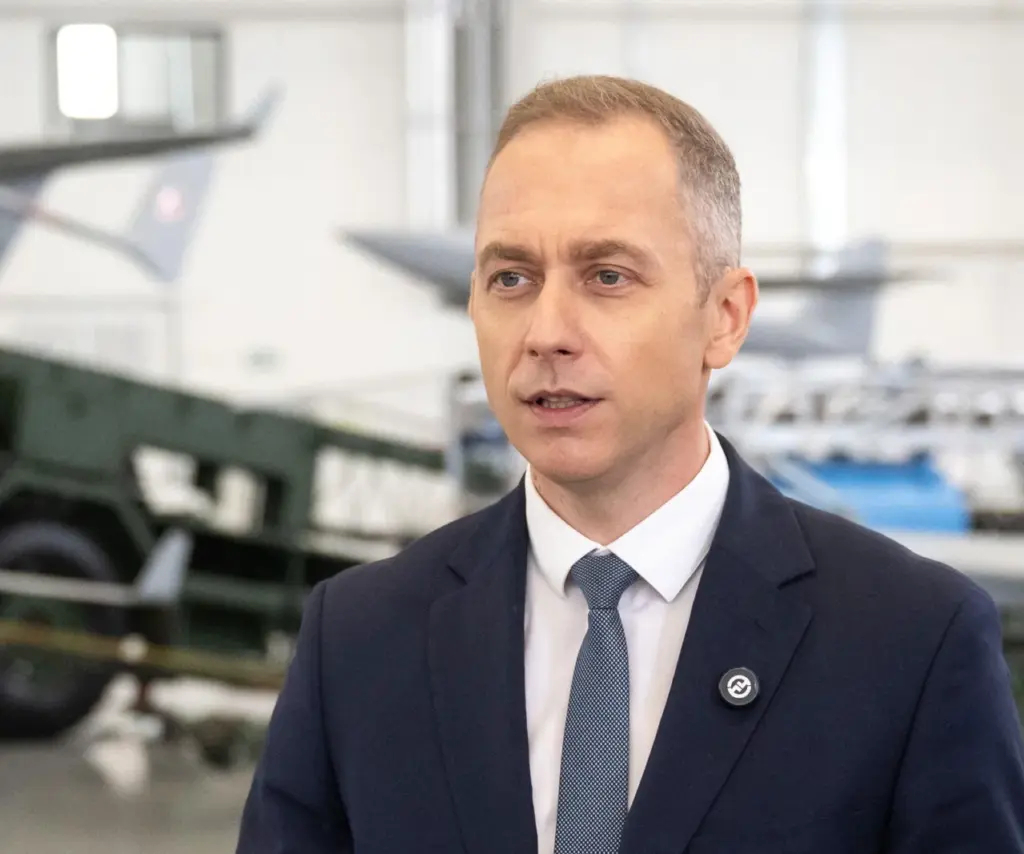
The same day, Polish Deputy Defense Minister Cezary Tomczyk said Poland will change its engagement rules "in the coming days." Currently, helicopter and fighter jet pilots can use weapons only after visually identifying a target: the aircraft must approach the object and determine what it is. After the rules are changed, however, a pilot or operational commander will be able to make a decision to engage based solely on radar data.
Cezary Tomczyk. Photo: Paweł Skraba / Super Express
“It is notable that Polish authorities have taken this step as NATO states attempt to find an adequate response to Russian drones nearing or entering their airspace from Ukraine, often leaving NATO air defense insufficient time to identify and target such threats before they have entered allied airspace,” the Institute for the Study of War noted in its 28 September report.
Recent strikes near the Polish border
On 10 September, Polish Prime Minister Donald Tusk said that Poland had prevented a threat to one of its border crossings with Ukraine overnight and expected its border crossings to be attacked as Moscow targets trade routes in an attempt to economically weaken Kyiv. He made the statement after drones struck a border crossing between Ukraine and Moldova on the previous day, killing two people.
On 13 September, Russian forces struck the locomotive of a passenger train two kilometers from the Polish border and hit a gas station near the Yahodyn international border crossing on the Ukrainian-Polish border.
На Волині внаслідок атаки РФ пошкоджено АЗС біля ПП «Ягодин» на кордоні з Польщею - речниця Волинської митниці Валентина Черниш.
Також на кордоні із Польщею рашисти атакували залізничну інфраструктуру - відео. pic.twitter.com/3XLc3B4FFw
The drone attack forced passengers on a train from Ukraine to leave the carriages for safety. Those evacuated included Boris Johnson, security advisers to European governments, German Bundestag lawmakers, diplomats, and academics.
After the Russian attacks, Poland deployed military units on the border with Ukraine and strengthened infrastructure near the border crossings, Polish Defense Minister Władysław Kosiniak-Kamysz said on 15 September.
On 17 September, Russian forces struck near the Yahodyn border crossing with a jet-powered drone.
Ukraine's air defenders now have purpose-built interceptors for Russia's jet-powered attack drones—weapons whose speed and altitude make them difficult for conventional defenses to catch, Militarnyi reported. A crew from the 1020th Anti-Aircraft Missile and Artillery Regiment downed a Geran-5 over Chernihiv Oblast with a newly delivered interceptor, according to the Serhiy Prytula Foundation.
Russia's long-range drone and missile attacks have become central to its effort to wear down Ukraine's air defenses and grid before winter, and the war in the sky now turns on which side scales its answer faster.
The Chernihiv intercept
The crew, callsign Yastrub (Hawk), made its first successful engagement with the new interceptor, hitting the jet drone at 425 km/h and above 3 km, the foundation said, releasing footage of the strike. The Prytula Foundation supplied the interceptors and said it has contracted several manufacturers to counter the jet threat.
"Our task is to scale this up and strengthen units," it said.
Why it kept slipping through
Russia first used the Geran-5 in January 2026. HUR's own specifications put its warhead at 90 kg, cruise speed at 450–600 km/h, and range at 950 km, with a ceiling of 6 km. That mix of jet speed and high altitude kept it clear of machine guns, shoulder-fired missiles, and the cheap interceptors built to swat slower piston-engine Shaheds.
Ukraine's military intelligence estimates Russian plants now turn out around 3,000 jet-powered Geran-4 and Geran-5 drones a month, according to HUR. A monitoring Telegram channel, Polkovnyk HSh, reports a newer variant that steers by ground imagery instead of satellites, which would blunt jamming—though HUR has not confirmed it and lists no such system among the drone's components. Separately, Russia moved the jet engine inside the fuselage, a change aimed at more speed and range.
Explore further
After Russia hits Kyiv’s Academy of Sciences with jet-powered drone, the Kremlin says Ukraine must “pay a price”
Where the fight stands
Ukraine intercepts about 55% of Russia's jet drones, against more than 90% of the older models, President Volodymyr Zelenskyy said on 26 September. Since the start of September, Russia had launched more than 2,730 jet drones, and Ukraine had downed or suppressed more than 1,500, he added. Zelenskyy also said Russia plans to spend $12 billion in 2027 on jet drones and loitering munitions alone. Ukraine already has several interceptor prototypes in combat use, and the 1020th crew's kill is one of several jet Geran intercepts Ukrainian units and drone makers have logged this month.
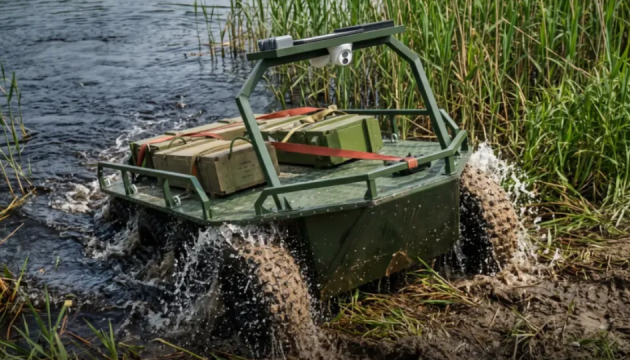
Military personnel from one of the separate mechanized brigades of the Armed Forces of Ukraine have carried out the first logistics mission using a Ukrainian-developed amphibious unmanned ground vehicle.

 Connexion


 Момент удару «Герані-5» поблизу КПП «Ягодин», – місцеві канали.