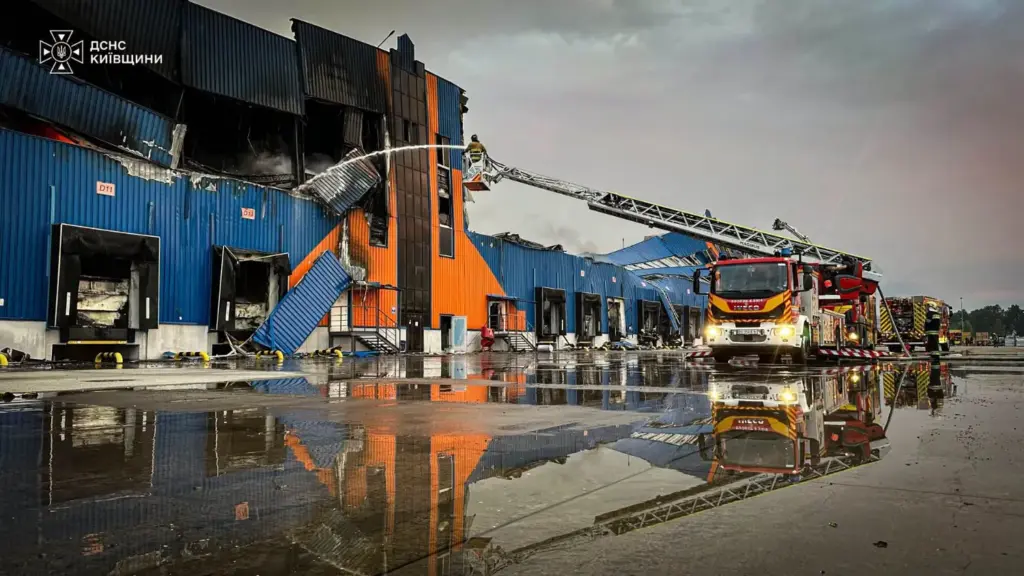
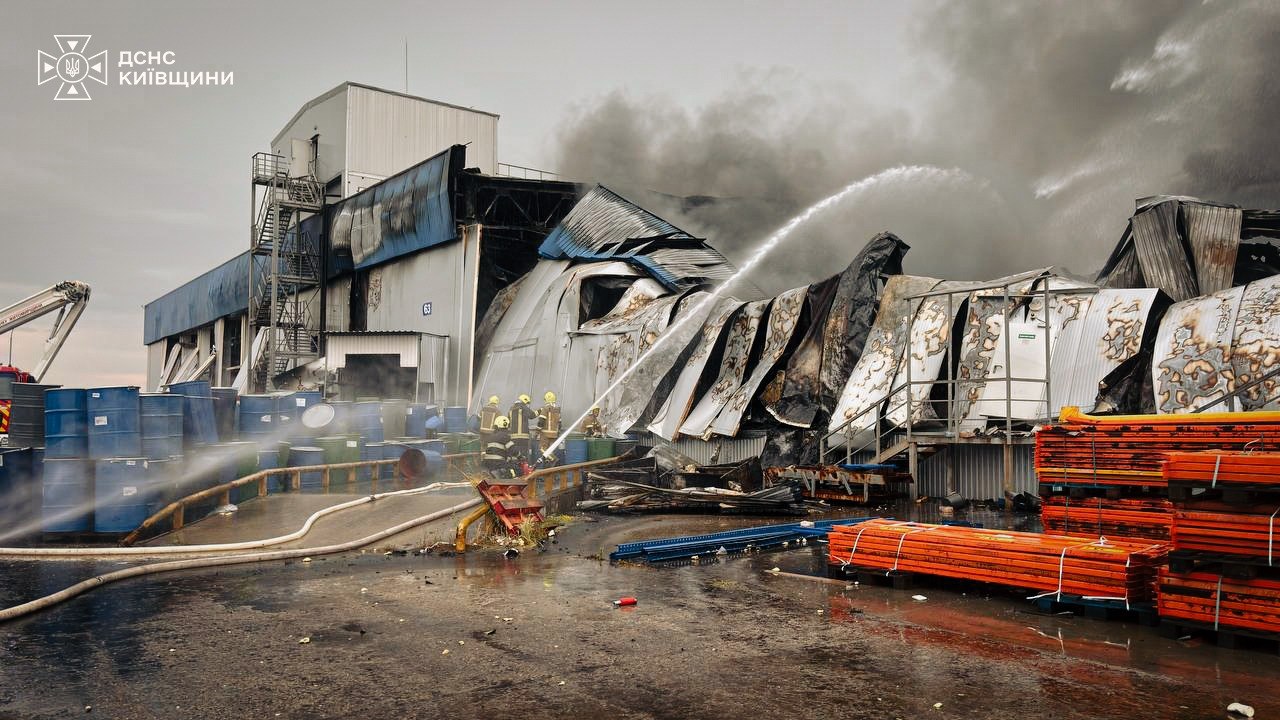
Russia has destroyed 2.1 million square meters of Ukraine’s modern warehouse space out of a total 5 million, wiping out more than two-fifths of the country’s storage capacity as Moscow expands its air campaign against Ukraine’s economy, according to the Financial Times.
Russia is increasingly targeting the infrastructure that keeps Ukraine’s economy running and its citizens supplied, including warehouses, distribution centers, railways, fuel stations, and other logistics facilities. By hitting these sites far from the front line, Russia is disrupting the supply of everyday goods and making it harder for Ukrainians to find what they need.
Around 900,000 square meters of warehouse space has been destroyed in recent months alone, according to Ukrainian entrepreneur Ruslan Shostak, founder of the Eva and Varus retail chains, cited by the Financial Times.
Russia is destroying Ukraine’s warehouse capacity
The loss of warehouse space is creating problems for businesses across Ukraine.
Russian strikes have hit warehouses and distribution centers belonging to major Ukrainian retailers, pharmaceutical companies, publishers, and logistics operators.
One recent strike destroyed a warehouse belonging to toy retailer Budynok Ihrashok near Kyiv, FT reported. The facility was hit by a jet-powered drone and caught fire, but firefighters were unable to intervene while Russian drone attacks were continuing.
The company now plans to distribute its inventory among smaller warehouses and its network of 67 stores rather than rely on a single large distribution center.
The destruction of large warehouses is forcing companies to rethink how they store and distribute goods, increasing costs and making supply chains more vulnerable to further attacks.
Explore further
Kyiv stockpiles food and water as Russia’s new aerial tactics threaten a brutal winter
The attacks are spreading across Ukraine’s economy
Warehouses are not the only economic infrastructure being targeted.
Russian drones have increasingly struck railway infrastructure in western Ukraine, while fuel stations are also being hit farther from the front line. These attacks can disrupt the movement of goods even when they do not directly destroy the businesses producing them.
The result is a widening pressure on Ukraine’s logistics network. Companies must find alternative storage and transport routes while operating under the continuing threat of Russian airstrikes.
The attacks are part of Russia’s broader long-range air campaign against Ukraine’s civilian infrastructure. Moscow is increasingly using drones and missiles to hit economic targets deep inside Ukraine, putting strain on the systems that allow the country’s economy to function during the war.
For years, Ukraine’s air defenses blunted Russia’s attempts to terrorize its cities from the sky. Now, after four years of adaptation, Moscow is fielding faster drones, massing ballistic missiles, and finding new ways to overwhelm a Ukrainian air-defense network running short of the interceptors needed to stop them.
Russia’s aerial campaign is becoming harder to contain just as its attacks are killing more Ukrainian civilians. July recorded at least 437 civilian deaths, the highest monthly toll since the early months of the full-scale invasion, with UN monitors pointing to Russian missile and drone attacks as a key factor.
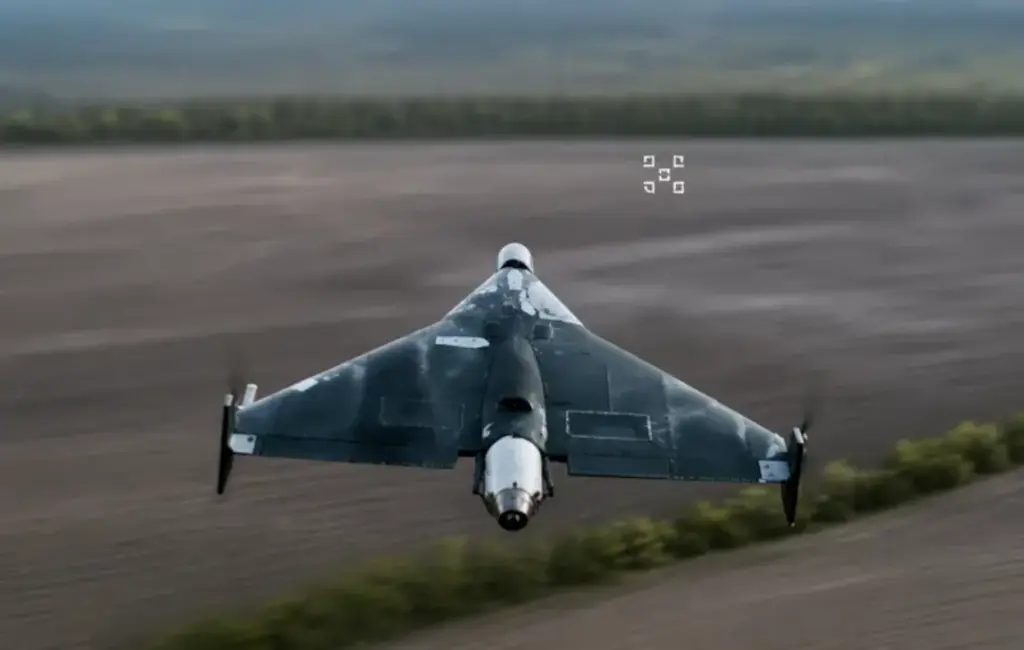
That shift is visible most clearly in Russia’s rapidly expanding use of jet-powered Geran drones. These drones can exceed 400 km/h, making them significantly harder to intercept than the slower, propeller-driven Shaheds Ukraine has spent years learning to counter. Russia reportedly launched as many as 2,850 jet-powered drones in August alone.
Ukrainian President Volodymyr Zelenskyy has warned that Russia’s escalation with the new drones is becoming “increasingly terrorist” and called for urgent efforts to develop defenses against them.
While Ukraine’s Western partners have taken steps to strengthen its air defenses, Russia has spent the same period adapting and expanding its ability to attack from the air. The gap is becoming increasingly visible in the skies over Ukrainian cities.
Ukrainian civilians are already paying the price
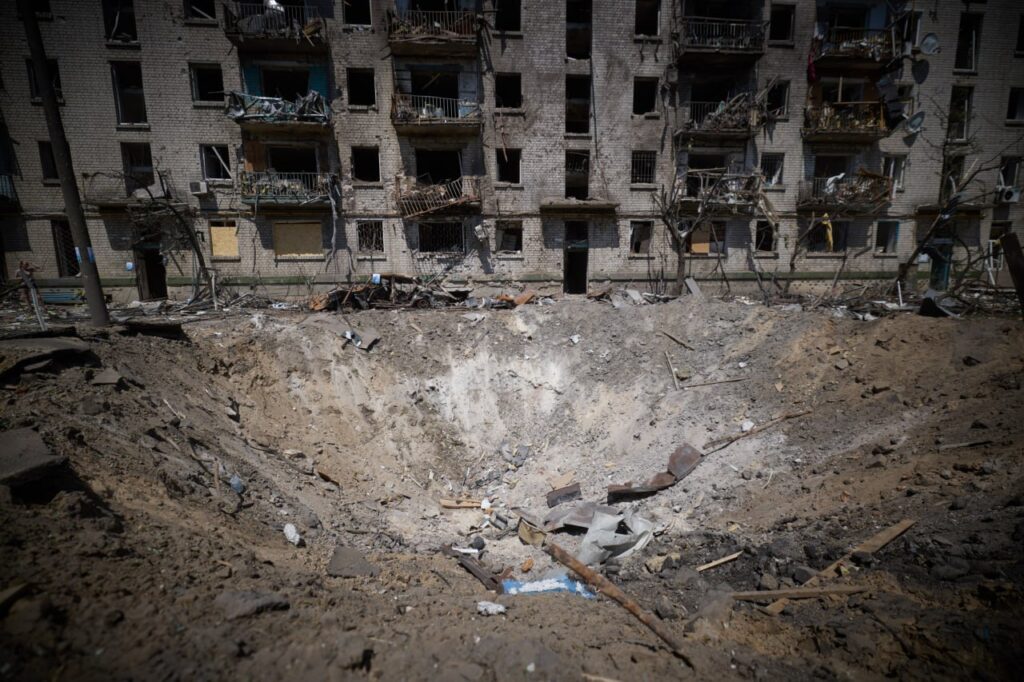
Russia has increasingly turned its ability to strike deep inside Ukraine into a weapon against civilian life itself: hitting residential areas, fuel stations, railways, energy infrastructure and other sites across cities far from the front.
Since late August, Kyiv has faced near-continuous Russian drone attacks, with Russia increasingly sending waves of drones against the capital throughout the day and night. The shift has made air-raid alerts, explosions and disruptions to daily life a near-constant reality.
For Ukrainians, Russia’s evolving aerial campaign is measured in destroyed homes, injuries, deaths, and lives permanently changed.
In Kyiv, it has also changed everyday life: explosions interrupt sleep and work, people run for shelter as strikes unfold overhead, and the threat of another attack is never far away.
And the pressure is no longer confined to Kyiv. Kharkiv, Odesa, Sumy and Zaporizhzhia are all facing increasingly sophisticated combinations of drones and missiles.
The danger is not simply that Russia is launching more weapons. It is that Moscow has spent years learning which weapons can penetrate Ukraine’s defenses, how to combine them, and how to force Ukraine to spend its most valuable interceptors.
Zelenskyy’s warning captures the urgency: “You cannot simply wait for Russia to perfect its repertoire of killings.”
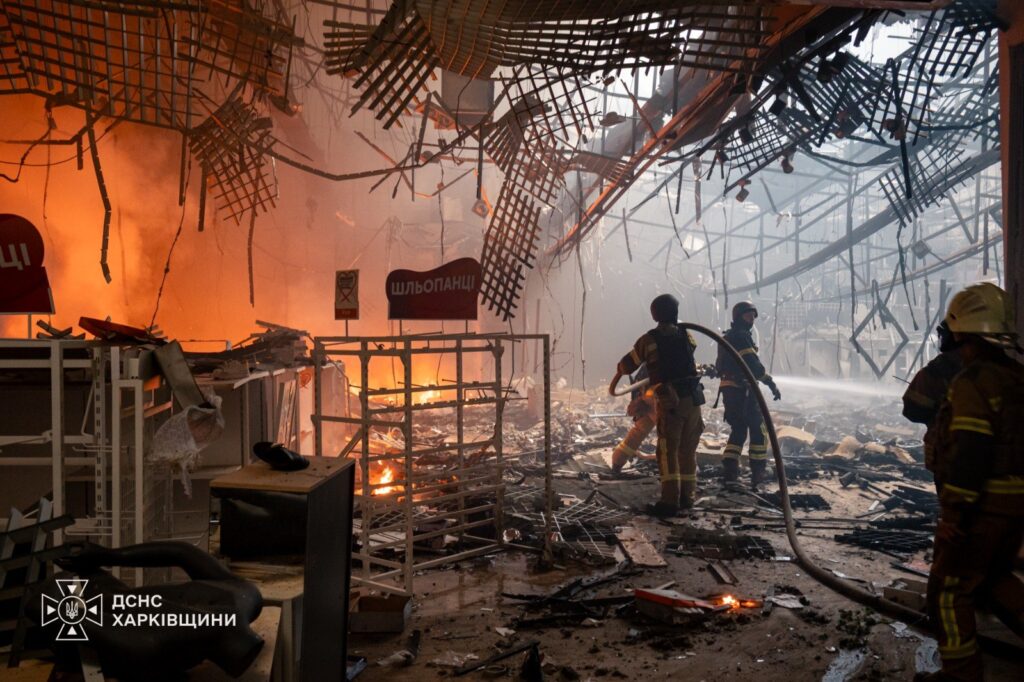
Emergency workers respond to a Russian strike on a shopping center in Kharkiv, Ukraine, on 28 August 2026. Photo: Ukraine’s State Emergency Service
Russia is adapting faster than Ukraine can rebuild its shield
The jet-powered Geran is only one part of the problem.
Russia has also dramatically increased its use of ballistic missiles. Reuters reported that 228 ballistic and hypersonic missiles were launched in July and the first eight days of August, with more than half being inaccurate RM48U training missiles repurposed for combat.
Ukraine has virtually exhausted its US-made Patriot interceptors, the only systems in its arsenal capable of reliably intercepting Russia’s ballistic missiles, while Moscow continues launching them at a high tempo.
The result is a more complex aerial threat: fast drones that are difficult to intercept, ballistic missiles that are extremely difficult to stop, and large waves of cheaper weapons that can force Ukraine to expend scarce defensive ammunition.
Ukraine is developing new ways to counter them, including interceptor drones specifically designed to hunt down the jet-powered Gerans. But Ukraine is developing these systems as Russia is already deploying its new weapons at scale.
Western countries have continued providing air-defense assistance. Canada, for example, announced a C$350 million package for interceptors earlier this month. But Ukrainian officials continue to say that deliveries remain far below what is needed to protect the country from Russia’s expanding aerial campaign.
Russia has spent years expanding the weapons it can use against Ukraine, while Ukraine and its partners are still racing to develop and supply the systems needed to stop them.
The threat Europe helped Russia develop
Some of Ukraine’s Western partners are now confronting a threat Russia has spent years developing over Ukraine: an increasingly sophisticated aerial arsenal that could eventually be turned against them.
European officials and defense analysts are increasingly warning that NATO countries themselves lack enough air and missile defenses to deal with a large Russian attack.
Latvia’s President Edgars Rinkēvičs recently said Europe is not sufficiently prepared for the kind of drone and aerial warfare Russia has developed in Ukraine, including because of delays in supplying Ukraine with critical air-defense systems.
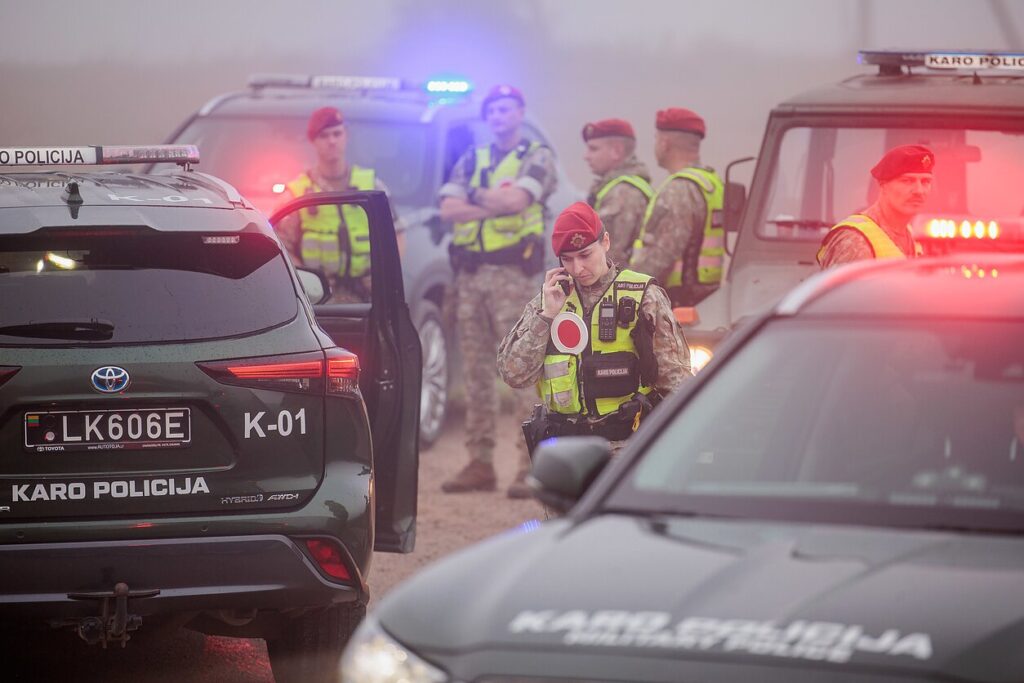
Those concerns are no longer hypothetical. On 14 September, an Italian NATO fighter jet shot down a Russian-made Geran-2 drone over Lithuania after it entered the country from Belarus. Poland and Romania have also faced Russian drone incursions since 2025.
Lithuanian military police at the site near Pratkūnai where NATO fighters shot down a drone, Kaišiadorys district, Lithuania, 15 September 2026. Photo: D. Umbrasas / LRT
This creates a problem that is partly of Europe’s own making. Russia has had more than four years to refine its drones, missiles, production lines and tactics while Ukraine’s partners have often been too slow to provide enough weapons to counter those systems as they were developed and deployed at scale.
In that same period, many European countries continued trading with Russia, particularly in fossil fuels, allowing Moscow to keep generating revenue from European markets even as those same governments were providing military aid to Ukraine.
The result is a Russian aerial arsenal that is more capable than the one Ukraine faced in 2022 – while some of the countries now worried about a future Russian threat lack the air defenses needed to protect themselves.
Western governments helped Ukraine fight Russia’s air war, but not at a scale or speed sufficient to prevent Russia from adapting.
Ukrainian civilians are paying the price for the time Russia was given to expand and refine its aerial warfare. Now, Europe is having to prepare for the possibility that those capabilities could one day be used against it.

 Connexion