❌

Vue lecture

Spain keeps arming Ukraine against Russia’s ballistic missiles—and promises even more
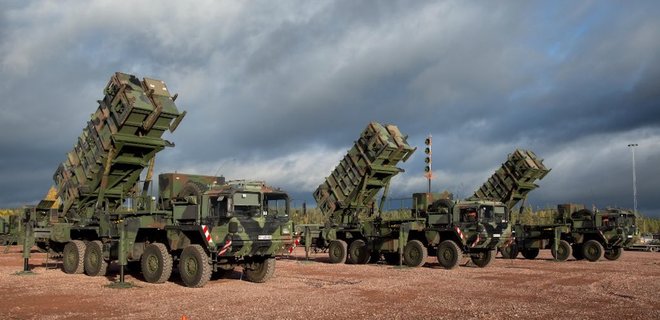
Patriot ukraine air defense

Spain will send Ukraine more Patriot interceptor missiles, Foreign Minister José Manuel Albares confirmed, according to Le Monde.

Patriot interceptors are among the few weapons Ukraine has that can stop Russian ballistic missiles. The specialized rounds are scarce worldwide, and manufacturer Raytheon cannot build them fast enough to meet demand. Each costs $3 million to $4 million.

Spain confirms the flow will grow

Albares spoke at an informal meeting of European Union foreign ministers in Ireland on 2 September. He reaffirmed Madrid's support as Kyiv pressed for more interceptors. "We have been doing this for a long time, and we will continue to do so," he said. He confirmed that Madrid is preparing a new batch. EU foreign policy chief Kaja Kallas said the bloc is also working with non-member states to lift Ukraine's air defenses.

Madrid and Kyiv meet in Wicklow

The confirmation followed talks with Ukrainian Foreign Minister Andrii Sybiha. They met on the sidelines of the same EU gathering, in Wicklow. Sybiha said he pressed Ukraine's urgent need to strengthen its air and ballistic missile defenses. He also thanked Spain for its solidarity. Albares reaffirmed Spain's role as a founding member of the Integrated Anti-Ballistic Missile Coalition, which ten countries launched in Paris on 13 July. The group aims to build a shared anti-ballistic capability, and its declaration calls the coalition purely defensive. Spanish military instructors are training Ukrainian technicians to maintain the systems.

What Spain has promised so far

Spain is not just giving—it is also buying. In December 2025, Madrid signed a $1.7 billion contract with US arms maker Raytheon for four new Patriot systems. It was Spain's largest Patriot order yet. The deal covers radars, launchers, command-and-control stations, and training. Spanish firm Sener builds the control system for the GEM-T interceptor those launchers fire. Spain is one of only a handful of European countries that operate Patriots.

What Spain has already sent

Spain has supplied Ukraine with Patriot missiles before. In March, Madrid pledged five older PAC-2 interceptors from an air-defense artillery regiment at Marines, near Valencia. Madrid has pledged €1 billion ($1.16 billion) in military aid for 2026. Ukraine has spent months urging partners to release interceptors from their stockpiles.

  •  

Finland ran Europe’s largest civil defense drill since World War II inside a shelter carved under a sports arena

finland ran europe's largest civil defense drill since world war ii inside shelter carved under sports arena · post students luola underground divided rooms green partitions during finland's exercise kuopio

Finland shut more than 2,000 people into a rock-hewn shelter that is normally a sports hall in Kuopio on 2 September, with some remaining overnight to practice operating the facility, the Associated Press reported. The two-day exercise, Shelter 2026, was the largest civil defense drill in Europe since World War II, by AP's account. Its scenario had cyberattacks cutting power and water while the threat of Russian missile strikes grew.

Russia attacks Ukrainian cities from the air night after night, striking apartment blocks, hospitals, and the power grid because its army cannot take the country on the ground, and the raids have grown heavier.  In places, Ukrainians answered by moving part of daily life underground, where tens of thousands now sleep in metro stations each night, and some schools operate in shelters. Finland has had its own extensive network of underground shelters since the Cold War era.

What two hours underground exposed

Three colleges got the alarm at 11:30 on 2 September, and students had about half an hour to reach the shelter, called Luola, or the Cave, Yle reported that evening. Staff barred the doors behind them. Partitions divided the sports hall into rooms of about 200 people. There were not enough beds, so people rested in shifts, and 60 dry toilets served everyone. The internet worked poorly, and the air grew heavy after an hour. The site holds up to 7,000 people under emergency law.

Antti Haataja, preparedness chief at the North Savo Rescue Department, said the move underground went calmly and faster than he expected. A real emergency would put those inside to work, he added, including emptying the toilets. More than a hundred people stayed through the night into 3 September, Yle said, while AP described hundreds sleeping on trestle beds.

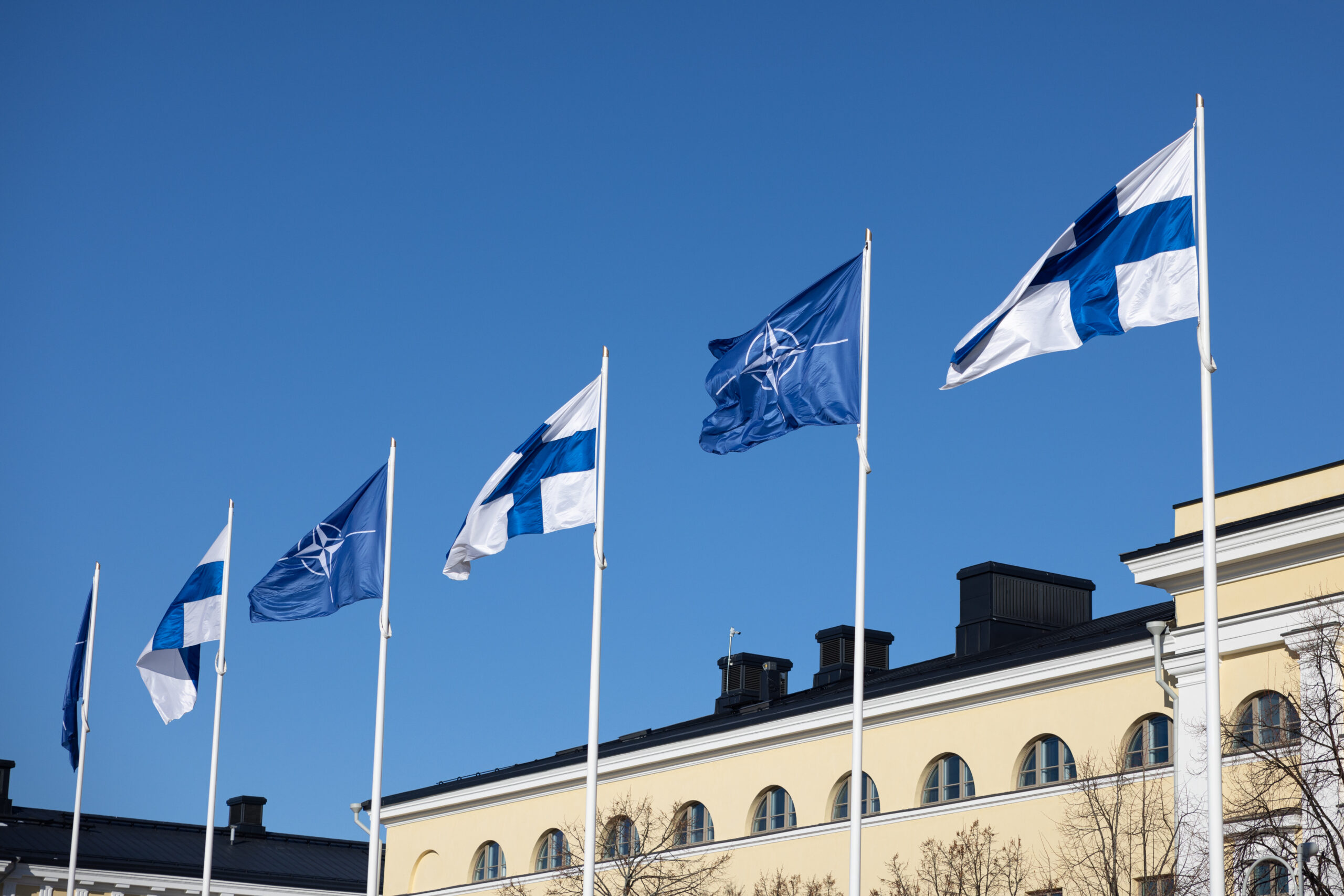
Flags of Finland and NATO. Photo via Wikimedia Commons
Explore further

Finland ends nuclear weapons ban as parliament approves major NATO-aligned defense shift

Finland is reading Ukraine's experience

Retired Finnish Army Colonel Asko Muhonen, who organized the drill, said Finland has to learn from Ukraine, where people sometimes have only minutes to reach a metro station. What matters is cover they can actually get to, not a shelter that survives a nuclear blast. Ukraine's parliament is advancing a Finnish-style bill that would put one within 10 minutes of everyone.

Dmytro Untila, 20, a Ukrainian student in Kuopio, was at home in Odesa when Russian missiles hit the city on 24 February 2022, and waited the strike out in his building's entrance hall, having nowhere better to go. Training like this would have helped in Ukraine, he said, "because nobody knew this could happen."

The pressure Finland and its neighbors are drilling against

Finland shares more than 1,300 km of border with Russia and joined NATO with Sweden after the full-scale invasion of Ukraine. Shelters answer only part of the pressure. Russia is running a campaign of sabotage across Europe, Western officials say, a Russian aircraft is suspected of having entered Finnish airspace on 20 August, and US intelligence has warned that Poland and the Baltic states may face wider Russian hybrid attacks for backing Kyiv.

  •  

Ukraine says it struck a Bastion in Crimea, the launcher Russia pairs Zircon and Oniks missiles on

ukraine says struck bastion crimea launcher russia pairs zircon oniks missiles · post equipment under camouflage netting ukrainian drone's crosshairs occupied 2026 possibly covered nets news reports

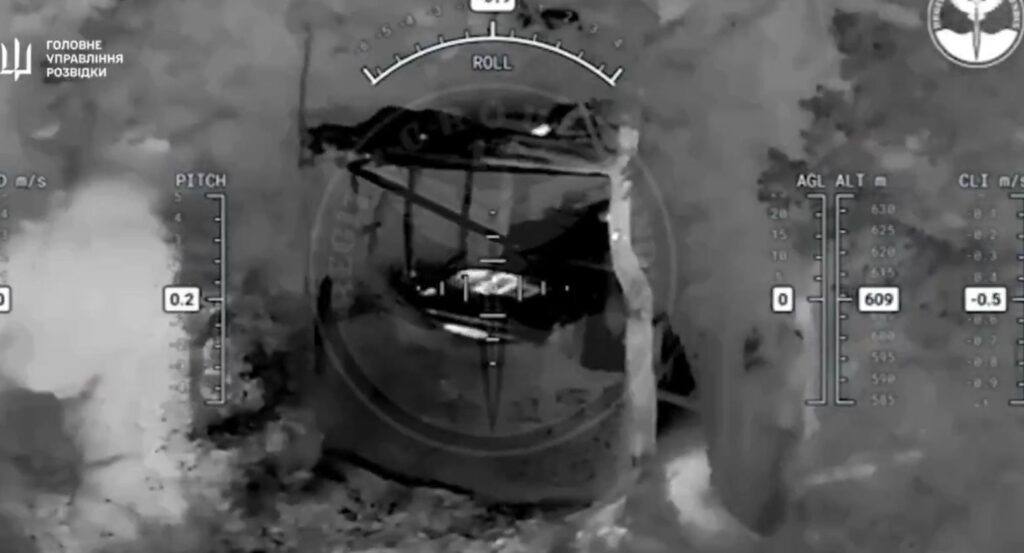
On 4 September, Ukraine's military intelligence agency HUR published drone footage of an August operation against a Russian coastal missile launcher in occupied Crimea, it said on Telegram. Its special unit Group 13 struck the launcher and hit fuel trucks and a command vehicle on the peninsula in the same operation. 

Russia fires missiles and drones into Ukrainian cities every day, and much of what reaches the south lifts off from the occupied peninsula, which also carries the supply lines and air defense cover for Russia's southern front. Ukraine has spent the past year working through that base piece by piece — power, radars, launchers, bridges — to turn it into an island that has to be resupplied under fire.

What HUR says its operators hit

The target was a Bastion, the carrier of Zircon and Oniks missiles. Russia uses those missiles for terrorist strikes against Ukraine, HUR said.

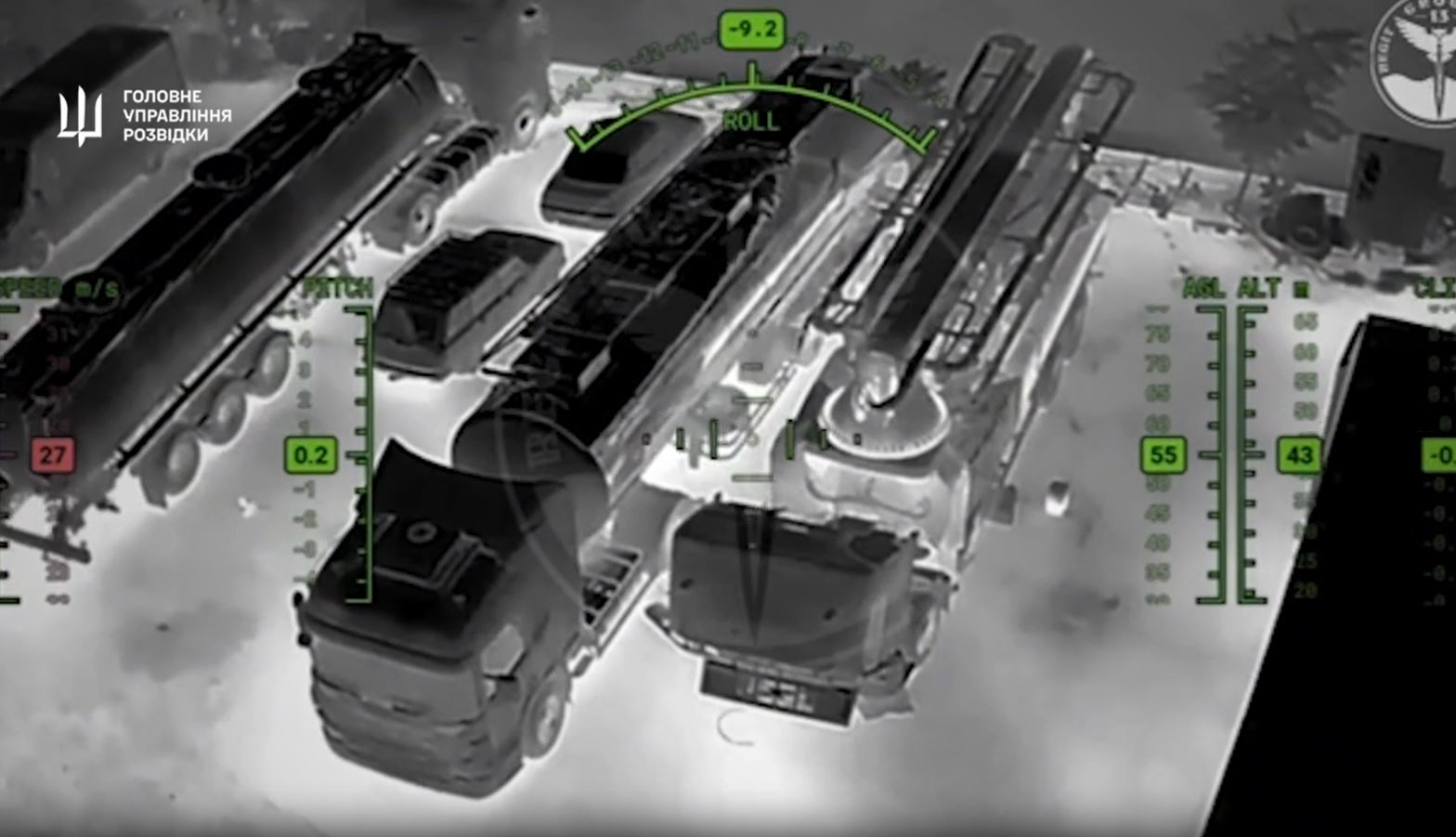
Group 13 operators destroyed and struck two fuel trucks and a command-and-staff vehicle belonging to Russian forces, the agency said. It placed the work in August 2026 without giving a date or a place on the peninsula.

ukraine says struck bastion crimea launcher russia pairs zircon oniks missiles · post tanker trucks other vehicles russian position occupied filmed ukrainian drone 2026 hur news reports
Tanker trucks and other vehicles at a Russian position in occupied Crimea, Ukraine, filmed from a Ukrainian drone in August 2026. Screenshot: HUR

The footage shows the view from drone cameras closing on the targets. HUR did not say what kind of drones its operators used, and the unit works with both aerial and naval systems, including naval drones rigged to carry FPV drones.

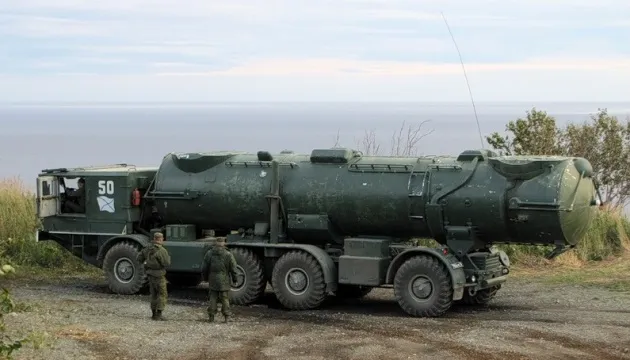
Designated 3K55, the system defends a shoreline and hits both surface and ground targets, warships among them. It takes up to five minutes to deploy, fires supersonic P-800 Oniks and hypersonic Zircon missiles, and reaches from 300 to 600 km depending on the missile and the mode of use. It doubles as an air defense asset, tracking up to 50 objects along the horizon at up to 250 km with passive radar and 450 km with active radar. Russia has fielded it since 2010 and builds it in a mobile version and a silo-based one.

Other Ukrainian services have hit Bastions before

Ukraine's Navy said its forces struck a Bastion's launch positions and deployment site on the peninsula overnight on 16 August, without naming a unit. Ukrainian forces hit a Bastion launcher in the occupied village of Aktachi in March, and in February they struck the concentration area of the Russian brigade that operates the system in Crimea.

The Bastion coastal missile system.
The Bastion coastal missile system. Illustrative photo from open sources.

In an operation earlier in the summer, one of Group 13's uncrewed boats launched attack drones at two Russian radars in occupied Crimea without the vessel ever reaching shore.

Strikes on the peninsula continued overnight

Drone attacks on occupied Crimea have been running for weeks, and they continued into 4 September, though what was hit this time is not yet known. 

Explosions sounded in Sevastopol and Dzhankoi district, Suspilne reported. Monitoring channels logged blasts and drone flights past 04:00, and satellite imagery showed a fire west of the airfield at Hvardiiske, with the cause unconfirmed. Russia's Defense Ministry claimed 490 drones downed over Crimea, other occupied territories, and Russian regions.

  •  

Ukraine’s F-16s are so short of Western missiles that pilots fall back on jet’s built-in M61A1 Vulcan cannon, which risks killing civilians below

A Ukrainian air force F-16.

Ukraine's F-16 pilots are so short of air-to-air missiles that on some daytime sorties they go up with nothing but the plane's gun. Instead of using effective AIM-120 Advanced Medium-Range Air-to-Air Missile (AMRAAM) and the shorter-range AIM-9 Sidewinder, Ukrainian forces are left with the M61A1 Vulcan 20mm rotary cannon, which can pose a grave danger to civilians, the War Zone reports.

Destroying Russian targets with the M61A1 Vulcan 20mm rotary cannon carries risks: the cannon rounds, similar to grenades, can strike a fairly wide area when they hit the ground, potentially killing innocent people.

Worse, the AIM missiles the F-16s are rationing are the same ones that arm the NASAMS batteries defending Kyiv, so every jet-fired round competes with ground air defense for the same scarce stock.

A 107th Wing commander using the callsign "Phantom" confirmed the shortage when a journalist asked him directly whether Ukraine was severely short of missiles for its F-16s.

“Yes, that’s true. Any aircraft without weapons is … useless,” Phantom said.

Kyiv wants the missiles, and a way to make them

Stopping as many Russian Geran drones and cruise missiles as possible before they reach Ukrainian cities takes missiles, and Phantom was blunt about what the fleet needs. He called for more air-to-air missiles and for interceptors to reload the US-made ground-based Patriot batteries.

"We require more means of protection, such as Patriot missiles and air-to-air missiles, AIM-9s or AIM-120s to our fleet," he said.

The fix he wants outlasts any single shipment: "At least we need to try to increase the production, or at least to allow Ukraine to localize the production in Ukraine or other European countries."

Until that exists, the arithmetic stays brutal, as every missile fired at a Russian drone or cruise missile is one fewer for the next attack.

A cheaper rocket enters the mix

One weapon Phantom did not mention may ease that math. Ukrainian F-16s now appear to carry the laser-guided 70mm APKWS II rocket.

Built from a standard unguided rocket fitted with a laser-guidance kit, it is far cheaper than an AMRAAM and has already become a primary anti-drone weapon for US jets in the Middle East — a lower-cost way to knock down drones and subsonic cruise missiles without spending a scarce air-to-air missile on each one.

  •  
❌