Connexion
Frattolin, coupable de meurtre, affirme avoir été « déconseillé » de témoigner
Le québécois Luciano Frattolin a été déclaré coupable lundi, au terme d'un procès dans l'État de New York.
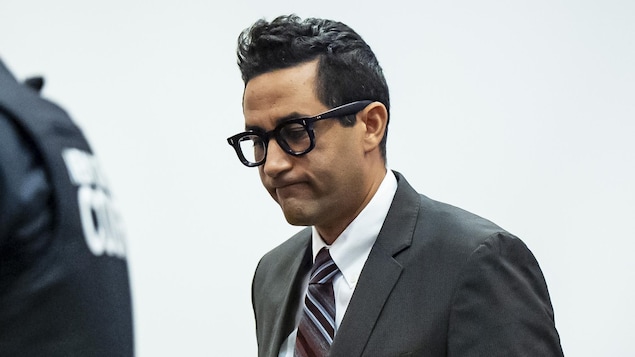

Le québécois Luciano Frattolin a été déclaré coupable lundi, au terme d'un procès dans l'État de New York.


© Lokale Politie Dendermonde
:quality(50)/2026/08/15/6a80b62752fed341357905.png)
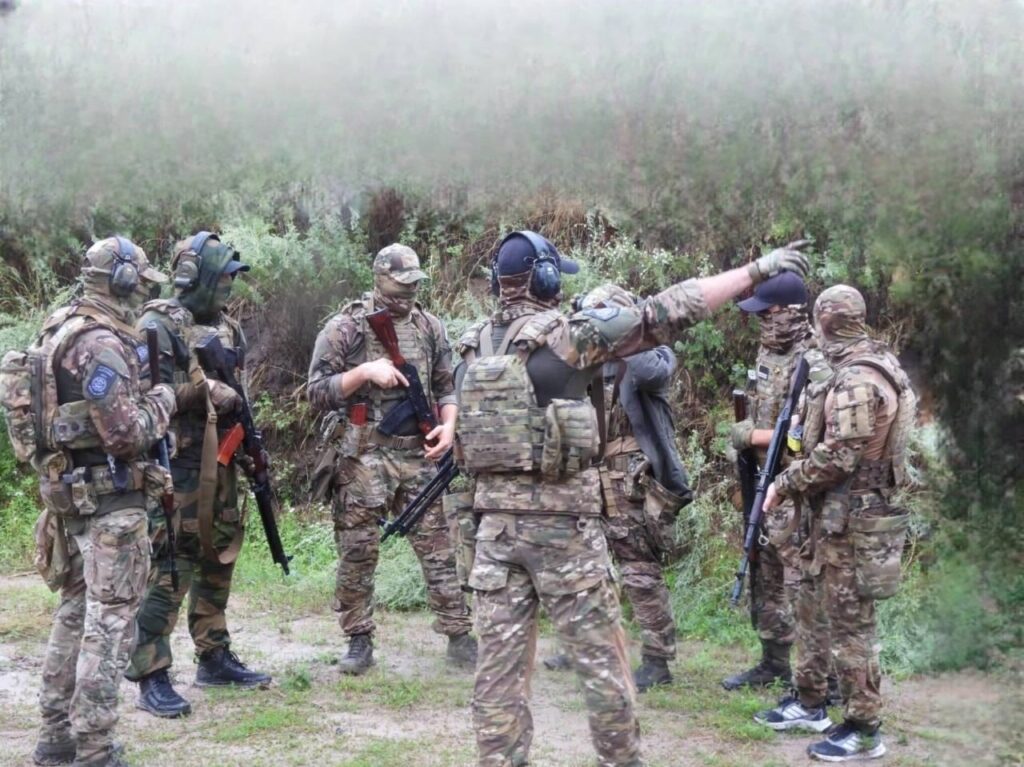
Ukraine condemns Russia for jailing people on fabricated terrorism charges. Yet, its own security services keep sending Kremlin opponents back to Moscow, human rights defender Borys Zakharov said in an interview with Ukrainian outlet Texty.org.ua.
The handovers are not a relic of a friendlier past. They slowed after Russia's full-scale invasion in 2022, then resumed; the transfers now run through third countries, Zakharov says, and at least one has ridden the prisoner swaps that bring Ukraine's captured soldiers home. Ukraine is returning the exact people who bet their lives on it; at the moment, it presents itself to the world as the rule-of-law side of this war.
Zakharov directs the charitable foundation Human and Law, which defends people fleeing authoritarian states. Russia prosecutes captured Ukrainians on invented terrorism charges, and Kyiv rightly calls it a sham. But when Chechens, Ingush, and other North Caucasians ask Ukraine for protection, officials sometimes brand them criminals and send them back—men who often fled two brutal Chechen wars and the crackdowns after them, and some of whom later fought Russia in volunteer units.
"We say: yes, they are criminals. We hand them over to Russia to die," Zakharov said.
International law forbids this. The principle of non-refoulement bars any state from returning a person to a country where they face death, persecution, or torture. Zakharov says Ukraine's migration authorities often skip that risk assessment entirely.
Take Timur Tumgoev, an Ingush volunteer fighter whom Ukraine extradited in September 2018. A Russian court sentenced him to 18 years on terrorism charges, his defenders call fabricated. Zakharov says he was tortured so badly that he can barely move.

Others escaped by luck. Ukraine nearly removed Zelimkhan Belkharoev, a wrestler, in 2016 despite an emergency order from the European Court of Human Rights, Zakharov says; a deputy justice minister intervened in time. Adam Osmayev, a Chechen battalion commander whose wife Amina Okueva was killed in a 2017 assassination attempt, was saved the same way years earlier.
The war did not end the handovers—it rerouted them. Direct extraditions paused; the transfers now run through Belarus, Moldova, and Turkiye, Zakharov says.
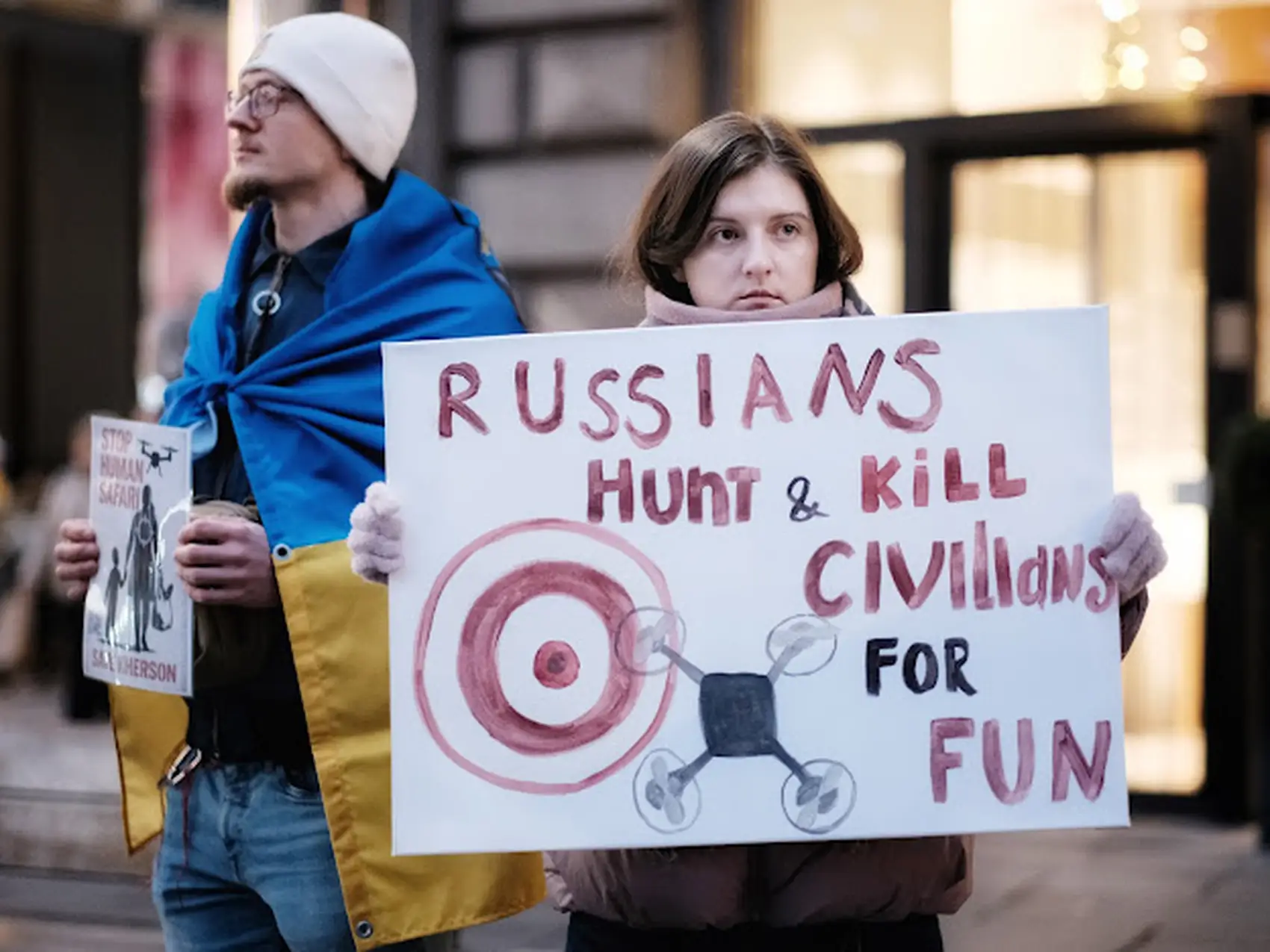
Zakharov says Zaur Shogentsukov, a Kabardian who crossed from Belarus to join Ukraine's forces, allegedly failed a polygraph test with the Security Service of Ukraine (SBU) and was pushed back into Belarus under a readmission deal. His tortured body later came back to his family in Nalchik, he says.
Alexey Gerasimov, a student from Russia's Chuvash region who reportedly backed his homeland's independence, slipped into Ukraine in 2024 to join the Sibir Battalion, a unit of Russian volunteers. He ended up in one of the large prisoner exchanges that followed the May 2025 Istanbul talks, and Ukraine delivered him to Russia, where he now faces terrorism charges—the independent Russian outlet Verstka reported in an investigation carried by Novaya Gazeta Europe.
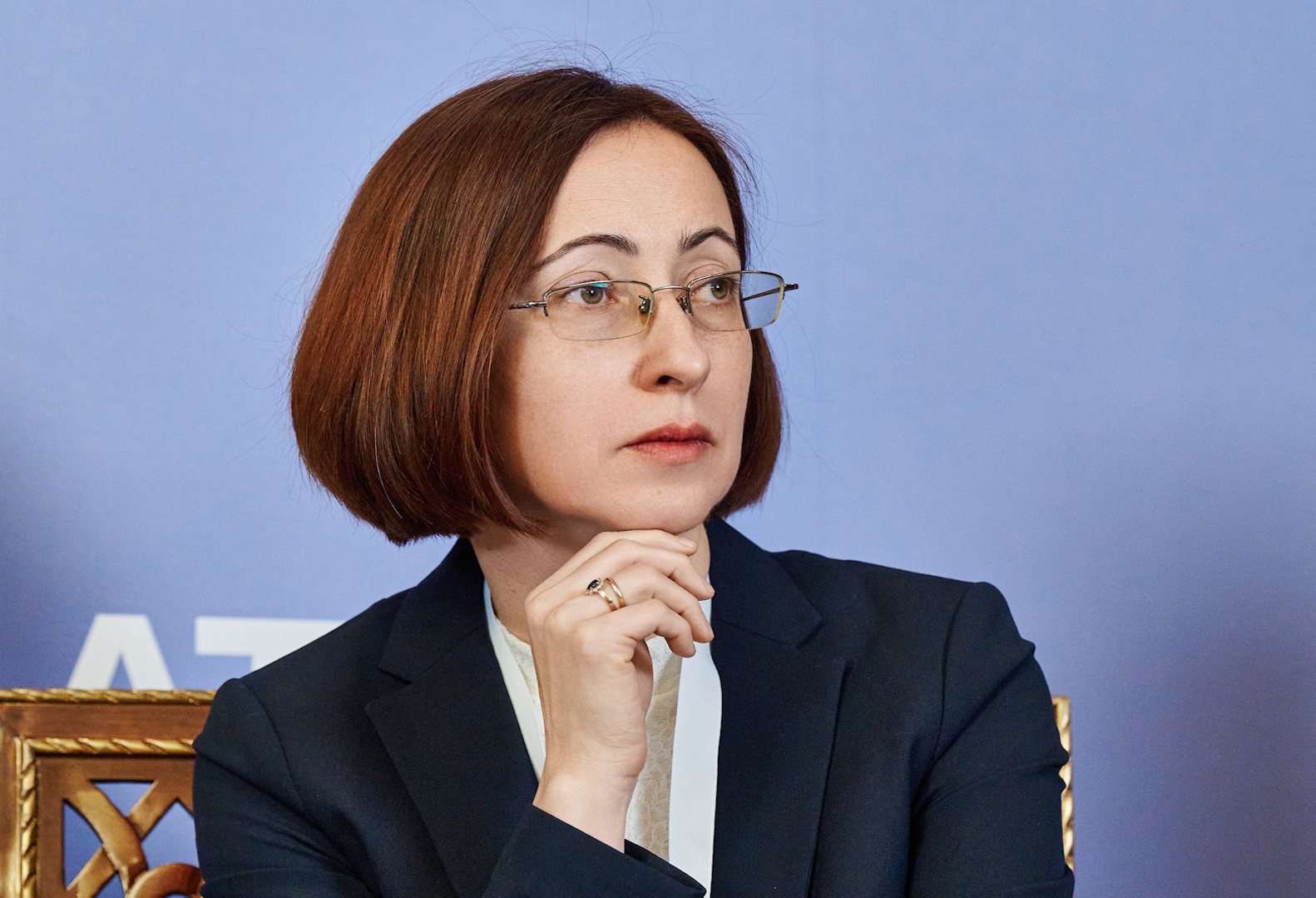
The most recent case is still unfolding. Aslan Khakimov, a Russian engineer who fled the Federal Security Service (FSB) in 2015 and spent years building robots for Ukraine's army, has sat in a migration facility since April 2026, accused of financing terrorism and facing deportation.
The most recent case is still unfolding. Aslan Khakimov, a Russian engineer who fled the Federal Security Service (FSB) in 2015 and spent years building ground robotic systems for Ukraine's army, entered on forged documents and lived for a decade under a false identity, Ruslan Puptaiev—the illegal stay Ukraine's migration service cites for the deportation order it issued in April 2026. Russia has separately convicted him in absentia of terrorism, a charge his defenders call fabricated. His supporters argue that returning him would be a death sentence.
Ukraine's services frame these as wartime security decisions, and infiltration is a genuine risk. But non-refoulement admits no wartime exception: even a proven spy is not a country's to send to his death.
Zakharov offers a blunter explanation for at least some cases: money. In the Tumgoev handover, he says, the man's family was quietly invited to outbid Moscow—to top the sum Russian handlers allegedly pay SBU officers for each person delivered.
"Totalitarian regimes spare no money persecuting their opponents," he said.
Ukraine's security service has not confirmed his account, and the allegation rests solely on his testimony.
Russia, for its part, has already shown its games in these exchanges, at times swapping in people with no link to the war. As Kyiv negotiates ever-larger exchanges to free its own soldiers, the same machinery can carry the Russians and Caucasians who fought for Ukraine the other way — a propaganda gift to Moscow and a warning to the next would-be defector that Ukraine's protection may not hold. For a state that anchors its whole cause in the rule of law, that is a debt that keeps compounding.
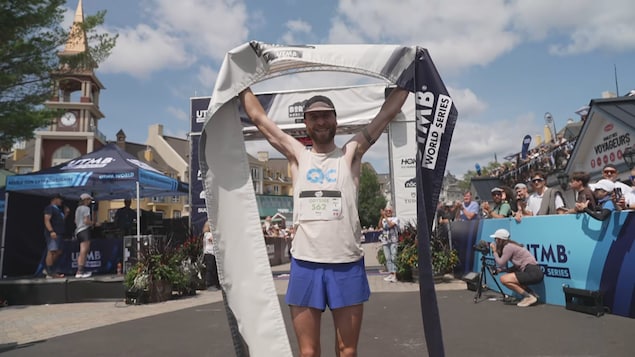
Il s'agissait de la première course du circuit UTMB World Series à être présentée au Québec.
:quality(50)/2026/08/15/6a80b4afad7cd014960906.png)

:quality(50)/2026/08/15/6a80b3891f598786415243.jpg)
:quality(50)/2026/08/15/6a80b3429b55e586583608.jpg)
:quality(50)/2026/08/15/6a80b002a1ff7110150189.png)

© Andrew Harnik/Associated Press
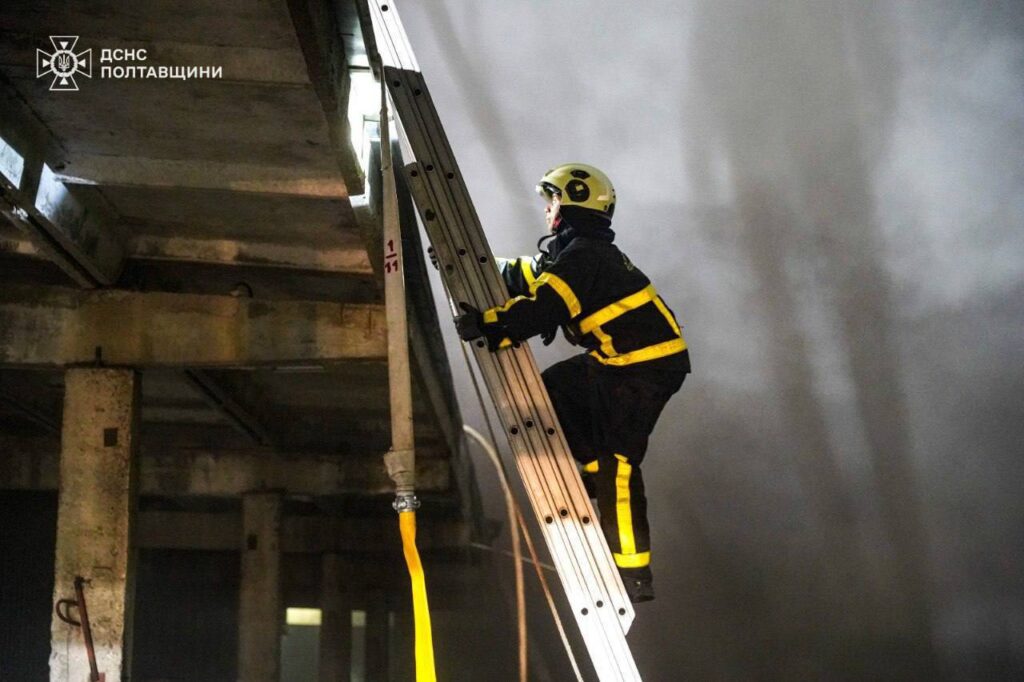
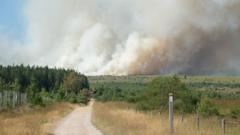
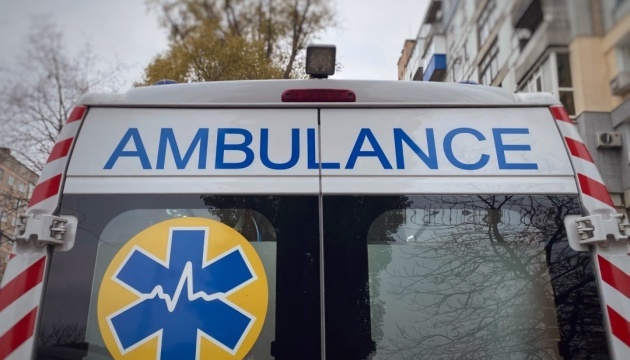
Ukraine sent rescuers to help fight wildfires in France, and they returned from a first-of-its-kind mission. Workers of Ukraine's State Emergency Service (DSNS) have reached Ukraine from France, where they spent nearly two weeks helping to contain large forest fires, Interior Minister Ivan Vyhivskyi announced.
The deployment was Ukraine's first mission to aid an EU member state under the bloc's own civil-protection system, with a combined unit of 70 rescuers and 15 pieces of special equipment, a role reversal for a country that has spent the war receiving European aid rather than sending it.
The Ukrainians worked the fires alongside crews from several countries. Their work involved dozens of call-outs, hundreds of hectares of surveyed territory, and fire pockets that kept smoldering underground, Vyhivskyi says
With them, they took wartime methods to the work. The Ukrainian rescuers patrolled the forests, used drones to spot new ignitions, and contained the fire together with their colleagues. The days became shared work and shared experience, uniting rescuers from Ukraine, France, Slovakia, and other countries, with different languages but with one profession and goal. For the European emergency employees, it was a chance to grasp the unique experience they gained during the full-scale war.
Ukrainian rescuers returned home after nearly two weeks helping fight massive wildfires in France, their first mission under the EU Civil Protection Mechanism
— Euromaidan Press (@EuromaidanPress) August 15, 2026
A joint unit of 70 rescuers and 15 pieces of specialized equipment patrolled forests alongside French, Slovak, and… pic.twitter.com/SXJvqemgQm
Vyhivskyi says that every day, Ukraine's rescuers respond to the aftermath of Russian strikes dozens of times, working in extremely difficult conditions, but despite those challenges, Ukraine is always ready to lend a shoulder to its partners.
When Ukrainian and French forces fought wildfires together, the combined detachment deployed six water tankers on the ground, supported from the air by three French aircraft, two planes, and a helicopter.
During the mission, the Ukrainian rescuers discovered that local residents hang “thousand thanks” banner in recognition of their service.
:quality(50)/2026/08/15/6a80ae5780fa5147177410.png)
Stablex prévoit aménager une sixième cellule d'enfouissement sur son site de Blainville.
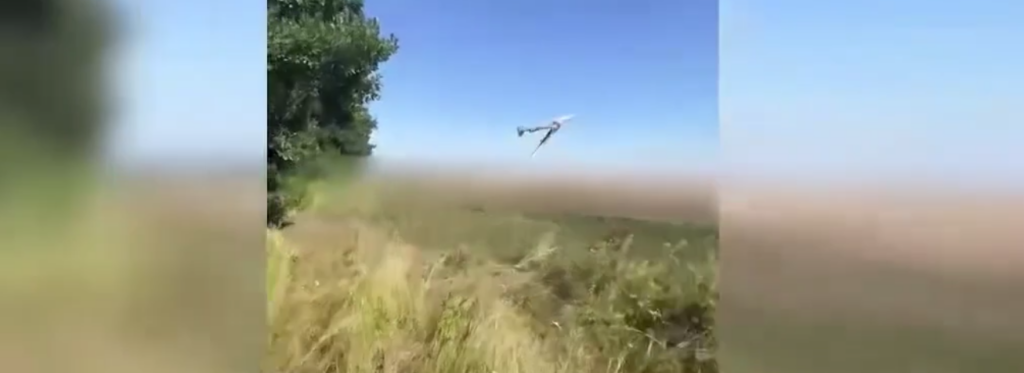
Russia is upgrading more of its drones to escape Ukraine's drone hunters. Russia has begun fitting jet engines to another attack drone model, the BM-35, presidential adviser Serhii "Flash" Beskrestnov reported.
The move is a direct answer to Ukraine's interceptors, and it is spreading across Russia's drone fleet. As Ukraine's interceptors have improved, the Russians are replacing their engines with jet engines not only on long-range Geran drones but also on budget mid-strike drones.
Each Ukrainian advance in shooting drones down pushes Russia to make them faster, Beskrestnov says.
Beskrestnov shared a Russian report showing the jet version of the BM-35 and its claimed characteristics. According to the Russian segment, the jet BM-35 can reach over 350 kilometers per hour, has a range of over 200 kilometers, and carries a 10-kilogram warhead.
The speed is the whole point. Russian fighters claim the increased speed is intended to make the drone harder for Ukrainian interceptors to catch, according to the Russian report. A faster drone gives Ukraine's interceptors less time to close and strike, which is exactly the problem the jet engine is designed to create.
Ukraine has scaled up cheap interceptor drones that take down tens of thousands of Russian drones a month, and that success is what forces Russia to respond, swapping propeller engines for jets to fly above the speed interceptors can reliably catch.
The result is a cost-and-speed contest. Jet engines make each drone more expensive and complex than the cheap propeller models Russia has relied on for mass attacks. So by making its interceptors effective, Ukraine has pushed Russia toward pricier, faster drones, the same dynamic seen with the jet Gerans that now strike Ukrainian cities.
Russia's war is driving advances in weapons technology without limits. This means that soon Ukraine will have to find more ways to protect itself from new weapons, as well as its allies, who have also come under Russia's attacks, such as Poland, Romania, and the Baltic States.