Alumina processed at a refinery in County Limerick may be feeding Russia’s war in Ukraine, an investigation suggested. There is little agreement on what to do about it.
Sweden will transfer 10 coast guard boats to Ukraine, the Swedish government announced on 27 August 2026. Stockholm will also direct additional funds to multilateral defense programs for Kyiv.
Russia's full-scale invasion added to some 13,500 km² of Ukraine's rivers, lakes, and Black Sea coastline now potentially contaminated with explosive remnants of war, in the world's most mined country, and emergency service divers had cleared 190 km² of it by November 2025. Allied nations have committed billions in military support to Kyiv since 2022, from fighter jets to anti-drone systems.
Rescue boats for Ukraine's mined waterways
Ukraine's State Emergency Service will receive the work and high-speed vessels in their current condition, after the coast guard removes their markings and equipment. The agency will use them for waterborne rescue operations, including clearing mines from river channels.
Explore further
Sweden detains Russians who “camped” near home of CEO of Gripen jets Ukraine is buying
Sweden's Civil Defense Minister Carl-Oskar Bohlin said Sweden is further strengthening Ukraine's maritime capabilities. He described towage, mine clearance, and transport as important capabilities that can now increase further. Sweden's Civil Defense Agency will handle transporting the boats to Ukraine.
The donation follows Sweden's broader naval support for Kyiv. In January 2025, Stockholm doubled its pledge of CB90 assault boats for Ukraine's navy to 32 and added 23 naval combat modules to arm them. The coast guard vessels serve a different purpose—rescue and utility work for a civilian agency, not combat operations.
Another $28 million for defense funds
Sweden will also channel 270 million Swedish kronor (about $28 million) to multilateral defense funds supporting Ukraine, mainly for air defense. Of that sum, $14 million goes to the Prioritized Ukraine Requirements List (PURL), to which Sweden contributed $108 million in June. Allies and partners fund high-priority American materiel through the US-led, NATO-administered program, and this package covers advanced air defense systems and ammunition for Kyiv.
Explore further
Sweden’s first 16 Gripens to reach Ukraine in early 2027. They come with weapons
The government said this marks Sweden's fifth PURL contribution. With the new payment, Stockholm's total PURL funding reaches $552 million.
In July, Sweden's defense minister confirmed Ukraine may use the Meteor missiles promised with its Gripen fighters against Russian aircraft over Russian territory.
Russia's Matryoshka bot network has launched disinformation campaigns targeting elections in Sweden, Germany, and France this month, fabricating video clips branded with the logos of trusted European media outlets, Sweden's national public broadcaster SVT reported. Analysts in multiple countries found the campaign aims not to reach mass audiences but to overwhelm newsrooms' fact-checking capacity.
Russia is waging a full-spectrum hybrid war against European democracies that support Ukraine. Beyond bot-driven disinformation, European intelligence agencies have tracked Russian operatives buying properties near military bases, suspected Russian arson at a defense manufacturer supplying Ukraine, and a Russian operation to discredit Sweden that Swedish security services stopped this month. Poland and the Baltic states face similar threats of sabotage linked to their support for Kyiv.
Fake clips target Swedish PM weeks before the vote
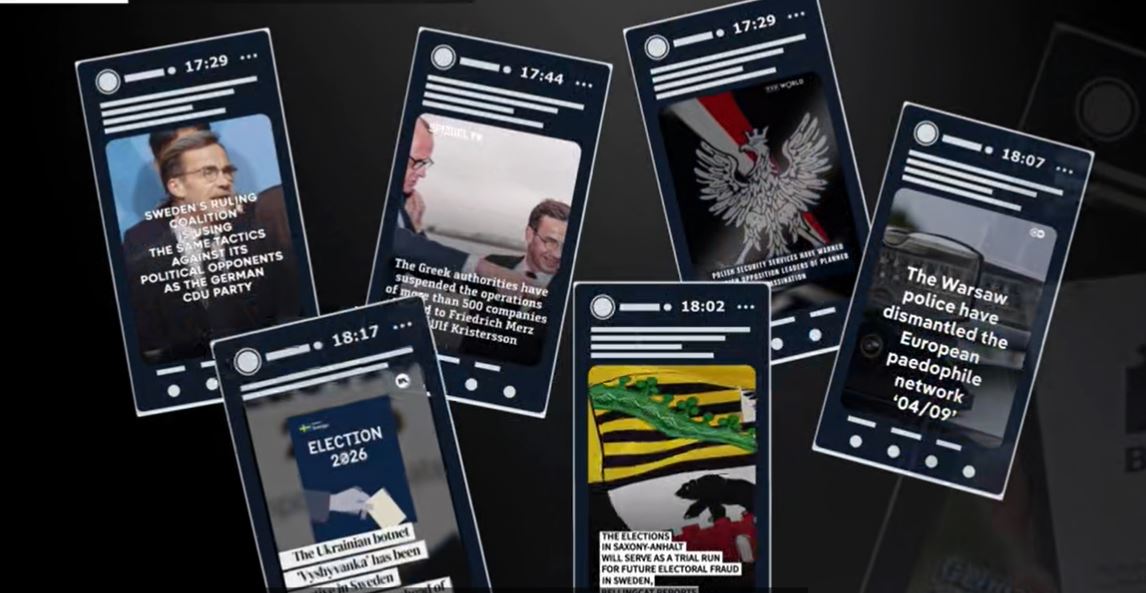
Seven fabricated video clips appeared on the social media platform X within a single hour on 18 August. Among them were clips branded with the logos of SVT and the Swedish newspaper Dagens Nyheter. Others hijacked the visual branding of Euronews and Germany's Der Spiegel. None were ever produced by these outlets.
The fake videos spread lies about election fraud in Sweden and directed false accusations at Prime Minister Ulf Kristersson personally. Sweden holds general elections on 13 September.
"We see this all over Europe. Russians target countries that support Ukraine," Kristersson told SVT.
Russian opposition analysis group Antibot4navalny linked the posts to Matryoshka, a pro-Russian influence campaign named after the Russian nesting doll.
Fabricated social media posts from Russia's Matryoshka bot network targeting Sweden's 2026 election, featuring fake headlines with hijacked media branding, 18 August 2026. Screenshot: SVT
Also known as Operation Overload and Storm-1679, Matryoshka was first exposed by Antibot4navalny in 2024 and is one of several Kremlin-linked disinformation networks alongside the Doppelgänger campaign and Storm-1516. A previous SVT review found the majority of Matryoshka's posts aimed to influence Western support for Ukraine.
Explore further
Sweden says it stopped Russian operation to discredit country and EU. But no one will be prosecuted
Campaign targets newsrooms, not audiences
The fabricated posts rarely get more than a few hundred or a few thousand genuine views, Antibot4navalny told SVT. Analysts say the campaign is not primarily designed to reach a large audience. Matryoshka operators actively push fabricated posts to journalists and fact-checkers, often disguising them as verification requests. A 2024 report by France's state anti-disinformation body Viginum suggested the campaign aims to distract and overload newsrooms' fact-checking resources through large volumes of targeted requests. In posts targeting Sweden, the network tagged the social media accounts of several outlets, including SVT and Dagens Nyheter.
The campaign may also seek to generate media coverage that amplifies its message or makes it appear more influential than it is, the think tank ISD assessed.
Explore further
Sweden detains Russians who “camped” near home of CEO of Gripen jets Ukraine is buying
Germany and France targeted the same month
On 12 August, Germany's domestic intelligence agency, the Federal Office for the Protection of the Constitution (BfV), warned that Matryoshka is targeting local and regional elections in Germany scheduled for September. In early August, France's Viginum detected a Matryoshka operation directed at presidential candidate Gabriel Attal ahead of the 2027 vote. French prosecutors opened a probe into the campaign on 18 August.
In April, the network promoted false claims of Ukraine's involvement in the assassination attempt on US President Donald Trump.
A Russian couplenear the home of Sweden's top defense executive drew a security response. The man and the woman were detained after setting up camp near the home of Saab CEO Micael Johansson, SVT Gävleborg reports.
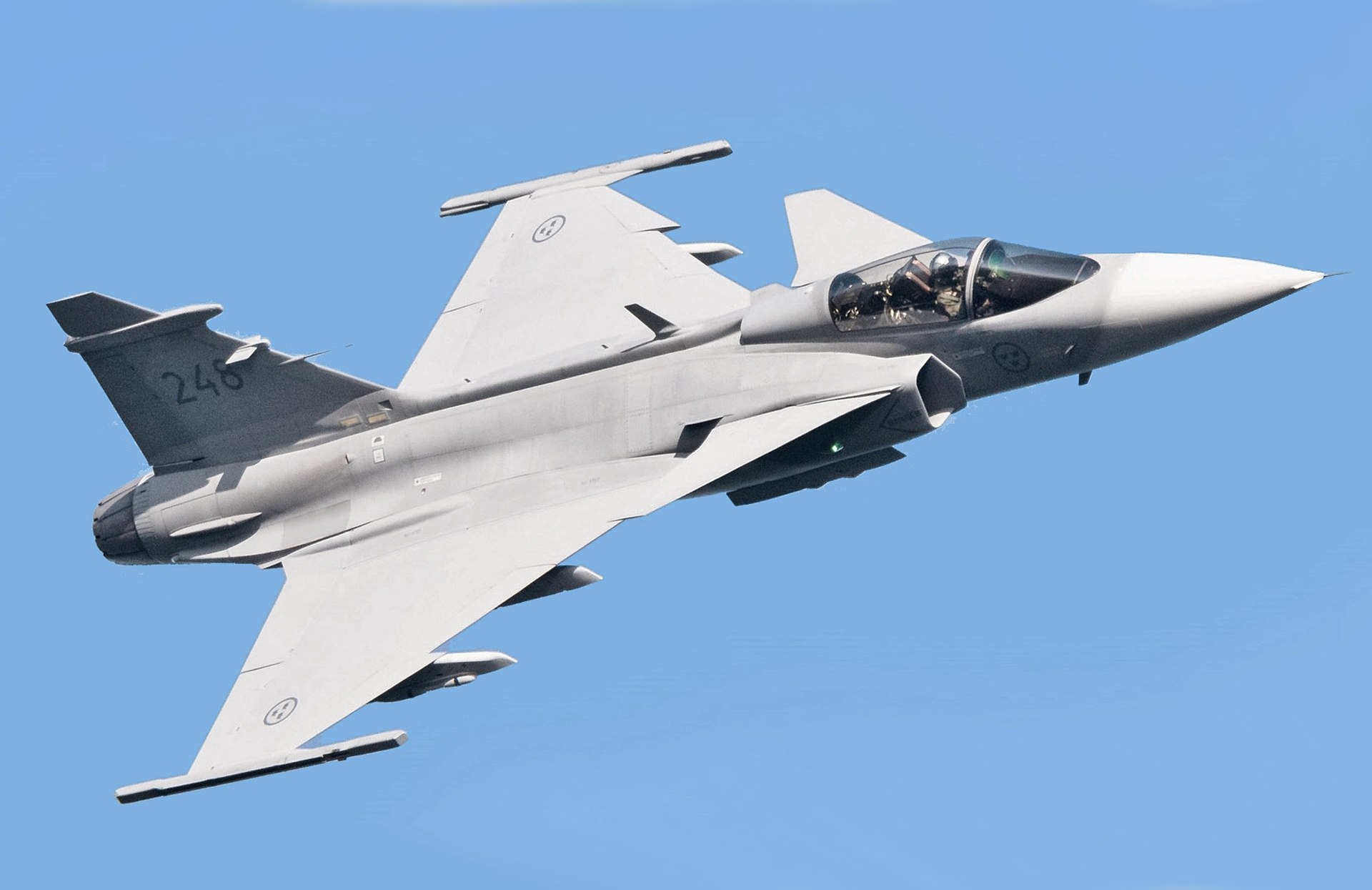
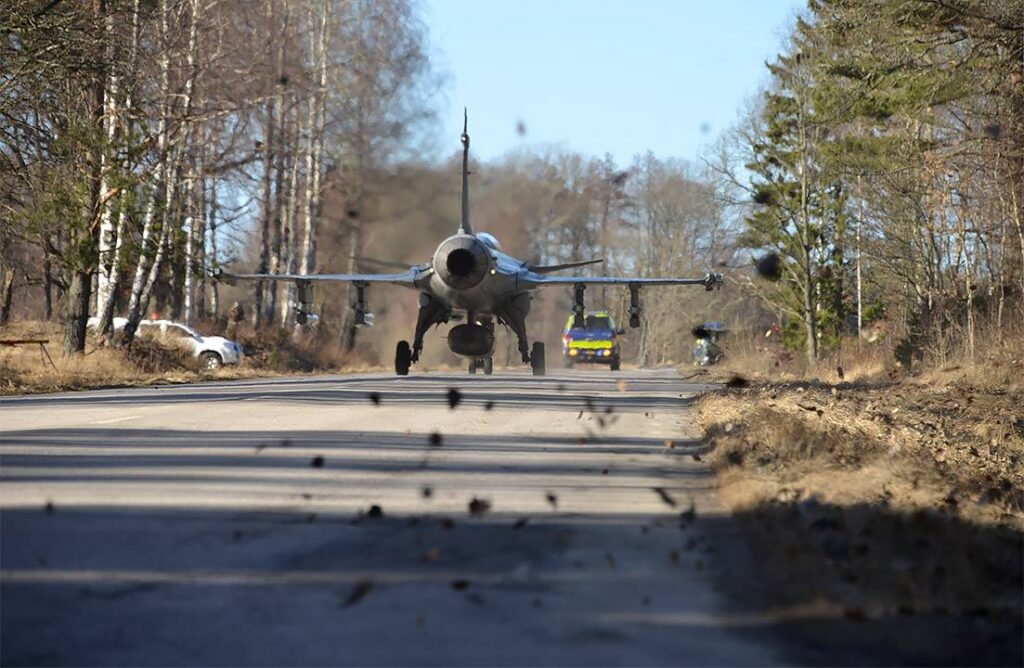
The incident reflects the heightened security around Sweden's defense industry amid its arms supply to Ukraine. Saab makes the JAS 39 Gripen fighter, and in May, Ukraine and Sweden agreed to launch a defense deal that includes the purchase of up to 20 Gripen E/F fighters, according to Ukraine's Office of the President.
The CEO is under personal protection
Johansson lives under guard because of what Saab builds. Because of the company's military production, he is under personal protection, and he framed the security response as a routine precaution.
"My role is quite delicate. That is exactly why the guards checked these people," he said.
The property where the Russians were found does not belong to the Saab CEO himself but to a person close to him, so the couple was near, but not at, Johansson's home.
What happened at the property
The encounter began with a request to fish. A woman who spoke accented English entered the property and asked whether she could fish from the pier belonging to the plot.
She was refused, after which the guards came and took a closer look at the Russian couple.
The facts remain ambiguous
The couple's intentions are being established, and they had earlier told journalists that deportation to Russia would be risky for them because, they said, they had taken part in protests against the war in Ukraine.
That claim, if true, would run counter to a hostile-surveillance reading, though it cannot be verified either way. What the episode does show plainly is the state of alert around Sweden's defense sector amid Russia's threats.
Sweden says it caught and stopped a Russian spy operation. Säpo Security Service has exposed the intelligence operation aimed at discrediting the country, Sweden Herald reported.
The operation is one strand of Russia's hybrid campaign against Europe. Since the full-scale war in Ukraine, Russia has run espionage, sabotage, and influence operations across European states, from undersea cable damage in the Baltic to disinformation. The Swedish case is one such effort, aimed at undermining Swedish decision-making and discrediting Sweden and the EU.
The agent worked from a diplomatic mission
For the operation, Russian intelligence recruited its source inside a foreign embassy. The agent, recruited at a foreign diplomatic mission in Sweden, gathered information on the decision-making processes of Sweden's central government bodies and the kingdom's relations with other countries.
The goal was influence, not just information. The operation was meant to give Russian intelligence the ability to influence contentious issues, undermine Swedish decision-making, and discredit Sweden and the EU. It is the classic shape of a Russian influence operation: acquire inside knowledge of how a target state decides, then use it to steer or discredit those decisions.
Säpo watched it for a long time
The service said it tracked the operation before shutting it down. Säpo long monitored and documented the operation, recording meetings at which the agent passed information to two officers of Russia's Foreign Intelligence Service (SVR). It knew the tasks the agent was given and the questions he put to his handlers, Christoffer Wedelin, a deputy operations chief, said.
Säpo said it acted to contain the damage.
"Our assessment is that we have prevented the Russian intelligence operation. They have not succeeded in their mission," Wedelin said.
No one can be prosecuted
The case ends without arrests. The agent and the two Russian officers have left Sweden, and because all three hold diplomatic immunity, they cannot be arrested or prosecuted.
Satellite images reveal that Russia has expanded and modernized at least five nuclear-related facilities near European borders in recent years, Swedish broadcaster SVT reported on June 16, citing new imagery obtained from Planet Labs.
One of the most notable developments is in Kaliningrad, where the suspected nuclear weapons storage site has undergone significant reconstruction.
Images taken in May 2025 show the addition of triple-layered fencing, new buildings, and advanced communications equipment. Polish Foreign Minister Radoslaw Sikorski previously said that up to 100 tactical nuclear warheads might be stored at the site.
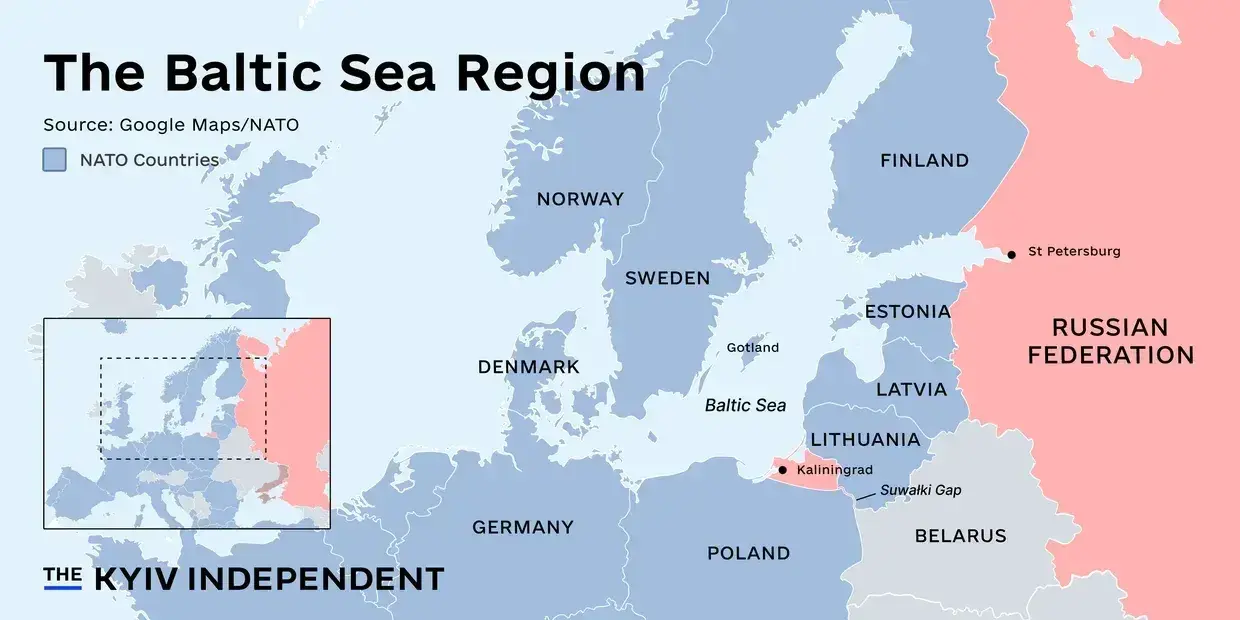
Kaliningrad, a militarized Russian exclave between Poland and Lithuania, is a key concern for NATO because of its advanced missile systems and expanding nuclear infrastructure.
A map of the Baltic Sea Region. (Lisa Kukharska / The Kyiv Independent)
The Osipovichi base in Belarus, a former Soviet nuclear storage facility, is also being renovated. Satellite imagery shows new air defense installations and a modernized loading platform for rail-based logistics.
In Novaya Zemlya, a remote Arctic archipelago long linked to Soviet-era nuclear testing, several new buildings have appeared, reinforcing its role as a potential site for future test activities.
On the Kola Peninsula, near the borders with Finland and Norway, Russia has built about 50 storage bunkers for submarine-launched ballistic missiles and constructed a specialized pier for loading those missiles onto submarines, according to the imagery.
Swedish Defense Minister Pal Jonson responded to the findings, saying Stockholm is "closely monitoring" Russian nuclear capabilities. Sweden officially joined NATO in March 2024 after years of non-alignment, citing escalating Russian threats as a primary reason.
The Kremlin has repeatedly used nuclear threats to pressure Ukraine and Western countries since the start of its full-scale invasion in February 2022.

 Connexion