Russia flies its missile raids on Ukraine from Engels-2. Ukraine keeps reaching the strategic bombers there. Soldiers of the Security Service's Alpha unit have struck a Tu-95MS missile carrier at the Russian airbase, President of Ukraine Volodymyr Zelenskyy wrote.
The Tu-95 is part of Russia's nuclear triad, a Soviet-era strategic bomber Russia has used to launch cruise missiles at Ukraine since 2022. Ukraine has spent the war whittling down the fleet. On 1 June 2025, Operation Spiderweb smuggled explosive drones deep inside Russia on trucks and hit 41 strategic bombers along with other bombers in a single day.
The satellite image shows the damage
The first image of the bomber has appeared on social media. A satellite photo published on Friday, 28 August, by OSINT analysts Exilenova+ shows the aircraft suffered critical damage in the strike.
The bomber lost about a third of its right wing to the drone hit. Other damage is hard to judge in the image due to low resolution.
The Russian Engels-2 air base is home to Tu-95MS and Tu-160 strategic bombers, which regularly launch Kh-101 cruise missiles at Ukraine. The base also houses ammunition and fuel storage facilities, equipment, and aircraft maintenance infrastructure.
A Russian Tu-95 strategic bomber. Source: Exilenova+
Strikes targeting Russian bombers and the airfield’s infrastructure are critically important. They are aimed at degrading the aggressor country’s military capabilities.
A second Engels-2 bomber in weeks
This is not the first Tu-95 Ukraine has reached at the base recently. Ukrainian drones struck Engels-2 in early July, ArmyInform reported, destroying a different Tu-95 whose tail section was torn off and thrown dozens of meters by the blast.
Analyst Oleksandr Kovalenko of Information Resistance said Russia has up to 12 flyable Tu-95MS left after Operation Spiderweb, in varying states of readiness, and that the one hit overnight belonged to the serviceable group.
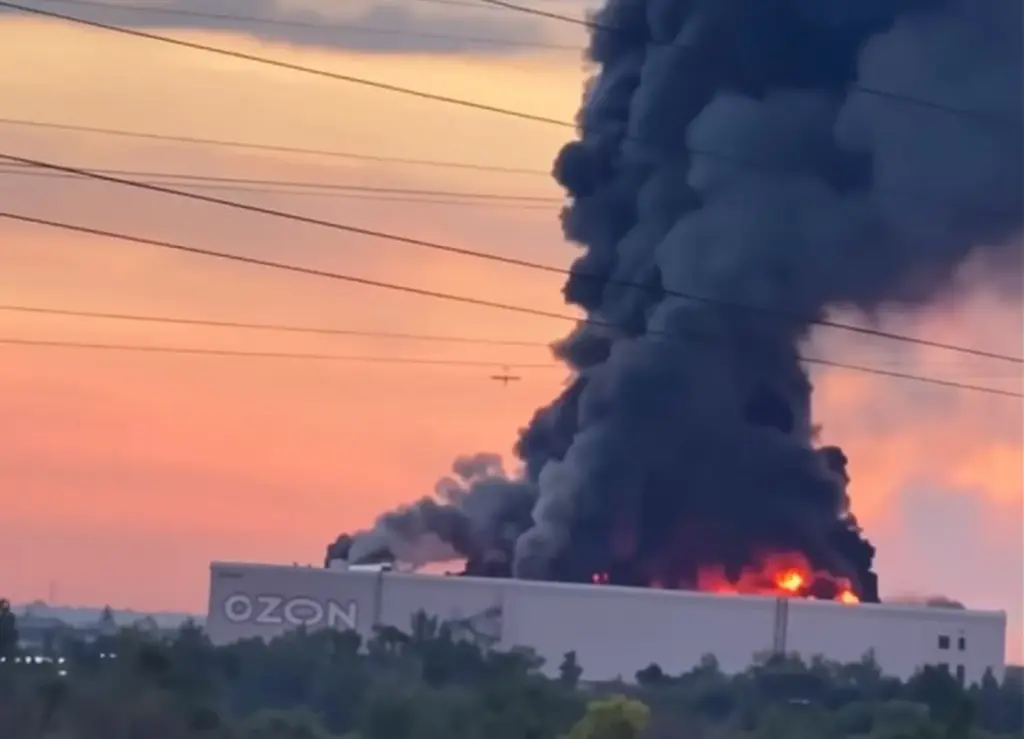
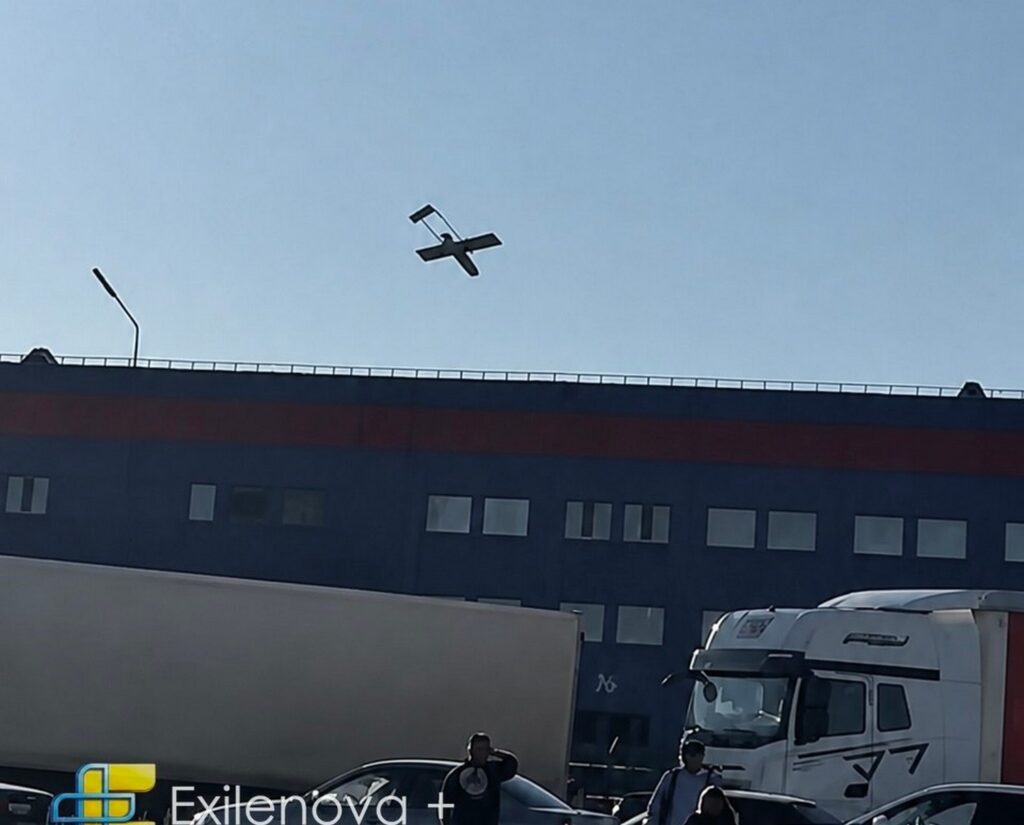
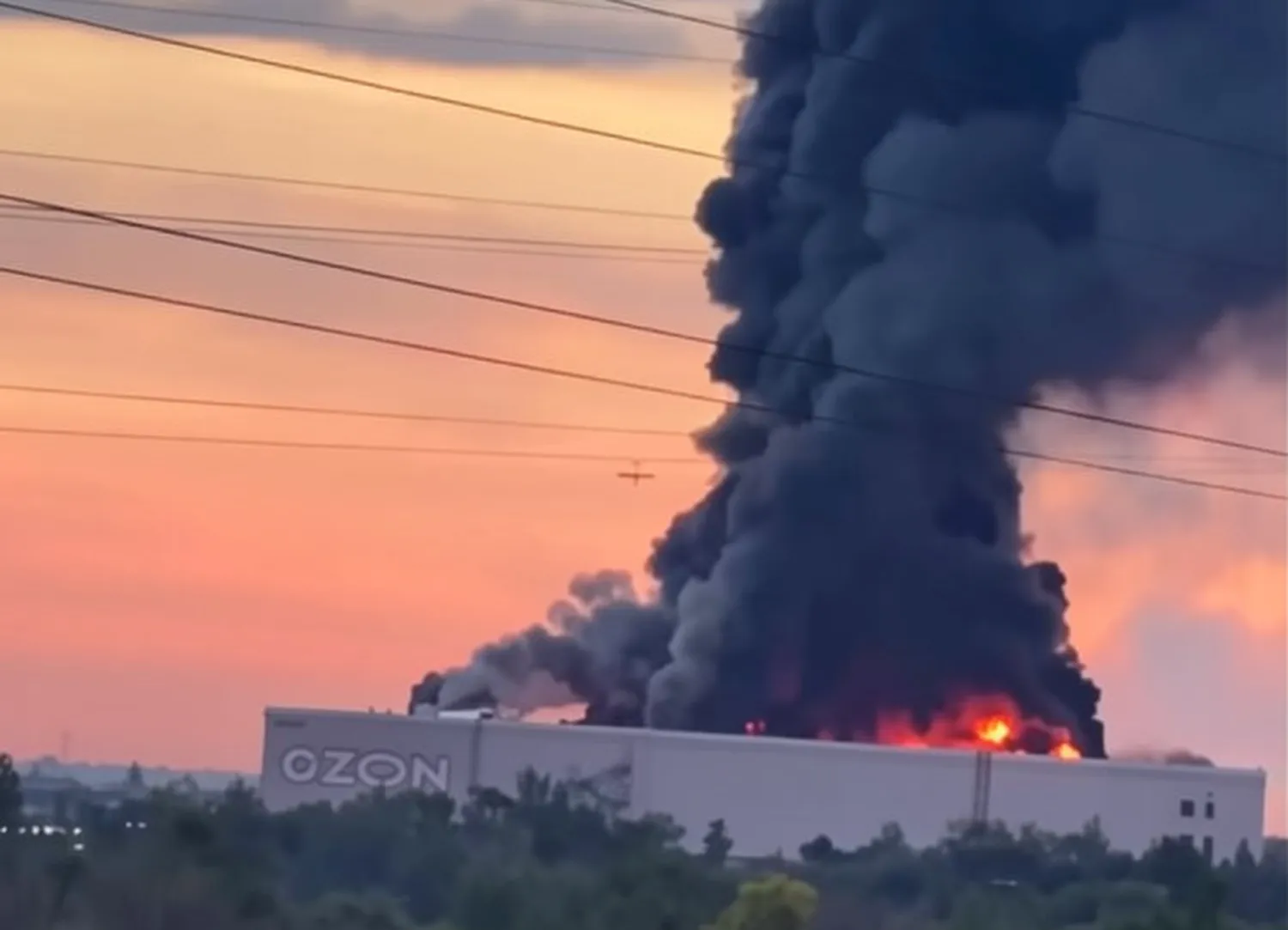
Ukrainian drones attacked two Ozon logistics centers overnight on 27 August, one in Ufa and one in Orenburg Oblast, Russia's second-largest online store said. Staff were evacuated at both sites, and preliminary information indicated no casualties. Video published by Ukrainian monitoring channel Exilenova+ shows a drone reaching the Bashkortostan warehouse and exploding.
Ukraine's deep-strike campaign has spread across Russian refineries and fuel depots, chemical plants, arms factories, railways, and the warehouses that move consumer goods. Together the strikes take refining capacity, storage space, and freight throughput out of service repeatedly, and sanctions leave Russia fewer parts and crews to restore them with.
The strike on camera
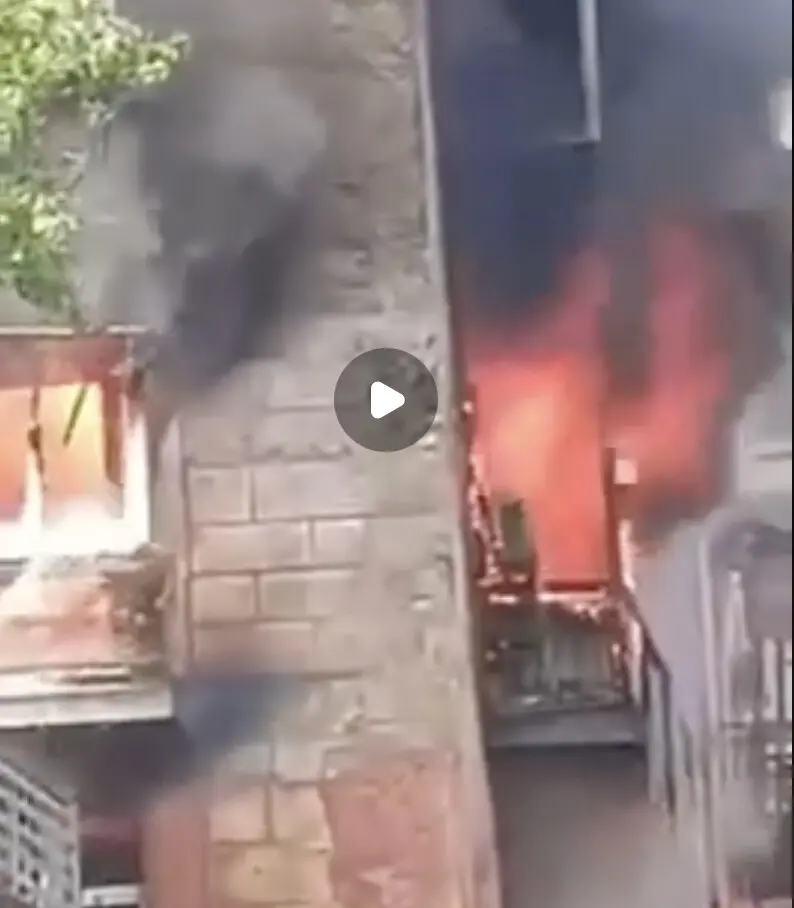
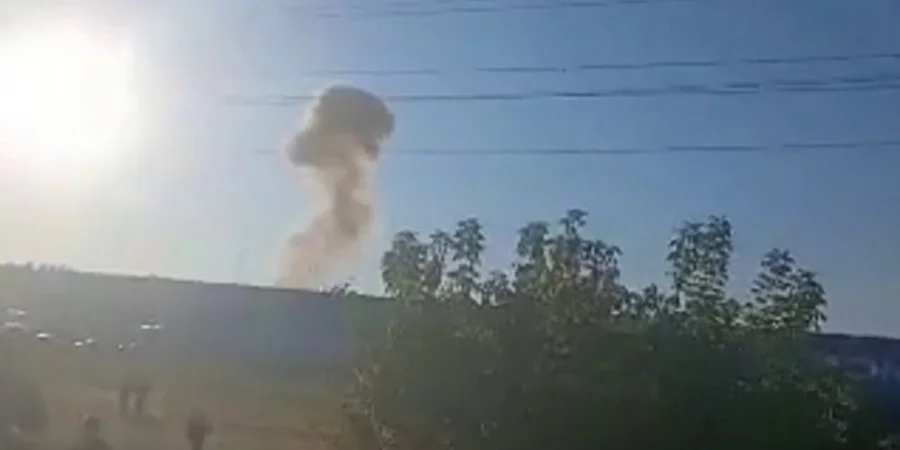
Exilenova+ reported in the morning that an Ozon warehouse was burning after impacts in Blagoveshchensk, a town north of Ufa. The Bashkortostan capital lies roughly 1,300 kilometers from the war zone in Ukraine. Around midday the channel published eyewitness video of what it called the moment of a drone attack on the site, and said the warehouse had not caught fire. The footage shows a drone reaching the site and detonating there.
Drone hit another Russian warehouse
Eyewitness video from Blagoveshchensk in Bashkortostan shows the moment a Ukrainian drone reached Ozon's fulfillment center — the largest logistics complex the online retailer runs in the Volga area — and detonated. The channel that published… pic.twitter.com/oHUgjRz0v0
Earlier, the channel reported that residents of Sterlitamak, Bashkortostan's second-largest city, about 120 kilometers from Ufa, had written about explosions, with nothing then known about impacts. Astra later placed smoke over what it said was probably the Bashkir Soda Company works there.
Ozon said the Orenburg site—about 1,200 kilometers from the war zone—has resumed work. The one it placed in Ufa sustained what it called minor damage but remains closed, because the grounds need a thorough inspection. It is not accepting deliveries.
Russian news Telegram channel Astra identified the damaged facility from the eyewitness footage as Ozon's UFA_RFC fulfillment center in Blagoveshchensk. When it opened in late 2024 it was billed as the largest Ozon logistics complex in Russia's Volga federal district, with a total area of 93,000 square meters.
Smoke over the Ufa refineries
Astra also traced smoke in eyewitness footage to the Bashneft-Ufaneftekhim refinery in Ufa. The plant is one of Rosneft's leading refineries and a dual-use site: it supplies specialized fuel to Russia's armed forces and petrochemical feedstock for defense-grade materials. It burned after a strike on 1 August.
Bashneft runs three refineries side by side in Ufa's northern industrial zone—Ufaneftekhim, Novoil, and UNPZ—forming one of Russia's largest refining complexes, with a combined capacity of up to 23.5 million tons of feedstock a year.
Explore further
Ukrainian drones hit warehouse belonging to Russian online retailer Ozon for the first time
What officials said, and didn't
Bashkortostan's authorities did not report the attack. Orenburg Oblast governor Yevgeny Solntsev mentioned drone danger in his region but gave no account of consequences. Ufa closed its airport.
Russia's Defense Ministry claimed air defenses destroyed 267 Ukrainian fixed-wing drones overnight across Russian regions, Bashkortostan among them.
The campaign so far
Ukraine's warehouse campaign began with Wildberries, Russia's largest online marketplace, which lost eight warehouses and roughly 860,000 square meters of storage in July alone. It reached Ozon for the first time on 22 August at Chapayevsk in Samara Oblast, where more than 500 employees evacuated and people were hurt. Four more Ozon hubs were hit across southern Russia two nights later.
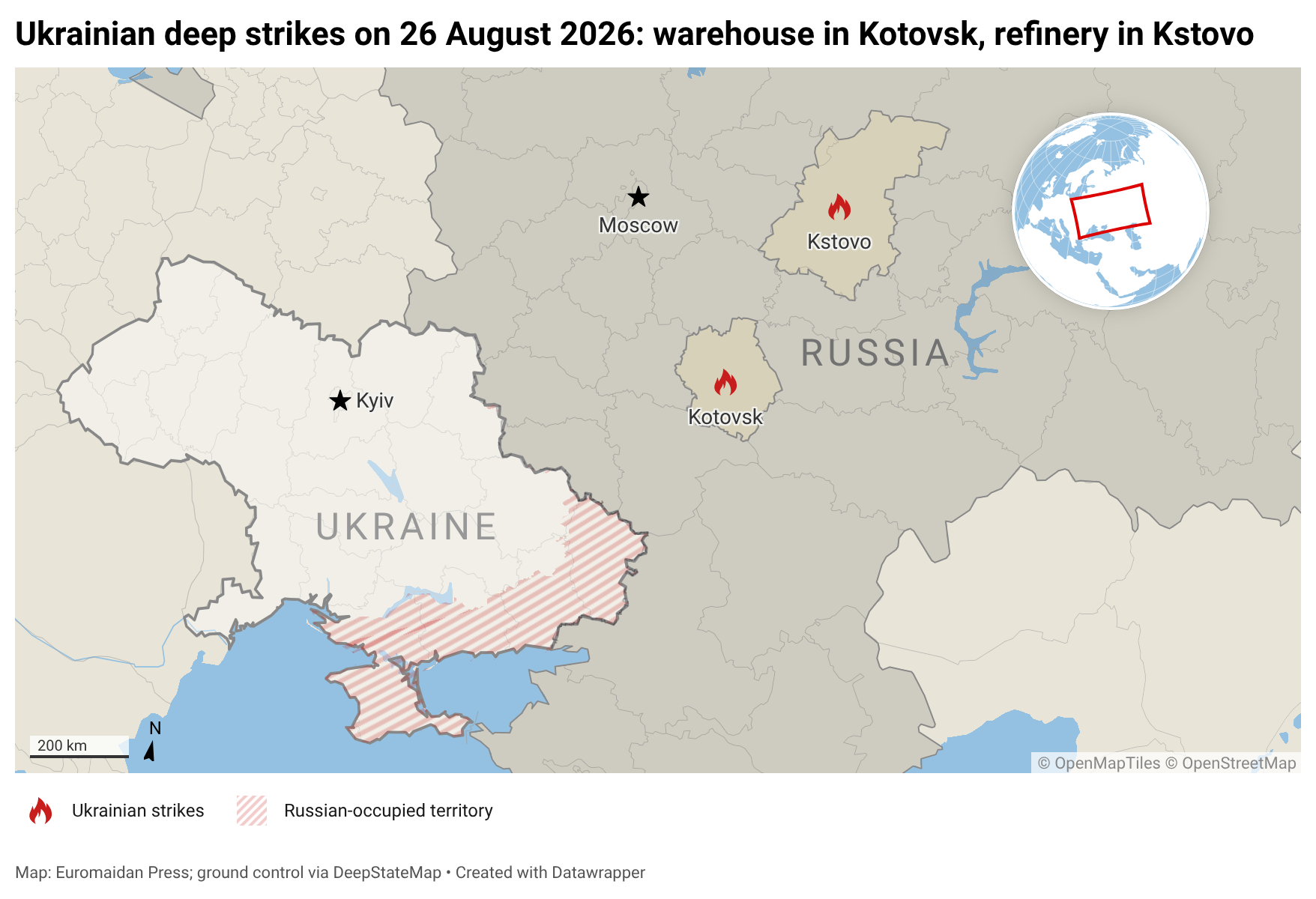
Ukrainian drones struck the Wildberries logistics hub in the Russian town of Kotovsk for the second time in six weeks, Ukrainian monitoring channel Exilenova+ reported. A fire took hold across most of the 108,000-square-meter complex, and by late morning, the regional governor said the warehouse was destroyed. Wildberries, Russia's biggest online store, had restarted the site after a July strike. The facility is located in Tambov Oblast, about 420 km from the war zone in Ukraine.
Since mid-July, Kyiv's long-range drones have been burning through the depots of Wildberries and Ozon, Russia's two biggest online stores, alongside the refineries and fuel depots that remain on the target list. Marketplace hubs are wide, flat, and largely uncovered by air defense, and the space takes months to replace, so the campaign now reaches the part of the Russian economy that touches every household.
The second fire at the same hub
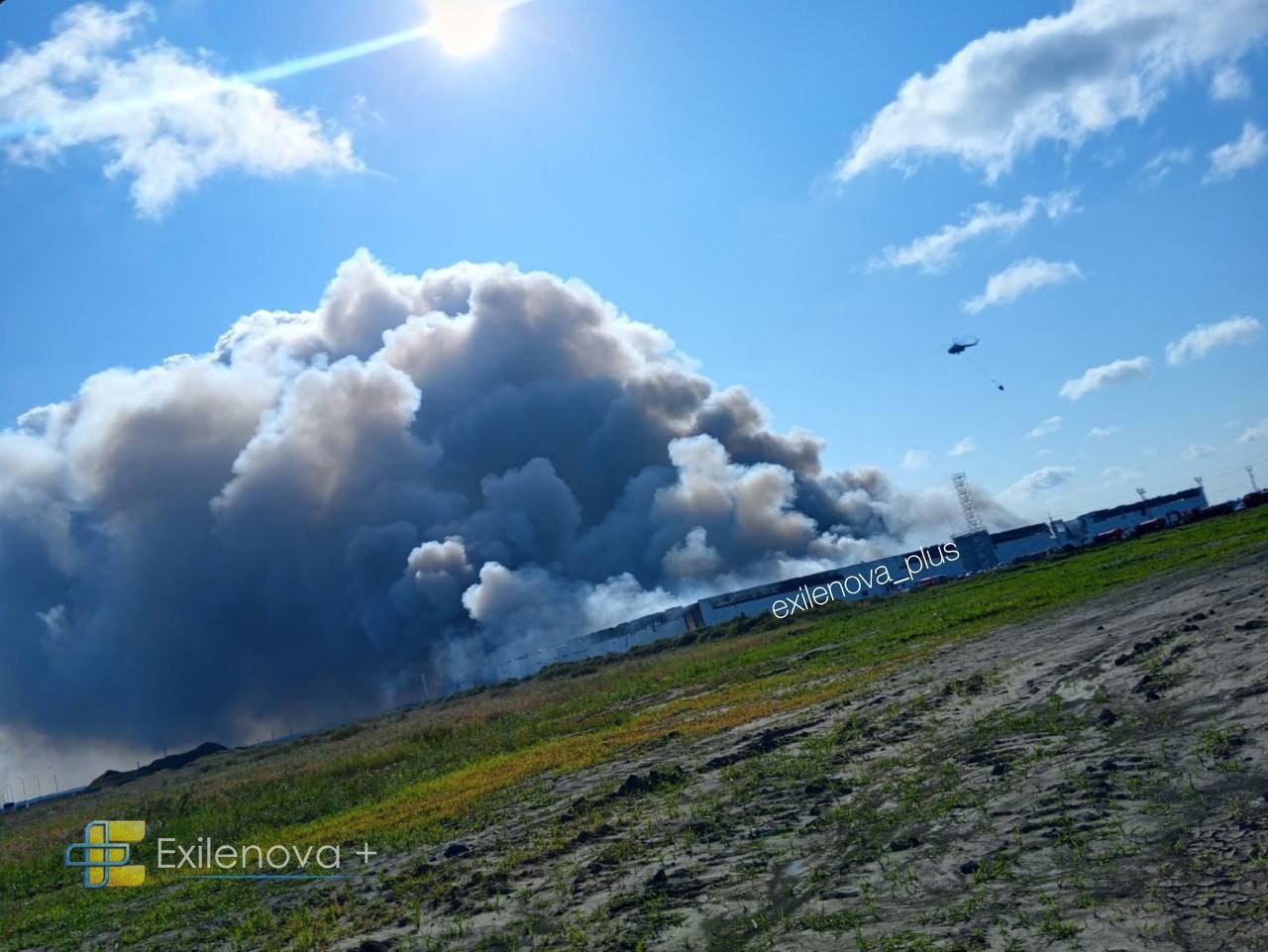
Exilenova+ reported the strike at 01:24, saying Ukraine's Defense Forces had hit the site again and that a fire was burning. Later, the channel continued to share photos and videos from Kotovsk. The Russian news Telegram channel Astra reported that local residents described the warehouse as attacked and alight. Witnesses counted at least 10 explosions in 40 minutes. Wildberries said a drone attack damaged its logistics facility in the oblast and started a fire, and that the site had stopped accepting new deliveries.
Smoke rising from the Wildberries logistics center after the drone strike in Kotovsk, Tambov Oblast, Russia, 26 August 2026. Photo: Supernova+
What the governor said, and what changed by morning
Tambov Oblast governor Yevgeny Pervyshov confirmed the attack and put the burning area at more than 100,000 square meters. He claimed air defenses and mobile fire groups of a regional volunteer reserve unit destroyed 16 drones. He initially reported one Wildberries employee hurt, with concussion from a blast wave, and said a downed Ukrainian drone set a house on fire in a dacha settlement.
A helicopter carrying a water bucket above the burning Wildberries logistics center in Kotovsk, Tambov Oblast, Russia, 26 August 2026. Photo: Exilenova+
By 11:17, Pervyshov's account had changed. Fire had destroyed the warehouse completely, and two people were injured, he said. Three strike drones had reached the building, the official stated. He closed by again urging men in the oblast to join the defense of its skies. Earlier, Kotovsk's mayor asked residents not to leave their homes for two days, citing the risk of carbon monoxide poisoning from the burning warehouse.
Russia's Defense Ministry separately claimed it destroyed 426 drones overnight across the country.
Last night, Ukrainian drones struck another warehouse in Russia
The Wildberries hub in Kotovsk, Tambov Oblast, caught fire and the company announced a "temporary" suspension of its operations.
Ukrainian President Volodymyr Zelenskyy said Ukrainian forces hit 16 targets in Russia over the past day, naming oil facilities — "the Russian oil wallet that finances the war" — along with airfields, a missile unit, a military plant, and Russian logistics. War has to return to where it came from, he said.
Almost no storage left in central Russia
The Kotovsk hub opened in 2025 as one of Wildberries' key logistics sites for central Russia, built to hold up to 54 million items at full capacity. Drones first hit it overnight on 18 July, when seven warehouse staff died and, by the governor's count, 25 more were hurt. The company suspended operations then, too.
By the end of July, the retailer had already lost more than a million square meters of warehouse space, Exile+ calculated, which leaves it physically almost no free capacity in the center of the country.
From one marketplace to the next
Ukrainian drones destroyed eight Wildberries warehouses in July alone, roughly 860,000 square meters or about 15.4% of the company's storage. The campaign widened to Ozon, Russia's second-largest online store, with its biggest Russian complex hit in Orenburg on 23 August, and three southern hubs struck the next night.
Fire has destroyed the Kherson apartment of Mariano García Calatayud, the Spanish volunteer, who was abducted by Russian forces during the occupation of the city in 2022. His partner, Tetiana Marina, told ZMINA she received two videos from neighbors that morning, the first showing her apartment alight and the second showing the fire spreading through the building.
Calatayud is one case in a system of civilian captivity that Russia does not acknowledge. Ukraine's ombudsman estimates Russia holds up to 20,000 Ukrainian civilians, with confirmed identities for only a fraction. Russia has never charged Calatayud with a crime, never allowed him a lawyer or contact with his family, and for more than three and a half years has declined to confirm it holds him at all.
The building stands at the start of Yevropeiska Street, formerly Suvorova, roughly 500 to 700 meters from the Dnipro, Marina said. Police have recorded the damage. She does not know what caused the fire and suspects a Russian drone.
The videos showed the fire spreading
"In the first, I saw clearly that only my apartment was engulfed. In the second, I saw that all the apartments in the video had burned," Marina said.
She is still trying to reach a neighbor, Iryna, who had been sleeping in a bomb shelter because of the shelling.
"I still do not know what happened, but everything burned. It does look like a drone," she said.
A moral debt brought him to Ukraine
Calatayud ran the road construction department at Valencia city hall before retiring. He moved to Ukraine in 2014, collected humanitarian aid from several countries and delivered it to Marinka and Krasnohorivka in Donetsk Oblast, and worked with orphanages.
Marina explained his reason to Radio Free Europe/Radio Liberty. Under Franco, many children of repressed Spaniards were sent to Ukraine, to Odesa. His mother's family was among the repressed.
"That is why he went to Ukraine in 2014, to, as he put it, repay a debt to Ukraine," she said.
When Russian forces took Kherson, he stayed. He could have left for Spain, but did not.
Russia stopped acknowledging him
On 19 March 2022, Calatayud attended a pro-Ukrainian rally. Two men in balaclavas seized him at his own entrance, handcuffed him, put him in a dark blue minibus, and drove him to the occupation administration, Marina said.
He was held in Simferopol pre-trial detention center No. 2. According to other civilian hostages, he was beaten and subjected to electric shocks while in detention. They also described inhumane conditions and a lack of proper medical care. He suffered a heart attack in custody.
In December 2023, Russia reported Calatayud's transfer to Kherson Oblast, the Media Initiative for Human Rights reported. Spain proposed exchanging him for a Russian prisoner of war, and Russia refused. The Red Cross is searching for him in penal colonies, including in Siberia.
Russian military bloggers listed him in a database of foreign fighters, claiming he had joined Kherson's territorial defense. He never carried a weapon in the city, his wife said.
Ukrainian strikes on Ozon’s warehouses sent the listed retailer’s shares down 29.09% from Friday’s close at Monday’s low, RBC’s market report said. The Moscow Exchange shifted Ozon’s main trading session to a 30-minute auction, while other trading modes remained open, exchange rules show.
Unlike privately held Wildberries, Ozon’s listing made investors’ response to the disruption immediately visible.
Unlike privately held Wildberries, Ozon’s listing made investors’ response to the disruption immediately visible. The sell-off came before Ozon had calculated the physical damage, which the company said it would assess later in its statement on Chapayevsk.
Ukrainian drones hit warehouse belonging to Russian online retailer Ozon for the first time
Russia was simultaneously attacking Ukraine’s retail and logistics infrastructure. Russian strikes burned two Epicentr hypermarkets in Odesa on Monday morning and caused fires at food warehouses in the city, regional authorities said.
Two days earlier, President Vladimir Putin had said Kyiv should “expect a response targeting your most sensitive economic sectors” in comments published by state journalist Pavel Zarubin.
Ozon falls farther than the market
The MOEX index fell about 2.9% on 24 August. Ozon’s 29.09% decline went far beyond the broader sell-off, indicating that investors were reacting to company-specific risk rather than merely following the Russian market.
That risk had appeared before Ozon’s warehouses were struck. Its shares fell 2.3% on 22 July over concerns that the retailer might become a target. Six days later, VTB Bank fell 2.5%, with analysts attributing part of the decline to uncertainty surrounding its Wildberries partnership.
Wildberries, Ozon, and their smaller rivals sell goods and services worth the equivalent of 8.5% of Russia’s GDP and employ 4 million people—more than 5% of the country’s workforce.
Dagestan, Stavropol Krai, Adygea: Ukraine’s drones worked straight down the delivery map of Russia’s No. 2 online store
Rerouting allowed Ozon to keep orders moving by transferring the workload to facilities that remained open. That is the business risk investors were pricing: a distributed warehouse network can absorb an isolated closure, while repeated attacks progressively reduce the capacity available to absorb the next one.
An Ozon delivery truck outside one of the Russian retailer’s logistics centers. Photo: Retail.ru
Each strike leaves fewer warehouses
Ukraine’s campaign against Wildberries shows how warehouse losses accumulate across a retail network. By the end of July, Verstka counted eight affected warehouses covering 860,000 square meters, or 15.4% of the company’s total warehouse space.
By mid-August, ISW counted seven of its ten largest hubs knocked out. The two estimates measure different things, but both show disruption spreading through the network.
A distributed warehouse system can absorb an isolated closure by moving shipments through other hubs. As more sites are lost, fewer alternatives are available to carry out that work. The economic effect, therefore, depends not only on the value of the buildings or goods destroyed, but on how much spare capacity remains after each strike.
Russia’s attacks on Ukraine illustrate the same logistical resilience. Two strikes destroyed warehouse buildings at Aurora’s distribution center, CEO Taras Panasenko said, but the retailer kept its stores open. Ozon similarly redirected shipments after closing warehouses in Russia.
Continued sales do not mean that the strikes had no economic effect. They show that retailers can absorb individual losses by relying on the rest of their networks. Repeated attacks gradually consume that protection, and Ozon’s public listing allowed investors to price the risk before the company could calculate the damage.
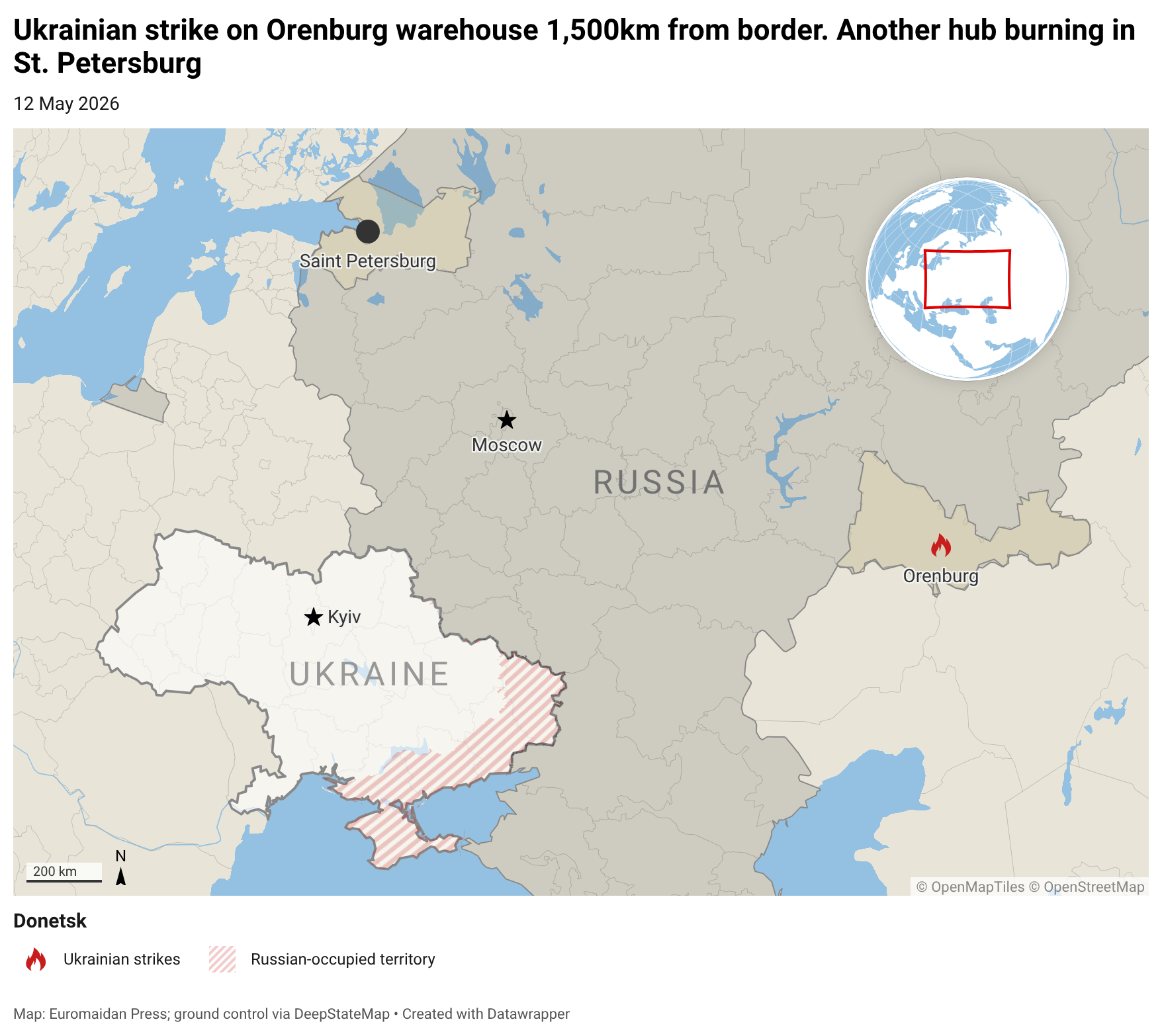
Ukrainian drones struck a logistics complex belonging to Russian online retailer Ozon in Orenburg on 23 August, the second Ozon warehouse hit in two days, monitoring Telegram channels reported. The site sits about 1,200 km from the war zone, near Russia's border with Kazakhstan. Hours earlier, a large fire tore through a separate warehouse outside St. Petersburg, roughly 900 km north of Ukraine, though local authorities declared no drone or missile threat.
Kyiv's long-range drone program has pushed its reach ever deeper into the Russian rear, turning fuel depots, factories, and delivery hubs far behind the lines into routine targets, and retail networks have drawn special attention because their warehouses double as arteries for the wider war economy. Each strike this far inside Russia forces Moscow to stretch air defenses across a country too vast to shield everywhere at once. Disrupted e-commerce warehouses also add to pressure already showing at the pumps, where fuel shortages have brought rationing to major cities.
Drones hit Russia's biggest Ozon warehouse
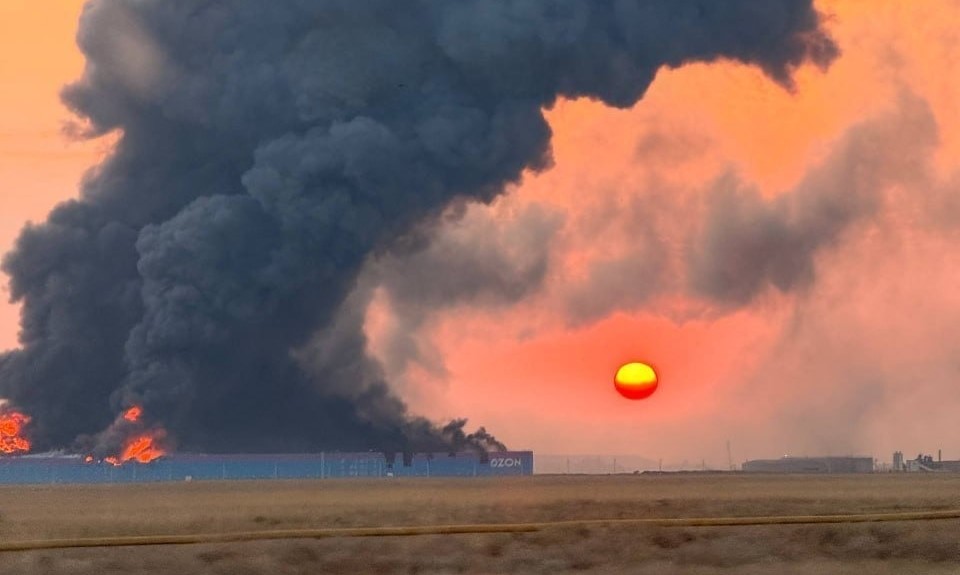
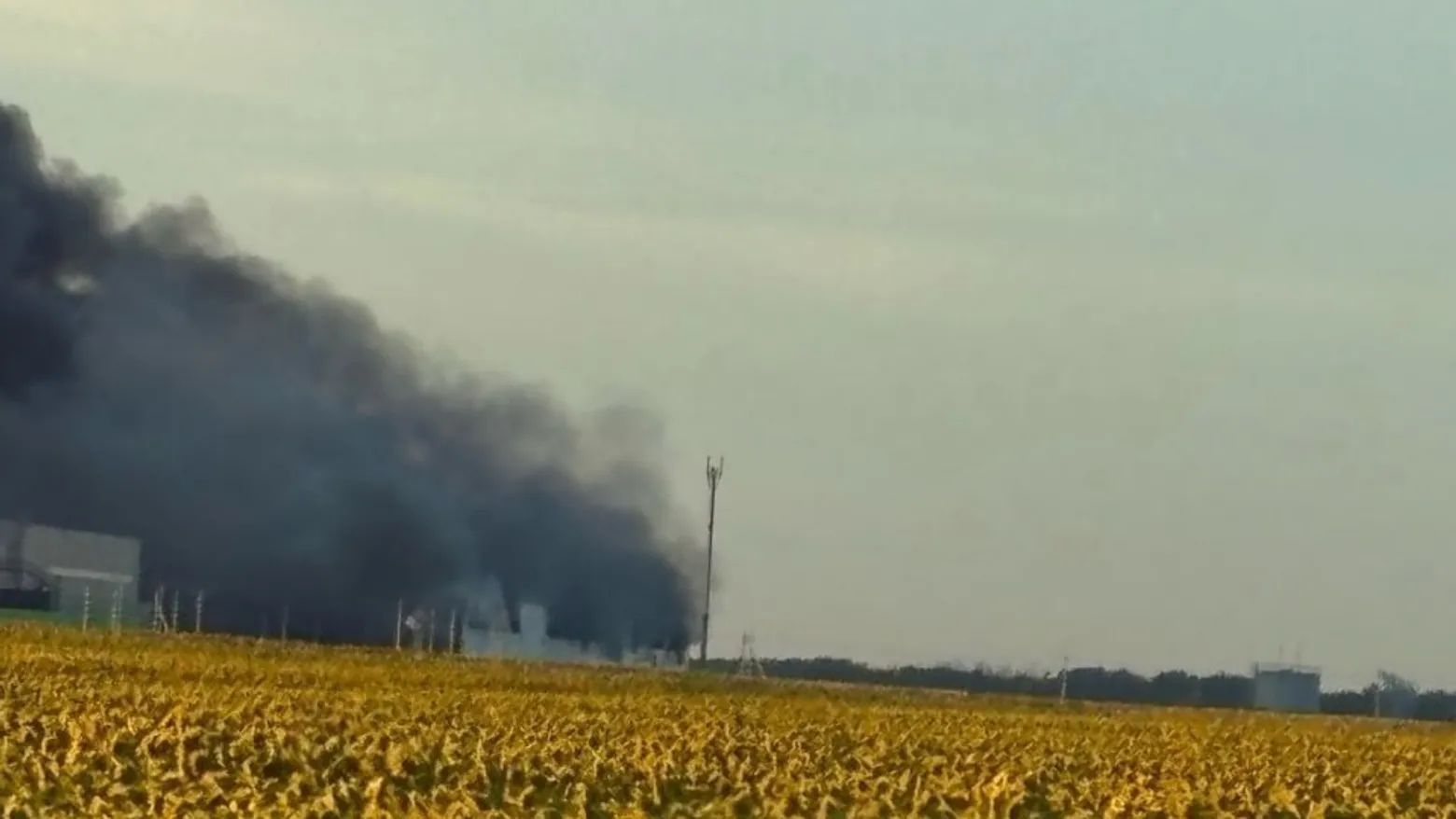
Ukrainian monitoring channel Exilenova+ published video of the strike moment, after which a fire took hold on the site. Independent Russian outlet Astra analyzed eyewitness footage showing an emergency vehicle racing toward the depot. The complex spans more than 200,000 m² and was designed to hold over 31 million items, ranking among Ozon's biggest in Russia.
Smoke rising over the Ozon logistics complex in Orenburg, Russia, 23 August 2026. Photo: Exilenova+
The warehouse stands inside the city's special economic zone, a tax-favored industrial park on the eastern edge of European Russia. The first phase opened in August 2024, and a second building followed in 2025.
Orenburg mayor Albert Yumadilov claimed several drones were downed over the special economic zone and that debris fell on the Ozon complex, starting a fire that crews quickly put out with no one hurt.
Ozon confirmed the strike, saying it evacuated more than 300 workers, pulled its goods from the marketplace and stopped taking new deliveries while the site sat idle.
A second fire near St. Petersburg, with no air-raid alert
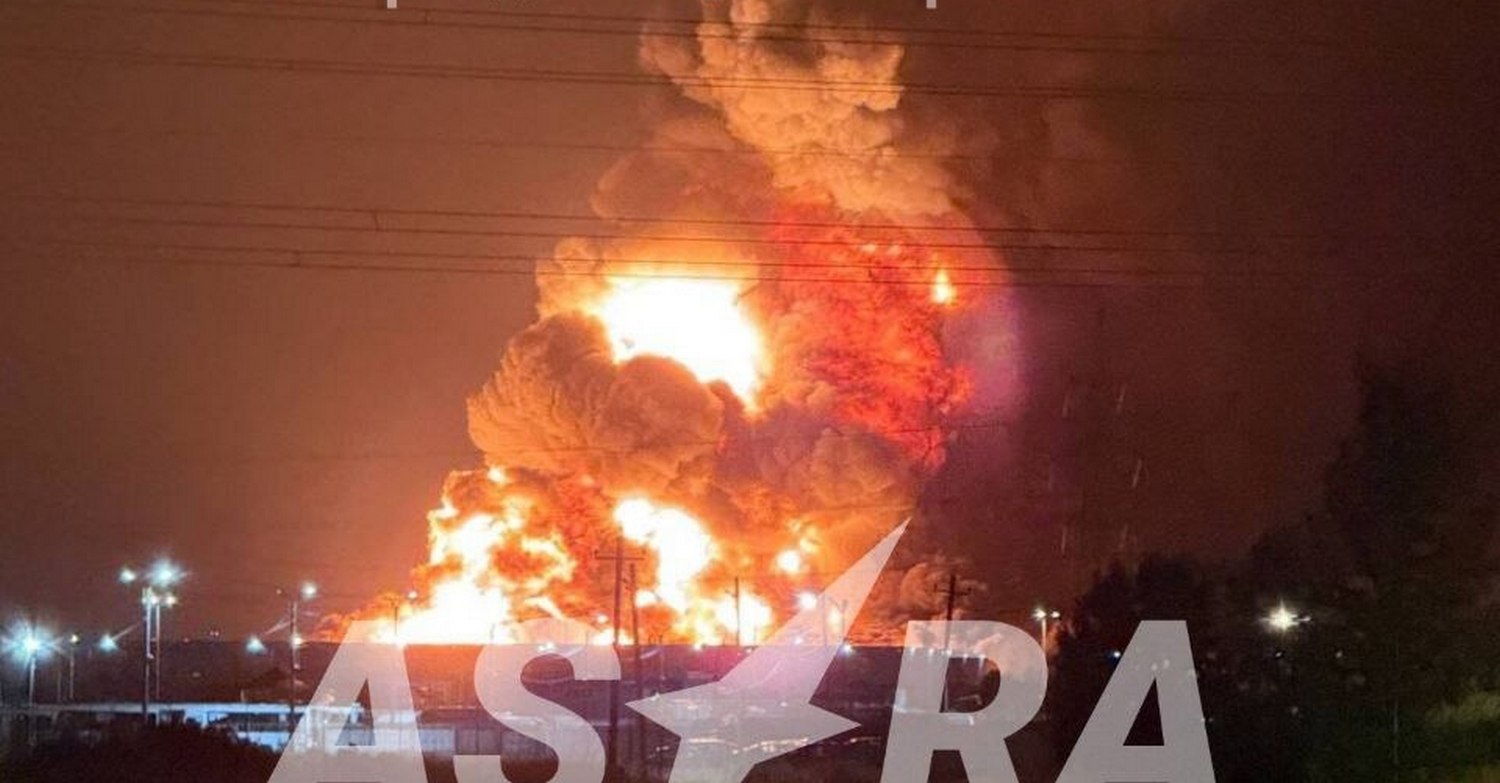
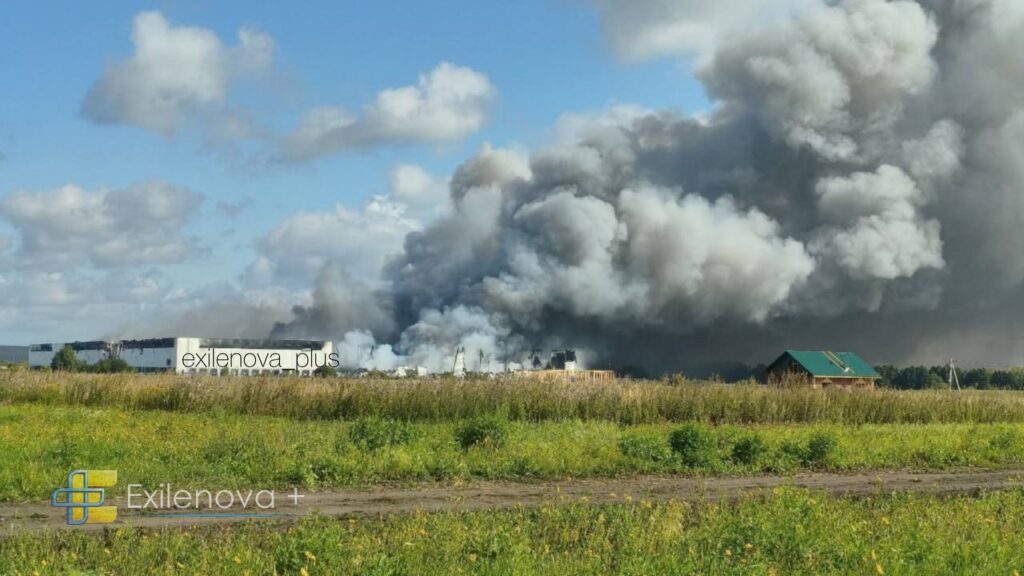
Overnight, a large blaze hit a warehouse in the Kolpino area south of St. Petersburg. Astra established that the warehouse stood about 350 m from an Ozon site, and witnesses said they heard no drones or air defense. Ukrainian Telegram channel Exile+ identified the burning facility as a storage warehouse run by Logistera.
A large fire at a warehouse complex in the Kolpino area of St. Petersburg, Russia, 23 August 2026. Photo: Astra
Part of a widening campaign on Russian marketplace logistics
The Orenburg hit followed the first-ever Ozon strike a day earlier, at a warehouse in Chapaevsk, Samara Oblast. Before turning to Ozon, Ukrainian drones had struck more than 10 warehouses belonging to the larger Russian marketplace Wildberries. Such marketplace hubs move not only consumer goods but dual-use items like electronics and drone components that can reach Russia's military.
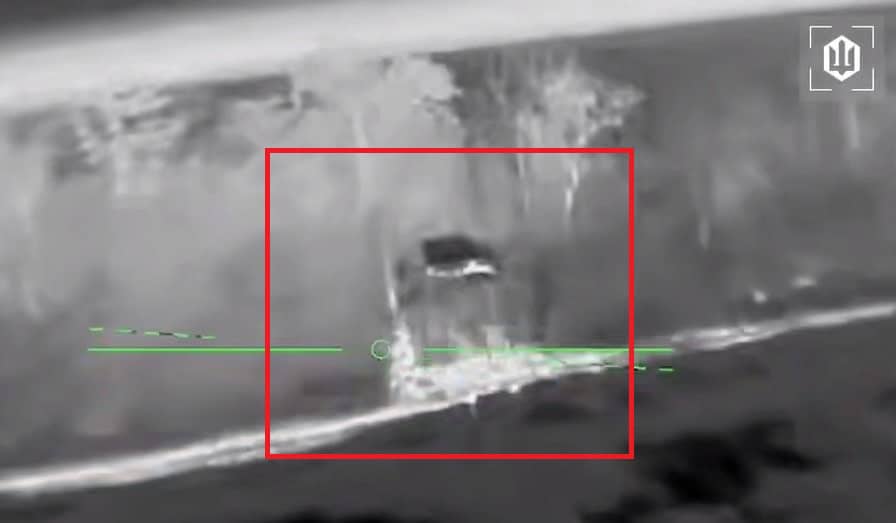
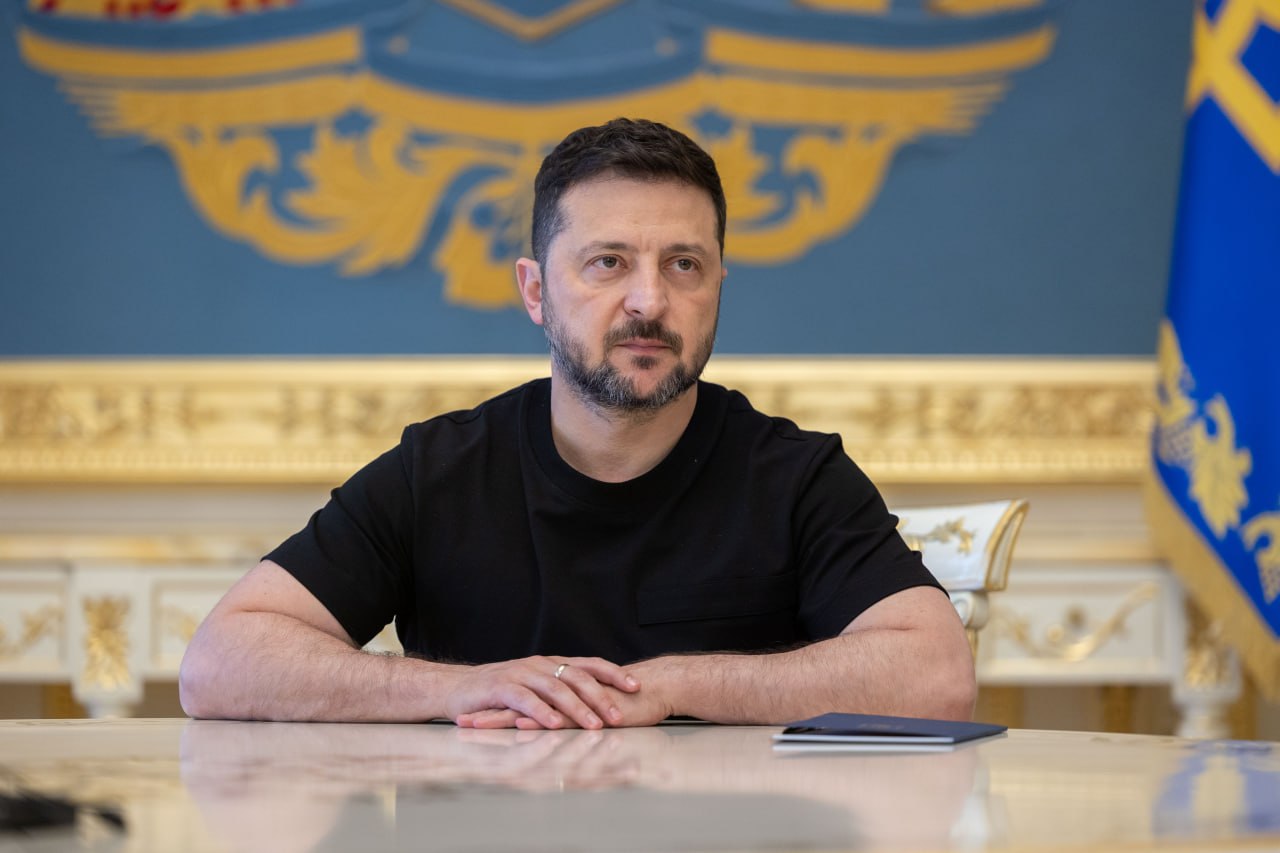
Ukraine has struck a Russian Iskander launcher near its border as part of a dedicated operation against nearby ballistic-missile launch positions, Ukrainian President Volodymyr Zelenskyy told journalists, according to Ukrinform.
Russia continues using ballistic missiles against Ukrainian cities while Ukraine has rationed Patriot interceptors and warned of acute shortages, pushing Kyiv to combine interception with strikes on the systems and positions used to launch those missiles.
President says Ukraine hit an Iskander launcher
President Zelenskyy described the strike as a success but said the sensitivity of the operation prevented him from providing many details.
“We struck an Iskander launcher near our borders,” he said. “I am grateful to our warriors who are carrying this out. This is our operation to hunt their systems positioned nearby.”
The president, however, didn't disclose where the launcher was located or what weapon Ukrainian forces used to hit it.
Zelenskyy said strikes on launchers are one way Ukraine is trying to counter Russian ballistic attacks when anti-ballistic interceptor stocks are limited.
“When our anti-ballistic missile stocks are at a minimum, there is another tactic. It is more difficult, and we developed it,” he said. “It is hunting their nearby positions from which ballistic missiles are launched.”
He described the effort as a separate program and operation. Euromaidan Press could not independently verify the reported strike.
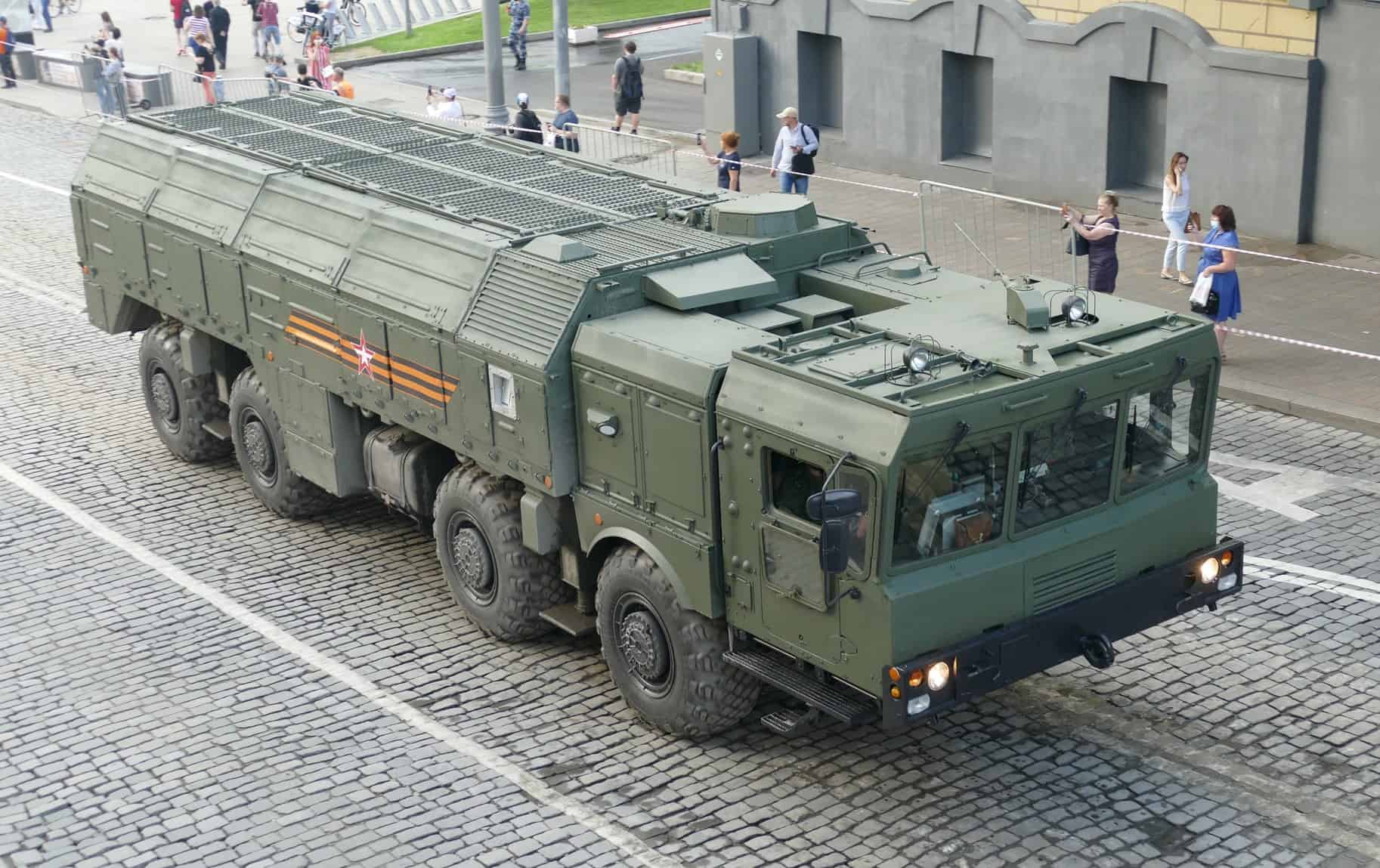
Russian Iskander-M missile system, 2020. Illustrative photo. Photo from Russian government sources via Militarnyi
Ukraine has already targeted Russian ballistic missile infrastructure in several operations this year. In April, Ukrainian drone forces reported strikes on two bases linked to Iskander systems in occupied Crimea.
On 30 May, Ukraine’s Unmanned Systems Forces said they destroyed an Iskander system at a launch position near Taganrog in Russia’s Rostov Oblast.
Explore further
5% of US Patriot stocks gets Ukraine through winter, 10% ends the ballistic threat — and Zelenskyy has just 1%, he tells CNN
SpaceX rejected Ukraine’s request to use Starlink inside Russia
The launcher strike comes as Ukraine is also looking for better ways to operate long-range drones against military targets in Russia. Zelenskyy said SpaceX ultimately refused to let Ukraine use Starlink inside Russia because of escalation concerns.
Kyiv had wanted Starlink to work over Russian territory for defense operations, including drone strikes on Russian ballistic-missile launchers near the border. The Defense Ministry asked him in the first half of 2026 to raise the issue with US President Donald Trump, Zelenskyy said. Zelenskyy said Trump relayed that decision to him at a later meeting. Ukraine continues discussing the issue with the US side.
Ukraine and European partners are separately developing the FREYJA anti-ballistic system, with Kyiv seeking a prototype capable of demonstrating practical results by mid-2027. The project is intended to combine Ukrainian missile technology with European radars, sensors, and command systems.
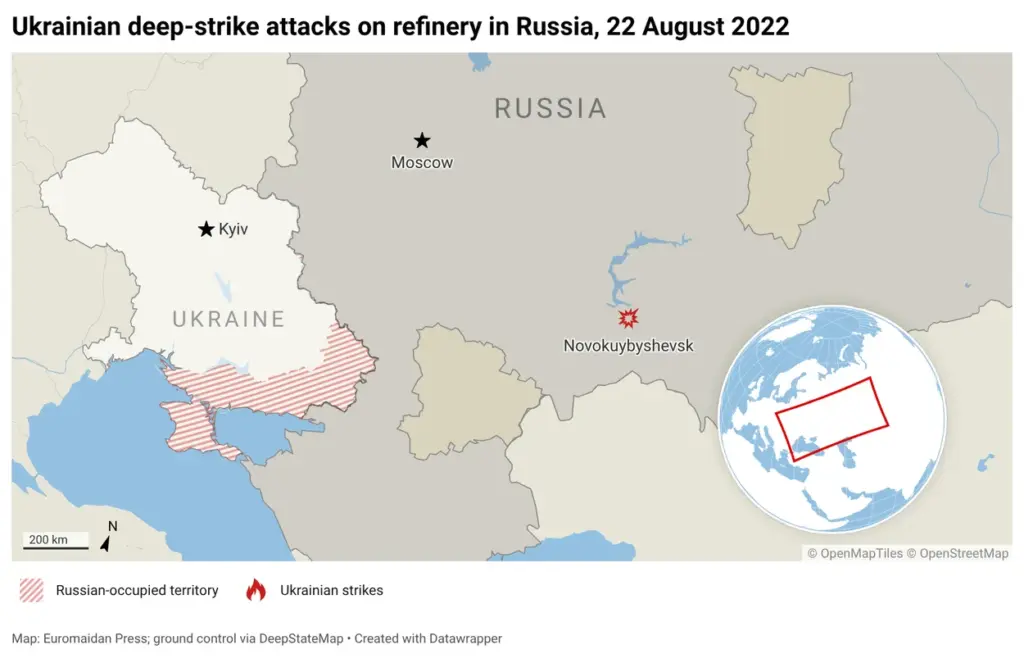
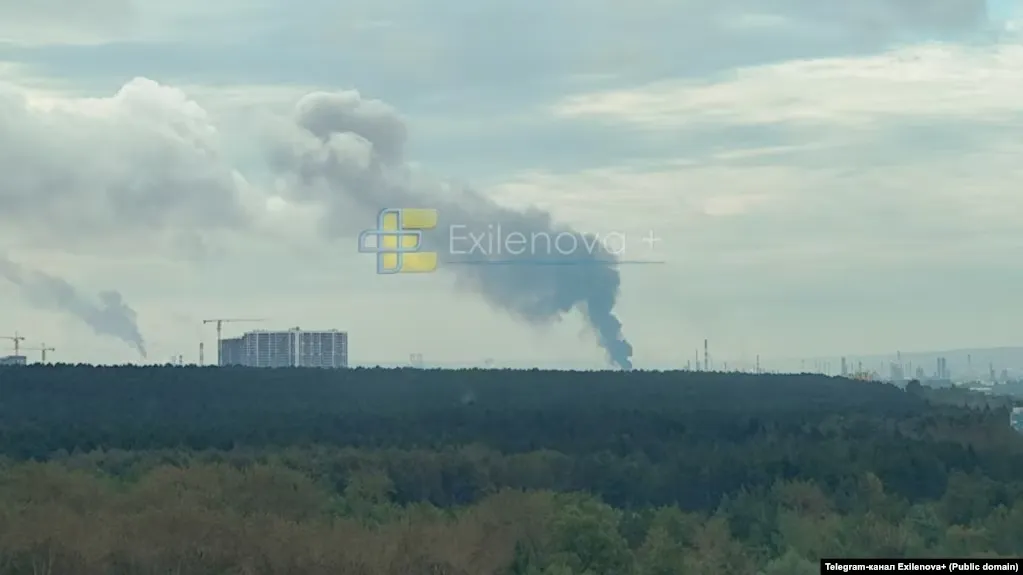
Ukrainian forces struck production facilities at the Novokuybyshevsk oil refinery in Russia’s Samara Oblast overnight on 22 August, sparking a fire at the Rosneft-owned plant, Ukraine’s General Staff said. The extent of the damage remains under assessment.
Ukraine has repeatedly targeted Russia’s oil refineries to restrict military fuel supplies and reduce the energy revenues supporting Moscow’s war. The latest strike came as gasoline rationing returned to Moscow and St. Petersburg, and Rosneft capped nationwide purchases. Militarnyi described the plant as one of Russia’s 10 largest refineries.
The Rosneft-owned refinery can process about 8.8 million metric tons of crude annually and produces more than 20 petroleum products, including aviation fuel and diesel, Ukraine’s General Staff said.
Fire Point said FP-1 long-range drones were used to strike the refinery.
The same overnight wave also hit an Ozon logistics center in Chapayevsk, where people were injured, and work was halted, Reuters reported, citing the company.
Neither the damage to the refinery nor any interruption to production has been independently confirmed.
Ukraine keeps pressure on Russian fuel supplies
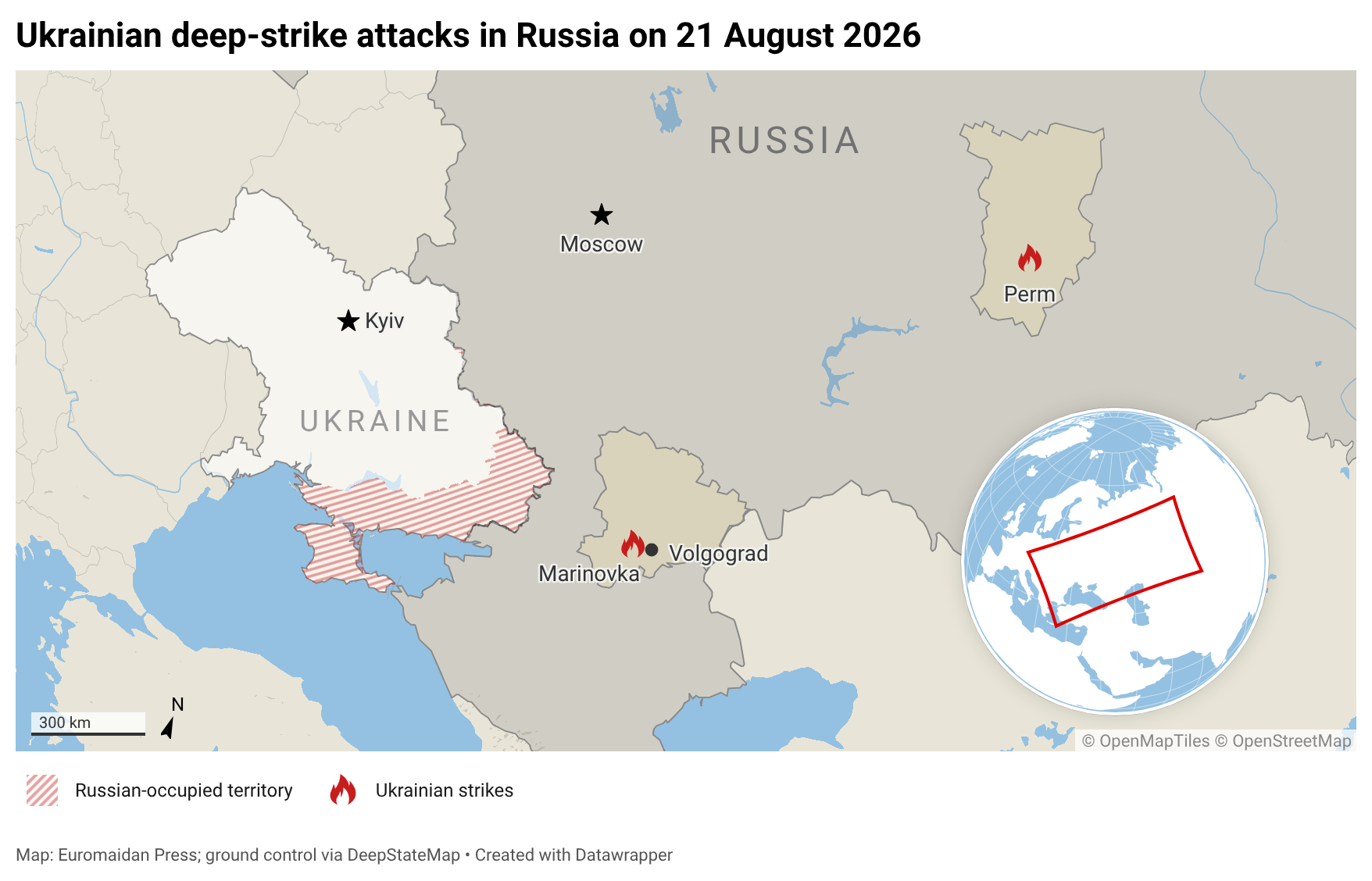
The strike came one day after Ukraine confirmed hitting Lukoil’s Perm refinery, approximately 1,530 kilometers from Ukraine’s northern border. That attack also caused a fire, according to the General Staff.
At least four Russian refineries went offline during August amid continuing Ukrainian attacks.
By mid-August, filling stations in at least 12 Russian regions were experiencing hours-long lines. Some areas had reintroduced purchase limits or rationing based on license-plate numbers, according to the same report.
Gasoline limits had also been reinstated in Moscow and St. Petersburg, while Rosneft had capped sales at 30 liters per vehicle across its nationwide filling-station network. Diesel purchases remained unrestricted.
Ukraine struck one of Russia's largest oil refineries deep in the Urals and a military airfield overnight in a long-range attack, Ukrainian President Volodymyr Zelenskyy announced on 21 August. The Ukrainian Army's General Staff confirmed the refinery and airfield hits, while Zelenskyy said the same night also reached the Black Sea and brought fresh damage from earlier strikes on a Russian warplane and a drone-launch site.
Ukraine's long-range drone campaign has spent the year reaching ever deeper into Russian territory, forcing Moscow to spread its air defenses across thousands of kilometers and driving fuel shortages that now reach beyond its borders. Each strike on Russia's oil backbone compounds the strain on its refining and export earnings, even as the Kremlin diverts chemicals meant for weapons into keeping filling stations supplied.
Fire at a major Lukoil refinery in Perm
Zelenskyy said the overnight drones hit the Lukoil-Permnefteorgsintez refinery — known as PNOS — in Perm, where the General Staff recorded a fire on the plant's grounds. The target sits more than 1,500 km from Ukraine's northern border, in a region near the Ural Mountains.
The refinery is one of Russia's largest, able to process more than 13 million tons of crude a year, with more than half its output sold abroad until recently. It supplies fuel to both Russia's economy and its army.
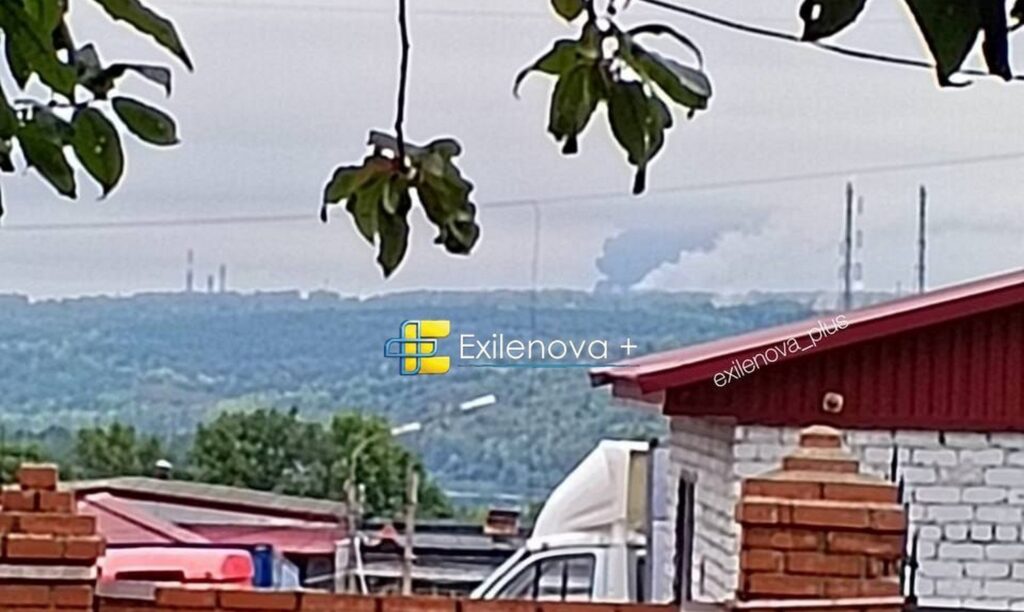
Ukrainian Telegram channels Supernova+ and Exilenova+ shared footage of explosions and a rising plume, with locals reporting a series of blasts at the site. Russia's Perm Krai authorities claimed they repelled the attack and downed 16 drones.
Kyiv has repeatedlyhit the plant through the year. After a strike at the end of July, it had been running well below capacity.
Airfield, Black Sea, and other targets the same night
The General Staff said the same night's drones also struck the Marinovka military airfield in Volgograd Oblast, located in Russia's Volga region, with the damage still being assessed, while Zelenskyy added that Ukraine achieved unspecified results in the Black Sea. The military also reported hitting a drone storage and launch site near Donetsk, a materiel warehouse in occupied Crimea, two command posts in Donetsk and Zaporizhzhia oblasts, and six relay stations in Crimea used to steer Russia's Geran and Gerbera attack drones.
Zelenskyy also confirmed damage from earlier strikes: a Russian Su-34 fighter-bomber hit at the Akhtubinsk airfield, about 600 km from the front line, and a drone store and launch site struck at Primorsko-Akhtarsk, roughly 180 km away. The strike extends a run of deep hits this month, from the TANECO refinery in Tatarstan and a Black Sea oil terminal to three refineries hit in one night and an Omsk refinery struck 2,500 km away in Siberia.
President Volodymyr Zelenskyy allowed preparations for an AI-guided drone campaign against Moscow-area airports, The Atlantic reported on 20 August, citing two anonymous sources with direct knowledge of the proposal.
The reported plan sought to keep civilian flights grounded long enough to pressure Russia’s elite. Had it proceeded, it would have moved Ukraine toward large-scale autonomous strikes, raising questions under the laws of war about attacks without human confirmation. The Atlantic's disclosure follows months of reported Ukrainian attacks that repeatedly forced Moscow-area airport closures and sent increasingly large drone swarms toward the capital.
How the drone operation would have worked
Code-named M&Ms, the operation called for as many as 1,000 drones to fly toward Moscow-area airports each night and overwhelm Russian air defenses, one source said.
Onboard cameras would compare live views with preloaded maps and target images. They would also allow the drones to strike without pilot confirmation and to navigate without a remote-control link that is vulnerable to Russian electronic jamming, the sources said.
One source said prolonged airport closures were intended to pressure Kremlin-linked elites and push Vladimir Putin toward negotiations.
The plan was presented to Zelenskyy during the winter of 2025–26, The Atlantic reported. Preparations stopped after Zelenskyy dismissed Defense Minister Mykhailo Fedorov, whom The Atlantic described as the operation’s mastermind, in July, both sources said. One source said another team could revive the project within about three months.
Both sources said Zelenskyy allowed preparations despite concerns that a drone could hit a civilian airliner. Planners proposed warning airlines, according to one source.
A Zelenskyy spokesperson declined to comment. Another unnamed presidential office official called the report “total nonsense,” saying Ukraine lacked long-range weapons reliable enough to strike the airports without posing undue risks to civilians.
Previous Ukrainian strikes on Moscow
The alleged M&Ms operation never launched, but other reported Ukrainian drone attacks repeatedly disrupted Moscow’s airports.
From 5 to 7 May 2026, restrictions imposed amid reported Ukrainian drone attacks delayed more than 450 flights at Moscow airports. Limits at Vnukovo remained in place for nearly 18 hours, EP reported, citing the independent Russian investigative outlet Agentstvo.
Earlier this week, Russian authorities claimed that 620 drones flew toward Moscow in one night, EP reported. The Atlantic placed Russia’s nationwide interception claim for that night at 791 drones. Ukraine’s military did not claim the attack.

 Connexion


 Exilenova+