Vue lecture

No GPS, no landmarks—how Ukraine’s drones hunt Russian spy drones far out over the Black Sea
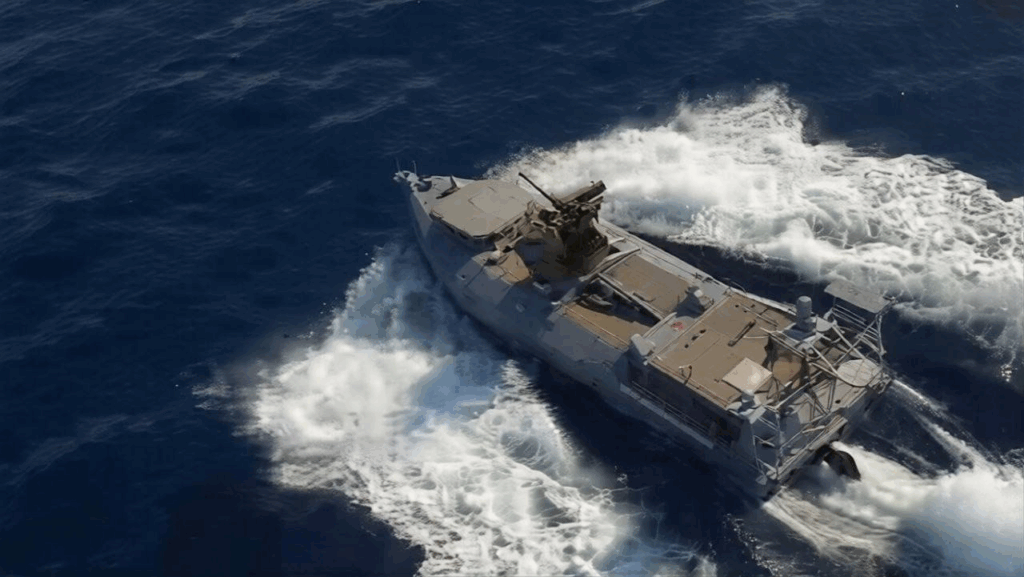
Ukraine sea drone USV machine gun naval

Ukraine is building a sea-facing layer of air defense along its southern coast, Kyrylo Liukov, head of the unmanned technologies department at the Serhii Prytula Foundation, wrote in a column for RBC-Ukraine. Winged interceptors now reach the Russian spy drones that guide strikes in the south.

Russia's nightly drone strikes on Ukrainian cities have turned air defense into a race to close every corridor Russia can fly through, over land first and now over the open sea. Kyiv does it with cheap interceptors rather than costly missiles, and keeps having to chase Russian workarounds. The sea was the stretch air defense could not reach, and it is where Russia keeps the spotters that make its Shahed swarms steerable.

Land and sea are two different fights

Defending the sky over land and over open water are two different problems, Liukov wrote. Multirotor copters are fast and simple to launch near the coast, but past roughly 25 km offshore, a multirotor is almost useless. Russia builds its mission routes so that drones cross dozens of kilometers over sea before they turn toward Ukrainian targets. Fixed-wing drones close the gap. Built like gliders, they loiter for over an hour and hold a link at 40 km and beyond, helped by an open radio horizon that land's terrain and buildings deny them.

Recon drones are the priority target for a reason. Beyond spotting and confirming hits, they work as relays in a MESH network for a group of strike drones. In that setup, Russian crews can steer Shaheds by hand right up to the moment of impact, Liukov wrote.

Southern units recently set three distance records with foundation-supplied interceptors. The 18th aviation commandant's office of Air Command South downed a Russian Orlan-30 reconnaissance drone 110 km out. It used a Wovkulaka Spitfire interceptor, the longest kill on record for that system.

The 12th Separate Special Purpose Center set the other two, flying a system from the miltech company TechnoTaras: an Orlan downed at 86 km, and a 145 km hunt measured from the takeoff point that held a stable digital link the whole way, Liukov wrote. That leaves Russia's drones exposed much farther from shore than its planners assume, he added—and if such results become routine, Russia has to pull its transit routes farther out still.

The Maiachnia beacon line

A less obvious problem was navigation, not shooting. A drone flying without GPS steers by landmarks, and over open sea, there are none. Late last year, the foundation, the 12th Separate Special Purpose Center, and TechnoTaras launched a project called Maiachnia. It strings radio beacons on the Skyline system along the coast from Ochakiv to Izmail. The beacons work on their own and keep backup power, tied to a central network that operators can adjust remotely. An operator can then track the drone even under GPS jamming, bad weather, or a temporary loss of link, and bring it home. More than five southern units now fly the foundation's winged drones.

The real stakes sit offshore—the southern ports and the Black Sea grain corridor that Russian drones threaten and that land-based copters can barely reach. Keeping Russian drones farther offshore would buy room there. But Russia is scaling up a faster, jet-powered Shahed, and the interceptor answer to it is early—so the offshore edge just won will have to be defended again.

  •  

“You wanted our land. You lost your refineries and your fleet.”—Ukraine’s anniversary message to Russia

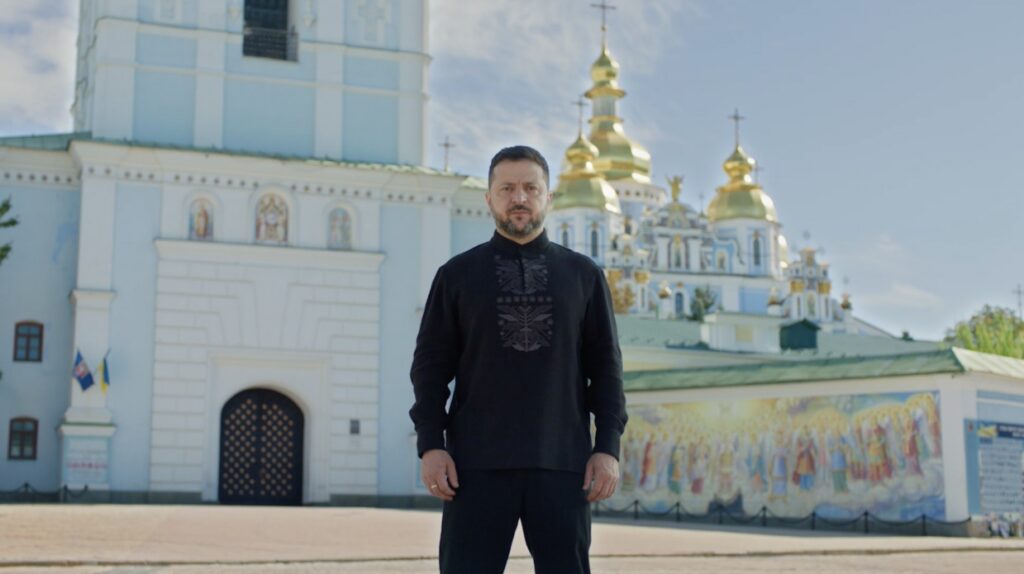
wanted land lost refineries fleet—ukraine's anniversary message russia · post ukrainian president volodymyr zelenskyy delivers independence day address front st michael's golden-domed monastery kyiv 24 2026 presidentgovua download ukraine news

Ukraine celebrated 35 years of independence on 24 August, and Ukrainian President Volodymyr Zelenskyy marked the day with an address listing what the invasion has cost Russia, published by the President's Office. He said Putin is mortal and out of time to understand Ukraine, and said Ukraine will not hand over Donbas or save the Kremlin half a million soldiers. He also asked partners for sanctions and weapons strong enough to force an end to the war.

Russia has been invading Ukraine since 2014 and fighting a full-scale war on it since 2022, and Ukraine now supplies a growing share of the missiles and drones it fights back with, while the air defense shielding its cities still hangs on decisions taken in Washington and European capitals—which is what makes a holiday speech a statement of what Kyiv will not trade and what it needs built or delivered next.

The losses he read back to Moscow

President Zelenskyy turned from his own citizens to Russia partway through the speech. 

"You wanted to take all our Ukraine, all our land; instead, you lost your oil refineries, your fleet, your profits, your entire generation that you sent into the meat grinder," he said. 

A country that wanted Ukraine erased from the map, he added, is now absent from the international agenda of the future civilization.

For five years now, Russia has tried to exhaust and break Ukrainians — cutting light and heat, destroying homes, Kyiv Mayor Klitschko said on Ukraine's 35th Independence Day

"The aggressor failed to understand one fundamental thing: above all else, Ukrainians love freedom," he… pic.twitter.com/NvVVKSKIK1

— Euromaidan Press (@EuromaidanPress) August 24, 2026

He set Moscow's self-image against its filling stations. 

"For 27 years, the head of Russia has talked about greatness, while Russia is standing in lines for gasoline," Zelenskyy said. 

Moscow and St. Petersburg brought back gasoline rationing this month, and Rosneft capped fills at every station in the country.

On the Russian leader he was blunt. 

"Putin hopes that we are tired. But we know that he is mortal," he said, adding that Putin never understood Ukraine and now will not have the time to.

A fifth Independence Day at war

Before the holiday, Russian ballistic missiles hit Kyiv and its main airport hub twice in 24 hours. A solution to Russian ballistic terror must be found, Zelenskyy said, and that gamble must not pay off. 

Russia does not want peace, it wants mobilization, the president said. Ukraine will not let Moscow seize the initiative or convince Europe that surrendering Donbas ends the war. Russia keeps pushing back the dates for taking all of Donetsk Oblast and will keep pushing them back, he said.

The president called Ukraine's defense industry a giant that forges independence around the clock, and demanded more from it. Mid-range strikes cut Russian logistics and long-range weapons cut Russian profits, he said, listing Moscow, Tuapse, Tula, Ryazan, Olenya, and Omsk among the places already hit. 

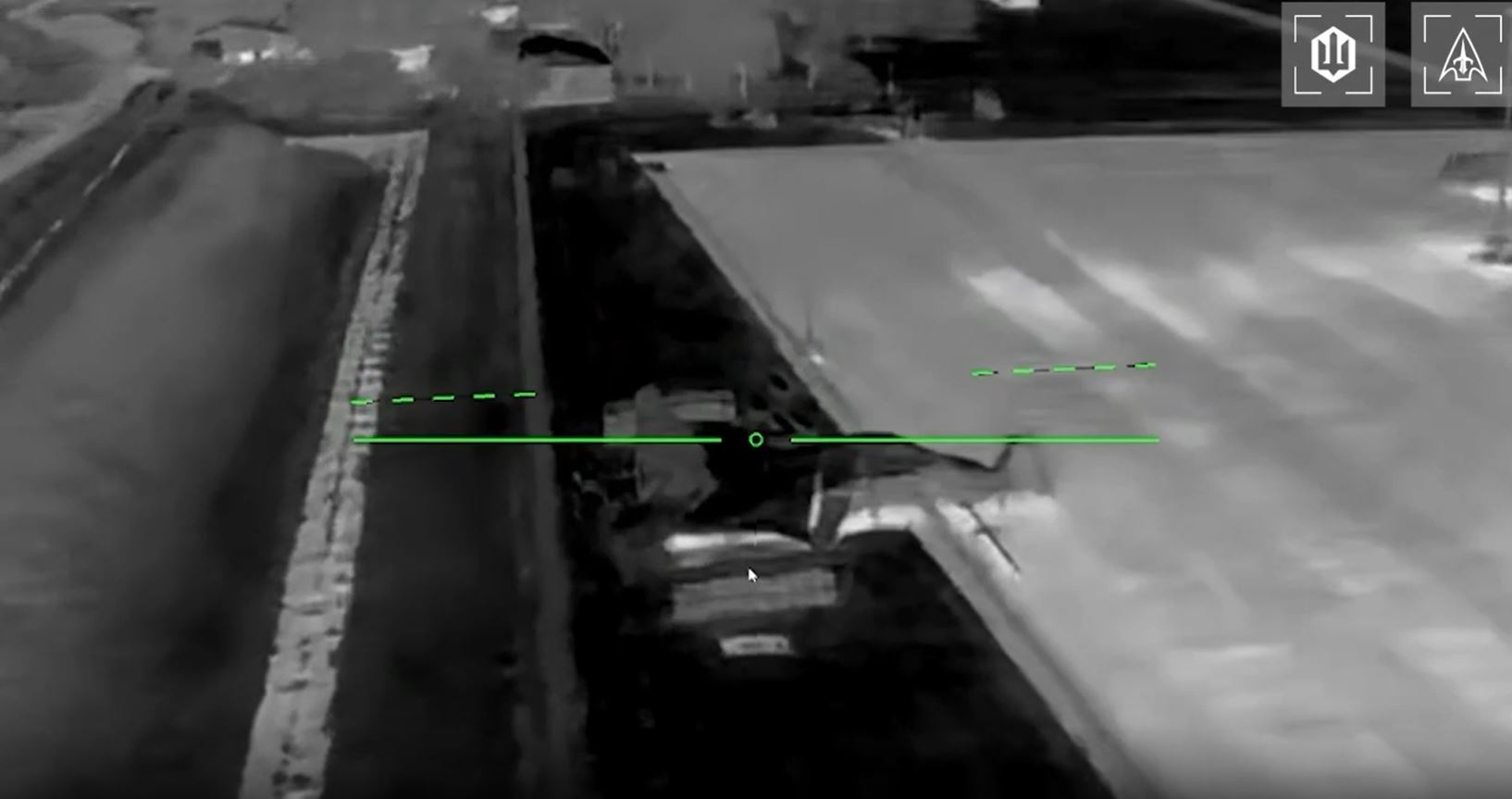
two russian fighters one spy drone hit kranodar radars anti-air systems elsewhere—ukraine forces · post combat aircraft ukrainian drone's sights vityazevo airfield krasnodar krai russia 23 2026 su-33 video sbs
Explore further

Ukraine’s drones hit two Russian fighters and a spy drone—and blinded radars from occupied Crimea to Rostov

Ukraine's home-built Flamingo cruise missiles should stop being a rare species and arrive en masse: "They must 'winter' in Russia," Zelenskyy noted. 

Previously, Flamingos have hit defense plants more than 1,000 km from the border, though they still appear in strikes in small numbers.

"China should no longer remain silent"

Ukraine is not asking anyone to fight for it, the president said — only for everything needed to stop the war before Putin starts the next one. He wants sanctions that make Russians howl and Moscow at a negotiating table, and said Washington has lost its illusions about Russian intentions. Europe must be Europe, he said: united, ambitious, brave. 

"China should no longer remain silent," he added, saying Beijing must cool the ardor of someone who puts on a sailor's uniform and cap and talks about a nuclear strike—a description that fits Putin.

  •  

Russia builds and expands at least 10 drone bases. Some could put Warsaw in range – Telegraph

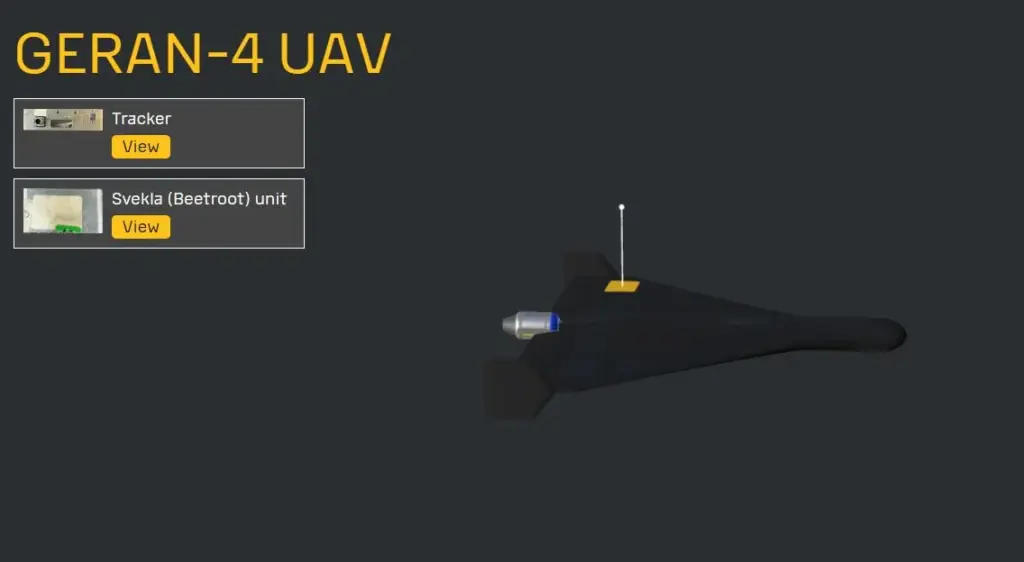
Diagram of a black Geran-4 jet-powered UAV with callouts identifying its tracker and Svekla electronic unit.

Russia has built or expanded at least 10 drone bases along its borders with Ukraine and Belarus, creating launch capacity for newer jet-powered attack drones, the most powerful of which could reach Warsaw, The Telegraph reported on 16 August 2026.

The network expands Russia’s capacity for mass drone attacks on Ukraine, while some sites could later threaten NATO. The findings come as Russia is also expanding bases and other military infrastructure along NATO’s northern and Baltic borders. The Telegraph found no evidence that Moscow is planning such an attack.

Seven of the 10 sites were used during recent bombardments of Kyiv, tracking data cited by The Telegraph showed. Using leaked documents, satellite imagery, and DroneSec's analysis, the newspaper identified at least 59 launch rails—tracks that launch fixed-wing drones without runways.

Around 20 appeared long enough for Russia’s latest long-range models, while one base could reportedly store over 1,000 drones.

Leaked Ukrainian documents cited by The Telegraph say the jet-powered Geran-4 and Geran-5 can carry 90-kilogram warheads. However, Ukrainian military intelligence puts the Geran-4’s range at up to 450 kilometers, while the larger Geran-5 has a stated range of up to 1,000 kilometers — enough to reach Warsaw from several of the new sites.

DroneSec founder Mike Monnik said expanded launch capacity and harder-to-intercept technology together increase pressure on Ukrainian air defenses.

Russia builds military infrastructure along NATO’s northern flank

Russia is also expanding military infrastructure elsewhere along NATO’s borders. A Nordic-Baltic investigation identified new or expanded infrastructure from Norway to Kaliningrad, with potential capacity for up to 115,000 personnel.

Satellite imagery showed new barracks, ammunition warehouses, and expanded bases near NATO’s northern and Baltic members.

The Institute for the Study of War, a US-based think tank, assessed that the construction likely supports future Russian operations against NATO rather than an imminent attack. Most Russian combat power remains committed to Ukraine, it said.

Other drone hubs support rapid Russian attacks

Russia has already built comparable hubs for attacks on Ukraine. Satellite imagery analyzed by the open-source intelligence group Strategic Aviation of Russia showed 10 additional launchers under construction at Tsymbulova in Oryol Oblast, following the start of work on 22 April 2026.

At occupied Donetsk Airport, the group identified enlarged launch pads, roads to a Geran and Gerbera drone warehouse, and the apparent construction of another storage building.

Ukraine’s Security Service (SBU) said it struck Shahed storage and launch sites at Primorsko-Akhtarsk on 2 August 2025. Ukraine’s Unmanned Systems Forces commander Robert "Madyar" Brovdi reported hitting drone logistics, warhead-storage, and preparation facilities at Donetsk Airport on 30 December 2025.

  •  
❌