Vue lecture

Prediction Firms Are Flagging Insider Traders. Many Will Not Face Charges.

The agency that polices the industry does not have the staffing, the legal tools or the will to broadly crack down on wagers that are easily manipulated, experts say.

© Laura Brett/ZUMA Press, via Reuters

Kalshi, a leading prediction market, referred 32 possible insider traders to the Commodity Futures Trading Commission in the three months ending in June.
  •  

Californians Criticize Federal Efforts to Control the State’s Coast

Environmentalists and others warned at a hearing on Monday that the Trump administration’s attempt to strip power from California’s coastal protection agency would endanger the shoreline.

© Loren Elliott for The New York Times

The coastline in Pacifica, Calif.
  •  

Florida Man Cut Diver’s Air in Miami Lobster Dispute, Authorities Say

The authorities say that a confrontation over a diving spot off Miami ended with a boater shutting off a surface-breathing apparatus, leading to an attempted murder charge.

© Getty Images

  •  

A slice of Estonia’s new EU billions will buy drones—for Ukraine, not itself

A Ukrainian service member holds a Darts attack drone, which has a reported range of 40-60 kilometers. Russian military sources say that these are among the Ukrainian drones that mount a directional antenna that can dynamically maintain connection with a signal repeater. (Photo: Come Back Alive Foundation)

Estonia will use part of a new European Union loan to arm Ukraine with drones, drawing on a loan worth up to €2.34 billionaccording to ERR. The loan will also rebuild its own air defense and ammunition stocks, and all of it must be spent by 2030.

As Moscow continues its all-out war in Ukraine, the EU's northeast is rearming fast, bracing for a Russia that regional military chiefs expect to be combat-ready again within two years.

What the loan buys

Estonia signed the financing deal with the European Commission under SAFE (Security Action for Europe), a €150 billion EU program that raises money jointly on the markets and lends it to member states on cheap terms to fast-track defense spending, its finance ministry said.

A share of Estonia's up-to-€2.34 billion will go to Ukraine as drones. The rest strengthens air defense, buys military vehicles, and refills artillery shells and other ammunition. The credit runs 45 years, and every purchase and delivery must be finished by 2030. Estonia filed its final application in November 2025.

baltic- states
The Baltic region. Map: Euromaidan Press

Why the loan helps

Borrowing through SAFE lets Estonia raise money on better terms than it could alone, because the EU issues debt at lower rates. The bloc raises the money jointly and splits it among members. Estonia will hold defense spending above 5% of GDP, and the loan eases the strain that puts on its budget.

Ukrainian President Volodymyr Zelenskyy and Estonian Prime Minister Kristen Michal on the sidelines of the NATO summit in Ankara, 7 July 2026. Photo: Ukrainian President's Office
Explore further

“Ukraine is becoming a security provider for Europe”: Ukraine signs Drone Deals with Estonia, the Netherlands, and Denmark as Europe taps Kyiv’s battlefield-tested weapons technology

Estonia, a NATO and EU state of about 1.3 million people, shares a 294-kilometer border with Russia and treats Moscow's war on Ukraine as a direct threat to its own security. It has studied that war closely for years and is now racing to rebuild its air defenses and ammunition stocks.

Kadri Peters, a deputy secretary general at Estonia's Defense Ministry, said the fast-changing security situation in Europe demands stronger, quicker defense from the whole alliance. She said large-scale purchases ahead will directly affect Estonia's security and the wider region.

soldiers left summer rotation estonia doesn't know how many coming back—or when · post army task force knighthawk 3rd combat aviation brigade 101st airborne division north medical centre staff during
Explore further

US soldiers left for a “summer rotation.” Estonia doesn’t know how many are coming back—or when

In July, Estonia and the United States agreed to resume weapons deliveries in the coming months, after a pause tied to the war in Iran, with long-range ATACMS ballistic missiles the exception. In May, Washington had warned European allies of long delays as it drained its own stocks, mainly of HIMARS rocket ammunition and NASAMS air-defense missiles. The same shortages hit Ukraine the hardest: it currently struggles to shoot down Russian ballistic missiles for lack of US-made PAC-3 interceptors.

Estonia has been backing Kyiv since the beginning of Russia's full-scale invasion in 2022. It co-leads an IT coalition that has funneled over €1.4 billion into Ukraine's drone programs, and has moved to tap Kyiv's battlefield-tested drone technology for its own forces.

  •  

Georgia’s sanctioned Kulevi refinery says switch to non-Russian crude is under way

Kulevi Oil Refinery in Georgia. Photo: Black Sea Petroleum

Georgia's only oil refinery says it has begun replacing Russian crude with supplies from Kazakhstan and Libya.

The update comes after the European Union sanctioned the refinery for processing Russian crude as part of its effort to curb revenues funding Moscow's war against Ukraine. Brussels gave the company six months to end its reliance on Russian oil before the restrictions take effect.

In a statement released on 31 July, Black Sea Petroleum (BSP), which operates the Kulevi Oil Refinery on Georgia's Black Sea coast, said implementation of its crude supply diversification plan was already under way and remained on schedule.

Kazakh crude already being refined

The company said the refinery began processing crude oil of Kazakh origin at the beginning of July, with the remaining contracted volumes to be refined during August.

BSP also announced that, under an agreement signed with an international trading company on 3 July, a cargo of Libyan crude is expected to arrive at Kulevi between 20 and 30 August. The contract runs through the end of 2027 and includes an option to extend it.

According to the company, the transition will allow the refinery to operate entirely on non-Russian crude beginning in August and September, in line with plans announced on 1 July.

Kulevi Oil Refinery in Georgia. Photo: Black Sea Petroleum
Explore further

Georgia’s only oil refinery to stop processing Russian crude from August, company says

Company seeks to satisfy EU sanctions requirements

The statement follows the European Union's decision on 24 July to sanction the Kulevi refinery as part of its 21st sanctions package against Russia. The measures prohibit transactions with the refinery after a six-month transition period, giving the company time to end its reliance on Russian crude.

BSP said the European Commission had acknowledged during a 24 July press briefing that the transition period was intended to enable the refinery to diversify its crude supplies. The company said the steps it has already taken are consistent with that objective and the timeline set by Brussels.

The refinery said it would continue working with the European Commission and other relevant authorities while providing "clear, verifiable evidence" of its progress toward eliminating Russian feedstock.

Kulevi Oil Refinery in Georgia. Photo: Black Sea Petroleum
Explore further

EU sanctions Georgia’s only oil refinery over processing Russian crude. Company says it will switch suppliers

First major Georgian company sanctioned by the EU

The sanctions marked the first time the EU targeted a major Georgian company under its Russia sanctions regime.

The refinery came under scrutiny after Reuters reported in 2025 that it had begun processing crude supplied by Russian producer Russneft. According to research by the Centre for Research on Energy and Clean Air (CREA), the refinery received six shipments of Russian crude between October 2025 and May 2026, while refined products were exported to EU member states including Spain and Bulgaria.

EU officials have said the refinery could be removed from the sanctions list if it demonstrates that it has fully phased out Russian crude in line with its commitments.

  •  

EU releases another €3.47 billion for Ukraine’s “urgent needs” – drones, missiles, air defense, and Gripen jets

antónio costa, volodymyr zelenskyy and ursula von der leyen in kyiv on 24 february 2026

The European Commission has disbursed an additional €3.47 billion to Ukraine under the defense component of its €90 billion Ukraine Support Loan, providing funding for drones, missiles, air defense systems, and Gripen fighter jets.

The latest tranche comes as Ukraine faces intensified Russian missile and drone attacks and seeks to bolster its defense capabilities.

Funding to strengthen Ukraine's defense

European Commission President Ursula von der Leyen said the new funding would help Ukraine defend its skies while deepening defense industrial cooperation between Kyiv and the European Union.

"Today, we are investing an additional €3.47 billion to help protect Ukraine's skies," von der Leyen said.

"With this new disbursement under our €90 billion loan package, we are helping Ukraine defend its people. We are also bringing our defense industries closer together, combining Europe's industrial scale with Ukraine's unmatched innovation. This is our new Drone Deal taking shape."

With this disbursement, we are helping Ukraine protect its skies and defend its people.

At the same time, we are combining Europe's industrial scale with Ukraine's unmatched innovation.

Our drone deal is taking shape.https://t.co/6hcfBQ6cCo pic.twitter.com/0bERiAQ0uD

— Ursula von der Leyen (@vonderleyen) July 30, 2026

According to the Commission, the package includes another tranche under its drone procurement program and additional funding for drones, including long-range jet-powered drones, missiles, and Gripen fighter jets to help Ukraine rapidly acquire critical military equipment.

“The funding is provided in response to Ukraine's urgent military needs, as it continues to require capability support to defend itself against Russia's war of aggression,” the statement reads.

The Commission said further funding for drones, ammunition, air defense, and missiles would be approved and disbursed in the coming weeks.

Part of broader Ukraine Support Loan

The Ukraine Support Loan consists of €60 billion dedicated to strengthening Ukraine's defense capabilities and industrial capacity, alongside €30 billion in budget support to help keep the Ukrainian state functioning.

The latest payment follows previous disbursements of €3.2 billion under the EU's Macro-Financial Assistance program on 25 June, €3.9 billion under the defense window on 30 June, and €1.1 billion on 15 July.

The Commission said a total of €28.3 billion is expected to be allocated to Ukraine's defense industrial capacity during 2026, with the remaining funding scheduled for disbursement before the end of the year.

Ukraine welcomes latest tranche

Ukrainian Prime Minister Serhii Koretskyi confirmed that Ukraine had received the €3.47 billion payment, saying the funds would strengthen the country's defenses and help finance its most urgent needs.

"These funds will strengthen our defense and help finance Ukraine's most urgent needs," Koretskyi wrote on X.

He said Ukraine has secured €11.6 billion under the Ukraine Support Loan so far this year, including €3.2 billion in budget support and €8.4 billion for defense, out of the €45 billion available under the mechanism in 2026.

"I am sincerely grateful to the European Commission and all EU Member States for their consistent and unwavering support," Koretskyi said. "Every euro invested in Ukraine strengthens our resilience, protects our people, and brings us closer to a just and lasting peace."

Ukraine has received another €3.47 billion tranche from the European Union under the Ukraine Support Loan. These funds will strengthen our defense and help finance Ukraine’s most urgent needs.

A total of €45 billion is available to Ukraine under this mechanism in 2026. To…

— Sergii Koretskyi (@KoretskyiUA) July 30, 2026

Since the start of Russia's full-scale invasion in 2022, the European Union and its member states have provided more than €220 billion in support to Ukraine, including assistance financed through proceeds from immobilized Russian sovereign assets.

  •  

Ukraine loses another F-16 to onboard emergency

Netherlands delivers final F-16s to Ukraine, completing 24-jet donation program.

Ukraine has lost another F-16. During a combat mission on one sector of the front, an F-16 fighter of the Ukrainian Air Force experienced an onboard emergency, forcing the pilot to eject, the Air Force reported on Telegram.

Every F-16 lost matters more than the airframe, because Ukraine has so few and needs them so badly. The fighters are instrumental as a line of air defense against the missiles and drones Russia launches in massed nightly attacks.

On 29 July 2026, contact was lost with the F-16, which was flying a combat mission to intercept enemy aerial targets on one sector of the front, and preliminary data indicate an onboard emergency forced the pilot to eject, according to the Air Force.

The pilot is now completely safe, was successfully evacuated, and was taken to a medical facility for examination. Experts and law enforcement are working at the crash site, and no civilian casualties or destruction were recorded.

The pilot's survival sets this loss apart

That the pilot survived is the most important fact, because Ukraine's F-16 losses have more often taken the pilot with them.

Ukraine has paid a heavy price for these aircraft and their pilots. Since receiving its first F-16s in mid-2024, Ukraine had lost four of them by August 2025, with three pilots killed and one ejecting safely, per Euromaidan Press.

Oleksii "Moonfish" Mes was killed in the first loss on 26 August 2024.

Captain Pavlo Ivanov, 26, died on 12 April 2025 when his jet was likely shot down over Sumy Oblast.

A third F-16 was destroyed on 16 May 2025 in an onboard emergency from which the pilot ejected.

Lieutenant Colonel Maksym Ustymenko was killed on 29 June 2025 defending against a large-scale Russian assault, per Euromaidan Press.

The jets are scarce and hard to replace

Denmark, the Netherlands, Belgium, and Norway committed a total of 80 aircraft, but they arrived in batches, and the pool of trained pilots is limited, so each loss subtracts from a capability that Ukraine cannot quickly regenerate.

  •  

Euractiv: Italy and Greece win a fur pass for Russia inside the EU’s newest sanctions round

euractiv italy greece win fur pass russia inside eu's newest sanctions round · post sable sobol-sable ukraine news ukrainian reports

Just three months after blocking it, the European Union has cleared raw Russian sable pelts to return to its market, according to Euractiv. The reversal sits inside the sanctions package Brussels adopted last week, after Italy and Greece pushed for the exemption. Coats made from the fur stay barred from the bloc.

The EU first hit Moscow with sanctions over its 2014 seizure of Crimea, then rolled out numbered packages every few months after the 2022 full-scale invasion to choke the revenue bankrolling the war, even as analysts keep debating how fast the measures actually bite. Russia uses export revenue to help finance its all-out war against Ukraine.

A reprieve tucked into the toughest package yet

The bloc had caught sable in its sanctions net only in April. Now the exemption rides inside the 21st package of measures Brussels adopted last week, the round it promoted as its heaviest economic hit on Moscow to date. The change appears in the bloc's published sanctions text.

Euractiv says the European Commission defended the carve-out on supply grounds. It argued that Russia dominates the global sable market and that European makers have few alternative suppliers.

"Apparently, it's very difficult to get them anywhere else," a senior EU official told Euractiv. 

The sable is a small carnivorous animal from the forests of northern Asia, and its pelt is considered exceptionally soft and prized by luxury fashion houses. A single coat can run into the hundreds of thousands of euros. 

An EU diplomat told Euractiv that Italy and Greece drove the lobbying, the two biggest buyers of Russian pelts inside the bloc.

eu adopts largest sanctions package russia 218 names 100+ banks crypto platforms among those list · post flags member states ukraine well flag fly front parliament strasbourg eastnewsua news ukrainian
Explore further

EU adopts largest sanctions package on Russia: 218 names and 100+ banks and crypto platforms among those on the list

Coats stay out as Europe debates its own farms

The sanctions still block finished fur garments in both directions — barred from entering the bloc and from reaching Russian buyers, The EU’s wider luxury-goods restrictions also cover products such as diamonds and caviar. Greece's fur producers, clustered around Kastoria and Siatista, fought those wartime measures in 2022, warning they would kill the industry. 

It lands as Brussels weighs a bloc-wide ban on its own fur farming, after a citizens' initiative demanded an end to the practice. Only a few EU countries, including Spain, Greece, Hungary, Finland, and Poland, still have active fur farms.

  •  

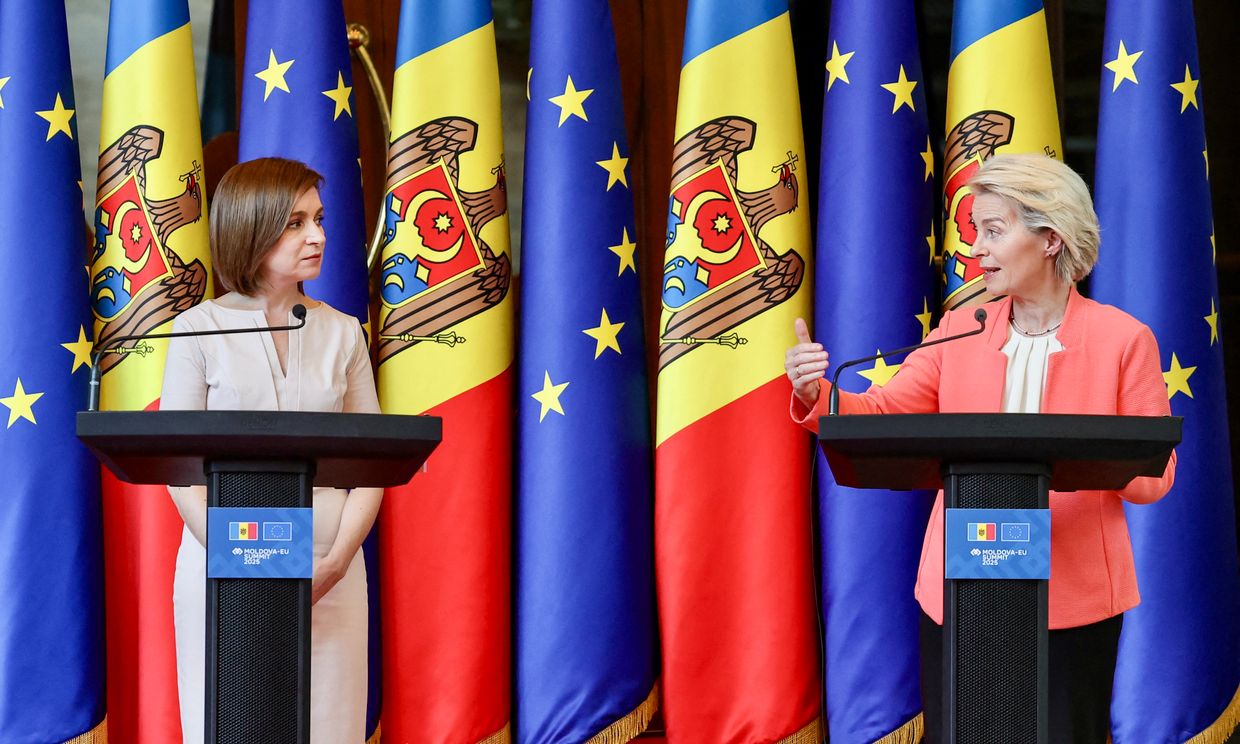
EU to help Moldova fight hybrid attacks from 'agents of autocracy,' von der Leyen says ahead of September election
EU to help Moldova fight hybrid attacks from 'agents of autocracy,' von der Leyen says ahead of September election

European Commission President Ursula von der Leyen pledged on July 4 that the European Union will help Moldova defend itself against hybrid threats by "agents of autocracy."

"We are committed to protecting you against the hybrid attacks and the energy shocks that your country has been a victim of," von der Leyen said following the EU-Moldova summit in Chisinau.

"Who is behind those attacks is clear to all of us here. These are the same agents of autocracy trying to undermine our democracies everywhere in Europe."

Von der Leyen praised Moldova's support for Ukraine and the EU, noting its acceptance of hundreds of thousands of Ukrainian refugees and its assistance with European wildfire response efforts.

The visit was made in show of solidarity with Moldova, one of Europe's poorest countries, as it prepares for high-stakes parliamentary elections on Sept. 28.

The pro-European government of President Maia Sandu faces a challenge from the pro-Russian Socialist Party, amid growing fears of destabilization ahead of the vote.

Sandu has accused Russia of using its military presence in Moldova's Russian-occupied Transnistria region to stir unrest and derail the country's EU aspirations. On June 12, she warned that Moscow could provoke a crisis in Transnistria to influence the election outcome.

Transnistria has been under Russian-backed separatist control since the early 1990s, with approximately 1,000 to 1,500 Russian troops still stationed in the region.

On June 11, Transnistrian authorities declared a 30-day state of emergency after a sharp drop in natural gas supplies. The unrecognized region has faced mounting energy shortages since January, when Russian energy giant Gazprom halted deliveries in what many see as an attempt to destabilize the situation in Moldova.

Moldova was granted EU candidate status in 2022. Sandu's ruling Party of Action and Solidarity aims to maintain its parliamentary majority and move the country closer to full membership by 2030.

Moldovan Prime Minister Dorin Recean earlier told the Financial Times that Russia plans to send 10,000 troops to Transnistria and establish a pro-Kremlin government in Moldova.

Death of top Russian oil executive fuels fresh scrutiny of elite’s ‘window falls’
The unexplained death of a top Russian oil executive on July 4 is fueling renewed scrutiny over the rising number of high-profile Russian officials and businessmen who have died under mysterious circumstances, specifically, have fallen out of windows. Andrei Badalov, vice president of Transneft, Russia’s largest state-controlled pipeline transport company,
EU to help Moldova fight hybrid attacks from 'agents of autocracy,' von der Leyen says ahead of September electionThe Kyiv IndependentTim Zadorozhnyy
EU to help Moldova fight hybrid attacks from 'agents of autocracy,' von der Leyen says ahead of September election
  •  

EU proposes integrating Ukraine into bloc's mobile roaming area

EU proposes integrating Ukraine into bloc's mobile roaming area

The European Commission has proposed that Ukraine join the European Union's mobile roaming area starting January 1, 2026, providing Ukrainian users the ability to make phone calls, texts, and use mobile data in the bloc's 27 countries at no extra charge.

"We want Ukrainian citizens to stay connected to their loved ones across the EU, as well as in their home country. That's why we propose that Ukraine join our roaming family," European Commission President Ursula von der Leyen said in a statement.

The proposal, first announced on June 16, will serve as a means of integration into the European Union's "Roam like at Home" provision in affect between all EU nations. The proposed change will impact the over four million Ukrainian refugees living in the EU.

Ukraine's full integration in the roaming provisions will replace voluntary measures that "allowed for roaming without surcharges and affordable international calls for EU and Ukrainian citizens abroad," according to the European Commission. The current measure will extend to December 31, 2025, ahead of the planned integration.

If approved, Ukraine will become the only country outside of the EU to join the bloc's "Roam like at Home" policy.

The move, which awaits European Council approval, comes as Ukraine continues to implement reforms in pursuing membership in the European Union.

Ukraine applied for EU membership at the onset of Russia's full-scale invasion in 2022. The country has made quick progress, achieving candidate status within months, with the initial negotiations formally launching in June 2024.

Since the start of 2025, Ukraine has opened three negotiation clusters under Poland's rotating presidency.

Poland lead the EU Council's presidency until June, and Denmark will take over the role in July. Ukraine aims to open the remaining three negotiation clusters in the second half of 2025 under the Danish chairmanship, the President Volodymyr Zelensky said.

There are six accession negotiation clusters, consisting of several individual chapters. Negotiations prepare a candidate country to become an EU member.

The EU’s Commissioner for Enlargement, Oliver Varhelyi, said that Ukraine could potentially join the bloc by 2029 if it successfully implements necessary reforms.

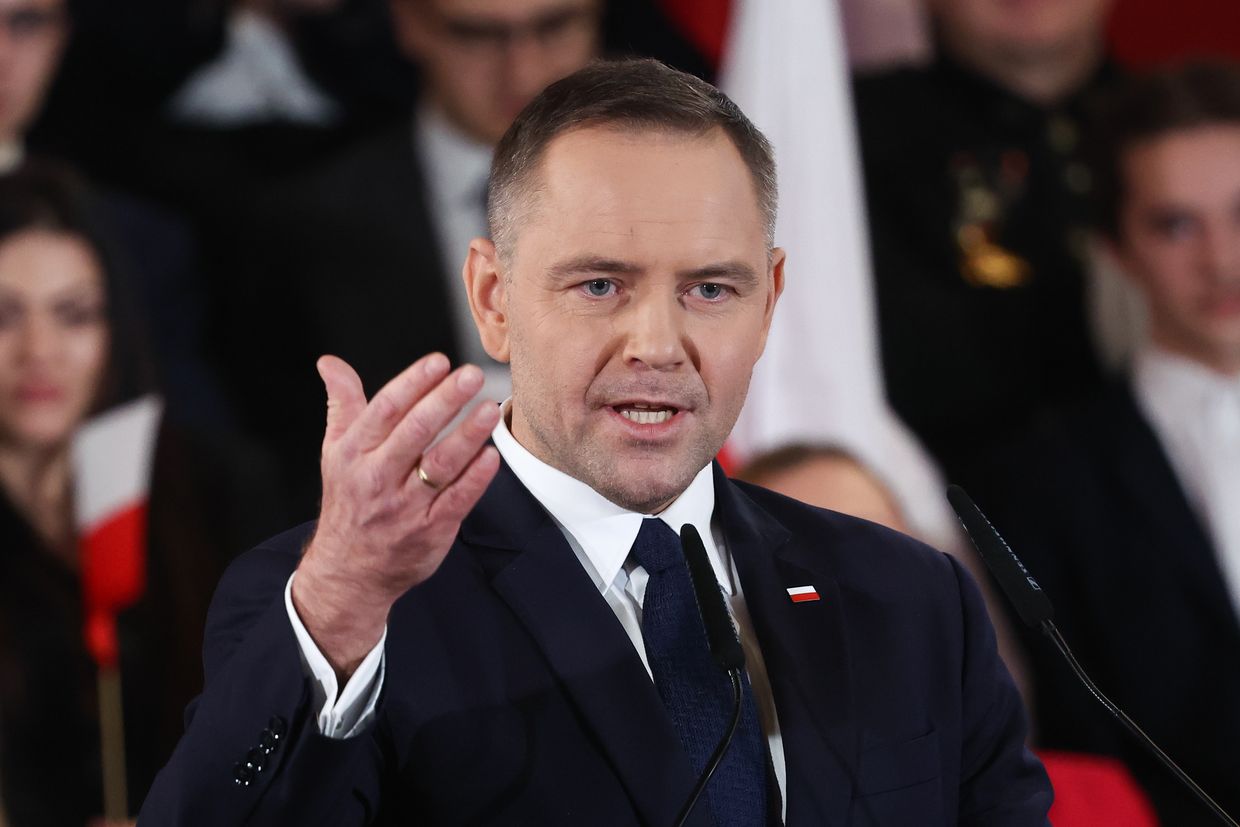
‘I am against Ukraine’s entry into the European Union,’ Polish president-elect Nawrocki says
“Ukraine must understand that other countries, including Poland, Hungary, and other European countries, also have their own interests,” Polish President-elect Karol Nawrocki said.
EU proposes integrating Ukraine into bloc's mobile roaming areaThe Kyiv IndependentVolodymyr Ivanyshyn
EU proposes integrating Ukraine into bloc's mobile roaming area


  •  

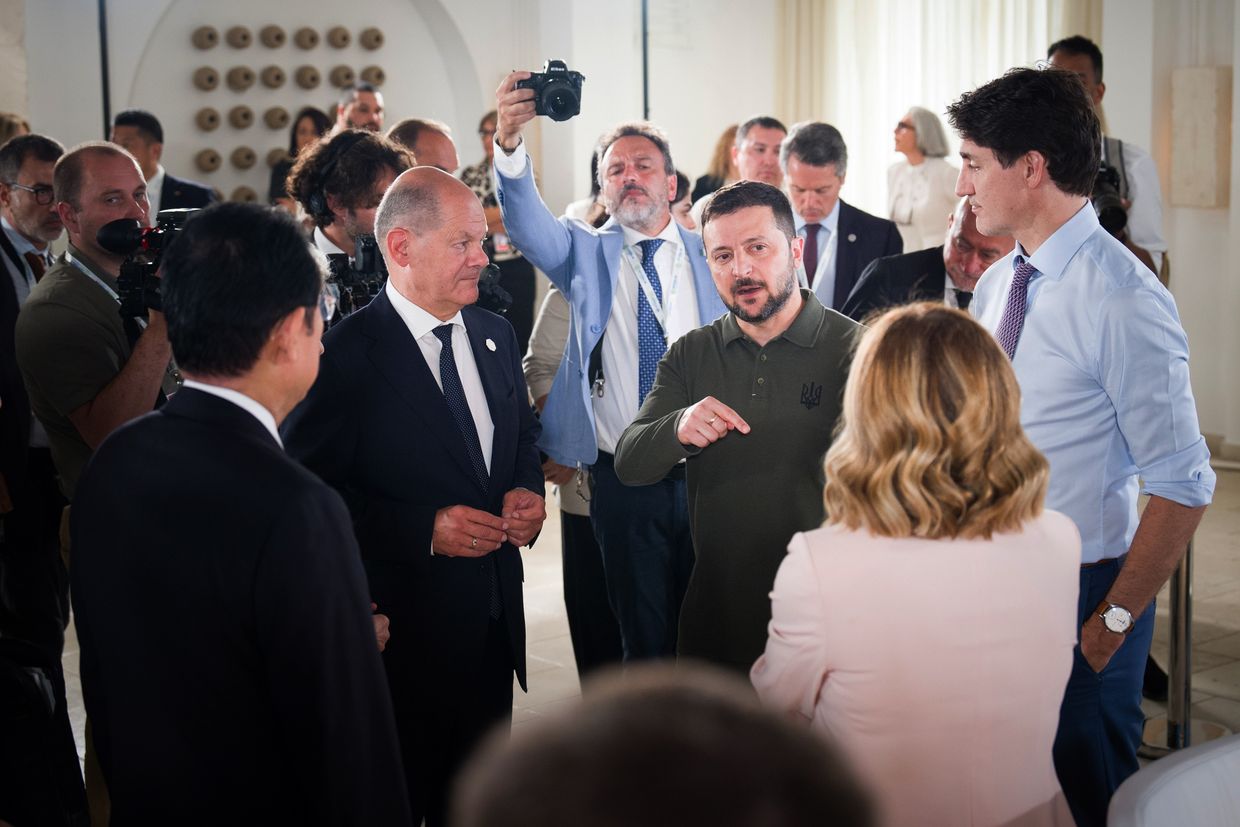
EU leaders call for tougher sanctions on Russia at G7 summit

EU leaders call for tougher sanctions on Russia at G7 summit

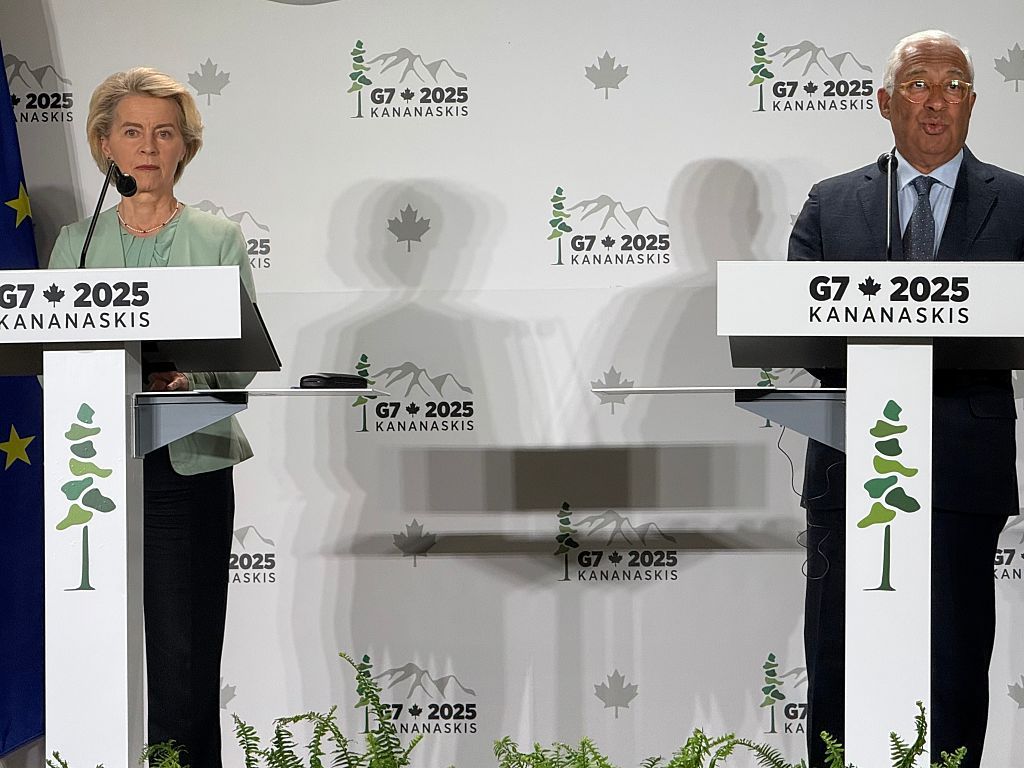
The Group of Seven (G7) nations need to impose harsher sanctions on Moscow in order to secure a ceasefire in the war against Ukraine, European Commission President Ursula von der Leyen and European Council President Antonio Costa said at the start of the G7 summit in Canada.

The G7 Leaders Summit kicked off on June 15 in Kananaskis, Canada, with official talks held June 16-17. While Ukraine hopes to win economic support and unified pressure against Russia, the rapidly escalating conflict between Israel and Iran may dominate this year's conference.

"To achieve peaceful strength we must put more pressure on Russia to secure a real ceasefire, to bring Russia to the negotiating table, and to end this war. Sanctions are critical to that end," von der Leyen said at a press briefing on June 15 attended by a Kyiv Independent journalist.  

Economic sanctions have been an effective intervention since the start of Russia's full-scale invasion, von der Leyen said. She noted that combined G7 and European Union sanctions have decreased Russian oil and gas revenues by nearly 80% since February 2022.

"(T)he sanctions are working, and we will do more," she said.

Von der Leyen urged the G7 to adapt the economic restrictions proposed in the EU's 18th sanctions package, announced on June 10. The new measures target Russia's energy and banking sectors and propose a further reduction in the oil price cap, bringing the cap down from $60 to $45 per barrel.

"I will invite all G7 partners to join us in this endeavor," she said.

With no new US aid packages on the horizon, can Ukraine continue to fight Russia?
The U.S. has not announced any military aid packages for Ukraine in almost five months, pushing Kyiv to seek new alternatives. But time is running out quickly as Russian troops slowly advance on the eastern front line and gear up for a new summer offensive. “While Ukraine’s dependence on
EU leaders call for tougher sanctions on Russia at G7 summitThe Kyiv IndependentKateryna Hodunova
EU leaders call for tougher sanctions on Russia at G7 summit

Costa echoed the call for sanctions and the necessity of economic pressure in order to achieve a ceasefire. Europe is committed to "increasing additional sanctions to cripple (Russia's) ability to wage war and pressing for an unconditional ceasefire," he said.

Europe's call for unity may meet with resistance from the United States, which has assumed a dramatically different posture towards Ukraine and Russia since President Donald Trump took office in January. Trump has not imposed any new sanctions against Russia, even Moscow blatantly obstructs peace efforts and escalates mass strikes against Ukrainian cities.

The U.S. also reportedly opposes lowering the G7 oil price cap — a measure first introduced in December 2022 that prohibits Western companies from shipping, insuring, or otherwise servicing Russian oil sold above $60 per barrel.

The price cap debate has become more urgent as oil prices, which had fallen below the $60 cap in recent months, surged following Israel's recent strikes against Iran.

Despite U.S. resistance, the EU and the United Kingdom — backed by other European G7 countries and Canada — have said they are prepared to move forward with the proposal, even without Washington's endorsement.

President Volodymyr Zelensky, on the other hand, has said the EU sanctions and proposed price cap drop don't go far enough. Zelensky on June 11 said the EU's 18th round of sanctions "could be stronger" and proposed further slashing the oil price cap to $30 per barrel.

"A ceiling of $45 per barrel of oil is better than $60, that's clear, that's true. But real peace will come with a ceiling of $30," he said. "That's the level that will really change the mindset in Moscow."

Zelensky and Trump are expected to meet on the sidelines of the G7 summit on June 17. The meeting will mark their third in-person encounter since Trump took office.

High stakes, low resolve: What Ukraine can expect from the upcoming G7 summit
As world leaders prepare to gather in the remote community of Kananaskis in Alberta, Canada for the Group of Seven (G7) Leaders’ Summit on June 15-17, Russia’s war in Ukraine once again holds center stage — but views on how to address the three-year conflict diverge sharply. In the five months
EU leaders call for tougher sanctions on Russia at G7 summitThe Kyiv IndependentDmytro Basmat
EU leaders call for tougher sanctions on Russia at G7 summit
  •  

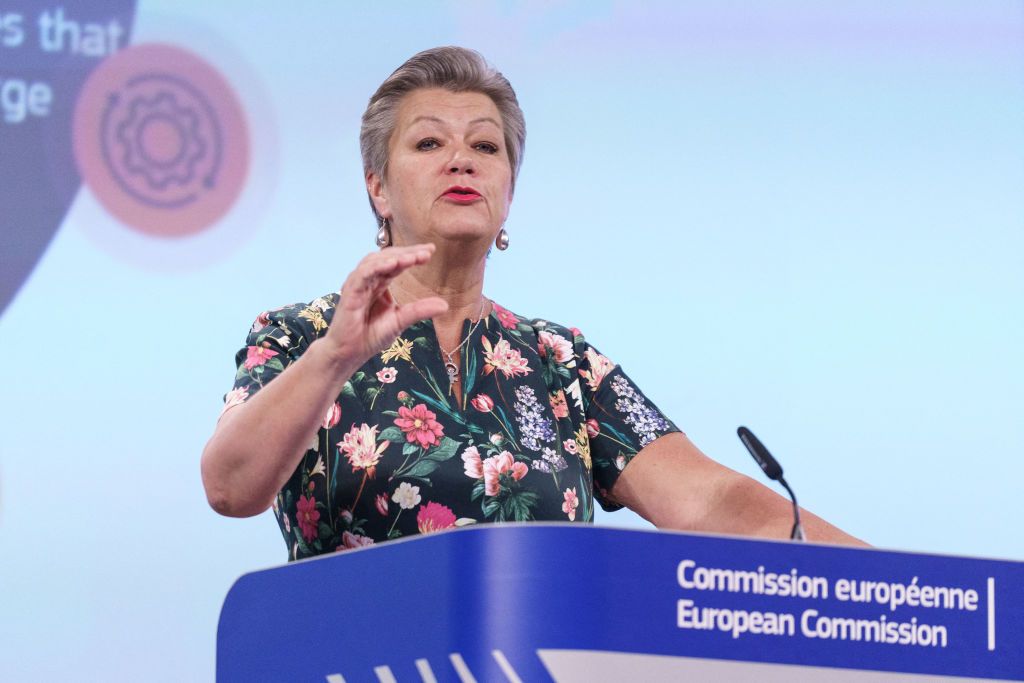
EU names special envoy for Ukrainian refugees, POLITICO reports

EU names special envoy for Ukrainian refugees, POLITICO reports

Ylva Johansson, former European Commissioner for Home Affairs, will serve as the European Union's new special envoy for Ukrainians in the bloc, POLITICO reported on June 12.

According to anonymous officials that spoke to POLITICO, Johansson will fill the newly created post, overseeing the Commission's long-term strategy for Ukrainian refugees currently residing in the European Union.

Johansson, a former Swedish minister and European Commission official, previously visited Ukraine on several occasions, including a refugee camp on the border with Romania. She received the Ukrainian order of merit in September 2024.

As special envoy, Johansson will be responsible for EU initiatives focused on helping Ukrainian refugees transition into permanent legal statuses or return home.

As part of these initiatives, the EU will launch "unity hubs" – information centers jointly managed with the Ukrainian government. The hubs will support Ukrainian refugees to integrate with EU host countries or repatriate to Ukraine.

Germany, which has has taken in more than 1 million Ukrainian refugees since the start of the full-scale invasion, recently committed to establishing unity hubs in Berlin. The unity hubs in Berlin will provide Ukrainians with access to educational and career opportunities both in Ukraine and Germany.

The European Commission also recently extended temporary protection Ukrainian refugees who fled to the EU following Russia's invasion of Ukraine.

According to Eurostat, 4.26 million Ukrainians currently hold temporary protection status in the EU as of April 2025.

Germany to supply new Iris-T air defense systems to Ukraine, rules out Taurus missiles
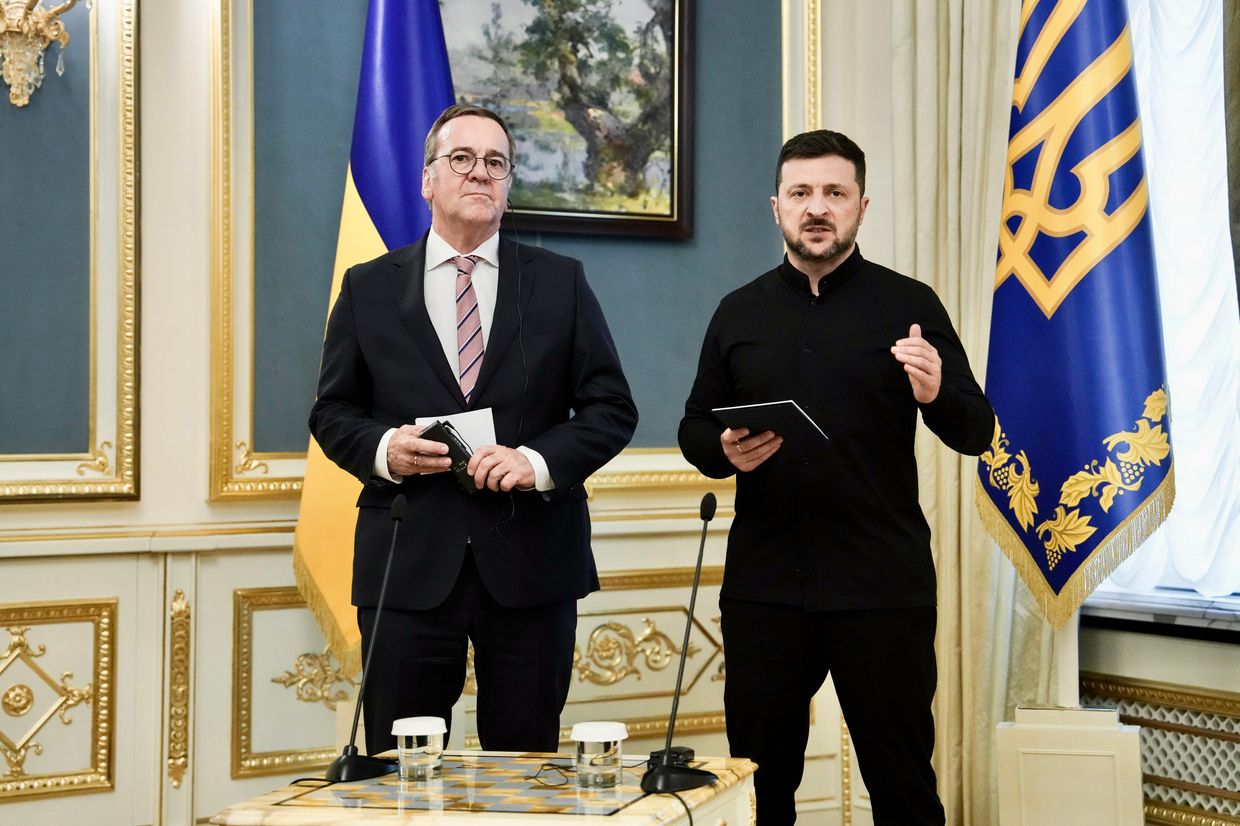
Germany will deliver new IRIS-T air defense systems to Ukraine under a three-year supply plan, President Volodymyr Zelensky said during a joint press conference with German Defense Minister Boris Pistorius, who said Berlin has no plans to provide Taurus long-range missiles.
EU names special envoy for Ukrainian refugees, POLITICO reportsThe Kyiv IndependentTim Zadorozhnyy
EU names special envoy for Ukrainian refugees, POLITICO reports
  •  
❌