Vue lecture

Russia banned the scholars documenting Stalin’s starvation of Ukraine. They put their course out anyway—as Moscow repeats the famine.
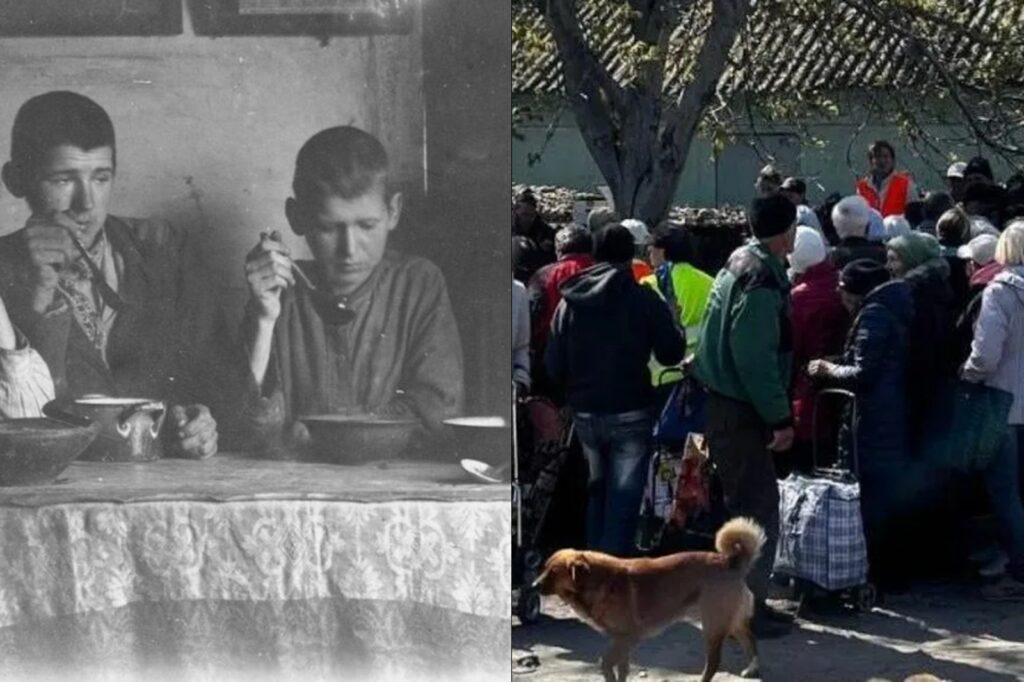
On the left, the Bokan sitting around the dinner table during the Holodomor, as they starve; on the right, Ukrainian civilians in Oleshky waiting in line for food distribution.

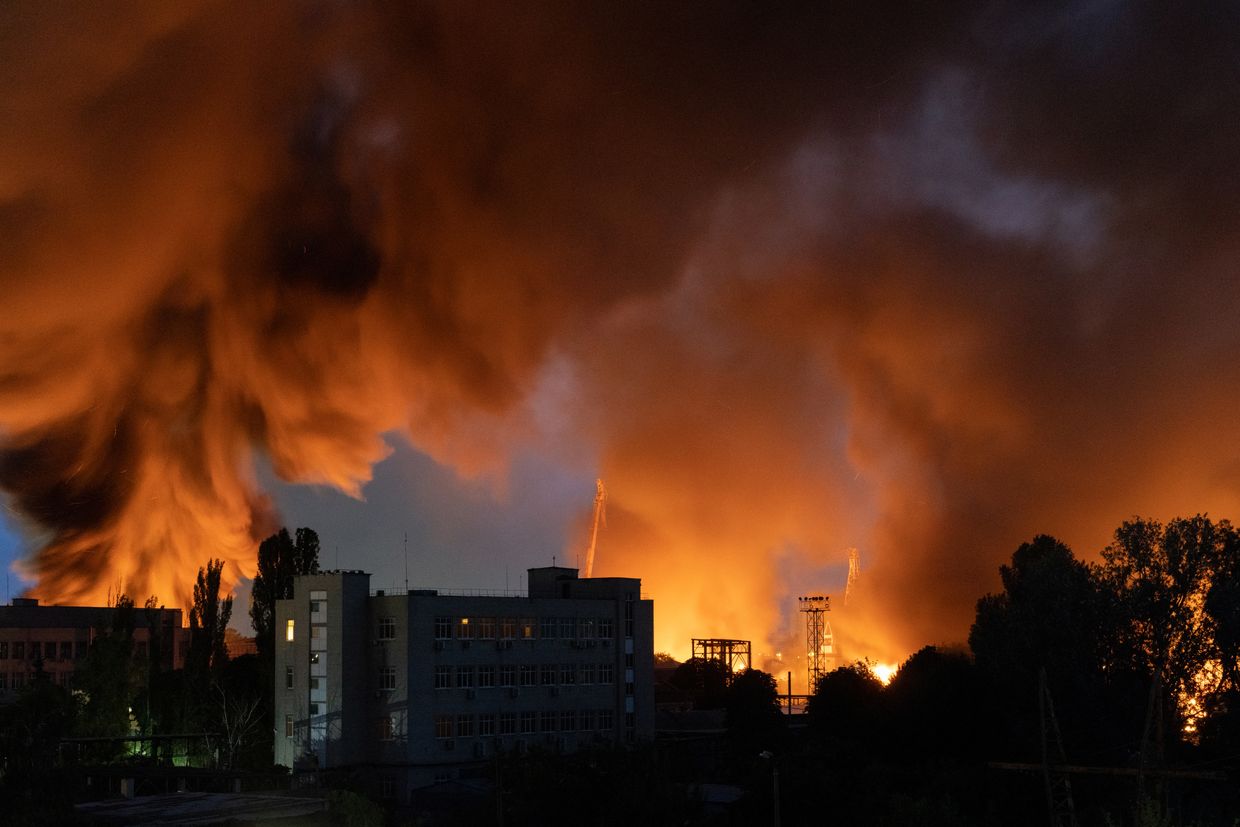
    For months, Russian forces have cordoned off the occupied town of Oleshky. They have blocked roads and emptied pharmacies, all while mining the area. In June, a food truck ran over a landmine at the edge of town, killing a man bringing in aid. Up to 6,000 Ukrainians are still trapped in Oleshky and neighboring villages, more than 180 of them children. The last grocery store shut in January, and for stretches this spring no food reached the town at all. 

    Ukraine has seen this before. In its siege of Oleshky, Russia is reviving methods Stalin’s regime used against Ukrainian villages in 1932 and 1933: branding villages "hostile," cutting them off from supplies, barring the starving from leaving, and letting hunger kill the population. That famine—the Holodomor—killed millions. 
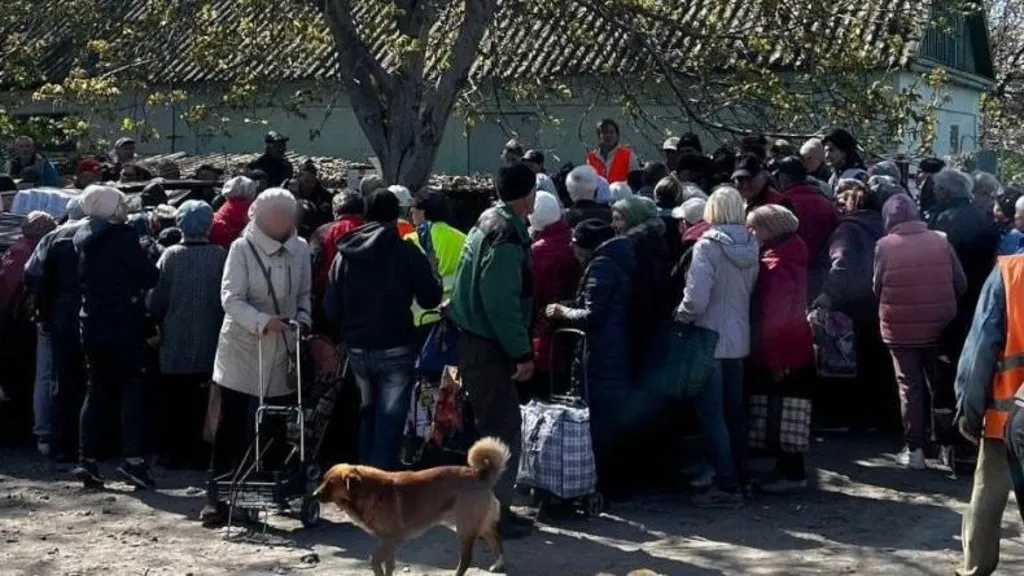
    People in Oleshky wait for food supplies. Photo: BBC

    Yet as it besieges Oleshky, Russia says the Holodomor never happened. Moscow has dismissed the Holodomor as Western propaganda, rewritten its schoolbooks to blame the famine on the weather, and in occupied Ukraine has torn down the memorials to its dead.

    Russia rewrites history in another way too: banning scholars. On 5 January 2026, it barred 28 Canadians from the country. Among them were 16 scholars of the Holodomor Research and Education Consortium (HREC) of the Canadian Institute of Ukrainian Studies at the University of Alberta. At the time, they were working on a course about the famine Russia denies.

    They released it anyway. Seventy-seven days after the ban, Famine as Genocide: The Holodomor in Ukraine went live on Coursera—13 free modules, built by HREC at the University of Alberta.


    What was the Holodomor?

    The Holodomor—"murder by starvation"—was a man-made famine that struck Soviet Ukraine between 1932 and 1933. Scholars generally put the death toll at around 3.5 million; some figures go up to 7 million. Most died in the winter of 1932 and the spring and summer of 1933, as Soviet collectivization emptied whole villages.

    The 1932 harvest was poor, but Soviet policy turned shortage into catastrophe. Stalin's government set grain quotas the farmers could not meet. Brigades entered the villages and seized what was left, killing those who resisted. Authorities blacklisted villages that fell short, sealing them off from the outside world. When peasants tried to flee to less famine-stricken parts of the USSR, a draconian passport system trapped them inside Ukraine.

    One Ukrainian photographer left the famine its starkest visual record. In the spring of 1933, Mykola Bokan shot a near-daily record of the Holodomor from inside his own home in the Chernihiv Oblast. One photograph shows his family at the dining-room table, beneath his caption: "300 days without a single piece of bread to have with our meager lunch!"
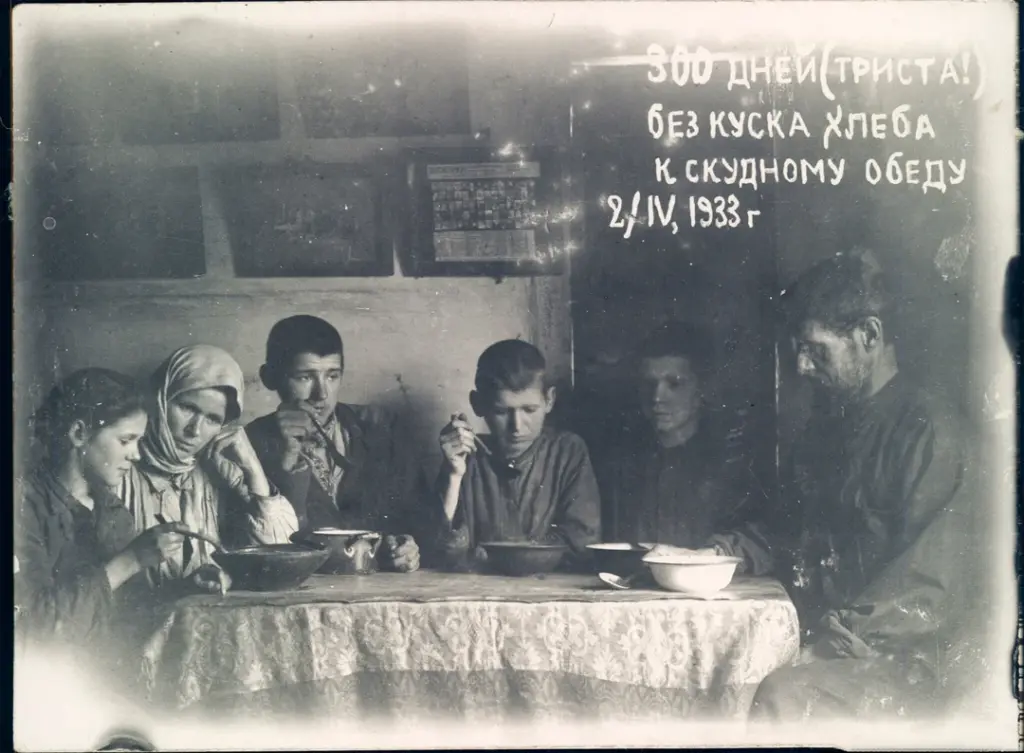
    The Bokan family at their dinner table, Soviet Ukraine, 1933, beneath an inscription reading "300 days without bread."
    Mykola Bokan's family at lunch in Baturyn, Chernihiv Oblast, 2 April 1933. Bokan inscribed the print himself: "300 days (three hundred!) without a piece of bread to add to the meager lunch." From left: daughter Anna, wife Vassa, and sons Oleksandr, Kostiantyn, and Lev, with Mykola Bokan on the right. Source: Mykola Bokan / TsDKFFA Ukraine, via the National Museum of the Holodomor-Genocide.

    Three months later, his son Kostiantyn, one of the gaunt figures in the image, was dead. On 10 July 1933, Bokan gathered his surviving children around a smaller table, a framed portrait of Kostiantyn between them. The caption reads: "Remembrance for Kostia, who died of starvation."

    Bokan was arrested for "counter-revolutionary activities." The photographs were among the evidence. He died in the Soviet camp system. His pictures sat in a secret police archive until researchers found them in 2007. They are now part of Famine as Genocide’s evidence. 
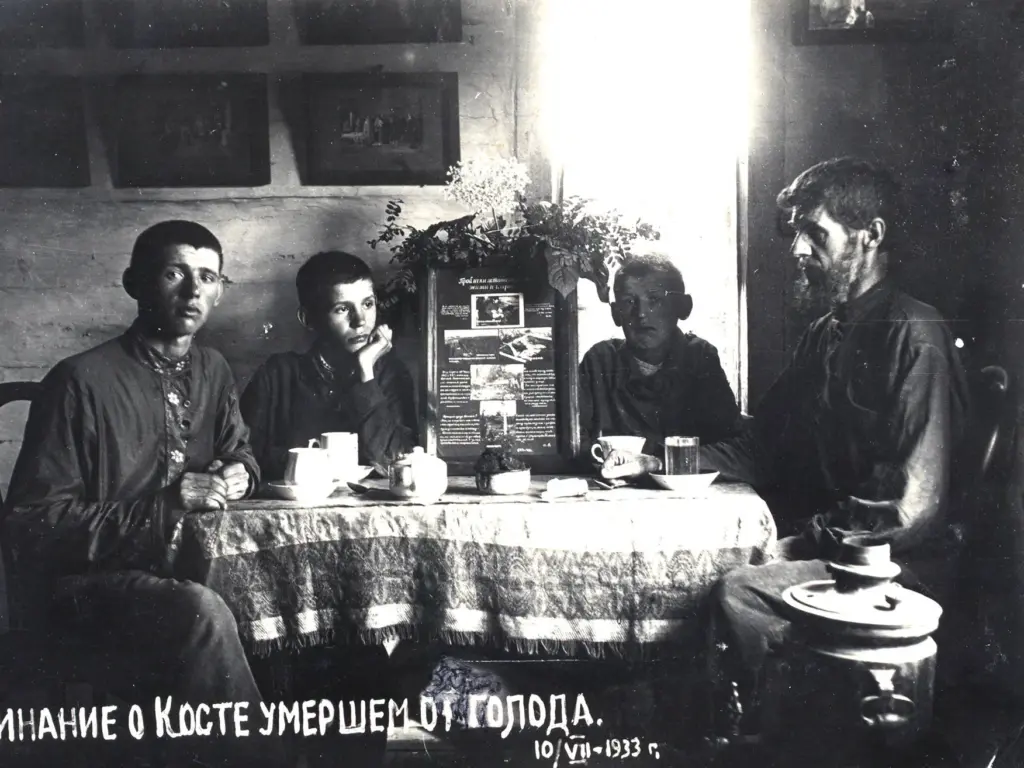
    Mykola Bokan with three of his surviving sons at a family remembrance for his son Kostiantyn, who had died of starvation that spring. The framed portrait at the center of the table is of Kostiantyn. Bokan inscribed the photograph "Remembrance for Kostia, who died of starvation. 10 July 1933." Baturyn, Chernihiv oblast. Photo: Mykola Bokan / TsDKFFA Ukraine, via the National Museum of the Holodomor-Genocide.

    Ukraine commemorates the Holodomor each year on the fourth Saturday of November, with a national minute of silence at four o’clock in the afternoon. 


    The permanent damage the deniers have to explain away

    Russia’s denial now has to contend with a growing body of evidence—including the famine's mark on the bodies of people born long after it ended. 

    For decades, the Holodomor was usually told as a story of starvation. The Soviet archives remained locked until the early 1990s, preventing people from obtaining an accurate picture of the Soviet famine. Before that, scholars studying the Holodomor worked from the memories of émigré survivors and the cables foreign diplomats sent to their home countries in 1932-33.

    That picture has changed. “Thanks to the amount of research done over the past twelve years, there is now a field called Holodomor studies,” Marta Baziuk, The Holodomor Research and Education Consortium’s (HREC) executive director and one of the course’s builders, told Euromaidan Press. 

    HREC’s course broadens that view by tracing the famine’s epigenetic legacy — its lingering physical and psychological effects — among survivors and their descendants.
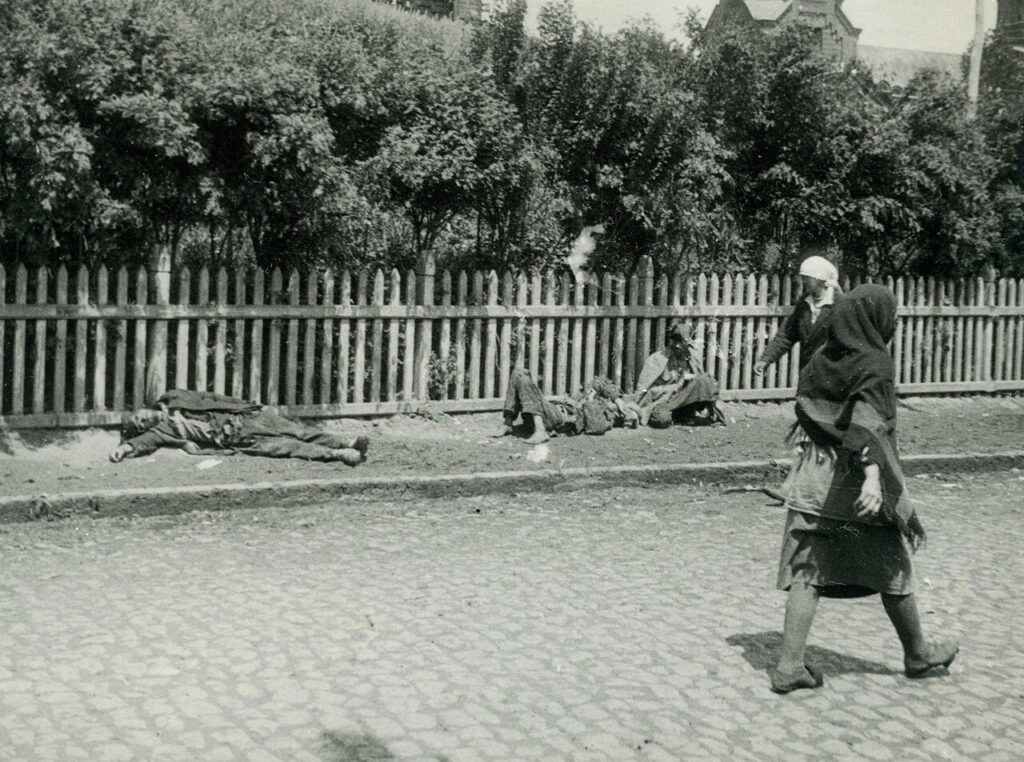
    Bodies of starved peasants on a street in Kharkiv, 1933; the Austrian engineer Alexander Wienerberger took this photo. Source: Wikimedia

    Research into other man-made famines, especially the Dutch Hunger Winter during World War II, informs this part. In the winter of 1944, German forces blockaded the western Netherlands and cut food supplies to civilians. A 2026 study groups Holodomor descendants with Dutch Hunger Winter and Holocaust survivors, pointing to shared histories of famine, mass deprivation, and inherited trauma. 

    Children conceived during the famine showed lasting epigenetic changes. Over sixty years later, the generation affected by famines showed accelerated biological aging and elevated risk of diabetes and heart disease compared to other generations.

    Researchers studying three generations of Holodomor survivor families have found stress, mistrust, and food hoarding in grandchildren who never went hungry themselves. They describe it as “living in survival mode.” 

    "Russia’s war has made Ukrainian history important to a lot of people. This course might’ve been good before the war, but it would have sat quietly, with less interest." — Baziuk

    The targeting of Ukrainians shows up in Soviet death records, Baziuk told Euromaidan Press. Even outside the Ukrainian Soviet republic, and even in mixed villages, ethnic Ukrainians died at noticeably higher rates than their neighbors.


    The Executed Renaissance

    HREC’s course does not treat the Holodomor in isolation. It situates the famine within a broader Soviet pattern of repression against non-Russian groups, in which physical destruction and material deprivation went hand in hand with the stifling of all culture hostile to Stalinism. 

    Raphael Lemkin, who coined the term "genocide," called the Holodomor the classic example of “Soviet genocide” in 1953. To him, the famine was one prong of a wider assault on Ukraine’s cultural figures, clergy, the peasantry, and Ukrainian national identity through resettlement with non-Ukrainians.

    Over the course of the 1930s, Soviet security services arrested, deported, or executed roughly 30,000 Ukrainian writers, scholars, and clergy.

    Ukrainian cultural figures flourished in the 1920s, as the Ukrainian language was more widely promoted, only for Soviet authorities to murder them in the 1930s. Today, Ukrainians remember that generation as the “Executed Renaissance.” 

    Many of those killed were themselves committed Communists. In the 1920s, the Bolsheviks had little organic support in Ukraine. They had recruited young, idealistic Ukrainians by promising room for a Ukrainian version of socialism.

    Korenizatsia, the Soviet promotion of non-Russian nationalities, had once promised room for Ukrainian culture. Stalin’s Great Turn — the Soviet regime’s late-1920s drive toward forced collectivization and rapid industrialization — crushed that opening. Ukrainian national communists became, at best, relics of a discarded future, and at worst marked for death.
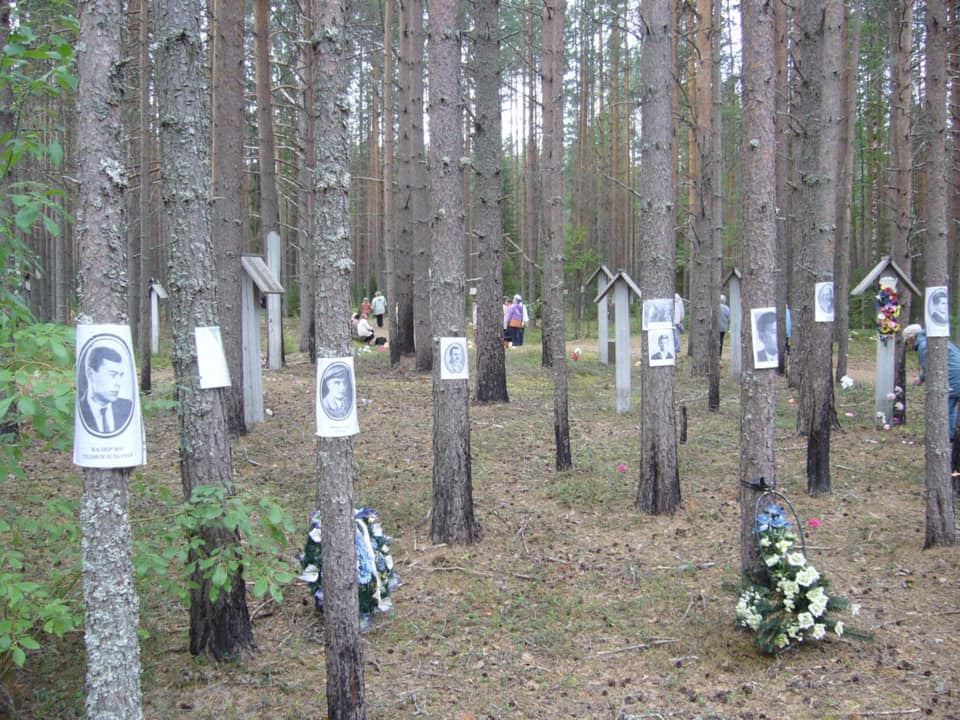
    Sandarmokh, a forest site in Karelia where the NKVD, the USSR’s secret police, executed thousands of victims, including many Ukrainian intellectuals of the “Executed Renaissance.” Source: Razom for Ukraine.

    Russia’s present war follows a similar logic. Ukrainian writers are again being killed, as they were in the 1930s. In 2022, Russian forces seized the children’s author Volodymyr Vakulenko near Izium. He is among the more than 100 cultural figures killed by Russia, according to PEN Ukraine. 

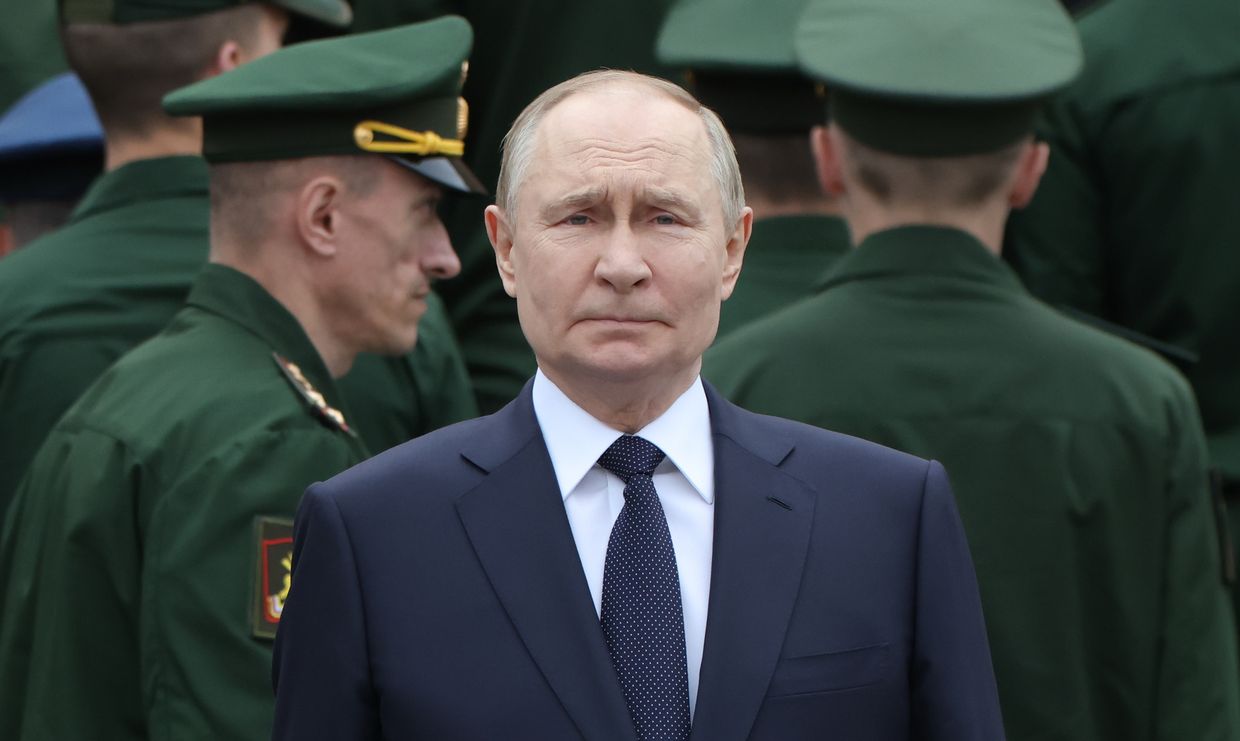
    In Russian-occupied territory, churches not part of the Moscow Patriarchate have been closed, seized, or destroyed. Tens of thousands of Ukrainian children have also been forcibly transferred to Russia, where they are to be brought up as Russians. Moscow’s abduction of children has formed the basis for the ICC arrest warrants for Vladimir Putin and his children’s rights commissioner, Maria Lvova-Belova. 


    Forget what you’ve seen: Soviet-era denial of the Holodomor

    Soviet denial began while Ukrainians were still dying. When the International Red Cross offered famine aid, Moscow refused, denying that mass starvation was taking place. Even as Ukraine’s villages became open-air morgues, Soviet ships carried Ukrainian grain out of Odesa for sale on foreign markets.

    In March 1933, a young Welsh journalist named Gareth Jones went from village to village in Soviet Ukraine, recounting what he saw:

    "There is hunger almost everywhere. Millions die from it. I travelled for several days in Ukraine, and there was no bread. The children had stomachaches, all the horses and cows were dying, and the people were also dying of hunger. The terror was on an unheard-of scale." — Gareth Jones in a letter to his parents, March 1933

    For his trouble, Jones was mocked by name in The New York Times. NYT’s Moscow correspondent, Walter Duranty, responded to Jones in print, denying that any famine existed.
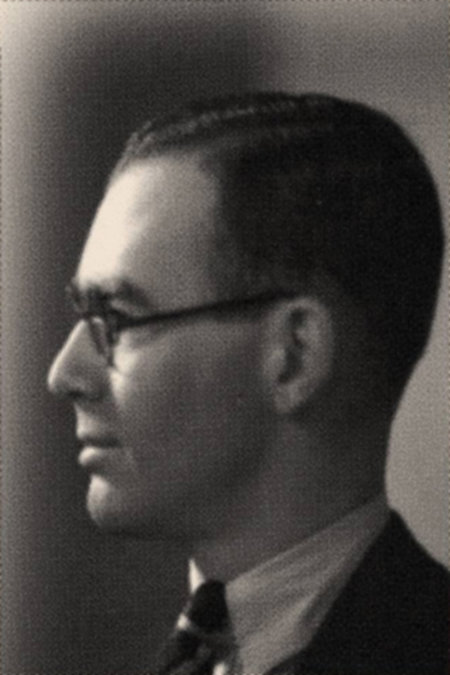
    A picture of Gareth Jones, the first reporter to break news of the Holodomor to the wider world. Source: Wikimedia

    Duranty received more acclaim than Gareth Jones in his lifetime, receiving a Pulitzer Prize in 1932. The Times has since disavowed his coverage, calling his Soviet dispatches "some of the worst reporting to appear in this newspaper." Nevertheless, NYT has yet to return the award.

    Jones was banned from the USSR and shot dead two years later in Inner Mongolia, in northern China. He did not live to see his findings vindicated.

    Russia’s denial today

    Following in Soviet footsteps, Russia continues to whitewash or deny the Holodomor. In 2014, Kremlin-backed outlets called it a “hoax invented by the West’s propaganda machine.” Since 2023, Russian school textbooks have blamed the famine on poor harvests and local mismanagement rather than the Stalinist policies. 

    Asked about intent, Baziuk did not treat it as a difficult question. The archives, she says, show Soviet officials knew people were starving and kept selling Ukrainian grain abroad as they died. 

    Beyond intimidating scholars, Russia's denial extends to physical destruction. On 19 October 2022, occupation forces in Mariupol dismantled the monument to victims of the Holodomor and political repression near the destroyed Drama Theatre, where up to 600 Ukrainian civilians were killed by a Russian airstrike. The granite, officials said, would be turned into construction materials.
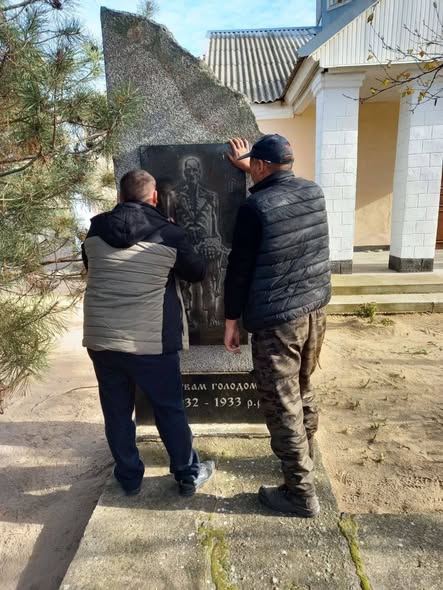
    Occupation authorities dismantle a Holodomor memorial in Nova Kakhovka. Source: Holodomor Museum

    In November 2023, Russian-installed administrators in occupied Kherson Oblast began demolishing Holodomor memorials in Nova Kakhovka and the Oleshky community. They called the memorials "a tool for manipulating history," artificially created to incite hatred toward the Russian Federation.

    Echoes of the Past: Russia’s Starvation of Oleshky in 2026
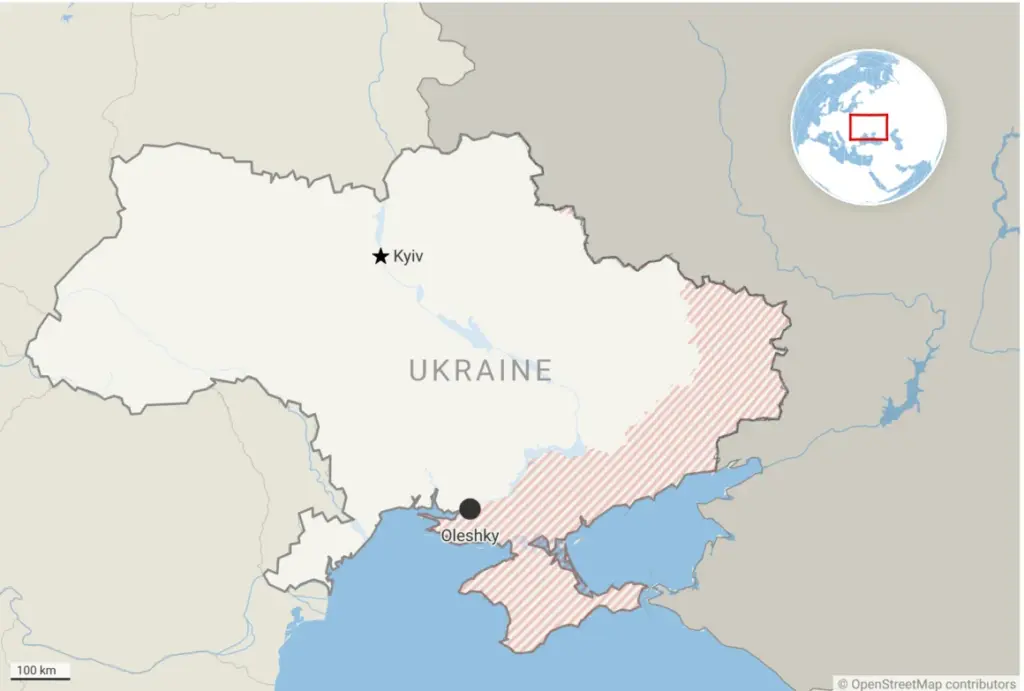
    Location of Oleshky, Kherson region

    Russia’s destruction has not stopped at memorials. 

    In a 25 June report, UN monitors who interviewed residents recorded at least 29 civilians killed this year in Oleshky and neighboring villages, most by FPV drones. No food had reached Oleshky since 26 May. A few of Oleshky’s trapped residents escaped through ad-hoc volunteer runs, including 32 people during a three-day lull in the shelling. Others could not be moved at all. 

    One woman’s husband stayed behind with his 84-year-old father, who could not walk the ten kilometers to the meeting point. 

    Russian forces imposing these conditions, the monitors noted, are legally bound to feed the town they occupy. 

    The Soviet state followed the same logic, cutting off villages that missed grain quotas and barring peasants from leaving Soviet Ukraine in search of food. 
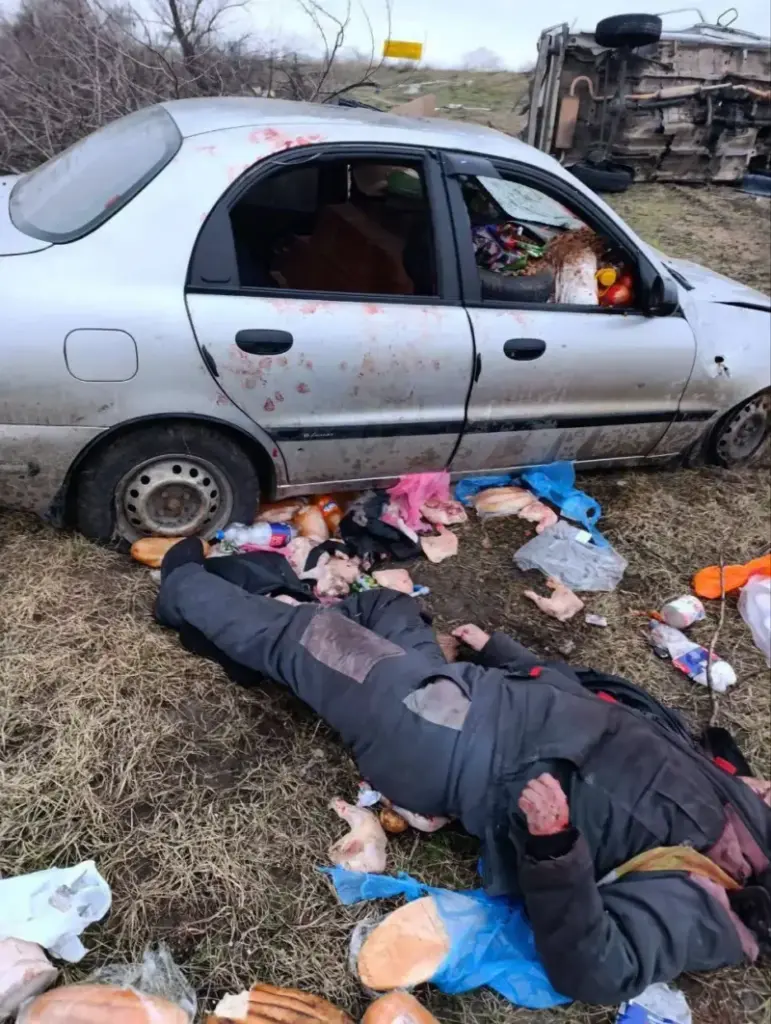
    A car bombed by a Russian FPV drone while attempting to deliver food to occupied Oleshky. Photo: Kherson Nonfake

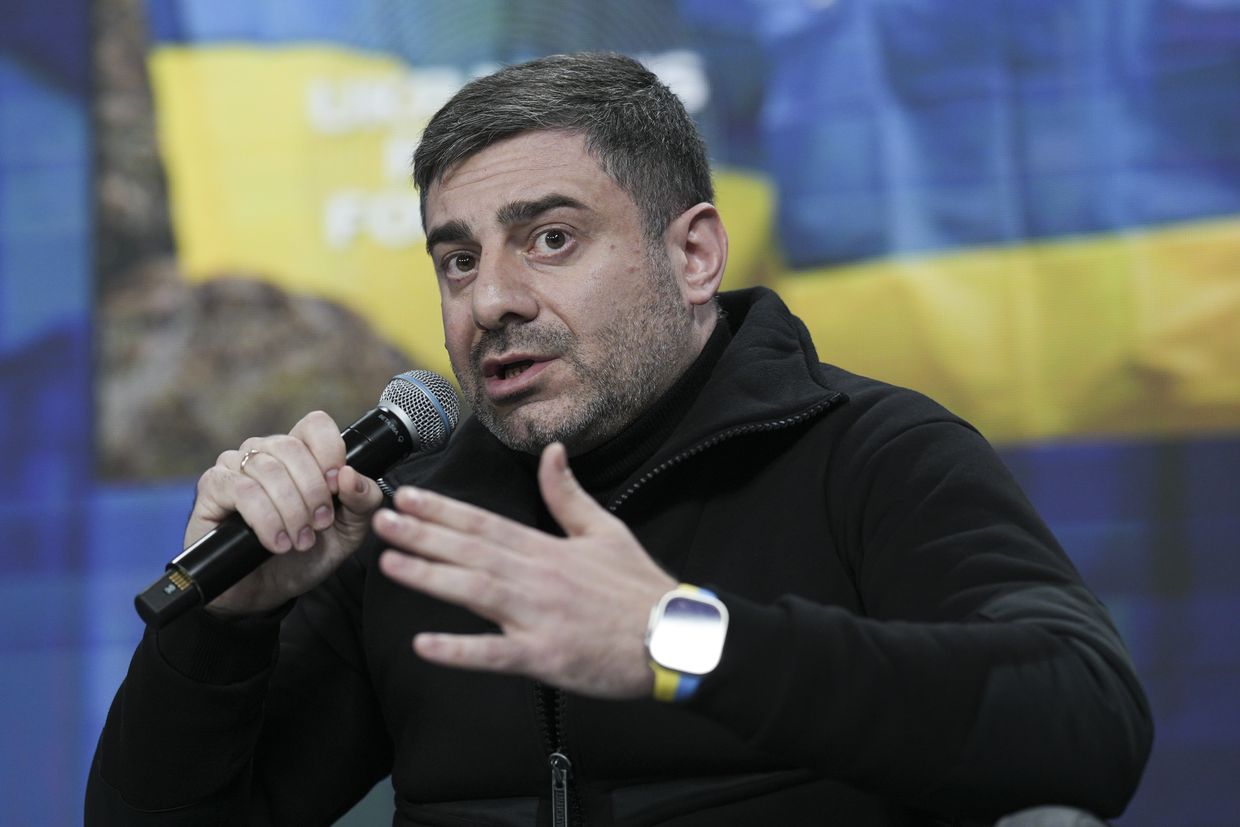
    Ninety years on, Russia is doing it again in Oleshky. Parliament Commissioner Dmytro Lubinets calls Russia's siege deliberate terrorism

    Oleshky’s exiled administration describes what that means in practice: the dead buried in plastic bags, sometimes marked only with a name and two dates. One man who died in December lay unburied for nearly two months. 

    Concerning Oleshky, Oleksandr Prokudin, head of Kherson Regional Military Administration, told Censor.NET that Russian forces have “created a situation there akin to the Holodomor." The historical parallels are not lost on Ukrainians.


    This material was produced as part of a project by the Institute of Mass Information with the support of the Ministry of Foreign Affairs of the Netherlands. The content of this publication does not reflect the official position of the IMI or the Kingdom of the Netherlands.
    •  

    Russia intensifying use of chemical weapons in Ukraine, Dutch intelligence reports

    Russia intensifying use of chemical weapons in Ukraine, Dutch intelligence reports

    Russia is escalating the use of chemical weapons against Ukrainian forces, the Netherlands Military Intelligence (MIVD) reported on July 4.

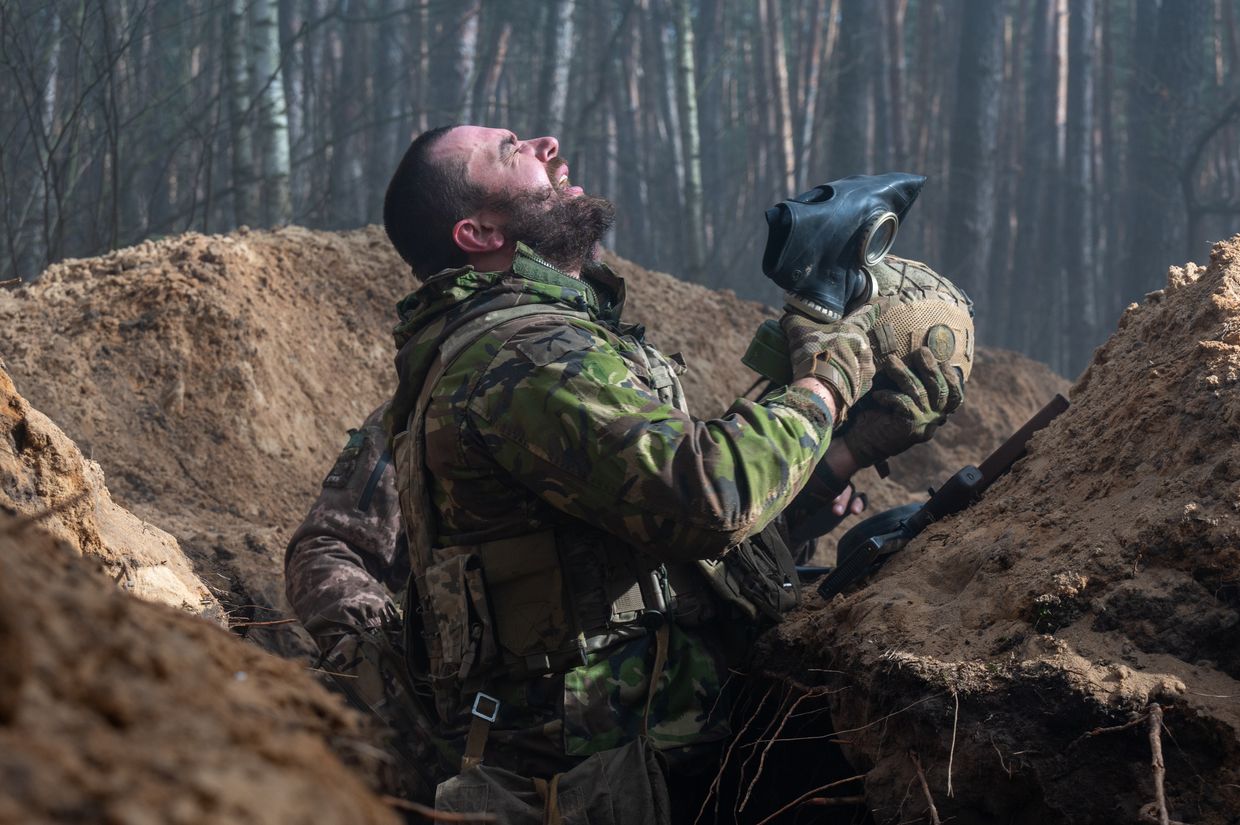
    Russian troops use banned chemical agents as psychological warfare to panic Ukrainian forces, forcing soldiers from dugouts and trenches with gas grenades dropped by drones, making them easy targets for subsequent drone or artillery attacks.

    According to MIVD report, it was previously known that Russia usesd tear gas, but now intelligence has confirmed the use of chloropicrin — a substance that can kill in high concentrations in enclosed spaces.

    Use of of chloropicrin, banned under international law, was discovered by the Netherlands Military Intelligence and Security Service (MIVD) and General Intelligence and Security Service (AIVD) together with the German foreign intelligence service BND.

    The Kyiv Independent previously reported rising chemical attacks, but Ukraine could not accurately identify the chemical substances due to lack of equipment.

    The U.S. State Department had already reported in May that Russian forces have used the chemical agent chloropicrin in Ukraine. The May 1 announcement was part of a larger statement about the introduction of new U.S. sanctions against more than 280 individuals and entities.

    For now, the original statement has been removed from the U.S. State Department website.

    Russia is using this type of weapon more frequently and "with ease," says MIVD Director Vice Admiral Peter Reesink.

    Dutch Defense Minister Ruben Brekelmans, who announced the news to the Dutch parliament, called the situation "absolutely unacceptable," calling for "more sanctions, isolation of Russia and unwavering military support for Ukraine."

    "We are making this public now because Russia's use of chemical weapons must not become normalized," Brekelmans said. "If the threshold for using this type of weapon is lowered, it is dangerous not only for Ukraine but also for the rest of Europe and the world."

    Since the start of the full-scale invasion in 2022, Russia has conducted over 9,000 chemical attacks. At least three Ukrainian soldiers have died directly from exposure to toxic substances, according to Ukraine's Ministry of Defense.

    Dutch intelligence has established that Russian military leadership actively facilitates chemical attacks, and the use of banned substances has become standard practice for Russian forces.

    Moscow is also increasing investments in chemical weapons programs, expanding research and recruiting new scientists, MIVD and AIVD observe.

    The U.S. has accused Russia of deploying chloropicrin, often used in agriculture and widely weaponized as a “vomiting agent” during World War I.

    ‘Deliberately massive and cynical’ — Russian attack on Ukraine began as Trump and Putin spoke, Zelensky says
    “Patriots and their missiles are real defenders of life,” President Volodymyr Zelensky said. “It is very important to maintain the support of partners in ballistic missile defense.”
    Russia intensifying use of chemical weapons in Ukraine, Dutch intelligence reportsThe Kyiv IndependentAnna Fratsyvir
    Russia intensifying use of chemical weapons in Ukraine, Dutch intelligence reports
    •  

    Russia killed at least 273 Ukrainian POWs during full-scale war, prosecutors say

    Russia killed at least 273 Ukrainian POWs during full-scale war, prosecutors say

    Ukrainian prosecutors have documented cases of Russian forces summarily executing 273 Ukrainian prisoners of war (POWs), the Liga.net news outlet reported, citing a statement from the Prosecutor General's Office.

    Kyiv and the U.N. have raised alarm over the rising number of such cases, saying they point to a systematic policy by Russia to murder Ukrainian captives. Half of the document cases were recorded this year alone.

    Seventy-seven criminal cases have been launched in connection with the killings of POWs, while only two people were convicted, and a trial against a third person is ongoing. The statement did not clarify whether the convictions were issued in absentia.

    A total of 188 people have been convicted of various war crimes, including 18 captured Russian soldiers and one civilian, who were convicted in person. The rest were convicted in absentia.

    Earlier this week, Ombudsman Dmytro Lubinets reported a case of the likely murder of a Ukrainian POW who was apparently tied to a motorcycle by Russian soldiers and dragged along the road.

    Ukraine's military intelligence agency (HUR) said in May that it alone had documented more than 150 cases of Ukrainian soldiers being executed after surrendering to Russian forces. Multiple intelligence reports suggest that Russian soldiers have received explicit orders to kill prisoners of war.

    The United Nations Independent International Commission of Inquiry on Ukraine confirmed in March growing numbers of incidents in which Russian forces killed or maimed surrendering Ukrainian troops.

    A separate Ukrainian investigation is also underway into the killing of around 50 Ukrainian POWs in the Russian-run Olenivka prison in 2022. Kyiv blamed the killings on Russia, saying Moscow's forces deliberately put Azov fighters in a separate building that was later destroyed.

    Russia denied responsibility, claiming the explosion was caused by a Ukrainian HIMARS strike—a version U.N. investigators have rejected.

    Although Moscow blocked an independent investigation by denying U.N. monitors access, Lubinets recently said that an internal U.N. analysis concluded Russia was to blame.

    China unveils its new ‘graphite bomb’ — here’s how they work
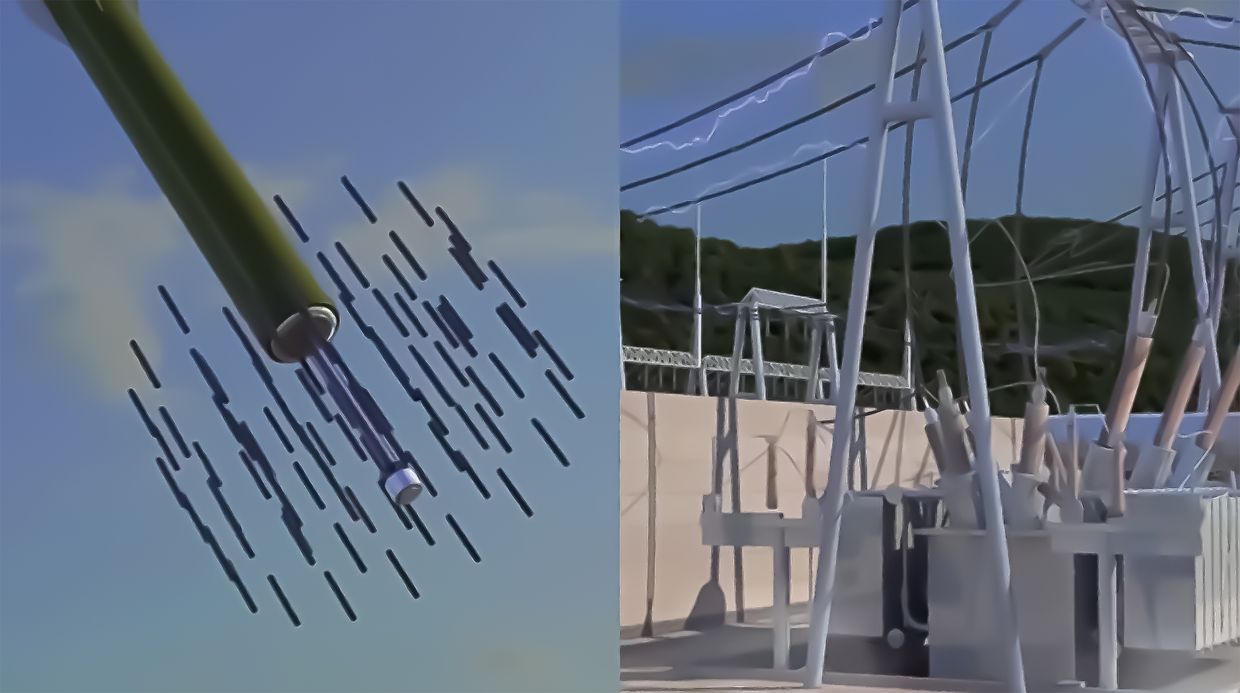
    China’s state TV broadcaster has revealed details of a new “graphite bomb” that can cause a “complete loss of electricity” across an area of 10,000 square meters, or knock out entire power stations, the South China Morning Post reported on June 29. An animated video released by China’s CCTV showed a missile being launched from a ground-based launcher and then flying to a target where it releases 90 small submunitions. They then bounce on the ground before exploding amid a mock-up of an electri
    Russia killed at least 273 Ukrainian POWs during full-scale war, prosecutors sayThe Kyiv IndependentChris York
    Russia killed at least 273 Ukrainian POWs during full-scale war, prosecutors say
    •  

    'Tied to a motorcycle and dragged' — Russia likely executed another Ukrainian POW, ombudsman says

    'Tied to a motorcycle and dragged' — Russia likely executed another Ukrainian POW, ombudsman says

    Russian forces likely executed another Ukrainian prisoner of war (POW), Ombudsman Dmytro Lubinets said on July 1, referring to a recent video that appears to show the captive tied to a motorcycle and dragged along a road.

    The alleged execution adds to growing evidence that Russian forces are systematically violating the Geneva Conventions by killing Ukrainian captives.

    "A video is circulating on social media showing a man being tied to a motorcycle and dragged along the road," Lubinets said in a statement.

    "It is a clear act of demonstrative cruelty and yet another war crime by the Russian Federation."

    Lubinets said he has sent official letters regarding the suspected war crime to the United Nations and the International Committee of the Red Cross (ICRC).

    "Russia is acting as a terrorist state. And it must be held fairly accountable for every crime," he added.

    Ukraine's military intelligence agency (HUR) alone reported in May that it had documented more than 150 cases of Ukrainian soldiers being executed after surrendering to Russian forces. Officials noted that these were only the confirmed incidents, and the real number is likely higher.

    HUR and other agencies say such executions are not isolated but part of a broader, deliberate policy directed by Russia's military leadership. Multiple intelligence reports suggest that Russian soldiers have received explicit orders to kill prisoners of war.

    The United Nations Independent International Commission of Inquiry on Ukraine confirmed in March growing numbers of incidents in which Russian forces killed or maimed surrendering Ukrainian troops.

    The commission cited testimony from Russian deserters who said they were instructed not to take prisoners but to shoot them on sight.

    Earlier this year, the U.N. Human Rights Monitoring Mission in Ukraine reported a sharp increase in POW executions, documenting 79 killings across 24 incidents since August 2024. In many cases, the victims were unarmed or wounded, and some were killed in groups.

    Ukraine’s new interceptor UAVs are starting to knock Russia’s long-range Shahed drones out of the sky
    Russia’s Shahed drone swarms are pummeling Ukraine on a nightly basis, inflicting ever more death and destruction in cities that had managed to carve out some sense of normalcy amid wartime. Civilian alarm has grown. With traditional air defense stockpiles running low, the government is banking on newly created
    'Tied to a motorcycle and dragged' — Russia likely executed another Ukrainian POW, ombudsman saysThe Kyiv IndependentKollen Post
    'Tied to a motorcycle and dragged' — Russia likely executed another Ukrainian POW, ombudsman says
    •  

    Zelensky signs ratification of Special Tribunal on Russian aggression

    Zelensky signs ratification of Special Tribunal on Russian aggression

    President Volodymyr Zelensky said on July 1 that he had signed the ratification documents establishing the Special Tribunal for the Crime of Aggression against Ukraine, marking a major step toward prosecuting Russia's leadership.

    Ukraine and the Council of Europe signed the agreement establishing the Special Tribunal on June 25 during a ceremony in Strasbourg. Zelensky and Council of Europe Secretary General Alain Berset signed it after more than three years of advocacy and diplomacy.

    "The agreement must now be swiftly ratified so that the process of creating the tribunal can begin," Zelensky said in a statement. He also instructed Ukraine's government to urgently submit necessary legislative changes to parliament to ensure Kyiv's full implementation of the agreement.

    "I ask members of parliament to treat this as an immediate priority," Zelensky added, urging lawmakers to pass the needed legislation without delay.

    The tribunal, once established, would specifically target Russia's top political and military leadership for the crime of aggression, defined as the illegal use of force by one state against another, which existing international bodies, like the International Criminal Court (ICC), are not able to prosecute due to jurisdictional limitations.

    Zelensky also called on the Foreign Ministry and the Presidential Office to finalize a roadmap with international partners for the tribunal's launch.

    "Already this year, Russia must begin to feel that accountability for the crime of aggression is inevitable," he said. "Aggression is a crime, and Russia's truly inevitable punishment for this crime is in the global interest of everyone in the world who wants their people to live in peace."

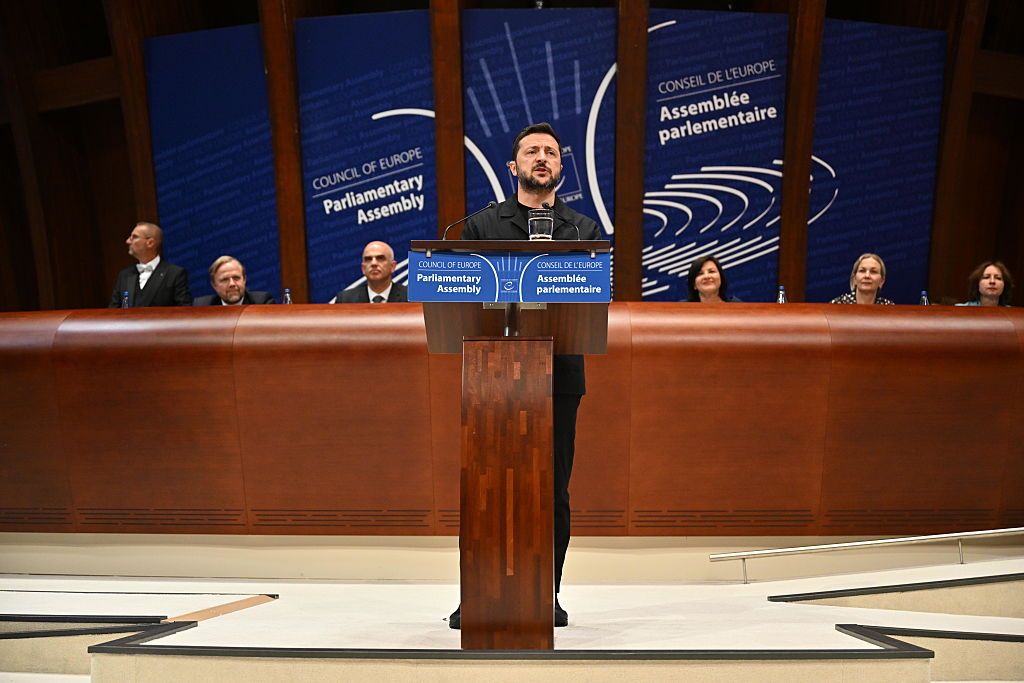
    Speaking at the Parliamentary Assembly of the Council of Europe (PACE) on June 25, Zelensky thanked the body for championing the idea from its inception and pushing forward international accountability for Russia's invasion.

    "It was here in this assembly, that the first call for such a tribunal was made," Zelensky said. "The idea was born here – and now it’s gaining real support from partner countries in Europe and beyond."

    The tribunal is designed to close a legal gap that currently prevents the ICC from prosecuting Russia for the crime of aggression, although the court has issued arrest warrants for Russian President Vladimir Putin and Russian children's rights commissioner Maria Lvova-Belova in connection with the deportation of Ukrainian children.

    Alongside the tribunal, the Council of Europe has also helped establish the Register of Damage, which has received over 34,000 claims from Ukrainians documenting losses and harms caused by the war.

    Zelensky has repeatedly stressed the need for full justice and has called for the prosecution of all Russian officials responsible for planning and executing the war.

    Investigation: How Russia prepares its strategic missile plant for ‘eternal war’
    Key findings: * Despite international sanctions, Russia’s strategic missile plant was able to import complex machinery to dramatically increase missile production. * The Kyiv Independent has identified the equipment supplied to the plant, as well as the supply chains, mostly from China. * We located the plant’s new premises, built to house the
    Zelensky signs ratification of Special Tribunal on Russian aggressionThe Kyiv IndependentAlisa Yurchenko
    Zelensky signs ratification of Special Tribunal on Russian aggression
    •  

    UN analysis finds Russia responsible for 2022 Olenivka prison explosion killing Ukrainian POWs, ombudsman says

    UN analysis finds Russia responsible for 2022 Olenivka prison explosion killing Ukrainian POWs, ombudsman says

    An internal U.N. analysis has found Russia responsible for a 2022 explosion at Olenivka prison, which killed over 50 Ukrainian prisoners of war (POWs), Ombudsman Dmytro Lubinets said on June 30.

    "(A)n internal analysis of the U.N. showed that it was the Russian Federation that planned and carried out the attack," he said in a post to social media.

    Lubinets referred to a report by the Center for Human Rights in Armed Conflict, whose website features only the investigation into the Olenivka explosion.

    The investigation, published on June 26, reads that an "internal U.N. analysis concluded that it was the Russian Federation who planned and executed the attack," though the U.N. did not publicly acknowledge Russia's responsibility.

    Russia has denied being responsible for the attack but prevented efforts by the international community to independently investigate the attack and contaminated evidence at the site, according to a report published by the U.N.

    Kyiv has said that days before the July 2022 attack, Russia deliberately put Ukrainian members of the Azov Regiment, who were awaiting a prisoner exchange, in a separate part of the Olenivka prison building that was later destroyed in the explosion.

    "The report identifies the weapons and ammunition that the Russian Armed Forces used to kill Ukrainian prisoners of war, and also examines in detail the planning, organization, and execution of the murder," Lubinets said.

    The ombudsman noted that the U.N. fact-finding mission on Olenivka was disbanded due to a lack of security guarantees, adding that the mission has previously refused to review evidence provided by Ukraine.

    Russia has repeatedly violated international conventions protecting the rights of POWs as it continues to carry out its war against Ukraine.

    A Russian military court has convicted 184 Ukrainian POWs captured in Kursk Oblast of acts of terrorism, Mediazona reported on June 25.

    The POWs captured in Kursk were charged with carrying out a grave terrorist act by a group of individuals, as outlined by the Russian Criminal Code.

    Junior Lieutenant Yevhen Hoch was convicted of allegedly carrying out an act of terrorism by taking part in Ukraine's Kursk Oblast incursion.

    Smashing previous monthly record, Russia launches 5,337 kamikaze drones against Ukraine during June
    Russia launched a record 5,337 Shahed-type drones against Ukraine in June, according to data from the Ukrainian Air Force and Dragon Capital, smashing the previous record of 4,198 set in March. Russia’s bombardments, a fact of life after three years of full-scale war, have intensified dramatically in May
    UN analysis finds Russia responsible for 2022 Olenivka prison explosion killing Ukrainian POWs, ombudsman saysThe Kyiv IndependentYuliia Taradiuk
    UN analysis finds Russia responsible for 2022 Olenivka prison explosion killing Ukrainian POWs, ombudsman says
    •  

    Trump wants to slash war crimes investigation funds, Reuters reports

    Trump wants to slash war crimes investigation funds, Reuters reports

    The White House has recommended terminating U.S. funding for multiple programs that investigate war crimes worldwide, including Russian war crimes in Ukraine, Reuters reported on June 26.

    Since U.S. President Donald Trump's inauguration in January, the administration has imposed sweeping layoffs and budget cuts, targeting foreign aid, media outlets, and federal workers. Many of the cuts have directly impacted programs assisting Ukraine.

    The Trump administration's Office of Management and Budget (OMB) on June 25 recommended canceling funds for nearly two dozen programs that investigate and seek accountability for war crimes, two U.S. sources familiar with the matter told Reuters. The outlet also reviewed internal government documents to support their claims.

    The targeted programs include groups investigating Russian war crimes in Ukraine, as well as atrocities in Myanmar, Syria, Iraq, Nepal, Sri Lanka and the Gambia.

    Multiple programs designated for termination are operating in Ukraine, three sources told Reuters. One of the groups is Global Rights Compliance, which gathers evidence of Russian war crimes across the country, including torture and sexual violence. Another is Legal Action Worldwide, a legal aid organization that supports efforts to prosecute suspects accused of perpetrating war crimes in Ukraine.

    The State Department will have the opportunity to appeal the OMB's recommendation, though two U.S. officials told Reuters that Secretary of State Marco Rubio is not likely to advocate for most of the programs.

    Rubio could potentially argue to preserve a few key programs, such as those supporting the prosecution of Russian war crimes in Ukraine, one source said.

    According to an internal State Department email viewed by Reuters, the department has until July 11 to submit their arguments on behalf of preserving any of the targeted war crimes accountability programs.

    The Trump administration's funding cuts have already impacted humanitarian aid and civil society programs across Ukraine as the country faces its fourth year of Russia's full-scale invasion. One of Trump's first acts in his second term was to freeze all U.S. foreign assistance for 90 days. He then worked alongside former ally Elon Musk to dismantle the U.S. Agency for International Development (USAID).

    Among the defunded organizations is Ukraine Conflict Observatory, the leading U.S.-backed initiative documenting Russia's abduction of Ukrainian children. A part of Yale University's Humanitarian Research Lab, the group will end its efforts to track and monitor illegally deported Ukrainian children as of July 1 due to funding cuts.  

    The White House also previously disbanded the U.S. Justice Department's War Crimes Accountability Team and fired a coordinator responsible for collecting data on Russian war crimes in Ukraine.

    Trump gets king’s treatment at NATO summit while Ukraine sits on the sidelines
    THE HAGUE, Netherlands — As NATO leaders convened in The Hague for a two-day summit on June 24–25, allies and Kyiv braced for the first annual meeting since U.S. President Donald Trump’s return to office. With the Israel-Iranian conflict dominating the news and the summit agenda focused on
    Trump wants to slash war crimes investigation funds, Reuters reportsThe Kyiv IndependentMartin Fornusek
    Trump wants to slash war crimes investigation funds, Reuters reports

    •  

    Russian court convicts 184 Ukrainian POWs captured in Kursk Oblast of terrorism, Mediazona reports

    Russian court convicts 184 Ukrainian POWs captured in Kursk Oblast of terrorism, Mediazona reports

    A Russian military court has convicted 184 Ukrainian prisoners of war (POWs) captured in Kursk Oblast of acts of terrorism, Mediazona reported on June 25.

    Ukraine first launched a surprise offensive into Russia's Kursk Oblast in August 2024. Ukrainian officials have said the incursion forced Russia to move resources away from its offensives in Eastern Ukraine.

    Russia's military prosecutors office convicts Ukrainian POWs captured in Kursk Oblast on a regular basis, independent Russian outlet Mediazona reported.

    The POWs captured in Kursk were charged with carrying out a grave terrorist act by a group of individuals, as outlined by the Russian Criminal Code.

    Junior Lieutenant Yevhen Hoch was convicted of allegedly carrying out an act of terrorism by taking part in Ukraine's Kursk Oblast incursion.

    Russia has waged its war against Ukraine since 2014 and initiated a full-scale invasion in February 2022.

    Russian authorities accused Hoch of interfering with civilian evacuations for three weeks amid Ukraine's Kursk offensive and for "intimidating them by openly carrying and using combat weapons."

    Russia regularly convicts people of politically motivated charges in an effort to silence opposition to its war against Ukraine.

    The Russian 2nd Western District Military Court has carried out the sentences against the 184 Ukrainian POWs since the beginning of the year.

    Moscow has gone after journalists in Ukraine's Russian-occupied territories. Ukrainian Journalist Viktoriia Roshchyna disappeared in August 2023 and died after being tortured in Russian captivity. Roschyna's body was returned to Ukraine in February with missing organs.

    Putin insists the Russian economy is fine, but Kremlin officials say otherwise
    In a rare public sign that all is not well in Russia, two high-ranking Moscow officials last week issued separate warnings about the state of the country’s economy. Russian Central Bank Governor Elvira Nabiullina and Economy Minister Maxim Reshetnikov both highlighted that amid the Kremlin’s full-scale war against Ukraine, the tools Moscow once relied on to maintain wartime growth are nearly exhausted. Almost immediately, Russian President Vladimir Putin on June 20 dismissed the concerns, clai
    Russian court convicts 184 Ukrainian POWs captured in Kursk Oblast of terrorism, Mediazona reportsThe Kyiv IndependentTim Zadorozhnyy
    Russian court convicts 184 Ukrainian POWs captured in Kursk Oblast of terrorism, Mediazona reports
    •  

    Ukraine, Council of Europe sign historic agreement to establish tribunal on Russian aggression

    Ukraine, Council of Europe sign historic agreement to establish tribunal on Russian aggression

    Ukraine and the Council of Europe signed a historic agreement on June 25 to establish a Special Tribunal for the Crime of Aggression, marking a major step toward holding Russia's leadership accountable for launching the full-scale invasion in 2022.

    The agreement was signed by President Volodymyr Zelensky and Council of Europe Secretary General Alain Berset during a ceremony in Strasbourg, France – following more than three years of diplomatic efforts and deliberation.

    Speaking at the Parliamentary Assembly of the Council of Europe (PACE), Zelensky thanked the assembly and underscored the importance of justice.

    "Everyone responsible for this war must be held to account," he said. "Every war criminal must face justice – including Putin... the crime of aggression must be recorded, judged, and punished."

    Zelensky also praised PACE for its "real leadership" in taking a stand against Russia and developing the tribunal.

    "It was here in this assembly, that the first call for such a tribunal was made," Zelensky said. "The idea was born here – and now it’s gaining real support from partner countries in Europe and beyond."

    The Special Tribunal will be established within the framework of the Council of Europe and will have the mandate to prosecute senior Russian leaders for the crime of aggression – defined as the decision to use armed force against another state, in violation of the United Nations Charter.

    President Zelensky has long advocated for the creation of the tribunal, emphasizing the need to bring Russian President Vladimir Putin and other senior officials to justice. Ukrainian prosecutors have documented thousands of war crimes committed by Russian forces, including attacks on civilians, cultural landmarks, medical facilities, and reports of torture and forced deportations.

    The tribunal is intended to close a key legal gap in existing international accountability mechanisms.

    While the International Criminal Court (ICC) has jurisdiction to investigate war crimes, crimes against humanity, and genocide in Ukraine – and has already issued arrest warrants for Putin and Maria Lvova-Belova, the Russian official overseeing the forced deportation of Ukrainian children to Russia – it cannot examine the crime of aggression due to jurisdictional constraints.

    The new tribunal will complement the ICC's efforts by specifically targeting high-level officials responsible for starting the war – such as Putin and his inner circle.

    In addition to the special tribunal, the Council of Europe’s Ukraine-related work  includes the Register of Damage – an initiative that has already received more than 34,000 claims detailing losses and harms resulting from Russia's full-scale invasion.

    The establishment of the register, and now the special tribunal, are important steps to ensure justice for Ukraine and its people.

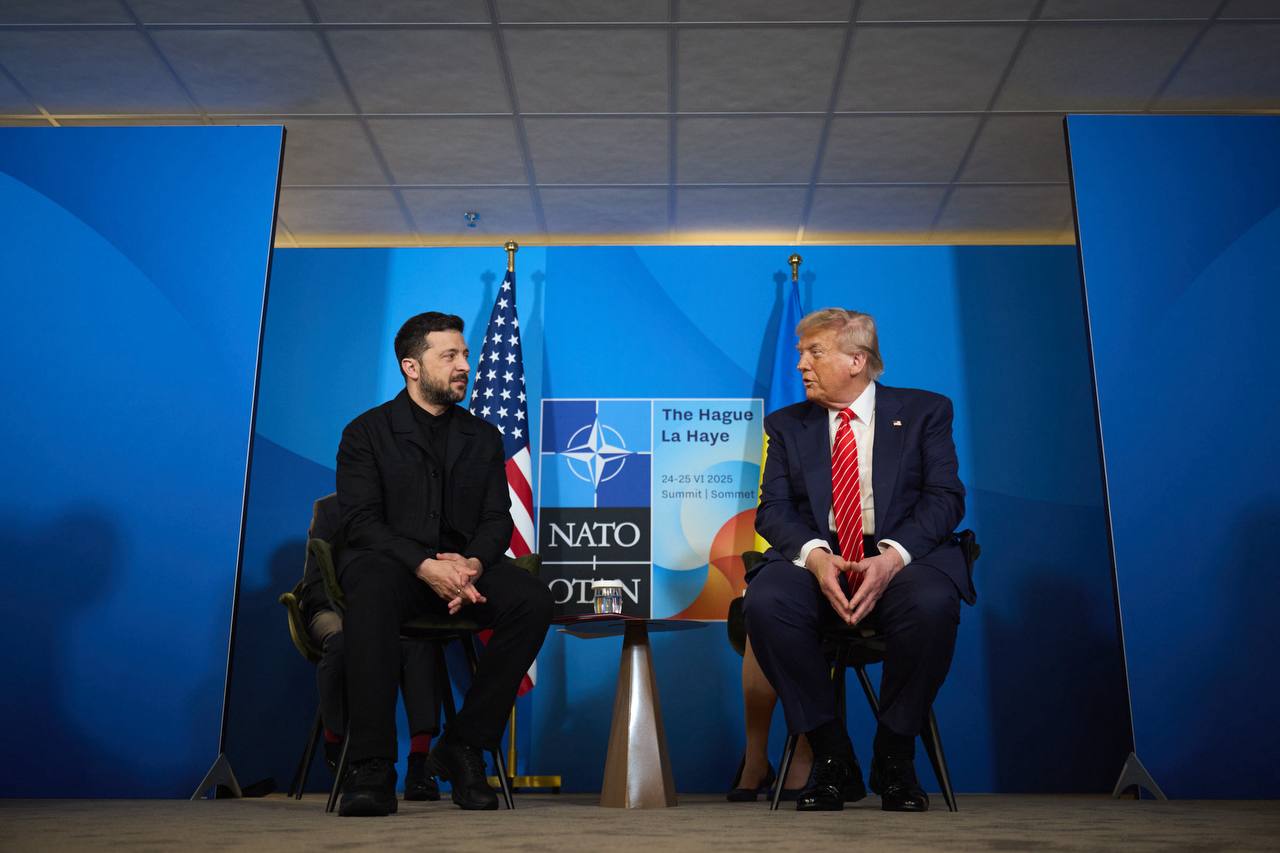
    Zelensky, Trump hold talks on NATO summit sidelines
    “We covered all the truly important issues,” President Volodymyr Zelensky said. “We discussed how to achieve a ceasefire and a real peace. We spoke about how to protect our people. We appreciate the attention and the readiness to help bring peace closer.”
    Ukraine, Council of Europe sign historic agreement to establish tribunal on Russian aggressionThe Kyiv IndependentKateryna Denisova
    Ukraine, Council of Europe sign historic agreement to establish tribunal on Russian aggression
    •  

    Putin to skip BRICS summit in Brazil due to ICC arrest warrant

    Putin to skip BRICS summit in Brazil due to ICC arrest warrant

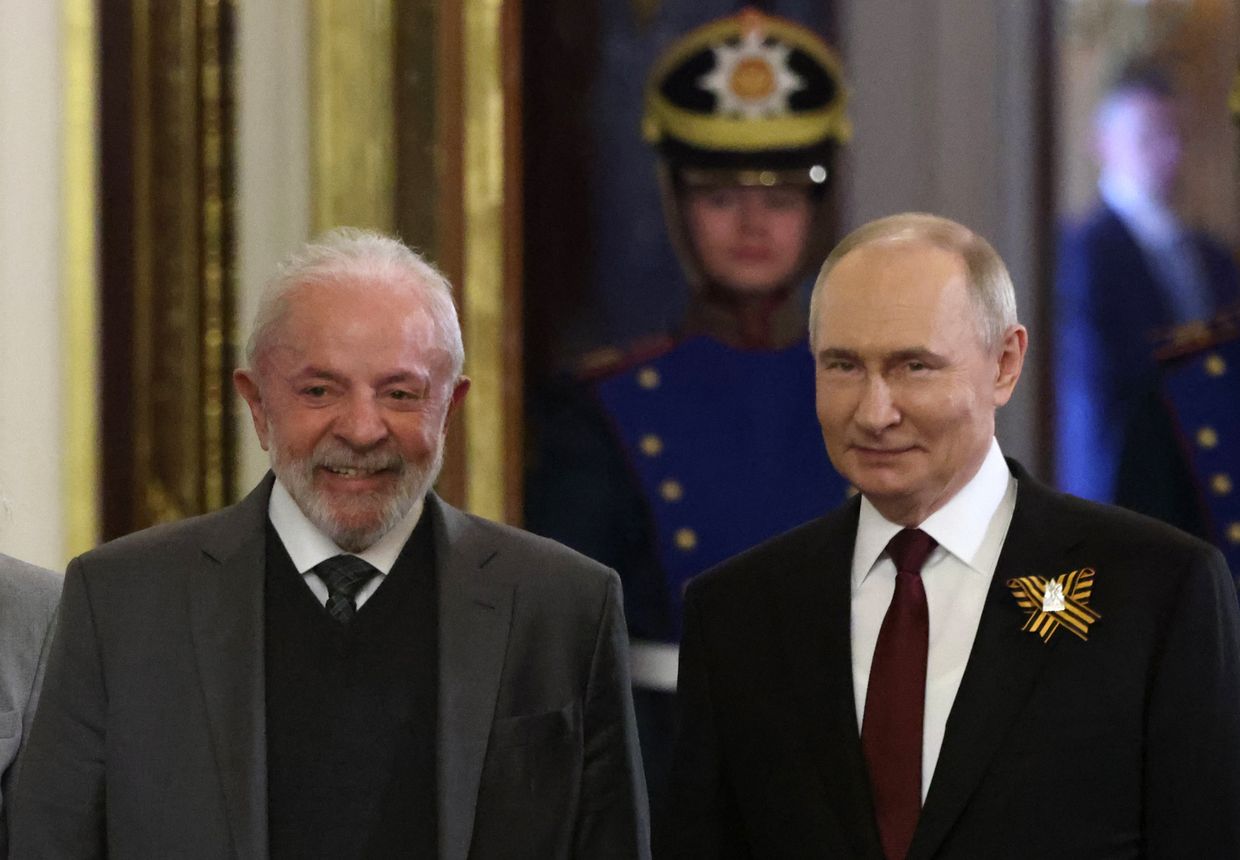
    Russian President Vladimir Putin has decided not to attend the upcoming BRICS summit in Brazil due to an arrest warrant issued by the International Criminal Court (ICC), Russian president's foreign policy aide Yuriy Ushakov said on June 25.

    "This is related to certain difficulties in the context of the ICC’s demands, as you know, and precisely in this context, the Brazilian government was unable to take a clear position that would allow our president to participate in this meeting," Ushakov said.

    Brazil is a member of the ICC and a signatory to the Rome Statute, meaning it is obliged to arrest Putin if he enters the country.

    The BRICS summit, which is scheduled to take place on July 6–7, will be attended by Russian Foreign Minister Sergey Lavrov, according to Ushakov. Putin is expected to participate remotely via video.

    BRICS, composed of Russia, China, India, Brazil, and other nations, is a group of emerging economies often portrayed as a counterweight to the Western-led world.

    The ICC issued a warrant for the Russian leader's arrest in March 2023 over the illegal deportation of Ukrainian children during Russia's full-scale invasion of Ukraine.

    In November 2024, Putin skipped the G20 summit in Brazil and sent Lavrov instead.

    Earlier in June, Moscow said that Putin had received an official invitation to attend the G20 summit in South Africa, another ICC member state. The event is scheduled to take place in Johannesburg from Nov. 22 to 23.

    In September 2024, Putin made a rare visit to Mongolia, which is also a signatory of the ICC, prompting criticism over the non-enforcement of the warrant.

    ‘It’s possible’ — Trump on Putin’s territorial ambitions beyond Ukraine
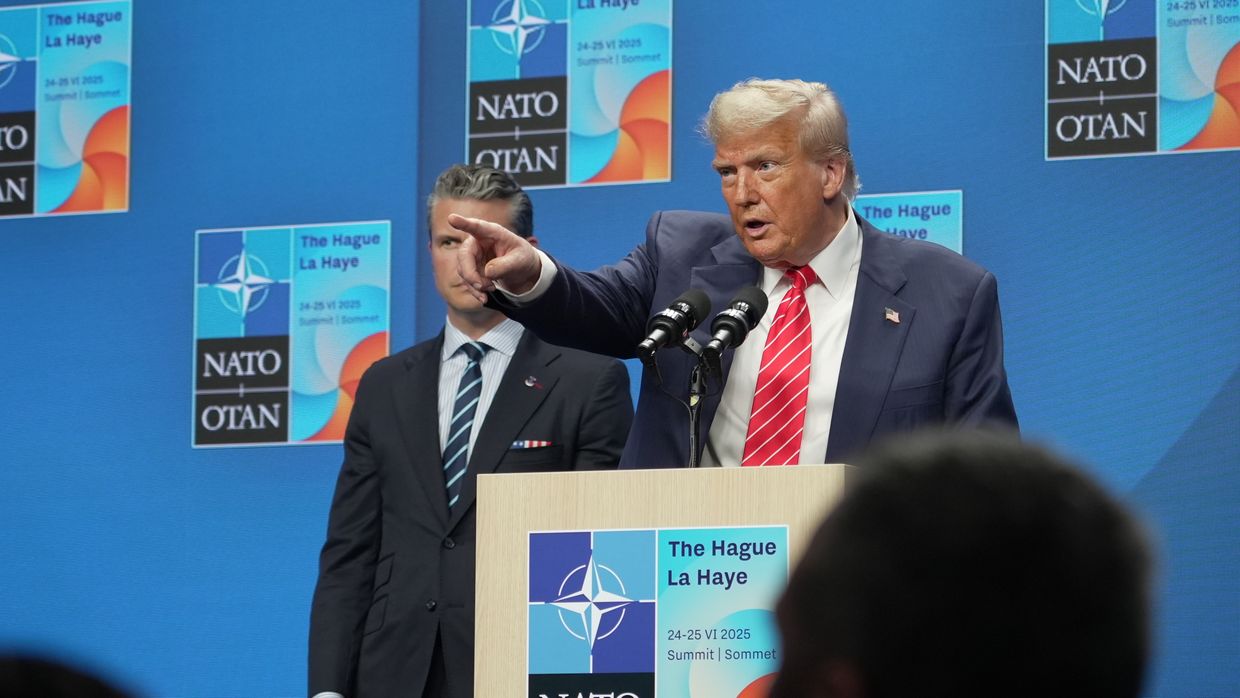
    “I consider him (Russian President Vladimir Putin) a person I think is misguided,” U.S. President Donald Trump said speaking at a NATO press conference in The Hague on June 25.
    Putin to skip BRICS summit in Brazil due to ICC arrest warrantThe Kyiv IndependentKateryna Denisova
    Putin to skip BRICS summit in Brazil due to ICC arrest warrant
    •  

    Ukrainians forcibly deported by Russia held in basement without food, water, media reports

    Ukrainians forcibly deported by Russia held in basement without food, water, media reports

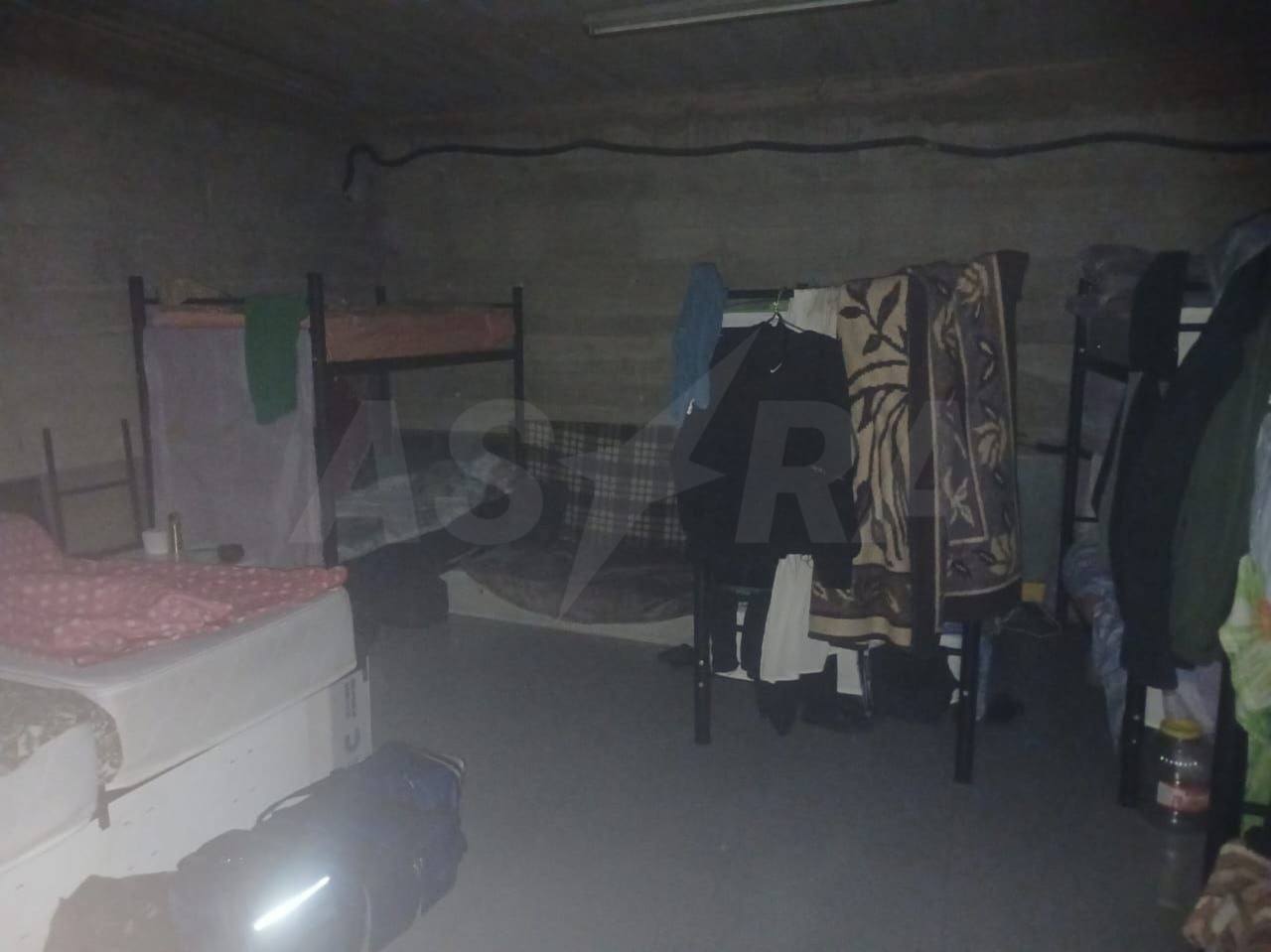
    Over 45 Ukrainians forcibly deported by Russia from Ukraine's occupied territories are being held in a basement at Russia's border with Georgia without food, water, and basic healthcare, independent media outlet Astra reported on June 21.

    "We are in a basement without utilities: there is no shower or toilet, they don't feed us. Volunteers bring humanitarian aid, but it lasts for a couple of days and not for everyone," one of the held Ukrainians told Astra.

    A decree by Russian President Vladimir Putin has ordered Ukrainians still living in occupied territories to leave unless they "regulate their legal status," namely, obtaining Russian citizenship.

    "We emphasize that these systematic deportations and persecutions are part of Russia's genocide policy against the Ukrainian people," Foreign Ministry spokesperson Heorhii Tykhyi said on March 21.

    At least 45 Ukrainians have been held at the Verkhniy Lars border checkpoint between Georgia and Russia for several days.

    One of the deported Ukrainians has been hospitalized as they await passage out of Russia and into Georgia.

    "There were 8 of us, 3 days ago. Every day, more people are brought here and the number is growing. Now there are 45 people, some have been here for a month. There are disabled people and people with serious illnesses," one of the held Ukrainians said.

    The basement facility has since 2023 held deported Ukrainians barred from entering the Russian Federation and the Ukrainian territories it occupies.

    The held Ukrainians were denied entry into Georgia. Most did not have the necessary travel documents, but 16 Ukrainians with passports were denied entry as well, Astra reported, citing the non-profit organization Tbilisi Volunteers Organization.

    "The basement is damp, there are drops of water on the ceiling, (it's hard) to breathe, everyone smokes, they don't let us outside. We sleep for four hours, taking turns. Some sleep on the floor," one of the deported Ukrainians said.

    The basement only houses 17 sleeping spaces, but another 100 deported Ukrainians are expected to arrive at the facility, a volunteer told Astra.

    Following a pause in deportations to Georgia in 2024, Russia has resumed deportations as Georgia prepares new immigration legislation, the Tbilisi Volunteers Organization says.

    Serhiy Serdiuk, a resident of occupied Zaporizhzhia Oblast, was deported and banned from re-entering Russia and Ukraine's occupied territories for 40 years, the Guardian reported on June 21.

    Russian authorities pressed Serdiuk, an educator, to continue work under Russia's imposed school curriculum.

    Serdiuk and other staff at a school in Zaporizhzhia Oblast's Komysh-Zoria town refused and were met with threats.

    Serdiuk was similarly deported to Georgia, from where he flew to Moldova and crossed back into Ukraine.

    Due to Russia's illegal and unrecognized annexation of Ukraine's occupied territories, Ukrainian citizens are pressured to obtain Russian citizenship or face deportation and entry bans.

    Pro-Russian ‘peace protestors’ set to descend on NATO summit
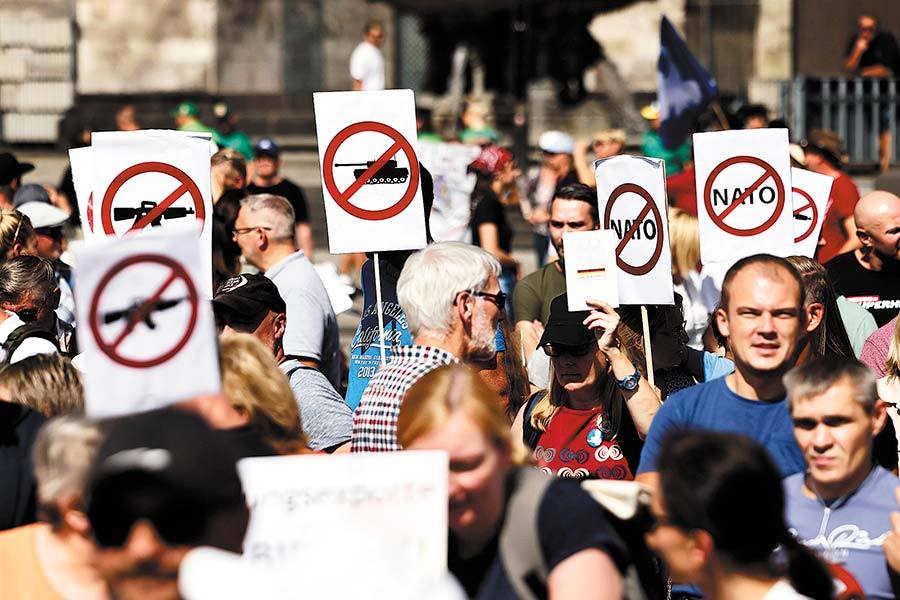
    Dutch protesters who regularly call for an end to military aid to Ukraine will descend on The Hague next week to protest the upcoming NATO summit, which is set to take place on June 24-25. The group will protest against NATO alongside several other organizations and has urged supporters on
    Ukrainians forcibly deported by Russia held in basement without food, water, media reportsThe Kyiv IndependentLinda Hourani
    Ukrainians forcibly deported by Russia held in basement without food, water, media reports
    •  

    Ukraine documents 366 cases of war-related sexual violence, most victims women

    Ukraine documents 366 cases of war-related sexual violence, most victims women

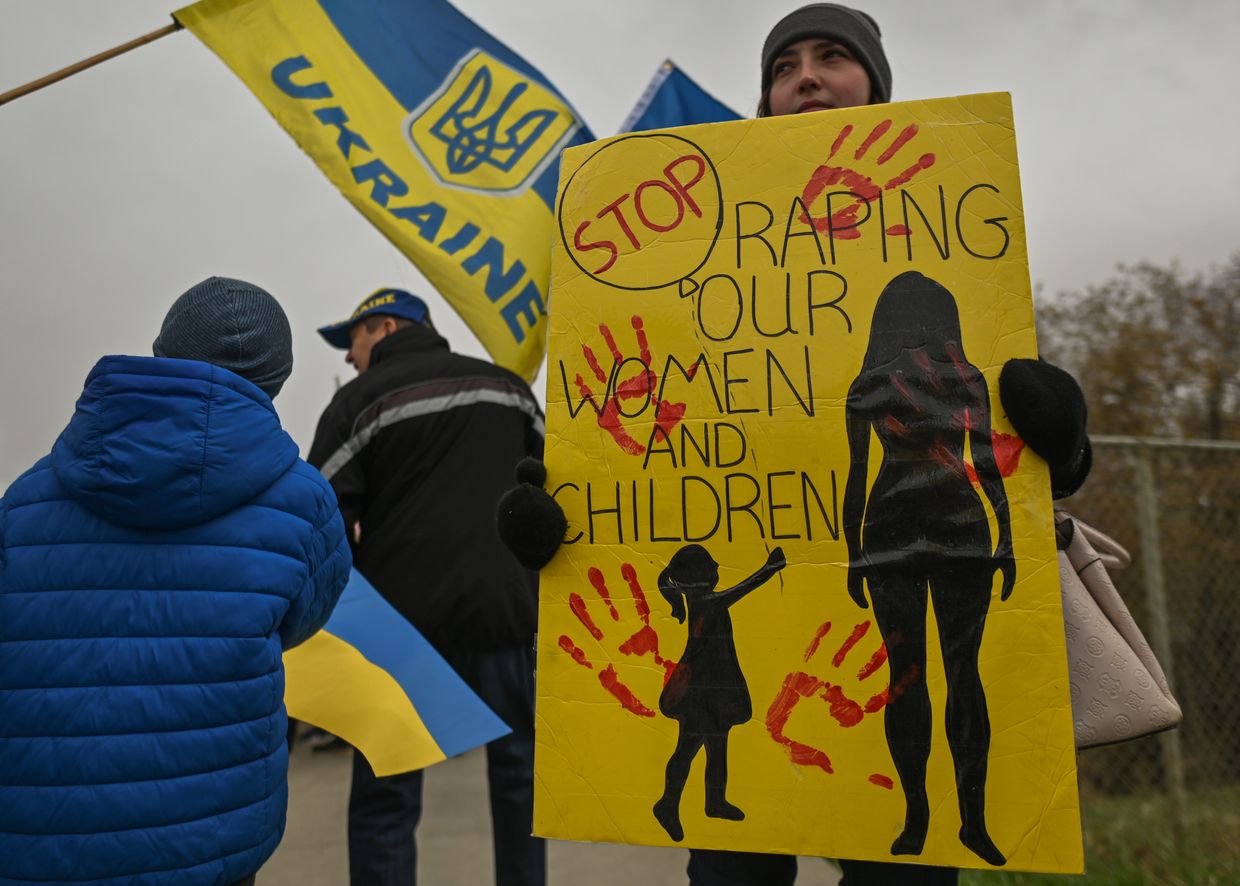
    As of June 2025, Ukraine has documented 366 cases of sexual violence committed in connection with Russia's full-scale war, the Foreign Ministry reported on June 19, citing data from the Prosecutor General's Office.

    The statement was published on the International Day for the Elimination of Sexual Violence in Conflict, marked every year on June 19.

    The victims include 231 women, 134 men, and 19 children. The documented crimes span rape, sexual torture, forced nudity, and other violent acts, many of which occurred in occupied territories or during the early stages of Russia's invasion.

    Sexual violence in conflict is prohibited under the 1949 Geneva Conventions and their additional protocols, which mandate the protection of civilians, especially women and children. It is also recognized as a war crime under international law.

    Ukraine's Foreign Ministry said Russia is "grossly violating international humanitarian law" and the legal framework established by multiple U.N. Security Council resolutions.

    The ministry said that Moscow has employed sexual violence "as a weapon of war" to terrorize civilians, destroy communities, and weaken resistance.

    Ukraine's Permanent Representative to the United Nations, Sergiy Kyslytsya, raised the issue at the Security Council in April 2024, warning that such violence is being used against both civilians and prisoners of war.

    In June 2024, the Kyiv Independent identified two Russian soldiers implicated in the rape of women during Russia's occupation of parts of Kyiv and Kherson oblasts in March 2022.

    One of them, Mykola Senenko, was formally charged by Ukraine's Prosecutor General's Office for a rape committed in Kherson Oblast.

    Trump’s peace push falters in both Ukraine and the Middle East — for similar reasons
    U.S. President Donald Trump addressed a wide range of subjects during his inauguration speech. When speaking about international relations, he was adamant — “Our power will stop all wars and bring a new spirit of unity,” he said, talking about Russia’s war against Ukraine and the fighting in the Middle
    Ukraine documents 366 cases of war-related sexual violence, most victims womenThe Kyiv IndependentOleg Sukhov
    Ukraine documents 366 cases of war-related sexual violence, most victims women
    •  

    Russia's prison chief sentenced in absentia for torture chambers in Kherson Oblast

    Russia's prison chief sentenced in absentia for torture chambers in Kherson Oblast

    Arkady Gostev, head of Russia's Federal Penitentiary Service, was sentenced in absentia to 10 years in prison for creating a network of torture chambers in the Russian-occupied part of Kherson Oblast, Ukraine's Security Service (SBU) announced on June 19.

    Gostev was found guilty of orchestrating the transformation of captured Ukrainian prisons into torture sites used to detain and brutalize members of the local resistance. The SBU said victims were subjected to "brutal torture" intended to break their will and force submission to the Kremlin rule.

    According to investigators, Gostev personally oversaw the establishment of torture facilities and pushed for their inclusion in Russia's national prison registry through the Justice Ministry.

    The court ruled he committed "actions aimed at violently changing or overthrowing the constitutional order or seizing state power."

    "Comprehensive measures are being taken to bring him to justice for crimes against our state," the SBU said, noting that Gostev remains in Russia.

    Kherson Oblast, which stretches from the Dnipro River to the Black Sea, remains partially occupied, with the east-bank territories still under Russian control.

    Gostev joins a growing list of senior Russian officials charged in absentia with war crimes, crimes against humanity, and the administration of occupied territories.

    Ukraine has also targeted collaborators working with the occupation authorities.

    On June 18, Ukraine's military intelligence (HUR) confirmed the assassination of Mykhailo Hrytsai, a Russian-appointed deputy mayor in Berdiansk, Zaporizhzhia Oblast, for his role in organizing repression and torture of Ukrainian prisoners of war.

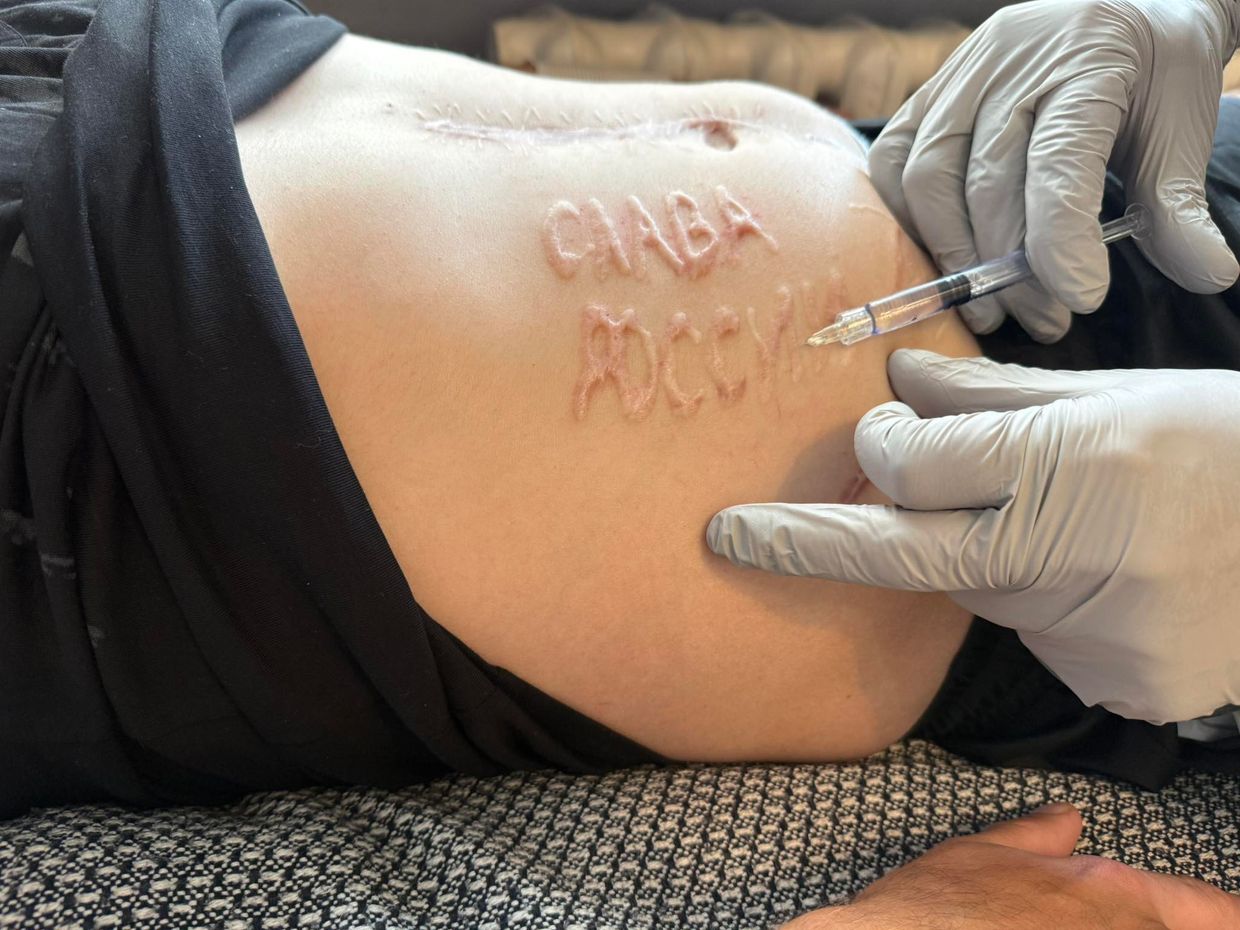
    ‘Beyond cynical’ – Russian doctor carved ‘Glory to Russia’ scar on POW during operation, Ukraine says
    After more than three years of Russia’s full-scale invasion, each new revelation of cruel treatment of Ukrainians in Russian captivity hardly surprises anyone. But when a photo recently emerged online, showing a “Glory to Russia” scar on the body of a Ukrainian prisoner of war (POW), it sent shockwaves
    Russia's prison chief sentenced in absentia for torture chambers in Kherson OblastThe Kyiv IndependentDaria Shulzhenko
    Russia's prison chief sentenced in absentia for torture chambers in Kherson Oblast
    •  

    Cluster munitions used in overnight Russian strike on Ukraine, Kyiv mayor says

    Cluster munitions used in overnight Russian strike on Ukraine, Kyiv mayor says

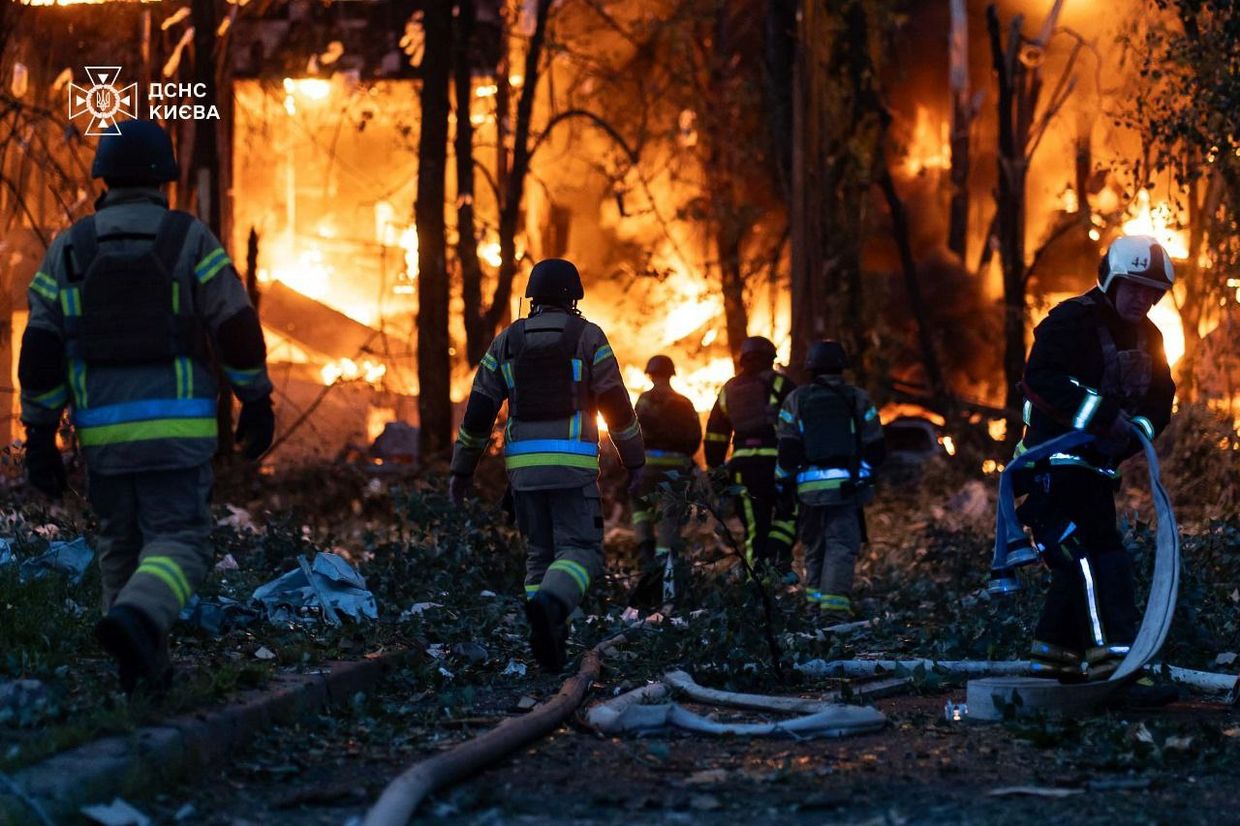
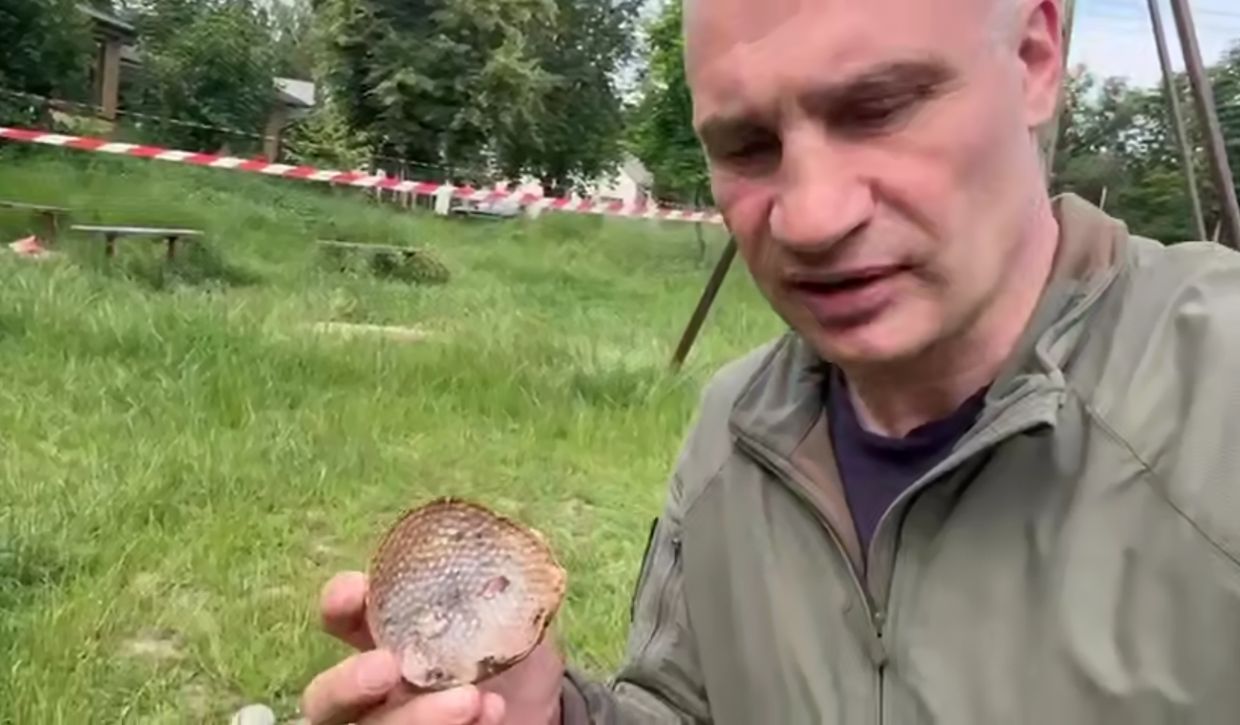
    Emergency services in Kyiv have recovered fragments of cluster munitions following the overnight Russian missile and drone attack on June 17, Mayor Vitali Klitschko reported, calling it further evidence of Russia's "genocide" against Ukrainians.

    "In the capital's Nyvky neighborhood, emergency workers are now finding these kinds of cluster munition parts," Klitschko said in a statement shared on social media. "Another clear sign of the genocide Russia is committing against Ukrainians."

    Cluster munitions are banned under international law by more than 100 countries due to their indiscriminate nature and the long-term threat they pose to civilians, especially when unexploded submunitions remain hidden in residential areas.

    While Russia and Ukraine are not signatories to the Convention on Cluster Munitions, international humanitarian organizations have repeatedly condemned the use of such weapons in populated areas. Ukraine uses cluster munitions on the battlefield against Russian forces.

    The mayor's comments came hours after one of the largest and deadliest attacks on the Ukrainian capital in months, in which at least 15 people were killed and nearly 100 injured. The Russian strike, which lasted nearly nine hours, included waves of kamikaze drones, ballistic missiles, and what authorities now confirm were banned explosive parts.

    President Volodymyr Zelensky called the assault "one of the most horrifying attacks on Kyiv," saying more than 440 drones and 32 missiles were launched across Ukraine overnight.

    "Such attacks are pure terrorism," he said in a statement on social media. "And the whole world, the U.S., and Europe must finally respond as civilized societies respond to terrorists."

    Zelensky confirmed that damage had been reported in eight districts of Kyiv, with emergency workers still searching for survivors beneath the rubble of a destroyed apartment block.

    He added that strikes also hit Odesa, Zaporizhzhia, Chernihiv, Zhytomyr, Kirovohrad, Mykolaiv, and Kyiv regions. "Fifteen people are confirmed dead. My condolences to their families and loved ones," Zelensky said.

    Foreign Minister Andrii Sybiha also condemned the attack, calling it a "massive and brutal strike" timed deliberately to coincide with the G7 summit, which is taking place in Canada on June 16-17.

    Russian drone strike on Odesa injures 13, including 1 child
    Russian drone strikes on Odesa early June 17 injured 13 people, including one child, regional authorities reported.
    Cluster munitions used in overnight Russian strike on Ukraine, Kyiv mayor saysThe Kyiv IndependentLucy Pakhnyuk
    Cluster munitions used in overnight Russian strike on Ukraine, Kyiv mayor says
    •  
    ❌