❌

Vue lecture

15-kilometer flight into kill zone: Ukraine’s drone rescues wounded soldier by air

A Ukrainian soldier standing on a tank. Source: The 5th Separate Heavy Mechanized Brigade

Stranded and wounded for 57 days, a Ukrainian soldier was finally flown out by drone. Andrii, callsign Donbas, 54, had lost a foot and could not be reached by the usual means at a position about two kilometers from the Russian border until fighters of the CODE 9.2 unit used the StarGate aerial evacuation system to lift him out, RBC-Ukraine reports.

Getting the wounded off the battlefield has become one of the deadliest tasks of the war. Aerial drones like StarGate can reach positions that ground vehicles and crawling robots cannot, opening a way out where soldiers were once left to wait.

A 15-kilometer flight to a position no one could reach

To reach Andrii, the StarGate drone flew about 15 kilometers to his position and carried him out of the exposed area; he is now in a hospital receiving treatment.

StarGate, a purpose-built aerial medical-evacuation drone from the Ukrainian company SkyFall, has been in front-line testing only since mid-October, and this was its third evacuation.

Unlike the ground robots Ukraine usually relies on, which mud, mines, or a single Russian strike can stop, it flies over the terrain that traps them.

A Ukrainian heavy drone flew about 15 km to rescue Andrii, 54, a soldier who lost a foot and waited 57 days to be evacuated

It was the third battlefield evacuation by the StarGate drone. Andrii is now in a hospital
🎥 Operaivno ZSU pic.twitter.com/5adxCm98RU

— Euromaidan Press (@EuromaidanPress) November 2, 2026

Ukraine is racing to carry its wounded out, and still losing some

The flight is one answer to a problem of evacuation for Kyiv. Over the past year it has shifted much of its casualty evacuation onto unmanned ground vehicles, known as NRKs, which have run more than 100,000 supply and evacuation missions this year and carry the wounded in armored capsules.

But the robots are slow and easy to hit: in one case, the 1st Separate Medical Battalion needed seven attempts and lost six robots over 33 days to bring out a single soldier kept alive by a tourniquet.

Crewed armor is no safer: Tetiana Chornovol, a platoon commander, has described how, during one rescue, her combat vehicle, fitted with electronic warfare and an anti-mine grader, blew up on an anti-tank mine dropped by a drone, and a second vehicle lost its driver’s legs to another.

Most units still lack dedicated evacuation teams, and the shortage of medical-evacuation vehicles has been put as high as 80%. A drone that simply flies over the mines is built for the positions none of that can reach.

  •  

A hobby computer, a cheap airframe, and a Russian jet drone: how Zirka’s upgrade scored its kill

A Russian jet-powered Shahed-type drone seen through a Zirka interceptor’s camera moments before impact, with the guidance readout on screen

An upgraded Ukrainian Zirka interceptor caught and destroyed a Russian jet-powered Geran-5 drone, its developer, the ZRK tech project, said. A crew from Ukraine’s drone forces flew the self-guiding drone, ZRK added. At its summer debut, the cheap interceptor looked too slow for Russia’s jet models.

Russia sends waves of attack drones at Ukrainian cities almost every night. It has spent the year moving more of them onto jet engines. The faster models slip past many of the cheap interceptors Ukraine built for propeller Shaheds. That leaves gaps Ukraine often plugs with expensive missiles, and Washington is holding back the ones Ukraine needs most.

Caught at 3,500 meters

ZRK said the upgraded Zirka chased down the Geran-5 at about 400 km/h, at an altitude of 3,500 meters. The developer published the interception video on 31 October.

The crew “Retro” of the Darknode battalion flew the mission, ZRK said. The battalion belongs to the 412th Nemesis brigade of Ukraine’s Unmanned Systems Forces. ZRK has not disclosed the upgraded drone’s specifications.

From too slow to catching a jet

When Zirka debuted in late June, its makers listed a top speed above 340 km/h. They also gave a 6 km ceiling and a 30 km radius. At up to $2,000 a unit, they called it the cheapest interceptor in its class with automatic guidance. That speed fell short of the bursts Russia’s jet-powered Shahed variants can reach.

A Raspberry Pi-guided interceptor downs a Geran-5

An upgraded Zirka hit the Russian jet drone at about 400 km/h, 3,500 meters up, its developer ZRK says. The "Retro" crew of the Darknode battalion, part of the 412th Nemesis brigade, flew the mission. When Zirka debuted in late… pic.twitter.com/MUwsa6BBn3

— Euromaidan Press (@EuromaidanPress) November 1, 2026

Zirka still found a way against jets. In late July, it downed a jet-powered Geran-4, its maker said in a press release, Militarnyi reported. Instead of chasing the faster drone from behind, Zirka met it head-on or from the side, Ukrainian tech outlet ITC explained.

Oleksii Babenko, director of investor Vyriy Industries, later said Zirka could down jet Shaheds on its own. He also said it once hit a target about 3,000 km from its operator, controlled via Starlink.

A hobby computer does the aiming

Zirka carries a Raspberry Pi 5, a credit-card-sized single-board computer, Militarnyi said. It runs a machine-vision model trained to pick out the features of Shahed-type drones. The system detects a target up to 1 km away. Once the operator confirms it, the system tracks it and steers the interceptor in.

The Zirka interceptor drone
The Zirka interceptor drone. Screenshot: Vyriy Industries/Militarnyi

The pilot only has to adjust the closing speed, Militarnyi added. Machine vision makes Zirka up to 60% more effective against maneuvering targets than manual piloting, NOCTIS claims, according to ITC. ZRK’s new video shows the software flagging the Geran-5, then switching to automatic terminal guidance, so the upgraded version likely keeps the same system.

Bars jet-powered drone. Photo: Museum of the Russian-Ukrainian War
Explore further

Ukraine’s answer to Russia’s jet Shaheds: a jet drone named Bars, built to strike Russia and now turned around to hunt them

That is the capability Ukraine’s presidential adviser on defense technology Serhii Beskrestnov has pressed for. Speed alone will not catch jet drones, he argued. Interceptors need machine vision to lock on and guide themselves in.

The battalion behind the brief

Ukrainian company NOCTIS built Zirka to a technical brief drawn up with the Darknode battalion, ITC said. The battalion, one of Ukraine’s top anti-Shahed units, has downed more than 1,500 Russian drones, according to ITC. Vyriy Industries holds a 30% stake in NOCTIS, Babenko said.

Cheap answers to cheap drones

Ukraine’s government wants exactly this kind of trade. “We need asymmetric effect,” Defense Minister Yevhenii Khmara said, as Kyiv funds its own missiles and radars. The goal is to stop spending costly interceptors on Russia’s cheap drones.

Until cheap tools catch up, Ukraine improvises with what it has. One regiment has paired a Soviet Kub launcher with a Buk radar to hunt jet drones. It has also rewired launchers to fire American RIM-7 missiles.

Russia keeps speeding up

Ukraine shoots down 50–60% of Russia’s jet-powered Shaheds, against 85–92% of propeller ones, Ukrainian President Volodymyr Zelenskyy said in October. Russia builds about 3,000 jet drones a month, Ukraine’s military intelligence (HUR) estimated.

HUR puts the Geran-5’s cruise speed at 450–600 km/h, and Beskrestnov said it has hit 1,000 km/h in maneuvers. He added that Ukraine’s jet interceptors still struggle with guidance, automatic target lock, and mass production.

Zirka is not alone. The 1020th anti-aircraft regiment caught a Geran-5 at 425 km/h in September. Wild Hornets says its new STING-family interceptor has destroyed about ten Geran-4s.

  •  

A 4-watt video link passed Ukraine’s state tests, its maker says, and could stretch STING interceptors’ radius from 20 km to 30 km

Hornet Vision Ctrl system and Sting interceptor.

A new video transmitter for Wild Hornets’ drones, including its STING interceptors, has passed state tests, the Ukrainian drone maker told Militarnyi. The module sends a drone’s camera feed to its pilot. The company expects it to widen its interceptors’ operating radius.

Russia launched 140 Shahed-type drones at Ukraine overnight on 26 October and 280 the next night, when its main target was Kyiv, Air Force figures as of the morning show. Interceptor drones, which cost dozens of times less than the Shaheds they hunt, are one of Ukraine’s answers. The STING alone downed more than 3,000 drones in its first seven months of use, Wild Hornets says. If the company’s estimate holds, a 30 km radius would let each ground station cover more than twice the area it covers at 20 km.

What the testers checked

Specialists from the State Research Institute for Testing and Certification of Arms and Military Equipment and the Defense Ministry’s State Quality Assurance Directorate confirmed the module’s declared characteristics on three drone types, the company said. The three were the STING interceptor, the Queen of Hornets cargo platform, and the 10-inch Wild Hornets Digital anti-aircraft drone.

Some of the drones’ figures exceeded the values the company had set for them, Wild Hornets told Ukrainian defense outlet Oboronka, without saying which ones. Those figures will enter the official specifications after further field tests, it said.

More than double the power

The module, called HV VTX Pro, is part of an upgrade to Wild Hornets’ Hornet Vision digital video system. It more than doubles the transmitter’s maximum power, to 4 W. That sends a clear picture farther and makes the feed steadier in crowded airwaves and under electronic jamming, the company said.

Hornet Vision Ctrl system
Hornet Vision Ctrl system. Photo: Wild Hornets

Wild Hornets first described the module in August, when it was already in serial production. Its interceptors’ operating radius would grow from around 20 km to 30 km, the company said at the time. That estimate assumed good line of sight and the 360-degree antenna on its ground stations, according to a company statement Interfax-Ukraine quoted. Interception could also become at least 20% more effective against targets flying extremely low, the statement said.

Wild Hornets is a Ukrainian company that designs and builds drones, from strike FPV drones and cargo platforms to the STING, which the company says flies at up to 280 km/h to hunt Shaheds. Its drones serve with more than 100 units of Ukraine’s Defense Forces, from the army and the National Guard to military intelligence, the Air Force, and the border guard, according to Interfax-Ukraine.

  •  

Maude Pelletier : Les drones canadiens entre innovation et souveraineté technologique

Mon Carnet, le podcast · Maude Pelletier : Les drones canadiens entre innovation et souveraineté technologique Maude Pelletier, fondatrice et présidente de Balko Technologies, présente les capteurs de haute précision développés par son entreprise canadienne pour les drones et d’autres véhicules. Grâce notamment à la technologie lidar, ces systèmes permettent de cartographier des terrains, d’inspecter […]
  •  

Russia replaces its missiles as fast as it fires them, Ukrainian intelligence says. Its drone order this year tops 100,000

russian drones

As of October, Russia has up to 700 ballistic and several thousand cruise missiles in reserve, and its 2026 state order for Geran-type drones and decoys such as the Gerbera exceeded 100,000 units, Ukraine’s military intelligence (HUR) told NV in figures the outlet published on 20 October. The missile stocks are roughly the same as HUR reported to NV in July, the outlet found.

Ukraine enters the heating season facing what it says is a Russian plan to hit 60 infrastructure sites this winter. HUR’s figures suggest Russia has the weapons for it, even after its fall mass strikes. In June, HUR said Russia could fire up to 100 ballistic missiles a month while keeping its stocks steady. Its drone output, meanwhile, is shifting to jets that are harder to shoot down.

Russia produces 110 ballistic missiles a month

Russia can make more than 200 missiles a month, 110 of them ballistic, HUR said. About 115 of its ballistic missiles are Iskander-Ms, with production of up to 65 a month. A modernized Iskander with a projected range of 550 to 700 km is in development.

At the same time, Russia holds up to 400 S-300PM and S-400 air defense missiles adapted to strike ground targets, and makes about 40 a month. Meanwhile, Kinzhal production has been temporarily paused over poor accuracy, and the capacity has gone to conventional ballistic missiles.

Most new Kalibrs go into reserve

Russia plans to make more than 80 Kh-101 cruise missiles a month and is exceeding that, though defects in releasing them from aircraft have sent some batches back to the factories.

Russia has more than 450 Kalibrs and makes about 29 a month. Because Ukrainian air defense downs them effectively, Russia sends most new ones to its strategic reserve and to equip its fleets, HUR said. It also holds more than 600 Oniks anti-ship missiles, upgraded for ground strikes, and more than 120 Zircons.

ukraine recovers russia's undamaged geran-3 jet kamikaze drone carrying camera live-link equipment (video) · post russian jet-powered lying cornfield after being recovered intact 16 2025 реактивний дрон-камікадзе герань-3 вересня року
Explore further

Ukraine recovers Russia’s undamaged Geran-3 jet kamikaze drone carrying camera and live-link equipment (VIDEO)

Russia now assembles 4,000 jet drones a month

Russia holds a reserve of about 6,200 Gerans and makes about 10,000 drones a month. Its main production hub is the Alabuga special economic zone in Tatarstan.

Since summer, Russia has shifted toward turbojet drones. “The reason is the saturation of Ukraine’s Air Force with mobile fire groups that shoot down low-speed targets en masse,” HUR said. Russia now assembles about 4,000 jet drones a month, mostly Geran-4s and Geran-5s, which fly at 400 to 500 km/h. It also makes about 2,000 cheaper propeller-driven Geran-2s, which HUR said are used to wear down air defense and locate air defense positions.

  •  

Ukraine’s Navy killed Russian Shahed: one drone boat launched another drone, which shot down third, all unmanned, all at sea

fewer targets more waves jet-powered gerans partly free russia concentrate missiles isw says · post russia's shahed drone ukraine news ukrainian reports

      One drone launched another drone, which then shot down a third. All three were unmanned, and all at sea off Ukraine.

      Ukraine’s Navy has destroyed a Russian Shahed attack drone with a Sting interceptor launched from the Sargan 3000 unmanned surface vessel, the Navy said, showing sailors adapting to new aerial threats with sea-launched interceptors.

      Russian Shaheds threaten Ukraine’s ports, coastline and the ships that approach them, so meeting those drones out at sea, before they reach land, matters for the whole southern defense.

      A Ukrainian Navy sea drone, the Sargan 3000, destroyed a Russian Shahed kamikaze drone with a Sting interceptor drone

      Ukrainian troops continue to adapt to new threats to protect civilians and infrastructure
      🎥 Ukrainian Navy pic.twitter.com/kXvnqaebAw

      — Euromaidan Press (@EuromaidanPress) October 21, 2026

      The Sting is built to destroy Russian kamikaze drones such as the Shahed, Geran and Lancet, as well as reconnaissance drones, with quick deployment, a short training course and a top speed of 280 km/h, its producer, Wild Hornets, says.

      The interceptor that has become Ukraine’s Shahed-killer

      The Sting has earned its place at the front. The Ukrainian FPV interceptor has proven highly effective in combat, with a typical hit rate of 80 to 90% depending on the unit, and on some days reaching 100 percent, one launch for one kill.

      It is currently Ukraine’s most productive Shahed interceptor, according to the Wild Hornets, having destroyed more than 3,000 drones in its first seven months of use. Mounting it on a sea platform extends that record from land into the Black Sea.

      A drone boat that keeps finding new ways to kill

      The Sargan 3000 has become a multi-purpose hunter. In July, Ukrainian naval personnel used a Sargan 3000 to sink a Russian second-rank border patrol ship.

      In October, the same drone boat shot down a Russian Shahed with a turret-mounted machine gun over the Black Sea. Ukraine’s Navy took the Sargan 3000 into service in April 2026, and the drone boat has a combat radius of up to 1,600 kilometers, letting it clear the sky far from shore without putting a sailor in range.

      •  

      Ukraine’s answer to Russia’s jet Shaheds: a jet drone named Bars, built to strike Russia and now turned around to hunt them

      Par : David Axe

      Bars jet-powered drone. Photo: Museum of the Russian-Ukrainian War

      • One of Ukraine's best and fastest interceptor drones is an air-to-air version of the Bars one-way attack drone
      • Bars are some of the best defenses against Russia's fastest Geran-4 and Geran-5 drones
      • But there may be too few small jet engines to rapidly scale up Bars production

      Russia's latest jet-propelled Geran-4 and Geran-5 one-way attack drones fly at 500 km/h or more, nearly three times as fast as an older, propeller-driven Geran-2.

      That's too fast for many of Ukraine's air defenses. In particular, the inexpensive interceptor drones that Ukrainian forces deploy by the thousand.

      Russia launched more than 2,700 jet Gerans at Ukraine in September, and Ukraine is shooting down only about 55% of them, according to Ukrainian President Volodymyr Zelenskyy. The speed disparity is a big part of the problem.

      Ukrainian forces are scrambling for new defenses against the speedy Gerans. Among the best is actually a Ukrainian take on the Geran-4 and Geran-5: a fast, jet-propelled one-way attack drone that the Ukrainians have modified for air-to-air use.

      Against jet drones, the air-to-air Bars have a hit rate of around 30%, Zelensky said during a joint press conference with German Chancellor Friedrich Merz in Kyiv on 4 October. "The Bars have shown positive results," Zelensky said. "They currently have the highest percentage. Others are also catching up."

      Is this the Bars missile?
      Explore further

      Did Ukraine just unleash its first Bars cruise missiles? A 500 km strike deep inside Russia suggests it

      In July, Ukraine and Germany agreed to jointly produce Bars, with Germany financing the first phase. Ukraine has reportedly been launching Bars at targets on the ground since at least the summer of 2025. But it was only recently that clear photos and videos of the drones have circulated.

      Over the weekend, Ukraine’s 1021st Anti-Aircraft Missile and Artillery Brigade released footage of one jet drone hunting another. Observers identified the interceptor as a Bars and its target as a Geran-5. After launching from an elevated ramp with help from a rocket booster, the drone's operator—seeing what the drone saw through a front-facing infrared camera—steered the drone toward the Russian drone, possibly destroying it.

      Exactly how the operator controlled the Bars—whether by satellite or mesh radio or some other command and control system—is unclear. Equally unclear: what kind of warhead a Bars would employ in the air-to-air role. Many smaller interceptor drones lack warheads. Instead, they simply slam directly into their targets, wrecking them in the collision.

      Ukraine’s 1021st Anti-Aircraft Missile and Artillery Brigade has released the first footage of the Ukrainian Bars jet-powered drone in its interceptor configuration engaging a Russian Geran-5 drone. https://t.co/FRBKZQR9lF pic.twitter.com/njPJWXsDwo

      — Special Kherson Cat 🐈🇺🇦 (@bayraktar_1love) October 17, 2026

      Mystery drone

      Bars isn't small. It likely packs an explosive warhead. Potentially one that the operator can remotely trigger when the interceptor passes near its target.

      Bars is adaptable. Its maker has reworked it from a 22-kg warhead and a 700-km range to a 60-kg warhead and a stated range of more than 1,000 km, and a heavier variant can carry a 105-kg warhead.

      In the air-to-air interceptor role, long range is terribly important but speed is everything. There's an obvious way for the Ukrainians to boost the Bars' speed from its reported 700 km/h top speed to potentially even faster. They could shrink the drone's warhead and its fuel load, making it lighter in order to make it faster.

      That may explain how a Bars can chase down a Geran-5 even as the Russians, by one Ukrainian analyst's estimate, try to push the Geran-5 toward 700 km/h or more.

      A Korkut air defense vehicle.
      Explore further

      Turkey’s Korkut guns now shoot down Russian drones over Ukraine. Almost half of the jet-powered Shaheds still get through

      Cost is important, too. Russia churns out Gerans for an estimated $100,000 or so per drone. The cheaper the drone, the more copies the Russians can fling at Ukrainian cities. If it takes three or more interceptor drones to take down each of those 2,700 jet Gerans, Ukraine may need to deploy 8,000 to 10,000 interceptors a month.

      Ukraine already builds more than 2,000 Bars a month, its maker says, but mostly in strike versions. How many go to air defense, and how much each costs, isn't public.

      The supply of small jet engines could be a constraint. “Engines are a key element; we really import them in large quantities,” Zelensky said in an interview with Financial Times. "There are also domestically produced engines, but there are not enough of them.” A Ukrainian-made engine for Bars passed final tests in September.

      •  

      Ukraine’s hobbit-named robot fired on targets up to 1.3 km away in a demo for border guards

      Frodo universal ground robotic vehicle (UGV).

      Ukraine’s six-wheeled Frodo ground robot fired on targets during a demonstration in Kharkiv Oblast for the Pomsta (Revenge) Border Guard Brigade, a border guard detachment posted on Facebook. Frodo made its public debut only on 30 September.

      Ukraine had contracted more than 22,000 ground robots for 2026 by July, mostly logistics carriers, with combat models the smallest group, the Defense Ministry said. Frodo’s first reported mission was an evacuation. The demo shows its armed version to a fighting brigade, the kind of robot Ukraine has ordered least.

      What the armed version carries

      The platform completed its tasks at a training ground in near-combat conditions, said the 3rd Border Guard Detachment named after Hero of Ukraine Colonel Yevhenii Pikus. The Buria turret mounted on Frodo can fire either a Mk 19 automatic grenade launcher or a Browning M2 heavy machine gun. It engaged targets at up to 1.3 km (0.8 mile), the detachment said.

      Frodo ground robotic vehicle (UGV).
      Frodo ground robotic vehicle (UGV). Screenshot from a video by the 3rd Border Guard Unit

      The 47-kg (104-lb) module has a ballistic calculator, stores up to 256 targets, aims in three seconds, and has a stated autonomous run time of up to 48 hours, the post said. Frodo is rated for up to 150 km (93 miles) on paved roads and 75–80 km (47–50 miles) over rough terrain, the post added. A Frontline Robotics Zoom reconnaissance drone flew reconnaissance during the test.

      The developer, Frontline Robotics, describes its core philosophy as arriving fast, doing the job, and leaving very fast—hit and run, the detachment’s post said. Familiarizing the brigade’s soldiers with such systems aims first and foremost to preserve personnel’s lives and health, the detachment said.

      A robot first reported as a medevac

      Frontline Robotics told Militarnyi at the unveiling that Frodo had passed Defense Ministry codification and was built for logistics, evacuation, and strike missions. The robot reaches 40 km/h (25 mph) and carries up to 200 kg (441 lb) of payload, or 400 kg (882 lb) at most, the company said. A single soldier can swap its batteries.

      Frodo ground robotic vehicle (UGV).
      Frodo ground robotic vehicle (UGV). Photo: Frontline Robotics

      The 92nd Assault Brigade used an early test unit to evacuate a wounded soldier, Frontline Robotics told Militarnyi. An operator, callsign Tango, named the robot’s speed and its ability to handle complex maneuvers as its main advantages, Militarnyi reported.

      •  

      Ukrainian producer that neutralized more than 7,000 drones over 100 square kilometers in year, plays enemy in Pentagon contest, and gets invitation to continue

      The C2 KUPOL platform. Source: Phantom Defense

      A Ukrainian company has played the enemy in a Pentagon drone contest, and the US liked what it saw. Phantom Defense, a Ukrainian defense-tech firm, was one of three companies whose systems built the counter-drone environment for Gauntlet II, the second stage of the US military’s Drone Dominance program, and has been invited to take part further, Defender Media reports.

      Drone Dominance is the Pentagon’s four-phase effort to field cheap attack drones fast, a roughly $1 billion program to buy more than 200,000 low-cost attack drones by 2027. Phantom Defense brought a system that was already proven at home, where in one city it neutralized more than 7,000 enemy drones over an area of more than 100 square kilometers in a year, the company says.

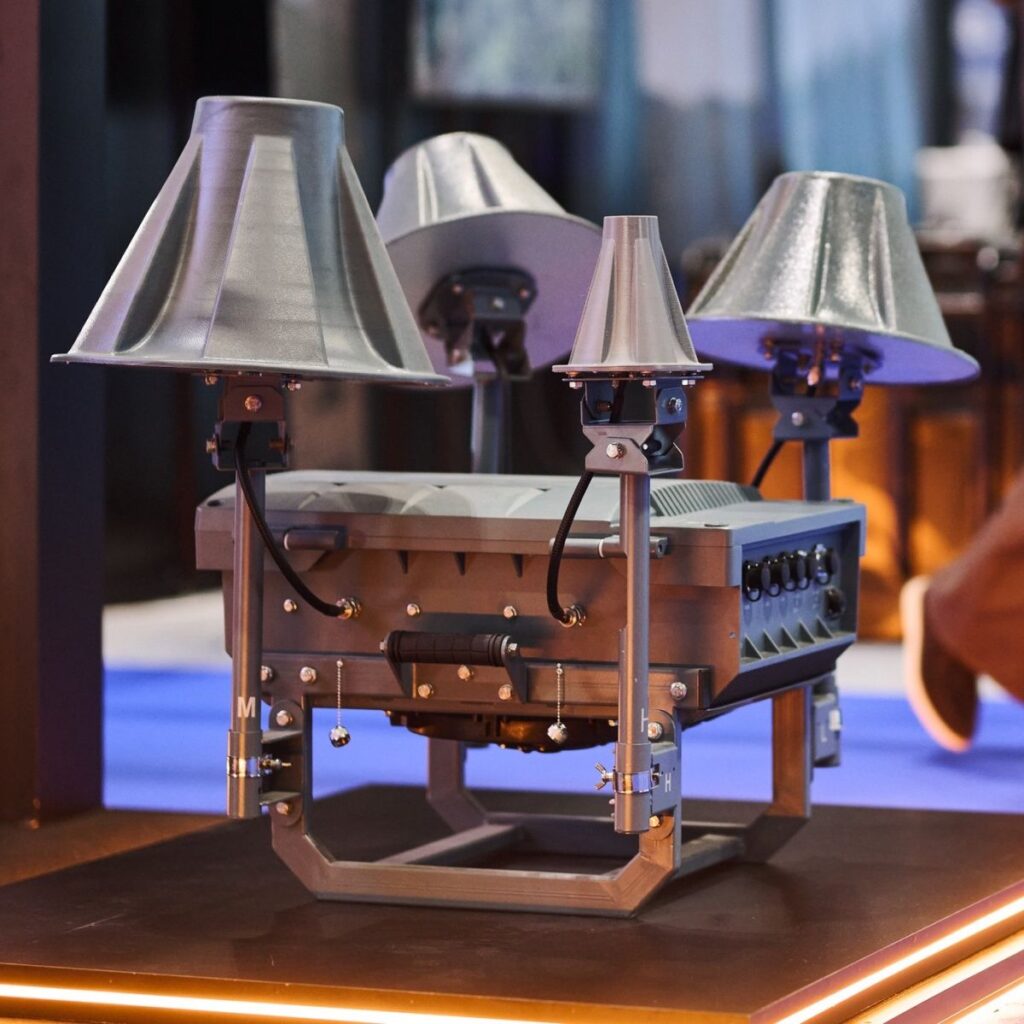
      Rather than enter a drone of its own, Phantom Defense supplied the resistance that the American drones had to fly through. Its setup paired the Specter PRO, L, X, and XL jammers with the Streamhunter video-interception tool and a command-and-control layer that detected and classified targets, coordinated the countermeasures, and confirmed the kills. The jammers suppressed drones and held up in heat and rain, it adds.

      The arrangement lets American developers fly their drones under live electronic attack rather than calm conditions, recreating a battlefield where a drone’s performance swings with the jamming around it, according to the company.

      One map to run the whole fight

      At the center sits Phantom Defense’s C2 system, Kupol, which integrates separate tools into a single ecosystem on a shared map. It lets crews run electronic warfare remotely, without driving out to a position, and ties in sensors, interceptor drones, and turrets, the company says.

      Kupol reads the terrain and a drone database to propose the best way to take down a target, then logs each mission automatically so its recommendations sharpen over time.

      The high-power Specter PRO station, built to shield positions, critical infrastructure, and cities, serves as the hardware anchor.

      An invitation, not yet a contract

      Previously, Ukraine’s battle-tested drone makers also took part in Drone Dominance. However, they didn’t succeed in it, though some of their technology competed under Western partners. The program bars direct purchases from Ukrainian firms, which must set up a US legal entity to bid.

      •  

      Ukraine adds Kyiv trains, prepares pontoon crossings after Russian bridge attacks

      Damage on the Southern bridge in Kyiv after Russian Shahed drone strikes, 2 October 2026

      Ukraine's state railway, Ukrzaliznytsia, has added 18 Kyiv City Express shuttle runs between Vydubychi and Darnytsia for 5–9 October, while the government has begun preparatory work on temporary crossings over the Dnipro River after Russian strikes disrupted bridge traffic. Minister for Restoration, Infrastructure and Transport Mykola Kalashnyk outlined the backup plan in an interview with Suspilne on 3 October.

      About 600,000 vehicles cross the Dnipro in Kyiv each day, making the river crossings critical to movement across the capital, Kalashnyk said. Russia's attacks on the Southern and Northern bridges have disrupted traffic, with the Southern Bridge fully closed to cars and metro on 2 October and restrictions introduced on other crossings. The risk of further damage is heightened by Russia's upgraded jet-powered Geran-4, which now carries a specialized warhead designed to cut through bridge structures and power-line supports, according to presidential adviser Serhii Beskrestnov.

      Jams, restrictions, and extra trains

      On 6 October, large traffic jams formed between Kyiv's left and right banks, with the heaviest queues on approaches to the Southern Bridge, Obozrevatel reported. The jams followed Russian strikes that cratered the Northern Bridge.

      Green-line metro trains resumed carrying passengers between the banks during the yellow threat level on 4 October, Radio Svoboda reported. Under the current restrictions, traffic on the Southern and Podilskyi bridges is stopped in certain directions for at most the first 15 minutes after an air alert begins.

      five dead pryluky two each kyiv kremenchuk oleksandriia russia's night 70 missiles · post rescuers collapsed section apartment building chernihiv oblast after russian missile strike 7 2026 ukraine news ukrainian
      Explore further

      14 dead in Pryluky, two each in Kyiv, Kremenchuk, and Oleksandriia: Russia’s night of 70 missiles

      The additional Kyiv City Express shuttles run during the busiest hours, 06:00–09:00 and 16:00–21:00. Together with scheduled suburban and regional trains, they bring the number of peak-hour runs between the banks to up to six, Ukrzaliznytsia said.

      Pontoons first, tunnel later

      Kalashnyk said the government plans to build several backup crossings over the Dnipro. The sites have already been chosen, and he named a combination of earth embankments and pontoon crossings as measures that can be built quickly. He said construction could take up to three months and that the backup crossings should provide at least 50% of the capacity of the existing bridges. The government is also considering quick-build concrete structures and, in the longer term, a tunnel under the Dnipro, he told Suspilne.

      Volodymyr Kreidenko, deputy head of the parliamentary committee on transport and infrastructure and an MP from the Servant of the People party, proposed reversible traffic across the bridges: "in the morning from the left bank to the right, in the evening from the right to the left." He also suggested hubs near the bridges where people could take a bicycle or e-scooter, and passenger ferry crossings, Radio Svoboda reported.

      Andrii Koretskyi, an associate professor in the department of bridges, tunnels and hydraulic structures at the National Transport University, cautioned that temporary crossings cannot substitute for a permanent bridge.

      "The only alternative to a bridge is a bridge as a permanent structure," he told Radio Svoboda.

      He said a tunnel under the Dnipro is technically possible but "not a quick solution at all." He pointed to the scale involved: where the Irpin River requires spanning a few dozen or, in places, a few hundred meters, the Dnipro within Kyiv is "roughly 400 to 1,500 meters" wide.

      •  
      ❌