❌

Vue lecture

Russia attacked Ukrainian retailer Epicentr’s warehouse 10 times in one day, destroying about 85% of goods, company says
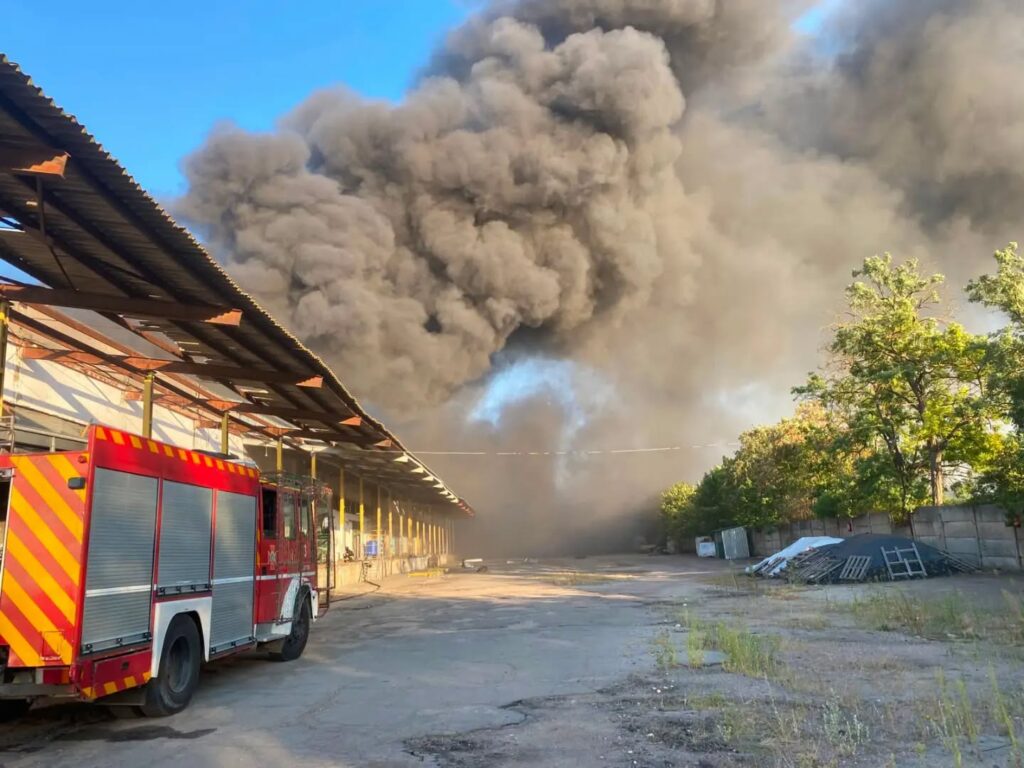
Epicentr’s attack 13 october

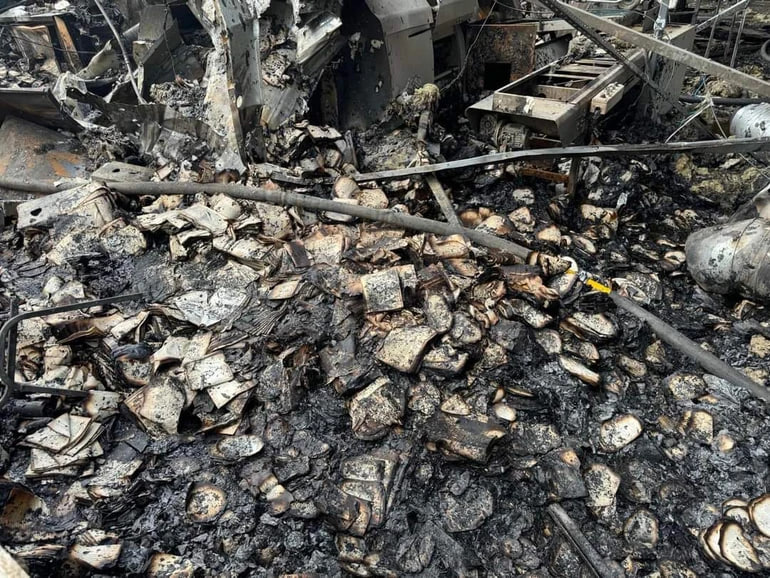
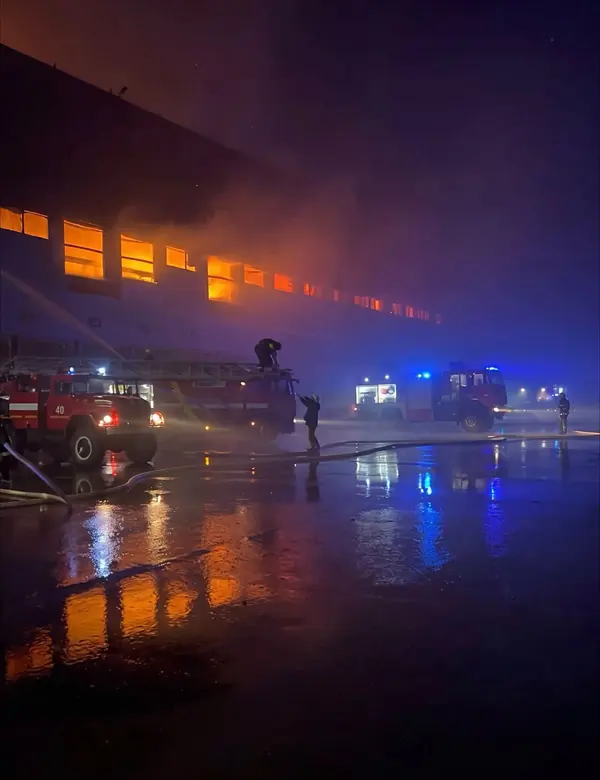
Russian forces attacked Epicentr’s hub in Khmelnytskyi, a city in western Ukraine, 10 times on 13 October, starting five large fires that destroyed about 85% of the goods stored inside, the company said.

Epicentr is a Ukrainian chain of home-improvement and household-goods stores. The attack adds pressure to Ukraine’s logistics network, already damaged by Russian strikes. On 10 September, Ukrainian entrepreneur Ruslan Shostak, co-owner of the popular retail chains Eva and Varus, said that 2.1 million square meters of Ukraine’s modern warehouse space had been destroyed since Russia’s full-scale invasion began. He put the country’s total modern warehouse space at approximately 5 million square meters. The strike on the hub came the same day Russia opened a barrage of 39 ballistic missiles on Ukraine’s power grid.

About 30 drones in the sky kept the fire from being put out, and the hub burned down completely overnight, Epicentr said. None of its people were hurt, the company said.

“The most important thing is that all our people are alive,” Epicentr wrote.

Russia had earlier completely destroyed Epicentr’s two largest logistics complexes, in Kyiv and Kyiv Oblast, the company said. The Khmelnytskyi hub had remained effectively its only surviving large warehouse complex. Goods were sent from there to the company’s shopping centers, and people worked there every day “so that millions of Ukrainians could buy what they need,” it wrote. Epicentr described every such attack as a blow to Ukrainian businesses’ ability to operate, pay wages, preserve jobs, and support the country’s economy.

Epicentr’s earlier losses

Epicentr said in August that 10 of its shopping centers had been completely destroyed since February 2022. Another 13 retail sites had been damaged, and one in Melitopol remained under Russian occupation, it said. At the time, the company operated 70 shopping centers, down from 80 at the end of 2021.

Earlier, during a Russian missile attack overnight on 5 August, Epicentr’s logistics center in Kyiv burned down completely, Epicentr’s Yulia Chudnovets said. The company’s ceramic tile plant in Kalynivka, one of the largest in Ukraine, was effectively lost, she said. One employee was killed and three were injured, she added.

fourth ukrainian pharmaceutical warehouse has burned russian strike since start month · post fire damage medicine distributor badm after odesa ukraine 14 2026 росіяни зруйнували вже четвертий склад ліків за
Explore further

A fourth Ukrainian pharmaceutical warehouse has burned in a Russian strike since the start of the month

On 25 May 2024, Russian airstrikes on an Epicentr hypermarket in Kharkiv killed 19 people, Interior Minister Ihor Klymenko said.

Attacks across Khmelnytskyi Oblast

Fires broke out at enterprises in Khmelnytskyi and Shepetivka districts on 13 October, Serhii Tiurin, head of the Khmelnytskyi Oblast Military Administration, reported. He did not name the enterprises. On 14 October, Tiurin said one of the fires had been put out, and crews were still fighting the other. Khmelnytskyi Mayor Oleksandr Symchyshyn said six people were injured in Khmelnytskyi district that day, where Russian strikes damaged private enterprises, a gas station, and a medical facility.

  •  

Russia’s war on Ukrainian books: a second strike burns tens of thousands of a Kyiv publisher’s rebuilt titles

russia's war ukrainian books second strike destroys kyiv publisher's rebuilt stock · post book warehouse knyholav publishing house damaged russian missile attack kyiv's podil district 7 2026 знищений склад де

A Russian missile attack on Kyiv overnight on 7 October destroyed warehouse premises in the Podil district and badly damaged a book warehouse of Ukrainian publishing house Knyholav, the publisher said. Tens of thousands of books were lost, but no staff were hurt. It was the second time this year that Russia has destroyed Knyholav's stock.

Russia has destroyed Ukrainian books since the start of its invasion, seizing them from libraries in occupied areas and burning them in boiler houses. Since spring, it has also been aiming missiles and drones at the industry that makes them—printing houses, publishers' warehouses, and bookshops—destroying books by the millions. Each strike takes out not only stock but the reprints, new titles, and textbooks Ukrainian readers were waiting for, at a time when publishing in Ukrainian is part of how the country holds onto its identity.

Tens of thousands of books lost

The publisher can't yet say how many books were destroyed or can no longer be saved, it said, but tens of thousands were lost. The final count will be possible only once staff get full access to the warehouse and check the state of every book.

The burnt books in Kharkiv may 2024
Explore further

Russian aggression devastates 1,000 Ukrainian libraries and 200 million books

The losses include new titles Knyholav received over the past two months. They also include reprints of books Russia had destroyed in July at its previous warehouse. Knyholav had moved its rebuilt stock to this new warehouse after a Russian strike on 19 July destroyed its previous one outside Kyiv, along with about 250,000 books.

"This is a tangible blow for us. These are books we created, printed, and prepared for you," the publisher wrote. "But despite everything, we are holding on!"

The strike hit Kyiv's Podilskyi district, where a Russian attack caused a fire and the partial collapse of the floors of an office and warehouse building, Kyiv Mayor Vitali Klitschko said. The same overnight attack killed people in Pryluky, Kyiv, Kremenchuk, and Oleksandriia.

Millions of books burned

Russia's attacks destroyed more than 1.5 million books in July alone, Culture Minister Tetiana Berezhna said. On 1 August, a strike on the logistics center of publisher Ranok and the distribution center of the KnyhoLand bookshop chain in Kharkiv destroyed 8 million books, including 628,000 new school textbooks. Over three months, Russia burned about 13 million Ukrainian books, nearly a third of everything the country printed in 2025. In August, Russian missiles also hit Kyiv's largest book market.

  •  

Ukraine’s civilian casualties 55% higher in first eight months than in the same period in 2025, UN says

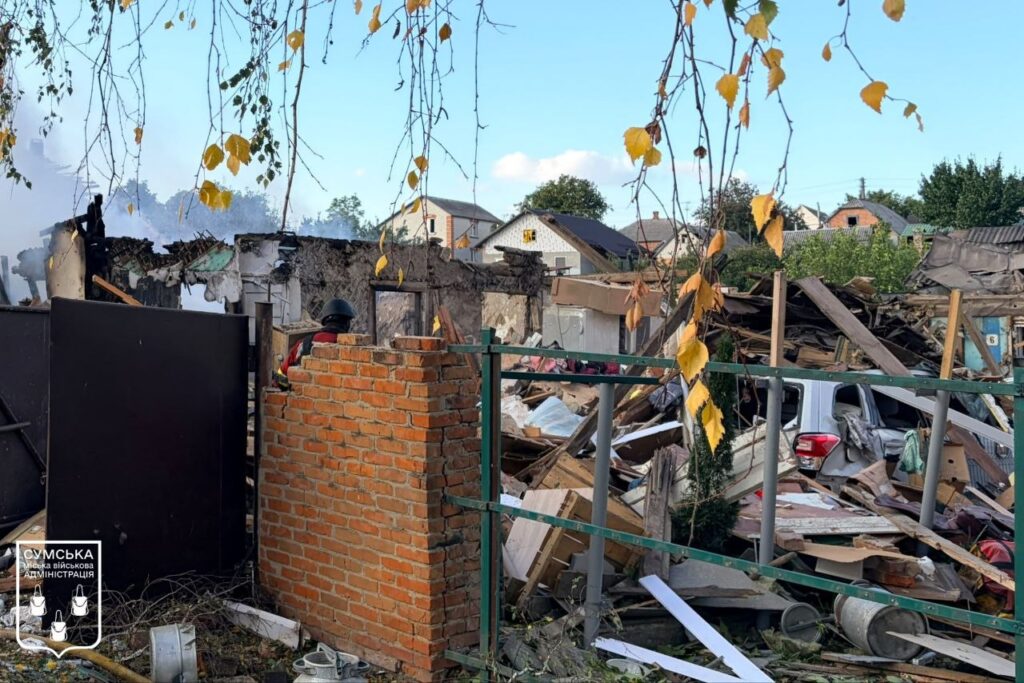
A house in Sumy destroyed in a Russian attack on 29 September.

The UN Human Rights Office verified some 15,280 civilian casualties in Ukraine during the first eight months of 2026, 55% more than in the same period last year, UN High Commissioner for Human Rights Volker Türk said on 2 October.

Türk's statement comes as Russia has begun its Winter 2026-2027 campaign of long-range strikes against Ukrainian energy infrastructure. The Institute for the Study of War (ISW) said Russian forces began the campaign in late September. Damage to energy infrastructure disrupt electricity, heating, and water supplies during the winter, increasing the risks to civilians.

Russian glide bombs killed and injured nearly 2,500 civilians in Donetsk, Kharkiv, Sumy, and Zaporizhzhia oblasts during the first eight months of the year, 62% more than in the same period last year, according to UN figures.

"As winter approaches, Ukrainians fear the worst is yet to come," Türk said.

On 4 October, Russia's Defense Ministry announced that it was intensifying strikes on infrastructure in Kyiv City and Oblast and across Ukraine, according to ISW.

Why Russia is turning to long-range strikes

ISW said Ukraine's 2026 battlefield successes "appear to be forcing" Russian President Vladimir Putin to shift focus from advances on the battlefield toward a winter campaign intended to compel Ukraine to surrender.

A week earlier, ISW assessed that Putin was likely attempting to force Ukraine to capitulate before spring 2027, with his theory of victory heavily relying on cheap, jet-powered Geran-type drones.

A toll rising all year

The 15,280 figure extends a trend the UN has tracked all year. Over the first seven months of 2026, its monitoring mission verified 1,839 civilians killed and 10,638 injured. In September, UN Under-Secretary-General Rosemary DiCarlo told the Security Council that more civilians were killed or injured in the first eight months of 2026 than in all of 2025.

  •  

A school with children, a café, warehouses: Russia’s drones hit civilian Kyiv again

A damaged school in Kyiv following a Russian attack.

Russia hit Kyiv with another round of drone strikes from the evening of 30 September into the morning of 1 October, striking a school, a café, and warehouse buildings across the capital, the city's mayor and emergency services said. The children inside the school were in its shelter and came through unharmed. Fires broke out across two districts, and one person in the city was wounded.

Children across Ukraine now start the school year in bomb shelters, as Russian drones, missiles, and glide bombs keep hitting schools, homes, and hospitals far from the front—part of a civilian toll the UN says has already outrun all of last year's.

A school full of children, all in the shelter

A Russian drone hit a school in Kyiv's Solomianskyi district on the morning of 1 October and started a fire, Kyiv Mayor Vitali Klitschko said, adding that the children were in the shelter. More than 100 students and about 60 staff were sheltering inside, and none were hurt, police said. The jet-powered drone damaged the building's facade at third-floor level, RBC-Ukraine reported.

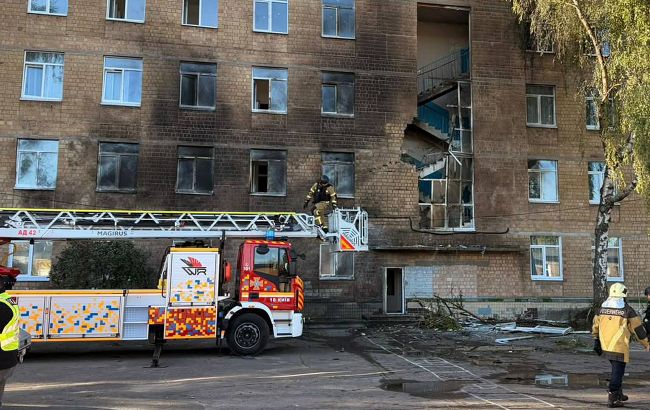
A school in Kyiv damaged in a Russian drone attack, 1 October 2026.
A school in Kyiv damaged in a Russian drone attack, 1 October 2026. Photo: State Emergency Service of Ukraine

A café and warehouses among the sites hit

On the evening of 30 September, a Russian strike started a fire at a café on the ground floor of a residential building in Solomianskyi, while warehouse buildings burned in the northern Obolonskyi district. One person was injured in the warehouse fire and handed to medics, RBC-Ukraine reported.

42 sites damaged across Kyiv Oblast

Across Kyiv Oblast, Russian attacks over the previous 24 hours damaged 42 sites and injured six people, regional authorities reported.

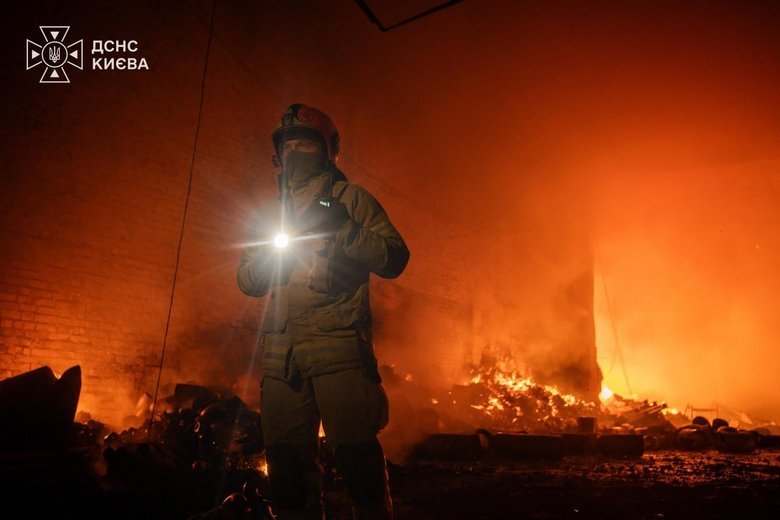
A rescuer at the scene of a fire in Kyiv.
A rescuer at the scene of a fire in Kyiv. Photo: State Emergency Service of Ukraine

Kyiv is now under Russian air attack daily. On 28 September, Russian drones hit the city center in daylight, including the National Academy of Sciences, and earlier waves struck filling stations and other everyday sites across the capital.

  •  

Eight months of 2026 brought more Ukrainian civilian casualties than all of last year, UN says

protest Russia hunts targets civilians with drones Do I look like a target stop human safari save kherson

Russian strikes have killed or wounded more Ukrainian civilians in the first eight months of 2026 than in all of last year, a senior United Nations official told the Security Council, Censor.net reported. The official warned that the toll keeps climbing as missiles and drones increasingly reach cities far from the front line. She also cautioned that mounting attacks on Ukraine's battered energy grid could push millions into a dark, cold winter.

In the war's fifth year, Russia's long-range strikes on Ukrainian cities have shifted the danger from the front to the streets where people live, and the rising civilian toll now tracks how far those weapons reach.

Casualties outpace all of 2025

Rosemary DiCarlo, the UN Under-Secretary-General for Political and Peacebuilding Affairs, gave the toll as the Council met on Ukraine, Ukrinform reported.

"In just the first eight months, more civilians were killed or injured in Ukraine than in all of 2025," she said.

The heavy toll already recorded in September shows the trend continuing, she added, as strikes hit populated areas away from the front.

The UN human rights office has confirmed at least 17,257 civilians killed since February 2022, including 835 children. Another 53,693 people have been wounded, among them 3,247 children, and DiCarlo said the real numbers are likely far higher. Kyiv and other cities have faced near-daily attacks in recent weeks, she said, with strikes hitting railways, shopping centers, gas stations, warehouses, and food and logistics firms.

A warning over the coming winter

DiCarlo said the mounting strikes on Ukraine's already-damaged energy infrastructure are especially worrying with another war winter near.

"The cumulative impact of these strikes could plunge millions of people into darkness and cold in the coming months," she said.

She urged an immediate moratorium on strikes on populated areas and urgent action to protect the power grid. Targeting civilians and civilian sites is prohibited under international law, she noted.

The warning follows the deadliest stretch of the war for civilians, when UN monitors counted 437 people killed in July, the worst monthly toll since May 2022. Russia has also renewed strikes on gas production and power plants ahead of the heating season.

  •  

Russia is spending jet-powered drones on Ukraine’s toilet-paper factory. It’s same campaign that has destroyed 2.1 million square meters of Ukraine’s warehouses

aid ukrainian red cross stockpiled winter kherson burned russian drone attack · post smoke rising over warehouse where caused fire 23 2026 fb kherson784818077_2 ukraine news reports

Russia has destroyed a Ukrainian toilet-paper maker's warehouse for the second time. According to Snow Panda, an everyday brand of toilet paper, paper towels, and wipes, a Russian strike on 22 September again leveled its warehouse complex. This time, its workers came through unhurt, the company said.

The strike is a small piece of a systematic campaign against Ukraine's civilian economy. Russia has destroyed more than two-fifths of the country's modern warehouse space, some 2.1 million square meters, hitting the depots of retailers, food companies, drugmakers, and couriers far from the front.

Snow Panda makes nothing military, only household paper goods, and it has now been struck twice, in a pattern where rebuilt or dispersed storage becomes the next target.

A second strike levels the warehouse

"On 22 September, as a result of a Russian strike, our warehouse complex was completely destroyed for the second time," the company said.

It provided no further detail on the damage or losses, but emphasized the outcome that mattered most to it.

"The most important thing is that the people are alive and unharmed," its press service said.

July's missile hit the main hub

The first blow came on 1 July, when a Russian missile struck the Snow Panda plant in Odesa Oblast and wounded people there. The company called it its most important hub, the point from which its goods and those of other brands were shipped across the country.

"Now we are assessing the scale of the destruction and making the first decisions to save our life's work," it declared after that strike.

Russia targets the civilian economy

Snow Panda's losses fit what Ukraine has faced all summer, as Russia turns drones and missiles on the warehouses, distribution centers, and railways that keep the country supplied. The target list has run from a toy retailer's depot near Kyiv to food, medicine, and parcel warehouses across the country.

Retailers, grocery chains, and pharmaceutical distributors have all been hit, often more than once, pushing companies to scatter their stock into smaller sites that then draw the next strike.

  •  
❌