❌

Vue lecture

A regiment a day: Russia lost 16,130 troops in a week, its worst week of the war by Ukraine’s count
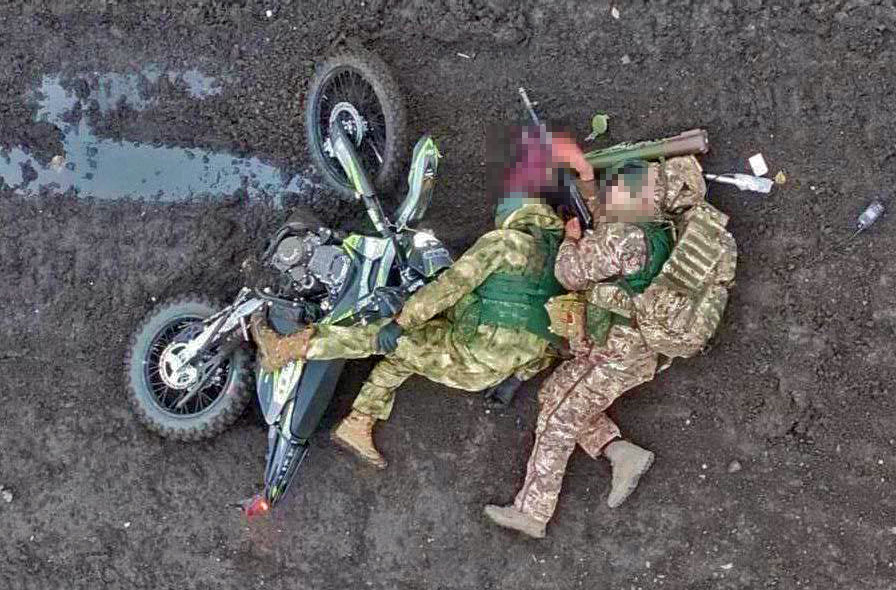
Russian soldiers killed during a failed motorcycle assault in 2025

Russia lost more troops in the first week of November than in any other week of its full-scale war, Ukraine’s General Staff said on 8 November. The new high follows two daily records, and Ukraine’s drone force commander sees Russia feeding even more men into the fight. Germany’s defense minister says the losses are buying Moscow nothing on the ground.

Russia keeps throwing infantry at Ukraine’s defenses in Donbas and the south, day after day. Moscow shows no sign of easing off: its 2027 budget sets aside two rubles for the army for every one spent on welfare, schools, and hospitals. Diplomacy is moving at the same time. The first three-way talks between the US, Ukraine, and Russia since February are due in Abu Dhabi next week. Until Russia agrees to stop, the price of its war is counted in soldiers, week after week.

A Russian regiment a day, by Ukraine’s count

Russian forces lost 16,130 troops killed and wounded from 1 to 7 November, the General Staff wrote. That averages more than 2,300 a day, or nearly a hundred an hour. Each day’s toll equals an average Russian motorized rifle regiment, it added. The figures are Ukraine’s estimates and cannot be independently verified.

The General Staff put the blame on Russia’s commanders. They keep sending soldiers into “senseless ‘meat’ assaults,” it said, while Ukraine’s Defense Forces defend the country “methodically and effectively.”

The weekly record caps a run of daily ones. On 1 November alone, Ukraine’s forces took out 2,500 Russian troops, the most in a single day of the full-scale war, the General Staff reported. That beat the 2,250 of 21 October, the costliest day of a record month in which Russia lost 54,400 troops.

Ukraine’s General Staff estimate of Russian losses since 24 February 2022, as of 8 November 2026
Ukraine’s General Staff estimate of Russian losses since 24 February 2022, as of 8 November 2026. Image: General Staff of the Armed Forces of Ukraine

The heaviest fighting comes near Kostiantynivka

On 7 November, Ukraine’s troops recorded 199 clashes along the front, the General Staff’s morning update showed. The heaviest pressure came near Kostiantynivka in Donetsk Oblast, with 23 Russian assaults. Russian troops also pushed toward Dobropillia and on the Huliaipole direction in Zaporizhzhia Oblast. That day, Russia fired 7,557 kamikaze drones and dropped 235 guided aerial bombs. In one recent week, Russian forces launched nearly 8,000 Molniya and Lancet drones at the front alone.

The day cost Russia another 2,290 troops. Its total since February 2022 now stands at about 1,606,400 killed and wounded, the General Staff’s tally shows.

A building in Izium damaged by a Russian strike on 2 November 2026. Photo: Kharkiv Regional Military Administration
Explore further

Russia steps up attacks on Izium, likely seeking to disrupt Ukrainian logistics along two front-line directions, ISW says

Ukraine’s drone commander sees more Russians at the front, not fewer

Robert Brovdi, callsign Madyar, commands Ukraine’s Unmanned Systems Forces. His drone pilots killed or wounded 751 Russian troops on 5 November, a new daily high for the force, he wrote on Telegram. The previous peak, 708, came on 1 November.

Brovdi tied the climbing count to Russia’s manpower. “This points to an unprecedented buildup of enemy manpower at the front,” he wrote, blaming Russia’s poorly hidden mobilization. Of his pilots’ tally, 71% came on the Dobropillia and Huliaipole directions. On the Huliaipole direction, a Russian division praised for taking Mala Tokmachka a year ago is still trying to capture it.

In Moscow, meanwhile, police detained young people in the central Kitay-gorod area on 7 November and handed adults draft notices, Russian Telegram channel Ostorozhno Novosti reported. “They bring in 10 people at a time, hand out draft notices, and take them away,” released detainees told the channel.
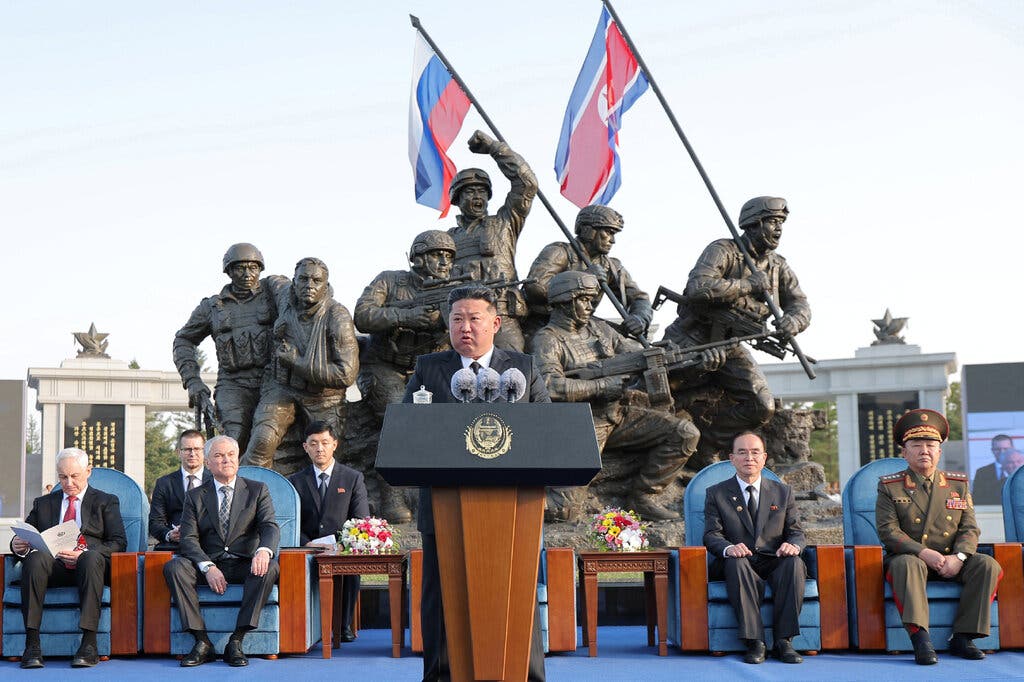
kremlin calls mobilization talk nonsense—zelenskyy says has already begun north korean reinforcements · post leader kim jong-un speaks opening memorial pyongyang russia's defense minister andrei belousov state duma speaker vyacheslav
Explore further

The Kremlin calls mobilization talk “nonsense”—Zelenskyy says it has already begun, with North Korean reinforcements

Germany’s defense minister sees no Russian progress on the ground

German Defense Minister Boris Pistorius gave a lower estimate than Kyiv’s, but described the same battlefield. “On the ground, the Russian armed forces are making no progress, the losses are enormous, 30,000 to 40,000 soldiers a month,” he told the Berliner Morgenpost, Focus Online reported.

The same interview brought bad news for Ukraine’s air defense. Pistorius ruled out more German Patriot systems for now, saying Berlin would not get replacements for what it gives. Other countries now have to do more, he said.

  •  

Lithuania’s armed forces chief says patrols on the Kaliningrad border have practically doubled as the troop mission runs into mid-November

lithuanian soldier

Patrol density along Lithuania’s border with Russia’s Kaliningrad exclave has practically doubled since soldiers joined the border guards there in early October. Lithuanian Armed Forces Commander Raimundas Vaikšnoras told LRT this in an interview. He linked the deployment to provocations and to what he described as Russian preparations for a large-scale mobilization.

Kaliningrad is a piece of Russia wedged between Lithuania and Poland on the Baltic Sea. Lithuanian Defense Minister Robertas Kaunas said people would naturally flee a Russian mobilization. Earlier, on 11 August, President of Ukraine Volodymyr Zelenskyy said that Russia planned to mobilize several hundred thousand people by the end of 2026, after its parliamentary vote.

Commander: Russia lacks troops for a breakthrough

Vaikšnoras said Russia is struggling in Ukraine and needs to fill gaps in its capabilities. Moscow would probably like a breakthrough but lacks people, he added. In July, Ukraine’s Foreign Intelligence Service estimated that Russia had signed about as many new military contracts this year as it had lost troops.

He also cited provocations. In Latvia, armed men recently tried to push migrants across the border, he noted, leaving open whether they were bandits or criminals. Belarusian ruler Alyaksandr Lukashenka denies everything, he added. On 6 October, Latvian Interior Minister Jānis Dombrava wrote that the escorts stood on the Belarusian side, were armed, and threatened Latvian soldiers.

Mission extended to mid-November

Lithuania decided to send troops after that Latvian incident. On 7 October, Interior Minister Martynas Katelynas asked Defense Minister Kaunas for troops to help the State Border Guard Service. Kaunas then approved up to 100 soldiers until 16 October, LRT reported.

On 16 October, Kaunas extended the mission to mid-November at Katelynas’s request. The Defense Ministry cited possible flows of people fleeing Kaliningrad and related illegal border crossings. It also said military intelligence sees no significant changes in military activity in Kaliningrad. Katelynas had earlier called the step preventive, BNS noted. He cited public, non-intelligence reports of a call-up planned after Russia’s parliamentary elections and said the threat level at the border had not risen.

Commander doubts Moscow’s intentions

Vaikšnoras said Russia and Belarus may not want open incidents that leave their traces right now. He added that he does not believe in their good intentions. He noted it has been said publicly that Russia’s capability in Kaliningrad is sharply reduced, because most of its forces are committed to Ukraine. Back in June 2025, Poland’s foreign minister said that, from what he knew, Russia had withdrawn a large part of its troops from the exclave.

Instead, hybrid attacks and sabotage that cannot be traced at once will probably continue, Vaikšnoras said. LRT noted the interview took place before a Ukrainian drone crashed in Pasvalys district on Sunday and before an attempted arson at premises used by SpaceX in Vilnius.

  •  

Ten casualties to one, by a NATO official’s count: Russia’s September in Ukraine’s kill zones

A masked Russian soldier in camouflage and body armor wears a helmet bearing Russian flag and “Z” patches.

Russia suffered vastly more casualties than Ukraine in September, a senior NATO military official told Bloomberg. Ukraine’s General Staff put the month’s Russian toll only slightly lower.

September’s toll lands on a recruitment system that was already falling short. Ukraine’s military intelligence (HUR) estimated that Russian losses outran new contracts in June and July, when monthly losses ran lower. In August, Ukrainian President Volodymyr Zelenskyy, citing military intelligence, warned that Russia is preparing a mass call-up after its parliamentary elections. That vote ended on 20 September.

Where the numbers come from

Russian casualties passed 50,000 in September, up to 28,000 of them killed, the official said. Ukraine’s losses over the same month came to about 5,000, according to the official, who spoke on condition of anonymity. Russia does not release casualty figures, Bloomberg noted. In late August, Pavlo Palisa, deputy head of Ukraine’s Presidential Office, put Russia’s July losses at 43,000 killed and wounded. Bloomberg could not confirm his figures.

To push forward, Russia keeps feeding troops into “kill zones,” the official said. These are stretches of ground saturated with armed drones, mines, and artillery fire. Maksym, call sign Rumyn, is a deputy company commander in the 46th Airmobile Brigade’s drone battalion. In April, he said the zone once ran 3–5 km deep and is now several times larger.

Ukraine's Third Army Corps commander Brigadier General Andrii Biletskyi announcing "Operation Vivaldi," 15 September 2026. Screenshot from video: Ukraine's Third Army Corps
Explore further

Ukraine suffered 10 times fewer casualties than Russia in Vivaldi counteroffensive, veteran says. Ukraine’s innovations in drone and ground robot tactics are changing frontline warfare

Rising stakes for Moscow

Russia’s defense spending is expected to near $199 billion this year, Bloomberg reported, citing two sources close to the government. That is about 40% above the plan the government set in late 2025.

Russian President Vladimir Putin would struggle to wind down the invasion without a political cost, Martin Jäger said last week. He heads Germany’s Federal Intelligence Service (BND).

  •  

Lithuania puts up to 100 soldiers on Kaliningrad border as officials brace for possible Russian mobilization

lithuanian soldier

Lithuania plans to deploy up to 100 soldiers to support border guards along its frontier with Russia's Kaliningrad Oblast, Defense Minister Robertas Kaunas said on 7 October.

Lithuanian Interior Minister Martynas Katelynas has described the deployment as a preventive measure linked to possible Russian mobilization and a recent incident on the Latvia-Belarus border, where masked, armed escorts tried to push a group of migrants into Latvia. Katelynas said Lithuania could face people trying to avoid mobilization and seeking asylum.

Kaunas said he had granted permission to use Lithuanian soldiers to strengthen border protection for the next several weeks.

 “The order starts being implemented immediately,” he wrote on Facebook.

Russia denies a new mobilization

The Kremlin denies a new mobilization is coming. In early September, Russian President Vladimir Putin called reports of one "complete nonsense" and "an information attack on Russia." Ukraine's military and foreign intelligence services say Russia's General Staff has prepared a scenario to mobilize 600,000 people over 2026 and 2027. On 28 September, President Volodymyr Zelenskyy said that "in effect, the Russians have already begun additional mobilization."

Frontier-station patrols for a couple of weeks, possibly longer

On 8 October, the Lithuanian army said soldiers were being brought in to help the State Border Guard Service from that day. A company-sized unit was planned for the assignment, initially for two weeks, with the option to extend. Soldiers will patrol with border guards in frontier-station areas, while mobile patrols, mobile observation posts, and military police crews may be added as needed. The army described the deployment as preventive and a normal form of interagency cooperation.

Kaunas had told LRT TV the soldiers would stay until 16 October. On the morning of 8 October, he said the deployment "was supposed to start" overnight and that he would check with the army. On 8 October, the Lithuanian army said soldiers were being brought in to help the State Border Guard Service from that day. Kaunas also said that “on the Kaliningrad side” there were no physical barriers, unlike the border with Belarus.

Lithuania says its border guards are stretched

On 8 October, Katelynas said the border guard service’s capacity was insufficient, with shifts growing while officer numbers were not increasing. He said the threat level had not changed. In a Facebook post the previous day, he said the situation at Lithuania’s border was calm and there was no reason to panic. He said Russia was planning mobilization after the elections and that Lithuania may face people trying to avoid it and seeking asylum.

Lithuania's State Border Guard Service had turned back 1,693 people trying to cross illegally from Belarus this year and about 26,300 since the migration crisis began, as reported by ELTA on 8 October. Katelynas said 43 migrants tried to enter southern Lithuania last week and were turned back.

  •  
❌