❌

Vue normale

  • ✇Journal Le Soir
  • Marché public de Rimouski : le dernier de la saison
    La saison régulière du Marché public de Rimouski se termine ce samedi 31 octobre, entre 10 h et 14 h, au parc de la Gare. Plusieurs activités spéciales sont prévues pour les visiteurs afin de souligner l’Halloween. Grâce à La Corde d’achat, Solidarité étudiante Rimouski Palestine et tous les exposants, musique, sérigraphie, maquillage, boissons chaudes, dégustations et produits spéciaux seront au rendez-vous. N’hésitez surtout pas à porter vos plus beaux costumes. Les exposants :
     

Marché public de Rimouski : le dernier de la saison

30 octobre 2026 à 16:00

La saison régulière du Marché public de Rimouski se termine ce samedi 31 octobre, entre 10 h et 14 h, au parc de la Gare. Plusieurs activités spéciales sont prévues pour les visiteurs afin de souligner l’Halloween.

Grâce à La Corde d’achat, Solidarité étudiante Rimouski Palestine et tous les exposants, musique, sérigraphie, maquillage, boissons chaudes, dégustations et produits spéciaux seront au rendez-vous.

N’hésitez surtout pas à porter vos plus beaux costumes.

Les exposants :

On se voit au Marché!

Russia’s Geran-5 has hit 1,000 km/h in maneuvers, and Chinese engineers help develop some technical solutions for Russia’s drones

30 octobre 2026 à 09:38

Ukrainian specialists study electronics taken from Russian weapons

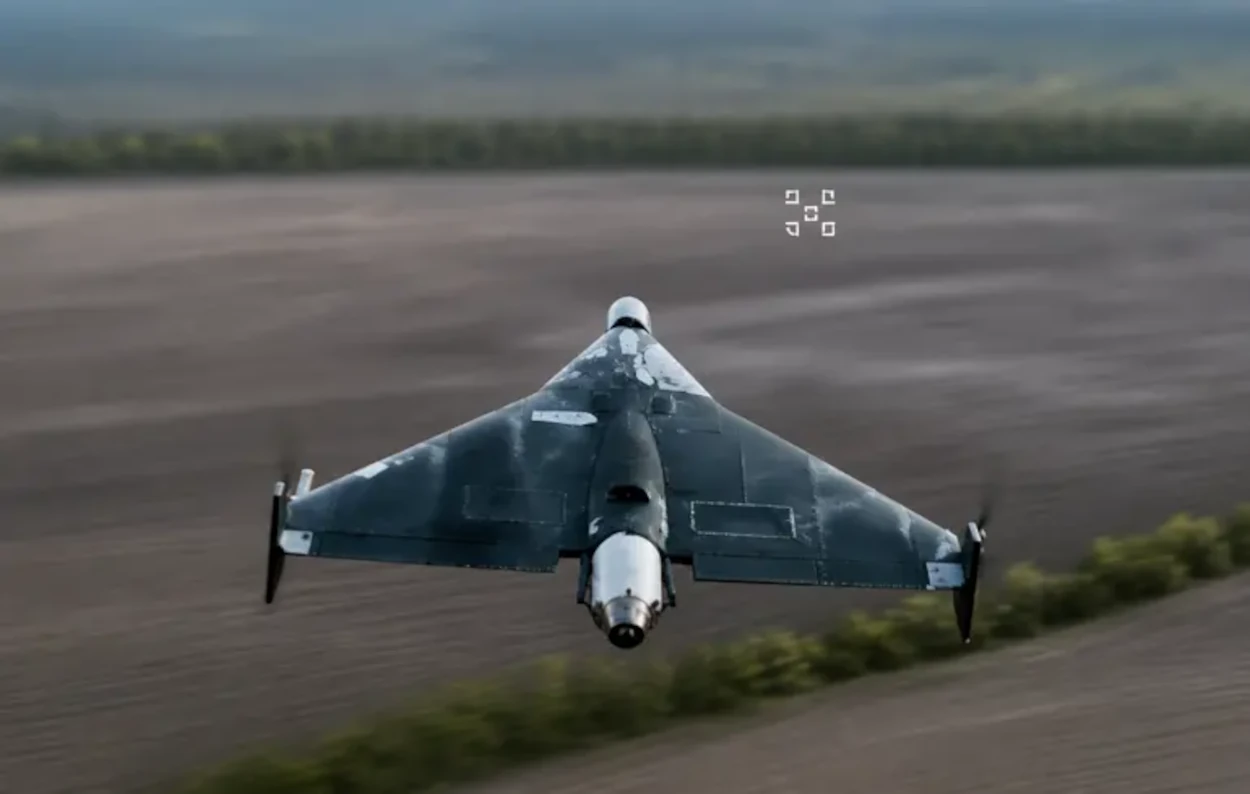
Russia’s Geran-5 jet drones have sped up to 1,000 km/h while maneuvering, Ukraine’s presidential adviser on defense technology Serhii “Flash” Beskrestnov said in Kyiv on 29 October. He added that Chinese engineers help develop Russia’s Geran drones.

When Russia moved to faster Geran versions, Ukrainian developers had to look for new ways to intercept them, Beskrestnov said, and Ukraine must learn to stay a step ahead. From 1 to 26 September, air defenses downed only 55% of Russia’s jet-powered drones. On 29 October, one such drone hit Dnipro’s railway station, and the death toll has since risen to 15. Over the past three months, air defenses downed nearly 60% of the jet-powered Geran-4, the General Staff said on 27 October, noting a shortage of guided anti-aircraft missiles. That update gave no Geran-5 figure.

A peak well above cruise speed

That peak, about 620 mph, came during maneuvers. Ukraine’s military intelligence (HUR) puts the Geran-5’s cruise speed at 450–600 km/h. By Beskrestnov’s count, the earlier Geran-3 flew at 280–300 km/h.

money engineering what stands between ukraine russia's fastest drones zelenskyy says · post russia’s new “geran-4 seeker” shahed variant geran-4 news ukrainian reports
Explore further

Ukraine intercepts nearly 60% of Russia’s Geran-4 jet drones, General Staff says, as Kyiv races to counter evolving threat

Russia’s best engineers work against Ukraine, and China’s do too, Beskrestnov told journalists. Russia’s Alabuga drone plant sets Chinese engineers tasks such as work on the control module, he said. Key components inside Russia’s Shahed-type drones are Chinese, he said. Meanwhile, China will require licenses for Geran engines from 18 November, Ukraine’s sanctions commissioner Vladyslav Vlasiuk said. Licensing is not a ban, he stressed.

Speed is the easy part

Some interceptors are being designed to match the Geran-5’s cruise speed. US firm CHAOS Industries claims a top speed of 540 km/h for its Vespid Mk 1 interceptor. On 14 October, Ukrainian defense outlet Defense Express judged that may be enough against the Geran-5’s 450–600 km/h cruise speed.

Ukrainian defense technology adviser Serhii “Flash” Beskrestnov works near the front line monitoring Russian drone signals. Photo: Serhii “Flash” Beskrestnov
Explore further

Russia equips Geran attack drones with image-based navigation using Google map imagery, reducing reliance on satellite navigation that Ukraine can jam, defense adviser warns

Ukrainian manufacturers have already shown jet-powered interceptor drones, Beskrestnov said. But they have run into problems with control, guidance, automatic target lock, and scaling up production. A model that flies fast is only one part of the job, he said, and an easy-to-use serial product is a different question entirely.

Destinus says it now makes more cruise missiles a month than Europe did a year before 2022, but engines are what Ukraine’s strike programs are short of

30 octobre 2026 à 08:57

Ruta B1 cruise missile

Destinus has completed 1,750 Ruta B1 cruise missiles and reached monthly output of nearly 300, the company said on 29 October, telling Reuters this exceeds Europe’s annual cruise-missile production before Russia’s full-scale invasion.

That gives a date for easing a shortage. A looming shortage of mini jet engines threatened to hold back Ukraine’s deep-strike drones, Reuters reported in April. Czech maker ZofiTech was then producing about 200 a month, nearly all for Ukraine, and expected demand to reach thousands within months. Both Ruta versions use the 1.5-kN engines Destinus is promising. Ukraine plans to build more jet drones and cruise missiles, so engine output next year will have to keep up, Defense Express notes.

Destinus builds its own engines, but hasn’t said how many

Destinus CEO Mikhail Kokorich said the company already produces turbojets in the roughly 1.5-kilonewton class in series, supplying them both for its own missiles and to other manufacturers. The Ruta B1 runs on the company’s own T150 engine. In June, Destinus announced its 1,000th T150 and said the line was designed to sustain production of thousands of missile systems a year. The company has not disclosed its current engine output.

Block 2 enters production, Block 3 is due to fly in 2027

Meanwhile, Destinus said it has begun production of the larger Ruta Block 2, designed to carry a 250-kg payload more than 700 km. Unlike the roughly 300-km Block 1, Block 2 is designed to be stored, transported, and launched from the same container. A third version, Block 3, is planned with a 2,000-km range, with flight tests scheduled for 2027.

Ukrainian President Volodymyr Zelenskyy acknowledged the Ruta’s combat use in October 2025. Days later, he said Ukraine expected mass production of Ruta and Flamingo missiles by the end of that year. In June 2026, then-Defense Minister Mykhailo Fedorov said the Netherlands was ready to finance about 700 Rutas for Ukraine, without specifying the version.

Deterrence takes “tens of thousands of missiles”

At the same time, Kokorich said Europe’s problem is shifting from production to integration.

“To have sufficient deterrence, you need to have tens of thousands of missiles,” he said.

European customers, he added, still need to build the military units and logistics to operate missiles in such numbers. Those arsenals would also need storage, transport, maintenance, and targeting infrastructure, he said, and European militaries would need to rethink how they stockpile and deploy precision-strike weapons.

No Chinese parts, and a bet on cheaper, shorter-range missiles

Kokorich said Destinus uses no Chinese components, unlike wartime production in Ukraine, and said access to Chinese suppliers would make manufacturing cheaper, faster, and easier.

Kokorich also argued that cheaper missiles with ranges under 1,000 km would make up most future demand. Separately, Destinus is working with Rheinmetall on cruise missiles and ammunition for multiple-launch rocket systems, including a planned European equivalent of the GMLRS rockets fired by HIMARS.

  • ✇Euromaidan Press
  • Ukrainian officials reach Russian-held Oleshky. The question now is where its residents can go
    Ukraine’s human rights commissioner Dmytro Lubinets and his delegation safely reached Russian-occupied Oleshky in Kherson Oblast on 30 October, with the local truce at 80 hours and holding. He said he was talking with residents to learn what help they need most. Russia has kept Oleshky, on the left bank of the Dnipro River, cut off for months, leaving residents starving. Now the test is where the buses take people. The White House promised residents who wish to leave transport to their
     

Ukrainian officials reach Russian-held Oleshky. The question now is where its residents can go

30 octobre 2026 à 07:45

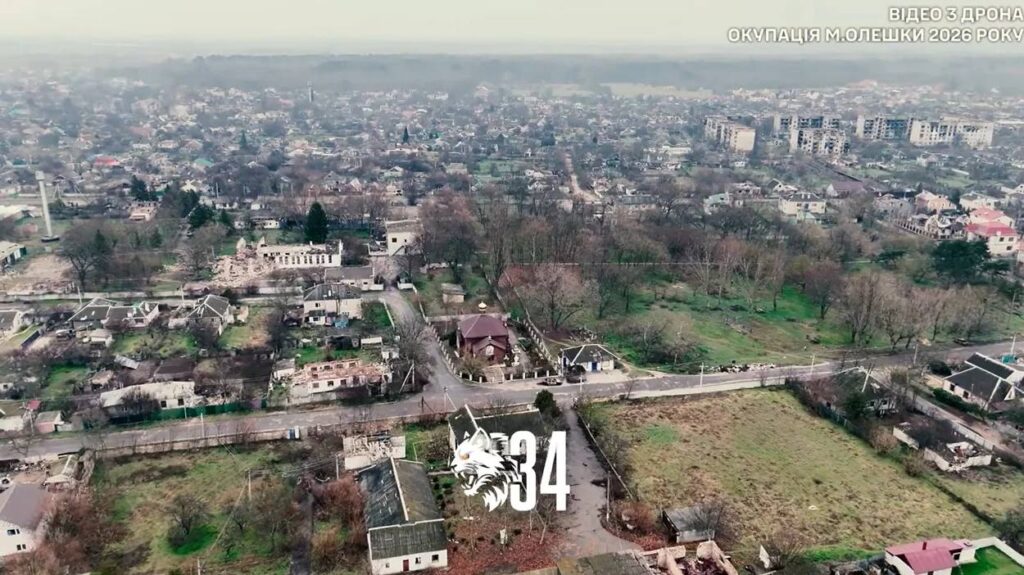
Aerial view of Russian-occupied Oleshky, in Ukraine's Kherson Oblast. Photo via ArmyInform

Ukraine’s human rights commissioner Dmytro Lubinets and his delegation safely reached Russian-occupied Oleshky in Kherson Oblast on 30 October, with the local truce at 80 hours and holding. He said he was talking with residents to learn what help they need most.

Russia has kept Oleshky, on the left bank of the Dnipro River, cut off for months, leaving residents starving. Now the test is where the buses take people. The White House promised residents who wish to leave transport to their “preferred destination.” Lubinets said on 27 October that everyone who wants to go to Ukraine will be able to. Under agreement pages published by Fox News, his own delegation and the residents who choose Ukraine travel together via Anapa in Russia. From there, a Russian military transport plane to Homiel in Belarus is expected on 31 October.

Aerial view of Russian-occupied Oleshky, in Ukraine's Kherson Oblast. Photo via ArmyInform
Explore further

Russia may use the Oleshky truce to rebuild its forces, ISW warns, as evacuees face a route through Russia and Belarus

Buses on standby, aid for those who stay

On the morning of 30 October, before reaching the town, Lubinets wrote from Armiansk in occupied Crimea that he was coordinating the mission with Yana Lantratova, Russia’s human rights commissioner. He said 25 buses with 750 seats had been prepared, plus ambulances for people with limited mobility. Anyone who wants to leave will get a safe way out, and those who stay will receive aid, he added. In delivering that aid, special attention goes to elderly residents and people with disabilities, he said.

We are in Oleshky! The Ukrainian delegation has safely reached the city.

The ceasefire has been in effect for 80 hours and remains in place. I am currently on the ground, speaking with local residents to hear about their needs and understand what kind of assistance they need… pic.twitter.com/AOhKIV0WLO

— Dmytro Lubinets (@lubinetzs) October 30, 2026

The evening before, he said people who want to leave could do so until 14:00, with aid distribution after 14:30, without naming a date. Speaking to journalists, he called it the first truce since 2022 to hold this long on such a large stretch of front.

How the truce came about

The White House announced the truce on 23 October, crediting First Lady Melania Trump. It took effect at 03:00 Kyiv time on 27 October. Its zone was later widened. By 29 October, the convoy was ready, Lubinets said. The truce is due to end at 22:59 Kyiv time on 1 November.

❌