❌

Vue normale

  • ✇Euromaidan Press
  • An armored capsule instead of an open platform: Ukraine develops an evacuation module for the Murakha UGV
    Ukrainian company Robotic Complexes is developing CASEEVAK, an armored module that lets the Murakha unmanned ground vehicle carry wounded soldiers off the battlefield, the company told Militarnyi on 28 October. The casualty rides in a closed capsule with ventilation, heating, lighting, and a first-aid kit, and side and rear doors let medics load and reach the soldier from any side. Drones that can fly long distances pose a threat to both wounded soldiers and the crews evacuating them, m
     

An armored capsule instead of an open platform: Ukraine develops an evacuation module for the Murakha UGV

29 octobre 2026 à 18:25

The Murakha UGV with the CASEEVAK module.Photo: Robotic Complexes company

Ukrainian company Robotic Complexes is developing CASEEVAK, an armored module that lets the Murakha unmanned ground vehicle carry wounded soldiers off the battlefield, the company told Militarnyi on 28 October. The casualty rides in a closed capsule with ventilation, heating, lighting, and a first-aid kit, and side and rear doors let medics load and reach the soldier from any side.

Drones that can fly long distances pose a threat to both wounded soldiers and the crews evacuating them, making transportation the main challenge, said Ukrainian military medic Daryna Boiko, The Independent reported. Developers are looking for new ways to counter this threat. The current Murakha model is being equipped with passive anti-drone protection elements, the developers say.

An armored capsule that keeps the wounded connected

After a wounded soldier is loaded onto an evacuation platform, it is important not only to transport them to a safe location but also to protect them and monitor their condition during transit.

The module is built around a closed armored capsule made of 3.5 mm-thick Armox 500T steel with an inner lining of HDPE 1000, the media outlet reports. Side and rear doors allow the wounded to be loaded from different directions and accessed during evacuation.

A military personnel member inside the CASEEVAK module of the Murakha UGV. Photo: Robotic Complexes company

To enable the operator to monitor the person inside and maintain contact with them, the capsule is equipped with a camera with day and night channels and two-way audio communication. The system can be controlled via ELRS, LTE, Starlink, or fiber-optic communications. Militarnyi reports that even if the capsule is detached from the main platform, it retains two independent communication channels.

The developers are also working to integrate vital-signs monitoring systems intended to provide medical personnel with information about the wounded person’s condition during transport.

An electric platform and protection against FPV drones

The evacuation module requires a platform capable of carrying it as it moves through dangerous areas. The Murakha is equipped with two electric motors, delivering a combined torque of 1,600 N·m, and a 35 kWh battery. The system’s stated range is up to 80 km, according to the media outlet.

Another area of development is protection against drones. Measures intended to protect the system include net launchers and electronic warfare (EW) equipment. However, work on a protective cage against FPV drones is still ongoing, according to the report.

The company has already conducted ballistic tests of the armor steel at a distance of 50 meters, using ammunition of various calibers, Militarnyi reports.

The Murakha-Mini logistics platform


The same company previously developed the Murakha-Mini logistics platform. Ukrainian military personnel began using it on the front line to deliver equipment, provisions and other supplies, Militarnyi reported on 24 October 2025.

Ukraine’s Murakha-Mini unmanned ground vehicle. 2025. Photo: Robotic Complexes company

The UGV can carry up to 250 kg and travel up to 40 km on a single charge, the media outlet reported. During one combat mission, it transported 150 kg of cargo and towed a six-metre platform carrying another drone and provisions, covering 16 km in one direction, Militarnyi reported.

Russia may use the Oleshky truce to rebuild its forces, ISW warns, as evacuees face a route through Russia and Belarus

29 octobre 2026 à 05:51

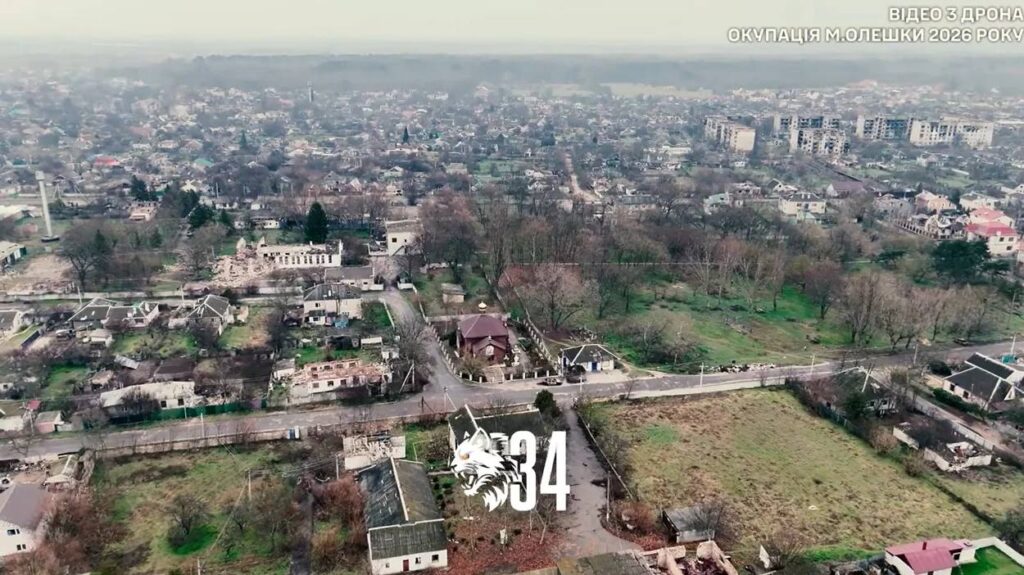
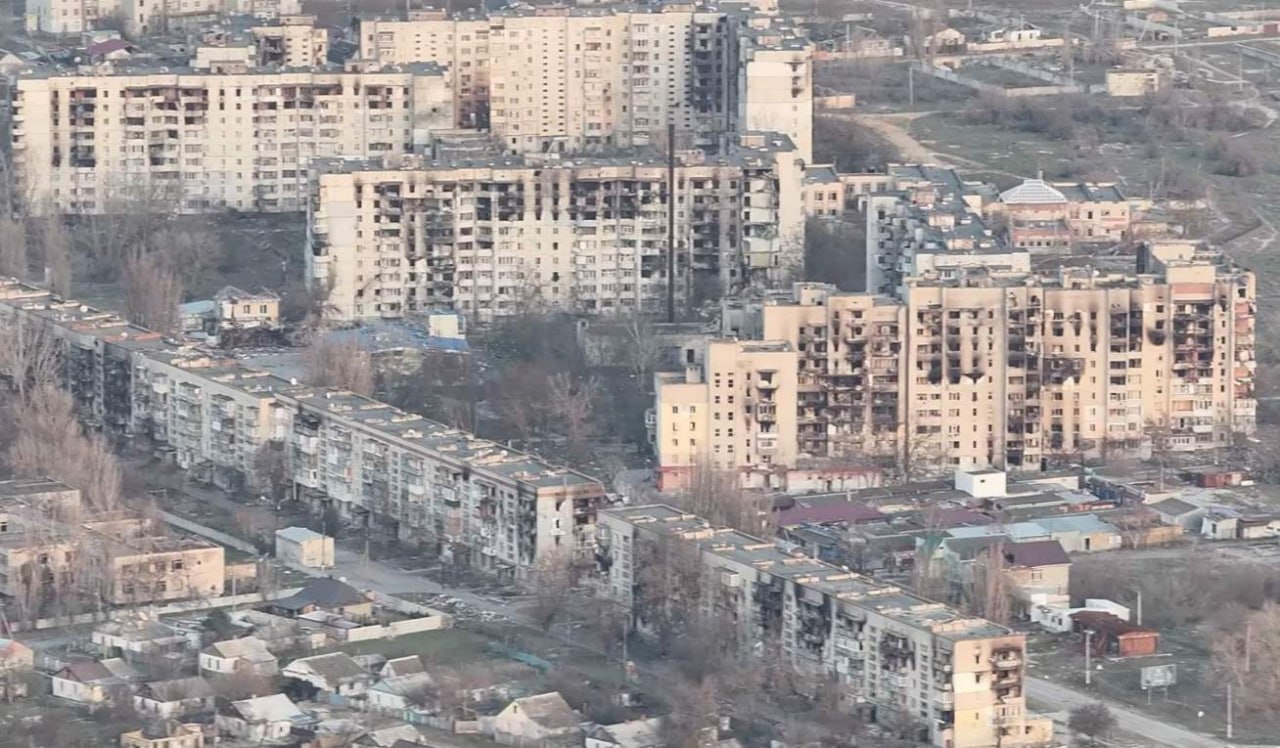
Aerial view of Russian-occupied Oleshky, in Ukraine's Kherson Oblast. Photo via ArmyInform

Oleshky residents who choose Ukraine are to be taken through Russia and flown to Belarus, and the ceasefire agreement does not say how they will get from there to Ukrainian-held territory, the Institute for the Study of War (ISW) noted on 28 October. ISW also warned that Russia may use the truce to rebuild its forces in Kherson Oblast.

Oleshky, a town across the Dnipro from Kherson, has been occupied by Russia since February 2022, and about 2,000 people remain there, short of food and medicine. A US-brokered truce took hold on 27 October so aid can go in and residents can leave. The mission will show whether Russia lets those who choose Ukraine actually get home.

Anapa, Homiel, and then?

Pages of the agreement, signed on 23 October by Ukraine’s human rights commissioner Dmytro Lubinets and his Russian counterpart Yana Lantratova, were published by Fox News. They send the Ukrainian delegation and residents who want to go to Ukraine from Oleshky to the airport in Russia’s Anapa. From there, a Russian Defense Ministry military transport plane is to fly them to Homiel in Belarus, with the flight expected on 31 October.

Map of the Oleshky evacuees’ planned route set out in the ceasefire agreement, via Anapa in Russia to Homiel in Belarus, and a possible onward route through Poland to Ukraine, October 2026
Map of the Oleshky evacuees’ planned route set out in the ceasefire agreement, via Anapa in Russia to Homiel in Belarus, and a possible onward route through Poland to Ukraine, October 2026. Map: EP/Datawrapper

The delegation includes Lubinets, two of his staff, and two Ukrainian journalists, accompanied by a representative of the Russian ombudsman’s office and of the group coordinating the mission. Russia’s Dnepr Grouping of Forces, which holds the left bank of the Dnipro, provides the escort. ISW pointed out that the pages do not explain how evacuees travel on from Belarus, and that it remains unclear whether Russia will give residents “a legitimate and duress-free choice” to return to Ukraine.

Oleshky, Kherson Oblast, has been under Russian occupation since 2022, following Russia’s capture of the city during the initial phase of its full-scale invasion of Ukraine.
Explore further

Ceasefire planned for occupied Oleshky as residents face starvation and blocked escape routes, White House announces

A route through Russia may also mean so-called filtration. People leaving occupied Mariupol in 2022 had to pass Russian screening, and many who hoped to reach Ukrainian-controlled territory were taken to Russia instead, Human Rights Watch documented. In Washington, the Congressional Ukraine Caucus welcomed the ceasefire but raised alarm over reports that Russia was keeping Oleshky residents from evacuating to Ukrainian-controlled territory, RFE/RL reported.

Map showing Kherson across the Dnipro from Russian-occupied Oleshky, with the front line as of 28 October 2026
Kherson lies just across the Dnipro from Russian-occupied Oleshky, yet residents who choose Ukraine are to be routed through Russia and Belarus. Russia has forcibly deported Ukrainians from occupied areas throughout the war, and it is unclear how many evacuees will eventually reach Ukrainian-controlled territory. Map: EP. Front line: DeepStateMap, 28 October 2026. Imagery: Google

On 29 October, the Ukrainian delegation led by Lubinets arrived in Belarus, and the two delegations held their first in-person meeting at Homiel airport, Belarus’s state agency BelTA reported. Belarus has also joined the operation, BelTA said. Lubinets confirmed the same day that he had set off for Oleshky with the delegation to deliver aid and work on making sure people can leave safely.

A page of the Oleshky ceasefire agreement setting out the evacuees’ route via Anapa and Homiel (Gomel)
A page of the Oleshky ceasefire agreement setting out the evacuees’ route via Anapa and Homiel, signed on 23 October 2026. Photo: provided to Fox News Digital

Aid due on 30 October

The truce has held for 54 hours without violations, Lubinets said on 29 October. Routes are being demined, and an aid cargo is to reach Oleshky on 30 October, he added. The truce is set to last until 22:59 on 1 November. Across the river, the Kherson Oblast administration recorded no shelling and no civilian casualties over the past day.

A municipal worker trims a flowerbed on Kherson’s central square, with the damaged Kherson Oblast administration building behind him
A municipal worker trims a flowerbed on Kherson’s central square during the ceasefire, 28 October 2026. Behind him is the Kherson Oblast administration building, wrecked by repeated Russian strikes, including guided bombs in June 2025. Photo: Dmytro Lubinets/Telegram

Lantratova wrote that aid had been sent, saying residents need “food, fuel, medicine, hygiene products,” and that they would be able to leave wherever they wanted to go. Kremlin spokesman Dmitry Peskov said Russia expected residents to get aid within a day or two and those who wished to leave to be able to do so, Ukrainska Pravda reported.

US First Lady Melania Trump, who brokered the truce, announced that four Newsmax journalists will work in Oleshky alongside the Russian and Ukrainian humanitarian teams. Her post quoted Putin’s envoy Kirill Dmitriev, who wrote that Russia “welcomes” the Newsmax journalists, rather than any Ukrainian official:

DOCUMENTING OLESHKY
Four American journalists from Newsmax will be on the ground in Oleshky, embedded with Russian and Ukrainian humanitarian leaders.

Serving as neutral observers, they will independently record and permanently document this historic humanitarian mission. https://t.co/orfhcC8URs

— First Lady Melania Trump (@FLOTUS) October 28, 2026

A pause Russia may use

On the truce’s first day, Russian Defense Minister Andrei Belousov inspected the Dnepr Grouping and met its commander, Colonel General Mikhail Teplinsky. The ministry said they discussed drone units. Ukrainian serviceman and analyst Volodymyr Molchanov told Radio NV that intelligence shows Russia rapidly reinforcing its forces in Oleshky, bringing in what Ukrainian drones had kept out.

Russian forces may use the limited ceasefire to reconstitute in Kherson Oblast, ISW assessed.

❌