Connexion
Russia still parks its best bombers in the open. Ukraine has spent a year knocking out the air defenses that were supposed to protect them
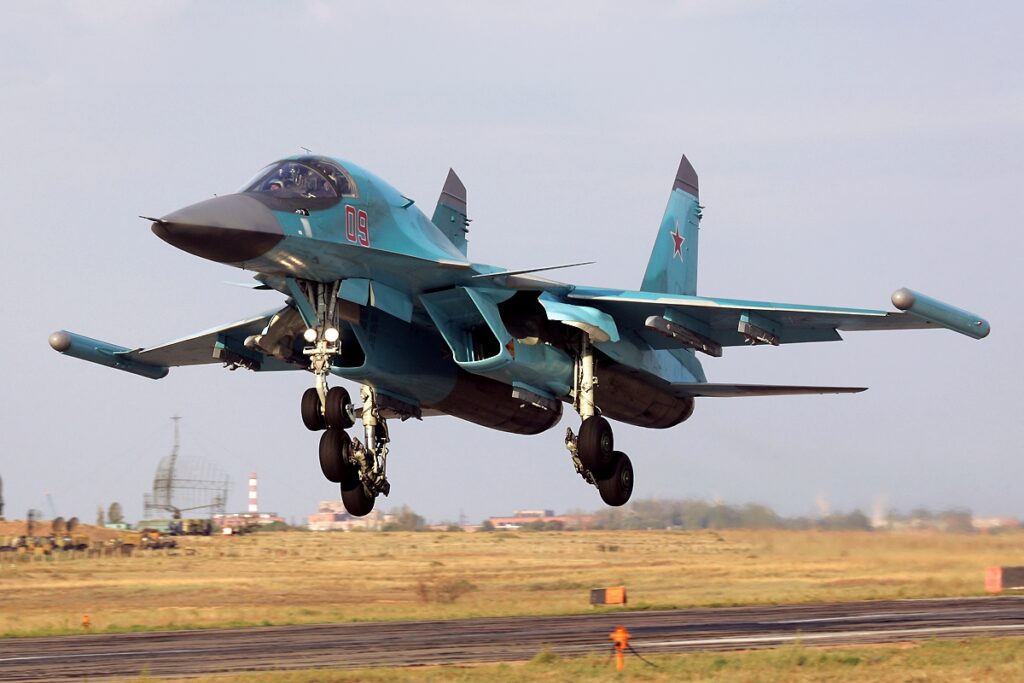
- An overnight raid by the Ukrainian navy reportedly destroyed four Russian air force Sukhoi Su-34 fighter-bombers
- A barrage of Long Neptune cruise missiles struck the parked aircraft at a base in western Russia
- Observers blamed poor airfield procedures, and also lamented a lack of air defenses
Overnight on 14 and 15 October, the Ukrainian navy fired a clutch of Long Neptune cruise missiles at Borisoglebsk air base in Voronezh, in western Russia some 260 km from the border with Ukraine.
The results were devastating. The ground-launched Neptunes struck the tarmac where six Russian air force Sukhoi Su-34 fighter-bombers were parked nearly wingtip to wingtip in uncovered positions.
Satellite imagery from the morning of 15 October depicted piles of smoldering wreckage. The navy said it hit all six jets. Ukrainian President Volodymyr Zelensky said four Su-34s were destroyed and a further two were damaged. "I thank the warriors of the Ukrainian navy for their precision!" he wrote.
The jets, he said, were loaded with aerial bombs and ready for new strikes on Ukraine. An analyst reading the imagery counted wreckage of two to four aircraft and two empty spots where damaged jets had been moved.
An Airbus Pléiades satellite image from 11 October, four days before the strike, showed the six Su-34s on open aprons. Next to them were structures that the Russian independent outlet Istories said looked like anti-drone nets or their frames. Nets can snag a small drone. A cruise missile goes through.
At roughly $50 million apiece, by the Ukrainian Air Force's estimate, the four destroyed jets alone cost Russia some $200 million. The twin-engine, two-seat, supersonic Su-34 is the Russian air force's best fighter-bomber. Almost every day, Su-34s lob KAB precision glide bombs at Ukrainian troops and civilians.
— AviVector (@avivector) October 15, 2026
Satellite images of
Borisoglebsk Air Base as of October 15, 08:25 UTC
On the night of October 15, several Su-34 were destroyed at Borisoglebsk Air Base. pic.twitter.com/3ZNBWhU6UD
In nearly 56 months of hard fighting in Russia's wider war on Ukraine, the Russians have now lost no fewer than 37 Su-34s destroyed, with several more damaged, by open-source counts. Sukhoi continues to deliver new Su-34s in small batches, the latest handed over on 7 October, helping the Russians sustain their overall inventory despite heavy losses.
They've still got plenty of Su-34s, but that doesn't mean the Russians shouldn't worry. As long as they're parking warplanes out in the open within range of Ukraine's best deep strike munitions, those planes are vulnerable to attack. Russia's air defenses are spread too thin to intercept every Ukrainian munition.
Satellite imagery showing the aftermath of a Neptune missile strike on six Su-34 fighter-bombers at Borisoglebsk Airfield.
— Dnipro Osint (@GarbuzYe) October 15, 2026
Coordinates: 51.36315, 42.18560 pic.twitter.com/7TNpxGIaB0
The strike may also hit the Russian air force's training pipeline. Borisoglebsk air base is home to the 160th Aviation Training Regiment. The regiment operates Yakovlev Yak-130 trainers for more basic flight training plus—for more advanced training—front-line combat aircraft including Su-34s, Sukhoi Su-35s, and Sukhoi Su-30s.
Russian bloggers are aghast, according to a round-up of posts on Russian social media by analyst ChrisO_wiki. "How is it that, four years after the start of the Special Military Operation, there are no protective structures for aircraft at airfields located within range of Ukrainian air strikes?" blogger Ramsay wrote. "And where did the billions of rubles allocated for their construction go?"
"Much can be said about the need to build a sufficient number of concrete shelters at all airfields," blogger Vladimir Romanov pointed out. "Reality shows that, to date, sufficient measures have not been taken."
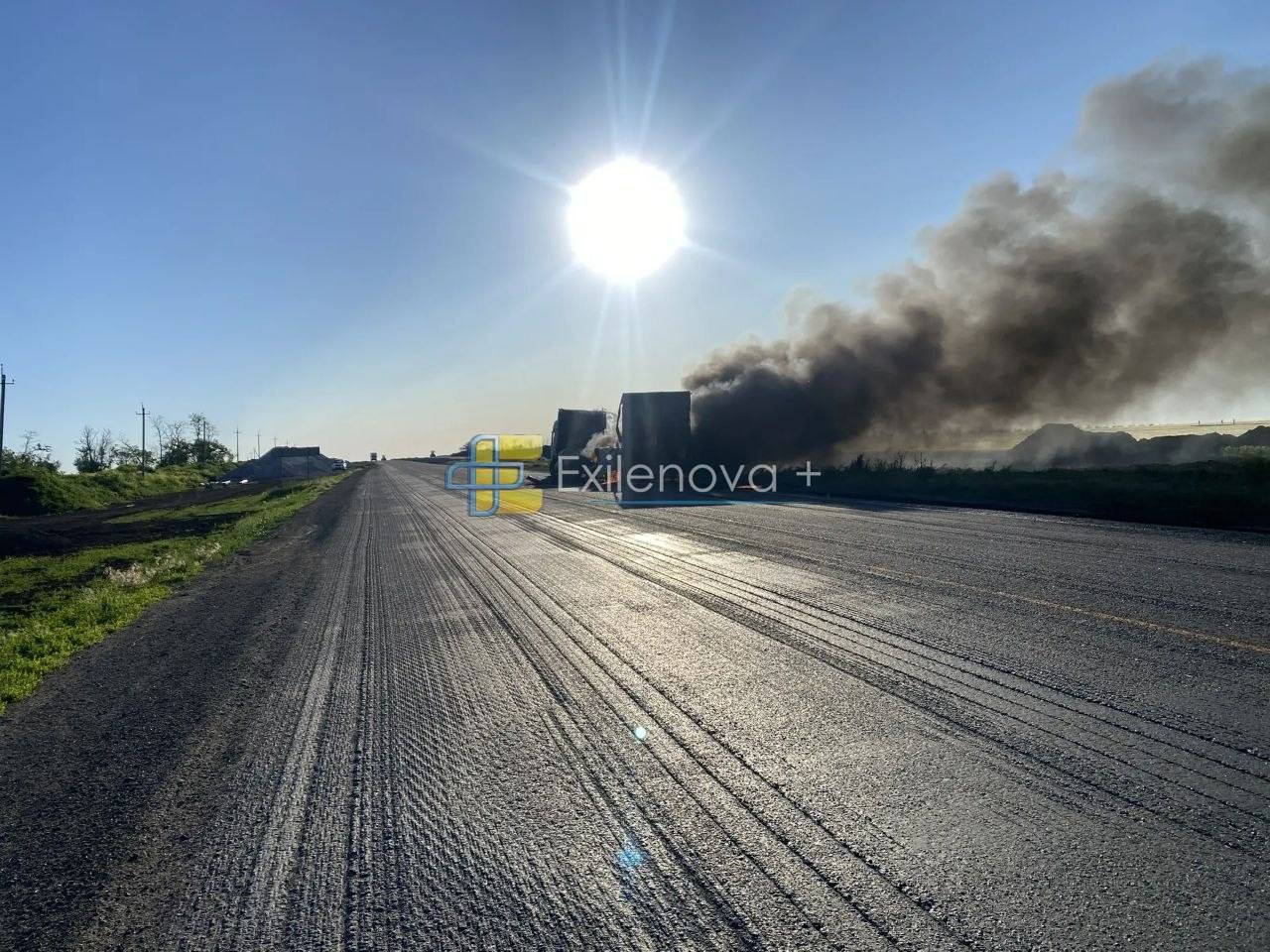
“Supplying Crimea is turning into a nightmare”: Ukrainian drones hit Russian trucks 770 times in September, and winter will make it worse, analyst says
Close parking
Ramsay asked why the Su-34s were concentrated in one area, apparently so that ground crews could quickly service all of them with a single ground power unit, a mobile generator that starts an aircraft's systems before flight. "How is it that the APA, a utilitarian piece of equipment, has become so scarce that it forces an entire group of combat aircraft to be parked in a single area, making them an ideal target for attacks?"
The best defense is an active one, however, the Fighterbomber channel stressed. "Protecting aircraft by the usual method of moving them out of the line of fire at such ranges from long-range strike systems won’t work here; the only way to defend against them is with a full-scale, echeloned air defense system—both ground-based and airborne."
1/ Russian warbloggers are furious at the news that a Ukrainian missile has destroyed between 4 and 6 Su-34 jets on the ground at a Russian airfield. How is it possible, they ask, that the Russian air force is still parking aircraft close together without protection?
— ChrisO_wiki (@ChrisO_wiki) October 15, 2026pic.twitter.com/BrTvfCMRfH
Ukrainian planners know this. Which is why, for more than a year now, they've been systematically striking Russian radars, surface-to-air missile batteries, and mobile air defense systems. By March, Ukrainian forces were “collaps[ing] the layered defensive architecture that the Russian integrated air defence doctrine depends upon to function,” according to an in-depth investigation by Tochnyi.info.
The strikes on Russian air defenses—at least 492 of them between June and early March—are part of a carefully scripted plan. Destroying the right air defenses faster than the Russians can replace them has the effect of “facilitating strikes on more critical targets deep within Russian territory,” Tochnyi.info explained.
The critical targets include air bases such as Borisoglebsk and the expensive warplanes parked on its tarmac.








/2026/10/16/6ad28e52855f6645705434.jpg)

:fill(blur):format(jpg)/2026/10/16/6ad28f642b216194203554.png)







/2026/10/16/6ad26602a8ba3693851398.jpg)