The plan, which complies with President Trump’s executive order to curtail mail voting, will only go into effect if the Supreme Court rules in the order’s favor.
The plan, which complies with President Trump’s executive order to curtail mail voting, will only go into effect if the Supreme Court rules in the order’s favor.
Travelers arriving from international flights outside the U.S. Customs and Border Protection exit at Kennedy International Airport in New York last year.
Mr. Newsom, the governor of California, normally has harsh words for President Trump. But he called the new children’s savings accounts “one of the best things” the president has done.
Mr. Newsom, the governor of California, normally has harsh words for President Trump. But he called the new children’s savings accounts “one of the best things” the president has done.
Gov. Gavin Newsom of California gave an unusual endorsement for an endeavor led by President Trump — investment funds for American children born during Mr. Trump’s presidency.
At least five of the people flown to Liberia under the Trump administration’s third-country deportation program resisted leaving the plane. They were then flown to Equatorial Guinea.
At least five of the people flown to Liberia under the Trump administration’s third-country deportation program resisted leaving the plane. They were then flown to Equatorial Guinea.
The 90,000-square-foot ballroom project has grown in size and scope, with the president’s lawyers saying it is intertwined with the renovation of an underground military bunker.
The 90,000-square-foot ballroom project has grown in size and scope, with the president’s lawyers saying it is intertwined with the renovation of an underground military bunker.
The GEO Group has profited from the administration’s mass deportation campaign. A subsidiary donated more than $1.4 million to the president’s super PAC last month.
The GEO Group has profited from the administration’s mass deportation campaign. A subsidiary donated more than $1.4 million to the president’s super PAC last month.
Canadian negotiators were in Washington to finalize a deal that would stave off new tariffs and improve the terms of existing ones, but Mark Carney faces a tough sell back home.
Canadian negotiators were in Washington to finalize a deal that would stave off new tariffs and improve the terms of existing ones, but Mark Carney faces a tough sell back home.
The ArcelorMittal Dofasco steel plant in Hamilton, Ontario. President Trump hit the Canadian steel industry with tariffs of up to 50 percent last year.
Ukraine is asking Elon Musk to let it arm deep-strike drones with his Starlink network and turn them on Russian ballistic-missile launchers far inside Russia, the Financial Times reported. The plan needs Musk's approval — and US President Donald Trump was cool to the idea when Ukrainian President Volodymyr Zelenskyy raised it at the White House on 28 July, with people present expecting Musk to refuse.
Kyiv is chasing the workaround because its air defenses are stretched
Ukraine is asking Elon Musk to let it arm deep-strike drones with his Starlink network and turn them on Russian ballistic-missile launchers far inside Russia, the Financial Times reported. The plan needs Musk's approval — and US President Donald Trump was cool to the idea when Ukrainian President Volodymyr Zelenskyy raised it at the White House on 28 July, with people present expecting Musk to refuse.
Kyiv is chasing the workaround because its air defenses are stretched: Russia keeps escalating its missile and drone strikes, and Ukraine is running low on the Patriot interceptors that are its only dependable answer to Russian ballistic missiles. As Russia builds more missiles and drones, Ukraine's interceptor needs run into the hundreds before the year is out.
At the meeting, FT reported, Zelenskyy pressed Trump to lobby Musk for permission to fly Starlink-linked drones across the Russian border. He capped the pitch at 200 km into Russia — far enough to reach launch sites, command posts, and other targets — on the calculation that a shallower limit might make Musk likelier to agree.
Starlink could extend Ukrainian drone strikes
Riding SpaceX's satellites, Starlink drones hold a steadier link to their pilots at long range than ordinary radio allows, and they shrug off the jamming that grounds other drones. The drones have already shown their worth in the fighting at home, and Vienna-based military analyst Franz-Stefan Gady said that across the border they "could be very useful in hunting" Russian launchers, FT wrote.
Kyiv's best channel to Musk has also just closed: Zelenskyy recently fired his defense minister, Mykhailo Fedorov, who had a direct line to the billionaire.
Mykhailo Fedorov during a June interview, a month before his dismissal, in which he described leaks and private-company influence inside the defense ministry. Photo: screenshot from PRESSING / Army-Media of Ukraine's Defense Forces
Speaking to a Ukrainian podcast on 6 August, Fedorov said that even with a channel to Musk still open after his firing, he had made no progress on cross-border Starlink use—"a difficult task right now."
Explore further
The Fedorov protesters lost. But they backed a man for what he built, not what he promised—and that may be new in Ukraine.
Musk’s Starlink decisions have affected both sides in the Russo-Ukrainian war
Musk has backed Ukraine's heavy dependence on Starlink for military command and comms. In 2022, Musk declined to extend Starlink coverage for Ukrainian troops mid-operation near occupied Crimea, citing his fear of triggering a nuclear escalation.
He has also acted against Moscow: in February, at Fedorov's direct request, Musk shut down the Starlink terminals that Russian forces had been operating illicitly against Ukraine.
Now, Musk answered Fedorov's Monday post with a line about "trying to do the right thing" and wanting peace — and said nothing about the Starlink ask.
Workers moving materials for Uzbek gazebos at West Potomac Park on Tuesday. President Trump’s expansive plans for the area also include reflecting pools, dining facilities and an amphitheater.
It was the latest example of President Trump’s bid to use the legal system against those who voice unflattering facts and opinions generally protected by the First Amendment.
It was the latest example of President Trump’s bid to use the legal system against those who voice unflattering facts and opinions generally protected by the First Amendment.
A report by the Center for American Progress determined that there was “no evidence” that President Trump’s deployment of the National Guard to cities across the country had affected the crime rate.
The Trump administration wants average Americans to be able to buy guns online and have them shipped to their doors. Small gun stores warn it could upend the industry and risk public safety.
The Trump administration wants average Americans to be able to buy guns online and have them shipped to their doors. Small gun stores warn it could upend the industry and risk public safety.
Colin Overbey, the manager for Dunn’s Attic in Ormond Beach, Fla., is one of hundreds of people lobbying the A.T.F. to halt proposals that could alter the gun industry.
The US is engaged in a lawless quest to protect American and Israeli officialsThe Trump administration has taken another step in its crusade against the international criminal court by imposing sanctions on two more senior ICC officials. The growing number of sanctioned jurists – now 13 – does not change the lawless nature of this quest.Donald Trump and his henchman, Marco Rubio, want to make the world safe for US and Israeli war criminals. No one should let them. Continue reading...
The US is engaged in a lawless quest to protect American and Israeli officials
The Trump administration has taken another step in its crusade against the international criminal court by imposing sanctions on two more senior ICC officials. The growing number of sanctioned jurists – now 13 – does not change the lawless nature of this quest.
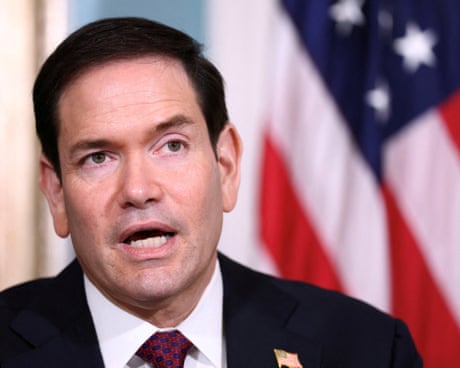
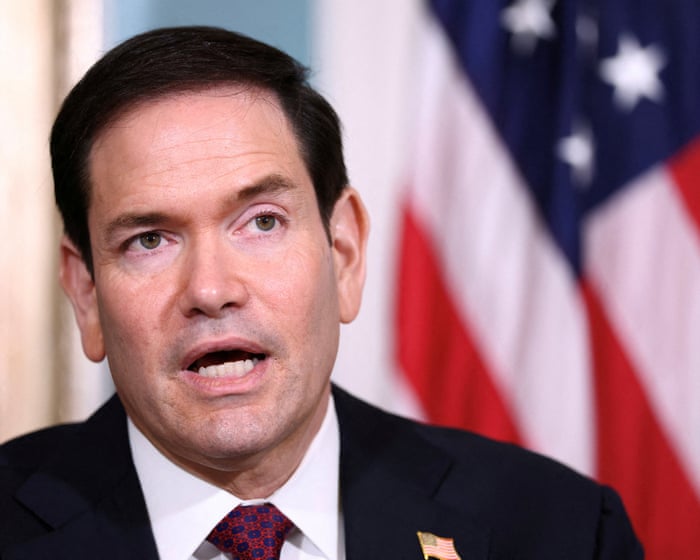
Donald Trump and his henchman, Marco Rubio, want to make the world safe for US and Israeli war criminals. No one should let them.
In Tehran last month. Before the latest round of sanctions was announced, Iranians were already contending with sky-high inflation and other economic hardships.
The Italian prime minister is leading what will soon be the longest-lasting government in the country’s postwar history. She shows herself by turns funny and fierce in a rare interview.
The Italian prime minister is leading what will soon be the longest-lasting government in the country’s postwar history. She shows herself by turns funny and fierce in a rare interview.
In a rare interview, the onetime political outcast reflects on her route from “the uncomfortable side of history” to the threshold of leading Italy’s most durable postwar government.
In a rare interview, the onetime political outcast reflects on her route from “the uncomfortable side of history” to the threshold of leading Italy’s most durable postwar government.

 Connexion