Slovak company STV Machinery has produced the first two prototype hulls for the BMP-1 infantry fighting vehicle after a 36-year break in production. The plant in Dubnica nad Váhom began developing an updated design in 2024, and a contract with an unnamed foreign customer was signed in late 2025, with serial production scheduled for 2026 to 2027.
The Slovak outlet Future Army reported this on 15 August, citing STV Group's director of special projects, Pavel Be
Slovak company STV Machinery has produced the first two prototype hulls for the BMP-1 infantry fighting vehicle after a 36-year break in production. The plant in Dubnica nad Váhom began developing an updated design in 2024, and a contract with an unnamed foreign customer was signed in late 2025, with serial production scheduled for 2026 to 2027.
The Slovak outlet Future Army reported this on 15 August, citing STV Group's director of special projects, Pavel Beran. He said one prototype is being used to test final assembly and the integration of weapons systems, while the second is undergoing physical and stress testing. The company will not disclose the customer's identity, citing security and business-ethics considerations.
Ukraine has a substantial need for armoured vehicles. Its forces already use and modernise the BMP-1, and cooperation with Western manufacturers could help replenish the fleet faster. In 2024, for example, Ukraine and Germany's Rheinmetall agreed to produce the Lynx IFV and to expand defence cooperation.
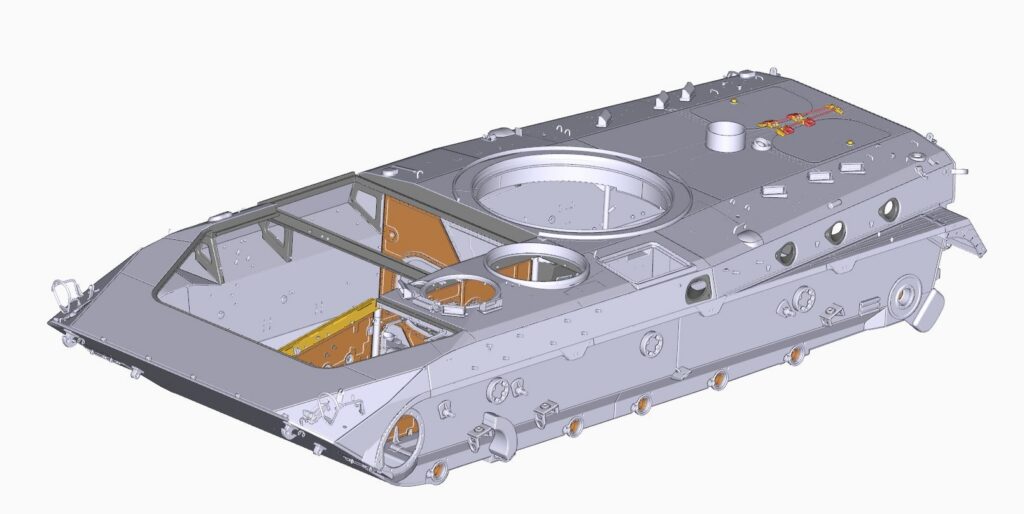
Digitised BMP-1 project. Photo: STV Machinery
The Slovak plant has returned to BMP-1 production
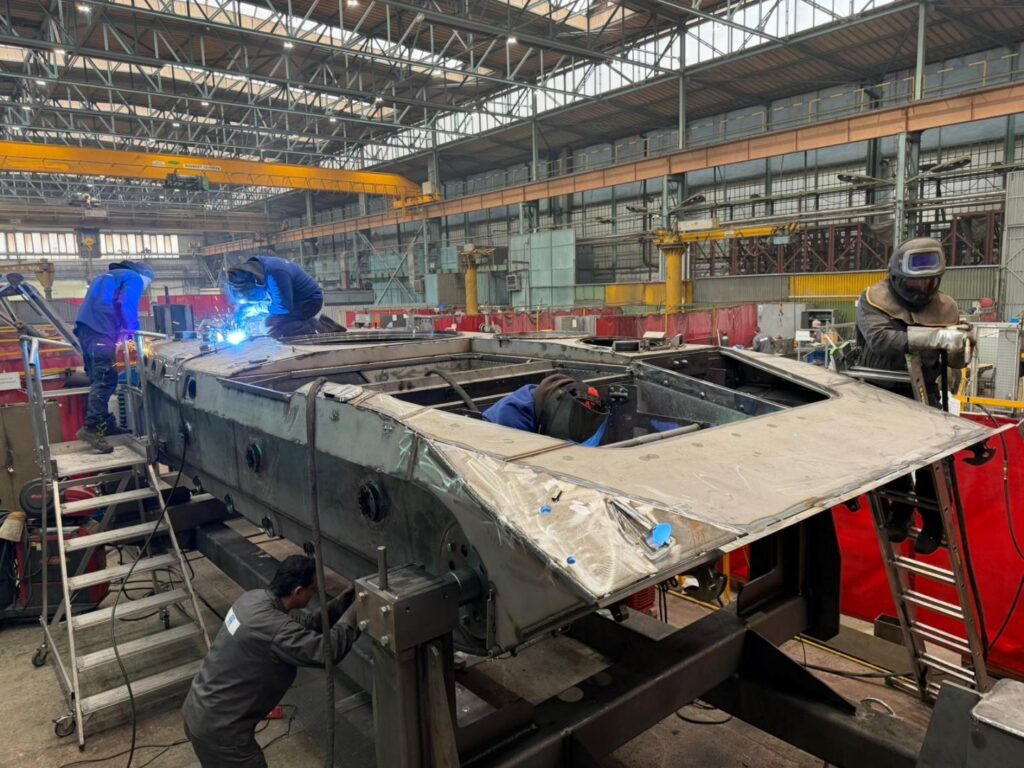
According to Militarnyi, the new hulls remain outwardly similar to the Soviet BMP-1 design but have been reworked to more modern requirements. STV Machinery revised the design to meet NATO standards for ergonomics and materials, and strengthened the armour using more modern materials.
Future vehicles will offer a choice of powerplant, with Western-made engines among the options. STV Machinery, the Slovak firm, will produce the hulls and other components, after which its Czech sister company STV Group will carry out full assembly and testing.
The exact size of the order is not yet known, though earlier reports suggested production could eventually reach up to 100 hulls a year.
The company has not named the customer. Defense Express suggested as early as December 2025 that it could be Ukraine. One scenario the outlet floated was the supply of hulls or turretless vehicles, which would allow other combat modules to be fitted.
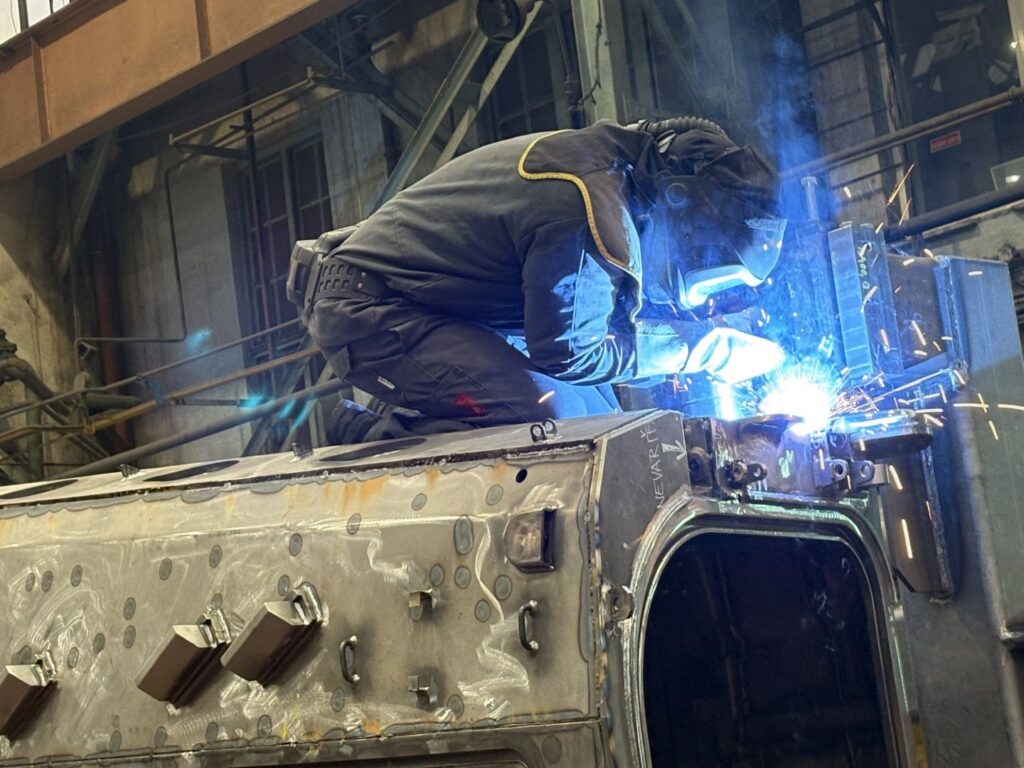
Production of the BMP-1 hull by the Slovak company STV Machinery. 2025. Photo: STV Machinery
Why Slovakia is building the BMP-1 again
The Dubnica nad Váhom plant previously built licensed versions of the BMP-1, known locally as the BVP-1. Serial production there ran until 1989, after which the plant went more than three decades without making new hulls for the vehicle. The site is the same, but the manufacturer is not: the original vehicles came off the ZŤS Dubnica nad Váhom line in the Czechoslovak era, while today's hulls are made by STV Machinery.
At the same time, the BMP-1 remains a vehicle of the 1960s. Even a modernised hull does not change the platform's fundamental limitations, particularly its level of protection. So if Ukraine really is behind the order, it is likely more a way to rapidly increase the number of armoured vehicles than a long-term replacement for modern Western IFVs, Defense Express noted in 2025.
Also Defense Express stressed that the customer's identity remains only speculation, adding that the buyer could turn out to be another country that operates or once operated the BMP-1, and that firmer detail will have to wait for the company.
Russia has built or expanded at least 10 drone bases along its borders with Ukraine and Belarus, creating launch capacity for newer jet-powered attack drones, the most powerful of which could reach Warsaw, The Telegraph reported on 16 August 2026.
The network expands Russia’s capacity for mass drone attacks on Ukraine, while some sites could later threaten NATO. The findings come as Russia is also expanding bases and other military infrastructure along NATO’s northern a
Russia has built or expanded at least 10 drone bases along its borders with Ukraine and Belarus, creating launch capacity for newer jet-powered attack drones, the most powerful of which could reach Warsaw, The Telegraph reported on 16 August 2026.
The network expands Russia’s capacity for mass drone attacks on Ukraine, while some sites could later threaten NATO. The findings come as Russia is also expanding bases and other military infrastructure along NATO’s northern and Baltic borders. The Telegraph found no evidence that Moscow is planning such an attack.
Seven of the 10 sites were used during recent bombardments of Kyiv, tracking data cited by The Telegraph showed. Using leaked documents, satellite imagery, and DroneSec's analysis, the newspaper identified at least 59 launch rails—tracks that launch fixed-wing drones without runways.
Around 20 appeared long enough for Russia’s latest long-range models, while one base could reportedly store over 1,000 drones.
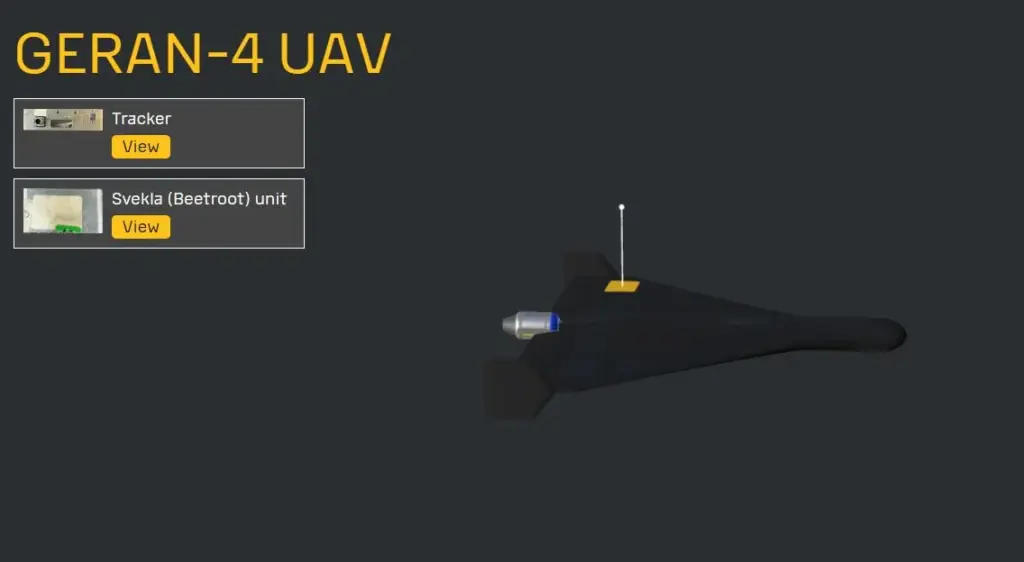
Leaked Ukrainian documents cited by The Telegraph say the jet-powered Geran-4 and Geran-5 can carry 90-kilogram warheads. However, Ukrainian military intelligence puts the Geran-4’s range at up to 450 kilometers, while the larger Geran-5 has a stated range of up to 1,000 kilometers — enough to reach Warsaw from several of the new sites.
DroneSec founder Mike Monnik said expanded launch capacity and harder-to-intercept technology together increase pressure on Ukrainian air defenses.
Russia builds military infrastructure along NATO’s northern flank
Russia is also expanding military infrastructure elsewhere along NATO’s borders. A Nordic-Baltic investigation identified new or expanded infrastructure from Norway to Kaliningrad, with potential capacity for up to 115,000 personnel.
Satellite imagery showed new barracks, ammunition warehouses, and expanded bases near NATO’s northern and Baltic members.
The Institute for the Study of War, a US-based think tank, assessed that the construction likely supports future Russian operations against NATO rather than an imminent attack. Most Russian combat power remains committed to Ukraine, it said.
Other drone hubs support rapid Russian attacks
Russia has already built comparable hubs for attacks on Ukraine. Satellite imagery analyzed by the open-source intelligence group Strategic Aviation of Russia showed 10 additional launchers under construction at Tsymbulova in Oryol Oblast, following the start of work on 22 April 2026.
At occupied Donetsk Airport, the group identified enlarged launch pads, roads to a Geran and Gerbera drone warehouse, and the apparent construction of another storage building.
Ukraine’s Security Service (SBU) said it struck Shahed storage and launch sites at Primorsko-Akhtarsk on 2 August 2025. Ukraine’s Unmanned Systems Forces commander Robert "Madyar" Brovdi reported hitting drone logistics, warhead-storage, and preparation facilities at Donetsk Airport on 30 December 2025.
Russia will keep escalating until Europe shows both the political will and the military capability to stop it, argues Hans Petter Midttun—and NATO can no longer supply either. In an interview with the Guildhall news agency, the former defense attaché to Ukraine makes the case for the Ukraine-anchored coalition he has argued for since long before this interview: Northern Europe together with Ukraine, credible from the day it is declared.
This interview was conducted in R
Russia will keep escalating until Europe shows both the political will and the military capability to stop it, argues Hans Petter Midttun—and NATO can no longer supply either. In an interview with the Guildhall news agency, the former defense attaché to Ukraine makes the case for the Ukraine-anchored coalition he has argued for since long before this interview: Northern Europe together with Ukraine, credible from the day it is declared.
This interview was conducted in Russian by the Guildhall news agency and is republished here in an edited English translation. The subheadings are Euromaidan Press's.
Hans Petter Midttun is a non-resident research fellow at the Centre for Defence Strategies and a former defense attaché to Ukraine.
Why NATO no longer deters Russia
NATO Secretary General Mark Rutte addresses foreign ministers at North Atlantic Council meeting Brussels December 2025. Photo: NATO
It seems that despite everything the West has done to deter Russia, the Russian threat to the West—particularly to the Baltic states and NATO members in general—is only increasing. What is your diagnosis? Why has the Western deterrence strategy failed, if you agree that it has?
Yes, I absolutely agree, and I have been saying this for quite some time.
To begin with, it is worth questioning your basic formulation—"the West." I have often used the term myself. Almost every time I write about what is happening, I use it. But recently I have begun to question whether it is still accurate.
If we regard the West as a civilization, as a strategic space, then we understand what we are talking about. Usually that means NATO and the European Union. But if we regard it as a political actor, as an entity responsible for deterrence, the situation becomes much more complicated.
For some time now I have questioned the viability of NATO. I am an officer myself, and I have been oriented toward NATO throughout my career. I have always believed in the Alliance. Almost everything I have done over nearly 40 years has been based on NATO doctrine, strategy, and tactics. But since 2022, I have seriously begun to question it. I have written publicly that I doubt the Alliance can survive in its current form. And I have said very clearly that it no longer deters Russia. I can prove it.
Explore further
I defended NATO’s values. I no longer recognize what NATO defends.
Please do.
There are three reasons I have pointed to repeatedly.
The first and most fundamental: if NATO were genuinely deterring Russia, Russia would never have invaded Ukraine. To most people that probably sounds strange, because under NATO's 2010 Strategic Concept, still in force in 2022, NATO was not obliged to defend Ukraine and had not declared any intention to. There was no commitment to Ukraine as such.
But the Strategic Concept stated clearly, under its second core task—crisis management—that in the event of a conflict threatening the security of the Alliance, NATO would use a combination of political and military instruments to manage and resolve it. What is happening in Ukraine is precisely such a conflict. It threatens the security of the Alliance, and the Alliance recognized this many years ago. So before the invasion, Russia must have looked at NATO and concluded it would not act.
If NATO were genuinely deterring Russia, Russia would have looked at NATO and concluded it should not invade Ukraine.
The second point: if Russia were deterred, it would not be waging a constantly escalating hybrid war on NATO territory. It is already waging one. And, shamefully, NATO has not even acknowledged the fact. It talks in general terms, but it never calls what is happening what it is: a hybrid war, a campaign to undermine the Alliance. We are not acting on the basis of that reality.
The third point: if Russia were deterred, it would not now be preparing for a potential attack on NATO members.
So there are three very clear indicators that, whatever NATO believes about its own deterrence, Russia does not believe it. And that is what determines whether deterrence works. Deterrence is not determined in Washington or Brussels. It is determined in the Kremlin.
Why the answer cannot come from NATO
We still need to deter Russia from expanding its aggression further, including directly against NATO, which the Kremlin clearly regards as one possible scenario. How should the deterrence strategy be adjusted? What mechanisms need to be created?
Let me take one step back first, because I think it matters. I would argue this cannot be achieved through NATO. NATO will never be able to deter Russia. I would go further: NATO is no longer the solution. It has become part of the problem.
There are several reasons. During the Cold War, NATO took the risk of strategic miscalculation extremely seriously. If the Soviet Union provoked us—by sending a combat aircraft, a warship, or moving ground forces in our direction—NATO always responded. This was done to leave no room for miscalculation and no impression of local weaknesses the Soviet Union could exploit.
After the collapse of the Soviet Union, we stopped acting this way—despite the fact that, for roughly 15 years before the full-scale war, Russia was challenging us, testing us, and doing many of the things the Soviet Union once did. We lost our credibility.
On top of that, a transatlantic divide has opened—a rupture between Europe and the United States. We see an America that is no longer a reliable ally but is becoming more of a strategic opponent. America treats the European Union as an opponent, and that creates an entirely different strategic environment. We are talking about a former ally that threatens to seize NATO territory—Greenland—and talks about annexing Canada. All of it opens a window of opportunity for Russia that it could previously only have dreamed of.
Part of the responsibility lies with Europe too, because we did not take security and defense seriously enough. We did not invest. We are now extremely vulnerable, with critical weaknesses that can be exploited. So we are in a moment of weakness, and Russia understands it. Russia also understands that this window is limited in time, and that is precisely what raises the risk of more serious developments.
Explore further
Europe now faces two strategic adversaries: Russia and the United States
The coalition, and which countries would form it
I appreciate the deeper assessment, but that is still diagnosis. What is the treatment? What concrete steps need to be taken, and by whom, to deter Russia again?
I spent so long on the previous question because I wanted to completely destroy the notion that NATO will be the solution. It will not. That means we have to look for something else.
We need some of the qualities NATO had in the 1980s. At the height of the Cold War, the member states—there were 16 then—knew who the adversary was. They all saw it the same way. They understood its strategic goals, its doctrine, its capabilities, its theater of operations. So every state was committed to countering the threat. We invested in defense—Europe spent roughly 3.8 percent of GDP on it—and we had a common strategy. In a sense we were a coalition of the like-minded. That is what I advocate rebuilding.
But it also means that, initially, a significant share of NATO members, and possibly some EU members, would have to remain outside such a structure. If you want a structure built on a common understanding of the threat and unity of purpose, you have to accept that not all states share the same aspirations. That is why I have named a number of countries that should become its founding members, with the ultimate goal of including all of Europe. But we start with a group of the like-minded.
Which countries do you have in mind?
My argument begins here, and it is one of the reasons the coalition is necessary: Ukraine will never become a member of NATO. To be honest, that was already clear five, four, and three years ago. It is a shameful situation. But that is exactly the point. Europe needs strategic autonomy. We have to stand on our own feet and defend Europe ourselves. We can no longer rely on the United States, so we need to build something else.
I believe this coalition should be built around Ukraine and the NB8 countries—the Nordic-Baltic Eight—together with the United Kingdom, France, Germany, Poland, and the Netherlands. Essentially, Northern Europe together with Ukraine. That configuration alone already creates enormous credibility. It would bring together not only Ukraine's battle-hardened armed forces—the Ground Forces, National Guard, Special Operations Forces, air defense, and Unmanned Systems Forces—but also high-tech European air forces, navies, and special operations forces. Almost immediately you have a structure with real credibility, because we share common values and a common understanding of how to fight Russia and how to defeat it. Simply announcing such a coalition would have a deterrent effect.
Explore further
The alliance Russia fears isn’t NATO. It’s a coalition that will actually fight.
What you are saying resonates with me. But the Russian threat exists here and now. Building full European strategic autonomy without the United States would take at least five years. What do we do in the meantime? How do we deter Russia now?
I would challenge that. I have heard the argument many times. We are not talking about forces that exist only on paper. The armed forces of the countries I named already exist today, and they are built on the same standards—NATO standards. We do not need to invent new ones. They share a doctrinal foundation and, in many respects, similar strategic approaches. We can use NATO technologies, standards, documents, doctrines, and research—everything the Alliance has already created is available to us. And Ukraine is already largely NATO-compatible. Will such a coalition be as effective today as it could be in five years? No. But Ukraine itself was not as effective five years ago as it is today.
The nuclear question
What about nuclear weapons? Full deterrence of Russia is hard to imagine without a nuclear component.
I would challenge that too. We have all grown accustomed to relying on the idea of nuclear deterrence. I am not saying it does not matter, and some of the states I named do possess a nuclear capability.
But not comparable to Russia's arsenal.
Yes, but it does not quite work that way, and that is the point. Both Russia and the United States have lost wars without using nuclear weapons. The consequences of using them are so catastrophic that the great powers—including China—regard the threshold as extremely high. You could argue Russia might not have attacked Ukraine if Ukraine had kept nuclear weapons. Possibly. But that is in the past. The war is already under way, and after years of it—after Ukraine has crossed practically every one of Russia's so-called red lines—Russia still has not used nuclear weapons against Ukraine.Russia's red lines go up in smoke one by one. Infographic by Euromaidan Press
So we cannot abandon the idea of a coalition simply because it lacks an arsenal comparable to Russia's. On the contrary: we have to recognize that the threshold for use is so high that the probability of actual use is extremely low. Not zero, but extremely low. And we are no longer talking only about deterring Russia. Russia is already at war with Europe and waging war on Ukraine. We are talking about how to end that war, with the tools we have. We cannot do it through NATO. We cannot rely on the United States to do it for us. So either we build something genuinely credible, or we accept that Russia will keep acting against us.
Explore further
Russia won’t start a nuclear war. It might cause a nuclear disaster.
Why it starts with a declaration
You said the cost of using nuclear weapons must be unacceptable to Russia. The same logic can apply to the conventional threat. What concrete steps can we take now to make the cost of further conventional aggression unacceptable to the Kremlin?
The solution is right in front of us. The starting point is what Ukraine itself has said many times: Russia will escalate for as long as we let it, and it responds to nothing but strength. So until we—the West, or the coalition, whichever term you prefer—stand up and demonstrate both the political will and the military capability to act, Russia will keep escalating.
Explore further
NATO is dead. Meet CALM.
That is why, when you asked about the timeline, I said: if these countries had united yesterday, today, or tomorrow and announced the creation of such a coalition and their intention to fight together, that alone would completely change Russia's strategic assessment.
Today Russia is fighting one country, Ukraine, supported by around 50 partner states. But it is still fighting only one country. If that declaration were made tomorrow, the situation would change radically. Russia already finds it difficult to fight Ukraine; it would face a fundamentally different reality if Ukraine formally joined a coalition with European military powers.
So this is not only about physical capabilities. It is about changing Russia's perception of its strategic environment. And it starts with a declaration.
The next step would be the actual conduct of military operations, if necessary. But it begins with the declaration. That would completely change Russia's strategic calculus.
Hans Petter Midttun, independent analyst on hybrid warfare, Non-Resident Fellow at the Centre for Defense Strategies, board member of the Ukrainian Institute for Security and Law of the Sea, former Defense Attaché of Norway to Ukraine, and officer (R) of the Norwegian Armed Forces.

 Connexion