Une proposition visant à mettre en œuvre le premier projet pétrolier en eaux profondes du Canada a franchi son dernier obstacle réglementaire, tandis que le gouvernement de Terre-Neuve-et-Labrador attend la prochaine décision du propriétaire.
Une proposition visant à mettre en œuvre le premier projet pétrolier en eaux profondes du Canada a franchi son dernier obstacle réglementaire, tandis que le gouvernement de Terre-Neuve-et-Labrador attend la prochaine décision du propriétaire.
Russian forces are attacking Ukraine with strike drones virtually around the clock, launching more than 100 during the day and up to 200 at night. On some days, jet-powered UAVs account for as much as 95% of the total.
Russian forces are attacking Ukraine with strike drones virtually around the clock, launching more than 100 during the day and up to 200 at night. On some days, jet-powered UAVs account for as much as 95% of the total.
La soirée dans un bar d’Ahuntsic-Cartierville a pris une tournure dramatique vendredi après qu’un client a foncé dans la devanture de l’établissement, dans lequel plusieurs clients se trouvaient. Ce serait le résultat d’un conflit qui aurait dégénéré.
La soirée dans un bar d’Ahuntsic-Cartierville a pris une tournure dramatique vendredi après qu’un client a foncé dans la devanture de l’établissement, dans lequel plusieurs clients se trouvaient. Ce serait le résultat d’un conflit qui aurait dégénéré.
La séquence de défaites de l’Océanic est maintenant de huit à la suite d’un revers de 5-2 face aux Tigres de Victoriaville, vendredi soir, devant 2 350 spectateurs réunis au Colisée Financière Sun Life.
L’Océanic a connu un bon départ, mais s’est retrouvé en déficit de 2-0 malgré ses sept lancers contre deux. La première période s’est terminée 3-1. Les visiteurs ont ajouté un but au milieu de la deuxième période. À 4-1, Joël Perrault a sorti le crochet retirant Morgan Blackwood pour une deux
La séquence de défaites de l’Océanic est maintenant de huit à la suite d’un revers de 5-2 face aux Tigres de Victoriaville, vendredi soir, devant 2 350 spectateurs réunis au Colisée Financière Sun Life.
L’Océanic a connu un bon départ, mais s’est retrouvé en déficit de 2-0 malgré ses sept lancers contre deux. La première période s’est terminée 3-1. Les visiteurs ont ajouté un but au milieu de la deuxième période. À 4-1, Joël Perrault a sorti le crochet retirant Morgan Blackwood pour une deuxième sortie de suite, au profit de Tommy Saulnier.
« J’ai trouvé qu’on a eu une amélioration dans notre temps de possession de la rondelle, versus ce qu’on a donné à l’adversaire. Mais, quand les Tigres ont eu des chances, ils l’ont mis dedans », a commenté Joël Perrault.
Joshua Vincent a deux buts pour les gagnants, les autres allant à Jakob Royer, Egor Shilov et Louis-Félix Guay (filet désert). Maxmilian Mares et Luca Nappiot ont assuré la réplique pour l’Océanic.
Joshua Vincent vient de marquer le premier but des Tigres (Océanic / Folio Photo – Iften Redjah)
« Il faut progresser dans ce qu’on pratique, dans ce dont on parle, dans ce qu’on voit en vidéo. Je trouve qu’on fait un petit peu de sur place dans certains cas. On passe beaucoup de temps sur la glace à pratiquer certaines situations. Je ne trouve pas que ça évolue à mon goût. C’est notre travail, à moi, Donald (Dufresne) et Michel (Ouellet) de faire en sorte qu’on progresse plus rapidement », observe Perrault.
Devant le filet, le duo Blackwood / Saulnier a repoussé 20 rondelles. À l’autre bout, Raphaël Précourt a fait le travail sur les 30 lancers de l’Océanic.
Sur le changement de gardien en 2e période, l’entraineur-chef se fait conciliant. « Je trouvais que c’était le moment pour le faire. Ce n’est pas pour blâmer un individu. »
En bref
C’était la soirée country au Colisée Financière Sun Life… Les blessés Connor Sturgeon et Thomas Belzil ne jouaient pas, tout comme Charles Généreux, Julien Nadeau et, surprise, Caiden Pellegrino… « On a une jeune équipe, on l’a fait avec Justin Gagnon plus tôt dans la saison. Caiden a 17 ans et c’est une charge de travail assez ardue. Il a joué de grosses minutes pour nous jusqu’ici et je sentais qu’il avait une petite baisse de régime dans son niveau d’énergie et dans la façon dont on veut qu’il joue. Ce n’est pas punitif, ça fait partie du processus », explique Joël Perrault… L’Océanic va maintenant recevoir les Remparts de Québec, dimanche à 15 h…
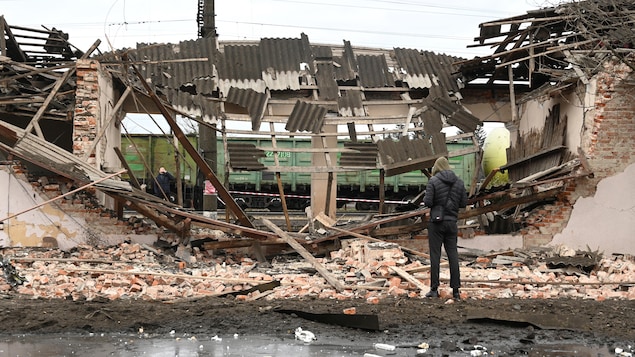
Russia currently lacks the technical capacity needed to repair the Kerch Strait Bridge. The alternatives for travel to temporarily occupied Crimea remain a land route through the occupied territories of the Azov region and ferry crossings.
Russia currently lacks the technical capacity needed to repair the Kerch Strait Bridge. The alternatives for travel to temporarily occupied Crimea remain a land route through the occupied territories of the Azov region and ferry crossings.
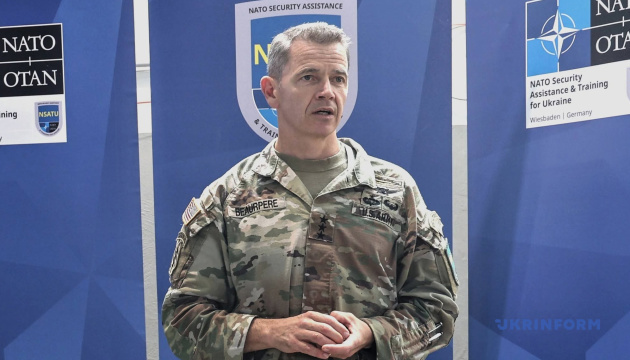
NATO and Ukraine are developing a concept for enhanced repair centers that would bring industrial and logistical capabilities closer to the front line, enabling faster repairs and the quicker return of equipment to the battlefield.
NATO and Ukraine are developing a concept for enhanced repair centers that would bring industrial and logistical capabilities closer to the front line, enabling faster repairs and the quicker return of equipment to the battlefield.
The man drank too much while participating in a “wet lab” to help officers recognize inebriation — and wound up the subject of an internal investigation, officials said.
The man drank too much while participating in a “wet lab” to help officers recognize inebriation — and wound up the subject of an internal investigation, officials said.
Investigators said the company, Nippon Dynawave Packaging, knew conditions at its plant in Longview, Wash., were unsafe. The company said it would appeal.
Investigators said the company, Nippon Dynawave Packaging, knew conditions at its plant in Longview, Wash., were unsafe. The company said it would appeal.
I remember the day Euromaidan started. For months before it, the country had felt like it was going the wrong way, and I felt powerless to stop it. My life was one rally after another: against the pressure on small entrepreneurs, in defense of the Ukrainian language, against the plan to turn Hostynnyi Dvir, a historic arcade in Kyiv, into a shopping mall. The authoritarian pressure kept rising, and so did the helplessness.
Then, on 21 November 2013, the journalist Mustafa Nayem wrote a
I remember the day Euromaidan started. For months before it, the country had felt like it was going the wrong way, and I felt powerless to stop it. My life was one rally after another: against the pressure on small entrepreneurs, in defense of the Ukrainian language, against the plan to turn Hostynnyi Dvir, a historic arcade in Kyiv, into a shopping mall. The authoritarian pressure kept rising, and so did the helplessness.
Then, on 21 November 2013, the journalist Mustafa Nayem wrote a Facebook post calling people to the square after President Viktor Yanukovych's government suspended preparations to sign the association agreement with the EU. Nobody knew how to stop what was happening. But we knew we had to act.
Thirteen years later, a free online course, Ukraine: History of Civil Society, tells the story of what was born on that square: a civil society that has carried Ukraine through revolution and war. Among its authors is Oleksandra Matviichuk, who co-founded Euromaidan SOS; one of its presenters, the researcher Kateryna Zarembo, now serves as a combat medic.
A country inside a country
Explore further
Meet the Hard-Working Ukrainians Helping to Keep Euromaidan Alive
The regime's reach felt total. It extended to the courts and the police; we even wondered whether it extended to the army. It was like tentacles spreading everywhere, and you were one small, frightened person watching them close in. But then you get together with others and start thinking, and start doing even silly little acts of resistance. That is what the Maidan was: a microcosm of resistance, a city inside a city, a country inside a country.
It was an alchemist's laboratory where initiatives were born, some funny, some silly, some very useful. The Maidan had its own newspaper and its own self-defense: guys trained by former security officers to patrol its edges and by former army officers to hold defensive formations behind wooden shields. Farmers delivered food so the protesters would have something to eat, and one man boiled a huge pot of borscht every day. Artists formed their own art sotnia, a unit named after the Cossack "hundreds" the protest was organized into. There was an Open University of the Maidan with lectures on civil society, and a library. Girls dressed as angels handed flowers to the Berkut riot police, to warm their hearts.
Euromaidan SOS searched for the protesters who went missing: abducted, jailed, or dragged through the courts. AutoMaidan drivers rescued activists from hospitals, because the regime could order hospitals to hand over anyone with visible signs of a Berkut beating. Volunteer medics built a parallel health care system. And there were the initiatives to tell the world what was happening, one of which became Euromaidan Press.
If you came, you found a job. First I cooked and brought food, made sandwiches. Then I started in the kitchen, got bored, and found my way to a translating job. At Christmas, I took my small daughter to the Maidan, and we sang carols to the activists in the tents.
I didn’t think of it then, but I was doing what the course’s last lecture describes: passing it on. The course follows Myroslava Barchuk, who went to the Revolution on Granite in 1990 as a student with her mother, then to the Orange Revolution, and whose son Nestor came to the Euromaidan chanting “Ukraine is Europe!” Freedom in Ukraine, the course argues, is carried from one generation to the next, often by hand.
"I am a drop in the ocean which will change Ukraine." Art that kept the spirits of the protesters up during the 2013-2014 Euromaidan Revolution
Everyone brought what they could. "I am a drop in the ocean," went one of the mottos. We didn't know what to do, but we knew we had to do something, and suddenly there was this acute sense that it depends on you. Even if you're one drop, your effort matters.
The more pressure there was, the more people came. In January 2014, the activist Ihor Lutsenko was abducted together with Yurii Verbytskyi. Lutsenko was beaten and left in a forest; Verbytskyi was found dead. And still more people came.
The course’s lecture on the Revolution of Dignity describes what we lived through from the outside.
Its lecture on the Revolution of Dignity describes what we lived through. After the failed attempt to clear the square on 11 December, it says, the Maidan turned into "Maidan Sich," a fortified island "with its own system of governance," from security to garbage collection. "For thousands of Ukrainians, for whom the state had become a threat and an instrument of violence, the Maidan became a space of security."
Explore further
Eleven films about Euromaidan you can watch online
Not self-expression, but survival
Yevhen Hlibovytskyi, director of the Frontier Institute
This is what the West tends to miss about Ukrainian civil society, says Yevhen Hlibovytskyi, director of the Frontier Institute and one of the course's authors, whom I interviewed for Euromaidan Press.
"The state in Ukraine is far more threatening, it carries more dangers, and the relationship between the citizen and the state is far more strained. It is mostly a zero-sum game," he says. "That is why civil society in Ukraine flourished as an instrument of security, an instrument to protect society from the arbitrariness of the state."
Seen through Western eyes, he says, it looks baroque, a strange, unnecessary splendor. "In Ukraine, this splendor was a requirement of life, a condition of survival."
The West, he says, doesn't understand why Ukraine needs its civil society at all, "or that activism is not a form of self-expression. Activism is rather a form of service. It is a need, not some optional leadership."
Ukrainians are still too traumatized by their past to hand the state full power, he says: "We want the state to be weaker, more limited, so that if at some point it becomes arbitrary, it cannot harm people or take their lives."
Explore further
13 years since Euromaidan sparked Ukraine’s fight for Europe
From the Maidan to the front
For many years, Ukrainians had lived in a passive belief that they could not change anything. The course opens on that problem: countries that lived through totalitarianism, it says, "might have millions of residents but not many citizens." In 2013, the lecture says, only 8% of Ukrainians said they were involved in public affairs.
After the Euromaidan Revolution, that changed. Activists lobbied for the anti-corruption institutions that exist today. Lawyers keep pushing judicial reform. Come Back Alive, founded in 2014 to buy helmets and body armor, is now one of the largest charities supplying the army. In 2017, the course notes, over half of Ukrainians trusted volunteers, against 5.3% who trusted parliament.
Not all the reforms are done. What keeps them going are the people who feel they cannot stop.
Many of those people went into the state itself.
Mustafa Nayem, whose post started it all, and Ihor Lutsenko both served in parliament.
Tamila Tasheva, founder of CrimeaSOS to help those displaced by Russia's occupation of Crimea, became the president's representative in Crimea and is now an MP.
Maria Tomak, who began on the Maidan as a volunteer with Euromaidan SOS and co-founded the Media Initiative for Human Rights, headed the department of the Crimea Platform at the president's mission for Crimea.
Olha Reshetylova, a journalist who co-founded Come Back Alive in 2014, became Ukraine's first military ombudsman in December 2024.
Oleksandra Matviichuk, co-founder of Euromaidan SOS, heads the Center for Civil Liberties, which received the Nobel Peace Prize in 2022.
Some stopped. Many kept going, all these 13 years, exhausted to the bone. They make themselves by building the Ukraine they want to see.
Christine Eliashevsky-Chraibi was one of them. Her mother survived Ravensbrück, the Nazi concentration camp for women, where she was imprisoned as a young Ukrainian political activist; the family later settled in Canada. Christine answered the call for translators on the Maidan and never left. She stayed with Euromaidan Press for 12 years, because she felt it was her duty to keep telling the world what she could about Ukraine. She died this year. We wrote about her in our tribute.
Many others now defend Ukraine with their lives. Lutsenko, the activist who was almost killed during the Euromaidan Revolution, is serving his fifth year in this war, in drone units, and now helps train new drone pilots. Kateryna Zarembo, too, traded research for a medic’s kit.
Roman Ratushnyi was beaten by the Berkut on the first night the police attacked the protesters. He went on to defend the Protasiv Yar neighborhood in Kyiv from illegal construction, and was killed near Izium in June 2022. "The less people fight for changes, the less they are citizens," he said, in words the course's final lecture quotes. His older brother Vasyl was killed in February 2025. Their father is still serving, and their mother is left without her sons.
Explore further
Ukraine: from the middle ages to a new world
What the West could learn
Hlibovytskyi's point now reads less like theory than like a warning. "The Western world has learned to combine freedom and a high quality of life," he says. "Ukraine adds resilience to this mix. And this resilience will be needed in the West too, in time. The world has become dangerous. The sense of security turned out to be deceptive."
It doesn't matter which ocean you live behind, he says, "if cyberterrorists are acting against you or identity politics is destroying solidarity." Look at Russia's hybrid warfare spreading across Europe: disinformation, drones over airports, sabotage. Ukrainians didn't wait for their government to act.
In the West, governments work, so criticizing them can be a form of self-expression. In Ukraine, you have to build the state yourself. "No state can protect citizens who do not want to be protected," Hlibovytskyi says. "The state of democracy depends directly on how citizens carry out their duties."
Bruised, but not broken
Ukraine is taking blow after blow. Millions have left, and many have been killed. We are exhausted. And still the drive keeps going forward, still it tries to reform, even as so many reformers are at the front and the pace has slowed. It is bleeding and bruised, but it is still there: the drive toward a life in which justice and dignity are honored. It is the soul of the country.
That is what is underestimated. Euromaidan is too often described as a product of outside forces. That is a lie. What fed it was the quest for justice and dignity that drove all those people onto the square. "Justice is a fundamental archetypal feature of Ukrainians," the dissident Myroslav Marynovych says in the course's final lecture. "If it is violated, Ukrainians rise to revolt."
About the course
Ukraine: History of Civil Society is free on Coursera: 12 lectures of 9 to 13 minutes, from the Revolution on Granite through Euromaidan to the full-scale war. It was created by the East Europe Foundation and the Ukrainian Institute with EU funding. Its authors include Oleksandra Matviichuk, Olha Onuch, Sevgil Musayeva, and Yevhen Hlibovytskyi, and it is presented by Kateryna Zarembo and Tymofii Brik.
President Trump called the trilateral meeting with Xi Jinping and Vladimir Putin in China an “amazing event.” He also said he would work with Democrats in Congress on key issues.
President Trump called the trilateral meeting with Xi Jinping and Vladimir Putin in China an “amazing event.” He also said he would work with Democrats in Congress on key issues.
During the more than hourlong news conference, Mr. Trump touted deals he secured with Southeast Asian nations, and relationships he strengthened with the leaders of China and Russia.
Selon les révélations de nos confrères de RFI, des soldats français sont présents sur le sol ukrainien. Cela signifie-t-il que la France est en guerre contre la Russie? Le Général Michel Yakovleff nous donne son point de vue.
Selon les révélations de nos confrères de RFI, des soldats français sont présents sur le sol ukrainien. Cela signifie-t-il que la France est en guerre contre la Russie? Le Général Michel Yakovleff nous donne son point de vue.
Il reste deux activités pour clore la treizième édition des Journées québécoises de la solidarité internationale (JQSI) du Carrefour international bas-laurentien pour l'engagement social (CIBLES), placée sous le thème de l’interdépendance des peuples.
Il reste deux activités pour clore la treizième édition des Journées québécoises de la solidarité internationale (JQSI) du Carrefour international bas-laurentien pour l'engagement social (CIBLES), placée sous le thème de l’interdépendance des peuples.
President Trump called the trilateral meeting with Xi Jinping and Vladimir Putin in China an “amazing event.” He also said he would work with Democrats in Congress on key issues.
President Trump called the trilateral meeting with Xi Jinping and Vladimir Putin in China an “amazing event.” He also said he would work with Democrats in Congress on key issues.
During the more than hourlong news conference, Mr. Trump touted deals he secured with Southeast Asian nations, and relationships he strengthened with the leaders of China and Russia.
Un patient a passé la nuit couché par terre faute de civières à l'hôpital Sainte-Croix de Drummondville. Le patient atteint de schizophrénie est arrivé en état d'hypothermie à l'urgence. On en discute avec le président du Conseil pour la protection des malades, Paul Brunet.
Un patient a passé la nuit couché par terre faute de civières à l'hôpital Sainte-Croix de Drummondville. Le patient atteint de schizophrénie est arrivé en état d'hypothermie à l'urgence. On en discute avec le président du Conseil pour la protection des malades, Paul Brunet.
On Friday, investigators interviewed the former head of elections in Fulton County. Their questions suggested that they are still pursuing debunked claims of widespread fraud.
On Friday, investigators interviewed the former head of elections in Fulton County. Their questions suggested that they are still pursuing debunked claims of widespread fraud.
The pervasive presence of the president hovers over the bipartisan legislation to speed up construction of energy projects that is advancing through Congress.
The pervasive presence of the president hovers over the bipartisan legislation to speed up construction of energy projects that is advancing through Congress.
Models of President Trump’s planned triumphal arch in Washington. Opponents of the permitting bill say it could undermine the lawsuits seeking to block construction of the arch.
Le reportage de l'émission Enquête sur des cas de cruauté et de souffrance animale dans plus de 100 fermes d'élevage au Québec a incité le gouvernement à promettre une nouvelle réglementation. On en discute avec Victoria de Martigny, de l'organisme We Animals.
Le reportage de l'émission Enquête sur des cas de cruauté et de souffrance animale dans plus de 100 fermes d'élevage au Québec a incité le gouvernement à promettre une nouvelle réglementation. On en discute avec Victoria de Martigny, de l'organisme We Animals.
The Ukrainian air force needs more F-16 and Mirage 2000 fighters, President Volodymyr Zelenskyy said
There are stocks of both types across Europe and the United States, but few if any willing donors
The best bet is a few Mirages from France
The Ukrainian air force needs additional jet fighters, and fast. That was the urgent plea President Volodymyr Zelenskyy made, by video link, to the Ukraine Defense Contact Group, which met at NATO headquarters on 17 November.
But there a
The Ukrainian air force needs more F-16 and Mirage 2000 fighters, President Volodymyr Zelenskyy said
There are stocks of both types across Europe and the United States, but few if any willing donors
The best bet is a few Mirages from France
The Ukrainian air force needs additional jet fighters, and fast. That was the urgent plea President Volodymyr Zelenskyy made, by video link, to the Ukraine Defense Contact Group, which met at NATO headquarters on 17 November.
But there are only a few small pools of surplus fighters that Ukraine's allies could dip into to quickly meet Ukraine's air defense needs. There are virtually no Soviet-style Sukhois and MiGs left in Europe. There are a few dozen Dassault Mirage 2000-5Fs and Lockheed Martin F-16s. But most of the current owners of those warplanes are reluctant to let go of them.
And that means Ukraine's war-weary fighter brigades and wings might have to wait.
The F-16s we have now – the ones shooting down Russian “shaheds” and missiles – spend a lot of time being repaired instead of flying. So we need more fighter jets. More F-16s. Let’s work together to make this happen. I’m grateful to every country in our Air Force Coalition. A lot… pic.twitter.com/0xGXCGbcbx
— Volodymyr Zelenskyy / Володимир Зеленський (@ZelenskyyUa) November 17, 2026
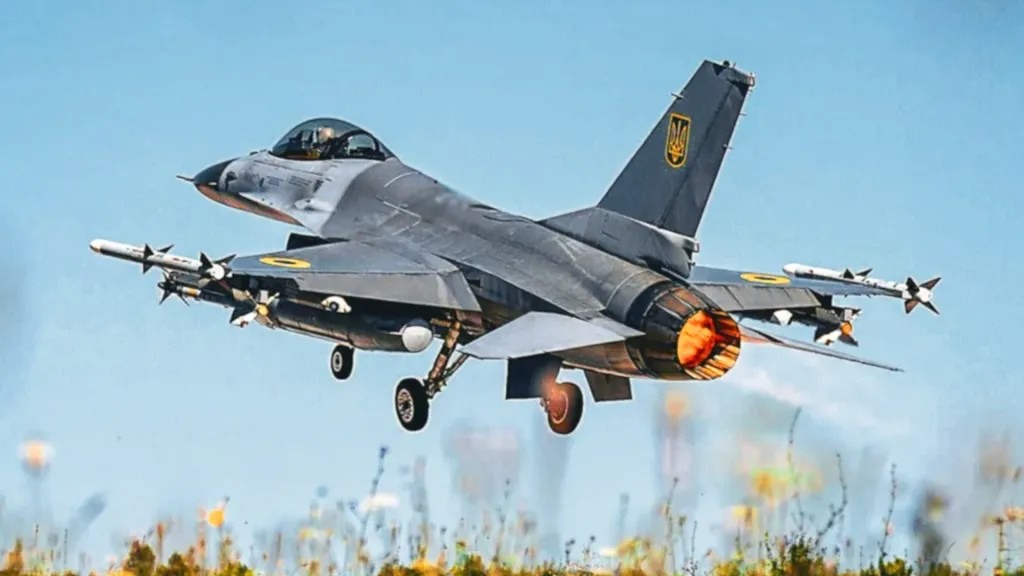
At present, Ukraine operates around 31 F-16s out of 36 it got secondhand from the Netherlands and Denmark. Five have crashed or been shot down. Norway is sending six F-16s once the 1980s-vintage planes can be overhauled. Denmark has promised seven more. Belgium has pledged 53, including 10 this year.
That's potentially 102 F-16s, or 97 after subtracting the losses. But the last of the Belgian jets might not reach Ukraine until the Belgians have enough new Lockheed Martin F-35s to replace their F-16s: possibly as late as 2029. For the next few months at least, the Ukrainian air force's 107th Fighter Wing—its sole unit for Western fighter types—may have fewer than 50 F-16s, around half of which are unavailable on any given day as they undergo maintenance.
"The F-16s we have now—the ones shooting down Russian Shaheds and missiles—spend a lot of time being repaired instead of flying," Zelenskyy said. "So we need more fighter jets. More F-16s."
Specifically, Ukraine needs 40 additional F-16s in the near term, Zelenskyy said. That would grow the pool of ready jets as the Ukrainian air force awaits other F-16s that have already been pledged as well as 16 surplus Saab Gripen C/Ds it expects to get from Sweden early next year. Ukraine has also ordered 16 newly built Gripen Es and 16 new Dassault Rafales, but no one expects those planes to arrive before 2028 or 2029.
Chart: Euromaidan Press
Jet
How many
Where things stand
Flying now
F-16 (Netherlands, Denmark)
31
36 delivered, 5 lost; about half in repair on any given day
Mirage 2000 (France)
About 4
After one loss in a crash
Pledged or ordered
F-16 (Belgium)
53
10 this year, the rest as late as 2029
F-16 (Denmark)
7
Not yet delivered
F-16 (Norway)
6
Still being overhauled
Mirage 2000 (France)
2
Coming soon
Gripen C/D (Sweden)
16
Expected early 2027
Rafale (France)
16 ordered
2028 or 2029 at the earliest
Gripen E (Sweden)
16 ordered
2028 or 2029 at the earliest
No donor yet
F-16
40 more
Ukraine asked on 17 November
Mirage 2000 (Greece)
More than 40
Athens has not agreed
Mirage 2000 (France)
About 24
Still in French service, no transfer announced
F-16 (United States)
Largest surplus stock
No new US aid in sight
As of 19 November 2026.
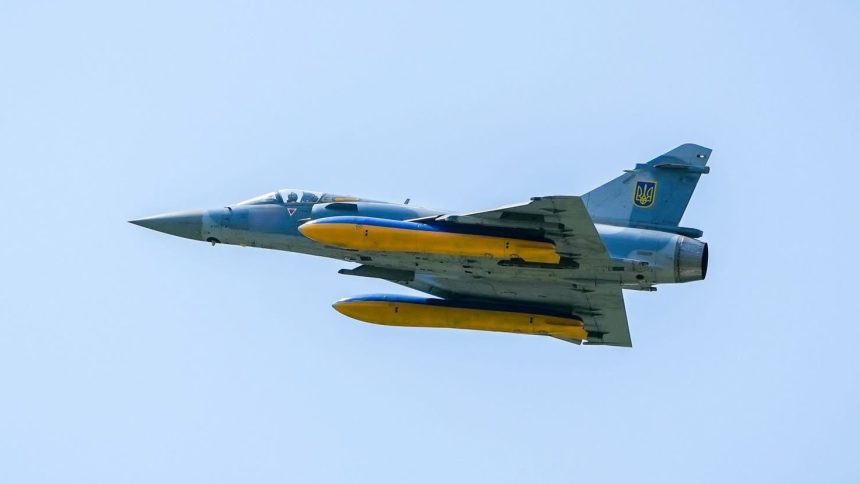
A Ukrainian Mirage 2000. Ukrainian air force photo.
French hand-me-downs
In addition to F-16s, the 107th Wing flies around four Mirage 2000s after losing one in a crash. France is sending two more Mirages soon, but the Ukrainians want many more. "Europe has more Mirage jets," Zelenskyy said. "Getting Rafales ready takes time—training, preparation, all of that. But Mirage jets can be put to work right now."
As it happens, plenty of Mirages are available—or should be soon. The French air force still flies around two dozen link) Mirage 2000-5s, and its chief told lawmakers in October that it will withdraw them from service next year.
Explore further
Belgium’s 10 F-16s bring Ukraine’s promised fleet to about 100 jets. Fewer than 40 are flying, as Russia’s jet drones run them ragged
Also: Greece has more than 40 Mirage 2000s that it has either already retired or expects to retire soon. Those would blend seamlessly with the ex-French Mirage 2000s in the 107th Fighter Wing, but Greece has never been a leading donor to Ukraine's war effort. Every proposal Kyiv has floated to get those Greek Mirages on the donation list has been met with a proverbial shrug in Athens.
Extra F-16s are harder to find. Greece, Poland, Portugal, Romania, and Türkiye fly older F-16s but aren't planning on replacing them any time soon.
Sadly for Ukraine, those 40 extra F-16s on its wish list are equally unlikely to come from the biggest holder of surplus F-16s, the United States, unless the newly Democratic majority in the US Congress—which takes control in January—can get substantial new aid legislation past US President Donald Trump's veto pen.
So the need is great but options are few. The best Ukraine can probably hope for right now is to get a few more Mirage 2000s from France. After that, it may have to wait.
Jet
How many
Where things stand
Flying now
F-16 (Netherlands, Denmark)
31
36 delivered, 5 lost; about half in repair on any given day
Social media commenters have called for investigations, the release of zoo video footage and punishment for the parents of a child whose hat Fiona ingested.
Social media commenters have called for investigations, the release of zoo video footage and punishment for the parents of a child whose hat Fiona ingested.
A total of 100 healthcare and social welfare facilities in Ukraine's Chernihiv region have been damaged by enemy shelling. So far, 54% of those facilities have been restored, while another 10% are being rebuilt.
A total of 100 healthcare and social welfare facilities in Ukraine's Chernihiv region have been damaged by enemy shelling. So far, 54% of those facilities have been restored, while another 10% are being rebuilt.
Les fondations de la maison s’effritent, le toit coule, le compte bancaire est vide et les intérêts sur la carte de crédit explosent. Les revenus ne suffisent plus à couvrir les dépenses de la famille.
Les fondations de la maison s’effritent, le toit coule, le compte bancaire est vide et les intérêts sur la carte de crédit explosent. Les revenus ne suffisent plus à couvrir les dépenses de la famille.
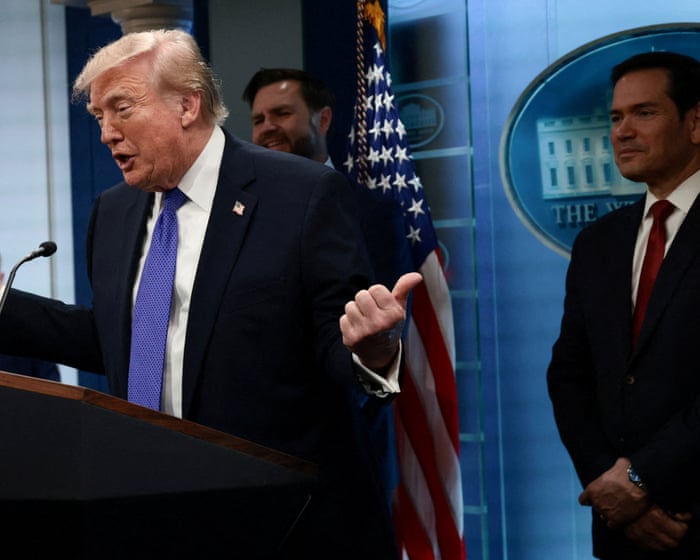
The president appeared to put Vance and Rubio through their paces as potential successors, though Stephen Miller unexpectedly stole the spotlight“Which of you shall we say doth love us most?”The ageing King Lear’s question to his daughters, expecting them to compete for his favour and carve up his kingdom, hovered in the White House press briefing room on Friday. Continue reading...
The president appeared to put Vance and Rubio through their paces as potential successors, though Stephen Miller unexpectedly stole the spotlight
“Which of you shall we say doth love us most?”
The ageing King Lear’s question to his daughters, expecting them to compete for his favour and carve up his kingdom, hovered in the White House press briefing room on Friday.

 Connexion