Connexion

Russian milblogger urges hitting Ukraine’s nuclear plants. ISW: without stronger defenses, last winter will likely repeat

This winter’s Russian strikes will likely do what last winter’s did, unless Ukraine can fend off the big waves of drones and missiles Russia sends every day, the Institute for the Study of War (ISW) assessed on 4 November. The same day, the Kremlin-affiliated Telegram channel Rybar wrote that Russia should think about putting Ukraine’s nuclear plants out of action by striking their unit transformers or generators.
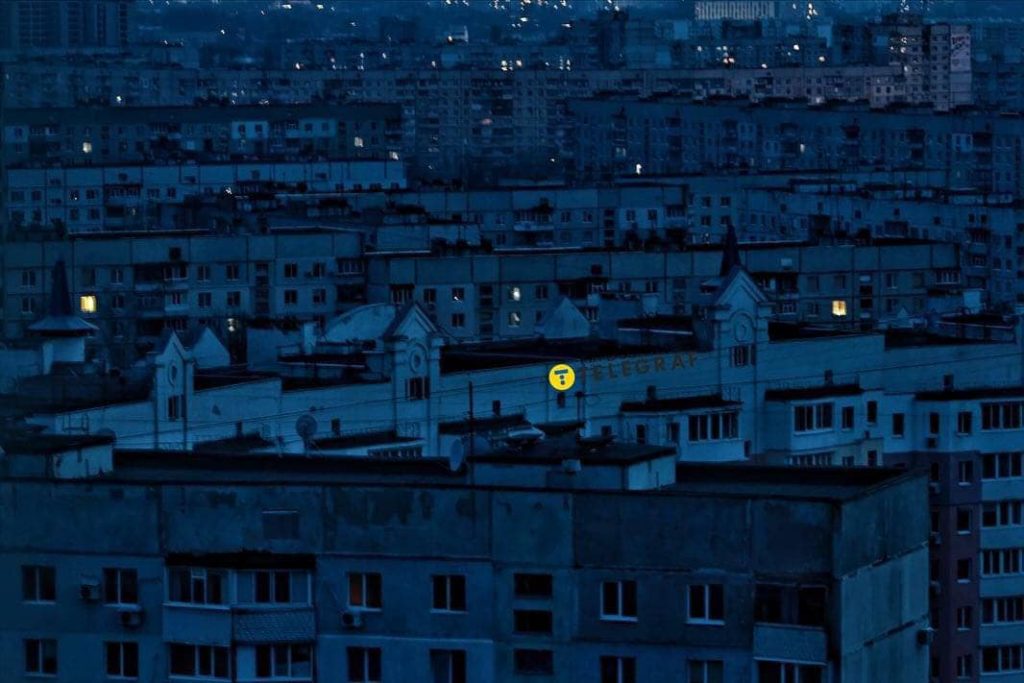
Russia has kept up its strikes on Ukraine’s power system this autumn, under a plan for the winter that Ukraine says lists 60 critical infrastructure sites as targets. It now hits not only power plants but also substations, and its drones even cut down the towers that carry high-voltage lines. The damage has now reached nuclear generation, which can recover only as the networks are repaired. Last winter was the worst yet, and ISW says Russia’s campaign then reportedly damaged or destroyed 80% of Ukraine’s power generation.
A pro-Kremlin channel wants Odesa and the northeast cut off
Rybar urged Moscow to avoid the “mistakes of 2022 and 2023,” when loud claims outran results. Strikes now hit “system-forming substations” and smaller facilities that directly affect power flows, the channel wrote. Precise hits on key nodes could isolate Odesa and leave northeastern Ukraine without normal supply, it argued.
The channel named the 24/750 kV and 24/330 kV unit transformers, as well as generators, as targets that would bring “far greater effect,” along with substations and battery storage at large solar farms. In an earlier post that day, it claimed Russia had shifted to “more systematic and rational” attacks.
Nuclear plants already producing less
Meanwhile, “large-scale and systemic” Russian attacks have forced Ukraine’s nuclear plants to reduce generation, First Deputy Energy Minister Artem Nekrasov said on 4 November. Output will recover gradually as crews repair the damaged networks. The situation is hardest in Kyiv and Kyiv Oblast, where distributors have imposed grid restrictions.
On 3 November, Russia sent three drones at a substation the Khmelnytskyi nuclear plant depends on. Nuclear plants produce roughly half of Ukraine’s electricity.

Defenses and repairs decide the winter
President Volodymyr Zelenskyy called strikes on networks and distribution Russia’s “new tactic” this year. The speed of repairs “now matters as much as having missiles for air defense,” he said.
First Deputy Prime Minister and Energy Minister Denys Shmyhal says protection is working: 235 second-level shelters now cover key energy elements, and only one protected facility has been hit by a ballistic missile in six months.
Ballistic missiles remain the hardest threat for Ukraine’s air defense, and Ukraine’s Defense Ministry says it needs better means against them.
“The provision of Patriot interceptor missiles and other air defense systems and support for Ukraine’s energy infrastructure reconstruction is essential to ensure that Ukraine can withstand Russia’s increasingly destructive strike campaign,” ISW wrote.
Read also
-
One of largest Russian attacks yet on Ukraine’s energy system forces emergency blackouts across regions and leaves Kyiv without water
-
Hours before Americans vote, Russia fires 59 cruise missiles at Ukraine’s grid and bombs a Kharkiv hospital
-
“Above all, we do not have enough missiles for Patriots”—Zelenskyy after 100+ ballistic missiles