Two former FBI officials charged with lying to Congress about their participation in investigations involving Hunter Biden, the son of former President Joe Biden, are due back in court
Two former FBI officials charged with lying to Congress about their participation in investigations involving Hunter Biden, the son of former President Joe Biden, are due back in court
From the 17th to the 20th century, Ukrainian lands were split between empires and states. Their rulers tried to assimilate Ukrainians and block their self-determination by going after what set them apart: their language and culture.
Nobody has an exact count of the bans. Historian Pavlo Hai-Nyzhnyk says there were more than 100 and that the real number is likely higher, because governors issued local bans too.
These measures differed in purpose and reach. Some restricted publishing,
From the 17th to the 20th century, Ukrainian lands were split between empires and states. Their rulers tried to assimilate Ukrainians and block their self-determination by going after what set them apart: their language and culture.
Nobody has an exact count of the bans. Historian Pavlo Hai-Nyzhnyk says there were more than 100 and that the real number is likely higher, because governors issued local bans too.
These measures differed in purpose and reach. Some restricted publishing, schooling, or official use; others suppressed cultural institutions or pushed assimilation. Most served the forced Russification of Ukrainians in the Russian Empire and the USSR. The timeline below is a selection of documented events, not a count of bans.
Russia has not stopped. Since 2014, schooling in Ukrainian has collapsed in the territories it occupies, and in 2025 it removed Ukrainian from the federal school programs it imposes there.
Here are some of the most important restrictions on Ukrainian language and cultural life imposed by the regimes ruling over Ukraine.
Graphic by Ganna Naronina from the article A short guide to the linguicide of the Ukrainian language. Click to enlarge.
17th century
1627: Muscovy. Moscow church authorities condemn Kyrylo Trankvilion-Stavrovetskyi’s Didactic Gospel, a collection of sermons printed in Ukraine in 1619, and order copies burned in Moscow.
1697: Polish-Lithuanian Commonwealth. An act requires tribunal and court decisions in the Grand Duchy of Lithuania to be written in Polish, displacing Ruthenian in those courts.
18th century
1720: Russian Tsardom. Peter I’s decree restricts the Kyiv and Chernihiv presses to approved reprints of church books and requires them to conform to Russian editions, suppressing local textual and linguistic differences.
1728: Russian Empire. Under the Decisive Points (Reshytelni punkty), the legal texts used in the Hetmanate’s courts are to be translated into Russian and compiled into a single code.
1730s: Russian Empire. Under Empress Anna, Kyiv’s archbishop is instructed to replace older locally printed church books with Moscow editions.
1769: Russian Empire. The Holy Synod refuses the Kyiv-Pechersk Lavra permission to print primers in the local language and tells it not to submit such requests again.
1775: Russian Empire. A Russian army destroys the Zaporozhian Sich, the Cossacks’ last stronghold and one of Ukraine’s own political institutions.
1780s: Russian Empire. Samuil Myslavskyi, metropolitan of Kyiv from 1783, insists on literary Russian as the only language of instruction at the Kyiv-Mohyla Academy.
1789: Polish-Lithuanian Commonwealth. The Commission of National Education orders the Ukrainian parish schools of Right-Bank Ukraine Polonized.
19th century
1847: Russian Empire. After suppressing the Cyril and Methodius Brotherhood, a secret society that called for a federation of free Slavic peoples, the authorities ban and withdraw from sale specified works by Taras Shevchenko, Panteleimon Kulish, and Mykola Kostomarov.
1859: Austrian Empire. Austrian officials back a plan to replace the Cyrillic alphabet used for Ukrainian in Galicia with a Latin one. Ukrainian opposition defeats the plan in what became known as the “alphabet war.”
1862: Russian Empire. The authorities close the Sunday schools, free schools for working adults and young people, including Ukrainian ones. They begin reopening under tighter control in 1864.
1863: Russian Empire. Interior Minister Pyotr Valuev’s circular tells censors not to approve Ukrainian religious, school, and popular-reading books, while still allowing fiction under censorship. It claims that most Little Russians themselves argue that “there was not, is not, and cannot be any special Little Russian language.”
1864: Russian Empire. The 1864 statute requires Russian as the teaching language in the elementary schools it regulates.
1869: Austria-Hungary. Polish becomes the internal language of administration and the courts in Galicia. The 1867 school arrangements had already strengthened Polish dominance, while leaving limited room for Ukrainian-language schooling.
1876: Russian Empire. Alexander II’s secret Ems Ukaz severely restricts Ukrainian publishing and bans Ukrainian publications from abroad, Ukrainian stage performances and public readings, and Ukrainian lyrics printed with music. Exceptions allow historical documents in their original spelling and fiction in Russian spelling under censorship.
1881: Russian Empire. New rules ease parts of the Ems Ukaz: Ukrainian plays may be staged with a governor’s special permission. Theater troupes performing only in Ukrainian stay banned.
1883: Russian Empire. Kyiv Governor-General Aleksandr Drenteln bars Ukrainian theater troupes from performing in the Kyiv, Podillia, Volhynia, Poltava, and Chernihiv governorates.
1910: Russian Empire. A circular from Pyotr Stolypin’s interior ministry tells governors to refuse registration to non-Russian national societies, Ukrainian ones included, and to review existing ones for closure. Kyiv’s Prosvita is dissolved the same year.
1914–15, 1916–17: Russian Empire. Russian occupation authorities suppress Ukrainian institutions and publications in Galicia and Bukovyna. The first occupation brings mass arrests and deportations, the destruction of Ukrainian books, and the arrest of Metropolitan Andrei Sheptytskyi.
1923: Soviet Ukraine. Dmytro Lebid, second secretary of the Communist Party of Ukraine, sets out the “theory of the struggle of two cultures,” which holds that the Russian culture of the city is more advanced than the Ukrainian culture of the village. The party rejects it and adopts Ukrainization the same year.
1924: Poland. Three laws of 31 July make Polish the state language of administration and the courts, keep limited rights for minority languages, and set school rules that favor Polish-Ukrainian bilingual schools over separate Ukrainian ones.
1924: Romania. The primary education law requires citizens of Romanian origin who have “lost their mother tongue” to send their children to Romanian schools. Ukrainian historians say it was applied to Ukrainians in Bukovyna.
1925: Poland. The Lviv Underground Ukrainian University, which had taught clandestinely since 1921, stops teaching after police raids and the Polish state’s refusal to recognize it.
1926: USSR. In a letter to Kaganovich and the Ukrainian Politburo, Stalin attacks Oleksandr Shumskyi and Mykola Khvylovyi and rejects Ukrainizing Russian workers “from above,” while still backing controlled Ukrainization of official institutions.
1932–33: USSR. A secret resolution of 14 December 1932 orders the Ukrainian-language paperwork and press of the North Caucasus switched to Russian at once and its schools prepared for teaching in Russian. In Soviet Ukraine, it puts Ukrainization under tighter party control and demands purges of “nationalist” elements. The repression of 1933 dismantles Ukrainization.
1938: USSR. A decree of 13 March makes Russian a compulsory subject in the non-Russian schools of the national republics and regions.
1947: Poland. In Operation Vistula, Polish authorities forcibly resettle about 150,000 Ukrainians to northern and western Poland, under an assimilation policy that sought to keep them below 10% of any locality.
1958–59: USSR. The school reform expands parents’ choice of teaching language and makes the study of Ukrainian optional in Russian-language schools in Soviet Ukraine.
1960s–70s: Romania and Poland. Romania nearly eliminates Ukrainian-language schooling from the mid-1960s. In Poland, Ukrainian schools and Ukrainian classes shrink.
1972: USSR. The party’s resolution on the USSR’s 50th anniversary promotes the “new historical community, the Soviet people,” an idea first voiced in 1961. Soviet ethnographers wrote that the spread of Russian among non-Russian peoples played the paramount role in forming this community.
1978: USSR. The USSR Council of Ministers orders wider study of Russian in the union republics. Ukraine’s implementing resolution of 2 November requires Russian from first grade in Ukrainian-language schools from the 1980/81 school year.
1983: USSR. A resolution of 26 May gives specified teachers of Russian in non-Russian schools in villages and small towns a 15% pay raise from 1984.
1984: USSR. The school reform resolution of 12 April adds two to three hours of Russian a week in grades 2 to 11 of non-Russian schools.
1989: USSR. The Communist Party’s party platform of 20 September calls for making Russian, by law, the language of the whole country alongside the republics’ state languages.
1990: USSR. The April 1990 law on the languages of the peoples of the USSR makes Russian the official language of the Soviet Union, while letting the republics set their own state languages.
21st century
2014–18: Crimea. Under Russian occupation, schooling in Ukrainian collapses. In 2013/14, 12,694 children studied in Ukrainian in 7 schools and 829 classes; by 2017/18, 318 children did, in one school and 13 classes, the UN human rights office reports, noting the figures conflict in places.
2020: DNR and LNR. The so-called DNR votes to amend its “constitution” on 6 March, dropping Ukrainian as a “state language” and leaving only Russian. The so-called LNR does the same in June.
2022: Occupied Kherson and Zaporizhzhia oblasts. Russia’s Education Ministry says on 12 August that schools in newly occupied areas will teach in Russian, with Ukrainian allowed only as an optional “native” language. Occupation authorities then cap Ukrainian at three hours a week, Human Rights Watch reports.
2023: Occupied Donetsk and Luhansk oblasts. Russia removes nearly all Ukrainian literature from local libraries, most likely destroying it, Ukraine’s National Resistance Center reports. The so-called LNR publishes a list of banned books.
2024: International Court of Justice. On 31 January, the court ruled, 13 votes to 2, that Russia violated the UN convention against racial discrimination in how it ran school education in Ukrainian in occupied Crimea.
2025: Russia. Education Ministry Order No. 729, in force since 15 December, removes Ukrainian language and literature from Russia’s federal primary and lower-secondary programs, the UN human rights office reports. Russia imposes these programs on schools in the occupied territories, where about 582,000 children study, the Almenda center says.
What we changed in October 2026
Editor’s note, 27 October 2026: We first published this timeline in 2017. Like many lists of bans on Ukrainian that circulate online, it repeated some claims that have no document behind them. In October 2026, we went back to historians’ work and to the decrees themselves.
We removed about fifteen entries. Most we could not confirm; a few were not about language. We corrected others where the documents say something different: some bans had exceptions, some dates were off by a year, and the end of Ukrainization came in 1932–33. We replaced the old count of 60 bans, which we could not trace, with a historian’s estimate. And we added what Russia has done to the Ukrainian language in the territories it has occupied since 2014.
If you have a document for something we left out, write to us.
A ceasefire in Russian-occupied Oleshky will begin October 29 to allow humanitarian aid and evacuations of elderly residents, the White House announced this week
A ceasefire in Russian-occupied Oleshky will begin October 29 to allow humanitarian aid and evacuations of elderly residents, the White House announced this week
3,160 likes, 249 comments - claytontuckertx on August 25, 2026: "A Texas rancher says his stillborn calf's liver tested at 610,000 parts per trillion of toxic forever chemicals. Corporations have been allowed to spread this poison while family farmers are left paying the price. We have to get these toxic forever chemicals out of Texas agriculture and hold the people responsible accountable. Sign our petition to stop PFAS contamination in Texas >> Link in bio #Texas #FamilyFarms #PFAS #Agri
3,160 likes, 249 comments - claytontuckertx on August 25, 2026: "A Texas rancher says his stillborn calf's liver tested at 610,000 parts per trillion of toxic forever chemicals. Corporations have been allowed to spread this poison while family farmers are left paying the price. We have to get these toxic forever chemicals out of Texas agriculture and hold the people responsible accountable. Sign our petition to stop PFAS contamination in Texas >> Link in bio #Texas#FamilyFarms#PFAS#Agriculture".
— Permalien
[en]
Pour les personnes dont le cerveau reste coincé sur la chaîne catastrophe Crans-Montana (TDAH ou pas): il faut décrocher. Dans cette vidéo j’explique pourquoi et ce qui peut vous aider à y réussir, concrètement. Sorry elle est un peu longue…
Je reproduis ci-dessous ce que j’ai publié sur Facebook:
Il faut absolument (j’insiste) décrocher. Il y a un risque réel de se traumatiser via l’exposition aux contenus autour de cette histoire.
Donc: priorité absolue, faire autre chose.
Il faut absolument (j’insiste) décrocher. Il y a un risque réel de se traumatiser via l’exposition aux contenus autour de cette histoire.
Donc: priorité absolue, faire autre chose. Regarder des films ou des séries. Faire un puzzle ou du nettoyage. Trouver quelqu’un qui va nous traîner dehors pour prendre l’air.
Considérez cette consigne comme une nécessité médicale, vraiment.
Prenez soins de vous et ne vous exposez pas de manière non nécessaire à des images traumatisantes. Protégez-vous, et protégez les enfants et adolescent·es sous votre responsabilité.
Les algorithmes liés aux #Reels (Insta, Facebook, Tiktok) sont susceptibles de vous inonder très rapidement de scènes tragiques et de témoignages terribles et poignants. Les algorithmes sont terriblement efficaces et il y a un risque réel de se laisser prendre dans une spirale de visionnage de contenu potentiellement traumatique #doomscrolling.
Ces vidéos, via des phénomènes d’empathie et d’engagement émotionnel, risquent de provoquer chez vous de la détresse, de l’anxiété, ou même des symptômes qui peuvent s’apparenter à ce qu’on observe suite à l’exposition à des événements traumatisants. Ces risques ont été documentés dans des études scientifiques.
Suivant la situation, on peut aussi essayer d’appeler le 143 (la main tendue) mais le mieux est vraiment, si on n’est pas directement impacté de mettre le paquet (pardon) pour se prendre par la peau des fesses afin de mettre son cerveau sur autre chose. « Mécaniquement », même si on n’a pas envie, même si on est bouleversé, même si on veut comprendre, même si on ne sait pas quoi faire de ses émotions.
Un tuyau: « arrêter » n’est pas une bonne instruction, en fait, il faut vraiment remplacer l’activité non souhaitable par une activité plus souhaitable et incompatible, comme en comportement animal.
Quelle est votre « activité plus souhaitable », même sans être motivé•e? C’est ça la chose à faire, peu importe ce que c’est, juste là. Une série, un puzzle ou une promenade c’est très bien. Et on lâche le tel et l’ordi car sur les réseaux, impossible d’y échapper pour le moment.
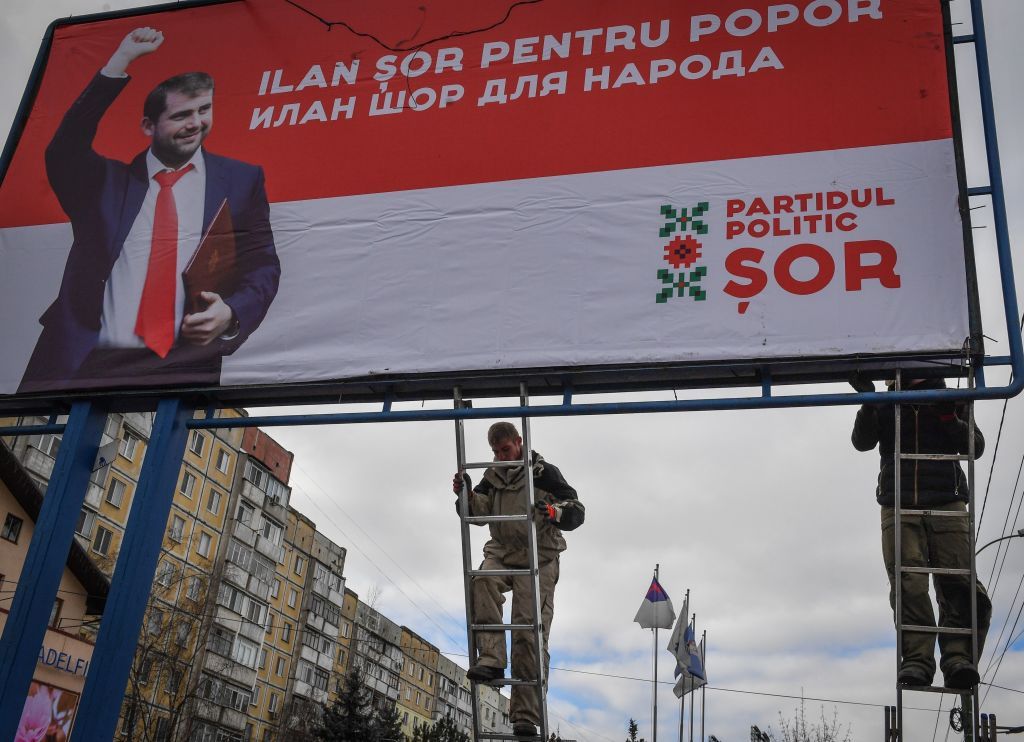
Moldova's Victory bloc, a pro-Russian political alliance, plans to participating in the country's September parliamentary elections, the bloc's founder Ilan Shor announced on July 6. Shor, an exiled pro-Kremlin oligarch, established the Victory bloc in August 2024. The bloc includes his own Shor party, which is banned in Moldova. Victory will submit documents in the coming days registering the bloc for participation in the September vote, Shor said. "Our main goal in these elections is to overth
Moldova's Victory bloc, a pro-Russian political alliance, plans to participating in the country's September parliamentary elections, the bloc's founder Ilan Shor announced on July 6.
Shor, an exiled pro-Kremlin oligarch, established the Victory bloc in August 2024. The bloc includes his own Shor party, which is banned in Moldova.
Victory will submit documents in the coming days registering the bloc for participation in the September vote, Shor said.
"Our main goal in these elections is to overthrow the fascist regime and hold early democratic elections within the next six months," Shor said.
The candidate list will be headed by Evghenia Gutul, the head of Moldova's Gagauzia region, who is currently on trial for illegally funding the banned Shor party. Gutul maintains ties to Moscow and is currently under U.S. sanctions.
The upcoming September elections carry high stakes for Moldova, one of the pooerest countries in Europe. Moldovan President Maia Sandu said on July 4 that Chisinau's European path rests on the outcome of the vote.
European Commission President Ursula von der Leyen pledged on July 4 that the European Union will help Moldova defend itself against hybrid threats by "agents of autocracy" as elections approach.
Moldova was granted EU candidate status in 2022. Sandu's ruling Party of Action and Solidarity aims to maintain its parliamentary majority and move the country closer to full membership by 2030.
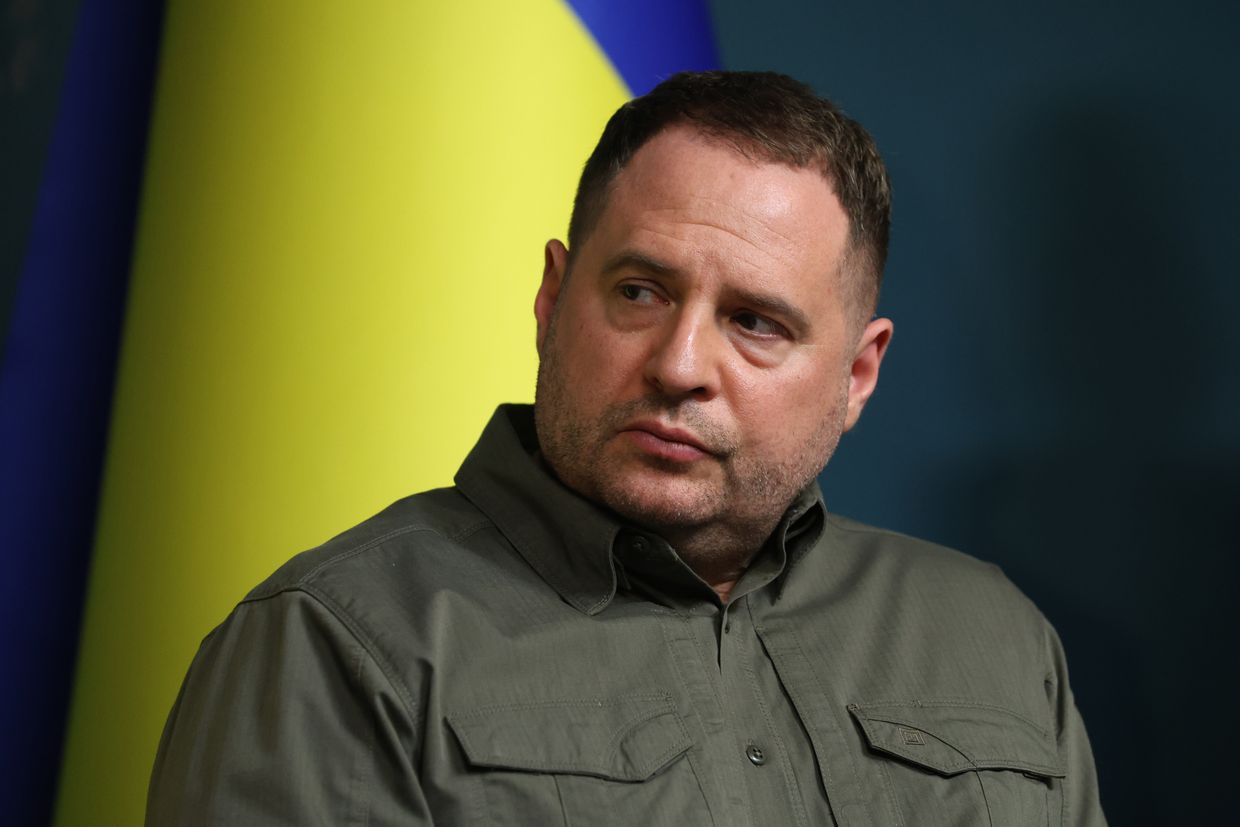
Andriy Yermak, head of Ukraine's Presidential Office, has been leading campaigns to supplant three top officials in the Ukrainian government, the Economist reported on July 6, citing multiple anonymous officials. The story follows a corruption probe into Deputy Prime Minister Oleksii Chernyshov, the highest-ranking official in Ukrainian history to face such charges while still in office. According to the Economist's sources, Yermak was a driving force behind the investigation.Yermak, President V
Andriy Yermak, head of Ukraine's Presidential Office, has been leading campaigns to supplant three top officials in the Ukrainian government, the Economist reported on July 6, citing multiple anonymous officials.
The story follows a corruption probe into Deputy Prime Minister Oleksii Chernyshov, the highest-ranking official in Ukrainian history to face such charges while still in office. According to the Economist's sources, Yermak was a driving force behind the investigation.
Yermak, President Volodymyr Zelensky's close friend and chief adviser, spurred on the Chernyshov probe while also renewing attempts to replace Kyrylo Budanov, head of Ukraine's military intelligence agency (HUR) , and Prime Ministery Denys Shmyhal, three unnamed officials told the Economist.
There is no evidence that Yermak ordered an investigation into Chernyshov, the Economist reports, but officials told the outlet that he influenced the case by allowing it to progress while freezing other investigations.
Chernyshov ran afoul of Yermak by offering himself as an alternative liaison to Washington, the officials claimed. His removal would also reportedly clear the way for Deputy Prime Minister Yuliia Svyrydenko, a Yermak protege, to assume the role of Prime Minister in the event of Shmyhal's dismissal.
Rumors of a government reshuffle unseating Shmyhal have circulated for months. Ukrainian media reported last summer that Zelensky was considering replacing the prime minister with Svyrydenko. While several key officials were replaced in a reshuffle in September 2024, Shmyhal kept his post.
Chernyshov, too, has said he will not step down from his role as deputy prime minister despite the ongoing corruption probe.
Reports of imminent dismissal have also periodically surrounded Budanov, Ukraine's spy chief. Budanov has rejected such rumors as "Russian propaganda" in the past.
Sources told the Economist that Yermak was leading another effort to oust Budanov in June 2025. According to the outlet, warnings from the White House not to fire Budanov may have helped secure his position.
Politico reported in June that U.S. officials, particularly those working in the Trump administration, found Yermak's diplomatic style abrasive and off-putting, potentially risking U.S.-Ukrainian relations at a critical time.

 Connexion