❌

Vue normale

  • ✇Euromaidan Press
  • Russia strikes passenger train near Polish border as drone swarms reach deeper into western Ukraine
    Russia struck a passenger train just two kilometers from Ukraine’s border with Poland on 13 September, as Moscow continued a second day of attacks on Ukraine’s railway network and expanded strikes against transport and logistics infrastructure far from the front line. Russia is increasingly using its expanding drone fleet to reach transport, logistics, industrial and civilian infrastructure deep inside Ukraine. Western regions, long considered safer because of their distance from the fr
     

Russia strikes passenger train near Polish border as drone swarms reach deeper into western Ukraine

13 septembre 2026 à 09:10

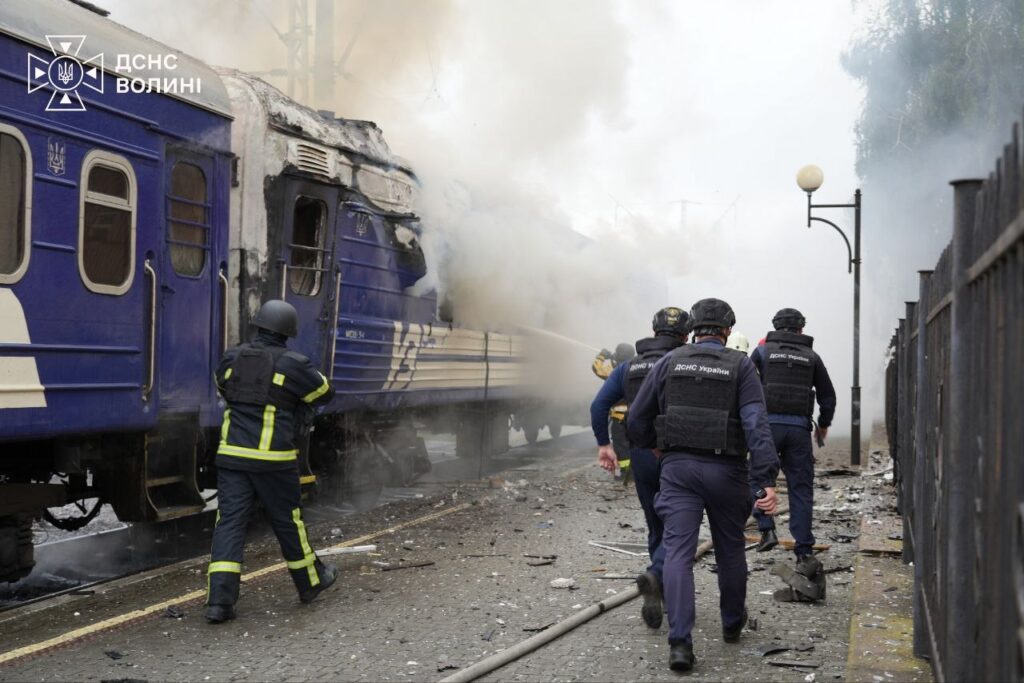
Emergency responders work at the scene after a Russian drone struck a passenger train in Lutsk, Ukraine, on 12 September 2026. Photo: Ukraine's State Emergency Service

Russia struck a passenger train just two kilometers from Ukraine’s border with Poland on 13 September, as Moscow continued a second day of attacks on Ukraine’s railway network and expanded strikes against transport and logistics infrastructure far from the front line.

Russia is increasingly using its expanding drone fleet to reach transport, logistics, industrial and civilian infrastructure deep inside Ukraine. Western regions, long considered safer because of their distance from the front, are now seeing strikes on railways and border crossings, making even civilian travel and routes out of the country increasingly dangerous.

The latest attack took place in Ukraine’s north-western Volyn Oblast, near the Yahodyn border crossing with Poland. According to Ukraine’s state railway operator Ukrzaliznytsia, a Russian drone struck the locomotive of a passenger train.

A monitoring team detected the threat in advance and warned the train crew, preventing casualties. The railway operator said trains to Warsaw and back were already running again after the strike, although with significant delays.

A gas station was also struck in a Russian drone strike near the Yahodyn crossing, causing a large fire, according to UNN, adding to the danger around a key transport route between Ukraine and Poland.

Poland also issued an air-raid alert for areas near the Ukrainian border, including Włodawa, Łęczyński and Świdnik counties and the cities of Chełm and Krasnystaw.

The attacks came alongside Russian strikes on railway infrastructure in several other parts of Ukraine.

A Russian drone struck a Kyiv–Warsaw passenger train just two kilometers from Ukraine’s border with Poland on 13 September, as Russia continued a second day of attacks on Ukraine’s railway network.

The strike hit the train’s locomotive in Volyn Oblast near the Yahodyn border… pic.twitter.com/vb9FuOJTQ5

— Euromaidan Press (@EuromaidanPress) September 13, 2026

Update: Diplomatic train may have been Russian drone’s target

Update 19:00: Ukrzaliznytsia later said a diplomatic train carrying security advisers from several EU member states and former European leaders, including former UK Prime Minister Boris Johnson, had been at Yahodyn shortly before the strike. Another train at the station during the attack carried former CIA Director David Petraeus.

Ukrzaliznytsia said the Russian drone may have been targeting the diplomatic train, which departed earlier than scheduled as railway staff adjusted train movements in real time because of the ongoing threat of Russian strikes. The operator said it continues to change routes and schedules as tracks are damaged or blocked by attacks.

Russia targets railways across Ukraine

Ukrzaliznytsia said this was the second consecutive day of Russian attacks on the railway network.

On 12 September, Russian drones struck railway facilities in Lutsk, Volyn Oblast, including a passenger train, as well as Fastiv, Kyiv Oblast. Passengers were evacuated after the threat was detected.

Ukrzaliznytsia said its monitoring center and railway personnel remain on heightened alert as Russia continues targeting the network. Evacuations and diversions have caused delays on several routes, including services toward Dnipro, Zaporizhzhia and Kryvyi Rih.

Russia also attacked a railway infrastructure site in Vinnytsia Oblast on 13 September, according to Ukraine’s State Emergency Service. 

Russia’s drone campaign is expanding

Russian attacks are increasingly reaching critical infrastructure and civilian areas across Ukraine. Ukrainian President Volodymyr Zelenskyy said Russia struck energy facilities, railway sites, businesses and residential buildings during the latest wave of attacks, including missile and drone strikes on Odesa.

Zelenskyy said Russia had launched around 2,100 drones against Ukraine in the past week, alongside nearly 1,700 guided aerial bombs and 78 missiles.

He said Russia is using jet-powered Geran drones to “destroy the economy and destroy people’s lives.”

Russia has sharply increased its use of upgraded Geran attack drones in recent months, which are faster than earlier versions and can cover the long distances needed to strike targets deep inside Ukraine. Their growing speed and scale are putting additional pressure on Ukraine’s air-defense system, which has to detect and intercept large numbers of drones across the country.

“Russia’s terrorism is a common threat for many,” Zelenskyy said, arguing that the threat must be defeated in Ukraine rather than allowed to spread further into Europe.

Border crossings increasingly targeted

The strike near Yahodyn comes after Russia began targeting Ukrainian border crossings farther from the front line.

Since late August, Russian forces have struck at least five Ukrainian crossings with Moldova and NATO member Romania. The crossings handle civilian traffic, trade and logistics that are increasingly important to Ukraine as the war continues.

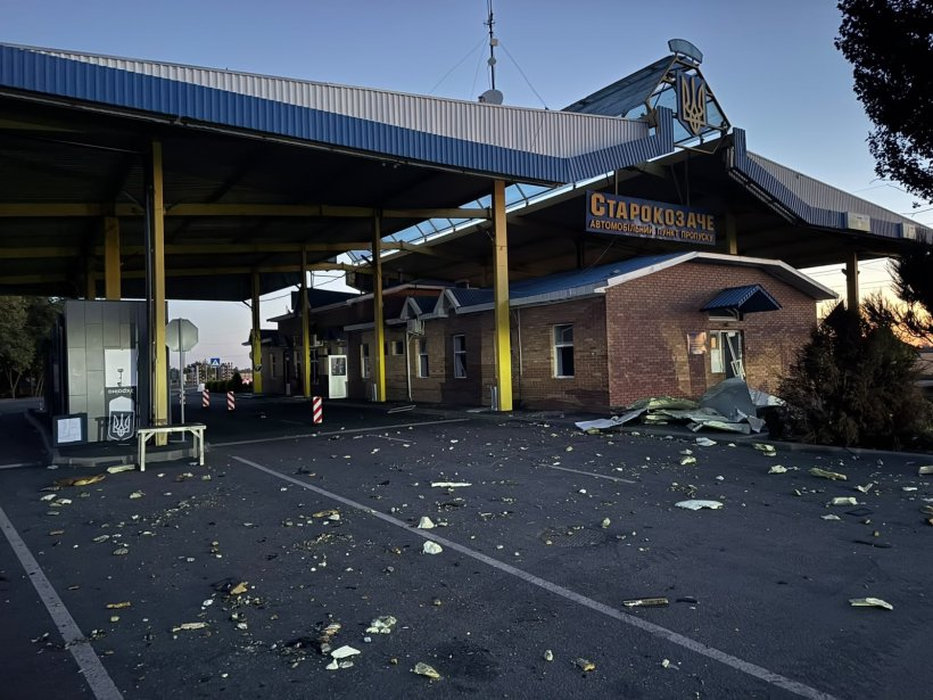
On 9 September, Russian drones struck the Starokozache crossing with Moldova, killing two civilians and injuring three others. One Russian drone entered Moldovan airspace and flew toward Romania, prompting NATO aircraft conducting air-policing duties to scramble.

Russia also struck the Orlivka ferry crossing on the Romanian border twice in early September.

The attacks prompted growing concern in Poland. On 10 September, Polish Prime Minister Donald Tusk said Poland expected Russia could target Ukrainian border crossings with Poland as Moscow expands its strikes against transport and logistics routes.

Tusk said Poland had received intelligence indicating that similar attacks could occur against crossings involving other countries. He also warned that Poland and Europe needed to prepare for different scenarios along Europe’s eastern flank.

The strike near Yahodyn came only three days after that warning.
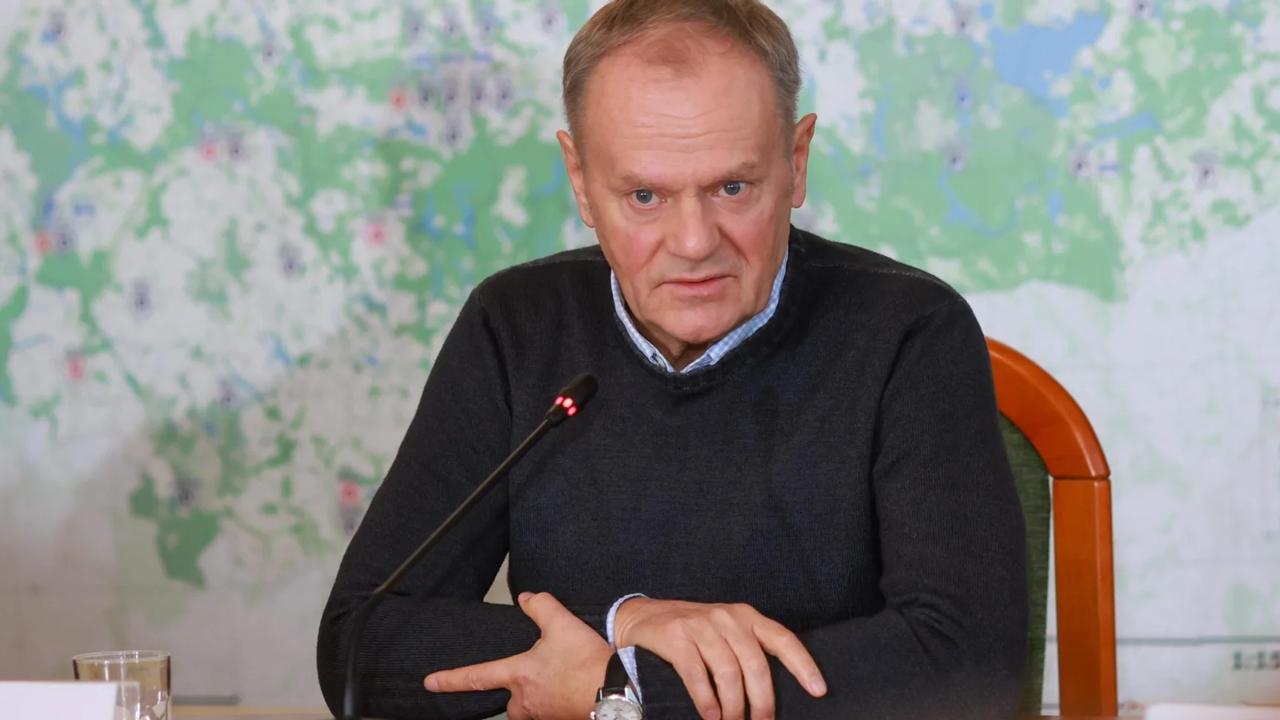
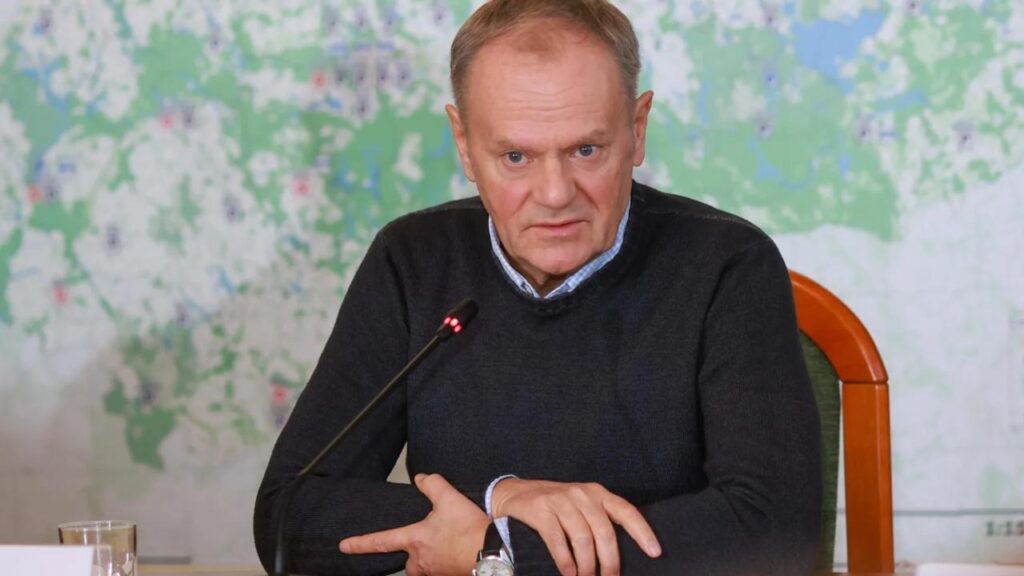
Polish Prime Minister Donald Tusk
Explore further

Poland expects Russia to target border crossings as attacks on Ukraine escalate – Russia has already hit crossings with Moldova and Romania

“Russia is trying to expand the geography of its terror”

Ukrainian Foreign Minister Andrii Sybiha said Russia was deliberately expanding the geography of its attacks.

“Moscow tries to expand the geography of its terror,” Sybiha said, arguing that Russia is trying to turn the entire territory of Ukraine into a battlefield as it fails to achieve its objectives on the front.

He said Moscow was targeting “civilians, trains, and the infrastructure that keeps the country moving.”

Sybiha called for stronger air defenses, interceptors and counter-drone capabilities, as well as measures targeting Russia’s drone production and supply chains.

In a separate statement after the Yahodyn attack, Sybiha said Russia’s strikes near the Polish border were “not just a continuation of its attacks on our state borders.”

“This is Putin’s terror ‘knocking’ directly on the doors of the EU and NATO. Russian barbarians are at your gate, dear partners,” he said, urging European countries to respond with stronger sanctions.

Moscow tries to expand the geography of its terror. Unable to achieve its goals on the battlefield, Russia attempts to make the entire territory of Ukraine a battlefield and turns to systematic attacks against civilians, trains, and the infrastructure that keeps the country… pic.twitter.com/Kw85G0DEHM

— Andrii Sybiha 🇺🇦 (@andrii_sybiha) September 12, 2026

Attacks moving closer to NATO

Estonian Foreign Minister Margus Tsahkna said members of his ministry had been stuck at the same Ukrainian-Polish border crossing only hours before the latest images emerged because of the Russian drone threat.

“Russia’s attacks are becoming more intense and moving ever closer to NATO and the EU,” Tsahkna said.
Poland expects Russia to target border crossings as attacks on Ukraine escalate – Russia has already hit crossings with Moldova and Romania

10 septembre 2026 à 13:26

Polish Prime Minister Donald Tusk

Poland expects Russia to target border crossings with Ukraine as Moscow expands its strikes on trade and logistics routes far from the front line, Polish Prime Minister Donald Tusk said on 10 September, according to Reuters.

The warning comes after Russia has already struck at least five Ukrainian border crossings with Moldova and NATO member Romania since late August. The attacks mark a significant escalation in Russia’s targeting of Ukraine’s civilian transport, trade, and logistics infrastructure, far from the front line.

“Last night, thanks to cooperation between our services and their Ukrainian counterparts, a direct threat to one of the border crossings was averted,” Tusk said at a press conference in Bratislava, according to Reuters.

He said Poland expected Russia to take similar action against border crossings in other countries, including Poland.

Russia has significantly ramped up its aerial attacks across Ukraine in recent months, increasingly striking civilian transport, energy, industrial, and logistics infrastructure while deploying newer and more capable weapons. The expanded use of drones and missiles has also made these attacks harder to stop, allowing Russia to hit targets farther from the front line with greater frequency and inflict more damage and casualties.

Russia is striking Ukraine’s civilian travel and logistics routes

The Russian attacks have targeted crossings in Ukraine’s southern Odesa Oblast, hundreds of kilometers from the front line.

Four of the crossings hit since late August are on Ukraine’s border with Moldova, while another is on the Romanian border. The sites handle civilian traffic, trade, and logistics that have become increasingly important to Ukraine as the war continues.

On 9 September, Russian drones struck the Starokozache crossing with Moldova, killing two civilians and injuring three others. During the attack, one Russian drone entered Moldovan airspace and flew toward Romania, prompting NATO aircraft conducting air-policing duties to scramble.

Russian drones also struck the Orlivka ferry crossing on the Romanian border twice in early September.

The Ukrainian Starokozache border crossing near Moldova, targeted by a Russian attack, September 2026. Photo: Odesa Oblast Military Administration / Telegram
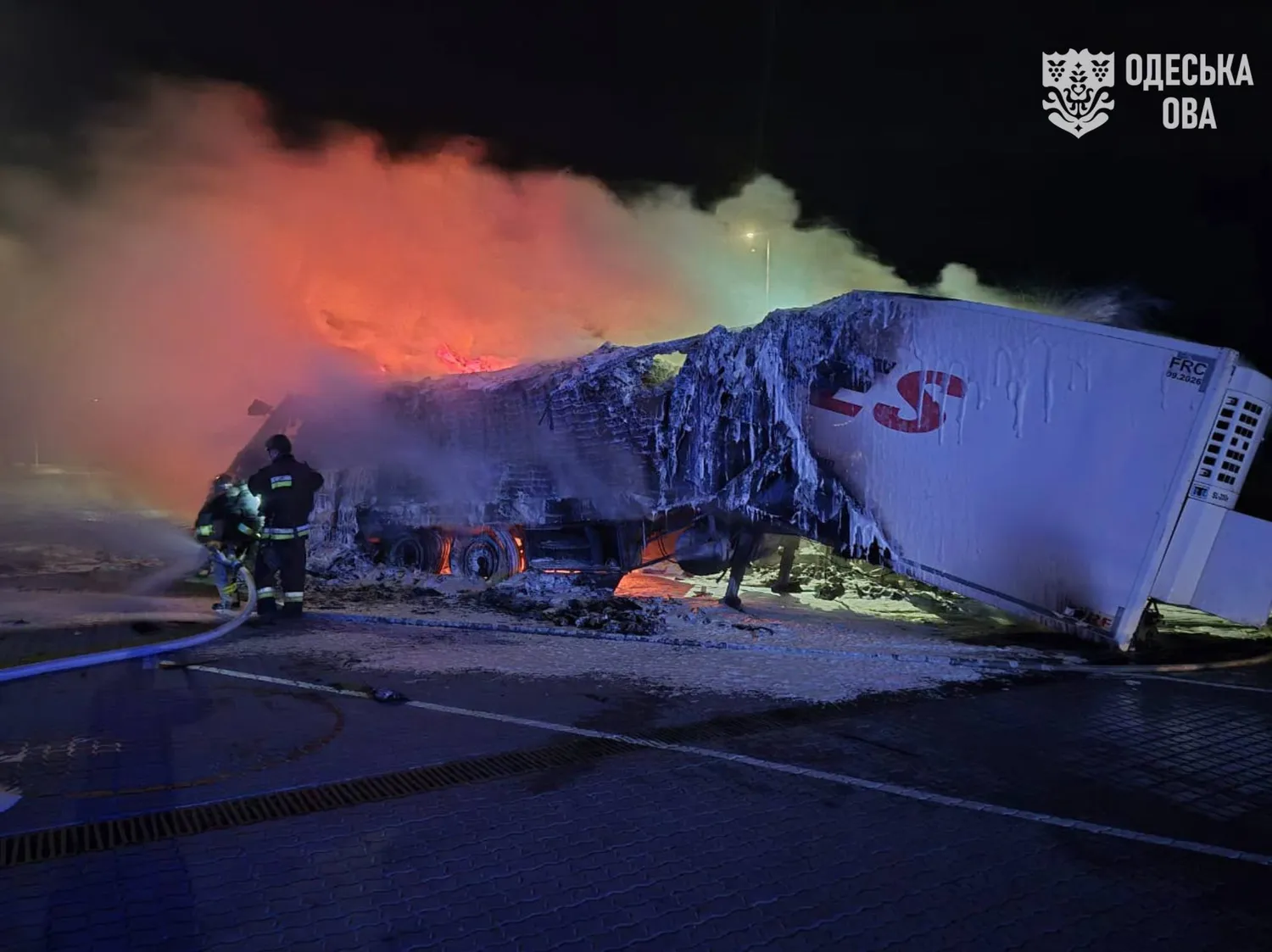
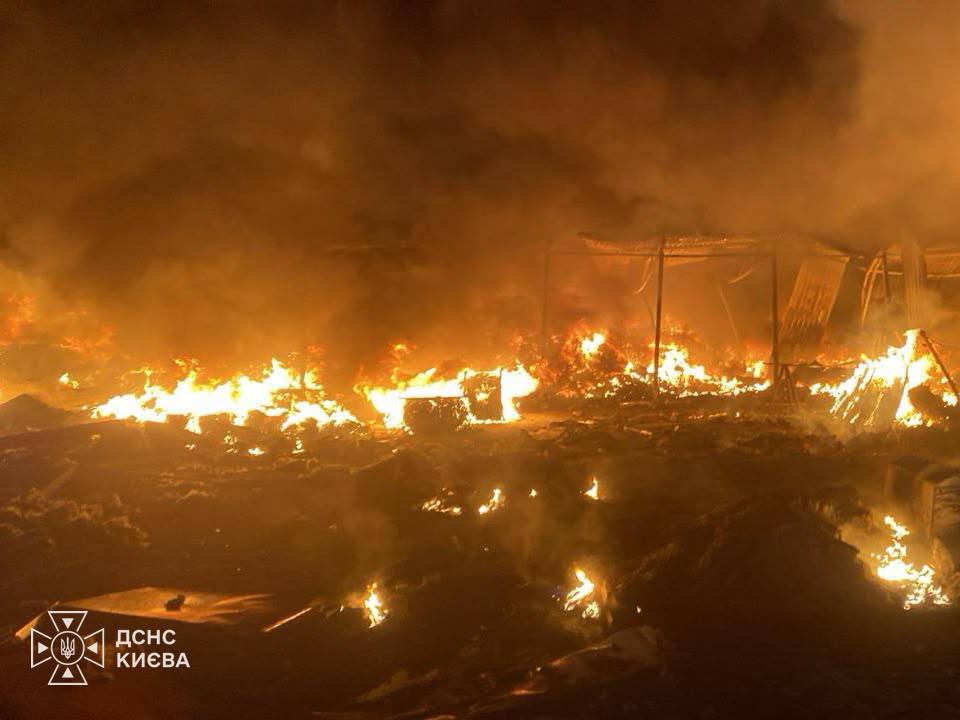
Firefighters stand beside two burned truck trailers covered in ice as smoke and orange firelight fill the night sky.
Explore further

Far from any front line: Russia has hit at least five of Ukraine’s western border crossings with Moldova and NATO member since late August

Poland prepares for further escalation

Tusk said he had received a “fairly precise report” from the CIA about possible developments in the coming months, which he said aligned with warnings he had made previously.

“Poland and all of Europe need to be prepared for different possibilities,” Tusk said, including developments not only on the Russian-Ukrainian front but also along the EU’s eastern flank.

The warning comes as Russian strikes increasingly reach toward Ukraine’s borders with NATO and EU countries. The drone incursions into Moldovan and Romanian airspace during attacks on Ukrainian infrastructure have already brought NATO forces into the response.

The latest attacks represent a broader shift in Russia’s targeting: Moscow is not only striking Ukraine’s cities and military infrastructure, but increasingly hitting the trade, transport, and civilian logistics routes that keep the country functioning during the war.

One Russian drone held up seven flights in Moldova, Zelenskyy’s trip to Norway for King Harald V’s funeral among them

10 septembre 2026 à 05:34

one russian drone held up seven flights moldova zelenskyy's trip norway king harald v's funeral among · post zelenskyy walking other heads state dignitaries behind coffin v central oslo 9

Moldova closed its airspace on the afternoon of 8 September and delayed the plane carrying Ukraine's President Volodymyr Zelenskyy to Norway after a Russian drone crossed into the country, its government said in a statement to Reuters. The aircraft was cleared for takeoff once officials established that it had come down on Moldovan territory. Norway's prime minister described the episode as a near-miss, and neither government has said how close the drone came.

Russia runs three things at once along the EU's eastern frontier—mass drone attacks on Ukraine, drones crossing into Moldovan and Romanian airspace almost weekly, and strikes on the border checkpoints tying the three countries together—and states without interceptors can answer only by closing their skies.

What happened, and when

Moldova's National Army detected a Shahed-type drone entering from Ukraine at 16:20, the country's Defense Ministry reported. It flew toward Bender, a city in the Russian-backed breakaway region of Transnistria, then turned toward the capital, Chișinău, by 16:32. At 16:37, it left the country over western Moldova and headed into eastern Romania, across the Prut river border.

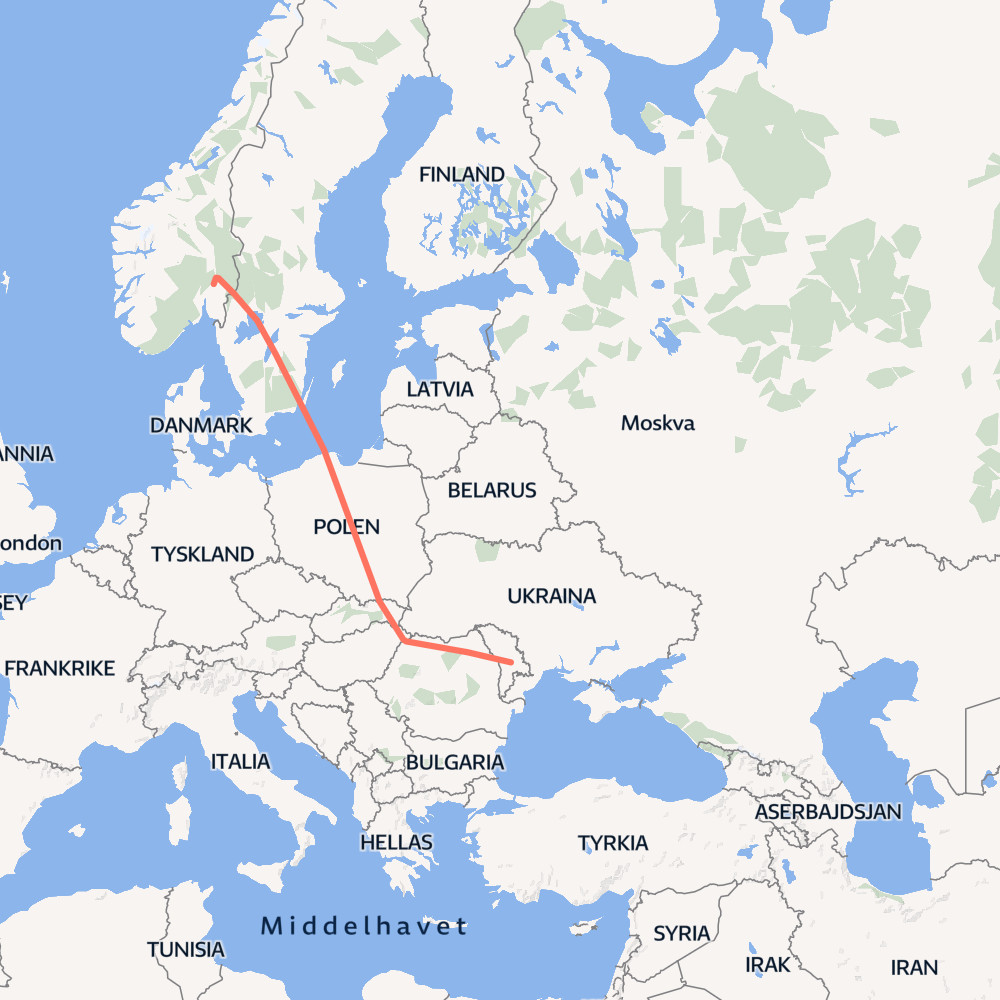
one russian drone held up seven flights moldova zelenskyy's trip norway king harald v's funeral among · post route flight oslo 8 2026 маршрут літака зеленського вересня року джерело nrk
The route of Zelenskyy's flight from Moldova to Oslo, 8 September 2026. Map: NRK

Controllers restricted the airspace over central Moldova at 16:30. The same drone came back from the Romanian side, crossed the north of the country, and came down outside a village in the northwest, near the Romanian border, setting dry vegetation alight, according to the log. Nobody was hurt, and the airspace reopened at 17:39, more than an hour after it closed. The BBC's Ukrainian service placed the crash near a different northern village, without naming a source, so the exact spot is unsettled.

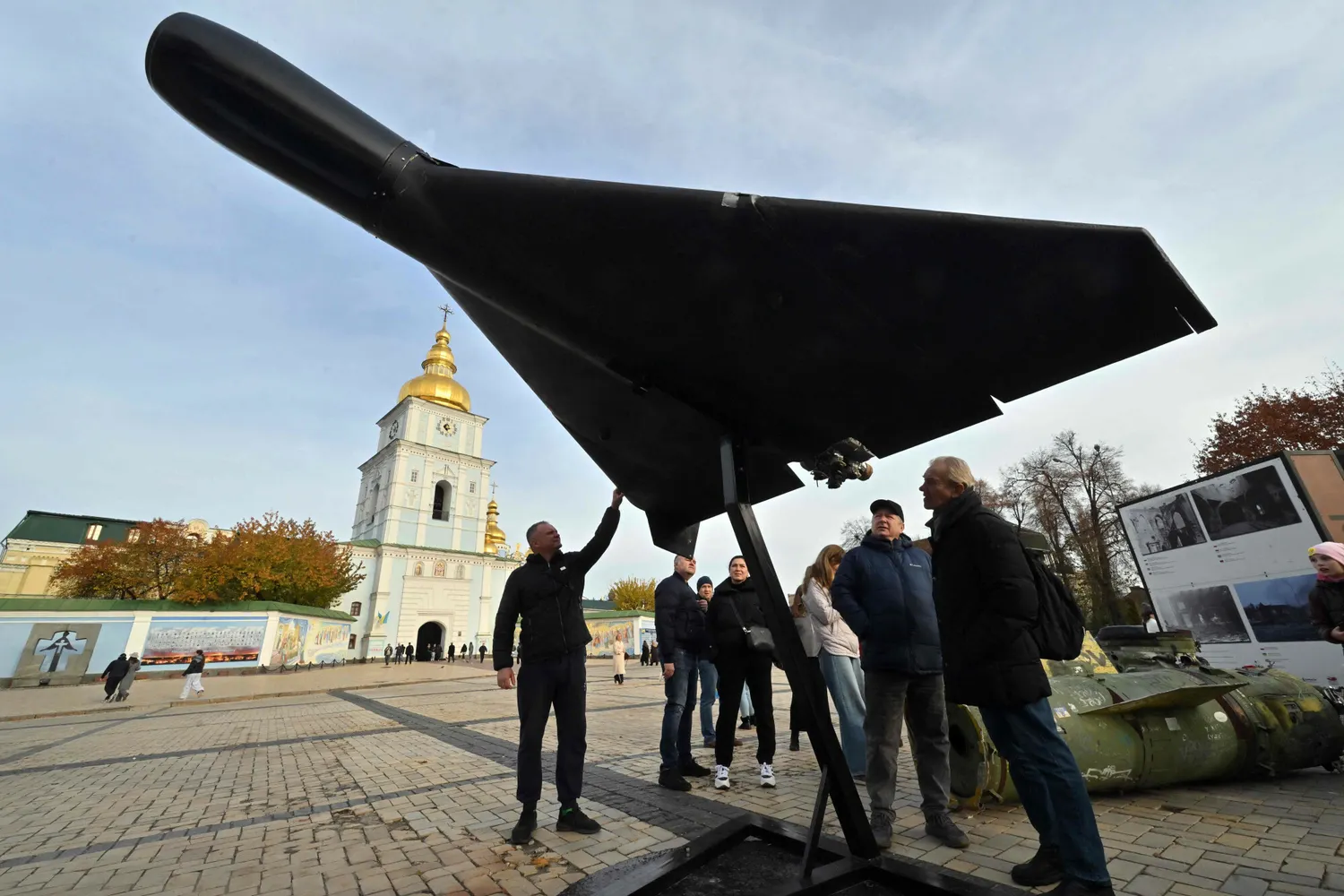
Iranian drone Kyiv shahed
People look at an Iranian-designed Shahed 136, (Geranium-2) drone of Russian Army at an open-air exhibition of destroyed Russian equipment near Saint Michael's Golden-Domed Cathedral in Kyiv on November 2, 2025, amid the Russian invasion of Ukraine. Photo by Sergei SUPINSKY / AFP/Eastnews

The violation fell in the window when Zelenskyy's aircraft was preparing to take off, Militarnyi reported, citing the ministry. The civilian airport he was leaving from suspended operations and the border service closed the nearby crossings, the outlet added. Three departures and four arrivals were delayed in all, Reuters said.

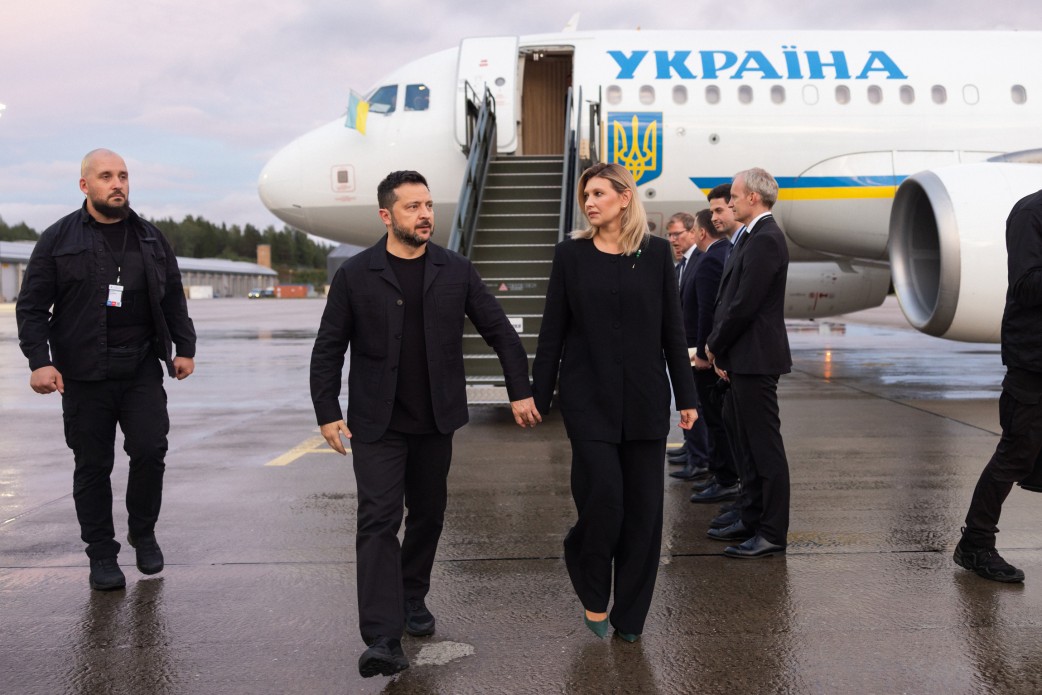
Ukrainian President Volodymyr Zelenskyy and his wife Olena Zelenska in Norway. Source: The Presidential Office of Ukraine
Explore further

A drone nearly hit Zelenskyy’s plane taking off from Moldova on his way to a king’s funeral, Norway’s PM says

How the plane and the drone crossed paths

Zelenskyy flies an Airbus A319 corporate jet, and the threat to it probably came from a jet-powered Geran drone that crossed Romanian and then Moldovan airspace at around 17:00 that day, Militarnyi wrote, publishing the drone's track from the monitoring channel Oko Hora. That fits the return leg in the army's log, though no authority has tied a specific aircraft to the delay.

one russian drone held up seven flights moldova zelenskyy's trip norway king harald v's funeral among · post route jet-powered geran across romania 8 2026 маршрут російського реактивного дрона герань
The route of a Russian jet-powered Geran drone across Romania and Moldova, 8 September 2026. Map: Oko Hora

Norwegian Prime Minister Jonas Gahr Støre told the broadcaster NRK the plane was almost hit as it prepared to leave, without naming his source. His office later described a danger recorded in Moldovan airspace that forced the delay. Norway's Finance Minister Jens Stoltenberg said Zelenskyy recounted the details himself at a closed meeting in Oslo.

Zelenskyy and First Lady Olena Zelenska attended the farewell ceremony for King Harald V, who died on 28 August. Around it, the president worked on air defense, meeting Støre and then executives of defense companies from partner countries about the FREYJA anti-ballistic missile program, which Norway's government casts as a cheaper alternative to the Patriot.

The next night, the border crossing

Overnight on 9 September, Russian drones struck the Starokozache crossing on Ukraine's border with Moldova, killing two people and injuring three. The dead were Ukrainians, and a Moldovan citizen was among the injured, Moldova's Foreign Ministry told the broadcaster TV8. Border guards reopened the crossing that afternoon.

Russia claimed it had struck the crossing because it was used for military logistics. Moldova's Foreign Ministry rejected that outright, saying no weapons move through its territory, and that the people crossing there are families, children with their mothers, and the elderly. It is one of the working crossings on the Odesa Oblast stretch of the Ukrainian-Moldovan border, where the heaviest traffic runs through Palanca and Giurgiulești.

Moldova's President Maia Sandu condemned both the strike and the Geran-type drone that had forced her country to close its airspace the day before, and said the events show Ukraine needs more air defense.

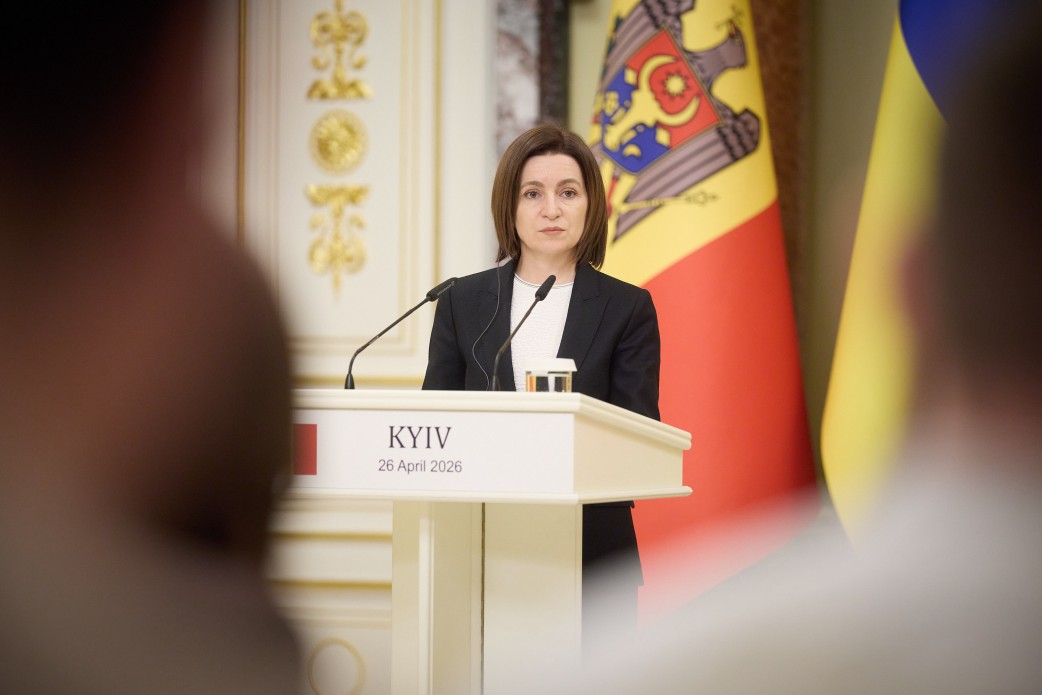
romania's jets shoot down bulgaria's navy blows up moldova only now funding air defense russia hits ukraine · post moldovan president maia sandu kyiv anniversary chernobyl nuclear disaster 26 2026
Explore further

Moldova is investing in air defense against the Russian drones crossing from Ukraine—Romania shoots down the ones that reach it

The pattern, and Moldova's empty sky

Russia has hit at least five checkpoints on Ukraine's western borders since late August, four of them facing Moldova and one facing Romania, and the drone that struck the Kotlovyna crossing on 20 August flew in through Moldovan airspace. Euromaidan Press has covered part of that campaign, including burned food cargo near the Giurgiulești crossing in August. The State Border Guard Service has called such strikes an act of terrorism, because people are present at the crossings when they are hit.

In the air, Moldova can do little. It is still buying its first serious air defenses, so it restricts airspace and waits while Romania scrambles jets against the drones that reach its side. It logged three airspace breaches in nine days in August, and more than 100 drones were detected near Romania in four days that month.

  • ✇Euromaidan Press
  • A Russian drone hit a Kyiv television newsroom in broad daylight while the channel was live on air
    A Russian strike drone hit the Kyiv premises of the television channels My-Ukraina and My-Ukraina+ in the middle of the day on 8 September, the channel reported. The main blow landed on the newsroom and the working offices while My-Ukraina was live on the national newscast. Ukrainian President Volodymyr Zelenskyy urged a response from Europe and the world. During its ongoing all-out war, Russia runs a parallel campaign against the people who document it, jailing reporte
     

A Russian drone hit a Kyiv television newsroom in broad daylight while the channel was live on air

8 septembre 2026 à 07:32

russian drone hit kyiv television newsroom while channel live air middle day · post damage business center housing my-ukraina channels after strike 8 2026 5260618747968429203 (1) ukraine news ukrainian reports

A Russian strike drone hit the Kyiv premises of the television channels My-Ukraina and My-Ukraina+ in the middle of the day on 8 September, the channel reported. The main blow landed on the newsroom and the working offices while My-Ukraina was live on the national newscast. Ukrainian President Volodymyr Zelenskyy urged a response from Europe and the world.

During its ongoing all-out war, Russia runs a parallel campaign against the people who document it, jailing reporters as terrorists in the territory it occupies, killing them with drones near the front, and accumulating hundreds of crimes against them that European bodies have counted.

The strike landed on the editorial floor

My-Ukraina was broadcasting the national United News telethon, the joint wartime newscast that Ukrainian channels share, at the moment of the attack. Rescuers and medics worked at the site and treated the injured, the channel said. The strike came in daylight, hours after a mass overnight assault on the capital.

Fire and structural destruction hit the business center in the Solomianskyi district, and rescuers evacuated two people from its upper floors, the State Emergency Service said. It put the number injured at five and called that figure preliminary, with the count of victims still being clarified.

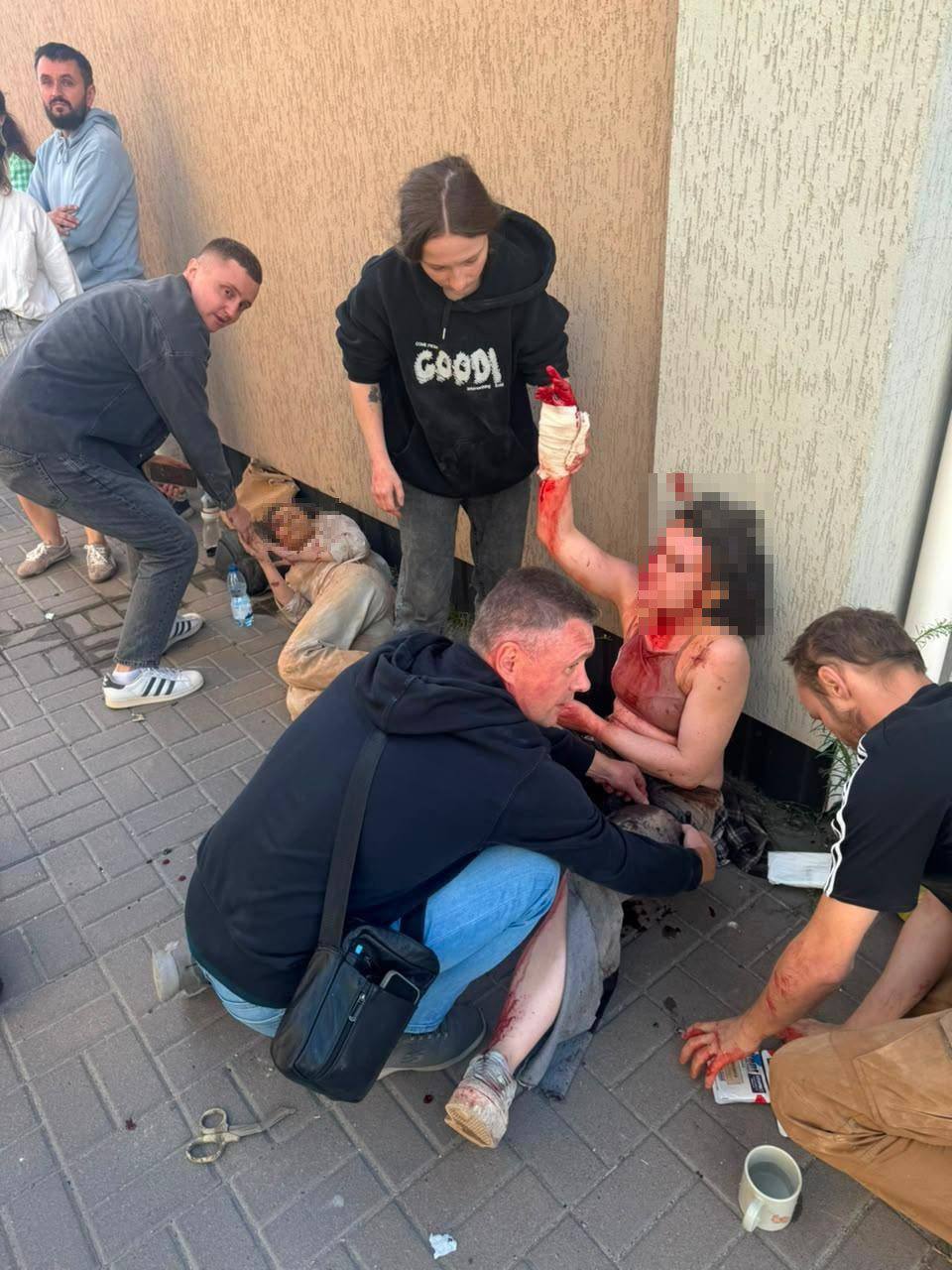
russia struck offices two ukrainian television channels kyiv middle day · post people giving first aid women injured russian drone strike 8 2026 5260618747968429206 (1) ukraine news reports
People giving first aid to two women injured in the Russian drone strike, Kyiv, 8 September 2026. Photo: Zelenskyy's Telegram

"A new page of Russian degradation"

Zelenskyy wrote on Telegram that Russia had struck at media and at journalists with a Shahed, one of the Iranian-designed attack drones it launches at Ukrainian cities in mass waves.

"Right in the middle of the day. Exactly when the journalists were on air. The building is partly destroyed," he said. 

Emergency workers had already put out the fire, and the number of injured could still grow, he added.

"Shaheds against media is a new page of Russian degradation, and there must certainly be a reaction from Europe and the world," Zelenskyy said. 

envoys left russia opened one weapon ukraine still cannot stop · post fire inside damaged building after russian strike kyiv 8 2026 5258162988747793192 news ukrainian reports
Explore further

Trump’s peace envoys left, and Russia hit Kyiv with ballistics—the one thing Ukraine still struggles to stop

Russia had already damaged the channel's office overnight on 20 August during a mass attack on Kyiv. That blast blew out the windows, badly damaged the newsroom, and tore down part of the ceiling in the corridors.

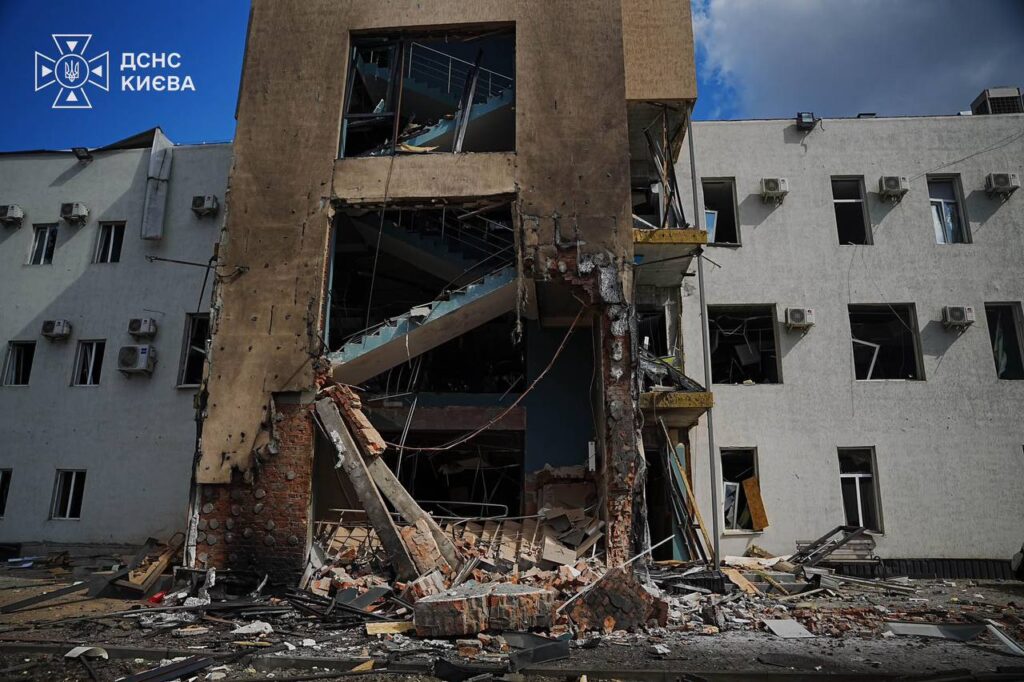
russian drone hit kyiv television newsroom while channel live air middle day · post rescuer inside wrecked stairwell building 8 2026 5260618747968429209 ukraine news ukrainian reports
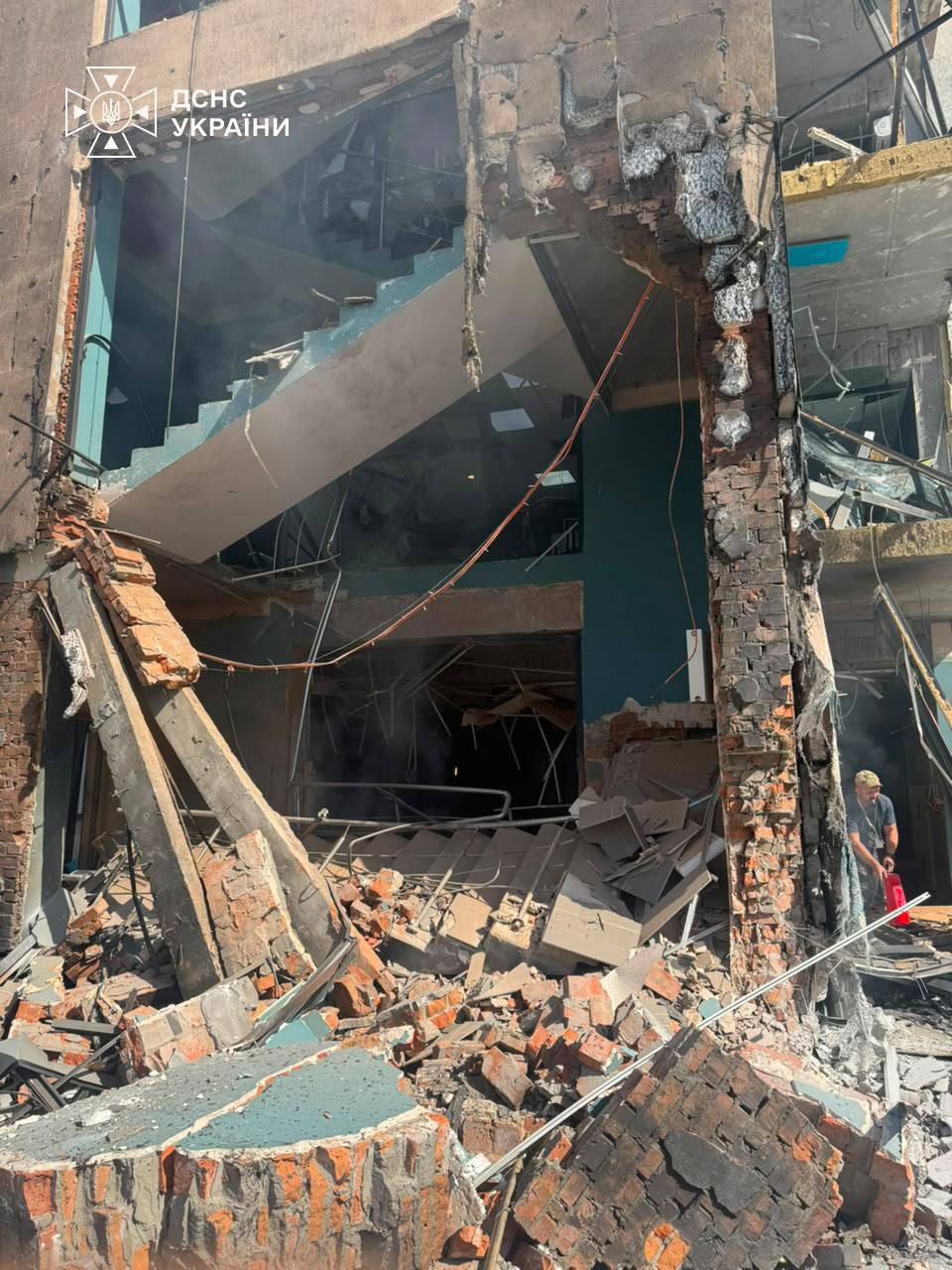
A rescuer inside the wrecked stairwell of the building hit by the Russian drone, Kyiv, 8 September 2026. Photo: State Emergency Service of Ukraine

Three killed in the capital over the day

Kyiv Mayor Vitalii Klitschko said the number of people killed by Russian strikes in Kyiv since the start of 8 September had reached three. The city military administration put the number of injured across the capital at 19.

russia struck offices two ukrainian television channels kyiv middle day · post medics loading injured woman ambulance after russian drone strike 8 2026 5260618747968429207 (1) ukraine news reports
Medics loading an injured woman into an ambulance after the Russian drone strike, Kyiv, 8 September 2026. Photo: Zelenskyy's Telegram

Explosions ran for almost five hours overnight and damaged more than 50 sites in Kyiv, the Interior Ministry reported. Russia fired ballistic, cruise, and anti-ship missiles along with jet-powered drones in that attack.

  • ✇Euromaidan Press
  • Kyiv stockpiles food and water as Russia’s new aerial tactics threaten a brutal winter
    Kyiv is building reserves of food and drinking water to help residents during prolonged power outages and other emergencies, the Kyiv City Council said on 7 September. The preparations come as Russia continues to target Ukraine’s critical infrastructure and food supply chains, while Ukrainian officials warn that water systems could also come under attack. Kyiv is therefore preparing for a broader range of disruptions this winter, not just power outages. The city is p
     

Kyiv stockpiles food and water as Russia’s new aerial tactics threaten a brutal winter

7 septembre 2026 à 08:26

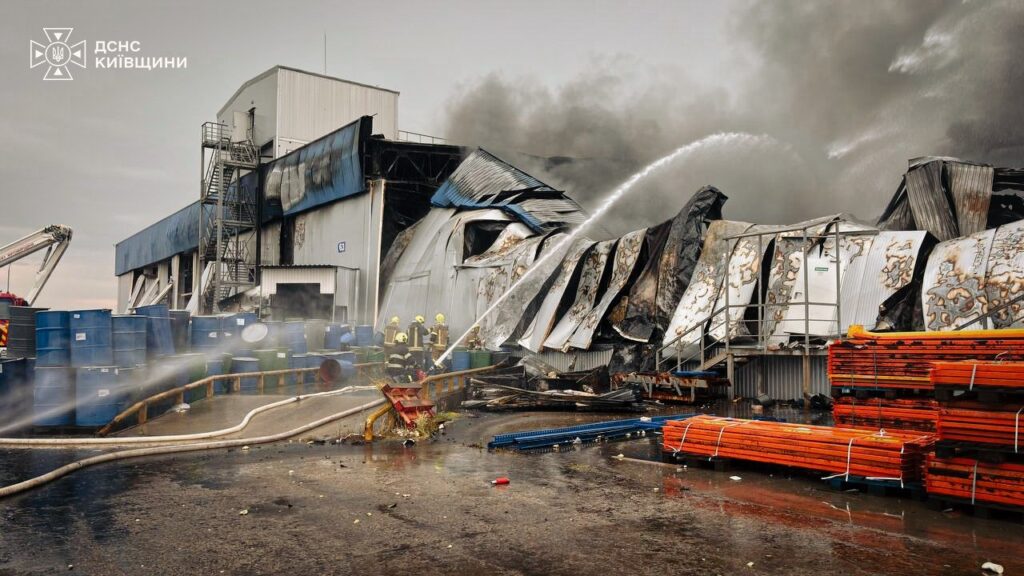
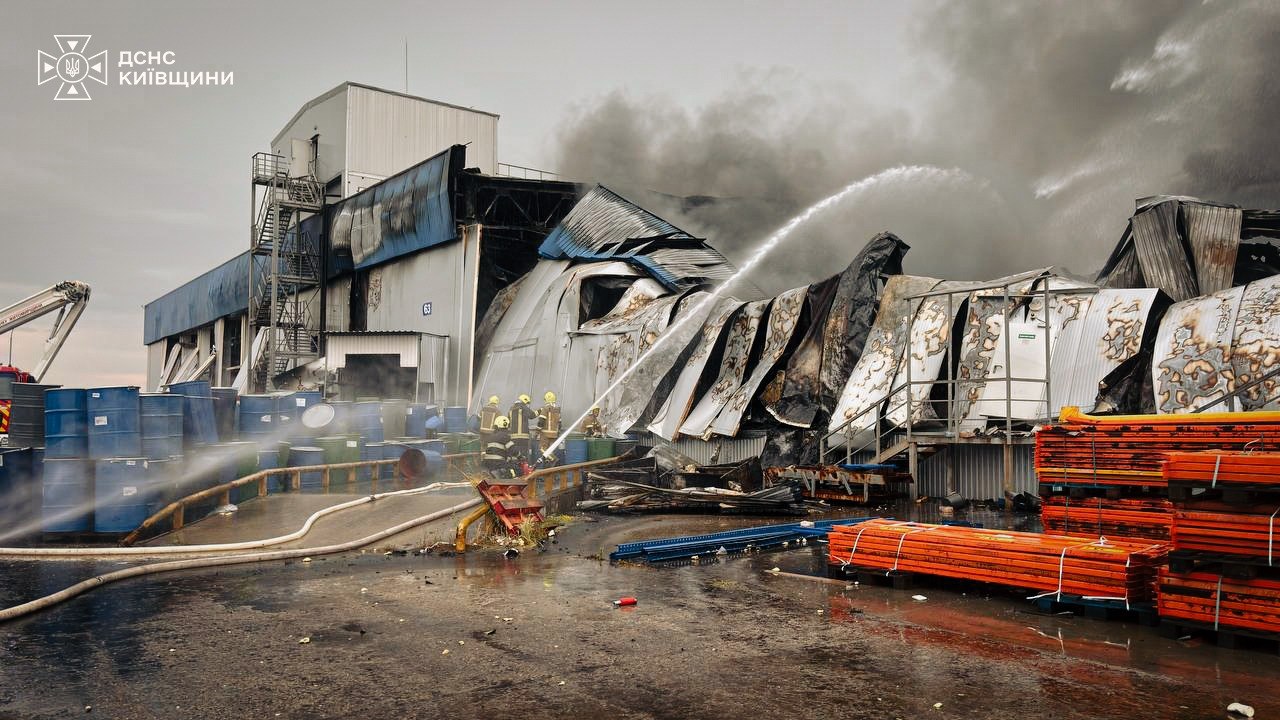
Ukrainian firefighters respond to a blaze at warehouses hit by a Russian drone strike in Kyiv Oblast’s Brovary district, 18 August 2026. Photo: Ukraine's State Emergency Service

Kyiv is building reserves of food and drinking water to help residents during prolonged power outages and other emergencies, the Kyiv City Council said on 7 September.

The preparations come as Russia continues to target Ukraine’s critical infrastructure and food supply chains, while Ukrainian officials warn that water systems could also come under attack. Kyiv is therefore preparing for a broader range of disruptions this winter, not just power outages.

The city is preparing the reserves ahead of the 2026–2027 fall and winter season, with priority given to low-income residents and people facing difficult circumstances.

The supplies will also be available at Points of Invincibility, emergency support centers set up to provide basic services during prolonged blackouts, for people affected by emergencies, and for workers involved in emergency and other urgent response operations.

Kyiv prepares for attacks on food and water supplies as Russia makes air attacks harder to stop

Russia has increasingly targeted infrastructure connected to Ukraine’s food supply in recent months. Russian strikes have hit food warehouses and distribution facilities around Kyiv, contributing to shortages and periods of empty supermarket shelves in the capital and other parts of the country.

Ukrainian officials have also warned that Russia could target water infrastructure as part of its attacks on critical civilian systems, raising concerns about access to drinking water during prolonged disruptions.

This year, the threat is particularly acute as Russia has expanded its use of ballistic missiles and introduced faster, jet-powered Geran drones that are harder for Ukraine to intercept. Ballistic missiles can only be reliably intercepted by a limited number of air defense systems, while the faster drones reduce the time available to detect and engage them.

Ukrainian firefighters respond to a blaze at warehouses hit by a Russian drone strike in Kyiv Oblast’s Brovary district, 18 August 2026. Photo: Ukraine's State Emergency Service
Explore further

Russia has destroyed 90% of Ukraine’s modern commercial storage capacity. Retail logistics are being reshaped

Kyiv prepares for another difficult winter

Russia's strikes have repeatedly targeted Ukraine's energy infrastructure during previous winters, causing extended blackouts and disruptions to heating and other essential services.

Kyiv is now preparing for the possibility that attacks could again leave residents without electricity or access to essential supplies for extended periods.

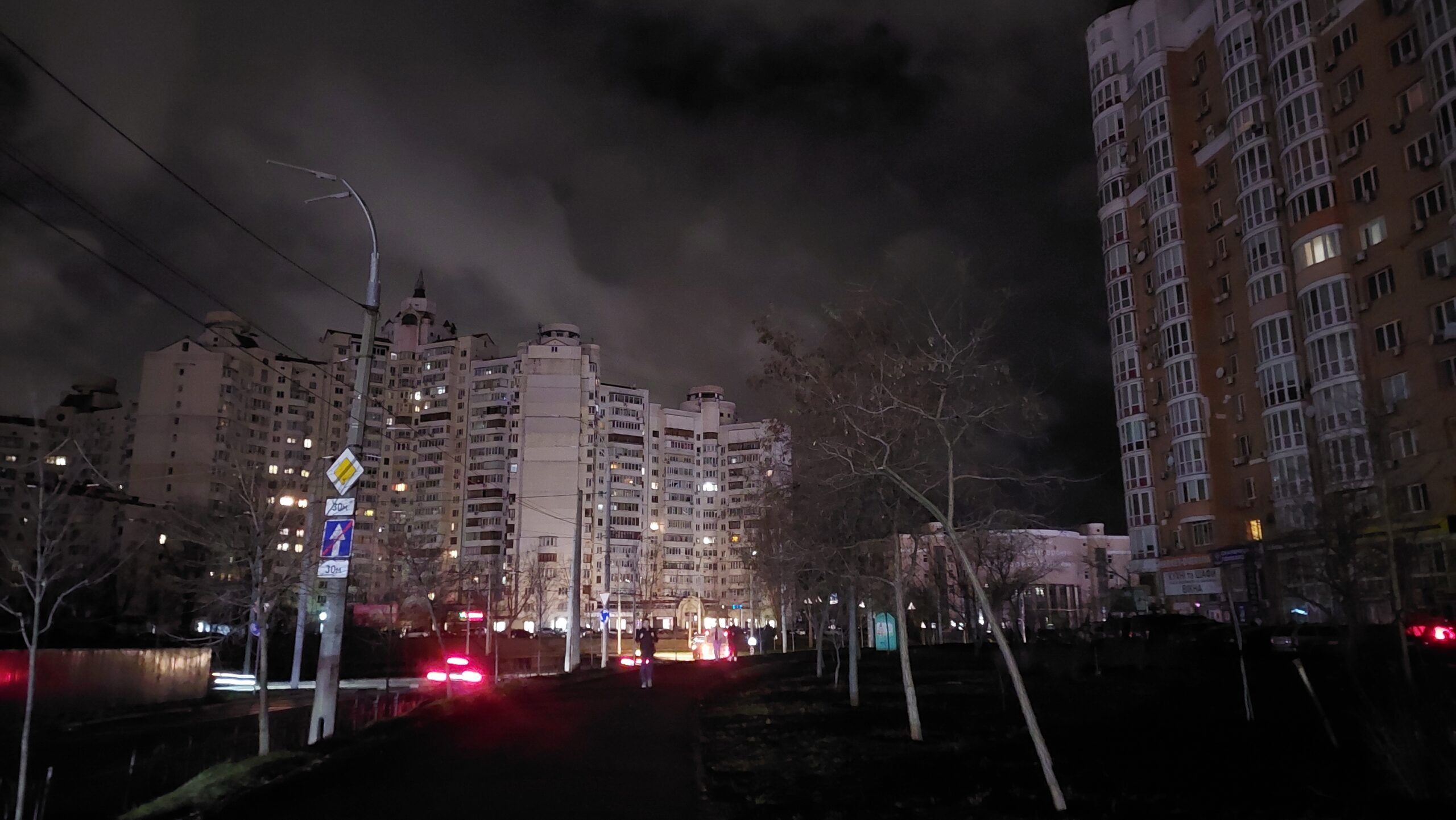
During blackouts, apartment blocks in Kyiv are mostly dark, with scattered lights from apartments with battery-powered sources. Generators power businesses on the ground floor. Street lights are largely off.
Explore further

Behind the black windows: How Kyiv survives a winter in the dark

Kyiv says food supply remains stable, for now

Oleh Kuіavskyi, deputy head of the Kyiv City State Administration, said the city's preparations are focused not only on accumulating supplies but also on ensuring they can quickly reach people who need them.

“Food security in the capital is not only about having the necessary reserves, but also a clear system for their distribution and delivery to those who need help most,” Kuіavskyi said, according to the Kyiv City Council.

He said Kyiv's consumer market remains stable and predictable, while the city continues to hold agricultural food fairs across its districts to help maintain access to basic food products.

Grocery shortage
Empty shelves in a Lviv supermarket. Photo: Times of Ukraine/Telegram

Reserves could feed 25,000 people

According to the city council, Kyiv has already formed and is maintaining reserves of key food products for use if the energy system comes under severe strain.

With support from charitable and civic organizations, the city can organize hot meals for up to 25,000 people, officials said.

The city's Department of Industry and Entrepreneurship Development also plans to purchase another 20,000 food packages for use during emergencies.

The reserves are being coordinated through Kyiv's Humanitarian Headquarters, established in February 2022. The body coordinates the city administration, district administrations, municipal companies, charities, and donors, including the accounting and distribution of emergency resources.

Russian drone strikes SBU headquarters in central Kyiv. Zelenskyy says “geography” of Ukraine’s response is set

4 septembre 2026 à 12:06

Smoke seen from the damaged SBU headquarters building on Volodymyrska Street in central Kyiv following a Russian drone strike on 4 September, 2026. Screenshot from video: Suspilne

A Russian drone struck the central building of Ukraine’s Security Service (SBU) on Volodymyrska Street in central Kyiv on September 4, injuring 12 people, according to Ukrainian officials.

The strike hit the SBU’s central headquarters directly opposite St. Sophia’s Cathedral, one of Kyiv’s best-known historic landmarks.

Kyiv Mayor Vitali Klitschko said nine of the injured were hospitalized, with two in serious condition.

Drone targeted SBU chief’s office

Ukrainian President Volodymyr Zelenskyy said the drone was directed toward the office of SBU chief Oleksandr Poklad inside the building.

The SBU confirmed that the strike was deliberately aimed at Poklad’s office, but said he was not injured.

Zelenskyy said he had ordered Poklad to prepare a “meaningful” and, if possible, symmetrical response to the Russian attack, with Ukraine’s military supporting the operation.

Later, Zelenskyy said Ukraine had already determined the "geography" of its response and would choose the timing based on when it could achieve an effective result.

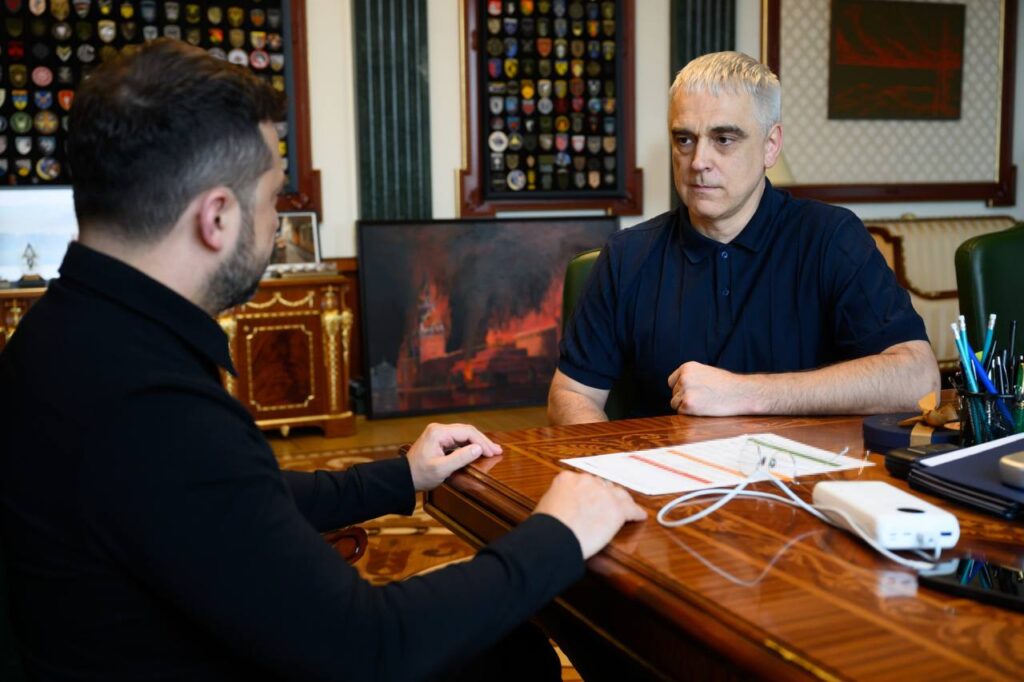
SBU chief Oleksandr Poklad meets with Ukrainian President Volodymyr Zelenskyy following a Russian drone strike on SBU headquarters in Kyiv, 4 September 2026. Photo: Zelenskyy

Ukrainian Foreign Minister Andrii Sybiha called the strike on the SBU headquarters “major escalation that demands resolute responses,” saying it showed Moscow’s rejection of diplomacy during a renewed push for peace.

The Russian attack on Ukraine’s Security Service Headquarters is a major escalation that demands resolute responses.

Moscow launched this strike during a renewed push for peace — laying bare its true rejection of diplomacy.

Located nearby, the UNESCO World Heritage Site — St.… https://t.co/3gjvVXJJfl

— Andrii Sybiha 🇺🇦 (@andrii_sybiha) September 4, 2026

Kyiv faces near-daily Russian drone attacks

The strike occurred in the middle of the day in one of central Kyiv’s busiest areas, with large numbers of civilians and vehicles on nearby streets, according to Euromaidan Press sources on the ground.

The attack came amid a sustained Russian campaign of drone attacks on Kyiv and the surrounding oblast, with the capital repeatedly targeted by large waves of jet-powered Geran drones and other weapons.

The attacks have increasingly brought explosions, fires and falling debris to residential and civilian areas across the capital and its suburbs, forcing emergency crews to respond repeatedly as the city remains under a persistent aerial threat.

Russia’s new models of Geran drones, developed from Iranian-designed Shaheds, are harder for Ukrainian air defenses to intercept. Moscow is deploying them in growing numbers, increasing the chances that drones reach Ukrainian cities and intensifying the threat to civilians.

Building damaged and fire breaks out

The drone strike caused a fire in the building, which emergency crews later extinguished.

Klitschko said sections of the building’s ceiling and an exterior wall were destroyed. Emergency services remained at the scene after the fire was brought under control.

The SBU said the damaged headquarters would be restored.

The agency also vowed that Russia would face a response through further Ukrainian operations, including strikes against Russian assets and networks.

A Russian drone struck the Ukrainian Security Service (SBU) headquarters on Volodymyrska Street in central Kyiv on September 4, injuring 12 people.

The drone was deliberately directed at the office of SBU chief Oleksandr Poklad, according to Ukrainian officials, but he was not… pic.twitter.com/DQ76MyAEeO

— Euromaidan Press (@EuromaidanPress) September 4, 2026

Historic Sofia Kyivska complex damaged

The Russian strike also damaged a building within the National Conservation Area “Sofia Kyivska,” located directly across Volodymyrska Street from the SBU headquarters, according to Suspilne.

According to the reserve’s director general Nelia Kukovalska, the blast shattered windows and destroyed the glass entrance structure of the complex’s Consistory building, whose exterior faces Volodymyrska Street.

No one at the reserve was injured, as staff and visitors took shelter. The historic St. Sophia Cathedral itself was not damaged, according to Kukovalska.

The St. Sophia Cathedral in Kyiv was founded in 1011, under the reign of Volodymyr the Great, the king who ruled Kyivan Rus from 980 to 1015. (Photo: ukrmandry.com.ua)

The nearby Zavertailo bakery was also damaged, though all staff and customers survived after taking shelter in the basement.

  • ✇Euromaidan Press
  • Russia now hunts Kyiv by daylight too, Flash explains why
    Russia has started launching its strike drones during the day, not only after dark. The reason is the new jet-powered Geran drones, which fire groups cannot take down, so for Russia there is no longer any difference between attacking by day or by night, Serhii "Flash" Beskrestnov, President Zelenskyy's adviser on defense technologies, told Glavcom. The near-hourly daytime raids are the new face of a campaign that culminated on 1 September, Knowledge Day, when Russia hit
     

Russia now hunts Kyiv by daylight too, Flash explains why

3 septembre 2026 à 06:07

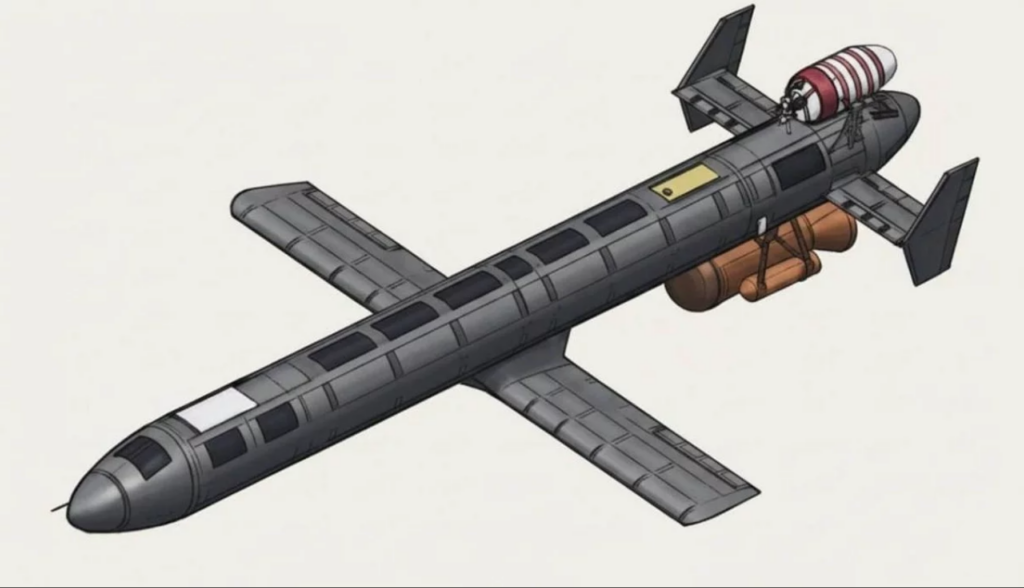
geran-5

Russia has started launching its strike drones during the day, not only after dark. The reason is the new jet-powered Geran drones, which fire groups cannot take down, so for Russia there is no longer any difference between attacking by day or by night, Serhii "Flash" Beskrestnov, President Zelenskyy's adviser on defense technologies, told Glavcom.

The near-hourly daytime raids are the new face of a campaign that culminated on 1 September, Knowledge Day, when Russia hit Kyiv and its region with ballistic missiles and jet-powered drones and killed 12 people. That strike culminated a six-day assault on the capital that began on 27 August, two days after CIA Director John Ratcliffe arrived in Moscow. However, even after that, the attack continued. Sirens now sound across Kyiv and the surrounding oblast roughly once an hour, around the clock.

Why the shift to daylight

The daytime raids carry an added economic and psychological weight, he said. The threat of strikes forces shops and businesses to open and close unpredictably, snarls transport, and can halt rail service.

"They understand perfectly well that daytime attacks hurt the population and business," Beskrestnov said, adding that the state railway Ukrzaliznytsia is paralyzed.

Keeping the defenders on their feet

A further aim is to hold Ukraine's air defense in a permanent state of readiness, Beskrestnov said. Round-the-clock attacks mean radar stations and generators must run without pause.

"Radar stations and generators run constantly, and that also puts a strain on our troops," he added.

Kyiv remains a Russian prime target because it carries symbolic as well as military weight, as the capital houses the government, business, and warehouses, and a strike there would resonate far more than terrorizing a small town.

Russian forces first concentrated on districts nearer the drones' launch corridors — Kyiv's Left Bank, and the Brovary and Boryspil raions — before switching to the other bank to hunt for targets. As the cold season approaches, he expects Russia to intensify strikes on the energy infrastructure it has so far spared.

❌