Trump Administration Sends Saudi Nuclear Deal to Congress for Review

© Alex Brandon/Associated Press


© Alex Brandon/Associated Press


© Vahid Salemi/Associated Press


© Alex Kent/The New York Times

US president has been obsessed with restricting the ability to vote by mail, despite using it himself. Plus, why we are still fascinated with Meg from the White Stripes
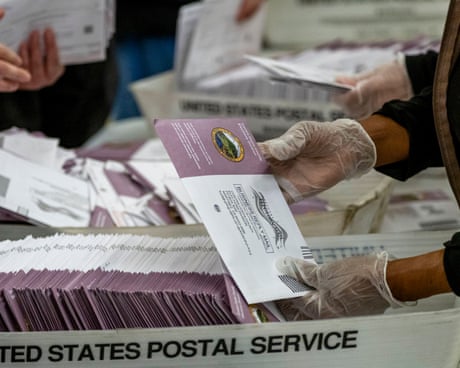
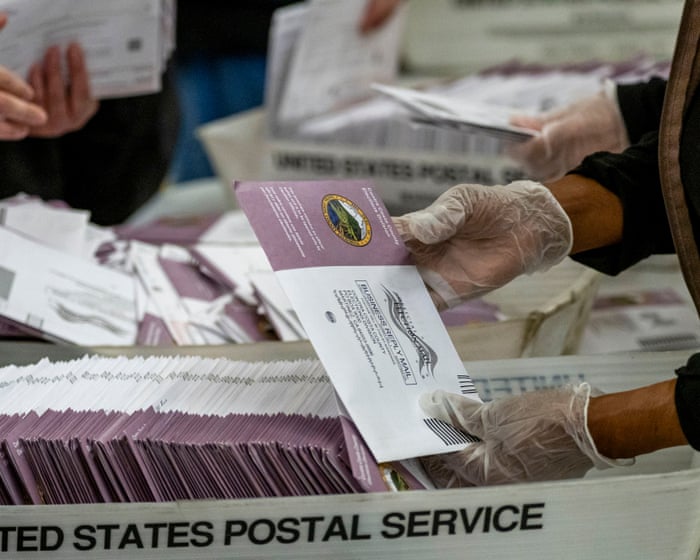
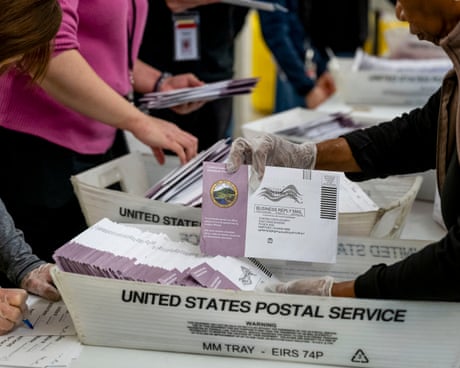
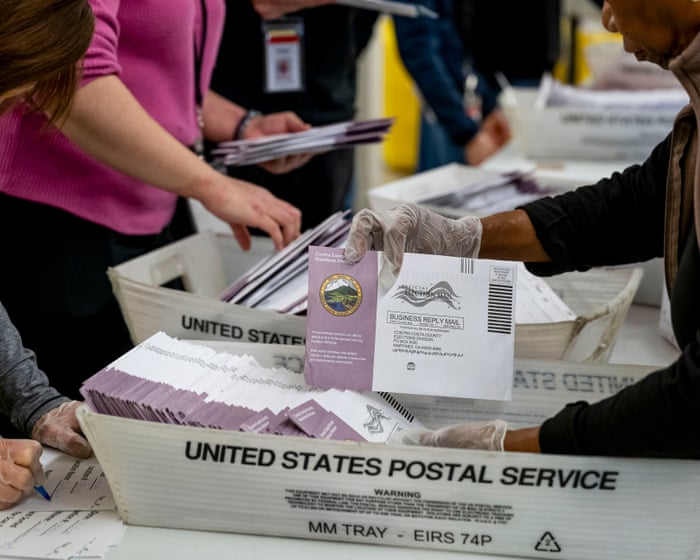
Good morning. The US supreme court has sided with Donald Trump in his effort to crack down on mail-in voting, though it is unclear whether or not his administration will be able to take action before the midterm elections in November. The court’s justices voted 6-3 along ideological lines to lift an injunction that a judge in Massachusetts had placed in June on an executive order issued by the president. But a second injunction remains in place, and the ruling leaves room for legal challenges.
Trump has repeatedly likened voting by mail to cheating, despite his own use of it and overwhelming evidence that the system is secure. In March he ordered the government to create a “state citizenship list” of eligible voters, requiring that mail-in ballots only be delivered to people on that list. He also directed the justice department to prioritise investigations and prosecutions of state and local election officials who issue ballots to people deemed ineligible to vote in federal elections.
What did the dissenting judges say? In a blistering dissent, Justice Ketanji Brown Jackson wrote that the decision “needlessly injects chaos and uncertainty into the upcoming midterm elections”.
How have rights organisations reacted? The president of the National Association for the Advancement of Colored People, Derrick Johnson, said: “Let this ruling be a reminder that democracy is never, ever guaranteed. We have to fight for it, we have to fight to keep it and we have to protect the rights we do have within it … they are trying to do everything they possibly can to make it difficult for you to vote.”
How has Canada reacted? The country’s prime minister, Mark Carney, told reporters that Trump’s announcement was largely expected. “It’s not a surprise for us that the US would take some form of reprisal to our response to their unjustified tariff,” he said. Carney has vowed to match the American tariffs “dollar for dollar”, and said Canada could not accept any proposed trade deal that would weaken French language protections.
Continue reading...
© Photograph: Bloomberg/Getty Images

© Photograph: Bloomberg/Getty Images

© Photograph: Bloomberg/Getty Images


© Alana Paterson for The New York Times


© Arash Khamooshi/Polaris for The New York Times


© Alana Paterson for The New York Times


Scott Bessent, ministre américain des finances, a déclaré que Washington avait l’intention de «couper toutes les ressources économiques» du régime iranien.
Les nouvelles sanctions américaines visent cinq secteurs:
Bessent a affirmé que tous les pays qui ne participeraient pas aux sanctions américaines seraient aussi isolés que l’Iran.
Le gouvernement américain menace d’expulser les pays récalcitrants du système financier lié au dollar américain.
[L'article Les États-Unis imposent de nouvelles sanctions à l’Iran a d'abord été publié dans InfoBref.]


© Doug Mills/The New York Times


© Arash Khamooshi/Polaris for The New York Times


© Katherine Delgado, via Associated Press


© Evelyn Hockstein/Reuters


© Agence France-Presse — Getty Images

This live blog is now closed.
Donald Trump has threatened to increase tariffs on Canadian cars, trucks, auto parts and steel to 50% today, after trade negotiations between Washington and Ottowa broke down last week.
On Truth Social, the president blasted Canada, and said the new duties will go into effect on 1 January 2027.
Continue reading...
© Photograph: Bloomberg/Getty Images

© Photograph: Bloomberg/Getty Images

© Photograph: Bloomberg/Getty Images


© Chung Sung-Jun/Getty Images


© Kenny Holston/The New York Times


© Arash Khamooshi/Polaris for The New York Times

Investors will hope Kevin Warsh offers ‘comfort blanket’ at annual meeting of central banks amid bond market anxiety
The new US Federal Reserve chair, Kevin Warsh, faces a critical test this week amid anxiety in government bond markets over inflation and Donald Trump’s tax and spending plans.
As the world’s most powerful central bank prepares for its annual Jackson Hole conference, analysts said bond traders would be looking for signals from Warsh over its commitment to fighting inflation.
Continue reading...
© Photograph: Evelyn Hockstein/Reuters

© Photograph: Evelyn Hockstein/Reuters

© Photograph: Evelyn Hockstein/Reuters


© Mohammed Salem/Reuters

Abbas Araghchi says country is unbowed but president Masoud Pezeshkian admits its people face ‘many problems’
Iran’s foreign minister has dismissed the threat of a fresh round of US economic sanctions as a “desperate” ploy, even as its president acknowledged that the Iranian people are facing “many problems” amid Washington’s efforts to isolate and debilitate the country’s economy.
Last week, Donald Trump announced a new campaign to increase the pressure on the Iranian economy, calling it “the most crushing economic operation ever taken against any country”. The US Treasury secretary, Scott Bessent, is expected to announce further punitive economic measures on Iran – which he has described as “the toughest sanctions in history” – on Monday.
Continue reading...
© Photograph: Abedin Taherkenareh/EPA

© Photograph: Abedin Taherkenareh/EPA

© Photograph: Abedin Taherkenareh/EPA

As the president tries to extract the US from his Iran war quagmire, leadership in Tehran is only too happy to crush his midterm dreams
In the aftermath of his devastating election defeat, the US president remained haunted by regrets over Iran.
Months before Jimmy Carter lost the 1980 presidential election to Ronald Reagan, eight US servicemen died in a botched high-risk rescue mission that failed to secure the freedom of dozens of US hostages seized in Tehran.
Continue reading...
© Illustration: Guardian Design / Getty Images

© Illustration: Guardian Design / Getty Images

© Illustration: Guardian Design / Getty Images

President at rally in South Carolina makes comments on key strategic waterway and jokes about bombing Iran
Donald Trump called the strait of Hormuz “an American territory” on Friday, as the US continues its military blockade of Iran’s shipping and ports while Trump’s administration struggles to end its war with the country.
“We don’t even know if we won, because I view the strait of Hormuz as an American territory right now,” Trump said, addressing a crowd in South Carolina. He was campaigning for senator Darline Graham, who is running to permanently fill her late brother Lindsey Graham’s Senate seat.
Continue reading...
© Photograph: Jacquelyn Martin/AP

© Photograph: Jacquelyn Martin/AP

© Photograph: Jacquelyn Martin/AP


© Go Nakamura/Reuters


© Arash Khamooshi/Polaris for The New York Times


© Abdirahman Hussein/Reuters


© Kenny Holston/The New York Times

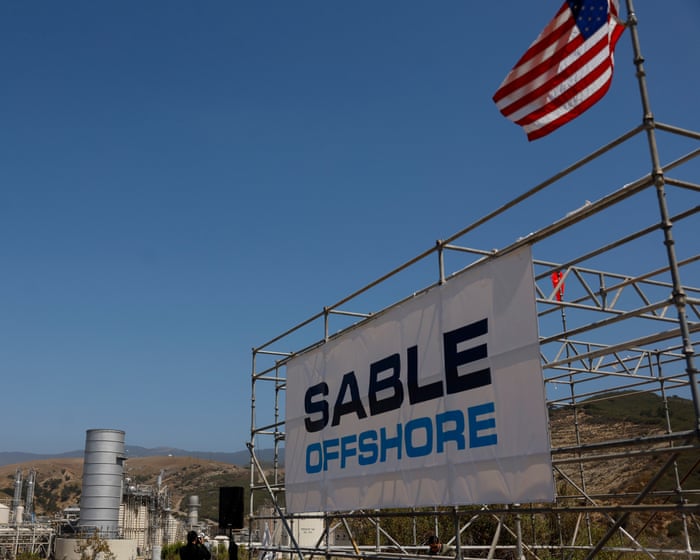
State sought to stop system off coast of Santa Barbara from resuming operations after Trump ordered its reopening
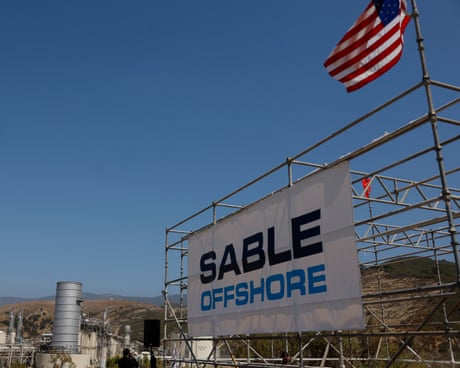
An oil pipeline can continue to operate off the California coast after a judge gave it the green light this week, despite the opposition of state regulators and environmental groups.
The system off the coast of Santa Barbara resumed operations earlier this year for the first time in more than a decade after Donald Trump ordered Sable Offshore Corporation to reopen it, citing US energy needs during the war in Iran.
Continue reading...
© Photograph: Bloomberg/Getty Images

© Photograph: Bloomberg/Getty Images

© Photograph: Bloomberg/Getty Images

USS George Washington will replace warship families say suffers from shortages, plumbing problems and low morale
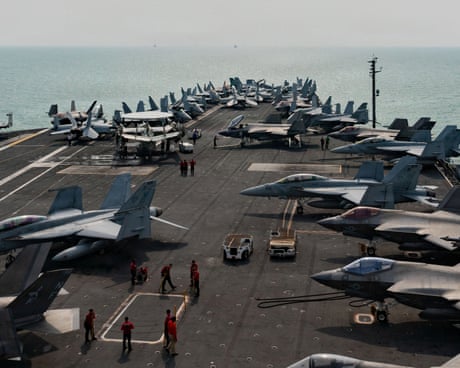
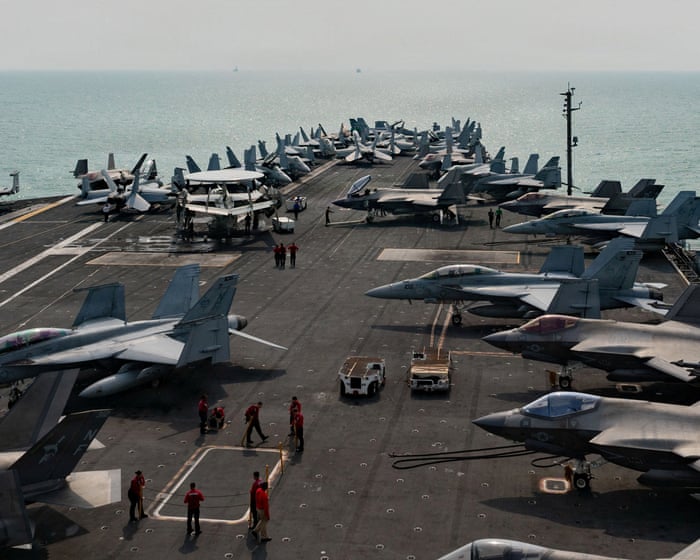
The USS George Washington aircraft carrier has arrived in the Middle East, where it is expected to relieve the USS Abraham Lincoln from its record deployment amid concerns about poor living conditions and morale.
US Central Command announced on Thursday that the Washington arrived in the area on Wednesday, and posted an image of sailors working on the flight deck as the ship transited the Arabian Sea. No date has yet been announced for the Lincoln to return to the US.
Continue reading...
© Photograph: US Navy/Reuters

© Photograph: US Navy/Reuters

© Photograph: US Navy/Reuters


© K.C. Alfred/The San Diego Union-Tribune, via Associated Press


© Joyce Zhou/Reuters

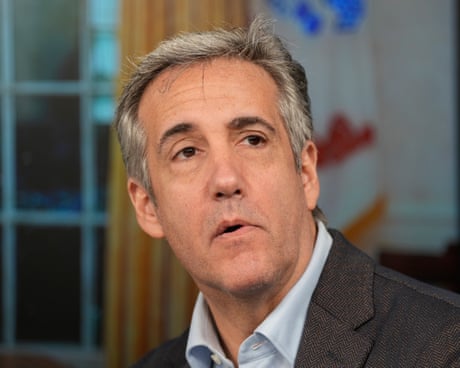
Despite previously comparing him to a ‘mobster’, Trump’s former personal lawyer showers him with praise. This blog is now closed.
An FBI team seized electronic devices from former US representative Eric Swalwell at the San Francisco airport on Saturday, then raided his home in Washington, DC, the next day, CNN reported Thursday.
The raid is part of a federal investigation into the sexual assault allegations which ultimately drove the Bay Area Democrat to resign from office in April, sources familiar with the investigation told CNN. The Manhattan District Attorney’s Office and the Los Angeles Sheriff’s Department subsequently opened criminal investigations on Swalwell.
Continue reading...
© Photograph: Seth Wenig/AP

© Photograph: Seth Wenig/AP

© Photograph: Seth Wenig/AP


© Arash Khamooshi/Polaris for The New York Times

On one side, you face the domination of the Islamic Republic; on the other, the imperialist forces that republic claims to stand against
August marks the anniversary of the 1988 mass executions in Iran, a horror that echoes in the country’s current surge in death sentences. It also marks the 19 August anniversary of the UK- and US-orchestrated coup against the prime minister Mohammad Mosaddegh in 1953. Amid the current, indiscriminate waves of US-Israeli military assaults against Iran, this letter of solidarity denounces the repression of the Iranian people and their political prisoners by forces both at home and abroad.
***
Continue reading...
© Illustration: Guardian Design/Morteza Nikoubazl/NurPhoto/Getty Images

© Illustration: Guardian Design/Morteza Nikoubazl/NurPhoto/Getty Images

© Illustration: Guardian Design/Morteza Nikoubazl/NurPhoto/Getty Images


© Al Drago for The New York Times


© Raghed Waked/Reuters


© Agence France-Presse — Getty Images


© Arash Khamooshi/Polaris for The New York Times


© Doug Mills/The New York Times


© Erin Schaff/The New York Times


© Al Drago for The New York Times


© Arash Khamooshi/Polaris for The New York Times


© Arash Khamooshi/Polaris for The New York Times


© Zachary Pearson/U.S. Navy, via Getty Images


© Ali Saeedi/Getty Images


© Mohammed Salem/Reuters


© Abbas Fakih/Agence France-Presse — Getty Images


© Aaron Favila/Associated Press


Russia has ceased producing its Geran-3 jet-powered attack drone, Ukraine’s Military Intelligence (HUR) told the Ukrainian defense outlet Militarnyi. The agency estimates Russian industry now makes about 3,000 newer Geran-4 and Geran-5 drones per month.
Russia is shifting toward faster jet drones as Ukraine’s low-cost interceptors have become more effective against slower Shaheds. The Geran-4 and Geran-5 leave defenders less time to react, requiring faster interceptors or short-range air defenses. At the reported production rate, these newer Geran models, previously used in limited numbers, could become a regular feature of Russian attacks.
HUR said Russia has established serial assembly of the two newer models at the Alabuga complex in Tatarstan, with other Russian companies supplying components. The agency also said Russia’s Defense Ministry wants to expand Alabuga’s capacity. Construction began in May. Satellite imagery showed large-scale work by early July 2026, although the purpose of the new buildings remains unknown.
Russia first used Geran-3 drones in large numbers during a combined nighttime attack on Ukraine on 30 July 2025. At least eight flew alongside propeller-driven Shaheds and decoys. The model retained the Geran-2 airframe but replaced its piston engine with a Chinese Telefly JT80 turbojet. HUR gave it a speed of 300–370 kilometers per hour and a range of up to 1,000 kilometers.
In May, then-Defense Ministry adviser Serhii “Flash” Beskrestnov said Ukrainian defenses stopped 95% of incoming Shaheds during the most recent documented strike and predicted Moscow would produce more jet-powered Geran variants.
The newer Geran-4 has a more robust airframe than the Geran-3 and is designed for high-speed flight and maneuvers. It can reach 500 kilometers per hour.
The larger Geran-5 carries a roughly 90-kilogram warhead and has a stated range of up to 1,000 kilometers. HUR has said Russia may equip it with R-73 air-to-air missiles, potentially threatening aircraft sent to intercept it.
The Geran line combines Iranian designs, Russian assembly, and imported technology. HUR described the Geran-3 as a localized version of Iran’s Shahed-238. It found 45 foreign components inside, including parts from the United States, China, Switzerland, Germany, Britain, and Japan.
Russia depends on China for the turbojet engines in newer Geran models. HUR deputy chief Vadym Skibitskyi told RBC-Ukraine that Russia remains fully dependent on Chinese turbojet engines for the Geran-4 and Geran-5. Each costs about $35,000–$40,000, he said.
A Chinese XK-F358 mesh radio recovered from a Geran-5 also helps Russian drones resist jamming. Its manufacturer remains outside the US, EU, UK, and Ukrainian sanctions, according to a review by Euromaidan Press.


Iran is using the war in Ukraine to make its attack drones deadlier. Iran has been refining its Shahed-107 kamikaze drones based on the experience of the war in Ukraine, military analyst Oleksandr Kovalenko said.
Ukraine has become the testing ground where Iran improves the weapons, and Russia then fires at it. The Shahed-107's warheads have received additional shrapnel elements, and a detailed aerodynamic study shows a significant improvement in the drone's structure, Kovalenko explains.
Kovalenko said the modifications come directly from how the drones perform in Ukraine. The warheads now carry extra fragmentation elements, increasing their lethality against people and soft targets, and the airframe's aerodynamics have been reworked.
Kovalenko also warned about a weapon already appearing over Ukraine. Karar drones have recently begun reaching Ukraine, not yet on a large scale, but enough to cause some confusion in identifying the weapon. He said he would not be surprised if they appear more widely soon.

He described its specifications.
"The Karar is a loitering munition, more a flying bomb than a drone by classification, equipped with a DLE 111 gasoline engine, with a range of about 300 kilometers on a 28-liter tank and a 15-kilogram warhead," Kovalenko said.
He called it an extremely cheap means of terror for the middle rear zone.
Kovalenko's concern is where such a weapon reaches. A cheap loitering munition with a 300-kilometer range could strike areas well behind the front that have been relatively safe, extending the threat deeper into Ukraine.
Kovalenko framed the weapon's arrival in stark terms, saying that when it appears, people should simply accept what will happen, and declining even to name the region where he expects it to appear. That is his characterization: a single analyst's warning about a weapon whose wider use he anticipates but that has not yet reached scale. EP cannot independently verify Karar's specifications or its deployment.